May Days, May Days!

Rain has come to portend the end of summer in my part of the world, and the skies are mirroring our dispiriting political climate.

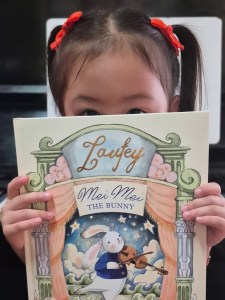
Cheering myself up by looking back at some of this month’s colorful days and satisfying literary adventures — it was, after all, a month when Mei Mei the Bunny hopped into Harana Music Studio’s library! So here they are, in the words of John Ruskin, “To scatter perfumes in the path of June.”


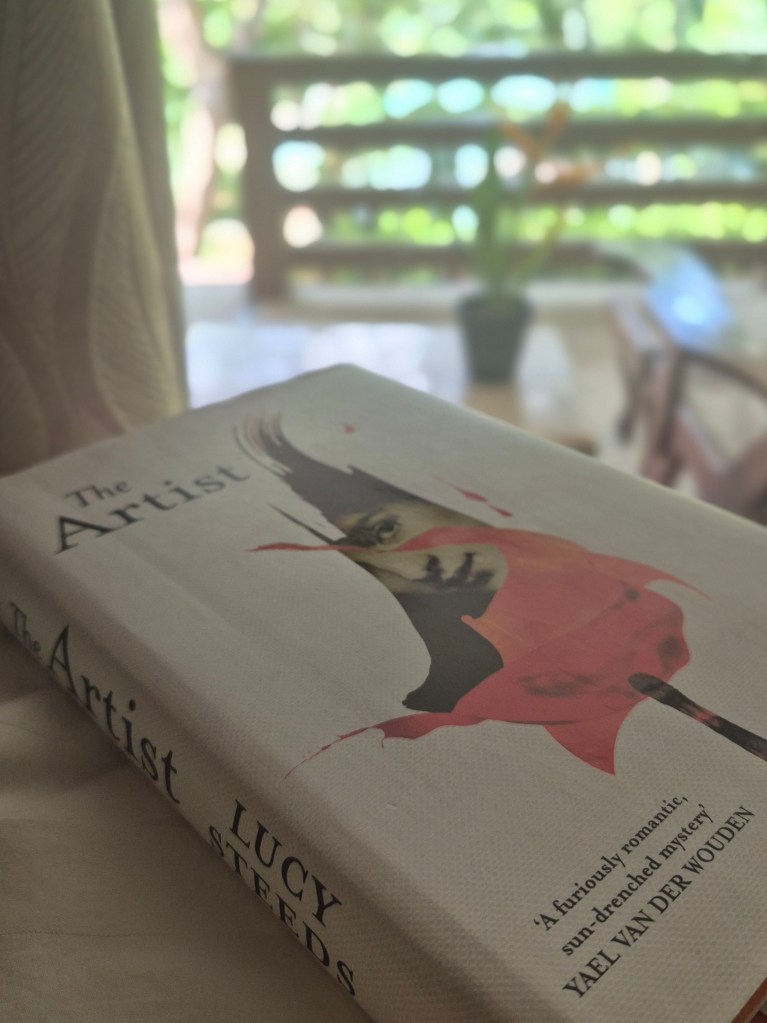
The Artist, Lucy Steeds 05/10/2026

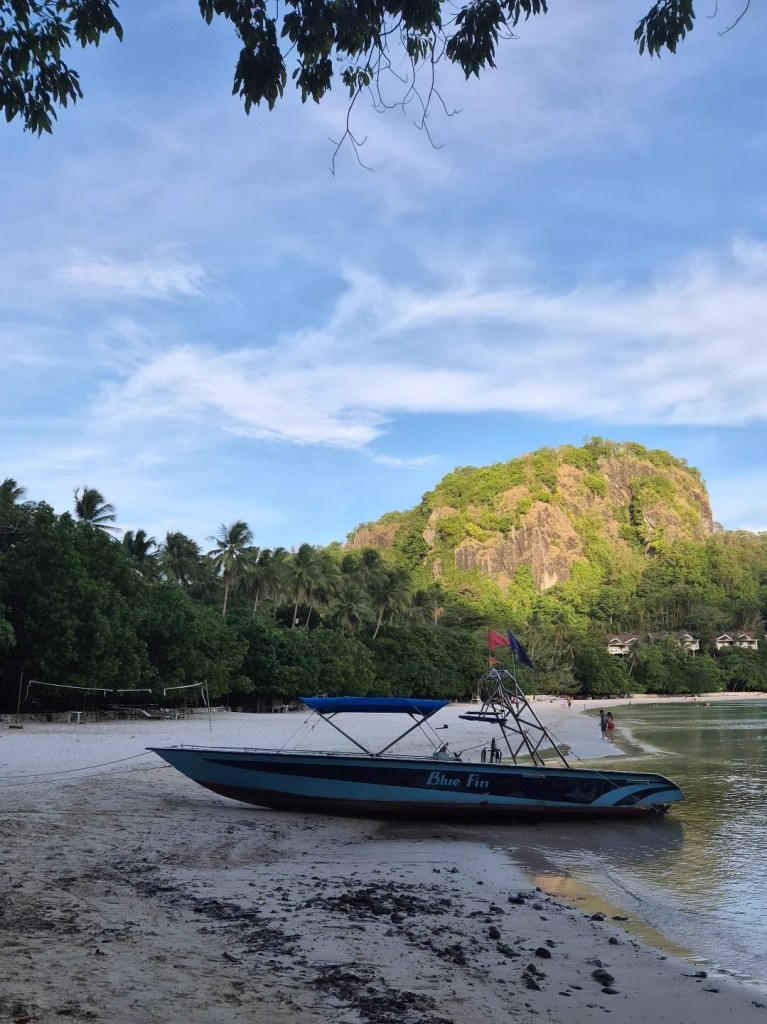
When I read with my toes digging into white sand, piña colada within reach until the sunset turned into “a riot of color,” as Lucy Steeds would write, I was happy to momentarily leave behind war-torn milieus, ambiguous plots, dystopias, or sentences that needed multiple re-readings to be deciphered.

Part mystery, part lure to Provence, mainly art lesson on light and color, part romance, part statement on the discrimination of women in art and women’s contribution to the art world, part anti-war declaration, and a reflection on our Odysseys and our Ithacas, The Artist was the perfect beach read for me a week ago.
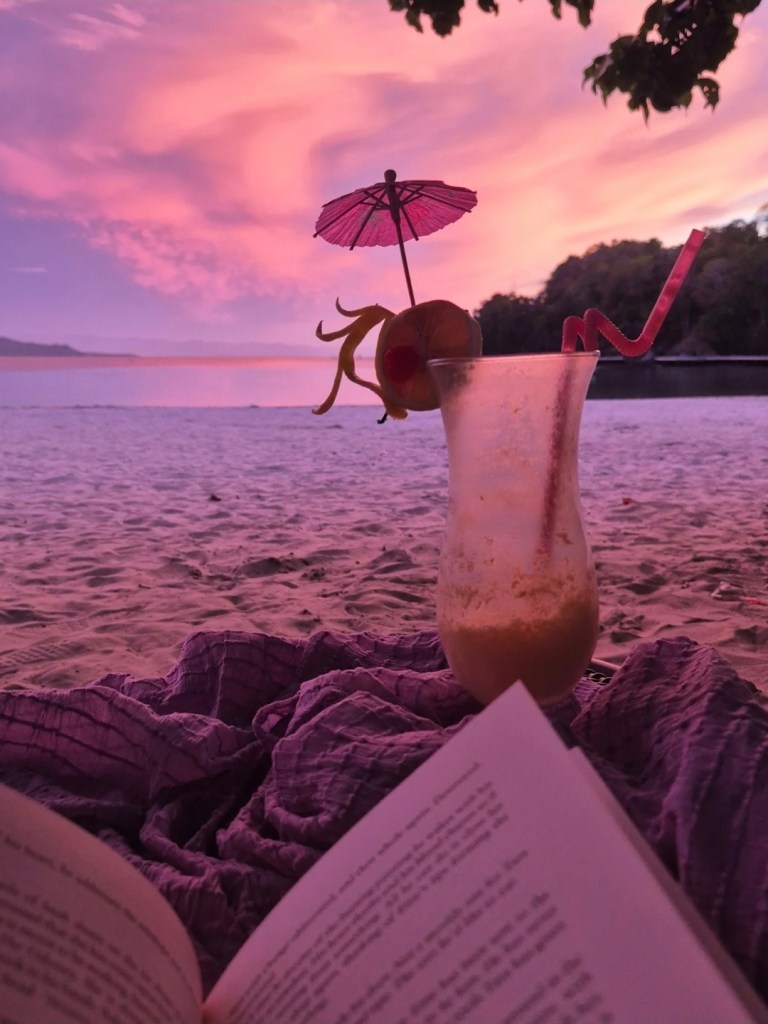
If you’re wondering what qualifies as a “beach read,” it’s pretty much the same thing as a “beach body”; it’s the one that you carry with you to the beach… this one simply had the bonus of being informative and entertaining while being, at least by the end of the book, gentle on the mind and heart.
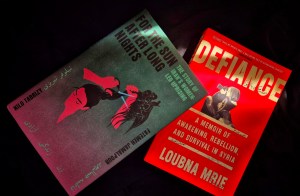

For the Sun After Long Nights | Defiance

The two books I read in succession for the first week of May.

Defiance is the first book I’ve read that was written and published after the fall of the Assad regime. Striking not only for its incredibly human and candid account, but also for the fact that it is written by someone whose father led Bassel al-Assad’s security team, and whose American boyfriend’s public execution at the hands of the Islamic State the world witnessed.

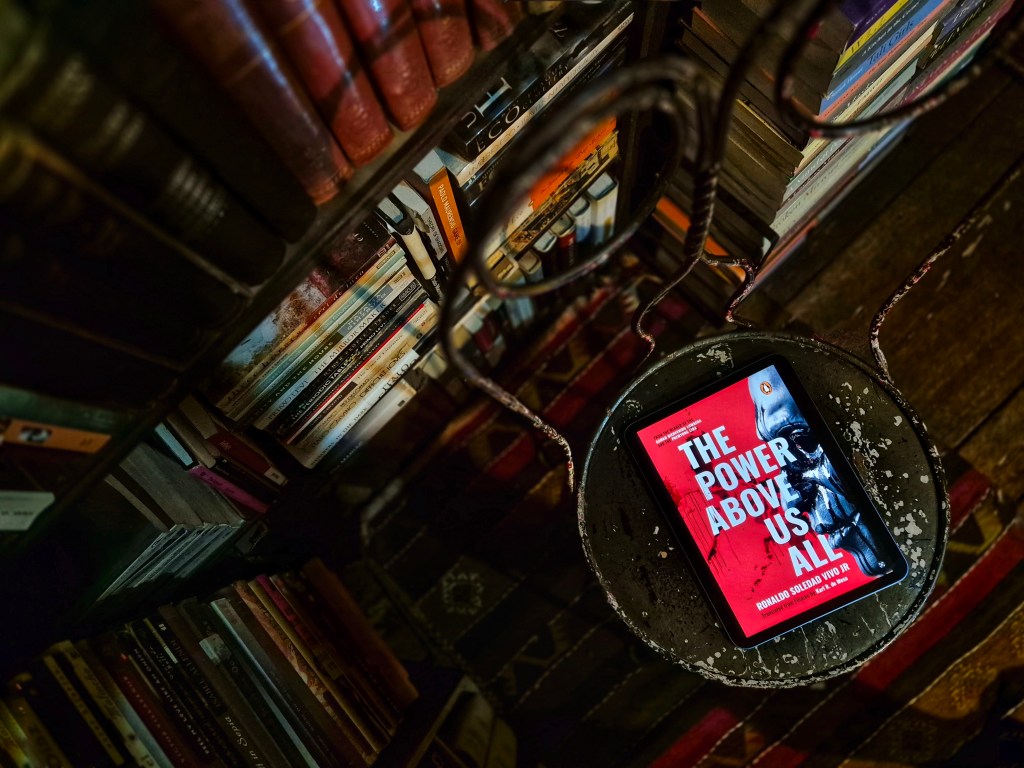
For the Sun After Long Nights is the first book I’ve read about Iran that veers away from the 1979 Iranian Revolution and focuses on the Woman, Life, Freedom movement (ignited by the death of Mahsa Amini, who was detained and beaten for not wearing her hijab according to the imposed religious dress code, and who died in state custody in 2022). In this collaboration between two Iranian journalists, chapters alternate between the points of view of Fatemeh Jamalpour, who joined and covered the protests in Iran, and Nilo Tabrizy, who reported from overseas on the violence and injustices committed by the Iranian government.

The books are remarkable works of journalism written by young women, but this is not the only similarity they share. Read full entry here.

She Who Remains, Rene Karabash 05/13/2026

In the lands of the Kanun, the Kanun is law. The Kanun is above all else. The Kanun is not fictional; the Kanun is ancient, and it is real. 

And perhaps this book was written not as a historical record of a disappearing traditional customary law, but as a poetic missive to tell us that the whole concept of the Kanun is not limited to the Balkans, that the Kanun still exists in more subtle ways in modern societies, that women still have to “man up” to survive and afford certain rights, that women are still often collateral damage to men’s laws.

The Correspondent, Virginia Evans 05/15/2026

Can one simply read this epistolary novel and not be compelled to write to a friend afterwards? 

On the other hand, it does not escape me that the message it carries is not exactly about letter-writing, but about communication. We often pride ourselves on our voice and how we brandish our opinions whenever we can, as Sybil does, but the story asks us to examine the injustice we do by shirking from communication at crucial moments. This book essentially asks us to ponder the legacy of communication that we leave behind in this life.

“I believe one ought to be precious with communication. Remember: Words, especially those written, are immortal .”

Middlemarch, George Eliot 05/28/2026

A more mature reader will often return to the classics with a reformed insight that the classics are not necessarily meant to be venerated but to be re-examined. Such a reader would trudge through old-fashioned language and time-consuming lengths to defy modern man’s preference for instant gratification and to seek resonance in the historical, intellectual, and emotional bulk. More often than not, the willing seeker finds — and finds more than they set out to find.

To read Middlemarch in a 21st century small town in the Philippines, and be transported to an early 19th century English rural community and notice the same players in society, espy similar outlooks that should be outdated by now but which still exist, and observe national political ferment trickling into daily lives to color preconceptions about other people, makes one marvel at the timelessness of George Eliot’s, or Mary Ann Evans’s, masterpiece. Read full entry here.


Canticles for Dark Lovers, Wilfrido D. Nolledo 05/31/2026

Art, I once told someone, is like someone ripping their heart off their chest and saying, “Behold, my heart.”

It is terrifying. The artist suffers in the process. It is terrifying because the artist knows that some will look away and find the act too violent. It is terrifying because the artist never knows beforehand if someone will ever get it. But no matter how terrifying it is, an artist rips their heart out anyway because they cannot help it. Nolledo could not help it. Behold, his heart.
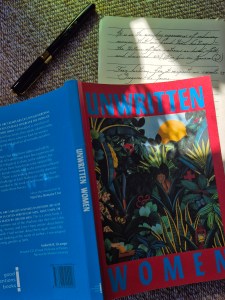

Unwritten Women

Unwritten Women is something I intended to read for Women’s Month, but shipping took a while. That’s how this celebration of the Filipina Woman has also become my celebration of National Literature Month.

But there is never a wrong time to read this compilation of essays about eight fascinating Filipina women, written mainly by Filipina women.

The essay on Gregoria de Jesus gently exhorts the reader for esteeming the Lakambini ng Katipunan as merely a “muse” of the Katipunan (“a disservice, a diminution of its meaning… Lakambini is a female lakan, a lord paramount over other lords, a chief among chiefs”) and tells us the story of why she is deserving of the full meaning of the word.  

The second chapter, featuring Teodora Alonso, Aurora Quezon, and Aurora Aquino, narrates how these three women were so much more than their appellation as mother of a national hero, wife of the first president of the Commonwealth of the Philippines, and mother to a murdered son.

Another section highlights Rosa Sevilla Alvero, who was a vanguard of women’s education in the country, and who, as early as 1916, led a movement for Filipino women to exercise the right to vote; Maria Y. Orosa, chemist, who literally fed our starving and war-torn nation, and whose contribution to food technology we continue to benefit from; Carmen Rosales, singer and actress turned guerrilla fighter who fought against the Japanese when circumstances demanded it. 

The final piece shines a spotlight on Letty Jimenez-Magsanoc whose courage as a journalist helped overthrow a dictatorship.

At last, a book that looks beyond the men of Philippine history and, “Beyond the official portraits and the hagiographic accounts,” as Zea Asia writes. At last, a book that celebrates the women on whose shoulders this nation stands.

“It is in the everyday experiences of ordinary women that we find true history—the texture of our nation as lived, felt, and dreamed.” – Zea Asis


exlibrisphilippines.com has an official review that beautifully expresses everything I wish to say about this book. Head over to our site to read it and to know more about the book.

As for parents and students of Harana Music Studio, a copy of Unwritten Women is available on the small shelf of Philippine essays that I curated for you to read while waiting. Happy National Literature Month!

Reading in August


Our ecological crisis is also a ‘crisis of forgetfulness’… we have forgotten how sacred the nature of creation is,” Iraqi-British writer, Dalia Al-Dujaili, reminds us in Babylon, Albion

Although I read this in a perfect setting on a weekend getaway — amidst soothing sounds of nature, enveloped by clean air, and surrounded by mountains blanketed by mist — this ‘crisis of forgetfulness’ where the greed of many has replaced the sanctity of nature manifests in international and national news, and in the floodwaters that lap on my own doorstep back home. 

Readers who find the lyrical wisdom of Aimee Nezhukumatathil refreshing will surely love this wholesome rumination into identity, migration, land, rivers, borders, national and personal myths, familial and arboreal roots, and humanity’s natural heritage. While these somber topics usually weigh down on the reader, Al-Dujaili imparts a hopeful outlook while encouraging us to make our very own existence into a form of praise, and challenging us to scrutinize how we carry identity. Needless to say, Babylon, Albion was a profoundly beautiful way to end August.


August is Women in Translation Month and Buwan ng Wika (National Language Month). To celebrate the latter: Munting Aklat ng Baybayin by Ian Alfonso. No better way than through learning more about our pre-colonial script! To celebrate the former: Iman Mersal’s Traces of Enayat and Lydia Sandgren’s Collected Works.

“The best investigative reporting is storytelling,” says journalist Jane Mayer. Traces of Enayat is proof of this as Iman Mersal takes the reader on a quest to find traces of Enayat, an Egyptian writer who took her own life in 1963. Mersal affectingly expresses the attachment and resonance we find in the authors we encounter and whose works derail us from an otherwise uneventful trajectory. It also begs the question: How many Enayats has the world lost into oblivion?

As for Collected Works, seven pages shy of six hundred, this novel quietly draws you into its world. It acquaints you with its setting and its characters without haste. It knows how to linger. It lingers on one’s thoughts on literature and art, on a character’s indecision to call someone or not, whether to read a book or not. It often lingers on everyday scenes where words turn into still life paintings and everyday portraits. But these scenes and characters exist in the shadow of Cecilia’s disappearance. Almost fifteen years after she vanished without a trace, her daughter, Rakel, believes it is her missing mother she is reading about in a novel, and measured suspense and mystery begin to replace the monotony of their lives. I would recommend this to the unhurried reader. Ultimately, Collected Works is a meditation on what one’s life amounts to. 

As for reading life in August? This is what it amounted to. It felt very much like a defiance of my country’s frustrating political climate.

Circumnavigating July

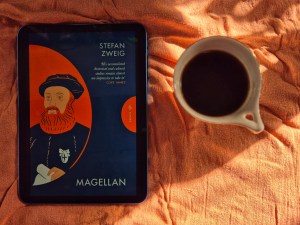
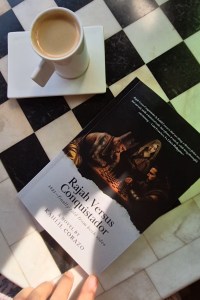
From Stefan Zweig’s Magellan, to Robert Graves’s Homer’s Daughter, to Aatish Taseer’s A Return to Self, to Kahlil Corazo’s Rajah Versus Conquistador, July seemed to have a fortuitous recurring theme in the books I read and in my encounters with storytelling: New ways of seeing and new ways of reframing self and history. 

For someone whose nation regards as a hero the man responsible for Magellan’s death, I have to admit that this book was approached in Lapu-Lapu mode, en garde, expecting a Eurocentric view of history. But Zweig had me at page 11 upon acknowledging that the primary objective of the Crusades was to wrest the trade route barriers from Islamic rule. You don’t often get that admission from a Western book written in the 1930s.

In Philippine history, Magellan’s death eclipses the fleet’s first circumnavigation of the world. This book emphasizes the feat of an adventurer who had, at the time, “far outstripped all others in the exploration of our planet,” and proved beyond theory that the Earth was round. He was bad news for flat-earthers. Zweig humanizes the man whose death we celebrate, and this is a great read for those who would like to peer through another vantage point of the expedition. But dear Stefan, as much as I am a fan of your writing, Magellan did not “discover” the Philippines; he merely set foot on it and placed it on a Western map. 

“What we term history does not represent the sum total of all conceivable things that have been done in space and time; history comprises those small illuminated sections of world happenings which have had thrown upon them the light of poetical or scientific description. Achilles would be nothing save for Homer.”

Speaking of Homer… how did I not know that the author of the more famous I, Claudius has penned a delightful book called Homer’s Daughter, claiming he could not rest until this novel was written after finding arguments on a female authorship of The Odyssey undeniable? It is based on the premise that The Odyssey — authored over a hundred and fifty years post-Iliad, more honeyed, civilized, and sympathetic especially toward Penelope — was written by a woman.

It makes for an enjoyable read as Graves imagines the life of Nausicaa, a Sicilian princess who rewrites Homer’s epic with elements from her life. “The Iliad, which I admire, is devised by a man for men; this epic, The Odyssey, will be devised by a woman for women. Understand that I am Homer’s latest-born child, a daughter.”

We have understood through the likes of Virginia Woolf that “for most of history, Anonymous was a woman,” but how the poet of The Odyssey could be a woman is a concept new and fascinating to me. 

What if The Odyssey’s notion of Ithaca holds sway because it was not written by one who wandered off, but by one who stayed?

And yet, Aatish Taseer’s Ithaca remains my kind of Ithaca: “The pilgrim spirit is one that wanders away from the comfort and safety of our home secure in the knowledge that the transformation the pilgrim will undergo over the course of his journey is the destination.” The author has a life story incredible enough, but more importantly, here’s a writer and traveler who shows us how profound traveling can be when we are mindful of the inner journey. A Return to Self is a book I will be returning to.

Speaking of Home… I have never read a novel that came this close to home! As a descendant of a binukot, this book felt so personal and empowering to me. The soul of the binukot does not play second fiddle to anything in this novel.

By reading Rajah Versus Conquistador, I seem to have circumnavigated July and circled back to Cebu. The title refers to Magellan as the Conquistador, and Humabon as the Rajah.

Humabon, in Zweig’s words, “was no such unsophisticated child of nature… He had already eaten of the tree of knowledge, knew about money and money’s worth… a political economist who practiced the highly civilized art of exacting transit dues from every ship that cast anchor in his port. A keen man of business, he was not impressed by the thunder of the artillery or flattered by the honeyed words of the interpreter… he had no wish to forbid an entrance to his harbor. The white strangers were welcome, and he would be glad to trade with them. But every ship must pay harbor dues.”

Often cast as a traitor or as someone who’ll always be lesser than Lapu-Lapu in Filipino eyes, Corazo’s Humabon agrees with Zweig’s Humabon: a cosmopolitan ruler who defies simplification. There is much to be said about this work; from the witty language where Bisaya humor often raises its head, to rethinking our past and the deeper meaning to our myths, to the skillful crafting of the key players. Corazo does not merely reconstruct complex characters from the past, he gives readers a perspective of history “viewed not from the deck of a Spanish galleon but from behind the woven walls of a payag…”

And who lives behind these amakan walls? The women. This is what makes Corazo’s work especially meaningful to me. He brings the hidden women to light and by doing so, honors those who never made it to official records but who nonetheless steered the course of history through their quiet power, and who continue to do so.

“Each generation of binukot learns to reshape herself.”

To which Ruby Ibarra gives a brilliant answer: “Ako ang bakunawa.” 

These were last month’s books and soundtrack.

Lio Mangubat: Silk, Silver, Spices, Slaves

First, prepare a cup of tablea tsokolate. Kapeng barako will do, but because cacao seeds arrived in the Philippines earlier than coffee through the Galleon Trade, I’ll opt for the former to pair with this book. When the chocolate brew is ready, steep yourself in the richness of both history and drink.

Every essay in this collection discloses an aspect of Philippine history that this reader was oblivious to: Mindanao was once christened “Caesarea,” Spanish maps reveal that “ships could sail in straight from the West Philippine Sea, into Balayan Bay and up a causeway straight into Taal Lake.”

But this book does not contain mere trivia: The essays also confront Manila’s dark chapters. Swastika Manila tells of how the claws of Nazism managed to reach the Philippines, and in Silk, Silver, Spices, Slaves, it is exposed how Manila unfortunately became the center of the Transpacific slave trade.

Also, a Broadway show that premiered in 1902 called The Sultan of Sulu?! Written by anti-imperialist, George Ade, whose work has been praised by Mark Twain; at first glance, an unflattering and fictional depiction of a sultan of Sulu, but fundamentally a satire on America’s colonial designs in the region. It went on to have a sold-out run of 192 shows.

And while I’ve been aware of how Filipinos dominate the world of music gigs in cruise ships and clubs nowadays, thanks to Mangubat’s exploration into colonial archives there is a record showing that this is not a recent phenomenon. Over a hundred years ago, a group of talented Filipinos earned a reputation for being “foreign piano devils” when a Spanish bandmaster brought nineteen musicians to the port city of Shanghai in 1881!

The aforementioned are just the tip of the iceberg, however. It’s a book every Filipino should have on their shelf. These long-forgotten stories from Philippine colonial times have a way of making the past come alive beyond the usual facts and dates we’ve been required to memorize in our school years. Mangubat does not merely reiterate the details he uncovers through research but strings the tales captivatingly and transmits his enthusiasm for history to the reader. 

As I relish in how readable these essays are, I am reminded of a historian’s line from I, Claudius: “For every word I wrote I must have read many hundreds.” Our generation is fortunate to have a Lio Mangubat in our midst who does the hard work for us and renders history a vital and accessible thing.

This reader is eager for a second cup and a second volume!

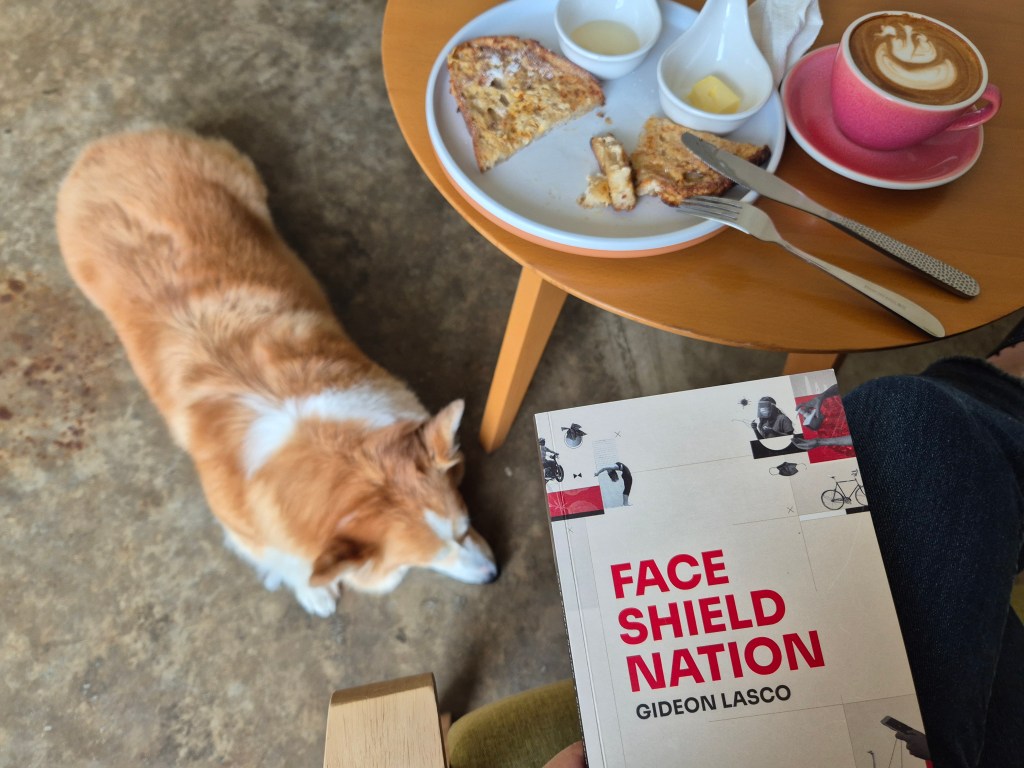
Gideon Lasco: Face Shield Nation

Gideon Lasco’s articles in the Philippine Daily Inquirer were among the things I looked forward to during the pandemic lockdown. His was the voice of calm and reason at a time of great confusion; evoking, through his column, the architectural definition of a column as a sturdy pillar of support.

To have those pandemic articles compiled in a book is to possess an essential time capsule of an era that disrupted our lives and brought the world to its knees; and an era that we cannot afford to forget if we intend to learn from it.

Looking back will not be as easy as it is for others, but it only seems right that reading this should make us feel uneasy at times, despite Lasco’s endeavor to maintain a hopeful tone. When read as an entire book, what’s louder than his leitmotif of hope in these essays is the tone of dissent — a refusal to stay silent amidst injustice and corruption, and a refusal to accept the blunders of our leaders without holding them accountable.

It calls on us, readers and citizens, to demand better leadership and to remain critical toward those in power in the service of nation-building: “If we believe that life is more than survival or subservience, then ‘to live’ should involve the willingness to stand up for our right to do so.”

“…what’s at stake in what we write… art, truth, and social justice.”

That is what’s at stake in everything we do, even in our silence.

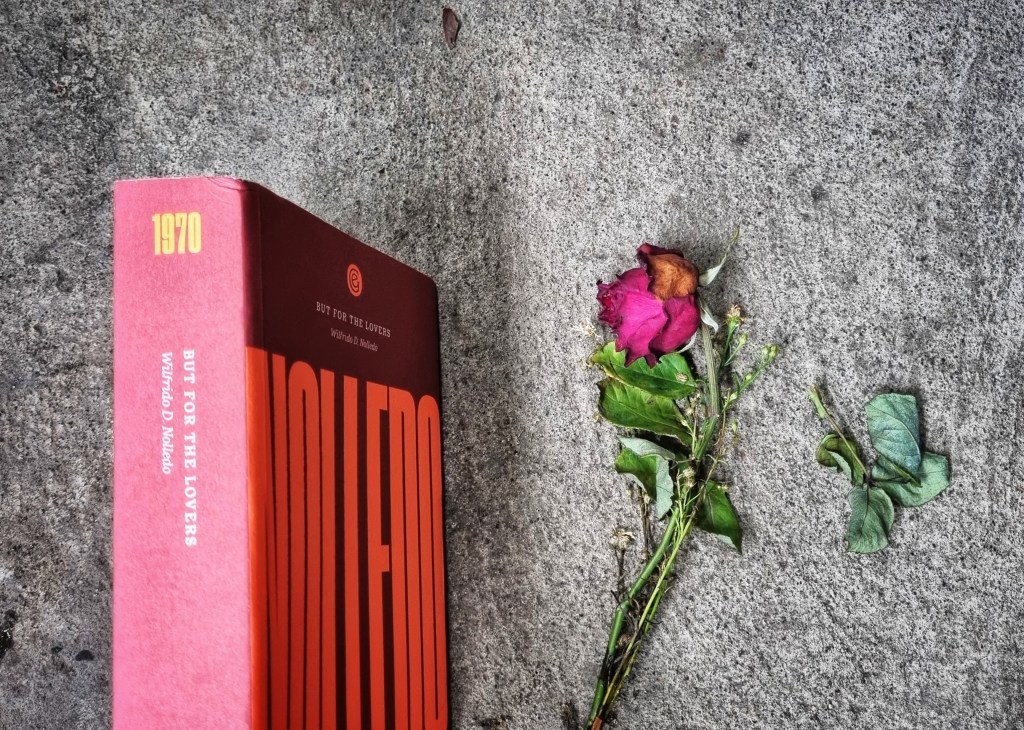
Wilfrido D. Nolledo: But for the Lovers

Before Salman Rushdie there was Wilfrido Nolledo. We find the same clever wordplay, but Nolledo reigns supreme in five languages and a couple of Filipino dialects or more, inclusive of Italian musical terms and Tagalog (they did not call this a feat of language for nothing); there’s that humor that catches by surprise when misery is expected; political caricatures and blaspheming characters that provoke fatwas from the high priests of governments; and those vulgarities that examine moral codes as though asking whether we’d also find war and injustice obscene.

Thanks to countless movies, documentaries, and novels, my generation can conjure mental images of what Paris and other European cities looked like in the final days of WWII, but only few can picture the desolation and the confusion of Manila when it was the bomb-ridden chessboard of the imperial powers. Nolledo encapsulates it for us. But one must not expect a literary Amorsolo, because here is a postmodern Hieronymus Bosch.

“And won’t we be doing the reader an injustice by presuming he can’t digest such stuff?” Nolledo asks in response to a suggestion to cut the manuscript to keep readers interested. And so, signifying that it was written not to sell but for art, he gives it to us, gives it to us hard.

It is not going to be everyone’s cup of barako. It is an explosive halo-halo that is difficult to swallow at times. A revolution on one’s literary tastebuds. Before Rushdie there was Nolledo, but I am only discovering this now. It’s time we did.

And yes, I read this for Valentine’s. Haha!

Jose Rizal’s Binondo

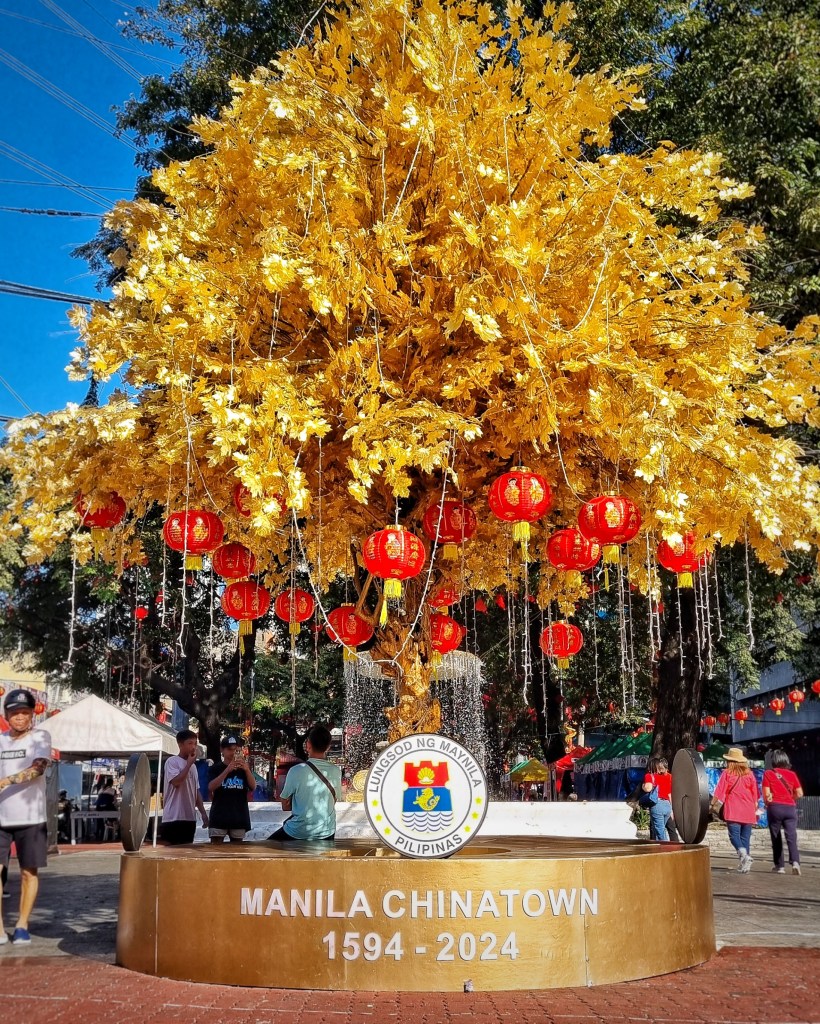
Binondo prides itself on being the oldest Chinatown in the world. Established in 1594, it is, as one would expect, steeped in history and stories. 

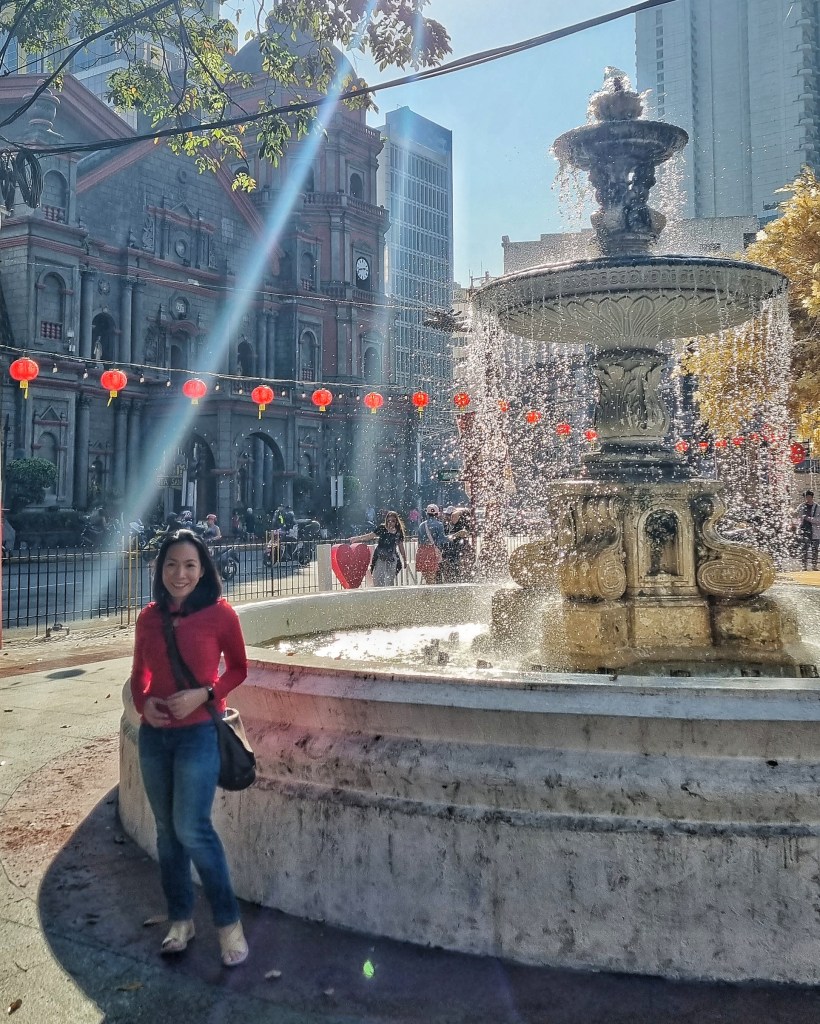
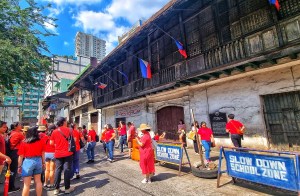
Today’s walking tour (Jose Rizal’s Binondo) with THE Ambeth R. Ocampo and Ivan Man Dy, explores what is not commonly known to Filipinos: The Manila in Jose Rizal’s novels takes place outside of Intramuros and is instead set in Binondo and neighboring San Nicolas, Santa Cruz, and Quiapo.

From following Ibarra’s footsteps in the opening of Noli Me Tángere to the the site of the opium den where Kapitan Tiago ended up, we walked through Binondo’s tiny alleys (one aptly named Hormiga after the Spanish word for ant), past Antonio Luna’s birth house and the many storied nooks of Binondo. 

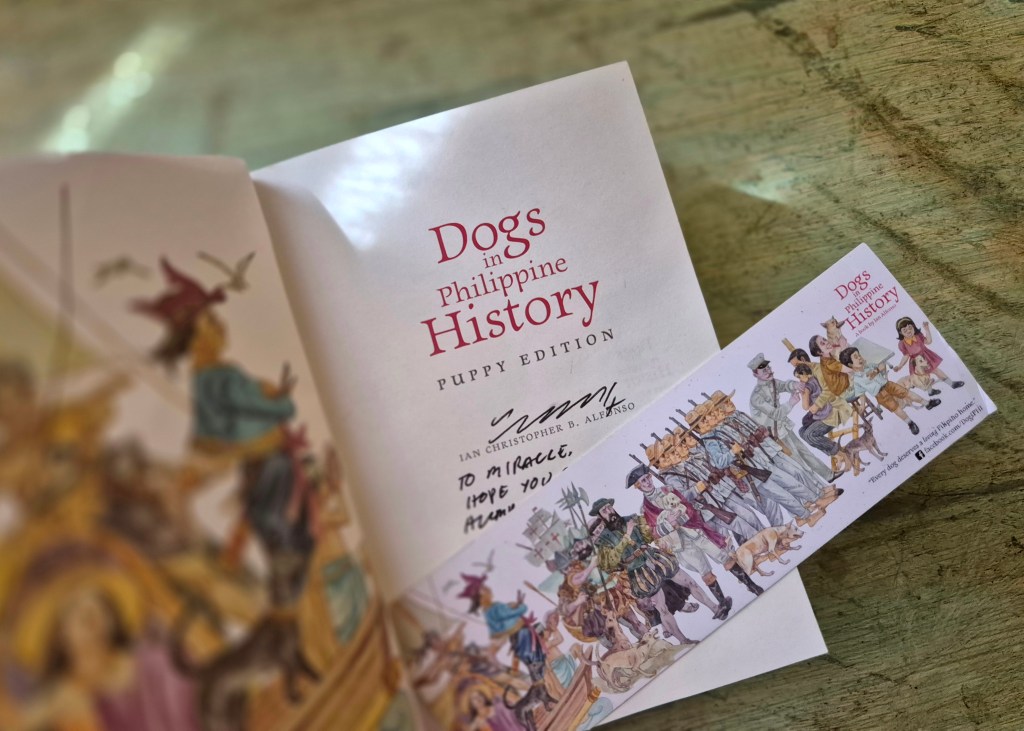
For the book signing scheduled at the end of the tour, after a filling lunch at Ilang-Ilang Restaurant, I brought my copy of Cabinet of Curiosities — Mr. Ocampo’s latest book, which I read last month and which he signed today after confirming if my first name is really Miracle. It was an apt choice because this tour seemed to be a continuation of the book as we witnessed nonverbal proofs of Philippine culture and heritage. History, in the strictest sense, relies on written sources, but Mr. Ocampo highlights this need to trace the past in other ways when the document trail encounters a dead end. “History not only comes from archives and libraries; sometimes it comes from paintings, music and other forms of art,” and oftentimes, cabinets of curiosities. Binondo is a giant cabinet of manifold curiosities.

“History is not always what we want or how we imagine it,” is another line from Cabinet of Curiosities that rings true. Not only did I discover lesser-known aspects of Philippine history today, but I also learned about our National Hero’s more human side. What continues to leave a pinch in my heart, however, was Mr. Ocampo’s remark on what would happen if Rizal were alive today. Believing that he would continue to voice out what most of us would not like to hear, “He is someone that we would shoot all over again.”

I’m extremely grateful to Gabi for thinking of me when a slot for the tour became available. Being both early birds, we arrived at the Binondo Church an hour before everyone else and we  took shade under four hundred years of history. Built in 1596, the original structure has gone through typhoons, the great earthquake of 1863, and the destruction of the Second World War. Its three-phase reconstruction was completed in 1984 and it remains the centerpiece of Binondo. And there we were, two history fangirls, whispering about politics, religion, and life, hushed by the weight of our national history and our personal histories, learning that these difficult topics should not necessarily be avoided, but be discussed with utmost respect and humility. Moreover, it was meaningful to share this experience with someone who understands that one of the best things about learning our history is that you meet pieces of your heritage, you meet pieces of yourself.