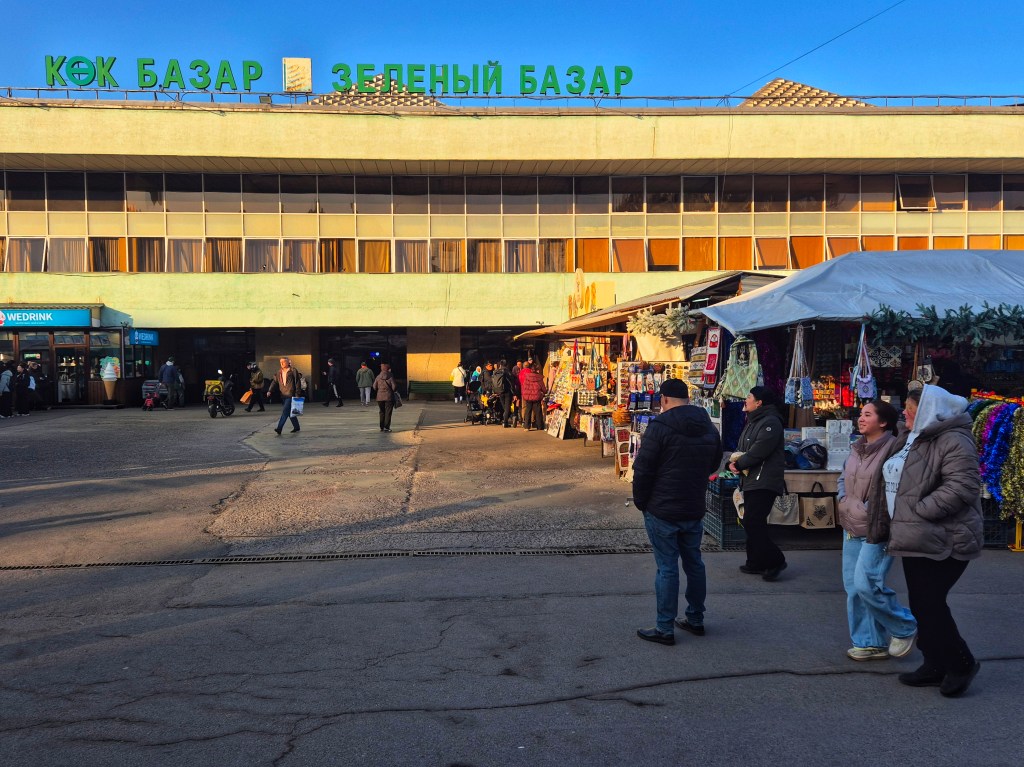
Circling back to Almaty and exploring the many facets of what is the largest city in Kazakhstan. Although it was once a stopover on the Silk Road, the Soviets have left a more tangible influence on the city. If there’s a place in Almaty that still bears echoes of the Silk Road, it would have to be the Green Bazaar.
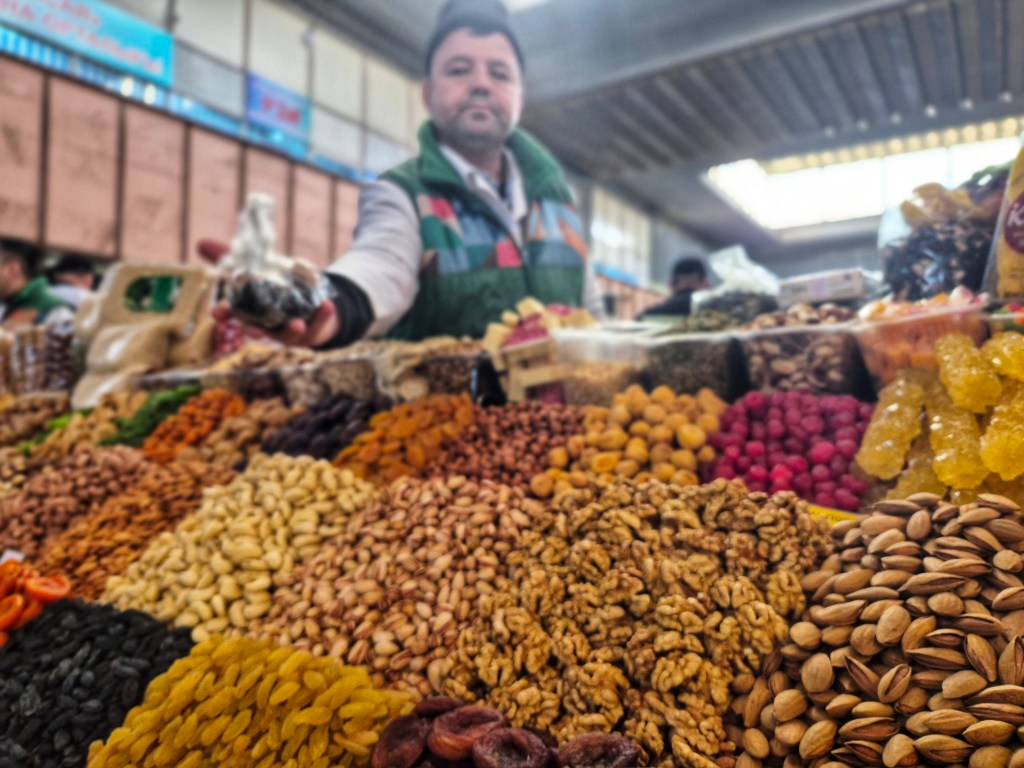
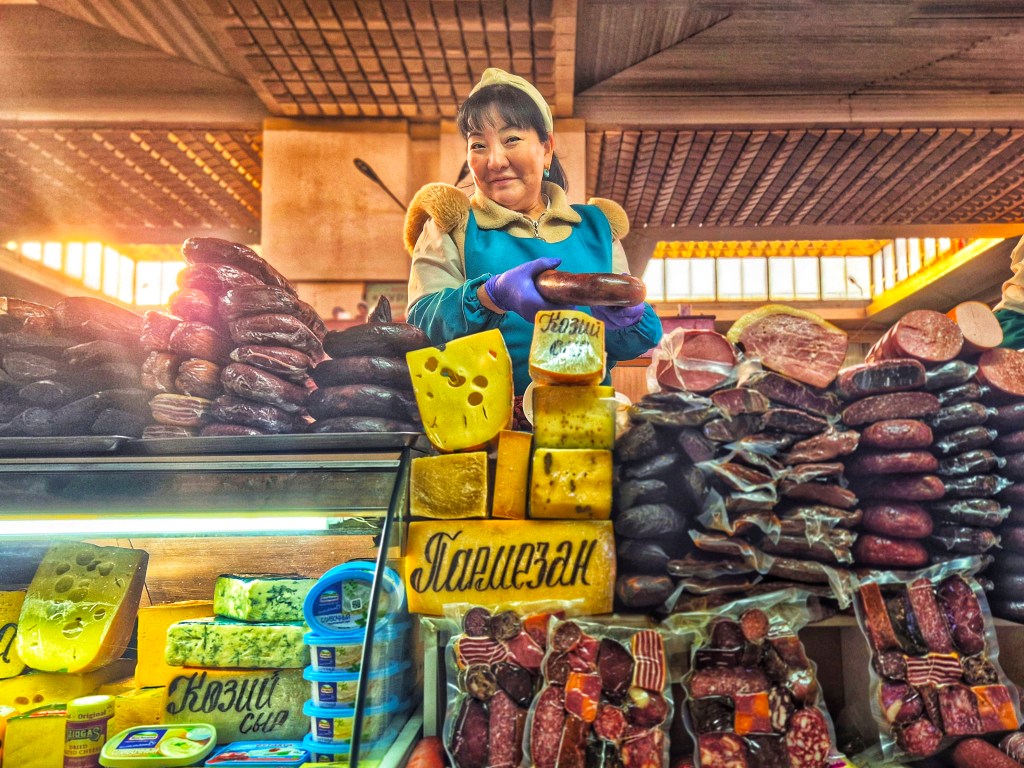
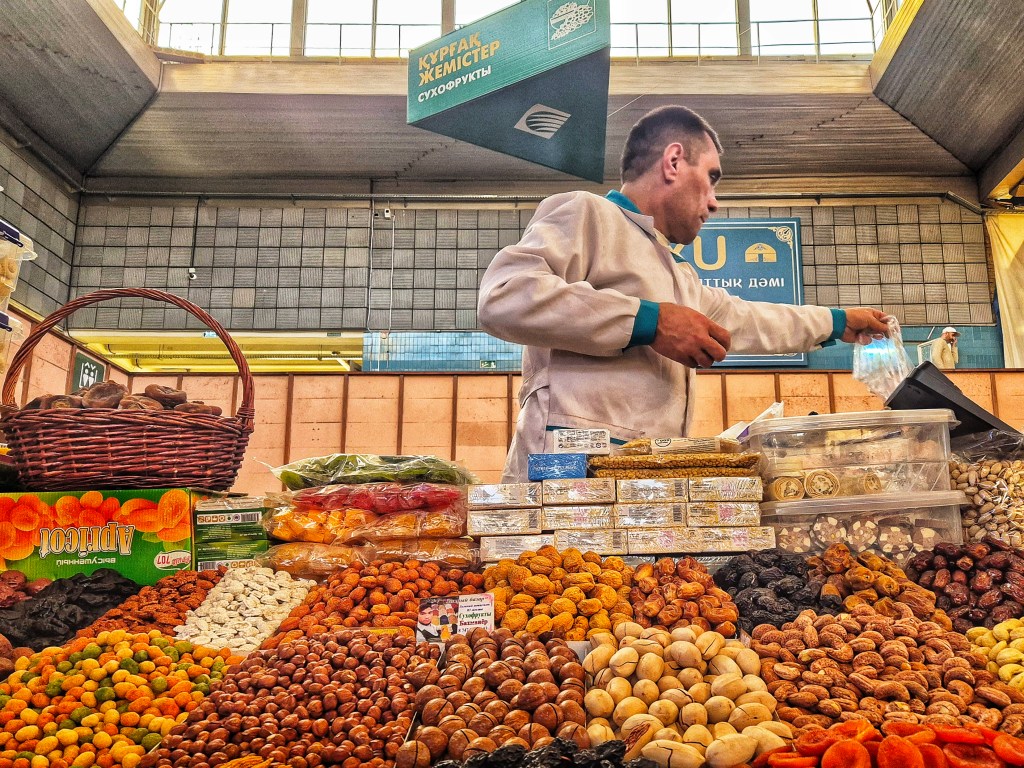
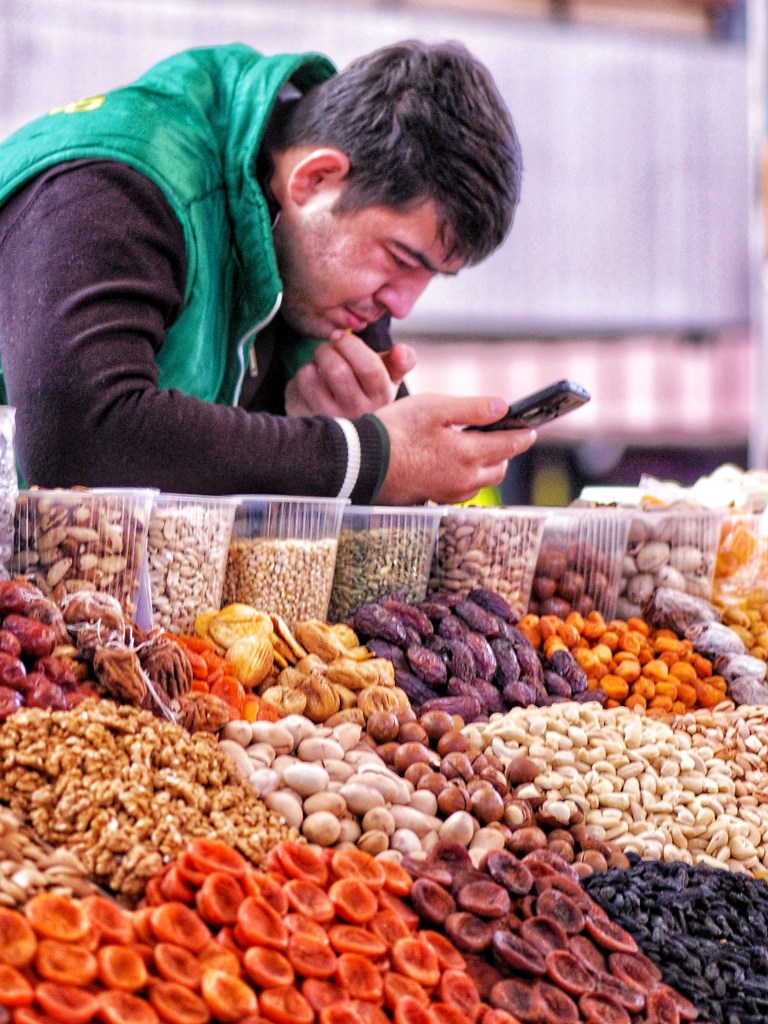
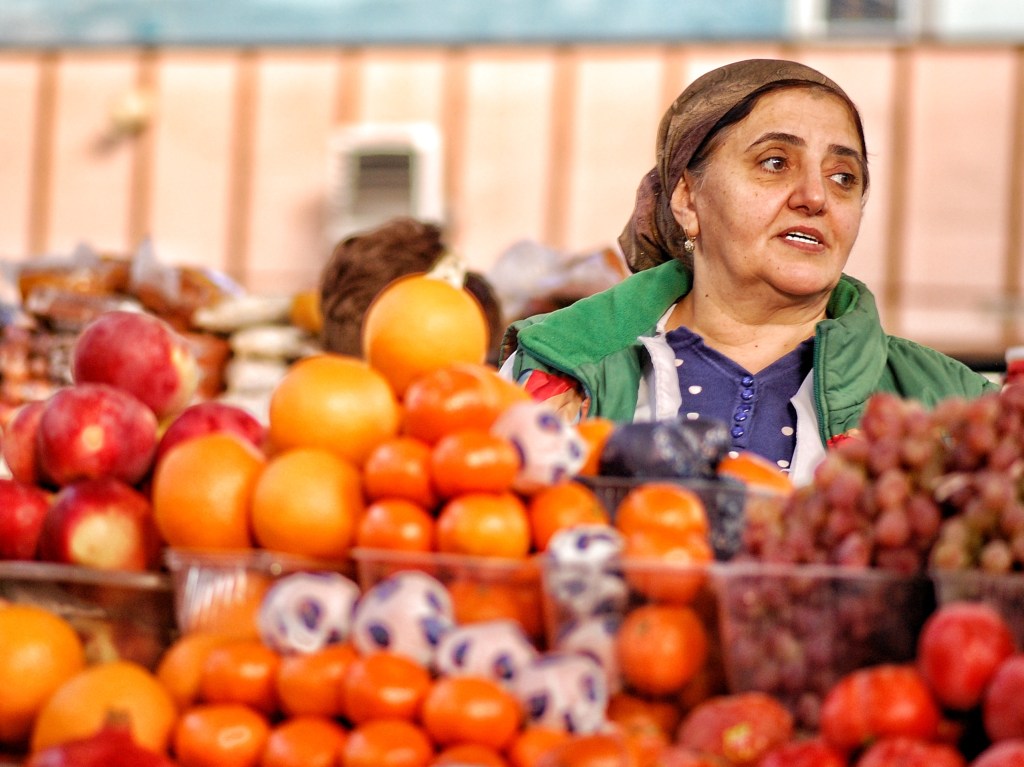
Dried persimmons from China, candied apricots from Afghanistan, camel dairy products, horse meat, the same spices that nations have gone to war for, and teas that have coursed through the veins of the famed routes for centuries, fresh pomegranate juice stands overflowing with incomparable fuchsia… It’s all there!
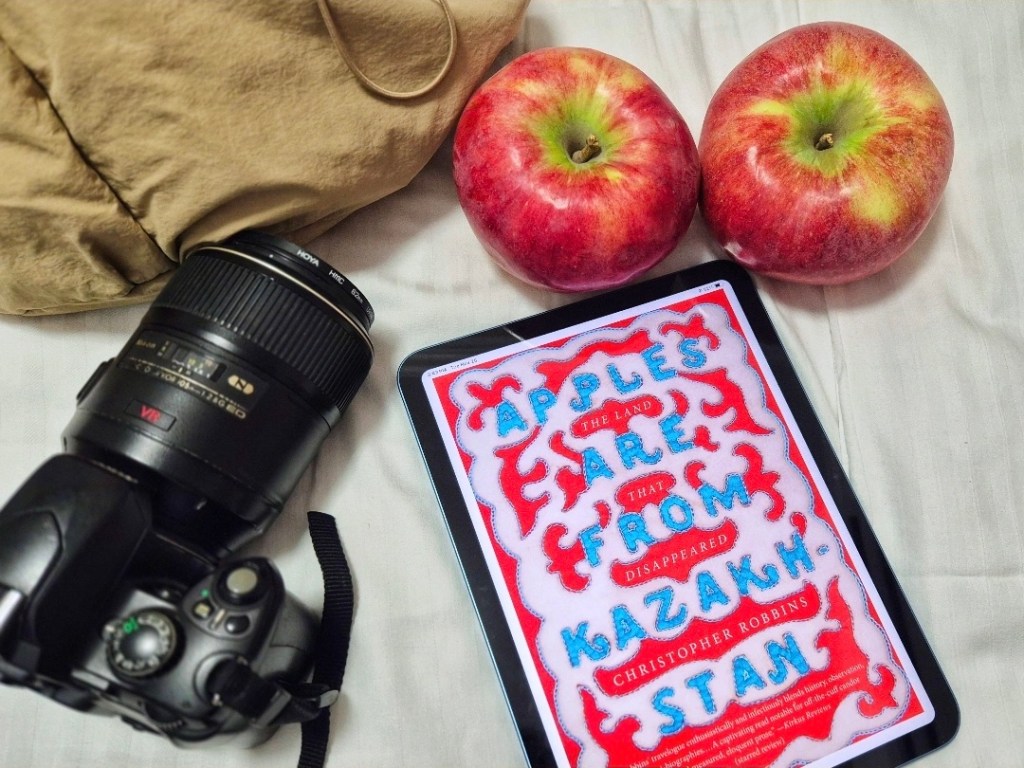
But I went to the Green Bazaar for the apples. No, not because of my regular detox diets. Almaty, formerly Alma-ata, means “Father of Apples.” Apples are from Kazakhstan. Its seeds travelled along the Silk Route and eventually reached the West through the Romans, who discovered them in Syria after a few thousand years.
The Kazakh apple is a little bit more sour than the apples I’m used to, but I’m happy to report that I am very much awake! Luckily, my first bite did not put me to sleep. Heaven forbid I’d have to wait for true love’s kiss to wake me up!
A fine thing in Almaty, Trotsky’s wife Natalya wrote, was “the snow — white, clean, and dry.” After his exile in Kazakhstan, he would only move farther and farther away from the motherland and never return. And yet, the couple would recall their sojourn here fondly.
Underneath this landscape hushed by snow are dark, startling, and forgotten histories. May the traveller always seek to know what gives its beauty depth.
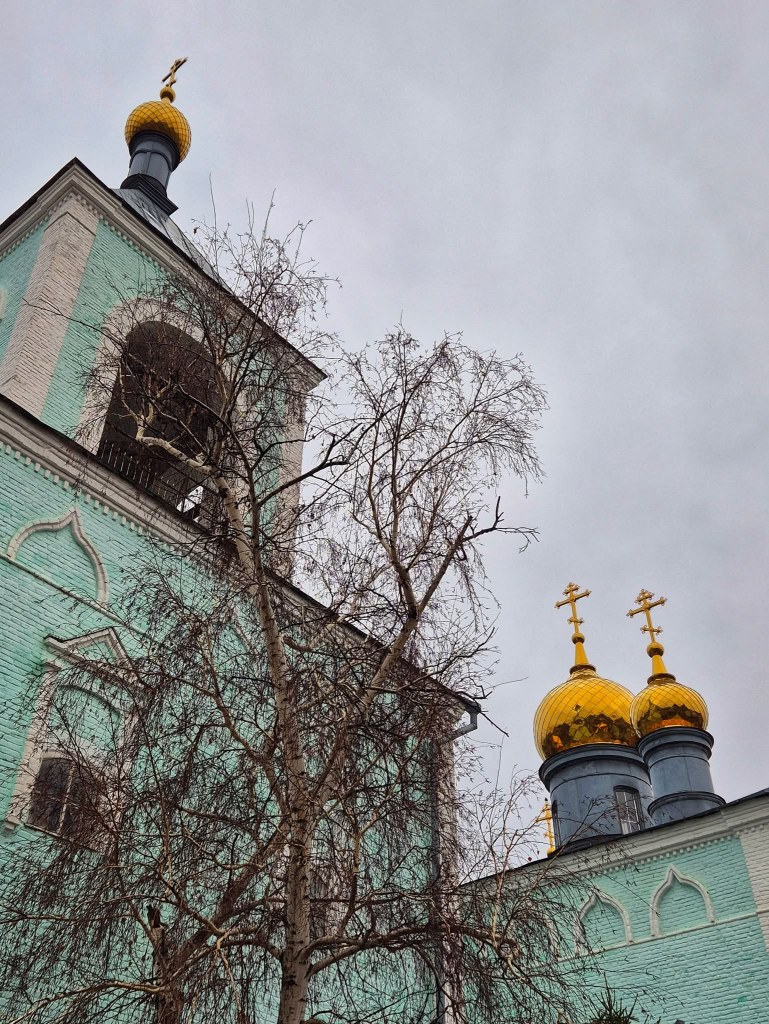
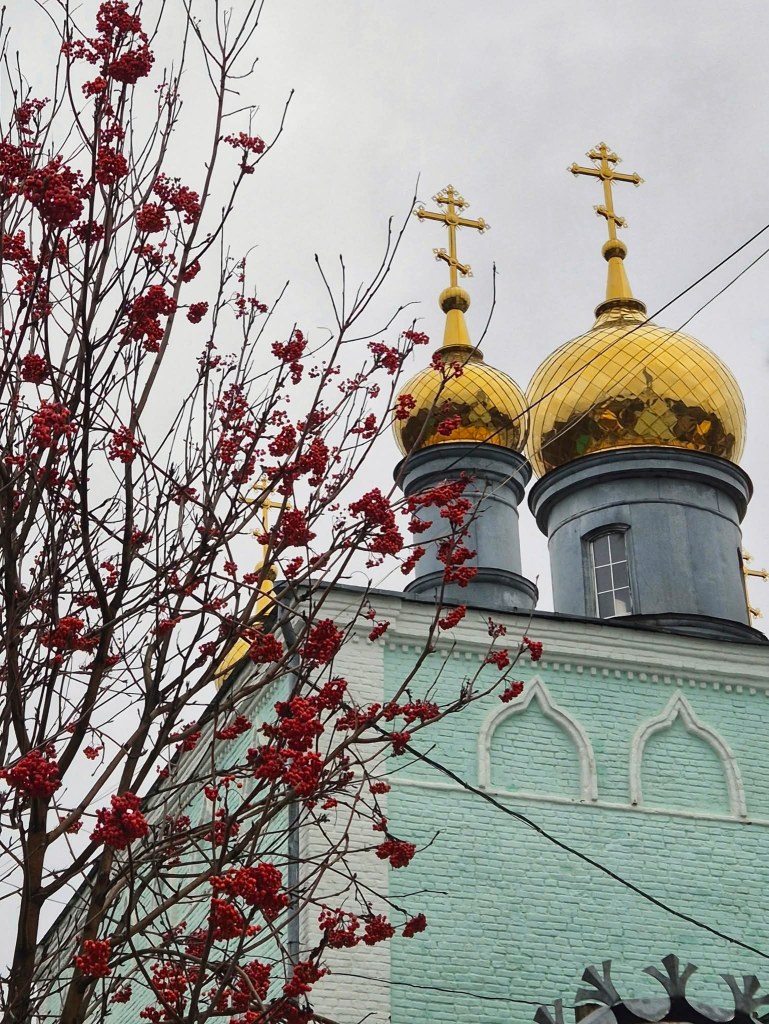
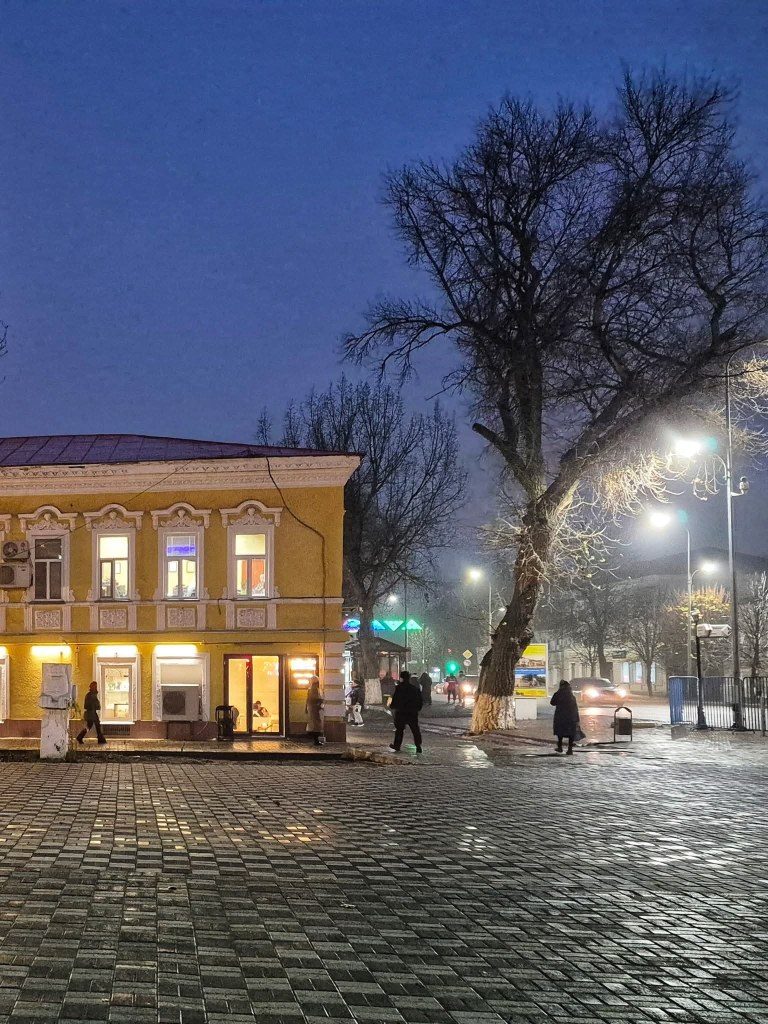
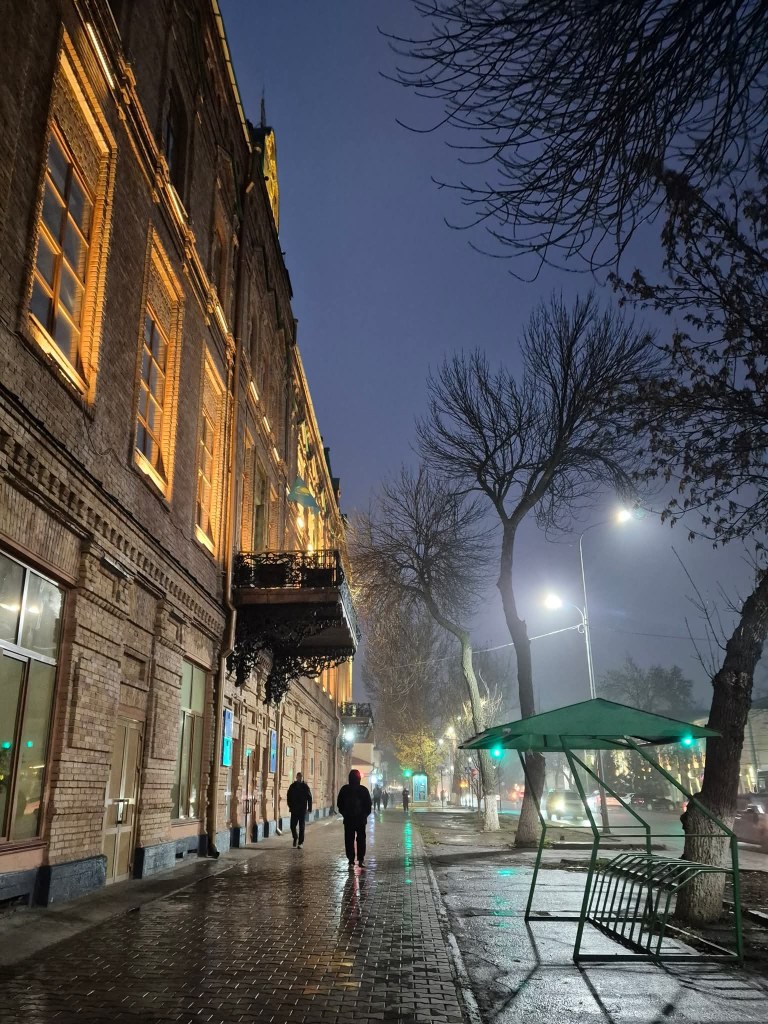
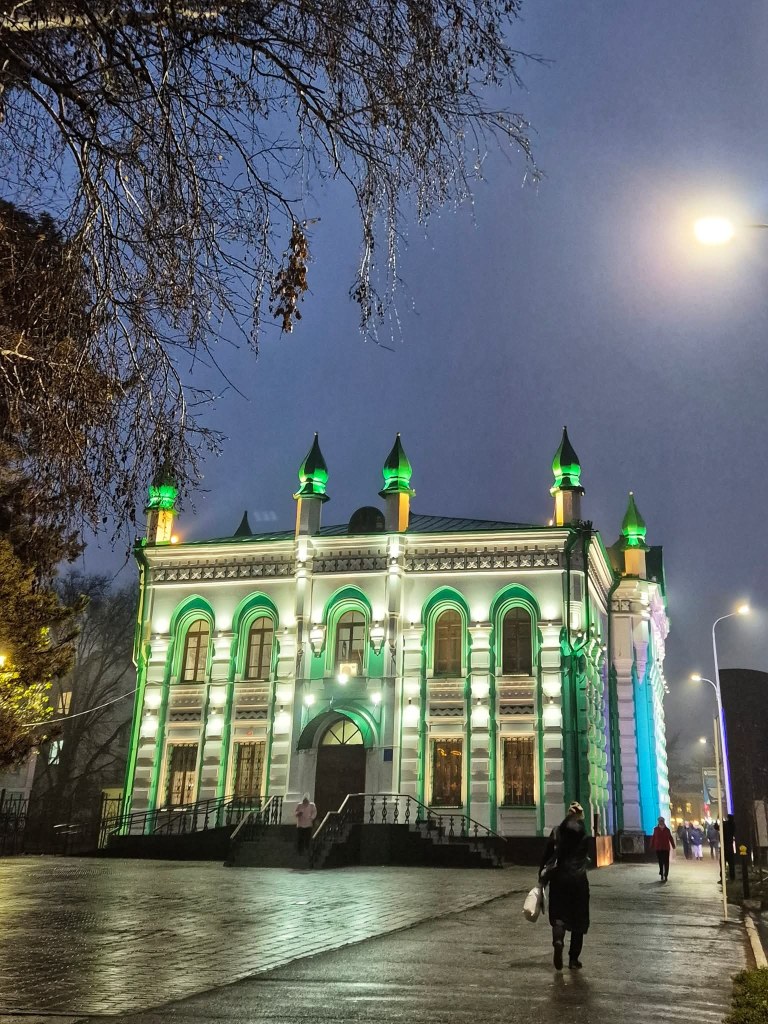
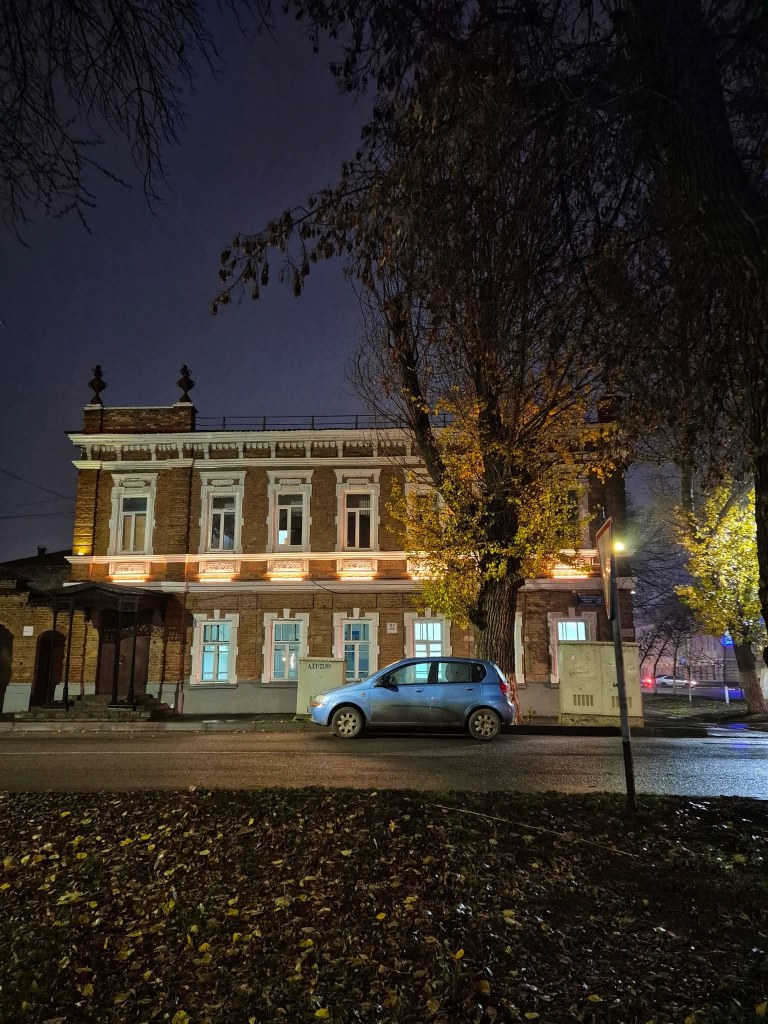
The city is now descending into winter. At 9:00 A.M., the sky is unlit, and even at noon, the sun barely makes its presence felt. But I love strolling around despite the dark and the freezing temperature and seeing the onion domes of Orthodox churches appear through the mist, adorable babushkas wrapped in headscarves who are up before everyone else, and the warm lights emanating from old windows that reveal hidden coffee shops that offer respite from the cold. The baristas do not speak English; hardly anyone does, but they have smiles that translate enough warmth to this strange, shivering girl with a book.
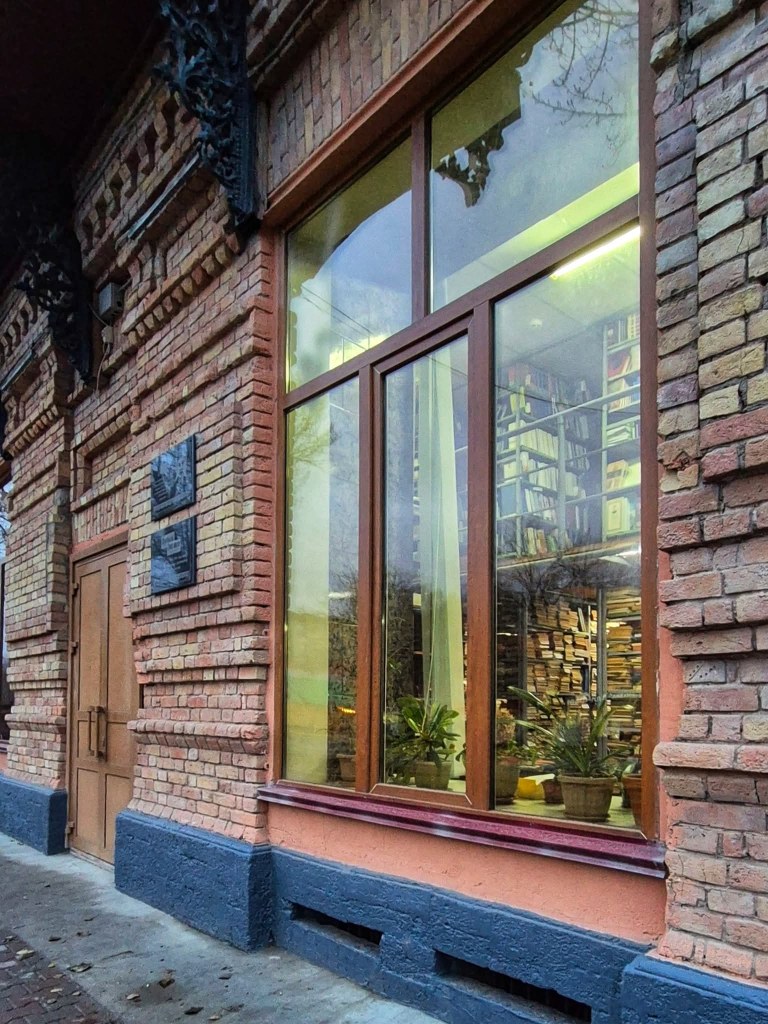
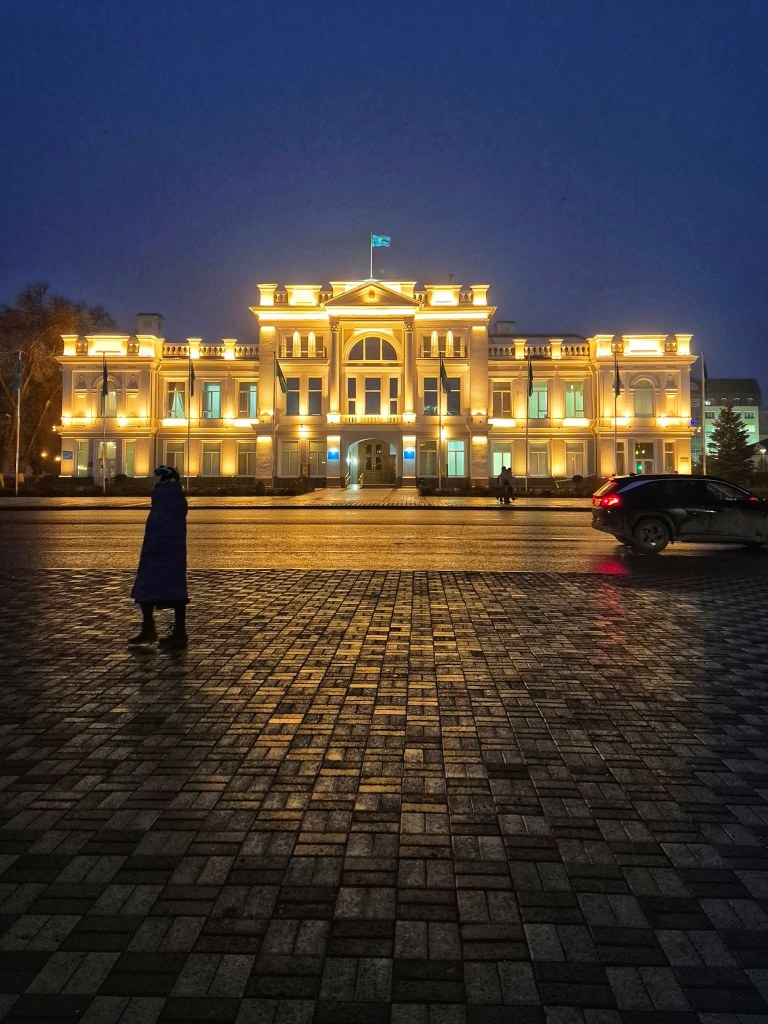
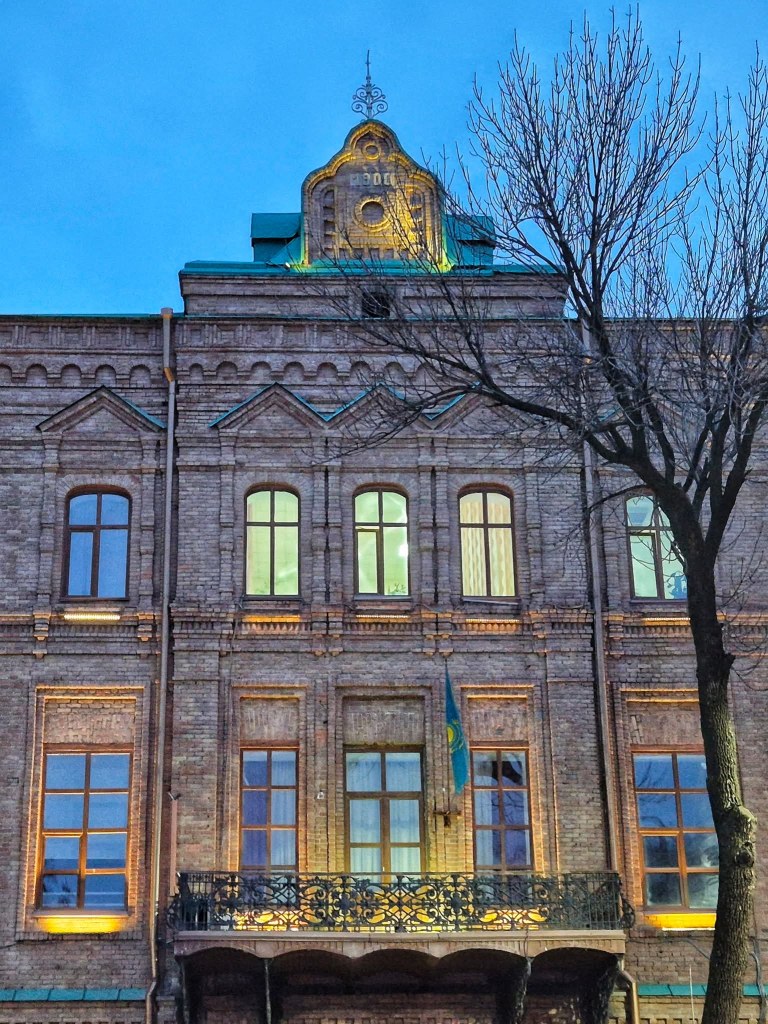
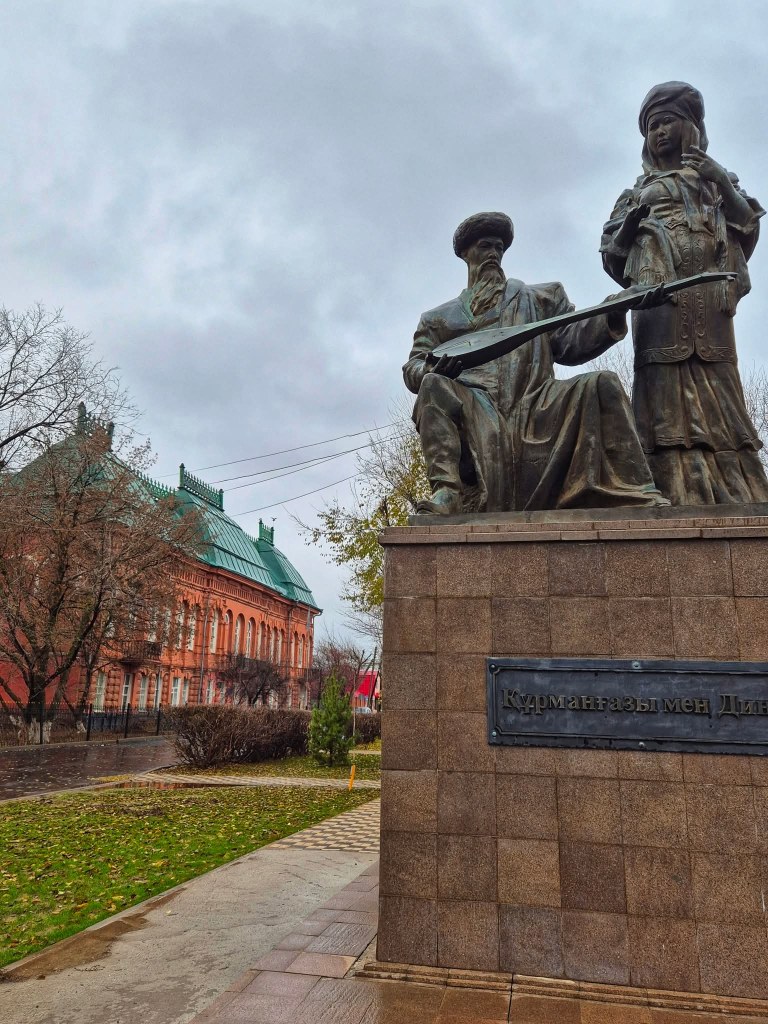
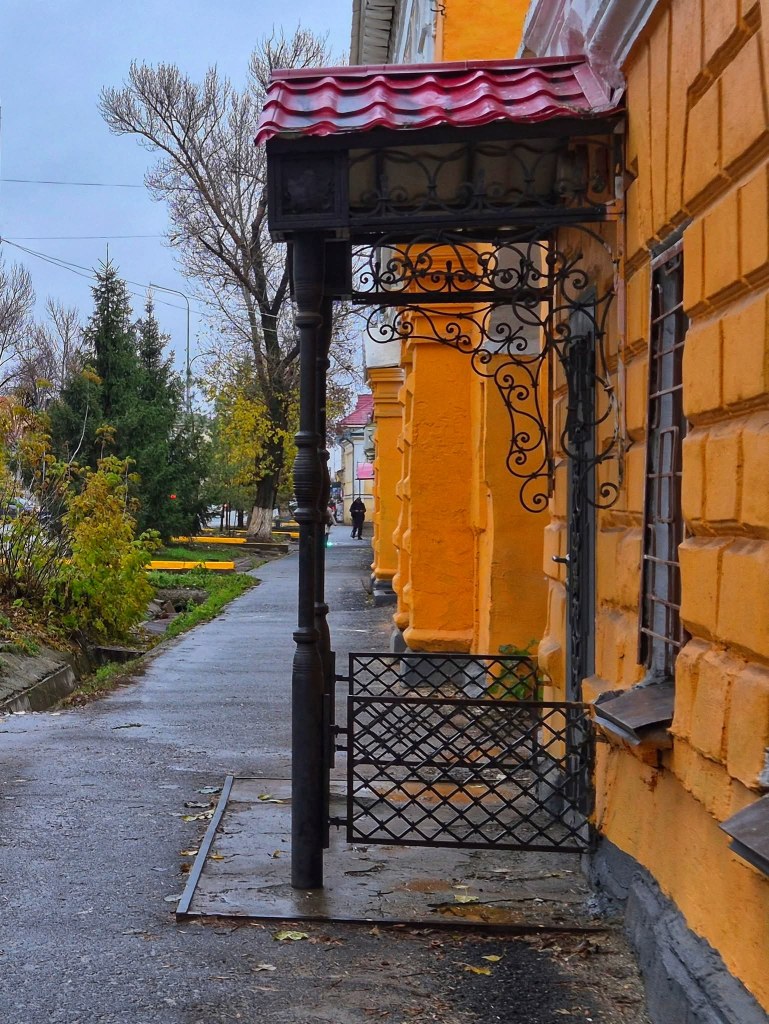
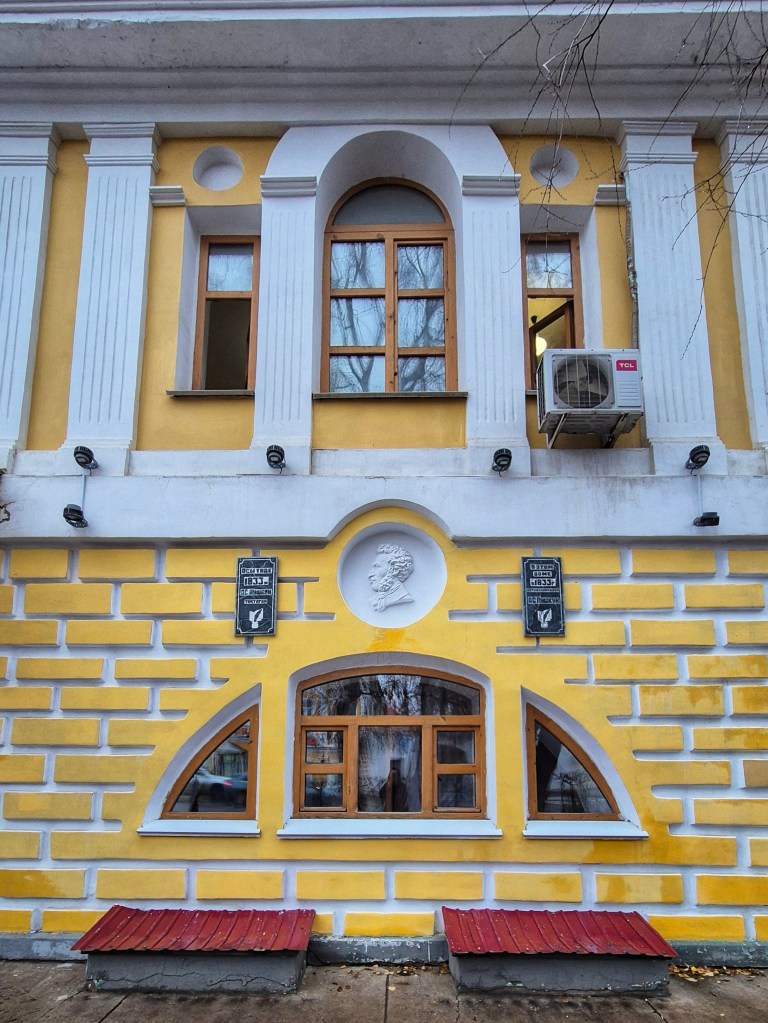
Its side streets and residential areas are pages out of a Gogol story. It is, after all, quite a literary city. It was here that the first and enduring public library in Kazakhstan was established in 1871. Pushkin, Tolstoy, Sholokhov and other literary greats have come to Uralsk and made their mark here. I booked at the Pushkin Hotel, predictably.
The distance between Almaty and Uralsk is several chapters or a few hundred pages of a Russian novel. For a different perspective: Uralsk is closer to Kiev, Moscow, Warsaw, Vienna, and Helsinki than it is to Almaty. The oldest city in what is now Kazakhstan, Uralsk was founded by Cossacks in 1584 as a border outpost of the Russian Empire.
Perched on the European bank of the Ural River, it is geographically within Europe. It is where Central Asia ends, or begins, depending on where you’re coming from. But if you’re coming from a book, as I am, it is where Russian literature comes alive.
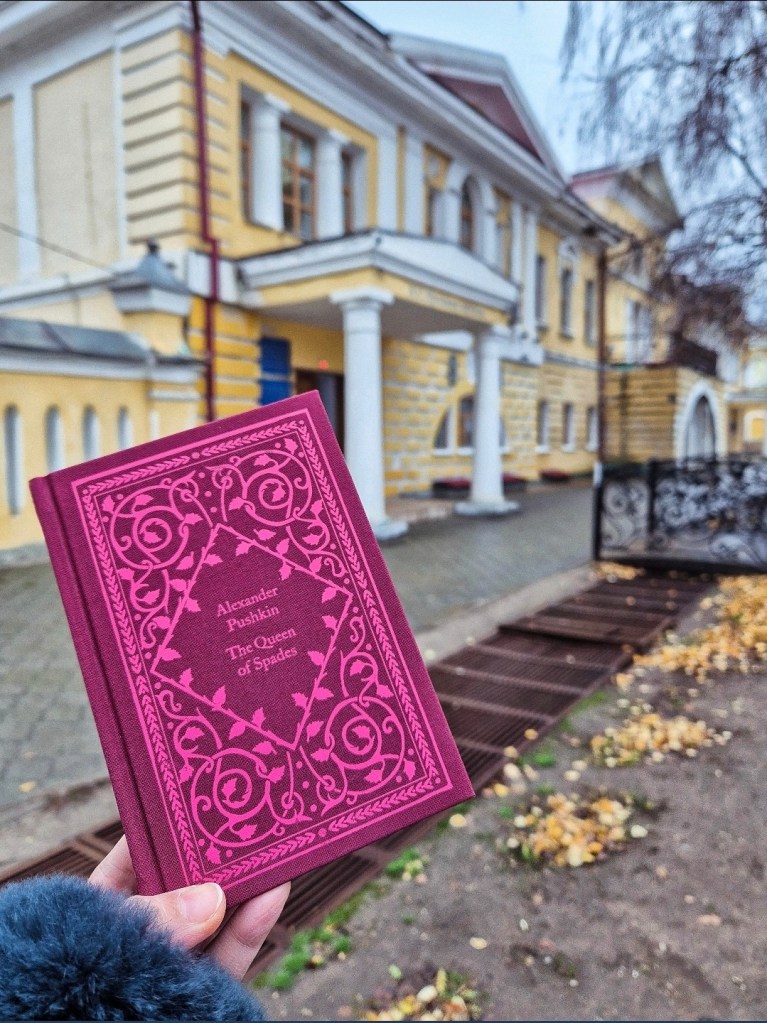
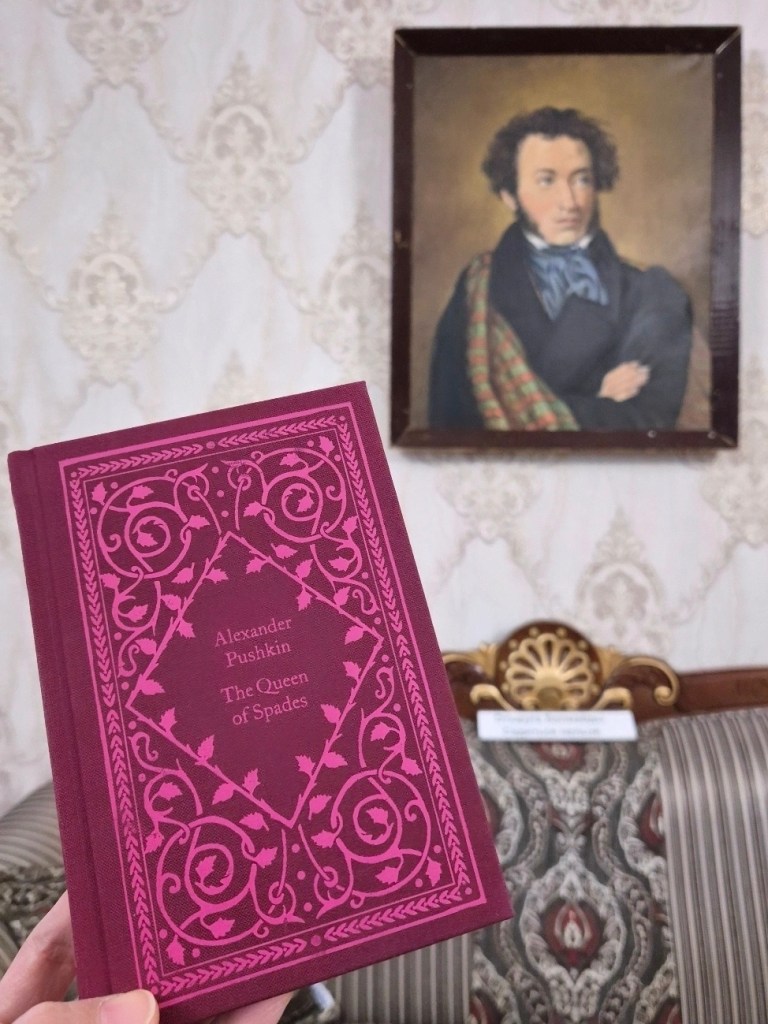
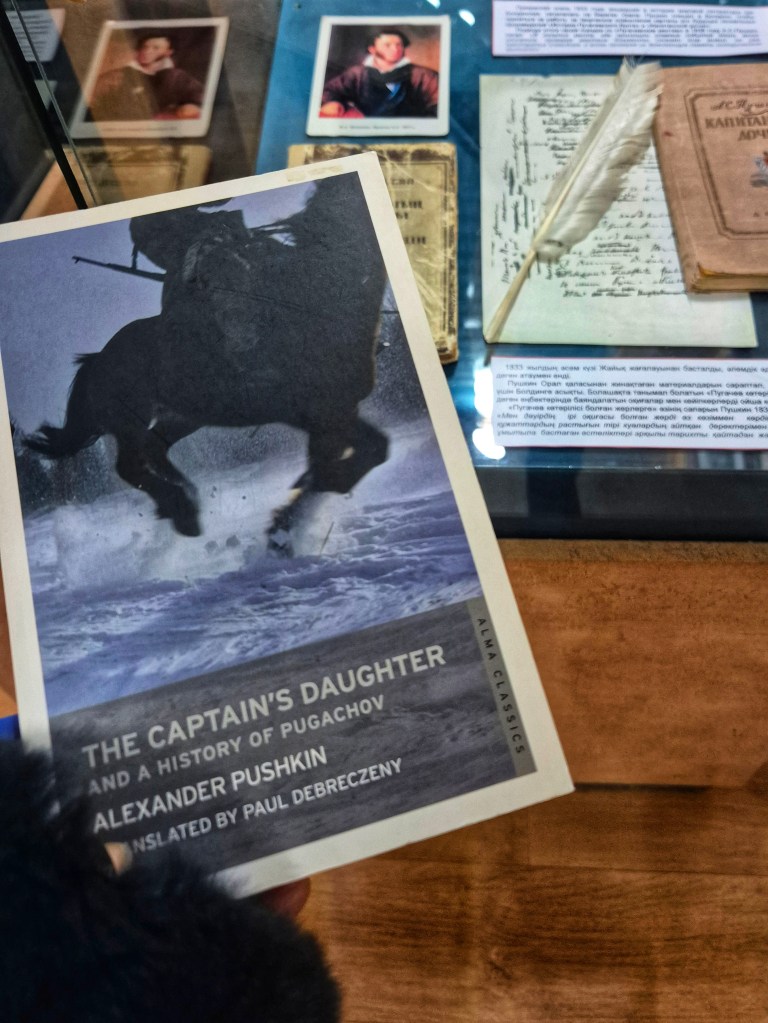
The Pushkin Museum was my first stop, but no matter how the attendant and I tried to communicate regarding the entrance fee (signal was weak, Google Translate wouldn’t load), she would laughingly start with another stream of Russian, and I would answer in English. After a few minutes of the futile but funny exchange, she suddenly stopped when she saw me holding a Pushkin book. “Ah!!!” She nodded in recognition, gestured at the book with approval, waved me away, and signaled for me to enter without paying. (Kids, it’s true what they say: Books open doors for you! Haha)
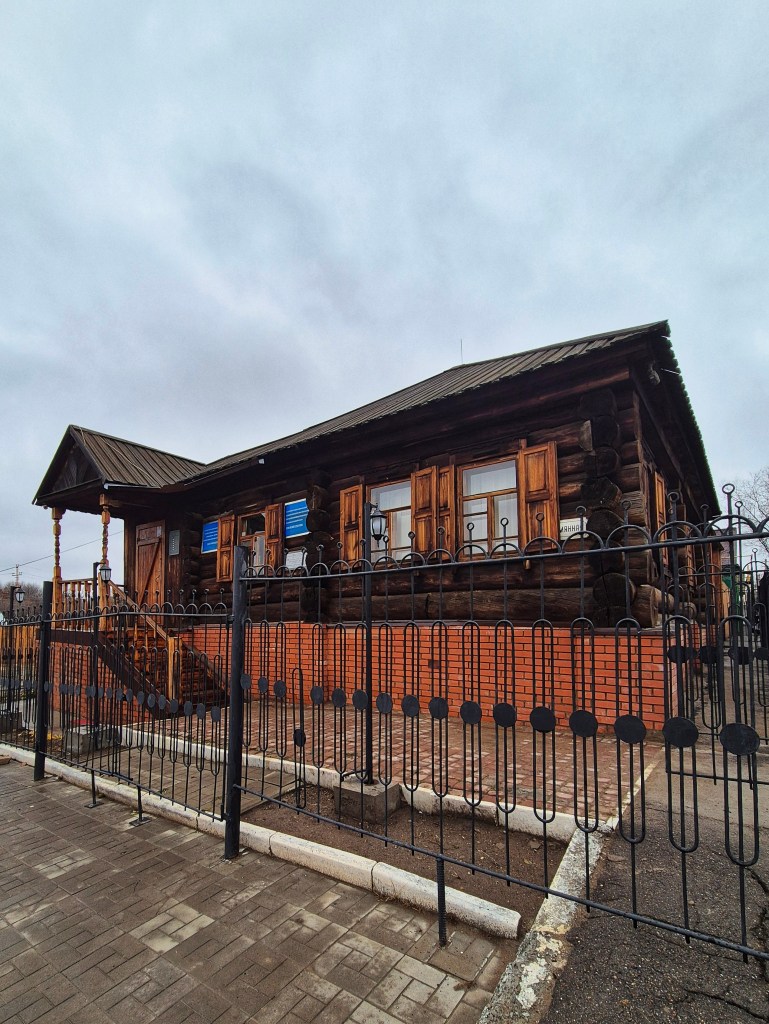
Pushkin came to Uralsk in 1833 to do research and prepare for two significant works, The History of the Pugachev Rebellion and The Captain’s Daughter. The residence of the Cossack leader that hosted him now houses the Pushkin Museum.
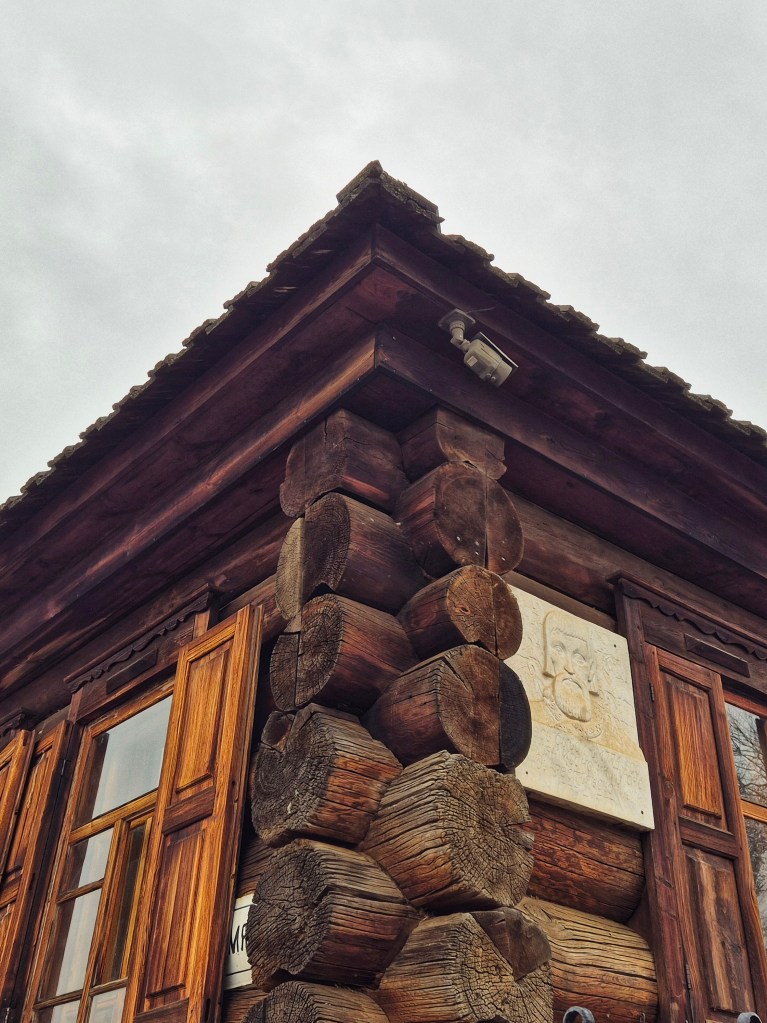
Pugachev was a Cossack during the reign of Catherine the Great who led the largest peasant revolt in the history of the Russian Empire. Needless to say, the well-preserved Pugachev House Museum was my second stop.
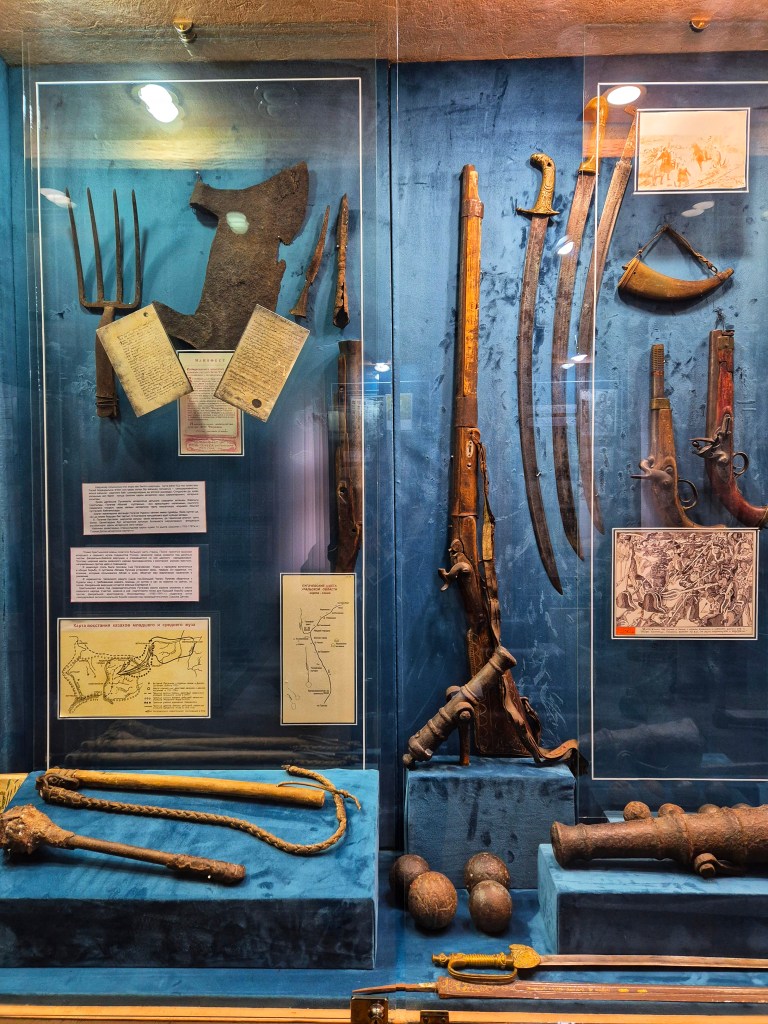
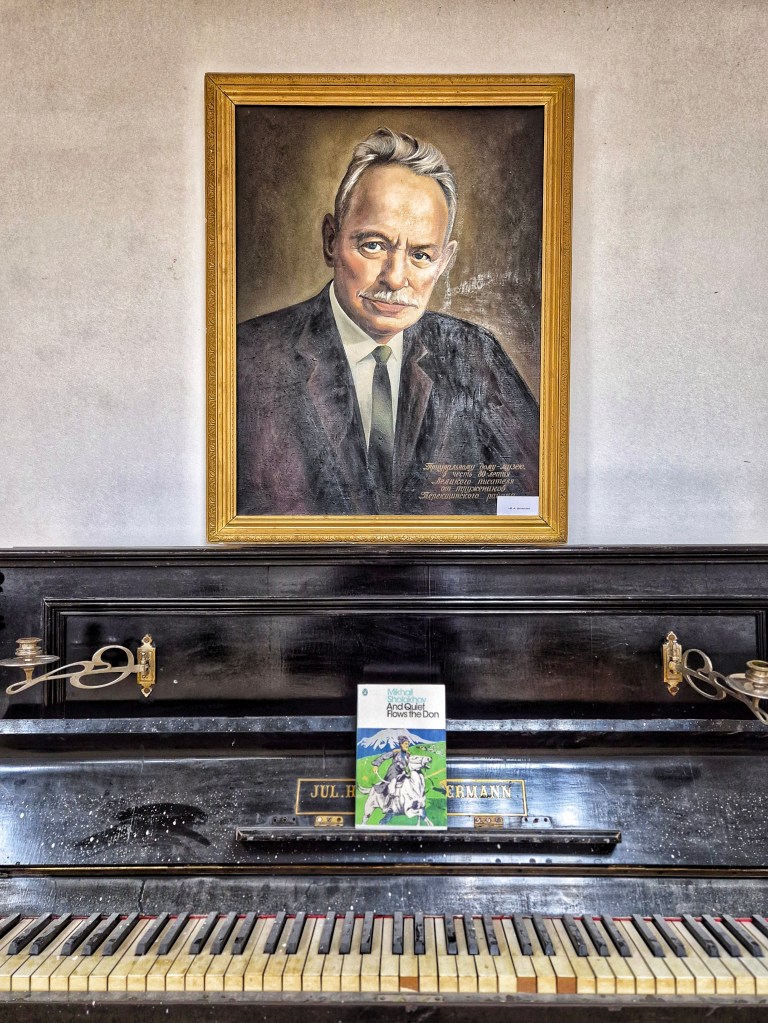
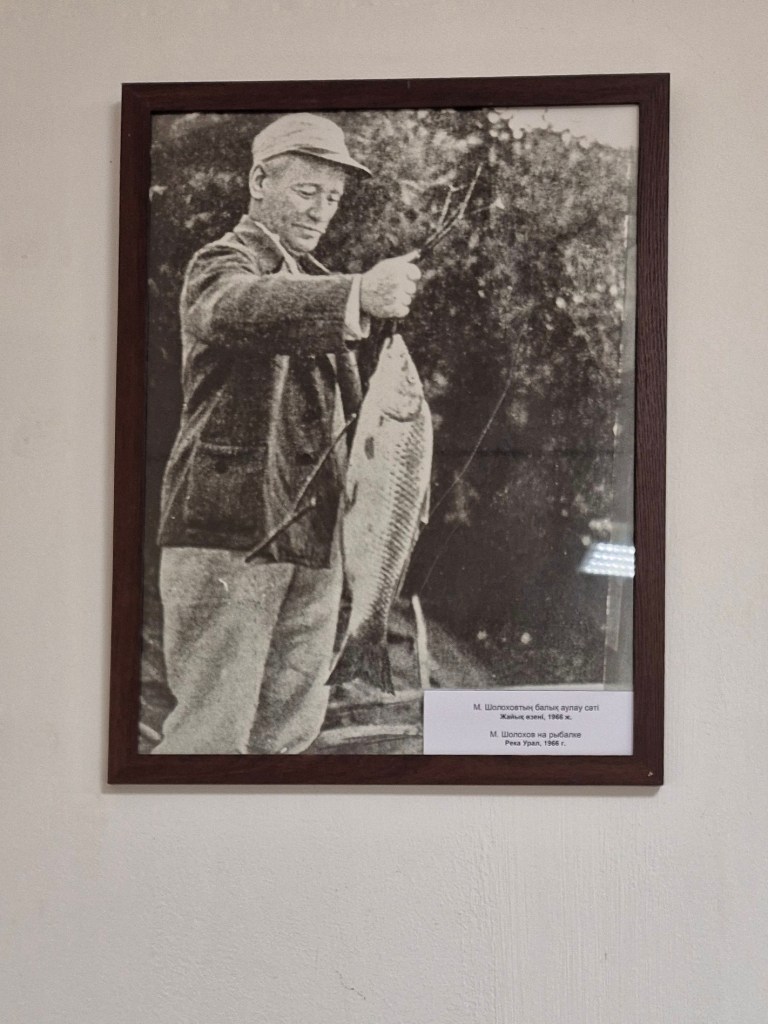
Finally, the Sholokhov Museum in the village of Dariinsk, close to the Russian border — so close that the driver had to make sure I had my passport with me in case we encountered border patrol. This is where Sholokhov and his family spent the wartime years. It was also where Sholokhov received news that he was awarded the Nobel Prize in Literature.
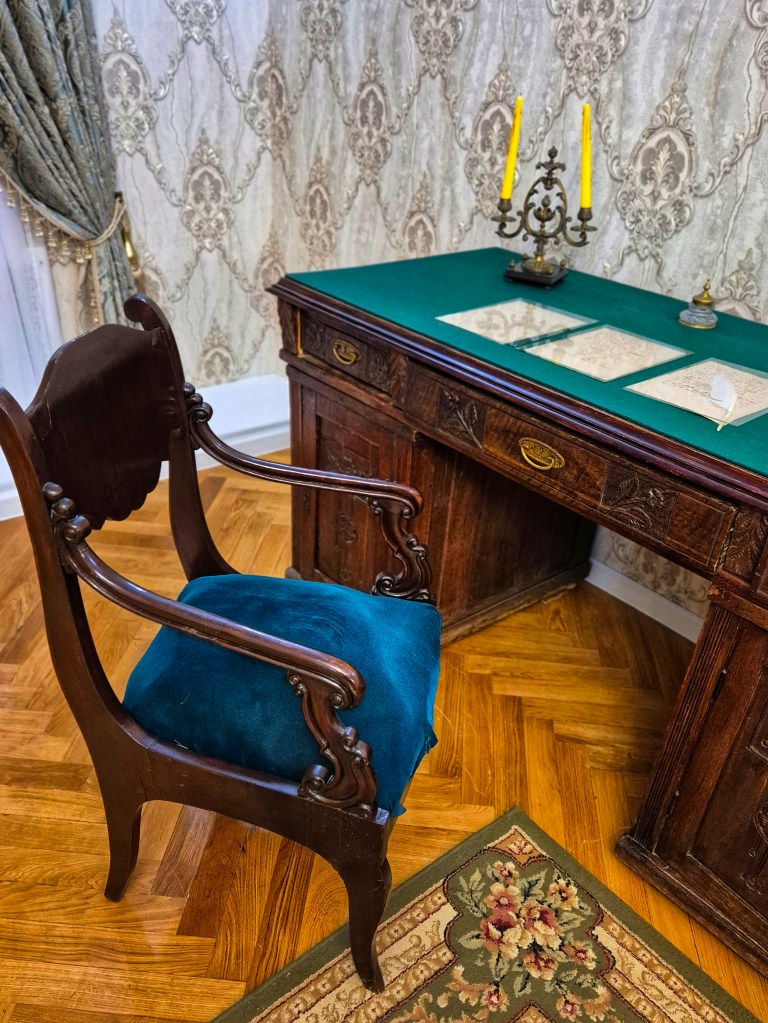
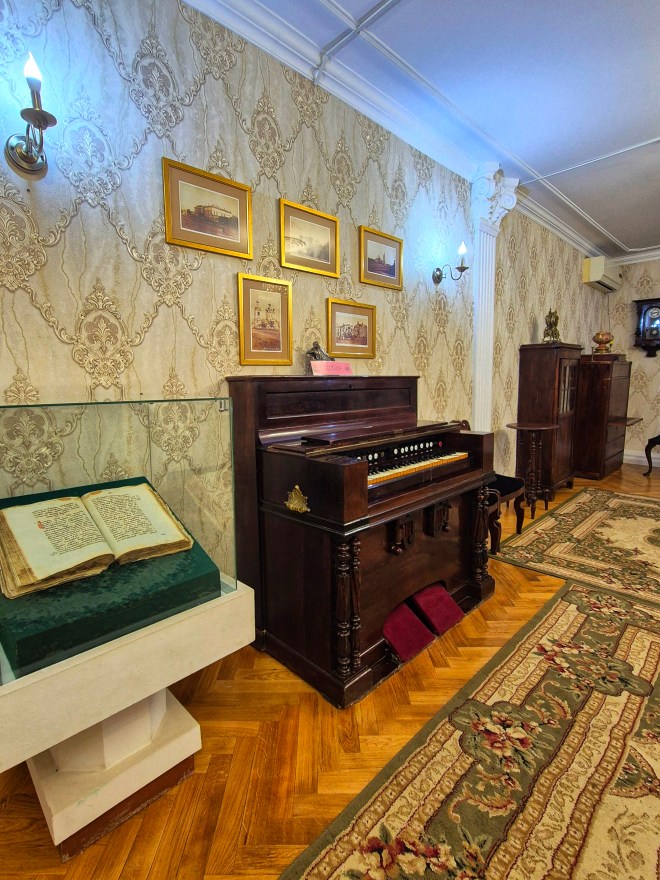
It felt surreal being allowed to sit at his desk and play a Rachmaninoff passage on the broken piano.
There are a few things to note regarding museums in Uralsk: The captions are all in Russian; I was the only guest in the three museums that I visited; the museum attendants do not speak English, but they are all genuinely kind and warm, and try their best to communicate; these establishments remind you that one of the things that make Russian Literature great is that, whether political, spiritual, or existential, they stand for things that are eternally relevant.
It’s been over a decade since my last Dostoevsky, and I’m glad this month’s travel destination prompted me to pick him up again and pointed to this lesser-known work, one which is ironically seen as the start of his forceful return to literature, which Turgenev compared to Dante’s Inferno, and which Tolstoy thought to be his most outstanding piece.
I began reading this on November 11 (Dostoevksy’s birthday) and finished reading it on November 16 (my birthday). Dostoevsky may not be the most popular choice for a birthday read, but I maintain that, despite the horrors described in his novels, his works are ultimately about spiritual redemption. Dark, yes, but also, glorious. Besides, birthdays are existential!
Notes from a Dead House is a harrowing account of prison life that is not without Russian dark humor. If not for the fictional character’s crime, most of it is autobiographical as Dostoevsky writes from his experiences as a political prisoner in Siberia. The passage that will remain embedded in my mind, is the part where the main character is finally allowed to acquire books after seven years of being prohibited from reading and owning any! Isn’t that the worst kind of punishment, especially for someone like Dostoevsky?! One can only imagine the quenching that ensued!
Dostoevsky being Dostoevsky provoked the powers that be by putting up a printing press and publishing a letter that offended the Orthodox Church and Imperial Russia, and was arrested for participating in a secret socialist society. In 1849, he was sentenced to hard labor. His sentence was revised to four years in Siberia, followed by four years of military service in Kazakhstan.
It was here in Kazakhstan where he served as a private, ripe with experience and brimming with ideas and plans for writing. Nearing the end of his sentence, he started writing Notes from a Dead House.
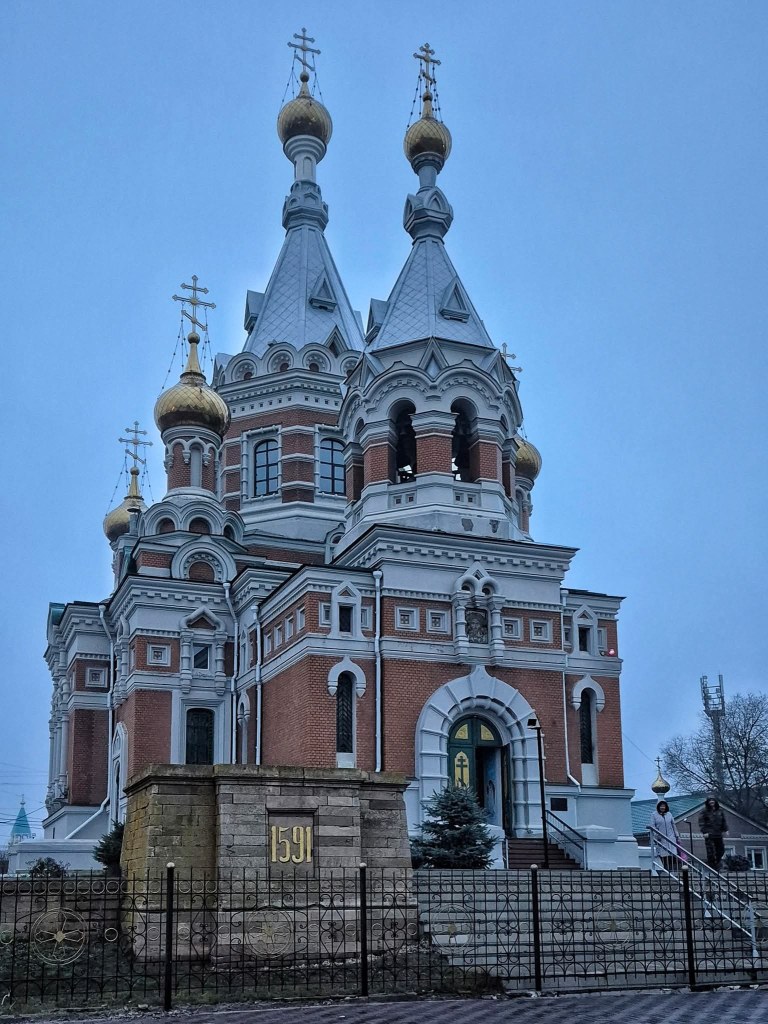
As a playful juxtaposition, in the background is the Orthodox Cathedral of Christ the Savior in Uralsk. Its foundation stone was laid by Tsarevich Nicholas, who would later become Tsar Nicholas II, the last tsar of the Russian Empire.
Kazakhstan is not globally known as a place of literary significance, but I hope to dust off a bit of snow from that reputation.
The Ex Libris October horror theme and Krasznahorkai being awarded the Nobel Prize in Literature seemed to point to one title on my shelf for my book of choice, the author’s debut novel, Satantago. Although set in post-communist Hungary, it reminds me of another Nobel laureate’s masterpiece, Olga Tokarczuk’s Books of Jakob, in the way the direst of circumstances require a savior and people recklessly fall for a con man that they believe could fill the longing for a messianic figure, inevitably leading to grim consequences. Its chapter numbers reveal a curious anomaly: Upon reaching VI, it counts down to I, apparently resembling the tango steps that go six steps forward and then six steps backward. If I’m right in thinking that this devilish dance, this Satantango, is a depiction of the cycles of history and society, then it is a rather bleak portrayal of humankind, but it is not far from the truth.
Thankfully, Krasznahorkai’s eerie shadows and unrelenting rain were tempered by Lasco’s ever hopeful outlook, despite raising questions about uncomfortable truths, demanding accountability and transparency from our leaders, making us understand that a crime against the environment is violence, while simultaneously encouraging moral response rather than moral panic. This reader prescribes Lasco’s Second Opinion for a healthy and much-needed dose of social medicine.
Aboard the Voyager I is a “golden record,” compiled by a NASA committee chaired by Carl Sagan, that includes Gould’s recording of Bach’s Prelude and Fugue in C. Gould’s piano tuner is quoted to have said, “…it was like a dream. There’s Bach writing the music, Glenn is playing the music, and it’s my tuning that’s giving it voice. And it’s going somewhere in outer space.” A Romance on Three Legs is an essential and enriching read for pianists that, as promised, chronicles Gould’s “obsessive quest for the perfect piano” but goes beyond his brilliance and his eccentricities and ventures deep into the world of pianos and uncommonly highlights the often undervalued contribution of piano technicians. For this reading pianist, this book was read in the key of fascination.
But it was Arturo’s Island that exceeded my expectations. It has the allure, the perturbing quality, and the devastating effect of a Greek tragedy — where the tragedy, if one reads deeper into it, is to live without love, especially a mother’s love. (Now that 800-page NYRB doesn’t seem so daunting anymore. Now I understand why every significant Italian author reveres Morante.) This book has prose so lush that I want to steep in it all day!
We did not have to seek after books that portrayed the supernatural; we only had to look into literature depicting history, current events, corrupt politicians, and human nature to be reminded that there is horror enough in the real world. But it is through reading that we can try to make sense of it all.
Our ecological crisis is also a ‘crisis of forgetfulness’… we have forgotten how sacred the nature of creation is,” Iraqi-British writer, Dalia Al-Dujaili, reminds us in Babylon, Albion.
Although I read this in a perfect setting on a weekend getaway — amidst soothing sounds of nature, enveloped by clean air, and surrounded by mountains blanketed by mist — this ‘crisis of forgetfulness’ where the greed of many has replaced the sanctity of nature manifests in international and national news, and in the floodwaters that lap on my own doorstep back home.
Readers who find the lyrical wisdom of Aimee Nezhukumatathil refreshing will surely love this wholesome rumination into identity, migration, land, rivers, borders, national and personal myths, familial and arboreal roots, and humanity’s natural heritage. While these somber topics usually weigh down on the reader, Al-Dujaili imparts a hopeful outlook while encouraging us to make our very own existence into a form of praise, and challenging us to scrutinize how we carry identity. Needless to say, Babylon, Albion was a profoundly beautiful way to end August.
August is Women in Translation Month and Buwan ng Wika (National Language Month). To celebrate the latter: Munting Aklat ng Baybayin by Ian Alfonso. No better way than through learning more about our pre-colonial script! To celebrate the former: Iman Mersal’s Traces of Enayat and Lydia Sandgren’s Collected Works.
“The best investigative reporting is storytelling,” says journalist Jane Mayer. Traces of Enayat is proof of this as Iman Mersal takes the reader on a quest to find traces of Enayat, an Egyptian writer who took her own life in 1963. Mersal affectingly expresses the attachment and resonance we find in the authors we encounter and whose works derail us from an otherwise uneventful trajectory. It also begs the question: How many Enayats has the world lost into oblivion?
As for Collected Works, seven pages shy of six hundred, this novel quietly draws you into its world. It acquaints you with its setting and its characters without haste. It knows how to linger. It lingers on one’s thoughts on literature and art, on a character’s indecision to call someone or not, whether to read a book or not. It often lingers on everyday scenes where words turn into still life paintings and everyday portraits. But these scenes and characters exist in the shadow of Cecilia’s disappearance. Almost fifteen years after she vanished without a trace, her daughter, Rakel, believes it is her missing mother she is reading about in a novel, and measured suspense and mystery begin to replace the monotony of their lives. I would recommend this to the unhurried reader. Ultimately, Collected Works is a meditation on what one’s life amounts to.
As for reading life in August? This is what it amounted to. It felt very much like a defiance of my country’s frustrating political climate.
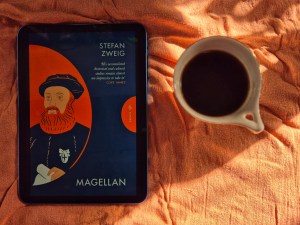
From Stefan Zweig’s Magellan, to Robert Graves’s Homer’s Daughter, to Aatish Taseer’s A Return to Self, to Kahlil Corazo’s Rajah Versus Conquistador, July seemed to have a fortuitous recurring theme in the books I read and in my encounters with storytelling: New ways of seeing and new ways of reframing self and history.
For someone whose nation regards as a hero the man responsible for Magellan’s death, I have to admit that this book was approached in Lapu-Lapu mode, en garde, expecting a Eurocentric view of history. But Zweig had me at page 11 upon acknowledging that the primary objective of the Crusades was to wrest the trade route barriers from Islamic rule. You don’t often get that admission from a Western book written in the 1930s.
In Philippine history, Magellan’s death eclipses the fleet’s first circumnavigation of the world. This book emphasizes the feat of an adventurer who had, at the time, “far outstripped all others in the exploration of our planet,” and proved beyond theory that the Earth was round. He was bad news for flat-earthers. Zweig humanizes the man whose death we celebrate, and this is a great read for those who would like to peer through another vantage point of the expedition. But dear Stefan, as much as I am a fan of your writing, Magellan did not “discover” the Philippines; he merely set foot on it and placed it on a Western map.
“What we term history does not represent the sum total of all conceivable things that have been done in space and time; history comprises those small illuminated sections of world happenings which have had thrown upon them the light of poetical or scientific description. Achilles would be nothing save for Homer.”
Speaking of Homer… how did I not know that the author of the more famous I, Claudius has penned a delightful book called Homer’s Daughter, claiming he could not rest until this novel was written after finding arguments on a female authorship of The Odyssey undeniable? It is based on the premise that The Odyssey — authored over a hundred and fifty years post-Iliad, more honeyed, civilized, and sympathetic especially toward Penelope — was written by a woman.
It makes for an enjoyable read as Graves imagines the life of Nausicaa, a Sicilian princess who rewrites Homer’s epic with elements from her life. “The Iliad, which I admire, is devised by a man for men; this epic, The Odyssey, will be devised by a woman for women. Understand that I am Homer’s latest-born child, a daughter.”
We have understood through the likes of Virginia Woolf that “for most of history, Anonymous was a woman,” but how the poet of The Odyssey could be a woman is a concept new and fascinating to me.
What if The Odyssey’s notion of Ithaca holds sway because it was not written by one who wandered off, but by one who stayed?
And yet, Aatish Taseer’s Ithaca remains my kind of Ithaca: “The pilgrim spirit is one that wanders away from the comfort and safety of our home secure in the knowledge that the transformation the pilgrim will undergo over the course of his journey is the destination.” The author has a life story incredible enough, but more importantly, here’s a writer and traveler who shows us how profound traveling can be when we are mindful of the inner journey. A Return to Self is a book I will be returning to.
Speaking of Home… I have never read a novel that came this close to home! As a descendant of a binukot, this book felt so personal and empowering to me. The soul of the binukot does not play second fiddle to anything in this novel.
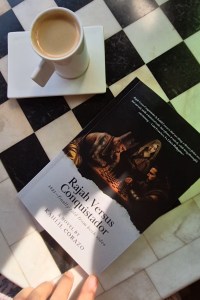
By reading Rajah Versus Conquistador, I seem to have circumnavigated July and circled back to Cebu. The title refers to Magellan as the Conquistador, and Humabon as the Rajah.
Humabon, in Zweig’s words, “was no such unsophisticated child of nature… He had already eaten of the tree of knowledge, knew about money and money’s worth… a political economist who practiced the highly civilized art of exacting transit dues from every ship that cast anchor in his port. A keen man of business, he was not impressed by the thunder of the artillery or flattered by the honeyed words of the interpreter… he had no wish to forbid an entrance to his harbor. The white strangers were welcome, and he would be glad to trade with them. But every ship must pay harbor dues.”
Often cast as a traitor or as someone who’ll always be lesser than Lapu-Lapu in Filipino eyes, Corazo’s Humabon agrees with Zweig’s Humabon: a cosmopolitan ruler who defies simplification. There is much to be said about this work; from the witty language where Bisaya humor often raises its head, to rethinking our past and the deeper meaning to our myths, to the skillful crafting of the key players. Corazo does not merely reconstruct complex characters from the past, he gives readers a perspective of history “viewed not from the deck of a Spanish galleon but from behind the woven walls of a payag…”
And who lives behind these amakan walls? The women. This is what makes Corazo’s work especially meaningful to me. He brings the hidden women to light and by doing so, honors those who never made it to official records but who nonetheless steered the course of history through their quiet power, and who continue to do so.
“Each generation of binukot learns to reshape herself.”
To which Ruby Ibarra gives a brilliant answer: “Ako ang bakunawa.”
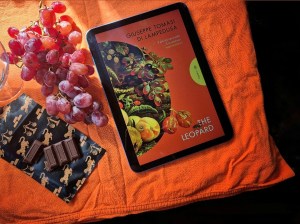
Reading The Leopard is like viewing a portrait of a bygone monarch in a gallery. They mean nothing to you but notice how the brush strokes are skillfully done as it immortalizes a world that no longer exists; you acknowledge that it is important as a record… and then walk away and move on to the next portrait. But you retrace your steps, give it a tender, wistful gaze, and your eyes rest on Bendico, the Prince’s faithful Great Dane; the one detail that truly manages to tug at your emotions and whose fate emphasizes the vicissitudes of life and history.
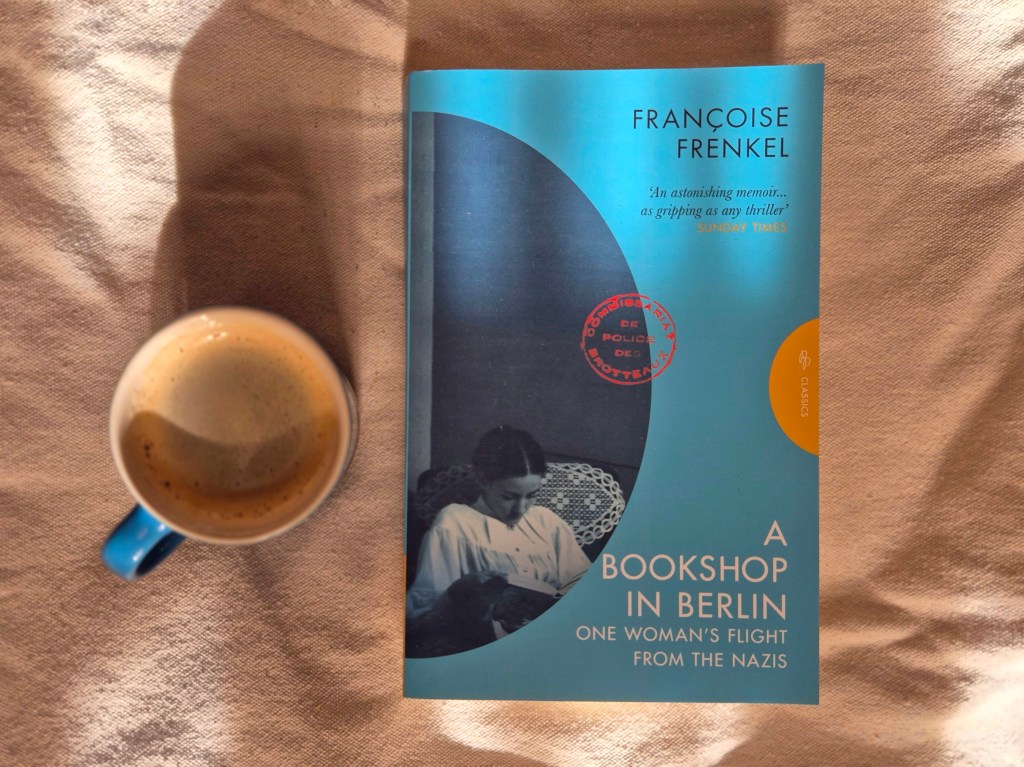
Background for Love allowed me to lean back momentarily, put my feet up, and whisked me toward the sunlight despite the bittersweet awareness that darkness would soon descend on the sunlit Europe of this story. That darkness came for A Bookshop in Berlin, a true account of a bookseller’s incredible escape from Nazi-occupied Europe that eerily mirrors the current state of the world where prejudice and ignorance defy truth and multitudes are easily swayed by propaganda, but where hope also shines through in heroic acts of kindness.
Lawrence Ypil’s poetry served as punctuation marks between these novels. And Alba de Céspedes? The powerhouse that is Alba de Céspedes? She demands a separate post.
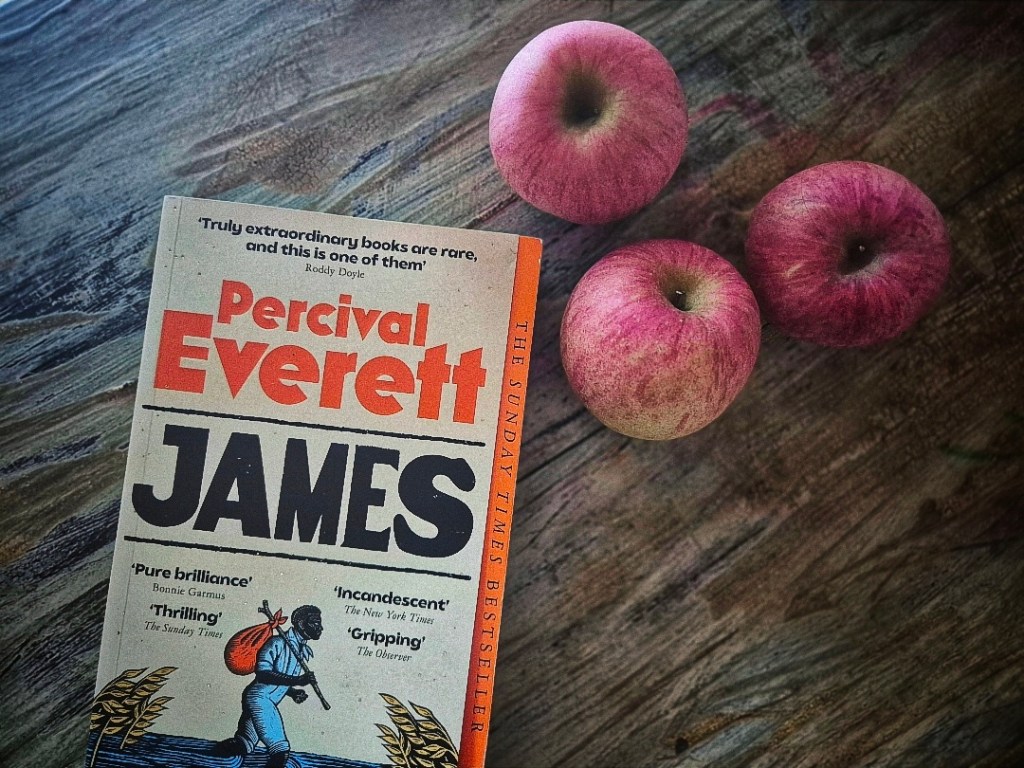
So that was June. It did not leave time or headspace for making concrete reading plans. While it started with that epitome of a retelling which is James, whenever there was a need to retreat in the solace of books, I’d instinctively pick up a volume from a stack of Pushkin Press Classics that hadn’t been assigned places on the shelf yet.
In the month wherein my heaviest schedule clamored to be felt and the risk of a WWIII threatened to make everything inconsequential, it somehow made sense to work harder, to live more, and to continue reading. Wait, is it really July already?
“What do you think I should do now?” “You should read a good book for a change.”
“At my death, burn or throw away unread,” wrote Helen Wolff on the envelope in which the manuscript was found in 2007. Being a revered editor and publisher of literary giants such as Italo Calvino, Umberto Eco, and Gunter Grass, among many others, she probably judged her own writings with more exacting standards and deemed Background for Love unfit for publication.
After all, it is a perfectly imperfect novella. We can find fault with the characters and their decisions if we want to. Nothing grand or earth-shattering happens here. It is a story of a young girl wrestling between the desire for independence and the man she loves. And most of us have been there, and may or may not have ended up acting wisely. But you see, some of the most authentic writings are those unfit for publication, simply because life is flawed and will not live up to a lot of ideals.
What made me relish the pages so easily — aside from the cat she named Colette after the writer, aside from the picturesque beauty of Saint-Tropez as a backdrop, and the bittersweet awareness that darkness would soon descend on the sunlit Europe of this story — was the authenticity and intimacy of Wolff’s writing. It makes me wish she had written more, and one can only wistfully imagine the triumph of what she would have considered fit for publication!
But we can only be grateful for how this little gem did not perish into oblivion. As rain begins to steal into the sunny days in my part of the world, this book made me lean back, put my feet up… and whisked me toward the sunlight.






























 The Book-Butterfly