Olga Tokarczuk: The Empusium

“Wojnicz had noticed that every discussion, whether about democracy, the fifth dimension, the role of religion, socialism, Europe, or modern art, eventually led to women.”


Reading Olga with UP Symphony rehearsing Shostakovich as background.

Mischief. More literary mischief from Olga.

That the first death in the book happens to be of a woman whom our dear Wojnicz mistakes for a servant, when she is in fact the guesthouse proprietor’s wife, is not negligible.

And then, mushrooms. Then the puns in the names: January and August, two characters named after months, months named after a two-faced Roman god and a Roman Caesar; Dr. Semperweiss, because, always white; and it’s not a mere coincidence how the owner of the Guesthouse for Gentlemen where Wojnicz lodges is named Wilhelm “Willi” Opitz (see Opitz syndrome, especially in males); the Tuntschi, definitely a nod to the Sennentuntschi of Alpine folklore involving an ill-treated doll that retaliates; and Empusium, after Empusa, the female shape-shifter of Greek mythology.

The Empusium is Thomas Mann’s The Magic Mountain reframed, they say. Friends who have known me way back from my Thomas Mann reading phase know the story of how I developed a fever while reading the Magic Mountain. (They tried to assuage my sickness by saying that it’s the best state in which to read Thomas Mann. Hah!) Strangely enough, I also got sick a day after I started reading The Empusium. Whether that’s part of Olga’s mischief, I cannot say for sure, but, “The story has a spirit of sickness,” says my mom ominously. 

While Mann’s mountain was an allegory for a sick Europe, Olga’s mountain is glaringly sick with misogyny. In the author’s note, Olga divulges that the chauvinistic passages were paraphrased from the words of history’s famous men, and she names all of them. Why do you think it’s labeled as a “horror story”?

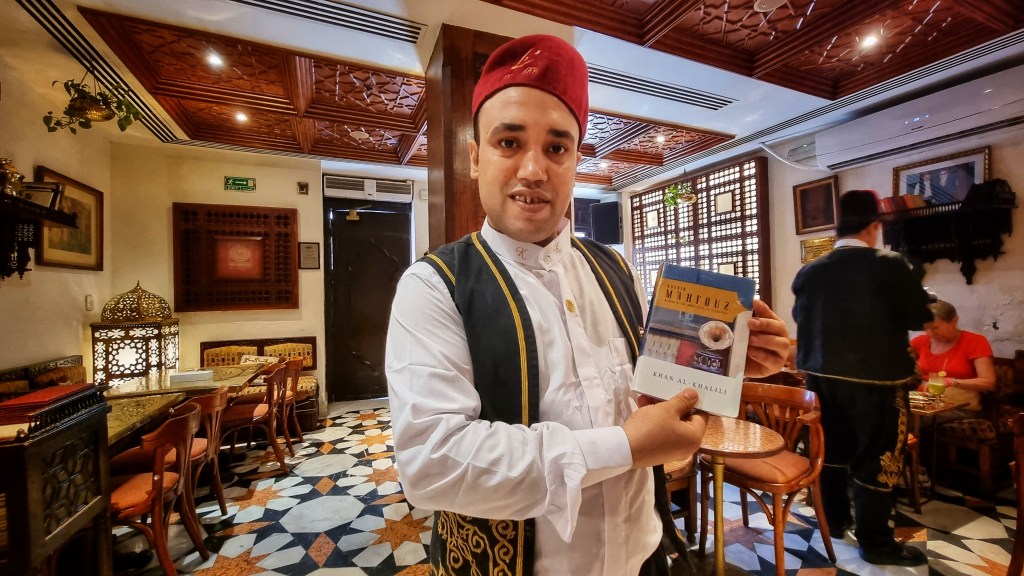
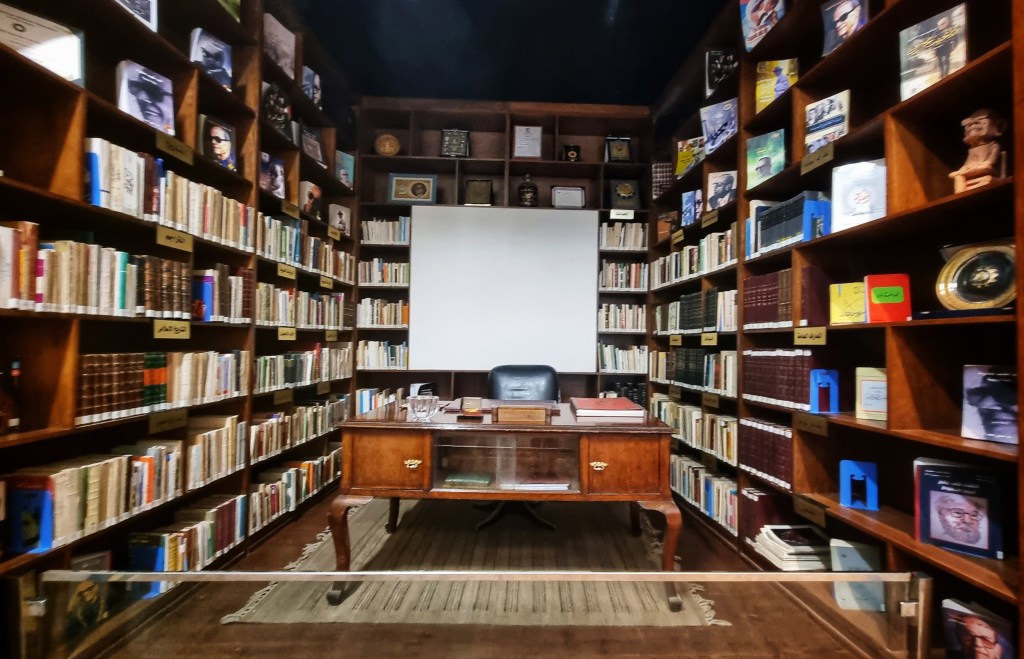
September 8, 2023 – The Cairo of Naguib Mahfouz

The Cairo that was introduced to me as a reader was not the Cairo of travel posters. The same way that the Istanbul I know is the Istanbul seen through the soul of Orhan Pamuk, the Cairo I know is the Old Cairo of Naguib Mahfouz.

If you’ve read works of both Nobel laureates, you can attest that the constant main characters of their novels are the cities of their birth.

And just as I crossed to the European side of Istanbul to visit Pamuk’s museum, the first thing I did after only a few hours of sleep post-MNL-DIA-CAI flights was to visit the Naguib Mahfouz House Museum and the Naguib Mahfouz Coffee Shop (a coffee house Mahfouz used to frequent so that when he was awarded the Nobel, the owner renamed it in his honor).

On Google Maps, the distance between the two establishments is near. But I turned out to be like an Israelite who fled Egypt and wandered for 40 years traversing a distance that can be done in 9 hours and 5 minutes by car, if you consult Google Maps.

The confused directions came from locals who mistook the coffee shop for the museum and vice versa, and this had me going in circles. It took me a while to finally realize what was going on. But it was as if Mahfouz planned the excursion himself. He did not want me to have it easy. I had to experience his Cairo before arriving there — the Cairo of chaos, of spices, of squawking chickens, of tantalizing fragrances and unpleasant smells, of shouting vendors, dirt, heat, of wonderfully claustrophobic alleys, of uncomfortable stares but also friendly and curious smiles. What I saw today was not the sugarcoated Cairo, and definitely not the whitewashed Cairo. It was the Cairo I came a long way to experience.

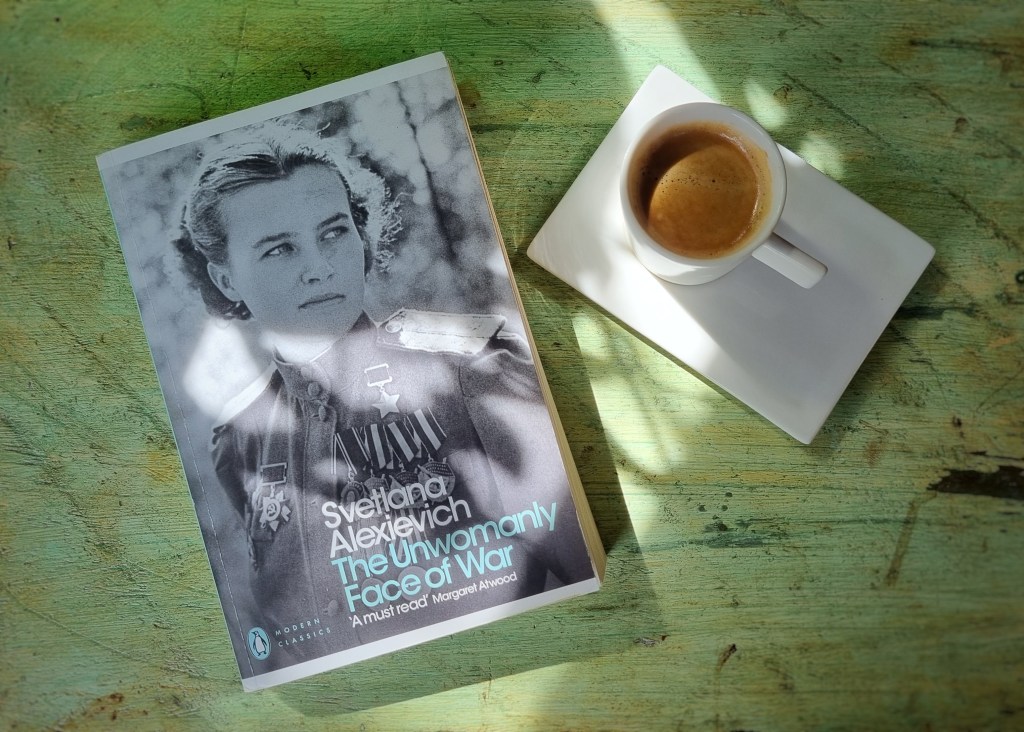
Svetlana Alexievich: The Unwomanly Face of War

During WWII, women served in all branches of the military: 225,000 in the British, 450,000-500,000 in the American, and about a million in the Soviet army. The women in the Soviet army contributed to the German defeat, but little was known and little was said about them and the price they had to pay for victory.

Over the course of twenty six years, Svetlana Alexievich sought out many of these women and became the repository for their untold stories. This is part of the body of work that earns her a place as one of only seventeen women out of a hundred and fifteen Nobel Laureates in Literature.


Maybe it’s because Svetlana Alexievich says that she isn’t writing about war nor the history of a war, “but about human beings in a war… the history of feelings.” Maybe it’s because she is what she says she is, “A historian of the soul.” Maybe it’s because she believes, for good reason, that suffering is “a special kind of knowledge,” “the highest form of information,” that suffering has a direct connection with the mystery of life. (“All of Russian literature is about that. It has written more about suffering than about love. And these women tell me more about it…”) Maybe it’s because she makes this book of unburdening into an overwhelming choir of over two hundred voices singing a soulful rendition of an unsung threnody for the first time, that it answers my question as to why a piercing account of war can be so beautiful and so important. 


Special thanks to Gabi for encouraging me to read this and for giving it to me as a birthday present last year. 🤍

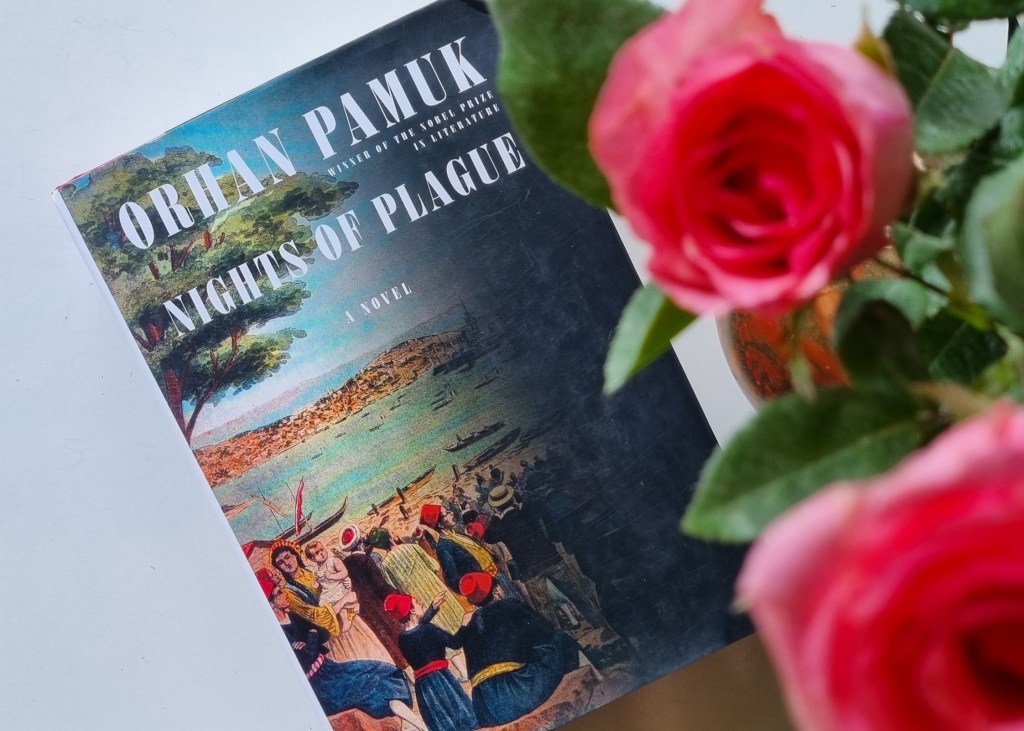
Orhan Pamuk: Nights of Plague

Orhan Pamuk’s longest novel to date unravels with a pace that tends to linger, to wit: it is not for readers who are in a hurry. For that reason, I found it strangely refreshing. Strange because it is a plague narrative that is not meant to be refreshing, refreshing because of the reading experience it provided; defiant of the modern reader’s preference for a literary quick fix, and defiant of our silly reading goals that have more to do with the number of books rather than the languid relishing in an author’s descriptive prowess.

Perhaps I simply feel at home in the expression of an author whose mind is a museum of melancholy, but I am now sensing that part of the allure is in how his books are written for their own sake — written because he felt they needed to be written rather than written for their salability. Isn’t that pure art?

Set in 1901, in the fictional island of Mingheria, “on the route between Istanbul and Alexandria,” it is a curious deviation from a usual Pamuk novel that stays within reach of Istanbul. While Snow is set farther in eastern Turkey, an invented island between Crete and Cyprus is still a surprising backdrop for seasoned Pamuk readers; but only until we realize that the creation of Mingheria allows for a certain leverage and freedom for political criticism. Methinks Mingheria speaks more about Turkey than it does about an imaginary island nation in 1901. 

This novel can teach a thing or two about running a nation during a plague; about epidemiology; how to deal with resistance from different sectors against quarantine measures; how plagues do not distinguish between Christian or Muslim; how failed attempts at containing a plague can fan the flames of a revolution; how revolutions can be exploited; the similarities between solving a murder and stopping an epidemic; and living or loving through the sickness and political ferment. It is about plagues, revolutions, nationalism, the administrative and language reforms that ensue, the fickleness of governments, about the accidents of history, how history is made, and how history is written.

It echoes Camus’ The Plague in the way that the narrator’s significance is revealed only at the end and also for the chilling reminder that plagues reappear throughout history “for the bane and enlightenment of men”.

Unfortunately, man easily forgets, and unwittingly asks to be reminded ever so often.

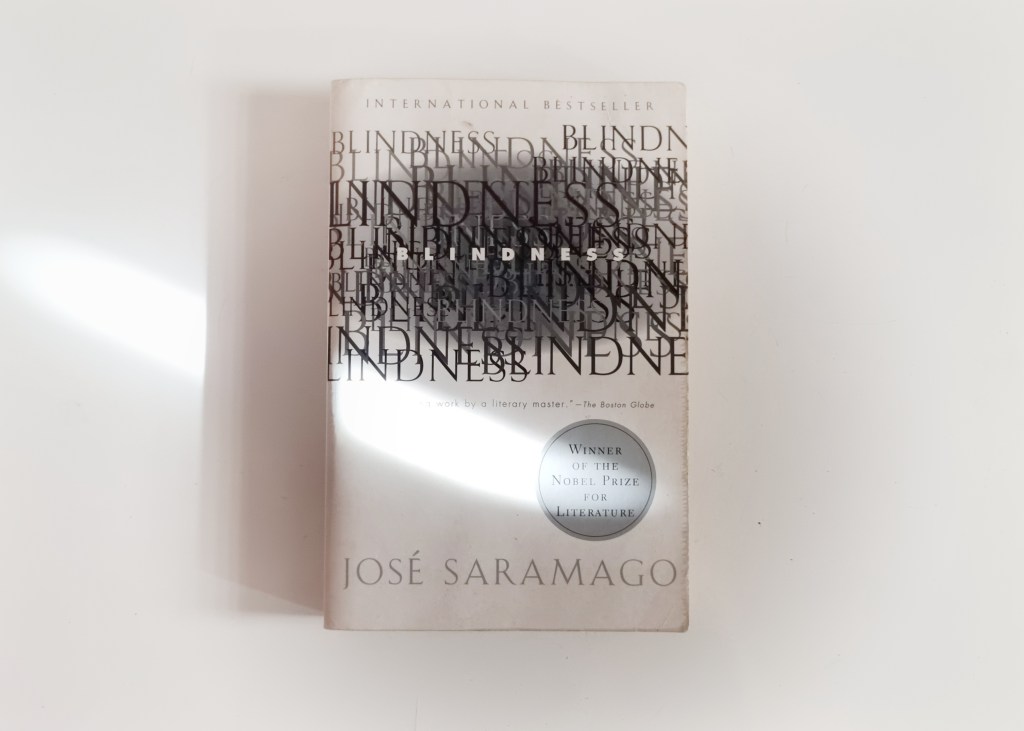
José Saramago: Blindness

On re-reading and “reviewing” — ergo, to see, again.

The plan was to read a Saramago by the 16th of November. It could have been another Saramago. Besides, I still remembered the anguish in this one. But was that all? Could an honest reader claim to have read this if that’s all they gathered?

The questions prompted a re-reading. After all, this reader of thirty-eight Novembers makes an effort to re-read at least one book a year from callow years. Blindness beckoned.

Oh, to realize that the first victim of the epidemic of blindness in the story, who used to seem so much older, is exactly as old as I am now!

It took several pages to re-acclimatize to the disorienting treatment of dialogue: But I now grasp how this effectively amplifies an incessant tension, immensely effective that the suspense still made my palms sweat. 

Soon enough, neglected passages from the first reading began to hit differently: “Government of the blind trying to lead the blind” leapt off the pages from fiction to palpable reality. And I ask, is the book still considered dystopian when we already experienced similar things at the onset of the pandemic — the messy government response, the fear of the unknown, the unforeseen future, deaths, confusion, chaos, the stumbling in the dark, the uncovering of the best and the worst of humanity?

It is also only now that I understand why the characters were not given names: “Inside us there is something that has no name, that something is what we are.” I had failed to notice that this novel is essentially a look at human behavior when left to fend for itself in the dark, beheld under Saramago’s powerful, magnifying lens.

Yes, there is anguish and barbarity; it’s every man for himself. But as an older reader who has seen more darkness in the world than when I first read this, the opposite is highlighted this time, and it is compassion and kindness that shines through.

There is anguish, but I can also emphasize how a book about blindness can open our eyes; and I will, instead, point to the selfless acts, that glorious moment when the three women bathe naked in the rain, and those moments when the only person who retains her eyesight reads a book to those who have gone blind.

“The only miracle we can perform is to go on living, said the woman, to preserve the fragility of life from day to day, as if it were blind and did not know where to go, and perhaps it is like that, perhaps it really does not know, it placed itself in our hands, after giving us intelligence, and this is what we have made of it…”

To go on living. José Saramago couldn’t have given me a better message on the 16th of November, the birthdate he and I share.

Miljenko Jergovic: Sarajevo Marlboro & Ivo Andric: Omer Pasha Latas

She knew there would be pain in these books. But don’t people in the warmest climes imbibe hot drinks to temper the body’s response to heat? By that logic, here she is; steeped in the rich wordscape and sorrowful history of the Balkans.

The first days of November find this reader still silenced by life. A point in which literature remains among the few things left that can coax words out of her.

Sarajevo Marlboro and Omer Pasha Latas fell into her possession around the same time. That both books come from two of her favorite publishers, that the earth tones of their elegant covers match her autumnal soul, that both authors are exemplary, that their stories juxtapose on the same geographical region, were reasons enough to read them together.

Jergović’s extraordinary vignettes is a dip into a sea of humanity and tragedy in the midst of the Yugoslav wars. Andrić, born a century before these wars, whose words seem to flow as naturally as a limpid stream in the Bosnian countryside, write of a different time under the Ottoman rule, but of eerily similar sufferings.

Sarajevo Marlboro, traces of life retrieved from the rubble, fragments that suggest that the real casualties of war are the living; Omer Pasha Latas, unfinished at the time of Andrić’s death. But none of these books leave this reader dissatisfied. It is strangely easy to be drawn into the hypnotic quality of the details.

Both books intimate our need for context and our need for stories if only to make sense of life and divine its purpose; they whisper about the lies of those in power and of fabricated histories; but both beautifully manifest the ephemerality of life.

Andrić’s last word: “Music”. Jergović’s last paragraph: “You can never list or recall the private libraries that have burned down in Sarajevo… But the fate of the Sarajevo University Library, its famous city hall, whose books took a whole night and day to go up in flames, will be remembered as the fire to end all fires, a last mythical celebration of ash and dust. It happened, after a whistle and an explosion… Gently stroke your books, dear stranger, and remember they are dust.”

Dust: Like everything else we deem precious in this world. So while she can, this reader will stroke her books. They don’t always hold the answers, but they hold her, and hold the dusty, broken pieces of herself together.

Halldór Laxness: Wayward Heroes

“With these words, she drew back the bolts that Kolbakur had made to fasten her window frame, pulled the frame aside, and let the man into her bower. Images of gods were carved on the bower’s pillars and stiles and rails of her chair, but they were only half done — Christianity having come to Iceland before the artist completed his work.”

And with this fleeting imagery, a beautiful and ingenious depiction of the religious landscape in which the story is set. An age on the cusp between the fading world of paganism and the force of a new religion of peace, ironically preached by adventurers and men waging selfish crusades in the name of Christ. It was this melancholy conflict that I heard playing as a soundtrack throughout its pages.


It seemed revolutionary when Hollywood recently began to highlight the dark side of legends and heroes. These have become sombre reminders that even superhuman abilities are not enough to protect one from ego, the perilous thirst for fame, power, revenge, and from mere mortals’ tragedies.

Then there’s Halldór Laxness who had Wayward Heroes published way back in 1952, part of the body of work that earned him the Nobel Prize in 1955.

Written in the style of ancient Icelandic sagas, it is replete with violence, adventures amorous and otherwise, and the barbarism of medieval Europe. But how wonderfully Laxness refashions the old to become accessible and relevant to the new.

On the surface, these are the exploits of blood-brothers, Þorgeir and Þormóður. One can read it as such and it will remain entertaining. But one can always choose to go beyond that and take note of the language, the veiled ironies, how wit and sarcasm remain elegant, and the subtleties that only a master can pull off, and how this story remains especially timeless for being a cautionary tale about the heroes, kings, and causes to whom and to which we pledge fealty.

But do we ever listen?

Joseph Brodsky: Watermark

“In those days we associated style with substance, beauty with intelligence…
we didn’t know yet that style could be purchased wholesale, that beauty could just be a commodity.”

Venice, through the pen of a mediocre writer, can easily become cliché.

But this is Joseph Brodsky. 

If you, like me, have read Lawrence Durrell’s Prospero’s Cell and thought it was alone in its indefinable sub-genre or sur-genre (if there’s such a thing), we can rejoice! Venezia’s Watermark is the worthy soulmate of Corfu’s Prospero’s Cell.

Meditative with a sensual rhythm but not without intelligent humor, here is travel literature that casts an enchanting haze on the borders between poetry and prose, a place and the self.

I would slip this in my handbag in a heartbeat on a return trip to the best city to get lost in.

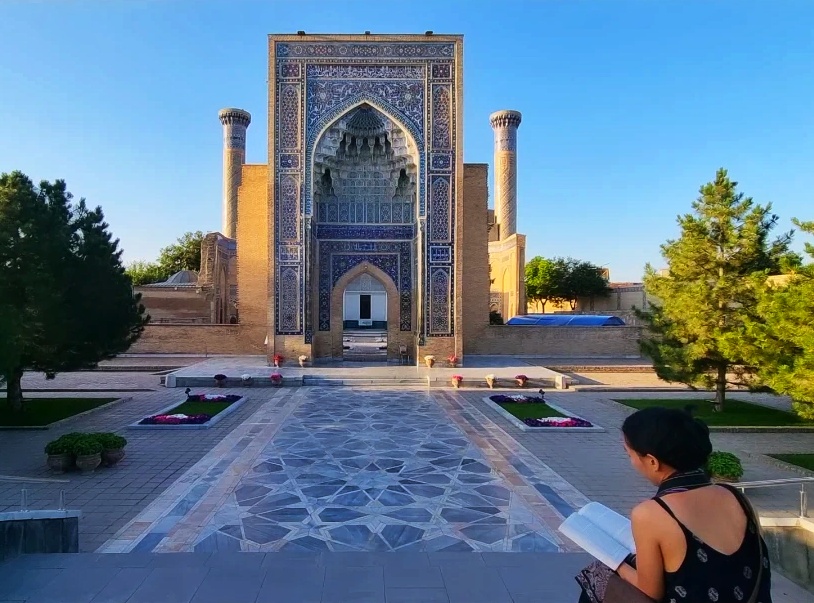
Traveling Companions in Uzbekistan

Samarkand, June 2022

On the question of loneliness: “Isn’t that lonely, what you’re doing?”

(I have just returned from a solo trip to Uzbekistan.)

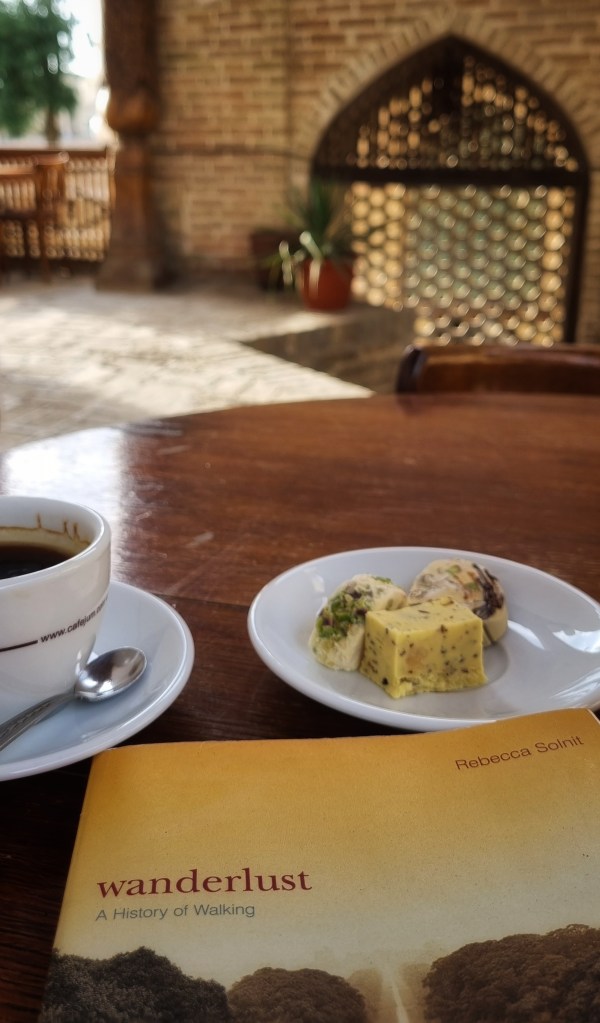
Well, these friends came along for the ride: The Naive and the Sentimental Novelist by Orhan Pamuk, for the long Istanbul flight; The Captain’s Daughter by Alexander Pushkin that was fortunate enough to have a photo at the Pushkin Metro Station in Tashkent and was enjoyed under the shade of the trees of Amir Timur Square; Wanderlust by Rebecca Solnit, read during those days at the Halva Book Cafe whilst waiting for the Bukharan sun to soften; and A Carpet Ride to Khiva by Turkish-British Christopher Aslan Alexander, which accompanied me through Khiva’s storied alleys.

As there is currently so much more outside book covers to commit to paper, I release myself from the discipline of writing book reviews this month. “Regular programming” will resume in this blog in July. Haha 

But I have to mention that Pamuk, who sacrificed painting and architecture school so he could paint with words, taught me a Greek word through this book — “Ekphrasis”. Simply put, ekphrasis is, “To describe something, via words, for the benefit of those who have not seen it.” This inspired me to somehow practice ekphrasis in my little way as I traveled through Uzbekistan, and doing so has allowed me to savor experiences twice.

Pushkin, although political, was not as existentially heavy as Dostoevsky and not as heavy literally as Tolstoy — a purely delightful travel companion!

A Carpet Ride to Khiva seems to have left no stone unturned about Khivan society. It is written in simple prose, bursting at the seams with honest observations, this book is an entertaining overview of the country’s history and politics — which is, perhaps, one of the reasons why the author is banned in Uzbekistan, and why I only brought the e-book with me. I, too, have my own observations, but will keep them to myself for the time being. But it has to be noted that along with reading, traveling is a most comprehensive education on geopolitics, among other things, if one cares to engage and observe.

Solnit, with a title perfect for a trip, shared this Eskimo custom of offering an angry person release by walking the emotion out of his or her system by going in a line across the landscape; “The point at which the anger is conquered is marked with a stick, bearing witness to the strength or length of the rage.”

I, who had no anger to release, did mark the places that bore witness to the strength and length of… something else. I enjoy traveling solo. I would not keep doing it if I didn’t. It is almost like a sort of essential meditation for me and I always go home a better person. I do not feel sad with my own company. But I did mark those places, those experiences so ineffable I could think of only one person to share them with. I would prefer to call it love than loneliness. (But why is conquering anger about letting go and conquering something else the opposite? But I digress.)

As I reluctantly tuck in this unforgettable trip lovingly and a little bit pensively in the folds of memory, I am reminded that the Old Uzbek language had a hundred words for different kinds of crying. And I wonder, what about laughter? What about happiness? 

Annie Ernaux: Exteriors

Reading this reminded me of a trip to the National Museum of the Philippines. I went there for the masterpieces, but found myself spending more time, and being most delighted, in a room full of practice sketches by Amorsolo.

Exteriors are sketches, little fragments of writing that feel like ingredients for a larger canvas; and Annie Ernaux is the great artist who guides readers to become keener observers of people, of gestures, of the world beyond the intimacy of the self, of exteriors.

Peruse the sketches more carefully and find priceless lessons on writing and observing. Once in a while, we need an  artist to lead us to details we should pay attention to. Once in a while, we need an Annie Ernaux to take our hand.