Reading and Marching On

A reader’s response to uncertainty, war, misogyny, grief, or happiness, is to read, to carry on with purpose, and to hold those dearest to them closer. March did not lack in any of these, and so this reader read, worked, and spent more time with those dearest to her.
Restoration, Ave Barrera 03/04/2026

Misogyny has roots in the foundations of society, it escapes through the cracks of our country’s great houses, and cultivated inside rooms where women are not supposed to enter.

Misogyny is perpetuated in careless conversation and by those who laugh in response to what some presidents, law makers, and important men consider funny or normal. It is also perpetuated by women who allow it.

“We all know what happens in stories to women who open doors that men have forbidden them from opening,” Jasmina says, in Restoration.

If the forbidden room in this novel feels like a metaphor for the Epstein Files… it is. Because such rooms have always existed. 

And if there’s one thing I know about Ave Barrera, it’s that she doesn’t hand the story on a silver platter. Harnessing her knowledge of art and architecture, she asks you to confront rooms, hunt for symbols, open locked doors, and lead you to the dark labyrinths of the male gaze. 

The Afghans, Asne Seierstad 03/08/2026

Here’s a journalist at the peak of her prowess, one who doesn’t draw attention to herself but brings her subjects at the forefront while encapsulating one of the world’s most complex histories in 428 pages; from the monarchy in the 1920s, to its courtship with the Soviets, to the abolishing of its monarchy, to the numerous transitions of power in the 70s, to the Soviet withdrawal, to the civil war, to the rise of the Taliban, the arrival of Bin Laden, to defining the difference between al-Qaeda, the mujahideen, and the Taliban, through Afghanistan’s unfortunate role as chessboard under different US presidents, to the Taliban takeover in 2021.

In a rare insider view across Afghanistan’s social strata, Seierstad takes us right to the heart of a Taliban commander’s home, where women in the family are active participants in jihad, making explosives and suicide vests, and serving the fighters. She also acquaints us with Ariana, a law student whose studies were severed after the Taliban takeover, but who devotes her time home-schooling children in her community. In a place where girls and women are not supposed to desire anything, especially education, this book introduces us to Jamila, a hero for women’s education who persevered through disability, war, and terror, and who is as remarkable as Malala in continuing the fight for girls’ rights to education. 

After carefully studying the Quran, Jamila realized that she could use it as a tool for women’s emancipation, so that no one could dismiss it as a Western idea. Nowhere in the Quran does it forbid women from participating in society or getting an education: “When it said ‘Read!’, it was to all. When it said ‘Write!’, it was to all. To men and women. This was a revelation.” How beautiful that their holy book opens with the word “Iqra!” (Read!)

That is a command I can rally behind. 
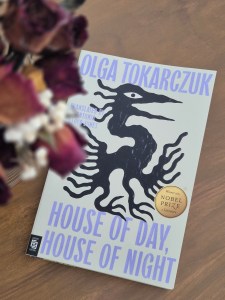

House of Day, House of Night, Olga Tokarczuk 03/12/2026

Olga’s Empusium would have been a more fitting novel to read this Women’s Month, given that it is a work that rightly identifies misogyny as an illness. But reading House of Day, House of Night, written way earlier than her initial works that were translated into English, is like discovering the fount from which all of the other books that we’ve already enjoyed flow.

The mushrooms in Empusium? There’s more here! Fragments of Flights and Yente’s out-of-body experience in Books of Jacob? Present! Here we’ll find the signature literary mischief accompanied by that unique eeriness that lingers in the borderlands of dreams and reality, of history and fiction, borderlands geographical and metaphysical. 

Not my favorite Tokarczuk, but a vital piece in her oeuvre. 
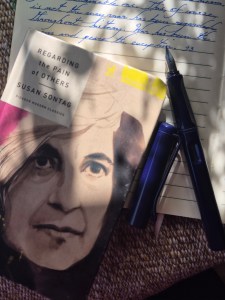

Regarding the Pain of Others, Susan Sontag 03/16/2026

“Is there an antidote to the perennial seductiveness of war? And is this a question a woman is more likely to pose than a man? (Probably yes.)”

Fourth consecutive year of reading my favorite essayist during Women’s Month, and once again, she turns my perspective on its head while tackling the most relevant topics. At times when the first impulse is to disagree with her, I end up conceding that the view I hold of the world and of politics is such a naive one.

Regarding the Pain of Others is known for being a contemplation on contemporary man’s response to, and relationship with, images of war and violence, and how being a witness to the sufferings of others has become a “quintessential modern experience.”

And unless we learn from this constant barrage of other people’s sufferings through various media, we are really just voyeurs.
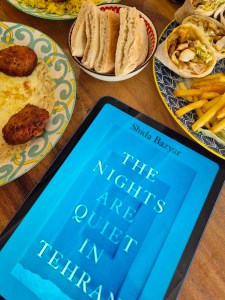

The Nights are Quiet in Tehran, Shida Bazyar 03/20/2026 (Nowruz)

The irony of reading this at a time when the nights are NOT quiet in Tehran does not escape me.

For someone who has an ample Iranian section in her library, I can attest that this one does not fall among those novels about the Revolution that bend toward the sentimental and the cliché. 

This book does not offer a rewarding story, but it lends deeper insight and understanding. Do not let the lack of a satisfying ending distract you from its clever device of having a different family member narrate one chapter, each set ten years apart. It is a brilliant tool that subtly reveals how the years and the distance alter the way the Iranian diaspora reflects on the Revolution and how every generation carries hope differently, how differently they choose their battles, and how differently they hold on to memory. If there is one thing the characters agree with, it is this: The real Revolution is not over. 

Free Iran (from anyone trying to delegitimize the Iranian people’s struggle, from within or from without)!
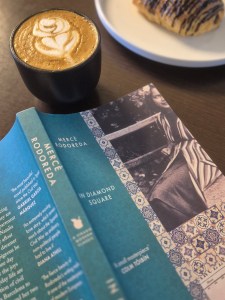

In Diamond Square, Mercè Rodoreda 03/24/2026

“And between gulps of coffee he told me it was better to read about history in books than write it with bullets.”

Barbara Comyns: The Juniper Tree

Take care, dear Bella. Happiness is a very fragile thing… 

Barbara Comyns is such a skillful writer who can string you along with hope despite a sense of foreboding right from the beginning. It is the same thing that oddly lures you deeper into the story until the previously unknown but anticipated event suddenly confronts and startles you.

It is a book too dark for a Sunday read, but perhaps it was written to reveal the madness that could ensue when women go against their intuition and trade their freedom for something else. 

Balsam Karam: The Singularity

“I come from a tradition of loss.”

Kurdish authors — whether their Kurdish-ness belongs to the Iranian, Iraqi, Turkish, or Syrian side — all come from the same amorphous tradition of storytelling, and they have an artful way of wrapping their own originality around this. But they also come from another kind of tradition; that of loss. 

Balsam Karam describes herself as, “a Kurdish writing in Swedish.” That is exactly why, even without checking what this novel is about, I immediately purchased a copy. There is a scarcity of Kurdish voices in literature, and this scarceness urges me to listen to each one.

Now I have found that this book is about mothers losing children; and children losing mothers; motherlands being uprooted of her children; and children being separated from their motherlands; written by a woman who is in the process of retrieving her voice when she thought she had lost it along with her firstborn; and all these meld into each other in a mosaic of poetry and prose.

Yes, it is fragmented and it is painful. That’s what loss feels like.

Linda Ty-Casper: The Three-Cornered Sun

“The chief glory of every people arises from its authors.”

Debatable to some, for sure. But I am inclined to agree with Samuel Johnson, and with Susan Sontag. Especially after having read The Three-Cornered Sun.

Read the review at exlibrisphilippines.com.

Nawal el Saadawi: Two Women in One

While I have long discovered that I prefer the nonfiction writer in Nawal, her fiction remains to be in a class by itself. (That’s why I still continue collecting what I can of her books, fiction and nonfiction, especially now that I’ve discovered these excellent editions — in terms of publication quality and translation — from Saqi Books.)

Two Women in One is not straightforward storytelling. There’s a tinge of Clarice in the free indirect prose. Unsettling, like any piece by Nawal; claustrophobic, and therefore, effective.

It’s not a good place to start if one is new to Nawal. The angst of a young woman, wanting to be an artist but who’s forced into medical school, is potent here. 

Conformity becomes suffocating to her, “Everything had the same color and shape to her. All bodies were similar, and all gestures and voices. She found herself running aimlessly… fleeing the deadly sameness within and without…” When she realizes that none of her life is her doing or her own choice, she unleashes a rebellious other woman in her. “Freedom is dangerous, but life without it is no life at all.”

But what I found most powerful in this work is the underlying message that unless Egypt is free, she cannot be free. “Egypt was not free. The chains were still there.” Because when all is said and done, how a nation treats their women, is always a measure of that nation. A woman’s personal freedom is often symbiotic and synonymous with national freedom. 

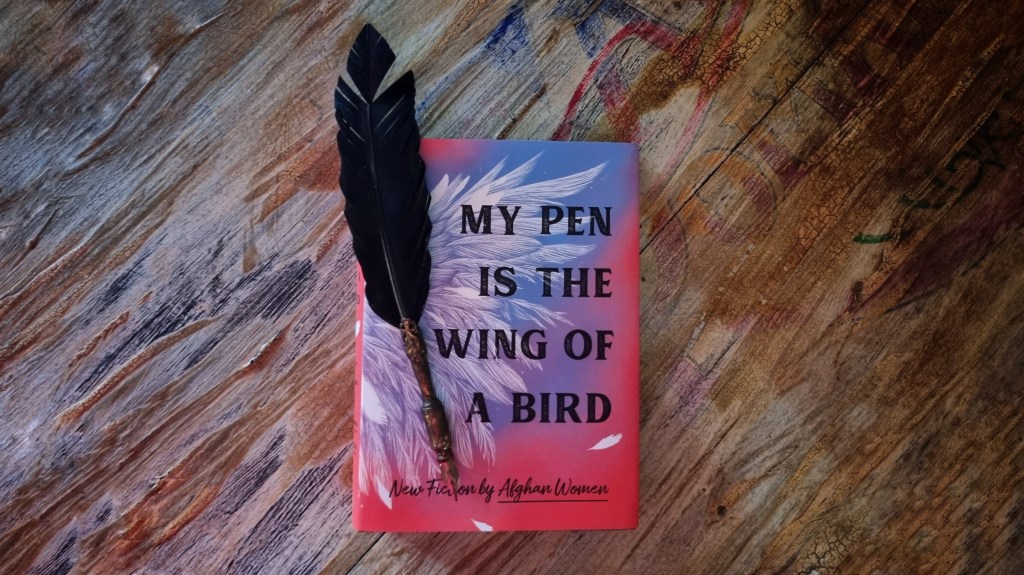
My Pen is the Wing of a Bird: New Fiction by Afghan Women

This book came into my possession on International Women’s Day. That day I was asked to speak at an event in celebration of Woman; and as one who never goes out without a book (in case of emergency), I slipped this in my bag on the way out. I was early at the venue so I took this out and flipped the title page. It read:

“My pen is the wing of a bird; it will tell you those thoughts we are not allowed to think, those dreams we are not allowed to dream.”

Batool Haidari, Untold Author, International Women’s Day 2021

The line was written on exactly the same day three years earlier. That’s when I knew I brought the right book with me.

The first open call inviting Afghan women to submit short fiction came in 2019. The creation of this anthology and the translation of the pieces from Afghanistan’s two principal languages, Dari and Pashto, pressed on through more than just power outages and internet service interruptions, but also a global pandemic lockdown and the Taliban takeover in 2021. The book that now sits on my shelf is a triumph.

As anyone might have guessed, there is little happiness here. But it makes us see that there is humanity, kindness, and so much more to Afghanistan’s stories than just war. As in any short story collection, some stories have more literary merit than others, but every single one deserves our attention if we wish to educate ourselves and see a more thorough picture of Afghanistan and the world we live in — especially when their humanitarian crisis continues even as the world’s attention is no longer on them.

“My pen is the wing of a bird; it will tell you those thoughts we are not allowed to think, those dreams we are not allowed to dream.”

This line made me realize the wide gulf between literature by women from places of conflict and the first world. In literature from the first world, this would refer to careless and obsessive romantic affairs, and the women who write about these things are lauded for their rawness and honesty. In literature from marginalized communities, the thoughts they are not allowed to think and the dreams they are not allowed to dream are education, work, the freedom to do the right thing, and the freedom to live. A dose of the latter is always a healthy reality check on the disparity present even within women’s literature.

Susan Sontag: At the Same Time

Reading on Women’s Month is something I look forward to each year. There’s simply nothing like communing with some of the fiercest minds in literature for an entire month!

I’m glad to have kicked off with Hurricane Clarice and Hanne Ørstavik, but this month’s reading goals are not too unrealistic: One Sontag essay a day (although I will definitely squeeze in what I can). I cannot fully express how much her words feed me so profoundly.


“…literature was a criticism of one’s own reality, in the light of a better standard.” — From The World As India

“Literature can train, and exercise, our ability to weep for those who are not us or ours. Who would we be if we could not sympathize with those who are not us or ours? Who would we be if we could not forget ourselves, at least some of the time? Who would we be if we could not learn? Become something other than we are?” — From Literature is Freedom

“To have access to literature, world literature, was to escape the prison of national vanity, of philistinism, of compulsory provincialism… Literature was the passport to enter a larger life; that is, the zone of freedom. Literature was freedom. Especially in a time which the values of reading and inwardness are so strenuously challenged, literature is freedom.” From Literature is Freedom

 “And one of the resources we have for helping us to make sense of our lives, and make choices, and propose and accept standards for ourselves, is our experiences of singular authoritative voices, not our own, which make up that great body of work that educates the heart and the feelings and teaches us to be in the world, that embodies and defends the glories of language: namely, literature. From At the Same Time: The Novelist and Moral Reasoning

 “The writer’s first job is not to have opinions but to tell the truth… and refuse to be an accomplice of lies and misinformation. Literature is the house of nuance and contrariness against the voices of simplification… the job of the writer is to make us see the world as it is, full of many different claims and parts and experiences.” From The Conscience of Words

“A writer is first of all a reader. From The World As India

“The capacity to be overwhelmed by the beautiful is astonishingly sturdy and survives amidst the harshest distractions.”  — From An Argument About Beauty


Hanne Orstavik: Ti Amo

And I’ve written fourteen novels, and if there’s one thing my writing has to be, for me, it has to be truthful. What I write has to be truthful. I’ve wanted that to apply to my whole life too, in my relationships with other people, my relationship with myself.

My first experience with Hanne Ørstavik’s writing was in 2022 with her novel, Love, wherein she seemed to have invented a literary equivalent of the Shepard tone — that auditory illusion used in film soundtracks to create a palpable suspense and disquiet. With a narrative that demanded complete attention, it revealed a writer in full command of form and style.

Expecting another work of sparse and exacting Nordic prose, I was surprised to be met with vulnerability and painful honesty in Ti Amo. It cannot be more different than Love. Expertly calculated tension dominated Love, Ti Amo announces death candidly right from the beginning and nothing is veiled. 

Love was fiction, Ti Amo is not, and I cannot somehow bring myself to judge a work by someone writing through her husband’s terminal illness. It is a book about life, death, and writing, and nothing describes this book better than the author’s own description of the marble pillars in Ravenna’s Basilica di San Vitale.

“In the San Vitale — the way the great marble blocks of the pillars possess a quieter beauty than the glittering mosaics. The mottled markings in the marble are just there, silent and displayed, defenseless, and what was hidden within the stone, the veins, the figures they trace, is exposed now for all time, laid bare, halted in once so sweeping, now dissected movements through the stone. And what we see is the cross section, the wound, and the beauty of what simply exists, neither devised nor constructed, merely disclosed.”

I thought wrong when I surmised it was written as closure. (As if grief had closure!) Of the wound and the beauty of what exists, it is simply, and not too simply, a disclosure.

Clarice Lispector: The Apple in the Dark

“It was as if love were the desperate clumsy shape that living and dying take…”

“If it hurts, that’s the way in which things are alive.”

“But what kind of silence did she want to share with him?”

I love you.
Yes, he said after a pause.
Both sat quiet for an instant, waiting for the echo of what she said to die.

The Penguin Classics covers got it right. Surrealist Giorgio de Chirico’s art answers the dreamlike quality of Clarice Lispector’s writing. Not in the sense that reality is bent, but in the sense that the unconscious corridors and objects of the soul, heart, and mind are suspended, isolated, turned over, and perused in poetic abstractions that only she can get away with. 

New Directions Publishing chose to be literal. With an apple. In the dark. And it’s an effective counterpoint to the metaphysical prose that the contemporary reader is more than willing to bite into. “After all a person is measured by his hunger… All I’ve got is hunger. And that unstable way of grasping an apple in the dark — without letting it fall.” But what is this hunger? And what is this apple? 

The book is about Martim, a fugitive who finds his way to an outlying ranch run by two women. There is a storyline. There is suspense and there are surprise twists. Lispector readers know that these are things she does not always give us because she deems them secondary to the subliminal probing of how we love, how we desire, how we live, and how we exist. Clarice for whom writing and being are one and the same thing. But she is especially generous here. This longest novel of hers is not fixed and final. It’s a sentient thing wherein her words and the reader gestate. It is a book only a Clarice Lispector can write.


It’s one of my favorite reading months and I’m thrilled to have kicked it off with Hurricane Clarice. Happy Women’s Month to the women who hunger for life and endless learning!

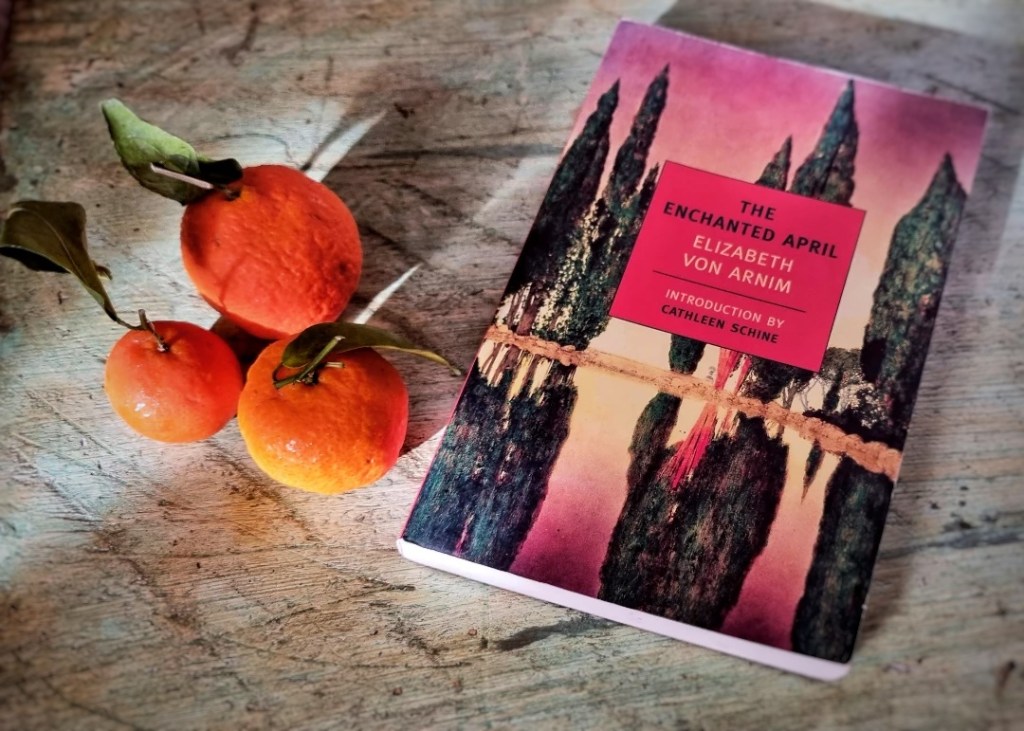
Elizabeth von Arnim: The Enchanted April

Reading this at a time when happiness eludes me and only a Turkish word can describe the sadness I feel, a time when the world is in disarray and the cynic in me is more pronounced than I want it to be, it is easier to argue that true beauty, real freedom from the male world’s sway, and lasting transformation surely take more than suggested by this book — but I am also a believer in the wisdom of surrendering to the restorative power of spending a month in a villa in Italy, flowers, rest, and the sea. Oh, I’d take these any day!

It is a truth universally acknowledged that one should not carp about novels like this. You simply open your heart to it, cease overthinking, and allow it to happen — the way you’re supposed to with sunshine, a little frivolity once in a while, and happiness.

So if this book were set to poetry, it would be this poem by Lydia McGrew:

When joy alights like a bird on a fence post
arrested in fragile flight,
do not frighten her away.

When she comes in the clutch of the heart
at the scent of the evening air
instinct with life and memory,
in the grey-blue of the sky at twilight,
in the sweep of the pine tree to the sky,

Do not say,
There are depths to be plumbed,
There are knots to be worried at.
I have no time for this.

Nor listen to the more insidious voice that lectures,
Death and disease roam the streets.
Pitiless murder with bloody sword unsheathed stalks all the ways of the world,
and beauty and innocence fall before him.
What right have I to be happy?

Rather stand still,
And say,

It is a gift.


And with that, I wish us all an enchanted April, and the wisdom and grace to submit to happiness when it beckons. 🤍