Our ecological crisis is also a ‘crisis of forgetfulness’… we have forgotten how sacred the nature of creation is,” Iraqi-British writer, Dalia Al-Dujaili, reminds us in Babylon, Albion.
Although I read this in a perfect setting on a weekend getaway — amidst soothing sounds of nature, enveloped by clean air, and surrounded by mountains blanketed by mist — this ‘crisis of forgetfulness’ where the greed of many has replaced the sanctity of nature manifests in international and national news, and in the floodwaters that lap on my own doorstep back home.
Readers who find the lyrical wisdom of Aimee Nezhukumatathil refreshing will surely love this wholesome rumination into identity, migration, land, rivers, borders, national and personal myths, familial and arboreal roots, and humanity’s natural heritage. While these somber topics usually weigh down on the reader, Al-Dujaili imparts a hopeful outlook while encouraging us to make our very own existence into a form of praise, and challenging us to scrutinize how we carry identity. Needless to say, Babylon, Albion was a profoundly beautiful way to end August.
August is Women in Translation Month and Buwan ng Wika (National Language Month). To celebrate the latter: Munting Aklat ng Baybayin by Ian Alfonso. No better way than through learning more about our pre-colonial script! To celebrate the former: Iman Mersal’s Traces of Enayat and Lydia Sandgren’s Collected Works.
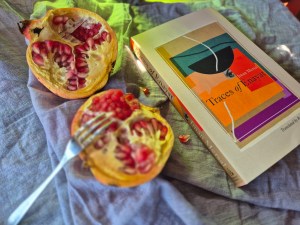
“The best investigative reporting is storytelling,” says journalist Jane Mayer. Traces of Enayat is proof of this as Iman Mersal takes the reader on a quest to find traces of Enayat, an Egyptian writer who took her own life in 1963. Mersal affectingly expresses the attachment and resonance we find in the authors we encounter and whose works derail us from an otherwise uneventful trajectory. It also begs the question: How many Enayats has the world lost into oblivion?
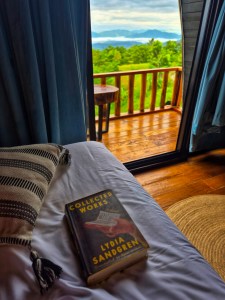
As for Collected Works, seven pages shy of six hundred, this novel quietly draws you into its world. It acquaints you with its setting and its characters without haste. It knows how to linger. It lingers on one’s thoughts on literature and art, on a character’s indecision to call someone or not, whether to read a book or not. It often lingers on everyday scenes where words turn into still life paintings and everyday portraits. But these scenes and characters exist in the shadow of Cecilia’s disappearance. Almost fifteen years after she vanished without a trace, her daughter, Rakel, believes it is her missing mother she is reading about in a novel, and measured suspense and mystery begin to replace the monotony of their lives. I would recommend this to the unhurried reader. Ultimately, Collected Works is a meditation on what one’s life amounts to.
As for reading life in August? This is what it amounted to. It felt very much like a defiance of my country’s frustrating political climate.
Because it is August; because it is set in rural Patagonia; because it is translated by Jennifer Croft; because it is Women in Translation Month.
This was an uneasy read. It bares a twenty-one-year-old mind in that unsettling stage before growth. The whole book is an interior monologue addressed to a best friend lost to suicide. As Emilia returns to her hometown to scatter the ashes of Andrea, she has to confront loss, death, and living.
Given such weighty themes perused from a different perspective, this had the potential of being a great book. It had touching passages that hit the mark, but also too many that missed. But then again, we rarely hit the mark at twenty-one. My literary palate should be more forgiving.
Because it is August; because it is set in rural Patagonia; because it is translated by Jennifer Croft; because it is Women in Translation Month.
“Literacy, Vaso-dzhan, has no place here,” said Satenik, tapping a finger on her cousin’s forehead.“It’s here in the heart,” she said, placing her palm against his chest.
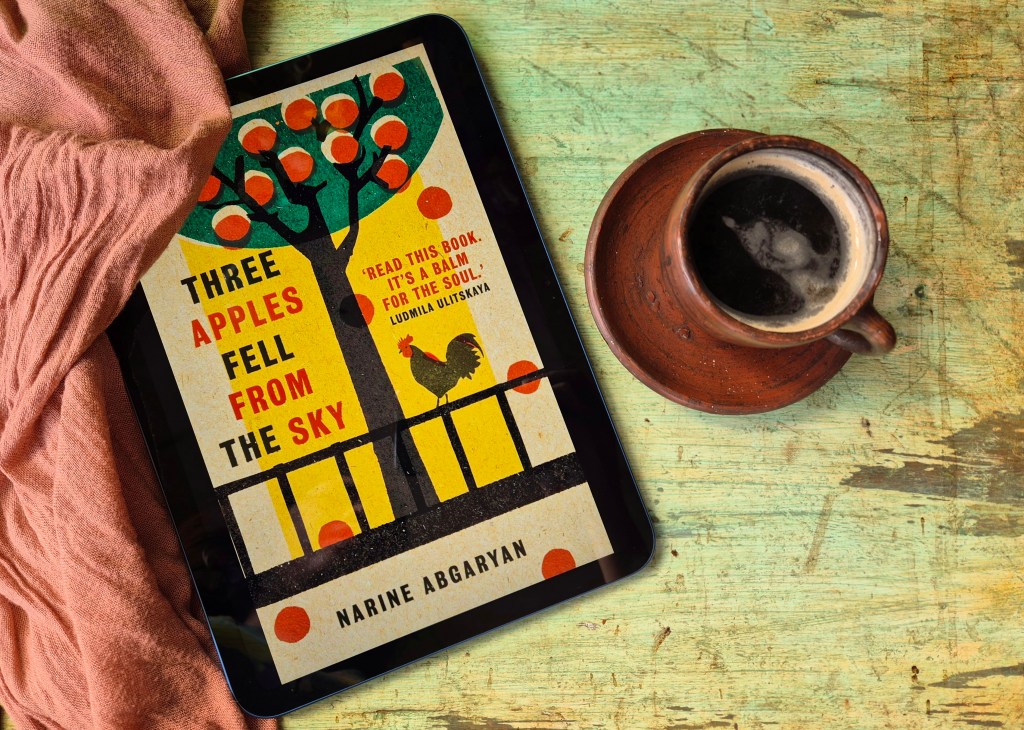
In a picturesque Armenian mountain village where its people have been scarred by time, and happiness is few and far between, a woman prepares for her imminent death.
And yet, I was not prepared for how much joy this book ushered! Yes, joy!
Despite its bleak opening, Three Apples Fell from the Sky is an unexpected playful balance of friendship, conflict, small-town superstition and traditions, finding refuge in reading, love found in a couple’s twilight years, communal and personal griefs, and healing — which all transmutes into a heart-warming embrace in literary form.
Whenever Armenia is mentioned, the first thing that comes to mind is the ethnic cleansing of Anatolia that resulted in the deaths of between 600,000 to 1.5 million Armenians. While it is important to keep the genocide in memory, it is noteworthy how this book only hints at it along with its suffering under Soviet rule — as if to remind the world that there is more to Armenia than its pain.
If you need a literary hug (and a lovely way to begin Women in Translation Month), consider this book.
Samadhi, a word that denotes a meditative calm greets like a namaste on the first page.
And then, cacophony! An onslaught of sounds, smells, colors, and wordplay! You are planted right smack at the center of a palpable, household chaos — the matriarch sinks into depression, the matriarch disappears! Bickering. Finger-pointing. A familial upheaval. What samadhi?!
But cacophony, if we listen closely and do not shut it out immediately, can turn into polyphony; and we chase after as many melodic lines that make themselves heard to us. Although sometimes, as in the case of the old woman, just one particular melody line, the one that meant most to her in her last days, the one that muffled all others, the one she pursued as the path to her own personal samadhi.
– – –
Tomb of Sand, winner of the 2022 International Booker Prize; written by Geetanjali Shree and translated from the Hindi by Daisy Rockwell is the culmination of Women in Translation Month that came to me by chance, but just in time.
If not for a dear friend who mailed me her copy for infinite adoption after reading and reviewing it insightfully, then I would not have rushed into acquiring one.
Tomb of Sand turned out to embody in its polyphony the leitmotifs explored in my significant picks for #WiTMonth:
Georgian Nino Haratischwili’s The Eighth Lifeon the topic of how we are all reflections of our own time but inheritors of intergenerational memory. In Shree’s words, “I feel as though a bullet was fired in some other century but didn’t stay in that century. It keeps hitting the people who came later…”
Hungarian Magda Szabo’s Iza’s Balladon the relationship of mother and daughter and the collision of old and new.
Palestinian Adania Shibli’s Minor Detailon the painful subject of encroached boundaries and artificially imposed borders; reminding me that there were two massive Partitions in world history that transpired in 1947, and that both involved religious segregation. “Divisions. A jubilee of hatred. The joy of rifts.”
But Tomb of Sand’s old woman, whose life and interfaith romance was a victim of the Partition, has this powerful thing to say about how borders should be: “Do you know what a border is? What is a border? It’s something that surrounds an existence, it is a person’s perimeter…. However a border is not created to be removed. It is meant to illuminate both sides…. A border does not enclose, it opens out… Where two sides meet and both flourish.
Every part of the body has a border. So does the heart. A border surrounds it but it also binds it to other parts. It doesn’t wrench the heart from the rest. Fools! If you cut a border through the heart, you don’t call it a border, you call it a wound…
Asses! A border stops nothing. It is a bridge between two connected parts…
A border is a horizon. Where two worlds meet. And embrace.
A border is love. Love does not create a jail… A border is a line of meeting… It is a confluence…
A border, gentlemen, is for crossing.
The border exists to connect, one to another. If there’s one, there’s another. Through love.
If you hate, the blood that flows through arteries to deliver strength from here to there will flow out and away; each side will die bit by bit. What fool would want this?
But this is what you fools want. You’ve made the border a sort of hatred. Not an exquisite border enhancing beauty on both sides, but one that kills them both, a murderous beast cutting the artery. Ignoramuses!
…borders running with blood can have only one consequence. The blood will burst their borders and seep away, all the limbs will dry up and stiffen, but everyone will keep chanting Allahu Akbar and Hare Rama Hare Krishna.
Though it marches to its own rhythm, the literary symmetries it shares with the works of other women authors across borders only pronounce the universality of this novel.
It is life, crossing the boundary to literature.
Thank you, Gabi, for passing on the tears and the lessons along with a pretty bookmark!
_ _ _
WiTMonth Wrap-Up
It is my first time to observe Women in Translation Month since its birth in 2014. I’ve never felt the need to participate because of a consistent presence of translated works by women in my literary diet. But now that I’m back to maintaining a book blog, I feel this is the time that observing #WiTMonth will make a difference.
Meytal Radzinski started this tradition after a critical assessment of the publishing world led to the discovery that only thirty percent of translated literature were works by women authors.
So here I am, along with those celebrating, reminding the publishing community that there is an overwhelming readership eager to tip the scales.
Freya Stark once wrote, “No medium has yet been devised for the translation of life into language.”
Most of this month’s selections come rather close.
My father’s sculpture with The Sculptor’s Daughter.
This book was a birthday present I received years ago; given to me perhaps because I, too, am a sculptor’s daughter.
If not for the wintry setting, my childhood would not have strayed too far from Tove Jansson’s. Ice and snow aside, I immediately recognized the environment of an artist’s household! A world of creativity and wonder in which the gravest insult one can muster is, “You are not an artist!” Haha!
I know what it’s like to be made aware of chiaroscuro, composition, shapes, and shades, and to perceive the world with this awareness so early in life; and to realize only as an adult that this is rather unconventional.
Sculptor’s Daughter is the first book she wrote for adults, and although written in her senior years, Tove Janssonis once again a child speaking with simplicity and a disarming, childlike wisdom. She makes indelible images of amusing experiences, encounters, and juvenile feelings, and often leaves traces of artistic ideals.
While this may not fall under the category of books I would readily recommend to anyone, I would suggest it for days when a reader wishes to revisit a particular place called Childhood.
The first few things you will ask yourself after reading this are questions in the vicinity of, “Was that really 934 pages long? How was I able to read that so quickly?”
Tougher questions will follow: The question of identity, the question of who you are and what shaped you. The question of history and how you cannot ever separate your personal history from history in general.
What do you really know about history? What do you really know about yourself?
“For me, the greatest reward was her stories.” – Nino Haratischvili, The Eighth Life
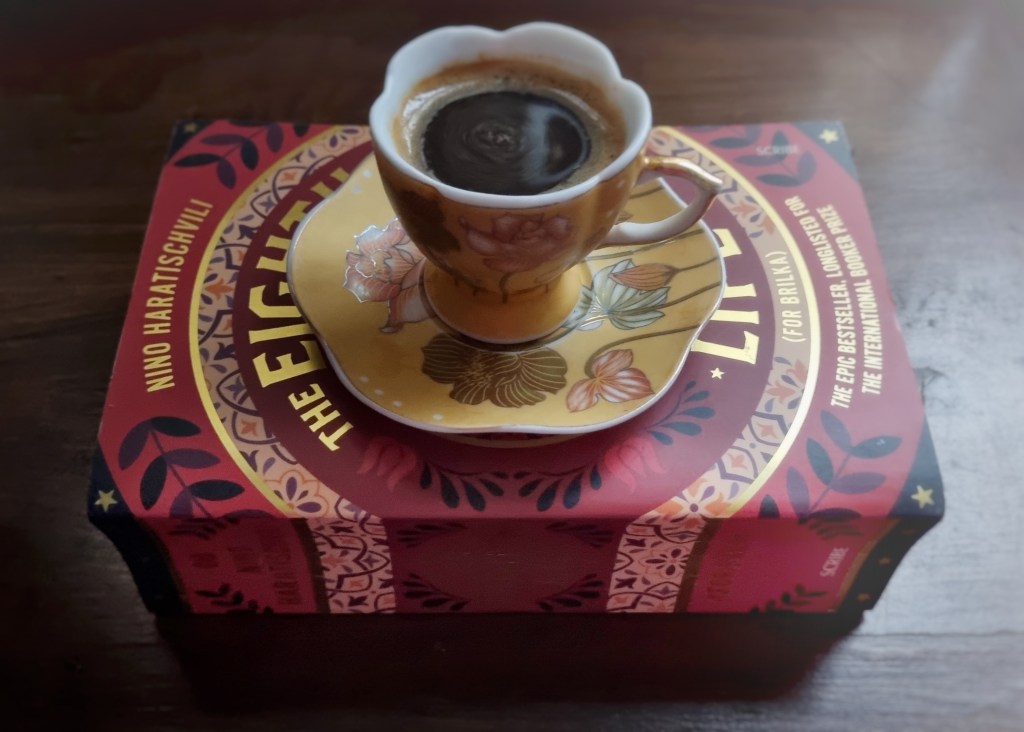
At the beginning of the century that would suffer two World Wars, and many other wars, a chocolatier prospers in Georgia under the Russian Empire. His chocolaterie thrives and caters to townsmen and Russian nobility, but after a tragedy following the devouring of the the secret recipe in its purest form, he soon suspects that it holds a curse. The recipe would, however, always manage to find its way to the next generation and throughout the entire century.
The accursed hot chocolate recipe was something I would normally expect to savor from Latin American magic realists and I was initially unsure of how I felt about coming across this flavor in The Eighth Life. I thought it could easily be dispensable in the grand, cinematic scope of the story.
But wasn’t this family saga set in junctions of the immeasurable Silk Route where anything could happen, and where the influence of Scheherazade’s fantasies still linger at every bend?
I eventually gave in to this literary ingredient and pondered if it was meant to symbolize the intergenerational curses — inherited pain, memory, and trauma — to which we become heirs and which we unknowingly impart.
_ _ _
The casual tone of the narrative deceived me at the onset. You could tell you were not reading Vasily Grossman or Olga Tokarczuk. (The comparison is unavoidable as theirs were the novels I read this year that are similar in length and with similar intersecting eras and geographies.)
It is, after all, addressed to Brilka, an adolescent; and so the narrator spells things out. We know that this is something masters of literature usually avoid, but it was this casual and explanatory tone that made me so unsuspecting of how it would sweep me up in its emotional and historical hurricane. I found myself wiping away tears a number of times, grieving for the characters with their extinguished hopes and dreams, and for the entire broken century that was also partly my own.
It is remarkable how the novel captured the spirit of each era it depicted, even the confusions and the troubles of each age reflected in the characters. To present these — along with the complex convergence of Russian and Georgian histories and politics, and how Soviet tyranny affected so many lives across borders — in such a readable manner only made me recognize Nino Haratischvili’s command of such topics.
This novel is a strange oxymoron to me: For being simultaneously accessible and wise, for being both painful and satisfying, and for lending answers as it asks questions.
_ _ _
What do you really know about history? What do you really know about yourself?
Could it be true, that chilling thing Kostya said about everything waiting to come back?
‘What statues and pictures?’ I asked.
‘You know, of Lenin, Marx, and Engels, the Generalissimus — all those men!’ He seemed to be giving it serious thought.
‘They’ve gone.’
‘But they can’t all just disappear, just like that!’
‘Apparently they can. Everything disappears sooner or later.’
‘Nothing disappears. Nothing, Niza!’ He laid is hand on mine.
‘You mean, everything is hidden somewhere, waiting to be found again?’ I tried to bring myself to smile.
“Mongoloid” as a term for Down syndrome has been considered offensive and obsolete by the time this book was published, and yet it is still being used here to describe a minor character. It is but a small spot in a galaxy of details and I’m not usually one to nitpick on political correctness, because I also tend to be guilty of political incorrectness at times, but this somehow cast a cloud on my appreciation. And although I read this about a week ago, it took some time for me to gather my thoughts.
_ _ _
Jokha Alharthi is the first Omani woman to have a novel translated into English. Marilyn Booth, the translator, has translated works by two favorite authors in my Silk Route & Fertile Crescent Reading Project, Elias Khoury and Nawal El Saadawi.
With that in mind, perhaps I set my expectations too high.
There are elements that I highly value: How each chapter is named after a character, and through these various perspectives from different social strata unfold the story and tapestry of Omani history and society; unique details of traditional wedding preparations through the eyes of the mother; captivating descriptions of Bedouin life; and Abdallah’s musings during an airplane flight that often wax poetic. The historical aspects led me to look into the British-mediated Treaty of Seeb and, hardly ever mentioned in reviews, the master-slave dynamic in such a society that plays a significant role in this novel, reminding the reader that it was only in 1970 that slavery was abolished in Oman.
Orbiting around the lives of three sisters in the village of al-Awafi, I immediately found a favorite in the middle sister, Asma. The reading sister, the one through whom references to the region’s literary traditions are made, the one who has read enough to see through the nonsensical beliefs and superstitions.
These three sisters in the cusp of a modern Oman, although bound to customs, had relatively more freedoms compared to women from other stories I’ve read of the region. And so it was with disappointment that I read how Asma readily agreed to an arranged marriage while the younger sister who spent more time prettifying herself was resolute in refusing hers. It can be argued that Asma did it in the hope of furthering her education and the younger had more foolish reasons for her refusal, but something still did not add up. The strong character that I admired at the beginning seemed to give way to a weaker one towards the end.
On the other hand, there is more to the novel than that. The fact that there is so much to pay attention to borders on both distracting and brilliant, but as far as novels translated to English are concerned, this is still currently the most intimate look into Omani life available to us.
In a way, it makes me look forward to what lies ahead in translated Omani literature — especially those written by women.
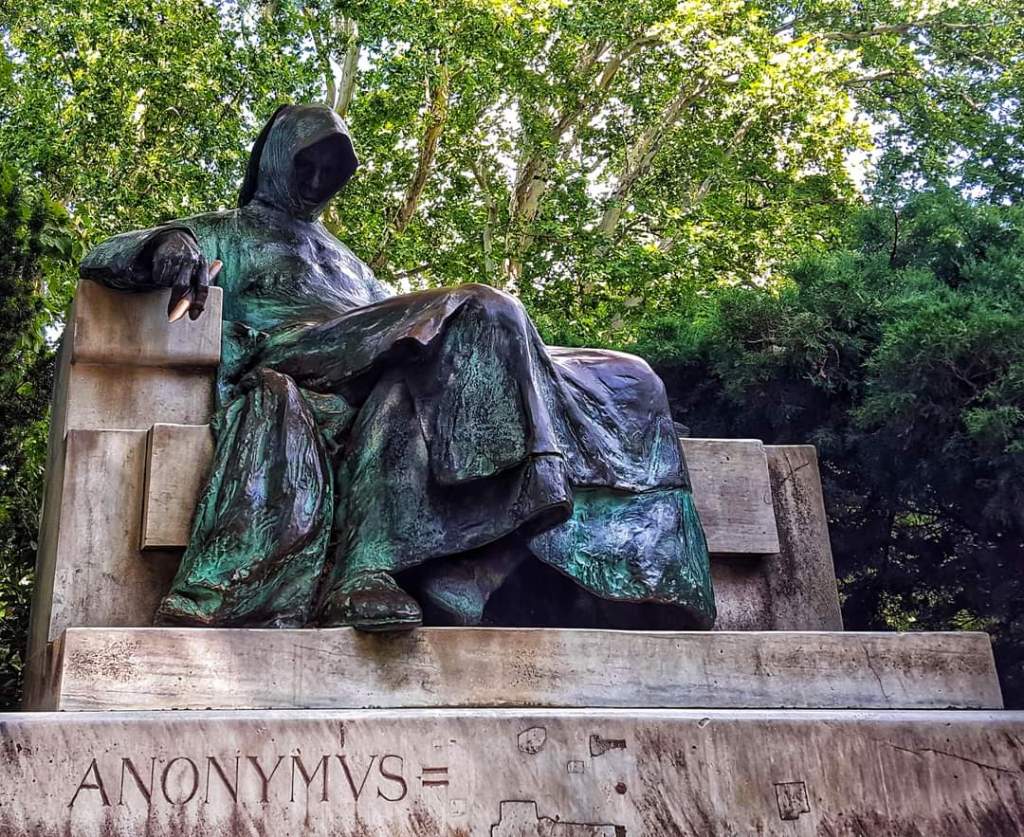
“As he spoke Lidia could see the schoolgirl Iza discussing the future with her father. She saw her as her father described her, as a pint-sized redeemer spreading out her school atlas and examining the map of Budapest because she wanted to see a major city, a really big city, and trying to work out where in City Park the statue of the historian Anonymous might stand. Iza loved the look of that hooded faceless figure. She saw it once when she was a young woman visiting Budapest…” – Magda Szabó, Iza’s Ballad
How pleased I was to have identified with Iza so much! There was even something close to a silent pride that I initially felt. It was as if I were reading my own mother’s description of myself – how Iza organized her life and her schedule, the tidiness, the discipline, the sense of responsibility, the restraint, her satisfaction in not having to give account of herself to anyone!
But how I trembled, as I turned the pages approaching the finale when I realized that it was because of this unrelenting self-discipline seeping into the cracks of her relationships that led to heartbreaking consequences.
It is for readers with aging parents. It is for every new generation that believes they are so much wiser than the previous one, so practical even in matters of the heart, and yet, unwittingly, so heartless.
It is for societies that reject the past and the old deeming these to be outdated and sentimental, failing to acknowledge that the past and the old hold the clues to the present and the new.
Although set in postwar Hungary, the spirit of this novel is contemporary: the timelessness of its message, its tragedies that are themselves the lessons, will gnaw at my soul for years to come.
Few books leave me feeling defeated. This one did. I felt so helpless under the influence of such simple but penetrating prose.
It is that dazed emotion one undergoes when someone so much wiser with experience sings in a pensive gasp, “I really don’t know life… at all…” Yes, someone like the inimitable Joni Mitchell, only Magda Szabó does it with an outstanding novel that she affectionately hands over to the reader saying, “You really don’t know life… at all…”
And in the presence of such masterful artistry and truth, what else can one do but applaud and weep?
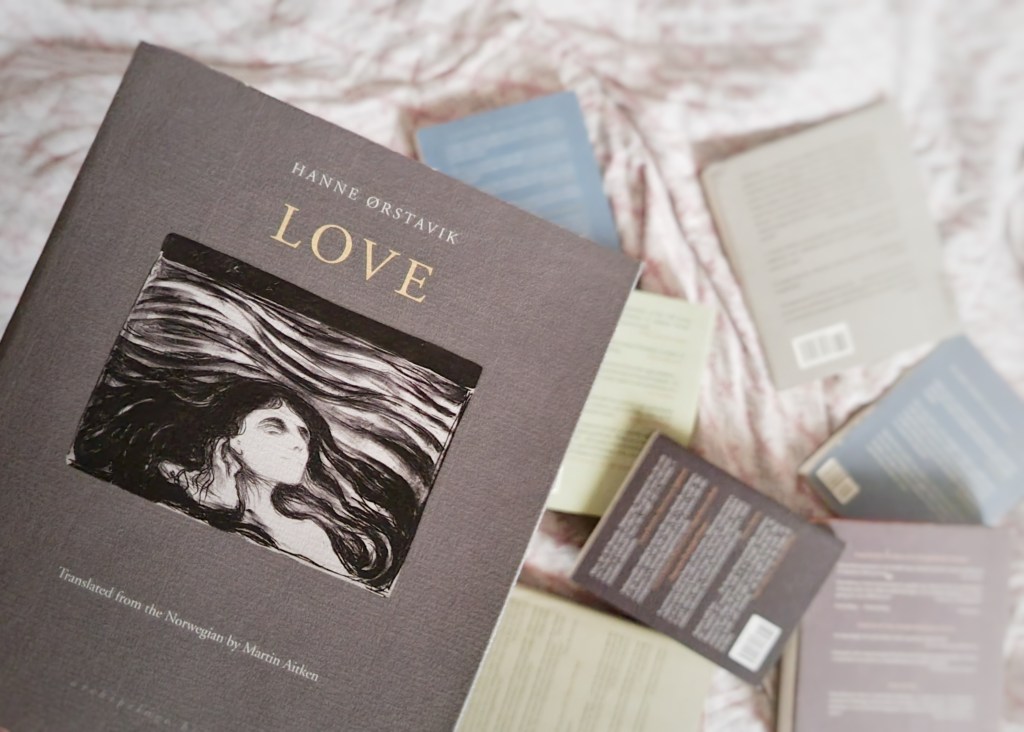
It brings to mind the Shepard Tone, an auditory illusion used in film soundtracks to create a palpable disquiet. It occurs when layers of the same scale sequence are played at the same time; the highest layer decrescendos, the middle pitch maintains a consistent volume, and the bottom frequency increases in loudness. Played simultaneously, it manipulates the brain into believing that it is hearing an infinitely ascending tension.
In what appears to be the most original writing style I have encountered in a while, Hanne Ørstavik seems to have invented a literary equivalent of the Shepard Tone, camouflaged in a narrative that demands complete attention.
A village in northern Norway. A mother and son. The frost and the night are tangible.
“If women haven’t fully understood the state of inferiority in which they are kept, they will do nothing but perpetuate it.” — Leïla Slimani, Sex and Lies
“I freed a thousand slaves. I could have freed a thousand more if only they knew they were slaves.” — Harriet Tubman
It was the hottest month of 2019 in Morocco, and I was at a station in Chefchaouen waiting for my bus to Fez. Even with my nose buried in a book, I had an odd feeling that someone was watching me.
Sure enough, when I looked up, two large eyes framed by a hijab glinted and stabbed me like the blades of a koummya. I could see she was seething. I had to glance around and check if the anger was meant for someone else, but her sustained glare guaranteed that they were directed at me.
She said something to the man beside her who turned his back towards me while she continued to glower. Admittedly, my first instinct was to glower in return.
Then I remembered where I was; a foreign country whose laws are not known to be very kind to women. Confused, I immediately lowered my head to avoid trouble.
And there it was. The offending sight. The bag’s leather strap strung across my body had unbuttoned my dress shirt and revealed an undershirt and a little bit of chest!
I who had been so careful about dress codes in my travels, I who wore a buttoned-up long-sleeved shirt over an undershirt over a bra despite the temperatures rising up to 46°C during the day, accidentally exposed a little bit too much of my body in one of the worst places to have a wardrobe malfunction.
I felt so embarrassed, horrified, and even guilty.
As soon as the bus arrived, I hurriedly boarded to avoid bumping into the couple. I saw them saying goodbye to each other. A worried look now replaced the anger on her face as her expressive eyes followed the man inside the bus.
Imagine the horror on her face when she saw through the window that the man’s seat number was the empty one right beside mine — her man would be sitting beside this immoral woman for 4 to 5 hours!
I hid behind my scarf for the rest of the trip while next to me, he showered himself with crumbs from the pastries that he ate.
– – –
I had an incredible trip to Morocco, but despite being amply covered, I have never been catcalled more in any of my travels; I was followed by a stranger through the alleys of Fez; and two random acquaintances in Marrakech said they wanted to marry me. But somehow it was that incident with the woman that made me shudder. It accented how difficult it must be to be a woman in such a place.
This memory came back to me while reading Leïla Slimani’s book. Coincidentally, it was exactly on this day when I left for my Moroccan adventure three years ago.
– – –
Feminist voices from Islamic nations have been part of my reading life for quite some time already, and I don’t wish to write another cliché by saying that reading this made me grateful for the liberties I take for granted — even though it still rings true.
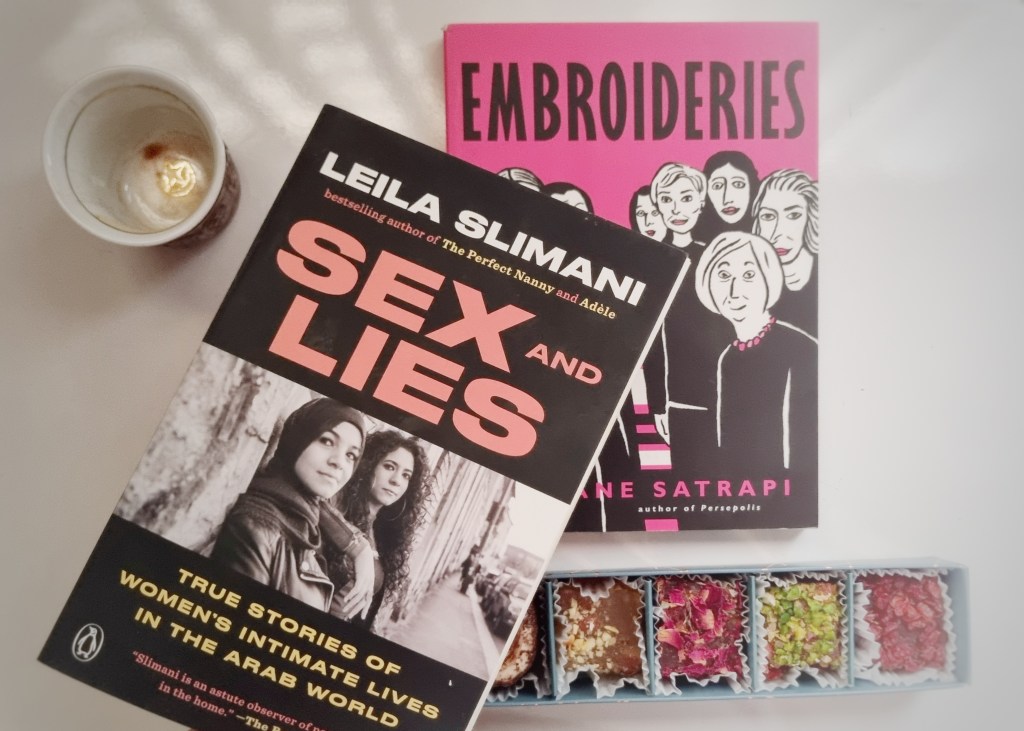
Sex and Lies is a broader and more serious version of Marjane Satrapi’s hilarious graphic novel, Embroideries. They both bring to light the double standards of men and their laws, and the many predicaments of what it means to be a woman in such a setting.
Let us take note that this setting is such where love and affection are as taboo as sex; where women are not allowed to feel desire; where religious pressure and social humiliation lead to nearly six hundred abortions carried out in secret every day and hundreds of women die as a result of the appalling medical conditions in Morocco; and while men can sleep around all they want, they require “virginity certificates” from their brides; hymen restoration clinics exist (which is not far from the kind of “embroideries” Satrapi hints at); and it was only in 2014 that article 475 of their penal code was amended, two years after a sixteen-year-old took her life after being forced to marry her rapist. The rapist who married his victim could avoid punishment under article 475.
Each important female writer has their own approach to broaching the subject of women in repressive cultures. Iranian Marjane Satrapi does it with humor while Moroccan Leïla Slimani curiously makes a case for a healthy relationship with traditional, religious, and cultural backgrounds. I am not Muslim but I think it is significant how she did not make this into an assault on Islam. (Although she does mention the soullessness of certain sects.)
“I try to explain that a society in which women had more freedom would not necessarily be contrary to the faith but rather could allow us to protect women better.”
“For the Muslim religion can be understood as primarily an ethics of liberation, of openness to the other, as a personal ethics and not only a Manichaean moral code.”
“Muslims can turn to a long written tradition, led by scholars, that saw no incompatibility between the needs of the body and the demands of the faith.”
While Sex and Lies unveils real and enraging accounts of the unnatural demands their society imposes on their women, it remains hopeful for a Morocco in transition. Another thing that stood out for me was how many of the women who shared their stories recounted that it was reading books that opened their eyes. Leading by example, Slimani highlights the necessity for women to use their most powerful weapons at hand:
“If… Scheherazade appears a magnificent character, this isn’t because she embodies the sensual and seductive oriental woman. On the contrary: it is because she reclaims her right to tell her own tale that she becomes not merely the object but the subject of the story. Women must rediscover ways of imposing their presence in a culture that remains hostage to religious and patriarchal authority. By speaking up, by telling their stories, women employ one of their most potent weapons against widespread hate and hypocrisy: words.”







 The Book-Butterfly