Thad Carhart: The Piano Shop on the Left Bank

Not the West Bank this time, just the Left Bank. The thing about my Silk Route | Fertile Crescent reading project is that — despite being a source of enlightenment through discovering underrated but astounding literature — novels from this route in question are usually emotionally taxing.

Although I have sensed that I am drawn to writings from places of conflict for the reason that they have a sensitivity to beauty commensurate with their heightened awareness of the fragility of life; once in a while, I need a breather, and that’s when I turn to books related to other interests. In this case, not merely an interest, but a love.

But as love would have it, we oftentimes become accustomed to a beloved’s presence and we slowly take its magic for granted. 

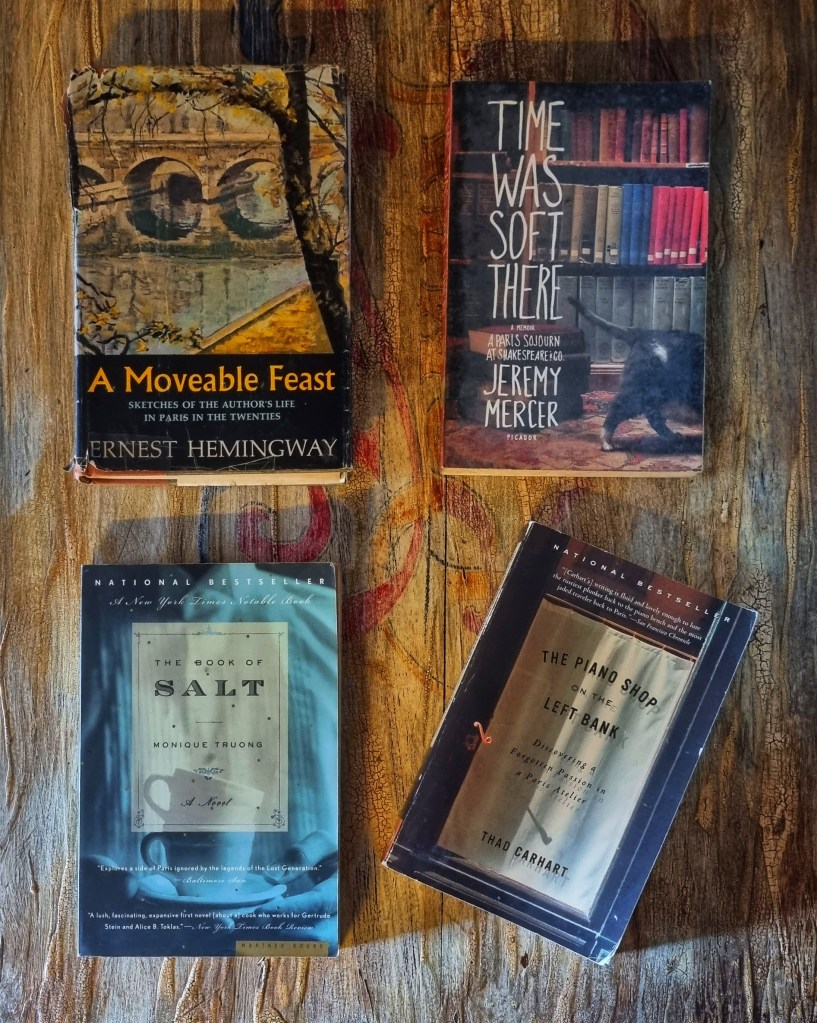
The Piano Shop on the Left Bank: Discovering a Forgotten Passion in a Paris Atelier refreshed me about the intricate workings of a piano; of how extraordinary this instrument is; of the alchemy and difficulty involved in piano-making and music-making; and how beautiful tone production relies so much on the precision of piano makers, the skill of piano technicians, and the heart and hands of a pianist. This rekindled a fire that led me straight to the piano after turning the last page.

But this book is not just about pianos and trivia from the music world. (Although, while we’re at it: Did you know that when the Eiffel Tower was built in 1889, the first thing to be hauled to the rooms at the top was a piano?) It is also about the Paris that is inaccessible to the tourist. In fact, this would make a lovely pair to Mercer’s Time Was Soft There: A Paris Sojourn at Shakespeare & Co.

Surely, these books did not intend to rival Hemingway’s A Moveable Feast or the aching poignancy of Truong’s Book of Salt, but at times, lesser-known books are beautiful for the simplicity that they lead us to find something that draws out music from within.

Antal Szerb: Journey by Moonlight

Have you ever read a novel by a Hungarian author that is not a page-turner?

I haven’t!

“I need a drink. Because I have to tell you who Tamás Ulpius was, and how he died,” on the fourteenth page, is the same bomb of intrigue that Magda Szabó drops on page three of The Door when she writes, “Thus far I have lived my life with courage, and hope to die that way, bravely and without lies. But for that to be, I must speak out. I killed Emerence.”

Intrigue is the paprika that flavors Hungarian pages up until the very end.


I was drawn to this book not for what the blurb promised, but for its writer: Antal Szerb, who sadly perished in a camp during the Holocaust. But like Irène Némirovsky, also a Catholic Jew who nonetheless shared a similar fate despite their conversion to another faith, there is nothing politically blatant in their writings.

There is, however, a certain psychological depth in Szerb’s style that makes it extremely appealing to me. The characters themselves are not that likeable but they seem to represent the state of disorientation of the generation between the first and the second world wars.

“‘There’s nothing wrong with you,’ said the doctor, ‘just horrendous exhaustion. What were you doing, to get yourself so tired?’

‘Me?’ he asked, meditatively. ‘Nothing. Just living.’ And then he fell asleep again.”

Death plays a role in this novel, but so does Life. An existential crisis and unresolved issues of his youth haunt the main character and result in the fickleness of his decisions. He abandons his wife on what was supposed to be an idyllic honeymoon in Italy, and there begins what seems to be a muted exploration into the psychopathology of guilt.


In this edition’s introduction, we learn of Szerb’s fascination for Italy; “its art, its history, its people, its language, its ancient towns and their narrow back streets.” He had lived there as a young man from 1924 to 1929 and the country took hold of him. He returned in 1936, suspecting that it was for the last time. In a travel journal entry, he wrote, “I initially wanted to go to Spain… but it occurred to me that I simply must go to Italy, while Italy remains where it is, and while going there is still possible. Who knows for how much longer I, or any of us, will be able to go anywhere? The way events are moving, no one will be allowed to set foot outside his own country.”

Needless to say, his suspicions tragically proved true, but this final trip to Italy gave birth to this novel, which is a poignant love letter to Italy.

But through all of what Szerb says with clarity or through undertones, what I found most disquieting were descriptions of the generation’s moral insanity, how they viewed war with indifference — “bore the changing times on their backs with astonishing passivity, and lived quite unconnected with their own remarkable history.”

And unfortunately, Antal Szerb did not live to tell the tale, but we all know what happened next.

Patrick Leigh Fermor: A Time to Keep Silence

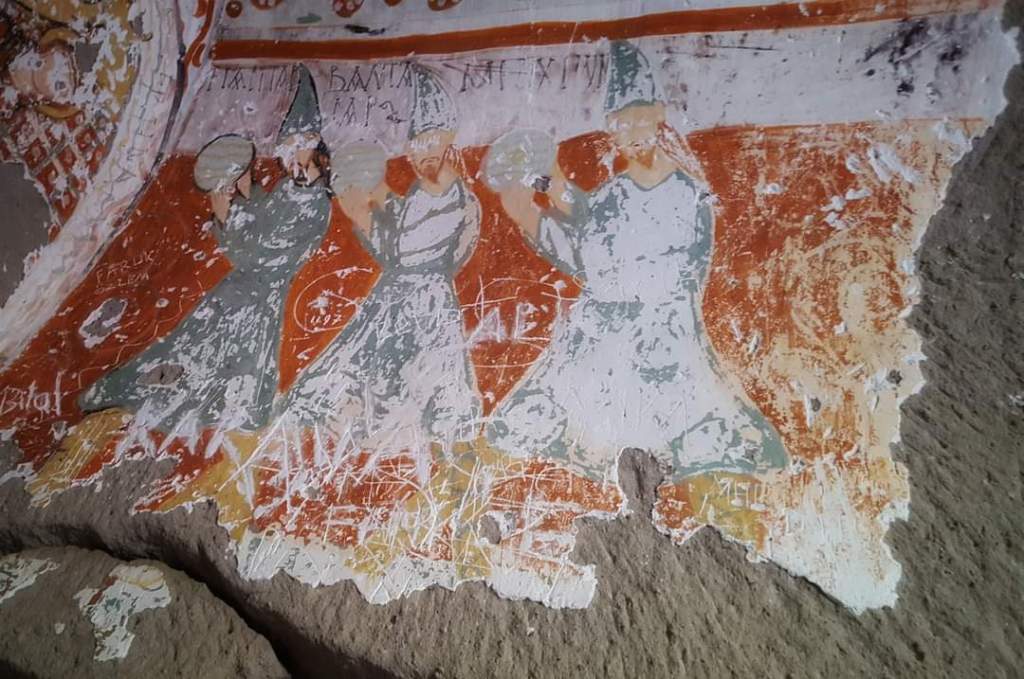
The book had me at its cover; a landscape distinctly Cappadocia, one of my favorite places in the world, however otherworldly.

It had me at the introduction by Karen Armstrong. Who else more suited to introduce such a book?

Patrick Leigh Fermor had me at, “The book was based — whole passages of it word for word — on letters I wrote at the time to a correspondent (whom I later married) without the remotest thought of publication.”

He had me the entire time because reading his prose felt like meditation.

A Time to Keep Silence is a lovely exemplification of that Thomas Merton line I encountered through Rebecca Solnit earlier this year: “The inner journey is the interpolation of the meanings and signs of the outer pilgrimage. One can have one without the other. It is best to have both.”

Known for traveling to Turkey on foot and for being one of the finest travel writers of the past century, this is a record of Fermor’s travels to a more inward direction. Through Europe’s monasteries with their divine libraries, chanting monks, cloistered lives, and vows of silence, and to Cappadocia’s abandoned rock monasteries, we are made recipients of their histories and these letters, too; but most of all, of the contemplation on modern man’s need for silence and solitude.

For someone who recently took three weeks off from social media to retreat from its noise and with only one foot back inside, this book expressed many of my unspoken thoughts, and I can only agree with a constant book friend who thinks that the only problem with this book is that it is too short. 

Here’s to places, experiences, or books where “…the troubled waters of the mind grow still and clear, and much that is hidden away and all that clouds it floats to the surface and can be skimmed away; and after a time one reaches a state of peace that is unthought of in the ordinary world.”

Joseph Brodsky: Watermark

“In those days we associated style with substance, beauty with intelligence…
we didn’t know yet that style could be purchased wholesale, that beauty could just be a commodity.”

Venice, through the pen of a mediocre writer, can easily become cliché.

But this is Joseph Brodsky. 

If you, like me, have read Lawrence Durrell’s Prospero’s Cell and thought it was alone in its indefinable sub-genre or sur-genre (if there’s such a thing), we can rejoice! Venezia’s Watermark is the worthy soulmate of Corfu’s Prospero’s Cell.

Meditative with a sensual rhythm but not without intelligent humor, here is travel literature that casts an enchanting haze on the borders between poetry and prose, a place and the self.

I would slip this in my handbag in a heartbeat on a return trip to the best city to get lost in.

June 19, 2022 – Samarkand: Shah-i-Zinda

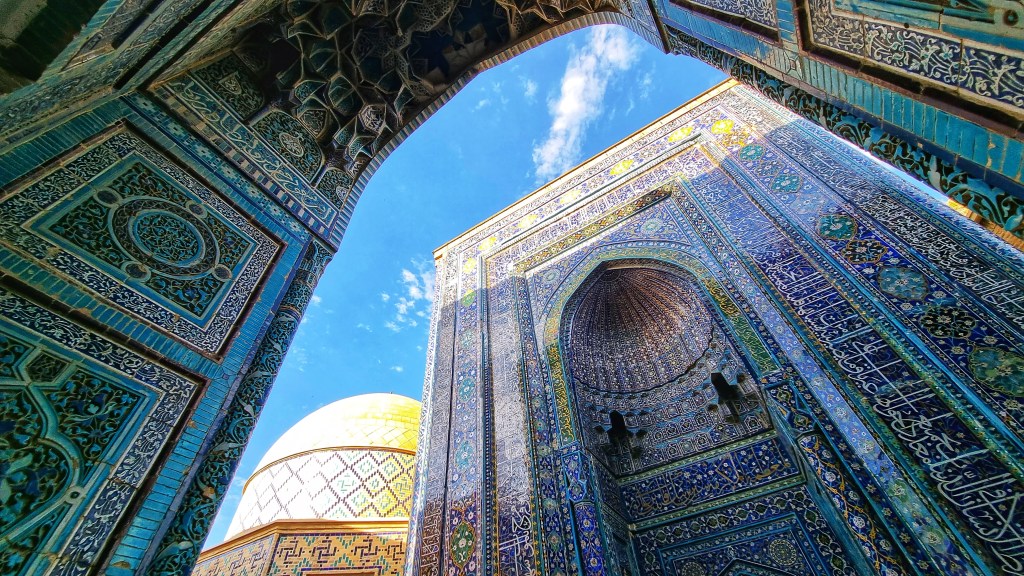
Afternoon light enters silently through the gaps of Shah-i-Zinda in Samarkand and transforms the whole necropolis into a prismatic vision that makes one understand why this place has earned illustrious names throughout the ages, and why it is most widely known as “The Mirror of the World”.

But as I sat there mesmerized, I became more inclined to believe that it mirrored constellations and galaxies… and that so much of what we find beautiful are mirrors of our joys, sorrows, and the distinct libraries of music and thoughts stored in our beings.

It probably was not the first time that a girl stood under its hypnotic gaze and made her contemplate on beauty and celestial realms; and I’d like to think that those reflective beings who came before me must have also gravitated towards its lesser-known epithet — “Garden of the Soul.”

© 2022 MDR
Shah-i-Zinda, Samarkand, Uzbekistan

Michael Ondaatje: Running in the Family

Whenever something momentous happens anywhere in the world, the first instinct of a reader is to read. Whether they be articles, books, or contrasting views on social media posts, a reader reads. And books, even when they are not capable of telling you everything, can still tell you a lot.

As soon as Sri Lanka’s protesters occupied their president’s palace and called for his resignation, I paused from this month’s reading goal to look into Sri Lanka.

The bad news: There is only one Sri Lankan on my shelf. The good news: It is Michael Ondaatje.

“Ceylon falls on a map and its outline is the shape of a tear,” writes this favorite author who is none other than the one who wrote about “the sadness of geography”.

Although I initially hoped otherwise, Running in the Family is not a thorough overview of the nation’s history or politics and turned out to be about family history; and yet I became so absorbed in it that I forfeited an early morning run to read it and finished it on the same day. Because after all, you learn a lot about a country through its people, through its literature, and reading along or between the lines.

There were times when it felt like I was reading about my own country: From superstitions, to drinking tubâ (coconut toddy), the humidity, the smell of durian, the attitudes, and our colonial past — “… the wife of many marriages, courted by invaders who stepped ashore and claimed everything with the power of their sword or bible or language.”

The ousting of leaders has been one of the recurring themes in my readings these past few years and I have read quite a bit to know enough that overthrowing a corrupt leader is not always an assurance of a better government (but also enough to know that the faults of the successor should never erase the sins of the previous one from the memory of its people, otherwise the vicious cycle only continues).

By the end of the book, I already felt a kinship with Sri Lanka’s people; and for now, we wait with bated breath for what is to come. While it is tempting to hope that, by some stroke of serendipity, my country and this land that used to be called “Serendip” by Arab sea traders will stumble upon great things in the future of our governments, we know we cannot leave it all to chance.

There is so much work to be done.

Neal Ascherson: Black Sea

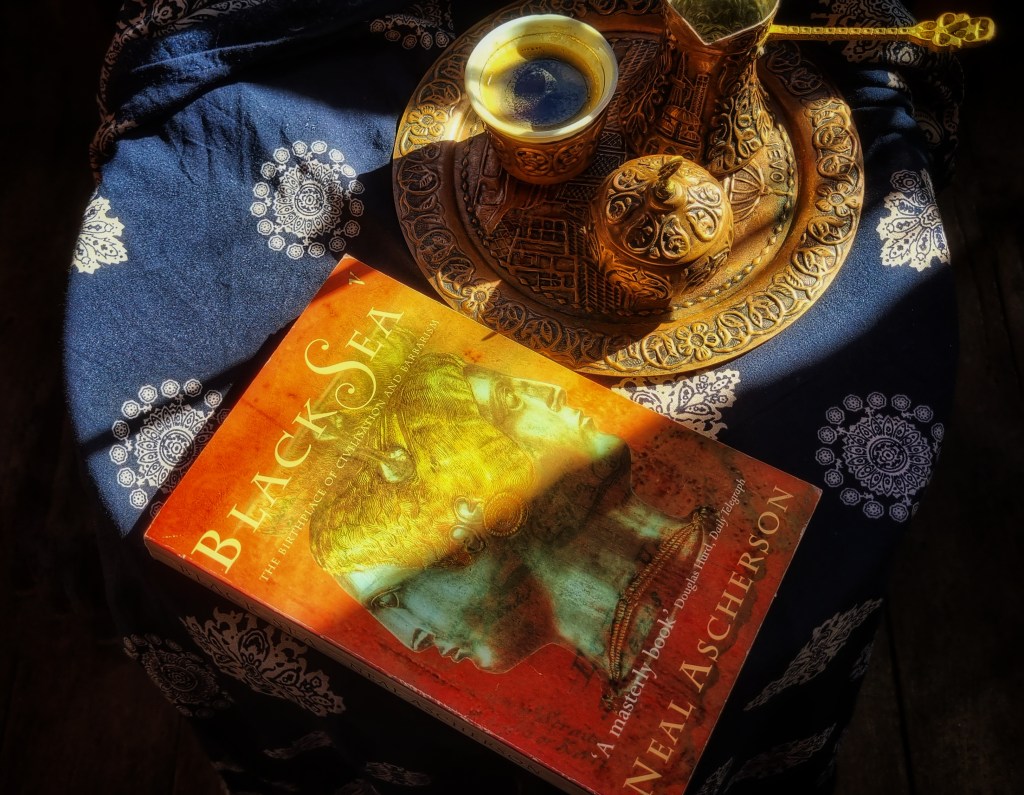
On a trip to Turkey in 2016, we landed at Sabiha Gökçen International Airport, which is on the Asian side of Turkey and closer to the Marmara Sea. The Istanbul Airport that opened in 2018 is on the European side, and just before landing on the meeting point of the world, one is gifted with a breathtaking view of the Black Sea.

I saw the Black Sea thrice from an airplane window on my most recent trip, and the irony dawned on me that this body of water that has sadly become the “largest mass of lifeless water in the world,” in fact, teems with so much history and so much… life!

This book written by Neal Ascherson about this birthplace of civilization and barbarism accompanied me, although I only finished reading it on my way back home. I don’t think I’ve read a more poetic history book!

“Human settlement around the Black Sea has a delicate, complex geology accumulated over three thousand years. But a geologist would not call this process simple sedimentation, as if each new influx of settlers neatly overlaid the previous culture. Instead, the heat of history has melted and folded peoples into one another’s crevices, in unpredictable outcrops and striations.”

Reading it brought me back to the landscapes of Tokarczuk’s The Books of Jacob and to where I’ve just been, merging the lands of my dreams with those places that are the epicenters of current world events. Because somewhere in the midst of this all, is the history of the Black Sea.

From its first mention in literature in the Bronze Age (where Jason and the Argonauts sailed upstream the Bosphorus to the Black Sea); to the different Central Asian tribes and kingdoms; to chapters that made me understand better the Russian Revolution and Communism’s life, course, and death in that region; to the question of Crimea, Russia and Ukraine’s relationship and to many things in between, I am in awe of how Ascherson sustained a poetic voice!

In a way, it answers our suspicions about how, despite all the earlier discoveries of the East in almost all fields, the West is still seen as more superior and more “civilized”. It is an enlightening investigation on the definitions of civilization and barbarism that surprisingly touches on feminism and immigration, which is quite different from what most minds have been programmed to believe.

Here is a history book that does not merely record events and dates, but most importantly, relationships. For as the author compellingly reveals, the Black Sea is not just a place but a pattern of relationships, and nothing like the symbiosis of the Bosporus Kingdom has ever happened.

A beautiful thing about traveling and reading is to be able to measure ourselves against the expanse of time and history, with the intention of acquiring more perspective, if only to acquire more life.

June 22, 2022 – Summer Solstice in Khiva

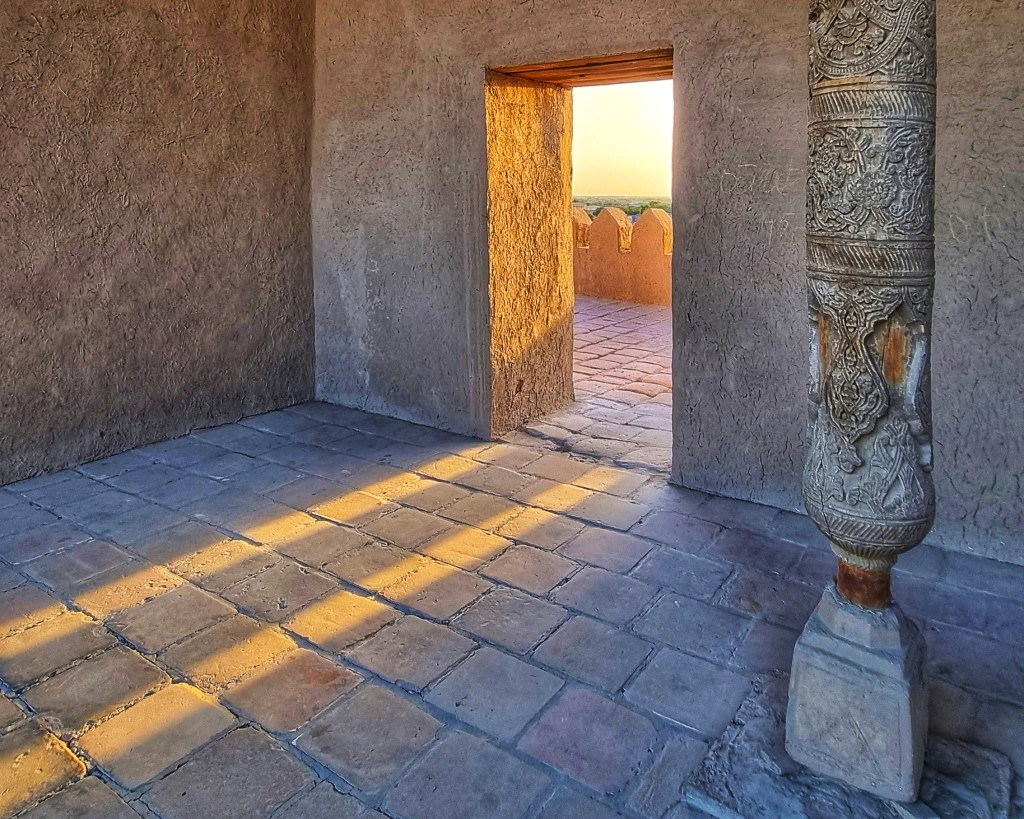
Resplendent, the summer solstice sunset gilds the citadel of Khiva.

Khiva, the former capital of Khwarazm.

Khwarazm, the region that gave us polymath Muhammad Ibn Musa al-Khwarizmi (780-850), who wrote the book Al-Jabr. From his name we have the word “algorithm,” and from Al-Jabr “algebra”.

The sun blazes differently here. And for knowledge, their wise men, too, seemed to burn so intensely.

June 21, 2022 – The Colors of Bukhara

The temperature is significantly higher in Bukhara that you can feel your skin baked into the color of a lepyoshka as soon as you step out of the caravanserai. Yes, I am staying in a caravanserai! Isn’t that the most natural thing to do when traversing desert cities?

In contrast to Samarkand that can only be depicted in golden blues and vibrant shades of dreams, Bukhara wears the colors of the desert.

But that’s not to say that this important stop on the Silk Route is monochromatic. For as we know, the desert yields surprises; and thousands of years of history have stamped their mark and bled their hues on this oasis city.

I made two friends today who know their history! One endearingly encouraged me to look it up on my phone because he says it’s all there, and the other is an imam who saw me taking pictures of the architecture while trying my best to be unobtrusive at a site sacred to Muslims. He must have appreciated this because he beckoned to me and invited me to take closer pictures of the mosque and its interior, and afterwards, for tea. It was the best tea I’ve had on this trip!

June 20, 2022 – Bukhara, Uzbekistan

© 2022 MDR
Ark of Bukhara, Uzbekistan

“I found in this library such books, about which I had not known and which I had never before seen in my life. I read them, and I came to know each scientist and each science. Before me lay the gates of inspiration into great depths of knowledge which I had not surmised existed.” — Ibn Sina (Avicenna)

Avicenna (980 – 1037) — philosopher, poet, astronomer, mathematician, physicist, the father of early modern medicine, among many other things — has been known to us as a Persian polymath. But he was, in fact, born in Uzbekistan. His early education began here in Bukhara.

The library in the Ark of Bukhara has not survived the many conquests that Bukhara has been through, although this enormous structure that dwarfs me continued to be a fortress from circa 500CE until it fell to the Red Army in 1920.

Sadly, there is no way for me to find the books of which Avicenna wrote, but the book wide open before me now is Bukhara… and I am savoring every line.