Amit Chaudhuri: Finding the Raga

A note that aches to resolve on the semitone next to it is called a leading-tone in Western music theory. While it comes closest to what a shruti is in Indian classical music, they are not equals; and although shruti literally translates to “what is heard” in Sanskrit, it has another meaning in Hindu sacred literature. Shruti in Indian classical music is the smallest gradation of pitch discernible by a human ear and the tiniest interval of pitch that a singer or musical instrument can produce.

But it is not my intention to bore non-musician friends with more of that. Finding the Raga is a poetic and accessible introduction to Indian classical music. It imparts an ample amount of artistic insight to share in future discussions. Aside from suggesting that our understanding of music enhances our appreciation of literature, language, and the world, it is an enlightening reminder that there are other lenses in which to view the world and other modes of music through which we can listen to the world aside from the Western.

It was, however, the idea of shruti that made itself heard to me more resoundingly, and exactly what I needed to read and learn on the first day of the year; because while leading-tones in music to which I am accustomed communicate a certain unease and a longing to resolve, in the raga, “Shruti has to do with the note’s anticipation of the next note, as well as its refusal to be immediately transformed into it. It’s to do with sometimes preferring a state of becoming, of being transformed…”

Once again, this in-betweenness. The last book I read in 2022 was Olivia Manning’s School for Love, a coming-of-age novel set in Jerusalem after the Second World War that seemed to me about the state of in-betweenness. It made me ponder on the truth that life itself is an entire in-betweenness and that, perhaps, the true test of our lives is in how we navigate through the uncertainty.

And now, this whole concept of shruti, a coming to terms with, and even a relishing of, this in-betweenness.

Finding the Raga has set the tone for my year. Here’s to making the in-betweenness both the journey and the home, the way sadhana does not differentiate between labour and its fruit or between preparation and performance, the way a khayal does not demand the listener to distinguish between process and finished product; and here’s to fine-tuning life for this interval of in-betweenness that can be made beautiful.

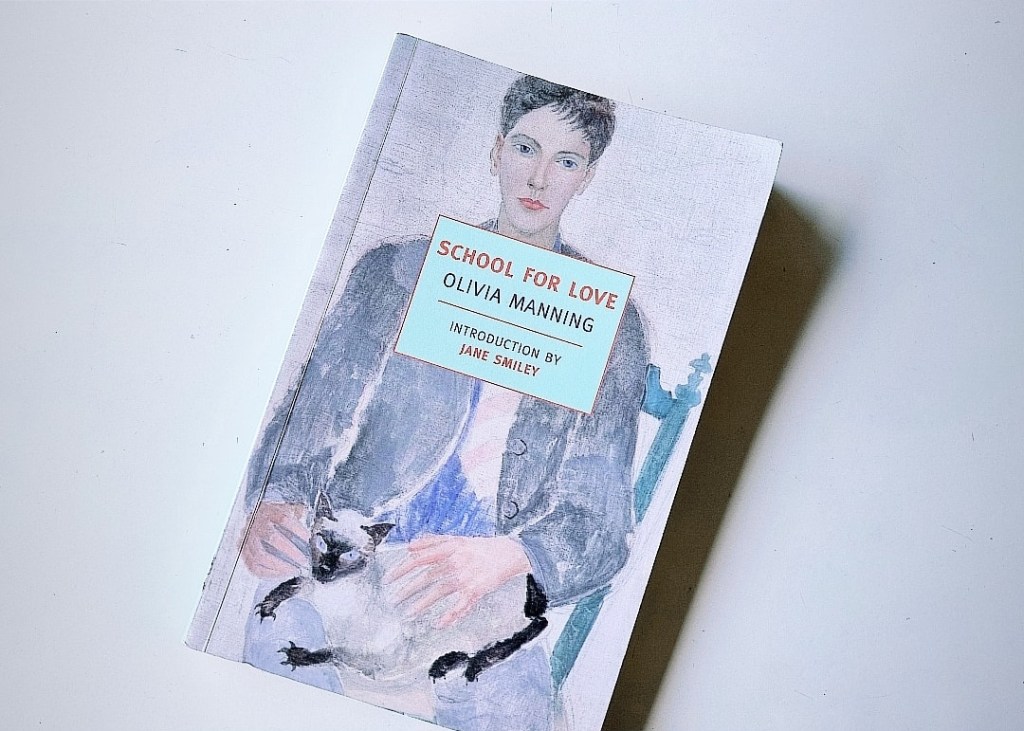
Olivia Manning: School for Love

It is an unusual Jerusalem winter, although there is no nativity scene. It is 1945. It is about Felix, an orphan crossing over from childhood to adulthood. It is about a time of unsettling calm at the end of one war and the brewing of another conflict. It is about a place between two upheavals, and read by this reader just as the year is ending and another is about to begin.

…and maybe the story still matters to us because it is all about the state of in-betweenness, a state that we constantly find ourselves in; and because life itself is an entire in-betweenness. After all, “I suppose it means that life is a sort of school for love,” ponders Mrs. Ellis, and maybe the true test of our lives is in how we navigate through the uncertainty of this in-betweenness and treat others in their own in-betweenness.

Truman Capote: A Christmas Memory

“But when it comes time for making each other’s gift, my friend and I separate to work secretly. I would like to buy her a pearl-handled knife, a radio, a whole pound of chocolate-covered cherries… Instead I am building her a kite. She would like to give me a bicycle (she’s said so on  several million occasions: ‘If only I could, Buddy. It’s bad enough in life to do without something you want; but confound it, what gets my goat is not being able to give somebody something you want them to have.’ …Instead, I’m fairly certain that she is building me a kite…”

Truman and his dearest childhood friend did end up giving each other a kite for Christmas and they had a good laugh about it before enjoying a wonderful kite-flying day. The kind of day that makes one say, “I could leave the world with today in my eyes.”

In one of the many gatherings this season, an acquaintance confessed matter-of-factly that he doesn’t give Christmas too much thought or he’d feel sad about what was missing. I felt that wholeheartedly. It turned my thoughts toward loved ones who have lost so much this year and what Christmas would be like for them. Indeed, “What gets my goat is not being able to give somebody something you want them to have.”

This book, so deceptively simple, had me sobbing by page thirty. It is heart-warming and heart-rending at the same time. Although the accompanying stories lend a surprising glimpse into the author’s emotional traumas from his early years, it is beautiful enough to be considered one of the best Christmas books and, perhaps, deserving of an annual rereading — if only to remind us of the gifts of true friendship, and to nudge us to rummage through our own chests of Christmas memories and realize what treasures we keep within.

“That is why, walking across a school campus on this particular December morning, I keep searching for the sky. As if I expected to see, rather like hearts, a lost pair of kites hurrying toward heaven.”

My Initiation to László Krasznahorkai

As if in sync with my protracted pace in gathering enough courage to take on a Krasznahorkai, it also took a while for my order to arrive. 

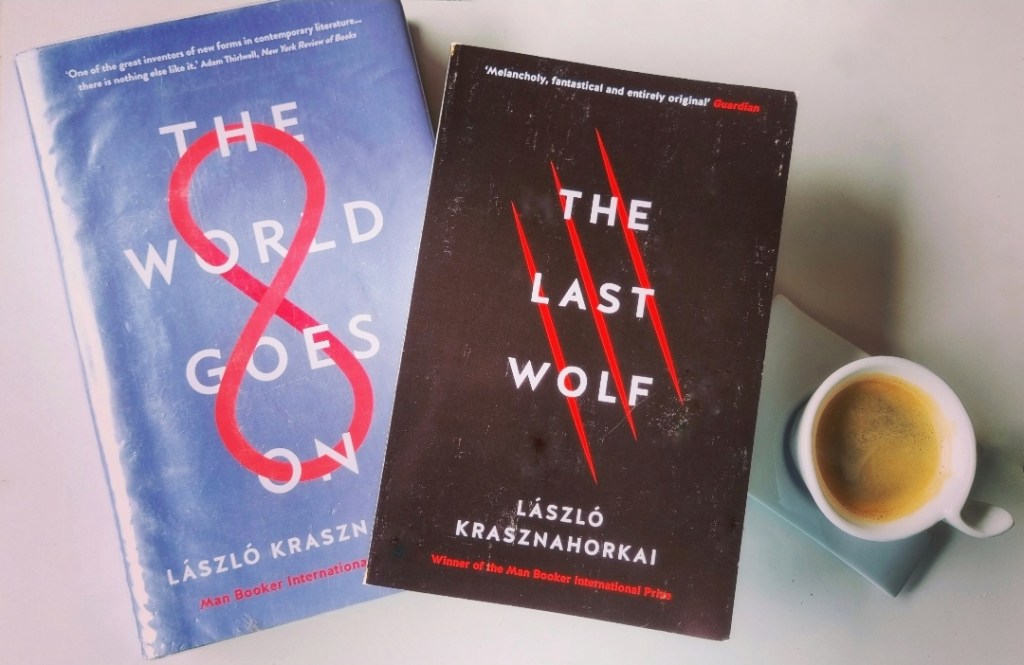
When at last his books occupied the Hungarian section of my shelf, I timidly went for The World Goes On to sample one of the short stories. Catching the name of my favorite city in the table of contents, I immediately turned the pages to The Swan of Istanbul.

The Swan of Istanbul (seventy-nine paragraphs on blank pages)

In memoriam Konstantinos Kavafis

My excitement was fueled upon seeing it dedicated to the writer of my favorite poem! (Too excited, in fact, that my eyes skipped the words in parentheses.)

What greeted me was the literary counterpart of John Cage’s 4′33″. Blank pages, ladies and gentlemen.

These thoughts assailed me as I flipped through the emptiness of each page: Doesn’t Krasznahorkai have a reputation for composing entire books with a single sentence? Where was the intimidating muchness of which they spoke? Should I lazily call this pretentious without giving it much thought and expose my limited knowledge of post-modernism and deconstructivism? But also; László, I like you already.

And yet, after “reading” the blank pages, I closed The World Goes On and tried my hand at The Last Wolf. There I found the labyrinthine thoughts and lines for which he is known, a philosophy professor who thinks he is mistakenly hired to write about the last wolf of Extremadura, a wasteland in Spain that was once part of what the Romans called Lusitania, and yes, the solitary period at the very end.

As the story spirals out, the reader is made to ponder on the hunter and the hunted, how the two are very much alike and are part of the same thing; gentrification, not just among humans but among animals; bestiality and humanity intermingling; the incomprehensibility of existence, and how man is a prisoner of thought.

If John Cage’s 4’33″ was meant to be the embodiment of the composer’s idea that any auditory experience may constitute music, what if reading Krasznahorkai is to explore, to be surprised, to question what constitutes a reading experience, and to challenge what else literature can be?

Thad Carhart: The Piano Shop on the Left Bank

Not the West Bank this time, just the Left Bank. The thing about my Silk Route | Fertile Crescent reading project is that — despite being a source of enlightenment through discovering underrated but astounding literature — novels from this route in question are usually emotionally taxing.

Although I have sensed that I am drawn to writings from places of conflict for the reason that they have a sensitivity to beauty commensurate with their heightened awareness of the fragility of life; once in a while, I need a breather, and that’s when I turn to books related to other interests. In this case, not merely an interest, but a love.

But as love would have it, we oftentimes become accustomed to a beloved’s presence and we slowly take its magic for granted. 

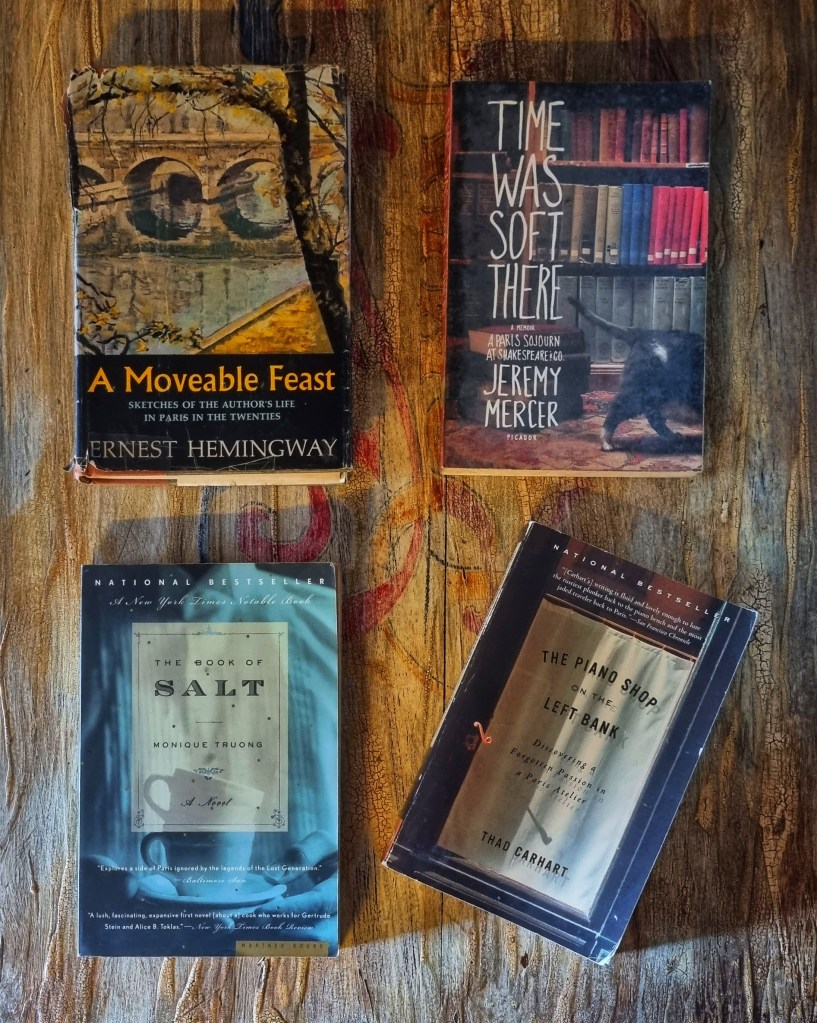
The Piano Shop on the Left Bank: Discovering a Forgotten Passion in a Paris Atelier refreshed me about the intricate workings of a piano; of how extraordinary this instrument is; of the alchemy and difficulty involved in piano-making and music-making; and how beautiful tone production relies so much on the precision of piano makers, the skill of piano technicians, and the heart and hands of a pianist. This rekindled a fire that led me straight to the piano after turning the last page.

But this book is not just about pianos and trivia from the music world. (Although, while we’re at it: Did you know that when the Eiffel Tower was built in 1889, the first thing to be hauled to the rooms at the top was a piano?) It is also about the Paris that is inaccessible to the tourist. In fact, this would make a lovely pair to Mercer’s Time Was Soft There: A Paris Sojourn at Shakespeare & Co.

Surely, these books did not intend to rival Hemingway’s A Moveable Feast or the aching poignancy of Truong’s Book of Salt, but at times, lesser-known books are beautiful for the simplicity that they lead us to find something that draws out music from within.

Sevgi Soysal: Dawn & Yashar Kemal: Memed, My Hawk

When Archipelago Books released their edition of Dawn, I immediately placed an order and entertained myself with Memed, My Hawk and a few other books while waiting for its arrival. This is my second NYRB/Archipelago book-pairing and I’m finding these serendipitous duos to be highly rewarding.

Maureen Freely, whose translations of works by Sabahattin Ali and Orhan Pamuk I have enjoyed, pens an insightful preface to Dawn that enlightens readers about Sevgi Soysal’s life and the paradox in Turkish women’s rights that she was born into; and for the 2005 NYRB edition of Memed, My Hawk, launched on the fiftieth anniversary of its publication, Yashar Kemal himself wrote the introduction wherein he reflects on people whose destiny it is to revolt.

Little did I know that the two Turkish works would complement each other and provide a rare glimpse of the Çukurova plain when it was still a setting for poor villagers, cruel landlords, bandits, orchards, and fields of thistles in Memed, My Hawk, and the same district on the cusp of urbanization in Dawn — far removed from the glorious domes and minarets of Istanbul that are more familiar to the international reader but closer to the woes of the working class.

Kemal (1923-2015) and Soysal (1936-1976) were no strangers to arrests and serving prison time for political activism. Memed, My Hawk is Kemal’s first novel, and Dawn Soysal’s last. But the symmetries are endless. The lives that both authors lived as leftist intellectuals and the fights they fought against authoritarianism and injustice are fervently manifested in these works.

The word “leftist” might cause some to flinch as it comes with a lot of baggage and it is deplorable how the mere association to the word can lead to “red-tagging” in my country; but the flawed and deeply human characters in both works reveal various shades of this problematic term that, stripped to its purest state, is simply the pursuit of equality, equity, basic human rights, liberty, and justice.

“Since when did we start thinking that struggling is a crime, and doing nothing was innocence and brilliance?” — Sevgi Soysal, Dawn

Mathias Énard: Zone

Tell them of battles, kings, and elephants,

without the elegance, without the elephants,

only battles, cruel kings, and pawns,

“Comrade, one last handshake before the end

of the world,” says a madman

at the station in Milan,

Francis Servain Mirković is burdened

by the remark, burdened

by the contents

of his suitcase, by the contents

of his mind,

as the train steers to Rome,

it is not scenery that flash by,

it is his life; no home,

Balkan conscript, a spy,

dysfunctional lover, son,

former informer

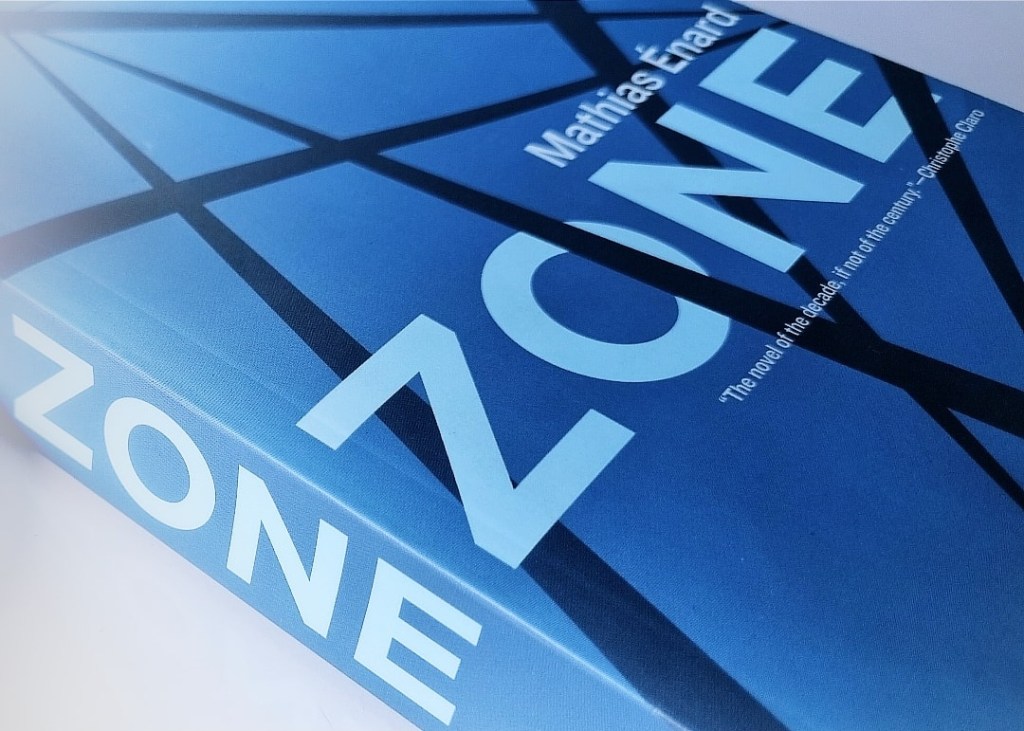
in the Zone, epicenter

of my literary quakes,

“the Zone, land of the wrathful savage

gods who have been clashing

endlessly

since the Bronze Age,” but he is

convinced that tomorrow he will

be a new man, as the train moves

memory

is a threnody

of the guilt of nations,

of the sins of the world,

of over a century’s worth

of savagery,

a brutal montage

of conflict, training our eyes to truths 

that we prefer to turn away from, a book

to make our consciences flinch, no one

is ever prepared

for official truth

says our antihero, this man,

a product of a history

of violence,

a tragic aspect

of a portrait

of a man

of our time.

Hamid Ismailov

“We are a nomadic people. Today we pitch our yurts on one mountain pasture, tomorrow on another. Some people see their sense, their history, their fellow men as urban, and preserve all this in schools and madrasas, books and manuals. But we get on our horses and carry everything on our persons, and we have to keep it like this, on the move, in our minds and hearts.” — Hamid Ismailov, Manaschi

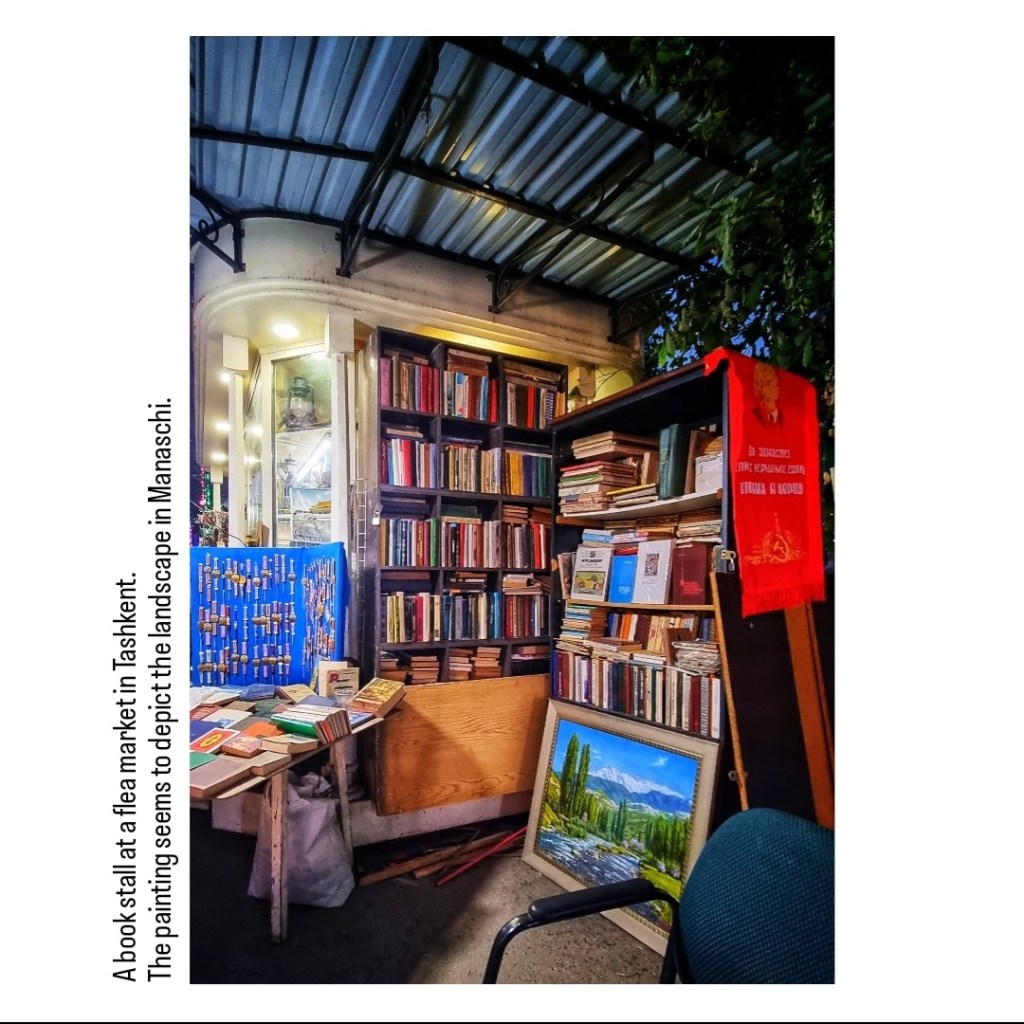
Sometime in between the first and the second volume of this Central Asian triptych, I travelled to Uzbekistan where Ismailov’s books cannot set foot because they are banned, and had a glimpse of the place that wrote the author.

Devil’s Dance is an intense initiation to Uzbek Literature. Of Strangers and Bees playfully meanders across the boundaries of time, literature, and geography. Manaschi is a geopolitically relevant finale that equals the force of Devil’s Dance.

But whether one speaks of the persecution of Uzbek writers throughout different regimes and implies that the writing process is akin to a dance with jinns;

the other of exile, elusive homelands, the value of community, man’s capacity for good and evil, or the search for truth and self through wanderers and bees;

and another of the trouble with imposed artificial borders, ethnic conflicts, the complexity of identity, or mystical bardic traditions;

all three uniquely celebrate the rich storytelling heritage of Central Asia — a heritage so crucial that a protagonist from the second volume boldly claims it to have shaped the shorelines of the great ocean that is Russian literature.

I love how this trilogy is a confluence of literary traditions rather than a defiance of the Western form. It manifests the power of stories, written, uttered, or observed; the power of stories when lived, as we become our stories and our stories become us; and the power of stories to take us beyond pathways of silk, even to places where only the rustle of words can go.

“It was a good thing the world had Uzbek literature.” — Hamid Ismailov, Of Strangers and Bees


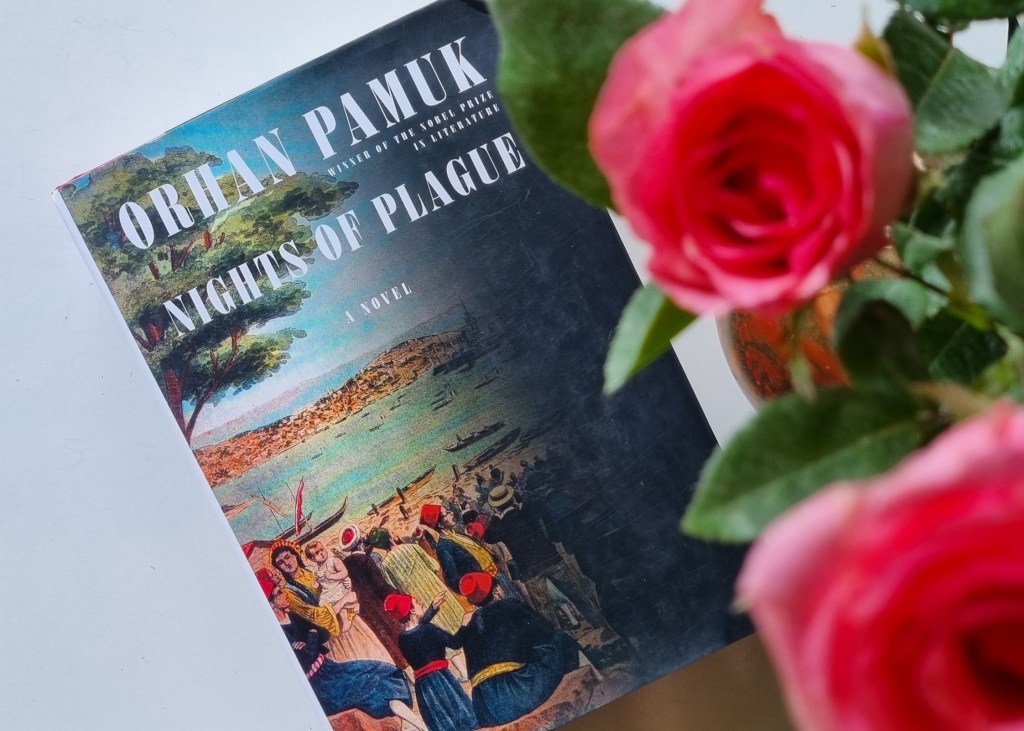
Orhan Pamuk: Nights of Plague

Orhan Pamuk’s longest novel to date unravels with a pace that tends to linger, to wit: it is not for readers who are in a hurry. For that reason, I found it strangely refreshing. Strange because it is a plague narrative that is not meant to be refreshing, refreshing because of the reading experience it provided; defiant of the modern reader’s preference for a literary quick fix, and defiant of our silly reading goals that have more to do with the number of books rather than the languid relishing in an author’s descriptive prowess.

Perhaps I simply feel at home in the expression of an author whose mind is a museum of melancholy, but I am now sensing that part of the allure is in how his books are written for their own sake — written because he felt they needed to be written rather than written for their salability. Isn’t that pure art?

Set in 1901, in the fictional island of Mingheria, “on the route between Istanbul and Alexandria,” it is a curious deviation from a usual Pamuk novel that stays within reach of Istanbul. While Snow is set farther in eastern Turkey, an invented island between Crete and Cyprus is still a surprising backdrop for seasoned Pamuk readers; but only until we realize that the creation of Mingheria allows for a certain leverage and freedom for political criticism. Methinks Mingheria speaks more about Turkey than it does about an imaginary island nation in 1901. 

This novel can teach a thing or two about running a nation during a plague; about epidemiology; how to deal with resistance from different sectors against quarantine measures; how plagues do not distinguish between Christian or Muslim; how failed attempts at containing a plague can fan the flames of a revolution; how revolutions can be exploited; the similarities between solving a murder and stopping an epidemic; and living or loving through the sickness and political ferment. It is about plagues, revolutions, nationalism, the administrative and language reforms that ensue, the fickleness of governments, about the accidents of history, how history is made, and how history is written.

It echoes Camus’ The Plague in the way that the narrator’s significance is revealed only at the end and also for the chilling reminder that plagues reappear throughout history “for the bane and enlightenment of men”.

Unfortunately, man easily forgets, and unwittingly asks to be reminded ever so often.

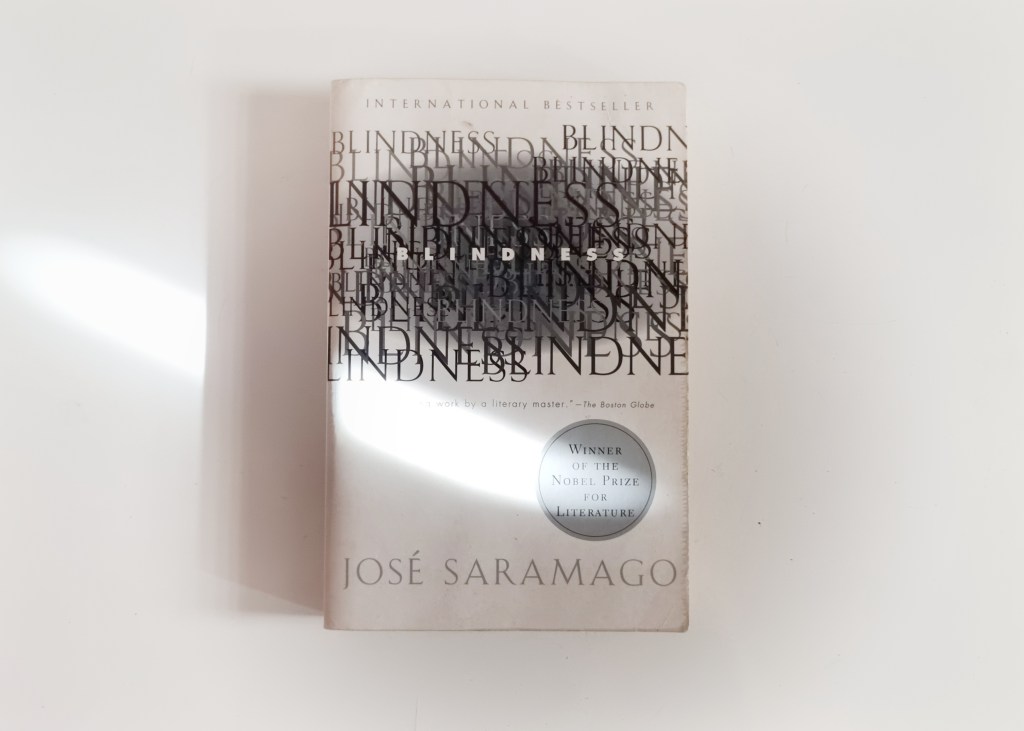
José Saramago: Blindness

On re-reading and “reviewing” — ergo, to see, again.

The plan was to read a Saramago by the 16th of November. It could have been another Saramago. Besides, I still remembered the anguish in this one. But was that all? Could an honest reader claim to have read this if that’s all they gathered?

The questions prompted a re-reading. After all, this reader of thirty-eight Novembers makes an effort to re-read at least one book a year from callow years. Blindness beckoned.

Oh, to realize that the first victim of the epidemic of blindness in the story, who used to seem so much older, is exactly as old as I am now!

It took several pages to re-acclimatize to the disorienting treatment of dialogue: But I now grasp how this effectively amplifies an incessant tension, immensely effective that the suspense still made my palms sweat. 

Soon enough, neglected passages from the first reading began to hit differently: “Government of the blind trying to lead the blind” leapt off the pages from fiction to palpable reality. And I ask, is the book still considered dystopian when we already experienced similar things at the onset of the pandemic — the messy government response, the fear of the unknown, the unforeseen future, deaths, confusion, chaos, the stumbling in the dark, the uncovering of the best and the worst of humanity?

It is also only now that I understand why the characters were not given names: “Inside us there is something that has no name, that something is what we are.” I had failed to notice that this novel is essentially a look at human behavior when left to fend for itself in the dark, beheld under Saramago’s powerful, magnifying lens.

Yes, there is anguish and barbarity; it’s every man for himself. But as an older reader who has seen more darkness in the world than when I first read this, the opposite is highlighted this time, and it is compassion and kindness that shines through.

There is anguish, but I can also emphasize how a book about blindness can open our eyes; and I will, instead, point to the selfless acts, that glorious moment when the three women bathe naked in the rain, and those moments when the only person who retains her eyesight reads a book to those who have gone blind.

“The only miracle we can perform is to go on living, said the woman, to preserve the fragility of life from day to day, as if it were blind and did not know where to go, and perhaps it is like that, perhaps it really does not know, it placed itself in our hands, after giving us intelligence, and this is what we have made of it…”

To go on living. José Saramago couldn’t have given me a better message on the 16th of November, the birthdate he and I share.