Have you ever read a novel by a Hungarian author that is not a page-turner?
I haven’t!
“I need a drink. Because I have to tell you who Tamás Ulpius was, and how he died,” on the fourteenth page, is the same bomb of intrigue that Magda Szabó drops on page three of The Door when she writes, “Thus far I have lived my life with courage, and hope to die that way, bravely and without lies. But for that to be, I must speak out. I killed Emerence.”
Intrigue is the paprika that flavors Hungarian pages up until the very end.
I was drawn to this book not for what the blurb promised, but for its writer: Antal Szerb, who sadly perished in a camp during the Holocaust. But like Irène Némirovsky, also a Catholic Jew who nonetheless shared a similar fate despite their conversion to another faith, there is nothing politically blatant in their writings.
There is, however, a certain psychological depth in Szerb’s style that makes it extremely appealing to me. The characters themselves are not that likeable but they seem to represent the state of disorientation of the generation between the first and the second world wars.
“‘There’s nothing wrong with you,’ said the doctor, ‘just horrendous exhaustion. What were you doing, to get yourself so tired?’
‘Me?’ he asked, meditatively. ‘Nothing. Just living.’ And then he fell asleep again.”
Death plays a role in this novel, but so does Life. An existential crisis and unresolved issues of his youth haunt the main character and result in the fickleness of his decisions. He abandons his wife on what was supposed to be an idyllic honeymoon in Italy, and there begins what seems to be a muted exploration into the psychopathology of guilt.
In this edition’s introduction, we learn of Szerb’s fascination for Italy; “its art, its history, its people, its language, its ancient towns and their narrow back streets.” He had lived there as a young man from 1924 to 1929 and the country took hold of him. He returned in 1936, suspecting that it was for the last time. In a travel journal entry, he wrote, “I initially wanted to go to Spain… but it occurred to me that I simply must go to Italy, while Italy remains where it is, and while going there is still possible. Who knows for how much longer I, or any of us, will be able to go anywhere? The way events are moving, no one will be allowed to set foot outside his own country.”
Needless to say, his suspicions tragically proved true, but this final trip to Italy gave birth to this novel, which is a poignant love letter to Italy.
But through all of what Szerb says with clarity or through undertones, what I found most disquieting were descriptions of the generation’s moral insanity, how they viewed war with indifference — “bore the changing times on their backs with astonishing passivity, and lived quite unconnected with their own remarkable history.”
And unfortunately, Antal Szerb did not live to tell the tale, but we all know what happened next.
“With these words, she drew back the bolts that Kolbakur had made to fasten her window frame, pulled the frame aside, and let the man into her bower. Images of gods were carved on the bower’s pillars and stiles and rails of her chair, but they were only half done — Christianity having come to Iceland before the artist completed his work.”
And with this fleeting imagery, a beautiful and ingenious depiction of the religious landscape in which the story is set. An age on the cusp between the fading world of paganism and the force of a new religion of peace, ironically preached by adventurers and men waging selfish crusades in the name of Christ. It was this melancholy conflict that I heard playing as a soundtrack throughout its pages.
It seemed revolutionary when Hollywood recently began to highlight the dark side of legends and heroes. These have become sombre reminders that even superhuman abilities are not enough to protect one from ego, the perilous thirst for fame, power, revenge, and from mere mortals’ tragedies.
Then there’s Halldór Laxness who had Wayward Heroes published way back in 1952, part of the body of work that earned him the Nobel Prize in 1955.
Written in the style of ancient Icelandic sagas, it is replete with violence, adventures amorous and otherwise, and the barbarism of medieval Europe. But how wonderfully Laxness refashions the old to become accessible and relevant to the new.
On the surface, these are the exploits of blood-brothers, Þorgeir and Þormóður. One can read it as such and it will remain entertaining. But one can always choose to go beyond that and take note of the language, the veiled ironies, how wit and sarcasm remain elegant, and the subtleties that only a master can pull off, and how this story remains especially timeless for being a cautionary tale about the heroes, kings, and causes to whom and to which we pledge fealty.
“…and if we are lies we shall be lies of our own making.”
“Mark these words of mine, my son. Has not the country become independent? Have we not become free men in our own country? Be sure, though, that they will direct our affairs from afar. This is because they have left behind them people who think as they do.”
– – –
Could dictatorships in developing countries be a side-effect of colonialism?
The effects of colonialism do not end after a nation’s independence, the same way the effects of a dictatorship do not end after a people’s revolution.
Colonialism has defenders who maintain that they served whom they oppressed, dictatorships have the same apologists; but do not both warrant that succeeding leaders would grapple with a democratic exercise of authority — among many other ills they leave in their wake?
Perhaps I am late to these reflections, but there are many people still who do not understand that colonialism and dictatorships have a profound impact on political structures that one simply cannot move on from.
– – –
Season of Migration to the North was the catalyst for these thoughts; a dark and rather absurdist but lyrical depiction of the post-colonial struggle; not an angry tirade but one that challenges opposing views.
It overshadows The Wedding of Zein in many ways, tempting me to say that if there’s one Salih work you must read it should be Season of Migration to the North. On the other hand, The Wedding of Zein comes with two of his finest short stories: One of them is The Doum Tree of Wad Hamid that wistfully contemplates on the clash of social modernity and traditions.
“There will not be the least necessity for cutting down the doum tree… What all these people have overlooked is that there’s plenty of room for all these things.”
So, perhaps it’s wise to read these books together.
Sudan, the largest country in Africa that shares a border with nine other countries including Egypt. And yet we read so little of/from them. It’s time we do. We (I speak as a Filipina reader) share so much more in common than we think.
“In any work of literature the most interesting bits are in the detail,” Kőnig had often said in his lessons. “Be sure to attend to them closely.”
If I had a daughter, she’d find this book in a collection I created for her.
Reading this, she’d be reminded that heroines do not have to be faultless; that the surest assumptions can often be wrong; that no matter how clever we think we are, there are people wiser still; that actions always have consequences; that friendship is precious; that even in the most repetitive of routines and what we deem the bleakest of days, life will find ways to astound or surprise us.
If she philosophizes and reads deeper into the book, as I suspect a daughter of mine will, she will venture to question where childhood ends and adulthood begins, and attempt to come up with answers of her own, or a hundred questions more.
If she develops an awareness of history and politics, as she must, she will be sensitive to Magda Szabo’s subtle activism and glean the lessons of sacrifice and duty.
And I imagine this book — so engaging and difficult to put down — will only fuel the love for reading in her.
Can you tell that I read this through the eyes of a wide-eyed adolescent, and not through the eyes of an adult still haunted by the painful and confounding strains from Iza’s Ballad and The Door but who, nonetheless, acknowledges that Magda Szabó has now become a favorite?
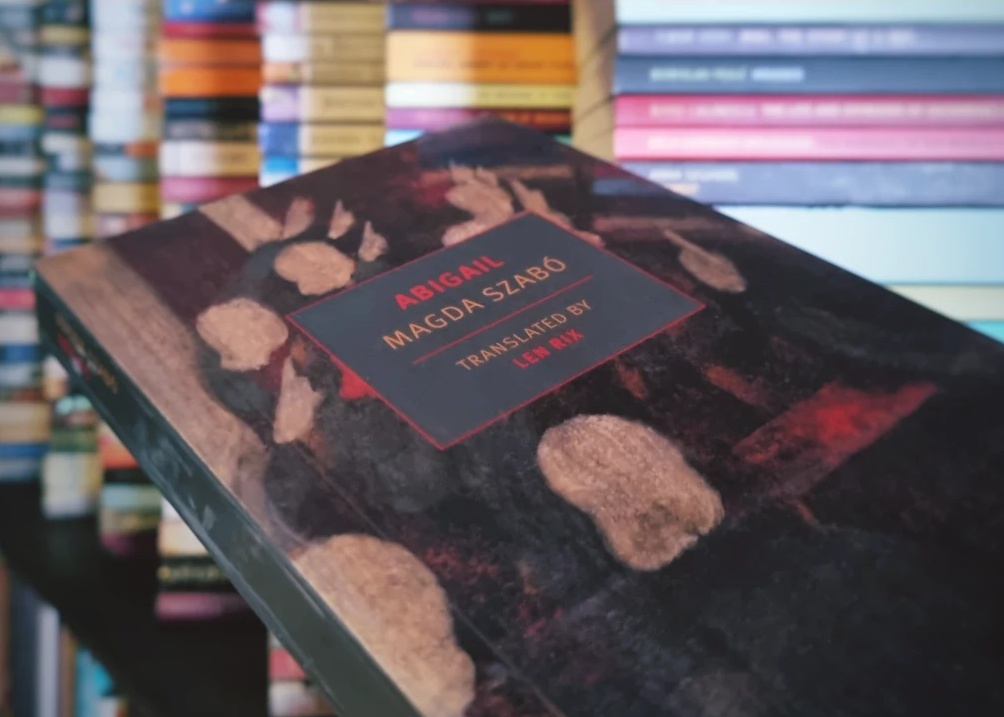
Iza’s Ballad and The Door gnaws at the soul. Abigail educates the heart.
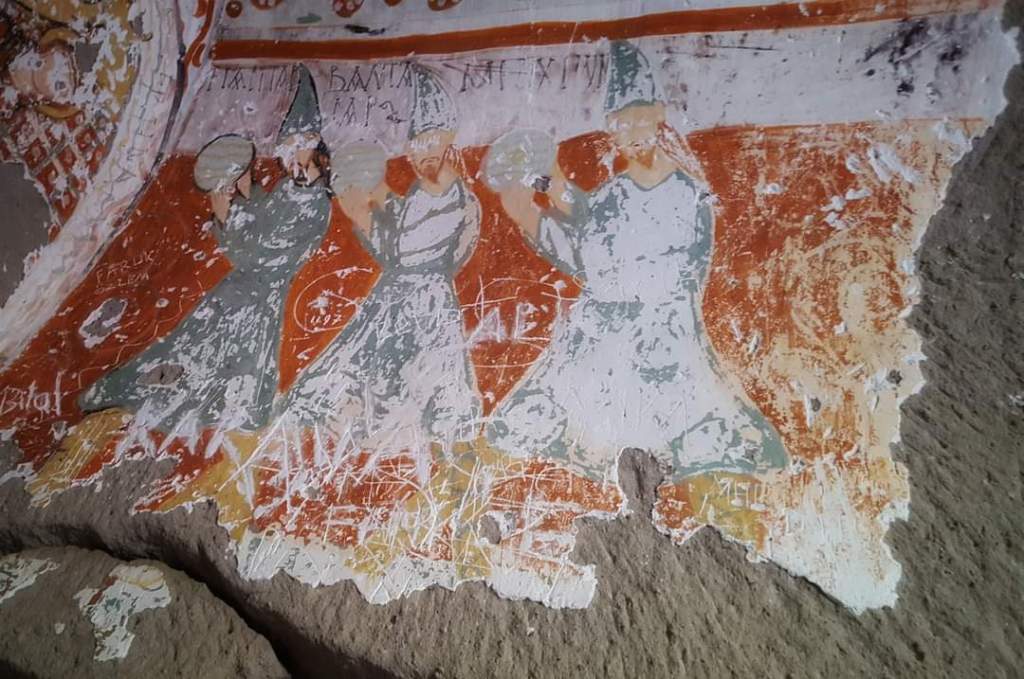
The book had me at its cover; a landscape distinctly Cappadocia, one of my favorite places in the world, however otherworldly.
It had me at the introduction by Karen Armstrong. Who else more suited to introduce such a book?
Patrick Leigh Fermor had me at, “The book was based — whole passages of it word for word — on letters I wrote at the time to a correspondent (whom I later married) without the remotest thought of publication.”
He had me the entire time because reading his prose felt like meditation.
A Time to Keep Silence is a lovely exemplification of that Thomas Merton line I encountered through Rebecca Solnit earlier this year: “The inner journey is the interpolation of the meanings and signs of the outer pilgrimage. One can have one without the other. It is best to have both.”
Known for traveling to Turkey on foot and for being one of the finest travel writers of the past century, this is a record of Fermor’s travels to a more inward direction. Through Europe’s monasteries with their divine libraries, chanting monks, cloistered lives, and vows of silence, and to Cappadocia’s abandoned rock monasteries, we are made recipients of their histories and these letters, too; but most of all, of the contemplation on modern man’s need for silence and solitude.
For someone who recently took three weeks off from social media to retreat from its noise and with only one foot back inside, this book expressed many of my unspoken thoughts, and I can only agree with a constant book friend who thinks that the only problem with this book is that it is too short.
Here’s to places, experiences, or books where “…the troubled waters of the mind grow still and clear, and much that is hidden away and all that clouds it floats to the surface and can be skimmed away; and after a time one reaches a state of peace that is unthought of in the ordinary world.”
“A concern for truth did not always accord with political expediency.”
There is much to mull over and absorb that I took my time with this book. Maxime Rodinson does not only paint a portrait of realism of a man, but also a stunning landscape of a world and age.
The portrayal is constructed based on meticulous research, and because it is not always compatible with prevailing ones, he treads on dangerous ground. In fact, censorship issues led the American University in Cairo to halt its publication in 1998.
“The picture is not a simple one. It is neither the static monster of some or the ‘best of all created things’ of others, neither the cold-blooded impostor nor the political theorist, nor the mystic wholly in love with God. If we have understood him rightly, Muhammad was a complex man, full of contradictions… But there was a power in him which, with the help of circumstances, was to make him one of the rare men who have turned the world upside down.”
“Let us, with undue naivety or too many illusions, acknowledge the greatness of the creators of the systems which have played so large a part in the world; and among them, Muhammad.”
This is a work of history. But history is a tricky issue, especially in the Philippines right now. Rodinson, however, poses this challenge in the introduction: “If one is to criticize in turn, in order to reject its conclusions, one must study and refute its findings according to the same critical standards with regard to sources.”
_ _ _
A confession: While reading this, there was a constant imagining of how it would have turned out had Olga Tokarczuk written it. It would surely have been just as carefully researched but peppered with literary mischief and, perhaps, slightly more entertaining.
Only slightly because Rodinson, a historian of Islam, does not write drably either. For Edward W. Said to claim that there can be no doubt about this book being “the major contemporary Occidental work on the Prophet and is essential reading” was recommendation enough for this reader.
This reader, a nonbeliever of Islam and an amateur on the subject but who has, through an ongoing reading project, realized that even a humble comprehension in the war of succession after Muhammad’s death between his father-in-law and son-in-law that created the Sunni and Shia chasm can allow one to grasp better the complex relationships or conflicts between Islamic nations and organizations. And so, with this realization, the acknowledgement of how taking a small step can open doors to understanding.
I hadn’t built anything, I’d demolished myself. Here, look!
In that sublime realm where literature and architecture meet, Hugo’s Notre Dame and Calvino’s Invisible Cities occupy the high throne. I nominate Pekić’s Houses to sit with them.
One would expect this book to be political, Borislav Pekić being a founding member of the Democratic Party in Serbia. And indeed, it is.
Belgrade’s turbulent history of clashing ideologies is not an undertone in this novel but a counterpoint to an unusual but brilliant motif that is architecture — which is, of course, political.
What took me by surprise, despite the obvious title and the summary about an eccentric character who loves houses more than the average person does, was the non-perfunctory view on the subject. The discourse ranges from houses being compared to human souls, to the ideal harmony of a building with urban space and its character, to how preservation is of great importance to a place, to criticisms on the sacrificing of aesthetic quality for the sake of profit, to describing a particular house as like an erratum, a coarse printing error in the elegant context of the street, and even to the communion with buildings as if they were alive, which in fact they were!
Of course I can’t say that those books about architecture made me fall in love with houses. They only explained to me why I love them. From them I was schooled in houses’ physiology, their circulatory system, their epidermic defensive envelope, even their stomachs, their sensitive stomachs, not to mention their life process… From books, then, I had come to know the mysterious process of a house’s conception, initiated long before its violent birth on the building site.
Arsenie Negovan is an imperfect but intriguing man who will irritate you or gain your sympathy. He makes a name for himself as a builder and a lover of houses, but after an existential maelstrom, he withdraws himself from the world and allows himself to be oblivious to the unrelenting flow of time for twenty seven years.
When at last he decides to come out of his self-alienation, he is an old man in the process of writing his will, and he soon begins to suspect a great divide between the world in his mind and the world in reality.
Houses is one of the most intelligent novels I have ever read. With the absence of chapter breaks, I found myself being pulled steadily towards its exceptionally executed finale. Its abstract metaphors grant liberal spaces for contemplation as they convey nagging questions on possession, and on building and ruin, whether concerning a city, society, a house, or a life.
While most of its readers describe the progression of the story as a descent into madness, I choose to see it as an awakening.
So, my friend, time is passing. We’re all in the power of time. So hurry and come here. Come and see the city of Delhi, and the realm of beauty, for both are waiting for you. Come and join them, before silver fills the part in her hair, and your head becomes a drift of snow, and our lives are merely a story.
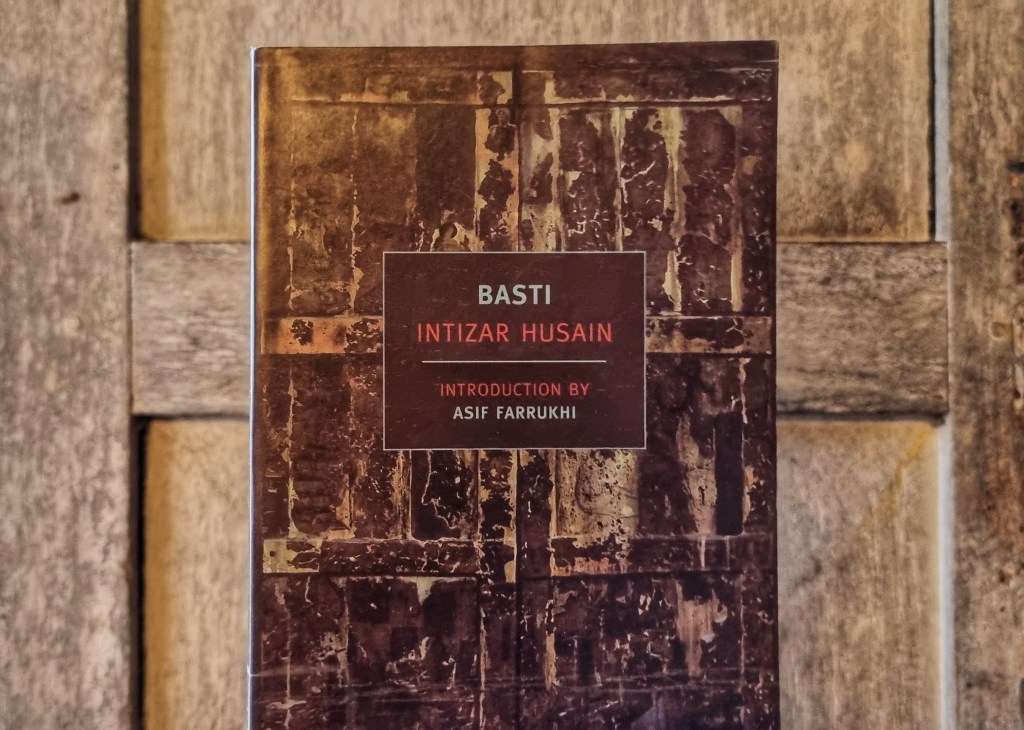
Basti is a lovely Urdu word that hints at space and community, a human settlement of any dimension, from a few houses to a city.
The word alone is enough to pique my interest. But because some books lead you to other books, that is exactly what Geetanjali Shree’s Tomb of Sanddid for me. I stopped counting at six — the number of times Intizar Husain’s name was raised in the novel.
Now I see why. Basti can be looked upon as a literary father of Tomb of Sand in the family of borderland literature. Both also defy the borders of literature.
Basti maps the life of Zakir who experienced the divisions that created Pakistan that created Bangladesh that separated him from the love of his life.
I have to admit that it took nearly half of the book before I was able to get into its rhythm and flow, but I allowed its poetic beauty to lead this reader from outside the Indian subcontinent to be drawn into its history and heritage; and sadly, into the tragic quotient of its divisions.
Samadhi, a word that denotes a meditative calm greets like a namaste on the first page.
And then, cacophony! An onslaught of sounds, smells, colors, and wordplay! You are planted right smack at the center of a palpable, household chaos — the matriarch sinks into depression, the matriarch disappears! Bickering. Finger-pointing. A familial upheaval. What samadhi?!
But cacophony, if we listen closely and do not shut it out immediately, can turn into polyphony; and we chase after as many melodic lines that make themselves heard to us. Although sometimes, as in the case of the old woman, just one particular melody line, the one that meant most to her in her last days, the one that muffled all others, the one she pursued as the path to her own personal samadhi.
– – –
Tomb of Sand, winner of the 2022 International Booker Prize; written by Geetanjali Shree and translated from the Hindi by Daisy Rockwell is the culmination of Women in Translation Month that came to me by chance, but just in time.
If not for a dear friend who mailed me her copy for infinite adoption after reading and reviewing it insightfully, then I would not have rushed into acquiring one.
Tomb of Sand turned out to embody in its polyphony the leitmotifs explored in my significant picks for #WiTMonth:
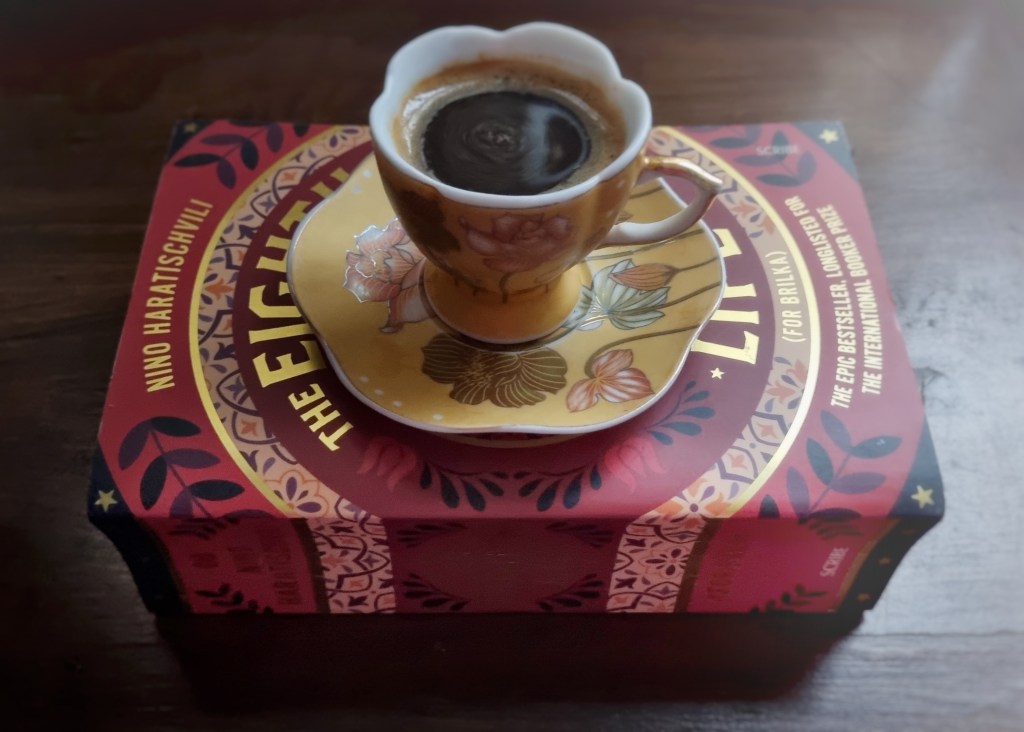
Georgian Nino Haratischwili’s The Eighth Lifeon the topic of how we are all reflections of our own time but inheritors of intergenerational memory. In Shree’s words, “I feel as though a bullet was fired in some other century but didn’t stay in that century. It keeps hitting the people who came later…”
Hungarian Magda Szabo’s Iza’s Balladon the relationship of mother and daughter and the collision of old and new.
Palestinian Adania Shibli’s Minor Detailon the painful subject of encroached boundaries and artificially imposed borders; reminding me that there were two massive Partitions in world history that transpired in 1947, and that both involved religious segregation. “Divisions. A jubilee of hatred. The joy of rifts.”
But Tomb of Sand’s old woman, whose life and interfaith romance was a victim of the Partition, has this powerful thing to say about how borders should be: “Do you know what a border is? What is a border? It’s something that surrounds an existence, it is a person’s perimeter…. However a border is not created to be removed. It is meant to illuminate both sides…. A border does not enclose, it opens out… Where two sides meet and both flourish.
Every part of the body has a border. So does the heart. A border surrounds it but it also binds it to other parts. It doesn’t wrench the heart from the rest. Fools! If you cut a border through the heart, you don’t call it a border, you call it a wound…
Asses! A border stops nothing. It is a bridge between two connected parts…
A border is a horizon. Where two worlds meet. And embrace.
A border is love. Love does not create a jail… A border is a line of meeting… It is a confluence…
A border, gentlemen, is for crossing.
The border exists to connect, one to another. If there’s one, there’s another. Through love.
If you hate, the blood that flows through arteries to deliver strength from here to there will flow out and away; each side will die bit by bit. What fool would want this?
But this is what you fools want. You’ve made the border a sort of hatred. Not an exquisite border enhancing beauty on both sides, but one that kills them both, a murderous beast cutting the artery. Ignoramuses!
…borders running with blood can have only one consequence. The blood will burst their borders and seep away, all the limbs will dry up and stiffen, but everyone will keep chanting Allahu Akbar and Hare Rama Hare Krishna.
Though it marches to its own rhythm, the literary symmetries it shares with the works of other women authors across borders only pronounce the universality of this novel.
It is life, crossing the boundary to literature.
Thank you, Gabi, for passing on the tears and the lessons along with a pretty bookmark!
_ _ _
WiTMonth Wrap-Up
It is my first time to observe Women in Translation Month since its birth in 2014. I’ve never felt the need to participate because of a consistent presence of translated works by women in my literary diet. But now that I’m back to maintaining a book blog, I feel this is the time that observing #WiTMonth will make a difference.
Meytal Radzinski started this tradition after a critical assessment of the publishing world led to the discovery that only thirty percent of translated literature were works by women authors.
So here I am, along with those celebrating, reminding the publishing community that there is an overwhelming readership eager to tip the scales.
Freya Stark once wrote, “No medium has yet been devised for the translation of life into language.”
Most of this month’s selections come rather close.
The first few things you will ask yourself after reading this are questions in the vicinity of, “Was that really 934 pages long? How was I able to read that so quickly?”
Tougher questions will follow: The question of identity, the question of who you are and what shaped you. The question of history and how you cannot ever separate your personal history from history in general.
What do you really know about history? What do you really know about yourself?
“For me, the greatest reward was her stories.” – Nino Haratischvili, The Eighth Life
At the beginning of the century that would suffer two World Wars, and many other wars, a chocolatier prospers in Georgia under the Russian Empire. His chocolaterie thrives and caters to townsmen and Russian nobility, but after a tragedy following the devouring of the the secret recipe in its purest form, he soon suspects that it holds a curse. The recipe would, however, always manage to find its way to the next generation and throughout the entire century.
The accursed hot chocolate recipe was something I would normally expect to savor from Latin American magic realists and I was initially unsure of how I felt about coming across this flavor in The Eighth Life. I thought it could easily be dispensable in the grand, cinematic scope of the story.
But wasn’t this family saga set in junctions of the immeasurable Silk Route where anything could happen, and where the influence of Scheherazade’s fantasies still linger at every bend?
I eventually gave in to this literary ingredient and pondered if it was meant to symbolize the intergenerational curses — inherited pain, memory, and trauma — to which we become heirs and which we unknowingly impart.
_ _ _
The casual tone of the narrative deceived me at the onset. You could tell you were not reading Vasily Grossman or Olga Tokarczuk. (The comparison is unavoidable as theirs were the novels I read this year that are similar in length and with similar intersecting eras and geographies.)
It is, after all, addressed to Brilka, an adolescent; and so the narrator spells things out. We know that this is something masters of literature usually avoid, but it was this casual and explanatory tone that made me so unsuspecting of how it would sweep me up in its emotional and historical hurricane. I found myself wiping away tears a number of times, grieving for the characters with their extinguished hopes and dreams, and for the entire broken century that was also partly my own.
It is remarkable how the novel captured the spirit of each era it depicted, even the confusions and the troubles of each age reflected in the characters. To present these — along with the complex convergence of Russian and Georgian histories and politics, and how Soviet tyranny affected so many lives across borders — in such a readable manner only made me recognize Nino Haratischvili’s command of such topics.
This novel is a strange oxymoron to me: For being simultaneously accessible and wise, for being both painful and satisfying, and for lending answers as it asks questions.
_ _ _
What do you really know about history? What do you really know about yourself?
Could it be true, that chilling thing Kostya said about everything waiting to come back?
‘What statues and pictures?’ I asked.
‘You know, of Lenin, Marx, and Engels, the Generalissimus — all those men!’ He seemed to be giving it serious thought.
‘They’ve gone.’
‘But they can’t all just disappear, just like that!’
‘Apparently they can. Everything disappears sooner or later.’
‘Nothing disappears. Nothing, Niza!’ He laid is hand on mine.
‘You mean, everything is hidden somewhere, waiting to be found again?’ I tried to bring myself to smile.







 The Book-Butterfly