Reading in August


Our ecological crisis is also a ‘crisis of forgetfulness’… we have forgotten how sacred the nature of creation is,” Iraqi-British writer, Dalia Al-Dujaili, reminds us in Babylon, Albion

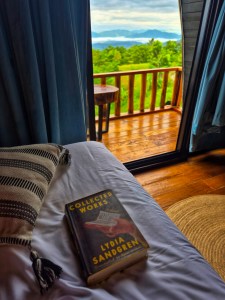
Although I read this in a perfect setting on a weekend getaway — amidst soothing sounds of nature, enveloped by clean air, and surrounded by mountains blanketed by mist — this ‘crisis of forgetfulness’ where the greed of many has replaced the sanctity of nature manifests in international and national news, and in the floodwaters that lap on my own doorstep back home. 

Readers who find the lyrical wisdom of Aimee Nezhukumatathil refreshing will surely love this wholesome rumination into identity, migration, land, rivers, borders, national and personal myths, familial and arboreal roots, and humanity’s natural heritage. While these somber topics usually weigh down on the reader, Al-Dujaili imparts a hopeful outlook while encouraging us to make our very own existence into a form of praise, and challenging us to scrutinize how we carry identity. Needless to say, Babylon, Albion was a profoundly beautiful way to end August.

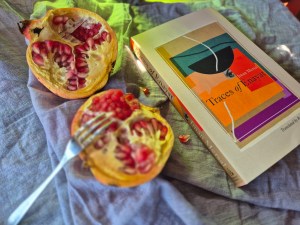
August is Women in Translation Month and Buwan ng Wika (National Language Month). To celebrate the latter: Munting Aklat ng Baybayin by Ian Alfonso. No better way than through learning more about our pre-colonial script! To celebrate the former: Iman Mersal’s Traces of Enayat and Lydia Sandgren’s Collected Works.

“The best investigative reporting is storytelling,” says journalist Jane Mayer. Traces of Enayat is proof of this as Iman Mersal takes the reader on a quest to find traces of Enayat, an Egyptian writer who took her own life in 1963. Mersal affectingly expresses the attachment and resonance we find in the authors we encounter and whose works derail us from an otherwise uneventful trajectory. It also begs the question: How many Enayats has the world lost into oblivion?

As for Collected Works, seven pages shy of six hundred, this novel quietly draws you into its world. It acquaints you with its setting and its characters without haste. It knows how to linger. It lingers on one’s thoughts on literature and art, on a character’s indecision to call someone or not, whether to read a book or not. It often lingers on everyday scenes where words turn into still life paintings and everyday portraits. But these scenes and characters exist in the shadow of Cecilia’s disappearance. Almost fifteen years after she vanished without a trace, her daughter, Rakel, believes it is her missing mother she is reading about in a novel, and measured suspense and mystery begin to replace the monotony of their lives. I would recommend this to the unhurried reader. Ultimately, Collected Works is a meditation on what one’s life amounts to. 

As for reading life in August? This is what it amounted to. It felt very much like a defiance of my country’s frustrating political climate.

The transmutation of India into a memory…

And just like that, I am back home, and immediately started teaching a series of online students in the US within the hour I arrived.

When people ask about my trip, I find myself answering that it was eye-opening, very much like reading a satisfying book.

I thought I knew what to expect. I thought I knew what it would be like. I soon learned that what I had in mind was a narrow-minded, stereotype-based, and extremely ignorant idea of India and its people. And to think I read! To think I’ve been lugging books, including all 2000 pages of Paul Scott’s Raj Quartet. How much more if I didn’t?

But the beautiful thing about being a reading traveler is that we do not read or travel for the certainties; and reading and traveling is an intuitive acknowledgement of an ignorance that we treat with a book or a trip.

It was Emerson who wrote, “The mind, once stretched by a new idea, never returns to its original dimensions.” A great book does this. India does this. But only, perhaps, if one pays attention. India has expanded the way I think about places, people, and even design.

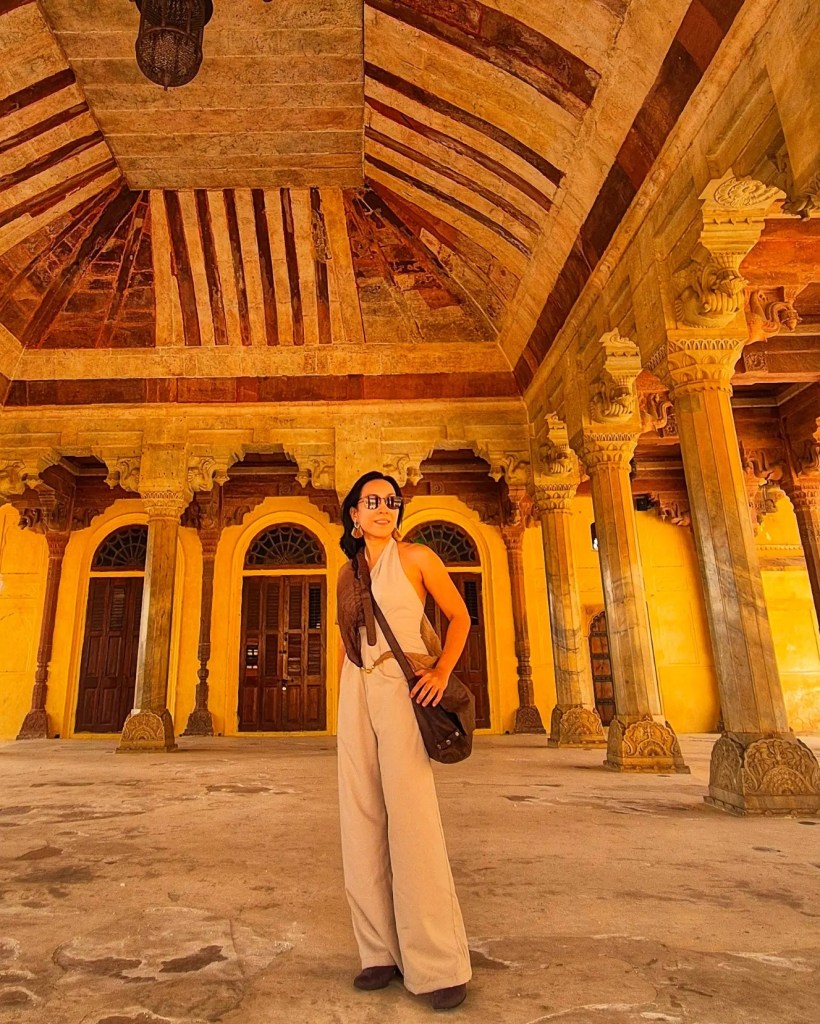
“Thank you,” one guide said earnestly, “for paying attention.” After I repeatedly refused his offer to take touristy photos of me, “So you’re not a Tiktok girl, huh? Most of the time people are only interested in having their pictures taken, they don’t even listen anymore.”

We have stereotypes of Indian men and they have stereotypes of us. Fair enough. But would you believe that two of the most cultured, educated, and refined men I have ever interacted with I encountered in a father and son duo in Jaipur? Would you believe that I felt more safe and respected in the company of my guides, drivers, haveli owners, hotel staff, than in one provincial event that I attended back home where a senior and former politician (someone I’m supposed to be able to trust) undressed me with his eyes? But that’s a story for another day. I have way better memories now. 

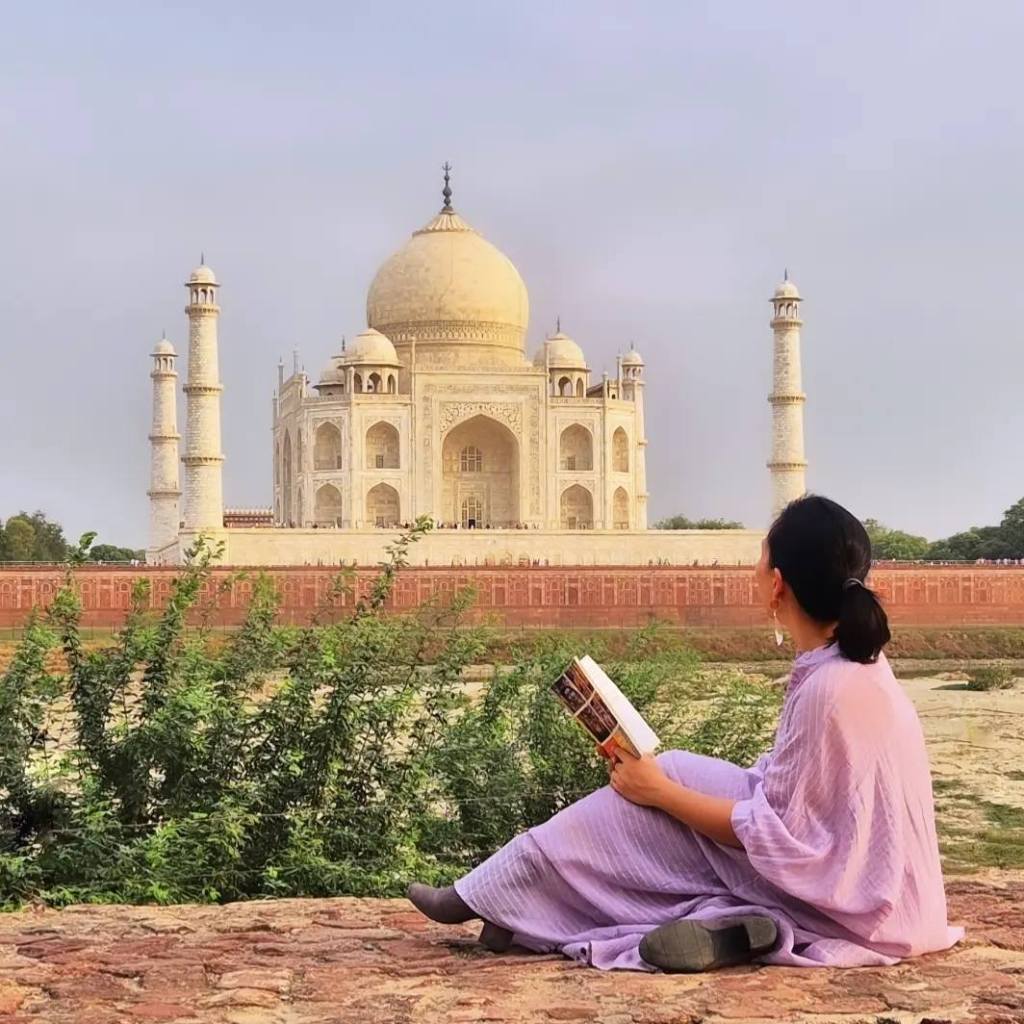
Like this memory of a Mughal garden across the Yamuna River, yet unravaged by the claws of Agra’s over-tourism, where one can spend the entire afternoon reading and contemplating, or gazing at the Taj Mahal. 

Just like that, the transmutation of India into a memory has begun…and what a memory to relish! 

Five Indian Forts

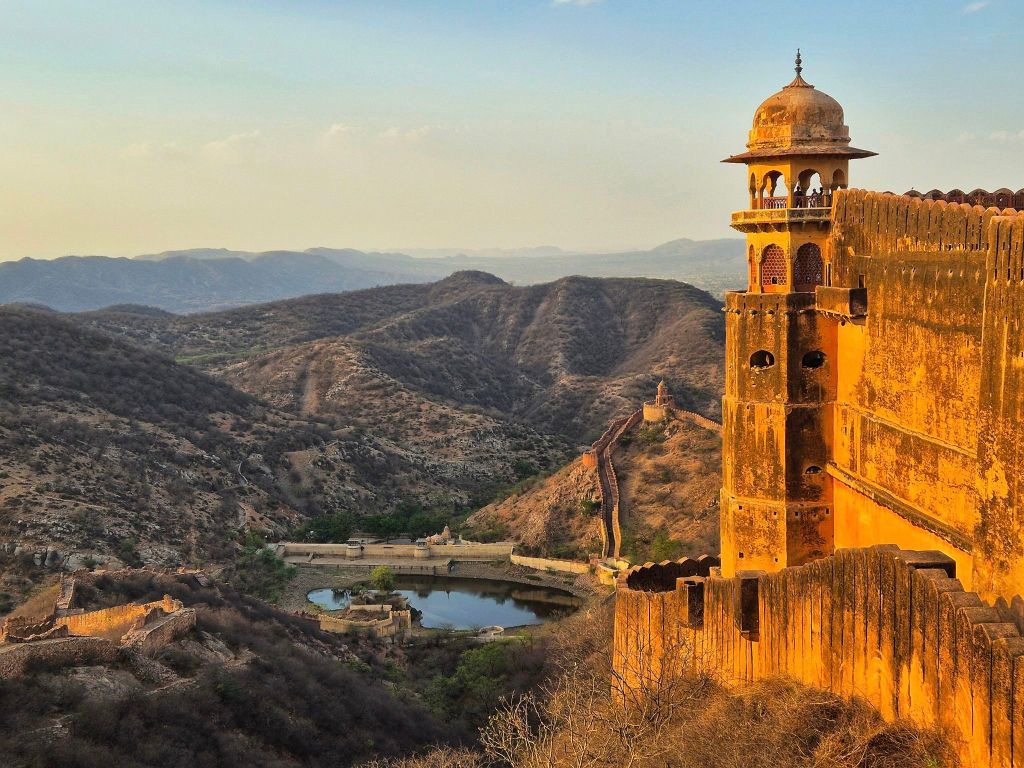
Although the stories about these places are just as intriguing and twisted as Game of Thrones, what may look like promotional shots for season two of House of the Dragon, are photos of five out of approximately a thousand forts in India that are triumphs of strategy and engineering.

Amber Fort: The most picturesque. Jaigarh: Where one will find what used to be the largest cannon in the world, and along with Amber Fort and Nahargarh, has the best views overlooking the city of Jaipur and the sunset. Chittorgarh: The largest living fort in Asia, and where I was congratulated for being named “Mira” and being a musician, as Chittor residents are devotees of the mystic musician, Meera, or Mirabai. Agra Fort: The only Mughal fort among these, commanding a majestic view of the Taj Mahal, standing since 1530 and is still being used by the Indian Army up to this day!


June 2024 – The Taj and Other Mahals

The sky is despondent in Agra. I also saw an Indian vulture perch on the Taj Mahal and camouflage itself against the cornelian and onyx marble inlay. It has made me pensive. Maybe it should. After all, two of the main sites here are mausoleums: The Taj Mahal and the Tomb of I’timād-ud-Daulah, often misnamed “Baby Taj”, despite being the predecessor.

So little is said about the latter, but it literally sets in stone the transition period of Mughal architecture from red sandstone to intricately inlaid marble. Its details made me gasp! And to my surprise, no one else was in sight!

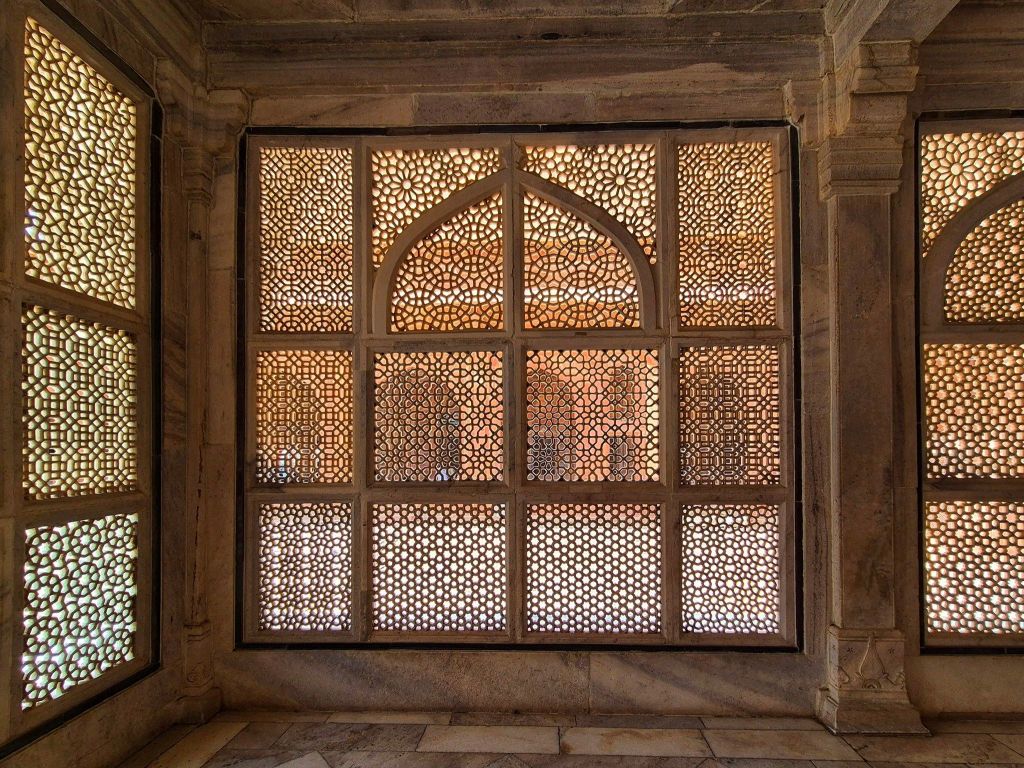
But the Taj, the Taj… when you’ve seen it so many times in friends’ pictures, and in books, you think you already know what it looks like. Nothing prepared me for how much it moved me! Something stirred in me when I came closer, when I felt the inlaid precious stones with my fingers, when I looked through the delicate lattices carved from entire slabs of marble… now I know what Victor Hugo meant when he described architecture as, “the handwriting of the past.”

We all know the story: 20,000 workers, 24 hours a day for 22 years. Its maintenance workers of today are descendants of the original construction workers 17 generations down. All these, to eternalize this handwriting of love… which, of course, Mumtaz never read, or laid eyes on.


Mahal in Filipino means either love or expensive. (Their synonymity is relative and will depend on how much, or what, love cost you. Haha) Mahal, in these parts, means palace. And yet, this is not a palace, but a mausoleum. It is, however, expensive; and is probably the world’s best-known and well-preserved expression of love.

It is interesting how this particular Mahal, the Taj, the crown of all Mahals, is ironically inaccurate in Urdu and accurate in Filipino.

Fatehpur Sikri

It was a mind-blowing family tree that brought me here.

Fatehpur Sikri was established as the capital of the Mughal Empire in 1571 by Emperor Akbar. Akbar’s grandson, Shah Jahan I is famous for having the Taj Mahal built. Akbar, as we know, is the third Mughal emperor, as he is the grandson of Babur, founder of the Mughal empire. Babur in turn, is the great-great-grandson of Uzbekistan’s Amir Timur, known in the West as Tamerlane.

I cannot think of a longer bloodline of distinguished rulers who have left their mark so distinctly (with conquests and architecture) in this world. And oh, did I mention that Babur is a descendant of Genghis Khan on both his father’s and mother’s side?

The architectural details of Fatehpur Sikri are just as astonishing as Akbar’s pedigree. The fort walls, the gates, the palaces, the mosques, are made predominantly of red sandstone. And because Akbar had three royal consorts, one Muslim, one Christian, and one Hindu, their individual palaces were masterfully designed and decorated according to their religion and culture.

The Anup Talao especially left an impression on me. It is a pavilion overlooking a platform for musicians. My guide explained that oil was added to the pool of water surrounding the platform to enhance the sound of the musical performances!

On the opposite side is what used to be the library, now off limits, now sans books, but I can only imagine how glorious it must have been. Salman Rushdie’s The Enchantress of Florence was the first novel I read long ago that got me interested in the Mughal Empire. It was partly set here in Fatehpur Sikri.

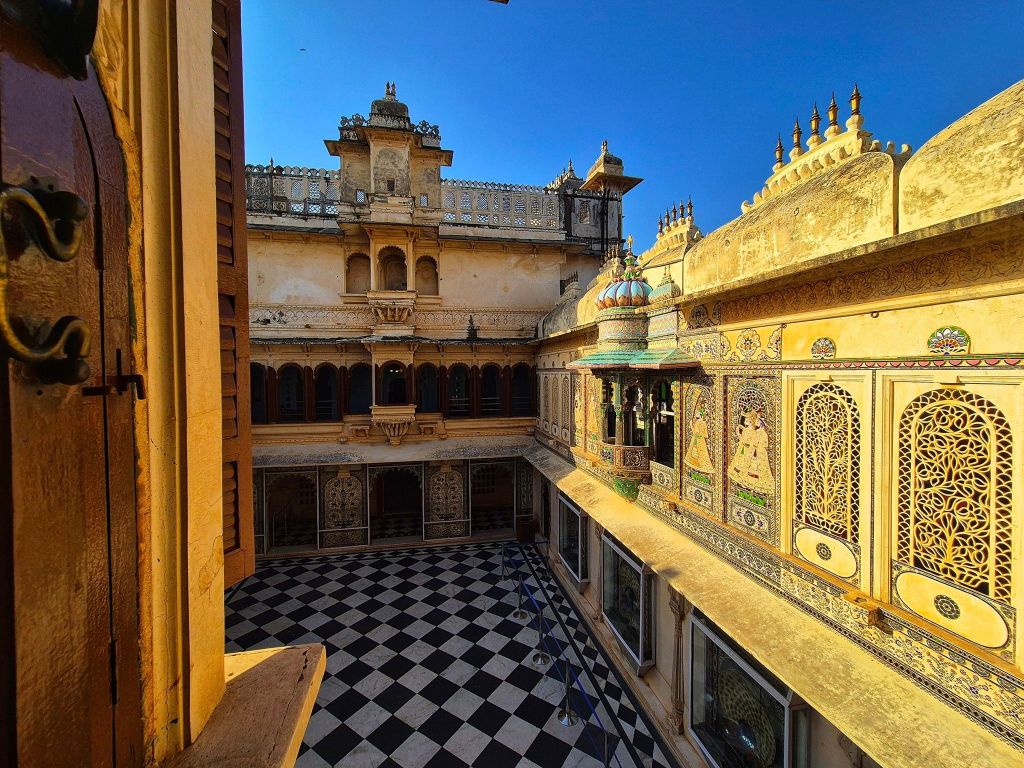
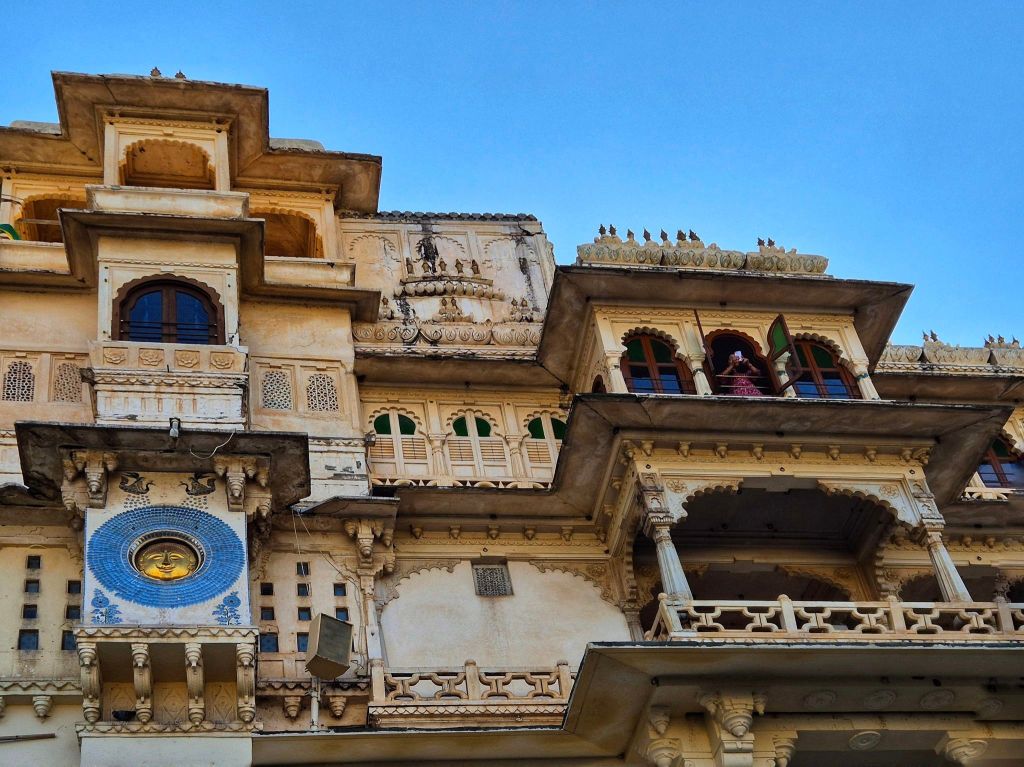
The Lure of Udaipur

Jodhpur is closer to Jaipur, so is Bikaner, and then Jaisalmer would have been accessible from there. These names are not words in my head, but meters of music, rhythm, and mystery that lure me from far away. These are some of the cities in the state of Rajasthan that have been playing in my mind ever since the idea of an India itinerary was formed.

I knew I wouldn’t be able to cover all these cities in one trip with the kind of traveling that I do — the kind that asks me to avoid breezing through them, the kind that urges me to sit still and experience a few sunrises and sunsets in them, the kind that begs me to listen to them. After all, each city has its own music. Each city sounds different. And it is waking up to this kind of music that exhilarates me in my travels.

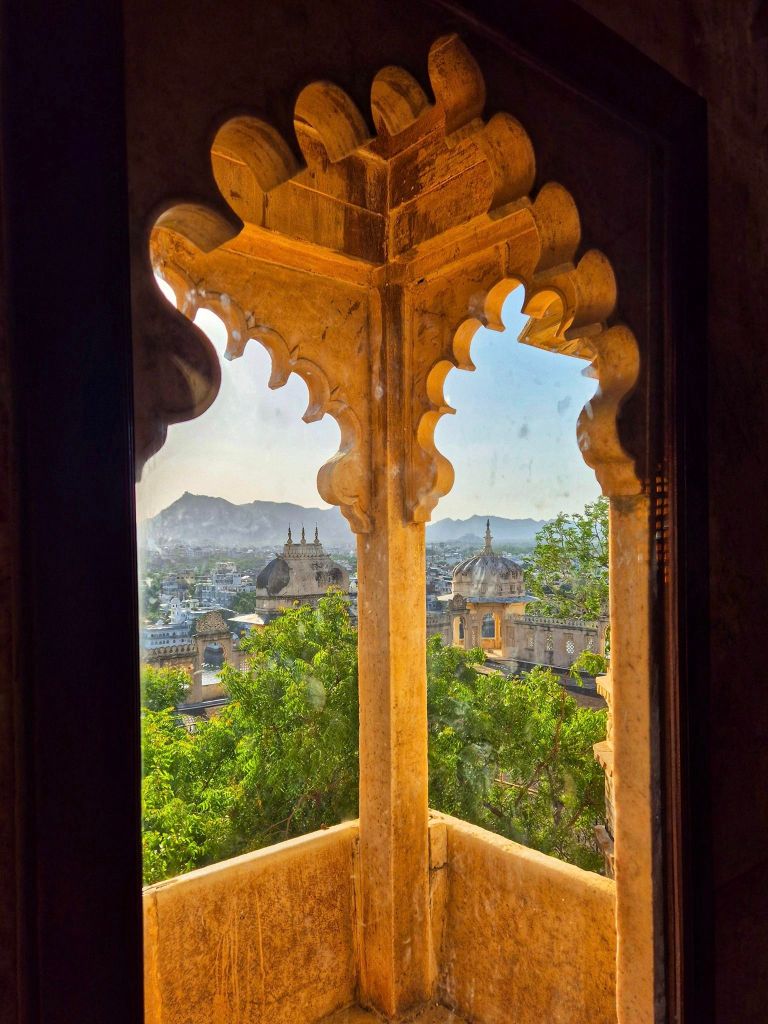
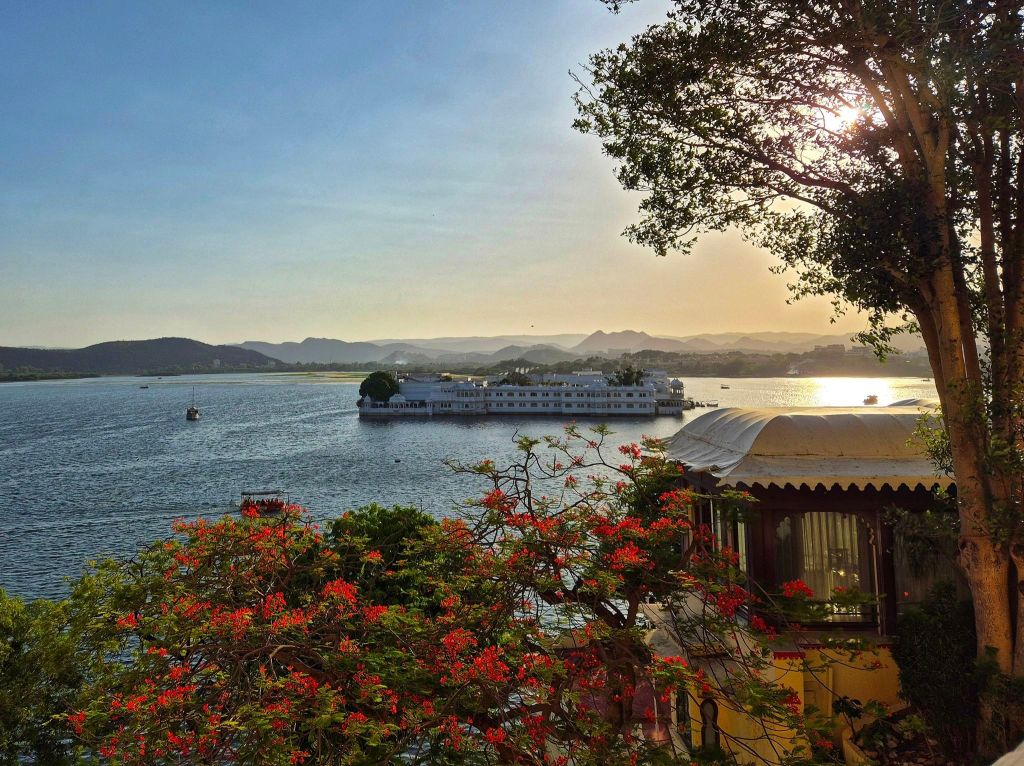
Udaipur was not in the plan. But when the distance between two places are no longer measured in miles but by a melodic strain one can’t help but follow, you follow.

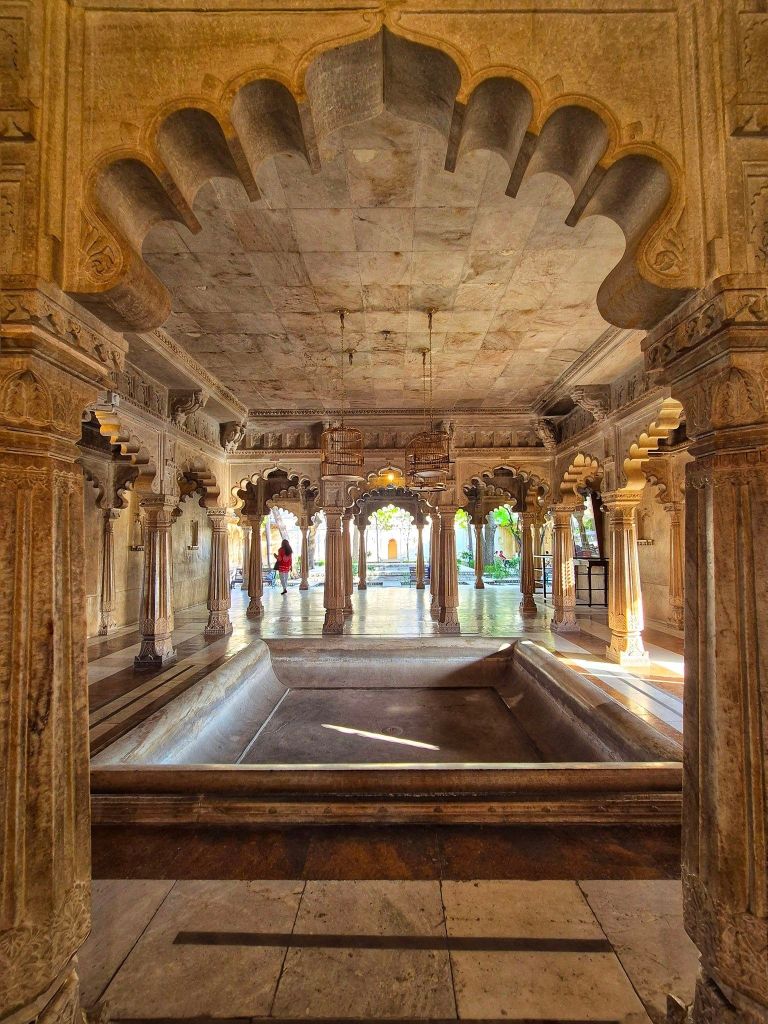
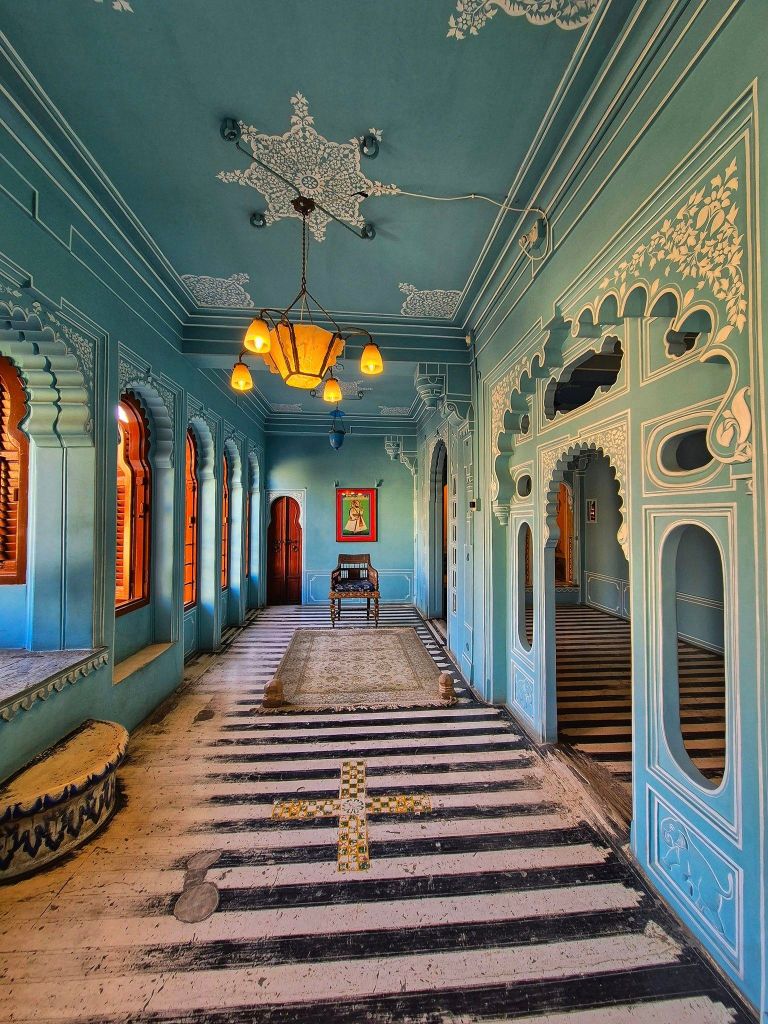
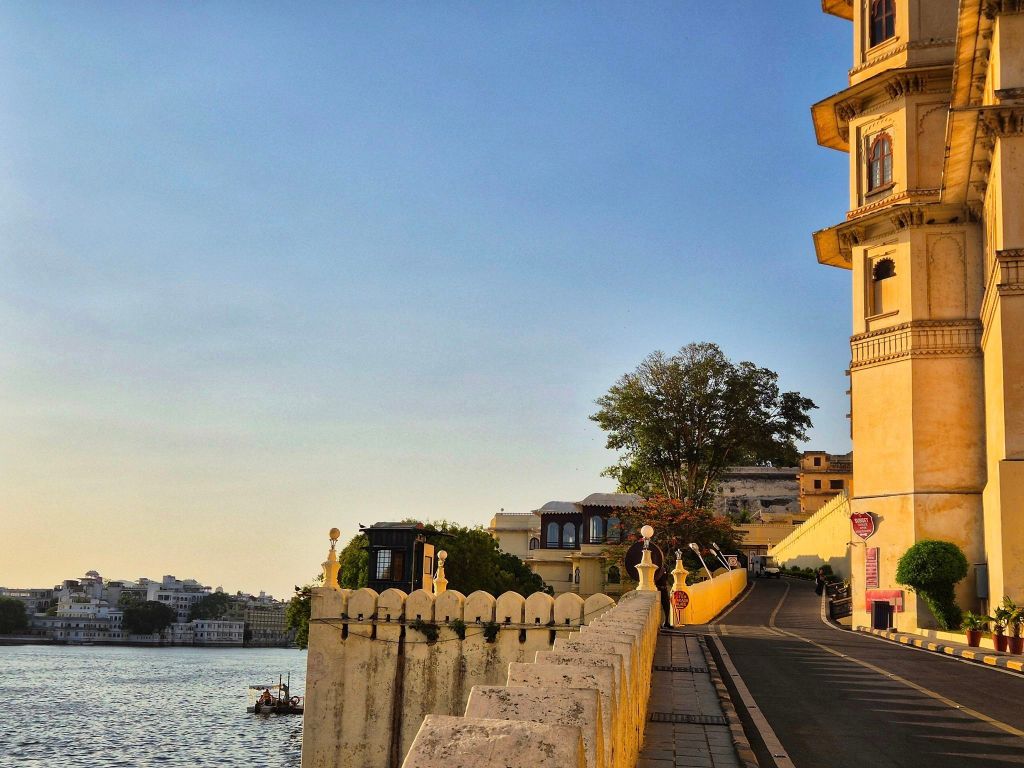
And now I know how this Mewar kingdom founded in 1559 sounds. It sounds resplendent.

Rajasthan: A Photo Journal

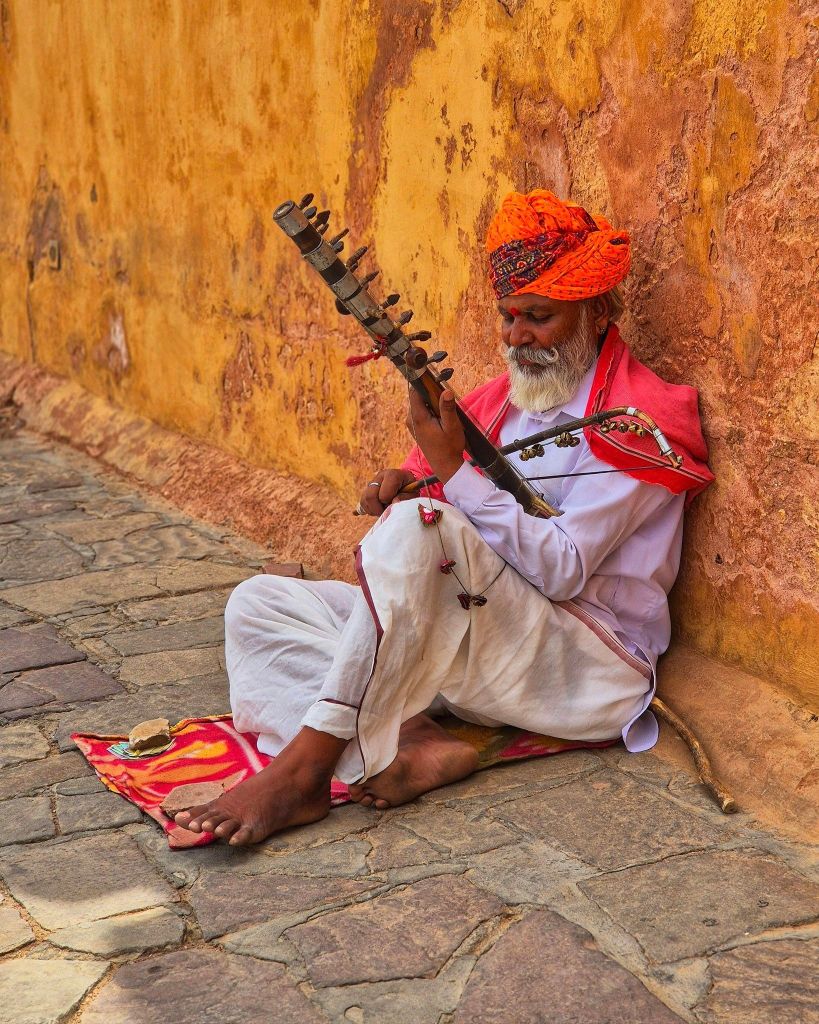
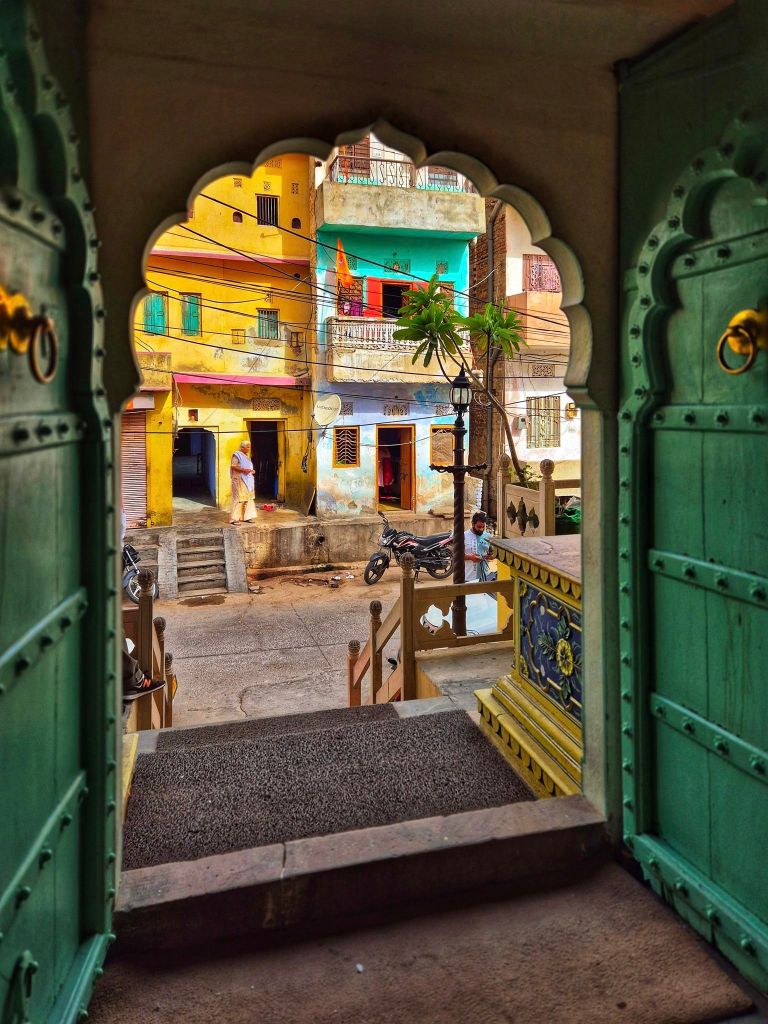
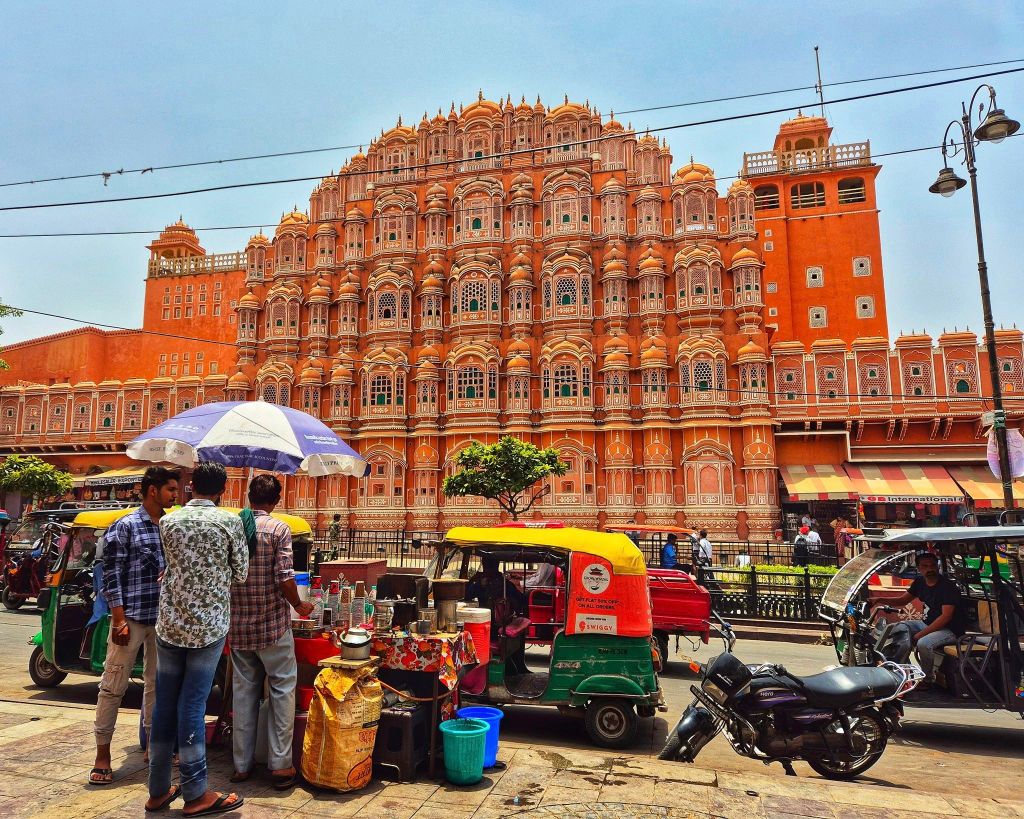
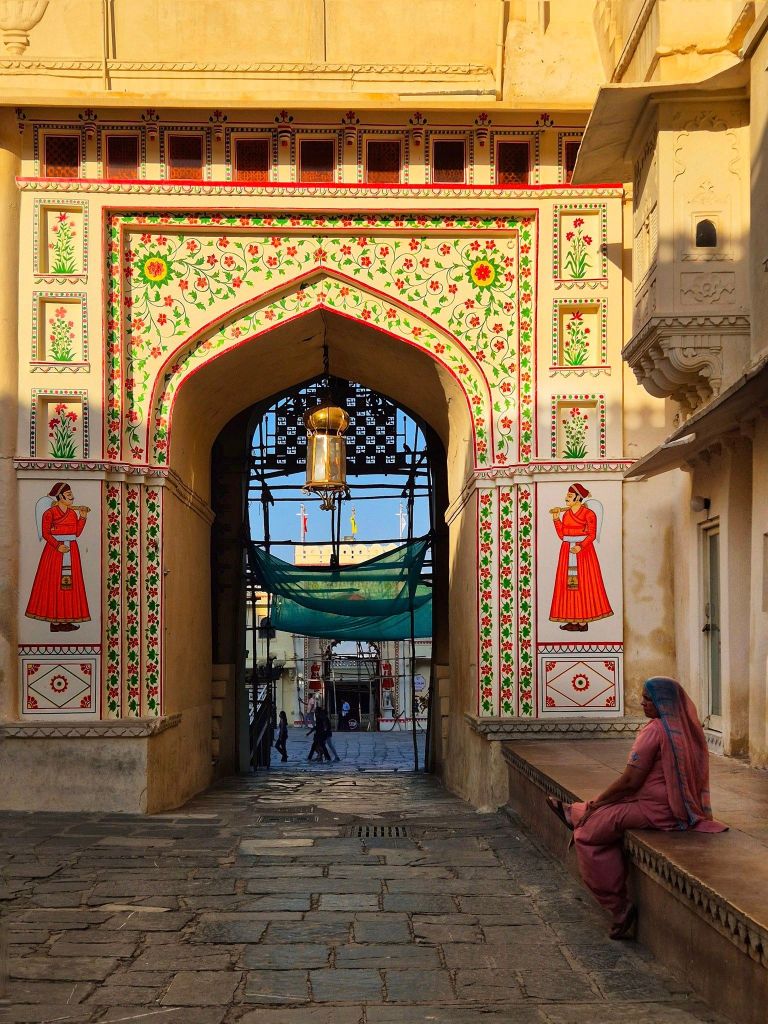
The longer you stay in Jaipur, the deeper you plunge into color.


The white marble and the red sandstone for the greatest edifices of Uttar Pradesh — the Taj Mahal and the Agra Fort — were transported by elephants from Rajasthan.

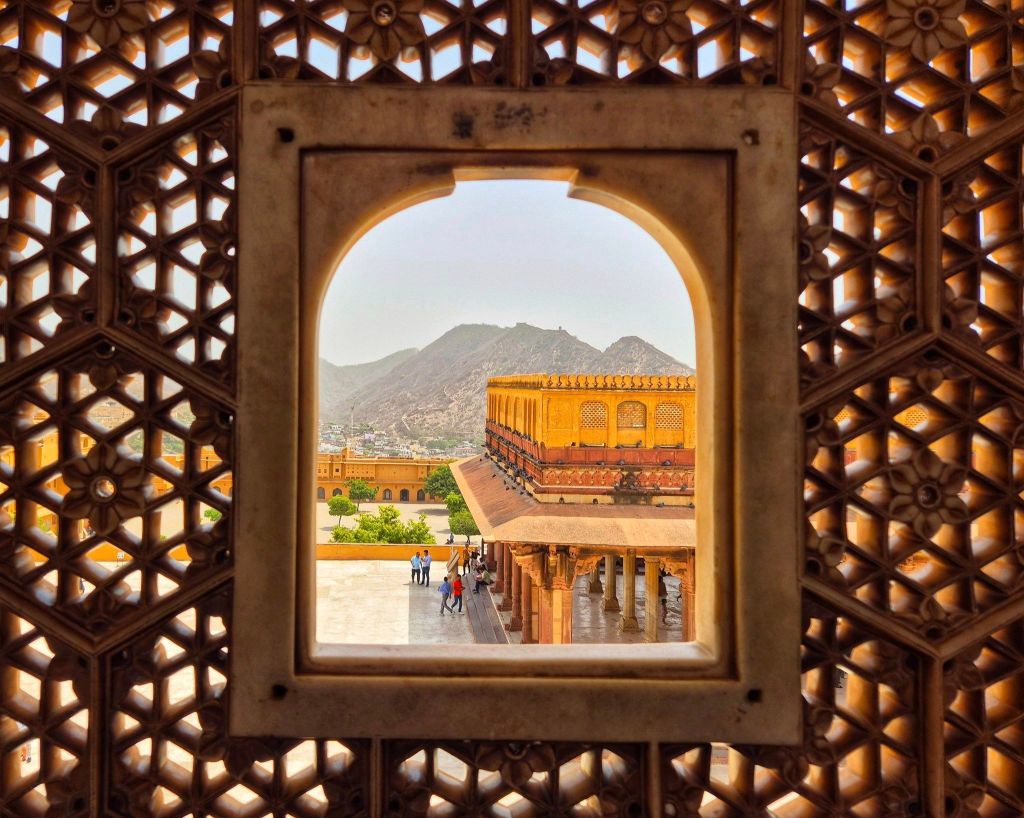
And traveling in Rajasthan is a journey through ancient feats of architecture, engineering, craftsmanship, space and time.


If you do not go through Rajasthan in haste, I promise you, you will be colored by it.


The Stepwells of Rajasthan

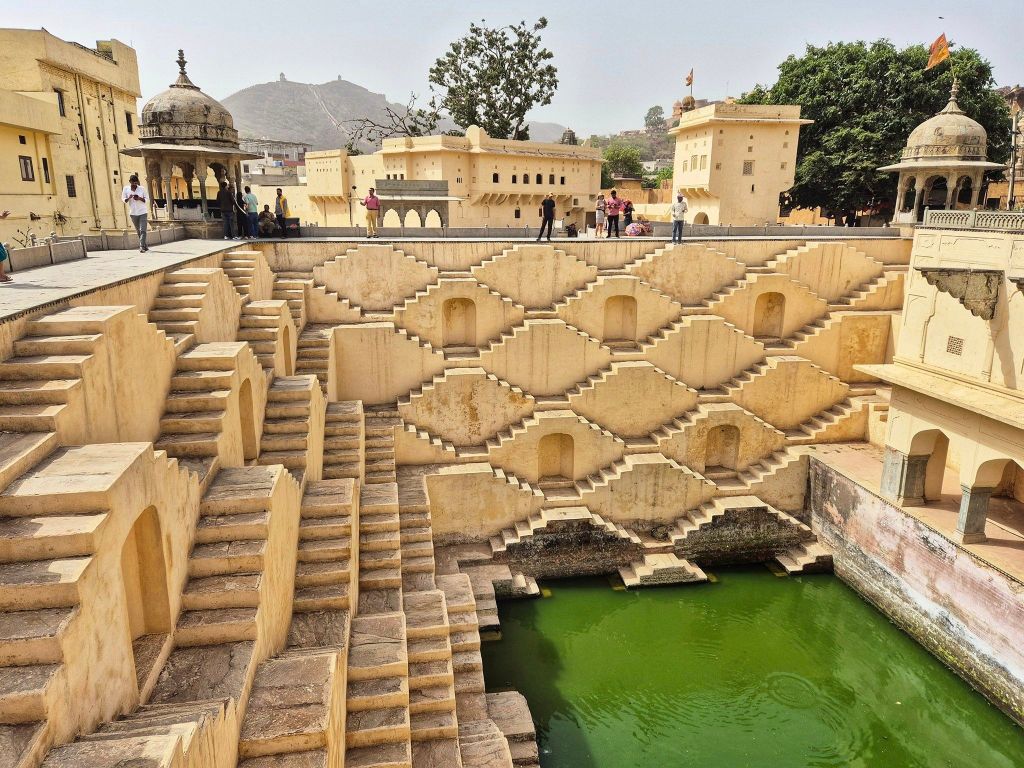
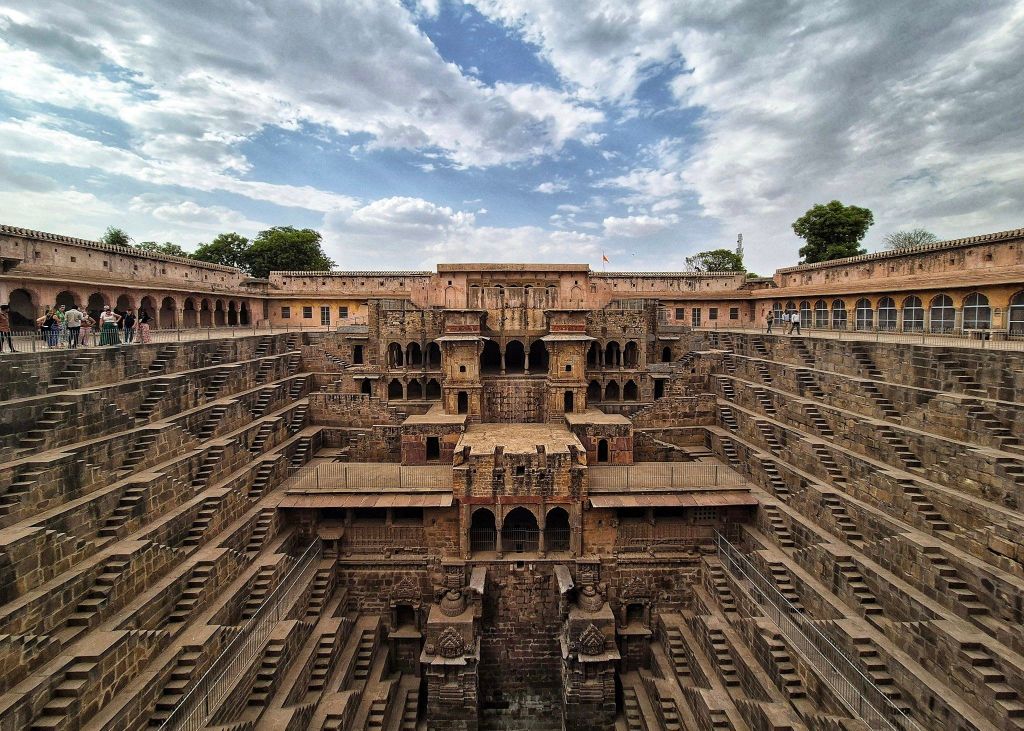
India’s arid regions gave birth to stunning baoris, or stepwells, that were mainly built as cisterns, but also functioned as sites for religious ceremonies, rituals, and cool resting places.

There are approximately two to three thousand ancient stepwells in India, and I’m fortunate enough to have visited two here in the state of Rajasthan: Panna Meena ka Kund, a 16th century picturesque stepwell in Jaipur, beautifully contrasting the more massive Chand Baori in Abhaneri that was built between the 8th and 9th century.

Can there be a better lesson in strength, function, and beauty, than a baori?

A Whiff of Book Pages in Jaipur

Universal Books

Jaipur Sunday Book Market

Oh to be in the locale of the Jaipur Literature Festival — the festival that has brought illustrious figures such as Salman Rushdie, Michael Ondaatje, Ian McEwan, and other stars to its marvelous gates! (What can one expect from a literary feast directed by none other than William Dalrymple?)

Unfortunately, I missed this year’s festival by several months. But are the Sunday Book Markets and their bookstores evidence enough that the love of books is alive and well in Jaipur?


Rajat Book Corner

Rajat Book Corner’s shelves were cascading with the best selections. They had Pamuk, Mahfouz, Proust, recent literary prize winners, the Indian greats, among many others. So you can imagine the argument between my other selves against the practical one who kept whispering firmly, “Just one book, just one book.”

After a while of intense internal struggle, I finally went with something I hadn’t seen in Philippine bookstores: Pyre, a 2023 longlister of the International Booker Prize written by Perumal Murugan.

“Good choice,” said the man at the counter.

“Thank you,” I answered, thinking it was something he always said to bookstore clientele. 

“It’s a great book! We discussed this in our bookclub.” That’s when I realized he meant it. He had read Pyre. To my surprise, he added, “Wait. I think this is a signed copy. The author signed it when he came here.” And indeed, it was!, “Wait. I think this is a signed copy. The author signed it when he came here.” And indeed, it was signed!

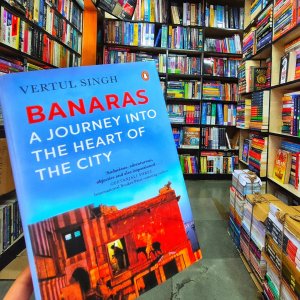
For yet another surprise, he recommended a book based on my choice: “Banaras” by Vertul Singh. And because readers have a sixth sense that can detect another reader’s literary preference, it certainly looked like a book I would love to read. Practical self was defeated. I bought it. But I think the bookseller just pointed me to my next destination in India if I get the chance to return.

Amidst the scent of spices and sandalwood, there is a whiff of book pages in Jaipur that a reader’s nose cannot help but follow. These are my souvenirs from following that trail.

Isn’t it a wonderful thing when you allow books to lead you to places, and when you let places lead you to books?


June 10, 2024 –Indian Mangoes

These mangoes were purchased from a side street in Jaipur to refute Aimee Nezhukumatathil’s claim that — *gasp* — India’s Alphonso mangoes are sweeter than Philippine Carabao mangoes!

Don’t get me wrong. I love A.N. She is the most wholesome and heartwarming author one can find on bookstore shelves these days. Her World of Wonders still keeps my heart soft. Before leaving for this trip, I suggested her latest book, Bite by Bite: Nourishments and Jamborees, to two friends who are also traveling, and then hinted that we discuss it over wine when we’re all back in Dipolog. But after scanning the first few pages, I ended up reading the whole thing even before I left! It was the last book I read in May.

I just had one problem with it: The mango verdict.

“I am the daughter of a man from India and a woman from the Philippines,” She writes. “They have argued all my life about whose mangoes are the sweetest, the best. Both have asked me to take sides, and for years I’ve refused until now. Alphonso mangoes, hands down. From India.”

And these were the lines that led me to a dark side street in India. I began to worry on my way back to the haveli. Not for my safety, but for the reason that, from within the bag hanging from my hand, the unbelievable fragrance of the mangoes were already invading my nostrils! I think my heart raced when I sliced one open with my Swiss knife. 

My verdict? Maybe THAT will endanger my safety! Haha!

What I realized, however, as the two juicy mangoes were immediately reduced to seed and skin, was that THIS is nourishment — tasting, exploring, discovering, learning, reading, traveling, and eating the mangoes of another country. Once in a while, our hearts need this.