Vasily Grossman Trio

“History’s only true heroes, the only true leaders of mankind are those who help to establish freedom, who see freedom as the greatest strength of an individual, a nation or state, who fight for the equality, in all respects, of every individual, people and nation.” – Vasily Grossman, Stalingrad

Everything Flows. Stalingrad. Life and Fate.

These three, read in this particular order reminds me of realist painting lessons: One starts by sketching the foundation and the outline, followed by painting the background and setting the mood for the main subject, and then finally filling in the details and emphasizing the contrast of light and shadow by articulating the source of light.

Because of its fullness, it is hard to believe that Everything Flows is an unfinished work, but after having read the three in succession, I now see it as a concise foundation on the scope of Grossman’s knowledge and profundity. Stalingrad exists to set a monumental stage, Life and Fate consummates the masterpiece.


Everything Flows is a forceful literary piece in which the main character occasionally disappears to give way to in-depth analyses of Russia, Lenin, Stalin, other political figures of that era, and sometimes, its literature.

For someone considered the Tolstoy of the 20th century, it is important to note that the difference between Grossman and Tolstoy is that Tolstoy wrote about a war that took place before he was born, while Grossman wrote about wars in which he was a war correspondent. The things immortalized through his fiction, he experienced and witnessed firsthand. 

He wrote at a time when there was hardly any published information regarding the Gulag, Collectivisation, the siege of Stalingrad, the Holocaust, Treblinka, 20th century’s lesser-known acts of genocide — the Armenian, the Circassian, and Ukraine’s Holodomor or Terror Famine — and he wrote of these things. Most of all, he did not merely write, he did so with unbelievable insight and clarity.

And because of current world events, I think there is no better time to read him.

He was born in Ukraine.


Stalingrad, an expression of how the siege impacted the lives of Russians and one particular extended family is, to me, epic in every sense of the word. But what will stay with me is the hopeful tone that Grossman maintained amidst all the human suffering!

“No wartime blackout has darkened the stars.”

Despite the horrors of which he wrote, he never fails to stop to admire beauty: “At times like this we cease to have distinct perceptions of light, space, silence, rustlings, warmth, sweet smells, the swaying of long grass or leaves — all the millions of ingredients that make up the world’s beauty. What we perceive then is true beauty, and it tells us only one thing: that life is a blessing.”

I believe this is also where he leaves clues about the kind of art he sought to achieve. In a brief chapter hides this beautiful passage that book reviews of Stalingrad (at least, the ones I’ve read) fail to mention:

Art of this kind does not separate people from the world. Art like this connects people to life, to other people and to the world as a whole. It does not scrutinize life through strangely tinted spectacles.

As they read this kind of book, people feel that they are being infused with life, that the vastness and complexity of human existence is entering into their blood, into the way they think and breathe.

But this simplicity, this supreme simplicity of clear daylight, is born from the complexity of light of different wavelengths.

In this clear, calm and deep simplicity lies the truth of genuine art. Such art is like the water of a spring; if you look down, you can see the bottom of a deep pool. You can see green weeds and pebbles. Yet the pool is also a mirror; in it you can see the entire world where you live, labor and struggle. Art combines the transparency of glass and the power of a perfect astronomical mirror.

All this applies not only to art; it is equally true of science and politics.”

And if you ask me, Grossman has achieved this in these three works.


Life and Fate is where the excruciating details are.

How can one convey the feelings of a man pressing his wife’s hand for the last time? How can one describe that last, quick look at a beloved face?

And yet he does!

I overestimated my courage when I set out to read this. Some of the most heartrending passages in literature are found between these pages: A Jewish mother who is about to be seized writes a long farewell letter to her son, the last words being, “Live, live, live for ever… Mama”; a woman, mad with hunger, who had just eaten her two children; a suffocating chapter of a scene where Jews are being herded like cattle to their deaths; a childless woman who had a chance at freedom but chose to hold the hand of a boy on the way to a gas chamber, and as she draws her last breath, she reflects, “I’ve become a mother.”

It took me longer to finish reading this than expected because I had to put it away so many times just to catch my breath or to calm myself down before continuing, not to mention a fever that made it difficult for me to read the last two hundred pages. But then again, Life and Fate concludes the painting. And what work of realism would be complete without its darkness?


The thing about masterpieces is that you cannot merely read them. You experience them.

As I review my notes of the three books, I notice recurring themes: Warnings about the tendencies of totalitarianism and its evils, what it means to be human, what causes one to cease being human, freedom, and kindness as the greatest achievement of the soul.

Never mind the fascinating passages on quantum mechanics that reflect Grossman’s knowledge in this field, never mind that Life and Fate contains some of the most illuminating discussions on Russian literature, never mind the other things about Grossman and his works that easily come up in internet searches, Raymond Chandler sums it up beautifully in his introduction to Life and Fate, “It is an exhortation to live.”
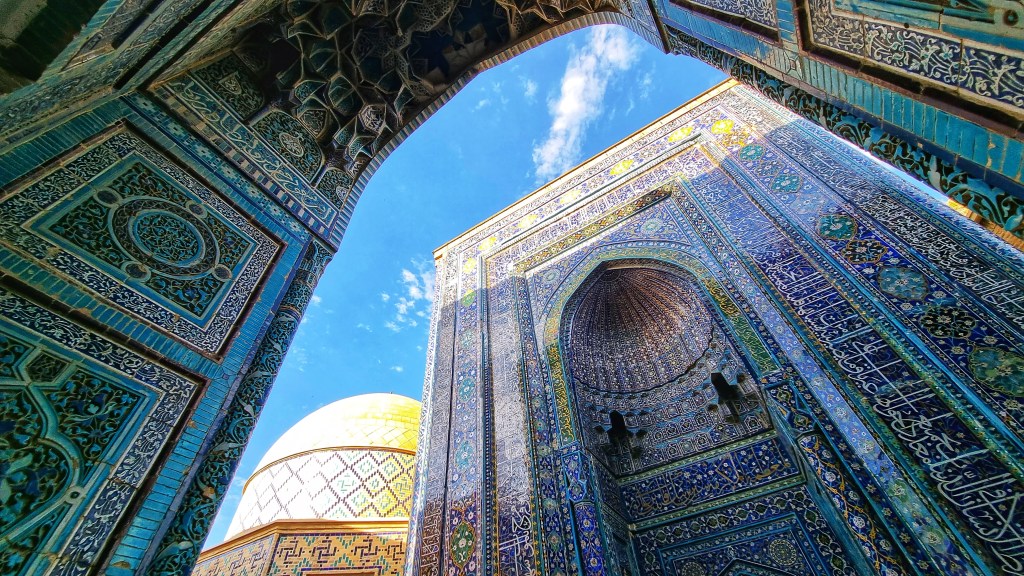
June 19, 2022 – Samarkand: Shah-i-Zinda

Afternoon light enters silently through the gaps of Shah-i-Zinda in Samarkand and transforms the whole necropolis into a prismatic vision that makes one understand why this place has earned illustrious names throughout the ages, and why it is most widely known as “The Mirror of the World”.

But as I sat there mesmerized, I became more inclined to believe that it mirrored constellations and galaxies… and that so much of what we find beautiful are mirrors of our joys, sorrows, and the distinct libraries of music and thoughts stored in our beings.

It probably was not the first time that a girl stood under its hypnotic gaze and made her contemplate on beauty and celestial realms; and I’d like to think that those reflective beings who came before me must have also gravitated towards its lesser-known epithet — “Garden of the Soul.”

© 2022 MDR
Shah-i-Zinda, Samarkand, Uzbekistan

Michael Ondaatje: Running in the Family

Whenever something momentous happens anywhere in the world, the first instinct of a reader is to read. Whether they be articles, books, or contrasting views on social media posts, a reader reads. And books, even when they are not capable of telling you everything, can still tell you a lot.

As soon as Sri Lanka’s protesters occupied their president’s palace and called for his resignation, I paused from this month’s reading goal to look into Sri Lanka.

The bad news: There is only one Sri Lankan on my shelf. The good news: It is Michael Ondaatje.

“Ceylon falls on a map and its outline is the shape of a tear,” writes this favorite author who is none other than the one who wrote about “the sadness of geography”.

Although I initially hoped otherwise, Running in the Family is not a thorough overview of the nation’s history or politics and turned out to be about family history; and yet I became so absorbed in it that I forfeited an early morning run to read it and finished it on the same day. Because after all, you learn a lot about a country through its people, through its literature, and reading along or between the lines.

There were times when it felt like I was reading about my own country: From superstitions, to drinking tubâ (coconut toddy), the humidity, the smell of durian, the attitudes, and our colonial past — “… the wife of many marriages, courted by invaders who stepped ashore and claimed everything with the power of their sword or bible or language.”

The ousting of leaders has been one of the recurring themes in my readings these past few years and I have read quite a bit to know enough that overthrowing a corrupt leader is not always an assurance of a better government (but also enough to know that the faults of the successor should never erase the sins of the previous one from the memory of its people, otherwise the vicious cycle only continues).

By the end of the book, I already felt a kinship with Sri Lanka’s people; and for now, we wait with bated breath for what is to come. While it is tempting to hope that, by some stroke of serendipity, my country and this land that used to be called “Serendip” by Arab sea traders will stumble upon great things in the future of our governments, we know we cannot leave it all to chance.

There is so much work to be done.

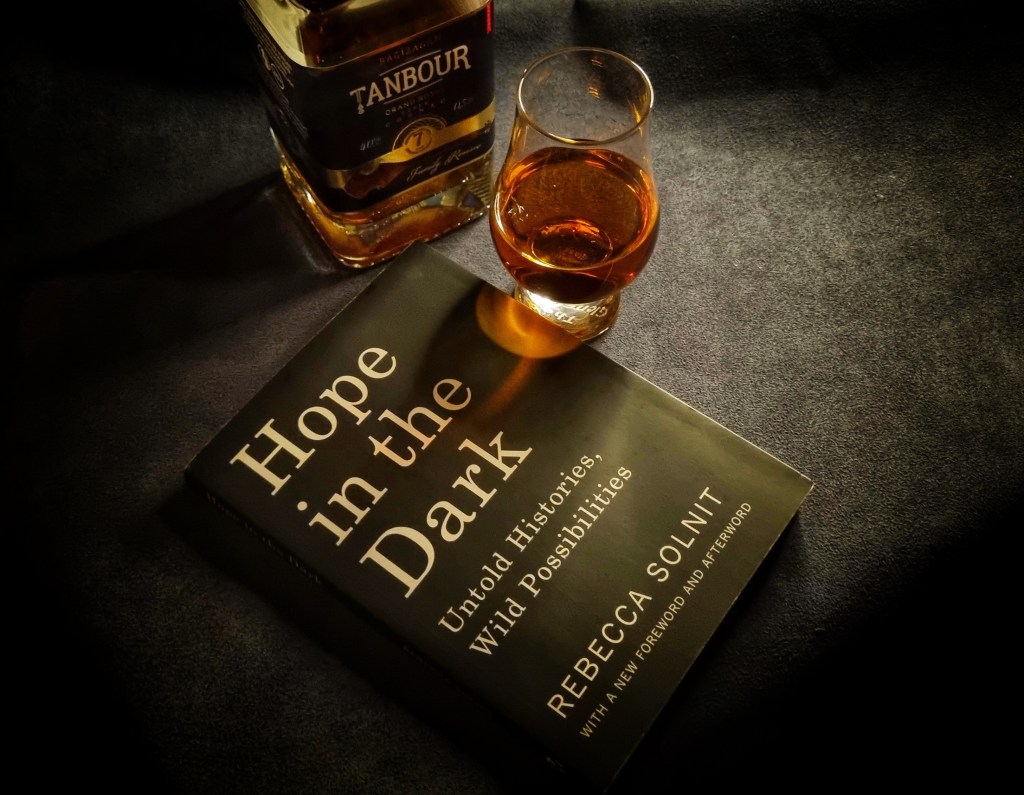
Rebecca Solnit: Hope in the Dark

If it were not Rebecca Solnit who wrote this, I would have dismissed the title as another one of those inspirational books that I do not gravitate towards so much. But having experienced four Solnits this year prior to this, which all proved to be books I needed at the exact time I read them, I seized this as soon as it arrived. And once again, she delivered.

I felt it was written for me, who, upon returning from an exhilarating trip, returned to my country with a new president whom I did not vote for. Solnit’s books are extremely political, but she wrote this to make the case for hope, especially for those who, on the surface, seemingly lost:

To point out that just because my side did not win the election, does not mean we are not victorious in many things. To challenge myself to live the same way with the leadership I did not choose as I would have had my candidate won, and to continue being a responsible citizen and human being — because being victorious and seemingly right is small comfort when, around the world, and around the country, there is still injustice and there are still people dying and living horribly.

“Hope doesn’t mean denying these realities. It means facing them and addressing them by remembering what else the twenty-first century has brought, including movements, heroes, and shifts in consciousness that address these things now.”

“The hope I’m interested in is about broad perspectives with specific possibilities, ones that invite or demand that we act. It’s also not a sunny everything-is-getting-better narrative, though it may be a counter to the everything-is-getting-worse narrative.”

Consider reading this if you, like me, paid your taxes dutifully and was called “self-righteous” when you pointed out that our new president failed to pay his; if you campaigned for your candidate without insulting anyone but the many enjoyed branding everyone on your side as toxic, even though poisonous ones were actually present on both sides if we care to admit (I have screenshots); if you were maligned and called names because of who you supported while the same people demanded respect but has been disrespecting your candidate for six years; if you, hopefully, like some of them, just wished for a better country. Consider reading this if you are frustrated and you think hope is lost, because it just made me realize that it isn’t.

This book reminded me that hope and action feed each other, and that every action and inaction have more impact than we know; to not merely demand change but to embody it. 

Hope, above all, is action; and as long as we do our part and, if possible, do more than what’s required of us, there is hope. 

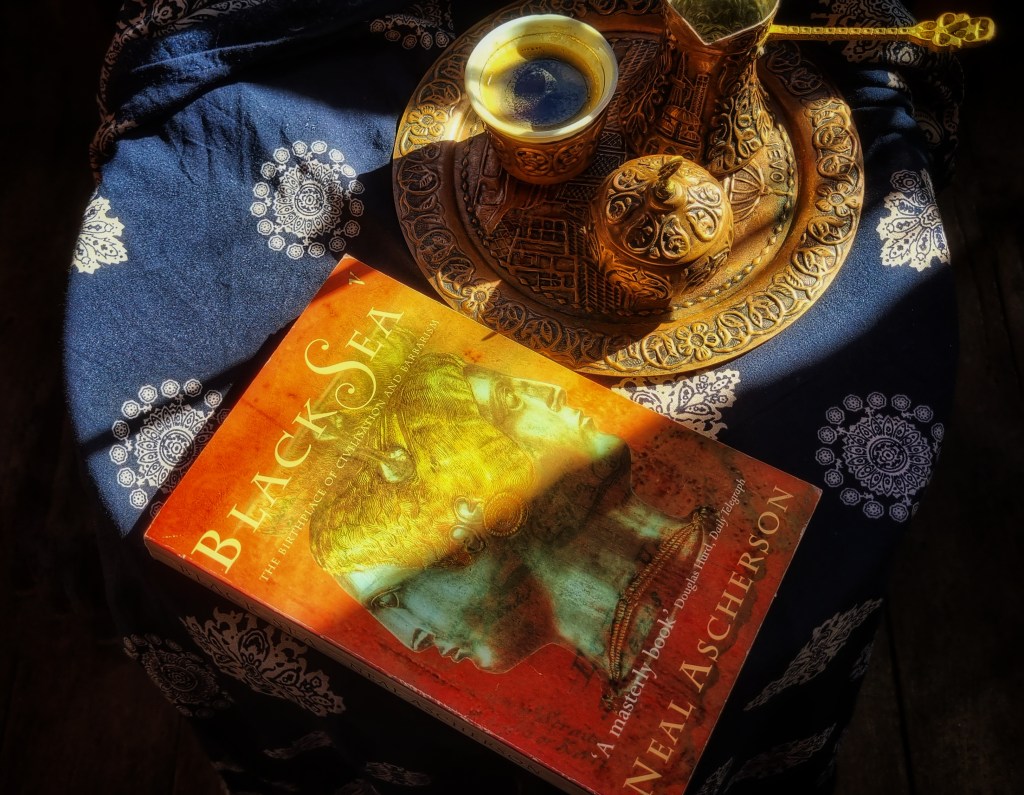
Neal Ascherson: Black Sea

On a trip to Turkey in 2016, we landed at Sabiha Gökçen International Airport, which is on the Asian side of Turkey and closer to the Marmara Sea. The Istanbul Airport that opened in 2018 is on the European side, and just before landing on the meeting point of the world, one is gifted with a breathtaking view of the Black Sea.

I saw the Black Sea thrice from an airplane window on my most recent trip, and the irony dawned on me that this body of water that has sadly become the “largest mass of lifeless water in the world,” in fact, teems with so much history and so much… life!

This book written by Neal Ascherson about this birthplace of civilization and barbarism accompanied me, although I only finished reading it on my way back home. I don’t think I’ve read a more poetic history book!

“Human settlement around the Black Sea has a delicate, complex geology accumulated over three thousand years. But a geologist would not call this process simple sedimentation, as if each new influx of settlers neatly overlaid the previous culture. Instead, the heat of history has melted and folded peoples into one another’s crevices, in unpredictable outcrops and striations.”

Reading it brought me back to the landscapes of Tokarczuk’s The Books of Jacob and to where I’ve just been, merging the lands of my dreams with those places that are the epicenters of current world events. Because somewhere in the midst of this all, is the history of the Black Sea.

From its first mention in literature in the Bronze Age (where Jason and the Argonauts sailed upstream the Bosphorus to the Black Sea); to the different Central Asian tribes and kingdoms; to chapters that made me understand better the Russian Revolution and Communism’s life, course, and death in that region; to the question of Crimea, Russia and Ukraine’s relationship and to many things in between, I am in awe of how Ascherson sustained a poetic voice!

In a way, it answers our suspicions about how, despite all the earlier discoveries of the East in almost all fields, the West is still seen as more superior and more “civilized”. It is an enlightening investigation on the definitions of civilization and barbarism that surprisingly touches on feminism and immigration, which is quite different from what most minds have been programmed to believe.

Here is a history book that does not merely record events and dates, but most importantly, relationships. For as the author compellingly reveals, the Black Sea is not just a place but a pattern of relationships, and nothing like the symbiosis of the Bosporus Kingdom has ever happened.

A beautiful thing about traveling and reading is to be able to measure ourselves against the expanse of time and history, with the intention of acquiring more perspective, if only to acquire more life.

June 25, 2022 – Uzbekistan Beyond Book Pages

My last few days in Uzbekistan were supposed to be spent in Termez, a place bordering Afghanistan where Alexander (considered not so great in these parts of the world) founded a town. But after learning about the tragic earthquake in Afghanistan, and for the peace of mind of those I love (not that I’ve given them so much of that), I decided to be practical (yes, I can be, sometimes) and come back to Tashkent to be closer to the airport. Termez will have to wait; and perhaps, it is a romantic idea to leave something to come back for.

It is risky to travel these days, and it is crazy how the fate of some dreams and travel plans hang in the balance between two words — Positive or Negative. And when I asked my niece who works in a bank to change some currency for me, she reported that the bank declined upon learning of my destination, “Kay duol sa na-ay gyera.” (It is close to areas of conflict.) She had to go out of her way to another money changer. If one looks at the map, the bank is not wrong.

But here I am. Because when something feels right, it feels right. I booked my ticket with so much faith, and the itinerary that has been ready since 2020 finally came in useful.

“But I thought you wanted to go to Iran?” friends asked. I am in what used to be part of Persia. “Stan” is a Persian suffix that means “place of”. This is the place of the Uzbeks that was once of Persia. When the Achaemenids expanded their empire, they sought not to Persianize whomsoever they conquered but allowed different peoples and cultures to thrive — as long as they paid tribute, of course. And since we know borders are all but manmade, I am in the region of which I have been reading and dreaming for a long time… and it is intoxicating, and beautiful, and enriching.

The books I have been reading did not end on their last pages. The best books never do. They only give the reader a deeper yearning to continue the journey and the learning beyond the pages. They give one an urgency to live.

June 24, 2022 – Goodnight, Khiva

As the veins of the Silk Route on land dwindled and acquiesced to naval routes, and explorers discovered treasures deemed more valuable than the fiber that changed the world, Khiva continued to treasure silk just as much as gold. Even up until 1924, the silk money of Khiva were hand-woven (and literally laundered when it required cleaning).

As I wistfully think about the ephemerality of places never to be seen, as they are, ever again; I also take joy in the experience of being changed by these places. I suppose it is unfair to ask them to stay the same while I am constantly being transformed?

And maybe this is why I travel, and read, and write… because how can one explore the world to its deepest, if one does not also attempt to explore the terrains of the self and the mind?

Good night, Khiva. Thank you for a thousand and one… lessons.

© 2022 MDR
Khiva, Uzbekistan

June 23, 2022 – Khiva, Uzbekistan

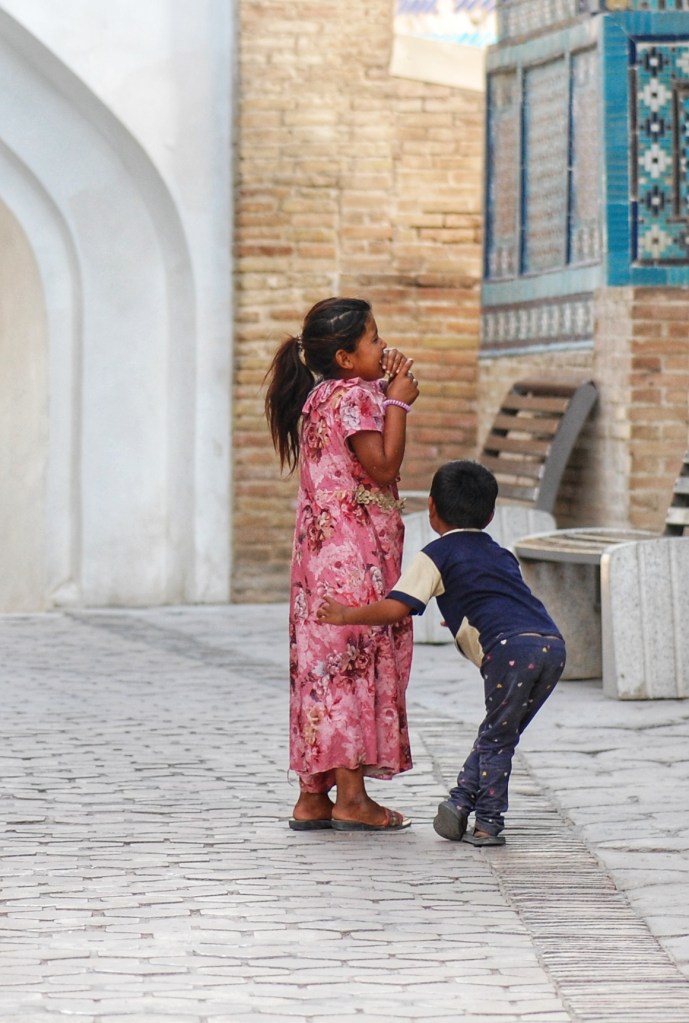
In the alley right below, a child sings in a language both strange and familiar to me. Strange because she sings in the Khorezmcha dialect, familiar because it is music.

A few meters away from her, women in traditional dress eclipse the child’s voice as they bargain with her mother, a scarf seller. These women are tourists from the other “Stan” nations. They flock the streets by sundown. (Western tourists tend to forego Khiva because it is out of the way. To get here from Bukhara, one has to drive for hours through an expanse of steppeland that seems to stretch to infinity, and the usual tourist would usually opt for another stamp on the passport from another Stan than come to Khiva. I am now closer to Turkmenistan than I am to Bukhara.)

But I also see Khiva changing right before my eyes. I see workers installing LED lights, replacing some crumbling bricks, and fixing the cracks of the old city, making it look new. And although they have the tourist’s best interest in mind, I feel a pinch in my heart. I know Khiva will not look the same in a few months, or weeks… and there is a bittersweetness in realizing that I came just in time — or perhaps, a few centuries late.

In the distance, the tallest minaret in Central Asia calls my attention, calls to prayer, calls time to stand still, and all falls silent.

Does this balcony right outside my bedroom explain enough why I chose to stay in Khiva longer?

© 2022 MDR
Khiva, Uzbekistan

June 22, 2022 – Summer Solstice in Khiva

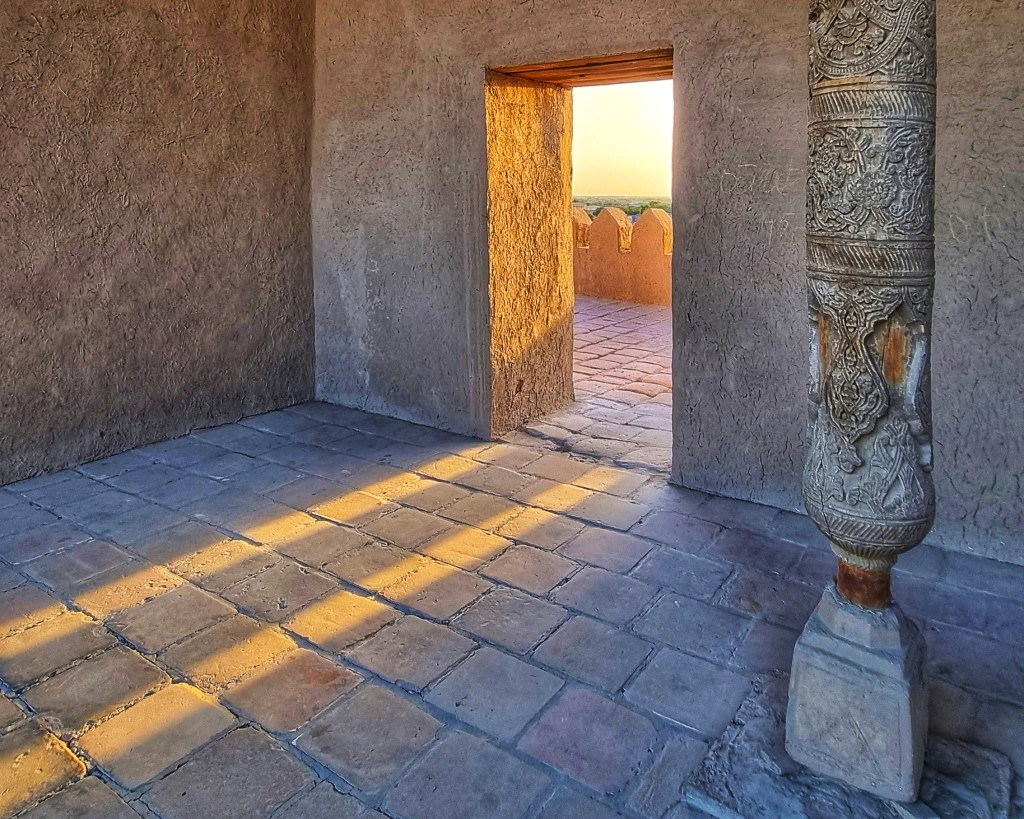
Resplendent, the summer solstice sunset gilds the citadel of Khiva.

Khiva, the former capital of Khwarazm.

Khwarazm, the region that gave us polymath Muhammad Ibn Musa al-Khwarizmi (780-850), who wrote the book Al-Jabr. From his name we have the word “algorithm,” and from Al-Jabr “algebra”.

The sun blazes differently here. And for knowledge, their wise men, too, seemed to burn so intensely.

June 21, 2022 – The Colors of Bukhara

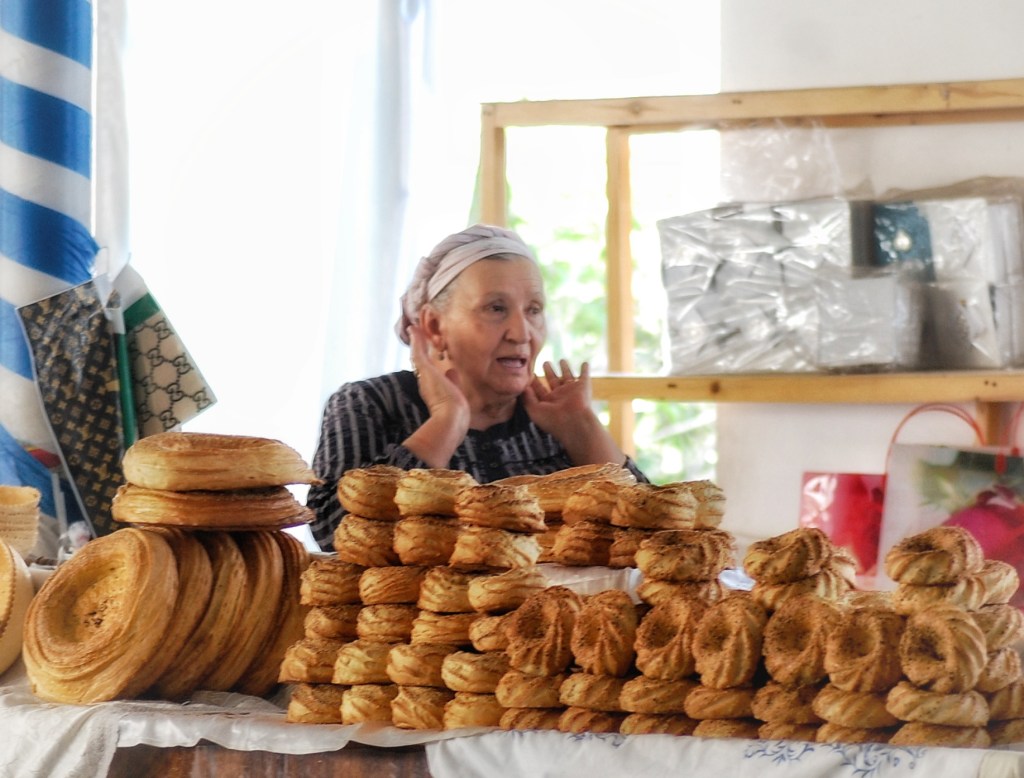
The temperature is significantly higher in Bukhara that you can feel your skin baked into the color of a lepyoshka as soon as you step out of the caravanserai. Yes, I am staying in a caravanserai! Isn’t that the most natural thing to do when traversing desert cities?

In contrast to Samarkand that can only be depicted in golden blues and vibrant shades of dreams, Bukhara wears the colors of the desert.

But that’s not to say that this important stop on the Silk Route is monochromatic. For as we know, the desert yields surprises; and thousands of years of history have stamped their mark and bled their hues on this oasis city.

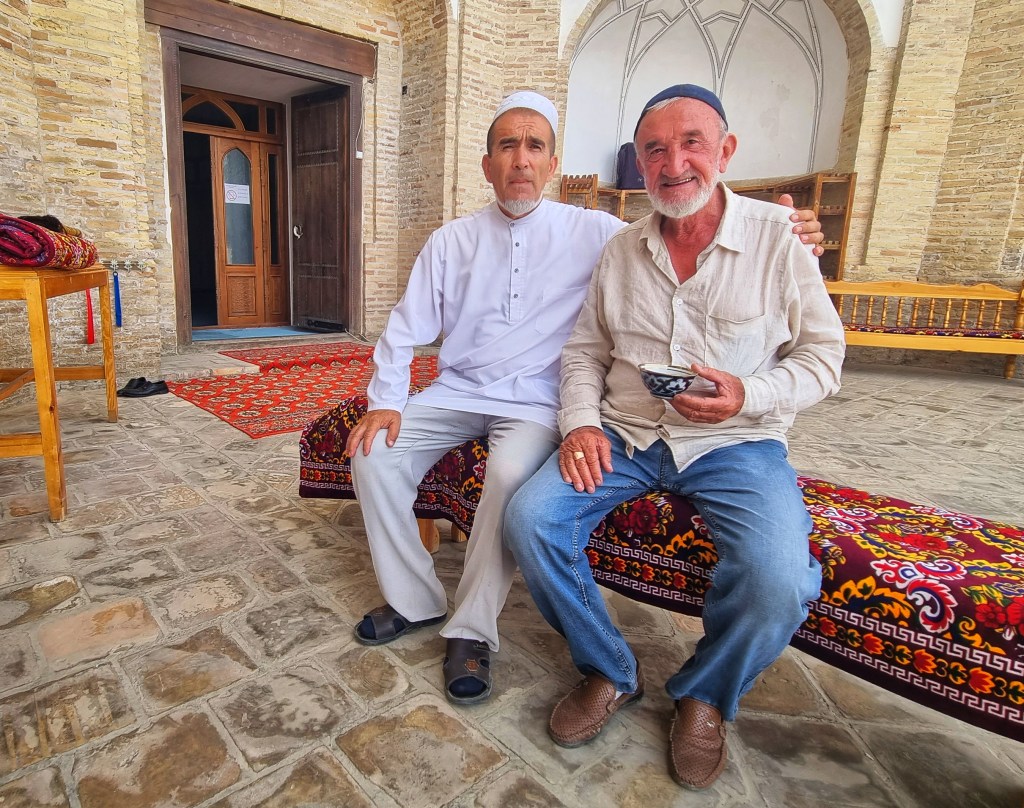
I made two friends today who know their history! One endearingly encouraged me to look it up on my phone because he says it’s all there, and the other is an imam who saw me taking pictures of the architecture while trying my best to be unobtrusive at a site sacred to Muslims. He must have appreciated this because he beckoned to me and invited me to take closer pictures of the mosque and its interior, and afterwards, for tea. It was the best tea I’ve had on this trip!