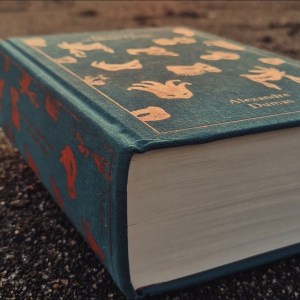
Placed slightly above the complete hardbound series of The Hardy Boys, Dumas used to sit on my older brother’s part of the shelf in the room we shared as children. (Why I turned out to be the more adventurous adult is the mystery.)
But now, Dumas has found me. And maybe it’s better this way. Rather than finding an impressionable child decades ago, who probably would have reenacted getting inside a sack pretending to be a corpse to escape Château d’If, he has found a more discerning adult who delights in its treasure trove of literary references.
Its initial chapters inspired a new reading project of tallying the books I’ll subsequently encounter that allude or refer to A Thousand and One Nights or The Odyssey (between Scheherazade, mother threader of stories in the East, and Penelope, mother un-threader of storytelling in the West).
This one is blatantly steeped in the influence of the former, but as I read on, I realized that the influence of the latter and the Greek tragedies is more subtle, but just as ubiquitous! (Spoiler: There is a Medea hiding in Heloise Villefort!)
This book, and reading classics in general, reminds me of a beautiful passage from a favorite Rushdie essay: “I go back to the old stories many times, I drink at those ancient unpolluted wells, in part because when one is deeply affected by the contemporary, when a good deal of one’s thinking has to do with puzzling out how to fashion into coherent work one’s vision of contemporary life… it helps to be reminded of what has endured, of what claims to being called eternal, to sit and learn at the feet of what persists.”
Dumas frequented those wells and gave us more than a thousand and one pages of pure entertainment. Sure, there were elements of the story that I did not readily accept, but to paraphrase Rushdie regarding these wonder tales: Their power endures because these stories are entirely truthful about human nature.

