In some editions, the full title is The Sun King: Louis XIV at Versailles. This is more apt because the book is not an exhaustive portrait of Louis XIV but a well-researched record of the workings of the French Court in Versailles, its intrigues and its scandals, and the intimate lives of its prominent figures.
It is rather detailed in a sense, and to a fault, that if not for Nancy Mitford’s entertaining wit, it would have bored me to read about the rivalries of the mistresses and the parts that read like royal gossip.
But I would still recommend reading this book on a weekend when one would prefer something that does not weigh on the emotions. Of course, a better recommendation would be to bring this book on a trip to Versailles. At a hundred and sixty nine pages, it is a none too heavy starting point for one interested in reading about the birth of the ostentation that led to the Revolution two kings and less than a century later; and yet another reminder of how quickly and drastically the tides of history turn.
…because I would immediately pick up a novel of/from Iran without any prodding.
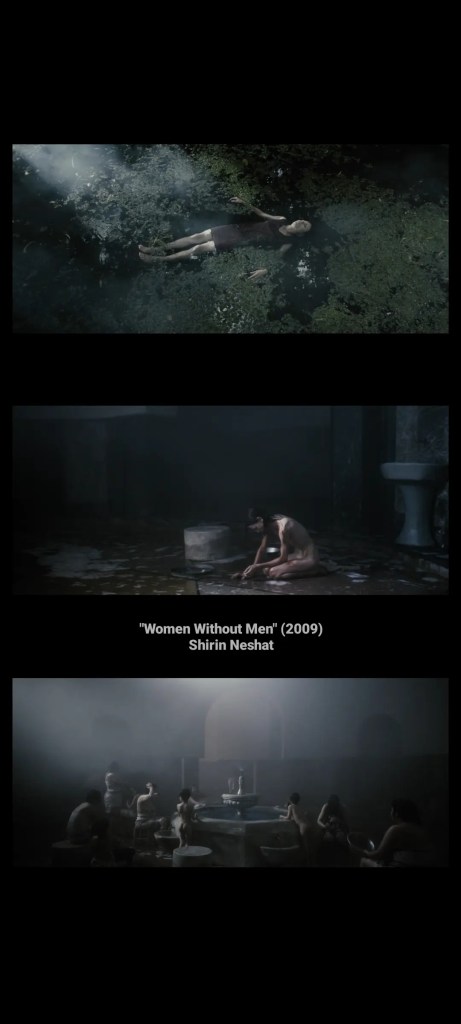
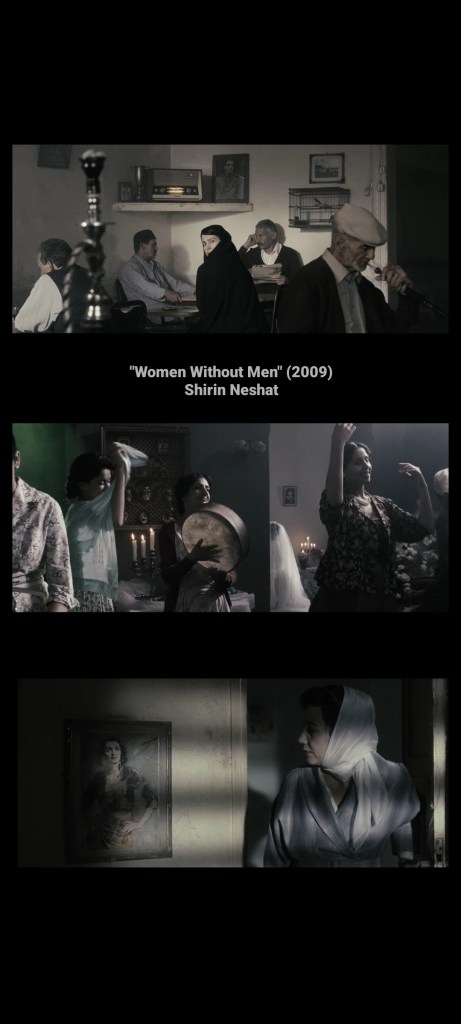
It took me almost halfway through to get into the book’s rhythm, however: Apart from being surprised that it is not set in contemporary Iran but pre-revolutionary Iran (and horrified to think that things have only gotten worse for women in post-revolution Iran), one main character irked me, and I kept weighing it up against another Iranian work of magic realism that remains unsurpassed in my books. But as I read on and the threads of the story came together, I came to appreciate Women Without Men for its own merits. It is, after all, about women overcoming hardships and breaking free from the conventions that Iranian society imposes on them. It is therefore no surprise that it was banned shortly after its publication.
The lives of Iranian women and the experiences depicted here are not isolated cases, and they bring to mind a line from Universal Compassion, an essay by Natalia Ginzburg: “We have come to recognize that no event, public or private, can be considered or judged in isolation, for the more deeply we probe the more we find infinitely ramifying events that preceded it…” Thence the problems that the characters face are not merely personal. In an ideal world, these are issues that an entire civilization must address.
The book naturally ushered me to the screen adaptation. The director, who wrote the preface for this edition, worked closely with the author and the collaboration seems to have led to a beautiful fleshing out of ideas. Being a fan of Iranian cinema — because no one does cinema like the Iranians! — I am tempted to say that I like the film more than the book. But for an exceptional experience, allow me to suggest a book-movie-pairing instead; because what was ambiguous and abstract in the novel became poetry in the film; and if not for the book, there would be no film.
“The telephone isn’t made for saying important things that need time and space.”
Happiness, as Such (August 2024)
The merit of Natalia Ginzburg’s epistolary novels — whether they are wholly or partially comprised of an exchange of letters between characters — is their being time capsules of an age when corresponding through letters was the principal means of remote communication. It was in letters that banalities could be reported as much as consequential information, and people were allowed space to be frank. Letters tracked the growth, or stagnation, of their writers. Self-expression flowed freely where individual and shared stories unfolded. Ginzburg seems to have maximized on the medium and preserved it, foreknowing a time, our time, when letter writing would be at the point of near extinction.
“Happiness… It is like water; one only realizes it when it has run away.”
Voices in the Evening (January 2024)
Of sad loves and sad lives. For me to truly appreciate Ginzburg’s work and write something of worth about it is, perhaps, to regard it as a whole after I’ve read everything she’s ever written.
For now, this book only evokes a specific memory:
He and I had just listened to the whiskey-soaked voice of Tom Waits. We said we did not want to end up like the people sung by the raspy voice.
“Ikaw si Peter?!” It was more verdict than question.
They insisted he was Peter over and over again as they beat him up mercilessly.
How did his late evening drive to 7-Eleven turn into a nightmare? It all happened so fast.
The last thing he remembered was stopping at a corner to respond to a message when several men grabbed him, one on each arm and one on each leg. They thrust him into a van and assaulted him.
He was only certain of one thing: He was not, never was, never will be, Peter.
He was not Peter, but the men turned out to be cops on a buy-bust operation. And they forced him to admit, forced him to be Peter.
He who was not Peter was locked up for two days in one of those horrible Philippine detention cells until he was able to contact a good lawyer and apply for bail. The cops raised a case against him. They claim he was caught buying drugs from another man. They accused him of resisting arrest. They put him on the watch list.
He is not Peter. I would know. I’ve known him since forever, and he’s been one of my dearest friends almost right from the moment we met as kids. Alongside his best qualities, I know his sins and his faults. The use of illegal drugs is not one of them. But don’t take my word for it. Trust the two drug test results, urine and hair follicle. Both turned out negative.
Despite that, the case continues. It has been going on for over a year. He has had to go through every single hearing, tremble in his seat each time and listen to the cops pile lies upon lies, even on his birthday. There are times when he would be at court by 8:00 a.m. and the hearing would start at 11:30 a.m. Sometimes he would wait half a day, only for it to be cancelled. He who is not Peter has had to put so much of life on hold because he was mistaken for Peter.
It’s unfair. The trauma is taking a toll on him. I laugh with him to get his mind elsewhere, but I cry for him in private. But for some twisted reason, I am grateful.
I am grateful that he was mistaken for Peter on October 2022. The other Peters between 2016 to mid-2022, the real ones and the ones mistaken for them, could not even put life on hold. There was no life to put on hold. Life was not an option.
“Forget that their name is Marcos. Forget that their name is Duterte. Forget that their name is Aquino. Duterte the First begat Duterte the Second. Aquino the Second begat Aquino the Third. Marcos the First begat Marcos the Second begat Marcos the Third, presidents begetting presidents, begetting vice presidents, rotating and revolving and rotating again. Their names live in airports and amphitheaters, on paper bills and street signs, along the highways where the corpses are still being found. Forget the names of their sons and daughters and remember their dead instead.”
“After this time in the Middle East, I learnt what it was like to carry the weight of people’s stories — and the role that journalists play in bearing witness. Our job was to serve as a funnel, a conduit, and in so doing, hopefully remind viewers across the world that we’re all the same. To elicit even a smidgen of empathy for those who might seem different to you.”
A piano student of mine is studying Debussy’s Claire de Lune, and I recently explained that being emotionally connected to a piece makes it more difficult and exhausting to perform, but (un)fortunately, life and music can only be meaningful that way. And it is this balance between technique and emotional connection that we spend our whole lives trying to master.
After reading this book, I realized that the aforementioned is not only true for music, but for journalism as well; and these pages are a record of a journey in probing and understanding that balance.
I love the unpretentiousness of this book. It does not claim to be a powerful journalistic work. Sometimes it tells you something as simple and true as, “The world turns. And that is what matters. It turns — and we humans keep going. Through conflict. Through inhumanity. Through heartbreak.”
Yes, there is nothing in the passage indicating that this Filipina journalist is vying for the Pulitzer, at least with this book; but it is powerful and heartwarming in the sense that it speaks to me of things that I need to take note of, not only when I read it from cover to cover on the most restful Sunday I’ve had in months, but throughout life, especially when things get tough.
That’s what you will find here: Life lessons from a recovering journalist. There is a certain universality to it, for aren’t we all recovering from something?
The phrase “a little luck” appears nine times in A Little Luck, just as “Elena knows” appears nineteen times in Elena Knows.
Does it matter? Not really. Maybe noticing those details says more of me as a reader than Claudia Piñeiro as a writer. One thing is certain; she does not repeat herself because she is running out of ways to say things. She is consistently unpredictable.
Elena Knows, which I read much earlier, is exceptionally written and translated. The choice to highlight a specific incapacitating disease that isn’t limited to women — to effectively confront every reader with what it feels like to lose bodily autonomy — is, I believe, the most impressive allegory that should be uncovered from under the many brilliant qualities of the novel. There are other apt adjectives for Elena Knows, but beautiful is not one of them.
But for the soulful strains of Piazzolla that wove through A Little Luck’s narrative; for how a woman damaged found the first steps to healing through literature; for how I thought it would all be about pain only to discover that it was principally about happiness; and for the sheer deftness of Piñeiro’s writing — this one is beautiful.
Just as unputdownable, just as suspenseful, just as affecting… and this time, beautiful.
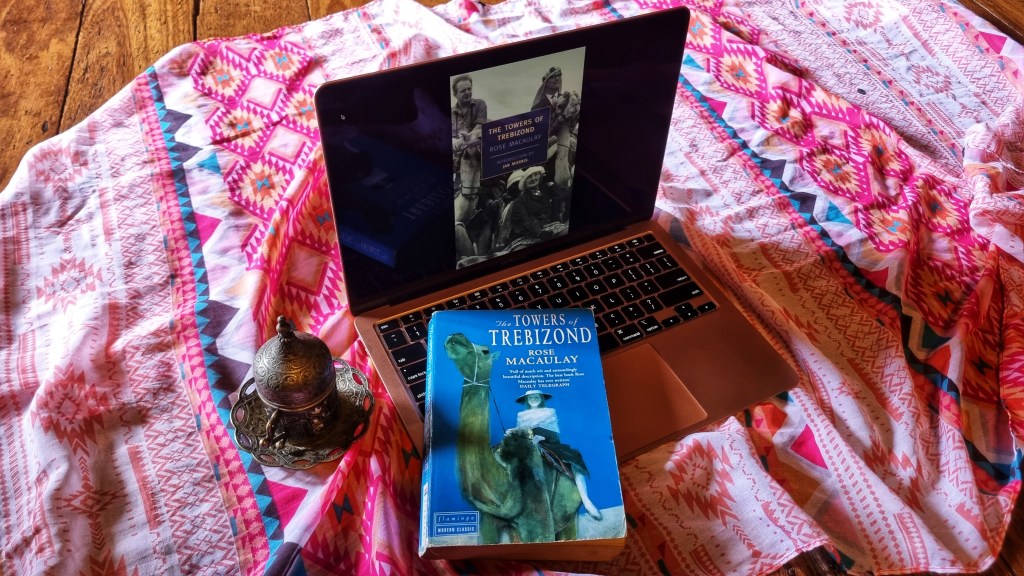
“I felt as if I had come not home, not at all home, but to a place which had some strange meaning, which I must try to dig up. I felt this about the whole Black Sea, but most at Trebizond.“
Feeling like I was not ready to tackle heavier themes than those in real life, I took this “adventure” novel out for a spin. It took me a while to warm up to it because it also took me a while to realize that this is not exactly a regular travelogue.
I see it as something else disguising as an adventure book. For beyond the mirage of exciting escapades in Turkey and the Middle East, it is a humorous critique on religion — different kinds. That being said, it is not a travelogue for the easily-offended. After all, Laurie is an agnostic narrator who admits to having a difficult relationship with religion, but sometimes has an outsider’s advantage of seeing through the hypocrisies and bigotries of the seemingly religious.
As our adventuress and her unlikely companions go deeper into the direction of historic Trebizond (Trabzon in modern Turkey) on camel-back, the ruminations on morality also deepen.
“I do not remember when I was in Cambridge we talked about such things… though we talked about everything else, such as religion, love, people, psycho-analysis, books, art, places, cooking, cars, food, sex, and all that. And still we talk about all these other things, but not about being good or bad.”
The ending confirms my hunch that while there is a literal Trebizond of which she writes, there is also another figurative Trebizond to which she refers. In a way, I am glad that this book did not turn out as I expected, and that it turned out to be so much more.
While I debate whether to order the NYRB edition solely for the Jan Morris introduction, I leave you with this poignant and relevant passage about Jerusalem:
“But what one feels in Jerusalem, where it all began, is the awful sadness and frustration and tragedy, and the great hope and triumph that sprang from it and still spring, in spite of everything we can do to spoil them with our cruelty and mean stupidity, and all the dark unchristened deeds of christened men. Jerusalem is a cruel, haunted city, like all ancient cities; it stands out because it crucified Christ; and because it was Christ we remember it with horror, but it also crucified thousands of other people, and wherever Rome (or indeed anyone else) ruled, these ghastly deaths and torturings were enjoyed by all, that is, by all except the victims and those who loved them, and it is these, the crucifixions and the flayings and the burnings and the tearing to pieces and the floggings and the blindings and the throwing to the wild beasts, all the horrors of great pain that people thought out and enjoyed, which make history a dark pit full of serpents and terror, and out of this pit we were all dug, our roots are deep in it, and still it goes on… And out of this ghastliness of cruelty and pain in Jerusalem that we call Good Friday there sprang this Church that we have, and it inherited all that cruelty, which went on fighting against the love and goodness which it had inherited too, and they are still fighting, but sometimes it is a losing battle for love and goodness…”
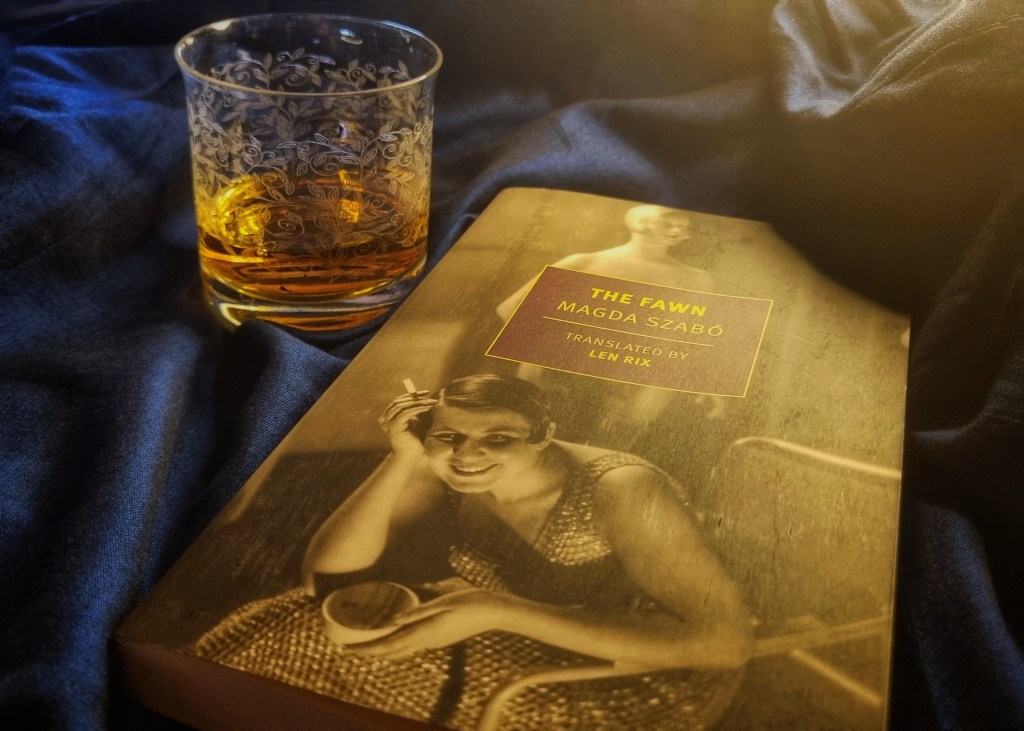
“I wanted to be with you sooner…” This first line, a faint melody, I imagine played by a solitary piano. This unwavering, melancholic undertone, suggesting that Eszter Encsy is addressing someone who is no longer in her life.
There is a calm, almost cold, but delicate aching to be accepted and understood. Recollections of childhood come across as confessions and explanations… including that time she did not mean to kill the fawn.
But how did that seemingly dispensable incident earn the title of the book? Perhaps the fawn is meant to symbolize the fragility of youth, and how easily it can be broken.
Magda Szabó, who died with a book in her hand, has bequeathed to the world novels that aim straight for the soul. She wrote of women; women who do not have to be faultless. She did not demand heroics from them or for them to be worthy of admiration or to be idealized. She only asked that they live — live intensely, and learn.
And yet, I did not expect her to go to the extent of Eszter. The moral puzzles are not vague here, it is made quite clear what kind of person we have as a central figure right from the beginning: “I could never have undertaken to be a good girl and never to tell lies…” “I lie so easily I could have made a career out of it…” “I was also laughing at the monster I really am…” “I wasn’t a very nice person and I wasn’t very friendly…”
We immediately get the picture. Appalled, we double-check the synopsis, even though Szabó readers know that her synopses hardly describe what one encounters between the pages. But we read on. Because Szabó is brilliant. Because we suspect that a gut punch or two awaits round the bend. Because oftentimes, nothing is what it initially seems. Because she writes of those difficult spaces between people that most of us are too inattentive, too timid, or too unimaginative to explore. Because we know that behind all her stories is a carefully woven leitmotif of a history she mourns. Because Szabó is always subtly reminding us of consequences, of how we cannot extricate our personal histories from that of our nation. Because she is eternally thought-provoking, and therefore, rewarding.
…and because those elegiac strains from that lonesome piano will linger long after you’ve turned the last page.
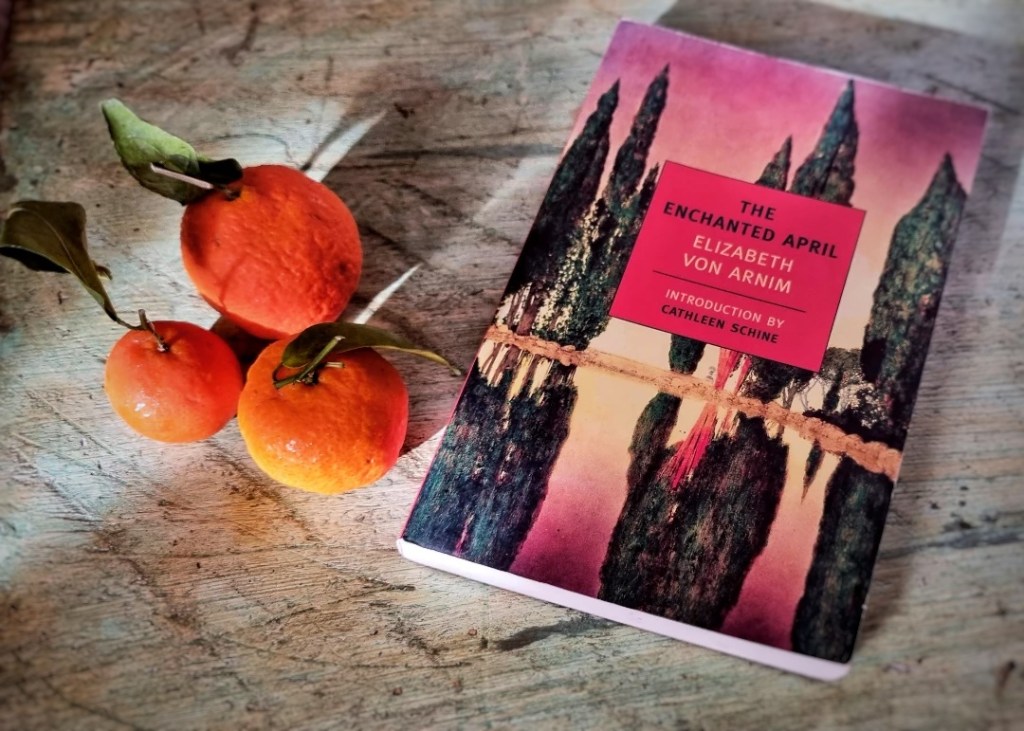
Reading this at a time when happiness eludes me and only a Turkish word can describe the sadness I feel, a time when the world is in disarray and the cynic in me is more pronounced than I want it to be, it is easier to argue that true beauty, real freedom from the male world’s sway, and lasting transformation surely take more than suggested by this book — but I am also a believer in the wisdom of surrendering to the restorative power of spending a month in a villa in Italy, flowers, rest, and the sea. Oh, I’d take these any day!
It is a truth universally acknowledged that one should not carp about novels like this. You simply open your heart to it, cease overthinking, and allow it to happen — the way you’re supposed to with sunshine, a little frivolity once in a while, and happiness.
So if this book were set to poetry, it would be this poem by Lydia McGrew:
When joy alights like a bird on a fence post arrested in fragile flight, do not frighten her away.
When she comes in the clutch of the heart at the scent of the evening air instinct with life and memory, in the grey-blue of the sky at twilight, in the sweep of the pine tree to the sky,
Do not say, There are depths to be plumbed, There are knots to be worried at. I have no time for this.
Nor listen to the more insidious voice that lectures, Death and disease roam the streets. Pitiless murder with bloody sword unsheathed stalks all the ways of the world, and beauty and innocence fall before him. What right have I to be happy?
Rather stand still, And say,
It is a gift.
And with that, I wish us all an enchanted April, and the wisdom and grace to submit to happiness when it beckons. 🤍
“To me, it has always seemed that each individual has such a moment. It is a fixed point in eternity, varying with each person, which they reach, sooner or later, in their trajectory through time. It is this moment which most perfectly expresses them, and to which essentially they belong, in which they live most fully. Both before and after, some awareness of this lies within them, so that in varying degrees of consciousness, they are seeking that moment in order to be fulfilled, or to find again in that fulfillment and setting, the persons who shared it with them.”
“A lifetime or a moment is all the same; a whole cycle lived richly, or thinly, one day. Each can prove to have been the meaning of a life. We cannot know, from where we stand. But if we seek, and are aware we have missed the moment we seek, our own absolute moment in time, then we live out our lives unfulfilled. In the words of an eastern proverb: we die with our eyes open — we cannot rest; even in death we are still looking for it.”
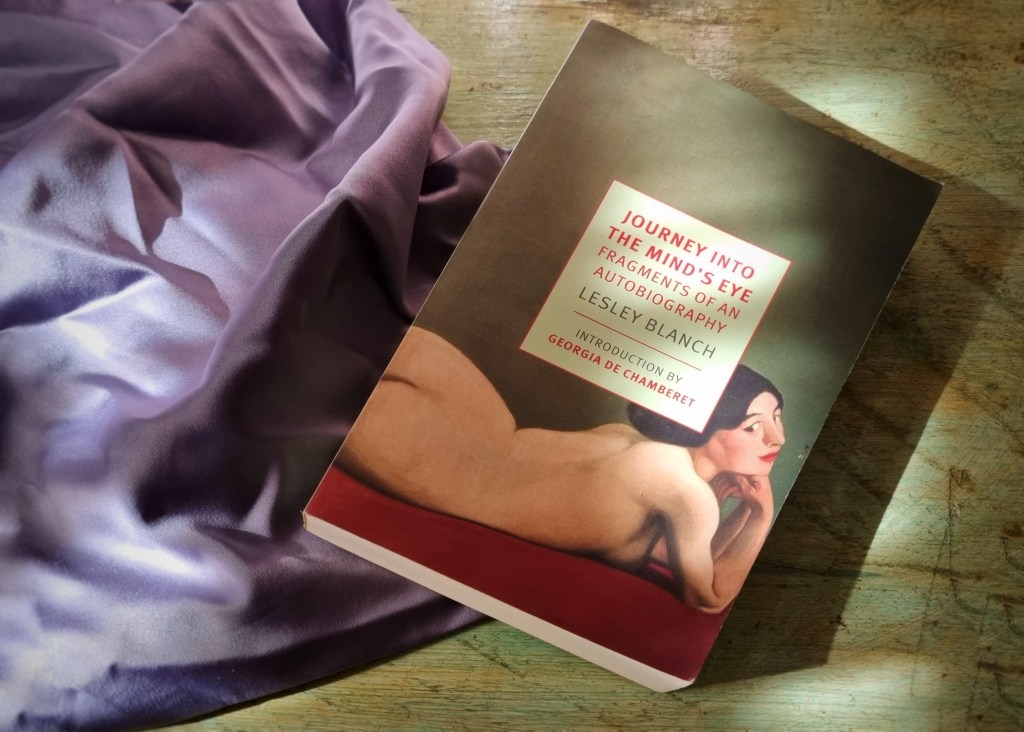
Never mind that her longings for a lost love and mine mingled as I luxuriated in the pages of this book. Never mind that some details will raise the eyebrows of conventional social constructs. (“Overweening conventions! They have us in a stranglehold from the cradle to the coffin,” writes Lesley Blanch.) Never mind the question of whether the Traveler corrupted her life or enhanced it; I have two opinions as contrasting as East and West. What is certain is that this woman ended up living by her own rules and did not lead a lackluster life.
But to have bookshelves spilling over because of a geographic fascination and to have the books arranged by region; to have literary tastes swayed topographically; to explore entire worlds by turning pages; to spend hours on long bus rides poring over books; to have “everything I saw, or read, ate, or thought tinctured by my infatuation”; to travel and be particular about the precise lighting in which to see certain places because they look more beautiful in morning, noon, or afternoon light; to find areas of conflict irresistible and be chided for having “such violent desires”; to journey into the mind’s eye or into the heart of another; to see traveling as an act of “following a strain of fugitive music” — I’ve never felt this aspect of myself more probed and understood, that I wish I came across this book much sooner.
There are allusions to be unveiled in the captivating writing, and there are lessons to be gleaned from the interaction between cultures, but the line I’ll take to heart is, “Don’t be so finite,” said the Traveler.
Lesley Blanch lived to be a hundred and three, unapologetically, and infinitely.