Paolo Maurensig: Game of the Gods

Without meaning to, I read Paolo Maurensig’s three chess novels in chronological order of publishing dates. The Lüneburg Variation, Theory of Shadows, and Game of the Gods. The sequence in which I read these books were, admittedly, influenced by Goodreads ratings. Maurensig is quite obscure in my part of the world, so I had to consult Goodreads despite my distrust of its stars. Game of the Gods has the lowest rating among the three.

But I enjoyed it! It’s not exactly a literary masterpiece, but I found it to be an easy and entertaining read that has its gems. I think the low ratings come from readers who have particular expectations. Those who read this for chess will soon realize that it’s not wholly about chess. Those who read this for its biographical aspect might be disappointed because the story is mostly imagined from the little that the media knows about Indian chess grandmaster, Malik Mir Sultan Khan, who enthralled the chess world in the 1930s by defeating world champions but soon faded into the night sky like a shooting star.

The passages that describe the incorporation of Indian philosophy and thought in Sultan Khan’s games was what I appreciated the most. The book also introduces the reader to chaturanga, the precursor of chess, that had a more sacred aspect to the game, and wherein its player had to transform himself in order to succeed.

And from what this reader can conclude from the third of Paolo Maurensig’s chess novels, the “game of the gods” is not chess. It is fate.

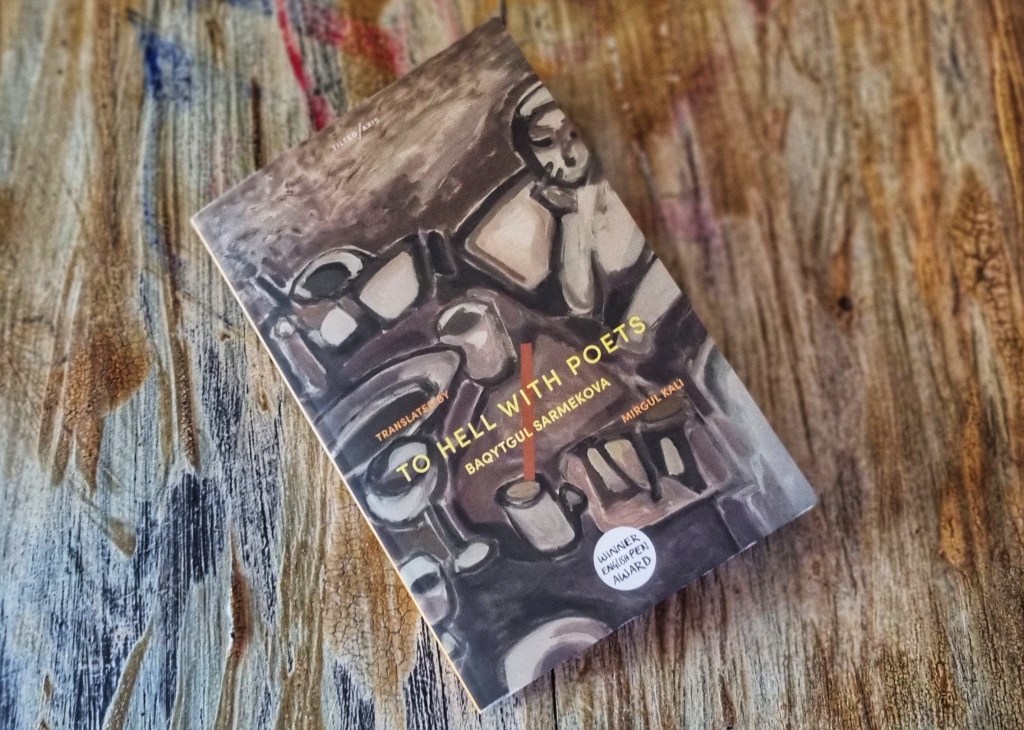
Baqytgul Sarmekova: To Hell With Poets

Having loved the Hamid Ismailov Uzbek trio published by Tilted Axis Press, it was exciting news to me when they announced the release of a Kazakh work earlier this year.

When there’s a dearth of Central Asian literature in circulation, what’s a girl (who arranges her books by political geography and who loves to broaden the scope of her literary horizons) to do? She rushes to get her hands on it.

Any reader could have finished this in one sitting, but I read the stories bit by bit and in random order — as one should read anthologies, I’ve been told. Although the reason I took it in small doses was because of its bleakness. 

I’m grateful to have read my first Kazakh work, but sad that it turned out to be an intimate peek into a joyless and disquieting world. Even its sunshine felt gray. 

Tilted Axis Press describes this as “a sharp and honest rendering of daily life in Kazakhstan.” If it is, it makes you wonder if there is ever room for wonder or an enthusiasm for living in such a place, because one cannot find any of that in this volume.

Nevertheless, this book succeeds in wakening a slumbering part of one’s consciousness. And so I look forward to a Tajik and Kyrgyz release, Tilted Axis Press!

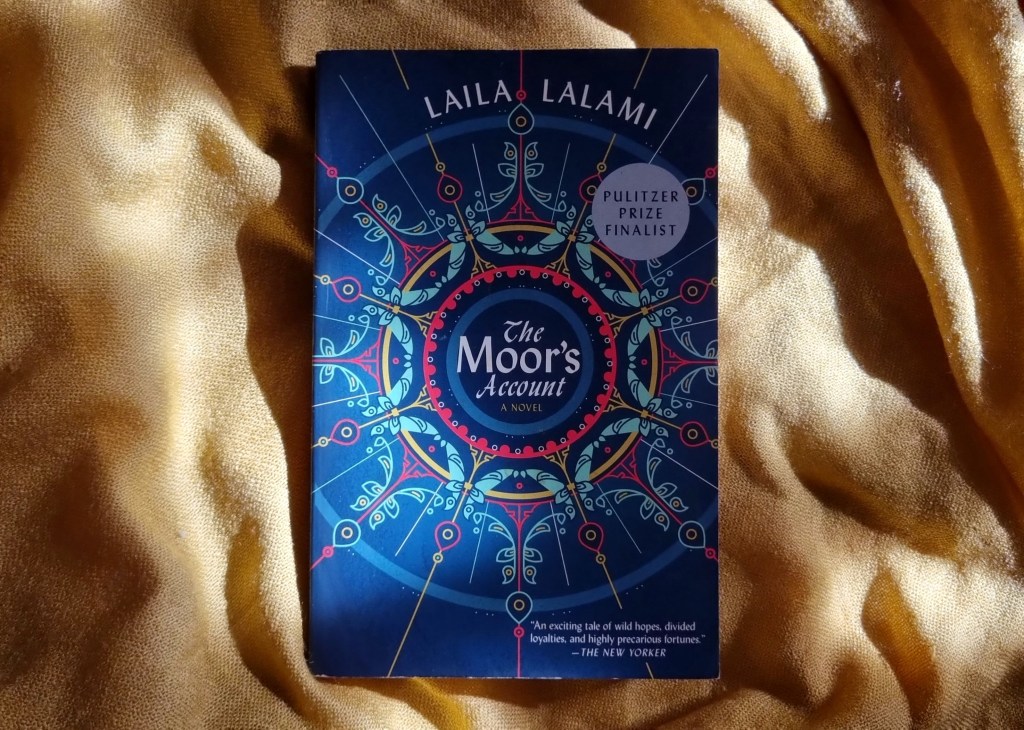
Laila Lalami: The Moor’s Account

Literature continues to witness the exciting rise of old stories and histories told in new perspectives. We now have Greek mythology narrated through the vantage point of the misunderstood or footnoted women, we have world history that challenges purely Eurocentric lenses, the Crusades recounted through the Arab viewpoint, and various retellings of otherwise prevailing narratives that have been unquestioned for years.

The Moor’s Account falls in the category of books that offer readers a new point of view. It is an imagined memoir of the first black explorer to the Americas. Although history will not remember him as such, as he was the Moroccan slave of Andrés Dorantes de Carranza. Together they would be half of only four survivors of the unfortunate Narváez Expedition, a Spanish expedition that set sail in 1527 with the aim of establishing settlements in La Florida.

The Moor in question is Mustafa al-Zamori, baptized Estebanico when he became a slave. This event at the beginning already hints at how, through an imposed name change, an entire history is erased: “A name is precious; it carries inside it a language, a history, a set of traditions, a particular way of looking at the world.” It was the first of many erasures, Estebanico would later learn.

My first attempt at reading this book was unsuccessful, but the recent announcement of Pulitzer nominees reminded me of this 2015 finalist that has remained sitting on my shelf for a while. Now that I have finally reached its last page, I have realized that the value of this novel lies in its reflections on identity, in its acknowledgment of the precarious power of stories, and in its critique on how history is written — how “unfounded gossip can turn into sanctioned history if it falls in the hands of the right storyteller.”

“How strange, I remember thinking, how utterly strange were the ways of the Castilians — just by saying that something was so, they believed that it was. I know now that these conquerors, like many others before them, and no doubt like others after, gave speeches not to voice the truth, but to create it.”

After dodging an ambush led by Indians, I found in Ruiz, a member of the expedition, an arrogant colonizer who felt victimized when natives tried to protect what was theirs — an embodiment of entitled powers that still plague the present: “‘Do you think we did something to them?’ Ruiz said. ‘No one did anything. That is just how the heathens are. Look what they did to me. He pointed to the dark socket where his left eye had been, oblivious to the role he had played in his own predicament.’”

This book does not contain literary acrobatics. The style is quite simple. But it lends the reader old truths and a new set of eyes. 

Sophy Roberts: The Lost Pianos of Siberia

Before Iran, before Persian history, it was Russia, its music, literature, and history that I was preoccupied with for years. (Remember how I named a pet fish “Shosta,” after Shostakovich, who leapt out of the fishbowl to his doom, and died a very dramatic Russian death?) Adulting eventually distracted me from this obsession until Iran took over and began to burn as big a flame in my consciousness.

This book brought me back to my teen years of being fascinated with Russia. As I turned the last page of this beauty, the traveler, the pianist, and the lover of stories in me were all brimming.

After all, Russia is the country of Tolstoy and Dostoevsky, of Rachmaninoff, and “piano music has run through the country like blood.”

Sophy Roberts, however, zones in on Siberia, that immense region that covers eleven percent of the world’s land mass, and home to ninety percent of Russia’s natural resources.

So, what does it have to do with pianos? A lot, apparently. This account traces how the instrument began to grip the heart of the country during the reign of Catherine the Great, how this mania was fueled by concert tours by Liszt and Clara Schumann, and how political prisoners from Poland, the land of Chopin, and Decembrist intellectuals (members of the unsuccessful revolt against Tsar Nicholas I in December 1825) who were exiled to Siberia made culture flourish in the hinterlands by bringing their books, their learning, and their music with them, leaving precious pianos in their wake. It also poignantly mentions that the only thing that survived the Romanov massacre was the piano that the young tsarevnas brought with them and on which they played during their last days.

But who would be insane enough to go to Siberia and track the lost pianos of Russia’s history? Sophy Roberts. And she’s my kind of insane. This book is already making me dream of becoming this kind of journalist and writing this kind of book when I grow up. Haha

Which lost things should I go looking for? 


P.S. One simple paragraph also made me understand the rise of Putinism and why he still has a strong following. This doesn’t mean I’m going to start being a Putin apologist, far from it. But it is a sign of a good work of journalism when it makes you see the other side of the coin.

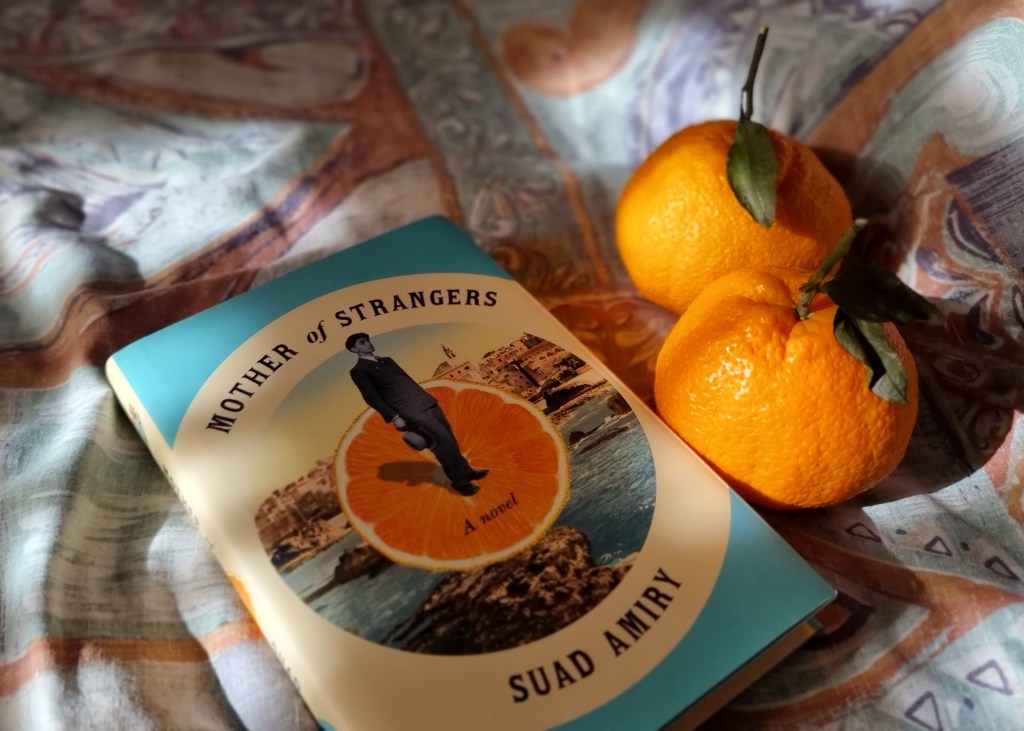
Suad Amiry: Mother of Strangers

“It is human kindness, rather than religion or nationality, that conquers the human heart.”

The “Mother of Strangers” is Jaffa. In case you, like me, wondered to whom or what the title referred.

Jaffa that was the richest and largest Arab city in Palestine. Jaffa, known all over the world for its pure gold — its oranges and orange groves. Jaffa, named after one of Noah’s sons who purportedly built the city after the great flood. Jaffa, a major city during the Ottoman Empire. Jaffa that was designated as part of Mandatory Palestine / the Arab state through the Partition Plan, but which Irgun decided to conquer before the end of the British mandate when Arab armies (Egyptian, Iraqi, Syrian, and Jordanian) could enter Palestine. And therefore, the helpless Jaffa that surrendered to the Haganah who promised to protect Jaffa and its people. (“However, before the ink had dried on the agreement, the city was violated, robbed, and the Haganah forces terrorized the few thousand Jaffans who remained.”)

It is more than a sad tale of young love as the blurb describes. Based on a true story, it tracks a seldom mentioned, but significant aspect, of history that is vital in our understanding of the Palestinian struggle. This is one of those books that show us that what is happening in Gaza is never so simple, and that it did not abruptly begin on October 7, 2023.

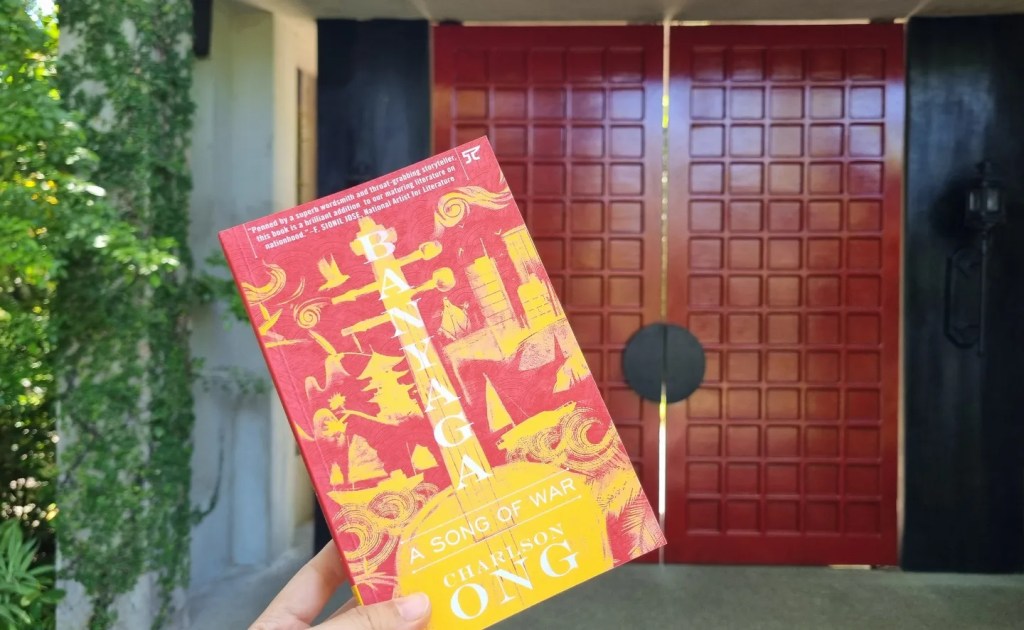
Charlson Ong: A Song of War

Stunning. Cinematic. Unforgettable.

Banyaga: A Song of War weaves melodies, threads, saturated shades of scarlet, unattainable indigo, and moonlight yellow into the rich literary tapestry of our nation, and gives prominence to an underwritten perspective of Philippine history and literature — that of the Tsinoys, the Chinese Filipino.

The vivid imagery (beginning with Chinese boys caught in a brawl that results in a sworn brotherhood, on a ship heading for Manila) that remains consistent up to its plaintive ending in Manila Bay almost a century later; the fleshed-out personalities and exuberance of the characters; and the nonlinear narrative, brilliantly interlaced throughout the American occupation until the post-Martial Law era, tempts the mind’s eye to read this with a Wong Kar-Wai filter. With the acculturation of Chinese and Filipino traditions, and the subtle exposé on the workings of the government, economy, and political unrest as a backdrop, all of these lend to it a fullness of texture and quality that I have yet to encounter in any other Filipino novel published in the 2000s.

Banyaga, which means “foreigner” in our language, follows the lives of Ah Puy, Ah Sun, Ah Beng, and Ah Tin who hoped to escape poverty and political turmoil in China. Their dreams for better lives are soon trumped when they are rejected by relatives and family upon their arrival in Manila. As they are forced to fend for themselves and survive in a strange land that would become their only home, they will come to be known as Hilario Ong, Samuel Lee Basa, Antonio Limpoco y Palmero, and Fernando de Lolariaga. The different surnames suggest that the trajectory of their lives takes different turns, but an invisible thread would always bind the lives of the four sworn brothers and their families to each other and the course of Philippine history.

This novel has indelible scenes that will have you gasping in shock, push you on the edge of your seat, and break your heart repeatedly throughout the span of three hundred and seventy-three pages, but most of all, it will lead you to ponder on nationhood and leave you in awe of the heights that our nation’s literature has achieved.

Hanne Orstavik: Ti Amo

And I’ve written fourteen novels, and if there’s one thing my writing has to be, for me, it has to be truthful. What I write has to be truthful. I’ve wanted that to apply to my whole life too, in my relationships with other people, my relationship with myself.

My first experience with Hanne Ørstavik’s writing was in 2022 with her novel, Love, wherein she seemed to have invented a literary equivalent of the Shepard tone — that auditory illusion used in film soundtracks to create a palpable suspense and disquiet. With a narrative that demanded complete attention, it revealed a writer in full command of form and style.

Expecting another work of sparse and exacting Nordic prose, I was surprised to be met with vulnerability and painful honesty in Ti Amo. It cannot be more different than Love. Expertly calculated tension dominated Love, Ti Amo announces death candidly right from the beginning and nothing is veiled. 

Love was fiction, Ti Amo is not, and I cannot somehow bring myself to judge a work by someone writing through her husband’s terminal illness. It is a book about life, death, and writing, and nothing describes this book better than the author’s own description of the marble pillars in Ravenna’s Basilica di San Vitale.

“In the San Vitale — the way the great marble blocks of the pillars possess a quieter beauty than the glittering mosaics. The mottled markings in the marble are just there, silent and displayed, defenseless, and what was hidden within the stone, the veins, the figures they trace, is exposed now for all time, laid bare, halted in once so sweeping, now dissected movements through the stone. And what we see is the cross section, the wound, and the beauty of what simply exists, neither devised nor constructed, merely disclosed.”

I thought wrong when I surmised it was written as closure. (As if grief had closure!) Of the wound and the beauty of what exists, it is simply, and not too simply, a disclosure.

Nancy Mitford: Frederick the Great

The only thing I knew about Frederick the Great was that he once met Bach, and the Prussian king gave the composer a musical theme on which the sixteen pieces of Bach’s The Musical Offering are based. 

Thanks to the author’s gossipy nature, I think I’m knowing more than I want to. Haha! Kidding aside, reading Nancy Mitford’s historical biographies is an attempt to brush up on European history and not neglect it completely while I am on this predominantly eastbound literary journey.

Mitford seems to be more reflective here and I’ve found it to have more depth than The Sun King, but as a musician I am slightly disappointed that little is said about the momentous encounter with Bach. This book, however, covers a great deal about Frederick’s fraught friendship with his most famous contemporary, Voltaire.

Being controversial herself, Mitford turns the spotlight on Europe’s controversial figures. But without being too academic, she seems to provide the right dose that I’m currently looking for. I like the fact that I don’t end up liking her subjects any better or liking them any less; I just end up learning a little bit more and having a less fuzzy idea of the Europe just before the French Revolution.

Someone recently asked me to recommend a book on world history. That’s the thing: There’s not just one book. One just has to read as much as they can. And that is what we shall do.

Wilfrido D. Nolledo: But for the Lovers

Before Salman Rushdie there was Wilfrido Nolledo. We find the same clever wordplay, but Nolledo reigns supreme in five languages and a couple of Filipino dialects or more, inclusive of Italian musical terms and Tagalog (they did not call this a feat of language for nothing); there’s that humor that catches by surprise when misery is expected; political caricatures and blaspheming characters that provoke fatwas from the high priests of governments; and those vulgarities that examine moral codes as though asking whether we’d also find war and injustice obscene.

Thanks to countless movies, documentaries, and novels, my generation can conjure mental images of what Paris and other European cities looked like in the final days of WWII, but only few can picture the desolation and the confusion of Manila when it was the bomb-ridden chessboard of the imperial powers. Nolledo encapsulates it for us. But one must not expect a literary Amorsolo, because here is a postmodern Hieronymus Bosch.

“And won’t we be doing the reader an injustice by presuming he can’t digest such stuff?” Nolledo asks in response to a suggestion to cut the manuscript to keep readers interested. And so, signifying that it was written not to sell but for art, he gives it to us, gives it to us hard.

It is not going to be everyone’s cup of barako. It is an explosive halo-halo that is difficult to swallow at times. A revolution on one’s literary tastebuds. Before Rushdie there was Nolledo, but I am only discovering this now. It’s time we did.

And yes, I read this for Valentine’s. Haha!

The Man Who Counted: A Collection of Mathematical Adventures by Malba Tahan

Without dreams or imagination, science is impoverished. It is lifeless.

I love how this delightful read, without being impossibly cerebral, mixes simple life and math lessons while reminding the reader of the non-Western heritage of mathematics.

Interestingly, it reflects a time in the Islamic Golden Age when wise men believed religion and science could coexist.

Also, the illustrations are wonderful!

Arabian Nights with a better moral aim and math-themed? Count me in! (Sorry, I just had to. Haha!)