October’s Horrors

The Ex Libris October horror theme and Krasznahorkai being awarded the Nobel Prize in Literature seemed to point to one title on my shelf for my book of choice, the author’s debut novel, Satantago. Although set in post-communist Hungary, it reminds me of another Nobel laureate’s masterpiece, Olga Tokarczuk’s Books of Jakob, in the way the direst of circumstances require a savior and people recklessly fall for a con man that they believe could fill the longing for a messianic figure, inevitably leading to grim consequences. Its chapter numbers reveal a curious anomaly: Upon reaching VI, it counts down to I, apparently resembling the tango steps that go six steps forward and then six steps backward. If I’m right in thinking that this devilish dance, this Satantango, is a depiction of the cycles of history and society, then it is a rather bleak portrayal of humankind, but it is not far from the truth.

Thankfully, Krasznahorkai’s eerie shadows and unrelenting rain were tempered by Lasco’s ever hopeful outlook, despite raising questions about uncomfortable truths, demanding accountability and transparency from our leaders, making us understand that a crime against the environment is violence, while simultaneously encouraging moral response rather than moral panic. This reader prescribes Lasco’s Second Opinion for a healthy and much-needed dose of social medicine.

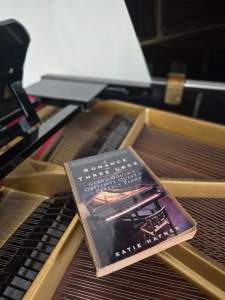
Aboard the Voyager I is a “golden record,” compiled by a NASA committee chaired by Carl Sagan, that includes Gould’s recording of Bach’s Prelude and Fugue in C. Gould’s piano tuner is quoted to have said, “…it was like a dream. There’s Bach writing the music, Glenn is playing the music, and it’s my tuning that’s giving it voice. And it’s going somewhere in outer space.” A Romance on Three Legs is an essential and enriching read for pianists that, as promised, chronicles Gould’s “obsessive quest for the perfect piano” but goes beyond his brilliance and his eccentricities and ventures deep into the world of pianos and uncommonly highlights the often undervalued contribution of piano technicians. For this reading pianist, this book was read in the key of fascination.

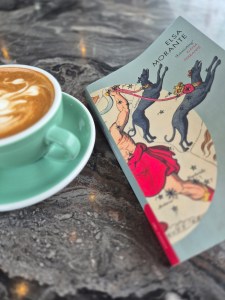
But it was Arturo’s Island that exceeded my expectations. It has the allure, the perturbing quality, and the devastating effect of a Greek tragedy — where the tragedy, if one reads deeper into it, is to live without love, especially a mother’s love. (Now that 800-page NYRB doesn’t seem so daunting anymore. Now I understand why every significant Italian author reveres Morante.) This book has prose so lush that I want to steep in it all day!

We did not have to seek after books that portrayed the supernatural; we only had to look into literature depicting history, current events, corrupt politicians, and human nature to be reminded that there is horror enough in the real world. But it is through reading that we can try to make sense of it all.

Robert Graves: I, Claudius

In the heat of the 2022 election season, I read two of literature’s Roman Empire trinity: Marguerite Yourcenar’s Memoirs of Hadrian and John Williams’ Augustus. It was, perhaps, a subconscious response to how my nation’s “history” was being crafted to suit narratives while facts were being doubted and ridiculed.

The novels led me to plead that if we dare to question history, we need also the courage to question our motives and ask ourselves what kind of people our convictions empower. That we have the son of the dictator as president is proof that my plea was futile.

As political temperatures rise once again, simply because the very same people who refused to listen to history are stewing in the consequence of their choices, I found myself drawn to Robert Graves’ I, Claudius.

Writers are discouraged to begin any piece of writing with “I”. It’s clever how this book pretends to break that rule with its title and then proceeds to construct the story, not of one man, but of an empire. While I prefer the elegant prose of Hadrian and favor the compassion with which Augustus treats its subjects, especially the women, Claudius completes the trinity with its wit and brilliant insight into the inner workings of politics, power, and the process of writing history.


“…there are two ways of writing history: one is to persuade men to virtue and the other is to compel men to truth… and perhaps they are not irreconcilable.”


I, Claudius renders many books inconsequential and makes a reader wonder why they beat around the bush before undertaking it. The OG Game of Thrones but better, if Robert Graves will allow me such language.

Reading about corrupt rulers draining the treasury, entertaining the masses with shallow amusements and feeding them with false narratives, and all the political maneuvering and violence tells me that we have not come very far. The only difference is that, at a time when the Roman Empire transitioned from representative democracy to centralized imperial authority, the people were not to blame for electing crooks. 

Cheon Myeong-Kwan: Whale

This book does not say anything about Egon Schiele. But it very well could have been written by him, had he been a novelist instead of a painter.

An unexpected turn inside the Belvedere Museum in Vienna once brought me face to face with enormous paintings by Schiele. When you go to a place for Klimt and be confronted by Schiele, it is a staggering experience you will not easily forget.

Haunting eyes, naked and exaggerated anatomies, comical expressions, grotesque scenes, and dark humor — whether you like it or not, you cannot look away. Even if you eventually manage to, you will be forced to take another look, and another.

Because by some bizarre and compelling artistry, the artist wraps you around a strangely proportioned finger, the way Cheon Myeong-Kwan does in this whale of a tale.

So, do not let the cover design of the Archipelago Books edition with its happy colors fool you. Or maybe, let it fool you; so that it startles you, the way some skillful art and literature should. Maybe take that turn and be confronted by something you normally would not seek out.

Oftentimes, the art that we find grotesque are missives from a mind sensitive to how the world truly operates. For isn’t this book a critique on justice, economic, and social systems; and even on American influence through Hollywood? And aren’t these political caricatures in the guise of troubling characters and a metafictional storyline?

I would think twice before criticizing this book for what it seems on the surface, lest I become akin to that judge in 1912 who set fire to one of Schiele’s drawings at a trial wherein Schiele was accused of indecency.


“Reader, you will believe what you want to believe. That’s all there is to it.”

Mathias Énard: Street of Thieves

Maybe if I were not repulsed by Lakhdar who reminded me so much of the young men who catcalled or boldly approached me for my contact details on a solo trip to Morocco, I would have esteemed Street of Thieves better.  At the same time, I also checked myself if it was because I was uncomfortable with the portrayal of the darker streets that a female solo traveller usually circumvents, and which shatter more romantic notions of Morocco, Tunisia, and Spain. After all, the truth hurts, even when it concerns favorite or dream destinations.

“…I had realized that afternoon, Judit’s Tangier did not coincide with mine. She saw the international city, Spanish, French, American; she knew Paul Bowles, Tennessee Williams, and William Burroughs, so many authors whose remote names vaguely reminded me of something, but about whom I knew nothing.”

Still, I’m afraid I cannot agree with the blurb claiming that this novel “may take Zone’s place in Christophe Claro’s bold pronouncement that Énard’s earlier work is ‘the novel of the decade, if not of the century.’” But that’s not to say that this book doesn’t have its merits. The fact that I continued reading up to the chilling last page is proof of Énard’s prowess. The story clarifies the youth’s discontent and anti-government sentiments in the wake of the Arab Spring and the anti-austerity movement of the indignados in Spain. This one has its own special niche in political literature of the Maghreb. 

“‘All young people are like me,’ I added. “The Islamists are old conservatives who steal our religion from us when it should belong to everyone. All they offer are prohibitions and repression. The Arab Left are old union members who are always too late for a strike. Who’s going to represent me?”

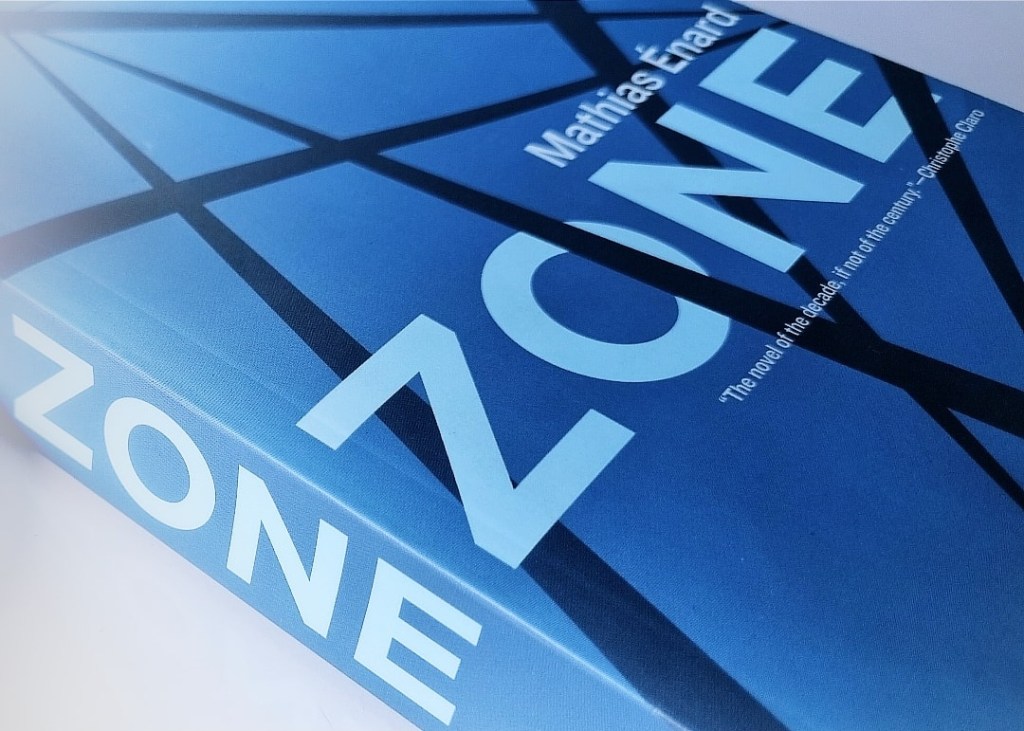
I simply think it falls short of the enigmatic and beautiful prose of Tell Them of Battles, Kings, and Elephants; incomparable to Compass that holds certain passages that mean to me more than I can express; and quite a distance away from the extremely impressive threnody for the last century that is Zone.

If there’s one thing that the main character of Street of Thieves definitely got right, it is this: “I think today of that dark parenthesis, that first imprisonment in Algeciras, that antechamber, when around me spin the lost ones, walking, blind, without the help of books…” How dark, indeed, to go through life without books.

Sevgi Soysal: Dawn & Yashar Kemal: Memed, My Hawk

When Archipelago Books released their edition of Dawn, I immediately placed an order and entertained myself with Memed, My Hawk and a few other books while waiting for its arrival. This is my second NYRB/Archipelago book-pairing and I’m finding these serendipitous duos to be highly rewarding.

Maureen Freely, whose translations of works by Sabahattin Ali and Orhan Pamuk I have enjoyed, pens an insightful preface to Dawn that enlightens readers about Sevgi Soysal’s life and the paradox in Turkish women’s rights that she was born into; and for the 2005 NYRB edition of Memed, My Hawk, launched on the fiftieth anniversary of its publication, Yashar Kemal himself wrote the introduction wherein he reflects on people whose destiny it is to revolt.

Little did I know that the two Turkish works would complement each other and provide a rare glimpse of the Çukurova plain when it was still a setting for poor villagers, cruel landlords, bandits, orchards, and fields of thistles in Memed, My Hawk, and the same district on the cusp of urbanization in Dawn — far removed from the glorious domes and minarets of Istanbul that are more familiar to the international reader but closer to the woes of the working class.

Kemal (1923-2015) and Soysal (1936-1976) were no strangers to arrests and serving prison time for political activism. Memed, My Hawk is Kemal’s first novel, and Dawn Soysal’s last. But the symmetries are endless. The lives that both authors lived as leftist intellectuals and the fights they fought against authoritarianism and injustice are fervently manifested in these works.

The word “leftist” might cause some to flinch as it comes with a lot of baggage and it is deplorable how the mere association to the word can lead to “red-tagging” in my country; but the flawed and deeply human characters in both works reveal various shades of this problematic term that, stripped to its purest state, is simply the pursuit of equality, equity, basic human rights, liberty, and justice.

“Since when did we start thinking that struggling is a crime, and doing nothing was innocence and brilliance?” — Sevgi Soysal, Dawn

Mathias Énard: Zone

Tell them of battles, kings, and elephants,

without the elegance, without the elephants,

only battles, cruel kings, and pawns,

“Comrade, one last handshake before the end

of the world,” says a madman

at the station in Milan,

Francis Servain Mirković is burdened

by the remark, burdened

by the contents

of his suitcase, by the contents

of his mind,

as the train steers to Rome,

it is not scenery that flash by,

it is his life; no home,

Balkan conscript, a spy,

dysfunctional lover, son,

former informer

in the Zone, epicenter

of my literary quakes,

“the Zone, land of the wrathful savage

gods who have been clashing

endlessly

since the Bronze Age,” but he is

convinced that tomorrow he will

be a new man, as the train moves

memory

is a threnody

of the guilt of nations,

of the sins of the world,

of over a century’s worth

of savagery,

a brutal montage

of conflict, training our eyes to truths 

that we prefer to turn away from, a book

to make our consciences flinch, no one

is ever prepared

for official truth

says our antihero, this man,

a product of a history

of violence,

a tragic aspect

of a portrait

of a man

of our time.

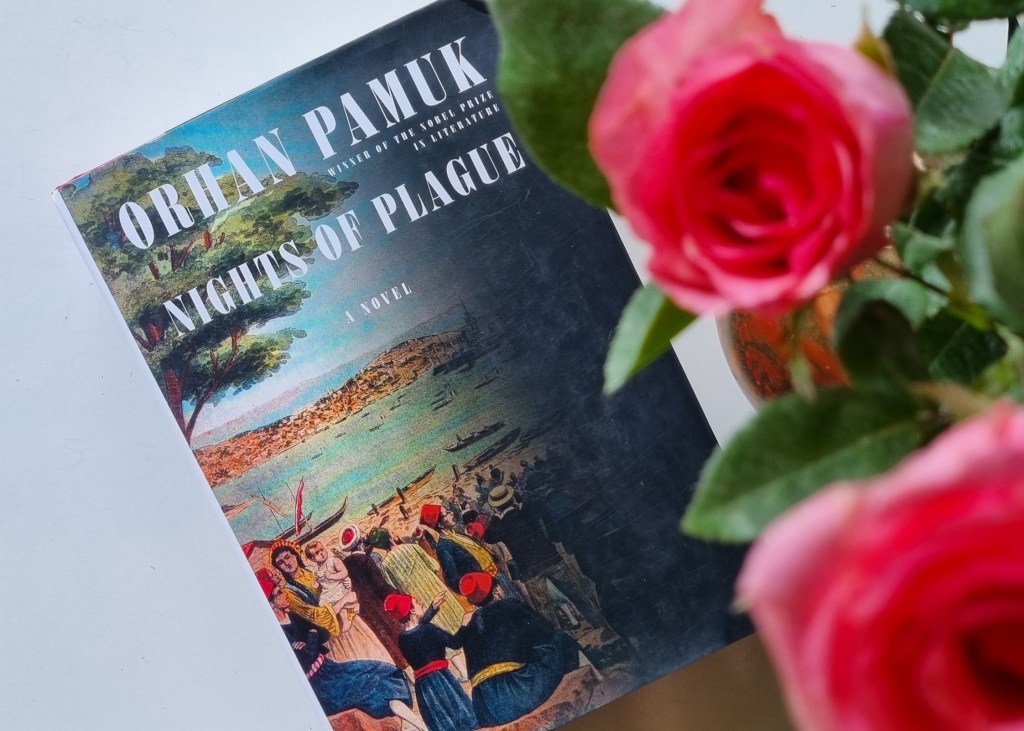
Orhan Pamuk: Nights of Plague

Orhan Pamuk’s longest novel to date unravels with a pace that tends to linger, to wit: it is not for readers who are in a hurry. For that reason, I found it strangely refreshing. Strange because it is a plague narrative that is not meant to be refreshing, refreshing because of the reading experience it provided; defiant of the modern reader’s preference for a literary quick fix, and defiant of our silly reading goals that have more to do with the number of books rather than the languid relishing in an author’s descriptive prowess.

Perhaps I simply feel at home in the expression of an author whose mind is a museum of melancholy, but I am now sensing that part of the allure is in how his books are written for their own sake — written because he felt they needed to be written rather than written for their salability. Isn’t that pure art?

Set in 1901, in the fictional island of Mingheria, “on the route between Istanbul and Alexandria,” it is a curious deviation from a usual Pamuk novel that stays within reach of Istanbul. While Snow is set farther in eastern Turkey, an invented island between Crete and Cyprus is still a surprising backdrop for seasoned Pamuk readers; but only until we realize that the creation of Mingheria allows for a certain leverage and freedom for political criticism. Methinks Mingheria speaks more about Turkey than it does about an imaginary island nation in 1901. 

This novel can teach a thing or two about running a nation during a plague; about epidemiology; how to deal with resistance from different sectors against quarantine measures; how plagues do not distinguish between Christian or Muslim; how failed attempts at containing a plague can fan the flames of a revolution; how revolutions can be exploited; the similarities between solving a murder and stopping an epidemic; and living or loving through the sickness and political ferment. It is about plagues, revolutions, nationalism, the administrative and language reforms that ensue, the fickleness of governments, about the accidents of history, how history is made, and how history is written.

It echoes Camus’ The Plague in the way that the narrator’s significance is revealed only at the end and also for the chilling reminder that plagues reappear throughout history “for the bane and enlightenment of men”.

Unfortunately, man easily forgets, and unwittingly asks to be reminded ever so often.

Halldór Laxness: Wayward Heroes

“With these words, she drew back the bolts that Kolbakur had made to fasten her window frame, pulled the frame aside, and let the man into her bower. Images of gods were carved on the bower’s pillars and stiles and rails of her chair, but they were only half done — Christianity having come to Iceland before the artist completed his work.”

And with this fleeting imagery, a beautiful and ingenious depiction of the religious landscape in which the story is set. An age on the cusp between the fading world of paganism and the force of a new religion of peace, ironically preached by adventurers and men waging selfish crusades in the name of Christ. It was this melancholy conflict that I heard playing as a soundtrack throughout its pages.


It seemed revolutionary when Hollywood recently began to highlight the dark side of legends and heroes. These have become sombre reminders that even superhuman abilities are not enough to protect one from ego, the perilous thirst for fame, power, revenge, and from mere mortals’ tragedies.

Then there’s Halldór Laxness who had Wayward Heroes published way back in 1952, part of the body of work that earned him the Nobel Prize in 1955.

Written in the style of ancient Icelandic sagas, it is replete with violence, adventures amorous and otherwise, and the barbarism of medieval Europe. But how wonderfully Laxness refashions the old to become accessible and relevant to the new.

On the surface, these are the exploits of blood-brothers, Þorgeir and Þormóður. One can read it as such and it will remain entertaining. But one can always choose to go beyond that and take note of the language, the veiled ironies, how wit and sarcasm remain elegant, and the subtleties that only a master can pull off, and how this story remains especially timeless for being a cautionary tale about the heroes, kings, and causes to whom and to which we pledge fealty.

But do we ever listen?

Farnoosh Moshiri: At the Wall of the Almighty

“What did I do with my hands as a free man?” he asks himself.


A bearded guard leads him from his solitary confinement to another cell. He is on a leash, and he knows that he is in the central prison of the Holy Republic. This is all he knows. Severe torture has made him forget everything else, including his name.

With such a dismal opening, one can excuse why I shelved this, the heaviest volume on my Iran book stack, for over a year despite my deep fascination for the region and its extremely underrated writers.

My personal reading prompt for September was to go through an NYRB editions reading spree. But is there a more pressing reading prompt than the ongoing protests in Iran? I realize that we — as readers, and through our reading choices — have the power to call attention to things happening across the world and to rally with those who need a voice.

I instantly felt it was time to meet this unnamed character who is forced to admit guilt to an unknown sin that, along with his name, he cannot recall. Through daily episodes of psychological and physical torture, he slips in and out of consciousness, reality and dreams. Fragments of his childhood and of his life tease his sanity, the key players of society whose ideologies and actions lead to the revolution take shape in his mind, and the story unfolds. He begins to remember Sahar, a twin sister whom he loved deeply; and by and by his desire to die begins to be replaced by the desire to know what happened to her.

‘Sahar is dawn,’ I say, ‘the end of darkness, when the sun comes out. Daylight trapped in night.’

Categorized as a work of magic realism, I find that the magic realism is, at first, subdued, but one which crescendoes into an anarchy. Readers who are not enthusiasts of the genre should not be dissuaded, however, because we eventually recognize that it is merely our tortured character’s memories and hallucinations merging with reality, metaphors, and childhood fantasies.

This is Farnoosh Moshiri’s first novel, but its depth and calibre surpass many works by more established writers. I have not read a more harrowing ending, but I also have not read a more excellent Iranian novel.

Here is an apt literary device condemning oppressive governments that incapacitate people to distinguish nightmare from reality, and condemning regimes that engender systemic mind-conditioning that edge a nation into losing its identity — those tyrannies that ultimately coerce you into forgetting who you are.


What are we doing with our hands as free men and women; what are we doing with freedom? I ask myself.

First of all, we defend it.

Nawal El Saadawi: The Fall of the Imam

“No one of you has ever possessed my mind. No one. And no matter how often you took my body my mind was always far away out of your reach, like the eye of the sun during the day, like the eye of the sky at night.”

In a culture where a buffalo has more worth than a woman, where love and marriage are usually two different things, where there is a disconnect between religious devotion and actions, where a man has the freedom to sin but where a woman can get stoned for being a victim, Nawal treads dangerously with her words.

She throws difficult questions at religion and those who are in power, beats us out of complacency and privilege, and prods us to be angry at injustice and inequality.

This is not the book I would recommend to someone who is new to her writings, but a seasoned Nawal reader would probably consider this an epitome of her literary prowess.

Prose-wise, it is the most ornate. Content-wise, it is the most potent. Form-wise, it is her most sophisticated. And wading through all of that is not so easy.

Different narrators for each chapter can get disorienting; the victims narrate, the criminals narrate, so do the dead, and oftentimes about the same incident. When it comes to the women, one can get confused trying to identify whether it is the mother speaking, or the daughter, or the new wife, or the first wife, or the mistress, or the sister. But I realize the intention: It is to emphasize the fact that they are women, and because they are women they suffer all the same.

“Like in The Thousand and One Nights, the beginning of each tale merged with the end of the one which had preceded it, like the night merges with the day…” And then she draws us away from Scheherazade to a lesser-viewed aspect of this literary heritage and culture, and points the spotlight at the hypocrisy of King Shahryar.

Through it all, the question that seems to reverberate loudest in my mind is this: What can we do if the leaders, those who are in power, the ones assigned to mete out judgment, are the perpetrators of the crime?

Because at times, they are. Not only in some culture foreign to us. But in ours, too.