Significant Palestinian literature, to this reader, seems to indirectly and collectively ask the Other this particular question: We acknowledge your pain, do you acknowledge ours?
The frustration and the trouble stem from the fact that the answer has often been “no”.
Although worded differently and more succinctly, this book asks the same question, alongside all the other important questions concerning Palestine and Israel. It is Israeli-Palestinian Conflict 101 for those who cannot decide on what to think or say about the whole thing.
Without the dramatic and emotional pronouncements of novels, Edward Said organizes rational thinking, facts, and hopeful solutions with the most concise, coherent, and decisive voice I have ever heard on the Palestinian predicament. All that, while being understanding and un-dismissive of Jewish history and concerns.
This book is evidence that it is not so hard to understand the question of Palestine — but only if one is willing to understand and undo years of hearing only one side. It is also the perfect antidote to well-intentioned and shallow sloganeering. Never have I been so impelled to give a book a standing ovation.
But this book does not need my commentary. It only needs to be read.
To celebrate my 40th in Iran, that was the dream. It was supposed to be Iran.
But life often has a knack of improvising on my dreams. Flights to Iran were suspended as I was about to book tickets; and it wouldn’t have been good for my parents’ hearts had I forced it at this volatile time in history.
Iran chose to remain elusive. Then I was reminded of a line from Ali & Nino: “Surely love is the same in Georgia as in Iran.” Georgia, or Gurjistan, was one of the Persian “stans,” after all, and was under Persian suzerainty for centuries. And surely, if love is, as they say, the same in Georgia as in Iran, then perhaps celebrating 40 in Georgia wouldn’t be too different either? (“But there are protests,” they said. “At least there are no missiles,” I answered.)
The time had come for Georgia to be lived, aside from being read — for the literature of the Caucasus to be finally given the chance to lend depth and texture to my travels, and to the narrative of my experience.
Doha – Tbilisi Flight RouteFlying over ShirazEven Iran’s skies are incomparableThe Zagros Mountains peeking through the clouds!!!Flying over IsfahanTwinkling lights of Armenia
Little did I know that the flight route from Doha to Tbilisi would fly over Shiraz and Isfahan. As if on cue, there was a sudden otherworldly sunset display through the airplane window just as we flew over Isfahan. Instead of Isfahan’s Eternal Flames, I was given the sun. And through the clouds, I saw traces of Isfahan down below; appearing to reassure me that it would be there waiting until the right time came along.
Then a full moon ushered me to Georgia. And I soon learned that Georgia, for a nation so tiny, is a generous country — not just in their wine servings, but in beauty and unforgettable experiences. (Maybe therein lies the advantage of smaller countries: beauty is concentrated, undiluted, and undiffused.) All at once, Georgia felt right.
Hopefully, someday, Iran will feel right, too. But at this particular point in life, Georgia is exactly what I needed. The trip was a gift that I’ll always be grateful for — a melding of deeply beautiful things and non-things, as if traveling knew no other way to be.
I’ve been asked what being forty feels like. With books (and maybe an occasional glass of wine haha) by my side, forty feels right. 🤍
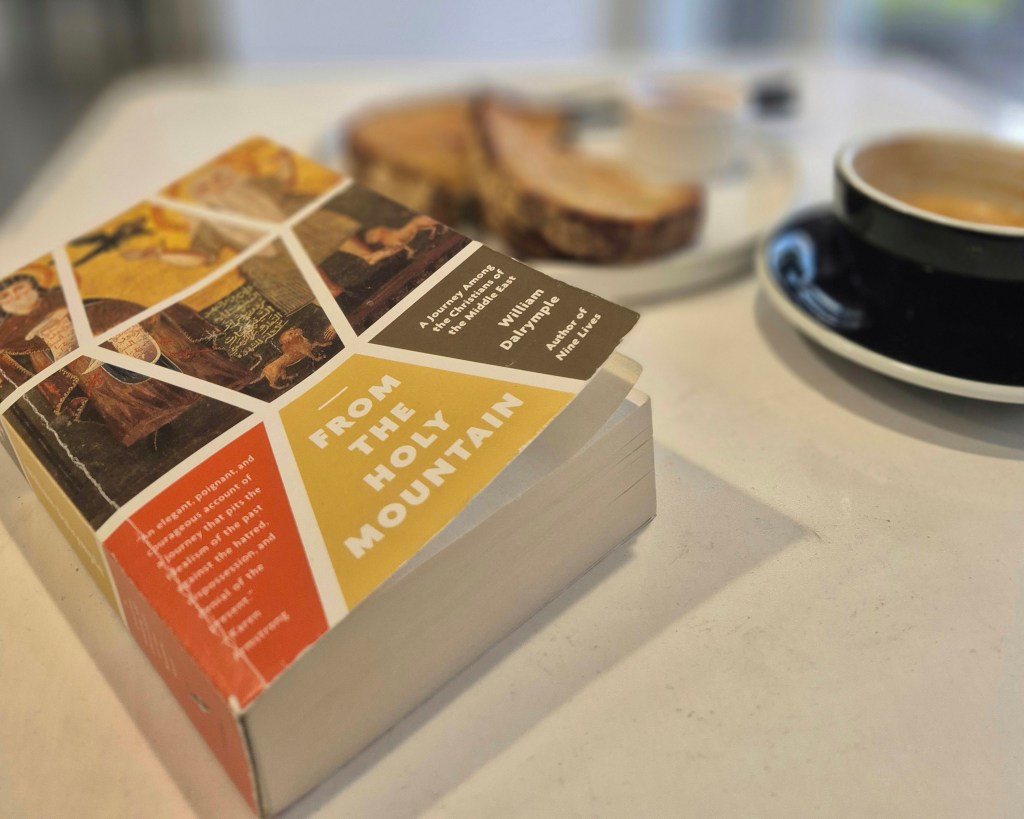
“Today the West often views Islam as a civilization very different from and indeed innately hostile to Christianity. Only when you travel in Christianity’s Eastern homelands do you realize how closely the two religions are really linked. For the former grew directly out of the latter and still, to this day, embodies many aspects and practices of the early Christian world now lost in Christianity’s modern incarnation… Certainly if John Moschos were to come back today it is likely that he would find much more that was familiar in the practices of a modern Muslim Sufi than he would with those of, say, a contemporary American Evangelical. Yet this simple truth has been lost by our tendency to think of Christianity as a Western religion rather than the Oriental faith it actually is. Moreover the modern demonization of Islam in the West, and the recent growth of Muslim fundamentalism (itself in many ways a reaction to the West’s repeated humiliation of the muslim world), have led to an atmosphere where few are aware of, or indeed wish to be aware of, the profound kinship of Christianity and Islam.” — William Dalrymple, From the Holy Mountain
Hagia Sophia, followed by mosaics, lots of them: These are the things that initially come to mind whenever I encounter the word “Byzantine,” and I suspect I am not alone in this. And because it is art that outlives the rise and fall of empires, there is almost nothing else we can clearly visualize about Byzantine beyond its art, architecture, and its leading players in history.
“The sacred and aristocratic nature of Byzantine art means that we have very little idea of what the early Byzantine peasant or shopkeeper looked like; we have even less idea of what he thought, what he longed for, what he loved or what he hated,” writes William Dalrymple.
But once upon a time, circa 580 AD, a monk called John Moschos traveled with Sophronius the Sophist across the empire including the three greatest Byzantine metropolises — Constantinople, Antioch, Alexandria — and wrote about it. In a book called Spiritual Meadow, Moschos detailed what he saw, whom he met, the heresies he witnessed, and stories about common folk, “the sort who normally slip through the net cast by the historian.”
It was this book that Dalrymple used as a guide to travel through the eastern Mediterranean world in 1994, a world that is now predominantly Islamic, but a world that once was predominantly Christian (not in deed, of course, but by religious affiliation) for hundreds of years, from the age of Constantine to the dawn of Islam in the 7th century.
This journey among the dwindling population of Eastern Christians begins in the Monastery of Iviron in Mount Athos, an autonomous region in Greece that is under the ecclesiastical jurisdiction of the Ecumenical Patriarch of Constantinople. To this day, women are prohibited from entering the monastic community. It is, therefore, a place I cannot travel to even if I wanted to.
And this is the service Dalrymple does for his readers: To visit places inaccessible to us, to experience cultures and traditions unheard of and never to be seen again, “to do what no future generation of travelers would be able to do: to see wherever possible what Moschos and Sophronius had seen, to sleep in the same monasteries, to pray under the same frescoes and mosaics, to discover what was left, and to witness what was in effect the last ebbing twilight of Byzantium,” and then tell the tale. (A sad validation of this slightly conceited claim is the wistful realization that most of the Syrian Byzantine sites mentioned in this book became casualties of war several years after its publication.)
The stunning architecture that William Dalrymple describes with an eye for detail and a penchant for lyricism; the coming across of endangered languages such as Turoyo, the modern Aramaic spoken in the Tur Abdin region in southeastern Turkey and northern Syria, “where Jesus could expect to be understood if he came back tomorrow”; the discovery of a musical mystery, an ancient form of plainsong in Syria that could possibly be the direct antecedent of the Gregorian chant; the Eastern roots of Celtic illuminating art and how the trajectory of Renaissance art owes it to John of Damascus, an Arab Christian monk; the author’s observation that “Muslims appear to have derived their techniques of worship from existing Christian practice” and that “Islam and the Eastern Christians have retained the original early convention; it is the Western Christians who have broken with sacred tradition”; perspectives on the Armenian genocide, the Kurdish conflict, the Lebanese Civil War, and the Israeli–Palestinian situation at the time; the realization that Byzantine Palestine was dominated by Christians and for eight hundred years the Jewish community was a minority; accounts of Muslims praying in Eastern churches, “the Eastern Christians and the Muslims have lived side by side for nearly one and a half millennia, and have been able to do so due to a degree of mutual tolerance and shared customs unimaginable in the solidly Christian West”; and most remarkably, the awareness that, oftentimes, people are not as hostile and as divided as governments and ideologies want us to believe; these are a few of the things that will have readers brimming by the time they get to the last page.
This is essential Dalrymple right here — a book that will leave one richer for having read it.
Thank you, dear Anna, for this most wonderful recommendation! 🤍
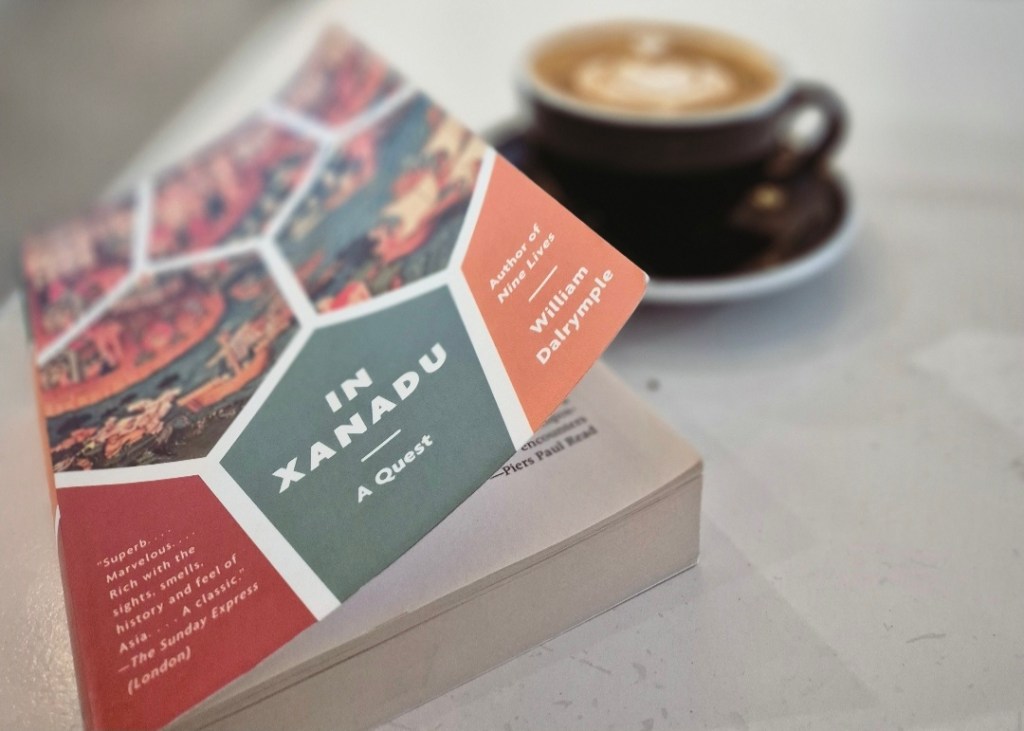
Trace Marco Polo’s 700-year-old passage from Jerusalem to the ruins of Kublai Khan’s summer palace in Xanadu? “Insane!” most people would say, as this journey runs along war-torn lands and the route bestudded with disputed territories.
But that is exactly what twenty-one-year-old William Dalrymple set out to do in 1986 under a travel scholarship. Thankfully, he lived to tell the tale and published this book, his first, in 1989.
The first several pages impressively encapsulates both the divisiveness and the beauty within Jerusalem: “If history repeats itself anywhere, it does so in Jerusalem. […] For two thousand years Jerusalem has brought out the least attractive qualities in every race that has lived here. The Holy City has had more atrocities committed in it, more consistently, than any other town in the world. Sacred to three religions, the city has witnessed the worst intolerance and self-righteousness of all of them. […] It is only when you get here and have a moment to sit, and think, and look back, that you come to realize… how beautiful Jerusalem still is.” With a few hundred pages left after reading such lines, and a dreamy itinerary that includes Cyprus, Syria, Eastern Turkey, Iran, Afghanistan, Pakistan, India, Kashgar — a city in the Xinjiang Uyghur Autonomous Region, Peking, and Xanadu in Inner Mongolia, a reader could only look forward to the adventure.
The Dalrymple of In Xanadu, however, is a far cry from the more perceptive and compassionate Dalrymple who affected me deeply in the pages of Nine Lives last June. It is understandable, considering the twenty-year publication gap between the two books. (In Xanadu, 1989; Nine Lives, 2009.)
The author admits, in the introduction of the 25th anniversary edition of In Xanadu, how he still feels “deeply ambiguous” about his first book. “For In Xanadu records the impressions, prejudices and enthusiasms of a very young, naïve and deeply Anglocentric undergraduate. Indeed my 21 year old self – bumptious, cocky and self-confident, quick to judge and embarrassingly slow to hesitate before stereotyping entire nations – is a person I now feel mildly disapproving of: like some smugly self-important but charming nephew who you can’t quite disown, but feel like giving a good tight slap to, or at least cutting down to size, for his own good.”
He was but a boy whose judgments were not too tolerant and whose remarks were yet impervious to today’s hyper political correctness. In spite of that, this is probably Dalrymple in his funniest and most candid. If Nine Lives found me crying inside a room of a Jaipur haveli, In Xanadu found me chuckling in public several times. For all his faults of youth, I think we can still count on him being a more reliable and entertaining narrator than Marco Polo.
As a fan, I find it encouraging to be able to track, through his books, how much his travels, his experiences, and his eagerness to learn and inform has transfigured him into the literary hero that he is today. It is comforting to be able to observe how our traveling intellectual icons grow. That way we are reminded that they are human and their writings are those we can grow with. Either that, or we’ll come to realize that we’ve somehow grown, too.
By reading In Xanadu, one is assured that the reading journey with Dalrymple can only get better from here. Who else is looking forward to getting their hands on The Golden Road?
“That’s the thing about love, it likes to leave its mark.” — Nathalie Handal
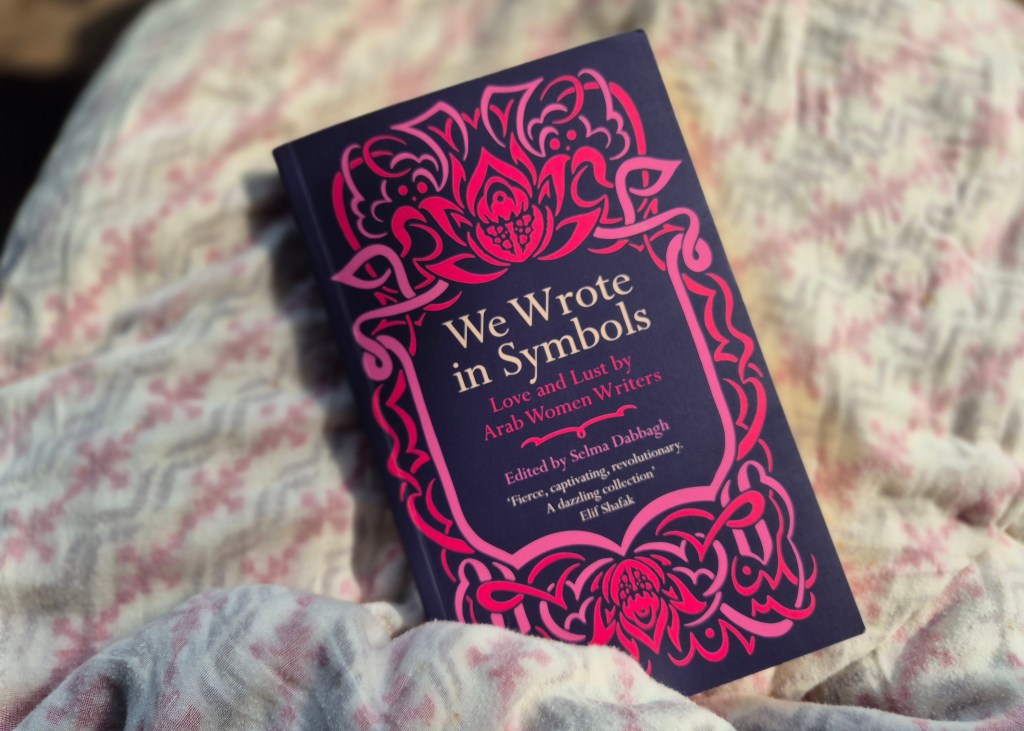
This collection of writings by Arab women turned out to have more erotic passages than I expected, and the conservative reader who cannot appreciate this as an act of defiance against authoritarian patriarchal societies might prefer to stay away.
I value this book as a reminder, as the introduction mentions, of how women were writing in Arabic centuries before women began writing in English; and as a reminder of the treasure troves of Arabic literature that hardly make it into our consciousness simply because they are not on the Western radar.
Poems by Arab women throughout the ages pepper this collection alongside contemporary essays and excerpts from novels, including those by Palestinian authors, Adania Shibli, Suad Amiry, and Naomi Shihab Nye. The translations are no less significant as it has works by Man Booker International Prize awardee, Marilyn Booth, and Ernaux translator, Sophie Lewis.
More than a treasury of sensuality, I see this book as a celebration of women who strive to steer the gaze away from centuries of male perspective, and a celebration of women in translation, but who are translating forceful statements beyond mere words.
What I think will stay with me, however, is a line from Tunisian-French author, Colette Fellous — an imagery of two lovers’ bodies, likened to a closing book.
“It is human kindness, rather than religion or nationality, that conquers the human heart.”
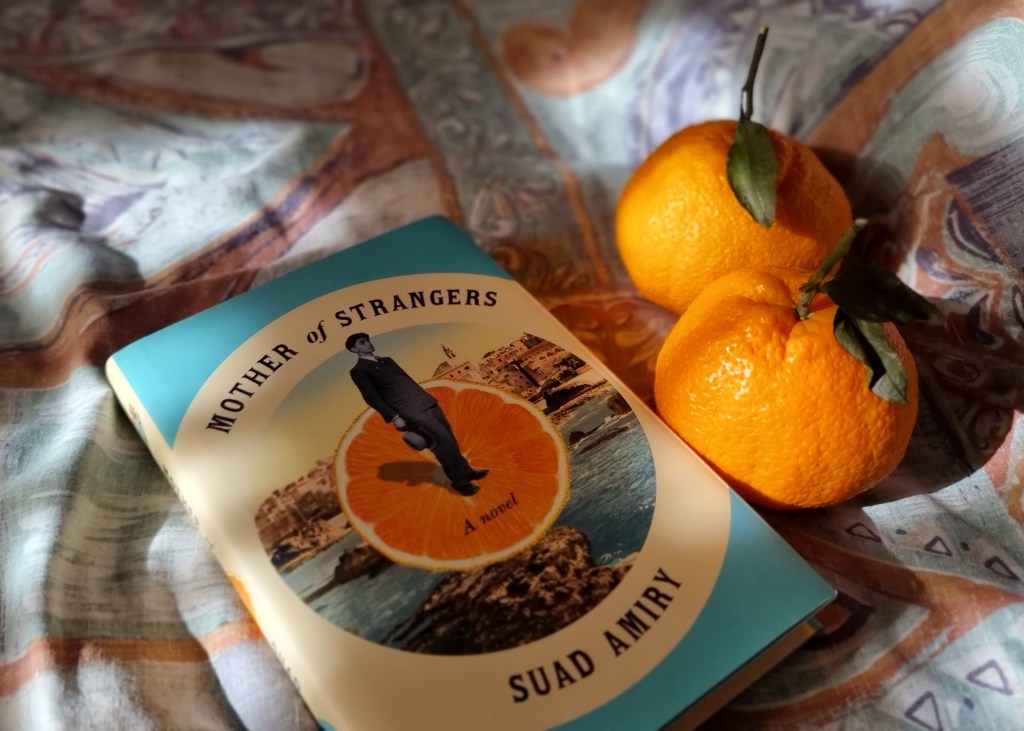
The “Mother of Strangers” is Jaffa. In case you, like me, wondered to whom or what the title referred.
Jaffa that was the richest and largest Arab city in Palestine. Jaffa, known all over the world for its pure gold — its oranges and orange groves. Jaffa, named after one of Noah’s sons who purportedly built the city after the great flood. Jaffa, a major city during the Ottoman Empire. Jaffa that was designated as part of Mandatory Palestine / the Arab state through the Partition Plan, but which Irgun decided to conquer before the end of the British mandate when Arab armies (Egyptian, Iraqi, Syrian, and Jordanian) could enter Palestine. And therefore, the helpless Jaffa that surrendered to the Haganah who promised to protect Jaffa and its people. (“However, before the ink had dried on the agreement, the city was violated, robbed, and the Haganah forces terrorized the few thousand Jaffans who remained.”)
It is more than a sad tale of young love as the blurb describes. Based on a true story, it tracks a seldom mentioned, but significant aspect, of history that is vital in our understanding of the Palestinian struggle. This is one of those books that show us that what is happening in Gaza is never so simple, and that it did not abruptly begin on October 7, 2023.
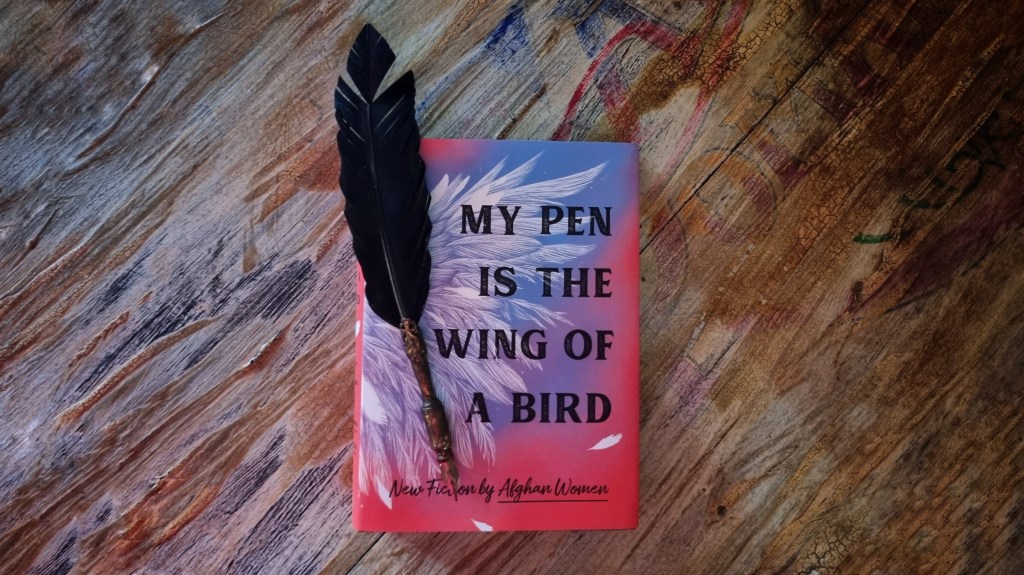
This book came into my possession on International Women’s Day. That day I was asked to speak at an event in celebration of Woman; and as one who never goes out without a book (in case of emergency), I slipped this in my bag on the way out. I was early at the venue so I took this out and flipped the title page. It read:
“My pen is the wing of a bird; it will tell you those thoughts we are not allowed to think, those dreams we are not allowed to dream.”
Batool Haidari, Untold Author, International Women’s Day 2021
The line was written on exactly the same day three years earlier. That’s when I knew I brought the right book with me.
The first open call inviting Afghan women to submit short fiction came in 2019. The creation of this anthology and the translation of the pieces from Afghanistan’s two principal languages, Dari and Pashto, pressed on through more than just power outages and internet service interruptions, but also a global pandemic lockdown and the Taliban takeover in 2021. The book that now sits on my shelf is a triumph.
As anyone might have guessed, there is little happiness here. But it makes us see that there is humanity, kindness, and so much more to Afghanistan’s stories than just war. As in any short story collection, some stories have more literary merit than others, but every single one deserves our attention if we wish to educate ourselves and see a more thorough picture of Afghanistan and the world we live in — especially when their humanitarian crisis continues even as the world’s attention is no longer on them.
“My pen is the wing of a bird; it will tell you those thoughts we are not allowed to think, those dreams we are not allowed to dream.”
This line made me realize the wide gulf between literature by women from places of conflict and the first world. In literature from the first world, this would refer to careless and obsessive romantic affairs, and the women who write about these things are lauded for their rawness and honesty. In literature from marginalized communities, the thoughts they are not allowed to think and the dreams they are not allowed to dream are education, work, the freedom to do the right thing, and the freedom to live. A dose of the latter is always a healthy reality check on the disparity present even within women’s literature.
Without dreams or imagination, science is impoverished. It is lifeless.
I love how this delightful read, without being impossibly cerebral, mixes simple life and math lessons while reminding the reader of the non-Western heritage of mathematics.
Interestingly, it reflects a time in the Islamic Golden Age when wise men believed religion and science could coexist.
Also, the illustrations are wonderful!
Arabian Nights with a better moral aim and math-themed? Count me in! (Sorry, I just had to. Haha!)
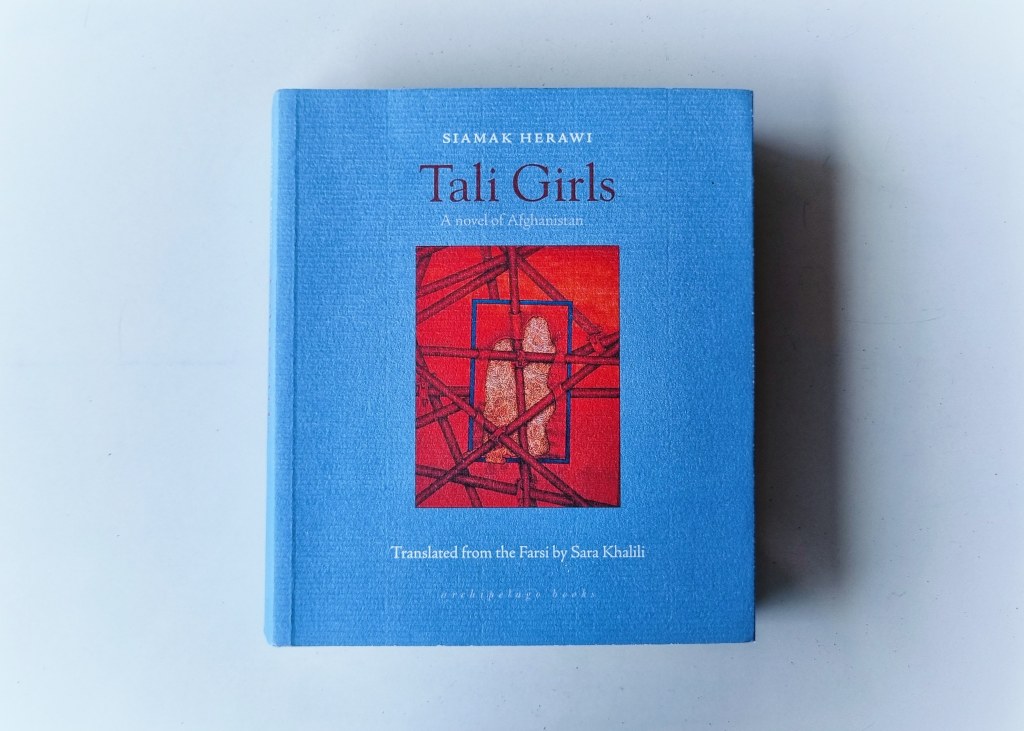
It’s almost absurd to expect happy novels from Afghanistan. I knew I had sorrow coming when I selected this as my third book of 2024. I could have shelved it for later, but how could I resist this blue from Archipelago Books, translated from the Farsi to boot? How often can one find literature translated from the Farsi?
So it was on me when it started to break my heart and made me recoil from the brutality.
Unlike most books about Afghanistan, the characters are not caught in the crossfire of any of the wars that have ravaged Afghanistan for decades.It is set in a picturesque mountain village in the early 2000s when life was simple and young girls were allowed to dream about education and love, and villagers were content with raising livestock and planting their own wheat, beans, and melons. That is until the Talibs discovered the beauty of their nine-year-olds and found their land ideal for the cultivation of poppy to be sold to the “infidels”. Tali Girls is based on true events.
The first person narration shifts from one character to another, effectively and intimately thrusting the reader into a world plucked from its innocence.
I would be reluctant to recommend this for the anguish that it contains, but I am more inclined to listen to one of this novel’s wisest characters:
“‘Remember,’ he says, sitting in his library, ‘the more your eyes open to the world, the more you are likely to suffer. But better that you learn and understand… Read, Kowsar, read to understand the world around you.”
“After this time in the Middle East, I learnt what it was like to carry the weight of people’s stories — and the role that journalists play in bearing witness. Our job was to serve as a funnel, a conduit, and in so doing, hopefully remind viewers across the world that we’re all the same. To elicit even a smidgen of empathy for those who might seem different to you.”
A piano student of mine is studying Debussy’s Claire de Lune, and I recently explained that being emotionally connected to a piece makes it more difficult and exhausting to perform, but (un)fortunately, life and music can only be meaningful that way. And it is this balance between technique and emotional connection that we spend our whole lives trying to master.
After reading this book, I realized that the aforementioned is not only true for music, but for journalism as well; and these pages are a record of a journey in probing and understanding that balance.
I love the unpretentiousness of this book. It does not claim to be a powerful journalistic work. Sometimes it tells you something as simple and true as, “The world turns. And that is what matters. It turns — and we humans keep going. Through conflict. Through inhumanity. Through heartbreak.”
Yes, there is nothing in the passage indicating that this Filipina journalist is vying for the Pulitzer, at least with this book; but it is powerful and heartwarming in the sense that it speaks to me of things that I need to take note of, not only when I read it from cover to cover on the most restful Sunday I’ve had in months, but throughout life, especially when things get tough.
That’s what you will find here: Life lessons from a recovering journalist. There is a certain universality to it, for aren’t we all recovering from something?