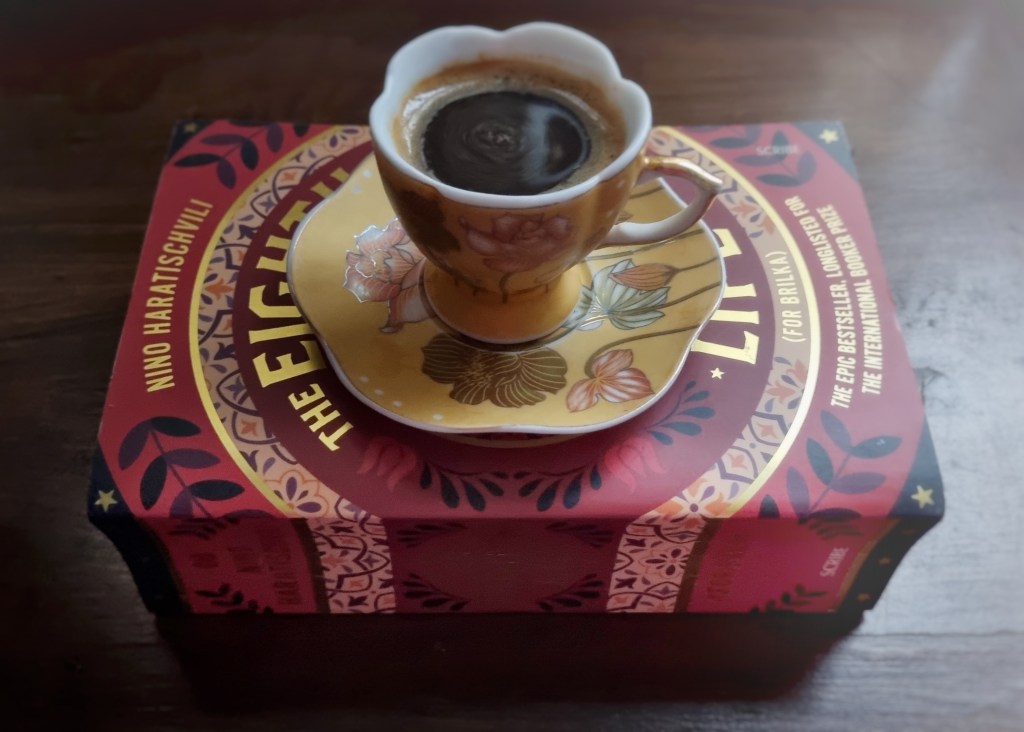
Nino Haratischvili: The Eighth Life

The first few things you will ask yourself after reading this are questions in the vicinity of, “Was that really 934 pages long? How was I able to read that so quickly?”

Tougher questions will follow: The question of identity, the question of who you are and what shaped you. The question of history and how you cannot ever separate your personal history from history in general.

What do you really know about history? What do you really know about yourself?

“For me, the greatest reward was her stories.”  Nino Haratischvili, The Eighth Life

At the beginning of the century that would suffer two World Wars, and many other wars, a chocolatier prospers in Georgia under the Russian Empire. His chocolaterie thrives and caters to townsmen and Russian nobility, but after a tragedy following the devouring of the the secret recipe in its purest form, he soon suspects that it holds a curse. The recipe would, however, always manage to find its way to the next generation and throughout the entire century. 

The accursed hot chocolate recipe was something I would normally expect to savor from Latin American magic realists and I was initially unsure of how I felt about coming across this flavor in The Eighth Life. I thought it could easily be dispensable in the grand, cinematic scope of the story.

But wasn’t this family saga set in junctions of the immeasurable Silk Route where anything could happen, and where the influence of Scheherazade’s fantasies still linger at every bend?

I eventually gave in to this literary ingredient and pondered if it was meant to symbolize the intergenerational curses — inherited pain, memory, and trauma — to which we become heirs and which we unknowingly impart.

_ _ _

The casual tone of the narrative deceived me at the onset. You could tell you were not reading Vasily Grossman or Olga Tokarczuk. (The comparison is unavoidable as theirs were the novels I read this year that are similar in length and with similar intersecting eras and geographies.)

It is, after all, addressed to Brilka, an adolescent; and so the narrator spells things out. We know that this is something masters of literature usually avoid, but it was this casual and explanatory tone that made me so unsuspecting of how it would sweep me up in its emotional and historical hurricane. I found myself wiping away tears a number of times, grieving for the characters with their extinguished hopes and dreams, and for the entire broken century that was also partly my own.

It is remarkable how the novel captured the spirit of each era it depicted, even the confusions and the troubles of each age reflected in the characters. To present these — along with the complex convergence of Russian and Georgian histories and politics, and how Soviet tyranny affected so many lives across borders — in such a readable manner only made me recognize Nino Haratischvili’s command of such topics.

This novel is a strange oxymoron to me: For being simultaneously accessible and wise, for being both painful and satisfying, and for lending answers as it asks questions.

_ _ _

What do you really know about history? What do you really know about yourself?

Could it be true, that chilling thing Kostya said about everything waiting to come back?

‘What statues and pictures?’ I asked.

‘You know, of Lenin, Marx, and Engels, the Generalissimus — all those men!’ He seemed to be giving it serious thought.

‘They’ve gone.’

‘But they can’t all just disappear, just like that!’

‘Apparently they can. Everything disappears sooner or later.’

‘Nothing disappears. Nothing, Niza!’ He laid is hand on mine.

‘You mean, everything is hidden somewhere, waiting to be found again?’ I tried to bring myself to smile. 

‘Everything is waiting to come back.’

_ _ _

Thank you, Anna, for recommending this book!

Jokha Alharthi: Celestial Bodies

“Mongoloid” as a term for Down syndrome has been considered offensive and obsolete by the time this book was published, and yet it is still being used here to describe a minor character. It is but a small spot in a galaxy of details and I’m not usually one to nitpick on political correctness, because I also tend to be guilty of political incorrectness at times, but this somehow cast a cloud on my appreciation. And although I read this about a week ago, it took some time for me to gather my thoughts.

_ _ _

Jokha Alharthi is the first Omani woman to have a novel translated into English. Marilyn Booth, the translator, has translated works by two favorite authors in my Silk Route & Fertile Crescent Reading Project, Elias Khoury and Nawal El Saadawi.

With that in mind, perhaps I set my expectations too high.

There are elements that I highly value: How each chapter is named after a character, and through these various perspectives from different social strata unfold the story and tapestry of Omani history and society; unique details of traditional wedding preparations through the eyes of the mother; captivating descriptions of Bedouin life; and Abdallah’s musings during an airplane flight that often wax poetic. The historical aspects led me to look into the British-mediated Treaty of Seeb and, hardly ever mentioned in reviews, the master-slave dynamic in such a society that plays a significant role in this novel, reminding the reader that it was only in 1970 that slavery was abolished in Oman.

Orbiting around the lives of three sisters in the village of al-Awafi, I immediately found a favorite in the middle sister, Asma. The reading sister, the one through whom references to the region’s literary traditions are made, the one who has read enough to see through the nonsensical beliefs and superstitions.

These three sisters in the cusp of a modern Oman, although bound to customs, had relatively more freedoms compared to women from other stories I’ve read of the region. And so it was with disappointment that I read how Asma readily agreed to an arranged marriage while the younger sister who spent more time prettifying herself was resolute in refusing hers. It can be argued that Asma did it in the hope of furthering her education and the younger had more foolish reasons for her refusal, but something still did not add up. The strong character that I admired at the beginning seemed to give way to a weaker one towards the end.

On the other hand, there is more to the novel than that. The fact that there is so much to pay attention to borders on both distracting and brilliant, but as far as novels translated to English are concerned, this is still currently the most intimate look into Omani life available to us.

In a way, it makes me look forward to what lies ahead in translated Omani literature — especially those written by women.

Magda Szabó: Iza’s Ballad

 © 2018 MDR
Budapest, Hungary

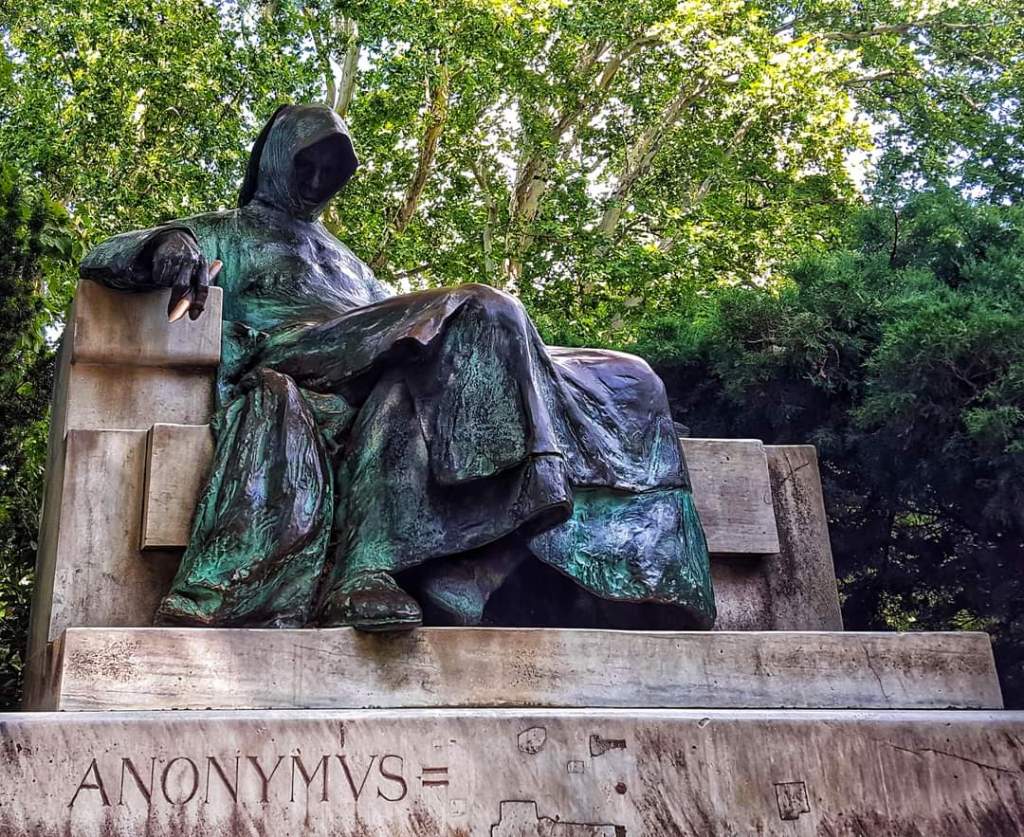
“As he spoke Lidia could see the schoolgirl Iza discussing the future with her father. She saw her as her father described her, as a pint-sized redeemer spreading out her school atlas and examining the map of Budapest because she wanted to see a major city, a really big city, and trying to work out where in City Park the statue of the historian Anonymous might stand. Iza loved the look of that hooded faceless figure. She saw it once when she was a young woman visiting Budapest…” Magda Szabó, Iza’s Ballad

How pleased I was to have identified with Iza so much! There was even something close to a silent pride that I initially felt. It was as if I were reading my own mother’s description of myself how Iza organized her life and her schedule, the tidiness, the discipline, the sense of responsibility, the restraint, her satisfaction in not having to give account of herself to anyone!

But how I trembled, as I turned the pages approaching the finale when I realized that it was because of this unrelenting self-discipline seeping into the cracks of her relationships that led to heartbreaking consequences.

It is for readers with aging parents. It is for every new generation that believes they are so much wiser than the previous one, so practical even in matters of the heart, and yet, unwittingly, so heartless.

It is for societies that reject the past and the old deeming these to be outdated and sentimental, failing to acknowledge that the past and the old hold the clues to the present and the new.

Although set in postwar Hungary, the spirit of this novel is contemporary: the timelessness of its message, its tragedies that are themselves the lessons, will gnaw at my soul for years to come.

Few books leave me feeling defeated. This one did. I felt so helpless under the influence of such simple but penetrating prose.

It is that dazed emotion one undergoes when someone so much wiser with experience sings in a pensive gasp, “I really don’t know life… at all…” Yes, someone like the inimitable Joni Mitchell, only Magda Szabó does it with an outstanding novel that she affectionately hands over to the reader saying, “You really don’t know life… at all…”

And in the presence of such masterful artistry and truth, what else can one do but applaud and weep?

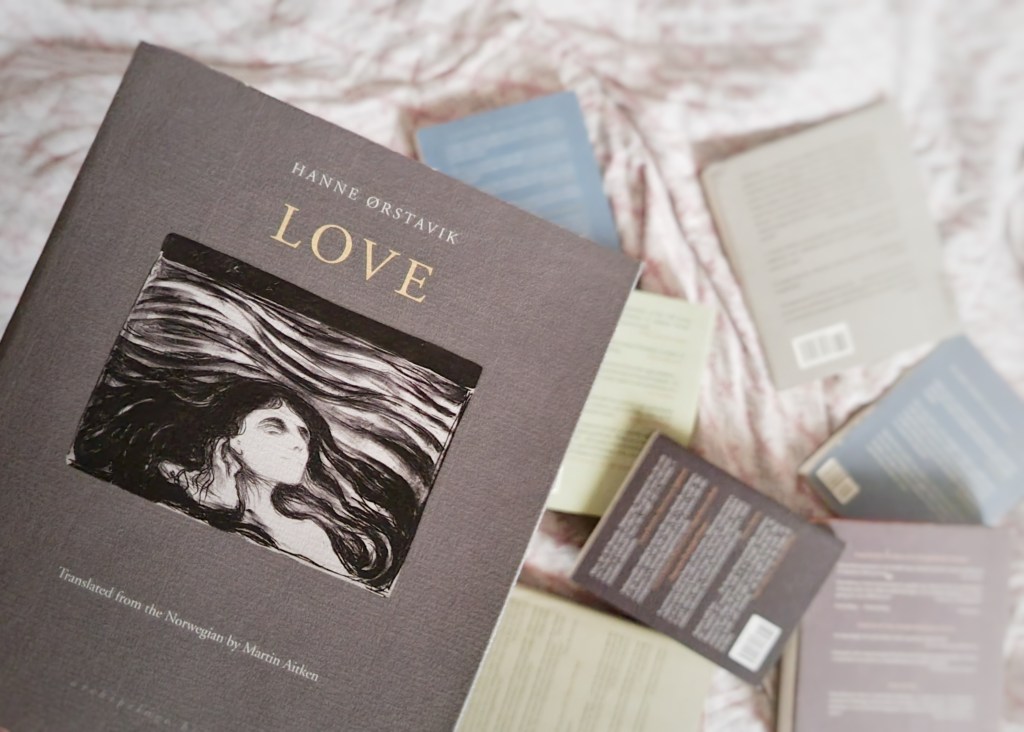
Hanne Ørstavik: Love

This. Is. Art.

This is art that will haunt you for a while.

It brings to mind the Shepard Tone, an auditory illusion used in film soundtracks to create a palpable disquiet. It occurs when layers of the same scale sequence are played at the same time; the highest layer decrescendos, the middle pitch maintains a consistent volume, and the bottom frequency increases in loudness. Played simultaneously, it manipulates the brain into believing that it is hearing an infinitely ascending tension.

In what appears to be the most original writing style I have encountered in a while, Hanne Ørstavik seems to have invented a literary equivalent of the Shepard Tone, camouflaged in a narrative that demands complete attention.

A village in northern Norway. A mother and son. The frost and the night are tangible.

And love?

Love is left out in the cold.

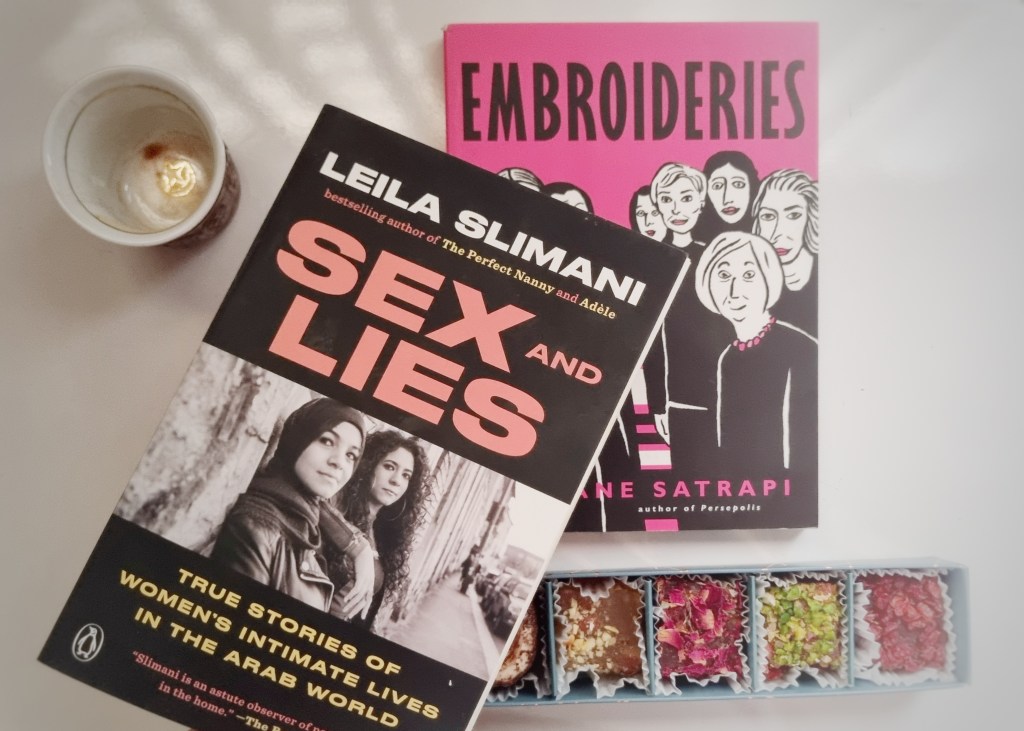
Satrapi: Embroideries | Slimani: Sex and Lies

“If women haven’t fully understood the state of inferiority in which they are kept, they will do nothing but perpetuate it.” Leïla Slimani, Sex and Lies

“I freed a thousand slaves. I could have freed a thousand more if only they knew they were slaves.” — Harriet Tubman

It was the hottest month of 2019 in Morocco, and I was at a station in Chefchaouen waiting for my bus to Fez. Even with my nose buried in a book, I had an odd feeling that someone was watching me. 

Sure enough, when I looked up, two large eyes framed by a hijab glinted and stabbed me like the blades of a koummya. I could see she was seething. I had to glance around and check if the anger was meant for someone else, but her sustained glare guaranteed that they were directed at me.

She said something to the man beside her who turned his back towards me while she continued to glower. Admittedly, my first instinct was to glower in return.

Then I remembered where I was; a foreign country whose laws are not known to be very kind to women. Confused, I immediately lowered my head to avoid trouble.

And there it was. The offending sight. The bag’s leather strap strung across my body had unbuttoned my dress shirt and revealed an undershirt and a little bit of chest!

I who had been so careful about dress codes in my travels, I who wore a buttoned-up long-sleeved shirt over an undershirt over a bra despite the temperatures rising up to 46°C during the day, accidentally exposed a little bit too much of my body in one of the worst places to have a wardrobe malfunction.

I felt so embarrassed, horrified, and even guilty.

As soon as the bus arrived, I hurriedly boarded to avoid bumping into the couple. I saw them saying goodbye to each other. A worried look now replaced the anger on her face as her expressive eyes followed the man inside the bus.

Imagine the horror on her face when she saw through the window that the man’s seat number was the empty one right beside mine — her man would be sitting beside this immoral woman for 4 to 5 hours!

I hid behind my scarf for the rest of the trip while next to me, he showered himself with crumbs from the pastries that he ate.

– – –

I had an incredible trip to Morocco, but despite being amply covered, I have never been catcalled more in any of my travels; I was followed by a stranger through the alleys of Fez; and two random acquaintances in Marrakech said they wanted to marry me. But somehow it was that incident with the woman that made me shudder. It accented how difficult it must be to be a woman in such a place.

This memory came back to me while reading Leïla Slimani’s book. Coincidentally, it was exactly on this day when I left for my Moroccan adventure three years ago.

– – –

Feminist voices from Islamic nations have been part of my reading life for quite some time already, and I don’t wish to write another cliché by saying that reading this made me grateful for the liberties I take for granted — even though it still rings true.

Sex and Lies is a broader and more serious version of Marjane Satrapi’s hilarious graphic novel, Embroideries. They both bring to light the double standards of men and their laws, and the many predicaments of what it means to be a woman in such a setting.

Let us take note that this setting is such where love and affection are as taboo as sex; where women are not allowed to feel desire; where religious pressure and social humiliation lead to nearly six hundred abortions carried out in secret every day and hundreds of women die as a result of the appalling medical conditions in Morocco; and while men can sleep around all they want, they require “virginity certificates” from their brides; hymen restoration clinics exist (which is not far from the kind of “embroideries” Satrapi hints at); and it was only in 2014 that article 475 of their penal code was amended, two years after a sixteen-year-old took her life after being forced to marry her rapist. The rapist who married his victim could avoid punishment under article 475.

Each important female writer has their own approach to broaching the subject of women in repressive cultures. Iranian Marjane Satrapi does it with humor while Moroccan Leïla Slimani curiously makes a case for a healthy relationship with traditional, religious, and cultural backgrounds. I am not Muslim but I think it is significant how she did not make this into an assault on Islam. (Although she does mention the soullessness of certain sects.)

“I try to explain that a society in which women had more freedom would not necessarily be contrary to the faith but rather could allow us to protect women better.”

“For the Muslim religion can be understood as primarily an ethics of liberation, of openness to the other, as a personal ethics and not only a Manichaean moral code.”

“Muslims can turn to a long written tradition, led by scholars, that saw no incompatibility between the needs of the body and the demands of the faith.”

While Sex and Lies unveils real and enraging accounts of the unnatural demands their society imposes on their women, it remains hopeful for a Morocco in transition. Another thing that stood out for me was how many of the women who shared their stories recounted that it was reading books that opened their eyes. Leading by example, Slimani highlights the necessity for women to use their most powerful weapons at hand:

“If… Scheherazade appears a magnificent character, this isn’t because she embodies the sensual and seductive oriental woman. On the contrary: it is because she reclaims her right to tell her own tale that she becomes not merely the object but the subject of the story. Women must rediscover ways of imposing their presence in a culture that remains hostage to religious and patriarchal authority. By speaking up, by telling their stories, women employ one of their most potent weapons against widespread hate and hypocrisy: words.”

Némirovsky: Fire in the Blood | Gille: The Mirador

Fire in the Blood by Irène Némirovsky

Because I arrange my books based on geography, Nikolai Gogol, Mikhail Bulgakov, Vasily Grossman, and Irène Némirovsky among a few others share a spot on my shelf. They were all born in Ukraine while it was still under the Russian Empire.

Fire in the Blood was thought to be unfinished when Némirovsky died in Auschwitz in 1942. It was only through subsequent research years later that the rest of the manuscript was found and published posthumously.

She wrote this around the time she was arrested and deported to Auschwitz, but there is no pain of epic proportions in this book. There are none of Gogol’s ghosts, none of Bulgakov’s political caricatures, and none of Grossman’s wars.

At the beginning I was so convinced that this was simply a charming picture of rural life in an idyllic French village. She makes the reader believe that, until one surprising revelation after another piles up towards the end, and it reveals its own unique depth.

“Are we not all somewhat like these branches burning in my fireplace, buckling beneath the power of the flames?”

Fire in the Blood, the fire of youth contrasted with the sobriety of old age through the introspection of Sylvio and the lives of those around him leaves the reader with a subtle sting that leads to a silent contemplation on, or the questioning of, passion, love and life.

There may have been none of Gogol’s dark humor, none of Bulgakov’s satire, and none of Grossman’s reportage on tragedy, but perhaps Némirovsky deserves her place alongside these men as someone who lays bare the human heart.

 “No, it wasn’t that simple. The flesh is easy to satisfy. It’s the heart that is insatiable, the heart that needs to love, to despair, to burn with any kind of fire… That was what we wanted. To burn, to be consumed, to devour our days just as fire devours the forest.”

The Mirador by Élisabeth Gille

Don’t you love it when an underexposed book surprises and transcends expectations? I had not anticipated The Mirador to contain this much beauty!

Having read nothing by Élisabeth Gille prior to this, I approached it as someone who was simply curious about her famous mother, Irène Némirovsky.

From her mother’s journals, letters, unpublished notes, “dreamed memories”, and with the help of her elder sister’s own memories and research, Gille recreates a striking portrayal of the mother they lost to Auschwitz when they were mere children.

Regardless of the applause that her novels garnered and despite her tragic fate, it was for her indifference and lack of political sense that Némirovsky was criticized. Gille, however, does not justify her mother’s shortcomings. She allows a beautiful irony to unfold through the pages and writes a lyrical and clearsighted grasp of her forebears, literature, history, and the political arena that surrounded Némirovsky from her early childhood in Kyiv, growing up in St. Petersburg, fleeing to Finland in the wake of the Russian Revolution, and building a life and a successful writing career in France until the German Occupation.

I must admit that I personally prefer the daughter’s writing over the mother’s, and it was saddening to learn that Gille died from cancer in 1996, only four years after The Mirador was published. But I beam at the thought that Némirovsky would have been so proud.

How cathartic it must have been for a daughter to write this! It makes one wonder at the mysterious power of writing — how it can liberate the writer and the subject at the same time, how it can be a simultaneous act of holding on and letting go.

Nawal El Saadawi: The Fall of the Imam

“No one of you has ever possessed my mind. No one. And no matter how often you took my body my mind was always far away out of your reach, like the eye of the sun during the day, like the eye of the sky at night.”

In a culture where a buffalo has more worth than a woman, where love and marriage are usually two different things, where there is a disconnect between religious devotion and actions, where a man has the freedom to sin but where a woman can get stoned for being a victim, Nawal treads dangerously with her words.

She throws difficult questions at religion and those who are in power, beats us out of complacency and privilege, and prods us to be angry at injustice and inequality.

This is not the book I would recommend to someone who is new to her writings, but a seasoned Nawal reader would probably consider this an epitome of her literary prowess.

Prose-wise, it is the most ornate. Content-wise, it is the most potent. Form-wise, it is her most sophisticated. And wading through all of that is not so easy.

Different narrators for each chapter can get disorienting; the victims narrate, the criminals narrate, so do the dead, and oftentimes about the same incident. When it comes to the women, one can get confused trying to identify whether it is the mother speaking, or the daughter, or the new wife, or the first wife, or the mistress, or the sister. But I realize the intention: It is to emphasize the fact that they are women, and because they are women they suffer all the same.

“Like in The Thousand and One Nights, the beginning of each tale merged with the end of the one which had preceded it, like the night merges with the day…” And then she draws us away from Scheherazade to a lesser-viewed aspect of this literary heritage and culture, and points the spotlight at the hypocrisy of King Shahryar.

Through it all, the question that seems to reverberate loudest in my mind is this: What can we do if the leaders, those who are in power, the ones assigned to mete out judgment, are the perpetrators of the crime?

Because at times, they are. Not only in some culture foreign to us. But in ours, too.

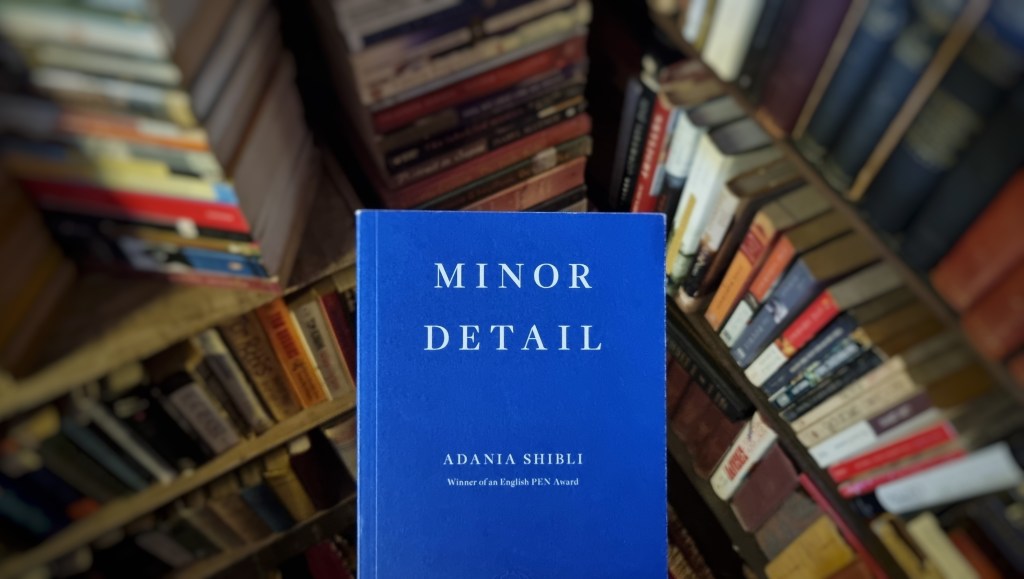
Adania Shibli: Minor Detail

Adania Shibli has a sharpshooter’s precision;

in her choice of words and in her choice of details major or minor,

in her choice of literal depictions that have the power to stand as metaphors,

even in splitting the book accurately in half to give an equal number of pages for the first part and the second part of the story,

in her sense of irony in picking a character who seems to have an inability to identify physical borders and who is obsessed with an actual news report of a rape and murder case that was committed exactly twenty five years prior to the day she was born,

and in her choice of singling out a story of the rape of a Palestinian woman by Israeli soldiers in a place where senseless killings occur on a regular basis.

What Adania Shibli does not need to spell out is that a story of violated boundaries is always a story of rape, and vice versa.

This incisive portrait of the Palestinian plight begins as a bullet in motion, without you knowing.

You’ll only know upon impact,

when it hits you,

at the very last page.

Joseph Brodsky: Watermark

“In those days we associated style with substance, beauty with intelligence…
we didn’t know yet that style could be purchased wholesale, that beauty could just be a commodity.”

Venice, through the pen of a mediocre writer, can easily become cliché.

But this is Joseph Brodsky. 

If you, like me, have read Lawrence Durrell’s Prospero’s Cell and thought it was alone in its indefinable sub-genre or sur-genre (if there’s such a thing), we can rejoice! Venezia’s Watermark is the worthy soulmate of Corfu’s Prospero’s Cell.

Meditative with a sensual rhythm but not without intelligent humor, here is travel literature that casts an enchanting haze on the borders between poetry and prose, a place and the self.

I would slip this in my handbag in a heartbeat on a return trip to the best city to get lost in.

Michael Ondaatje: Running in the Family

Whenever something momentous happens anywhere in the world, the first instinct of a reader is to read. Whether they be articles, books, or contrasting views on social media posts, a reader reads. And books, even when they are not capable of telling you everything, can still tell you a lot.

As soon as Sri Lanka’s protesters occupied their president’s palace and called for his resignation, I paused from this month’s reading goal to look into Sri Lanka.

The bad news: There is only one Sri Lankan on my shelf. The good news: It is Michael Ondaatje.

“Ceylon falls on a map and its outline is the shape of a tear,” writes this favorite author who is none other than the one who wrote about “the sadness of geography”.

Although I initially hoped otherwise, Running in the Family is not a thorough overview of the nation’s history or politics and turned out to be about family history; and yet I became so absorbed in it that I forfeited an early morning run to read it and finished it on the same day. Because after all, you learn a lot about a country through its people, through its literature, and reading along or between the lines.

There were times when it felt like I was reading about my own country: From superstitions, to drinking tubâ (coconut toddy), the humidity, the smell of durian, the attitudes, and our colonial past — “… the wife of many marriages, courted by invaders who stepped ashore and claimed everything with the power of their sword or bible or language.”

The ousting of leaders has been one of the recurring themes in my readings these past few years and I have read quite a bit to know enough that overthrowing a corrupt leader is not always an assurance of a better government (but also enough to know that the faults of the successor should never erase the sins of the previous one from the memory of its people, otherwise the vicious cycle only continues).

By the end of the book, I already felt a kinship with Sri Lanka’s people; and for now, we wait with bated breath for what is to come. While it is tempting to hope that, by some stroke of serendipity, my country and this land that used to be called “Serendip” by Arab sea traders will stumble upon great things in the future of our governments, we know we cannot leave it all to chance.

There is so much work to be done.