Thad Carhart: The Piano Shop on the Left Bank

Not the West Bank this time, just the Left Bank. The thing about my Silk Route | Fertile Crescent reading project is that — despite being a source of enlightenment through discovering underrated but astounding literature — novels from this route in question are usually emotionally taxing.

Although I have sensed that I am drawn to writings from places of conflict for the reason that they have a sensitivity to beauty commensurate with their heightened awareness of the fragility of life; once in a while, I need a breather, and that’s when I turn to books related to other interests. In this case, not merely an interest, but a love.

But as love would have it, we oftentimes become accustomed to a beloved’s presence and we slowly take its magic for granted. 

The Piano Shop on the Left Bank: Discovering a Forgotten Passion in a Paris Atelier refreshed me about the intricate workings of a piano; of how extraordinary this instrument is; of the alchemy and difficulty involved in piano-making and music-making; and how beautiful tone production relies so much on the precision of piano makers, the skill of piano technicians, and the heart and hands of a pianist. This rekindled a fire that led me straight to the piano after turning the last page.

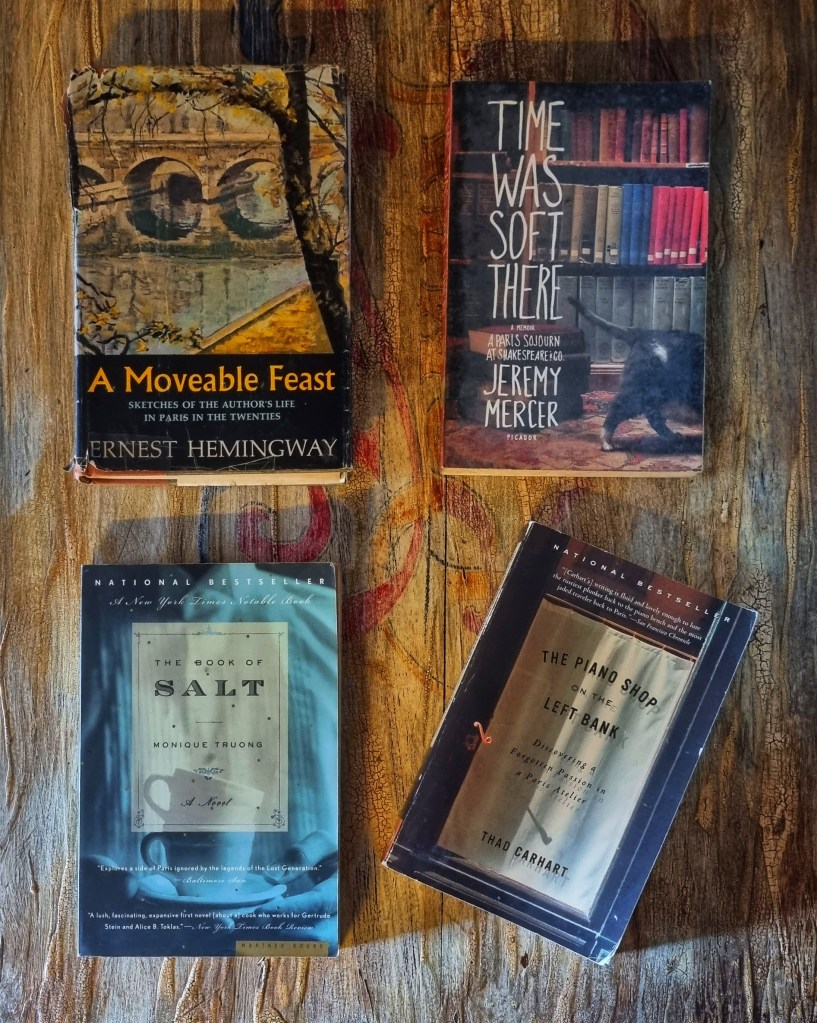
But this book is not just about pianos and trivia from the music world. (Although, while we’re at it: Did you know that when the Eiffel Tower was built in 1889, the first thing to be hauled to the rooms at the top was a piano?) It is also about the Paris that is inaccessible to the tourist. In fact, this would make a lovely pair to Mercer’s Time Was Soft There: A Paris Sojourn at Shakespeare & Co.

Surely, these books did not intend to rival Hemingway’s A Moveable Feast or the aching poignancy of Truong’s Book of Salt, but at times, lesser-known books are beautiful for the simplicity that they lead us to find something that draws out music from within.

Sevgi Soysal: Dawn & Yashar Kemal: Memed, My Hawk

When Archipelago Books released their edition of Dawn, I immediately placed an order and entertained myself with Memed, My Hawk and a few other books while waiting for its arrival. This is my second NYRB/Archipelago book-pairing and I’m finding these serendipitous duos to be highly rewarding.

Maureen Freely, whose translations of works by Sabahattin Ali and Orhan Pamuk I have enjoyed, pens an insightful preface to Dawn that enlightens readers about Sevgi Soysal’s life and the paradox in Turkish women’s rights that she was born into; and for the 2005 NYRB edition of Memed, My Hawk, launched on the fiftieth anniversary of its publication, Yashar Kemal himself wrote the introduction wherein he reflects on people whose destiny it is to revolt.

Little did I know that the two Turkish works would complement each other and provide a rare glimpse of the Çukurova plain when it was still a setting for poor villagers, cruel landlords, bandits, orchards, and fields of thistles in Memed, My Hawk, and the same district on the cusp of urbanization in Dawn — far removed from the glorious domes and minarets of Istanbul that are more familiar to the international reader but closer to the woes of the working class.

Kemal (1923-2015) and Soysal (1936-1976) were no strangers to arrests and serving prison time for political activism. Memed, My Hawk is Kemal’s first novel, and Dawn Soysal’s last. But the symmetries are endless. The lives that both authors lived as leftist intellectuals and the fights they fought against authoritarianism and injustice are fervently manifested in these works.

The word “leftist” might cause some to flinch as it comes with a lot of baggage and it is deplorable how the mere association to the word can lead to “red-tagging” in my country; but the flawed and deeply human characters in both works reveal various shades of this problematic term that, stripped to its purest state, is simply the pursuit of equality, equity, basic human rights, liberty, and justice.

“Since when did we start thinking that struggling is a crime, and doing nothing was innocence and brilliance?” — Sevgi Soysal, Dawn

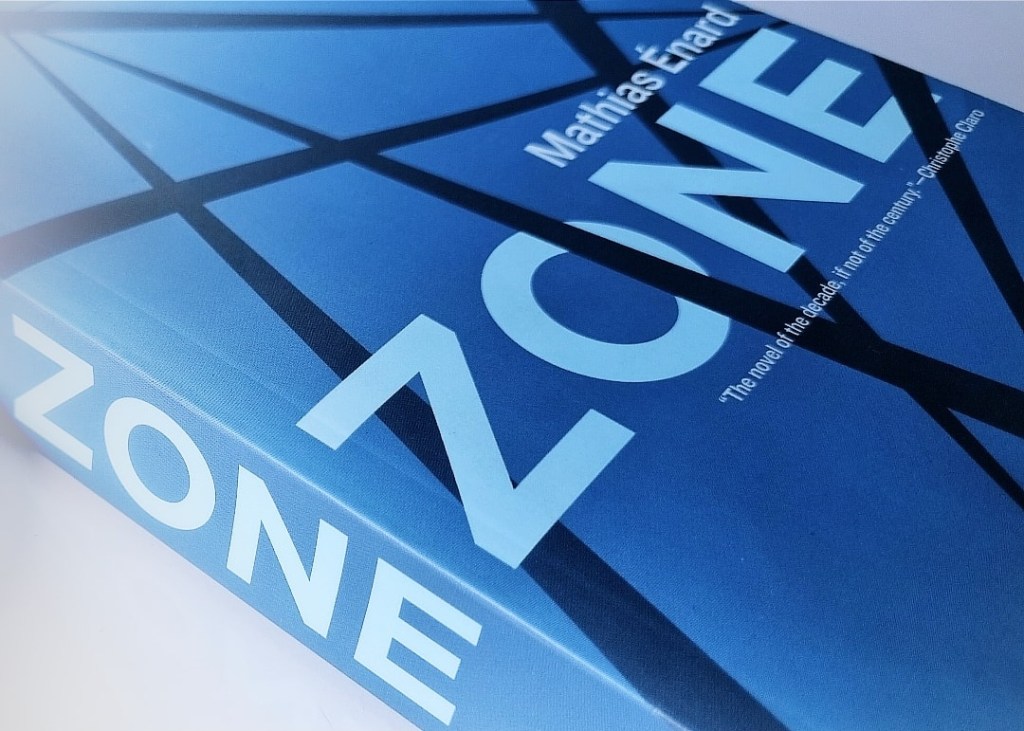
Mathias Énard: Zone

Tell them of battles, kings, and elephants,

without the elegance, without the elephants,

only battles, cruel kings, and pawns,

“Comrade, one last handshake before the end

of the world,” says a madman

at the station in Milan,

Francis Servain Mirković is burdened

by the remark, burdened

by the contents

of his suitcase, by the contents

of his mind,

as the train steers to Rome,

it is not scenery that flash by,

it is his life; no home,

Balkan conscript, a spy,

dysfunctional lover, son,

former informer

in the Zone, epicenter

of my literary quakes,

“the Zone, land of the wrathful savage

gods who have been clashing

endlessly

since the Bronze Age,” but he is

convinced that tomorrow he will

be a new man, as the train moves

memory

is a threnody

of the guilt of nations,

of the sins of the world,

of over a century’s worth

of savagery,

a brutal montage

of conflict, training our eyes to truths 

that we prefer to turn away from, a book

to make our consciences flinch, no one

is ever prepared

for official truth

says our antihero, this man,

a product of a history

of violence,

a tragic aspect

of a portrait

of a man

of our time.

Hamid Ismailov

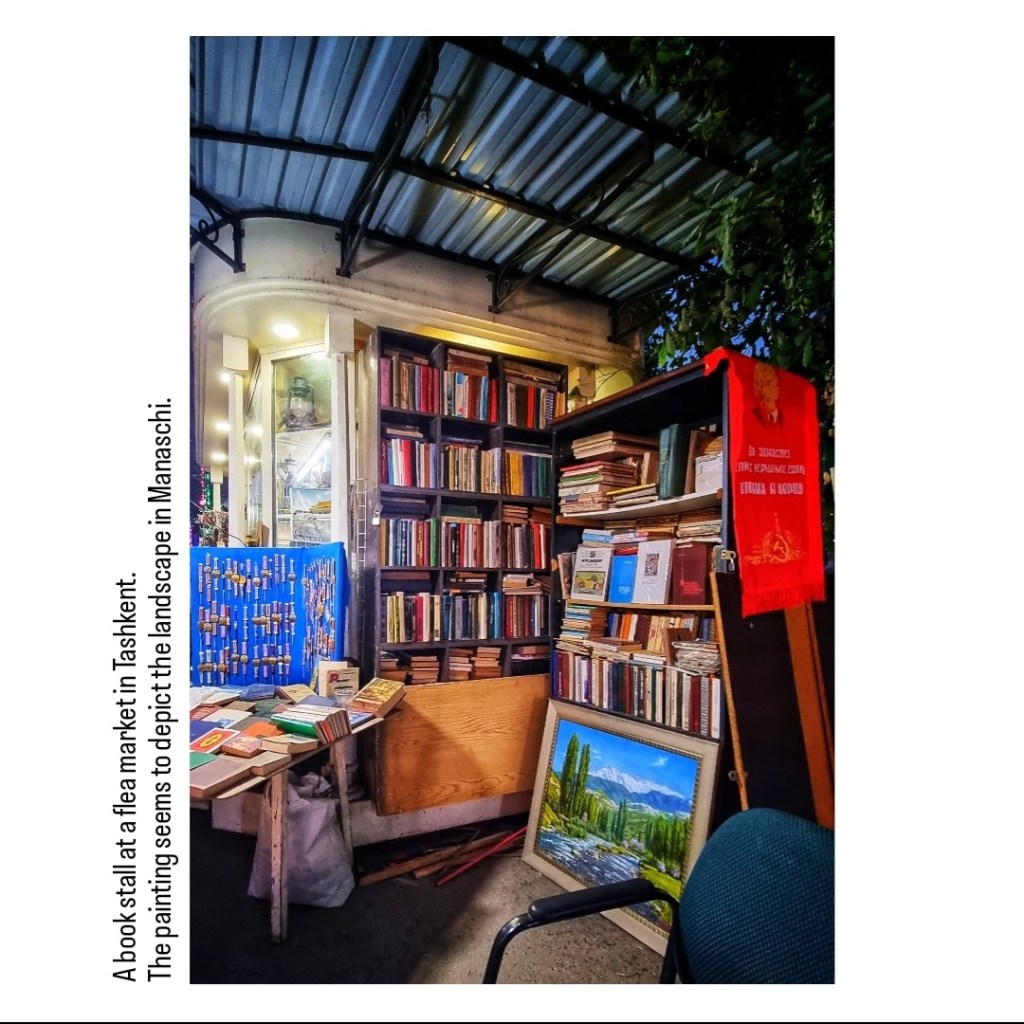
“We are a nomadic people. Today we pitch our yurts on one mountain pasture, tomorrow on another. Some people see their sense, their history, their fellow men as urban, and preserve all this in schools and madrasas, books and manuals. But we get on our horses and carry everything on our persons, and we have to keep it like this, on the move, in our minds and hearts.” — Hamid Ismailov, Manaschi

Sometime in between the first and the second volume of this Central Asian triptych, I travelled to Uzbekistan where Ismailov’s books cannot set foot because they are banned, and had a glimpse of the place that wrote the author.

Devil’s Dance is an intense initiation to Uzbek Literature. Of Strangers and Bees playfully meanders across the boundaries of time, literature, and geography. Manaschi is a geopolitically relevant finale that equals the force of Devil’s Dance.

But whether one speaks of the persecution of Uzbek writers throughout different regimes and implies that the writing process is akin to a dance with jinns;

the other of exile, elusive homelands, the value of community, man’s capacity for good and evil, or the search for truth and self through wanderers and bees;

and another of the trouble with imposed artificial borders, ethnic conflicts, the complexity of identity, or mystical bardic traditions;

all three uniquely celebrate the rich storytelling heritage of Central Asia — a heritage so crucial that a protagonist from the second volume boldly claims it to have shaped the shorelines of the great ocean that is Russian literature.

I love how this trilogy is a confluence of literary traditions rather than a defiance of the Western form. It manifests the power of stories, written, uttered, or observed; the power of stories when lived, as we become our stories and our stories become us; and the power of stories to take us beyond pathways of silk, even to places where only the rustle of words can go.

“It was a good thing the world had Uzbek literature.” — Hamid Ismailov, Of Strangers and Bees


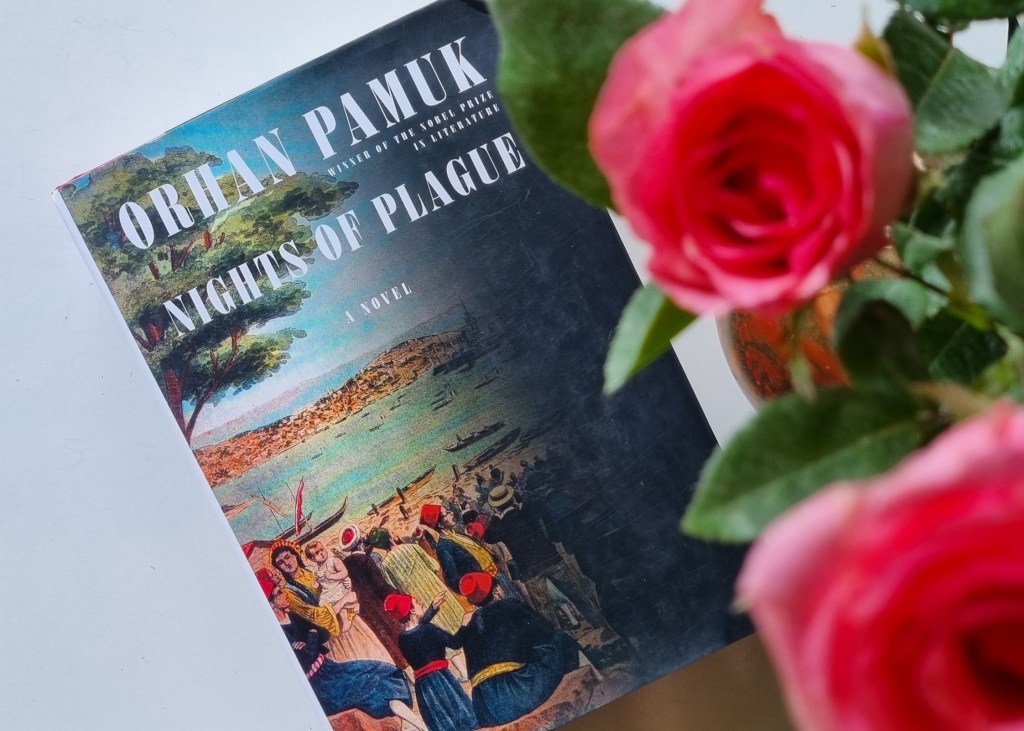
Orhan Pamuk: Nights of Plague

Orhan Pamuk’s longest novel to date unravels with a pace that tends to linger, to wit: it is not for readers who are in a hurry. For that reason, I found it strangely refreshing. Strange because it is a plague narrative that is not meant to be refreshing, refreshing because of the reading experience it provided; defiant of the modern reader’s preference for a literary quick fix, and defiant of our silly reading goals that have more to do with the number of books rather than the languid relishing in an author’s descriptive prowess.

Perhaps I simply feel at home in the expression of an author whose mind is a museum of melancholy, but I am now sensing that part of the allure is in how his books are written for their own sake — written because he felt they needed to be written rather than written for their salability. Isn’t that pure art?

Set in 1901, in the fictional island of Mingheria, “on the route between Istanbul and Alexandria,” it is a curious deviation from a usual Pamuk novel that stays within reach of Istanbul. While Snow is set farther in eastern Turkey, an invented island between Crete and Cyprus is still a surprising backdrop for seasoned Pamuk readers; but only until we realize that the creation of Mingheria allows for a certain leverage and freedom for political criticism. Methinks Mingheria speaks more about Turkey than it does about an imaginary island nation in 1901. 

This novel can teach a thing or two about running a nation during a plague; about epidemiology; how to deal with resistance from different sectors against quarantine measures; how plagues do not distinguish between Christian or Muslim; how failed attempts at containing a plague can fan the flames of a revolution; how revolutions can be exploited; the similarities between solving a murder and stopping an epidemic; and living or loving through the sickness and political ferment. It is about plagues, revolutions, nationalism, the administrative and language reforms that ensue, the fickleness of governments, about the accidents of history, how history is made, and how history is written.

It echoes Camus’ The Plague in the way that the narrator’s significance is revealed only at the end and also for the chilling reminder that plagues reappear throughout history “for the bane and enlightenment of men”.

Unfortunately, man easily forgets, and unwittingly asks to be reminded ever so often.

Ben Hopkins: Cathedral

Through previous readings, this reader has encountered provocative theories that suggest that it was religious reformation that freed human thought from church dogma thus giving rise to individualism, which subsequently paved the way for the Renaissance; and also theories of the aftermath of the Black Death setting the scene for capitalism by overthrowing social systems including feudalism.

The Protestant Reformation erupted in the 1500s, the Black Death in the 1300s. Ben Hopkins’ novel of six hundred and twenty four pages begins in the 1200s, but through its characters, we already witness the gradual ascent of mercantile capitalism and individualism challenging the hegemony of the Catholic Church.

But thankfully, these big words and the sophisticated ideas that are attached to them are not heaped too heavily on the reader’s shoulders. The author seems to have employed his filmmaking expertise by creating a well-paced and entertaining book with a handful of dramatic imagery and contrasting characters across the broad spectrum of society, but which also carries so much understanding of the religious and socioeconomic landscape of a particular European period.

In the midst of it all, the Cathedral — or more accurately, the construction of the Cathedral — that remains unfinished and continues to be built even by the end of this novel. This novel that begins in 1229 and ends in 1351. This Cathedral that symbolizes a number of things. 

In this story there is clearly the aspect of the historical, or the architectural, but which should always lead one to contemplate on the personal — the edifices that we build for ourselves. And because we already know how certain it is that we can carry nothing out, what do we leave behind?

To quote a cherished character who passed away by the the shores of Constantinople, “A man can die anywhere. It’s all the same. The only important thing is how he lives.”

Miljenko Jergovic: Sarajevo Marlboro & Ivo Andric: Omer Pasha Latas

She knew there would be pain in these books. But don’t people in the warmest climes imbibe hot drinks to temper the body’s response to heat? By that logic, here she is; steeped in the rich wordscape and sorrowful history of the Balkans.

The first days of November find this reader still silenced by life. A point in which literature remains among the few things left that can coax words out of her.

Sarajevo Marlboro and Omer Pasha Latas fell into her possession around the same time. That both books come from two of her favorite publishers, that the earth tones of their elegant covers match her autumnal soul, that both authors are exemplary, that their stories juxtapose on the same geographical region, were reasons enough to read them together.

Jergović’s extraordinary vignettes is a dip into a sea of humanity and tragedy in the midst of the Yugoslav wars. Andrić, born a century before these wars, whose words seem to flow as naturally as a limpid stream in the Bosnian countryside, write of a different time under the Ottoman rule, but of eerily similar sufferings.

Sarajevo Marlboro, traces of life retrieved from the rubble, fragments that suggest that the real casualties of war are the living; Omer Pasha Latas, unfinished at the time of Andrić’s death. But none of these books leave this reader dissatisfied. It is strangely easy to be drawn into the hypnotic quality of the details.

Both books intimate our need for context and our need for stories if only to make sense of life and divine its purpose; they whisper about the lies of those in power and of fabricated histories; but both beautifully manifest the ephemerality of life.

Andrić’s last word: “Music”. Jergović’s last paragraph: “You can never list or recall the private libraries that have burned down in Sarajevo… But the fate of the Sarajevo University Library, its famous city hall, whose books took a whole night and day to go up in flames, will be remembered as the fire to end all fires, a last mythical celebration of ash and dust. It happened, after a whistle and an explosion… Gently stroke your books, dear stranger, and remember they are dust.”

Dust: Like everything else we deem precious in this world. So while she can, this reader will stroke her books. They don’t always hold the answers, but they hold her, and hold the dusty, broken pieces of herself together.

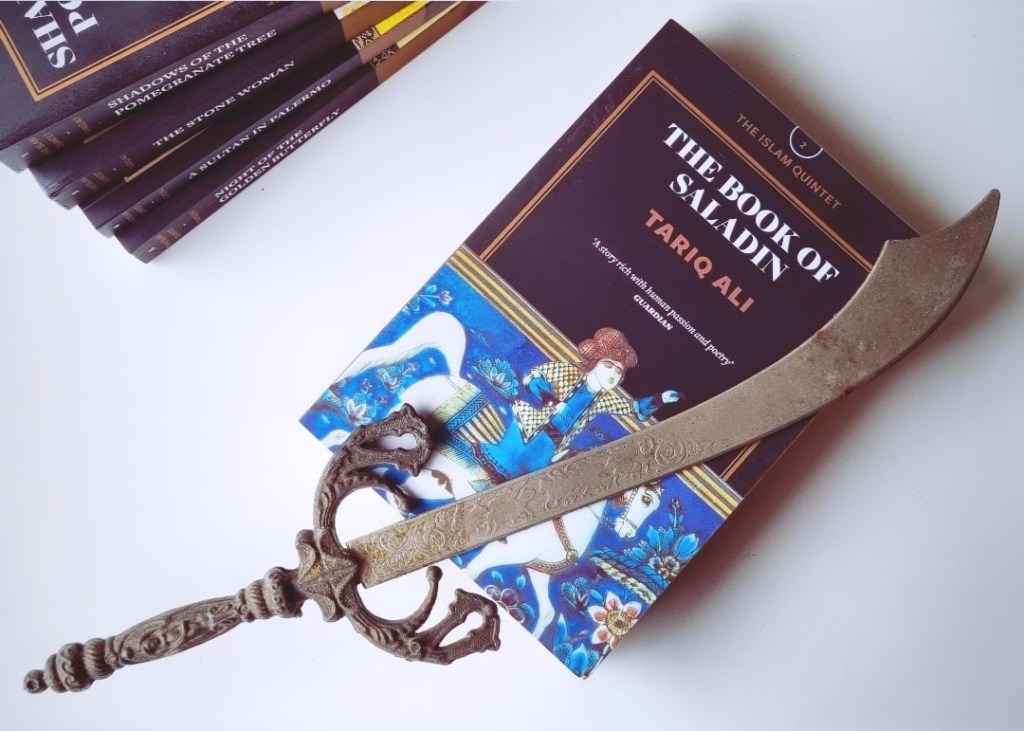
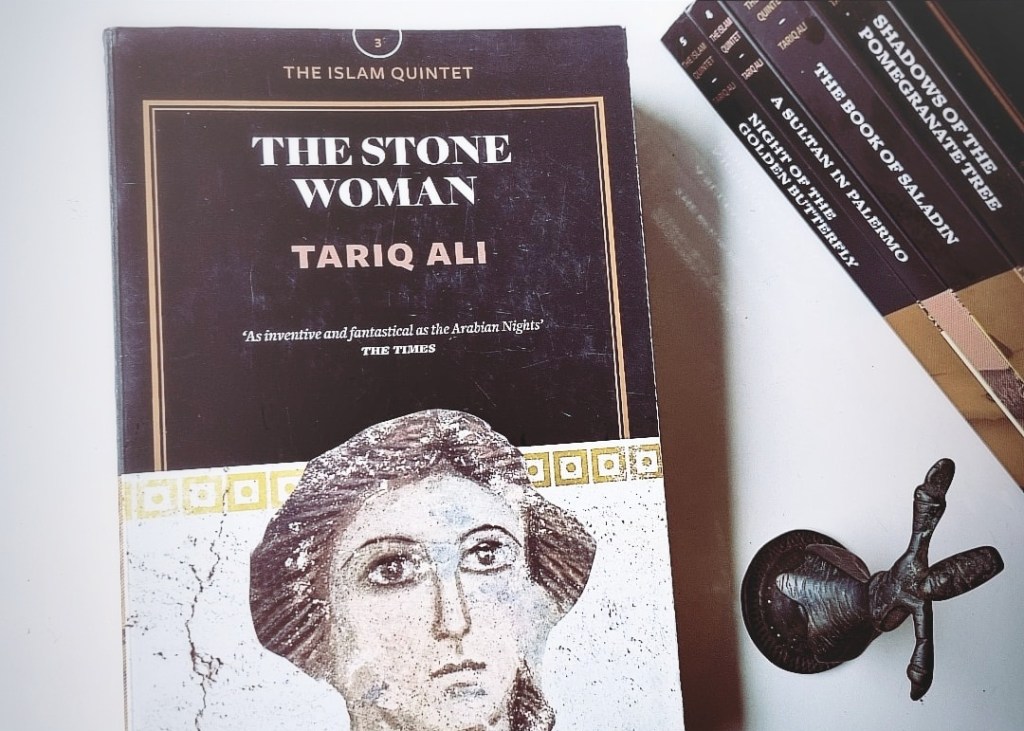
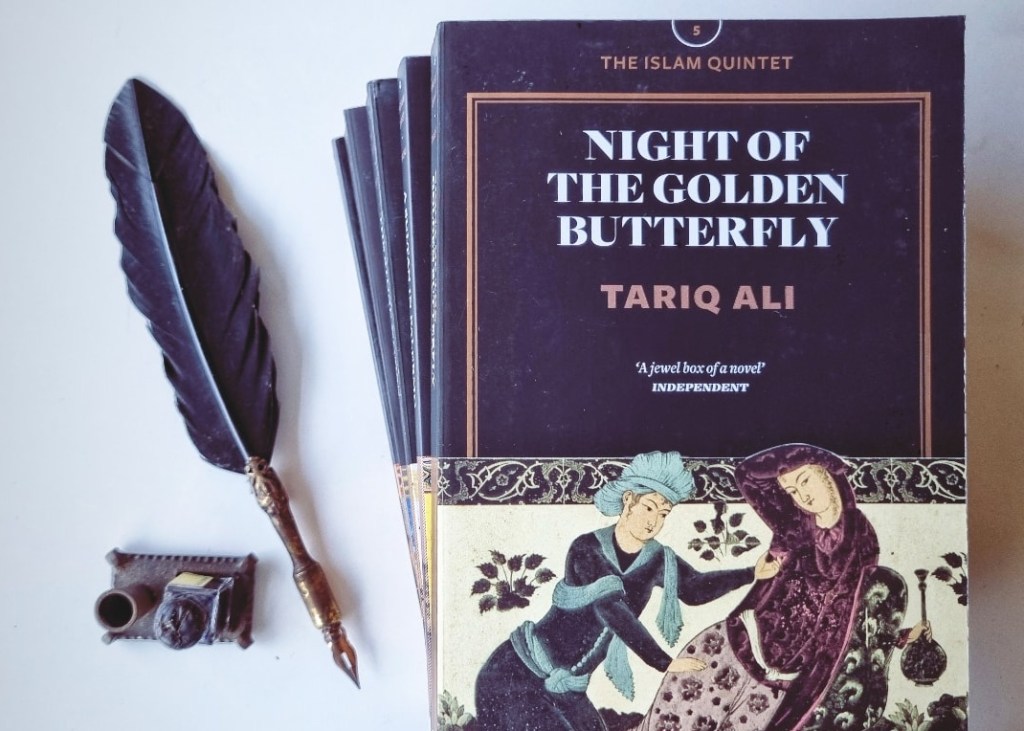
Tariq Ali: The Islam Quintet

Shadows of the Pomegranate Tree: There is something so consuming about how this first novel of The Islam Quintet commenced: The cinematic intensity of a man crying out, “What is the point of life without our books of learning?” then jumping to his death into a wall of flames fueled by two million manuscripts and the collective knowledge and culture of an entire peninsula!


Eight years after the book-burning, after the confiscation of everything written in Arabic, after 1492, after the War of Granada, after the fall of the last Muslim state in Iberia, this period, this place with its beguiling names — Al-Andalus (Andalusia), Ishbiliya (Seville), Gharnata (Granada), and the Banu Hudayl family come alive through Tariq Ali’s storytelling.

Under the reign of Ferdinand and Isabella seven hundred years of Muslim rule in Spain ended, and so did the coexistence of Jews and Muslims in the region as they were given a choice between conversion to Christianity, slavery, or exile.

“Did I not tell you when they burnt the books that it would not stop at that?”

Expecting the story to be mainly about the clash between religions, I was surprised to find that most of the characters have a secular and progressive worldview. Tariq Ali’s reputation as one of today’s leading intellectuals shines through as the story also becomes an accessible introduction to Islamic philosophers and philosophy. Moreover, the novel does not predictably dwell on praising the former glories of Islam but even remarks on its defeats and self-destruction. 

The straightforward prose that is not without its poetry deceived me into thinking that I would be safe from tears, but this rare and affecting glimpse into the death throes of the Islamic Golden Age left me heartbroken.

I suspect that this was written not out of nostalgia for an age gone by, but as an admonition for the present; and once again, a sobering reminder that throughout history, those who destroyed books never stopped there.


The Book of Saladin: Saladin has long been among the most intriguing historical figures on my list. How he is esteemed in both western and eastern accounts is quite telling of this character.  What’s not to admire in a dignified man who resolved to take Jerusalem from the Crusaders without bloodshed?

I do not think that this second volume of the Islam Quintet was ever intended to be the definitive portrayal of Saladin, however. Humor and wit is not absent here, and I enjoyed the author’s light-hearted approach especially that life has been heavy lately. Through this fictional memoir recounted through a Jewish scribe, Tariq Ali humanizes the legend.

This will not be to the taste of conservative Muslims and Catholics. There is a flavor of heresy against both faiths. The erotic aspect is also unanticipated from a book about the “Righteousness of the Faith”, but I reminded myself that a significant part of classical Arabic literature and the sexual practices of that period are, in fact, not too different from what is revealed here.

But the former should not distract readers from the following:

How this book is a criticism on how women are seen and treated in society. “Her father had given her a manuscript by the Andalusian Ibn Rushd (Averroes), and she talked of him in a reverential tone. She told us of how Ibn Rushd had criticized the failure of our states to discover and utilize the ability of women.”

How this is an exploration on religious hypocrisy, skepticism, and faith. “If heresy is another way of expressing the struggle for the real God, then I am a heretic and proud of the fact.”

How there was peace and respect between Jews and Muslims in Saladin’s court, as seen through the fictional scribe, Ibn Yakub and the nonfictional physician, Ibn Maymun (Maimonides).

How even the greatest men in history are only human.

How truth remains elusive, and yet there are men and women who dedicate their lives pursuing it.

“The service of great kings may carry its own rewards, but the service of truth goes unrewarded and is, for that very reason, worth far more.”


The Stone Woman: It was only halfway through the book when I began warming up to it — when the attention turned more towards matters of state and away from matters of the heart.

I have the highest regard for Tariq Ali and his non-fiction, but there was something unconvincing about the way this book was written in female first person. The first two volumes of The Islam Quintet are remarkable for being among the few books that delve into those particular situations in history; but for this third volume, I have to admit that there are better books written about the decline of the Ottoman Empire.

Set in Istanbul, The Stone Woman is a statue of a pagan goddess at the palace of the descendants of the nonfictional Ottoman admiral, Yusuf Pasha. Throughout the centuries, she has been a mute confidant to members of the family, and it is around her that the stories of their lives unfold. And so does the story of the last days of the “Sick Man of Europe,” the Ottoman Empire.

There are harsh political truths tucked away in this book but I wonder if the love affairs of the characters deflect attention from what is important.

But was this book another way of saying that whether it concerns affairs of the heart or empires, nothing is eternal?


A Sultan in Palermo

“Isn’t the search for knowledge always dangerous?”

Al-Idrisi is one of the illustrious names associated with the Islamic Golden Age. He is known for capturing the interest of the Norman King Roger II of Sicily who commissioned this learned man from Muslim Spain to produce a large-scale geographic work that would become the most accurate map of the known world for almost three centuries, the Kitab Rudjdjar or Tabula Rogeriana, also known as “The Book of Roger”.

Al-Idrisi’s own writings say little of himself and more about his patron. A Sultan in Palermo takes advantage of this and weaves an imagined narrative about al-Idrisi’s life in Sicily. Romantic and political intrigue mingle in this book, but I enjoyed how it is a none too serious pondering on science and religion, and how grains of wisdom can be found in the dialogue. It also revived Palermo in my mind as a prominent trade center between east and west in medieval times and stirred travel lust in me. 

However, I have to admit that I thought this volume could have been so much more! But it also made me realize that the books in this series should not be expected as consummate works but treated as pointers to historical periods and characters that we rarely think about, and considered as cues to ponder on timeless issues that concern our past, present, and future.

These books are not perfect, but in their own way, they light the way.


Night of the Golden Butterfly: Well, that was a strong finale! I am glad that I did not allow the third volume and the expletives at the beginning of this one to discourage me from pressing on. I would recommended this to those who would like a clearer glimpse of the political temperature in Pakistan sans the Rushdie-an literary caricatures and magic realism.

No longer set in the past, the reader is brought to twenty-first century New York, London, Paris, and Islamabad.

There is an interesting mix of characters, a generation still experiencing the traumatic aftermath of the Indian Partition and living long enough to witness the Islamophobia wrought by 9/11. One is an artist who expresses the pains of the Partition through his art, and who claims that without the Partition, there wouldn’t have been a need to paint. Another is a descendant of the Chinese Muslim, Du Wenxiu, who led the Panthay Rebellion in Yunnan, and subsequent sultan of the Dali Sultanate for a decade during the Qing Dynasty; thus continuing the vein of the previous volumes by calling attention to history’s forgotten corners of Islamic ascent into glory but also their decline.

A sensitive reader will perceive that the truths here are not merely well-researched but that they are truths the author has lived through. The narrator, after all, is a writer from Lahore.

Unfortunately, these are also truths that this reader is living through. Here is a nation suffering from cancer. Cancer being corruption and its rulers with their ill-gotten gain. A nation supposedly under intensive chemotherapy but there are already signs that the drugs being administered are producing new cancers. Who cannot relate? 

Only the blind. And I can only return to a particular quote from this Quintet’s first volume that, through all five books, through different historical eras, and in different parts of the world, has proved true: “Blind faith would not get us anywhere.”
Magda Szabó

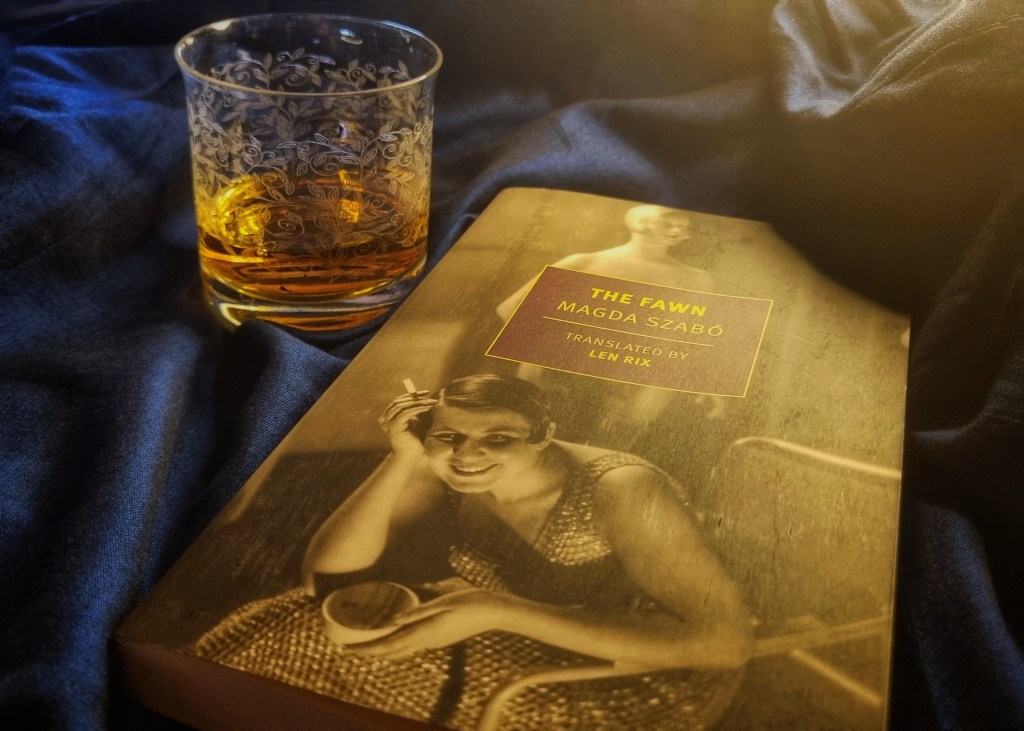
The Fawn

April 18, 2023

“I wanted to be with you sooner…” This first line, a faint melody, I imagine played by a solitary piano. This unwavering, melancholic undertone, suggesting that Eszter Encsy is addressing someone who is no longer in her life.

There is a calm, almost cold, but delicate aching to be accepted and understood. Recollections of childhood come across as confessions and explanations… including that time she did not mean to kill the fawn.

But how did that seemingly dispensable incident earn the title of the book? Perhaps the fawn is meant to symbolize the fragility of youth, and how easily it can be broken.

Magda Szabó, who died with a book in her hand, has bequeathed to the world novels that aim straight for the soul. She wrote of women; women who do not have to be faultless. She did not demand heroics from them or for them to be worthy of admiration or to be idealized. She only asked that they live — live intensely, and learn.

And yet, I did not expect her to go to the extent of Eszter. The moral puzzles are not vague here, it is made quite clear what kind of person we have as a central figure right from the beginning: “I could never have undertaken to be a good girl and never to tell lies…” “I lie so easily I could have made a career out of it…” “I was also laughing at the monster I really am…” “I wasn’t a very nice person and I wasn’t very friendly…”

We immediately get the picture. Appalled, we double-check the synopsis, even though Szabó readers know that her synopses hardly describe what one encounters between the pages. But we read on. Because Szabó is brilliant. Because we suspect that a gut punch or two awaits round the bend. Because oftentimes, nothing is what it initially seems. Because she writes of those difficult spaces between people that most of us are too inattentive, too timid, or too unimaginative to explore. Because we know that behind all her stories is a carefully woven leitmotif of a history she mourns. Because Szabó is always subtly reminding us of consequences, of how we cannot extricate our personal histories from that of our nation. Because she is eternally thought-provoking, and therefore, rewarding.

…and because those elegiac strains from that lonesome piano will linger long after you’ve turned the last page.

Katalin Street

October 13, 2022

Of the invasions of history into our lives; of moral intricacies, those shadowlands between right and wrong; of the love we give, we take, or do not receive — and a fatal overdose of any of the three; of faulty assumptions and miscalculations; of the tangled complexities of relationships between friends, family, and lovers, and even with ideologies and a nation; of the deaths we die before our real deaths; of things we realize too late; of the damage we wreak on those we love; and the irretrievable losses that time inflicts on us… Some books carry with them all that is unutterable and aim straight for your soul, not out of cruelty but out of an earnest art, and disclose that life will silence you… over and over again.

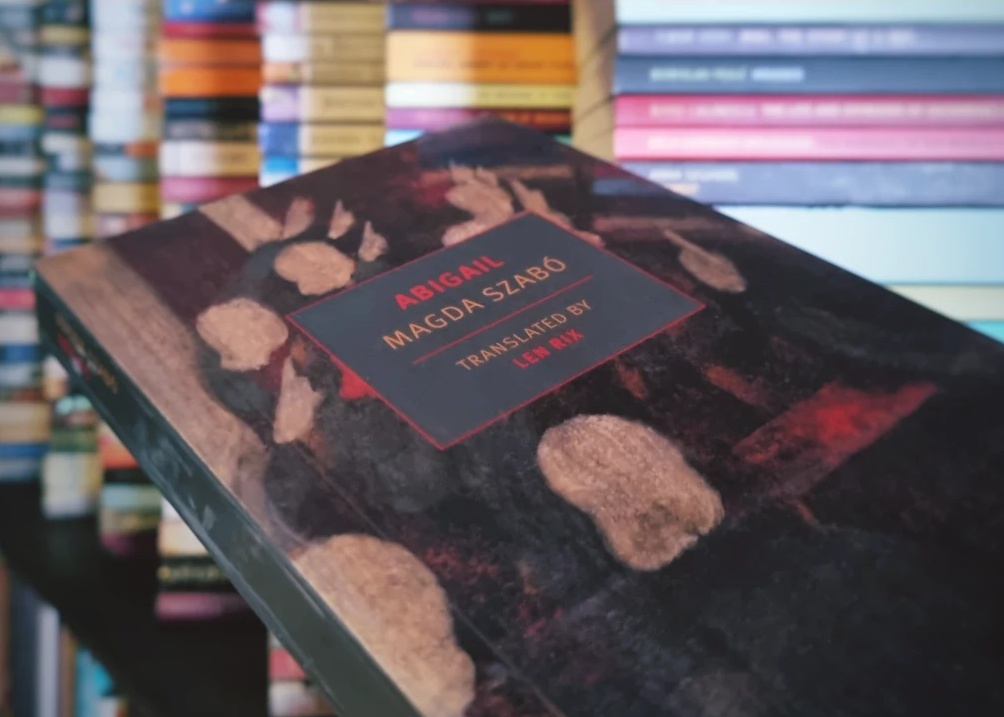
Abigail

September 22, 2022

“In any work of literature the most interesting bits are in the detail,” Kőnig had often said in his lessons. “Be sure to attend to them closely.”

If I had a daughter, she’d find this book in a collection I created for her.

Reading this, she’d be reminded that heroines do not have to be faultless; that the surest assumptions can often be wrong; that no matter how clever we think we are, there are people wiser still; that actions always have consequences; that friendship is precious; that even in the most repetitive of routines and what we deem the bleakest of days, life will find ways to astound or surprise us.

If she philosophizes and reads deeper into the book, as I suspect a daughter of mine will, she will venture to question where childhood ends and adulthood begins, and attempt to come up with answers of her own, or a hundred questions more.

If she develops an awareness of history and politics, as she must, she will be sensitive to Magda Szabo’s subtle activism and glean the lessons of sacrifice and duty.

And I imagine this book — so engaging and difficult to put down — will only fuel the love for reading in her.


Can you tell that I read this through the eyes of a wide-eyed adolescent, and not through the eyes of an adult still haunted by the painful and confounding strains from Iza’s Ballad and The Door but who, nonetheless, acknowledges that Magda Szabó has now become a favorite?

Iza’s Ballad and The Door gnaws at the soul. Abigail educates the heart.

The Door

September 2, 2022

“But a door can hint at so much more.” — Geetanjali Shree, Tomb of Sand

Having come fresh from a streak of world literature for Women in Translation Month, which included Tomb of Sand, I have become more attuned to the implication of doors being more than architectural features. Doors as metaphors for boundaries.

But in contrast to Geetanjali Shree’s doors where, ideally, anyone came and went; Magda Szabó’s door was meant to remain shut. The physical door of the latter was not only a boundary but the framework of a person’s dignity.

Szabó’s Iza’s Ballad turned out to be the most exquisitely written work from my WiTMonth selection, so I wasted no time in taking a peek into this door.

Curiously, Iza’s Ballad and The Door both have characters hired as household help who do not work for the money. One is a minor character in Iza’s Ballad, but in The Door it is the baffling, the imposing, elderly Emerence, one of the two central figures in the story. Adding to the intrigue is the younger and other main character, a writer, the author’s namesake.

Two decades of love-hate relationship yield misunderstandings and reconciliations, but also critiques on each other’s lives, on art, and on their clashing beliefs. At some point, the writer eventually achieves “the prize” and receives a prestigious recognition for her work, but not without the question of what it cost.

There is a challenge in talking about this book without giving away what the author meticulously wrapped in layers, because reading Szabó is like a careful and deliberate peeling of an onion. The core is shrouded in well-executed veneers where even the revelations continue to maintain a mystery that lead toward a confounding finality.

But she is yet another testament to my hunch that 20th century writers remain unsurpassed. Even with a tinge of absurdism, there is that deep exploration into the dark of interior characterization, a delving in the psychological, spiritual, and philosophical condition of its characters, if only to pose the argument of what it is that really matters in life.

Iza’s Ballad

August 18, 2022

 © 2018 MDR
Budapest, Hungary

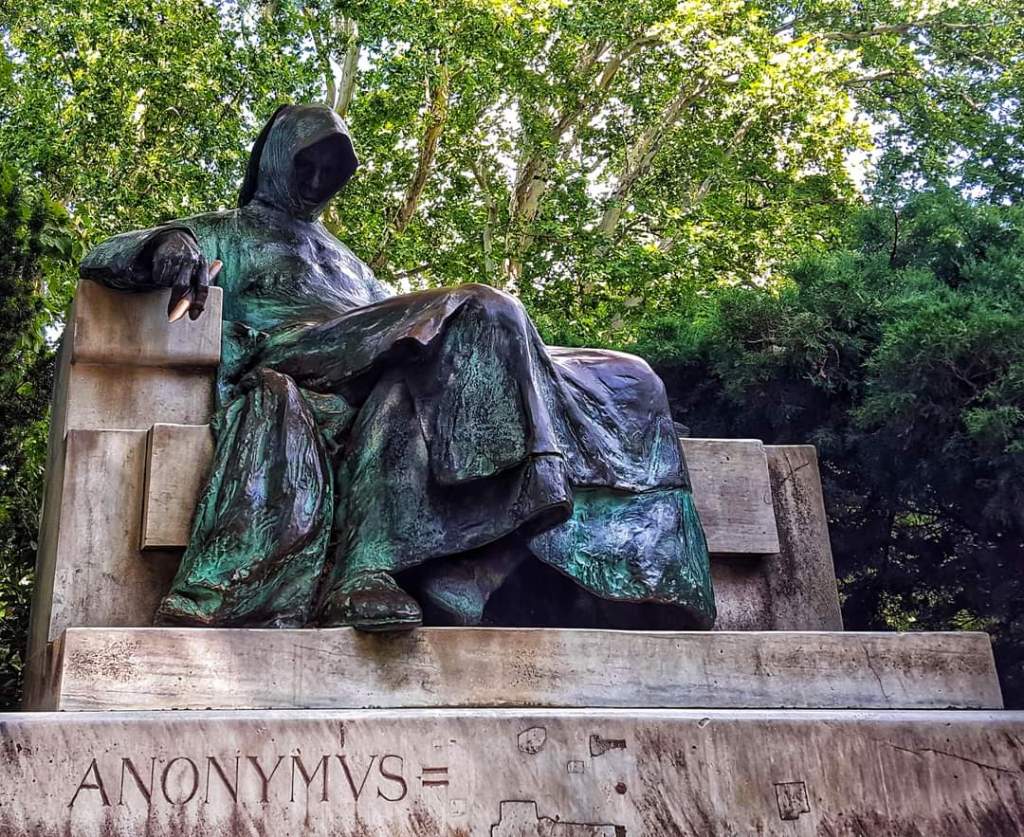
“As he spoke Lidia could see the schoolgirl Iza discussing the future with her father. She saw her as her father described her, as a pint-sized redeemer spreading out her school atlas and examining the map of Budapest because she wanted to see a major city, a really big city, and trying to work out where in City Park the statue of the historian Anonymous might stand. Iza loved the look of that hooded faceless figure. She saw it once when she was a young woman visiting Budapest…” Magda Szabó, Iza’s Ballad

How pleased I was to have identified with Iza so much! There was even something close to a silent pride that I initially felt. It was as if I were reading my own mother’s description of myself how Iza organized her life and her schedule, the tidiness, the discipline, the sense of responsibility, the restraint, her satisfaction in not having to give account of herself to anyone!

But how I trembled, as I turned the pages approaching the finale when I realized that it was because of this unrelenting self-discipline seeping into the cracks of her relationships that led to heartbreaking consequences.

It is for readers with aging parents. It is for every new generation that believes they are so much wiser than the previous one, so practical even in matters of the heart, and yet, unwittingly, so heartless.

It is for societies that reject the past and the old deeming these to be outdated and sentimental, failing to acknowledge that the past and the old hold the clues to the present and the new.

Although set in postwar Hungary, the spirit of this novel is contemporary: the timelessness of its message, its tragedies that are themselves the lessons, will gnaw at my soul for years to come.

Few books leave me feeling defeated. This one did. I felt so helpless under the influence of such simple but penetrating prose.

It is that dazed emotion one undergoes when someone so much wiser with experience sings in a pensive gasp, “I really don’t know life… at all…” Yes, someone like the inimitable Joni Mitchell, only Magda Szabó does it with an outstanding novel that she affectionately hands over to the reader saying, “You really don’t know life… at all…”

And in the presence of such masterful artistry and truth, what else can one do but applaud and weep?

Julian Barnes: The Noise of Time

How do reading friends try to lift your spirits? One brought me to Solidaridad, the legendary bookshop founded by the late National Artist for Literature, F. Sionil Jose, and forbade me to exit the shop empty-handed.

“It’s on me,” they’ll say, and treat books like a drink in which you’ll drown your pains.

Thousands to choose from, and yet I clung to this one as soon as I saw it. I was unaware that 2011 Man Booker Prize-winning author, Julian Barnes, wrote a novel about Shostakovich! For an idea of how fond I am of Shostakovich’s music: I performed his Piano Concerto No. 2 on my first solo recital and named a pet fish “Shosta” after him — never mind that this pet fish leapt outside of the fishbowl to his doom and died a very dramatic Russian death.

But I digress… needless to say, I took The Noise of Time home with me and finished reading it on the day the 2022 Man Booker Prize winner is expected to be announced.


It is surprisingly an apt read for a time when many Russian musicians and artists are being cancelled worldwide for not publicly denouncing Putin and the war against Ukraine.

This book suggests that it is not always as easy as it seems to make a public stand.

Shostakovich, who enjoyed international success after his first symphony, dealt with a blow when his opera Lady Macbeth of Mtsensk (a title familiar to NYRB editions enthusiasts) was condemned by the Soviet government in 1948, endangering his life, family, and career. Although the aforementioned work was a success after its premiere in 1934, Barnes highlights the capriciousness of the Soviet state: “What the party had said yesterday was often in direct contradiction of what the party was saying today.” As if under similar laws of energy, Soviet power evolved and mutated from one form to another.

How Shostakovich had never joined the Party initially, but had allowed himself to be seen as supportive of the Party, and how his subsequent decisions played out, appear to be a question between cowardice or courage. But wasn’t this too much to ask from a man who simply wanted to compose music?

What becomes of art when it is suppressed or governed under tyranny — “art made tongue-tied by authority”?

This book has some beautiful answers:

“Art belongs to everybody and nobody. Art belongs to all time and no time. Art belongs to those who create it and those who savor it. Art no more belongs to the People and the Party than it once belonged to the aristocracy and the patron. Art is the whisper of history, heard above the noise of time.”

“Because music, in the end, belonged to music. That was all you could say or wish for.”

But if those lines still cannot convince one of the purity and the incorruptibility of great art, the second movement of Shostakovich’s Piano Concerto No. 2 just might.