“Have you converted?” asked my best friend when he learned that I was reading this book. In other words, “Have you become a Harukist?”
Murakami became extremely popular in our circle during our teens and every reader we knew waved the Haruki banner high. But both of us shared a terrible secret: We were not into Murakami. We tried. We just somehow couldn’t.
Being both musicians, it was the biggest irony, because we love classical music, grew up with music by the Beatles, and listened to jazz — excellent and key ingredients in any Murakami work. (That After Dark opening? That is sheer music! I intentionally re-read it on a trip to Tokyo as the plane landed. Is there a better prelude to that megalopolis?)
But when we were younger, at what seemed to be the height of Murakami’s popularity, we instead entered a beautiful literary space occupied by the diaries of Anaïs Nin, the gushing streams of Clarice Lispector’s consciousness, and Colette. Perhaps we cannot be blamed if we felt like we weren’t missing anything by not being into Murakami.
Twenty-ish years later, I’m tiptoeing back into Murakami’s music room to eavesdrop on his conversations with Seiji Ozawa. (Recognizable to the younger generation and the world outside of classical music as the elderly conductor who, in a wheelchair and in tears, performed Beethoven’s “Egmont” Overture with the Saito Kinen Orchestra — a performance broadcasted live to outer space on the International Space Station in 2022.)
Glenn Gould breathing through the piano in the background as Leonard Bernstein conducts reassures me that, at least for now, I do not have to think about Murakami’s treatment of women in his novels.
The conversations between the two are like musical counterpoints played in tempo giusto. Writing and music as two melodic lines that diverge but remain in harmony, which oftentimes meet in unison when what the two have in common, hungry hearts and a penetrating ear for sound, “dig deeper and forge farther ahead”.
From the contrasting conducting styles of Bernstein and Karajan, to the presence of “ma” (a Japanese word for the musical quality of pauses and empty spaces charged with meaning in Asian music) in Gould’s interpretations, to the dissection of Brahms’ orchestration, to the difference of sound between the world’s best orchestras, to John Coltrane’s free jazz, to Mahler’s music and the art of his time… I came out from my eavesdropping feeling more enlightened as a musician and as a person.
What a dream to listen to these conversations all day whilst partaking of Yoko Murakami’s rice cakes…
“…you can’t write well if you don’t have an ear for music. The two sides complement each other: listening to music improves your style; by improving your style, you improve your ability to listen to music… So how did I learn how to write? From listening to music. And what’s the most important thing in writing? It’s rhythm. No one’s going to read what you write unless it’s got rhythm. It has to have an inner rhythmic feel that propels the reader forward.” — Haruki Murakami, Absolutely on Music
Children of the Ghetto: My Name is Adam is my fifth Khoury. Would I recommend this? Perhaps not as a reader’s first Khoury. Would I read another Khoury after this? Absolutely!
In what seems to be a foreword signed by the author, he recounts how the notebooks of Adam Dannoun came into his possession. The entire book is the purported sum of Adam’s scribblings. “This is neither a novel nor a story nor an autobiography. And it isn’t literature,” writes Adam in his notebooks. But of course, through his virtuosity, Khoury turns the non-novel, the non-story, and the non-autobiography into literature.
It is literature that is one of the trickiest webs that he has woven because it challenges Khoury himself as a storyteller. It is soon revealed that Adam claims to have known the characters in Gate of the Sun personally, and he dislikes “the author of the novel Gate of the Sun, standing next to the bald Israeli director, presenting himself as an expert on Palestinian history, and lying.”
Adam, an infant in 1948, named so as the first born of the Ghetto of Lydda. Adam lived through the horrors of the ghetto, the massacre in Lydda, and the Lydda Death March. Before his suspected suicide in New York as an older man, he struggled to write about what befell his people. The notebooks contained his attempts. The whole history of our Nakba is unwritten. Does that mean we don’t have a history? That there was no Nakba? Does that make sense?
It possibly cannot be the unfathomable pain of the Nakba or the senseless violence of the Lebanese Civil War that keeps me coming back to Elias Khoury. It’s probably not the history either, because he is the kind of writer who questions it.
Or maybe it is because he questions history that I keep coming back. Maybe it’s also for the reason that every book I’ve read that’s written by a Lebanese reveals how capricious and adventurous the Lebanese are with form, or with the defiance of form. Maybe I’ve been lucky with the chronology of which I read, and of which the books came to my possession, that instead of being thwarted by this unconventional and sometimes disorienting quality, each book has only heightened the allure for me.
And maybe it is because Khoury, as a writer, urges and trusts the reader to be the one to bring a story to life; a truly Eastern composer of tales who wants to obliterate the author and make his identity of no interest so that literature becomes, like Eastern classical music, not a fixed composition, but an unfolding.
Maybe if I were not repulsed by Lakhdar who reminded me so much of the young men who catcalled or boldly approached me for my contact details on a solo trip to Morocco, I would have esteemed Street of Thieves better. At the same time, I also checked myself if it was because I was uncomfortable with the portrayal of the darker streets that a female solo traveller usually circumvents, and which shatter more romantic notions of Morocco, Tunisia, and Spain. After all, the truth hurts, even when it concerns favorite or dream destinations.
“…I had realized that afternoon, Judit’s Tangier did not coincide with mine. She saw the international city, Spanish, French, American; she knew Paul Bowles, Tennessee Williams, and William Burroughs, so many authors whose remote names vaguely reminded me of something, but about whom I knew nothing.”
Still, I’m afraid I cannot agree with the blurb claiming that this novel “may take Zone’s place in Christophe Claro’s bold pronouncement that Énard’s earlier work is ‘the novel of the decade, if not of the century.’” But that’s not to say that this book doesn’t have its merits. The fact that I continued reading up to the chilling last page is proof of Énard’s prowess. The story clarifies the youth’s discontent and anti-government sentiments in the wake of the Arab Spring and the anti-austerity movement of the indignados in Spain. This one has its own special niche in political literature of the Maghreb.
“‘All young people are like me,’ I added. “The Islamists are old conservatives who steal our religion from us when it should belong to everyone. All they offer are prohibitions and repression. The Arab Left are old union members who are always too late for a strike. Who’s going to represent me?”
I simply think it falls short of the enigmatic and beautiful prose of Tell Them of Battles, Kings, and Elephants; incomparable to Compass that holds certain passages that mean to me more than I can express; and quite a distance away from the extremely impressive threnody for the last century that is Zone.
If there’s one thing that the main character of Street of Thieves definitely got right, it is this: “I think today of that dark parenthesis, that first imprisonment in Algeciras, that antechamber, when around me spin the lost ones, walking, blind, without the help of books…” How dark, indeed, to go through life without books.
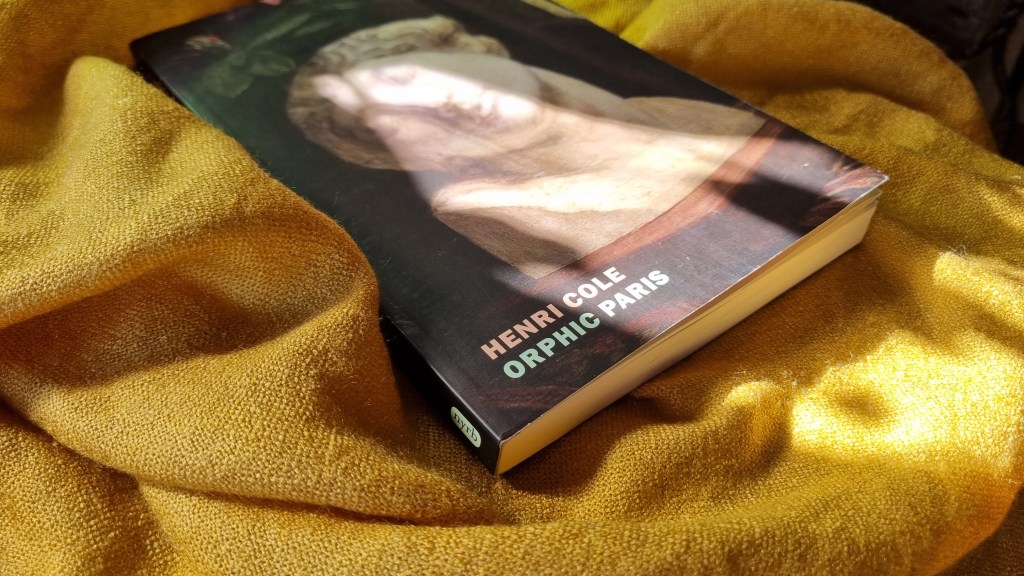
Portraits: Of a young Rebecca Solnit finding, and fending for, herself; of the nature of dictatorships and revolutions by Ryszard Kapuściński; of Eastern Turkey under the veil of its dramatic landscapes by Zülfü Livaneli; of Paris and the poet through the vantage point of Henri Cole; of the unfortunate visage of Skylark by Dezső Kosztoláni. These are some of the extraordinary faces I met on this month of May.
It is not nearly celebrated enough, says Solnit: “The sheer pleasure of meeting new voices and ideas and possibilities, having the world become more coherent in some subtle or enormous way, extending or filling in your map of the universe…this beauty in finding pattern and meaning,” this thing called Reading.
Even so, here we are. The readers (ironically, the ones least concerned about faces), the ones who, by turning each page, celebrate best these encounters, these awakenings, these flights.
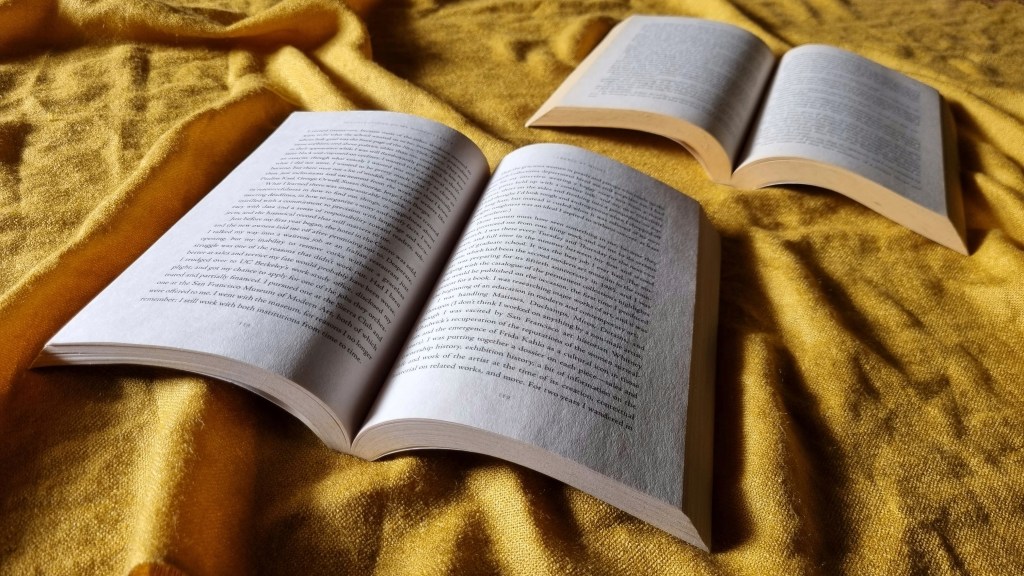
“At least I had books. Closed, a book is a rectangle, thin as a letter or thick and solid like a box or a brick. Open, it is two arcs of paper that, seen from the top or bottom when the book is wide open, look like the wide V of birds in flight.” — Rebecca Solnit, Recollections of My Nonexistence“I’ve always believed that poetry exists in part to reveal the soul’s capacity for compassion, sacrifice, and endurance. For some of us, this satisfies a basic human need, like air or water, but a poem must also have music, imagery, and form. Because there is a kind of nakedness or authenticity in poetry that is associated with truth, on many days I haven’t got the guts for it, and I fail. But when I succeed, there is nothing in life — except love — that equally verifies my existence.” — Henri Cole, Orphic Paris
“If I were moved by any kind of power at all, it would be the power of revealing absolutely everything about who we are.”
It’s been so long ago that I have started to question whether Florentina Ariza ever truly loved Fermina Daza. And why is it that what remains most vivid in my mind is how Dr. Urbino’s tasseled slippers made Fermina weep after his death?
“The thing you remember most is what has most deeply affected you,” writes Renato Cisneros. Have I always been affected by loss, or afraid of the space of another’s absence?
I apologize. I have fully digressed right from the beginning! Is it even possible to digress right from the beginning?
But what makes the writing and the translation of The Distance Between Us so satisfying is that it is reminiscent of my first encounters with the Latin American greats! (Not the magic realism aspect for there is none of that here, but in the way the writer involves the reader intimately by making the characters palpable, using subtle tricks of psychoanalysis to dig as far within as they can so that one can gaze even into the unconscious.) But perhaps, most of all, for the moving premise of a son writing a book in an attempt to reduce the distance between him and his deceased father, a controversial figure in Peru’s turbulent history: A poignant endeavor to understand who the father really was in order for the son to fully understand himself. To acknowledge the faults of the father so as not to perpetuate them. To break the cycle and confront, rather than escape as his father and forebears have done, “Ignoring and later burying the thornier details of their pasts, they turned their backs on the intrigues of their shared history, embarking on a course of permanent disorientation…”
And yet, “Just as a father is never prepared to bury his son, a son is never prepared to dig up his father.” His undertaking brought to light his father’s amorous affairs; classified information that led him to acknowledge, though he loved him, that his father was a villain, but also that villains are made of wounds; the discovery that his parents were never legally married; and then to write about their love, to legitimize it — “This novel is my parents’ lost marriage certificate.”
Forget my likening Charco Press books to espresso shots. This strong blend of the personal and the political compelled me to spend hours and days between its pages. “Authenticity” is such an abused term nowadays that I sometimes wonder if the overuse has marked the word with a tinge of insincerity. Then comes along a book like this that keeps such doubts at bay. A work devoid of the inauthenticities of biographies and brimming with the honesty that confronts us in fiction.
Was I wrong to wish that the son of a dictator who is now our current president could be more like this son? But I digress, again.
“As a journalist, I say: Long live the magic. Kapuściński is an advocate for all who have chafed in a straitjacket called the house style, seen their lyrical phrases slashed for space, cursed the whole pedantic army of editors and fact checkers… he is a journalist’s writer, an example of what so many of us would love to be — if only we had the nerve.” — Christopher de Bellaigue
When one has had their fill of different accounts of the 1979 Islamic Revolution, fiction and nonfiction, Iranian and foreign; when an ample idea of its unfolding and its chronology has finally taken root; when details and events have been repeated enough and begin to sound redundant unless they are written with an exceptional voice and perspective; it is time to read Shah of Shahs by Ryszard Kapuściński — my personal cherry on the top of an Iranian Revolution literary stack.
It is not the book to read if one prefers a sequential list of events, a full cast of characters, an emotionally-charged dramatization, or a detailed portrayal of the Shah. This is not a portrait of the last Shah of Iran, neither is it a consummate portrait of a nation. From the collected clutter on Kapuściński’s hotel room desk in Tehran emerges a portrait of the nature of dictatorships and revolutions.
I can only wish he elaborated on that extravagant celebration that the Iranian despot held in Persepolis in 1971, which contributed to the flames of revolution, and in which the first guest to arrive at the event was Imelda Marcos. I would have loved for Kapuściński to have written a book about the Marcos family and our own EDSA Revolution!
For a Filipina reader and albeit dormant journalist, the writing method is illuminating and the subject hits close to home. There are too many passages that feel as if he were describing my own nation’s recent history. But then again, “The rather small arsenal of political tricks has not changed in millennia,” observed Kapuściński, who reported on twenty-seven revolutions during his illustrious career as a journalist.
Within a corrupt government, “Whoever tried to be honest looked like a paid stoolie.” “The higher up, the fuller the pockets,” and in that world, “development” has an entirely different meaning. “Any dictatorship appeals to the lowest instincts of the governed,” “A despot believes that man is an abject creature. Abject people fill his court and populate his environment.”
That a fed and entertained populace does not always signify a free society is a truth that burns: “A terrorized society will behave like an unthinking, submissive mob for a long time. Feeding it is enough to make it obey. Provided with amusements, it’s happy.”
And this is what he says about truth: “It takes a long time for a truth to mature, and in the meantime people suffer or blunder around in ignorance.” I’d like to believe, however, that reading the writings of Kapuściński speeds the process.
At the back of my mind, this question: Is Iran in the cusp of another revolution?
“Maybe I’d been captivated by a story. Yes, I’d been captivated by a story, by a culture, by a history; can a person be smitten by a story? Clearly it does happen…”
Indeed. That is why this book found me. Friends probably know by now that I am drawn to the stories, the cultures, and the histories encompassing what used to be called the Fertile Crescent and the lands that have carried the veins of the Silk Route.
Kurdistan is no exception. Accessible literary works from or about this region is so scarce that I value every volume I can get my hands on. While I have yet to experience books set in Iranian and Syrian Kurdistan, which I imagine must be breathtaking, I have been fortunate to have read about Iraqi Kurdistan [The Beekeeper of Sinjar by Dunya Mikhail (Serpent’s Tail), The Last Pomegranate Tree by Bachtyar Ali (Archipelago Books)] and Turkish Kurdistan [The Wounded Age and Eastern Tales by Ferit Edgü (NYRB), Every Fire You Tend by Sema Kaygusuz (Tilted Axis Press), and Disquiet by Zülfü Livaneli (Other Press)].
The Beekeeper of Sinjar, The Last Pomegranate Tree, The Wounded Age and Eastern Tales, and Every Fire You Tend are all beautifully written books that have led me to believe that the sorrows of this place are too profound, they can only be expressed through metaphors, silence, or poetry.
Disquiet tells the story of Ibrahim, a journalist based in Istanbul, who is drawn back to his hometown of Mardin to investigate the death of Hussein, a childhood friend. As Ibrahim digs deeper, he becomes enmeshed in Hussein’s past, haunting stories of Yezidi Syrian refugees fleeing ISIS, and recollections of his city’s more harmonious days: “Those were the festive days when Assyrians, Muslims, Zoroastrians, including Parsis, mingled in the marketplace and at school and celebrated one another’s holy days… But now the atmosphere was closed, the city had been darkened by the shadow of a sterner, angrier Islam… Now as I walk the streets they seem darker… this was a city living in fear, caught in the middle of conflicts between ISIS, the PKK, and the state security forces.”
Among the aforementioned books, Disquiet has the most direct prose; and therefore, a good introduction to this region that also allows a worthy glimpse into the Yezidi faith and the painful plight of its adherents. I suspect that what I think are weak spots in the novel owe to the translation but which thankfully do not distract the foreign reader from the eye-openers; from the call to be disquieted about the atrocities; the reminder that Turkey is not a single entity and that even Turks from the westernmost cities cannot always identify with the languages, beliefs, traditions, and cultures of the Mesopotamian lands of eastern Turkey.
And for some reason, I love how the narrator still refers to this grand swathe of land as Mesopotamia — the birthplace of literature.
“I asked him why, if there are faiths in every corner of the world, those that emerged from the Middle East had spread throughout the world. Did we commit the most sins, were we in more need of salvation than anyone else?
I detected a faint smile beneath his grizzly mustache. The answer to this is kalam, he said, the word. In this world nothing affects people as much as the word. The Middle East is where the word reached its zenith — no other region’s poetry, legends, or fairy tales are as powerful, none other have this much power to influence the human heart. That’s why the poets here are classified as magicians.” — Zülfü Livaneli, Disquiet
My favorite Rodin masterpiece is not The Thinker. It is a lesser-known work called The Cathedral, which looks nothing at all like a cathedral. It’s a sculpture of two expressive right hands lightly grazing at the fingertips, in anticipation of a universe of possibility. I love it for its elegance, for its nuance, for what it suggests; and for the thought that the sculptor understood that a place of worship is not confined to temples made with hands, but that he also had humor enough to convey the message with hands.
Claudia Piñeiro’s Cathedrals delivers the same message but not in the way Rodin does. She does it with mystery, disquiet, brutality, and spine-tingling revelations, while indicting the hypocrisies of society’s sacred institutions. She is an author not everyone can stomach, but one does not have to consistently agree with, or relate to, her characters to recognize that Piñeiro is a force in literature.
Elena Knows (April 2023) | A Little Luck (November 2023)
The phrase “a little luck” appears nine times in A Little Luck, just as “Elena knows” appears nineteen times in Elena Knows.
Does it matter? Not really. Maybe noticing those details says more of me as a reader than Claudia Piñeiro as a writer. One thing is certain; she does not repeat herself because she is running out of ways to say things. She is consistently unpredictable.
Elena Knows, which I read much earlier, is exceptionally written and translated. The choice to highlight a specific incapacitating disease that isn’t limited to women — to effectively confront every reader with what it feels like to lose bodily autonomy — is, I believe, the most impressive allegory that should be uncovered from under the many brilliant qualities of the novel. There are other apt adjectives for Elena Knows, but beautiful is not one of them.
But for the soulful strains of Piazzolla that wove through A Little Luck’s narrative; for how a woman damaged found the first steps to healing through literature; for how I thought it would all be about pain only to discover that it was principally about happiness; and for the sheer deftness of Piñeiro’s writing — this one is beautiful.
Just as unputdownable, just as suspenseful, just as affecting… and this time, beautiful.
“That’s why we need to read women. What does that have to do with it? It has everything to do with it.“
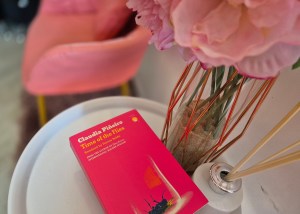
Time of the Flies, Claudia Piñeiro (August 2024)
Give me a back cover blurb without telling me the book is by Piñeiro and I would notbe very interested. The descriptions of her novels are unattractive to me, especially if they are about flies and women killing their husbands’ lovers.
But tell me a book is written by Piñeiro and I would read it without even asking what it’s about, even if it seems to be about flies.
Because if you just trust Piñeiro’s storytelling prowess and allow her to take you on a satisfying ride, you eventually learn that when it comes to the word “fly,” there is the noun, and there is the verb, and she’s ultimately writing about freedom.
Predictably unpredictable. She does it again. But this time, more heartwarming than one would expect, and more blatantly feminist.
“If I were moved by any kind of power at all, it would be the power of revealing absolutely everything about who we are.”
The Distance Between Us, Renato Cisneros (May 2023)
It’s been so long ago that I have started to question whether Florentina Ariza ever truly loved Fermina Daza. And why is it that what remains most vivid in my mind is how Dr. Urbino’s tasseled slippers made Fermina weep after his death?
“The thing you remember most is what has most deeply affected you,” writes Renato Cisneros. Have I always been affected by loss, or afraid of the space of another’s absence?
I apologize. I have fully digressed right from the beginning! Is it even possible to digress right from the beginning?
But what makes the writing and the translation of The Distance Between Us so satisfying is that it is reminiscent of my first encounters with the Latin American greats! (Not the magic realism aspect for there is none of that here, but in the way the writer involves the reader intimately by making the characters palpable, using subtle tricks of psychoanalysis to dig within as far as they can so that one can gaze even into the unconscious.) But perhaps, most of all, for the moving premise of a son writing a book in an attempt to reduce the distance between him and his deceased father, a controversial figure in Peru’s turbulent history: A poignant endeavor to understand who the father really was in order for the son to fully understand himself. To acknowledge the faults of the father so as not to perpetuate them. To break the cycle and confront, rather than escape as his father and forebears have done, “Ignoring and later burying the thornier details of their pasts, they turned their backs on the intrigues of their shared history, embarking on a course of permanent disorientation…”
And yet, “Just as a father is never prepared to bury his son, a son is never prepared to dig up his father.” His undertaking brought to light his father’s amorous affairs; classified information that led him to acknowledge, though he loved him, that his father was a villain, but also that villains are made of wounds; the discovery that his parents were never legally married; and then to write about their love, to legitimize it — “This novel is my parents’ lost marriage certificate.”
Forget my likening Charco Press books to espresso shots. This strong blend of the personal and the political compelled me to spend hours and days between its pages. “Authenticity” is such an abused term nowadays that I sometimes wonder if the overuse has marked the word with a tinge of insincerity. Then comes along a book like this that keeps such doubts at bay. A work devoid of the inauthenticities of biographies and brimming with the honesty that confronts us in fiction.
Was I wrong to wish that the son of a dictator who is now our current president could be more like this son? But I digress, again.
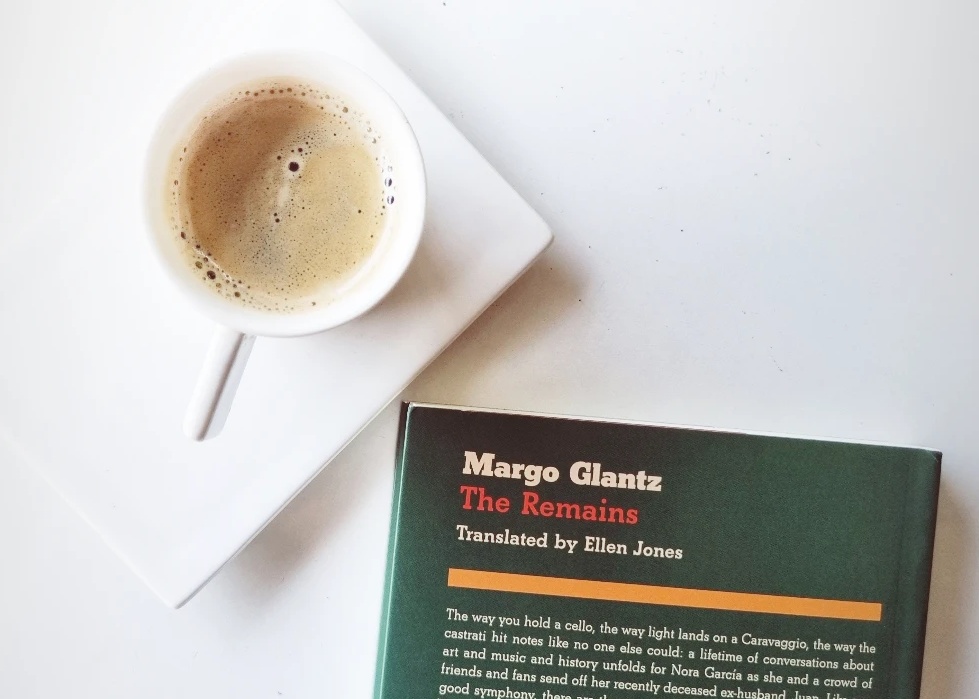
Chic French flaps that double as bookmarks, attractive colors, dimensions that fit in any handbag, and cover designs that could easily pass as pieces from the Museum of Modern Art: Charco Press indulges the busy contemporary reader.
It’s a section of my shelf that has lately become, perhaps unfairly, my go-to for a literary quick fix; where I’d proceed to grab a book without giving it too much thought — the way you would your car keys, the way I would a doppio from an espresso bar — on my way out to an appointment.
Small doses that pack a punch, style-wise, thought-wise, or both, delivering that stimulating and undiluted shot without demanding too much time and space. Yes, there are blends more intense or smoother than others. Some are darker roasts, and some have notes of an exotic flavor that make you gaze twice, sometimes longingly, inside an already empty demitasse. Some have a thick and bittersweet crema that cling to your lips, tongue, and insides long after you’ve downed the shot. But whatever the Charco Press barista has in store, it’s sure to come from a spread of South American blends that jolt our sleepy minds awake.
A Musical Offering, Luis Sagasti (February 2022)
Now, I’ve heard there was a secret chord / That David played, and it pleased the Lord / But you don’t really care for music, do you?
How can you not love a book that quotes Leonard Cohen on the first page? And truly, if you care for art and music, exquisite is an understatement of how this book is written. With an enchanting thread, Sagasti strings The Goldberg Variations, Bach, The Beatles, Brahms, Messiaen, Glenn Gould, Rothko, Mahler, Scheherazade… yes, Scheherazade! Because literature is still undoubtedly under her spell. Sagasti’s musical offering puts us in the shoes of the bewitched Persian King Shahryar, and this musician can only dream of a thousand nights more…
Fireflies, Luis Sagasti (May 2022)
Scheherazade in A Musical Offering, Penelope in Fireflies. I see what you did there, Mr. Sagasti! The mother weaver of stories of the East, and the mother un-weaver of storytelling of the West. Spun and spanned. And spangled. “Now I’m drunk, with universe.” Your books are beautiful reprieves. Write some more, please. We will need more of your magic.
“Without the slightest doubt, art is the answer. What we can’t be sure about is the question.“
The President’s Room, Ricardo Romero (February 2023)
The only part I felt I understood was the author’s note, but which I liked, because it speaks of the incendiary power of literature. At the end of this story of a nameless suburb in a nameless country where every house has a room reserved for the president, I had more questions than answers. But perhaps that is the point. To question, especially the things that people do not bother to question.
Two Sherpas, Sebastián Martinez Daniell (April 2023)
One of the many things I learned during a trip to Nepal was that it had never been colonized. Two Sherpas made me re-think this view when I realized how imperialism, with its enduring effects, encroaches on the mind and the sentiments of a people.
Unlike other books set in the Himalayas, the action takes place internally, inside the minds of two sherpas, one old, one young, as they look on an Englishman who has fallen from a ridge. The world looks different from up there, and there is much to glean from their perspective.
Trout, Belly Up, Rodrigo Fuentes (April 2023)
How simply evocative, these seven interrelated short stories! Subtle in depicting different social classes, but forthright in expressing that suffering is a shared experience, inextricable from the human condition.
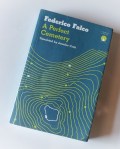
A Perfect Cemetery, Federico Falco (November 2023)
It’s like walking into a museum of modern art and then stopping at five evocative pieces that touch or disturb something incomprehensible inside of you, and you leave the museum feeling full… of questions.
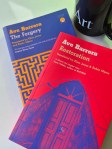
The Forgery, Ave Barrera (August 2024)
It’s probably best to read Balzac’s The Unknown Masterpiece prior to The Forgery. Had I not read it in 2022, I would not have recognized the numerous references. I regard The Unknown Masterpiece as an important record of the transition from the Romantic to the Modern period. This one, however, follows a painter in a series of unfortunate events inside the labyrinth of Mexican surrealism. I can see Modern Art lovers enjoying this book. Ave Barrera leaves you satisfyingly scratching your head. Does that make sense? But who’s talking about making sense?
Restoration, Ave Barrera (March 2026)
Misogyny has roots in the foundations of society, it escapes through the cracks of our country’s great houses, and cultivated inside rooms where women are not supposed to enter.
Misogyny is perpetuated in careless conversation and by those who laugh in response to what some presidents, law makers, and important men consider funny or normal. It is also perpetuated by women who allow it.
“We all know what happens in stories to women who open doors that men have forbidden them from opening,” Jasmina says, in Restoration.
If the forbidden room in this novel feels like a metaphor for the Epstein Files… it is. Because such rooms have always existed.
And if there’s one thing I know about Ave Barrera, it’s that she doesn’t hand the story on a silver platter. Harnessing her knowledge of art and architecture, she asks you to confront rooms, hunt for symbols, open locked doors, and lead you to the dark labyrinths of the male gaze.
I, too, am surprised why this did not make it to the International Booker Prize longlist.
“You want us to form a friendship built on disregarding the past, on ignorance and forgetting. Like all rulers, you want to burn your secrets so nobody can look at them after you die… We are not on the same path.”
How fittingly this line can be addressed to our current leader, and how I’d love to take some of Bachtyar Ali’s allegories to take a jab at the state of our politics!
But I doubt if railing against authorities was the main intent of this novel. Bachtyar Ali, injured in 1983 during a protest against Saddam Hussein’s Ba’ath Party and author of the first Kurdish novel to be translated in English, surely knows about unjust leaders and speaking out against them.
This story of a peshmerga fighter who is released after being detained in a desert prison for twenty one years and goes on a quest to find the son he left behind is told with the magical realism of A Thousand and One Nights, but with a more discernible moral aim, which also weaves in its tale the sufferings and the violent history of the Iraqi Kurds.
The Last Pomegranate Tree, with its moments of breathtaking lyricism, seems to me more of a profound contemplation on freedom, on what it means to be really free, and on what it is we should seek and hold on to when all seems lost.
“Only one thing has been left to us, the one thing they can’t reach: our hearts, our inner worlds.”
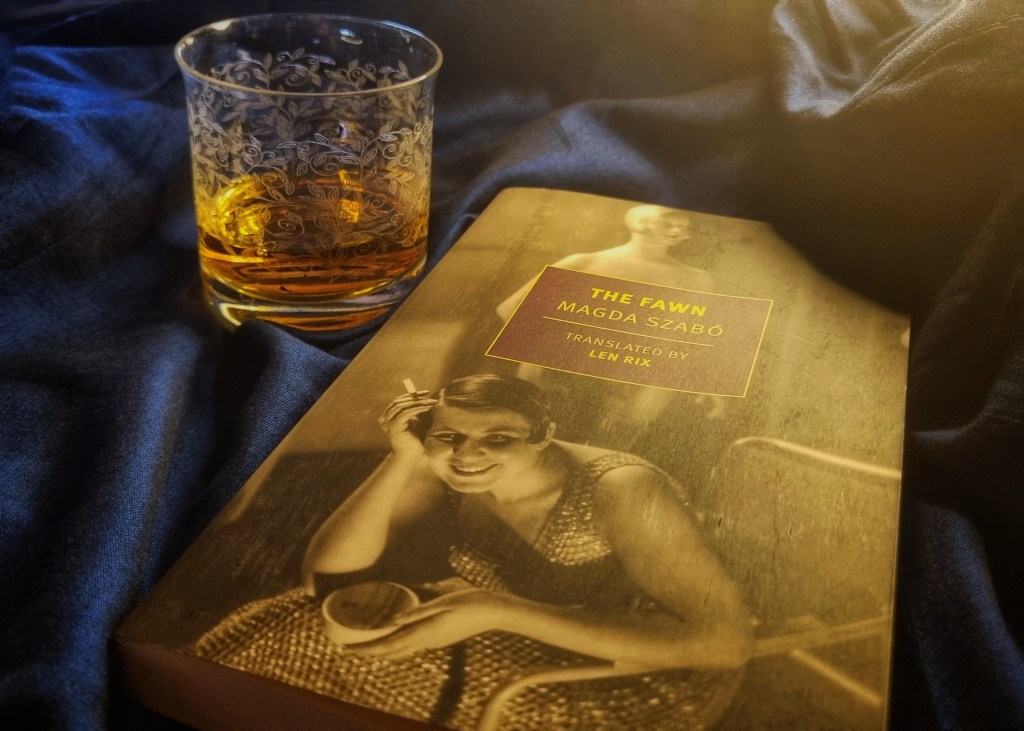
“I wanted to be with you sooner…” This first line, a faint melody, I imagine played by a solitary piano. This unwavering, melancholic undertone, suggesting that Eszter Encsy is addressing someone who is no longer in her life.
There is a calm, almost cold, but delicate aching to be accepted and understood. Recollections of childhood come across as confessions and explanations… including that time she did not mean to kill the fawn.
But how did that seemingly dispensable incident earn the title of the book? Perhaps the fawn is meant to symbolize the fragility of youth, and how easily it can be broken.
Magda Szabó, who died with a book in her hand, has bequeathed to the world novels that aim straight for the soul. She wrote of women; women who do not have to be faultless. She did not demand heroics from them or for them to be worthy of admiration or to be idealized. She only asked that they live — live intensely, and learn.
And yet, I did not expect her to go to the extent of Eszter. The moral puzzles are not vague here, it is made quite clear what kind of person we have as a central figure right from the beginning: “I could never have undertaken to be a good girl and never to tell lies…” “I lie so easily I could have made a career out of it…” “I was also laughing at the monster I really am…” “I wasn’t a very nice person and I wasn’t very friendly…”
We immediately get the picture. Appalled, we double-check the synopsis, even though Szabó readers know that her synopses hardly describe what one encounters between the pages. But we read on. Because Szabó is brilliant. Because we suspect that a gut punch or two awaits round the bend. Because oftentimes, nothing is what it initially seems. Because she writes of those difficult spaces between people that most of us are too inattentive, too timid, or too unimaginative to explore. Because we know that behind all her stories is a carefully woven leitmotif of a history she mourns. Because Szabó is always subtly reminding us of consequences, of how we cannot extricate our personal histories from that of our nation. Because she is eternally thought-provoking, and therefore, rewarding.
…and because those elegiac strains from that lonesome piano will linger long after you’ve turned the last page.