Hisham Matar & Colette Fellous

In the Country of Men & This Tilting World

The books I’ve read on two consecutive weekends; of Libya and Tunisia; and it so happens that they are neighbors on the world map.

In the Country of Men has been languishing on my shelf for over a decade, and Matar’s appearance on this year’s Booker Prize longlist reminded me of his silent presence in my library. On the other hand, This Tilting World was recently acquired after Fellous’s work caught my attention in an anthology. 

Aside from the geographic proximity of their respective settings, these two books surprisingly have more in common: In the Country of Men often feels painfully autobiographical, while This Tilting World admits to being utterly personal. They are simultaneously love letter and farewell letter to their homelands; they explore questions of nationalism, and both present a character’s fraught, and yet loving, relationship with a father and a country; and the writing seems to be an attempt at making sense of the loss of innocence, of the violently shattered idyll of their childhood and hometowns.

However, these are books which, I feel, have unfulfilled potential: In the Country of Men left me wishing for characters with more integrity, This Tilting World left me in want of a more cohesive opus for Fellous’s luscious and elegant prose.

But both contain their own beauty and remain valuable records of Libya’s and Tunisia’s recent history. The books are, therefore, still worth reading. 

In response to what the mother in In the Country of Men recounted, (…part of the punishment was to leave me with no books. “Don’t give her any more ammunition,” your grandfather had said…) we say: the more “ammunition” the better! It’s the only way we can make sense of this tilting world.

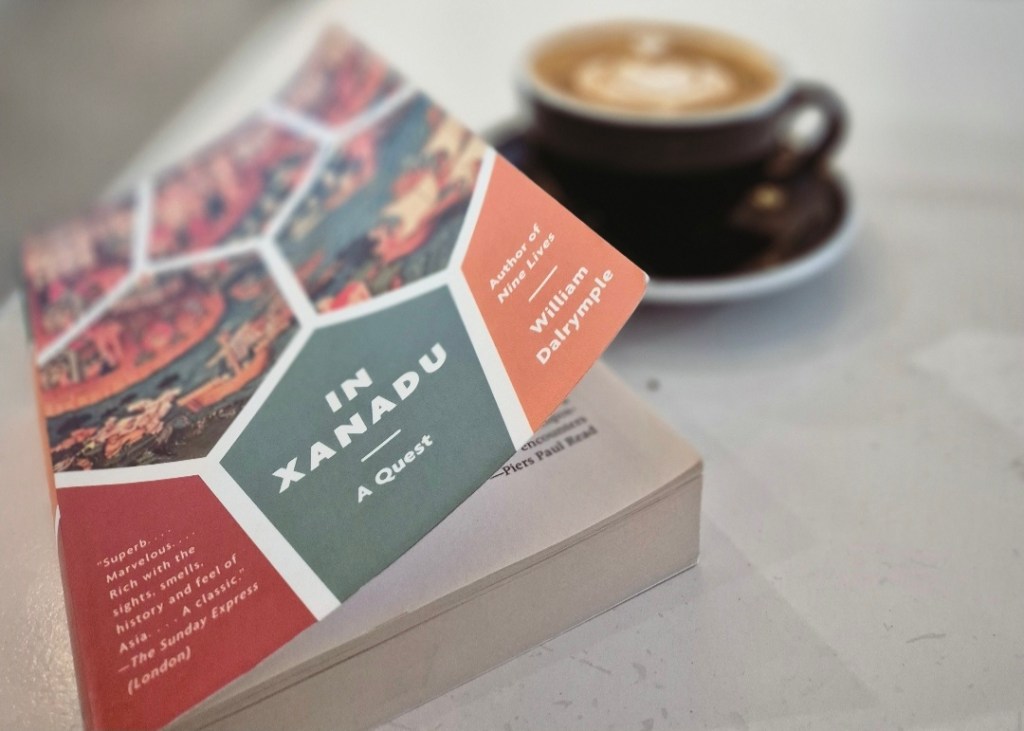
 William Dalrymple: In Xanadu – A Quest   

Trace Marco Polo’s 700-year-old passage from Jerusalem to the ruins of Kublai Khan’s summer palace in Xanadu? “Insane!” most people would say, as this journey runs along war-torn lands and the route bestudded with disputed territories.

But that is exactly what twenty-one-year-old William Dalrymple set out to do in 1986 under a travel scholarship. Thankfully, he lived to tell the tale and published this book, his first, in 1989.

The first several pages impressively encapsulates both the divisiveness and the beauty within Jerusalem: “If history repeats itself anywhere, it does so in Jerusalem. […] For two thousand years Jerusalem has brought out the least attractive qualities in every race that has lived here. The Holy City has had more atrocities committed in it, more consistently, than any other town in the world. Sacred to three religions, the city has witnessed the worst intolerance and self-righteousness of all of them. […] It is only when you get here and have a moment to sit, and think, and look back, that you come to realize… how beautiful Jerusalem still is.” With a few hundred pages left after reading such lines, and a dreamy itinerary that includes Cyprus, Syria, Eastern Turkey, Iran, Afghanistan, Pakistan, India, Kashgar — a city in the Xinjiang Uyghur Autonomous Region, Peking, and Xanadu in Inner Mongolia, a reader could only look forward to the adventure. 

The Dalrymple of In Xanadu, however, is a far cry from the more perceptive and compassionate Dalrymple who affected me deeply in the pages of Nine Lives last June. It is understandable, considering the twenty-year publication gap between the two books. (In Xanadu, 1989; Nine Lives, 2009.)

The author admits, in the introduction of the 25th anniversary edition of In Xanadu, how he still feels “deeply ambiguous” about his first book. “For In Xanadu records the impressions, prejudices and enthusiasms of a very young, naïve and deeply Anglocentric undergraduate. Indeed my 21 year old self – bumptious, cocky and self-confident, quick to judge and embarrassingly slow to hesitate before stereotyping entire nations – is a person I now feel mildly disapproving of: like some smugly self-important but charming nephew who you can’t quite disown, but feel like giving a good tight slap to, or at least cutting down to size, for his own good.”

He was but a boy whose judgments were not too tolerant and whose remarks were yet impervious to today’s hyper political correctness. In spite of that, this is probably Dalrymple in his funniest and most candid. If Nine Lives found me crying inside a room of a Jaipur haveli, In Xanadu found me chuckling in public several times.  For all his faults of youth, I think we can still count on him being a more reliable and entertaining narrator than Marco Polo. 

As a fan, I find it encouraging to be able to track, through his books, how much his travels, his experiences, and his eagerness to learn and inform has transfigured him into the literary hero that he is today. It is comforting to be able to observe how our traveling intellectual icons grow. That way we are reminded that they are human and their writings are those we can grow with. Either that, or we’ll come to realize that we’ve somehow grown, too.

By reading In Xanadu, one is assured that the reading journey with Dalrymple can only get better from here. Who else is looking forward to getting their hands on The Golden Road?

Elif Shafak: There are Rivers in the Sky

After immersing myself in a variety of literature from the region, and after reading nine of her books, singing praises at the time I read them, then ultimately realizing that I prefer her two nonfiction works to the seven novels, it eventually felt like I had outgrown Elif Shafak.

Nawal el Saadawi, Sema Kaygusuz, Farnoosh Moshiri, Dunya Mikhail, Adania Shibli, and other lesser known women authors that I encountered through this reading project, made Shafak’s fiction feel diluted and elementary…

…until I learned that There are Rivers in the Sky involves Mesopotamia, The Epic of Gilgamesh, and one of the books that fueled my obsession with the Fertile Crescent, Sir Austen Henry Layard’s Nineveh and its Remains.

Needless to say, I purchased the e-edition of There are Rivers in the Sky on the day it launched, and veered away from this month’s plan to read Women in Translation. Apparently, Shafak still manages to lure me with her chosen topics and setting. 

And I’m glad I read it. I’m glad I did not deceive myself into believing that my literary taste has become too sophisticated for Elif Shafak. Because after all, maybe she does not water it down. Maybe what she does is a deliberate simplification, so that her books become stepping stones to forgotten stories, accessible pathways to pressing matters that we don’t even stop to think about, and springboards that launch readers into deeper inquiry about issues that are not discussed enough.

In There are Rivers in the Sky, Shafak still transcends her pretty book covers and continues to be an activist for those who do not have a voice — in this case, buried history, looted artifacts, dying rivers, and the dwindling Yazidis and the continual decimation of their people and their stories. 

Reading this has taught me many lessons, and it is not without its beautiful lines: “…the world is changing faster than minds can grasp… all these smartly turned out people with their polished boots and affected airs, you look at them and you think they must know everything, educated and cultured as they are, but… when times are confusing, everybody is a little lost. No one is inwardly confident as they present to be. Hence the reason we must read… books… provide us with light amidst the fog.”

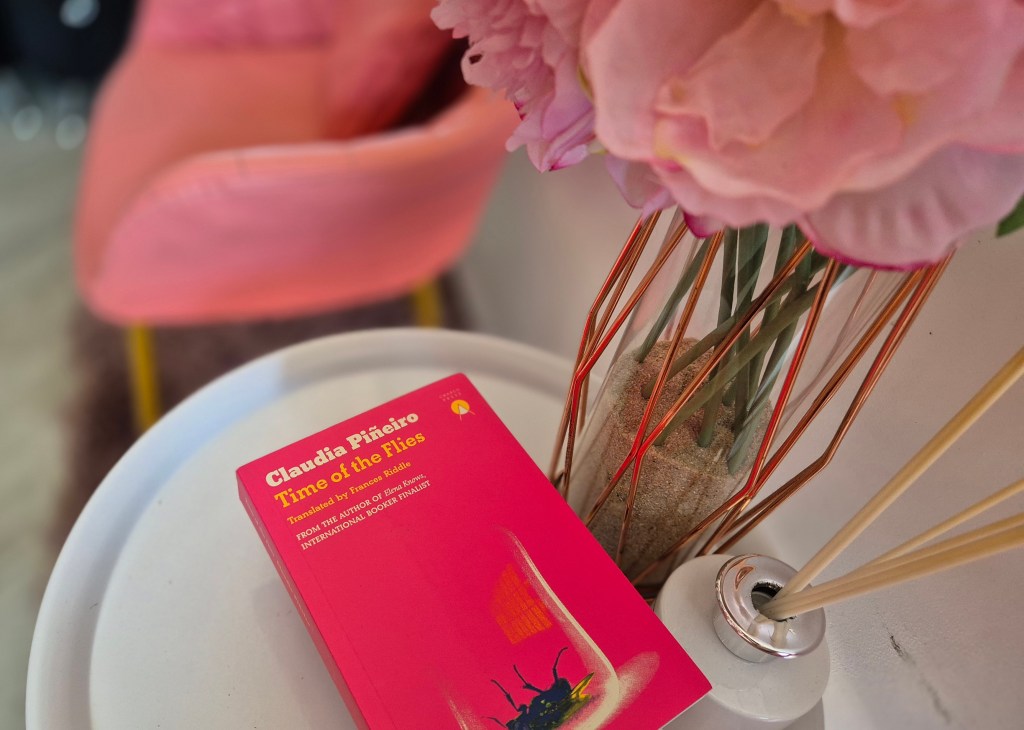
Claudia Piñeiro: Time of the Flies

Translated from the Spanish by Frances Riddle

That’s why we need to read women.
What does that have to do with it?
It has everything to do with it. 


Give me a back cover blurb without telling me the book is by Piñeiro and I would not be very interested. The descriptions of her novels are unattractive to me, especially if they are about flies and women killing their husbands’ lovers. 

But tell me a book is written by Piñeiro and I would read it without even asking what it’s about, even if it seems to be about flies.

Because if you just trust Piñeiro’s storytelling prowess and allow her to take you on a satisfying ride, you eventually learn that when it comes to the word “fly,” there is the noun, and there is the verb, and she’s ultimately writing about freedom.

Predictably unpredictable. She does it again. But this time, more heartwarming than one would expect, and more blatantly feminist. 


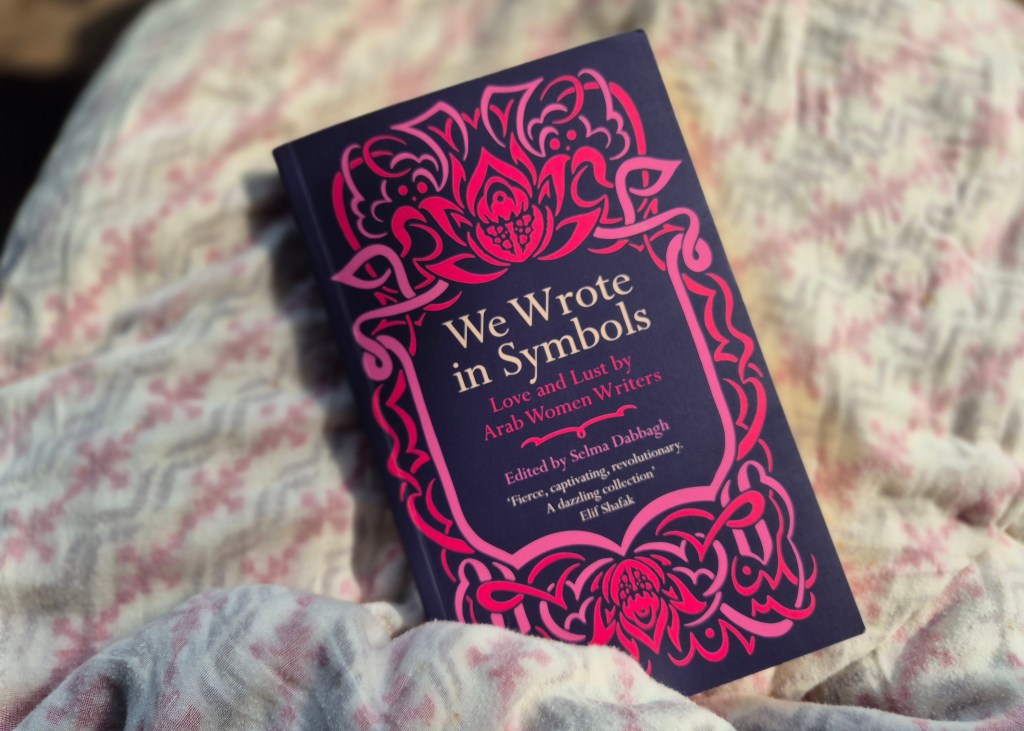
We Wrote in Symbols: Love and Lust by Arab Women Writers

“That’s the thing about love, it likes to leave its mark.” — Nathalie Handal

This collection of writings by Arab women turned out to have more erotic passages than I expected, and the conservative reader who cannot appreciate this as an act of defiance against authoritarian patriarchal societies might prefer to stay away. 

I value this book as a reminder, as the introduction mentions, of how women were writing in Arabic centuries before women began writing in English; and as a reminder of the treasure troves of Arabic literature that hardly make it into our consciousness simply because they are not on the Western radar. 

Poems by Arab women throughout the ages pepper this collection alongside contemporary essays and excerpts from novels, including those by Palestinian authors, Adania Shibli, Suad Amiry, and Naomi Shihab Nye. The translations are no less significant as it has works by Man Booker International Prize awardee, Marilyn Booth, and Ernaux translator, Sophie Lewis.

More than a treasury of sensuality, I see this book as a celebration of women who strive to steer the gaze away from centuries of male perspective, and a celebration of women in translation, but who are translating forceful statements beyond mere words.

What I think will stay with me, however, is a line from Tunisian-French author, Colette Fellous — an imagery of two lovers’ bodies, likened to a closing book.

Romina Paula: August

Translated from the Spanish by Jennifer Croft

Because it is August; because it is set in rural Patagonia; because it is translated by Jennifer Croft; because it is Women in Translation Month.

This was an uneasy read. It bares a twenty-one-year-old mind in that unsettling stage before growth. The whole book is an interior monologue addressed to a best friend lost to suicide. As Emilia returns to her hometown to scatter the ashes of Andrea, she has to confront loss, death, and living.

Given such weighty themes perused from a different perspective, this had the potential of being a great book. It had touching passages that hit the mark, but also too many that missed. But then again, we rarely hit the mark at twenty-one. My literary palate should be more forgiving.

Because it is August; because it is set in rural Patagonia; because it is translated by Jennifer Croft; because it is Women in Translation Month. 

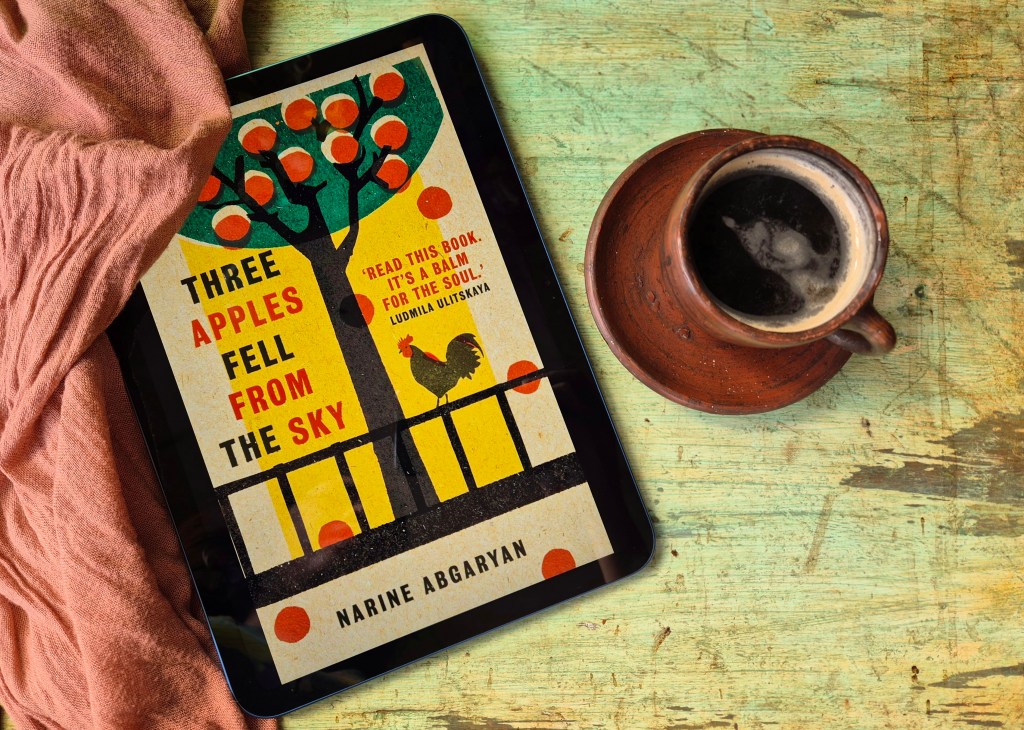
Narine Abgaryan: Three Apples Fell from the Sky

Translated from the Russian by Lisa C. Hayden

“Literacy, Vaso-dzhan, has no place here,” said Satenik, tapping a finger on her cousin’s forehead. “It’s here in the heart,” she said, placing her palm against his chest.

In a picturesque Armenian mountain village where its people have been scarred by time, and happiness is few and far between, a woman prepares for her imminent death.

And yet, I was not prepared for how much joy this book ushered! Yes, joy!

Despite its bleak opening, Three Apples Fell from the Sky is an unexpected playful balance of friendship, conflict, small-town superstition and traditions, finding refuge in reading, love found in a couple’s twilight years, communal and personal griefs, and healing — which all transmutes into a heart-warming embrace in literary form.

Whenever Armenia is mentioned, the first thing that comes to mind is the ethnic cleansing of Anatolia that resulted in the deaths of between 600,000 to 1.5 million Armenians. While it is important to keep the genocide in memory, it is noteworthy how this book only hints at it along with its suffering under Soviet rule — as if to remind the world that there is more to Armenia than its pain.

If you need a literary hug (and a lovely way to begin Women in Translation Month), consider this book.


Thank you, Anna, for recommending this gem!

Traveling Companions in India

“A small bookcaseful of the right books, and you are set for life.” — Rohinton Mistry, Such a Long Journey


Friends can tell when I have re-attuned to daily life because I become a bit scarce on social media, and I return to writing about (or not about, in the case of Vikram Seth) the books I have read.

This is the India-themed reading stack for June that has spilled over to July. Not too different from the way India spills beyond what you have allotted for it. India has a way of spilling over from a journey and into a life.

But it’s time these books are homed into the sections where they belong, in close proximity to each other, in a library organized by political geography. And I can’t do that without at least writing a few lines about each one.

These particular books deserve exhaustive reviews, but for the time being, I will have to be content with abridgments of why they accompanied me on my trip and what I loved best about them.


Such a Long Journey, Rohinton Mistry

Several Mistry volumes wait on my shelf. And yet, this is my first time to read him. I was not sure where to begin. All I instinctively felt was that a Mistry perspective was necessary for a more encompassing idea of India. I ended up choosing his first novel. It was shortlisted for the Booker Prize in 1991.

Contemporary Indian literature that come my way overflow with the repercussions of British colonialism, the partition, or the relationship of India’s Muslim and Hindu populace. But this is a seldom explored perspective of India’s modern history through the Parsee experience — an exciting realization for someone who is enamored with Iran! (As most of us know, Parsees are descendants of Zoroastrians from Persia who fled to India as a result of the Arab Conquest.)

It is set in 1971, the year of the Indo-Pakistani war and the Bangladesh Liberation War. Centered on Gustad and his family, this is a story of ordinary lives enmeshed in extraordinary times. It teems with the humor, the pains, and the realities of living. This is a book for readers who do not skim over the prose but find beauty in taking time to appreciate details pregnant with cultural understanding.


Nine Lives: In Search of the Sacred in Modern India, William Dalrymple

William Dalrymple’s name is often identified with lyrical prose and India, so this choice does not need any expounding. Although I was wrong in thinking it would be an easy read. I thought it would not be too emotionally affecting and would balance out the heavy themes of The Raj Quartet. Three stories in, I was already sniffling and wiping away tears inside my room in a Jaipur haveli. 

This resulted in the decision that I would not read the nine stories straight, that I would read them in-between other books, in between deep breaths, in between exploring the land in which these stories are set, and that it would be the book I’d carry in my sling bag throughout my whole stay in India. 

The nine lives that Dalrymple immortalizes from his travels flow from a pen of empathy and genuine curiosity, always with the intention to “humanize rather than exoticize”. It is a portrayal of nine characters that break free from standardized religions, and which represent different sects and personal beliefs that the author hopes to have escaped “many of the clichés about ‘Mystic India’ that blight so much of Western writing on Indian religion”; they are also manifestations of how, despite the exponential rate of change and modernization in the country, an older and more diverse India survives. 

It is a book I would highly recommend even to those who are not planning a trip to India. Its lessons in faith and tolerance are relevant and enduring.


Jaipur Nama, Giles Tillotson | Banaras, Vertul Singh

“There is a beautiful word in Bengali — boi, which literally means a book. The word was commonly used in the vernacular for cinema and later came to be picked up by the Bengali elite while referring to an artsy movie and continues to be used to imply films. It has a deep connotation in that cinema is not just seen, it is also read. While walking through a city, one also reads it…” — Vertul Singh, Banaras

These two books have these in common: I purchased them from independent bookshops in Jaipur; they concentrate on a single city in India as the subject for the entire book; and they are books a reading traveler would benefit from tremendously when traveling to Jaipur or Varanasi.

While I learned so much about Jaipur from Tillotson’s Jaipur Nama, was thoroughly entertained by it, loved the passages on Jaipur’s architecture, and saw with my own eyes the wonders described in its pages, I was inscrutably drawn to the tone of Singh’s Banaras. There seemed to be an imploring strain that made itself heard to me, beckoning me to Varanasi, waiting for me to read the city beyond book pages, asking me to look into its soul. 


Pyre, Perumal Murugan

Rajat Book Corner’s shelves were cascading with the best selections. They had Pamuk, Mahfouz, Proust, recent literary prize winners, the Indian greats, among many others. So you can imagine the argument between my other selves against the practical one who kept whispering firmly, “Just one book, just one book.”

After a while of intense internal struggle, I finally went with something I hadn’t seen in Philippine bookstores: Pyre, a 2023 longlister of the International Booker Prize written by Perumal Murugan.

“Good choice,” said the man at the counter.

“Thank you,” I answered, thinking it was something he always said to bookstore clientele.

“It’s a great book! We discussed this in our bookclub.” That’s when I realized he meant it. He had read Pyre. To my surprise, he added, “Wait. I think this is a signed copy. The author signed it when he came here.” And indeed, it was!

Pyre was the only book from this stack that I was able to finish reading within 24 hours, but the ending left me stunned for days!

This is powerful storytelling, but it is, by no means, a pleasant read. It feels claustrophobic and asphyxiating: But that’s how prejudice is. That’s how ignorance and intolerance feels. That’s what hatred is. 


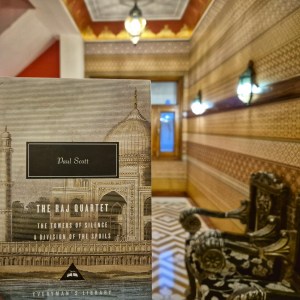
The Raj Quartet, Paul Scott

And now, the portion of this stack that took me longest to finish — The Raj Quartet: Four volumes of what is often declared as the nonpareil narrative of the dissolution of the British Raj.

The claim was convincing enough for me to take the massive tomes along for the ride even if that was all I heard about it. As I slowly turned page after page, I increasingly understood that it is necessarily heavy. It is, as Scott himself wrote, “The luggage I am conscious of carrying with me everyday of my life — the luggage of my past, of my personal history and of the world’s history.”

In Hilary Spurling’s introduction, she writes, “Scott did not condone the Raj. He looked long and hard at its many failures, its inhumanity, its smugness, self-righteousness and rigidity.” And although it is written in a Tolstoyan sweep, it finds a Filipino parallel in Linda Ty-Casper’s The Three-Cornered Sun in the way it shows how India’s War of Independence was not merely a confrontation between the Indians and British, but also between British and British, and between Indian and Indian. Scott lays open the lives of the unrecorded men and women, the lives that fall under the gray shadows, the ones “historians won’t recognize or which we relegate to our margins.”

Imagine this, a sketch. The first volume an outline on which Scott would continue to color and add contrast in the succeeding volumes, peopling it with new characters and adding the Second World War as another layer of complexity against an already rich and tumultuous Indian tapestry.

The first page of Volume I reads, “This is the story of a rape.” Reading about rape is not something a solo female traveler would intentionally do on a trip. But I was astonished by how Scott’s writing carried me through anyway. It made Volume II inevitable, wherein, all of a sudden, the characters became so fully dimensional you could touch them!

It was not lost on me that the first two volumes ended with two women giving birth but with grave consequences on the women. A metaphor for the birthing of nations, perhaps? Volumes III and IV continued to consistently reveal the multifacetedness of human beings, of nations, of identity, and of history. By the end of it all, I could only close my eyes, sigh, and try to take it all in, then whisper to myself, “What a journey!”

Rohinton Mistry’s Gustad once wondered, “Would this journey be worth it? Was any journey ever worth the trouble?”

Whether the question refers to journeys in literature or other lands, you won’t really know the answer unless you take it. Take it.

How not to write about books and their authors

Vikram Seth. His bearing was elegant and cosmopolitan even as he walked barefoot across the centuries-old stone floor of the family courtyard. 

I had just arrived from an 8-hour road trip. I was groggy from the Bonamine. His manners and speech were refined. I was smitten. I allowed myself the harmless attraction because: I could blame the Bonamine, I knew nothing about him, the attraction was one-way, I was leaving the city the next day, and I would never see him again. 

He shook my hand firmly, checked the haveli logbook and complimented my penmanship. I had only written my name and “Udaipur,” but perhaps the combination of the letters with my handwriting looks slightly elvish. 

I had booked a smaller room, but because the haveli was not fully-booked, he assigned me a more spacious room — the room he had as a boy. Of course, it had dreamy windows overlooking the courtyard and the sky. 

He introduced himself as Vikram Seth. I squealed inside, “Like the author?” I immediately checked if they were one and the same person. Because of his air of profundity, I wouldn’t have been surprised had he turned out to be the writer. But Google came up with a different face. The author will have to forgive me: This Vikram Seth was younger and more good-looking.

When I had freshened up and settled down, he asked if I had tried Kingfisher beer. I indulged in a mug and a conversation. Theirs was the only garden in a radius of several kilometers, he mentioned. Friends thought it laughable, he said, to keep it when building a modern hotel extension on that garden can be more lucrative.

“I’m glad you kept the garden,” I said. “It’s proof that you treasure things that are more valuable than money.”

He nodded thoughtfully and smiled. I left for Udaipur early the next day and never saw that smile again.

But I did not feel wistful. It was not love. It couldn’t have been. And it’s easy to practice anasakti, non-attachment, whilst traveling (and groggy on Bonamine). But now I’m wishing that I were a better practitioner of anasakti and traveller of life than I am in and of India.

So forgive me if the only thing I can tell you about this book that I got from the Jaipur Sunday Book Market for 200INR/140PHP is that it has some poignant lines that accompanied me on days when I waited indoors for the sun to soften, and that British composer Jonathan Dove set the poems to music in a song cycle of the same name. And forgive me, if all you learned from this post is this: How not to write about books and their authors.

The transmutation of India into a memory…

And just like that, I am back home, and immediately started teaching a series of online students in the US within the hour I arrived.

When people ask about my trip, I find myself answering that it was eye-opening, very much like reading a satisfying book.

I thought I knew what to expect. I thought I knew what it would be like. I soon learned that what I had in mind was a narrow-minded, stereotype-based, and extremely ignorant idea of India and its people. And to think I read! To think I’ve been lugging books, including all 2000 pages of Paul Scott’s Raj Quartet. How much more if I didn’t?

But the beautiful thing about being a reading traveler is that we do not read or travel for the certainties; and reading and traveling is an intuitive acknowledgement of an ignorance that we treat with a book or a trip.

It was Emerson who wrote, “The mind, once stretched by a new idea, never returns to its original dimensions.” A great book does this. India does this. But only, perhaps, if one pays attention. India has expanded the way I think about places, people, and even design.

“Thank you,” one guide said earnestly, “for paying attention.” After I repeatedly refused his offer to take touristy photos of me, “So you’re not a Tiktok girl, huh? Most of the time people are only interested in having their pictures taken, they don’t even listen anymore.”

We have stereotypes of Indian men and they have stereotypes of us. Fair enough. But would you believe that two of the most cultured, educated, and refined men I have ever interacted with I encountered in a father and son duo in Jaipur? Would you believe that I felt more safe and respected in the company of my guides, drivers, haveli owners, hotel staff, than in one provincial event that I attended back home where a senior and former politician (someone I’m supposed to be able to trust) undressed me with his eyes? But that’s a story for another day. I have way better memories now. 

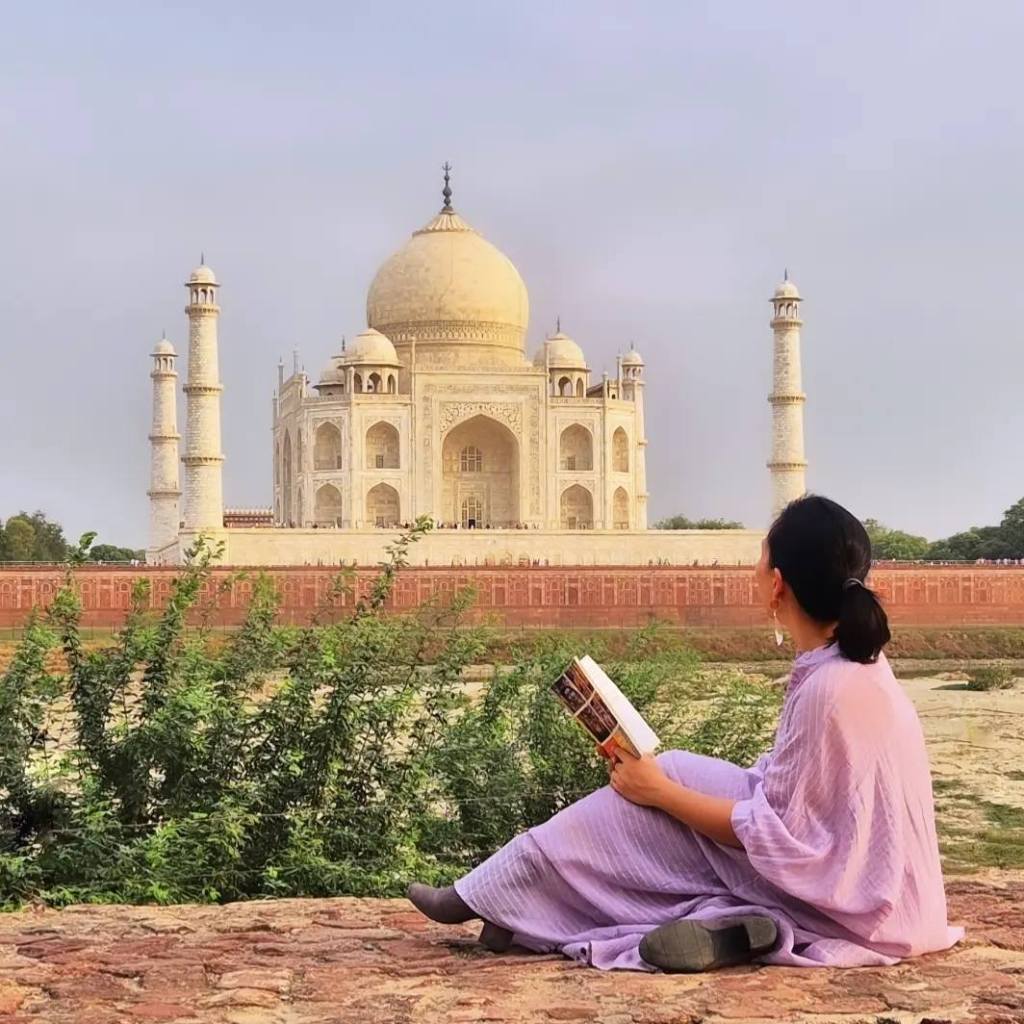
Like this memory of a Mughal garden across the Yamuna River, yet unravaged by the claws of Agra’s over-tourism, where one can spend the entire afternoon reading and contemplating, or gazing at the Taj Mahal. 

Just like that, the transmutation of India into a memory has begun…and what a memory to relish!