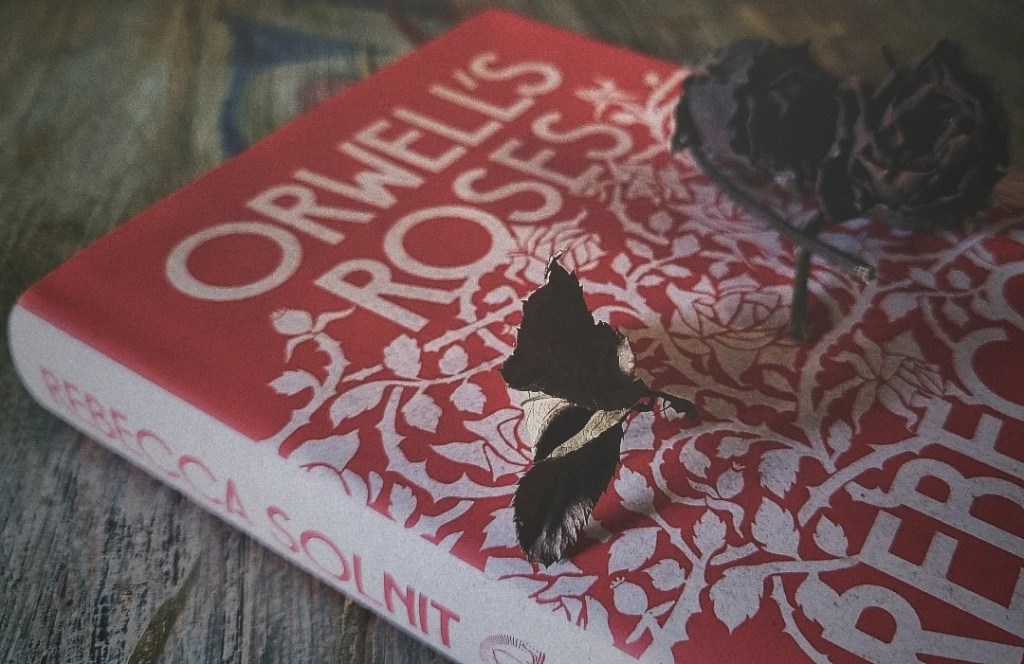
Yesterday was a proper Monday, exhausting; and by nine in the evening I was off to the Ithaca of my subconscious.
Naturally, I woke up too early. Some strange urge made me go straight to my shelf and reach out for this.
And despite being in the middle of another book, I curled back into bed with this and a cup of coffee. Ambrosia was unavailable.
The epic, echoed into a play by the incomparable Margaret Atwood through the eyes of Penelope, read within the length of one cup savored slowly against a gentle rain, and Penelope’s Naiad mother’s reminder to her daughter, was all I needed to read before the sun appeared.
“Remember this — water does not resist. Water flows… Water always goes where it wants to go, and nothing in the end can stand against it. Water is patient. Dripping water wears away stone. Remember that my child. Remember you are half water. If you can’t go through an obstacle, go around it. Water does.”
“The woman is you,” remarked those who saw me with this book.
I can only hope to be half as courageous.
But who is she? “To read is to pray,” she taught. “To write is to trust.” Her words had claws, they said, but at the same time they recognized that her silence were double the weight of her words.
She believed in these: That sometimes, illiteracy was fear; that truth conquered fear; that denial was difficult in the face of truth; that the best told lies can prove short-sighted before the long truths of eternity; and that there was no escape for those who took refuge in their ignorance. And of pride? “Love had nothing to do with it.”
Who was she again? Throughout the story we only know her as the woman who read too much. All the women in the book were not given names. Set during the Qajar Dynasty in the 1800s when literacy among women in Persia was not encouraged, and the details of their lives were largely invisible and unrecorded — as it had been for centuries, and as it had been for most parts of the world; this clever literary trick by Bahiyyih Nakhjavani is most likely a curtsy to Virginia Woolf who wrote, “For most of history, anonymous was a woman.”
“No marker on her grave then? None.” Her death is something readers will know right from the beginning. Her story is written in such a peculiar way that it moves forward while moving backwards simultaneously, proving that the best of these Iranian women writers are masters not only in subtlety but also in form, and one can only try not to blink and miss allusions or be helplessly lost.
“History is filled with screams that are ignored.” The reading woman is executed for what she stands, for opposing unreasonable orthodoxy, “for stating the obvious rather than for deviating from the truth,” condemned for showing other women “how to inscribe their lives on the pages of history… giving them the tools by which to be autonomous.” Her death only fanned the flames of the emancipation of women, especially the emancipation of the mind.
Nakhjavani surprises us in the afterword by revealing that the woman who read too much; who, after all, had a name, was a real woman. Tahirih Qurratu’l-Ayn, the symbolic mother of literacy in Iran.
I glance around my library as I write and wonder at the sudden awareness that, on my shelves organized by geography, the Iran section is the only one where women authors outnumber the men. What better way to honor her!
Here in the midst of “look how far we’ve come” and “miles to go before we sleep,” reading this makes me ponder on the women who came before us; back to Enheduanna (2286-2251 BCE), a woman, the first known author, and to the endless library of history we long to fill… and read.
We’ve always had the rights of the mind at our disposal. We need only take up courage to use them.
“The world changed when definitions of womankind were altered.”
“At one level, reflection means we see ourselves. At another, it’s another word for the thought process. We can choose to use it to look into the light of our own eyes, or we can be light sensitive, we can allow all things to move over and through us… Broken things become pattern in reflection. The way a kaleidoscope works is to allow fragmentary or disconnected things to become their own harmony.” Ali Smith, Artful
Grief and loss without the melodrama. Spews musings on art and literature in one breath. Pinches the heart and tickles the punny bone simultaneously.
“Simile, though your heart is breaking,” writes Ali Smith.
Witty.
Quirky.
Artful. Of course.
Genius.
Lovely.
“Great books are adaptable; they alter with us as we alter in life, they renew themselves as we change and re-read them at different times in our lives. You can’t step into the same story twice — or maybe it’s that stories, books, art can’t step into the same person twice, maybe it’s that they allow for our mutability, regardless of time, that makes them art, because real art… will hold us at all our different ages like it held all the people before us and will hold all the people after us, in an elasticity and with a generosity that allow for all our comings and goings.”
When you turn to a book for solace and get chills instead.
Yes, this has got to be the most beautiful literary criticism of Nineteen Eighty-Four: It rethinks the man that was George Orwell, it guides us to reassess beauty, and it reviews Nineteen Eighty-Four in a light that is distinctly hers. But with Rebecca Solnit, you never know where she will take you next; it is only guaranteed to be a place of startling insight and perspective.
Written and published amid the Covid-19 pandemic, it surprisingly mentions and describes Putin as an admirer and rehabilitator of Stalin’s reputation; even calling to mind the Holodomor, also known as the Terror-Famine, recognized by 16 nations as a genocide carried out by the Soviet government that killed 3-5 million Ukrainians from 1932-1933… and it seems like George Orwell’s Nineteen Eighty-Four will not be the only prescient book in question here.
What is chilling is the reminder that, “To be corrupted by totalitarianism, one does not have to be in a totalitarian country.” Orwell set Nineteen Eighty-Four in England, “To emphasize that totalitarianism could triumph anywhere.”
And what buttresses totalitarianism? Lies. “Lies gradually erode the capacity to know and to connect… Lies are integral to totalitarianism… demands, in fact, the continuous alteration of the past, and in the long run probably demands a disbelief in the very existence of objective truth.”
“Who controls the past controls the future: who controls the present controls the past. The attack on truth and language makes the atrocities possible. If you can erase the witnesses, convince people of the merit of supporting a lie, if you can terrorize people into silence, obedience, lies, if you can make the task of determining what is true so impossible or dangerous they stop trying, you can perpetuate your crimes. The first victim of war is truth.”
And yet, despite these ominous warnings for which Orwell is known, Solnit asks us to reconsider the word “Orwellian” and look at the man who, in the spring of 1936, planted roses. Beautiful is far from the first word that comes to mind when confronted with his writings, but there is a definition of beauty, Solnit emphasizes, that does not have to do with prettiness. “Another kind of beauty, of a toughness that is life…” The beauty to which Orwell was most committed and for which he strove was “this beauty in which ethics and aesthetics are inseparable, this linguistic beauty of truth and of integrity as a kind of wholeness and connectedness, between language and what it describes, between one person and another, or between members of a community or society.”
What was beautiful to him was truth, clarity, honesty — and roses. “Orwell was passionate about the beauty and gestures and intentions, ideals and idealism when he encountered them, and it was to defend them that he spent much of his life facing their opposites.”
“Orwell’s work was about ugliness of various kinds, but what he found hideous serves as a negative image of what he found beautiful.”
There is, after all, solace through the roses telling us that stopping to smell them does not necessarily distract us from the seemingly more important things in life, but strengthens us instead. Through Rebecca Solnit, and through the man who made my birth year significant in literary history, we are spurred to recalibrate what we deem beautiful, to acknowledge our need for beauty, and to always strive to pursue it.
“The snow would just melt, the green Ukrainian grass would grow again and weave its carpet over the earth… The gorgeous sunrises would come again… The air would shimmer with heat above the fields and no more traces of blood would remain.”
— Mikhail Bulgakov, The White Guard —
Bulgakov, whose death anniversary is today, was born in Kyiv. The White Guard, his first full-length novel, is set in the Ukrainian capital.
Try as we might to hope that the two apian titles speak only of positive lessons from bees — of how theirs is a society where each one functions for the good of the entire colony, of how they continue to work even when everything around them is dying — I am afraid they don’t.
Two beekeepers of neighboring nations; one real, the other fictional. Both written by women; one an Iraqi journalist and poet, the other a novelist who volunteered in refugee centers, herself a daughter of Cypriot refugees.
The Beekeeper of Sinjar is Abdullah Shrem. When DAESH (ISIS) began terrorizing Yazidi communities and abducting their women including Abdullah’s sister, he took advantage of his knowledge of the terrain and select personal contacts to rescue and smuggle women back to safety. Each time he saved a captive woman, he felt that he was also saving his sister.
Among the stolen women was Nadia Murad, who received the Nobel Peace Prize in 2018, the first Iraqi and Yazidi to be awarded the prize.
Dunya Mikhail initially inserts poems into a journalistic approach and recounts distressing interviews with the rescued women who were sold, beaten, and raped repeatedly, but who nonetheless opened up to the author so that she could write about their suffering. “It’s important that your book see the light of day, so that the world will know what’s going on here.” The journalistic eventually veers into the poetic, and I feel that this is one of the books from the region that will endure not only as an overwhelming account but also as a literary work.
The Beekeeper of Aleppo is the fictional Nuri Ibrahim, but through him and the plight he shares with his blind wife, Christy Lefteri expresses the unspeakable realities and consequences of war, of lives ended, uprooted, wasted, abused, and destroyed.
“War,” writes Dunya Mikhail, “comes with various names but with only one face.”
Even though it seems that love and hope is universal, unfortunately, so is war.
“The problem isn’t that the world is going to end, but that it continues without any change.” — Nadia Murad
The sound of sirens woke me up. Whose witty idea was it to celebrate Women’s Month with Fire Prevention Month in the Philippines? Woman is a fire you cannot prevent. Sirens are also women.
These were my tangled thoughts as I got up on the first day of March, a month I look forward to as a reading woman. It’s when I devote most of my reading time to women authors.
Rebecca had to be the first choice, because maybe my mind treats literature like medicine and it cyclically hankers for a more potent dose to achieve efficacy, and she lives up to this promise — this sort of writing that painfully confronts the hurts and pinpoints the ills but becomes the balm through impeccable information-giving and matchless storytelling, all administered with strength and grace.
The title is an acknowledgement to how the artist Georgia O’Keefe signed her letters for the people she loved, “from the faraway nearby.” A way to measure physical and psychic geography together, Rebecca observes. “We’re close, we say, to mean that we’re emotionally connected, that we are not separate… emotion has its geography, affection is what is nearby…” We can be distant from the person next to us but be hopelessly attached to another who is hundreds of miles away. Was it Ondaatje who asked, “Do you understand the sadness of geography?” It seems Rebecca understands and she holds your hand through this sadness.
But that is only one of the myriads of things meaningful to me that she weaves artfully into this narrative. The curious format of this book is a nod to the Arabian Nights. It was only recently when I remarked how Latin American and Eastern European literature are under Scheherazade’s spell, but this book makes me ask, “Who isn’t?”
“The fairy-tale heroines spin cobwebs, straw, nettles into whatever is necessary to survive. Scheherazade forestalls her death by telling a story that is like a thread that cannot be cut; she keeps spinning and spinning, incorporating new fragments, characters, incidents, into her unbroken, unbreakable narrative thread. Penelope at the other end of the treasury of stories prevents her wedding to any of her suitors by unweaving at night what she weaves by day… By spinning, weaving, and unraveling, these women master time itself, and though master is a masculine word, this mastery is feminine.”
“Stories are compasses and architecture; we navigate by them, we build our sanctuaries and our prisons out of them…” This is the line with which Rebecca opens this book.
And this is how she ends. “Who drinks your tears? Who has your wings? Who hears your story?”
“Who has your wings?” Who else can ask such a poignant question?
This mastery is, indeed, feminine. Happy Women’s Month!
The woman who has laughed is the same one as she who will cry, and that is why one knows already, from the way a woman is happy, how she will behave in the face of adversity. I’d liked that saying of Queen Without a Name, once, but now… it frightened me, and above all it saddened me, for I saw clearly that I didn’t know how to suffer.
At a time when the “music of the whip” was supposed to be no longer in their ears, the great-granddaughter of a freed slave tells her story; and through her story, the history of their people, the history of their women.
Beyond the beautiful cover designs and the excellent translations of NYRB publications, I am most grateful for how they usually bring together two forces of literature in a single book — Jamaica Kincaid, projected to be awarded the Nobel Prize in Literature in 2021 writes the introduction to this edition of Simone Schwartz-Bart’s potent novel.
The only downside is that if someone like Kincaid has already extracted the essence and bottled it for us in the introduction, my words would immediately pale in comparison and attempting a review would be futile; and all I can do is agree with her when she writes of this book as, “An unforgettable hymn to the resilience and power of women.” Truly a masterpiece, not only of Caribbean literature but also of feminist literature.
Although Kincaid did leave something out for me to realize on my own — that there are many forms of slavery; sometimes it is imposed on people, sometimes it is inherited, and sometimes we impose it upon ourselves.
There is so much sorrow in this book and I thought of putting it down many times because there was already so much sorrow in the world as I read it.
But a novel touching on slavery can only ask questions about freedom, the same way a novel about sorrow can only be a contemplation on happiness. And so I read…
“Weren’t you just reading The Books of Jacob?” My mom asked when she saw me with this a day after I finished reading Olga Tokarczuk’s magnum opus.
“Recovery read,” I answered with a wink.
She shot me a questioning look.
“You know how runners do a short recovery run within 24 hours after a marathon?”
She could only laugh and shake her head.
It was the perfect easy run for this reader! In fact, I think every little detail of this book is perfect!
From the cover design, to the French flaps, to the first page that quotes Leonard Cohen:
Now, I’ve heard there was a secret chord / That David played, and it pleased the Lord / But you don’t really care for music, do you?
And truly, if you care for art and music, brilliant is an understatement of how this book is written. Think Apeirogon, think When We Cease to Understand the World but instead of physicists and mathematicians, musicians and artists — Bach, The Beatles, Brahms, Messiaen, Glenn Gould, Rothko, Mahler, Scheherazade… yes, Scheherazade!
Haven’t we already noticed that literature around the world is still undoubtedly under her spell, especially the Eastern Europeans and South Americans? Argentine Luis Sagasti’s musical offering puts us in the shoes of the bewitched Persian King Shahryar.
I will not be stingy with truth. And because the truth is often bound to be difficult and makes us squirm in our comfortable seats, the question is not whether you will like this. The question is whether you can swallow it — the nature of flawed leaders, of spiritual shepherds who are wolves to their own flock, of society, of human beings, of real characters.
This is what Olga Tokarczuk conveys to me right from the first of seven books in The Books of Jacob.
She thrusts us into 1752 Poland where there is a growing animosity towards the Jews and the longing for a messiah is intensified. But only in the second book do we meet the messianic figure: Jacob Frank who asks, “What do we want some sage for?” Jacob whose sexual perversities are now being slowly divulged to the reader. Jacob who ridicules his most earnest followers while they, in the goodness of their hearts, concoct half-truths and falsehoods about him to glorify him; because he is seemingly authentic in everything he does; and although repulsive, he is charming.
All these, eerily juxtaposed with current events in the Philippines: the FBI issuing a poster of church leader Apollo Quiboloy’s warrant of arrest for fraud, coercion, and sex trafficking; a dictator’s son who is a tax code offender leading the presidential polls; the former being an open endorser of the latter.
With an increasing throng of followers, this charismatic Jacob Frank preached the idea that the notion of sin no longer applies. There was no room for conventional morality in his philosophy. “We are to trample all the laws because they are no longer in effect…”
There is no more morality — a common refrain among leaders and their supporters today who justify wrongdoing and do not wish to face accountability!
I was wrong. Olga did not thrust us into events over two centuries ago with this opus. She brings us to the present. This is us. This is us. Because isn’t morality dead to us unless and until the injustice is done by those we dislike, and then we cry foul and demand morality and justice?
This colossus — a lyrical galaxy of darkness and light, weakness and strength, of comets and plagues set in some of the most exciting places I have actually been to, of beautiful passages about literature and how it somehow makes solid the ground beneath us despite this chaotic world, of history and its excruciating details — is not exactly about Jacob. It is about society and how we create the tapestry of history with our actions and our choices… and it seems like we never learn.