Thus begins one of Pushkin’s most personal and most poignant poems, it inspired the composer, Rimsky-Korsakov to set it to music.
The full moon, an air balloon, and the Bridge of Peace over the Kura River
“Such sadness and such ease; my melancholy’s light…”
Has any other poet ever expressed this exact point in loving and having lost; when there is still sadness, but there is now ease; when there is melancholy, but it has become light?
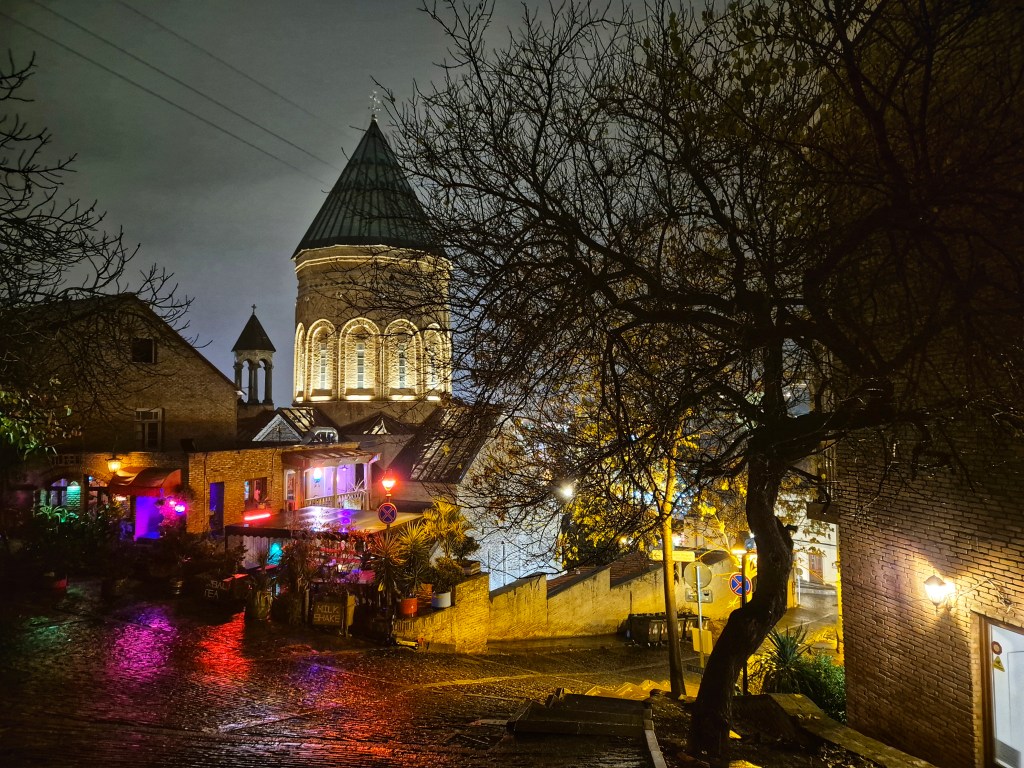
On hills of Georgia lies the covering of night. There is darkness, but there is beauty, and there is light.
“Georgia is a land that bursts with emotion, flavor, and texture, in people, landscape, food, and — so important — wine.” For the Love of Wine, Alice Feiring
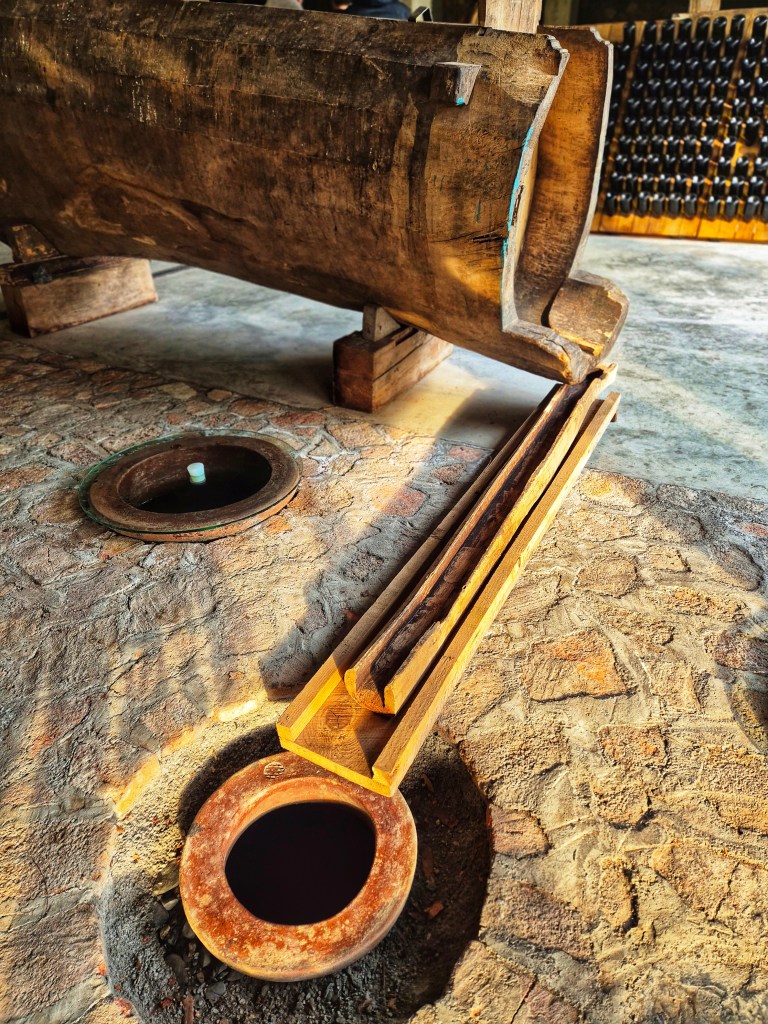
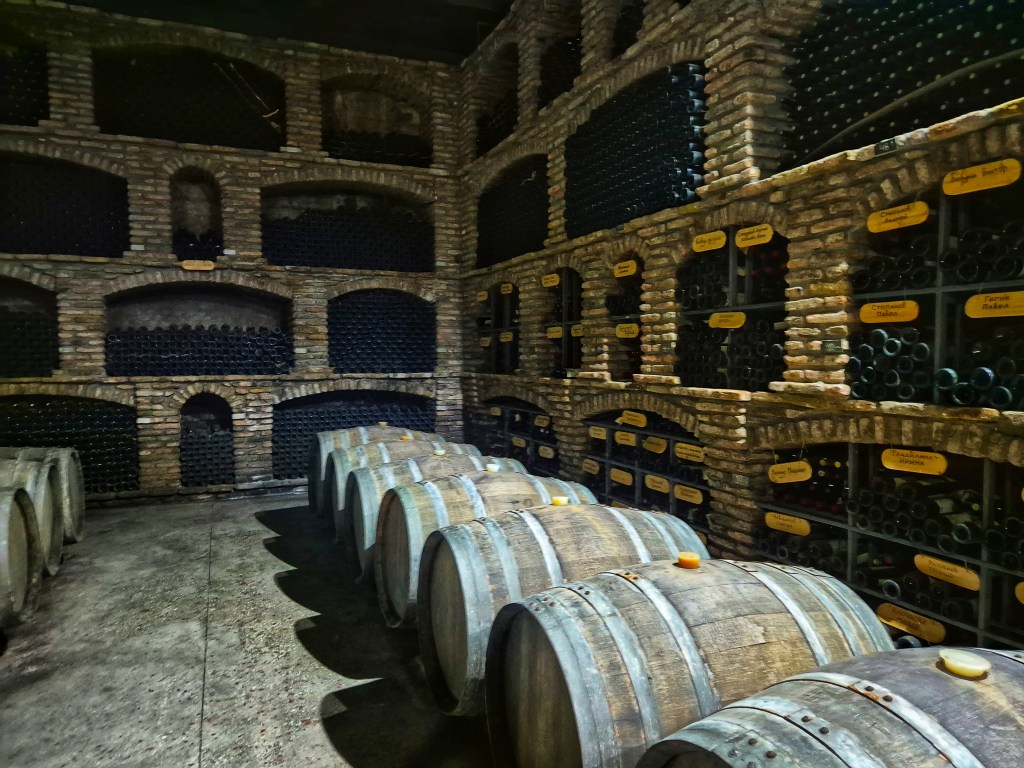
Most of the Georgian words that I’ve brought back home have something to do with wine: Qvevri – the clay vessel used for fermentation (only their brandy and chacha are aged in barrels). Chacha – a cross between brandy and vodka derived from grape which Bourdain nicknamed the “national firewater”. Kantsi – animal horns converted into drinking vessels. Piala – terra cotta wine cup, like the one Mother of Georgia is holding with one hand, a sword on the other. Marani – a winery. Add to that the names of their wines: Kisi, Saperavi, Rkatsiteli, Kindzmarauli, Khvanchkara, etc…. The Georgians taught me well.
Mention “wine tasting” in the Philippines and you’ll come off to many as “pa-sosyal” (bourgeois with a dash of pretentious haha).
Not in Georgia. With approximately 525 indigenous grapes, an 8000-year-old winemaking history, and families producing their own wine, wine is tradition, wine is culture, and wine is part of religion, poetry, and daily life. After being assailed by the Ottomans, by the violence of the Mongols, by the Persians under Shah Abbas II who uprooted their grapevines, or by forced Soviet industrialization that replaced quality artisanship with mass production, natural wine is their symbol of survival. Wine is identity.
“Wine is an essential thread in the fabric of the country and the people… nowhere in the modern world is there a nation like Georgia, with this concept of wine — a fire coursing through its veins,” writes Alice Feiring. For the Love of Wine: My Odyssey Through the World’s Most Ancient Wine Culture prepared me for, and accompanied me to, a wine-tasting event for almost every day I was in Georgia.
These wine tastings are not like the ones in my country that are only for the privileged. Georgians are willing to let their guests experience this for free if only to convey that in order to understand Georgia and its people, one must understand their wine culture.
Additives are not used and it is illegal to add sweeteners to their qvevri wines, and chemical fertilizers for the vines are denounced. One Georgian vintner was quoted in Feiring’s book saying, “Every inch of my soil is soaked with the blood of my ancestors. This is the strength of the Georgian wine. This is our terroir. What do you use?”
But perhaps the best lesson I’ve learned is that producing the finest wine is also about planting the vines in places where they have to struggle. “If grapes had it too easy, the fruit had less character…”
That adds a profound layer to that adage about aging like fine wine, doesn’t it? It’s a rather fitting lesson to learn on a birthday trip. Fine wine is what survives the struggle. Gaumarjos!
Percival Everett is an unlikely choice to read on a trip to Batumi. But before his international fame catapulted with “James,” a retelling of Huckleberry Finn — which just won the National Book Award — he wrote “For Her Dark Skin,” a retelling of Medea’s story. The modern and humorous take is a contrasting companion read to Euripedes’ “Medea.” Everett’s version has only one word on the first page: Colchis.
Colchis, in Greek mythology the opulent kingdom, the place Jason and the Argonauts had ventured forth to obtain the Golden Fleece, homeland of Medea; and in recent times, the city by the Black Sea dominated by financial-oil dynasties of the Rothschilds and the Nobels; modern-day Batumi.
The scenic and comfortable train ride from Tbilisi to this city bordering Turkey is something worth experiencing. Seeing snow-capped mountains in the window gradually dissolve into the shores of the Black Sea was already worth the five-hour trip.
But when I arrived, the city’s superficiality was what I instantly felt. The hodgepodge of strange architecture seemed almost grotesque, and the sports cars driven by the showy spawn of Russian oligarchs did nothing to expunge that feeling. To shake off my first impression, I strolled to the corniche where the sunset was setting against the Black Sea. A dog was wading in and lapping up its history-rich waters, locals were sitting by the banks despite the wind chill, then I sought refuge in its art gallery which, thankfully, was a nice building. And then I started to soften, and I reminded myself why I was there.
A Pirosmani!!!
I was there because of the stories: Because of everything I read about the Black Sea; because of Medea’s tragedy, whose statue is the centerpiece of its main square; because of Ali & Nino, whose two figures pass through one another as the sun sets, and separate again after a few minutes, depicting the bittersweet cycle of what is deemed to be the greatest love story of the Caucasus — written by a writer who happened to be Stalin’s first biographer and whose life was as adventurous and intriguing as his writings.
What Paul Theroux writes in the afterword is especially true of Batumi: “Ali and Nino is both a love story and a cultural artifact, and part of its message is that governments rise and fall, wars rage, cities are laid to waste, people are displaced, authors die. What remains? Well, written words remain…”
If my photos of Batumi look like an incohesive potpourri, that’s on Batumi. What weaves all these images together is intangible and invisible, but also transcendent — the stories.
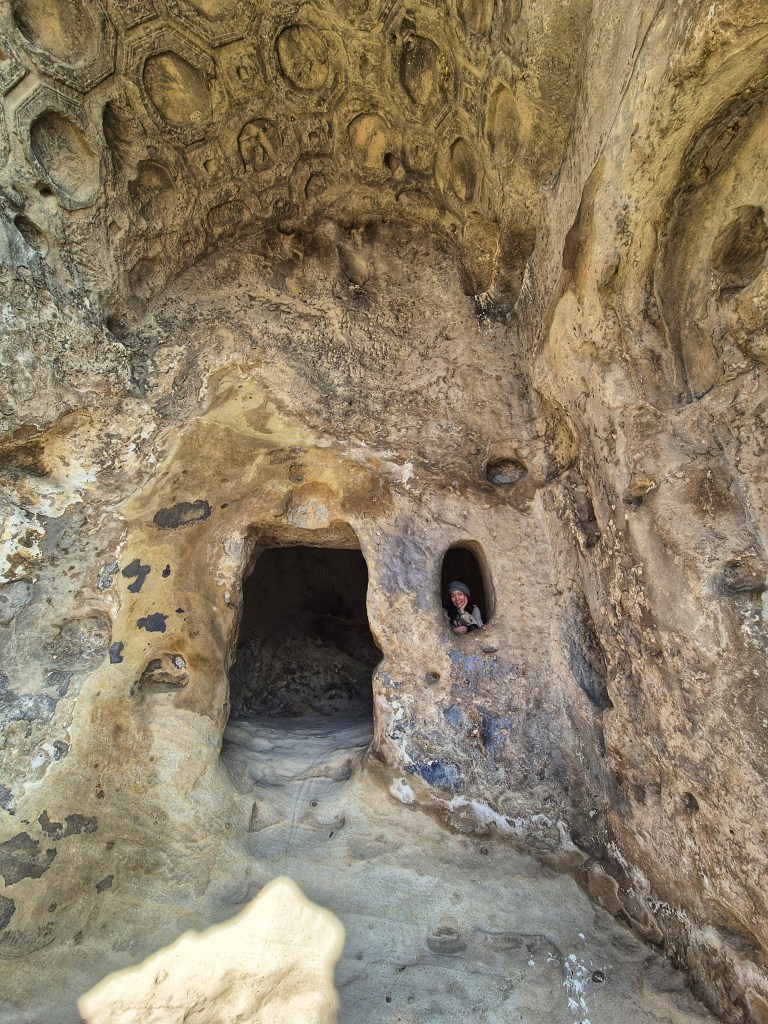
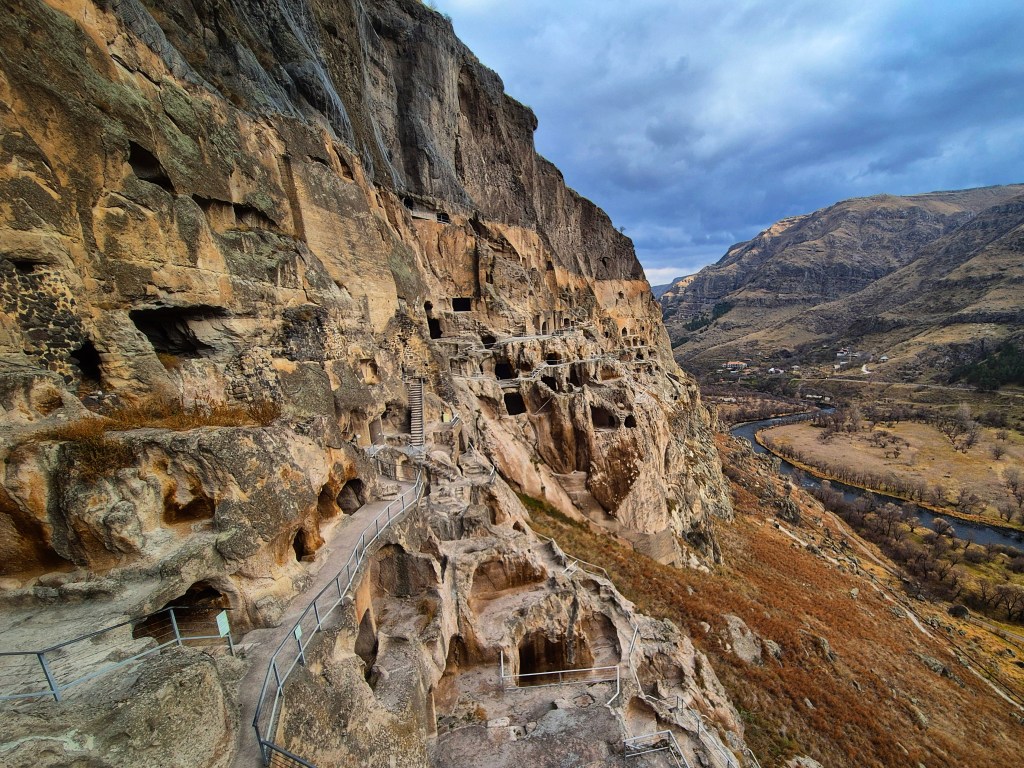
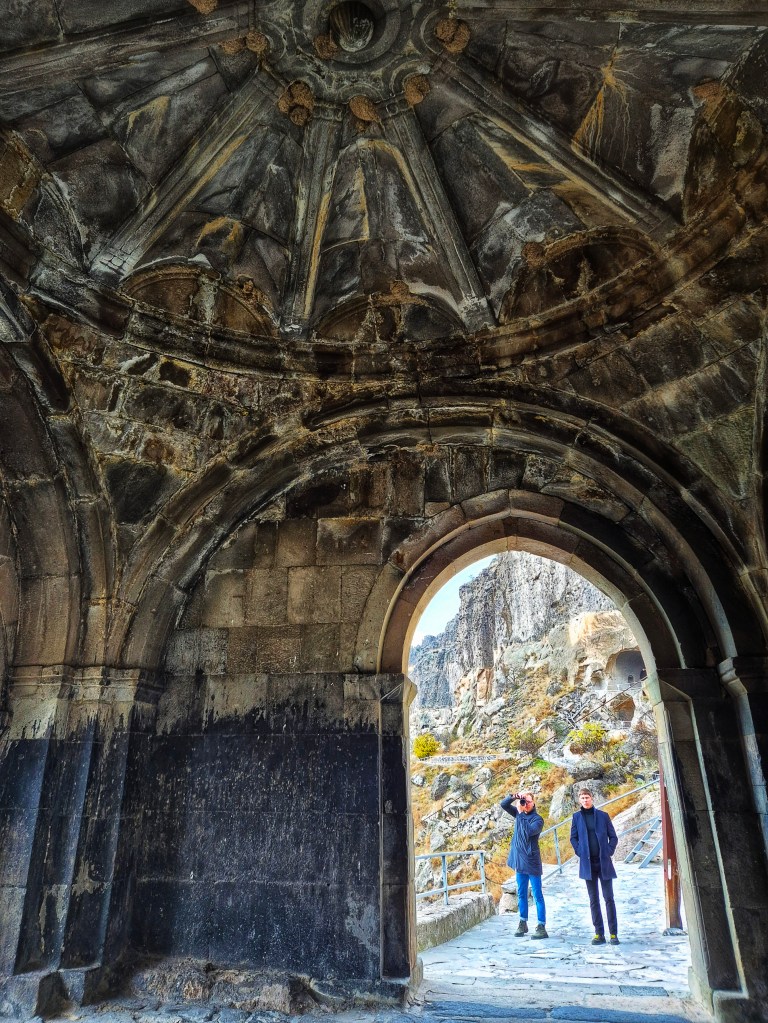
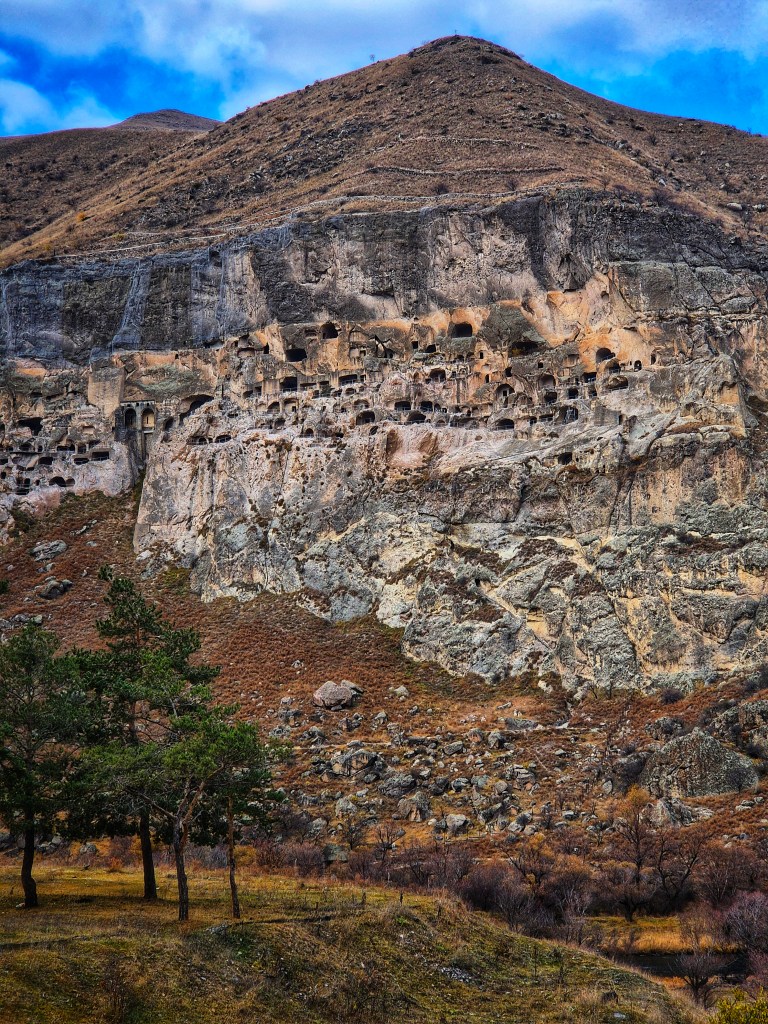
There are three significant cave towns in Georgia: Uplistsikhe (6th-4th century BCE), Vardzia (12th century CE), and David Gareja (6th century CE). These sites have distinct features that are unique to each, so I was naturally inclined to visit all three. Because I have already shared photos of David Gareja along with the Rainbow Mountain excursion, this set of photos will mainly focus on Uplistsikhe and Vardzia.
Uplistsikhe
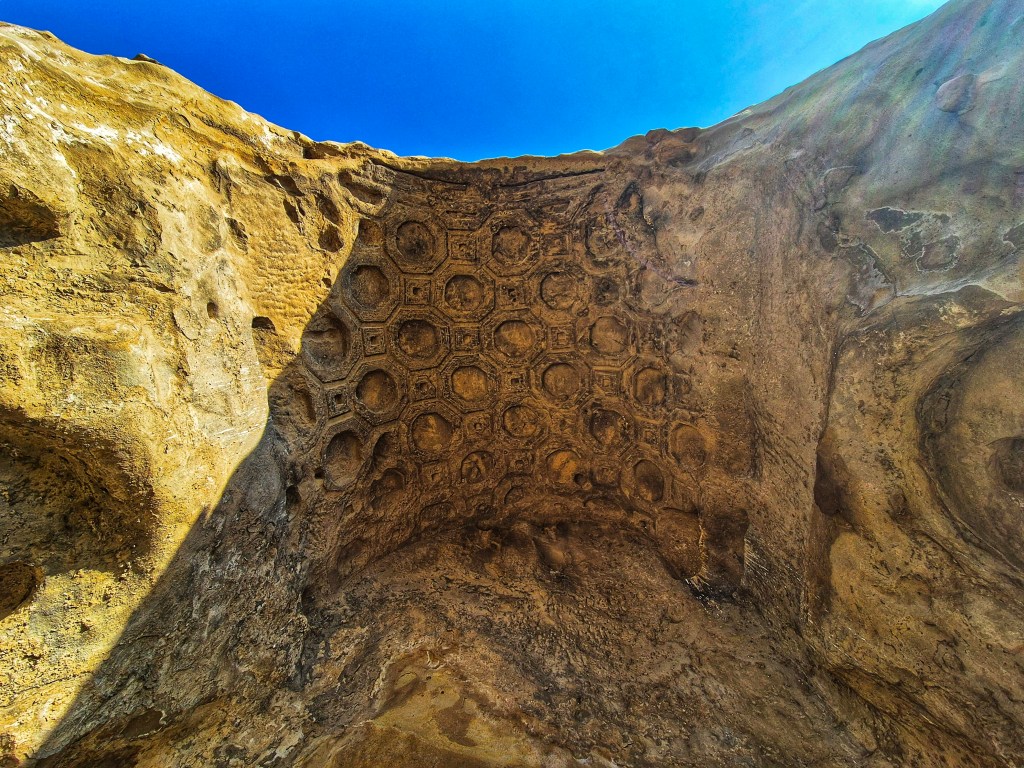
UPLISTSIKHE lured me first because it was an important center of trade and culture along the Silk Road. The entire cave system covers an area of approximately 19.8 acres. Georgia’s major earthquakes have damaged a vast portion of the rock-cut architecture, but many vestiges of ingenuity in design and detail remain. The presence of a theater awed me. One room has an oculus and its walls bear markings of its raiders throughout the centuries. The first photo in this set is not of mere round holes overlooking a spectacular landscape, but evidence of Georgia’s ancient wine-making tradition. The holes are where they buried the qvevri, the clay vessels used in fermentation. It is the same technique that they use in natural wine-making today, and which sets their wines apart from the rest of the vinification world.
Vardzia
VARDZIA is close to the Armenian border. Some of its caves were already inhabited since the Bronze Age and then developed into a shelter from invasions during King Giorgi’s time, but it was under Queen Tamar’s reign in the 12th century, Georgia’s Golden Age, when it flourished as the complex cave city of 50,000 people. It is 13 stories high, although 19 during its zenith. The water system, the underground river, the ventilation, the frescoes decorating the church, the carvings, its library, apothecary, wine cellars, and monastery, are nothing short of impressive. The black figures you might see moving from afar are Georgian Orthodox monks. Amazingly so, the monastery is still being actively used up to this day. But even more impressive to me is the fact that at the peak of Georgia’s Golden Age, the king was a woman.
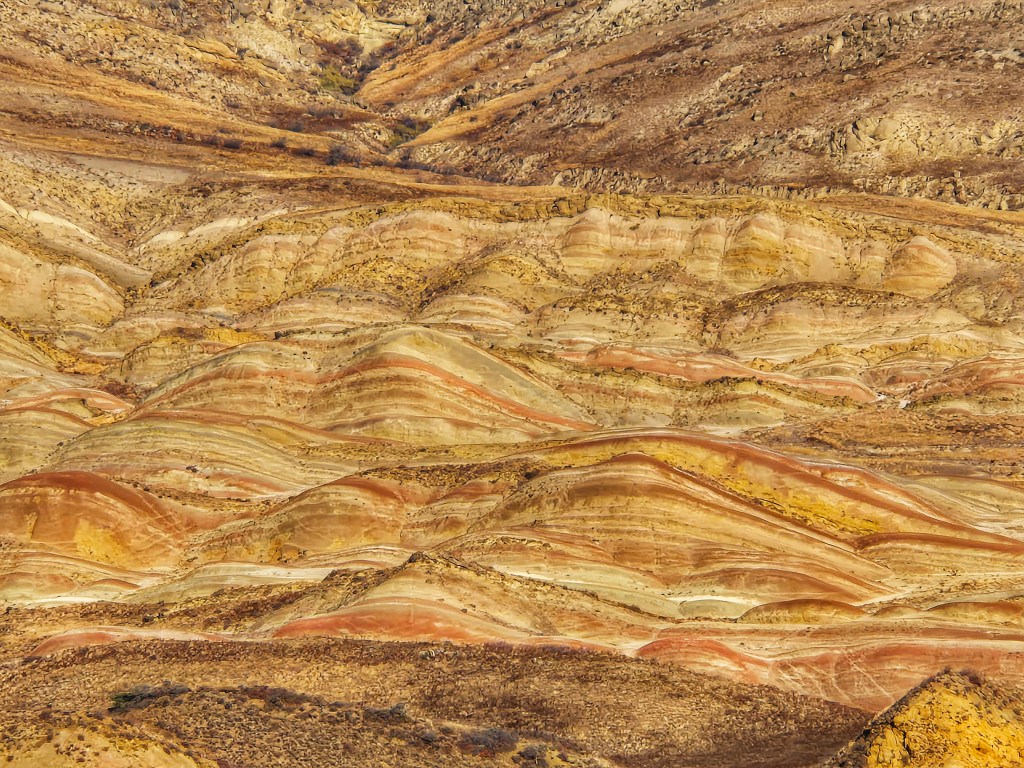
A day trip close to the Azerbaijani border had the Rainbow Mountains (preferably, bacon mountains haha) and the 6th century David Gareji Cave Monastery on the itinerary.
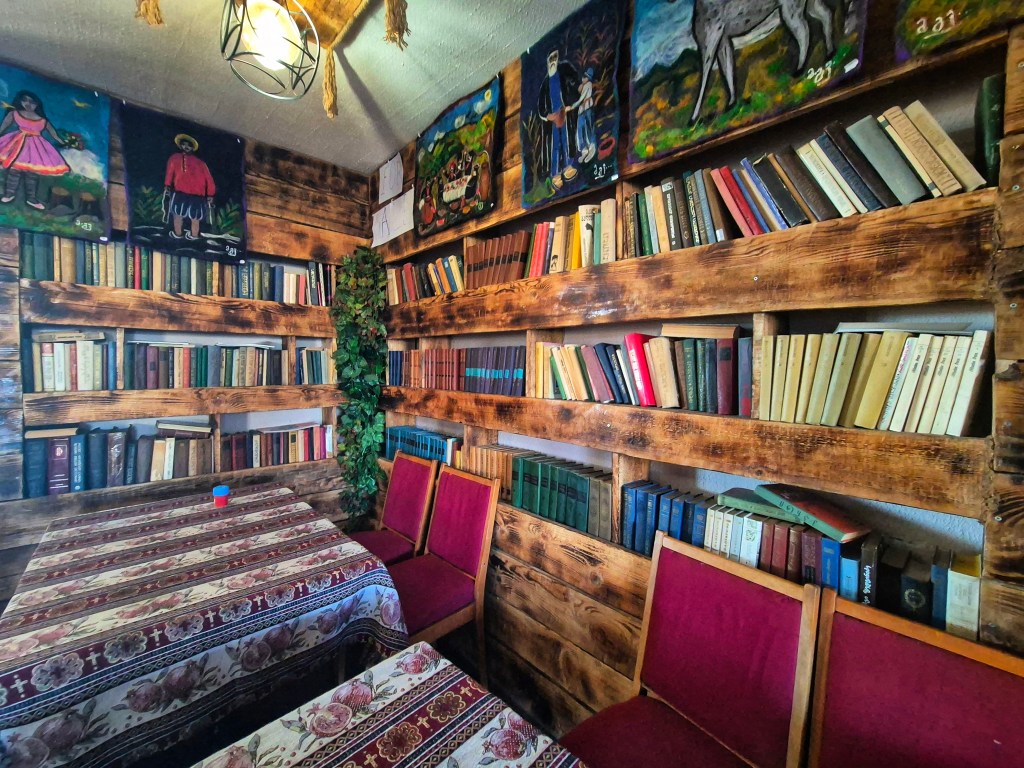
What I did not expect was the off-road adventure getting there, trekking some tricky paths, the otherworldliness of the landscape, and stopping at a far-flung, family-run restaurant in the mountains. This small restaurant had a cozy room full of books; an unplayed and untuned Russian piano; and two drunk, flirtatious, bearded Orthodox priests as old as the piano, who blurted out the names of Tolstoy, Dostoevsky, and Bulgakov in their drunken stupor. I was so amused by them, so when one saw my eyes light up in recognition, he asked, “You understand? You understand?” The names were all I understood, but it became a game. He would say, “Bulgakov,” and I would answer, “Master and Margarita,” and he would smile broadly and say a string of wine-soaked words. When he said, “Dostoevsky,” I said, “The Idiot,” and he laughed so heartily.
My frozen fingers which hadn’t caressed a piano in a week felt grateful for the contact with the piano keys despite the avant-garde sound that they produced. I felt the warmth generated by my fingers begin to spread to my heart and into the room. And even though it would have been more logical to play a Rachmaninoff, the Adagio of Beethoven’s Pathetique just flowed naturally out of me; and I relished in how it hushed the room, hushed the drunk priests, and somehow it hushed my soul. I did not wish for a better piano. I did not wish for anything else at that moment. Up near the Azerbaijani border, music still found me, and it felt like home.
The Caucasus Mountains is a sight that cannot be dismissed in Sighnaghi, and so is the thought that
The Caucasus Mountains is a sight that cannot be dismissed in Sighnaghi, and so is the thought that beyond that horizon is Russia.
This was the setting for my first and unexpected “supra”. I have read about these intimate feasts that are inextricable from Georgian culture; and dreamt of experiencing at least one during this trip; but at the same time, setting realistic introvert expectations that I could not simply get myself invited into one.
By lunchtime, however, I found myself in a group of two Uzbeks, two South Koreans, two Australians, a Spaniard, and a Georgian. The Georgian decided to perform the duties of a “tamada” to our very own supra. Simply put, a tamada is a toastmaster; although the role and significance of a tamada cannot be fully encapsulated in just one word.
Traditionally, a tamada is a family patriarch or a village wise man, and as he steers the course of the supra, the feasting is not merely on food and wine, but also on meaningful conversations.
And there we were. The united nations. The food was relished, the “kantsi” (a drinking vessel made from ram horn and filled with wine) was passed. After a poignant discussion on the two main topics that should be avoided — geopolitics and religion — our tamada prodded us to express what was important to each of us: Peace, said the Georgian. Love, said the Spaniard. Friendship, said the Korean. World leaders who are not war freaks, said the Uzbek. Meaningful experiences and learning about different cultures, said the Australian. Gratitude, said the Filipina. And even though we said different things, we all meant the same thing. If only the world could be one big supra…
Do not look up Gori on a map. You might chide me for going to a place that is less than an hour’s drive away from the zone of the Georgian-Ossetian conflict. South Ossetia, a separatist region of Georgia that is closely allied with Russia, is inaccessible to tourists traveling through Georgia.
Gori, however, is lovely and I’m glad that I was able to have enough time to stroll around its old city, buy steaming cheese khachapuri from a random bakery, and see its medieval fortress and quaint old town — Gori sites normally overlooked for its main attraction. History enthusiasts come here for only one reason: It is the birthplace of the most (in)famous Georgian: Iosif Vissarionovich Dzhugashvili, known to the world as Joseph Stalin.
All in a single compound, one can find the wooden house in which he was born and in which his father, Vissarion Dzhugashvili, maintained a shoe workshop in the basement; Stalin’s personal bulletproof railway carriage that he used from 1941 onwards; and the stately Stalin Museum that was built in 1951.
Nagged by the question of how someone so dashing and acutely intelligent became the ruthless tyrant that he was, I squeezed this sizable book into my busy schedule while planning this trip. Doing so earned a valid question from my goddaughter as to why I was reading about him if I knew he was a bad guy. Haha! But this book is informative, and engaging, but also heartbreaking. Young Stalin’s life turns out to be the stuff movies are made of. This award-winning biography doesn’t turn one into a Stalin sympathizer, however. It offers an in-depth understanding of the world that nurtured him (“a ferociously Caucasian kaleidoscope of east and west”), the times and the circumstances surrounding the would-be dictator, and a rather sinister intimation of how idealism mixed with unchecked personal trauma and history can dangerously spill into collective trauma and history.
Stalin is celebrated as a hero for defeating the Nazis, but part of me still cannot grasp how anyone can revere him and overlook the Holodomor and the Great Purge of his rule in which the death toll was millions more than that of the Holocaust. But who am I to judge when Filipinos also have a penchant for charismatic strongmen who disregard human cost for political gain?
But before I end up touching on something too sensitive, let me just say this: It should be a crime for a war criminal to be this good-looking. 😅
A light rain was falling, a fine spray, unlike what rain is in the tropics. Within a couple of hours the deep purple of evening entered through that same window and transformed the spray into delicate snowflakes that vanished even before you could touch them; inconspicuous magic in the micro details when one season gives way to another.
It was toward the end of the trip when I took this photo of my traveling companions on the windowsill. Absent from the stack, but verily lodged in my consciousness, are Euripedes’ Medea and Percival Everett’s For Her Dark Skin.
I went to Georgia accompanied by seven books, and after jaunts to Tbilisi’s charming bookshops, a modest number of three Georgian masterpieces were read on the train and during long drives, then added to the pile.
The eclectic curation is an education in itself as it includes a Greek tragedy, a rather feminist and modern retelling of the tragedy, a wonderful and informative chronicle of Georgia’s unique wine culture, journalistic reports and stories from the early years of post-Soviet Georgia, the greatest love story of the Caucasus, literary criticism, a portrait of young Stalin that is also a portrait of a nation, a painful recollection of the Georgian-Abkhazian armed conflict in the 90s, epic poetry, and Tolstoyan short stories.
Once again, people wondered whether I had gone to another destination just to read. But I know they’re only kidding.
For who isn’t aware that reading and traveling are not separate experiences? They are halves of a whole that lend clarity and depth to each other.
In our travels, what we notice, perceive, and experience — and what we contribute to meaningful interactions, or how we overflow — largely depend on what is already inside us. “Nothing flows out of a jar except that already inside it,” writes the preeminent Georgian author, Shota Rustaveli in The Knight in the Panther’s Skin.
In life, reading and traveling are merely expressions of how one chooses to take their fill.
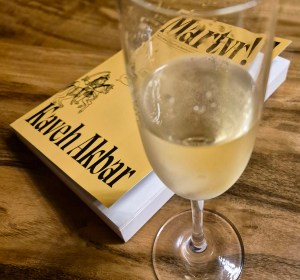
“…Your project reminds me of all the great Persian mirror art… Some centuries ago all these Safavid explorers from Isfahan go to Europe—France, Italy, Belgium—and they see all these gargantuan mirrors all over. Ornate, massive mirrors everywhere in palaces, in the great halls. Building-sized mirrors. They come back and they tell the Shah about them and of course he wants a bunch for himself. So he tells his explorers, his diplomats, to go back to Europe and bring him mirrors, giant mirrors, buy them for any price. And so they do, but of course as they bring these massive mirrors back across the world, they shatter, they fracture into a billion little mirror pieces. Instead of great panes of mirrors, the shah’s architects in Isfahan had all this massively expensive broken mirror glass to work with. And so they begin making these incredible mosaics, shrines, prayer niches… I think about this a lot, Cyrus. These centuries of Persians trying to copy the European vanity, really their self-reflection. How it arrived to us in shards. How we had to look at ourselves in these broken fragments, and how these mirror tiles found themselves in all these mosques, the tilework, these ornate mosaics. How those spaces made the fractured glimpses of ourselves near sacred… it means, in my humble opinion, we got to cubism hundreds of years before Braque or Picasso or any European. That maybe we’ve been training for a long time in sitting in the complicated multiplicities of ourselves, of our natures.” — Kaveh Akbar, Martyr!
Currently reading Kaveh Akbar’s Martyr! and this passage reminded me of the 16th century Sheesh Mahal (“Mirror Palace”) in Rajasthan, and the photos I still have not uploaded from the India trip.
I have not read historical evidence, but I was told Sheesh Mahal’s mirrors were transported from Belgium by Elephants.
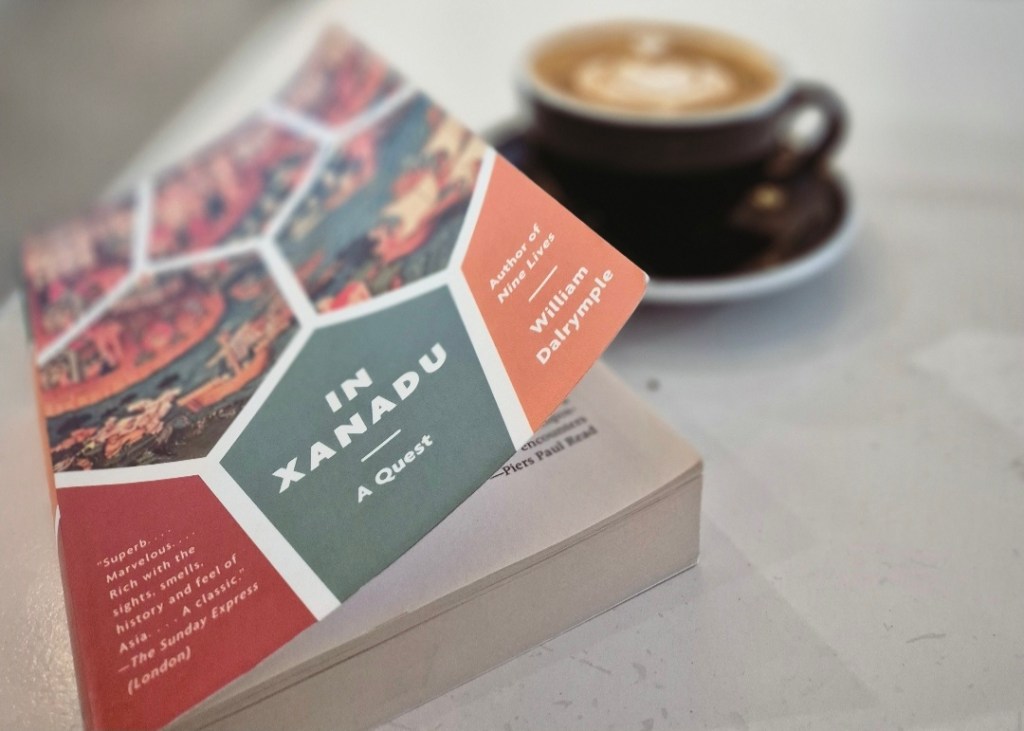
Trace Marco Polo’s 700-year-old passage from Jerusalem to the ruins of Kublai Khan’s summer palace in Xanadu? “Insane!” most people would say, as this journey runs along war-torn lands and the route bestudded with disputed territories.
But that is exactly what twenty-one-year-old William Dalrymple set out to do in 1986 under a travel scholarship. Thankfully, he lived to tell the tale and published this book, his first, in 1989.
The first several pages impressively encapsulates both the divisiveness and the beauty within Jerusalem: “If history repeats itself anywhere, it does so in Jerusalem. […] For two thousand years Jerusalem has brought out the least attractive qualities in every race that has lived here. The Holy City has had more atrocities committed in it, more consistently, than any other town in the world. Sacred to three religions, the city has witnessed the worst intolerance and self-righteousness of all of them. […] It is only when you get here and have a moment to sit, and think, and look back, that you come to realize… how beautiful Jerusalem still is.” With a few hundred pages left after reading such lines, and a dreamy itinerary that includes Cyprus, Syria, Eastern Turkey, Iran, Afghanistan, Pakistan, India, Kashgar — a city in the Xinjiang Uyghur Autonomous Region, Peking, and Xanadu in Inner Mongolia, a reader could only look forward to the adventure.
The Dalrymple of In Xanadu, however, is a far cry from the more perceptive and compassionate Dalrymple who affected me deeply in the pages of Nine Lives last June. It is understandable, considering the twenty-year publication gap between the two books. (In Xanadu, 1989; Nine Lives, 2009.)
The author admits, in the introduction of the 25th anniversary edition of In Xanadu, how he still feels “deeply ambiguous” about his first book. “For In Xanadu records the impressions, prejudices and enthusiasms of a very young, naïve and deeply Anglocentric undergraduate. Indeed my 21 year old self – bumptious, cocky and self-confident, quick to judge and embarrassingly slow to hesitate before stereotyping entire nations – is a person I now feel mildly disapproving of: like some smugly self-important but charming nephew who you can’t quite disown, but feel like giving a good tight slap to, or at least cutting down to size, for his own good.”
He was but a boy whose judgments were not too tolerant and whose remarks were yet impervious to today’s hyper political correctness. In spite of that, this is probably Dalrymple in his funniest and most candid. If Nine Lives found me crying inside a room of a Jaipur haveli, In Xanadu found me chuckling in public several times. For all his faults of youth, I think we can still count on him being a more reliable and entertaining narrator than Marco Polo.
As a fan, I find it encouraging to be able to track, through his books, how much his travels, his experiences, and his eagerness to learn and inform has transfigured him into the literary hero that he is today. It is comforting to be able to observe how our traveling intellectual icons grow. That way we are reminded that they are human and their writings are those we can grow with. Either that, or we’ll come to realize that we’ve somehow grown, too.
By reading In Xanadu, one is assured that the reading journey with Dalrymple can only get better from here. Who else is looking forward to getting their hands on The Golden Road?