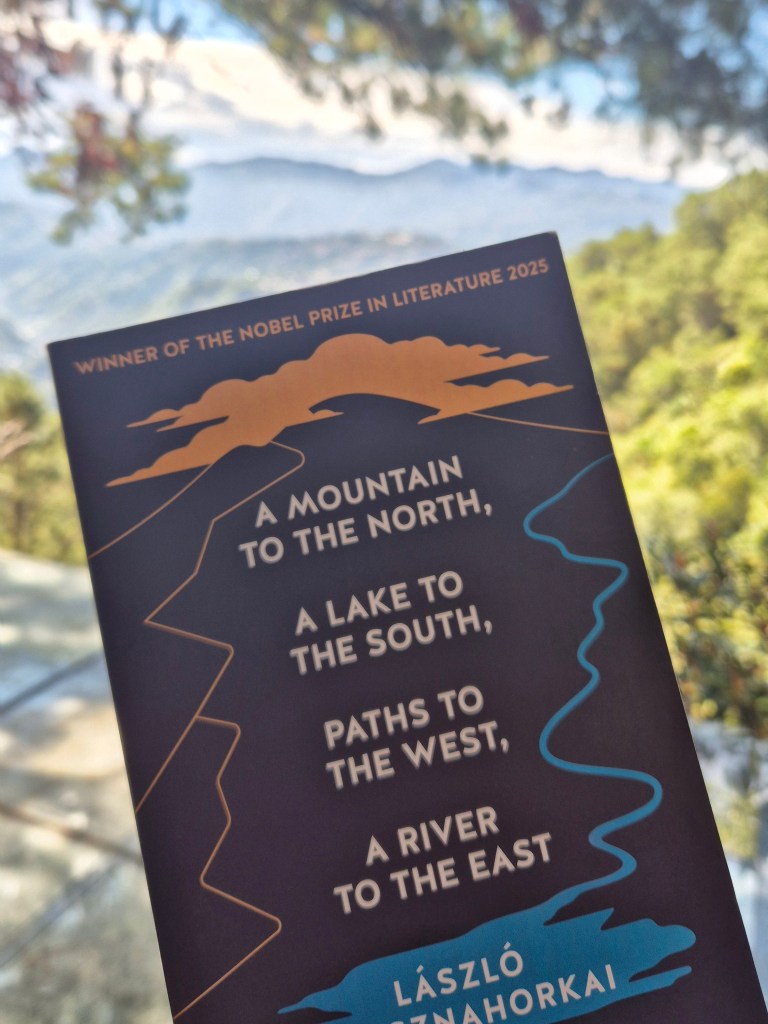
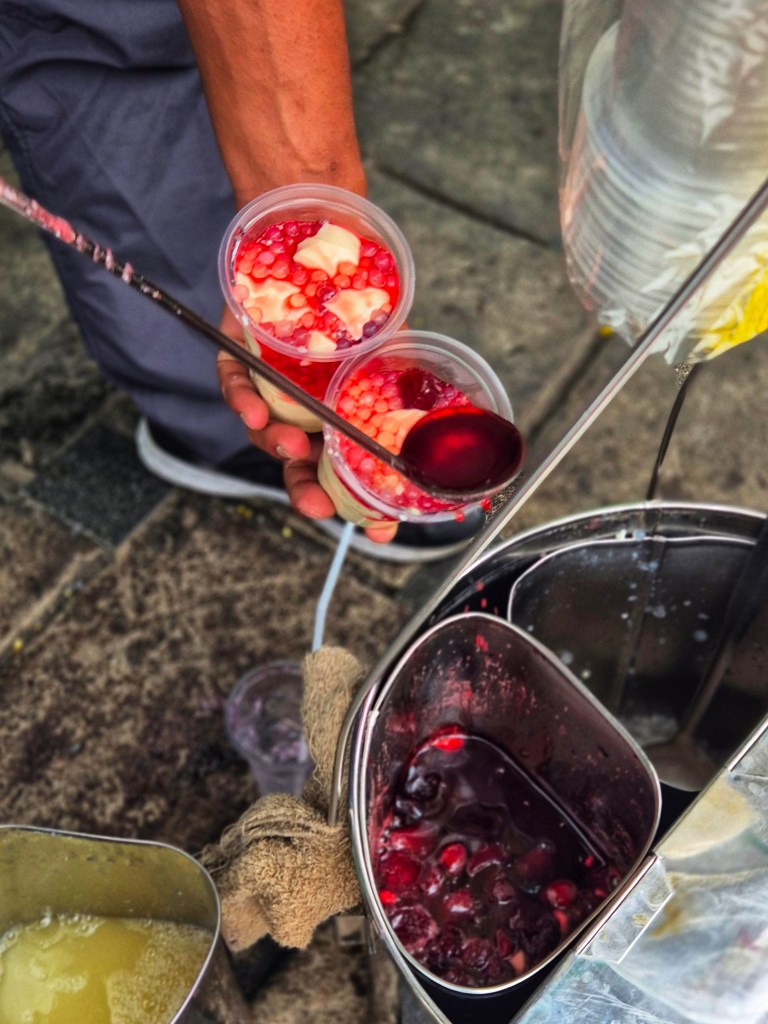
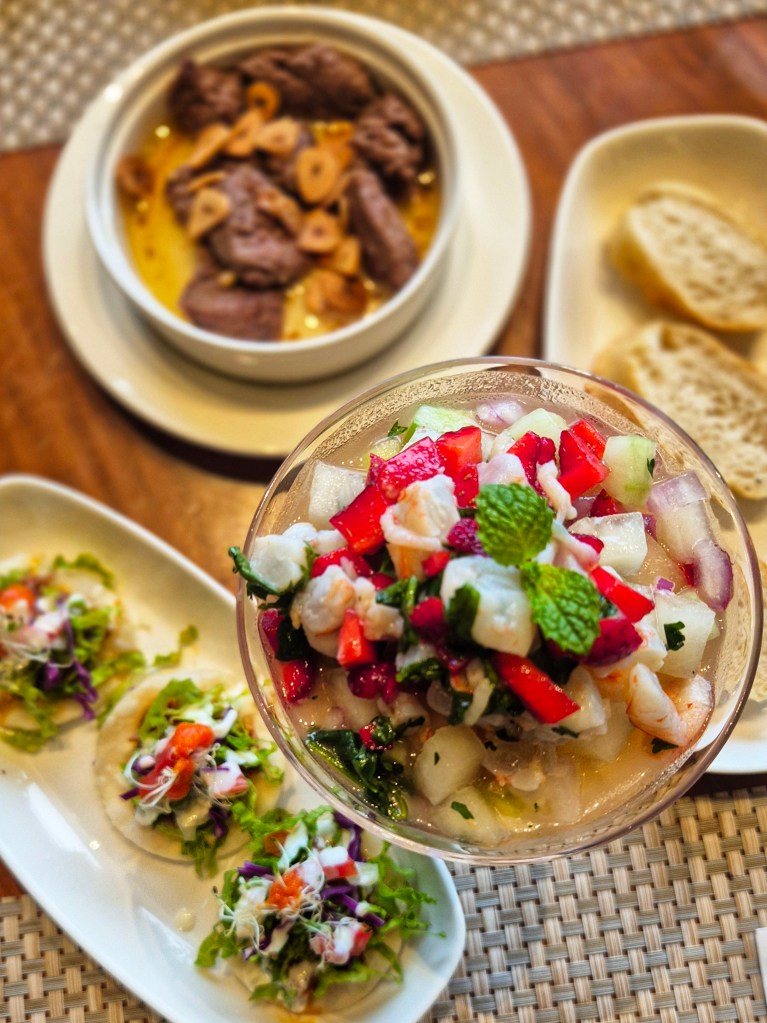
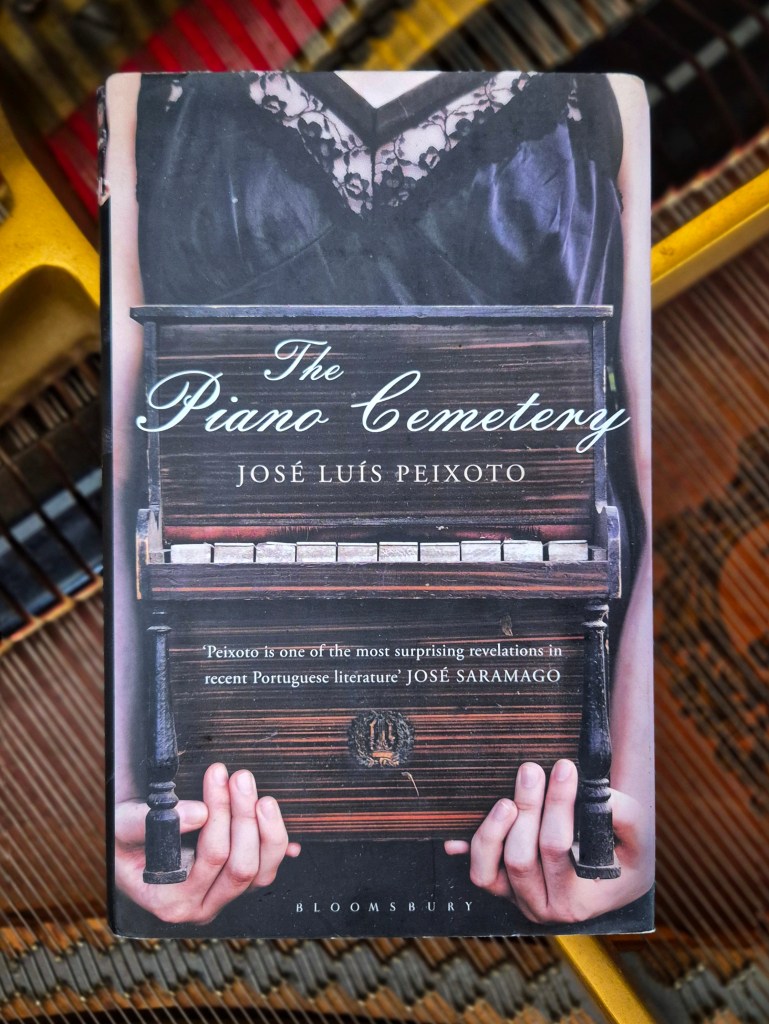
A Reading Girl in Kazakhstan

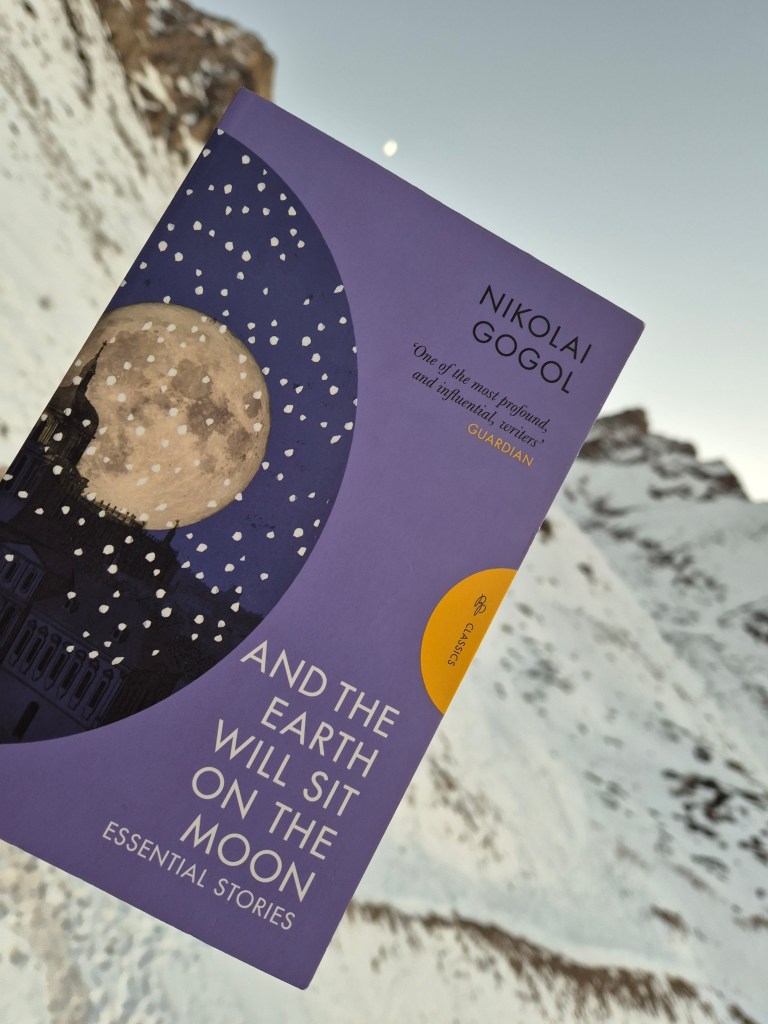
That was me. The girl with a Gogol anthology poking out of a backpack pocket while walking the length of Almaty’s Gogol Street a number of times, earning her more than 20,000 steps a day; 

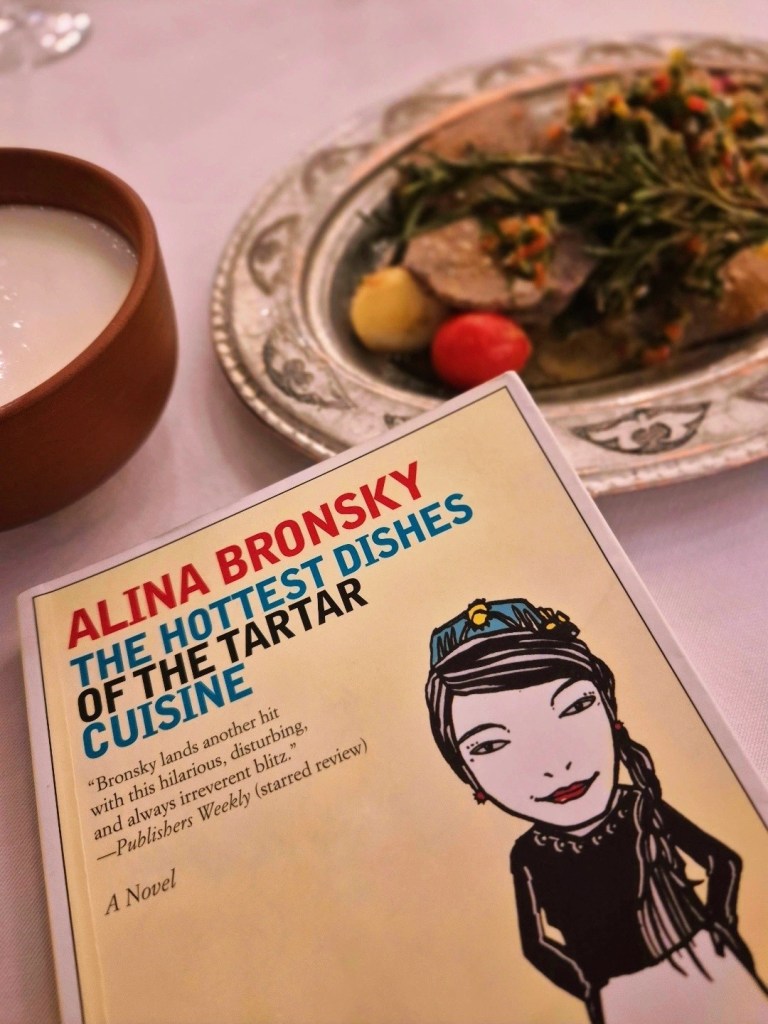
who paired her first Kazakh meal of horse meat and fermented camel’s milk with Alina Bronsky’s insane but unexpectedly touching Hottest Dishes of the Tartar Cuisine;

who carefully savored the nuances in every Kazakh story from Amanat (Women’s Writing from Kazakhstan) on every fermata between adventures, and upon completion, discovered that it would be one of her favorite collections of short stories;

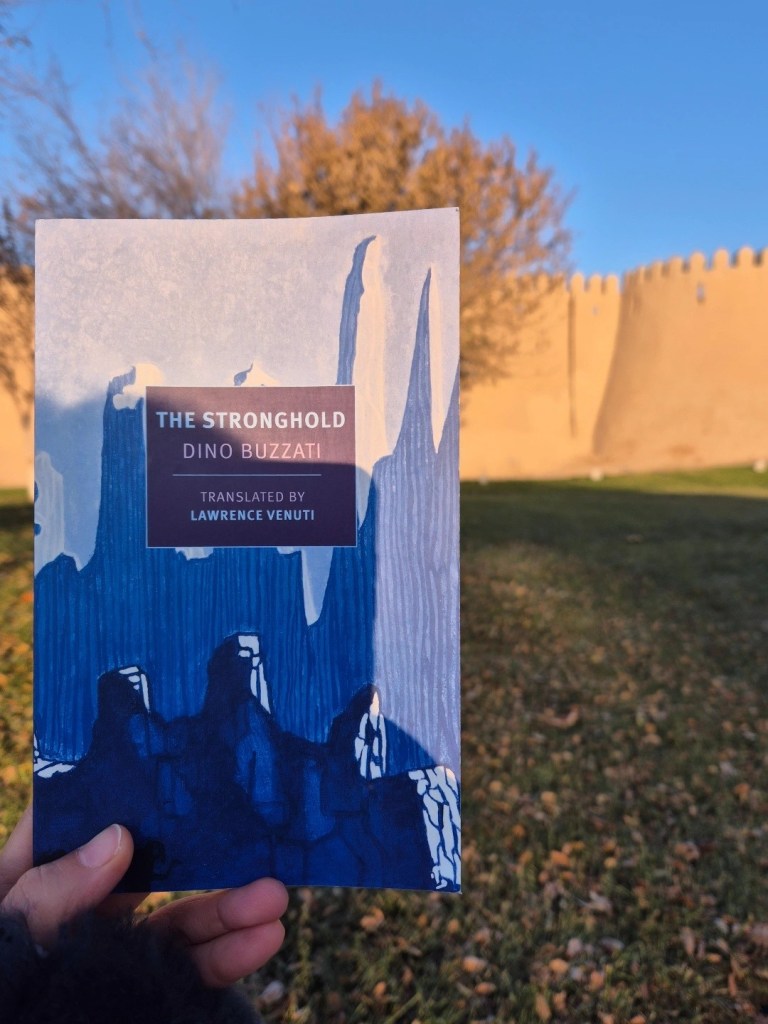
the girl who brought Buzzati’s The Stronghold (aka The Tartar Steppe) to a stronghold in a Tartar steppe, and who realized that Buzzati would have been happy with her for taking a cue from his novel and living a life contrary to that of Drogo’s;

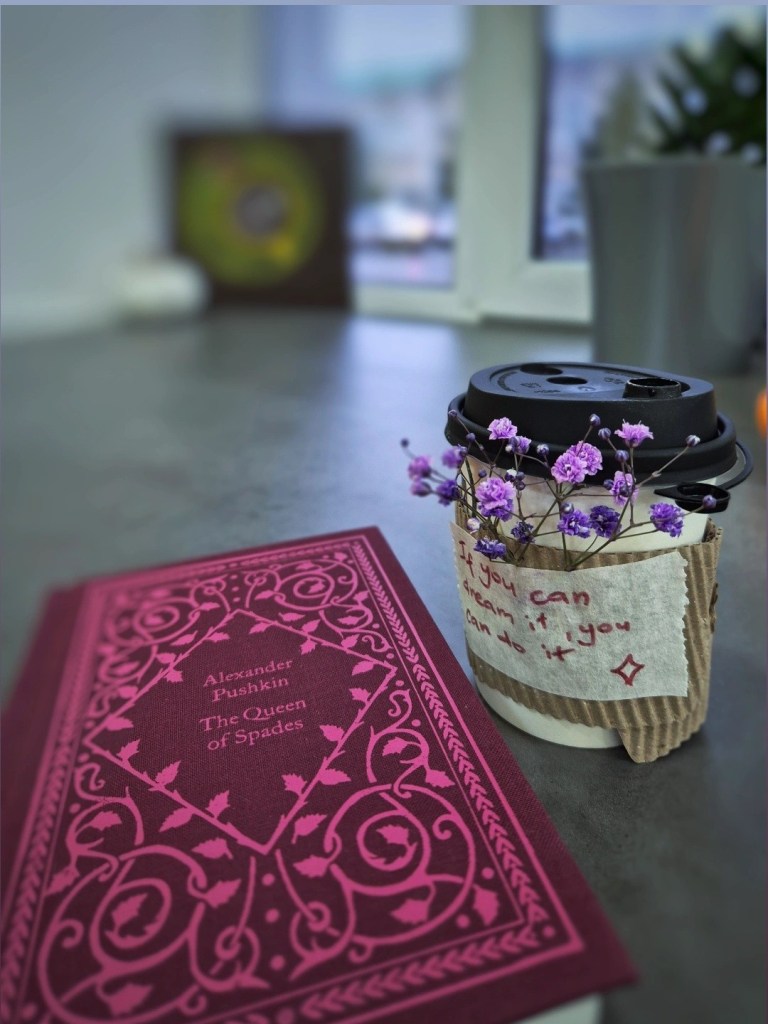
the girl who felt like a queen when she received a cute note in English with tiny flowers from a barista in Uralsk, and a free pass at the Pushkin Museum by reading and bringing The Queen of Spades with her;

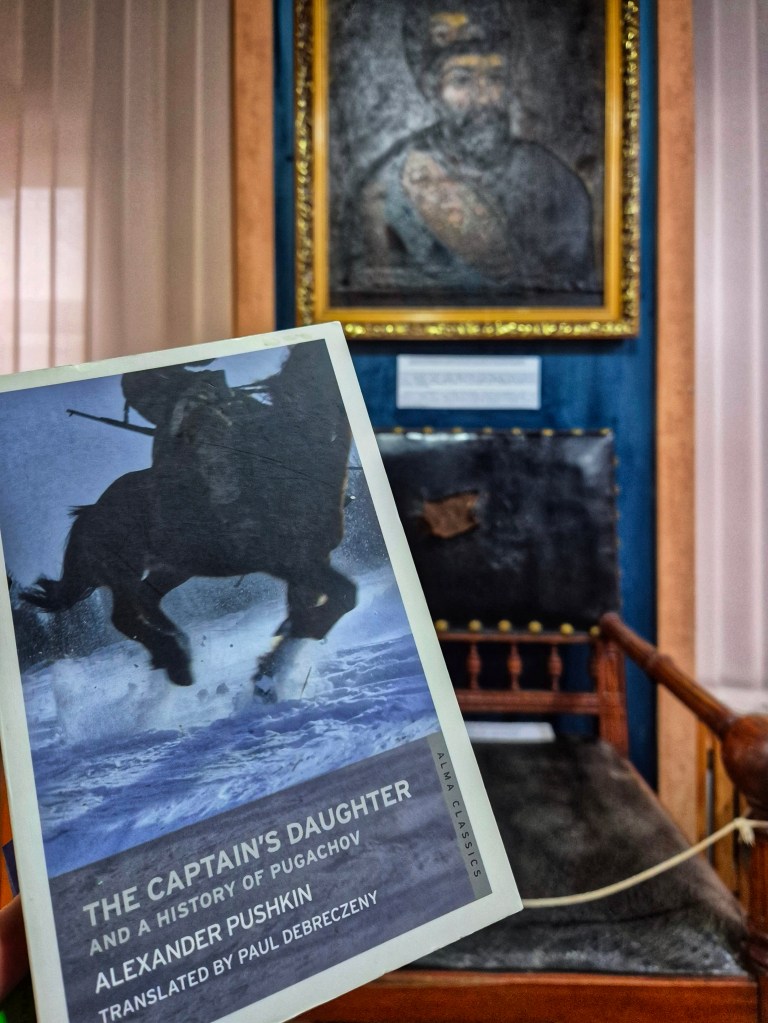
who learned about Pugachov’s Rebellion through Pushkin before knocking on Pugachov’s door;

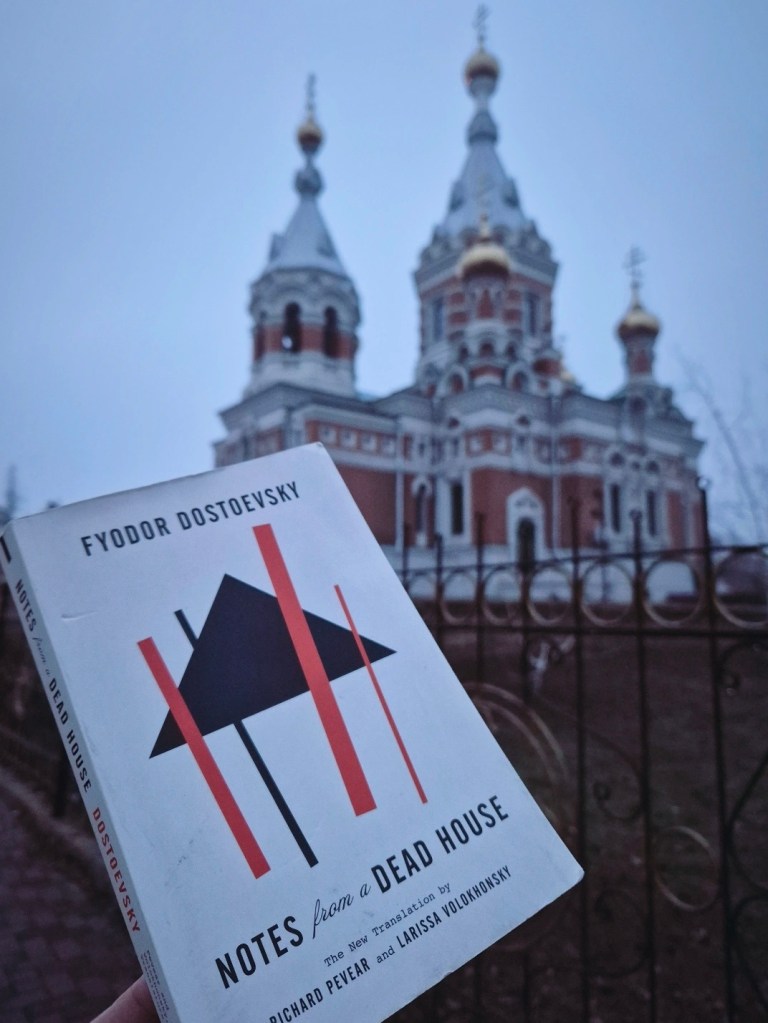
who reunited Dostoevsky’s Notes from a Dead House with Kazakhstan simply because it’s where he started writing the notes;

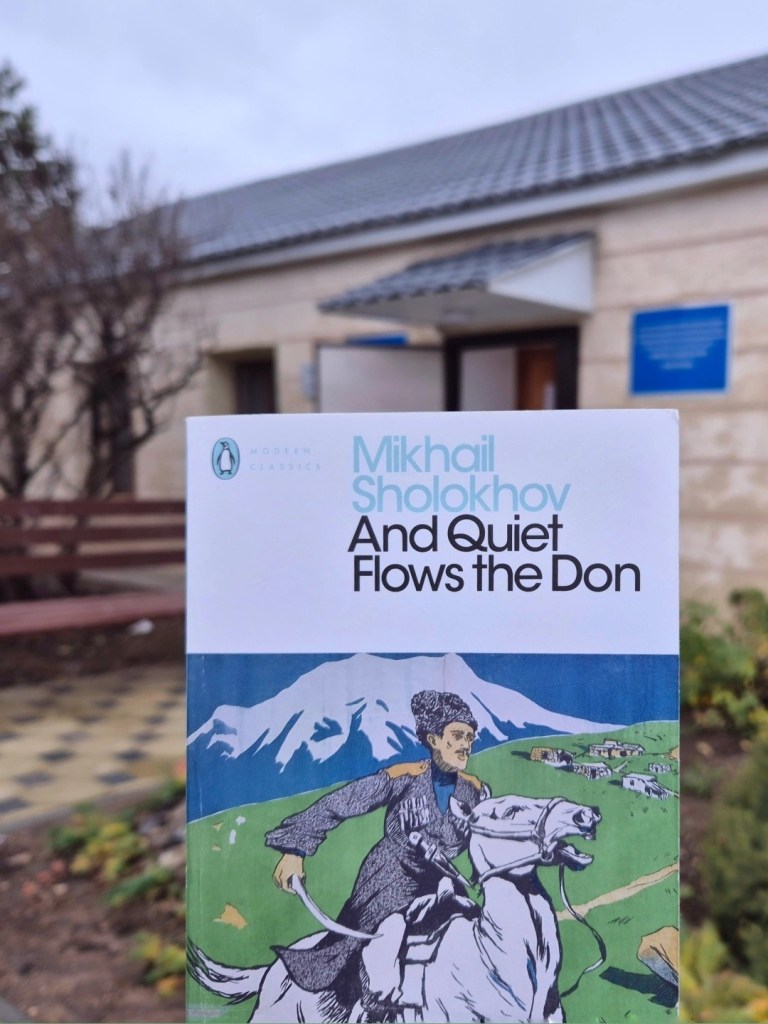
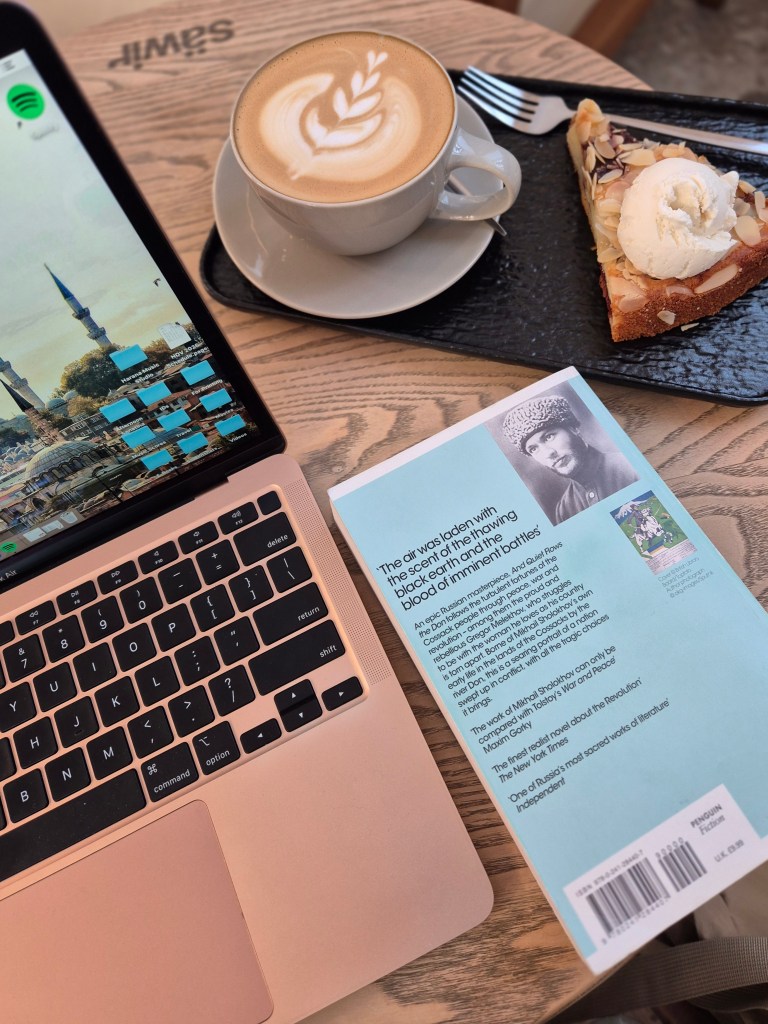
the girl who wished she flowed, but instead, lumbered through Sholokhov’s epic “And Quiet Flows the Don,” and being devastated by it, could only take the hefty book to the house where Sholokhov learned that he was awarded the Nobel and play a plaintive melody on his piano while gazing at his portrait, wanting to ask him so many questions;

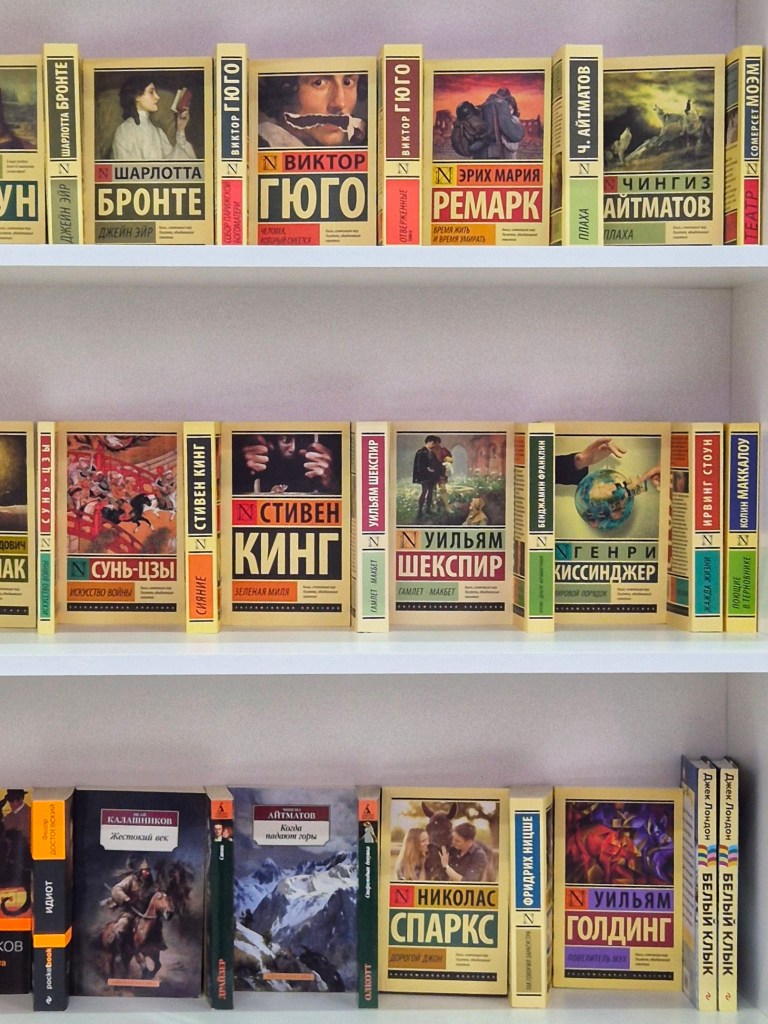
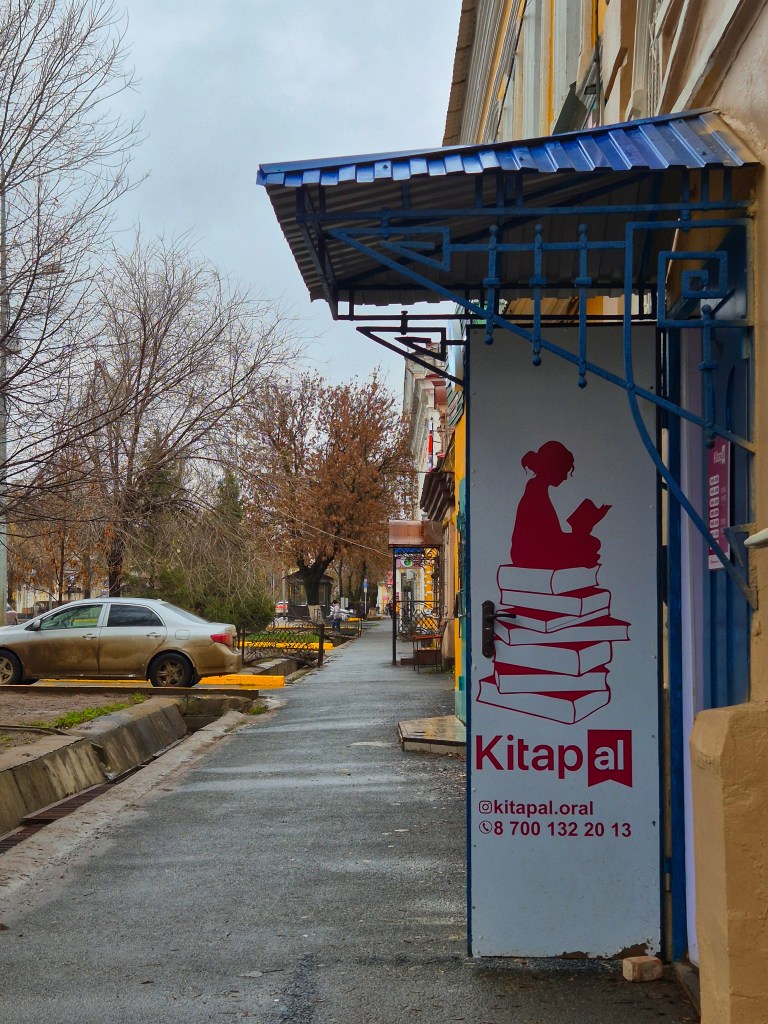
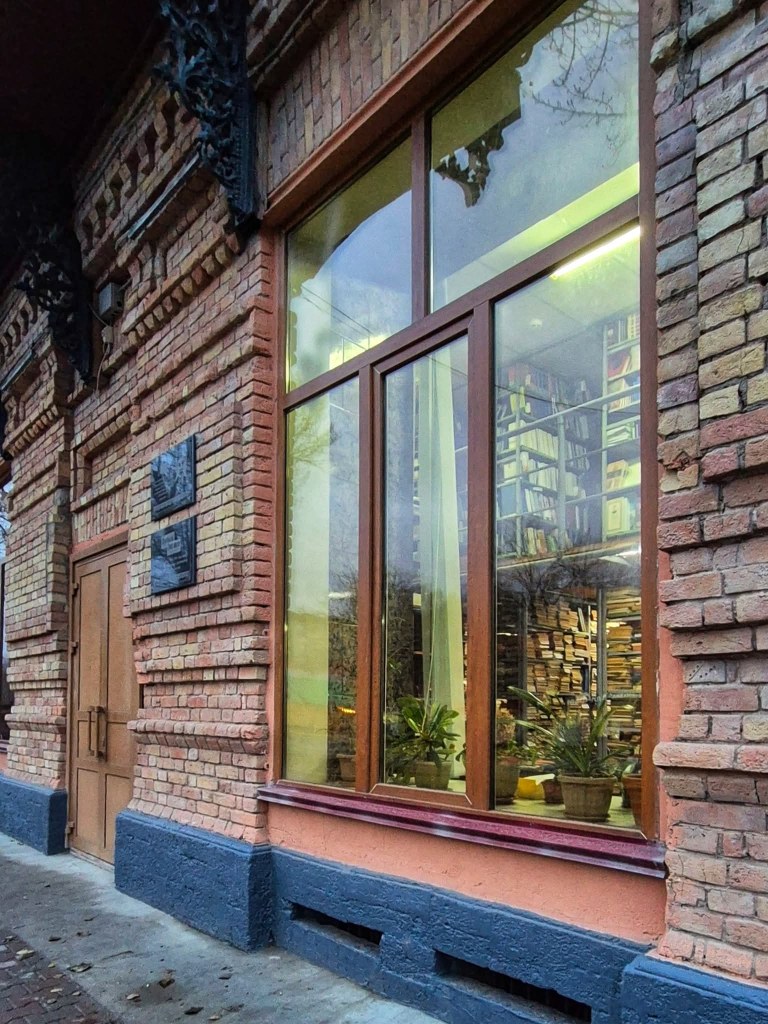
the impractical girl who carried all these books to a trip, thankful that she did because Kazakh bookstores humble the English reader by catering only to the Kazakh and Russian reader;

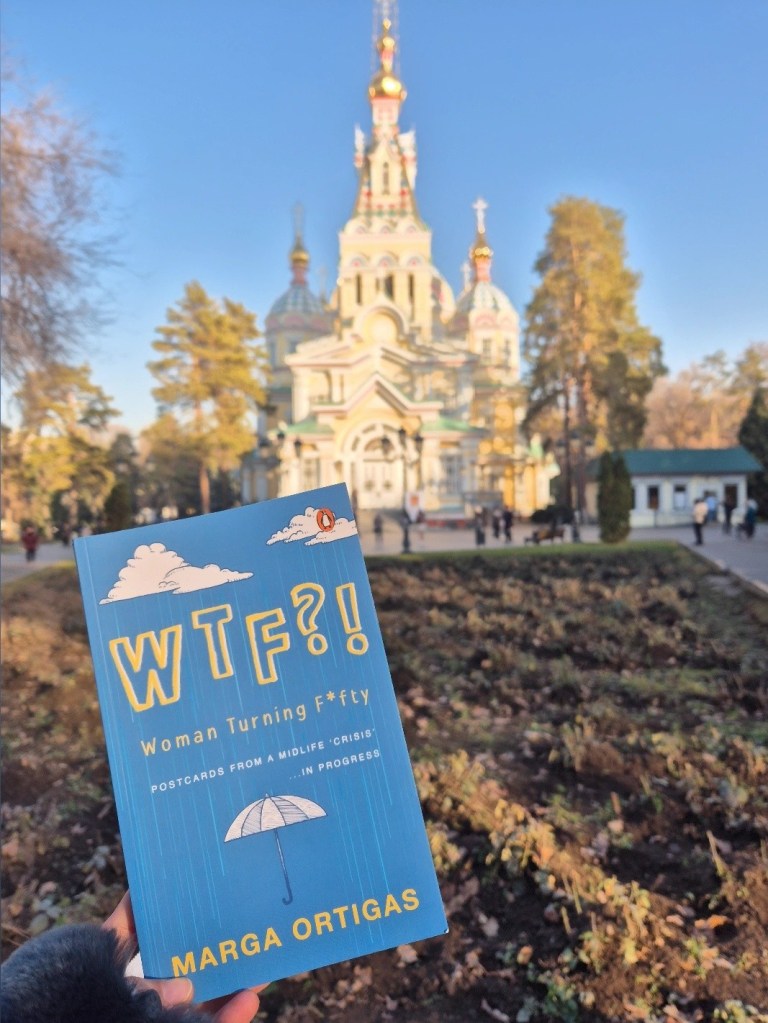
the girl who agreed with Marga Ortigas who wrote that reading is, “A special gift that showed you how much of the world still lay beyond the safety of your comfort zone”;

the girl who believes that traveling is one way of acting upon that gift. 

The Turkistan Dispatch

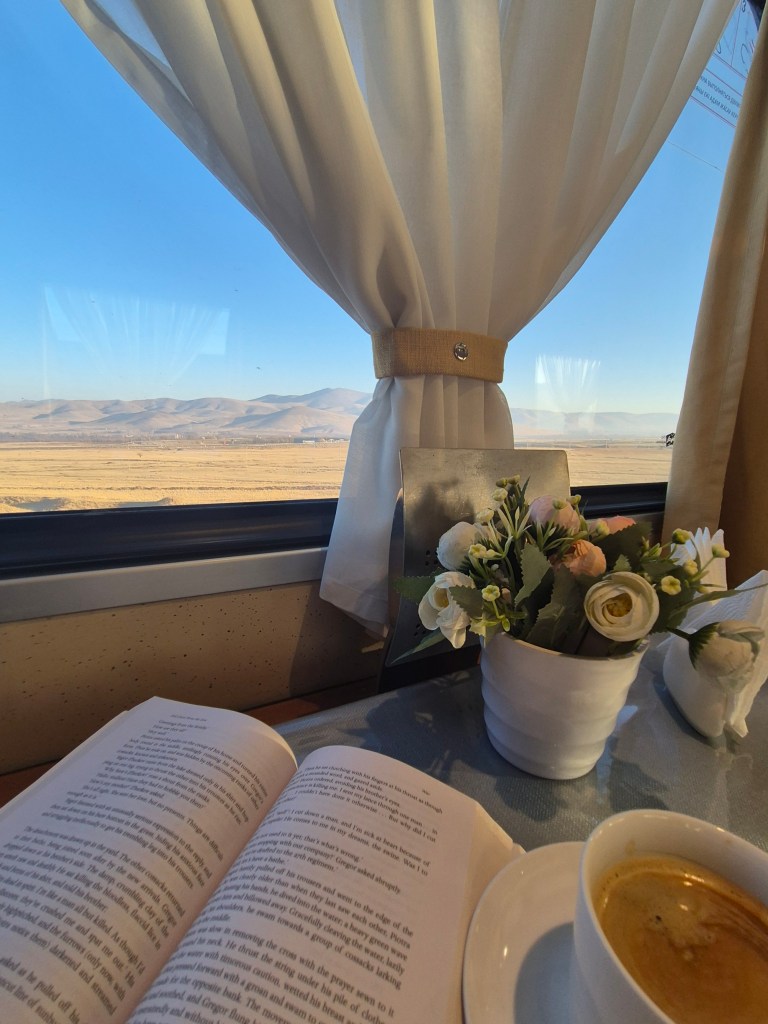
There is nothing like steppeland sunrise and snow-capped mountains viewed through a train window to herald one’s entry to the Silk Route.

Built on an oasis at the edge of the Kyzylkum Desert, Turkistan was an ancient jewel of culture, trade, and spiritual significance for the Turkic people.

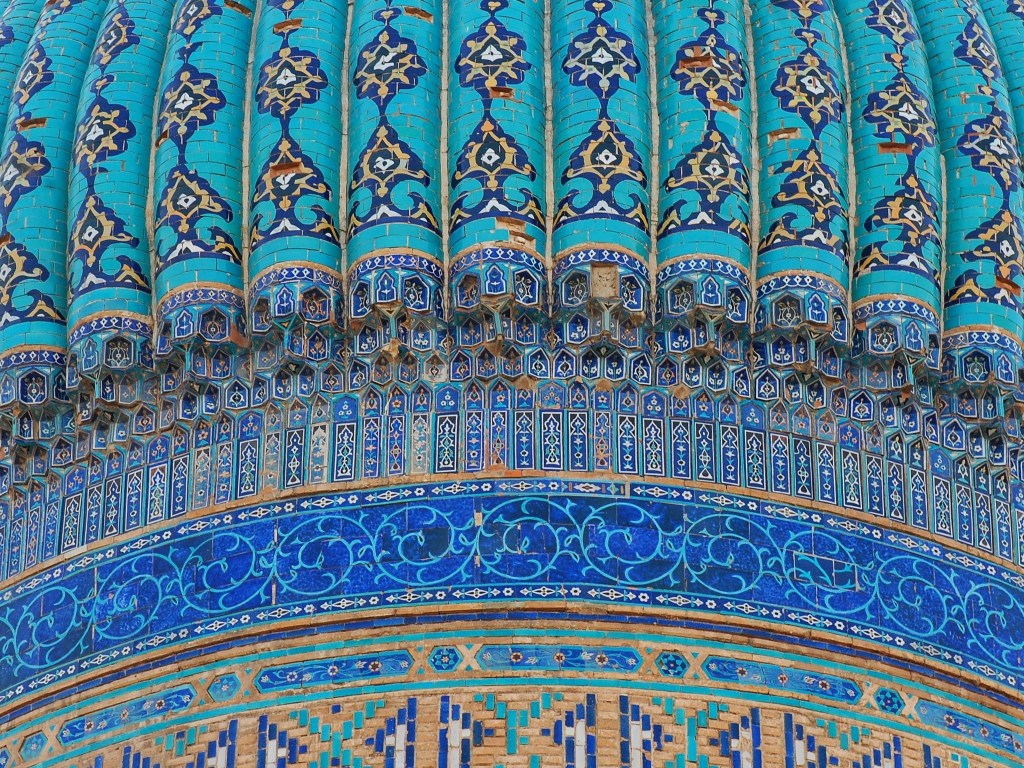
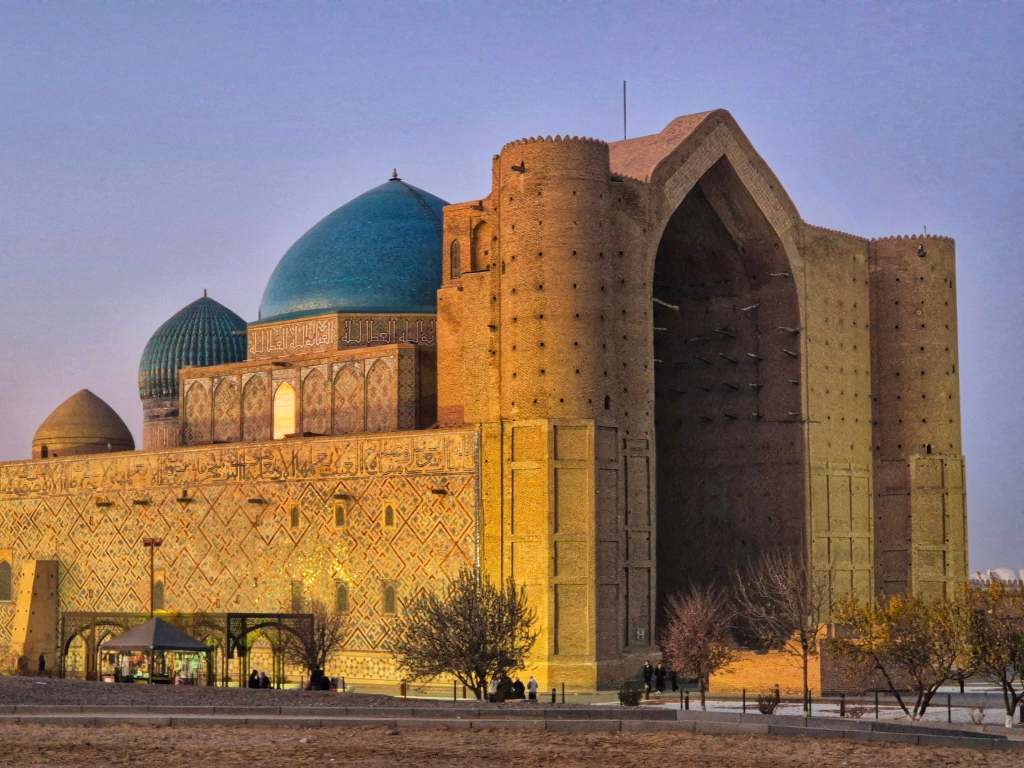
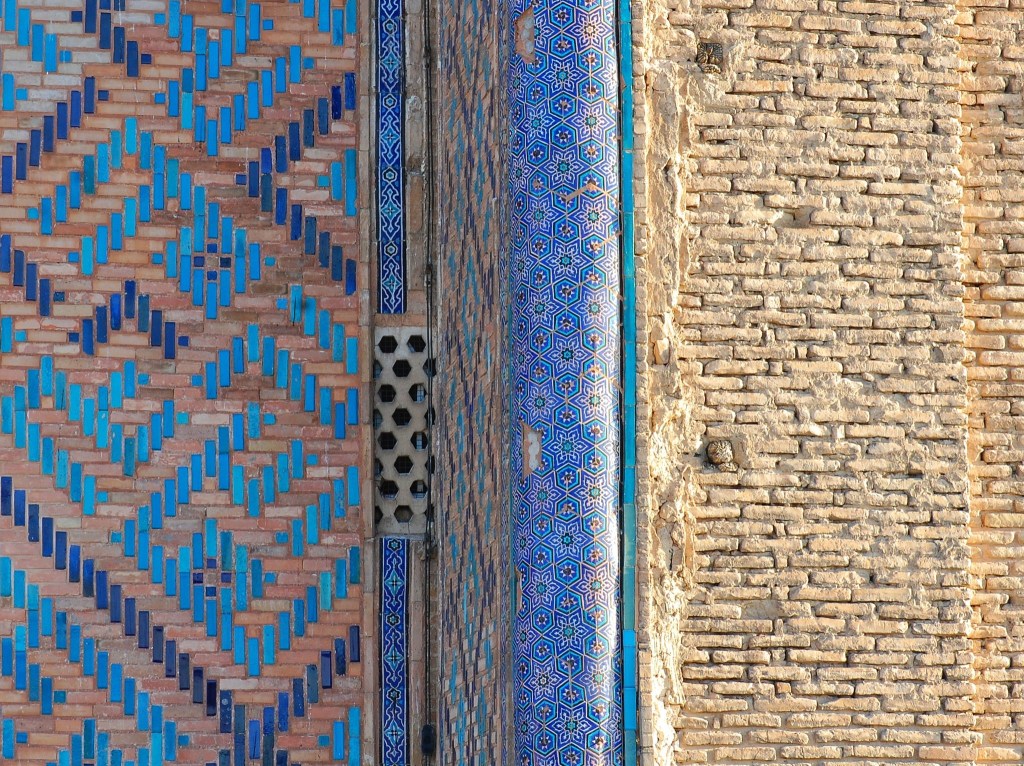
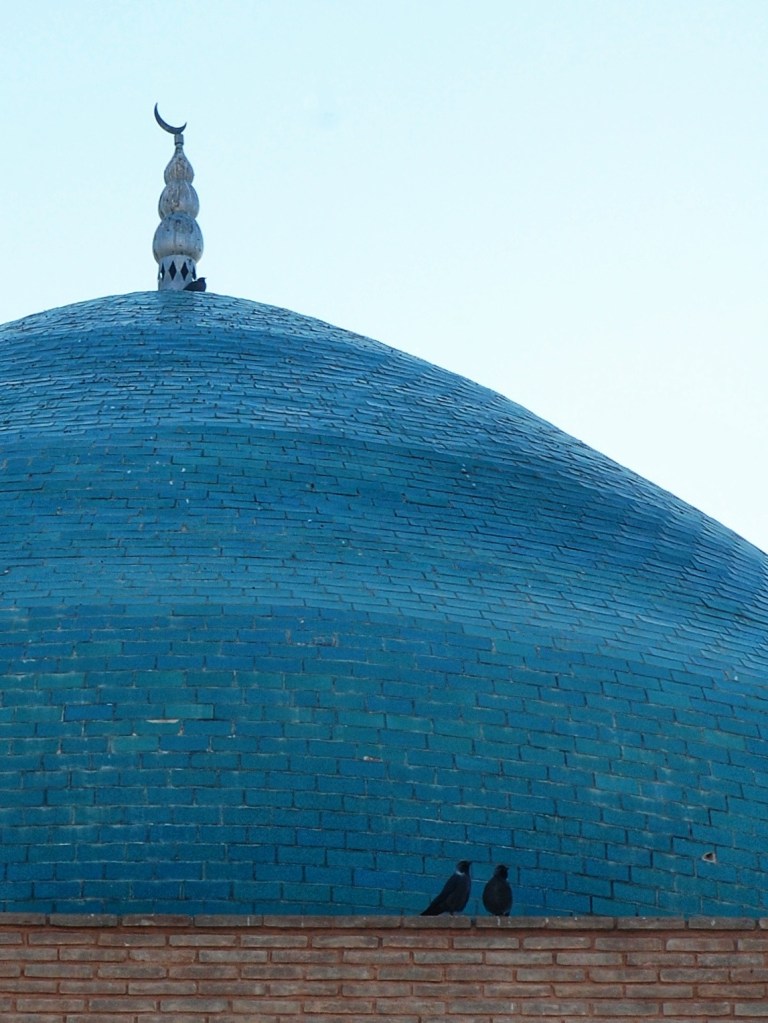
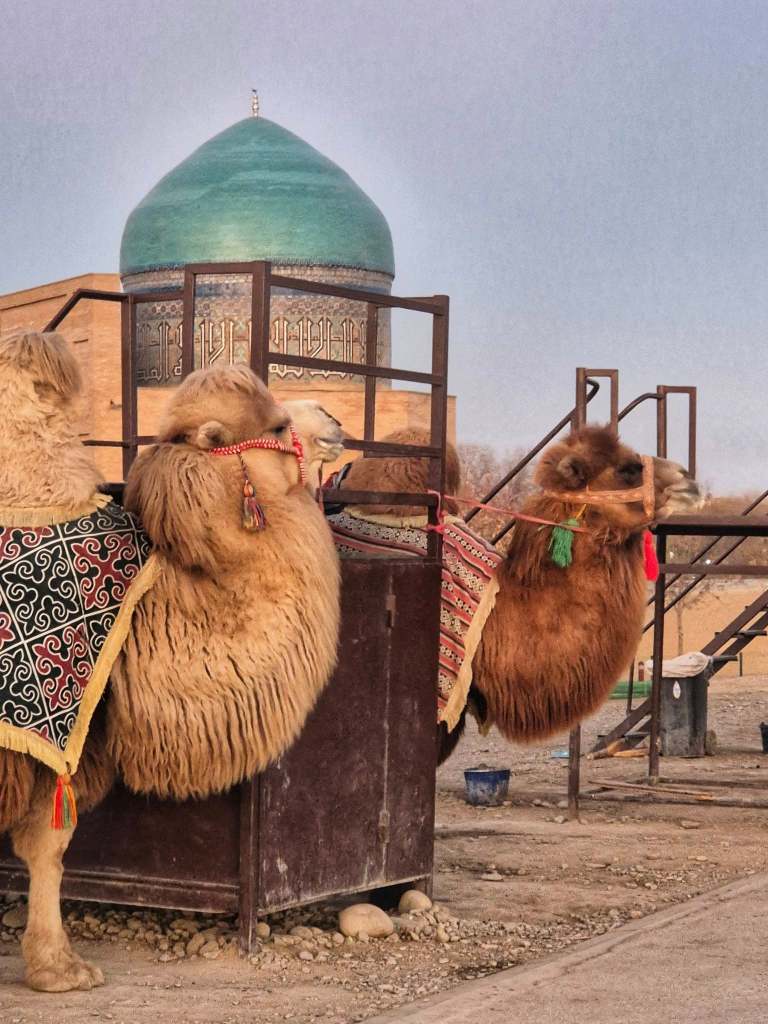
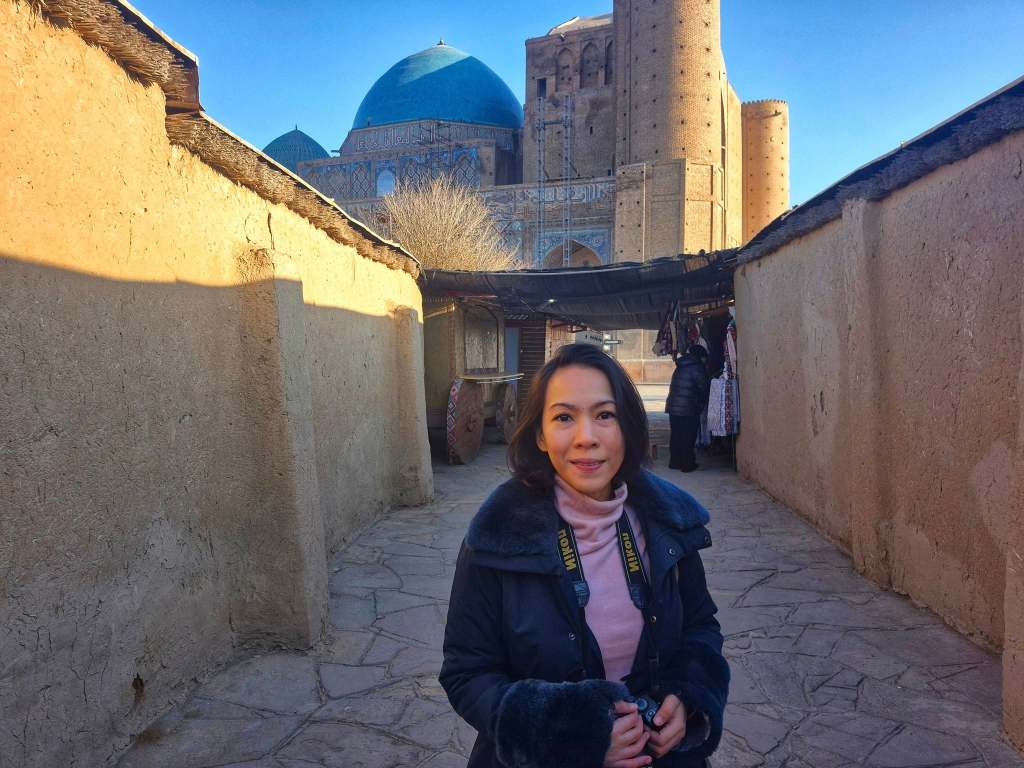
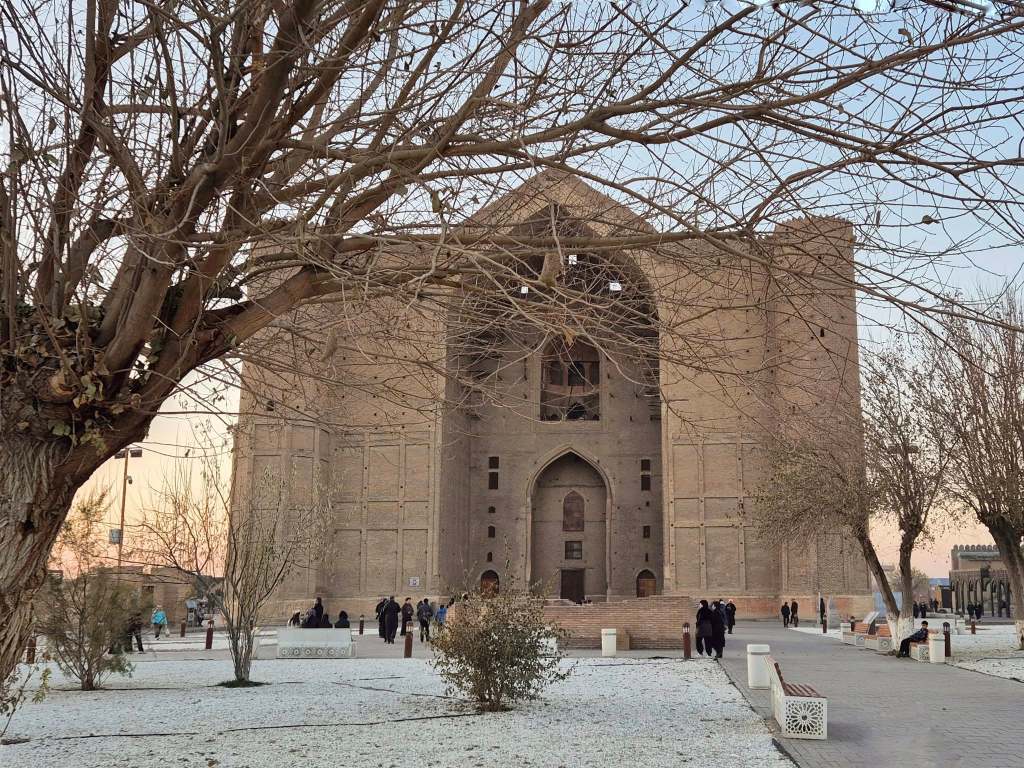
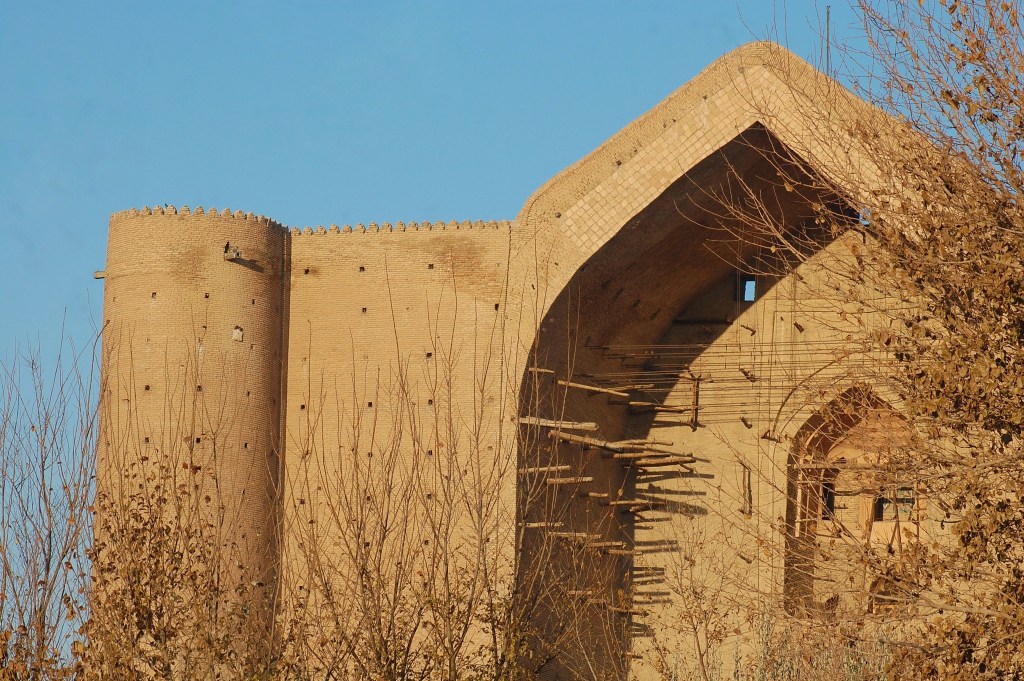
Turkistan shares not only a border with Uzbekistan, but also its Timurid architecture. Its most prominent landmark is a mausoleum commissioned by Timur (Tamerlane) in honor of Khoja Ahmed Yasawi, a poet and Sufi mystic. In the vicinity is a smaller mausoleum devoted to Rabiya Sultan Begum, Timur’s great-granddaughter, and daughter of Ulugh Beg of whom I’ve written and fangirled during my Uzbekistan trip in 2022.

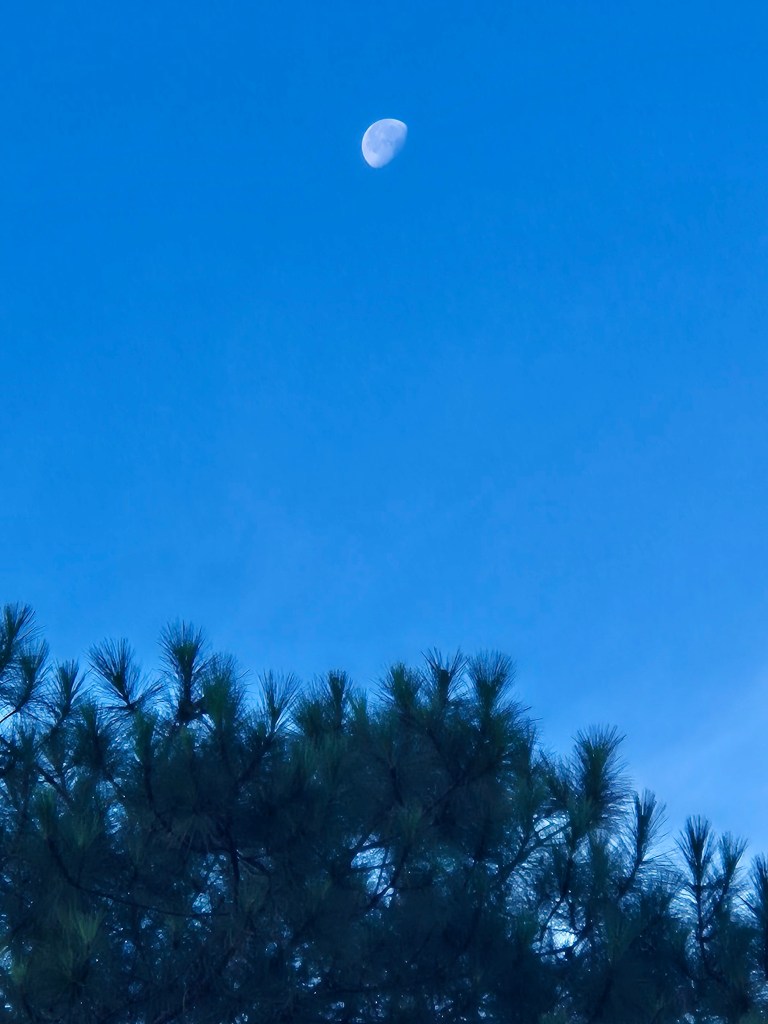
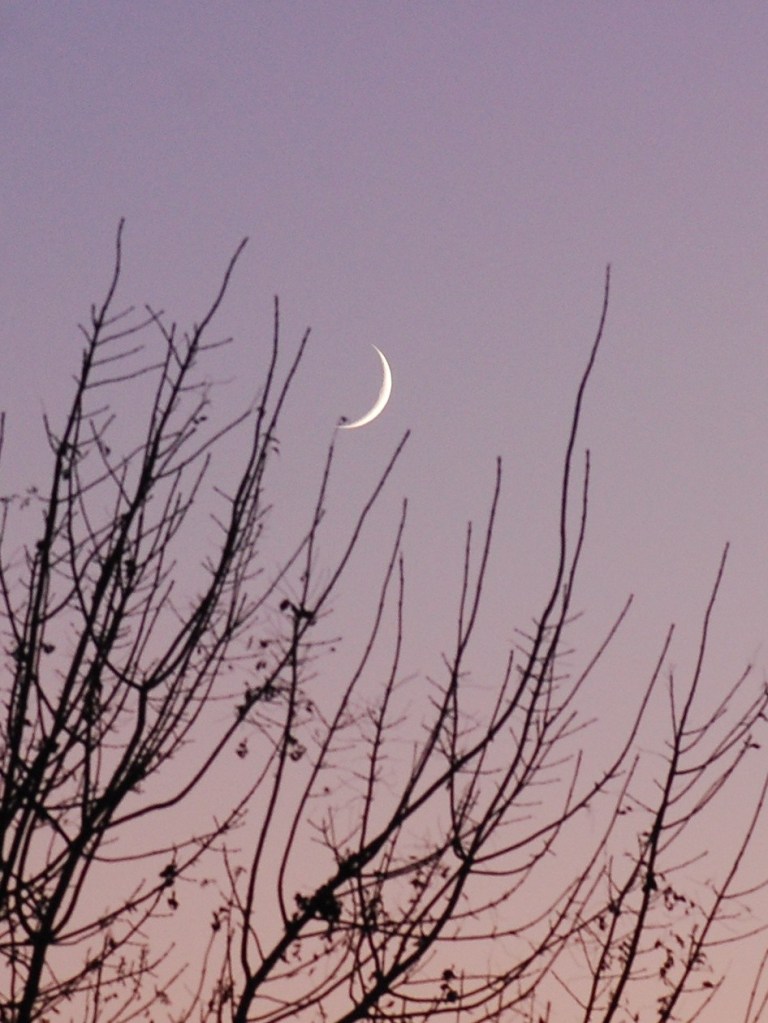
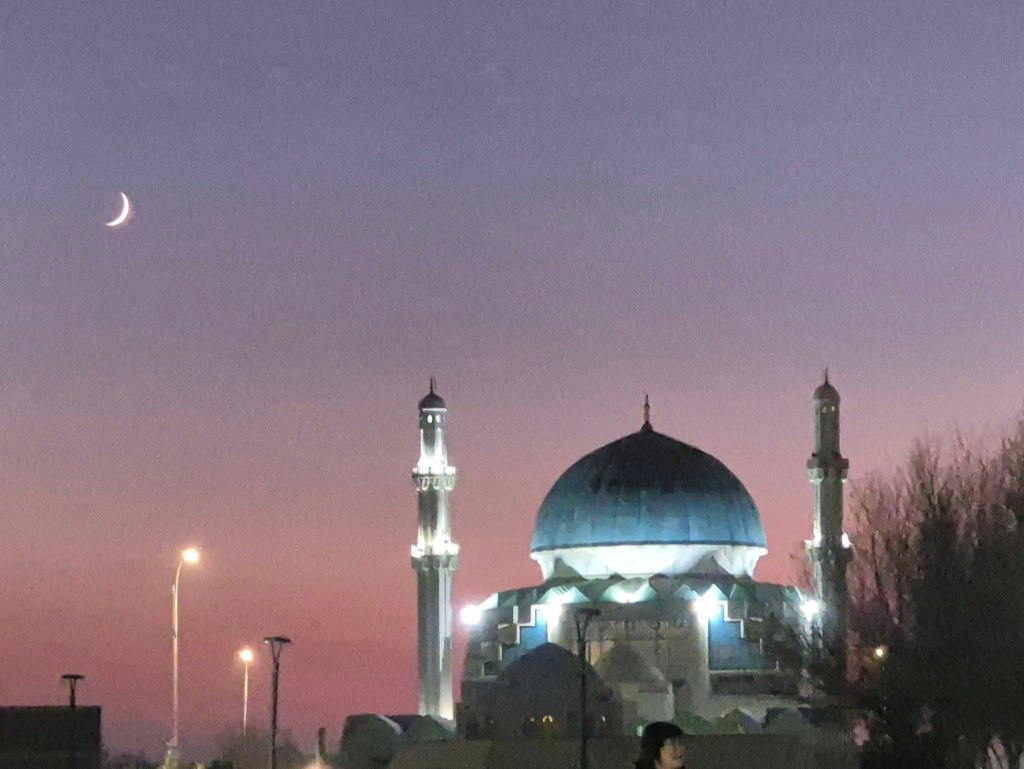
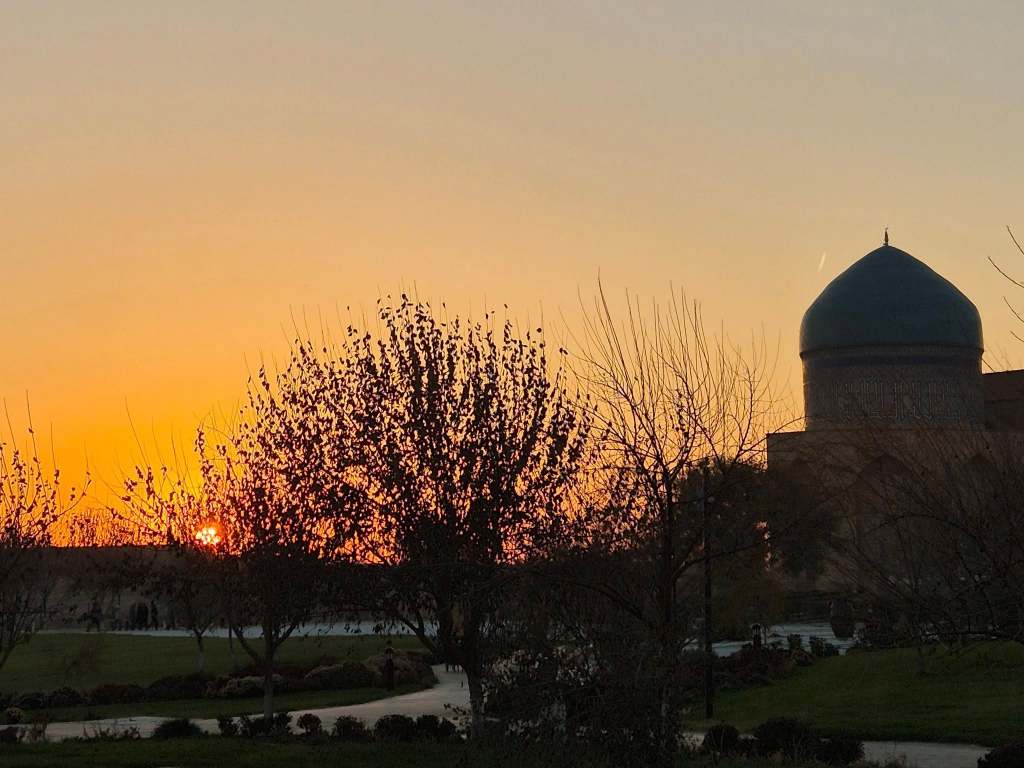
When dusk falls, the call to prayer suffuses the air and rises with the birds while a mystical crescent moon ascends the purple sky to complete the experience.

As I steep myself in this splendor, I also mourn it. The moment I turn my back on it, I am faced with Karavan Saray, a horrible travesty — a new shopping complex constructed in a theme park version of Timurid architecture that feels dystopian. My heart aches for the beauty we cannot keep and the beauty we ruin for the sake of commercial profit.

When I revisited the mausoleums early this morning to see it in pure sunlight, hardly anyone was around save for a pilgrim on his knees, facing the Khoja Ahmed Yasawi Mausoleum, intoning a sincere and almost heart-rending prayer. I think of the pilgrims who once held this site sacred and who continue to do so, who can only accept the truth that the holy place is but external and ephemeral, and that pilgrimage is, after all, a journey to the deepest parts of the self.


Almaty Museum of Modern Arts

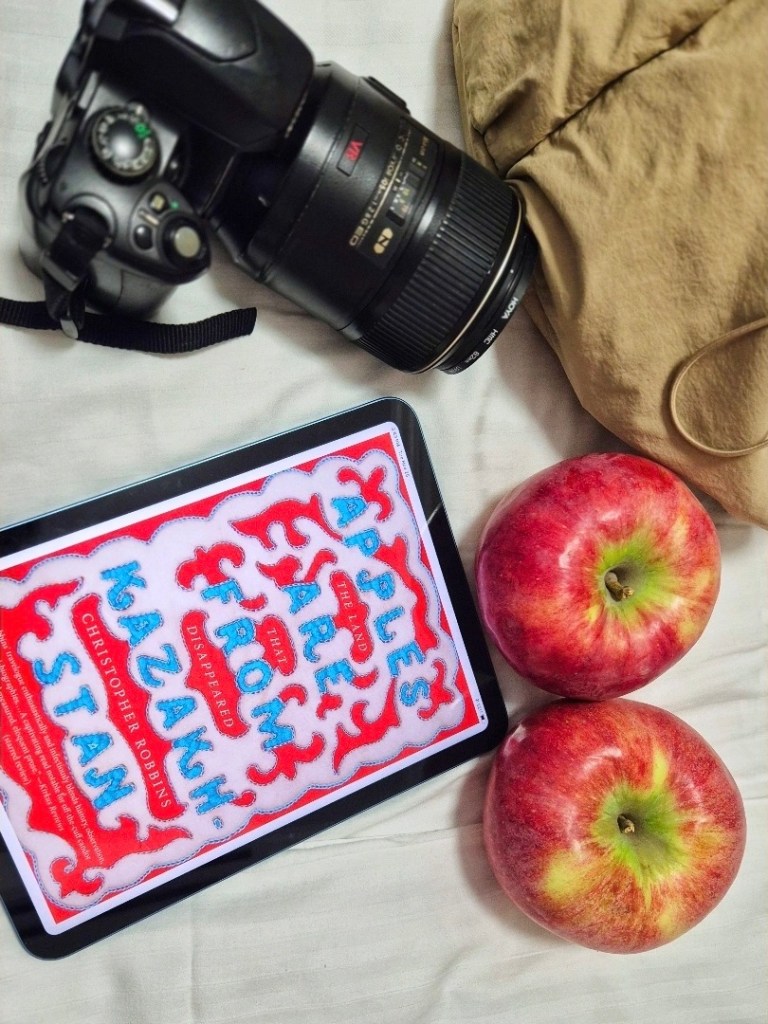
Aside from the usual arrogance of the Western eye, there is a movie to blame for painting Kazakhstan as a poor and backward country. I agree with author Christopher Robbins when he wrote that the joke of this particular movie, “Depends on an audience’s absolute ignorance of Kazakhstan and its culture.” While poverty is, indeed, present here, it is also important to remember that this nation ranks 12th in the world in terms of oil reserves, and on top of that, coal, copper, uranium, platinum, and gold.

Because two weeks is not enough to see this vast country, I have even decided to skip Astana, the capital, because it looks too modern and filthy rich. Haha!

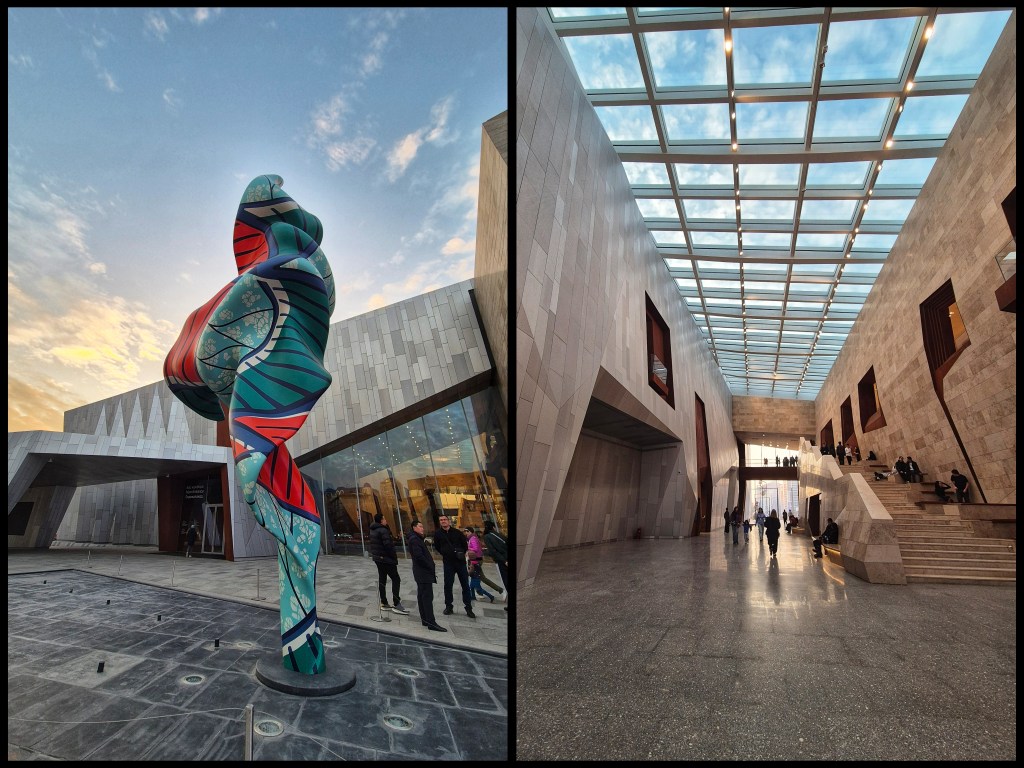
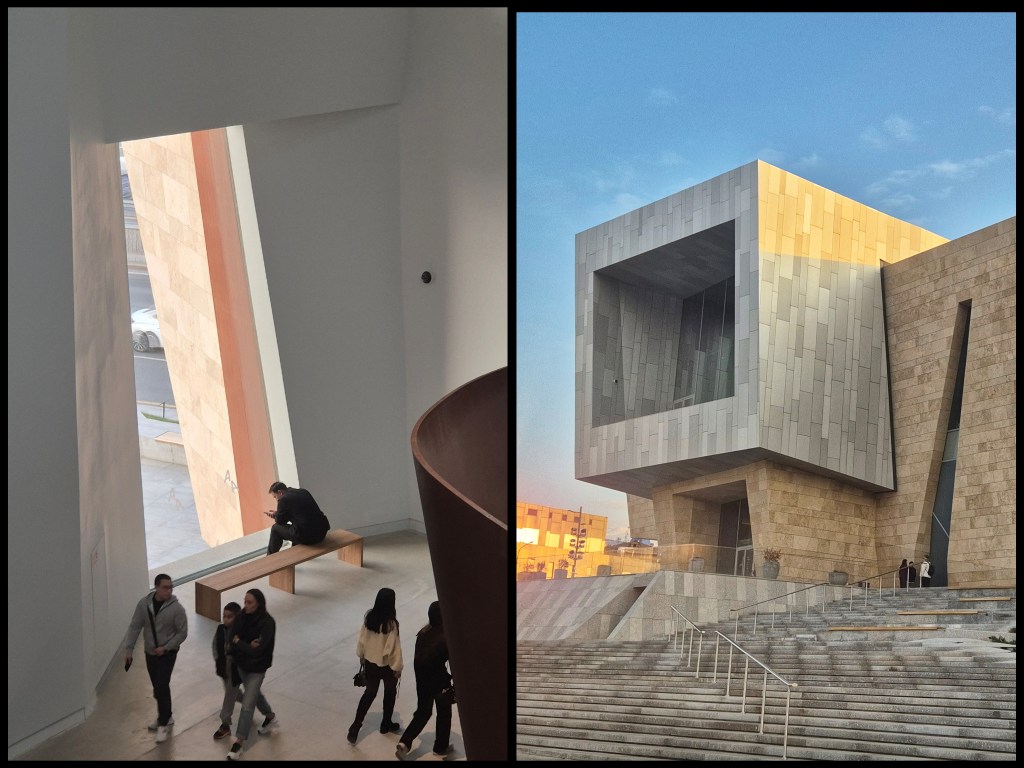
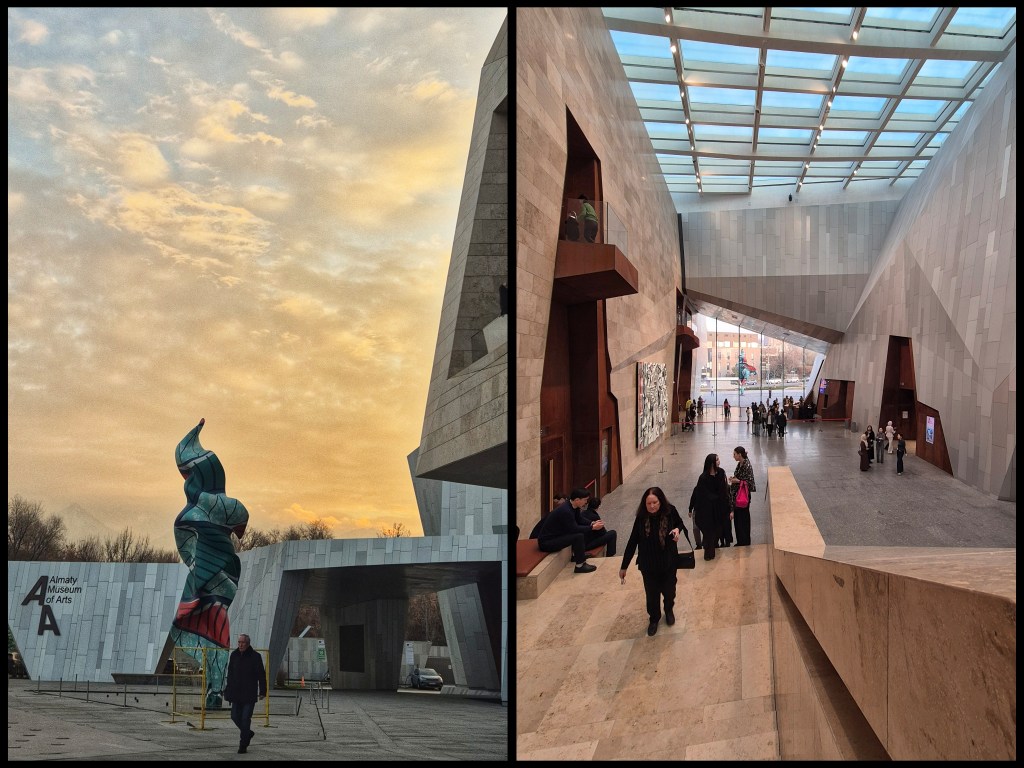
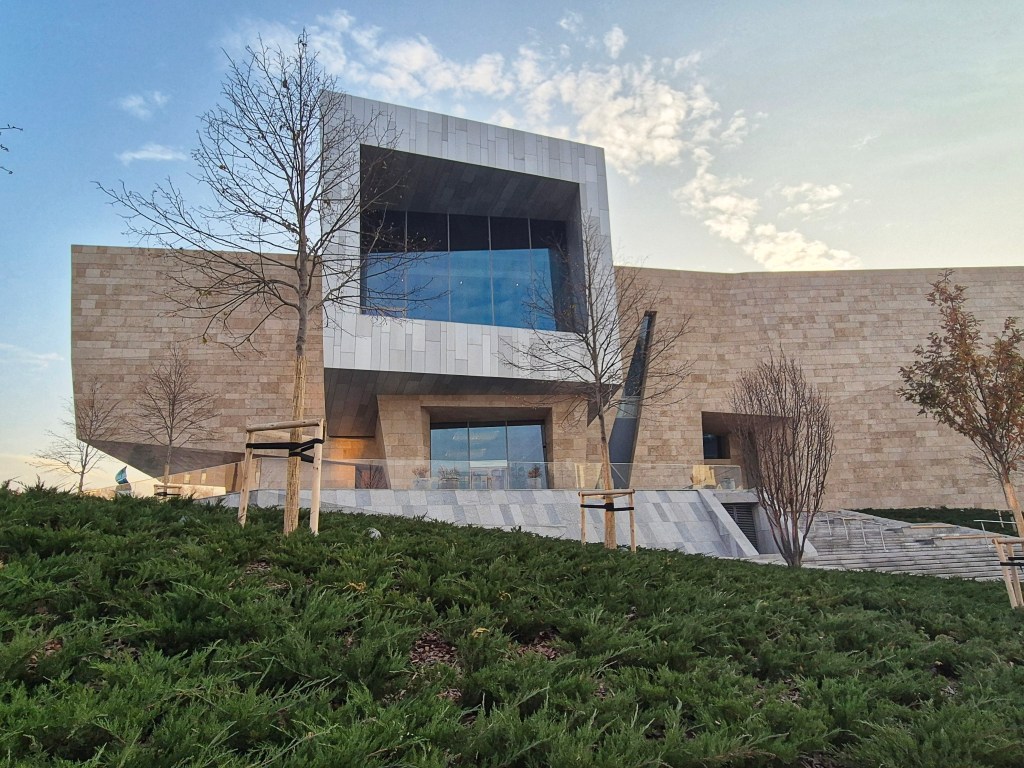
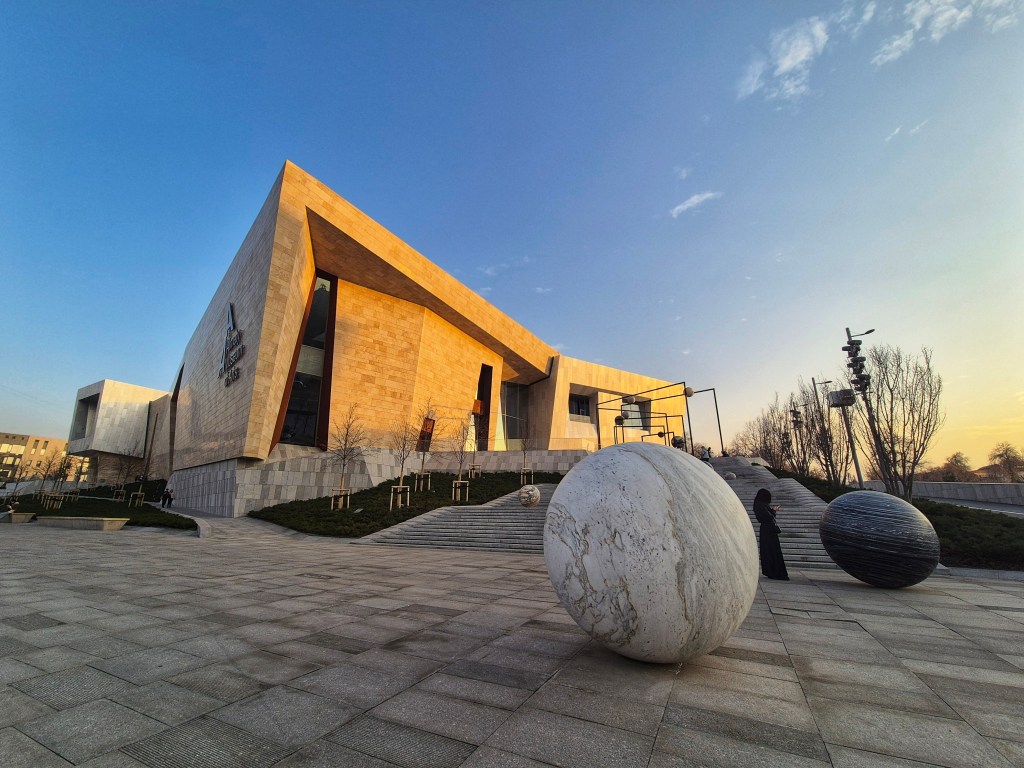
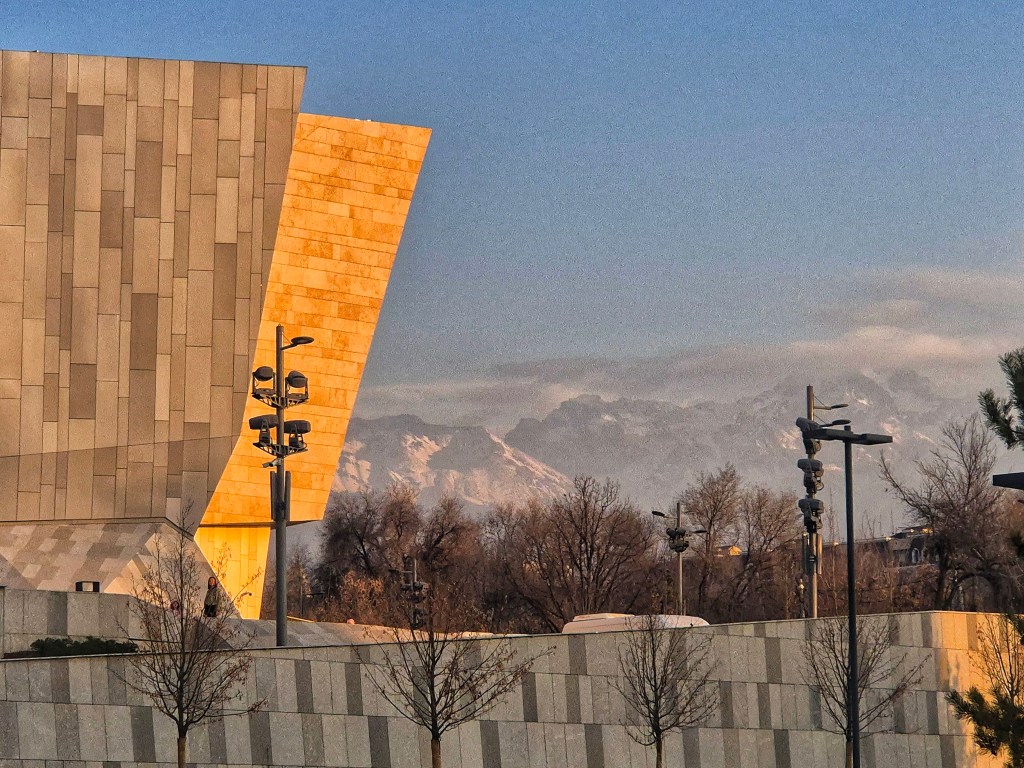
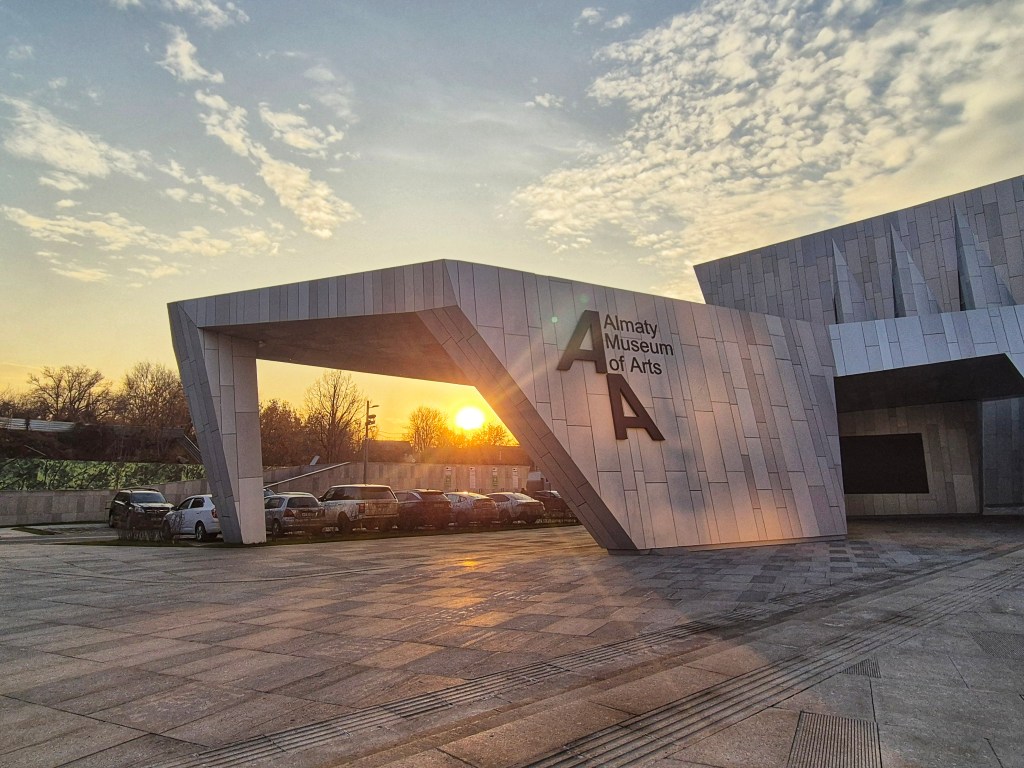
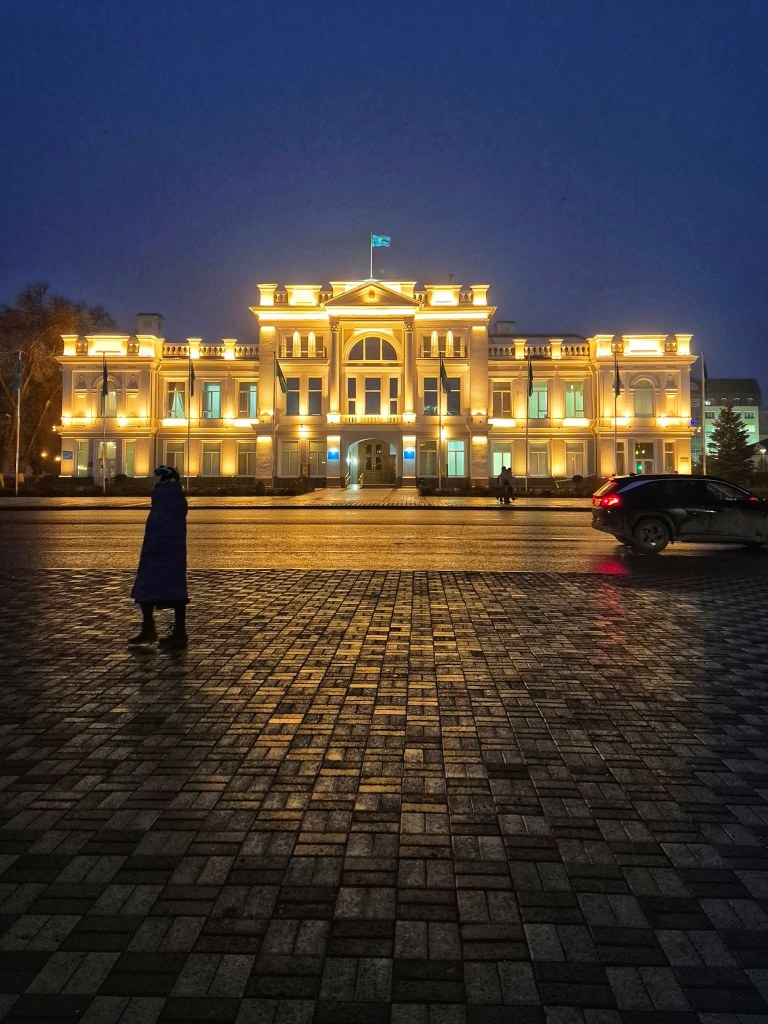
I don’t know much about how economies really work, and I only usually see things through the artistic lens, but I’ve somehow always thought that a country’s prosperity can be reflected in the state of its museums. Seeing the Almaty Museum of Arts, with the Tien Shan mountains as its backdrop reinforced this idea.

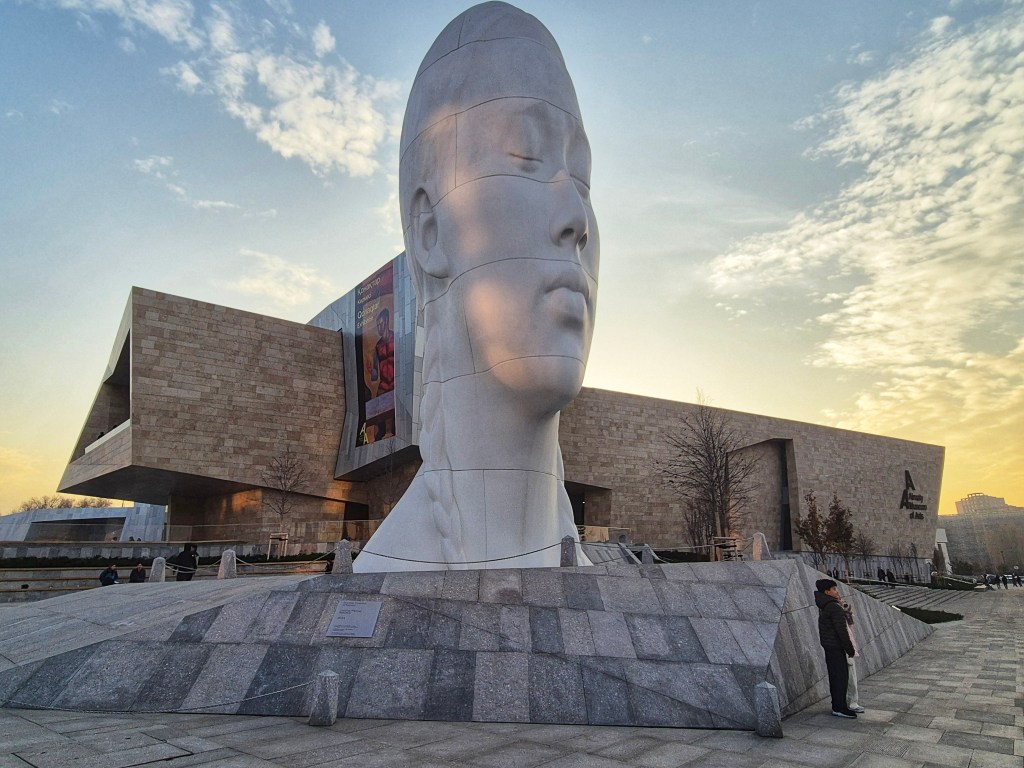
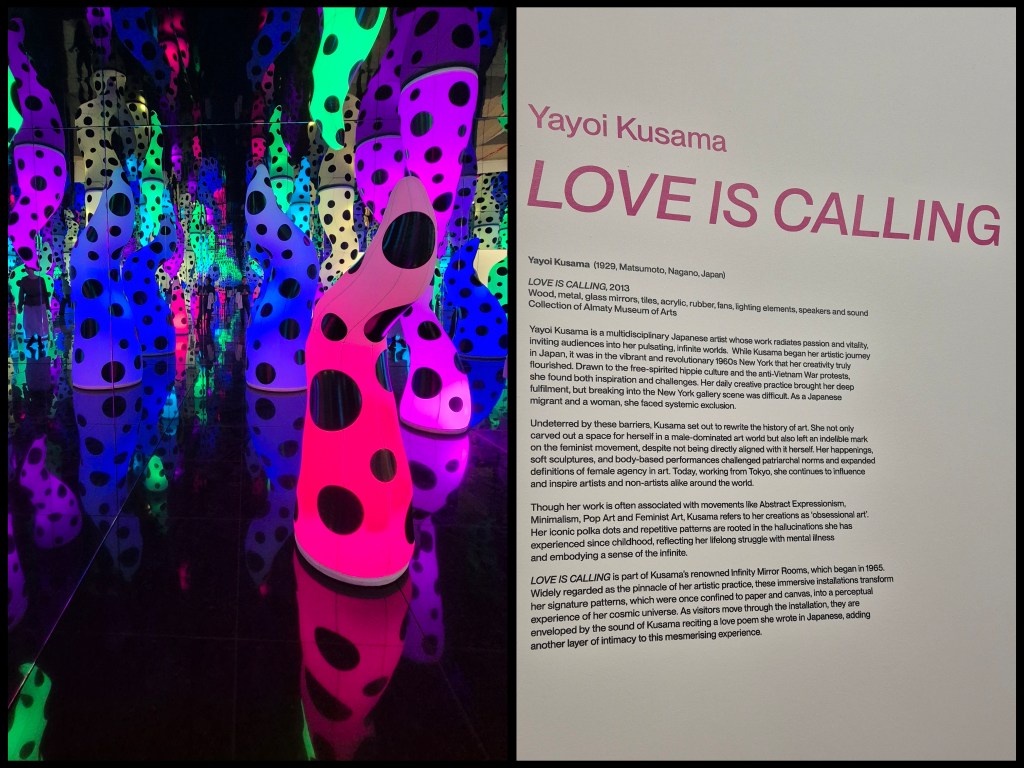
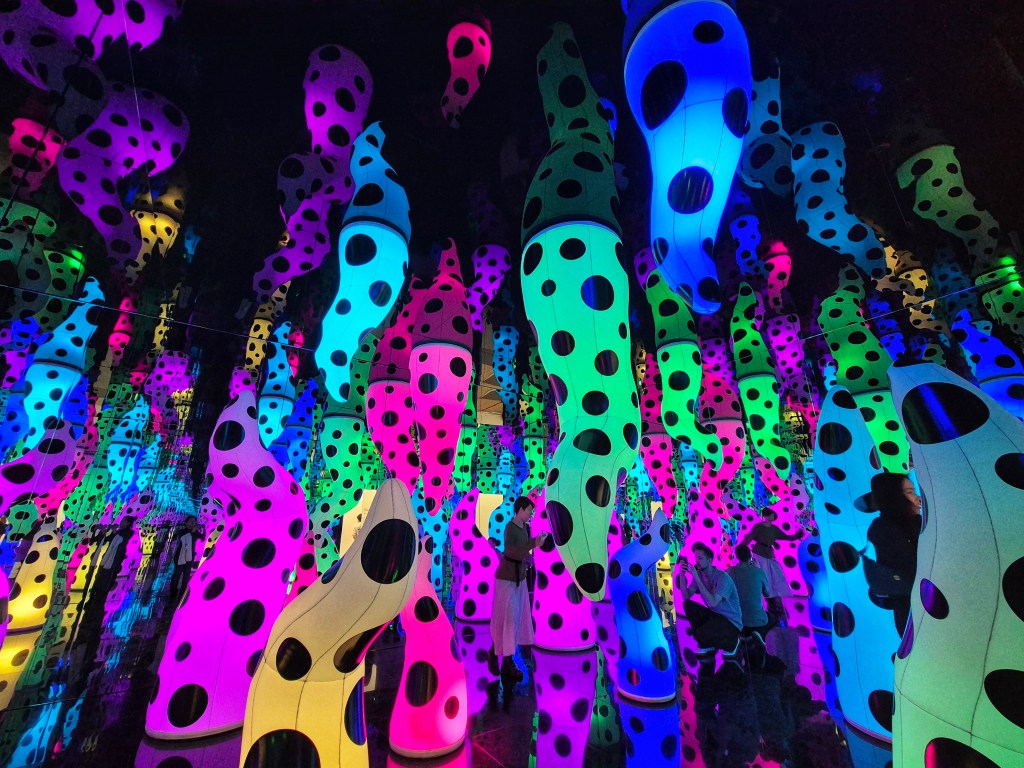
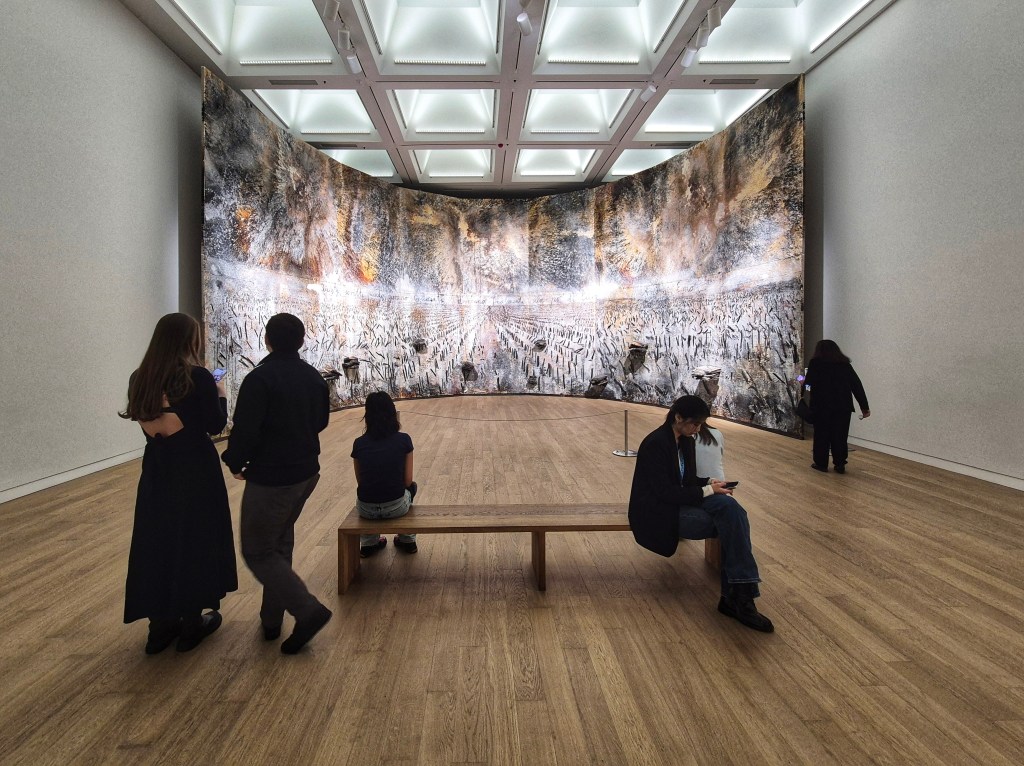
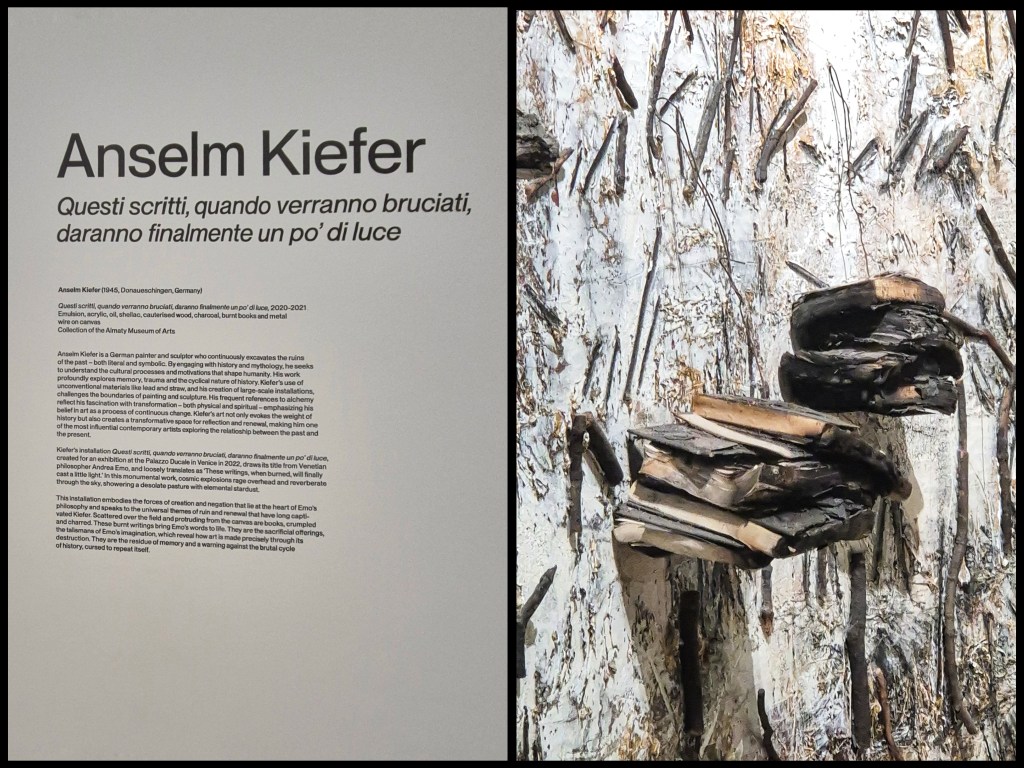
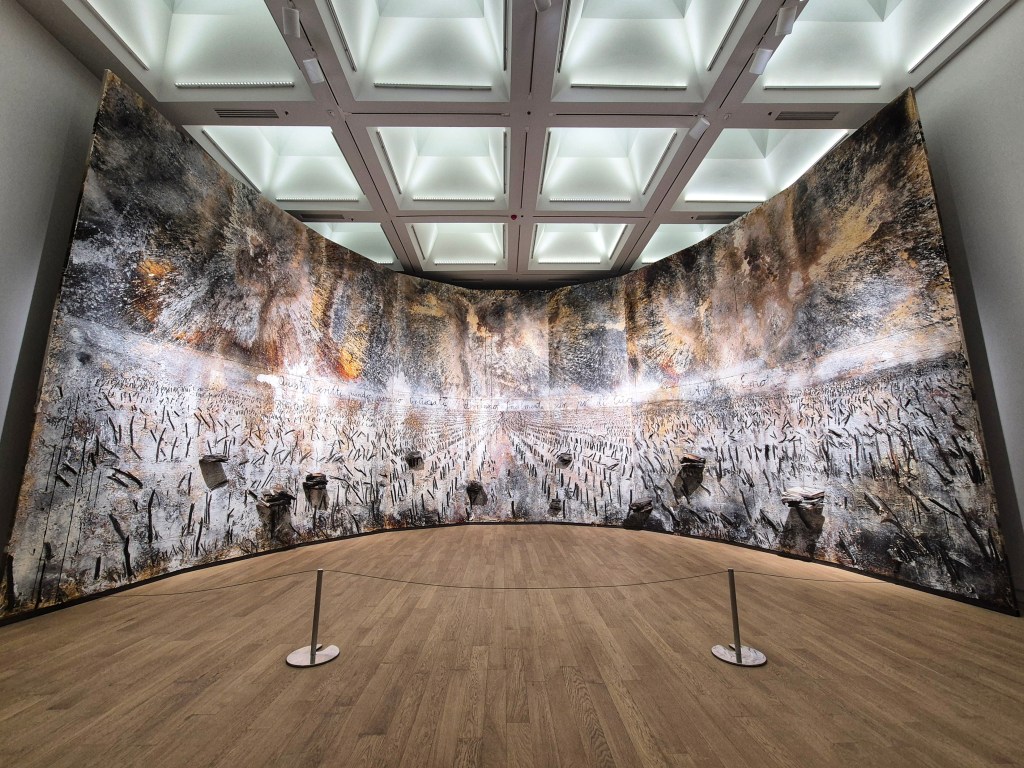
The building is impressive in itself, designed as two interlocking structures, one made of limestone (to represent the mountains) and the other of aluminum (to represent the city). To my surprise, there was an ongoing Yayoi Kusama installation; a photo exhibit by Almagul Menlibayeva whose works remind me so much of my best friend Franz’s creativity; and a huge piece by Anselm Kiefer — “Questi scritti, quando verranno bruciati, daranno finalmente un po’ di luce” (These writings, when burned, will finally cast a little light) — that affected me most of all.

If the Almaty Museum of Arts cannot change the image of Kazakhstan that Borat impressed on anyone’s mind, I don’t know what will. But it should, shouldn’t it?

November 26, 2025 – Zenkov’s Almaty

ZENKOV CATHEDRAL / MUSEUM OF FOLK MUSICAL INSTRUMENTS

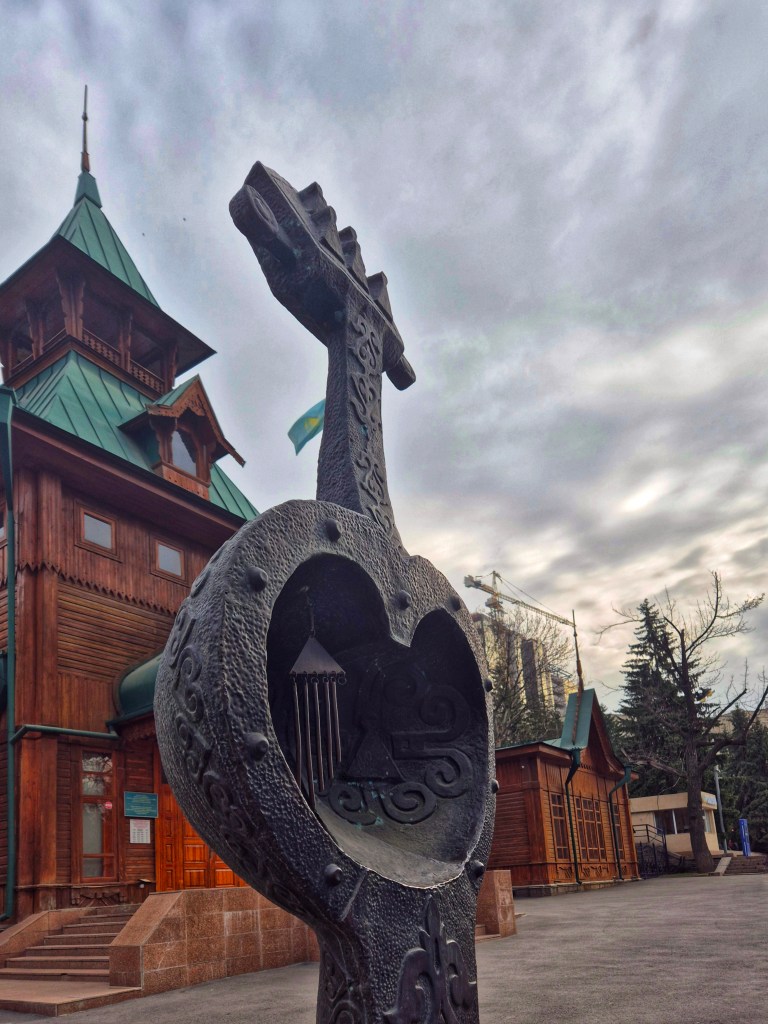
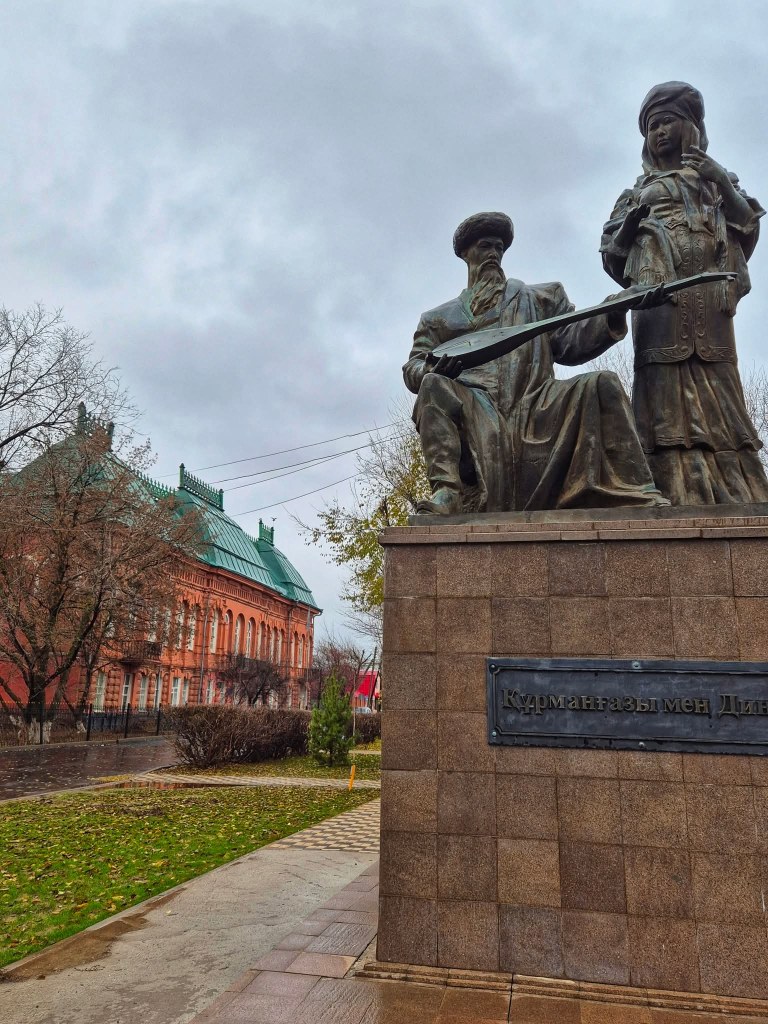
Through my acquaintance with Kazakh literature, I learned of a detail in Turkic mythology of how a musical instrument was believed to be a branch of the Tree of Life, and how this branch was to be bestowed upon a chosen one, shaman or musician. It’s beautiful how this story articulates how much their culture values music, to the point of associating music and musicians with what is most sacred to them.

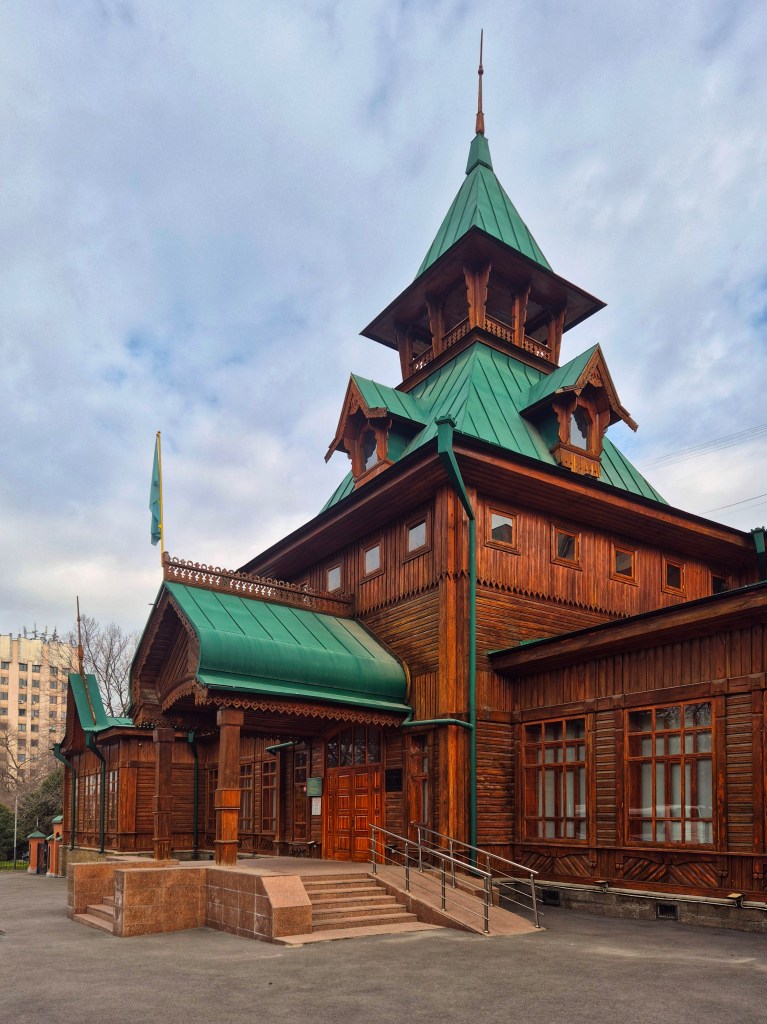
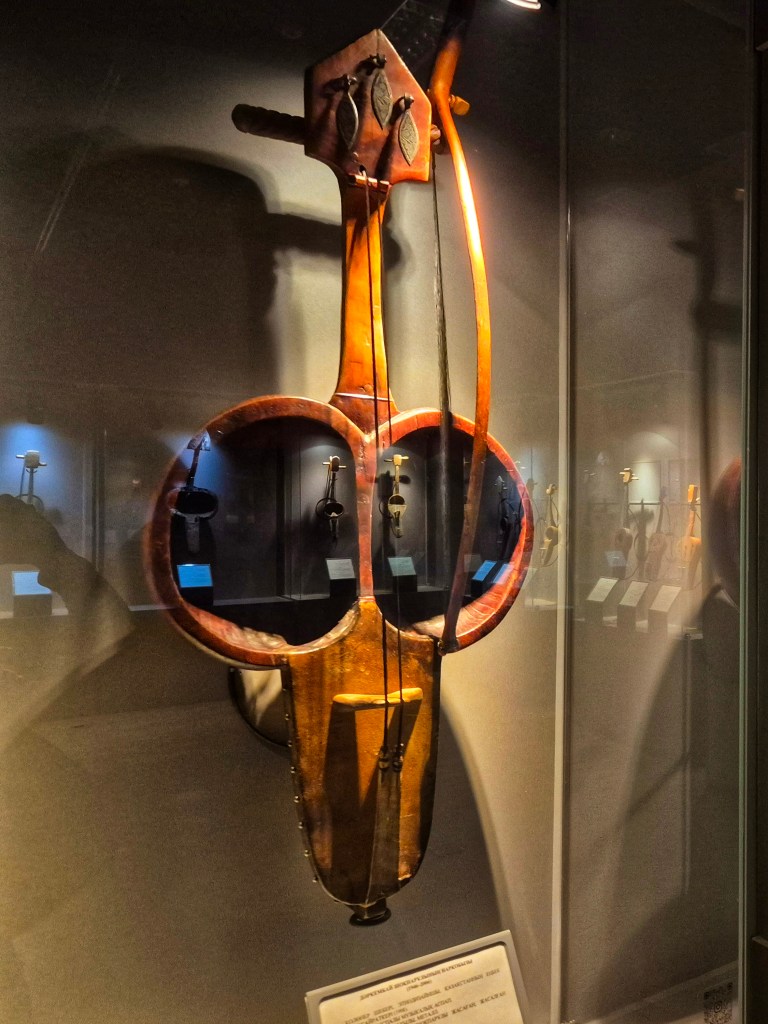
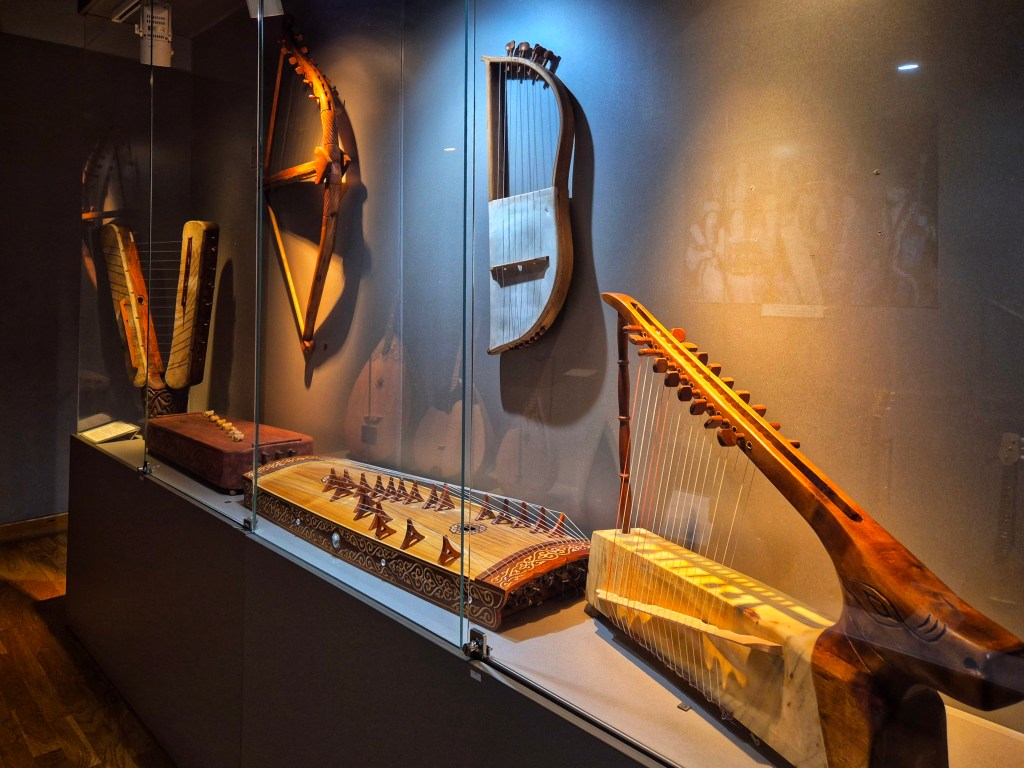
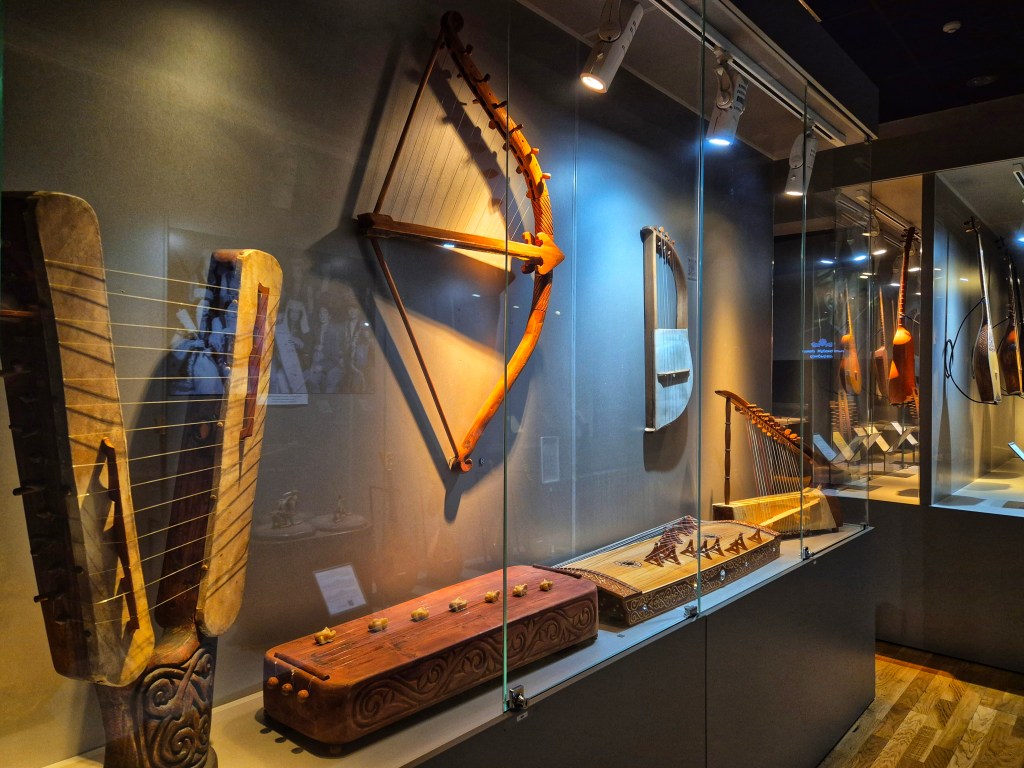
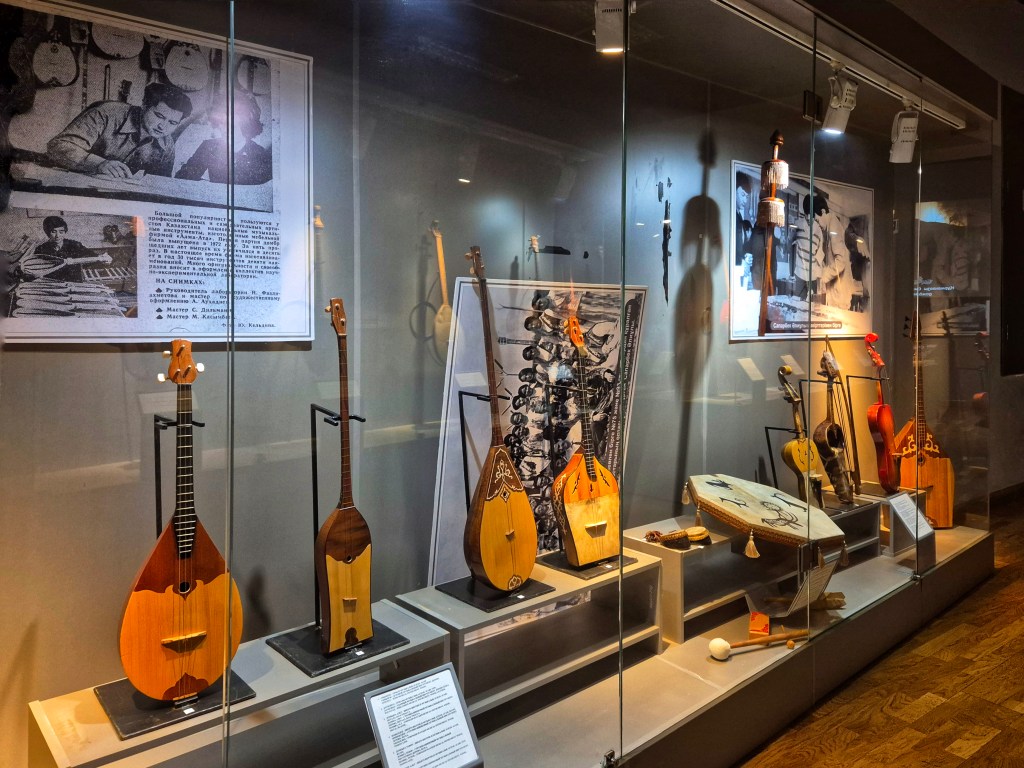
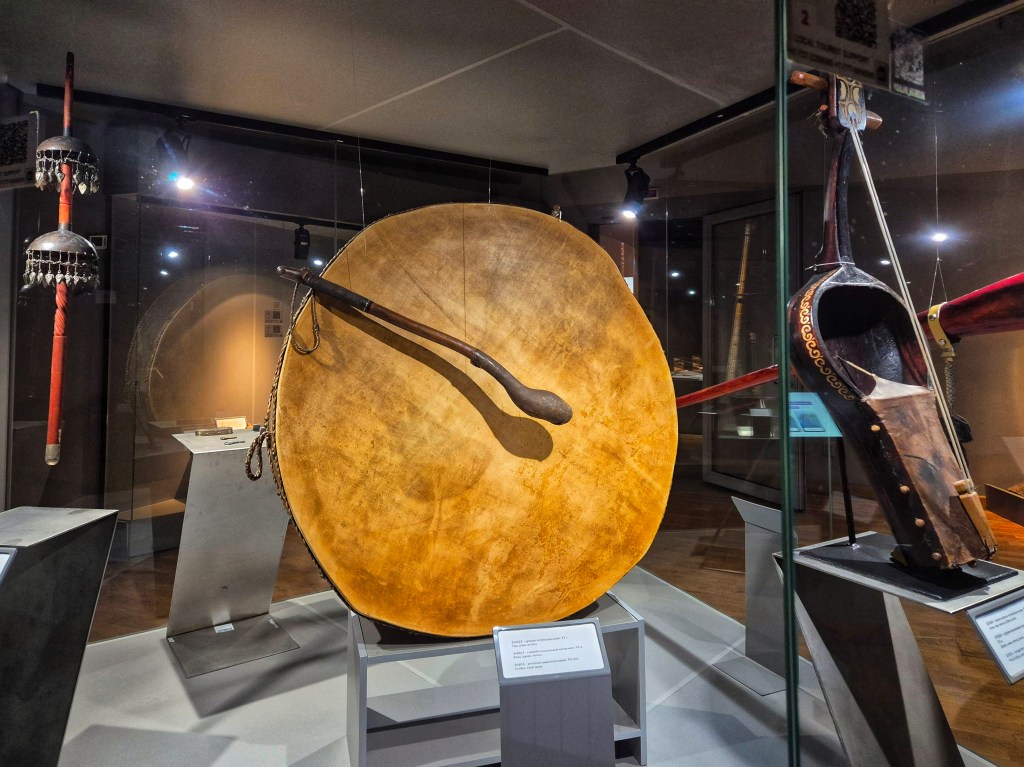
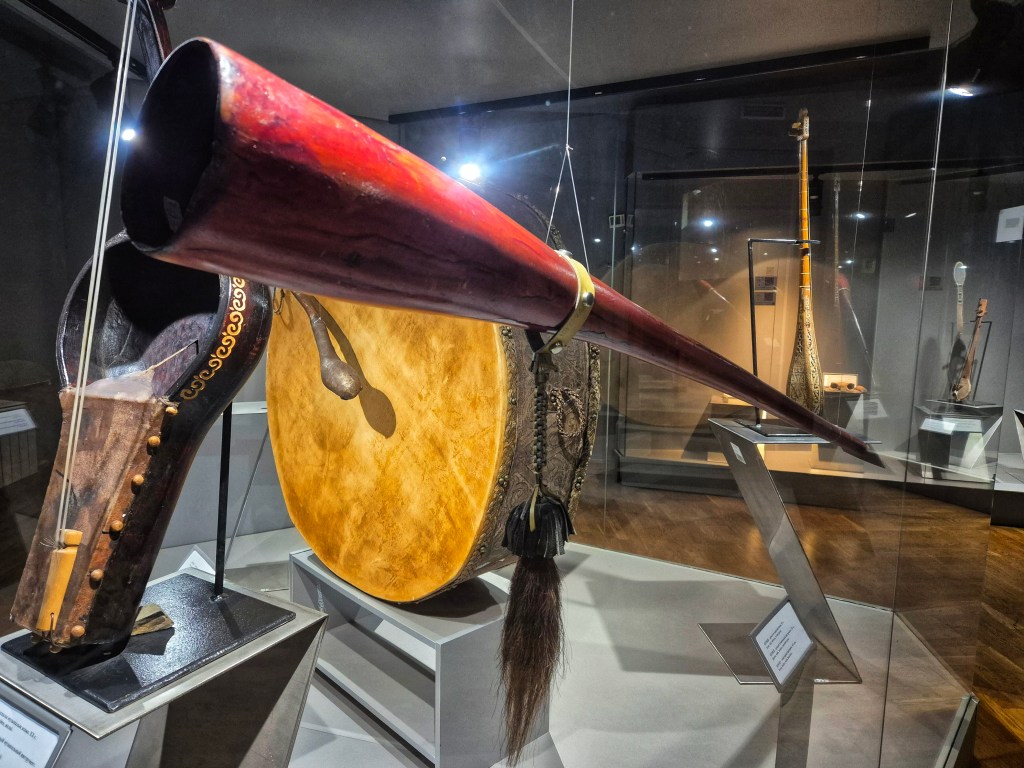
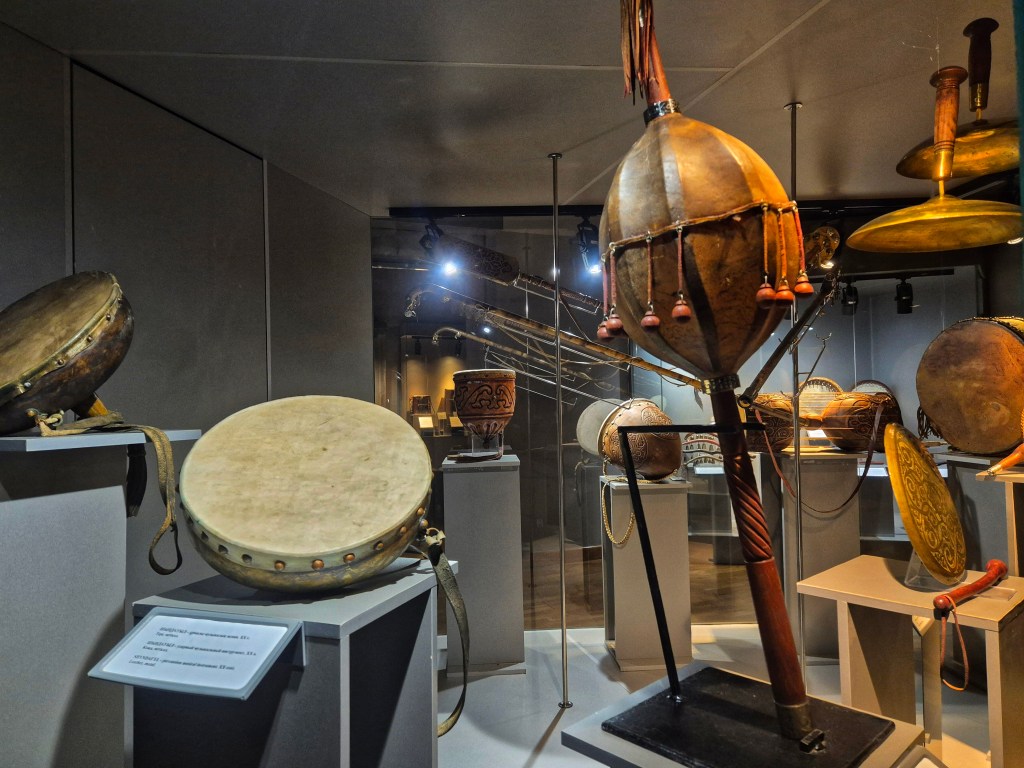
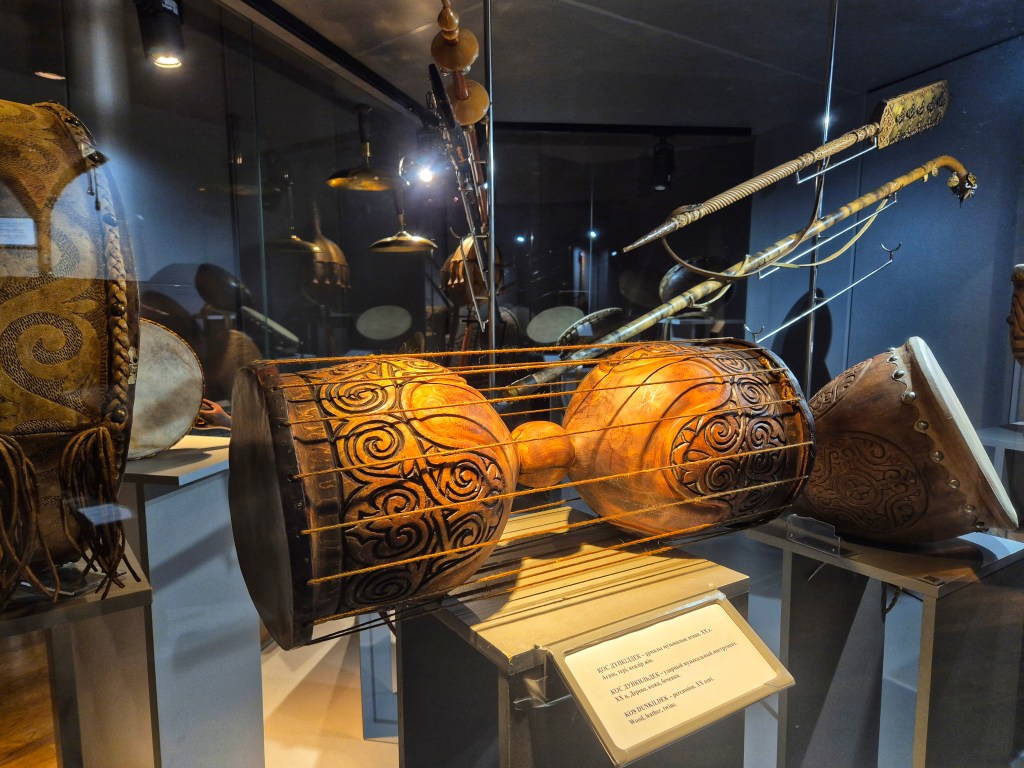
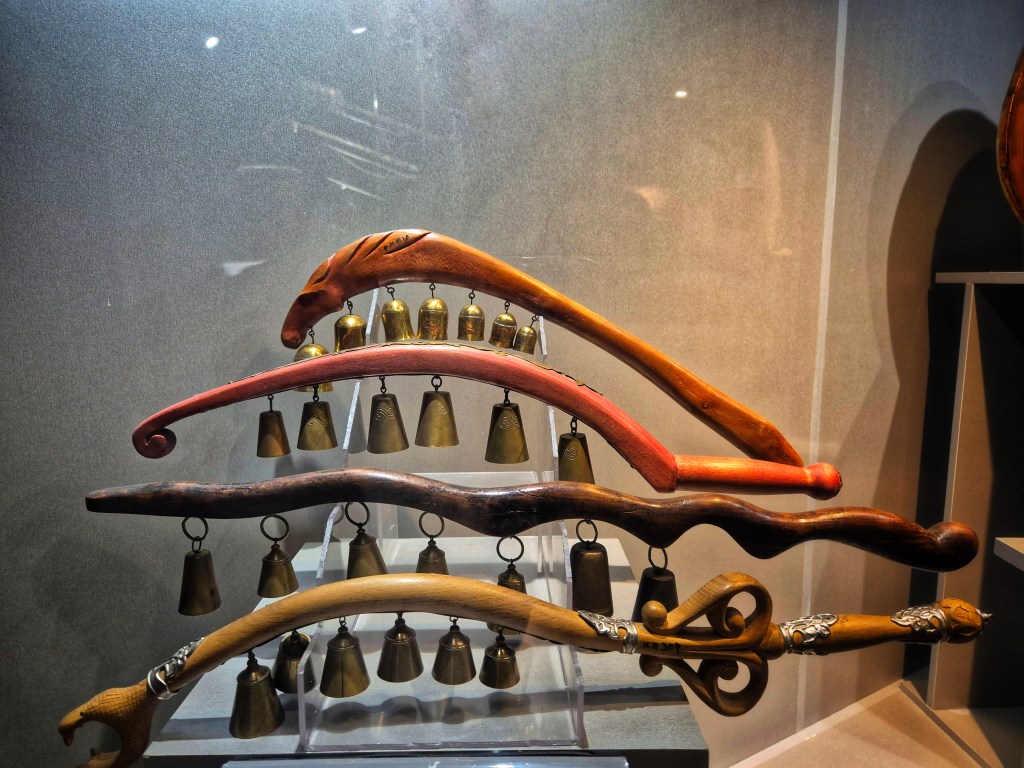
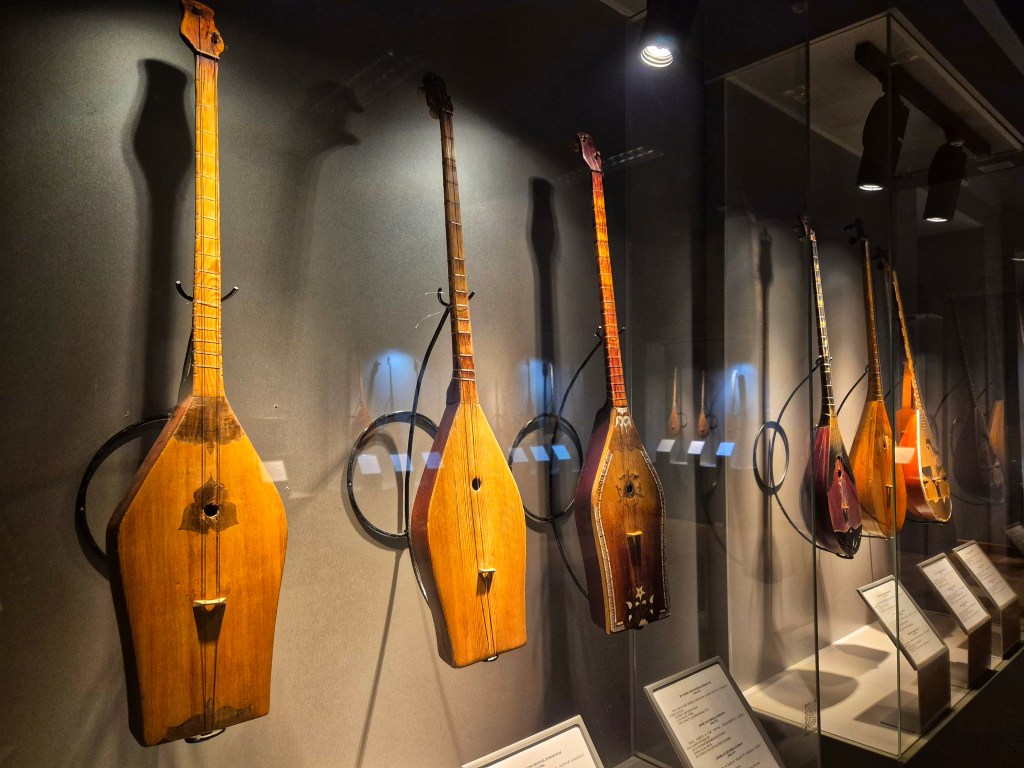
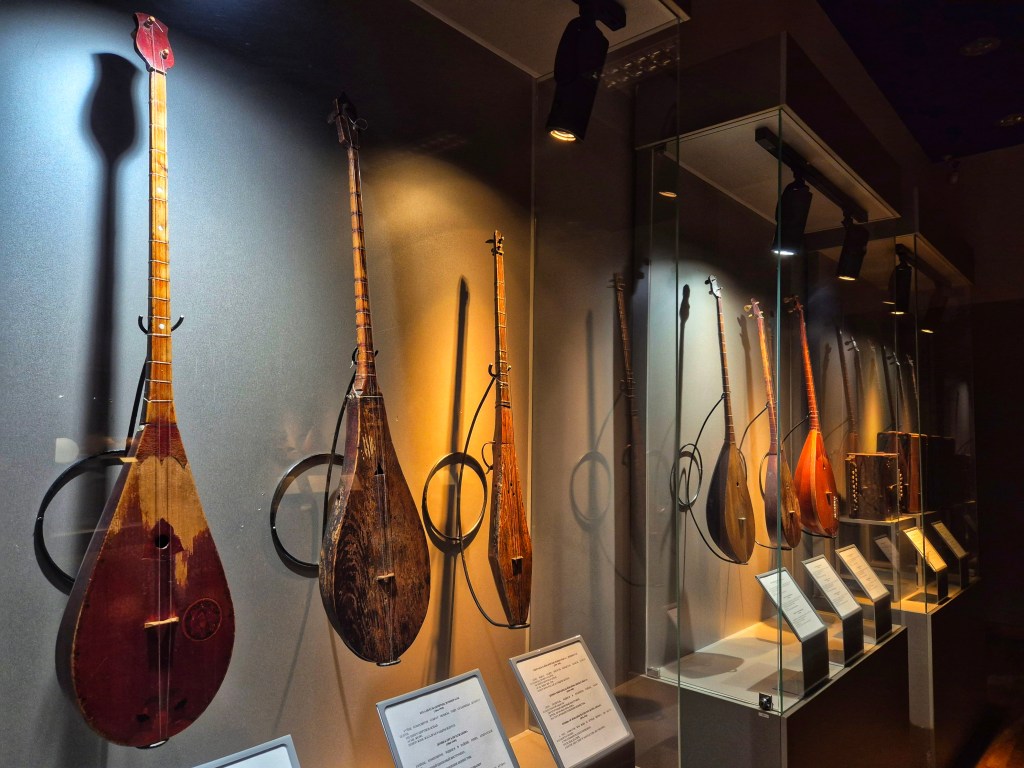
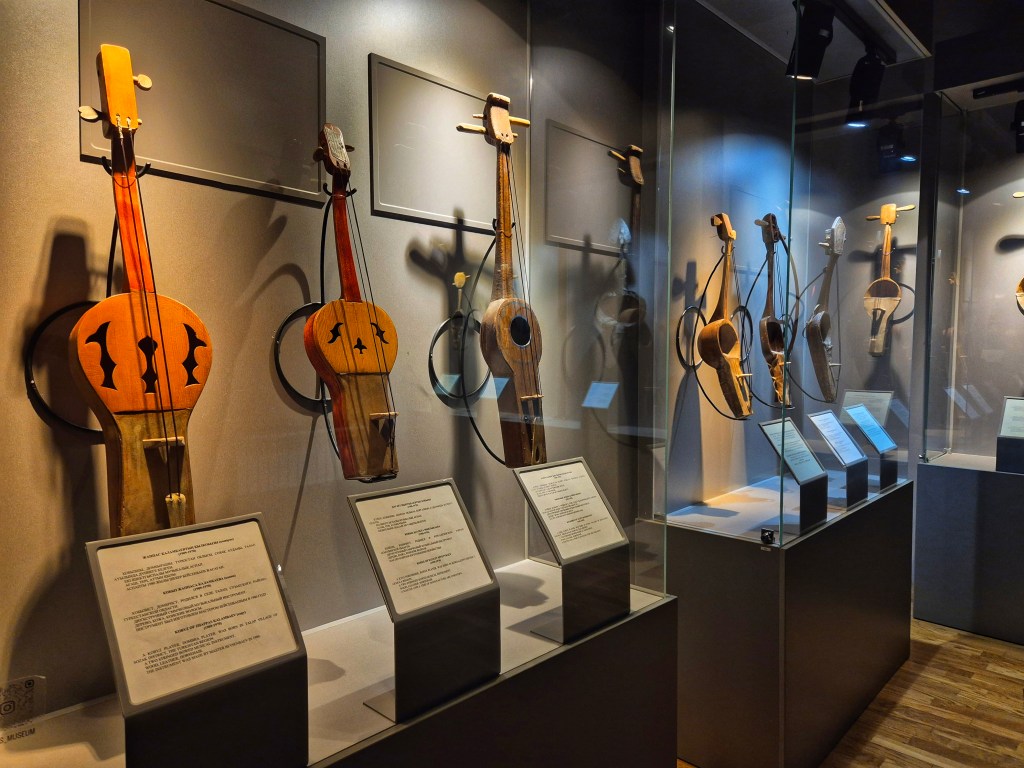
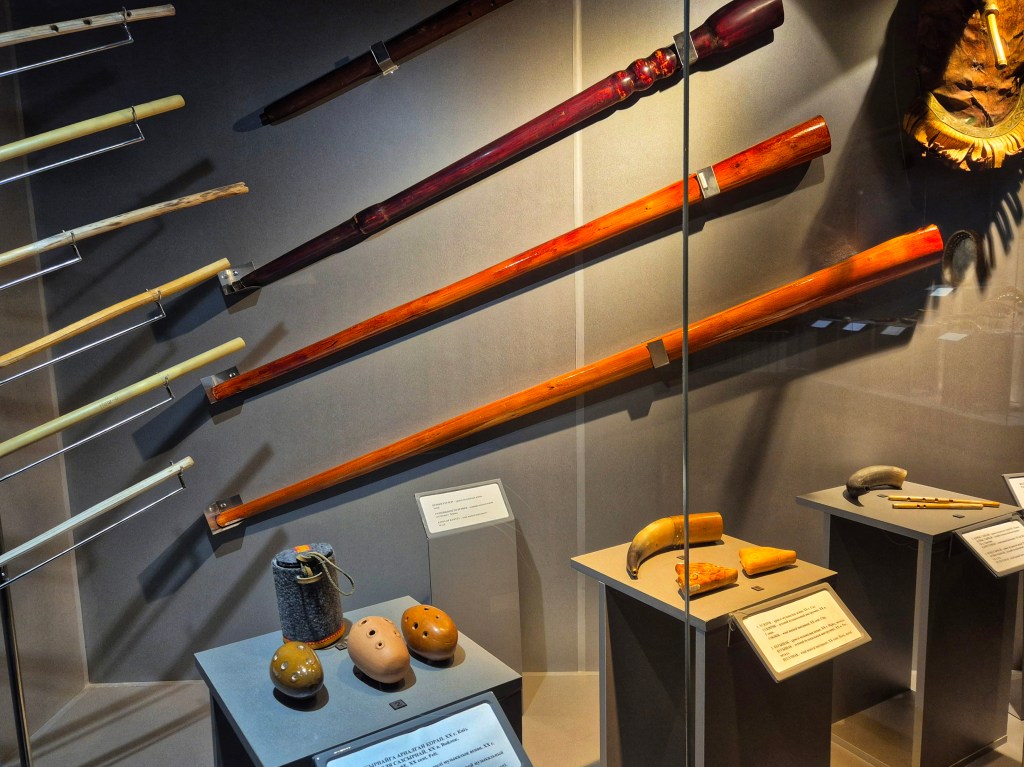
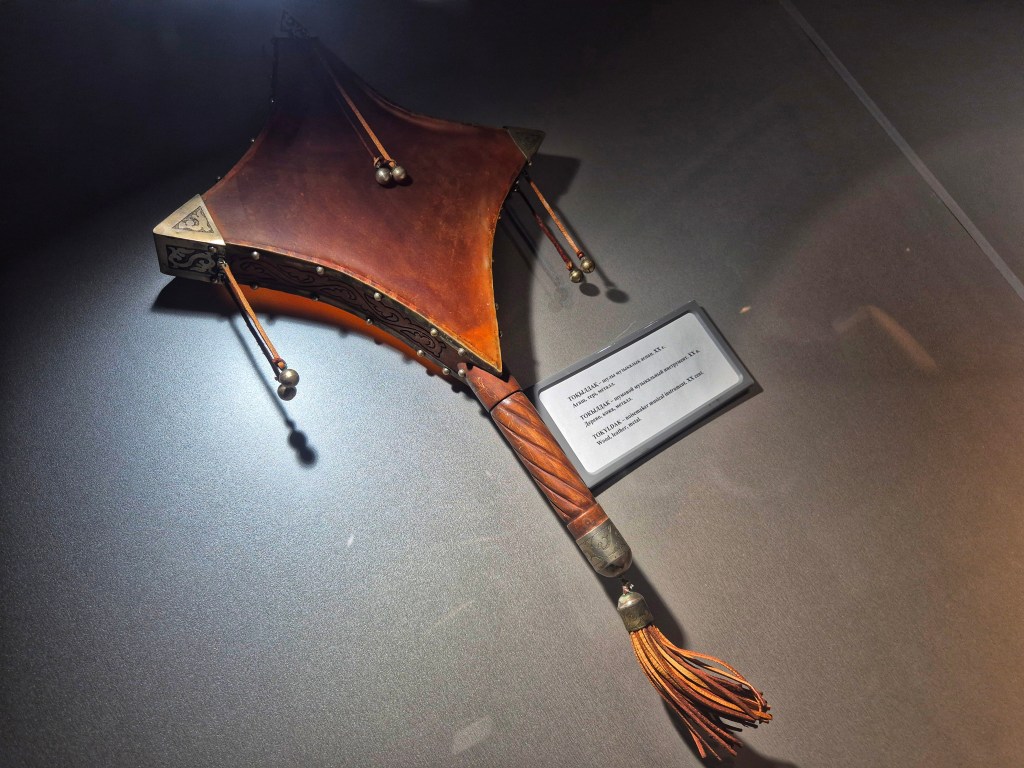
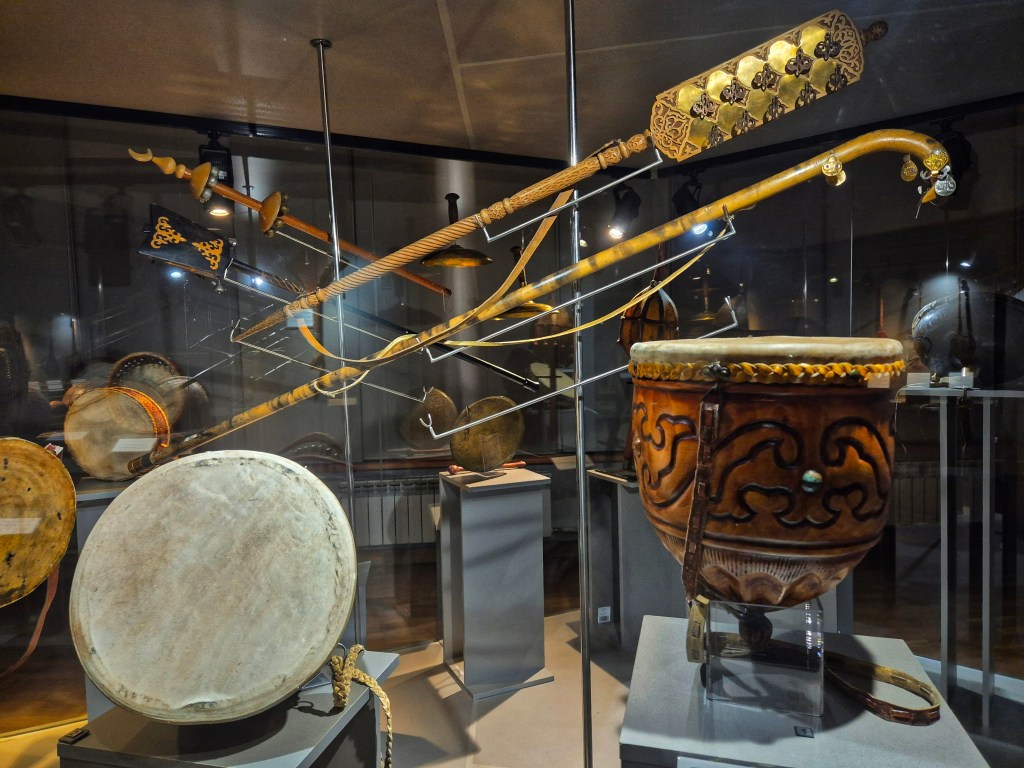
Because of this, it did not come as a surprise when I heard about the Kazakh Museum of Folk Musical Instruments in Almaty. There were stringed, wind, and percussion instruments that had been owned by their most famous musicians throughout history, some looked like they could double as weapons. There were new ones, but there were also instruments that bore battle scars, which I considered to be the most beautiful in the collection. I found myself alone with this wonderful curation of musical instruments that I had never seen before, and as their music played through the museum’s sound system, filling the eight different rooms with emotion and spirit, I felt transported.

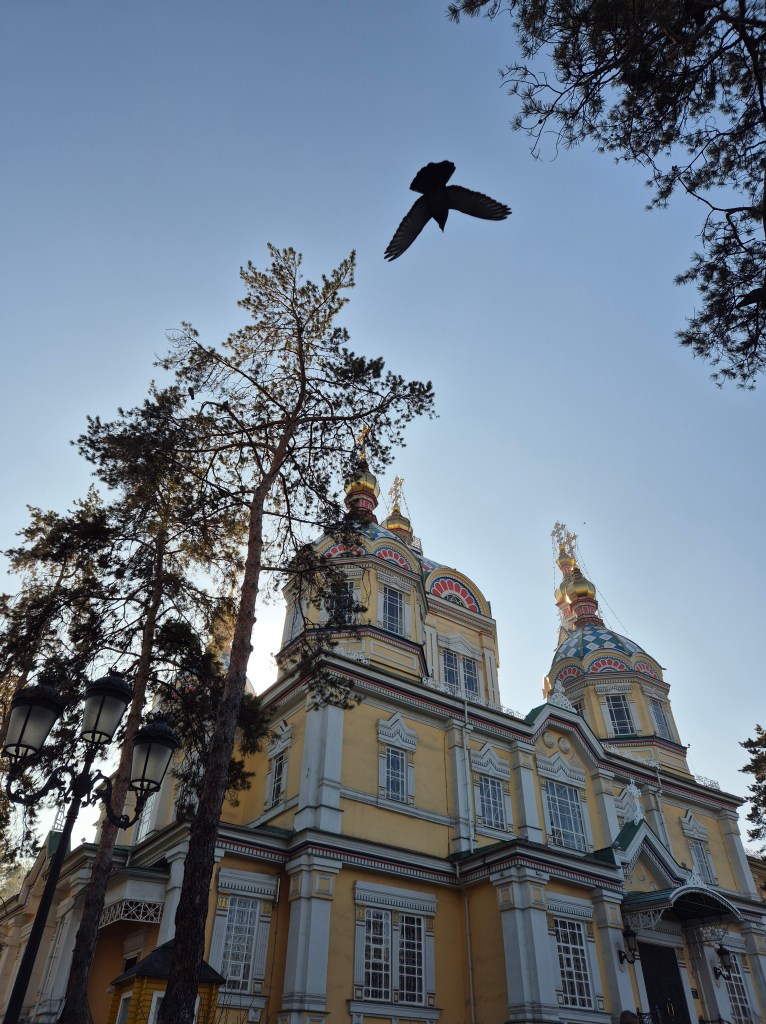
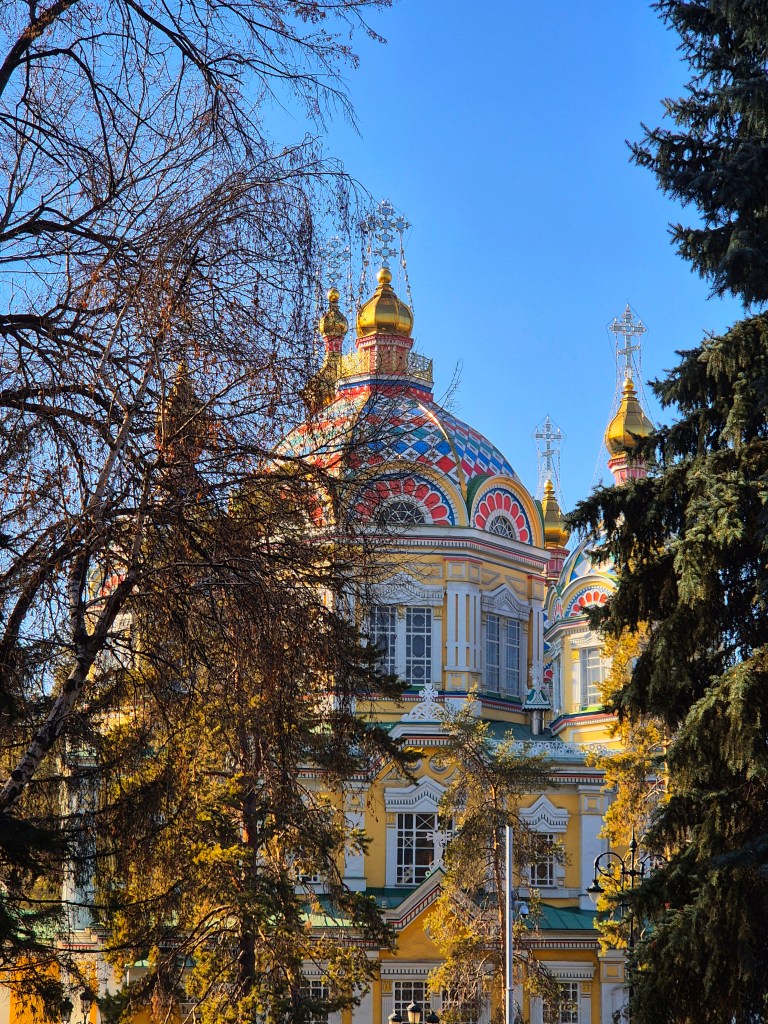
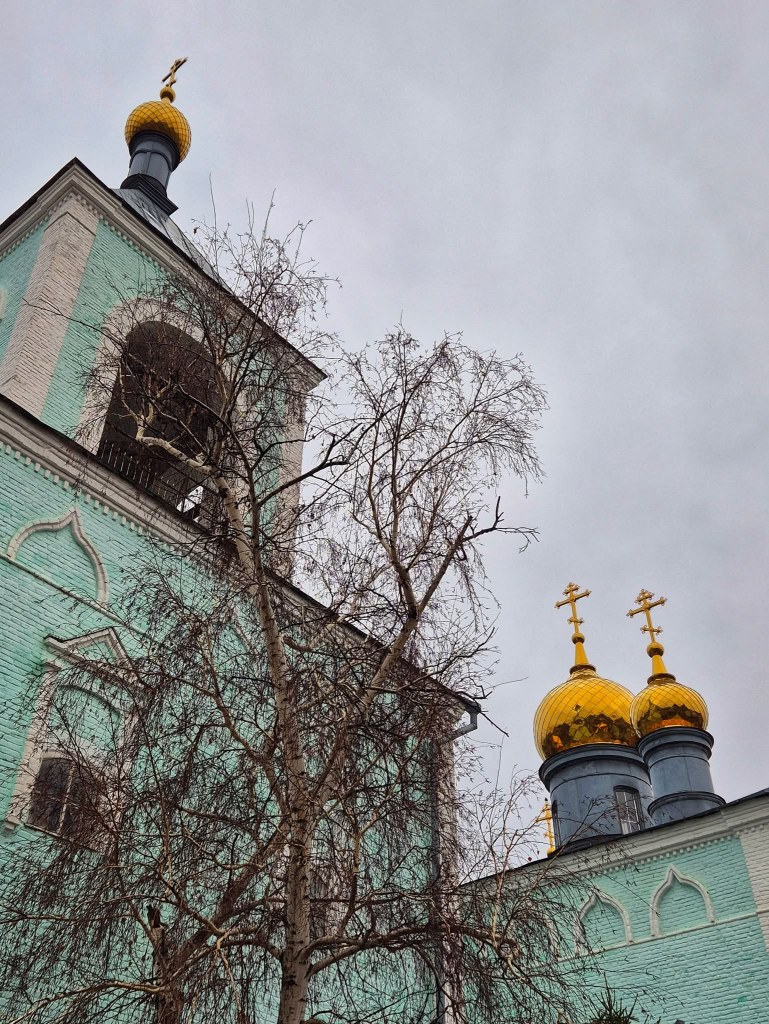
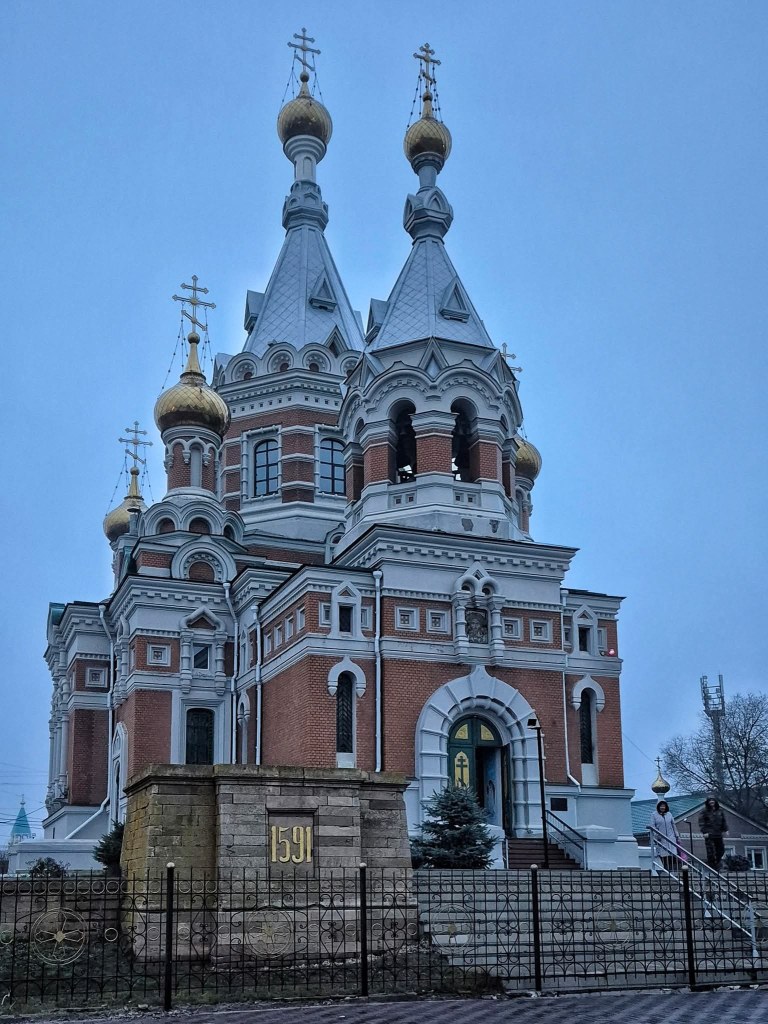
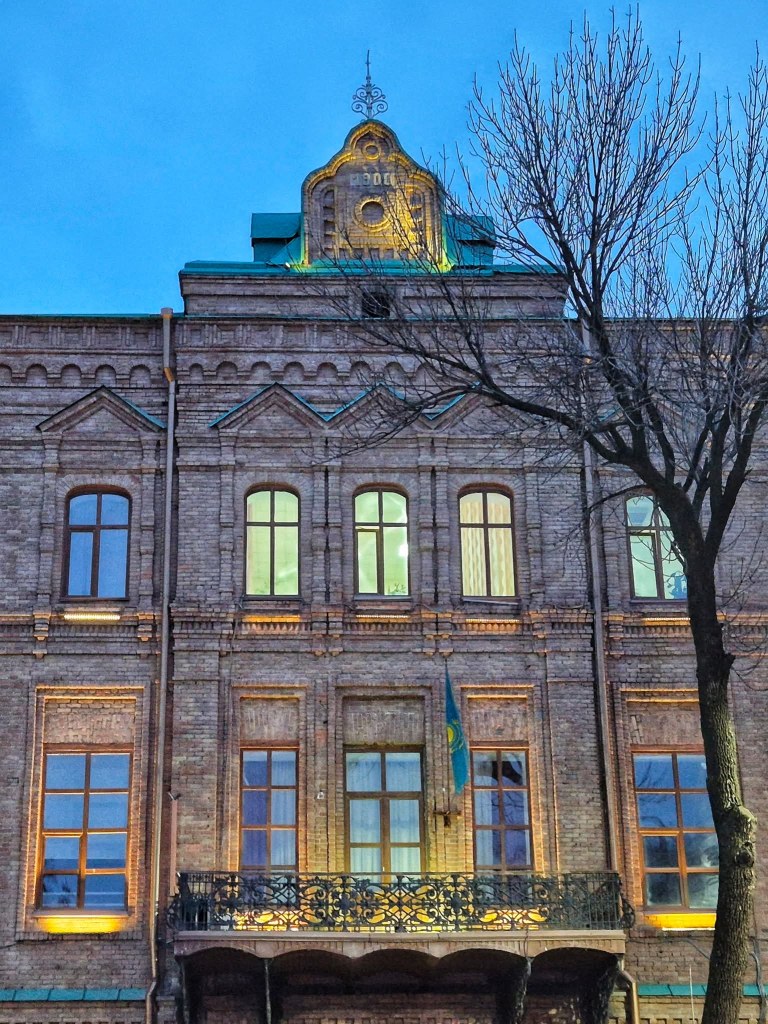
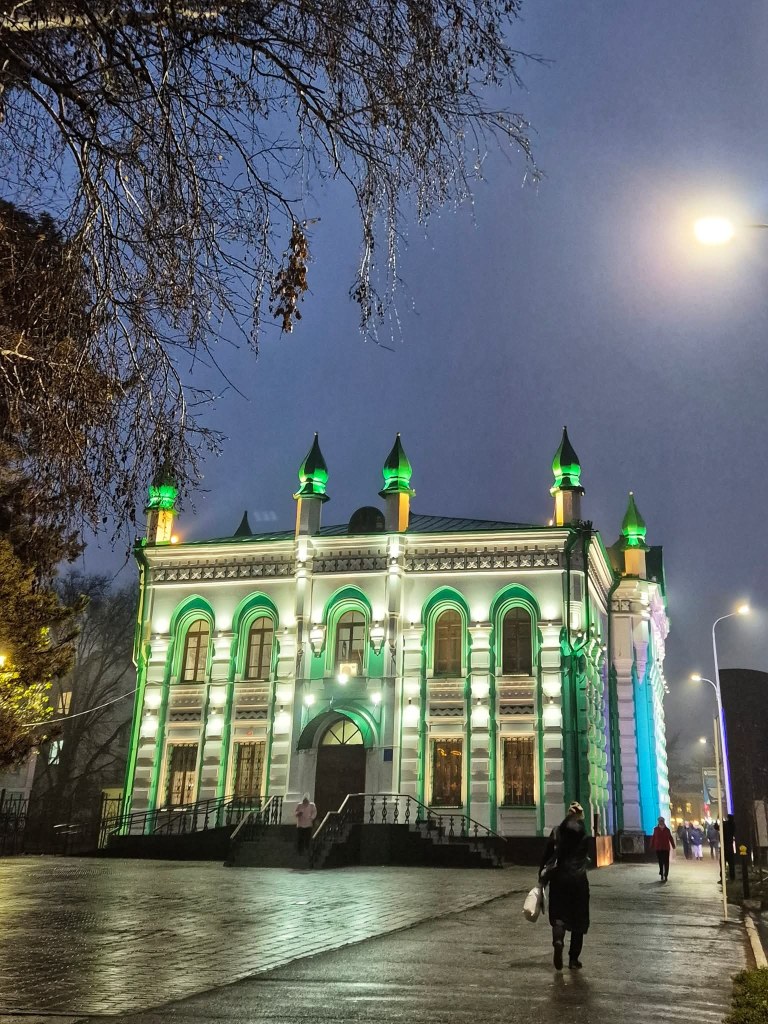
But this museum is little-known, and usually bypassed by many who go straight to Almaty’s most famous landmark — the Zenkov Cathedral (that ornate Orthodox Church built entirely of wood that miraculously withstood the great 1911 earthquake that devastated most of Almaty). What most people don’t know is that Andrei Zenkov, the architect of the iconic cathedral, also designed the museum building in 1908.

After immersing myself in the museum, I walked to Zenkov Cathedral and honestly did not know what to make of such a colorful edifice. But looking back at the history of this place around the time these two buildings were constructed, I realize that it must have taken a certain amount of courage to create something with such vibrant colors and a hint of whimsy. Now I look at both buildings as works of defiance and resolute joy.

November 22, 2025 – Uralsk, Kazakhstan

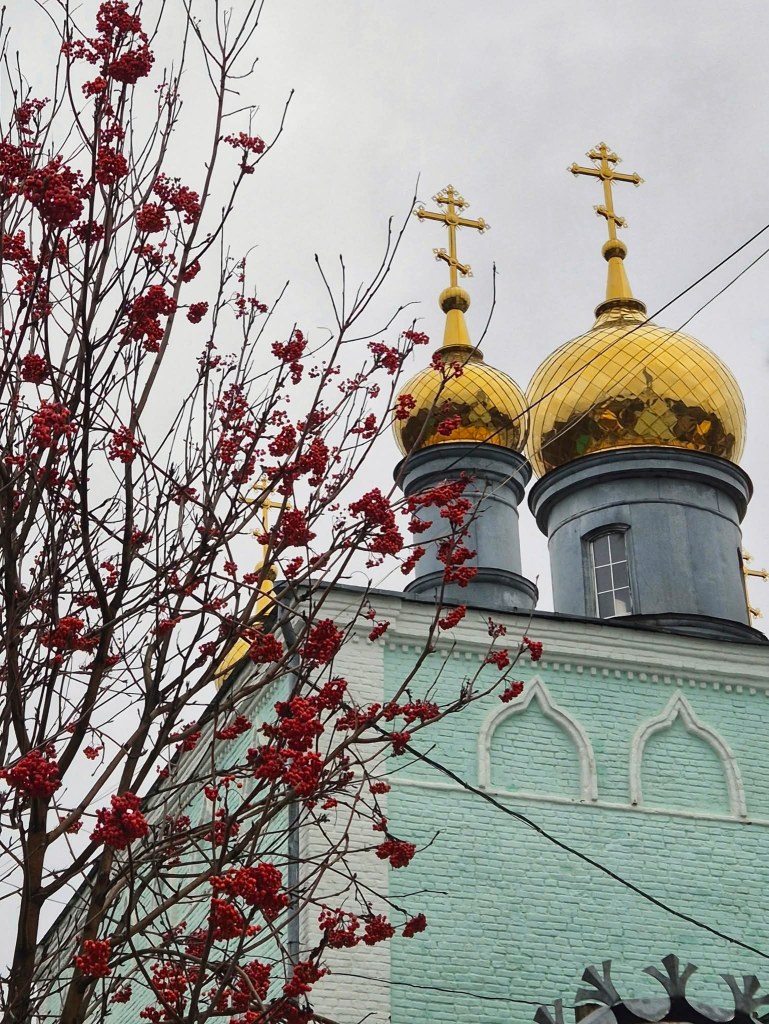
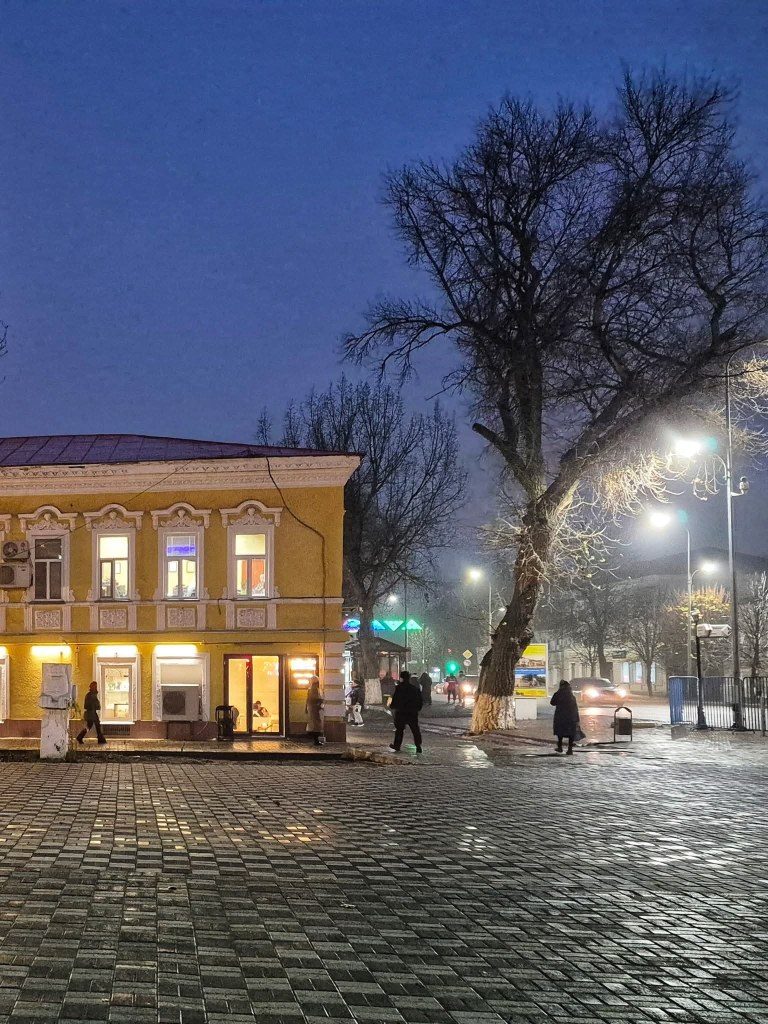
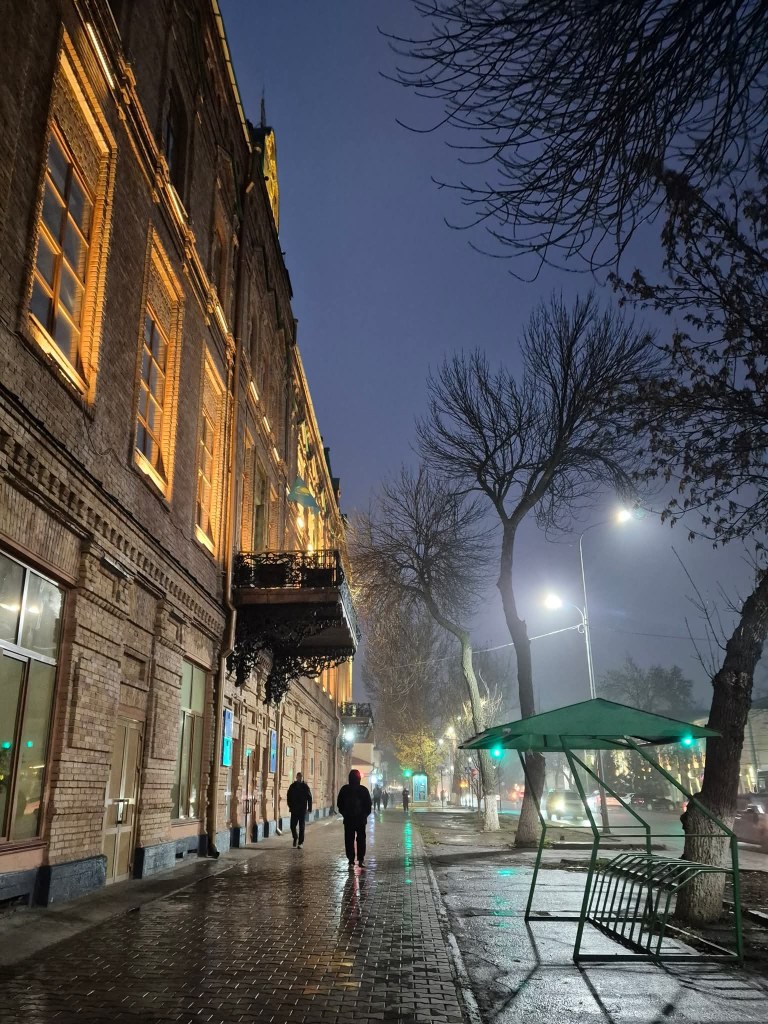
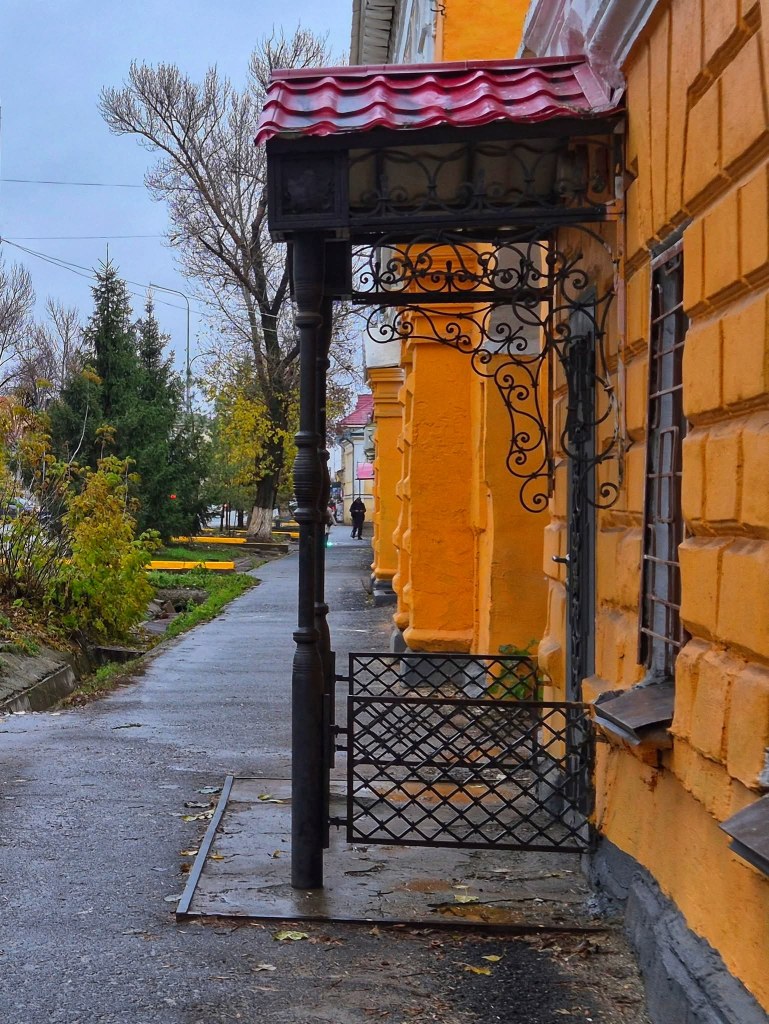
The city is now descending into winter. At 9:00 A.M., the sky is unlit, and even at noon, the sun barely makes its presence felt. But I love strolling around despite the dark and the freezing temperature and seeing the onion domes of Orthodox churches appear through the mist, adorable babushkas wrapped in headscarves who are up before everyone else, and the warm lights emanating from old windows that reveal hidden coffee shops that offer respite from the cold. The baristas do not speak English; hardly anyone does, but they have smiles that translate enough warmth to this strange, shivering girl with a book.

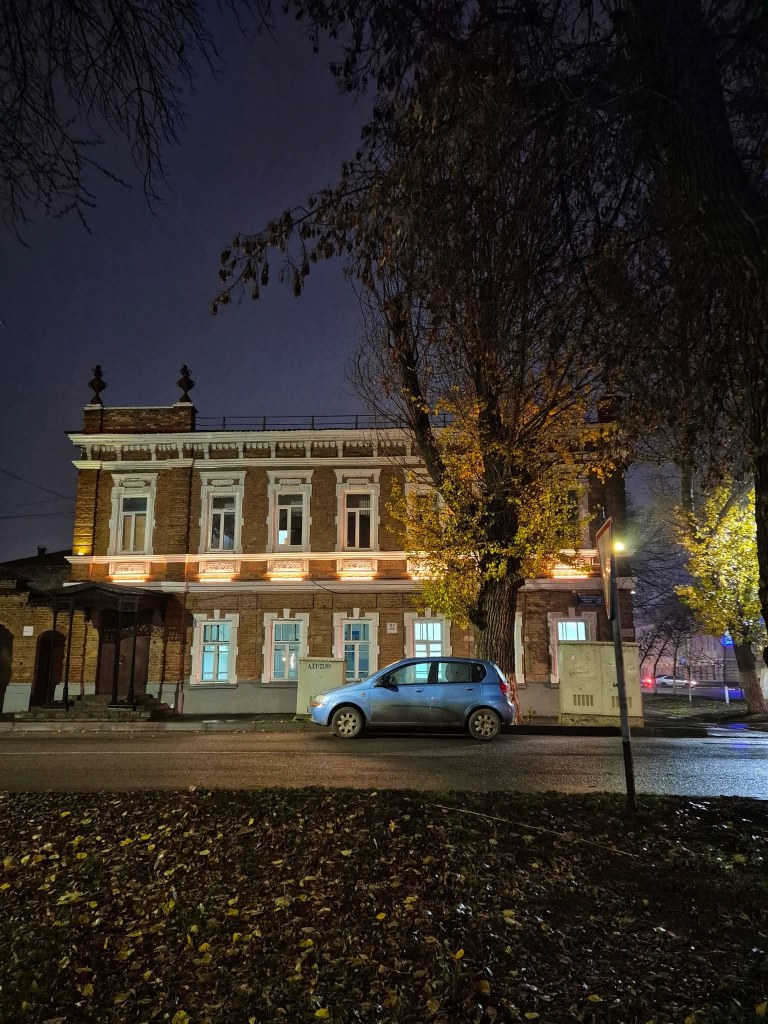
Its side streets and residential areas are pages out of a Gogol story. It is, after all, quite a literary city. It was here that the first and enduring public library in Kazakhstan was established in 1871. Pushkin, Tolstoy, Sholokhov and other literary greats have come to Uralsk and made their mark here. I booked at the Pushkin Hotel, predictably.

The distance between Almaty and Uralsk is several chapters or a few hundred pages of a Russian novel. For a different perspective: Uralsk is closer to Kiev, Moscow, Warsaw, Vienna, and Helsinki than it is to Almaty. The oldest city in what is now Kazakhstan, Uralsk was founded by Cossacks in 1584 as a border outpost of the Russian Empire.

Perched on the European bank of the Ural River, it is geographically within Europe. It is where Central Asia ends, or begins, depending on where you’re coming from. But if you’re coming from a book, as I am, it is where Russian literature comes alive.

Reading in August


Our ecological crisis is also a ‘crisis of forgetfulness’… we have forgotten how sacred the nature of creation is,” Iraqi-British writer, Dalia Al-Dujaili, reminds us in Babylon, Albion

Although I read this in a perfect setting on a weekend getaway — amidst soothing sounds of nature, enveloped by clean air, and surrounded by mountains blanketed by mist — this ‘crisis of forgetfulness’ where the greed of many has replaced the sanctity of nature manifests in international and national news, and in the floodwaters that lap on my own doorstep back home. 

Readers who find the lyrical wisdom of Aimee Nezhukumatathil refreshing will surely love this wholesome rumination into identity, migration, land, rivers, borders, national and personal myths, familial and arboreal roots, and humanity’s natural heritage. While these somber topics usually weigh down on the reader, Al-Dujaili imparts a hopeful outlook while encouraging us to make our very own existence into a form of praise, and challenging us to scrutinize how we carry identity. Needless to say, Babylon, Albion was a profoundly beautiful way to end August.


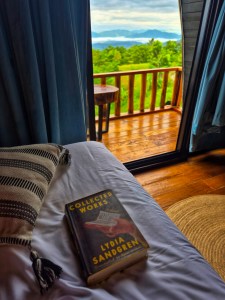
August is Women in Translation Month and Buwan ng Wika (National Language Month). To celebrate the latter: Munting Aklat ng Baybayin by Ian Alfonso. No better way than through learning more about our pre-colonial script! To celebrate the former: Iman Mersal’s Traces of Enayat and Lydia Sandgren’s Collected Works.

“The best investigative reporting is storytelling,” says journalist Jane Mayer. Traces of Enayat is proof of this as Iman Mersal takes the reader on a quest to find traces of Enayat, an Egyptian writer who took her own life in 1963. Mersal affectingly expresses the attachment and resonance we find in the authors we encounter and whose works derail us from an otherwise uneventful trajectory. It also begs the question: How many Enayats has the world lost into oblivion?

As for Collected Works, seven pages shy of six hundred, this novel quietly draws you into its world. It acquaints you with its setting and its characters without haste. It knows how to linger. It lingers on one’s thoughts on literature and art, on a character’s indecision to call someone or not, whether to read a book or not. It often lingers on everyday scenes where words turn into still life paintings and everyday portraits. But these scenes and characters exist in the shadow of Cecilia’s disappearance. Almost fifteen years after she vanished without a trace, her daughter, Rakel, believes it is her missing mother she is reading about in a novel, and measured suspense and mystery begin to replace the monotony of their lives. I would recommend this to the unhurried reader. Ultimately, Collected Works is a meditation on what one’s life amounts to. 

As for reading life in August? This is what it amounted to. It felt very much like a defiance of my country’s frustrating political climate.

Circumnavigating July

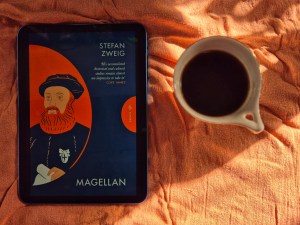
From Stefan Zweig’s Magellan, to Robert Graves’s Homer’s Daughter, to Aatish Taseer’s A Return to Self, to Kahlil Corazo’s Rajah Versus Conquistador, July seemed to have a fortuitous recurring theme in the books I read and in my encounters with storytelling: New ways of seeing and new ways of reframing self and history. 

For someone whose nation regards as a hero the man responsible for Magellan’s death, I have to admit that this book was approached in Lapu-Lapu mode, en garde, expecting a Eurocentric view of history. But Zweig had me at page 11 upon acknowledging that the primary objective of the Crusades was to wrest the trade route barriers from Islamic rule. You don’t often get that admission from a Western book written in the 1930s.

In Philippine history, Magellan’s death eclipses the fleet’s first circumnavigation of the world. This book emphasizes the feat of an adventurer who had, at the time, “far outstripped all others in the exploration of our planet,” and proved beyond theory that the Earth was round. He was bad news for flat-earthers. Zweig humanizes the man whose death we celebrate, and this is a great read for those who would like to peer through another vantage point of the expedition. But dear Stefan, as much as I am a fan of your writing, Magellan did not “discover” the Philippines; he merely set foot on it and placed it on a Western map. 

“What we term history does not represent the sum total of all conceivable things that have been done in space and time; history comprises those small illuminated sections of world happenings which have had thrown upon them the light of poetical or scientific description. Achilles would be nothing save for Homer.”

Speaking of Homer… how did I not know that the author of the more famous I, Claudius has penned a delightful book called Homer’s Daughter, claiming he could not rest until this novel was written after finding arguments on a female authorship of The Odyssey undeniable? It is based on the premise that The Odyssey — authored over a hundred and fifty years post-Iliad, more honeyed, civilized, and sympathetic especially toward Penelope — was written by a woman.

It makes for an enjoyable read as Graves imagines the life of Nausicaa, a Sicilian princess who rewrites Homer’s epic with elements from her life. “The Iliad, which I admire, is devised by a man for men; this epic, The Odyssey, will be devised by a woman for women. Understand that I am Homer’s latest-born child, a daughter.”

We have understood through the likes of Virginia Woolf that “for most of history, Anonymous was a woman,” but how the poet of The Odyssey could be a woman is a concept new and fascinating to me. 

What if The Odyssey’s notion of Ithaca holds sway because it was not written by one who wandered off, but by one who stayed?

And yet, Aatish Taseer’s Ithaca remains my kind of Ithaca: “The pilgrim spirit is one that wanders away from the comfort and safety of our home secure in the knowledge that the transformation the pilgrim will undergo over the course of his journey is the destination.” The author has a life story incredible enough, but more importantly, here’s a writer and traveler who shows us how profound traveling can be when we are mindful of the inner journey. A Return to Self is a book I will be returning to.

Speaking of Home… I have never read a novel that came this close to home! As a descendant of a binukot, this book felt so personal and empowering to me. The soul of the binukot does not play second fiddle to anything in this novel.

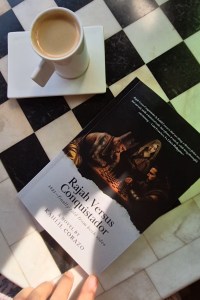
By reading Rajah Versus Conquistador, I seem to have circumnavigated July and circled back to Cebu. The title refers to Magellan as the Conquistador, and Humabon as the Rajah.

Humabon, in Zweig’s words, “was no such unsophisticated child of nature… He had already eaten of the tree of knowledge, knew about money and money’s worth… a political economist who practiced the highly civilized art of exacting transit dues from every ship that cast anchor in his port. A keen man of business, he was not impressed by the thunder of the artillery or flattered by the honeyed words of the interpreter… he had no wish to forbid an entrance to his harbor. The white strangers were welcome, and he would be glad to trade with them. But every ship must pay harbor dues.”

Often cast as a traitor or as someone who’ll always be lesser than Lapu-Lapu in Filipino eyes, Corazo’s Humabon agrees with Zweig’s Humabon: a cosmopolitan ruler who defies simplification. There is much to be said about this work; from the witty language where Bisaya humor often raises its head, to rethinking our past and the deeper meaning to our myths, to the skillful crafting of the key players. Corazo does not merely reconstruct complex characters from the past, he gives readers a perspective of history “viewed not from the deck of a Spanish galleon but from behind the woven walls of a payag…”

And who lives behind these amakan walls? The women. This is what makes Corazo’s work especially meaningful to me. He brings the hidden women to light and by doing so, honors those who never made it to official records but who nonetheless steered the course of history through their quiet power, and who continue to do so.

“Each generation of binukot learns to reshape herself.”

To which Ruby Ibarra gives a brilliant answer: “Ako ang bakunawa.” 

These were last month’s books and soundtrack.

April in Books

April was manic. It called for two short story collections in sympathy of a fractured attention span.


Silk, Silver, Spices, Slaves, Lio Mangubat First, prepare a cup of tablea tsokolateKapeng barako will do, but because cacao seeds arrived in the Philippines earlier than coffee through the Galleon Trade, I’ll opt for the former to pair with this book. When the chocolate brew is ready, steep yourself in the richness of both history and drink. Read full entry here.


Covert Joy, Clarice Lispector

There’s nothing here that a Clarice fan hasn’t read. And it’s arguably redundant to have this book when these twenty stories have already appeared in that hefty volume of The Complete Stories. But can you resist an edition that has one of your favorite Lispector stories as the titular story of a collection? No.

Because the thing is, reading Clarice is an experience; re-reading her is a veneration. And if I may say so, a none too covert joy. 

“Sometimes I’d sit in the hammock, swinging with the book open on my lap… I was no longer a girl with a book: I was a woman with her lover.”


The Dissenters, Youssef Rakha

“…it is Time that happens to people. We talk about having and saving and wasting it as if it is ours to work with, but really it is we who are time’s property.”

Egypt’s modern history is a story of revolutions, but its revolutions are especially ones that are true to the word’s literal meaning — a return, a cycle, a recurrence. How can one analyze over seventy years of a nation’s tumultuous history from its first president up to the current one? Through a woman’s life, answers Youssef Rakha. “Woman after woman using men’s failures and her body to write the ultimate description de l’Égypte.”


Canone Inverso, Paolo Maurensig

Ironic how I have acquired and read Maurensig’s three chess novels but have only read the novel about music now; but how delightful to discover that Bach’s Chaconne is what decorates the endpaper of this edition and learn that the piece plays a role in the story! As a work of literature, Canone Inverso may not be something one would call a masterpiece, but I cannot deny how this story gripped me from beginning to end. It’s a splendid book to entertain a reading musician!

It is only post-novel that I’m finding out that there is a movie for which Ennio Morricone composed the soundtrack! (And Sophie is played by Mélanie Thierry, who is the girl in the window that inspires the pianist in Legend of 1900, but in Canone Inverso she is the pianist!) All the while I read this, I was really thinking about how it would make a cinematic feat through the vision of an insightful director. I could already hear the dramatic soundtrack and imagine the cinematography, the light coming through the windows as dusk falls on the heurigen of Grinzing, and virtuosic music piercing the air…


To the Wedding, John Berger

What shall we do before eternity?

Take our time.

Not all blurbs are to be believed. But when it’s Michael Ondaatje who writes, “Wherever I live in the world, I know I will have this book with me,” and when a friend whose literary taste is most similar to yours recommends it, you just believe. But prepare to have your heart broken.

How was it possible to write a complexly poignant novel with fragmented vignettes? How does one distinguish between poetry and prose? This book deftly blurs the lines.


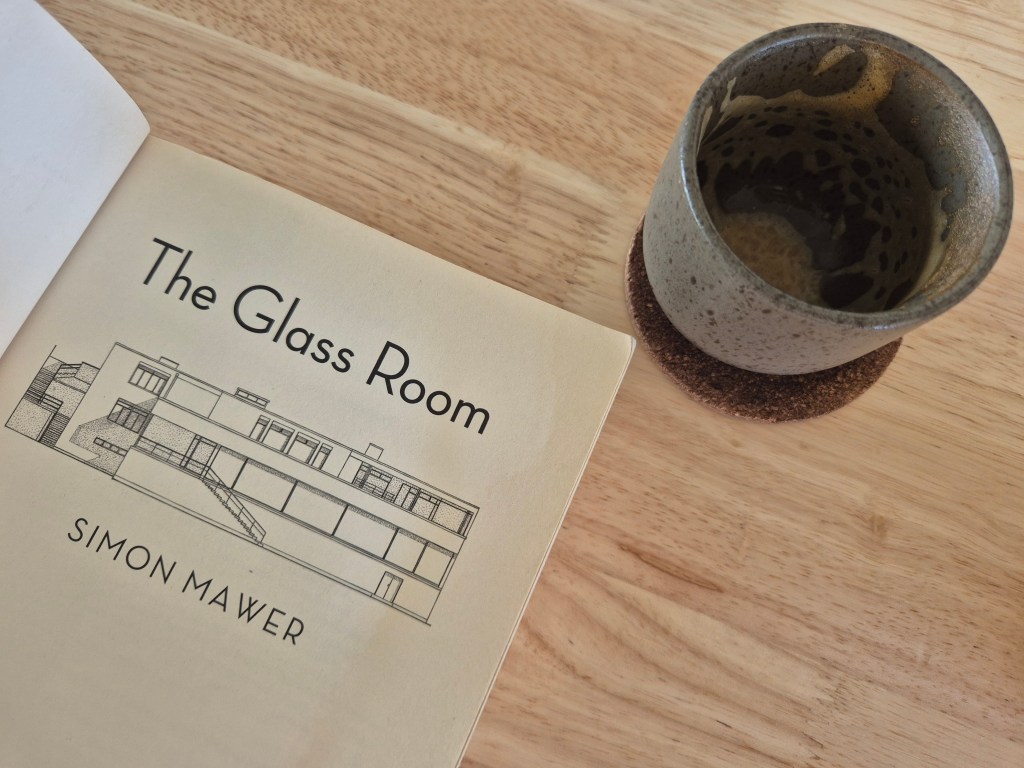
The Glass Room, Simon Mawer

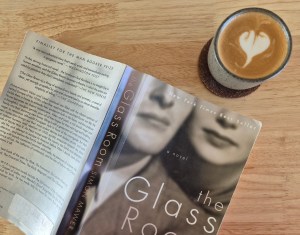
The Glass Room, but not the ‘room’ of English, expresses the author. Rather, the Teutonic ‘raum’ with a broader sense of space. The novel correspondingly hints at architecture while maintaining a broader sense of architecture by concerning itself beyond the architect and the building, and taking into account the lives that inhabit a particular space. Similarly, it is an acknowledgment of how one cannot write about the Modernist shift in architecture without conveying how it is an entire geopolitical and cultural movement. Read full entry here.


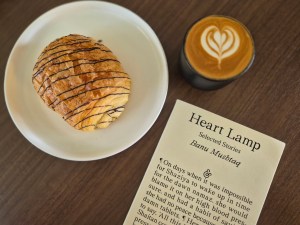
Heart LampBanu Mushtaq

How do you extinguish the light in a woman’s heart?

With these short stories Banu Mushtaq seems to count the ways.

Addendum: Through a Booker discussion with Ex Libris friends a day before the awards were announced, I understood that the winner of the International Booker Prize should define 2025. As touched as I was with this book, I did not think it would fit the criterion. And yet it emerged as the winner: The first book originally published in Kannada (the official language of the author’s state of Karnataka in southern India) and the first collection of short stories to win the award.

Through this I am reminded: Woman is always relevant, and that stories of everyday life are still worth telling.


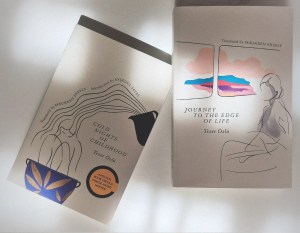
 Journey to the Edge of Life, Tezer Ozlu

“It is the boundless realm of literature that has set me on this road, through words and beyond them…”

Yes, yes, and yes.

Simon Mawer: The Glass Room

“There was, however, a catch. There is always a catch, in stories as in life.”


The verdict: I could have easily stopped reading this because of the unashamed and irritating amorality of the characters. But Simon Mawer knows how to tell a story and wrap you around his finger.

It’s true what readers who occasionally dabble in cinema are saying: The Glass Room > The Brutalist. I wouldn’t be surprised if the latter admitted to taking inspiration from the former. The twisted parallels are there: Among other details, Modern man’s spiritual aloofness, characters who worship at the altar of their ego, and the pretentiousness that seems to be an essential quality of the zeitgeist.

The Glass Room, but not the ‘room’ of English, expresses the author. Rather, the Teutonic ‘raum’ with a broader sense of space. The novel correspondingly hints at architecture while maintaining a broader sense of architecture by concerning itself beyond the architect and the building, and taking into account the lives that inhabit a particular space. Similarly, it is an acknowledgment of how one cannot write about the Modernist shift in architecture without conveying how it is an entire geopolitical and cultural movement.

While glass seems to reflect not the transparency but rather the fragility of human relationships and ideologies, in its un-clichéd way, this novel concedes that it is architecture that outlives and bears witness to it all.


“The Glass Room remained indifferent… Below it, lapping up to the foot of the garden, were the rough tides of those political years, while the Landauer House stood beached on the shore above the tidemark…” — The Glass Room, 2009

“…but my buildings were devised to endure such erosion of the Danube’s shoreline.” — The Brutalist, 2024


Han Kang: We Do Not Part

“In every story, without exception, the woman looks back. She turns to stone on the spot.”

“Because Koreans don’t win the Nobel prize for literature,” says the young Nora in Past Lives when Hae Sung asked the aspiring writer why she was moving to Canada.

As much as I love that film that’s lodged in a heart space that I thought was only reserved for the Before Sunrise/Sunset/Midnight trilogy, I was glad Nora proved to be wrong when Han Kang became the first Korean and the first female Asian writer to be awarded the Nobel Prize in Literature.

Lauded for her “intense poetic prose that confronts historical traumas and exposes the fragility of human life,” it then became a goal to read Han Kang for Women’s Month this year.

It is one of the most atmospheric books I’ve read. I can almost feel the snowflakes falling on my heart until now.

The novel takes place on Jeju Island, a place that I regarded merely as a popular vacation spot thanks to KDrama and the island’s visa-free policy for Filipinos. It also drew international attention on December 29, 2024, when a Jeju Air flight overshot the runway and resulted in 179 fatalities. That’s all I knew of Jeju — until I read this.
What begins as a woman having a series of nightmares and discernibly living with an unnamed trauma, builds suspense when a friend in the hospital asks her to rescue a pet bird that was left alone at home after an accident occurred. What Kyungha discovers in her friend Inseon’s home in the dead of winter gradually opens her eyes to the Jeju massacre of 1948. It is such a hallucinatory reading experience that I had to verify if something that horrific really happened in idyllic Jeju Island’s history.
“Extermination was the goal. Exterminate what? The reds.” But Jeju’s inhabitants were not all reds, and yet it was easier for the military to operate by decimating the population. For nearly fifty years after the massacre, it was a crime punishable by law for a South Korean to mention the event. A huge percentage of the thousands that perished were innocent.

“Collateral damage.” That’s what they call it. Now where have I heard that term recently?