February Reading Wrap-Up


A Month in Siena, Hisham Matar

“Only love and art can do this: only inside a book or in front of a painting can one truly be let into another’s perspective. It has always struck me as a paradox how in the solitary arts there is something intimately communal.”


An understated book that is a meditation and an education in art and life.

“I hope that when there is laughter, it’s laughter made wise by having known real grief — and when there is grief, it is made wise by having known real joy,” Kaveh Akbar writes in Martyr! Whether writing about art, architecture, Libya, or politics, Hisham Matar’s books are often so heartfelt — wholly made wise by having known sorrow and loss.


Fires, Marguerite Yourcenar

…because maybe, subconsciously, this month’s reading theme is about finding solace in the works of authors whose masterpieces have already left an impression on me, that I immediately dove into Yourcenar’s Fires without hesitation, having been incredibly moved by Memoirs of Hadrian in 2022.

She does admit, and warn, in the Preface that this book is, “the product of a love crisis” and that writing this was, in a way, “exorcising a very concrete love”; and yet it still surprised me that the elegance I encountered in Hadrian was replaced in Fires by a certain violence and ferociousness in the prose. 

Antigone, Sappho, Clymenestra, and Achilles are just some of the main characters of the nine lyrical prose pieces, or stories, that Yourcenar amalgamates with her own experiences. I was left wondering if I understood the allusions correctly, or whether I understood anything at all.

One thing is certain, Fires is a masterclass on opening lines:

Phaedra’s piece begins with, “I hope this book will never be read.”

The Patroclus opening, “A heart is perhaps something unsavory. It’s on the order of anatomy tables and butcher’s stalls. I prefer your body.”

Lena’s? “Loving eyes closed is to love blindly. Loving eyes open is perhaps to love madly.”

“Love is a penalty. We are punished for not having been able to stay alone.” Clymenestra’s.


Face Shield Nation, Gideon Lasco

Articles that I looked forward to during the pandemic compiled in a book. Lasco was the voice of calm and reason at a time of confusion; evoking through his column the architectural definition of a column as a sturdy pillar of support. An essential time capsule of an era that we cannot afford to forget if we intend to learn from it. Read full entry here.


One Hundred Years of Solitude, Gabriel Garcia Marquez (a re-reading)

Growing up is realizing that Gabo is the real Melquiades who brought us magnets, magnifying lenses, astronomical observations, and mercurial storytelling. It was he who made imagination and literary possibilities flourish in the fertile and pristine Macondos of our minds, and who never really died. Read full entry here.


Nothing but the Night, John Williams
Maybe the first disappointment that assails the reader is the realization that, despite the slenderness of this volume, there is a heaviness in each page that restrains forward motion.

“Boring,” the lazy might judge hastily somewhere within the first three chapters. But one should not be too quick to criticize even though I myself could only read a couple of pages per sitting. For if one looks closer, and feels deeper, isn’t this genius, how John Williams conveys exactly what depression feels like?

“…there came to him that peculiar loneliness which is felt only in the monstrous impersonality of a multitude…” “What was the senseless circumstance which led him on and on, deeper and deeper into what seemed to him a maze labyrinth, devoid of pattern or meaning? …some unnameable power pushed him from one place to another, down paths he had no wish to travel, through doors he did not know and had no wish to know. All was dark and nameless and he walked in darkness.”

But then the reader is momentarily allowed to come up for air. I’m referring to the fourth chapter that is briefly set alight with a Proustian beauty! “That is the very best time of life, he thought: lost time.” And then John Williams proceeds to craft this fleeting tribute to the master searcher of lost time before he relinquishes the ethereal chapter to the fading light.

As the novel finally builds suspense, it spirals into a nihilistic darkness that ends with a violent and repulsive slap in the face.

Written in Burma when he was only twenty-two while recovering from injuries brought about by a plane crash over the Himalayas during WWII, he wrote this first novel at a particularly dark time when there was nothing else but the night.

The John Williams here is not the John Williams that gave us Stoner and Augustus. The John Williams here is the John Williams that would eventually give us Stoner and Augustus.


The Black Book, Orhan Pamuk

This reader has been through Pamuk’s longest novels and still felt the density of the mystery and prose in this book’s mere four hundred pages.

It explores the writing process and the precariousness of identity. It is also about how much the books we read, the stories we hear, the movies we watch, the everyday objects in our lives, and our city’s history shape the multiplicities of our being.

I enjoyed that twist at the end and relished the familiarity of Istanbul as a breathing character in a Pamuk novel. But maybe, just maybe, The Black Book is not for the Pamuk newbie, and not for those who are in a hurry. 


The Golden Road, Willliam Dalrymple

It is not only the Silk Roads that are rising again, as Peter Frankopan proclaims in a forceful last line that gave me goosebumps. Rising, too, are buried or forgotten histories that have now resurfaced to challenge centuries of unquestioned narratives.

Frankopan’s The Silk Roads was an eye-opener, but The Golden Road takes this non-Eurocentric view of ancient and early medieval history to an intriguing direction by revealing India as a catalyst that transformed the world. Read full review here.


Gabriel Garcia Marquez: One Hundred Years of Solitude

Many years later, as she faced the esplanade, Miracle Romano was to remember that distant afternoon when her bestfriend took her to discover Gabriel Garcia Marquez.

Rather than a rereading, this felt more like a revisit of our teenage years. Nostalgia accompanied me on every page. These characters who ushered us into adulthood were so real to us then. They lived in our conversations and in our heads, they colored our loves and we went through growing pains with them. Yellow flowers raining down from narra trees of Cebu’s Osmeña Boulevard would often transport us to the day of Jose Arcadia Buendia’s death. Magic realism was delivered to us by a master; it was new to us and it was… magic!

(Who was crazy enough to think they could make a successful screen adaptation?)

But how could we have dismissed how unhinged the characters actually are? How did I, a young girl, go through the depictions of sexual violence unfazed; or was I too innocent to know what that’s actually like in real life? How could we not have known that the banana company strike which led to the massacre that Jose Arcadio Segundo witnessed and which drove him to madness was a real event in Colombia; and that the banana company was relatable for Filipinos in the way first-world corporations exercise control over developing nations? And was it from GGM where GRRM drew inspiration for the aunt-nephew bonds?

But Gabo is the real Melquiades. He brought us magnets, magnifying lenses, astronomical observations, and mercurial storytelling. It was he who made imagination and literary possibilities flourish in the fertile and pristine Macondos of our minds, and who never really died.

Read Gabo when you’re young and you don’t know better. But also read Gabo when you’re older, to realize that what was Sanskrit in our innocence was ultimately a revelation about politics, time, memory, and history — “a machine with unavoidable repetitions, a turning wheel that would have gone on spilling into eternity were it not for the progressive and irremediable wearing of the axle” — because one day you can only wish you could read Gabo again for the first time as a juvenile and simply resign to the fact that the book you are reading is a literary masterpiece.

Laura Esquivel: Like Water for Chocolate

A quick and enjoyable re-reading of my initiation to the flavors of Latin American magic realism — in anticipation of Salma Hayek’s production of the upcoming series adaptation.

Recommended by my best friend in our early teens, this is the book that led to highschool years enlivened and colored by the novels of Isabel Allende and Gabriel Garcia Marquez and the poetry of Pablo Neruda and Octavio Paz. This is also the book that made the kitchen a more magical place for me. 

Reading this with older eyes shows me how much I’ve grown, how much I’ve outgrown, and also how much I did not understand back then: It seems to be oozing with more sensuality now. The romantic passages are no longer what strike me the most. When John Brown encourages Tita to express herself through writing and thereby carving her path to freedom, I realize that nothing Pedro ever did could top that and I was rooting for the wrong man all along. Now I’m no longer concerned about whether the adaptation is faithful to the love story, I’m more concerned about how faithful it is to the kitchen magic.


“My grandmother had a very interesting theory; she said that each of us is born with a box of matches inside us but we can’t strike them all by ourselves… Each person has to discover what will set off those explosions in order to live, since the combustion that occurs when one of them is ignited is what nourishes the soul. That fire, in short, is its food. If one doesn’t find out what will set off these explosions, the box of matches dampens, and not a single match will ever be lighted.”

Renato Cisneros: The Distance Between Us

“If I were moved by any kind of power at all, it would be the power of revealing absolutely everything about who we are.”

It’s been so long ago that I have started to question whether Florentina Ariza ever truly loved Fermina Daza. And why is it that what remains most vivid in my mind is how Dr. Urbino’s tasseled slippers made Fermina weep after his death? 

“The thing you remember most is what has most deeply affected you,” writes Renato Cisneros. Have I always been affected by loss, or afraid of the space of another’s absence?

I apologize. I have fully digressed right from the beginning! Is it even possible to digress right from the beginning?

But what makes the writing and the translation of The Distance Between Us so satisfying is that it is reminiscent of my first encounters with the Latin American greats! (Not the magic realism aspect for there is none of that here, but in the way the writer involves the reader intimately by making the characters palpable, using subtle tricks of psychoanalysis to dig as far within as they can so that one can gaze even into the unconscious.) But perhaps, most of all, for the moving premise of a son writing a book in an attempt to reduce the distance between him and his deceased father, a controversial figure in Peru’s turbulent history: A poignant endeavor to understand who the father really was in order for the son to fully understand himself. To acknowledge the faults of the father so as not to perpetuate them. To break the cycle and confront, rather than escape as his father and forebears have done, “Ignoring and later burying the thornier details of their pasts, they turned their backs on the intrigues of their shared history, embarking on a course of permanent disorientation…”

And yet, “Just as a father is never prepared to bury his son, a son is never prepared to dig up his father.” His undertaking brought to light his father’s amorous affairs; classified information that led him to acknowledge, though he loved him, that his father was a villain, but also that villains are made of wounds; the discovery that his parents were never legally married; and then to write about their love, to legitimize it — “This novel is my parents’ lost marriage certificate.”

Forget my likening Charco Press books to espresso shots. This strong blend of the personal and the political compelled me to spend hours and days between its pages. “Authenticity” is such an abused term nowadays that I sometimes wonder if the overuse has marked the word with a tinge of insincerity. Then comes along a book like this that keeps such doubts at bay. A work devoid of the inauthenticities of biographies and brimming with the honesty that confronts us in fiction.

Was I wrong to wish that the son of a dictator who is now our current president could be more like this son? But I digress, again.

Charco Press

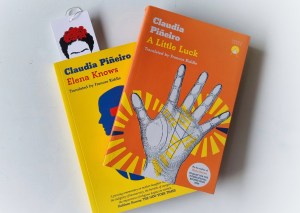
Elena Knows (April 2023) | A Little Luck (November 2023)

The phrase “a little luck” appears nine times in A Little Luck, just as “Elena knows” appears nineteen times in Elena Knows.

Does it matter? Not really. Maybe noticing those details says more of me as a reader than Claudia Piñeiro as a writer. One thing is certain; she does not repeat herself because she is running out of ways to say things. She is consistently unpredictable. 

Elena Knows, which I read much earlier, is exceptionally written and translated. The choice to highlight a specific incapacitating disease that isn’t limited to women — to effectively confront every reader with what it feels like to lose bodily autonomy — is, I believe, the most impressive allegory that should be uncovered from under the many brilliant qualities of the novel. There are other apt adjectives for Elena Knows, but beautiful is not one of them.

But for the soulful strains of Piazzolla that wove through A Little Luck’s narrative; for how a woman damaged found the first steps to healing through literature; for how I thought it would all be about pain only to discover that it was principally about happiness; and for the sheer deftness of Piñeiro’s writing — this one is beautiful.

Just as unputdownable, just as suspenseful, just as affecting… and this time, beautiful.


That’s why we need to read women. What does that have to do with it? It has everything to do with it.

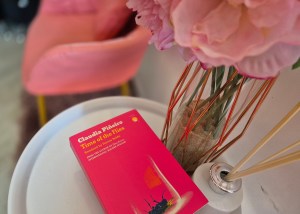
Time of the Flies, Claudia Piñeiro (August 2024)

Give me a back cover blurb without telling me the book is by Piñeiro and I would not be very interested. The descriptions of her novels are unattractive to me, especially if they are about flies and women killing their husbands’ lovers. 

But tell me a book is written by Piñeiro and I would read it without even asking what it’s about, even if it seems to be about flies.

Because if you just trust Piñeiro’s storytelling prowess and allow her to take you on a satisfying ride, you eventually learn that when it comes to the word “fly,” there is the noun, and there is the verb, and she’s ultimately writing about freedom.

Predictably unpredictable. She does it again. But this time, more heartwarming than one would expect, and more blatantly feminist. 


“If I were moved by any kind of power at all, it would be the power of revealing absolutely everything about who we are.”

The Distance Between Us, Renato Cisneros (May 2023)

It’s been so long ago that I have started to question whether Florentina Ariza ever truly loved Fermina Daza. And why is it that what remains most vivid in my mind is how Dr. Urbino’s tasseled slippers made Fermina weep after his death? 

“The thing you remember most is what has most deeply affected you,” writes Renato Cisneros. Have I always been affected by loss, or afraid of the space of another’s absence?

I apologize. I have fully digressed right from the beginning! Is it even possible to digress right from the beginning?

But what makes the writing and the translation of The Distance Between Us so satisfying is that it is reminiscent of my first encounters with the Latin American greats! (Not the magic realism aspect for there is none of that here, but in the way the writer involves the reader intimately by making the characters palpable, using subtle tricks of psychoanalysis to dig within as far as they can so that one can gaze even into the unconscious.) But perhaps, most of all, for the moving premise of a son writing a book in an attempt to reduce the distance between him and his deceased father, a controversial figure in Peru’s turbulent history: A poignant endeavor to understand who the father really was in order for the son to fully understand himself. To acknowledge the faults of the father so as not to perpetuate them. To break the cycle and confront, rather than escape as his father and forebears have done, “Ignoring and later burying the thornier details of their pasts, they turned their backs on the intrigues of their shared history, embarking on a course of permanent disorientation…”

And yet, “Just as a father is never prepared to bury his son, a son is never prepared to dig up his father.” His undertaking brought to light his father’s amorous affairs; classified information that led him to acknowledge, though he loved him, that his father was a villain, but also that villains are made of wounds; the discovery that his parents were never legally married; and then to write about their love, to legitimize it — “This novel is my parents’ lost marriage certificate.”

Forget my likening Charco Press books to espresso shots. This strong blend of the personal and the political compelled me to spend hours and days between its pages. “Authenticity” is such an abused term nowadays that I sometimes wonder if the overuse has marked the word with a tinge of insincerity. Then comes along a book like this that keeps such doubts at bay. A work devoid of the inauthenticities of biographies and brimming with the honesty that confronts us in fiction.

Was I wrong to wish that the son of a dictator who is now our current president could be more like this son? But I digress, again.


Chic French flaps that double as bookmarks, attractive colors, dimensions that fit in any handbag, and cover designs that could easily pass as pieces from the Museum of Modern Art: Charco Press indulges the busy contemporary reader.

It’s a section of my shelf that has lately become, perhaps unfairly, my go-to for a literary quick fix; where I’d proceed to grab a book without giving it too much thought — the way you would your car keys, the way I would a doppio from an espresso bar — on my way out to an appointment.

Small doses that pack a punch, style-wise, thought-wise, or both, delivering that stimulating and undiluted shot without demanding too much time and space. Yes, there are blends more intense or smoother than others. Some are darker roasts, and some have notes of an exotic flavor that make you gaze twice, sometimes longingly, inside an already empty demitasse. Some have a thick and bittersweet crema that cling to your lips, tongue, and insides long after you’ve downed the shot. But whatever the Charco Press barista has in store, it’s sure to come from a spread of South American blends that jolt our sleepy minds awake.


A Musical Offering, Luis Sagasti (February 2022)

Now, I’ve heard there was a secret chord / That David played, and it pleased the Lord / But you don’t really care for music, do you?

How can you not love a book that quotes Leonard Cohen on the first page? And truly, if you care for art and music, exquisite is an understatement of how this book is written. With an enchanting thread, Sagasti strings The Goldberg Variations, Bach, The Beatles, Brahms, Messiaen, Glenn Gould, Rothko, Mahler, Scheherazade… yes, Scheherazade! Because literature is still undoubtedly under her spell. Sagasti’s musical offering puts us in the shoes of the bewitched Persian King Shahryar, and this musician can only dream of a thousand nights more…

Fireflies, Luis Sagasti (May 2022)

Scheherazade in A Musical Offering, Penelope in Fireflies. I see what you did there, Mr. Sagasti! The mother weaver of stories of the East, and the mother un-weaver of storytelling of the West. Spun and spanned. And spangled. “Now I’m drunk, with universe.” Your books are beautiful reprieves. Write some more, please. We will need more of your magic.

“Without the slightest doubt, art is the answer. What we can’t be sure about is the question.“

The President’s Room, Ricardo Romero (February 2023)

The only part I felt I understood was the author’s note, but which I liked, because it speaks of the incendiary power of literature. At the end of this story of a nameless suburb in a nameless country where every house has a room reserved for the president, I had more questions than answers. But perhaps that is the point. To question, especially the things that people do not bother to question. 

Two Sherpas, Sebastián Martinez Daniell (April 2023)

One of the many things I learned during a trip to Nepal was that it had never been colonized. Two Sherpas made me re-think this view when I realized how imperialism, with its enduring effects, encroaches on the mind and the sentiments of a people. 

Unlike other books set in the Himalayas, the action takes place internally, inside the minds of two sherpas, one old, one young, as they look on an Englishman who has fallen from a ridge. The world looks different from up there, and there is much to glean from their perspective.

Trout, Belly Up, Rodrigo Fuentes (April 2023)

How simply evocative, these seven interrelated short stories! Subtle in depicting different social classes, but forthright in expressing that suffering is a shared experience, inextricable from the human condition.

A Perfect Cemetery, Federico Falco (November 2023)

It’s like walking into a museum of modern art and then stopping at five evocative pieces that touch or disturb something incomprehensible inside of you, and you leave the museum feeling full… of questions.

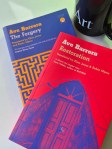
The Forgery, Ave Barrera (August 2024)

It’s probably best to read Balzac’s The Unknown Masterpiece prior to The Forgery. Had I not read it in 2022, I would not have recognized the numerous references. I regard The Unknown Masterpiece as an important record of the transition from the Romantic to the Modern period. This one, however, follows a painter in a series of unfortunate events inside the labyrinth of Mexican surrealism. I can see Modern Art lovers enjoying this book. Ave Barrera leaves you satisfyingly scratching your head. Does that make sense? But who’s talking about making sense?


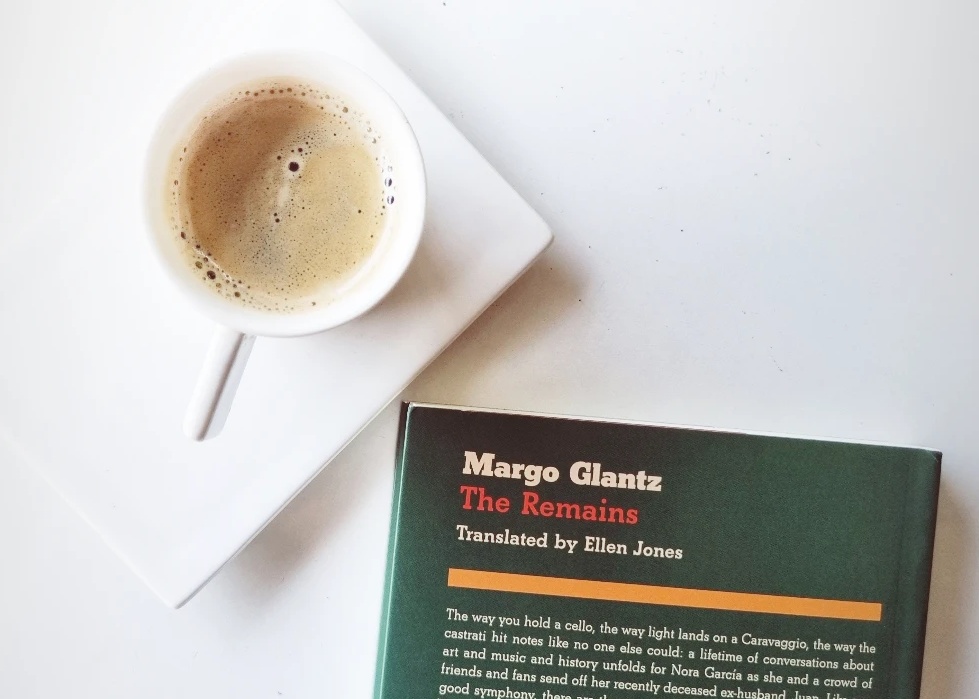
The Remains, Margo Glantz (April 2023)

Luis Sagasti: Fireflies

Scheherazade in A Musical Offering, Penelope in Fireflies. I see what you did there, Mr. Sagasti! The mother weaver of stories of the East, and the mother un-weaver of storytelling of the West. Spun and spanned. And spangled.

“Now I’m drunk, with universe.”

Ever since the two Zweigs that got me through the long wait at the polling precincts, I have only found myself turning pages of several books but absorbing nothing, only to reread the same pages and still end up drifting. The way many people have treated our national elections like they would a mere cockfight is confounding. Your books are beautiful reprieves. Write some more, please. This is going to be a tough ride. We will need more of your magic.

Is there anything to understand?

Without the slightest doubt, art is the answer.

What we can’t be sure about is the question.

Luis Sagasti: A Musical Offering

“Weren’t you just reading The Books of Jacob?” My mom asked when she saw me with this a day after I finished reading Olga Tokarczuk’s magnum opus.

“Recovery read,” I answered with a wink.

She shot me a questioning look.

“You know how runners do a short recovery run within 24 hours after a marathon?”

She could only laugh and shake her head.

It was the perfect easy run for this reader! In fact, I think every little detail of this book is perfect!

From the cover design, to the French flaps, to the first page that quotes Leonard Cohen:

Now, I’ve heard there was a secret chord / That David played, and it pleased the Lord / But you don’t really care for music, do you?

And truly, if you care for art and music, brilliant is an understatement of how this book is written. Think Apeirogon, think When We Cease to Understand the World but instead of physicists and mathematicians, musicians and artists — Bach, The Beatles, Brahms, Messiaen, Glenn Gould, Rothko, Mahler, Scheherazade… yes, Scheherazade!

Haven’t we already noticed that literature around the world is still undoubtedly under her spell, especially the Eastern Europeans and South Americans? Argentine Luis Sagasti’s musical offering puts us in the shoes of the bewitched Persian King Shahryar.

And we can only dream of a thousand nights more…

Conversations with Edward Said and Gabriel Garcia Marquez

What a pleasure to have spent the past few days eavesdropping on these conversations!

My introduction to Edward W. Said was not through my current reading project but through classical music years ago via the Daniel Barenboim connection when they co-wrote an illuminating book and founded the West-Eastern Divan Orchestra — Said a Palestinian intellectual and Barenboim an Israeli pianist and conductor, bringing together musicians from areas of conflict to show the world that it is possible to create peace among people from these nations, to harmonize, and produce beautiful music. And now, I am reintroduced to Said through the enlightening forewords he has written for many of the literary works I am reading from that part of the world.

As for dear Gabo, I still vividly remember the day my best friend presented me with my first Marquez in our teens and I gave him John Fowles’ The Magus in return. This act of his, which was not entirely innocent, led to a Latin American reading stage that brought me to magical literary adventures.

When asked whether the inability to love is very serious, Gabo replies, “I don’t think there’s any human misery greater than that. Not only for the person afflicted but for all those whose misfortune it is to come within his orbit.” Love is something to be learned, he adds, and even lets one of his fictional characters echo this.

Said on the hand, gave me more lines to note in my journal and reminded me why he was once an intellectual crush.

“I’ve never felt myself to belong to any establishment of any kind, any mainstream. I’m interested in mainstreams, I’m jealous of them, I sometimes, occasionally, envy people who belong to them—because I certainly don’t—but on the whole I think they’re the enemy. I feel that authorities, canons, dogmas, orthodoxies, establishments, are really what we’re up against. At least what I’m up against, most of the time. They deaden thought.”

“I think a lot of this business we were talking about earlier, about politics and culture being separate, is really laziness. There’s a critical establishment that says you’re supposed to only study this, and that’s because you don’t have the time or the energy to study other things. For me it’s a manifestation of laziness and idleness. And all of them, it seems to me, in the end, really don’t advance to anything.”

“And far from being right, I think it’s important to be critical.”

These conversations bring together two significant reading phases of my life. 

What struck me this time was in realizing how much their musical tastes influenced their writings greatly. Chopin among others for Said, Bartok and Caribbean music for Gabo. Because he was a revolutionary says the former and the mixture of the two had to be explosive says the latter. Through this we see that they did not confine themselves to one form of art but saw art as something encompassing rather than something to be compartmentalized. 

Said and Gabo are very much alive in these pages. These great minds that impacted and straddled two centuries while they lived; and even in death, continue to change the way we think, read, and perceive the world; their inspiration consistently outliving the last page of each of their books; saying it in their own distinct way but always reminding us to live as fully and as passionately as we can.

Mario Vargas Llosa: The Language of Passion

The Language of Passion is an excellent education on writing and thinking.

The topics in this Nobel laureate’s book of essays and articles are broad — from politics and religion to art, literature, and spaces; and the scope of the material manifests the breadth of his mind.

“That two truths are ‘contradictory’ doesn’t mean they can’t exist side by side,” Llosa writes. This reminds me of another line I encountered in Maria Popova’s Figuring, “It seems to be difficult for anyone to take in the idea that two truths cannot conflict.”

Llosa was writing about both the Israeli and Palestinian right to a particular piece of land and Popova was referring to the conflict between religion and science.

This is the sort of contemplation that I am subscribing to at this point in life; and that I did not have to embrace all of his opinions while admiring the way he expressed his thoughts is, I believe, part of the immediate result of a Llosa education.