“You want us to form a friendship built on disregarding the past, on ignorance and forgetting. Like all rulers, you want to burn your secrets so nobody can look at them after you die… We are not on the same path.”
How fittingly this line can be addressed to our current leader, and how I’d love to take some of Bachtyar Ali’s allegories to take a jab at the state of our politics!
But I doubt if railing against authorities was the main intent of this novel. Bachtyar Ali, injured in 1983 during a protest against Saddam Hussein’s Ba’ath Party and author of the first Kurdish novel to be translated in English, surely knows about unjust leaders and speaking out against them.
This story of a peshmerga fighter who is released after being detained in a desert prison for twenty one years and goes on a quest to find the son he left behind is told with the magical realism of A Thousand and One Nights, but with a more discernible moral aim, which also weaves in its tale the sufferings and the violent history of the Iraqi Kurds.
The Last Pomegranate Tree, with its moments of breathtaking lyricism, seems to me more of a profound contemplation on freedom, on what it means to be really free, and on what it is we should seek and hold on to when all seems lost.
“Only one thing has been left to us, the one thing they can’t reach: our hearts, our inner worlds.”
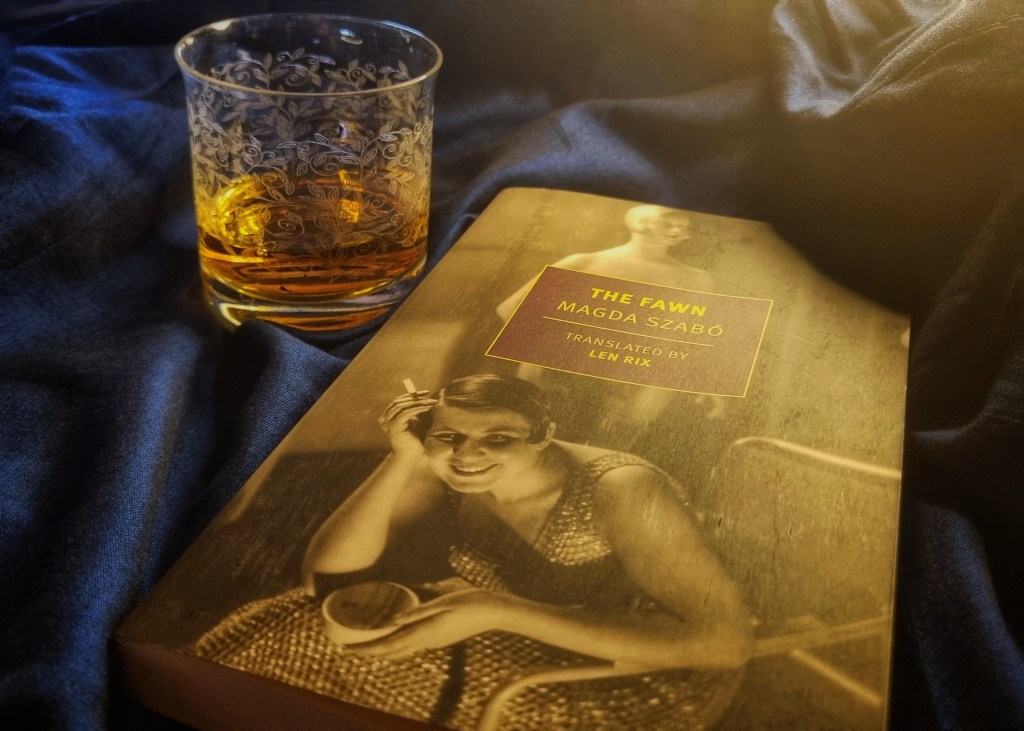
“I wanted to be with you sooner…” This first line, a faint melody, I imagine played by a solitary piano. This unwavering, melancholic undertone, suggesting that Eszter Encsy is addressing someone who is no longer in her life.
There is a calm, almost cold, but delicate aching to be accepted and understood. Recollections of childhood come across as confessions and explanations… including that time she did not mean to kill the fawn.
But how did that seemingly dispensable incident earn the title of the book? Perhaps the fawn is meant to symbolize the fragility of youth, and how easily it can be broken.
Magda Szabó, who died with a book in her hand, has bequeathed to the world novels that aim straight for the soul. She wrote of women; women who do not have to be faultless. She did not demand heroics from them or for them to be worthy of admiration or to be idealized. She only asked that they live — live intensely, and learn.
And yet, I did not expect her to go to the extent of Eszter. The moral puzzles are not vague here, it is made quite clear what kind of person we have as a central figure right from the beginning: “I could never have undertaken to be a good girl and never to tell lies…” “I lie so easily I could have made a career out of it…” “I was also laughing at the monster I really am…” “I wasn’t a very nice person and I wasn’t very friendly…”
We immediately get the picture. Appalled, we double-check the synopsis, even though Szabó readers know that her synopses hardly describe what one encounters between the pages. But we read on. Because Szabó is brilliant. Because we suspect that a gut punch or two awaits round the bend. Because oftentimes, nothing is what it initially seems. Because she writes of those difficult spaces between people that most of us are too inattentive, too timid, or too unimaginative to explore. Because we know that behind all her stories is a carefully woven leitmotif of a history she mourns. Because Szabó is always subtly reminding us of consequences, of how we cannot extricate our personal histories from that of our nation. Because she is eternally thought-provoking, and therefore, rewarding.
…and because those elegiac strains from that lonesome piano will linger long after you’ve turned the last page.
The long-awaited arrival of these two books thwarted an existing reading itinerary. His Palace of Dreams that warn against authorities who take away even the freedom of dreams was enough to make me want to read more after that first Ismail Kadare experience in 2021.
Why the inaugural winner of the International Booker Prize is not as widely read as other foreign authors in this part of the world puzzles me, especially when his stories continue to be remarkably resonant. When his allegories of tyrannies and his parables about the threats of imperialism are redolent of current events, I think we should all be reading a Kadare or two.
Curious as to how it would resemble or differ from The Bridge on the Drina, a novel by another Balkan literary giant, Ivo Andrić, I was eager to cross The Three-Arched Bridge. While I love Andrić’s rich and lengthier novel, Kadare’s has the surprising texture of a fable that makes it easier to read despite the dark subject matter.
It is 1377, Byzantium is in decline, and the new Turkish state is a looming threat to the Balkans. A bridge is being built somewhere in the peninsula and Gjon the Monk decides to tell its story, “To stop them spreading truths and untruths about this bridge in the eleven languages of the peninsula… to record the lie we saw and the truth we did not see and to put down both the daily events that are as ordinary as stones and also the major horrors, which are about as many in number as the arches of the bridge.”
The construction of the bridge encounters various obstacles and seems to be cursed. The setbacks lead to the recalling of an old Illyrian legend where immurement as sacrifice for the completion of a castle was necessary. In due course, an immurement is committed for the success of the bridge: A chilling metaphor for the new worlds and ideals founded on blood and, perhaps, a disturbing reminder of what is often sacrificed in the name of progress.
The writing left a significant impression on me, once again, that I jumped straight into the fray of The Siege wherein I felt amazed to have been held in thrall by the intricacies of fifteenth century military strategies. The “necessary” presence of architects, engineers, poets, chroniclers, astrologers, and the harem on the battlefield adds to the madness of war. Warfare might have evolved greatly since then, but man hasn’t. The Kadare straightforward with his prose is suddenly generous with details and delightfully ridicules war and testosterone, bringing to mind a line from Svetlana Alexievich who wrote, “War smells of men.”
What it has in common with The Three-Arched Bridge is that both books are seen through the eyes of chroniclers, opening a window to how history is written and made. The Siege unfolds through the impressions of Mevla Çelebi for the Ottoman camp (which probably alludes to real-life Ottoman traveller and writer, Evliya Çelebi), and an unnamed observer in the besieged Christian citadel.
In another twist of creativity that makes this my favorite among the three Kadares I’ve read so far, the narrative is focused on the besiegers, and with this brilliant move we are made privy to the thoughts and intents of those who intend to conquer or wipe out an entire people — “We could take their language,” or their religion: “You can’t call a country conquered until you have conquered its heaven… everything that has to do with the soul.”
Trust Kadare to embed a powerful message in an easily overlooked passage, a lesson in what a people must guard and defend — Everything that has to do with the soul.
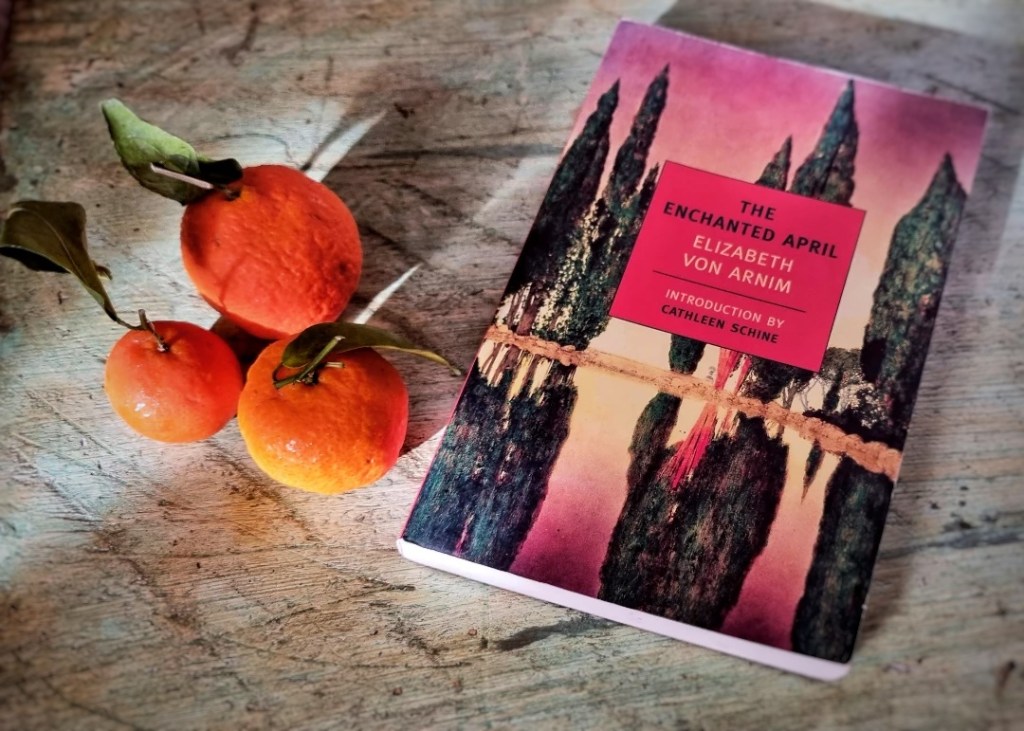
Reading this at a time when happiness eludes me and only a Turkish word can describe the sadness I feel, a time when the world is in disarray and the cynic in me is more pronounced than I want it to be, it is easier to argue that true beauty, real freedom from the male world’s sway, and lasting transformation surely take more than suggested by this book — but I am also a believer in the wisdom of surrendering to the restorative power of spending a month in a villa in Italy, flowers, rest, and the sea. Oh, I’d take these any day!
It is a truth universally acknowledged that one should not carp about novels like this. You simply open your heart to it, cease overthinking, and allow it to happen — the way you’re supposed to with sunshine, a little frivolity once in a while, and happiness.
So if this book were set to poetry, it would be this poem by Lydia McGrew:
When joy alights like a bird on a fence post arrested in fragile flight, do not frighten her away.
When she comes in the clutch of the heart at the scent of the evening air instinct with life and memory, in the grey-blue of the sky at twilight, in the sweep of the pine tree to the sky,
Do not say, There are depths to be plumbed, There are knots to be worried at. I have no time for this.
Nor listen to the more insidious voice that lectures, Death and disease roam the streets. Pitiless murder with bloody sword unsheathed stalks all the ways of the world, and beauty and innocence fall before him. What right have I to be happy?
Rather stand still, And say,
It is a gift.
And with that, I wish us all an enchanted April, and the wisdom and grace to submit to happiness when it beckons. 🤍
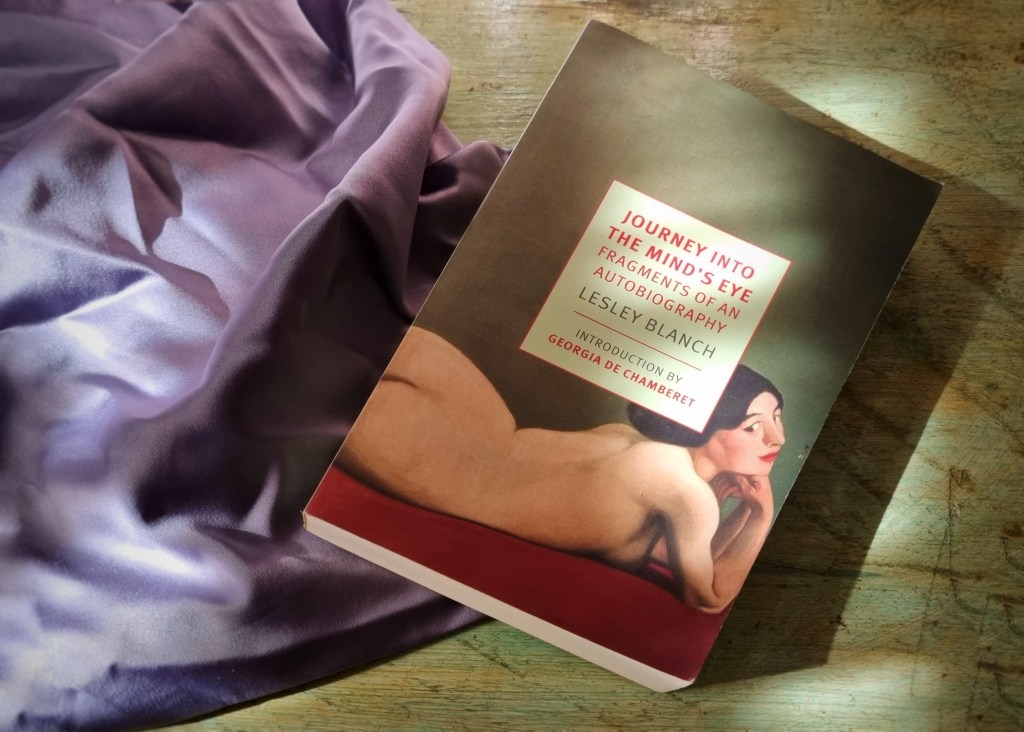
“To me, it has always seemed that each individual has such a moment. It is a fixed point in eternity, varying with each person, which they reach, sooner or later, in their trajectory through time. It is this moment which most perfectly expresses them, and to which essentially they belong, in which they live most fully. Both before and after, some awareness of this lies within them, so that in varying degrees of consciousness, they are seeking that moment in order to be fulfilled, or to find again in that fulfillment and setting, the persons who shared it with them.”
“A lifetime or a moment is all the same; a whole cycle lived richly, or thinly, one day. Each can prove to have been the meaning of a life. We cannot know, from where we stand. But if we seek, and are aware we have missed the moment we seek, our own absolute moment in time, then we live out our lives unfulfilled. In the words of an eastern proverb: we die with our eyes open — we cannot rest; even in death we are still looking for it.”
Never mind that her longings for a lost love and mine mingled as I luxuriated in the pages of this book. Never mind that some details will raise the eyebrows of conventional social constructs. (“Overweening conventions! They have us in a stranglehold from the cradle to the coffin,” writes Lesley Blanch.) Never mind the question of whether the Traveler corrupted her life or enhanced it; I have two opinions as contrasting as East and West. What is certain is that this woman ended up living by her own rules and did not lead a lackluster life.
But to have bookshelves spilling over because of a geographic fascination and to have the books arranged by region; to have literary tastes swayed topographically; to explore entire worlds by turning pages; to spend hours on long bus rides poring over books; to have “everything I saw, or read, ate, or thought tinctured by my infatuation”; to travel and be particular about the precise lighting in which to see certain places because they look more beautiful in morning, noon, or afternoon light; to find areas of conflict irresistible and be chided for having “such violent desires”; to journey into the mind’s eye or into the heart of another; to see traveling as an act of “following a strain of fugitive music” — I’ve never felt this aspect of myself more probed and understood, that I wish I came across this book much sooner.
There are allusions to be unveiled in the captivating writing, and there are lessons to be gleaned from the interaction between cultures, but the line I’ll take to heart is, “Don’t be so finite,” said the Traveler.
Lesley Blanch lived to be a hundred and three, unapologetically, and infinitely.
“And Arundhati Roy wrote a ravishing novel, The God of Small Things, that catapulted her into international stardom, perhaps so that when she stood to oppose dams and corporations and corruption and the destruction of the local, people would notice… Perhaps they opposed the ravaging of the earth so that poetry too would survive in the world.”
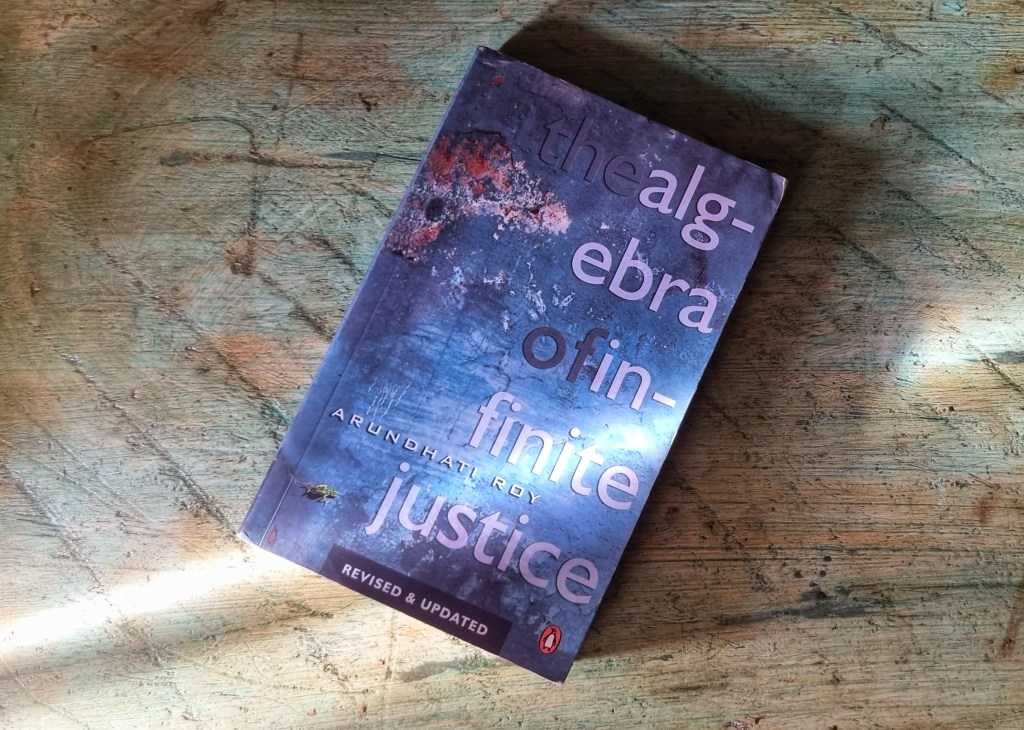
This beautiful passage is from Rebecca Solnit’s Hope in the Dark, and The Algebra of Infinite Justice is Arundhati Roy’s book of essays that opposes dams and corporations and corruption and the destruction of the local.
People did take notice, and many of them attacked her and accused her of all sorts of things for it. She was also criticized for not providing enough solutions by those who lost sight of the fact that before we can arrive at solutions, we have to take the first step and pinpoint the problems and ask the uncomfortable questions. This, she does. Courageously.
She asks about the necessity of nuclear weapons acquired in the name of “deterrence”, knowing that it is a matter that concerns humankind. “The nuclear bomb is the most anti-democratic, anti-national, anti-human, outright evil thing that man has ever made. If you are religious, then remember that this bomb is Man’s challenge to God. It’s worded quite simply: ‘We have the power to destroy everything that You have created.’ If you’re not religious, then look at it this way. This world of ours is 4,600 million years old. It could end in an afternoon.” On a relative scale, the same can be said of guns.
She aims questions at those who rail against the first world, but “actually pays to receive their gift-wrapped garbage”; she asks if corporate globalization is a mutant variety of colonialism; asks whether the building of dams are not “a brazen means of taking water, land and irrigation away from the poor and gifting it to the rich”; asks who and what has been sacrificed in the altar of “National Progress”; asks how Progress can be measured if we are not even aware of who has paid for it, referring to the millions of people and entire ecosystems displaced or extinguished by dams (a matter Filipino readers should not brush off — even our very own Gideon Lasco has called awareness to the environmental and sociocultural impacts of the Kaliwa Dam Project in the Philippines).
She asks everyone to be accountable: “Isn’t it true that there have been fearful episodes in human history where prudence and discretion would have just been euphemisms for pussilanimity? When caution was actually cowardice?”
“Fascism itself can only be turned away if all those who are outraged by it show a commitment to social justice that equals the intensity of their indignation. Are we ready… to rally not just on the streets, but at work and in schools and our homes, in every decision we take, and every choice we make?”
But I am most grateful for what resides with the difficult questions in that elegant mind of hers: “There is beauty yet in this brutal, damaged world of ours. Hidden, fierce, immense. Beauty that is uniquely ours and beauty that we have received with grace from others, enhanced, reinvented and made our own. We have to seek it out, nurture it, love it.”
“All we can do is to change its course by encouraging what we love instead of destroying what we don’t.”
“The only dream worth having… is to dream that you will live while you’re alive and die only when you’re dead…”
“Which means exactly what?”
“To love. To be loved. To never forget your own insignificance. To never get used to the unspeakable violence and vulgar disparity of life around you. To seek joy in the saddest places. To pursue beauty to its lair. To never simplify what is complicated or complicate what is simple. To respect strength, never power. Above all, to watch. To try and understand. To never look away. And never, never forget.
In truth, these are as difficult as the questions, but who says these are not solutions?
“Finally, I would like to say, I intended to write… not just in Turkish, but in the language of all who lament for the dead. And I intended to write it with the language of figs…”
The 1920 Treaty of Sèvres that was signed between the Allies of WWI and the Ottoman Empire is not explained here. There is nothing here that mentions how it marked the beginning of the partitioning of the empire, how Armenia was subsequently recognized as an independent state and a referendum was scheduled to decide the fate of the dream of a Kurdistan, but nothing of how the referendum never took place. No details of what exactly happened when the Kurds within Turkish borders clashed with Turkish nationalism; nothing of the decisions, events, or indecisions that led to the extermination of more than half of the Kurdish population in Turkey by 1938.
Throughout the book an unnamed and unidentified narrator addresses a woman muted by grief and coaxes her, not to speech, but to remembrance — a remembrance not of a specific event but of her spiritual and personal history, and the ancient mythology of her people; and I believe here lies the genius of this novel. Without explicitly saying that this book is about identity, Sema Kaygusuz makes this book wholly about identity.
Out of the silence roars a powerful voice that resists all attempts at wiping out Kurdish identity. I have come to understand that this book is, above anything else, a rallying cry for the Kurdish people: For them to never forget who they are. To never give in to the silencing, and to never allow grief to estrange them from who they really are.
What is between these pages is something that we won’t find in the chronologies of history. What is written here is more profound. In this novel that reads more like a lengthy poem, Kaygusuz achieves the impossible task of giving shape to grief and silence, and intimating a manner of history that can only be expressed through obmutescence or poetry.
“Finally, I would like to say, I intended to write not just in Turkish, but in the language of all who lament for the dead. And I intended to write it with the language of figs… the fig tree whose fruit has, over the course of the history of civilization, seduced and destroyed, poisoned and healed, struck panic in those captivated by its pleasure, and been served like jewels at the tables of kings, pharaohs, and sultans — in order that I might set aside its vitalizing force, its enviable adventure, in writing. What I mean to say is that, over the course of this novel, I am not only my grandmother who survived the massacre: I am also her granddaughter, I am Hizir, and I am a fig, with its countless tiny seeds. Each of us has written the others into being.” — from the Afterword of Every Fire You Tend by Sema Kaygusuz
Thank you for knowing exactly what I’d love to read and for lending me your copy, Gabi. Always grateful. 🤍
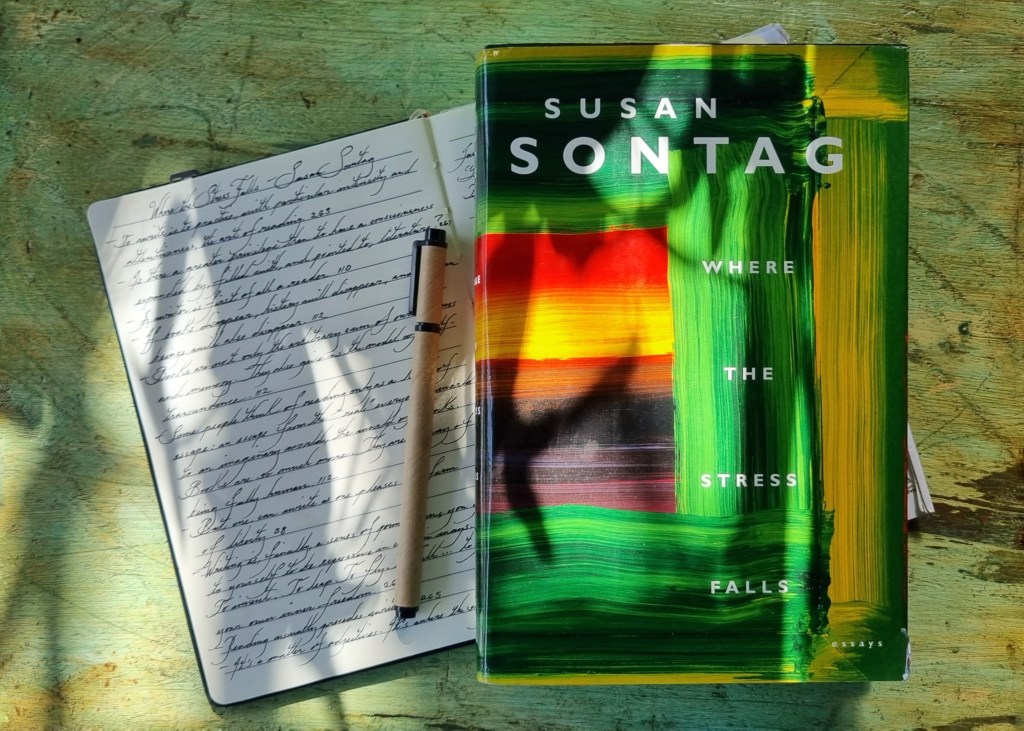
Reading, writing, art, dance, music, photography, theatre, travel — every book brims with profound thoughts on what Sontag cared about. She takes your hand and leads you to art, and shows you why it matters, despite a world that tries to convince us otherwise. Her words feed me so profoundly and leave me overflowing.
Where the Stress Falls
“Is there a greater privilege than to have a consciousness expanded by, filled with, pointed to, literature?”
“Some people think of reading only as a kind of escape: an escape from the ‘real’ everyday world to an imaginary world, the world of books. Books are so much more. They are a way of being fully human.”
“If books disappear, history will disappear, and human beings will also disappear.”
“…a citizen of literature — which is an international citizenship.”
“Reading usually precedes writing.”
“A writer is first of all a reader.”
“…to write is to practice, with particular intensity and attentiveness, the art of reading.”
“But one can write as one pleases — a form of liberty.”
“Writing is, finally, a series of permissions you give to yourself to be expressive in certain ways. To invent. To leap. To fly. To fall… to find your own inner freedom.”
At the Same Time
“…literature was a criticism of one’s own reality, in the light of a better standard.” — From The World As India
“Literature can train, and exercise, our ability to weep for those who are not us or ours. Who would we be if we could not sympathize with those who are not us or ours? Who would we be if we could not forget ourselves, at least some of the time? Who would we be if we could not learn? Become something other than we are?” — From Literature is Freedom
“To have access to literature, world literature, was to escape the prison of national vanity, of philistinism, of compulsory provincialism… Literature was the passport to enter a larger life; that is, the zone of freedom. Literature was freedom. Especially in a time which the values of reading and inwardness are so strenuously challenged, literature is freedom.”— From Literature is Freedom
“And one of the resources we have for helping us to make sense of our lives, and make choices, and propose and accept standards for ourselves, is our experiences of singular authoritative voices, not our own, which make up that great body of work that educates the heart and the feelings and teaches us to be in the world, that embodies and defends the glories of language: namely, literature.” — From At the Same Time: The Novelist and Moral Reasoning
“The writer’s first job is not to have opinions but to tell the truth… and refuse to be an accomplice of lies and misinformation. Literature is the house of nuance and contrariness against the voices of simplification… the job of the writer is to make us see the world as it is, full of many different claims and parts and experiences.”— From The Conscience of Words
“A writer is first of all a reader.” — From The World As India
“The capacity to be overwhelmed by the beautiful is astonishingly sturdy and survives amidst the harshest distractions.” — From An Argument About Beauty
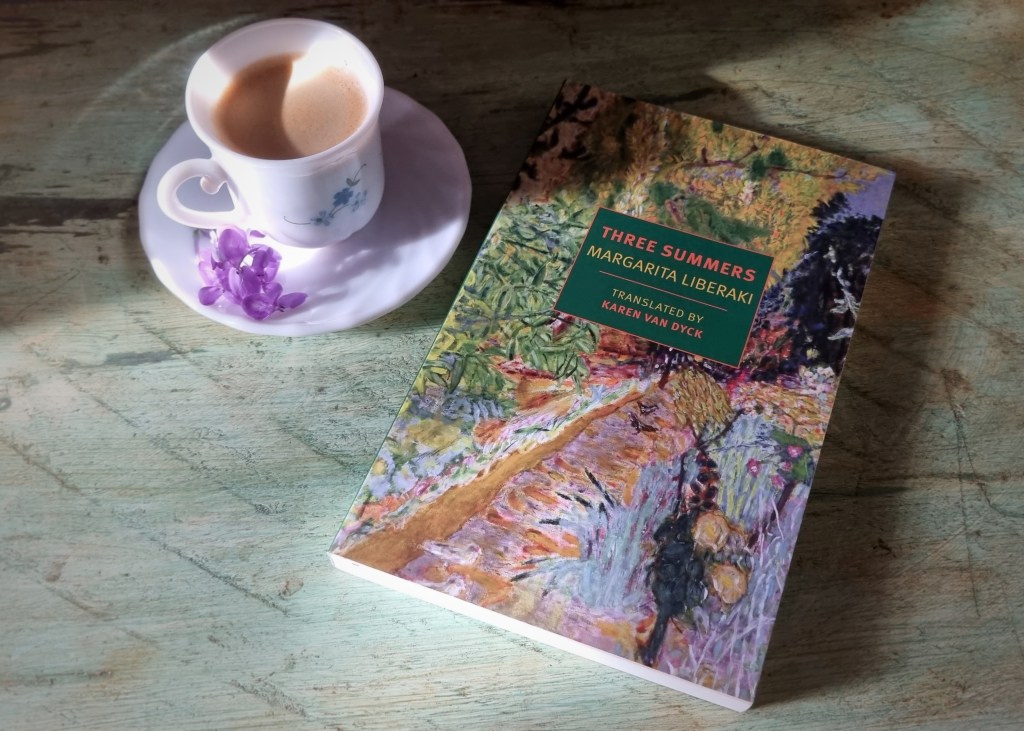
Fleeting patches of sunlight that decorate pieces of furniture linger on book pages furtively as I read, or momentarily set the crema of my espresso aglow, are lovely indications that summer is gently slipping into the Philippine islands after a sunless wet season.
But why do I even dare write this in the face of a Liberaki who is an authority on sunshine? This Liberaki who does not merely write about it but makes it so tangible that one’s heart becomes dappled with sunlight, too?
There is a little bit of the Little Women in Liberaki’s three sisters in that it portrays in each sister how Woman can make different choices, pursue different interests, hold different priorities, think differently and still remain Woman; portrays how Woman can mean, or can be, “A great many things,” in the words of Alcott’s Jo March. Or as Liberaki’s Katerina replies, “Not just two, but thousands, Maria, or one which could be a thousand,” when Maria remarks on how Katerina seems to want to live two lives.
But Liberaki, daughter of Dionysus that she is, has a certain sensuality that Alcott did not make space for in her conservative depiction, although we love her just the same. This Liberaki sensuality is an elegant one, however, and treats female sexuality as part of life.
What made me pick this up for Women’s History Month was the curious case of an author who insisted on transliterating her name as Liberaki, rather than the more accurate Lymberaki, so that it would correspond to liberation. It is rare to come across an author’s name that already alludes to an untethered mind and sets the tone for a book. But how wonderful to discover that the same author has a command of artistic laws and lavishes attention to detail while creating an exquisite balance of light and shadow!
This sensitivity to art was what enthralled me! For what is sensitivity to art but a reinforced sensitivity to life?
“The sun has disappeared from books these days. That’s why they hinder our attempts to live, instead of helping us. But the secret is still kept in your country, passed on from one initiate to another. You are one of those who pass it on.” — Albert Camus to Margarita Liberaki
Three Summers was originally published in France through his recommendation.





 The Book-Butterfly