Hanne Orstavik: Ti Amo

And I’ve written fourteen novels, and if there’s one thing my writing has to be, for me, it has to be truthful. What I write has to be truthful. I’ve wanted that to apply to my whole life too, in my relationships with other people, my relationship with myself.

My first experience with Hanne Ørstavik’s writing was in 2022 with her novel, Love, wherein she seemed to have invented a literary equivalent of the Shepard tone — that auditory illusion used in film soundtracks to create a palpable suspense and disquiet. With a narrative that demanded complete attention, it revealed a writer in full command of form and style.

Expecting another work of sparse and exacting Nordic prose, I was surprised to be met with vulnerability and painful honesty in Ti Amo. It cannot be more different than Love. Expertly calculated tension dominated Love, Ti Amo announces death candidly right from the beginning and nothing is veiled. 

Love was fiction, Ti Amo is not, and I cannot somehow bring myself to judge a work by someone writing through her husband’s terminal illness. It is a book about life, death, and writing, and nothing describes this book better than the author’s own description of the marble pillars in Ravenna’s Basilica di San Vitale.

“In the San Vitale — the way the great marble blocks of the pillars possess a quieter beauty than the glittering mosaics. The mottled markings in the marble are just there, silent and displayed, defenseless, and what was hidden within the stone, the veins, the figures they trace, is exposed now for all time, laid bare, halted in once so sweeping, now dissected movements through the stone. And what we see is the cross section, the wound, and the beauty of what simply exists, neither devised nor constructed, merely disclosed.”

I thought wrong when I surmised it was written as closure. (As if grief had closure!) Of the wound and the beauty of what exists, it is simply, and not too simply, a disclosure.

Clarice Lispector: The Apple in the Dark

“It was as if love were the desperate clumsy shape that living and dying take…”

“If it hurts, that’s the way in which things are alive.”

“But what kind of silence did she want to share with him?”

I love you.
Yes, he said after a pause.
Both sat quiet for an instant, waiting for the echo of what she said to die.

The Penguin Classics covers got it right. Surrealist Giorgio de Chirico’s art answers the dreamlike quality of Clarice Lispector’s writing. Not in the sense that reality is bent, but in the sense that the unconscious corridors and objects of the soul, heart, and mind are suspended, isolated, turned over, and perused in poetic abstractions that only she can get away with. 

New Directions Publishing chose to be literal. With an apple. In the dark. And it’s an effective counterpoint to the metaphysical prose that the contemporary reader is more than willing to bite into. “After all a person is measured by his hunger… All I’ve got is hunger. And that unstable way of grasping an apple in the dark — without letting it fall.” But what is this hunger? And what is this apple? 

The book is about Martim, a fugitive who finds his way to an outlying ranch run by two women. There is a storyline. There is suspense and there are surprise twists. Lispector readers know that these are things she does not always give us because she deems them secondary to the subliminal probing of how we love, how we desire, how we live, and how we exist. Clarice for whom writing and being are one and the same thing. But she is especially generous here. This longest novel of hers is not fixed and final. It’s a sentient thing wherein her words and the reader gestate. It is a book only a Clarice Lispector can write.


It’s one of my favorite reading months and I’m thrilled to have kicked it off with Hurricane Clarice. Happy Women’s Month to the women who hunger for life and endless learning!

Nancy Mitford: Frederick the Great

The only thing I knew about Frederick the Great was that he once met Bach, and the Prussian king gave the composer a musical theme on which the sixteen pieces of Bach’s The Musical Offering are based. 

Thanks to the author’s gossipy nature, I think I’m knowing more than I want to. Haha! Kidding aside, reading Nancy Mitford’s historical biographies is an attempt to brush up on European history and not neglect it completely while I am on this predominantly eastbound literary journey.

Mitford seems to be more reflective here and I’ve found it to have more depth than The Sun King, but as a musician I am slightly disappointed that little is said about the momentous encounter with Bach. This book, however, covers a great deal about Frederick’s fraught friendship with his most famous contemporary, Voltaire.

Being controversial herself, Mitford turns the spotlight on Europe’s controversial figures. But without being too academic, she seems to provide the right dose that I’m currently looking for. I like the fact that I don’t end up liking her subjects any better or liking them any less; I just end up learning a little bit more and having a less fuzzy idea of the Europe just before the French Revolution.

Someone recently asked me to recommend a book on world history. That’s the thing: There’s not just one book. One just has to read as much as they can. And that is what we shall do.

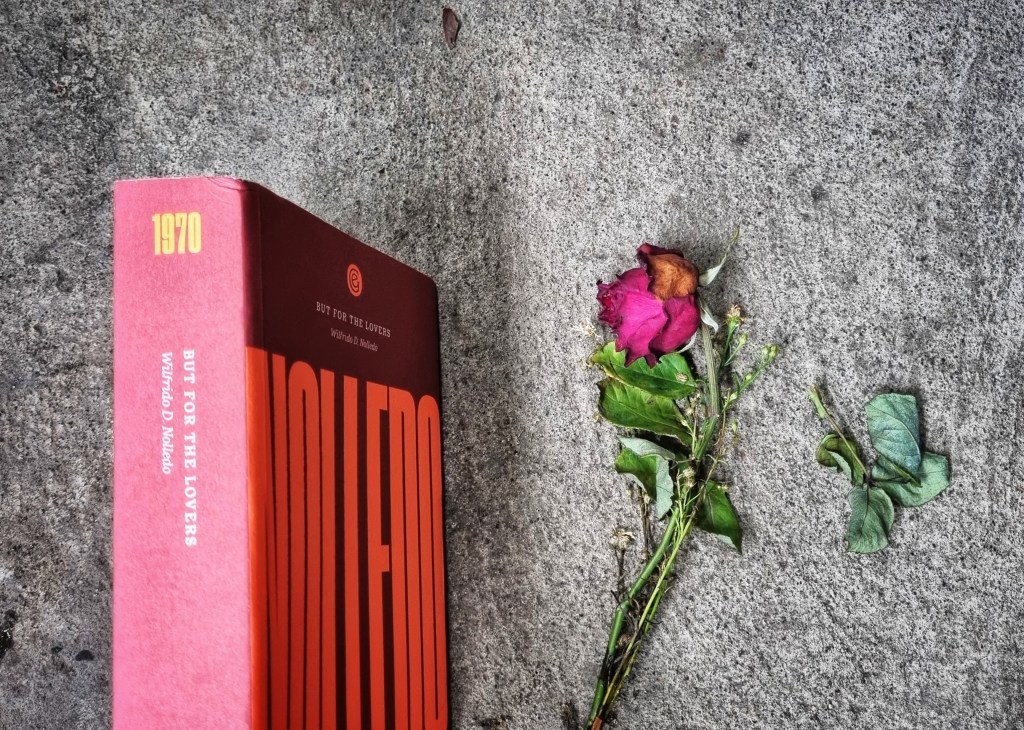
Wilfrido D. Nolledo: But for the Lovers

Before Salman Rushdie there was Wilfrido Nolledo. We find the same clever wordplay, but Nolledo reigns supreme in five languages and a couple of Filipino dialects or more, inclusive of Italian musical terms and Tagalog (they did not call this a feat of language for nothing); there’s that humor that catches by surprise when misery is expected; political caricatures and blaspheming characters that provoke fatwas from the high priests of governments; and those vulgarities that examine moral codes as though asking whether we’d also find war and injustice obscene.

Thanks to countless movies, documentaries, and novels, my generation can conjure mental images of what Paris and other European cities looked like in the final days of WWII, but only few can picture the desolation and the confusion of Manila when it was the bomb-ridden chessboard of the imperial powers. Nolledo encapsulates it for us. But one must not expect a literary Amorsolo, because here is a postmodern Hieronymus Bosch.

“And won’t we be doing the reader an injustice by presuming he can’t digest such stuff?” Nolledo asks in response to a suggestion to cut the manuscript to keep readers interested. And so, signifying that it was written not to sell but for art, he gives it to us, gives it to us hard.

It is not going to be everyone’s cup of barako. It is an explosive halo-halo that is difficult to swallow at times. A revolution on one’s literary tastebuds. Before Rushdie there was Nolledo, but I am only discovering this now. It’s time we did.

And yes, I read this for Valentine’s. Haha!

The Man Who Counted: A Collection of Mathematical Adventures by Malba Tahan

Without dreams or imagination, science is impoverished. It is lifeless.

I love how this delightful read, without being impossibly cerebral, mixes simple life and math lessons while reminding the reader of the non-Western heritage of mathematics.

Interestingly, it reflects a time in the Islamic Golden Age when wise men believed religion and science could coexist.

Also, the illustrations are wonderful!

Arabian Nights with a better moral aim and math-themed? Count me in! (Sorry, I just had to. Haha!)

Ruta Sepetys: I Must Betray You

Ruta Sepetys cover designs are not the kind that would catch my attention in a bookstore. In fact, Ruta Sepetys was unknown to me until Fully Booked and Penguin Random House gifted our book club with six of her books.

Although the books will continue to be passed around Ex Libris members, I picked I Must Betray You for the reason that Romania does not often turn up in the books that come our way.

And what a surprise when reading this made me realize how much the Philippines and Romania have in common! At times I could easily interchange Ceaușescu with Marcos in my head and the story would still make sense:

Wealth didn’t accurately describe it. Excess, extravagance, greed, and gluttony, those words were more accurate. Countless estates across the country, hundreds of millions salted away in foreign bank accounts…

“I can’t bear it,” said Liliana. “We’ve been suffering for years, existing off scrawny chicken feet, with just one forty-watt light bulb per home. And they’ve been living like kings. Gourmet food, foreign goods, antiques, jewelry, fur coats, hundreds of pairs of shoes.”

As Sepetys writes for a younger audience, I can only wish I had more books like this growing up! I would have alternated them between the Nancy Drews and the Hardy Boys, and it would have deepened a younger person’s understanding of self and the world.


They steal our power by making us believe we don’t have any… But words and creative phrases — they have power, Cristian. Explore this power in your mind.

Jose Rizal’s Binondo

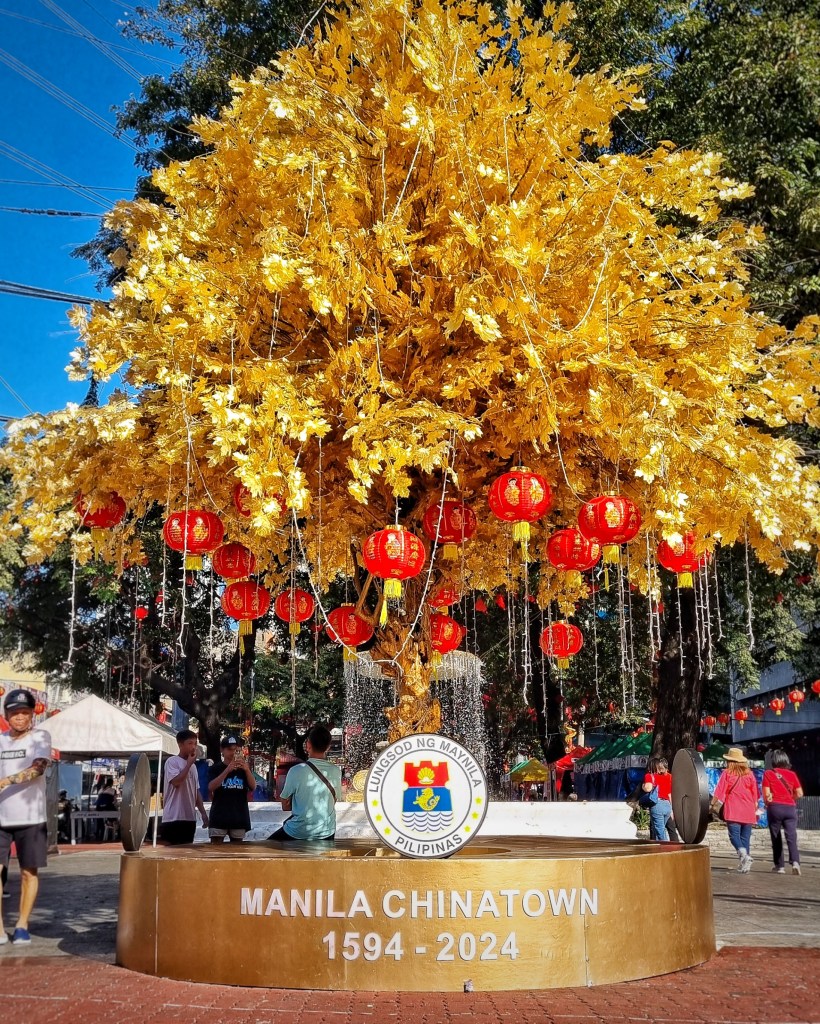
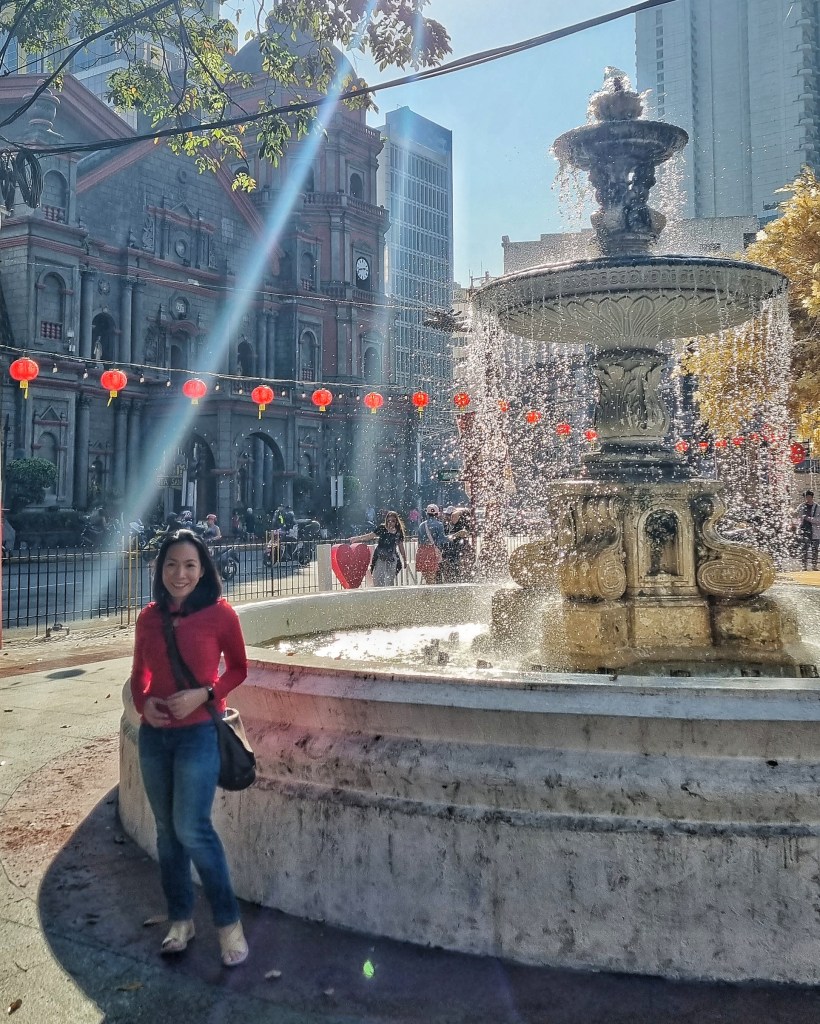
Binondo prides itself on being the oldest Chinatown in the world. Established in 1594, it is, as one would expect, steeped in history and stories. 

Today’s walking tour (Jose Rizal’s Binondo) with THE Ambeth R. Ocampo and Ivan Man Dy, explores what is not commonly known to Filipinos: The Manila in Jose Rizal’s novels takes place outside of Intramuros and is instead set in Binondo and neighboring San Nicolas, Santa Cruz, and Quiapo.

From following Ibarra’s footsteps in the opening of Noli Me Tángere to the the site of the opium den where Kapitan Tiago ended up, we walked through Binondo’s tiny alleys (one aptly named Hormiga after the Spanish word for ant), past Antonio Luna’s birth house and the many storied nooks of Binondo. 

For the book signing scheduled at the end of the tour, after a filling lunch at Ilang-Ilang Restaurant, I brought my copy of Cabinet of Curiosities — Mr. Ocampo’s latest book, which I read last month and which he signed today after confirming if my first name is really Miracle. It was an apt choice because this tour seemed to be a continuation of the book as we witnessed nonverbal proofs of Philippine culture and heritage. History, in the strictest sense, relies on written sources, but Mr. Ocampo highlights this need to trace the past in other ways when the document trail encounters a dead end. “History not only comes from archives and libraries; sometimes it comes from paintings, music and other forms of art,” and oftentimes, cabinets of curiosities. Binondo is a giant cabinet of manifold curiosities.

“History is not always what we want or how we imagine it,” is another line from Cabinet of Curiosities that rings true. Not only did I discover lesser-known aspects of Philippine history today, but I also learned about our National Hero’s more human side. What continues to leave a pinch in my heart, however, was Mr. Ocampo’s remark on what would happen if Rizal were alive today. Believing that he would continue to voice out what most of us would not like to hear, “He is someone that we would shoot all over again.”

I’m extremely grateful to Gabi for thinking of me when a slot for the tour became available. Being both early birds, we arrived at the Binondo Church an hour before everyone else and we  took shade under four hundred years of history. Built in 1596, the original structure has gone through typhoons, the great earthquake of 1863, and the destruction of the Second World War. Its three-phase reconstruction was completed in 1984 and it remains the centerpiece of Binondo. And there we were, two history fangirls, whispering about politics, religion, and life, hushed by the weight of our national history and our personal histories, learning that these difficult topics should not necessarily be avoided, but be discussed with utmost respect and humility. Moreover, it was meaningful to share this experience with someone who understands that one of the best things about learning our history is that you meet pieces of your heritage, you meet pieces of yourself.


Maylis de Kerangal: Eastbound

What a ride! How Kerangal builds suspense that makes the entire book feel like one long, deep, drawn breath that you would not want to interrupt!

The majesty of Russia’s landscape appears through the window of the trans-Siberian train, but it is surprisingly subtle in portraying a vulnerable Russia.

Yes, it is a serendipitous train ride shared by a man and a woman, but don’t expect the deep conversations of Celine and Jesse from Before Sunrise. Aliocha and Hélène practically pantomime their way throughout the journey; he being Russian and she being French.

Yes, it concerns an army conscript who wants out, but don’t expect Francis Mirković of Mathias Enard’s Zone. Aliocha won’t sing to you a threnody of the crimes of nations. He is only concerned about his escape.

I love the aforementioned titles and I feel relieved that Eastbound did not turn out like any of those. They are only alike for the reason that they are each in a league of their own.

On the surface, it stays true to its promise of being an adventure story, but I see it as an intelligent political novel. Not because the characters discuss politics, they don’t. But can there be a more political story than two people pursuing their individual freedoms?

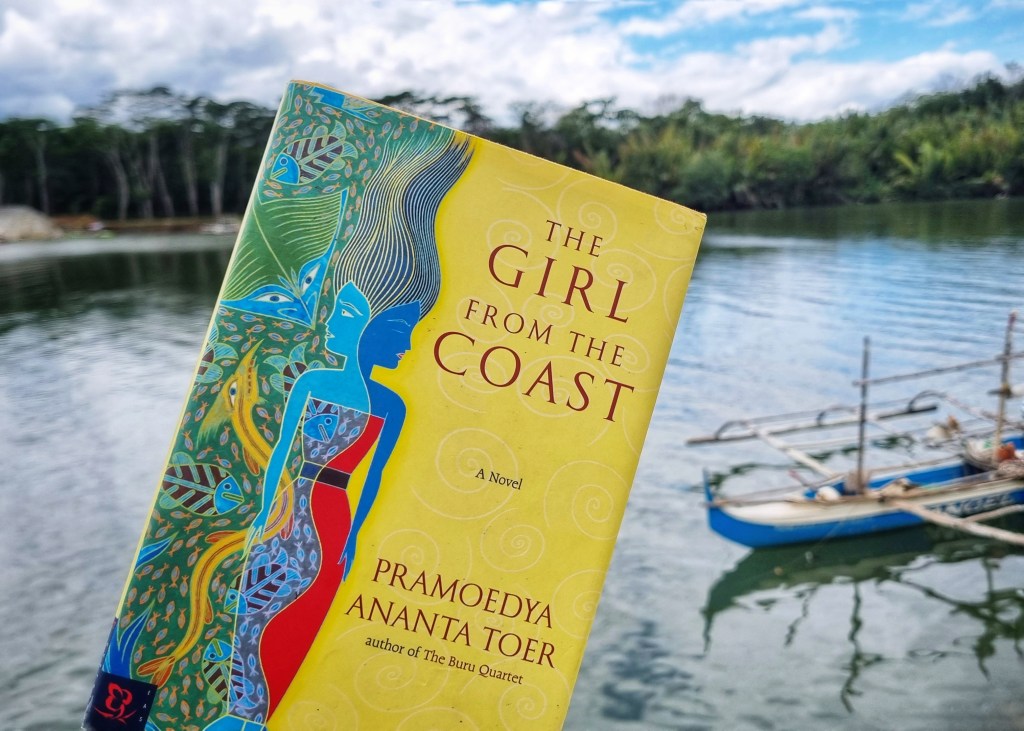
Pramoedya Ananta Toer: The Girl From the Coast

On one of my trips to Indonesia, I dressed up as a bride in traditional wedding clothes for fun. Had I known about colonial Indonesia’s custom of “practice wives”, it probably would have cast a cloud on my idea of fun a decade ago. 

A “practice wife” is a village girl who is married to a ceremonial kris (not a proper noun but the noun) proxying for a nobleman she has yet to meet. She will bear him a child she won’t be allowed to keep, she is to be divorced when he finds another practice wife, or when the nobleman officially marries a woman of his own social status. She is kept in the dark of what will befall her, and she will only understand her role as a practice wife as her life in the domain of the nobility unfolds.

For the entirety of the novel, Toer’s eponymous character is curiously referred to as “the girl”. It was only after I read the epilogue when I learned that the story is based on Toer’s grandmother, a practice wife whose name he never knew. 

This novel is a profound peek into the complex Javanese caste system made more complicated by the presence of the Dutch colonial government at the turn of the 20th century.

I observed how the same people of the girl’s social station were complicit in perpetuating their own subjugation by accepting the status quo despite the girl’s mounting questions about inequality; how the nobleman provided the girl with everything she needed; and how he did not treat her cruelly, that is until he divorced her and she insisted on her rights as a mother.

As Toer is renowned for his strong views against colonial abuse and dictatorships, I could not help but see the nobleman, known as the “Bendoro”, and the villagers as allegories for dictatorships we tolerate and are complicit in — just because we think we benefit from them, or just because we are not the ones who are directly sacrificed at its altar. 

Nancy Mitford: The Sun King

In some editions, the full title is The Sun King: Louis XIV at Versailles. This is more apt because the book is not an exhaustive portrait of Louis XIV but a well-researched record of the workings of the French Court in Versailles, its intrigues and its scandals, and the intimate lives of its prominent figures.

It is rather detailed in a sense, and to a fault, that if not for Nancy Mitford’s entertaining wit, it would have bored me to read about the rivalries of the mistresses and the parts that read like royal gossip.

But I would still recommend reading this book on a weekend when one would prefer something that does not weigh on the emotions. Of course, a better recommendation would be to bring this book on a trip to Versailles. At a hundred and sixty nine pages, it is a none too heavy starting point for one interested in reading about the birth of the ostentation that led to the Revolution two kings and less than a century later; and yet another reminder of how quickly and drastically the tides of history turn.