Sema Kaygusuz: Every Fire You Tend

“Finally, I would like to say, I intended to write… not just in Turkish, but in the language of all who lament for the dead. And I intended to write it with the language of figs…”

The 1920 Treaty of Sèvres that was signed between the Allies of WWI and the Ottoman Empire is not explained here. There is nothing here that mentions how it marked the beginning of the partitioning of the empire, how Armenia was subsequently recognized as an independent state and a referendum was scheduled to decide the fate of the dream of a Kurdistan, but nothing of how the referendum never took place. No details of what exactly happened when the Kurds within Turkish borders clashed with Turkish nationalism; nothing of the decisions, events, or indecisions that led to the extermination of more than half of the Kurdish population in Turkey by 1938.

Throughout the book an unnamed and unidentified narrator addresses a woman muted by grief and coaxes her, not to speech, but to remembrance — a remembrance not of a specific event but of her spiritual and personal history, and the ancient mythology of her people; and I believe here lies the genius of this novel. Without explicitly saying that this book is about identity, Sema Kaygusuz makes this book wholly about identity. 

Out of the silence roars a powerful voice that resists all attempts at wiping out Kurdish identity. I have come to understand that this book is, above anything else, a rallying cry for the Kurdish people: For them to never forget who they are. To never give in to the silencing, and to never allow grief to estrange them from who they really are.

What is between these pages is something that we won’t find in the chronologies of history. What is written here is more profound. In this novel that reads more like a lengthy poem, Kaygusuz achieves the impossible task of giving shape to grief and silence, and intimating a manner of history that can only be expressed through obmutescence or poetry.


“Finally, I would like to say, I intended to write not just in Turkish, but in the language of all who lament for the dead. And I intended to write it with the language of figs… the fig tree whose fruit has, over the course of the history of civilization, seduced and destroyed, poisoned and healed, struck panic in those captivated by its pleasure, and been served like jewels at the tables of kings, pharaohs, and sultans — in order that I might set aside its vitalizing force, its enviable adventure, in writing. What I mean to say is that, over the course of this novel, I am not only my grandmother who survived the massacre: I am also her granddaughter, I am Hizir, and I am a fig, with its countless tiny seeds. Each of us has written the others into being.” — from the Afterword of Every Fire You Tend by Sema Kaygusuz


Thank you for knowing exactly what I’d love to read and for lending me your copy, Gabi. Always grateful. 🤍
Susan Sontag

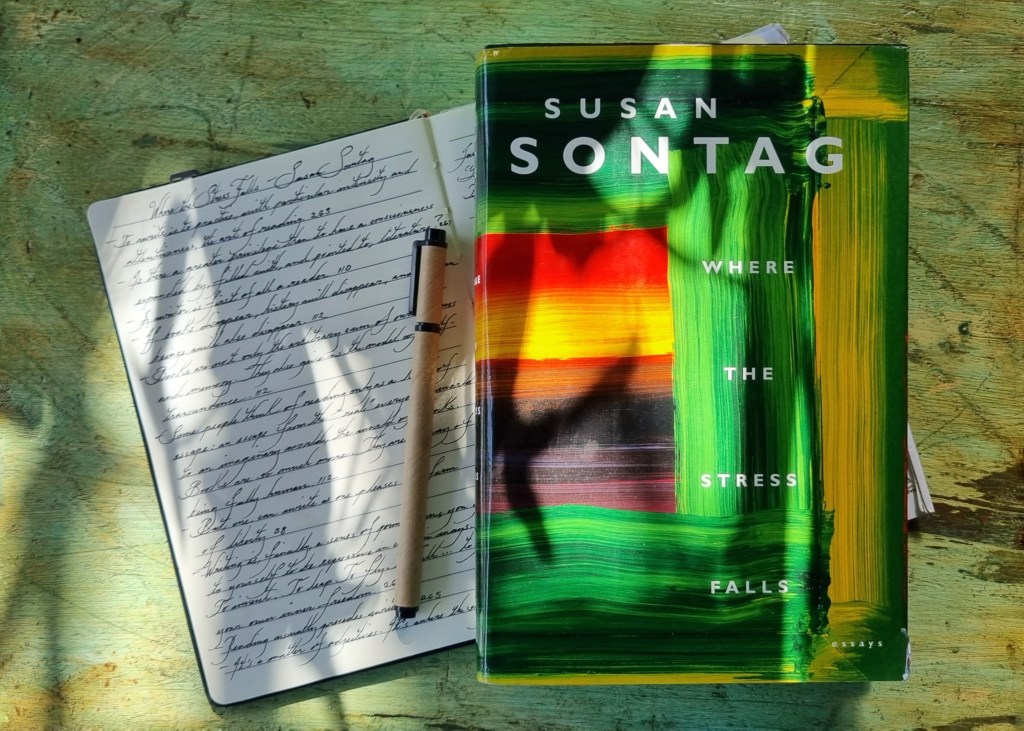
Reading, writing, art, dance, music, photography, theatre, travel — every book brims with profound thoughts on what Sontag cared about. She takes your hand and leads you to art, and shows you why it matters, despite a world that tries to convince us otherwise. Her words feed me so profoundly and leave me overflowing.

Where the Stress Falls


“Is there a greater privilege than to have a consciousness expanded by, filled with, pointed to, literature?”

“Some people think of reading only as a kind of escape: an escape from the ‘real’ everyday world to an imaginary world, the world of books. Books are so much more. They are a way of being fully human.”

“If books disappear, history will disappear, and human beings will also disappear.”

…a citizen of literature — which is an international citizenship.

“Reading usually precedes writing.”

“A writer is first of all a reader.”

“…to write is to practice, with particular intensity and attentiveness, the art of reading.”

“But one can write as one pleases — a form of liberty.”

“Writing is, finally, a series of permissions you give to yourself to be expressive in certain ways. To invent. To leap. To fly. To fall… to find your own inner freedom.”


At the Same Time


“…literature was a criticism of one’s own reality, in the light of a better standard.” — From The World As India

“Literature can train, and exercise, our ability to weep for those who are not us or ours. Who would we be if we could not sympathize with those who are not us or ours? Who would we be if we could not forget ourselves, at least some of the time? Who would we be if we could not learn? Become something other than we are?” — From Literature is Freedom

“To have access to literature, world literature, was to escape the prison of national vanity, of philistinism, of compulsory provincialism… Literature was the passport to enter a larger life; that is, the zone of freedom. Literature was freedom. Especially in a time which the values of reading and inwardness are so strenuously challenged, literature is freedom.” From Literature is Freedom

 “And one of the resources we have for helping us to make sense of our lives, and make choices, and propose and accept standards for ourselves, is our experiences of singular authoritative voices, not our own, which make up that great body of work that educates the heart and the feelings and teaches us to be in the world, that embodies and defends the glories of language: namely, literature. From At the Same Time: The Novelist and Moral Reasoning

 “The writer’s first job is not to have opinions but to tell the truth… and refuse to be an accomplice of lies and misinformation. Literature is the house of nuance and contrariness against the voices of simplification… the job of the writer is to make us see the world as it is, full of many different claims and parts and experiences.” From The Conscience of Words

“A writer is first of all a reader. From The World As India

“The capacity to be overwhelmed by the beautiful is astonishingly sturdy and survives amidst the harshest distractions.”  — From An Argument About Beauty


Margarita Liberaki: Three Summers

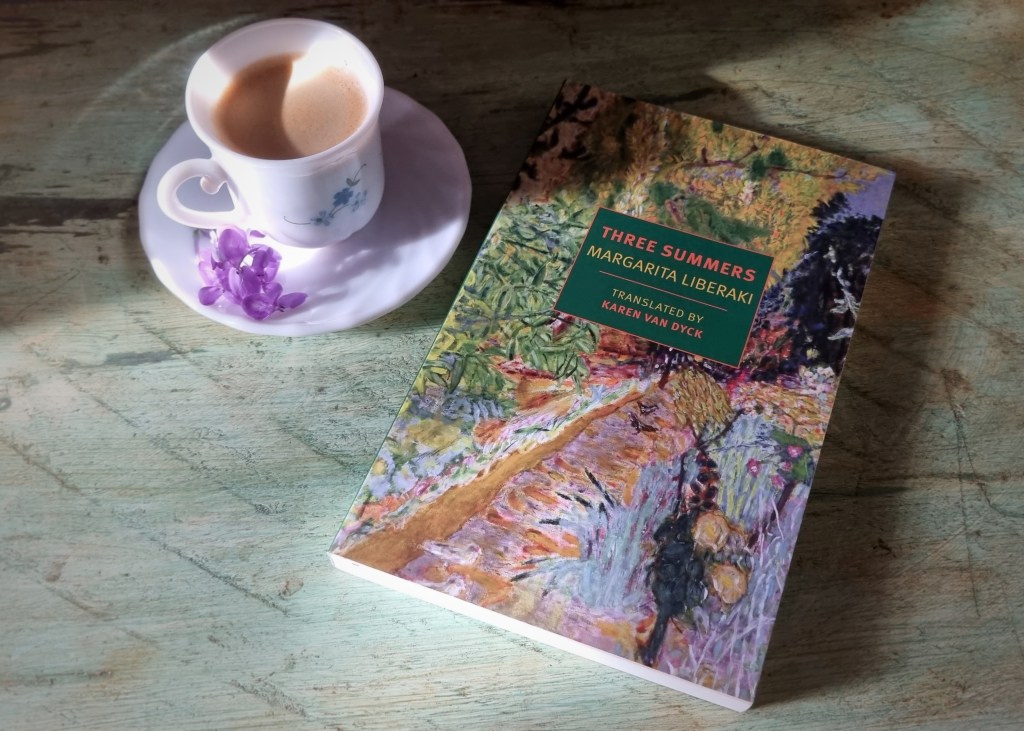
Fleeting patches of sunlight that decorate pieces of furniture linger on book pages furtively as I read, or momentarily set the crema of my espresso aglow, are lovely indications that summer is gently slipping into the Philippine islands after a sunless wet season. 

But why do I even dare write this in the face of a Liberaki who is an authority on sunshine? This Liberaki who does not merely write about it but makes it so tangible that one’s heart becomes dappled with sunlight, too?

There is a little bit of the Little Women in Liberaki’s three sisters in that it portrays in each sister how Woman can make different choices, pursue different interests, hold different priorities, think differently and still remain Woman; portrays how Woman can mean, or can be, “A great many things,” in the words of Alcott’s Jo March. Or as Liberaki’s Katerina replies, “Not just two, but thousands, Maria, or one which could be a thousand,” when Maria remarks on how Katerina seems to want to live two lives.

But Liberaki, daughter of Dionysus that she is, has a certain sensuality that Alcott did not make space for in her conservative depiction, although we love her just the same. This Liberaki sensuality is an elegant one, however, and treats female sexuality as part of life.

What made me pick this up for Women’s History Month was the curious case of an author who insisted on transliterating her name as Liberaki, rather than the more accurate Lymberaki, so that it would correspond to liberation. It is rare to come across an author’s name that already alludes to an untethered mind and sets the tone for a book. But how wonderful to discover that the same author has a command of artistic laws and lavishes attention to detail while creating an exquisite balance of light and shadow!

This sensitivity to art was what enthralled me! For what is sensitivity to art but a reinforced sensitivity to life? 


“The sun has disappeared from books these days. That’s why they hinder our attempts to live, instead of helping us. But the secret is still kept in your country, passed on from one initiate to another. You are one of those who pass it on.” —  Albert Camus to Margarita Liberaki

Three Summers was originally published in France through his recommendation.

Svetlana Alexievich: The Unwomanly Face of War

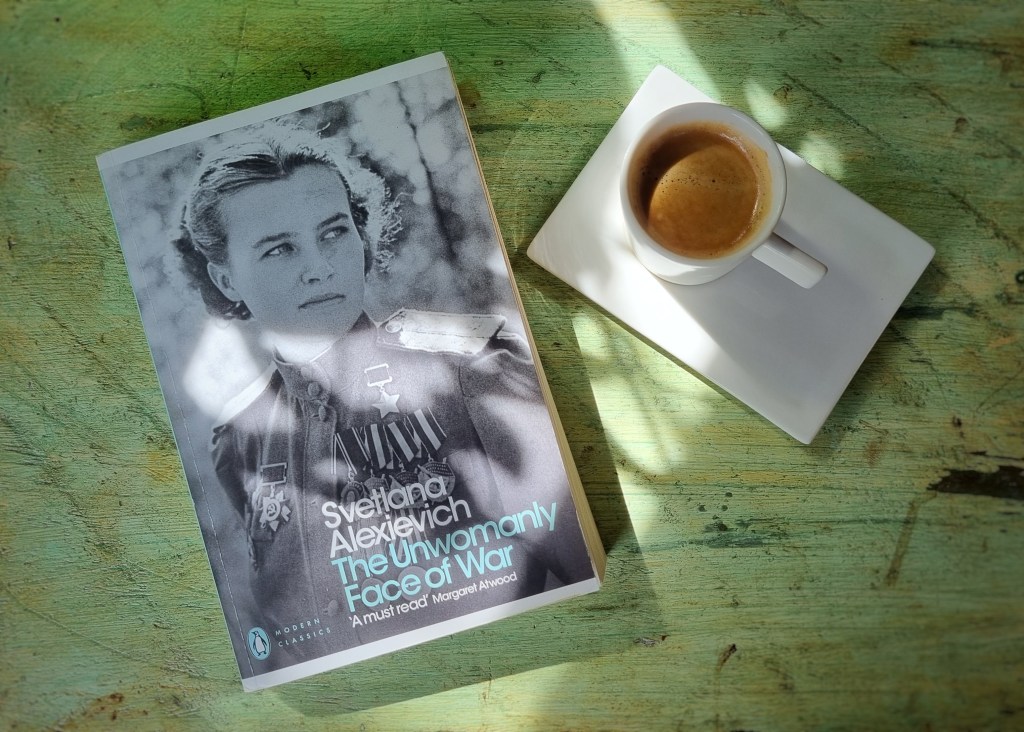
During WWII, women served in all branches of the military: 225,000 in the British, 450,000-500,000 in the American, and about a million in the Soviet army. The women in the Soviet army contributed to the German defeat, but little was known and little was said about them and the price they had to pay for victory.

Over the course of twenty six years, Svetlana Alexievich sought out many of these women and became the repository for their untold stories. This is part of the body of work that earns her a place as one of only seventeen women out of a hundred and fifteen Nobel Laureates in Literature.


Maybe it’s because Svetlana Alexievich says that she isn’t writing about war nor the history of a war, “but about human beings in a war… the history of feelings.” Maybe it’s because she is what she says she is, “A historian of the soul.” Maybe it’s because she believes, for good reason, that suffering is “a special kind of knowledge,” “the highest form of information,” that suffering has a direct connection with the mystery of life. (“All of Russian literature is about that. It has written more about suffering than about love. And these women tell me more about it…”) Maybe it’s because she makes this book of unburdening into an overwhelming choir of over two hundred voices singing a soulful rendition of an unsung threnody for the first time, that it answers my question as to why a piercing account of war can be so beautiful and so important. 


Special thanks to Gabi for encouraging me to read this and for giving it to me as a birthday present last year. 🤍

Bushra Al-Maqtari: What Have You Left Behind?

“Do not travel to Yemen due to terrorism, civil unrest, health risks, kidnapping, armed conflict, and landmines. Avoid all travel to Yemen.”

I was constantly met with these words when, during lockdown, I made itineraries for the places I hope to visit in the future. If you know me well enough, I’ll probably be one of the first people you’ll think of whenever you see photos of the architecture in the old city of Sana’a, that stone house in Wadi Dhar, and the otherworldly trees and landscape of Socotra.

The hostile travel advisories did not prevent me from coming up with an itinerary, but my rational side knows it would be safer to travel to Yemen through literature for the time being.

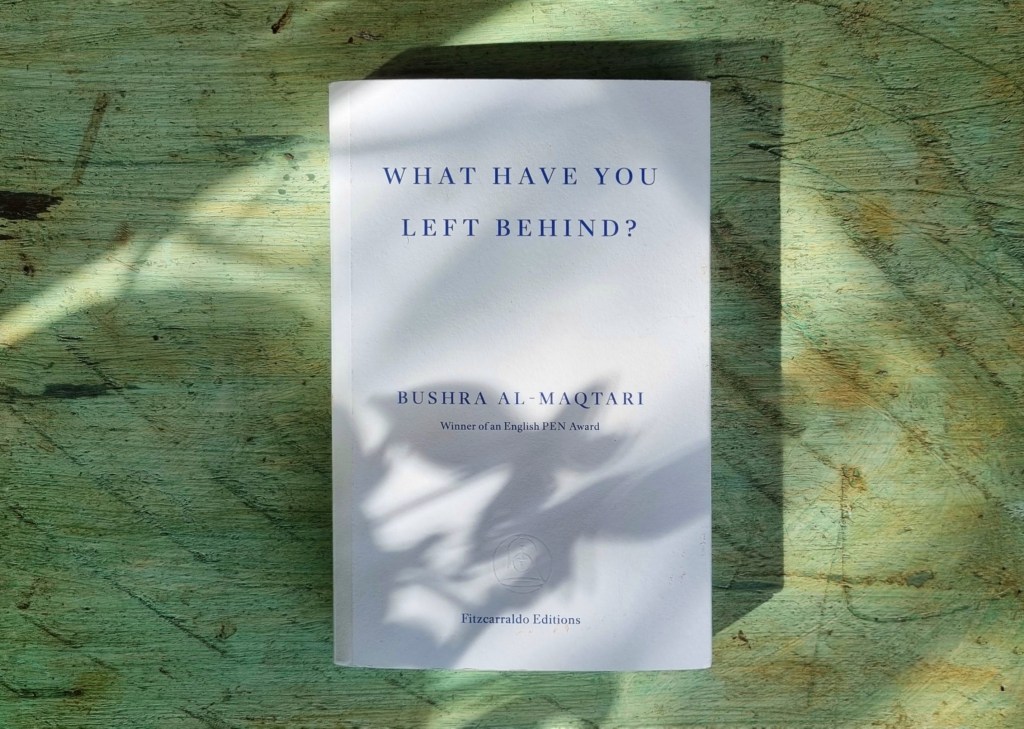
Unfortunately, authors writing about, and especially those from, Yemen are hard to come by. You can imagine my eager anticipation when Fitzcarraldo Editions announced the launch of this book!


Warning: Do not read this in public. Unless you’re okay with weeping in public.

Every page is drenched in heartache and death. It’s the kind of book that Scholastique Mukasonga would call “a paper grave”. A book to put my puny troubles into perspective.

But I think my task as reader is not to highlight how this book made me feel; it’s to sound the sirens and ask others to take time to look into what is happening in a country that hardly enters the fringes of our consciousness.

Inspired by the work of Belarusian journalist and 2015 Nobel Prize laureate in literature, Svetlana Alexievich, Bushra Al-Maqtari traveled across her own war-torn country for two years to document the lives and deaths of civilians caught in the crossfire of the civil war that erupted in 2014 and which persists up to this day. But unlike Alexievich, Al-Maqtari lived, and continues to live, through the war of which she writes. 

This war has claimed hundreds of thousands of innocent lives, only to serve the greed for power of a few. The least we can do is listen, read, encourage others to do the same, and allow the power of fearless journalism and literature to achieve its goal.

Exceptionally written, it is an essential education and addition to a journalist’s shelf, or any human being’s shelf for that matter. It is a precious but painful work of journalism that makes me wonder at how difficult it must be to gather, to write, and to live these stories — especially as a woman.

The book is the result of one woman’s courageous initiative: “…to ward against forgetting, against feigning ignorance, against indifference,” to emphasize that the Yemeni people “are not voiceless, they are unheard.”

Listen.

Nawal El Saadawi: The Hidden Face of Eve

The best of Nawal El Saadawi’s books are nonfiction: They reveal the devastating truth that her works of fiction are, in fact, nonfiction.

A vital textbook for the study of women in the Arab world, The Hidden Face of Eve has a more academic structure compared to A Daughter of Isis, Walking through Fire, and her numerous memoirs that are deeply personal. But all her writings perfectly demonstrate how the personal is political, and there is not a hint of the tedium that we might encounter in textbooks.

The delicate preface alone is worth mulling over and digesting; and the book, thorough in the history and status of women in Arab society from pre-Islam days until the present, often enlightening or enraging, should be read in its entirety. Whether one agrees or disagrees with any of her views, no one will close this book without having learned anything substantial. Reading this showed me what a shallow understanding I have of the matter despite years of delving in books from Islamic nations.

Nawal does not launch into an angry tirade against religion, however, but against those who use religion “as an instrument in the hands of economic and political forces,” those who use religion to deprive women of knowledge and suppress the search for truth by intimidation and obscurantism, and those who misinterpret religion and utilize it as an instrument of oppression and exploitation. She challenges that religion, if authentic in the principles it stands for, “aims at truth, equality, justice, love, and a healthy wholesome life for all people, whether men or women.”

She criticizes feminism that is merely an instrument of a specific class, or a feminism that is fanatical and superficial, stressing that fanaticism of any form should be opposed, whether it be religion, political, or social. Interestingly, she even remarks on the “modern” woman, “who thinks that progress is manifested by a tendency to show more and more of her thighs,” but remains mentally and emotionally suppressed under the surface.

She therefore makes a stand for the education of the female child, the strengthening of the mind, a free mind, and a heightened level of consciousness, pointing out that a girl who has lost her personality through the throttling of her mind will lose the capacity “to think independently and to use her own mind,” and “will do what others have told her and will become a toy in their hands and a victim of their decisions.” Thus, “the emancipation of Arab women can only result from the struggle of the Arab women themselves, once they become an effective political force.” As we all know, this does not merely apply to Arab women. There is also the acknowledgement that “progress for women, and an improvement of their status, can never be attained unless the whole of society moves forward.”

Can you see why I wished to greet Women’s History Month by reading someone like Nawal El Saadawi? But because there is no one like Nawal El Saadawi, I read her.

“…with liberation they stand to lose nothing else but their chains…”

Rebecca Solnit: The Faraway Nearby

The sound of sirens woke me up. Whose witty idea was it to celebrate Women’s Month with Fire Prevention Month in the Philippines? Woman is a fire you cannot prevent. Sirens are also women.

These were my tangled thoughts as I got up on the first day of March, a month I look forward to as a reading woman. It’s when I devote most of my reading time to women authors.

Rebecca had to be the first choice, because maybe my mind treats literature like medicine and it cyclically hankers for a more potent dose to achieve efficacy, and she lives up to this promise — this sort of writing that painfully confronts the hurts and pinpoints the ills but becomes the balm through impeccable information-giving and matchless storytelling, all administered with strength and grace.

The title is an acknowledgement to how the artist Georgia O’Keefe signed her letters for the people she loved, “from the faraway nearby.” A way to measure physical and psychic geography together, Rebecca observes. “We’re close, we say, to mean that we’re emotionally connected, that we are not separate… emotion has its geography, affection is what is nearby…” We can be distant from the person next to us but be hopelessly attached to another who is hundreds of miles away. Was it Ondaatje who asked, “Do you understand the sadness of geography?” It seems Rebecca understands and she holds your hand through this sadness.

But that is only one of the myriads of things meaningful to me that she weaves artfully into this narrative. The curious format of this book is a nod to the Arabian Nights. It was only recently when I remarked how Latin American and Eastern European literature are under Scheherazade’s spell, but this book makes me ask, “Who isn’t?”

“The fairy-tale heroines spin cobwebs, straw, nettles into whatever is necessary to survive. Scheherazade forestalls her death by telling a story that is like a thread that cannot be cut; she keeps spinning and spinning, incorporating new fragments, characters, incidents, into her unbroken, unbreakable narrative thread. Penelope at the other end of the treasury of stories prevents her wedding to any of her suitors by unweaving at night what she weaves by day… By spinning, weaving, and unraveling, these women master time itself, and though master is a masculine word, this mastery is feminine.”

“Stories are compasses and architecture; we navigate by them, we build our sanctuaries and our prisons out of them…” This is the line with which Rebecca opens this book.

And this is how she ends. “Who drinks your tears? Who has your wings? Who hears your story?”

“Who has your wings?” Who else can ask such a poignant question? 

This mastery is, indeed, feminine. Happy Women’s Month!