Reading in August


Our ecological crisis is also a ‘crisis of forgetfulness’… we have forgotten how sacred the nature of creation is,” Iraqi-British writer, Dalia Al-Dujaili, reminds us in Babylon, Albion

Although I read this in a perfect setting on a weekend getaway — amidst soothing sounds of nature, enveloped by clean air, and surrounded by mountains blanketed by mist — this ‘crisis of forgetfulness’ where the greed of many has replaced the sanctity of nature manifests in international and national news, and in the floodwaters that lap on my own doorstep back home. 

Readers who find the lyrical wisdom of Aimee Nezhukumatathil refreshing will surely love this wholesome rumination into identity, migration, land, rivers, borders, national and personal myths, familial and arboreal roots, and humanity’s natural heritage. While these somber topics usually weigh down on the reader, Al-Dujaili imparts a hopeful outlook while encouraging us to make our very own existence into a form of praise, and challenging us to scrutinize how we carry identity. Needless to say, Babylon, Albion was a profoundly beautiful way to end August.


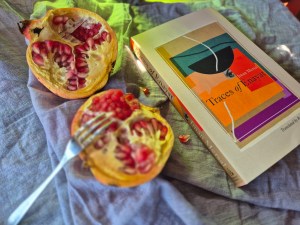
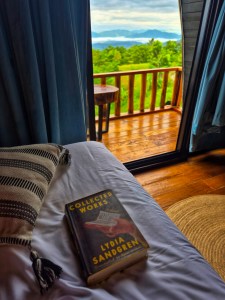
August is Women in Translation Month and Buwan ng Wika (National Language Month). To celebrate the latter: Munting Aklat ng Baybayin by Ian Alfonso. No better way than through learning more about our pre-colonial script! To celebrate the former: Iman Mersal’s Traces of Enayat and Lydia Sandgren’s Collected Works.

“The best investigative reporting is storytelling,” says journalist Jane Mayer. Traces of Enayat is proof of this as Iman Mersal takes the reader on a quest to find traces of Enayat, an Egyptian writer who took her own life in 1963. Mersal affectingly expresses the attachment and resonance we find in the authors we encounter and whose works derail us from an otherwise uneventful trajectory. It also begs the question: How many Enayats has the world lost into oblivion?

As for Collected Works, seven pages shy of six hundred, this novel quietly draws you into its world. It acquaints you with its setting and its characters without haste. It knows how to linger. It lingers on one’s thoughts on literature and art, on a character’s indecision to call someone or not, whether to read a book or not. It often lingers on everyday scenes where words turn into still life paintings and everyday portraits. But these scenes and characters exist in the shadow of Cecilia’s disappearance. Almost fifteen years after she vanished without a trace, her daughter, Rakel, believes it is her missing mother she is reading about in a novel, and measured suspense and mystery begin to replace the monotony of their lives. I would recommend this to the unhurried reader. Ultimately, Collected Works is a meditation on what one’s life amounts to. 

As for reading life in August? This is what it amounted to. It felt very much like a defiance of my country’s frustrating political climate.

June in Books

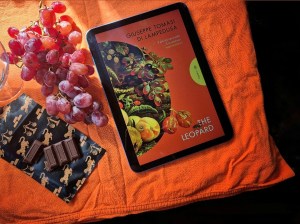
Reading The Leopard is like viewing a portrait of a bygone monarch in a gallery. They mean nothing to you but notice how the brush strokes are skillfully done as it immortalizes a world that no longer exists; you acknowledge that it is important as a record… and then walk away and move on to the next portrait. But you retrace your steps, give it a tender, wistful gaze, and your eyes rest on Bendico, the Prince’s faithful Great Dane; the one detail that truly manages to tug at your emotions and whose fate emphasizes the vicissitudes of life and history.

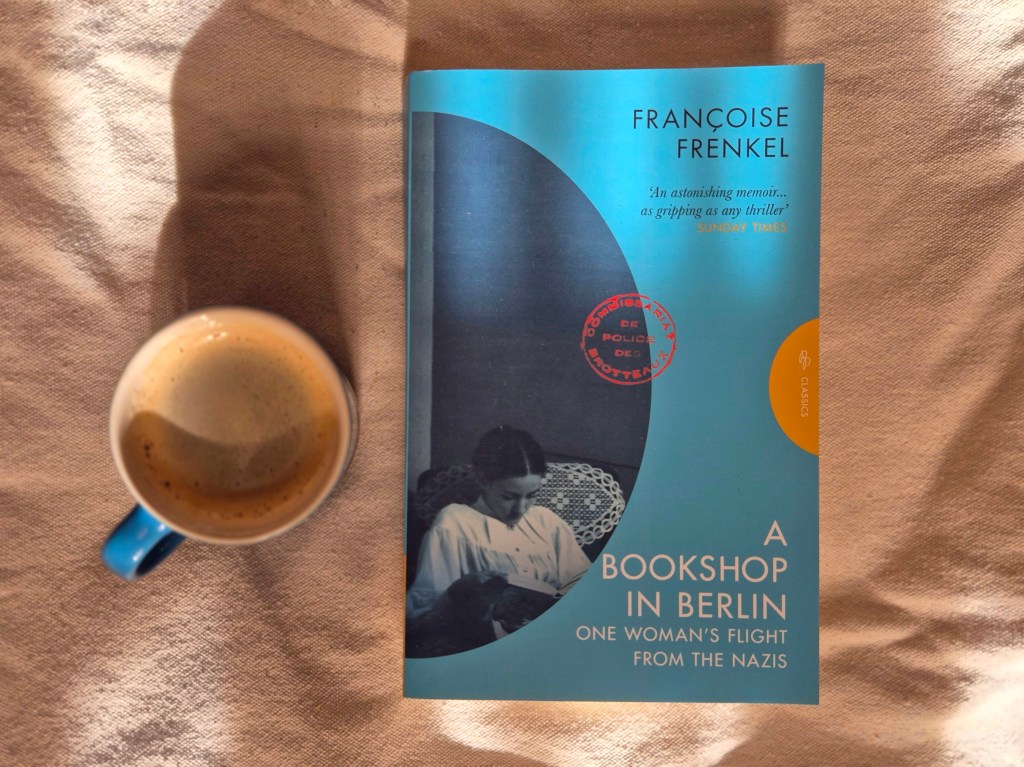
Background for Love allowed me to lean back momentarily, put my feet up, and whisked me toward the sunlight despite the bittersweet awareness that darkness would soon descend on the sunlit Europe of this story. That darkness came for A Bookshop in Berlin, a true account of a bookseller’s incredible escape from Nazi-occupied Europe that eerily mirrors the current state of the world where prejudice and ignorance defy truth and multitudes are easily swayed by propaganda, but where hope also shines through in heroic acts of kindness.

Lawrence Ypil’s poetry served as punctuation marks between these novels. And Alba de Céspedes? The powerhouse that is Alba de Céspedes? She demands a separate post.

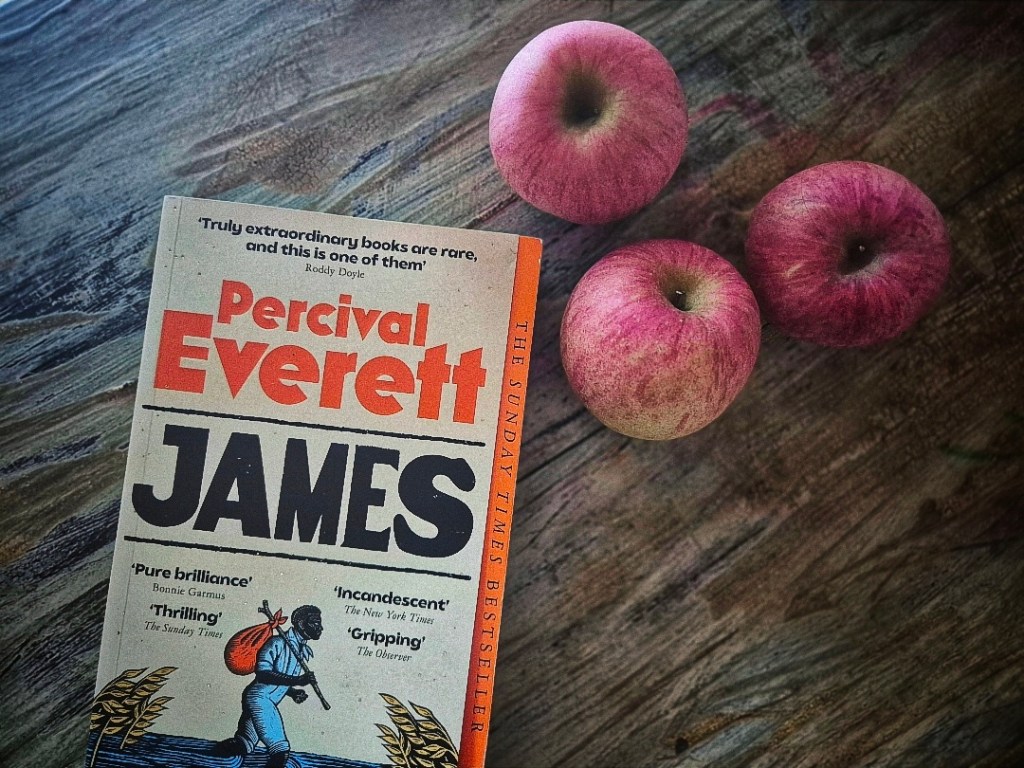
So that was June. It did not leave time or headspace for making concrete reading plans. While it started with that epitome of a retelling which is James, whenever there was a need to retreat in the solace of books, I’d instinctively pick up a volume from a stack of Pushkin Press Classics that hadn’t been assigned places on the shelf yet.

In the month wherein my heaviest schedule clamored to be felt and the risk of a WWIII threatened to make everything inconsequential, it somehow made sense to work harder, to live more, and to continue reading. Wait, is it really July already?

Helen Wolff: Background for Love

“What do you think I should do now?”
“You should read a good book for a change.”

“At my death, burn or throw away unread,” wrote Helen Wolff on the envelope in which the manuscript was found in 2007. Being a revered editor and publisher of literary giants such as Italo Calvino, Umberto Eco, and Gunter Grass, among many others, she probably judged her own writings with more exacting standards and deemed Background for Love unfit for publication.

After all, it is a perfectly imperfect novella. We can find fault with the characters and their decisions if we want to. Nothing grand or earth-shattering happens here. It is a story of a young girl wrestling between the desire for independence and the man she loves. And most of us have been there, and may or may not have ended up acting wisely. But you see, some of the most authentic writings are those unfit for publication, simply because life is flawed and will not live up to a lot of ideals.

What made me relish the pages so easily — aside from the cat she named Colette after the writer, aside from the picturesque beauty of Saint-Tropez as a backdrop, and the bittersweet awareness that darkness would soon descend on the sunlit Europe of this story — was the authenticity and intimacy of Wolff’s writing. It makes me wish she had written more, and one can only wistfully imagine the triumph of what she would have considered fit for publication!

But we can only be grateful for how this little gem did not perish into oblivion. As rain begins to steal into the sunny days in my part of the world, this book made me lean back, put my feet up… and whisked me toward the sunlight. 

May Books and Friends

On the Calculation of Volume I, Solvej Balle

The perfect day to read this would be on a rainy autumnal day. November 18, to be exact. I read it on a sweltering first of May. But I love how it drew me in calmly and made the temperature bearable. To weave reflective prose with only a tinge of disquieting tension is Solvej Balle’s gift. It is a book for when we read not for the plot but for the language.

Something tells me that this is more than just a story about a specific day that recurs 366 times in the novel but rather a meditation on time and the distance it creates between our relationships with others and with our present and former selves.

If after tonight I’ll wake up to another first of May, I’d still read this… or perhaps, volume two.


There’s No Turning Back, Alba de Céspedes

“Love, like art. It’s there or it’s not.”

Alba is cruel. She tells the truth. This book left the dock before I was able to fully say goodbye. I would have wanted to be with some characters a little bit longer to find out how their lives would continue to unfold. But Alba, after drawing you intimately into both the communal and the separate lives of each girl, shakes off attempts at clinginess and writes with a knife: That is how life is, she seems to say. It moves. It keeps going. And there is no turning back.


On Earth We’re Briefly Gorgeous, Ocean Vuong

“It was beauty, I learned, that we risked ourselves for.”

There are times when you don’t know why you put off purchasing a particular book despite it being recommended by a friend, despite seeing a lot of people post about it, despite seeing it in almost every bookstore. You’ll only know the answer when, years later, you receive a copy as pasalubong from the Book Street in Ho Chi Minh. Books always hold an added value when falling into your hands this way.

But oh, how this book breaks your heart in different ways! Maybe because of how love is shown in its many degrees along with the pain that comes with each kind of love.

“I’m broken in two… In two, it was the only thought I could keep, sitting in my seat, how losing a person could make more of us, the living, makes us two… Into — yes, that’s more like it. Now I’m broken into.”

Something tells me, however, that this is not peak Ocean Vuong yet, that the magnum opus is yet to come: Could it be The Emperor of Gladness? We’ll soon find out.


Concepcion, Albert Samaha

“History ripples into perpetuity. Decisions, actions, mistakes, and triumphs of one day shape the days that follow, setting irreversible paths into the future…”

In Concepcion, Philippine history ceases to be a structured chronology but a fluid tale that merges with the timeline of world history, personal history, and geopolitics. Read full entry here.


Erik Satie Three Piece SuiteIan Penman

Gymnopedies… Gnossienes… “If you only know these few exquisite morsels, you only know a tiny fraction of Satie…” This book showed me how little I knew of Satie and how I underestimated the role that this composer played in the trajectory of art and music history.

“Dip a toe into the Satie rock pool and you soon discover a cove, a coastline, an entire horizon.” Ian Penman dips his toes, and luckily, takes willing readers along for the ride! Written in an ingenious form in three parts, I am tempted to assert that there couldn’t be a more fitting way of writing about one such as Satie.


The Adventures of Huckleberry FinnMark Twain

Because how can we make the most of a retelling if we don’t know, or have forgotten, what was originally told in the first place? Yes, you guessed right. This reader is prepping for Percival Everett’s James!


How I managed to find time to read in May was a miracle. What a hurricane, the past few weeks! It threw all sorts of things at me, but it threw some of the best things my way, too: My very own grand piano, the younger brother’s short but sweet homecoming, friends who travelled far just to visit — reading friends to boot! And while books may have appeared to have taken a backseat, they’ve only enriched these moments and this entire experience called living. 

“That’s why I began to write… Because the paper remembers. And there may be healing in sentences.” Dear Solvej Balle, that’s why we read.


April in Books

April was manic. It called for two short story collections in sympathy of a fractured attention span.


Silk, Silver, Spices, Slaves, Lio Mangubat First, prepare a cup of tablea tsokolateKapeng barako will do, but because cacao seeds arrived in the Philippines earlier than coffee through the Galleon Trade, I’ll opt for the former to pair with this book. When the chocolate brew is ready, steep yourself in the richness of both history and drink. Read full entry here.


Covert Joy, Clarice Lispector

There’s nothing here that a Clarice fan hasn’t read. And it’s arguably redundant to have this book when these twenty stories have already appeared in that hefty volume of The Complete Stories. But can you resist an edition that has one of your favorite Lispector stories as the titular story of a collection? No.

Because the thing is, reading Clarice is an experience; re-reading her is a veneration. And if I may say so, a none too covert joy. 

“Sometimes I’d sit in the hammock, swinging with the book open on my lap… I was no longer a girl with a book: I was a woman with her lover.”


The Dissenters, Youssef Rakha

“…it is Time that happens to people. We talk about having and saving and wasting it as if it is ours to work with, but really it is we who are time’s property.”

Egypt’s modern history is a story of revolutions, but its revolutions are especially ones that are true to the word’s literal meaning — a return, a cycle, a recurrence. How can one analyze over seventy years of a nation’s tumultuous history from its first president up to the current one? Through a woman’s life, answers Youssef Rakha. “Woman after woman using men’s failures and her body to write the ultimate description de l’Égypte.”


Canone Inverso, Paolo Maurensig

Ironic how I have acquired and read Maurensig’s three chess novels but have only read the novel about music now; but how delightful to discover that Bach’s Chaconne is what decorates the endpaper of this edition and learn that the piece plays a role in the story! As a work of literature, Canone Inverso may not be something one would call a masterpiece, but I cannot deny how this story gripped me from beginning to end. It’s a splendid book to entertain a reading musician!

It is only post-novel that I’m finding out that there is a movie for which Ennio Morricone composed the soundtrack! (And Sophie is played by Mélanie Thierry, who is the girl in the window that inspires the pianist in Legend of 1900, but in Canone Inverso she is the pianist!) All the while I read this, I was really thinking about how it would make a cinematic feat through the vision of an insightful director. I could already hear the dramatic soundtrack and imagine the cinematography, the light coming through the windows as dusk falls on the heurigen of Grinzing, and virtuosic music piercing the air…


To the Wedding, John Berger

What shall we do before eternity?

Take our time.

Not all blurbs are to be believed. But when it’s Michael Ondaatje who writes, “Wherever I live in the world, I know I will have this book with me,” and when a friend whose literary taste is most similar to yours recommends it, you just believe. But prepare to have your heart broken.

How was it possible to write a complexly poignant novel with fragmented vignettes? How does one distinguish between poetry and prose? This book deftly blurs the lines.


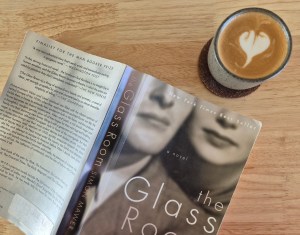
The Glass Room, Simon Mawer

The Glass Room, but not the ‘room’ of English, expresses the author. Rather, the Teutonic ‘raum’ with a broader sense of space. The novel correspondingly hints at architecture while maintaining a broader sense of architecture by concerning itself beyond the architect and the building, and taking into account the lives that inhabit a particular space. Similarly, it is an acknowledgment of how one cannot write about the Modernist shift in architecture without conveying how it is an entire geopolitical and cultural movement. Read full entry here.


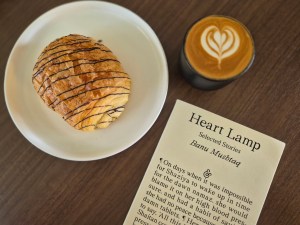
Heart LampBanu Mushtaq

How do you extinguish the light in a woman’s heart?

With these short stories Banu Mushtaq seems to count the ways.

Addendum: Through a Booker discussion with Ex Libris friends a day before the awards were announced, I understood that the winner of the International Booker Prize should define 2025. As touched as I was with this book, I did not think it would fit the criterion. And yet it emerged as the winner: The first book originally published in Kannada (the official language of the author’s state of Karnataka in southern India) and the first collection of short stories to win the award.

Through this I am reminded: Woman is always relevant, and that stories of everyday life are still worth telling.


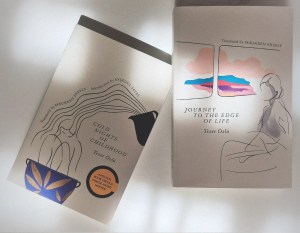
 Journey to the Edge of Life, Tezer Ozlu

“It is the boundless realm of literature that has set me on this road, through words and beyond them…”

Yes, yes, and yes.


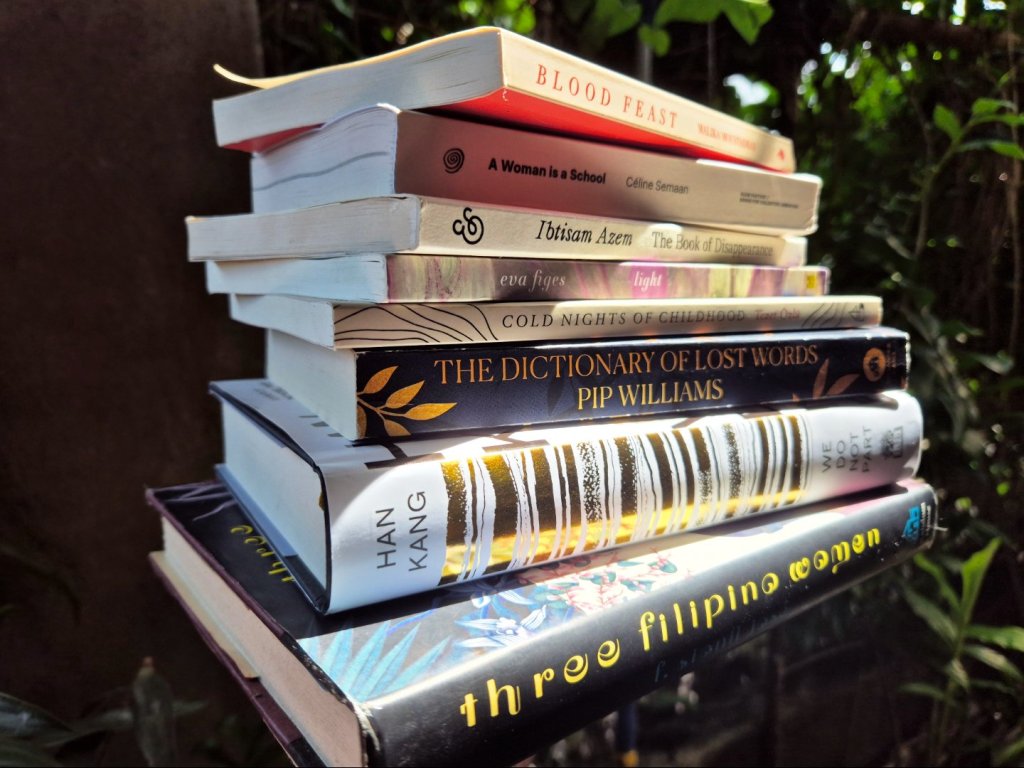
Women’s Month Summary


Blood Feast, Malika Moustadraf

Malika Moustadraf is Morocco’s answer to Egypt’s Nawal el Saadawi whose depictions of how women are viewed and treated are unflinching. But Malika has a distinct style that draws the reader right into a scene, into the midst and into the cracks of such a society, sometimes forcing us to look through the eyes of the scoundrels themselves. I daresay she is the more masterful fiction writer. Fiction, as we know, is just a tool to reveal the rawest of truths. Read full entry here.


A Woman is a School, Celine Semaan

Even though this one did not exceed my expectations, it has its merits. I love how she writes of art as “the ultimate act of giving.” It may be enlightening to someone younger who is reading about the effects of colonialism for the first time, but readers may find more substantial memoirs and more informative books on Lebanon and Lebanese culture, and better books that encourage attentiveness to social justice.


The Dictionary of Lost Words, Pip Williams

An exceedingly apt book for Women’s Month that would also make a splendid companion read to Simon Winchester’s The Professor and the Madman. It is this one that left my heart with a tender aching.

“Never forget that… Words are our tools of resurrection.”


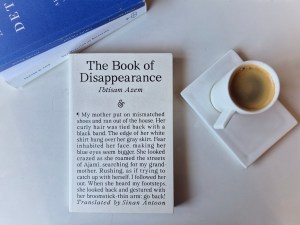
The Book of Disappearance, Ibtisam Azem

In another Palestinian masterpiece, Adania Shibli’s Minor Detail, the entire book is a bullet in motion that hits you with a staggering force on the very last page. There is an abrupt and brutal finality. There is no closure in Ibtisam Azem’s The Book of Disappearance. It ends without a concluding cadence and leaves the reader suspended in an unsettling limbo. But that does not imply that this book pales in comparison. Perhaps we are given a nanoscopic glimpse of what it feels like to be Palestinian. Read full entry here.


We Do Not Part, Han Kang

“Extermination was the goal. Exterminate what? The reds.” But Jeju’s inhabitants were not all reds, and yet it was easier for the military to operate by decimating the population. For nearly fifty years after the massacre, it was a crime punishable by law for a South Korean to mention the event. A huge percentage of the thousands that perished were innocent.

“Collateral damage.” That’s what they call it. Now where have I heard that term recently? Read full entry here.


Cold Nights of Childhood, Tezer Ozlu

Bursts of beauty in the prose amidst a stream of surreal disclosures from a woman grappling with mental illness and electroshock therapy. But it is ultimately a sad and disturbing portrayal of a particular societal context and its effect on the psyche, framed affectionately by Aysegul Savas’ introduction and Maureen Freely’s translator’s note. Read full entry here.


Light: Monet at Giverny, Eva Figes

An impressionist painting in book form with the most elegant feminism I have ever read.

“I’m sitting at the restaurant reading. Some books take me to worlds far greater and more tender than real life.” This line was lifted from Tezer Ozlu. She could have been referring to this book. Amidst the cacophony of social media and political rants, my mind is thankful to have been transported and softened by such a beautiful, beautiful book!


Three Filipino Women, F. Sionil Jose

This reader’s Women’s Month has usually been reserved for reading women authors, but an exception had to be made for this. Curious as to how a man would paint a portrait of the Filipino woman, I soon realized that this is more portrait of Philippine politics than it is of the Filipino woman. It is a dismal but virtuosic depiction. Three women: A politician, a prostitute, and a student activist. Maybe parable, maybe allegory, maybe both. Beyond death, F. Sionil Jose reminds me, once again, that he was the closest thing the Filipinos had to a Nobel laureate in literature.


Tezer Ozlu: Cold Nights of Childhood

“I’m sitting in the restaurant reading. Some books take me to worlds far greater and more tender than real life.”

Amidst a stream of surreal disclosures from a woman grappling with mental illness and electroshock therapy, bursts of beauty in the prose.

“I want to wander down these streets and avenues, drinking everything I see, making new discoveries, watching these people who remain strangers to me, all around me, this unquenchable life that I so long to take into my heart. Could it be that there are others who find whole worlds in a single moment, who marvel in the miracle of existence, whose thoughts can purge into the depths of unfettered time and rapture? I don’t know. A single moment can hold an eternity.”

But it is ultimately a sad and disturbing portrait of a particular societal context and its effect on the psyche, framed affectionately by Aysegul Savas’ introduction and Maureen Freely’s translator’s note.

Reading this brought to mind Leonora Carrington’s Down Below, and reading this reminded me that sometimes the point of literature is not to read only about women’s lives that appeal to the reader, but to have one’s eyes opened to different kinds of suffering if only to achieve a better understanding of the world we live in.

It’s a book I can only recommend to a select few, but I know the Turkish section of my shelf is richer for compassionately clasping it to its bosom. 

Han Kang: We Do Not Part

“In every story, without exception, the woman looks back. She turns to stone on the spot.”

“Because Koreans don’t win the Nobel prize for literature,” says the young Nora in Past Lives when Hae Sung asked the aspiring writer why she was moving to Canada.

As much as I love that film that’s lodged in a heart space that I thought was only reserved for the Before Sunrise/Sunset/Midnight trilogy, I was glad Nora proved to be wrong when Han Kang became the first Korean and the first female Asian writer to be awarded the Nobel Prize in Literature.

Lauded for her “intense poetic prose that confronts historical traumas and exposes the fragility of human life,” it then became a goal to read Han Kang for Women’s Month this year.

It is one of the most atmospheric books I’ve read. I can almost feel the snowflakes falling on my heart until now.

The novel takes place on Jeju Island, a place that I regarded merely as a popular vacation spot thanks to KDrama and the island’s visa-free policy for Filipinos. It also drew international attention on December 29, 2024, when a Jeju Air flight overshot the runway and resulted in 179 fatalities. That’s all I knew of Jeju — until I read this.

What begins as a woman having a series of nightmares and discernibly living with an unnamed trauma, builds suspense when a friend in the hospital asks her to rescue a pet bird that was left alone at home after an accident occurred. What Kyungha discovers in her friend Inseon’s home in the dead of winter gradually opens her eyes to the Jeju massacre of 1948. It is such a hallucinatory reading experience that I had to verify if something that horrific really happened in idyllic Jeju Island’s history.

“Extermination was the goal. Exterminate what? The reds.” But Jeju’s inhabitants were not all reds, and yet it was easier for the military to operate by decimating the population. For nearly fifty years after the massacre, it was a crime punishable by law for a South Korean to mention the event. A huge percentage of the thousands that perished were innocent.

“Collateral damage.” That’s what they call it. Now where have I heard that term recently?

Ibtisam Azem: The Book of Disappearance

“What if all Palestinians vanished from their homeland overnight?”

This is the line that greets the reader on its French flap. Longlisted for the 2025 International Booker Prize, one would think that the question, and the novel, are a response to the Gaza War. Although uncannily timely, it was written in 2014.

In this story, all Palestinians disappear. There is fear, relief, and even joy. “This problem disappeared on its own. It is a divine miracle,” remarked one Israeli. Ariel, a journalist and liberal Zionist, tries to figure out what really happened and looks for traces by reading his missing friend Alaa’s letters to a dead grandmother. 

The book is semi-epistolary as it alternates between Ariel’s articles and Alaa’s letters. In a clever contrast, Ariel’s articles look toward the uncertain future, while Alaa’s letters look into the past. “Perhaps I am writing out of fear. Against forgetfulness. I write to remember and to remind, so memories are not erased. Memory is my last lifeline.”

The articles and the poignant letters reveal the disparity of their personal histories: One looks at the same city as the Jaffa his people had lost; while one looks at it as Tel Aviv, with its Bauhaus architecture, the dream that came true. 

In another Palestinian masterpiece, Adania Shibli’s Minor Detail, the entire book is a bullet in motion that hits you with a staggering force on the very last page. There is an abrupt and brutal finality.

There is no closure in Ibtisam Azem’s The Book of Disappearance. It ends without a concluding cadence and leaves the reader suspended in an unsettling limbo. But that does not imply that this book pales in comparison. Perhaps we are given a nanoscopic glimpse of what it feels like to be Palestinian.

Malika Moustadraf: Blood Feast

There has been a significant increase of Maghrebi literature in my reading repertoire, and the recent discovery of Malika Moustadraf is yet another strong force that pulls my literary compass in that direction.

She is Morocco’s answer to Egypt’s Nawal el Saadawi whose depictions of how women are viewed and treated are unflinching. But Malika has a distinct style that draws the reader right into a scene, into the midst and into the cracks of such a society, sometimes forcing us to look through the eyes of the scoundrels themselves. I daresay she is the more masterful fiction writer.

But fiction, as we know, is just a tool to reveal the rawest of truths, and Malika has succeeded in this. The tragedy is that she will no longer be writing. The few works that she leaves in her wake are glimpses of the undeniable literary powerhouse she would have become had she not passed away from a chronic illness at the age of thirty-seven in 2006.

One thing I’ve noticed in Maghrebi authors is the sensitivity and the softness of the men and the forcefulness of the women. Their literature can teach us many things, but among these is the truth that softness can be extremely masculine, and forcefulness immensely feminine.


This book was, indeed, a fitting way to start this reading month. Wishing you a rewarding Women’s Month!