With its 384 pages and the sun of the Philippine flag on its cover, Concepcion was the perfect candidate to accompany this voter in anticipation of the long queues on Election Day.
“History ripples into perpetuity. Decisions, actions, mistakes, and triumphs of one day shape the days that follow, setting irreversible paths into the future…”
The book choice was especially validated by this line on page 38; the line, a double-edged sword, both encouraged and cautioned the part of myself that is gradually growing cynical toward the government and the electoral system; the line that reminded me that our choices, decisions, and votes are still of consequence.
But journalist Albert Samaha does not preach. Thankfully, he does not stop at reporting either. While he is not shy about American atrocities and their meddling with the fates of weaker nations, the repercussions of colonial subjugation, or the realities of immigration, this reader is in awe of the hakawati of the author’s Lebanese roots manifesting in pages that reveal more about his Filipino origins. This family tale that traces back to the Sultanate of Maguindanao up to the present is extensive and requires nothing less than a modern-day hakawati to tell the story.
In Concepcion, Philippine history ceases to be a structured chronology but a fluid tale that merges with the timeline of world history, personal history, and geopolitics.
Ten full days after the election, this reader finally found herself at the last page already feeling attached to the author’s artist uncle and his mother; fascinating characters that would animate fiction but who are incredibly non-fiction. Samaha writes about them the way he writes about country — with wit, fondness, love, acceptance, and hope — that by the end of the book, one would also have a rejuvenated fascination, with all its wounds and flaws, for the nation.
April was manic. It called for two short story collections in sympathy of a fractured attention span.
Silk, Silver, Spices, Slaves, Lio Mangubat First, prepare a cup of tablea tsokolate. Kapeng barako will do, but because cacao seeds arrived in the Philippines earlier than coffee through the Galleon Trade, I’ll opt for the former to pair with this book. When the chocolate brew is ready, steep yourself in the richness of both history and drink. Read full entry here.
Covert Joy, Clarice Lispector
There’s nothing here that a Clarice fan hasn’t read. And it’s arguably redundant to have this book when these twenty stories have already appeared in that hefty volume of The Complete Stories. But can you resist an edition that has one of your favorite Lispector stories as the titular story of a collection? No.
Because the thing is, reading Clarice is an experience; re-reading her is a veneration. And if I may say so, a none too covert joy.
“Sometimes I’d sit in the hammock, swinging with the book open on my lap… I was no longer a girl with a book: I was a woman with her lover.”
The Dissenters, Youssef Rakha
“…it is Time that happens to people. We talk about having and saving and wasting it as if it is ours to work with, but really it is we who are time’s property.”
Egypt’s modern history is a story of revolutions, but its revolutions are especially ones that are true to the word’s literal meaning — a return, a cycle, a recurrence. How can one analyze over seventy years of a nation’s tumultuous history from its first president up to the current one? Through a woman’s life, answers Youssef Rakha. “Woman after woman using men’s failures and her body to write the ultimate description de l’Égypte.”
Canone Inverso, Paolo Maurensig
Ironic how I have acquired and read Maurensig’s three chess novels but have only read the novel about music now; but how delightful to discover that Bach’s Chaconne is what decorates the endpaper of this edition and learn that the piece plays a role in the story! As a work of literature, Canone Inverso may not be something one would call a masterpiece, but I cannot deny how this story gripped me from beginning to end. It’s a splendid book to entertain a reading musician!
It is only post-novel that I’m finding out that there is a movie for which Ennio Morricone composed the soundtrack! (And Sophie is played by Mélanie Thierry, who is the girl in the window that inspires the pianist in Legend of 1900, but in Canone Inverso she is the pianist!) All the while I read this, I was really thinking about how it would make a cinematic feat through the vision of an insightful director. I could already hear the dramatic soundtrack and imagine the cinematography, the light coming through the windows as dusk falls on the heurigen of Grinzing, and virtuosic music piercing the air…
To the Wedding, John Berger
What shall we do before eternity?
Take our time.
Not all blurbs are to be believed. But when it’s Michael Ondaatje who writes, “Wherever I live in the world, I know I will have this book with me,” and when a friend whose literary taste is most similar to yours recommends it, you just believe. But prepare to have your heart broken.
How was it possible to write a complexly poignant novel with fragmented vignettes? How does one distinguish between poetry and prose? This book deftly blurs the lines.
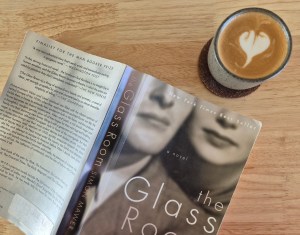
The Glass Room, Simon Mawer
The Glass Room, but not the ‘room’ of English, expresses the author. Rather, the Teutonic ‘raum’ with a broader sense of space. The novel correspondingly hints at architecture while maintaining a broader sense of architecture by concerning itself beyond the architect and the building, and taking into account the lives that inhabit a particular space. Similarly, it is an acknowledgment of how one cannot write about the Modernist shift in architecture without conveying how it is an entire geopolitical and cultural movement. Read full entry here.
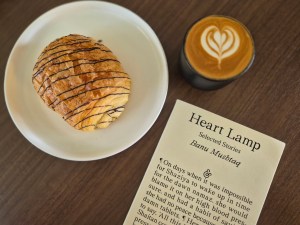
Heart Lamp, Banu Mushtaq
How do you extinguish the light in a woman’s heart?
With these short stories Banu Mushtaq seems to count the ways.
Addendum: Through a Booker discussion with Ex Libris friends a day before the awards were announced, I understood that the winner of the International Booker Prize should define 2025. As touched as I was with this book, I did not think it would fit the criterion. And yet it emerged as the winner: The first book originally published in Kannada (the official language of the author’s state of Karnataka in southern India) and the first collection of short stories to win the award.
Through this I am reminded: Woman is always relevant, and that stories of everyday life are still worth telling.
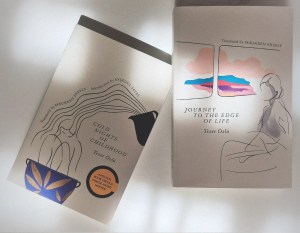
Journey to the Edge of Life, Tezer Ozlu
“It is the boundless realm of literature that has set me on this road, through words and beyond them…”
First, prepare a cup of tablea tsokolate. Kapeng barako will do, but because cacao seeds arrived in the Philippines earlier than coffee through the Galleon Trade, I’ll opt for the former to pair with this book. When the chocolate brew is ready, steep yourself in the richness of both history and drink.
Every essay in this collection discloses an aspect of Philippine history that this reader was oblivious to: Mindanao was once christened “Caesarea,” Spanish maps reveal that “ships could sail in straight from the West Philippine Sea, into Balayan Bay and up a causeway straight into Taal Lake.”
But this book does not contain mere trivia: The essays also confront Manila’s dark chapters. Swastika Manila tells of how the claws of Nazism managed to reach the Philippines, and in Silk, Silver, Spices, Slaves, it is exposed how Manila unfortunately became the center of the Transpacific slave trade.
Also, a Broadway show that premiered in 1902 called The Sultan of Sulu?! Written by anti-imperialist, George Ade, whose work has been praised by Mark Twain; at first glance, an unflattering and fictional depiction of a sultan of Sulu, but fundamentally a satire on America’s colonial designs in the region. It went on to have a sold-out run of 192 shows.
And while I’ve been aware of how Filipinos dominate the world of music gigs in cruise ships and clubs nowadays, thanks to Mangubat’s exploration into colonial archives there is a record showing that this is not a recent phenomenon. Over a hundred years ago, a group of talented Filipinos earned a reputation for being “foreign piano devils” when a Spanish bandmaster brought nineteen musicians to the port city of Shanghai in 1881!
The aforementioned are just the tip of the iceberg, however. It’s a book every Filipino should have on their shelf. These long-forgotten stories from Philippine colonial times have a way of making the past come alive beyond the usual facts and dates we’ve been required to memorize in our school years. Mangubat does not merely reiterate the details he uncovers through research but strings the tales captivatingly and transmits his enthusiasm for history to the reader.
As I relish in how readable these essays are, I am reminded of a historian’s line from I, Claudius: “For every word I wrote I must have read many hundreds.” Our generation is fortunate to have a Lio Mangubat in our midst who does the hard work for us and renders history a vital and accessible thing.
This reader is eager for a second cup and a second volume!
Malika Moustadraf is Morocco’s answer to Egypt’s Nawal el Saadawi whose depictions of how women are viewed and treated are unflinching. But Malika has a distinct style that draws the reader right into a scene, into the midst and into the cracks of such a society, sometimes forcing us to look through the eyes of the scoundrels themselves. I daresay she is the more masterful fiction writer. Fiction, as we know, is just a tool to reveal the rawest of truths. Read full entry here.
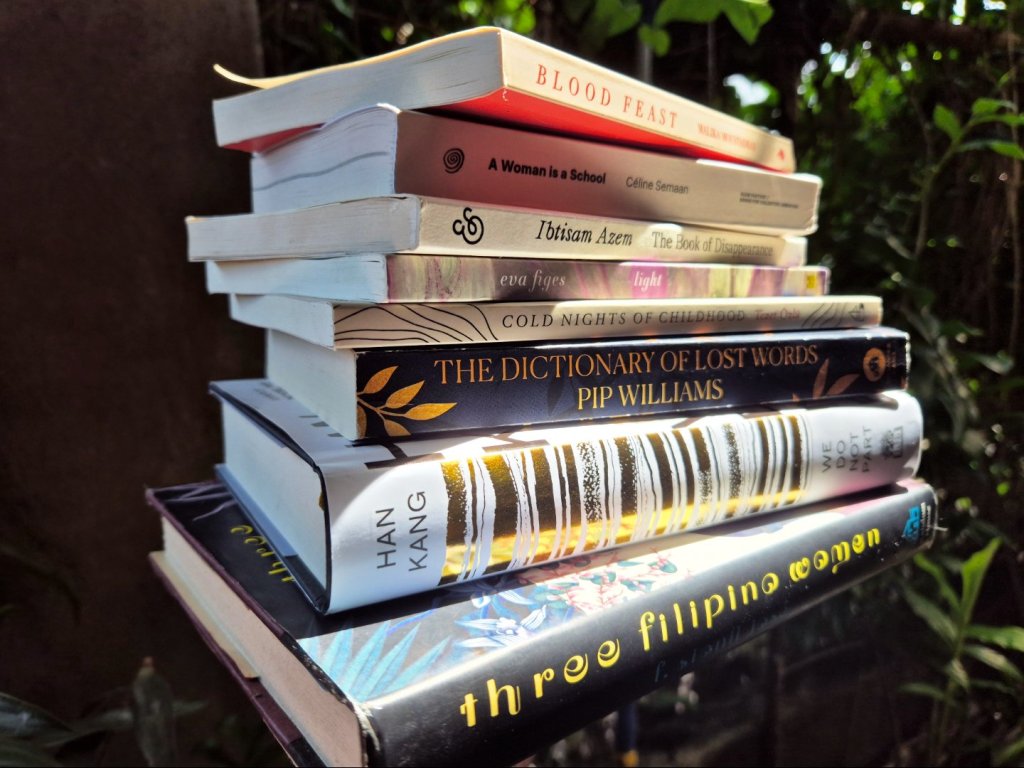
A Woman is a School, Celine Semaan
Even though this one did not exceed my expectations, it has its merits. I love how she writes of art as “the ultimate act of giving.” It may be enlightening to someone younger who is reading about the effects of colonialism for the first time, but readers may find more substantial memoirs and more informative books on Lebanon and Lebanese culture, and better books that encourage attentiveness to social justice.
The Dictionary of Lost Words, Pip Williams
An exceedingly apt book for Women’s Month that would also make a splendid companion read to Simon Winchester’s The Professor and the Madman. It is this one that left my heart with a tender aching.
“Never forget that… Words are our tools of resurrection.”
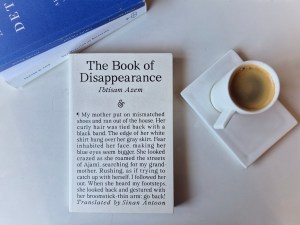
The Book of Disappearance, Ibtisam Azem
In another Palestinian masterpiece, Adania Shibli’s Minor Detail, the entire book is a bullet in motion that hits you with a staggering force on the very last page. There is an abrupt and brutal finality. There is no closure in Ibtisam Azem’s The Book of Disappearance. It ends without a concluding cadence and leaves the reader suspended in an unsettling limbo. But that does not imply that this book pales in comparison. Perhaps we are given a nanoscopic glimpse of what it feels like to be Palestinian. Read full entry here.
We Do Not Part, Han Kang
“Extermination was the goal. Exterminate what? The reds.” But Jeju’s inhabitants were not all reds, and yet it was easier for the military to operate by decimating the population. For nearly fifty years after the massacre, it was a crime punishable by law for a South Korean to mention the event. A huge percentage of the thousands that perished were innocent.
“Collateral damage.” That’s what they call it. Now where have I heard that term recently? Read full entry here.
Cold Nights of Childhood, Tezer Ozlu
Bursts of beauty in the prose amidst a stream of surreal disclosures from a woman grappling with mental illness and electroshock therapy. But it is ultimately a sad and disturbing portrayal of a particular societal context and its effect on the psyche, framed affectionately by Aysegul Savas’ introduction and Maureen Freely’s translator’s note. Read full entry here.
Light: Monet at Giverny, Eva Figes
An impressionist painting in book form with the most elegant feminism I have ever read.
“I’m sitting at the restaurant reading. Some books take me to worlds far greater and more tender than real life.” This line was lifted from Tezer Ozlu. She could have been referring to this book. Amidst the cacophony of social media and political rants, my mind is thankful to have been transported and softened by such a beautiful, beautiful book!
Three Filipino Women, F. Sionil Jose
This reader’s Women’s Month has usually been reserved for reading women authors, but an exception had to be made for this. Curious as to how a man would paint a portrait of the Filipino woman, I soon realized that this is more portrait of Philippine politics than it is of the Filipino woman. It is a dismal but virtuosic depiction. Three women: A politician, a prostitute, and a student activist. Maybe parable, maybe allegory, maybe both. Beyond death, F. Sionil Jose reminds me, once again, that he was the closest thing the Filipinos had to a Nobel laureate in literature.
“I’m sitting in the restaurant reading. Some books take me to worlds far greater and more tender than real life.”
Amidst a stream of surreal disclosures from a woman grappling with mental illness and electroshock therapy, bursts of beauty in the prose.
“I want to wander down these streets and avenues, drinking everything I see, making new discoveries, watching these people who remain strangers to me, all around me, this unquenchable life that I so long to take into my heart. Could it be that there are others who find whole worlds in a single moment, who marvel in the miracle of existence, whose thoughts can purge into the depths of unfettered time and rapture? I don’t know. A single moment can hold an eternity.”
But it is ultimately a sad and disturbing portrait of a particular societal context and its effect on the psyche, framed affectionately by Aysegul Savas’ introduction and Maureen Freely’s translator’s note.
Reading this brought to mind Leonora Carrington’s Down Below, and reading this reminded me that sometimes the point of literature is not to read only about women’s lives that appeal to the reader, but to have one’s eyes opened to different kinds of suffering if only to achieve a better understanding of the world we live in.
It’s a book I can only recommend to a select few, but I know the Turkish section of my shelf is richer for compassionately clasping it to its bosom.
“In every story, without exception, the woman looks back. She turns to stone on the spot.”
“Because Koreans don’t win the Nobel prize for literature,” says the young Nora in Past Lives when Hae Sung asked the aspiring writer why she was moving to Canada.
As much as I love that film that’s lodged in a heart space that I thought was only reserved for the Before Sunrise/Sunset/Midnight trilogy, I was glad Nora proved to be wrong when Han Kang became the first Korean and the first female Asian writer to be awarded the Nobel Prize in Literature.
Lauded for her “intense poetic prose that confronts historical traumas and exposes the fragility of human life,” it then became a goal to read Han Kang for Women’s Month this year.
It is one of the most atmospheric books I’ve read. I can almost feel the snowflakes falling on my heart until now.
The novel takes place on Jeju Island, a place that I regarded merely as a popular vacation spot thanks to KDrama and the island’s visa-free policy for Filipinos. It also drew international attention on December 29, 2024, when a Jeju Air flight overshot the runway and resulted in 179 fatalities. That’s all I knew of Jeju — until I read this.
What begins as a woman having a series of nightmares and discernibly living with an unnamed trauma, builds suspense when a friend in the hospital asks her to rescue a pet bird that was left alone at home after an accident occurred. What Kyungha discovers in her friend Inseon’s home in the dead of winter gradually opens her eyes to the Jeju massacre of 1948. It is such a hallucinatory reading experience that I had to verify if something that horrific really happened in idyllic Jeju Island’s history.
“Extermination was the goal. Exterminate what? The reds.” But Jeju’s inhabitants were not all reds, and yet it was easier for the military to operate by decimating the population. For nearly fifty years after the massacre, it was a crime punishable by law for a South Korean to mention the event. A huge percentage of the thousands that perished were innocent.
“Collateral damage.” That’s what they call it. Now where have I heard that term recently?
“Only love and art can do this: only inside a book or in front of a painting can one truly be let into another’s perspective. It has always struck me as a paradox how in the solitary arts there is something intimately communal.”
An understated book that is a meditation and an education in art and life.
“I hope that when there is laughter, it’s laughter made wise by having known real grief — and when there is grief, it is made wise by having known real joy,” Kaveh Akbar writes in Martyr! Whether writing about art, architecture, Libya, or politics, Hisham Matar’s books are often so heartfelt — wholly made wise by having known sorrow and loss.
Fires, Marguerite Yourcenar
…because maybe, subconsciously, this month’s reading theme is about finding solace in the works of authors whose masterpieces have already left an impression on me, that I immediately dove into Yourcenar’s Fires without hesitation, having been incredibly moved by Memoirs of Hadrian in 2022.
She does admit, and warn, in the Preface that this book is, “the product of a love crisis” and that writing this was, in a way, “exorcising a very concrete love”; and yet it still surprised me that the elegance I encountered in Hadrian was replaced in Fires by a certain violence and ferociousness in the prose.
Antigone, Sappho, Clymenestra, and Achilles are just some of the main characters of the nine lyrical prose pieces, or stories, that Yourcenar amalgamates with her own experiences. I was left wondering if I understood the allusions correctly, or whether I understood anything at all.
One thing is certain, Fires is a masterclass on opening lines:
Phaedra’s piece begins with, “I hope this book will never be read.”
The Patroclus opening, “A heart is perhaps something unsavory. It’s on the order of anatomy tables and butcher’s stalls. I prefer your body.”
Lena’s? “Loving eyes closed is to love blindly. Loving eyes open is perhaps to love madly.”
“Love is a penalty. We are punished for not having been able to stay alone.” Clymenestra’s.
Face Shield Nation, Gideon Lasco
Articles that I looked forward to during the pandemic compiled in a book. Lasco was the voice of calm and reason at a time of confusion; evoking through his column the architectural definition of a column as a sturdy pillar of support. An essential time capsule of an era that we cannot afford to forget if we intend to learn from it. Read full entry here.
One Hundred Years of Solitude, Gabriel Garcia Marquez (a re-reading)
Growing up is realizing that Gabo is the real Melquiades who brought us magnets, magnifying lenses, astronomical observations, and mercurial storytelling. It was he who made imagination and literary possibilities flourish in the fertile and pristine Macondos of our minds, and who never really died. Read full entry here.
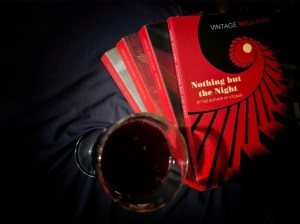
Nothing but the Night, John Williams
Maybe the first disappointment that assails the reader is the realization that, despite the slenderness of this volume, there is a heaviness in each page that restrains forward motion.
“Boring,” the lazy might judge hastily somewhere within the first three chapters. But one should not be too quick to criticize even though I myself could only read a couple of pages per sitting. For if one looks closer, and feels deeper, isn’t this genius, how John Williams conveys exactly what depression feels like?
“…there came to him that peculiar loneliness which is felt only in the monstrous impersonality of a multitude…”“What was the senseless circumstance which led him on and on, deeper and deeper into what seemed to him a maze labyrinth, devoid of pattern or meaning? …some unnameable power pushed him from one place to another, down paths he had no wish to travel, through doors he did not know and had no wish to know. All was dark and nameless and he walked in darkness.”
But then the reader is momentarily allowed to come up for air. I’m referring to the fourth chapter that is briefly set alight with a Proustian beauty! “That is the very best time of life, he thought: lost time.” And then John Williams proceeds to craft this fleeting tribute to the master searcher of lost time before he relinquishes the ethereal chapter to the fading light.
As the novel finally builds suspense, it spirals into a nihilistic darkness that ends with a violent and repulsive slap in the face.
Written in Burma when he was only twenty-two while recovering from injuries brought about by a plane crash over the Himalayas during WWII, he wrote this first novel at a particularly dark time when there was nothing else but the night.
The John Williams here is not the John Williams that gave us Stoner and Augustus. The John Williams here is the John Williams that would eventually give us Stoner and Augustus.
The Black Book, Orhan Pamuk
This reader has been through Pamuk’s longest novels and still felt the density of the mystery and prose in this book’s mere four hundred pages.
It explores the writing process and the precariousness of identity. It is also about how much the books we read, the stories we hear, the movies we watch, the everyday objects in our lives, and our city’s history shape the multiplicities of our being.
I enjoyed that twist at the end and relished the familiarity of Istanbul as a breathing character in a Pamuk novel. But maybe, just maybe, The Black Book is not for the Pamuk newbie, and not for those who are in a hurry.
The Golden Road, Willliam Dalrymple
It is not only the Silk Roads that are rising again, as Peter Frankopan proclaims in a forceful last line that gave me goosebumps. Rising, too, are buried or forgotten histories that have now resurfaced to challenge centuries of unquestioned narratives.
Frankopan’s The Silk Roads was an eye-opener, but The Golden Road takes this non-Eurocentric view of ancient and early medieval history to an intriguing direction by revealing India as a catalyst that transformed the world. Read full review here.
It is not only the Silk Roads that are rising again, as Peter Frankopan proclaims in a forceful last line that gave me goosebumps. Rising, too, are buried or forgotten histories that have now resurfaced to challenge centuries of unquestioned narratives.
Frankopan’s The Silk Roads was an eye-opener, but The Golden Road takes this non-Eurocentric view of ancient and early medieval history to an intriguing direction by revealing India as a catalyst that transformed the world.
The evidence lies in the art discovered in Afghanistan’s mountains and caves; in the archaeological treasures of an ancient Egyptian seaport; in Baghdad where the knowledge of ancient India converged with that of ancient Greece and Abbasid viziers were Sanskrit-literate; in Spain where Sa’id Al-Andalus championed Indian contribution to mathematics and astronomy; in Pisa where Fibonacci popularized what we call “Arabic numerals” but which are actually Indian; in Roman texts, some written by Pliny; in the jungles of India, or in its museums that appear to hold more Roman coins than any other country outside the Roman Empire; in China’s overlooked history where once upon a time it looked to India for enlightenment; in Sri Lanka and Central Java where Indian Buddhist literature achieved peak expression in architecture; in Cambodia’s Angkor Wat which Dalrymple refers to as the most spectacular of all Indic temples, and where one can find the oldest inscription that represents the number zero; in Brahmagupta’s 7th century writings that made him the first mathematician to record his exploration of the properties of zero, defining it as a number akin to the other nine rather than a void; in the numbers that dictate our most advanced technology to those we use in simple day-to-day calculations, “arguably the nearest thing the human race has to a universal language…”
[…and also in, if I may add, the Philippines where currently displayed in the Ayala Museum as part of the Gold of Our Ancestors exhibit is an intricately crafted, four-kilo gold sash from 10th to 13th century Mindanao that massively echoes the sacred thread, or upavita, in Hindu culture. (Dear William Dalrymple, or your cute son, Sam, please come to the Philippines to look into this? Haha)]
To engage in this book is also to question why India’s extraordinary role in world history has been subdued. The pulsating arteries of India’s influence that crossed continents and oceans, “spread not by the sword but by the sheer power of ideas,” has been brushed aside. It has never even been given a name. William Dalrymple calls it The Golden Road.
Although I prefer the William Dalrymple who does not make the “I” completely disappear in his travelogues, thereby giving his text a more endearing and personal touch, I like how this history book is not tediously academic and does not promise to be all-encompassing. Its readability serves as an introduction for those who would like to have a general idea of these trade, cultural, and intellectual routes that seem to have a life of their own apart from — although intersecting at times — the often romanticized Silk Roads.
The prolific stream of fascinating history from Dalrymple’s writings makes this reader feel fortunate to be alive in this age of rediscovery and information. The generosity of his work is encapsulated in my favorite line from this book: “The possession of knowledge is not weakened when shared with others but made more fruitful and more enduring.”
Many years later, as she faced the esplanade, Miracle Romano was to remember that distant afternoon when her bestfriend took her to discover Gabriel Garcia Marquez.
Rather than a rereading, this felt more like a revisit of our teenage years. Nostalgia accompanied me on every page. These characters who ushered us into adulthood were so real to us then. They lived in our conversations and in our heads, they colored our loves and we went through growing pains with them. Yellow flowers raining down from narra trees of Cebu’s Osmeña Boulevard would often transport us to the day of Jose Arcadia Buendia’s death. Magic realism was delivered to us by a master; it was new to us and it was… magic!
(Who was crazy enough to think they could make a successful screen adaptation?)
But how could we have dismissed how unhinged the characters actually are? How did I, a young girl, go through the depictions of sexual violence unfazed; or was I too innocent to know what that’s actually like in real life? How could we not have known that the banana company strike which led to the massacre that Jose Arcadio Segundo witnessed and which drove him to madness was a real event in Colombia; and that the banana company was relatable for Filipinos in the way first-world corporations exercise control over developing nations? And was it from GGM where GRRM drew inspiration for the aunt-nephew bonds?
But Gabo is the real Melquiades. He brought us magnets, magnifying lenses, astronomical observations, and mercurial storytelling. It was he who made imagination and literary possibilities flourish in the fertile and pristine Macondos of our minds, and who never really died.
Read Gabo when you’re young and you don’t know better. But also read Gabo when you’re older, to realize that what was Sanskrit in our innocence was ultimately a revelation about politics, time, memory, and history — “a machine with unavoidable repetitions, a turning wheel that would have gone on spilling into eternity were it not for the progressive and irremediable wearing of the axle” — because one day you can only wish you could read Gabo again for the first time as a juvenile and simply resign to the fact that the book you are reading is a literary masterpiece.