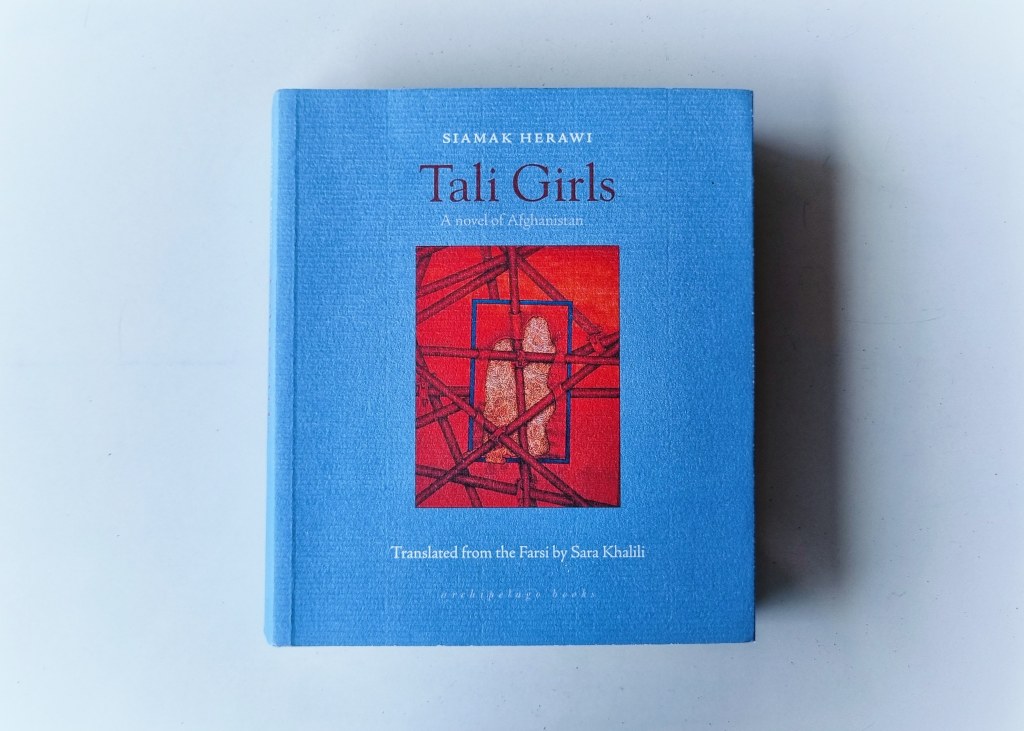
It’s almost absurd to expect happy novels from Afghanistan. I knew I had sorrow coming when I selected this as my third book of 2024. I could have shelved it for later, but how could I resist this blue from Archipelago Books, translated from the Farsi to boot? How often can one find literature translated from the Farsi?
So it was on me when it started to break my heart and made me recoil from the brutality.
Unlike most books about Afghanistan, the characters are not caught in the crossfire of any of the wars that have ravaged Afghanistan for decades.It is set in a picturesque mountain village in the early 2000s when life was simple and young girls were allowed to dream about education and love, and villagers were content with raising livestock and planting their own wheat, beans, and melons. That is until the Talibs discovered the beauty of their nine-year-olds and found their land ideal for the cultivation of poppy to be sold to the “infidels”. Tali Girls is based on true events.
The first person narration shifts from one character to another, effectively and intimately thrusting the reader into a world plucked from its innocence.
I would be reluctant to recommend this for the anguish that it contains, but I am more inclined to listen to one of this novel’s wisest characters:
“‘Remember,’ he says, sitting in his library, ‘the more your eyes open to the world, the more you are likely to suffer. But better that you learn and understand… Read, Kowsar, read to understand the world around you.”
New year, new eyes: This has become an annual theme for my first book of the year, and it has usually involved non-fiction that prod me to look at history, music, literature, life, or the world with a set of new eyes.
This year, I was not able to plan my first book. My younger brother was home for the holidays and reading was not part of the itinerary. We spent most of our time adventuring in the kitchen and binge watching shows that I would normally forgo for reading if left to my own devices.
And it was on a brief solitude after lunchtime when I realized that it was already 2024 and I was without a reading plan.
Then these two books that haven’t yet made their way into my shelf caught my eye, presents from a dear friend who recently traveled to Japan. They came with a note that said, “Our hotel in Kyoto had a bookstore right across it…”
I flipped through There Was a Knock by Shinichi Hoshi because the author is not as widely known here in the Philippines as Natsume Sōseki. The next thing I knew, I was at the last page wanting more!
The few times I felt this entertained by a writer’s cleverness it was with the likes of Queaneau’s Exercises in Style and Calvino’s If on a winter’s night a traveler! But rather than being variations on a theme, each of Hoshi’s fifteen stories are unpredictable and different, and they only have one thing in common — the first line: There was a knock. Needless to say it’s a literary gem!
Botchan by Natsume Sōseki, on the other hand, took me more than halfway to warm up to the main character whom I found rather judgmental and cynical. It was Sōseki’s humorous and engaging writing that kept me going, but only to make me understand in the end that this is ultimately a book about human nature.
At first glance, I wouldn’t have considered any of these two as candidates for my annual first book of the year theme, but here we are and I do not regret it!
Perhaps that’s what having new eyes is all about, too!
Happy New Year and Happy New Eyes, dear fellow readers!
“After this time in the Middle East, I learnt what it was like to carry the weight of people’s stories — and the role that journalists play in bearing witness. Our job was to serve as a funnel, a conduit, and in so doing, hopefully remind viewers across the world that we’re all the same. To elicit even a smidgen of empathy for those who might seem different to you.”
A piano student of mine is studying Debussy’s Claire de Lune, and I recently explained that being emotionally connected to a piece makes it more difficult and exhausting to perform, but (un)fortunately, life and music can only be meaningful that way. And it is this balance between technique and emotional connection that we spend our whole lives trying to master.
After reading this book, I realized that the aforementioned is not only true for music, but for journalism as well; and these pages are a record of a journey in probing and understanding that balance.
I love the unpretentiousness of this book. It does not claim to be a powerful journalistic work. Sometimes it tells you something as simple and true as, “The world turns. And that is what matters. It turns — and we humans keep going. Through conflict. Through inhumanity. Through heartbreak.”
Yes, there is nothing in the passage indicating that this Filipina journalist is vying for the Pulitzer, at least with this book; but it is powerful and heartwarming in the sense that it speaks to me of things that I need to take note of, not only when I read it from cover to cover on the most restful Sunday I’ve had in months, but throughout life, especially when things get tough.
That’s what you will find here: Life lessons from a recovering journalist. There is a certain universality to it, for aren’t we all recovering from something?
The phrase “a little luck” appears nine times in A Little Luck, just as “Elena knows” appears nineteen times in Elena Knows.
Does it matter? Not really. Maybe noticing those details says more of me as a reader than Claudia Piñeiro as a writer. One thing is certain; she does not repeat herself because she is running out of ways to say things. She is consistently unpredictable.
Elena Knows, which I read much earlier, is exceptionally written and translated. The choice to highlight a specific incapacitating disease that isn’t limited to women — to effectively confront every reader with what it feels like to lose bodily autonomy — is, I believe, the most impressive allegory that should be uncovered from under the many brilliant qualities of the novel. There are other apt adjectives for Elena Knows, but beautiful is not one of them.
But for the soulful strains of Piazzolla that wove through A Little Luck’s narrative; for how a woman damaged found the first steps to healing through literature; for how I thought it would all be about pain only to discover that it was principally about happiness; and for the sheer deftness of Piñeiro’s writing — this one is beautiful.
Just as unputdownable, just as suspenseful, just as affecting… and this time, beautiful.
I call it my Fertile Crescent and Silk Route Reading Project and yet there is a glaring dearth of Chinese writers in my literary diet. Maybe because I know that Chinese literature is a sort of Pandora’s box disguised as an ornate lacquer case. One that would release a curse upon the reader. The curse of wanting to read and acquire more.
Unready for another full-blown obsession, this is me prying the lid of that box ever so gently.
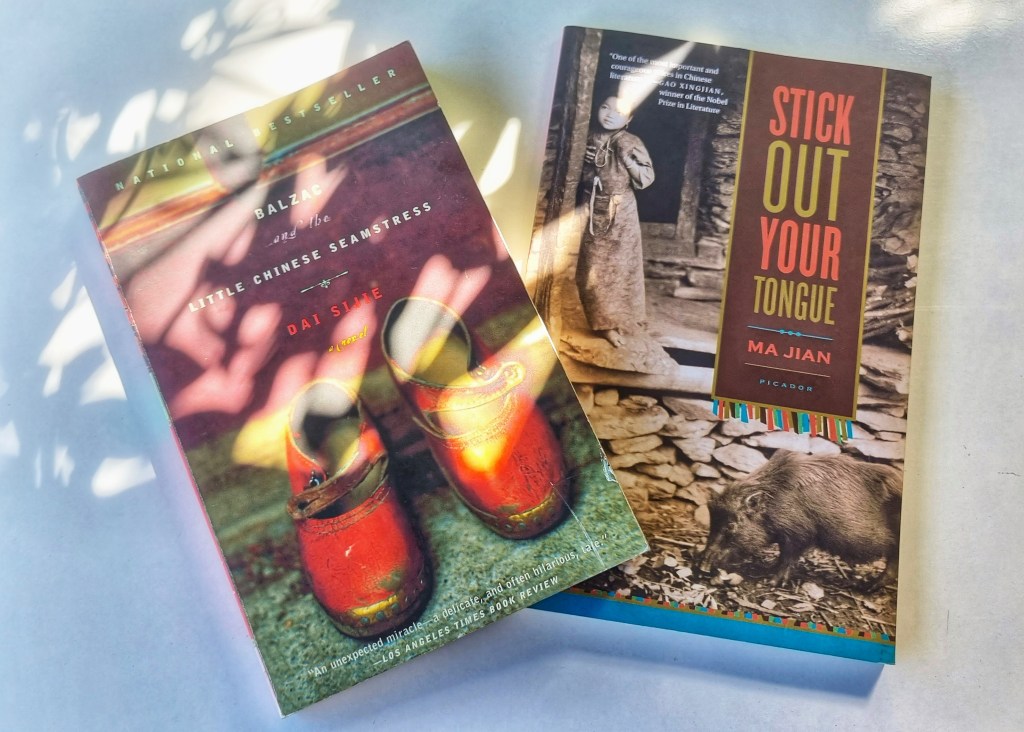
Dai Sijie’s Balzac and the Little Chinese Seamstrees is closer to Chinese fast food and so much easier and more pleasant to swallow than Ma Jian’s Stick Out Your Tongue; and I can only be glad that I read these two in succession so they could balance each other out.
Stick Out Your Tongue is the slimmer volume and yet its morbid stories of sky burials, incest, and disturbing Buddhist initiation rites juxtaposed with Tibet’s harsh landscape shakes one to the core. I cannot even think of recommending this book. But it is the afterword that I find especially striking as it draws attention to the destruction that the Chinese government has wrought in Tibet, or the fact that over a million Tibetans have died due to political persecution or famine — yet another case of a people denied control of their lands and destinies by a powerful bully.
Balzac and the Little Chinese Seamstress, on the other hand, offers more heartwarming and comic imagery as two bourgeois teenage boys navigate their “re-education” in the countryside during China’s Cultural Revolution. They were among the millions of China’s youth who were sent to the rural areas to be re-educated by peasants from the mid-60s to the mid-70s. Their lives take a turn when they meet the little Chinese seamstress, but these lives are truly altered when they unexpectedly encounter French literature at a time when “ignorance is in fashion”. It may not be classified as a literary masterpiece but it is a celebration of the transformative power of literature; and I can’t blame you if this book made you scour bookshops and the internet for a definitive English translation of Romain Rolland’s Jean-Christophe. That’s what it made me do.
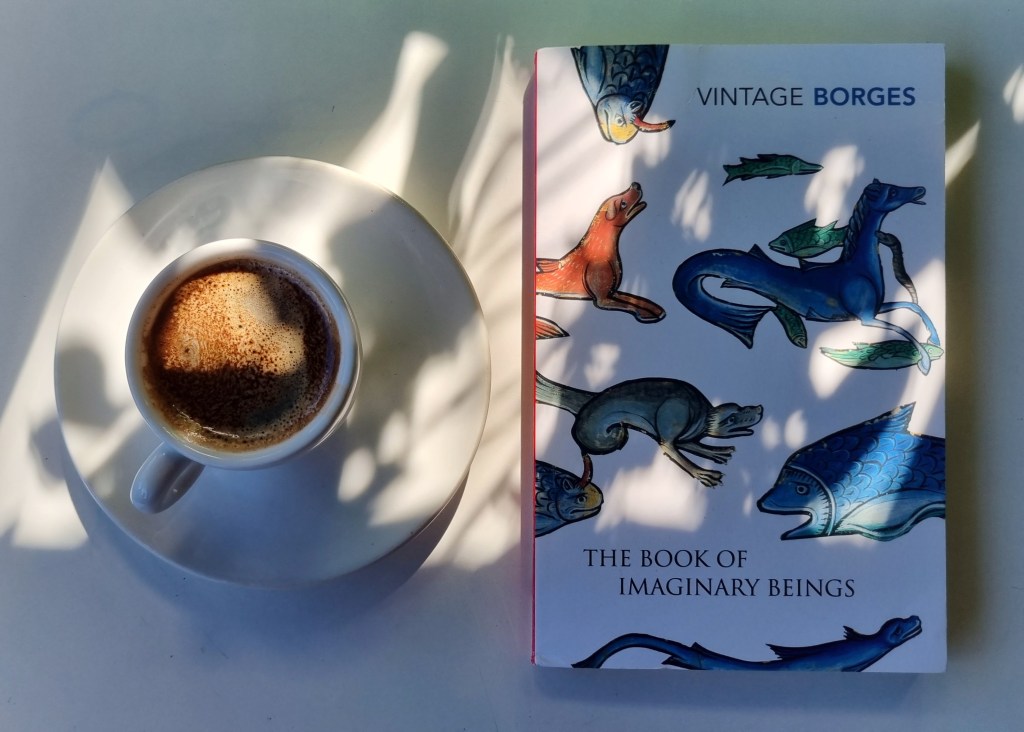
Mr. Borges acknowledged in the preface that a book of this kind is unavoidably incomplete, but I can’t help fantasize about how he would have enjoyed adding Filipino lore to this updated menagerie of a hundred and twenty had our creatures traveled to South America and entered the perimeters of his consciousness.
An earlier edition invited readers to send names, descriptions, and conspicuous traits of their local monsters. I would have nominated the Tikbalang, the Aswang, the Manananggal, the Sigbin, and one Filipino president or two.
Although the latter species probably wouldn’t have qualified owing to being non-fictional.
“I felt as if I had come not home, not at all home, but to a place which had some strange meaning, which I must try to dig up. I felt this about the whole Black Sea, but most at Trebizond.“
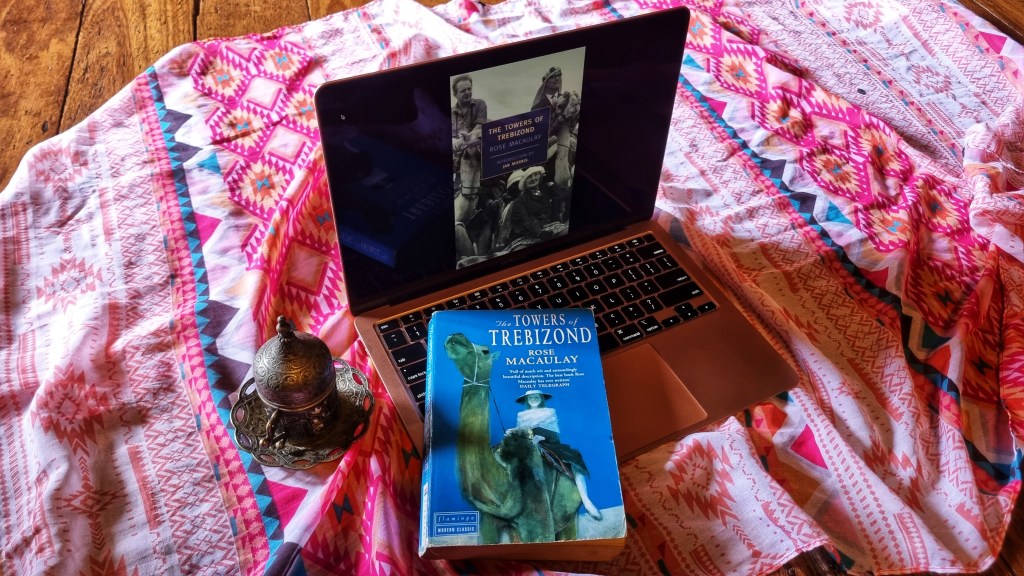
Feeling like I was not ready to tackle heavier themes than those in real life, I took this “adventure” novel out for a spin. It took me a while to warm up to it because it also took me a while to realize that this is not exactly a regular travelogue.
I see it as something else disguising as an adventure book. For beyond the mirage of exciting escapades in Turkey and the Middle East, it is a humorous critique on religion — different kinds. That being said, it is not a travelogue for the easily-offended. After all, Laurie is an agnostic narrator who admits to having a difficult relationship with religion, but sometimes has an outsider’s advantage of seeing through the hypocrisies and bigotries of the seemingly religious.
As our adventuress and her unlikely companions go deeper into the direction of historic Trebizond (Trabzon in modern Turkey) on camel-back, the ruminations on morality also deepen.
“I do not remember when I was in Cambridge we talked about such things… though we talked about everything else, such as religion, love, people, psycho-analysis, books, art, places, cooking, cars, food, sex, and all that. And still we talk about all these other things, but not about being good or bad.”
The ending confirms my hunch that while there is a literal Trebizond of which she writes, there is also another figurative Trebizond to which she refers. In a way, I am glad that this book did not turn out as I expected, and that it turned out to be so much more.
While I debate whether to order the NYRB edition solely for the Jan Morris introduction, I leave you with this poignant and relevant passage about Jerusalem:
“But what one feels in Jerusalem, where it all began, is the awful sadness and frustration and tragedy, and the great hope and triumph that sprang from it and still spring, in spite of everything we can do to spoil them with our cruelty and mean stupidity, and all the dark unchristened deeds of christened men. Jerusalem is a cruel, haunted city, like all ancient cities; it stands out because it crucified Christ; and because it was Christ we remember it with horror, but it also crucified thousands of other people, and wherever Rome (or indeed anyone else) ruled, these ghastly deaths and torturings were enjoyed by all, that is, by all except the victims and those who loved them, and it is these, the crucifixions and the flayings and the burnings and the tearing to pieces and the floggings and the blindings and the throwing to the wild beasts, all the horrors of great pain that people thought out and enjoyed, which make history a dark pit full of serpents and terror, and out of this pit we were all dug, our roots are deep in it, and still it goes on… And out of this ghastliness of cruelty and pain in Jerusalem that we call Good Friday there sprang this Church that we have, and it inherited all that cruelty, which went on fighting against the love and goodness which it had inherited too, and they are still fighting, but sometimes it is a losing battle for love and goodness…”
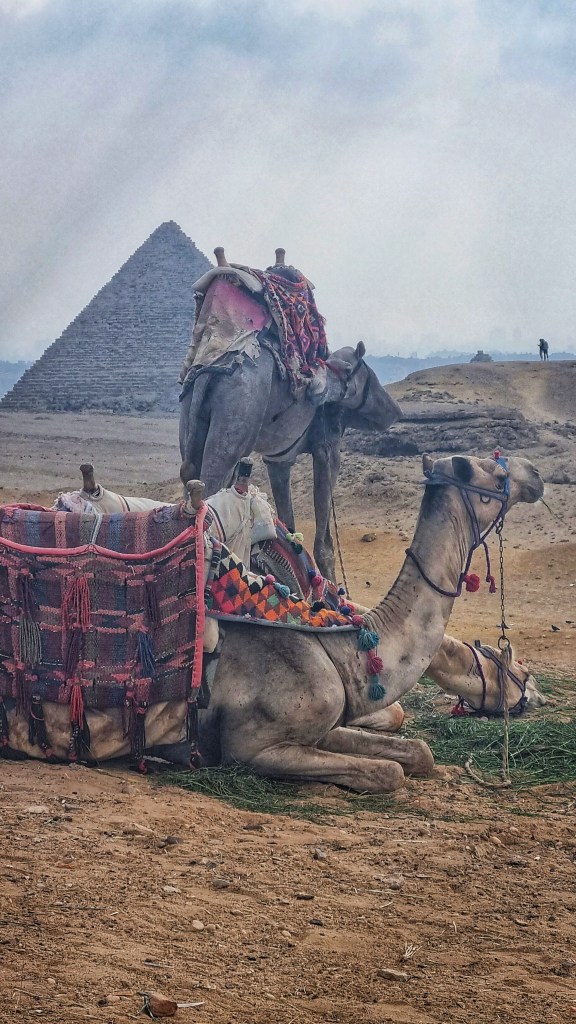
The music of Giza is a counterpoint between the honking of impatient drivers and the voice of the muezzin. As the call to prayer washed across the Giza Plateau, my ride to the airport came and it was my call to head back home. After all, home is a prayer.
But how can one leave a place when it says goodbye looking like this? Your heart would break a little, too. But then again, what’s a little heartbreak if your heart has not been too well for a while?
The ancient Egyptians believed that when a person died, their heart would be weighed against a feather. It was always a question of whether the heart was heavy or light. As I leave, may the scales find my heart lighter than when I arrived.
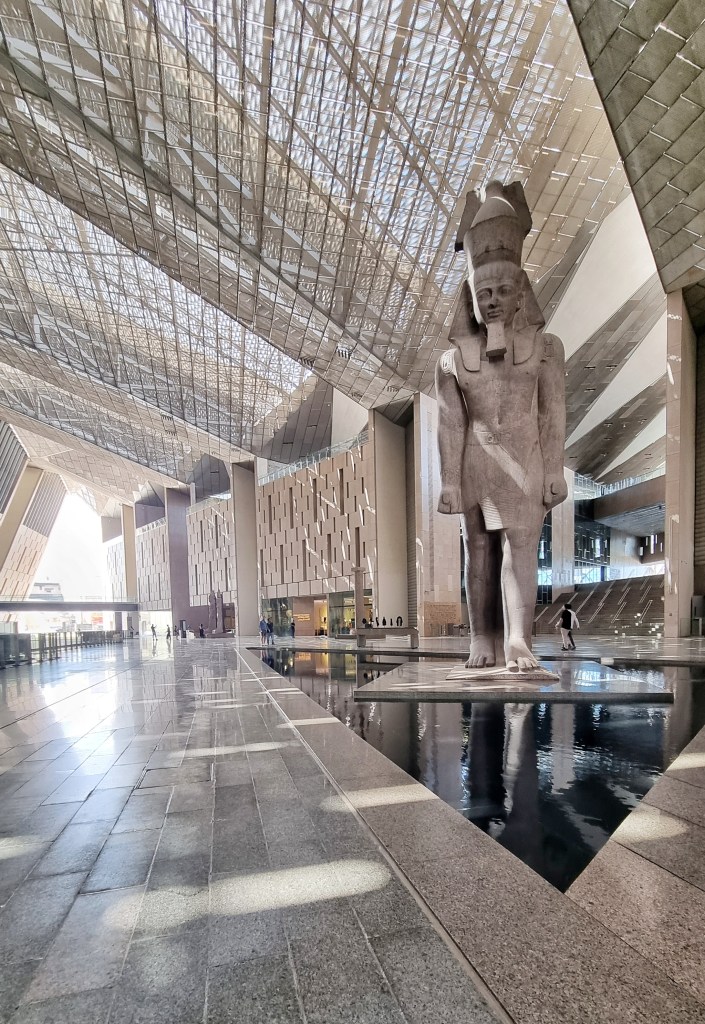
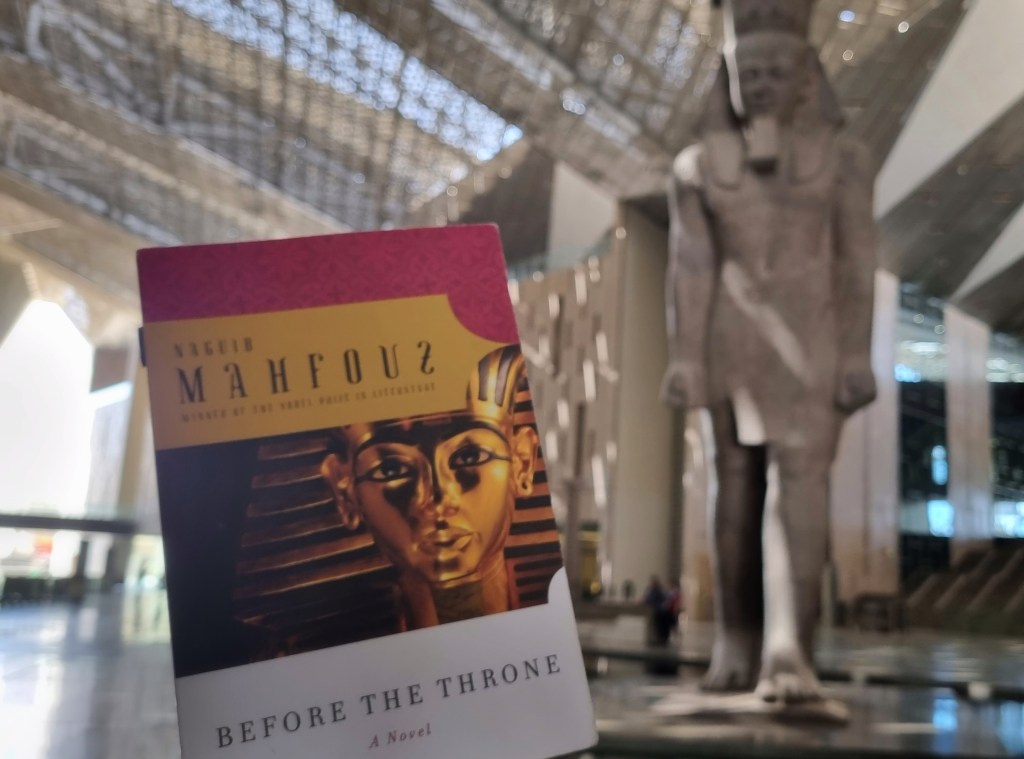
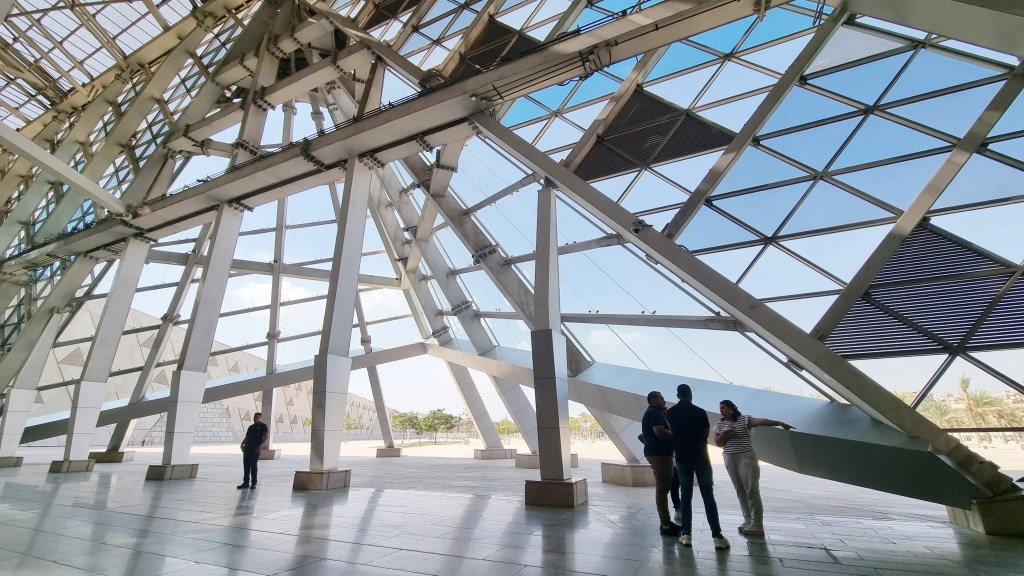
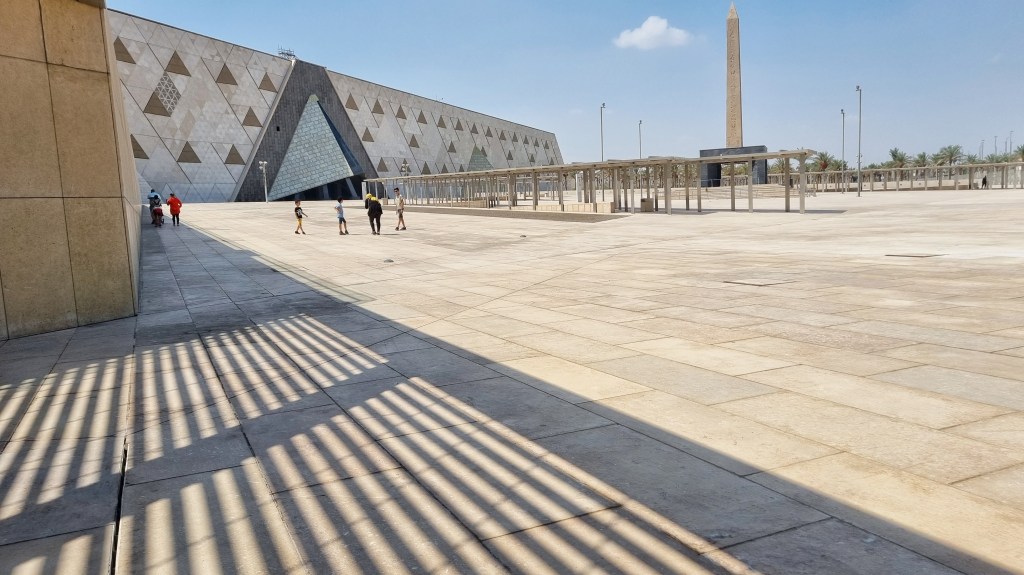
The Louvre, with its iconic glass pyramid, used to be the largest museum in the world at 60,600 square meters. Now it has been surpassed by the Grand Egyptian Museum at 81,000 square meters. It is the largest museum dedicated to a single civilization (the ancient Egyptian civilization), and it boasts of a special panoramic window that opens to… *drumroll* THE Pyramids of Giza!
Not a very subtle way of saying, “Take that, Europe!”
I was told that the story began in the early 2000s when a representative from Egypt attempted to retrieve some of their most valued artifacts from Italy and they were met with a strong refusal. (Figures differ by a number or two, but no more than 30 obelisks have ever been found in Egypt and only 6 remain. The majority of these are in Rome and other capital cities around the world.) The reason for the refusal was that Egypt lacked a proper place to store these treasures. Egypt had to admit that there was truth to this, and the idea of the GEM was born.
While researching for this trip, I wondered why there was never a clear opening date. My curiosity heightened when I arrived in Giza and I could see the GEM through my hotel window looking quite complete and ready! When I asked the guides, they told me it was still closed. My intuition said otherwise, and I went there anyway saying to myself that if it turned out to be closed, at least I could still admire the exterior of the building. When I arrived there, I was greeted by highly trained and professional staff explaining that they were holding a “trial opening” and even though the exhibit halls were still off limits, I was welcome to have a guided tour of the building! The cherry on the top of this whole trip!
My personal take, based on passing insider comments, is that they are hoping for the Rosetta Stone and the Bust of Nefertiti to come home before the grand opening, hence the unclear dates. The odds are low, but I sincerely hope it happens. Egypt lacking a proper place to store these treasures has now become an invalid excuse.
It was comical at first. The sight of the crowd by the entrance told me that I would not be having epiphanies or spiritual experiences.
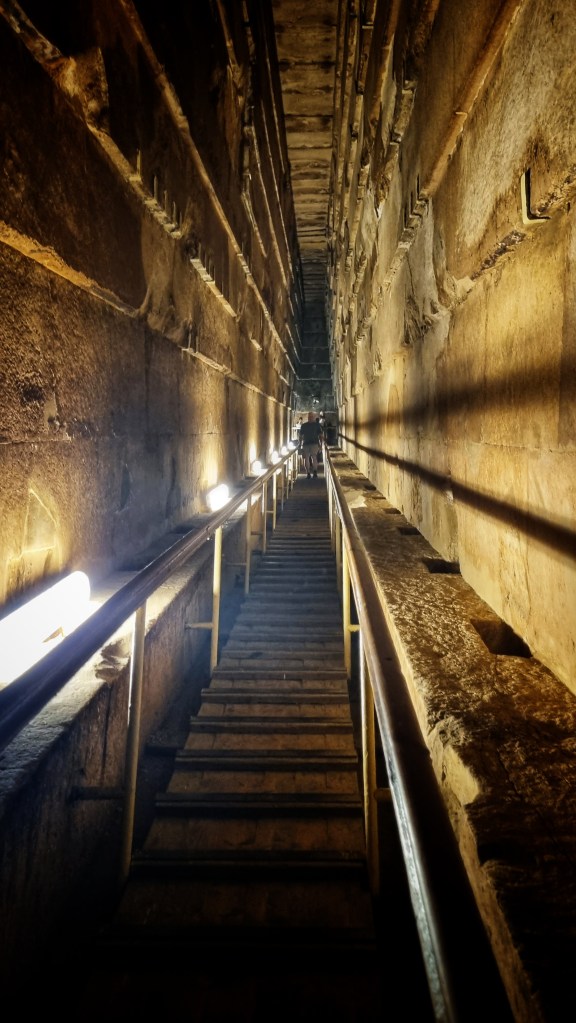
And the guide said that if I wanted to go inside the Great Pyramid, I would have to pay an extra fee, climb a narrow and steep incline that could cause claustrophobia, and see nothing inside.
I paid the fee. Being inside the Great Pyramid is not nothing!
So there I was climbing the steep incline when I noticed figures of a family of three ahead of me. The father muttered, “Kapoya man diay ani! Ta-as pa ni? Mao ra ni makita?”
Bisaya! Inside the Great Pyramid!
Amused and extremely happy to be hearing Binisaya for the first time in over two weeks, I laughed out loud and, even without seeing their faces in the dark, called out to the mom a few feet away from me, “Bisaya diay mo Ma’am? Ako pud! Grabe jud ang Bisaya kay mag-abot bisa’g sulod sa pyramid!” And we laughed our heads off while sweating profusely.
When we finally arrived at the King’s Chamber, instead of having a life-changing experience amidst the rose granite especially chosen for the chamber — the heaviest stones used in the entire pyramid, I acted as photographer for my new friends.
The way out took longer because more people were entering by the time. As I exited back into the glaring sun, the guide was waiting for me. He asked me how it went and I told him I did not regret going in.
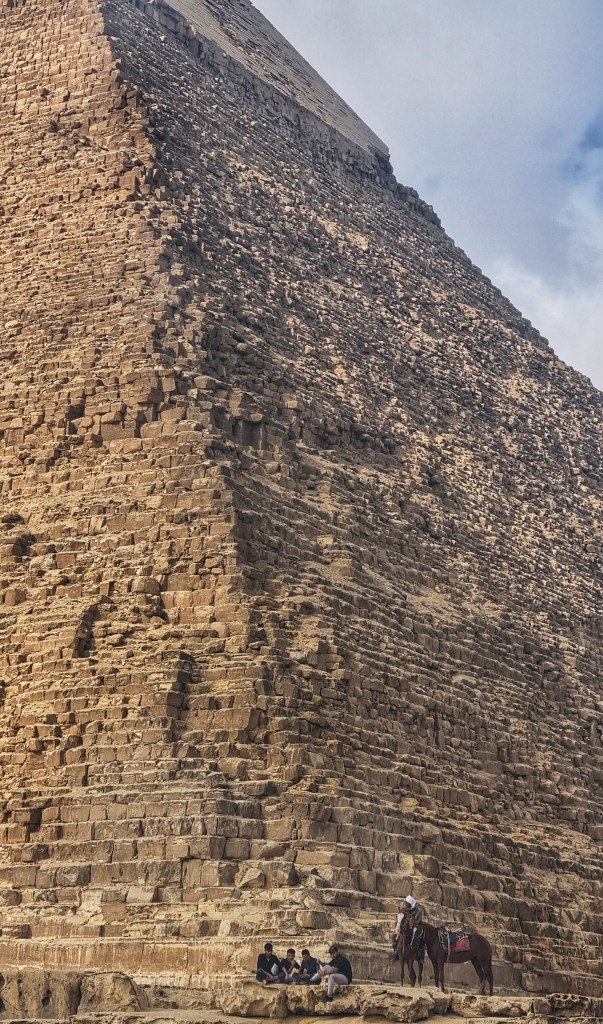
He drew my attention to the limestones of the pyramid. (The smooth outer layer, which was granite from Aswan did not erode through time. They were removed, stolen, and used for other structures by succeeding generations.) He then pointed at several fossils in the limestone. “What does that tell you?” He whispered.
The Pyramid of Khafre. The second largest pyramid in Giza next to the Great Pyramid of Khufu.
All at once a strong emotion took hold of me and I burst into tears. I tried to control myself but I couldn’t. The tears kept flowing. The truth that we don’t really know anything and all we can do is speculate, and the enormity of history was just so overwhelming to me at that moment.
These stones, stacked perfectly on top of each other by who knows who, who knows how, and who knows why… these stones speak to you in a different language. These stones do something to you.
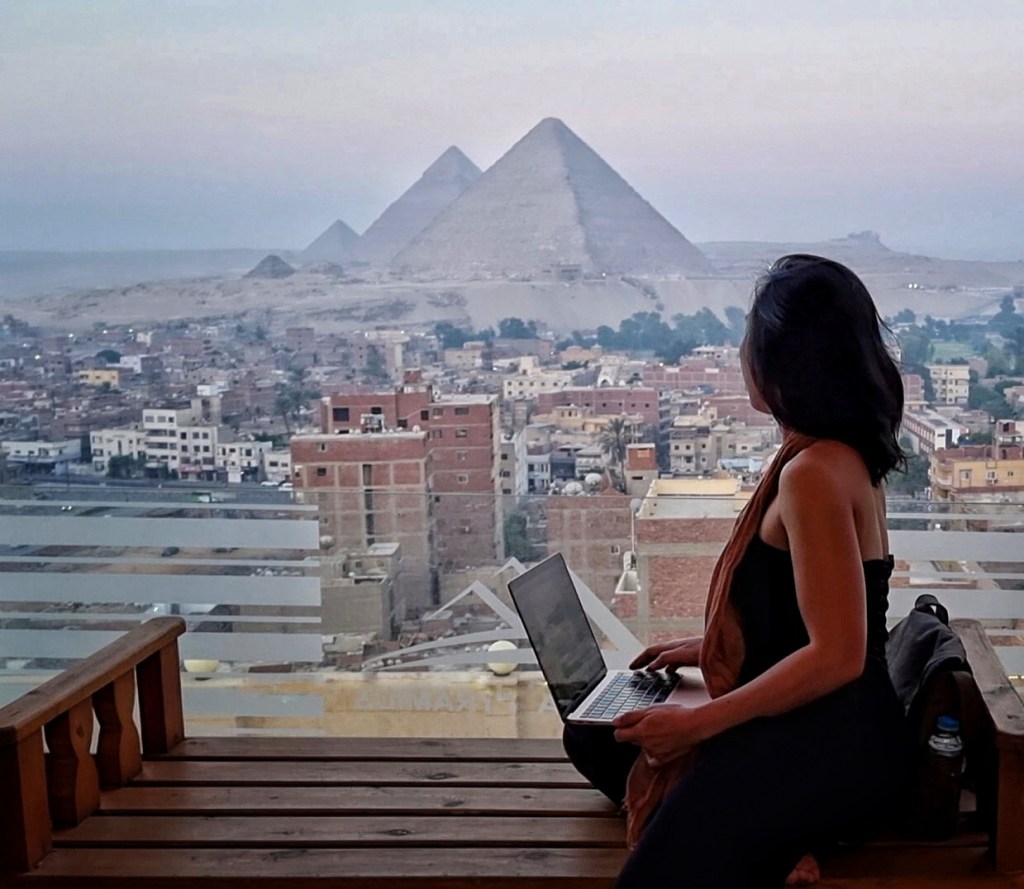
It was surreal to have this view from my hotel bedroom and its roof deck.










 The Book-Butterfly