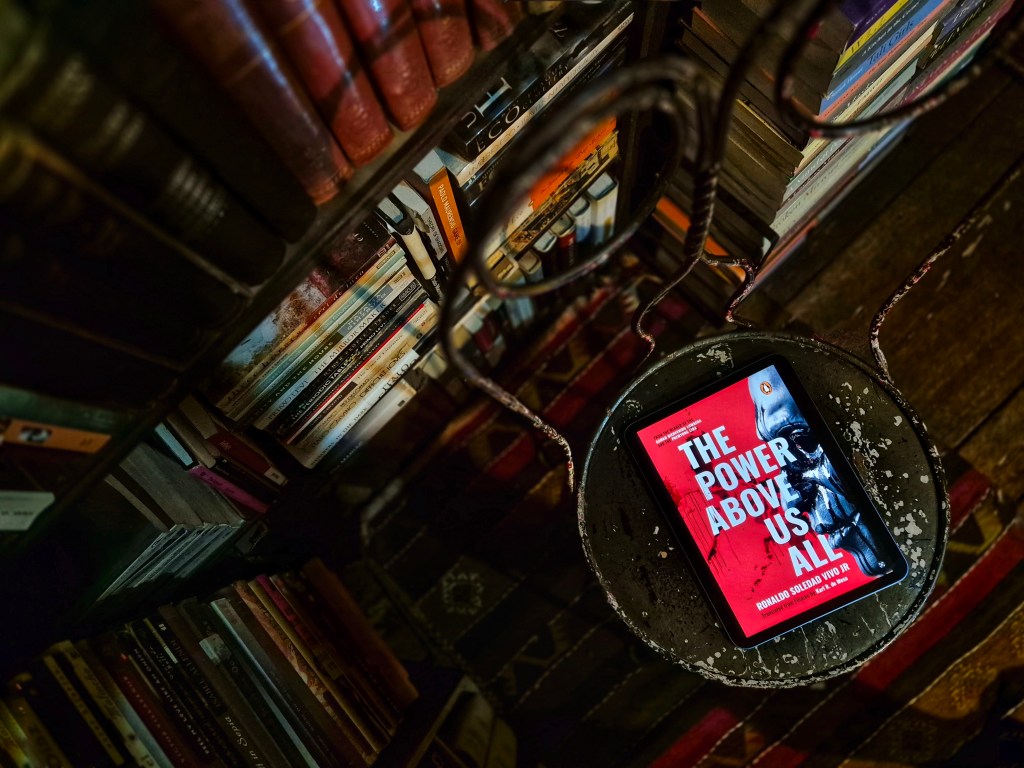
Circumnavigating July

From Stefan Zweig’s Magellan, to Robert Graves’s Homer’s Daughter, to Aatish Taseer’s A Return to Self, to Kahlil Corazo’s Rajah Versus Conquistador, July seemed to have a fortuitous recurring theme in the books I read and in my encounters with storytelling: New ways of seeing and new ways of reframing self and history. 
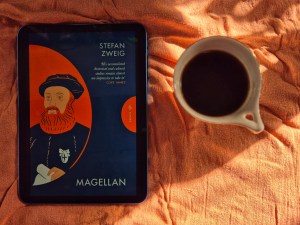
For someone whose nation regards as a hero the man responsible for Magellan’s death, I have to admit that this book was approached in Lapu-Lapu mode, en garde, expecting a Eurocentric view of history. But Zweig had me at page 11 upon acknowledging that the primary objective of the Crusades was to wrest the trade route barriers from Islamic rule. You don’t often get that admission from a Western book written in the 1930s.

In Philippine history, Magellan’s death eclipses the fleet’s first circumnavigation of the world. This book emphasizes the feat of an adventurer who had, at the time, “far outstripped all others in the exploration of our planet,” and proved beyond theory that the Earth was round. He was bad news for flat-earthers. Zweig humanizes the man whose death we celebrate, and this is a great read for those who would like to peer through another vantage point of the expedition. But dear Stefan, as much as I am a fan of your writing, Magellan did not “discover” the Philippines; he merely set foot on it and placed it on a Western map. 

“What we term history does not represent the sum total of all conceivable things that have been done in space and time; history comprises those small illuminated sections of world happenings which have had thrown upon them the light of poetical or scientific description. Achilles would be nothing save for Homer.”

Speaking of Homer… how did I not know that the author of the more famous I, Claudius has penned a delightful book called Homer’s Daughter, claiming he could not rest until this novel was written after finding arguments on a female authorship of The Odyssey undeniable? It is based on the premise that The Odyssey — authored over a hundred and fifty years post-Iliad, more honeyed, civilized, and sympathetic especially toward Penelope — was written by a woman.

It makes for an enjoyable read as Graves imagines the life of Nausicaa, a Sicilian princess who rewrites Homer’s epic with elements from her life. “The Iliad, which I admire, is devised by a man for men; this epic, The Odyssey, will be devised by a woman for women. Understand that I am Homer’s latest-born child, a daughter.”

We have understood through the likes of Virginia Woolf that “for most of history, Anonymous was a woman,” but how the poet of The Odyssey could be a woman is a concept new and fascinating to me. 

What if The Odyssey’s notion of Ithaca holds sway because it was not written by one who wandered off, but by one who stayed?

And yet, Aatish Taseer’s Ithaca remains my kind of Ithaca: “The pilgrim spirit is one that wanders away from the comfort and safety of our home secure in the knowledge that the transformation the pilgrim will undergo over the course of his journey is the destination.” The author has a life story incredible enough, but more importantly, here’s a writer and traveler who shows us how profound traveling can be when we are mindful of the inner journey. A Return to Self is a book I will be returning to.
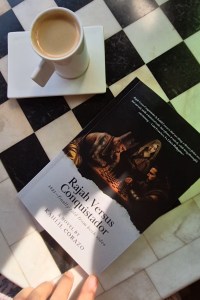
Speaking of Home… I have never read a novel that came this close to home! As a descendant of a binukot, this book felt so personal and empowering to me. The soul of the binukot does not play second fiddle to anything in this novel.

By reading Rajah Versus Conquistador, I seem to have circumnavigated July and circled back to Cebu. The title refers to Magellan as the Conquistador, and Humabon as the Rajah.

Humabon, in Zweig’s words, “was no such unsophisticated child of nature… He had already eaten of the tree of knowledge, knew about money and money’s worth… a political economist who practiced the highly civilized art of exacting transit dues from every ship that cast anchor in his port. A keen man of business, he was not impressed by the thunder of the artillery or flattered by the honeyed words of the interpreter… he had no wish to forbid an entrance to his harbor. The white strangers were welcome, and he would be glad to trade with them. But every ship must pay harbor dues.”

Often cast as a traitor or as someone who’ll always be lesser than Lapu-Lapu in Filipino eyes, Corazo’s Humabon agrees with Zweig’s Humabon: a cosmopolitan ruler who defies simplification. There is much to be said about this work; from the witty language where Bisaya humor often raises its head, to rethinking our past and the deeper meaning to our myths, to the skillful crafting of the key players. Corazo does not merely reconstruct complex characters from the past, he gives readers a perspective of history “viewed not from the deck of a Spanish galleon but from behind the woven walls of a payag…”

And who lives behind these amakan walls? The women. This is what makes Corazo’s work especially meaningful to me. He brings the hidden women to light and by doing so, honors those who never made it to official records but who nonetheless steered the course of history through their quiet power, and who continue to do so.

“Each generation of binukot learns to reshape herself.”

To which Ruby Ibarra gives a brilliant answer: “Ako ang bakunawa.” 

These were last month’s books and soundtrack.
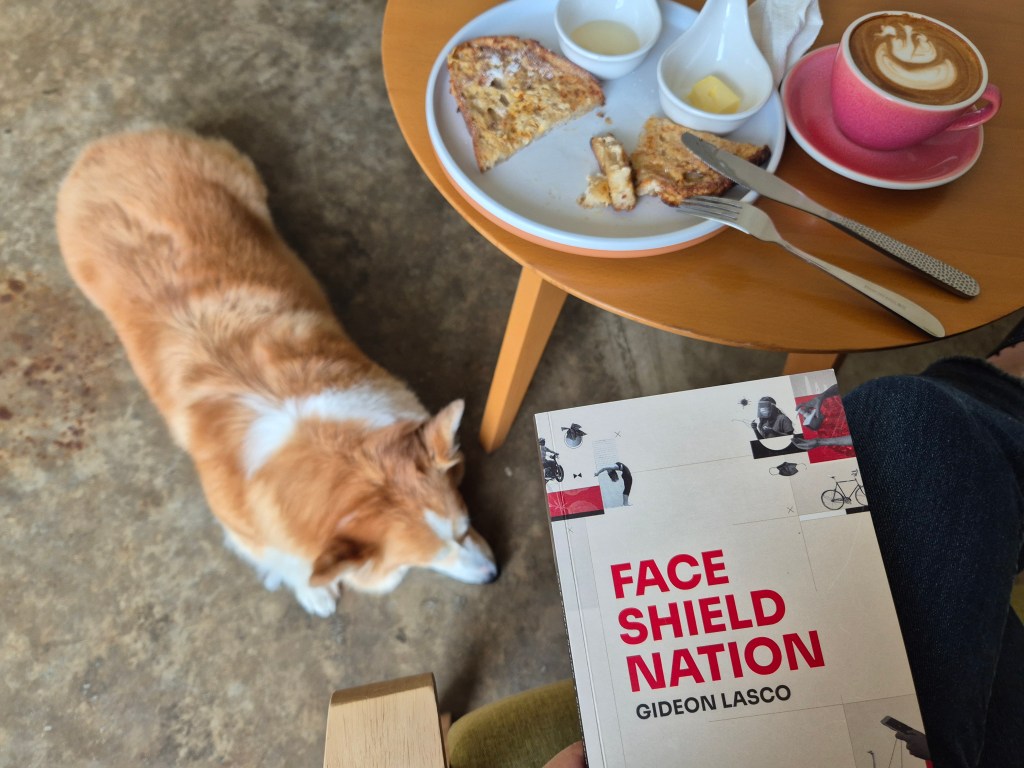
Gideon Lasco: Face Shield Nation

Gideon Lasco’s articles in the Philippine Daily Inquirer were among the things I looked forward to during the pandemic lockdown. His was the voice of calm and reason at a time of great confusion; evoking, through his column, the architectural definition of a column as a sturdy pillar of support.

To have those pandemic articles compiled in a book is to possess an essential time capsule of an era that disrupted our lives and brought the world to its knees; and an era that we cannot afford to forget if we intend to learn from it.

Looking back will not be as easy as it is for others, but it only seems right that reading this should make us feel uneasy at times, despite Lasco’s endeavor to maintain a hopeful tone. When read as an entire book, what’s louder than his leitmotif of hope in these essays is the tone of dissent — a refusal to stay silent amidst injustice and corruption, and a refusal to accept the blunders of our leaders without holding them accountable.

It calls on us, readers and citizens, to demand better leadership and to remain critical toward those in power in the service of nation-building: “If we believe that life is more than survival or subservience, then ‘to live’ should involve the willingness to stand up for our right to do so.”

“…what’s at stake in what we write… art, truth, and social justice.”

That is what’s at stake in everything we do, even in our silence.

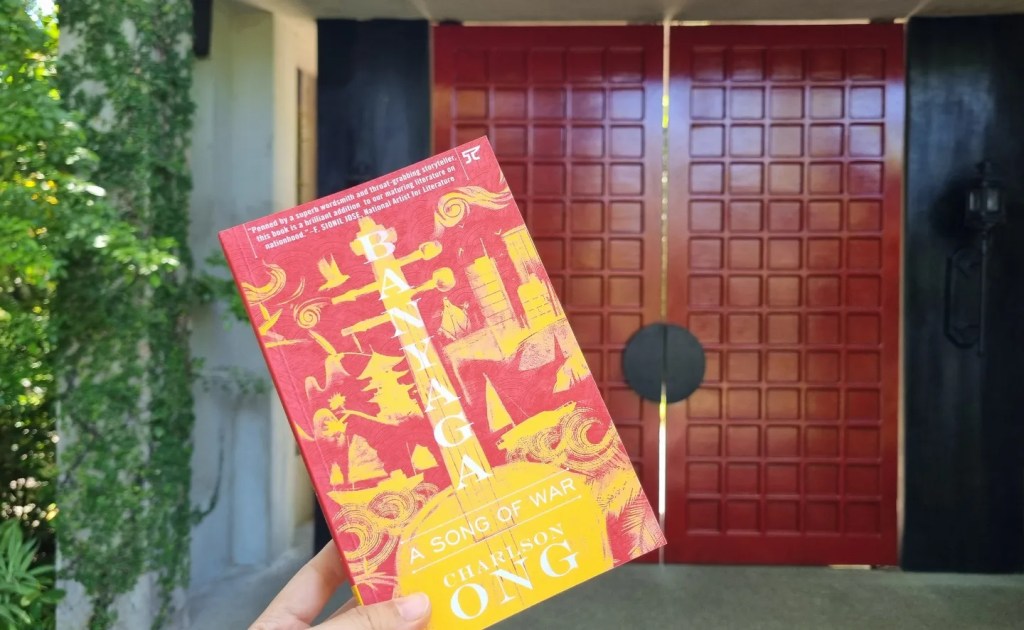
Charlson Ong: A Song of War

Stunning. Cinematic. Unforgettable.

Banyaga: A Song of War weaves melodies, threads, saturated shades of scarlet, unattainable indigo, and moonlight yellow into the rich literary tapestry of our nation, and gives prominence to an underwritten perspective of Philippine history and literature — that of the Tsinoys, the Chinese Filipino.

The vivid imagery (beginning with Chinese boys caught in a brawl that results in a sworn brotherhood, on a ship heading for Manila) that remains consistent up to its plaintive ending in Manila Bay almost a century later; the fleshed-out personalities and exuberance of the characters; and the nonlinear narrative, brilliantly interlaced throughout the American occupation until the post-Martial Law era, tempts the mind’s eye to read this with a Wong Kar-Wai filter. With the acculturation of Chinese and Filipino traditions, and the subtle exposé on the workings of the government, economy, and political unrest as a backdrop, all of these lend to it a fullness of texture and quality that I have yet to encounter in any other Filipino novel published in the 2000s.

Banyaga, which means “foreigner” in our language, follows the lives of Ah Puy, Ah Sun, Ah Beng, and Ah Tin who hoped to escape poverty and political turmoil in China. Their dreams for better lives are soon trumped when they are rejected by relatives and family upon their arrival in Manila. As they are forced to fend for themselves and survive in a strange land that would become their only home, they will come to be known as Hilario Ong, Samuel Lee Basa, Antonio Limpoco y Palmero, and Fernando de Lolariaga. The different surnames suggest that the trajectory of their lives takes different turns, but an invisible thread would always bind the lives of the four sworn brothers and their families to each other and the course of Philippine history.

This novel has indelible scenes that will have you gasping in shock, push you on the edge of your seat, and break your heart repeatedly throughout the span of three hundred and seventy-three pages, but most of all, it will lead you to ponder on nationhood and leave you in awe of the heights that our nation’s literature has achieved.

Linda Ty-Casper: The Three-Cornered Sun

“The chief glory of every people arises from its authors.”

Debatable to some, for sure. But I am inclined to agree with Samuel Johnson, and with Susan Sontag. Especially after having read The Three-Cornered Sun.

Read the review at exlibrisphilippines.com.

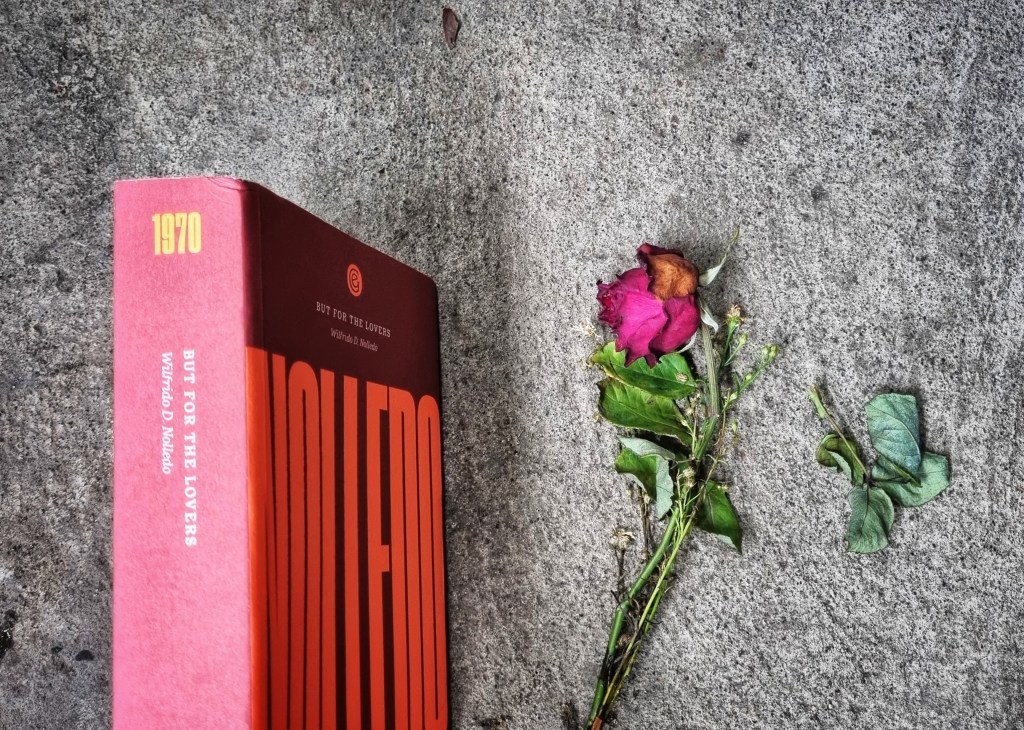
Wilfrido D. Nolledo: But for the Lovers

Before Salman Rushdie there was Wilfrido Nolledo. We find the same clever wordplay, but Nolledo reigns supreme in five languages and a couple of Filipino dialects or more, inclusive of Italian musical terms and Tagalog (they did not call this a feat of language for nothing); there’s that humor that catches by surprise when misery is expected; political caricatures and blaspheming characters that provoke fatwas from the high priests of governments; and those vulgarities that examine moral codes as though asking whether we’d also find war and injustice obscene.

Thanks to countless movies, documentaries, and novels, my generation can conjure mental images of what Paris and other European cities looked like in the final days of WWII, but only few can picture the desolation and the confusion of Manila when it was the bomb-ridden chessboard of the imperial powers. Nolledo encapsulates it for us. But one must not expect a literary Amorsolo, because here is a postmodern Hieronymus Bosch.

“And won’t we be doing the reader an injustice by presuming he can’t digest such stuff?” Nolledo asks in response to a suggestion to cut the manuscript to keep readers interested. And so, signifying that it was written not to sell but for art, he gives it to us, gives it to us hard.

It is not going to be everyone’s cup of barako. It is an explosive halo-halo that is difficult to swallow at times. A revolution on one’s literary tastebuds. Before Rushdie there was Nolledo, but I am only discovering this now. It’s time we did.

And yes, I read this for Valentine’s. Haha!