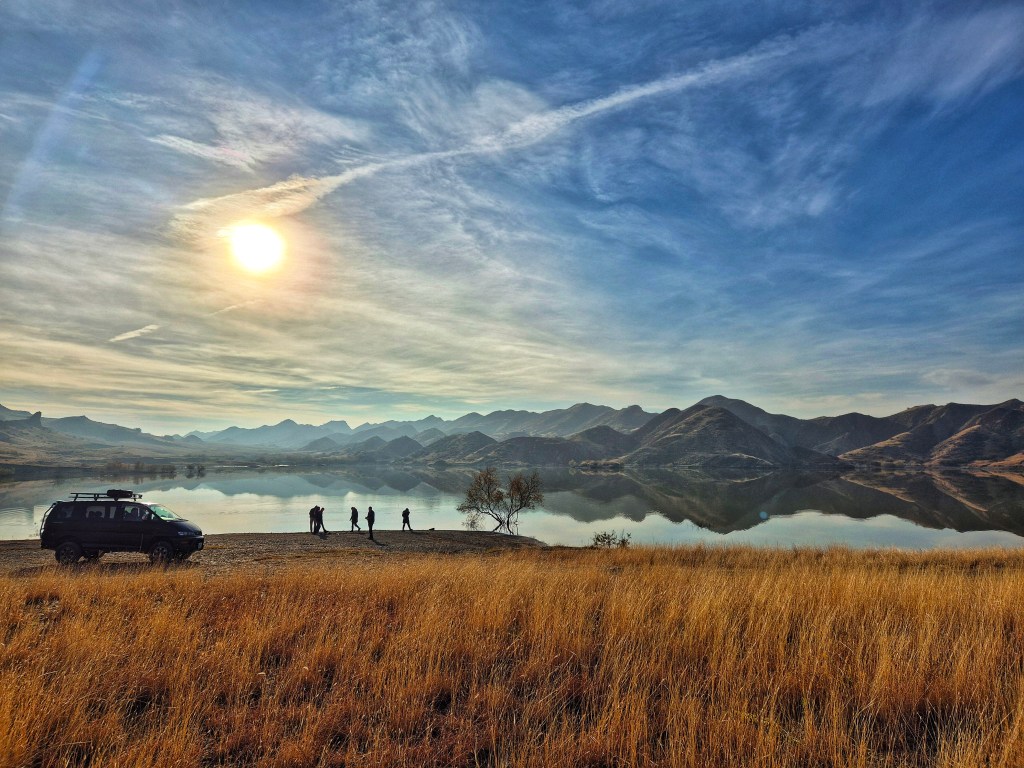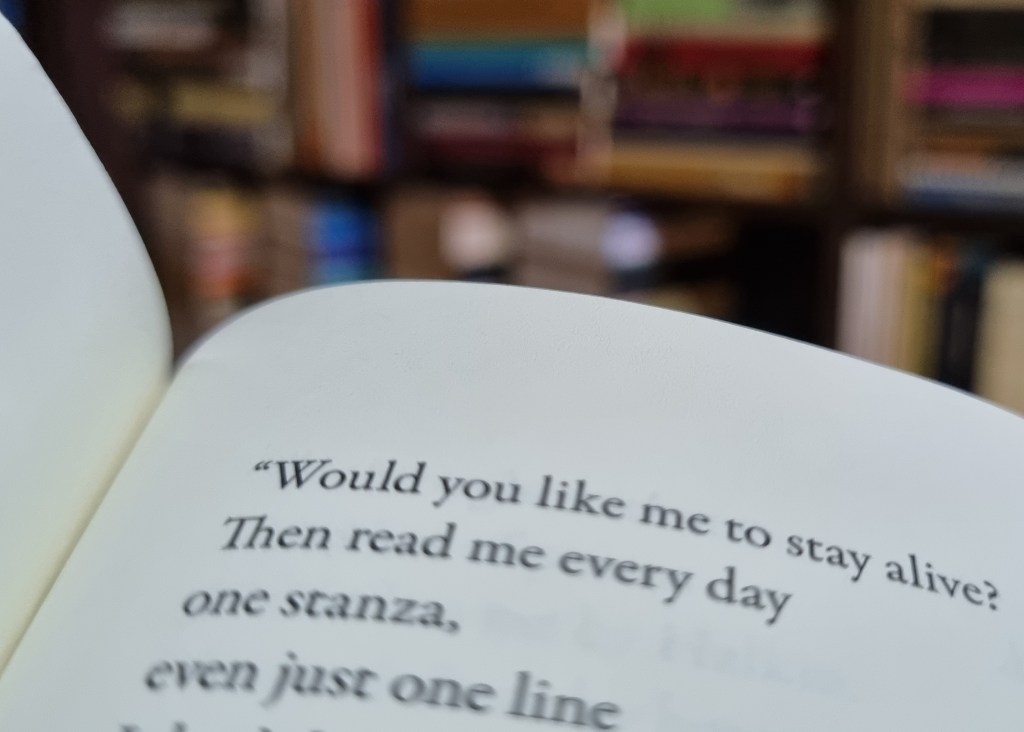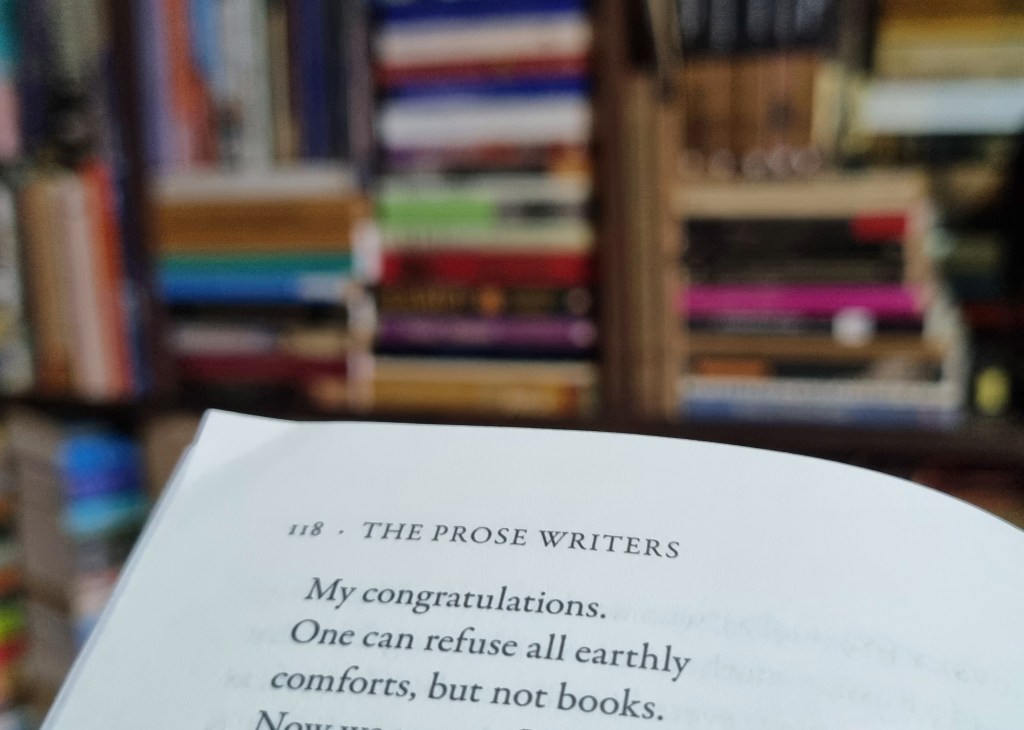
A Reading Girl in Kazakhstan

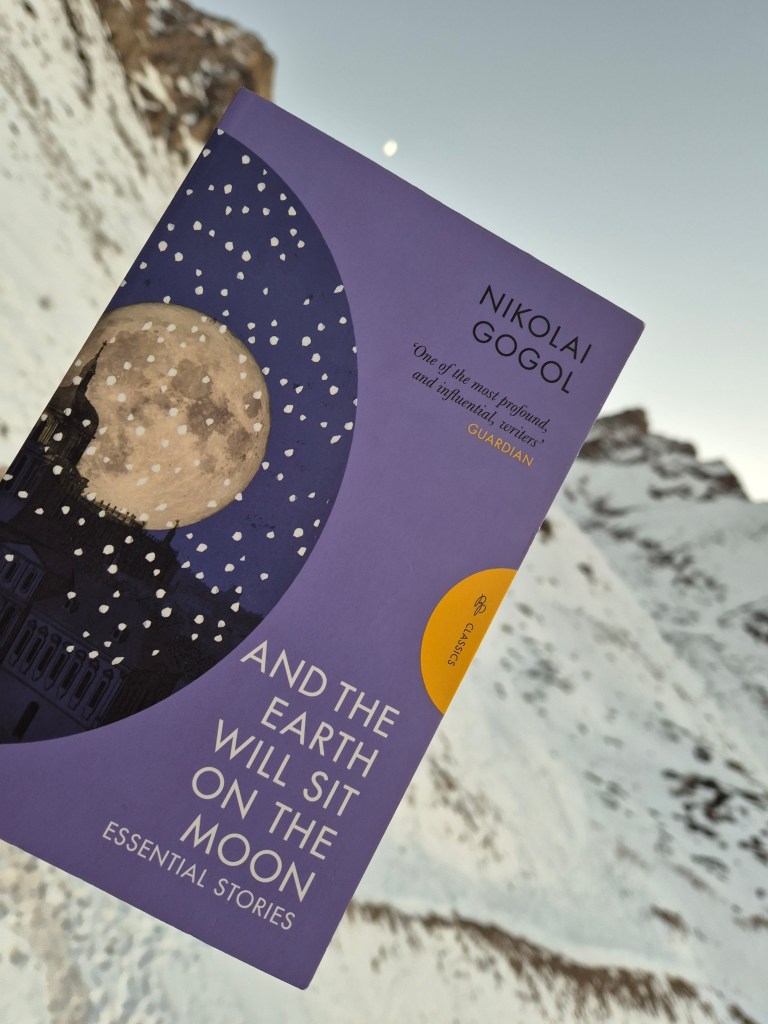
That was me. The girl with a Gogol anthology poking out of a backpack pocket while walking the length of Almaty’s Gogol Street a number of times, earning her more than 20,000 steps a day; 

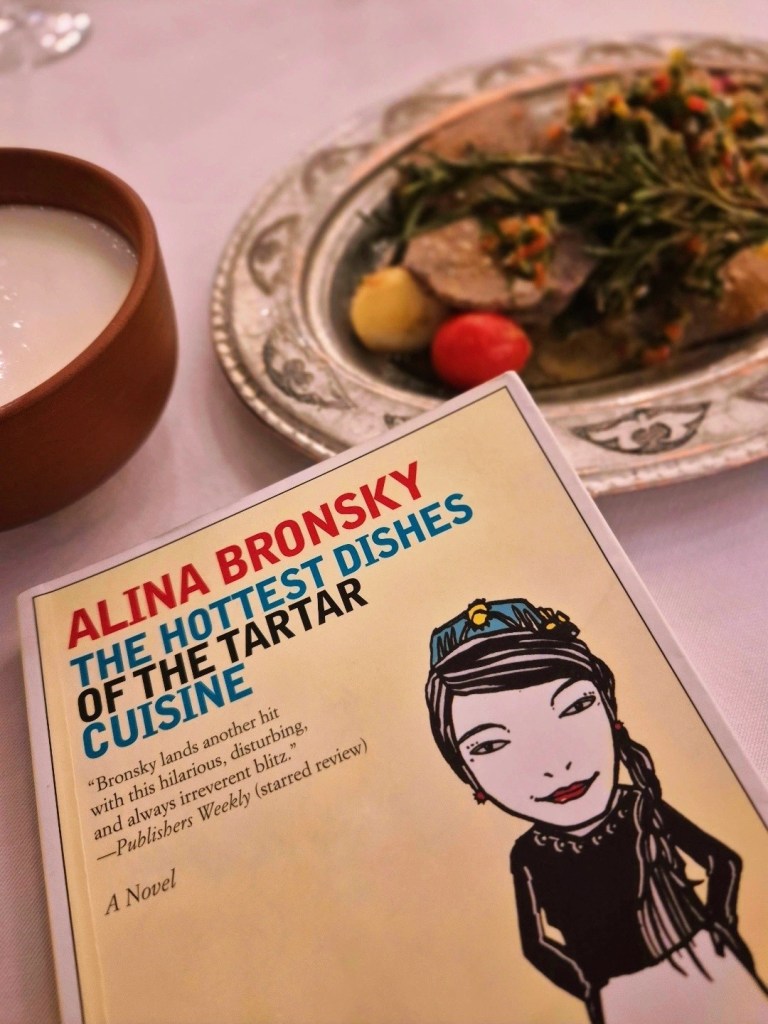
who paired her first Kazakh meal of horse meat and fermented camel’s milk with Alina Bronsky’s insane but unexpectedly touching Hottest Dishes of the Tartar Cuisine;

who carefully savored the nuances in every Kazakh story from Amanat (Women’s Writing from Kazakhstan) on every fermata between adventures, and upon completion, discovered that it would be one of her favorite collections of short stories;
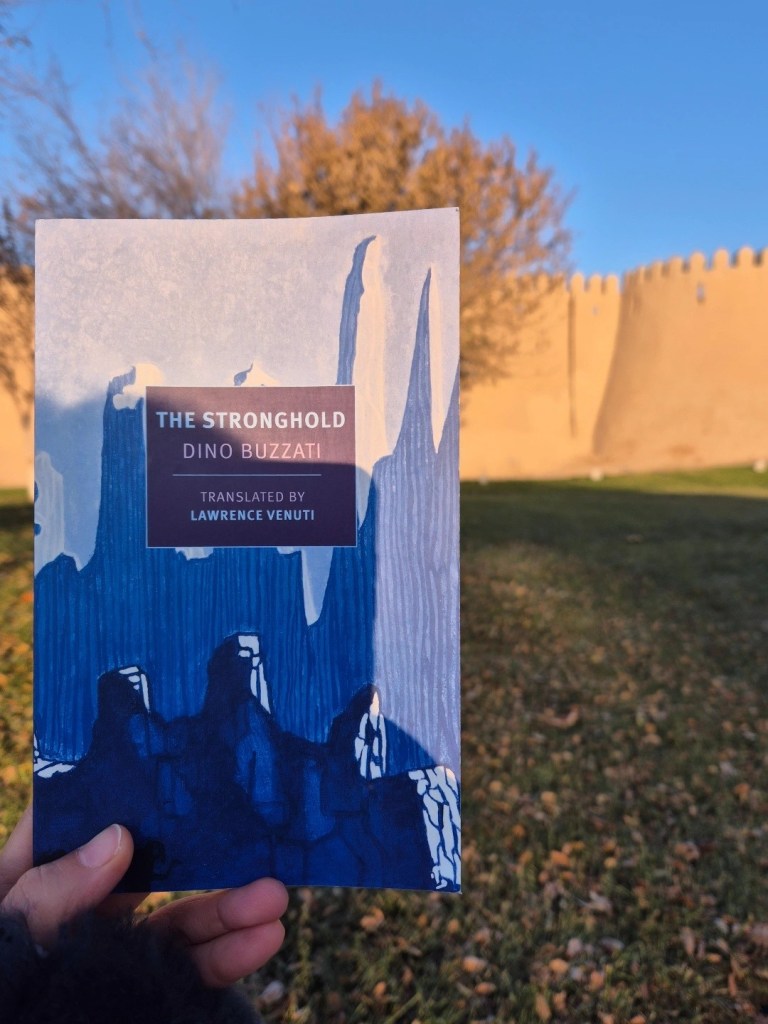
the girl who brought Buzzati’s The Stronghold (aka The Tartar Steppe) to a stronghold in a Tartar steppe, and who realized that Buzzati would have been happy with her for taking a cue from his novel and living a life contrary to that of Drogo’s;

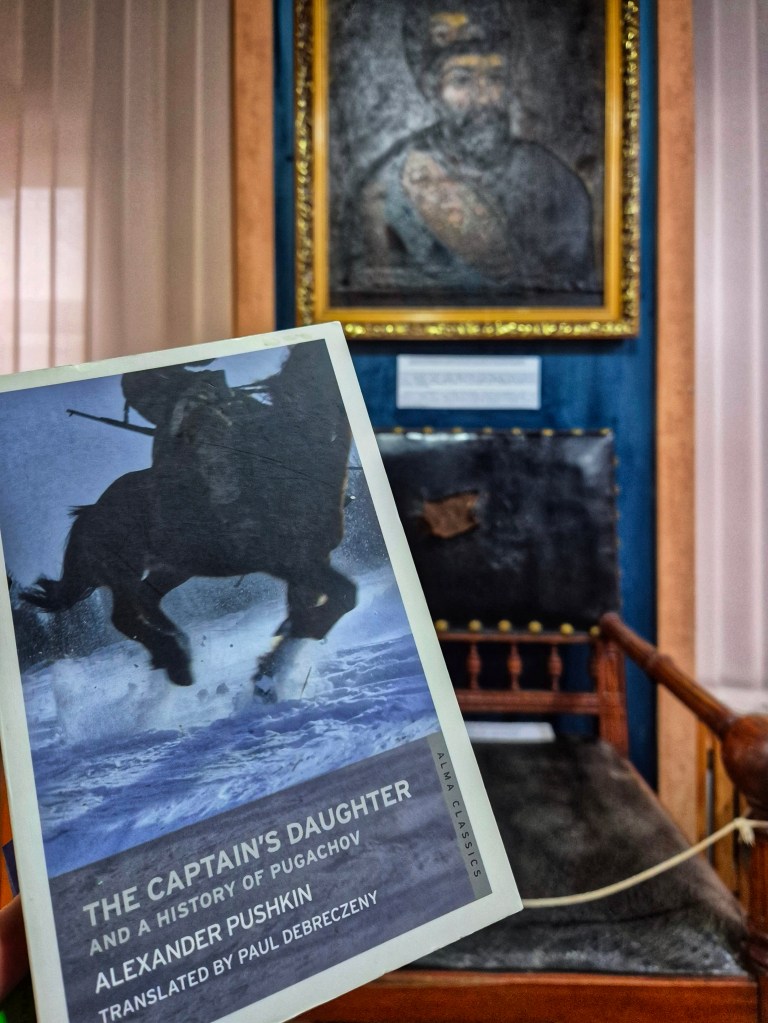
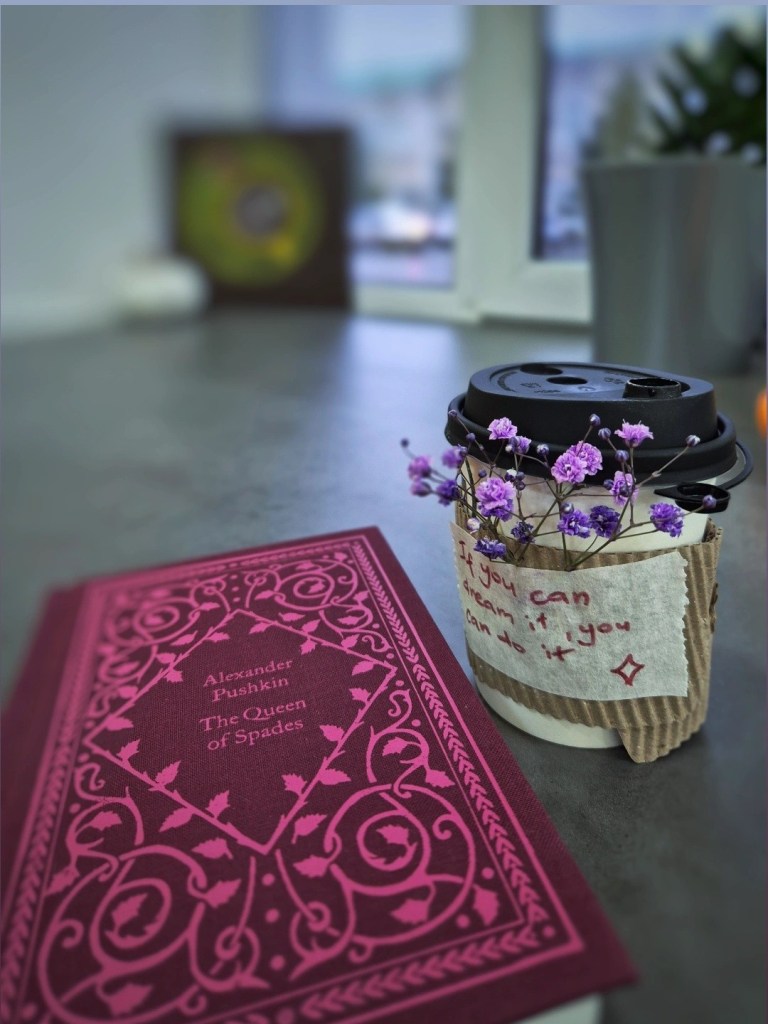
the girl who felt like a queen when she received a cute note in English with tiny flowers from a barista in Uralsk, and a free pass at the Pushkin Museum by reading and bringing The Queen of Spades with her;

who learned about Pugachov’s Rebellion through Pushkin before knocking on Pugachov’s door;
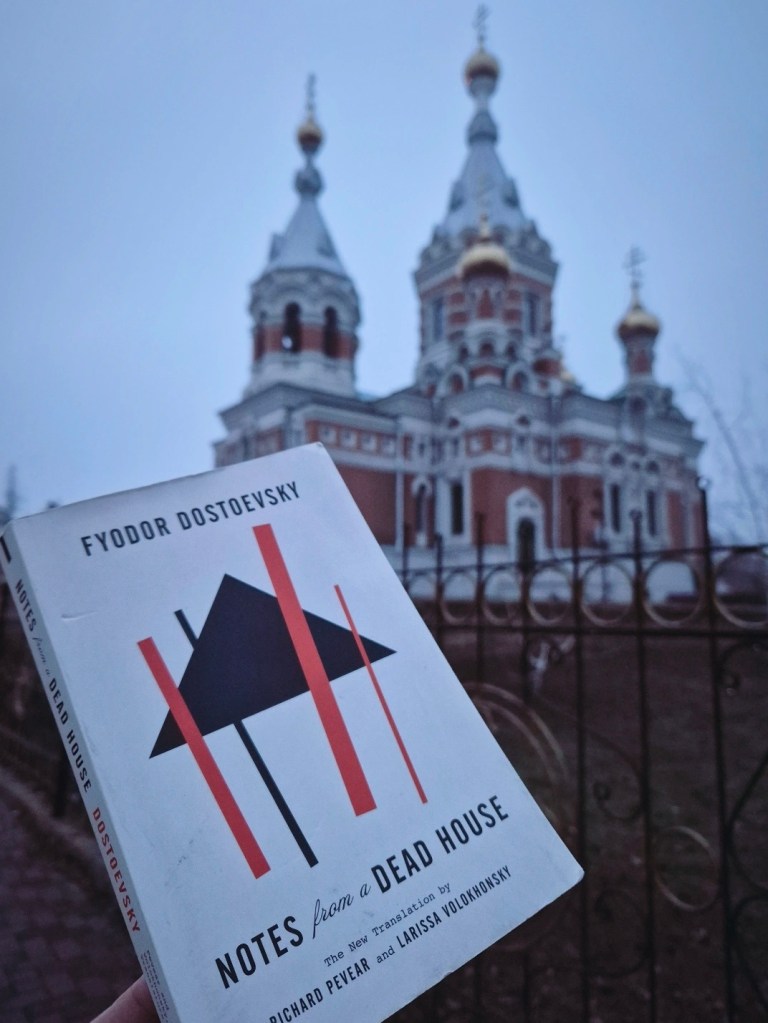
who reunited Dostoevsky’s Notes from a Dead House with Kazakhstan simply because it’s where he started writing the notes;

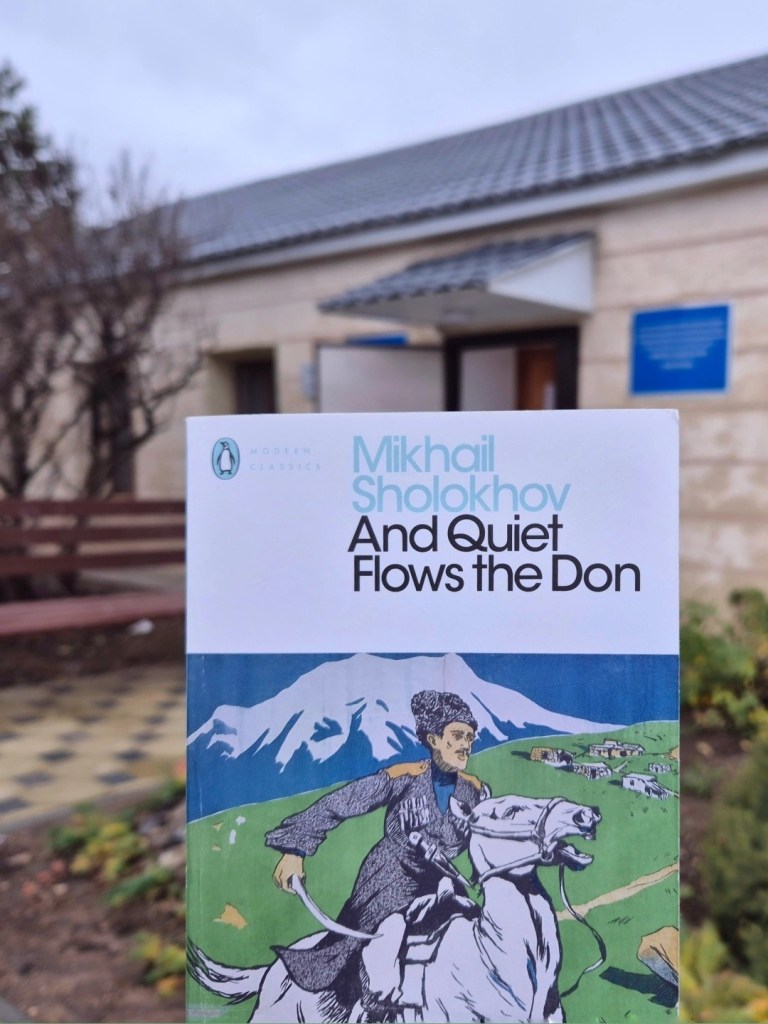
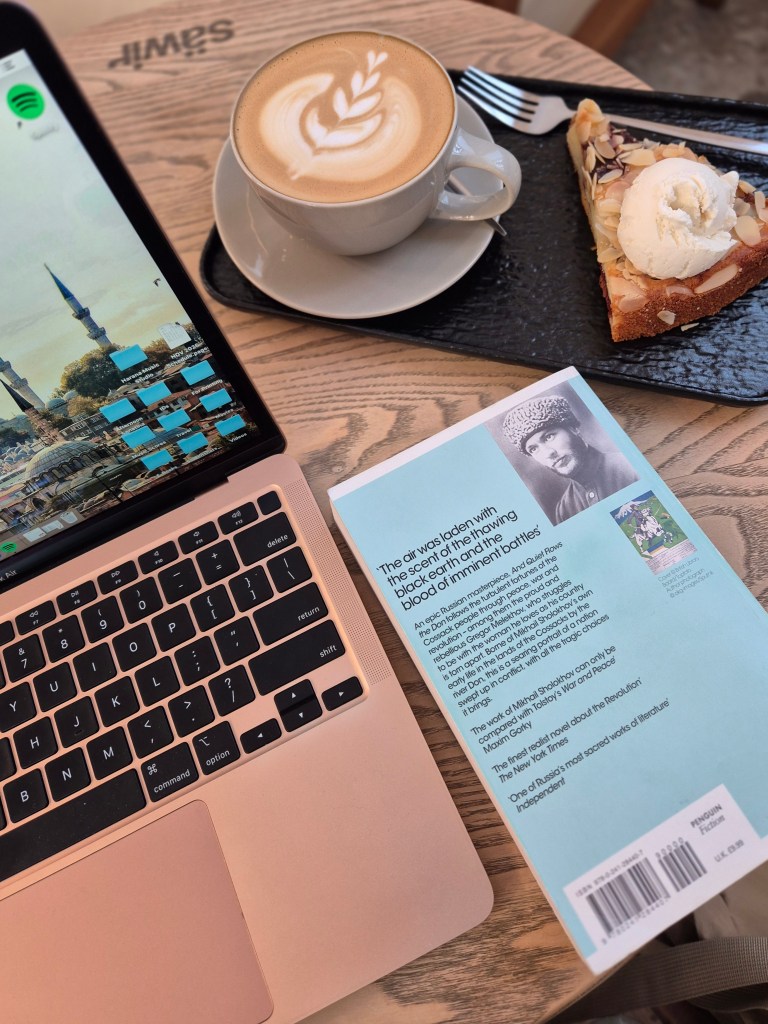
the girl who wished she flowed, but instead, lumbered through Sholokhov’s epic “And Quiet Flows the Don,” and being devastated by it, could only take the hefty book to the house where Sholokhov learned that he was awarded the Nobel and play a plaintive melody on his piano while gazing at his portrait, wanting to ask him so many questions;

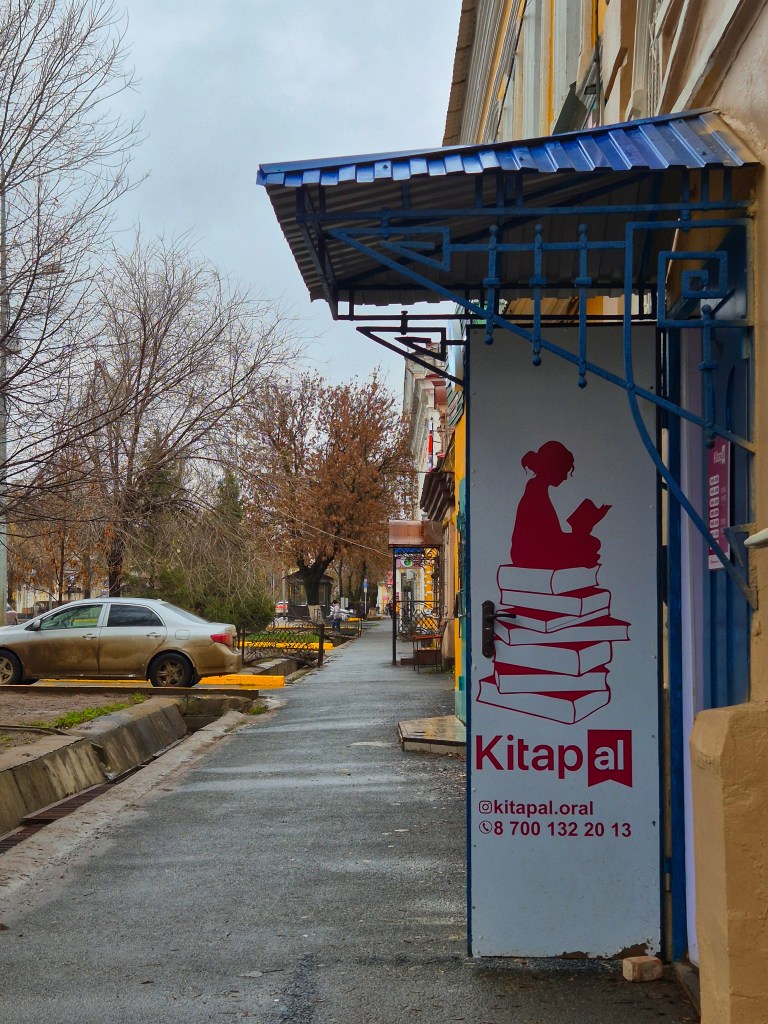
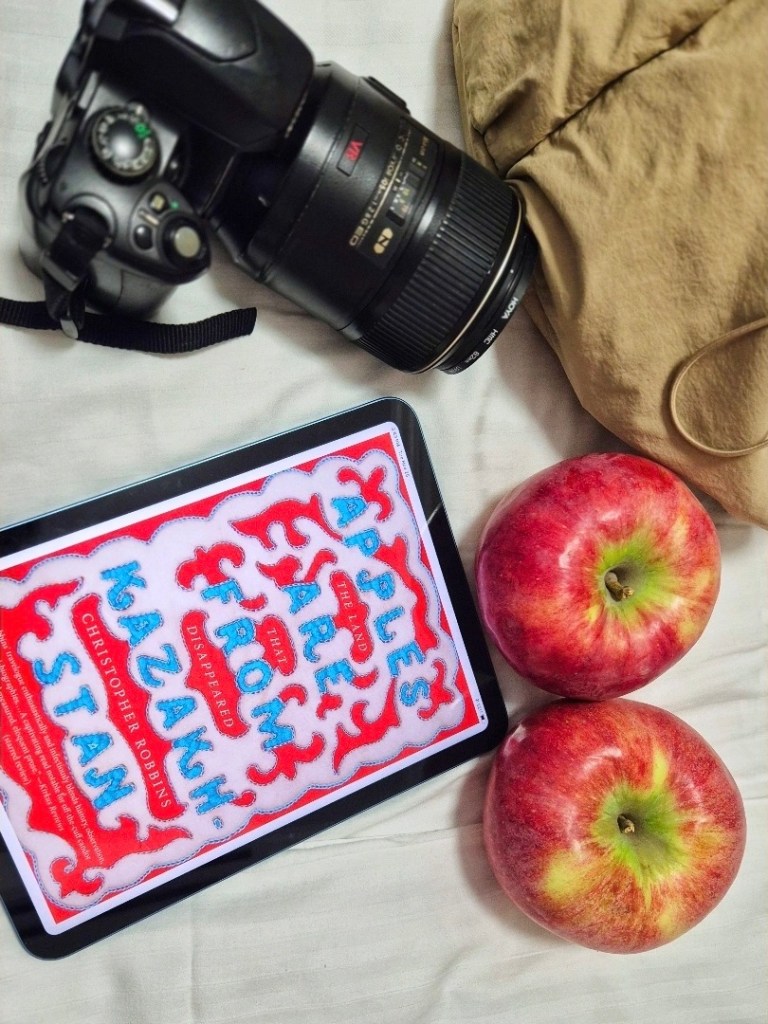
the impractical girl who carried all these books to a trip, thankful that she did because Kazakh bookstores humble the English reader by catering only to the Kazakh and Russian reader;
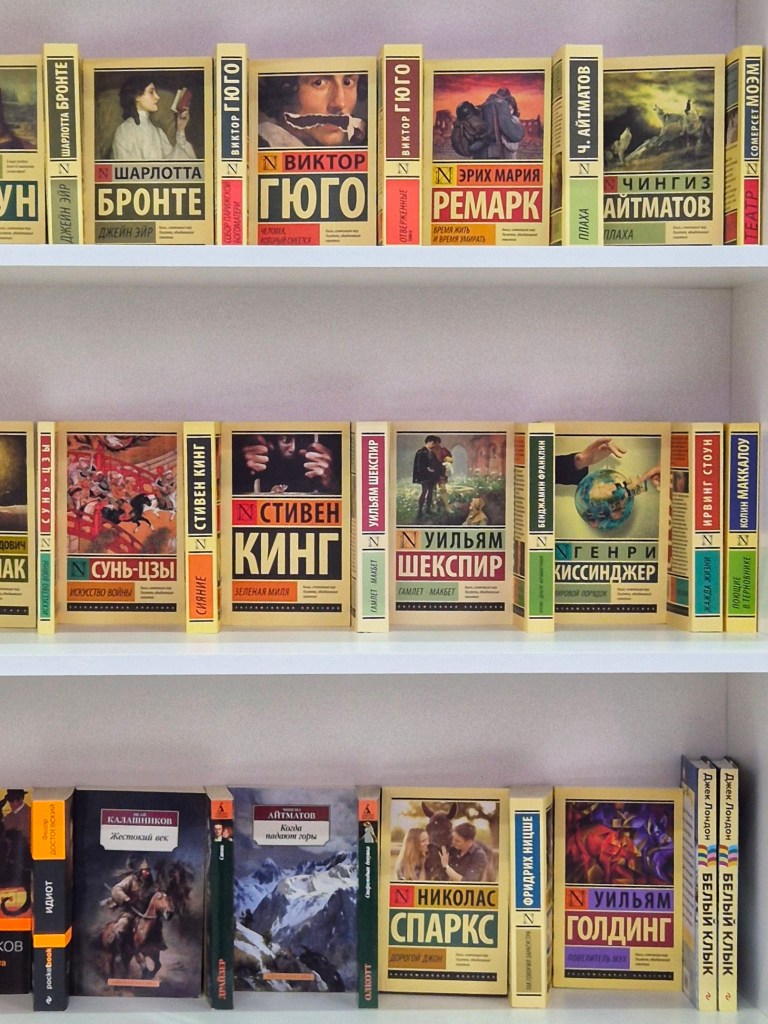
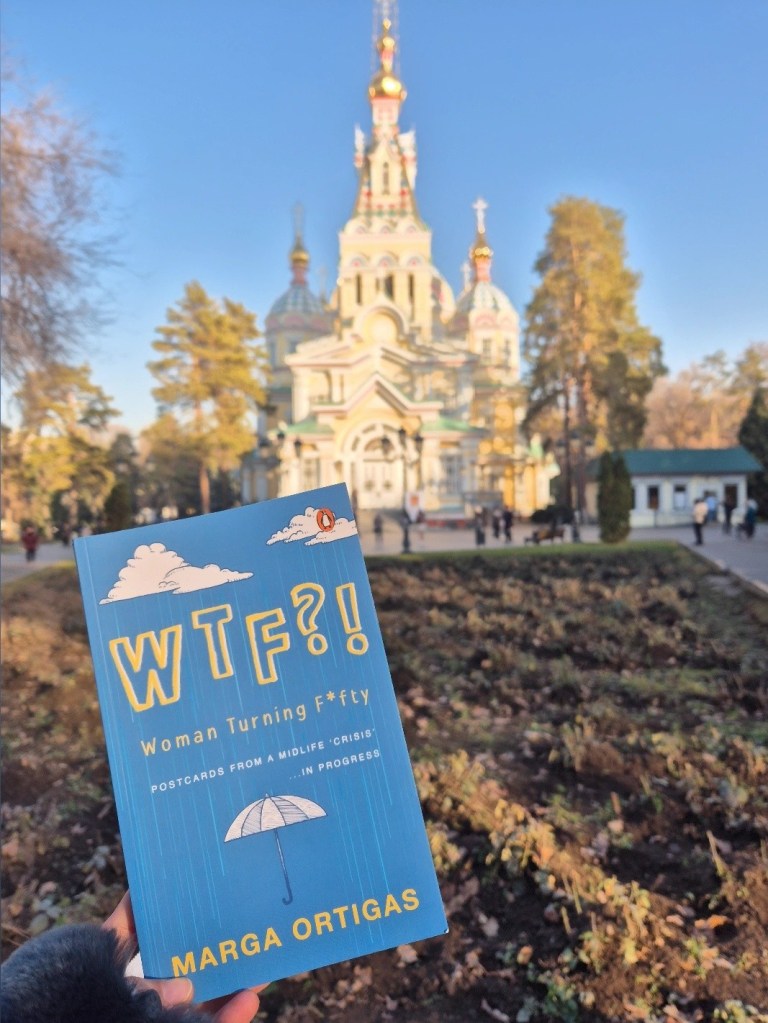
the girl who agreed with Marga Ortigas who wrote that reading is, “A special gift that showed you how much of the world still lay beyond the safety of your comfort zone”;

the girl who believes that traveling is one way of acting upon that gift. 
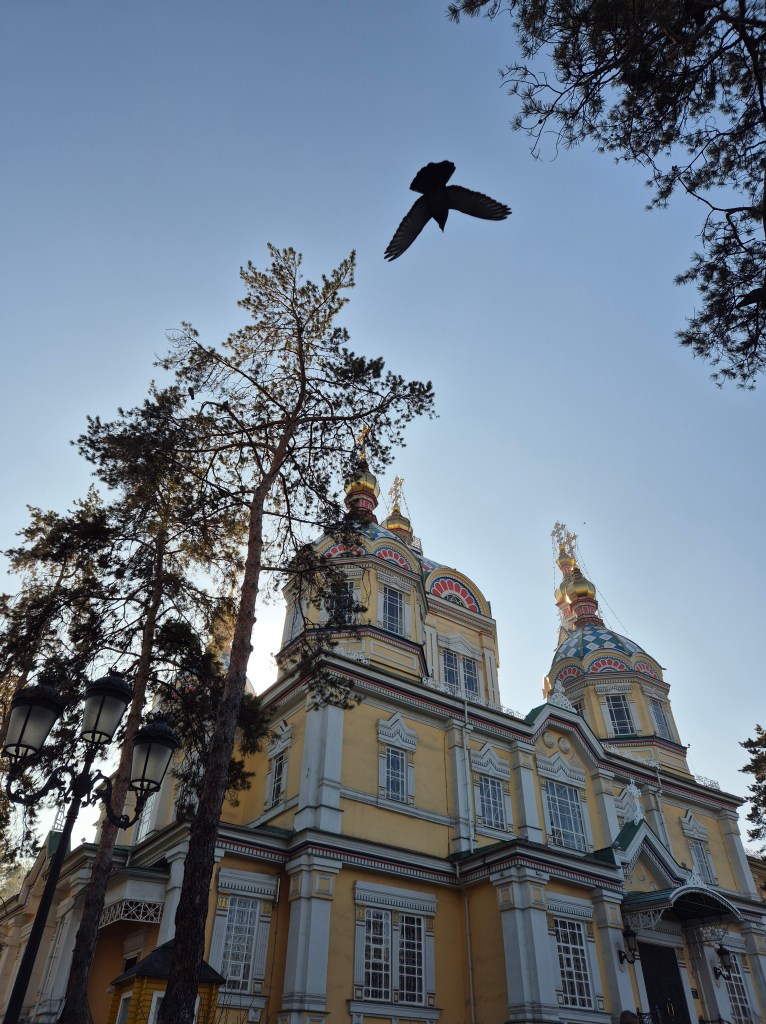
November 26, 2025 – Zenkov’s Almaty

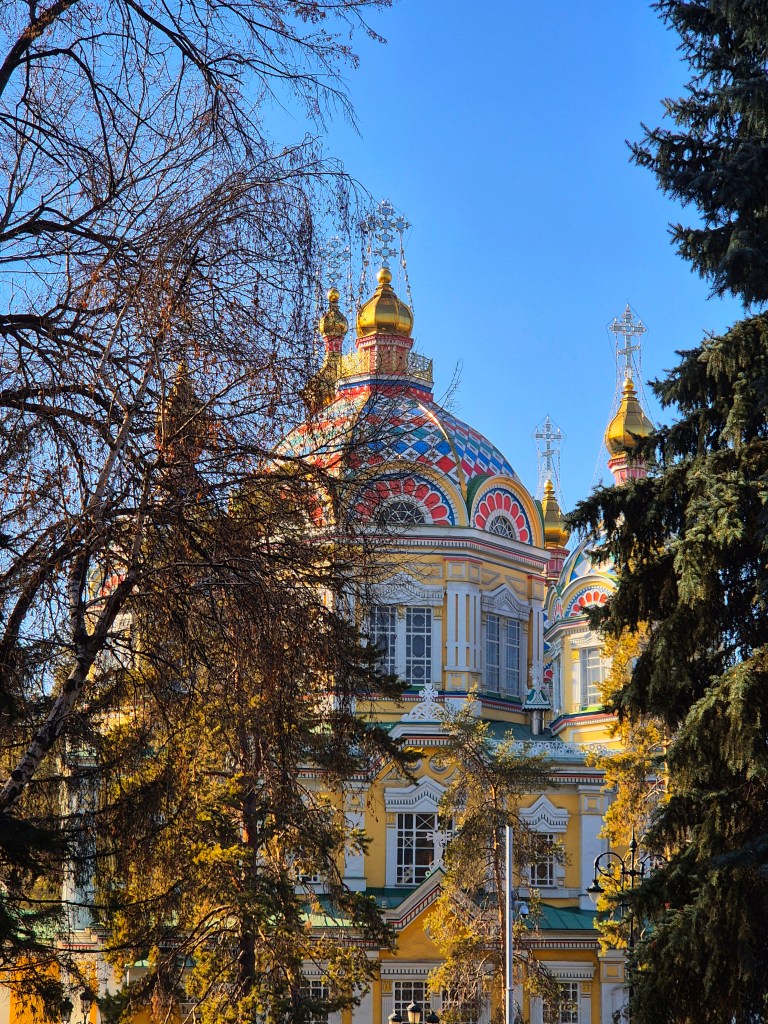
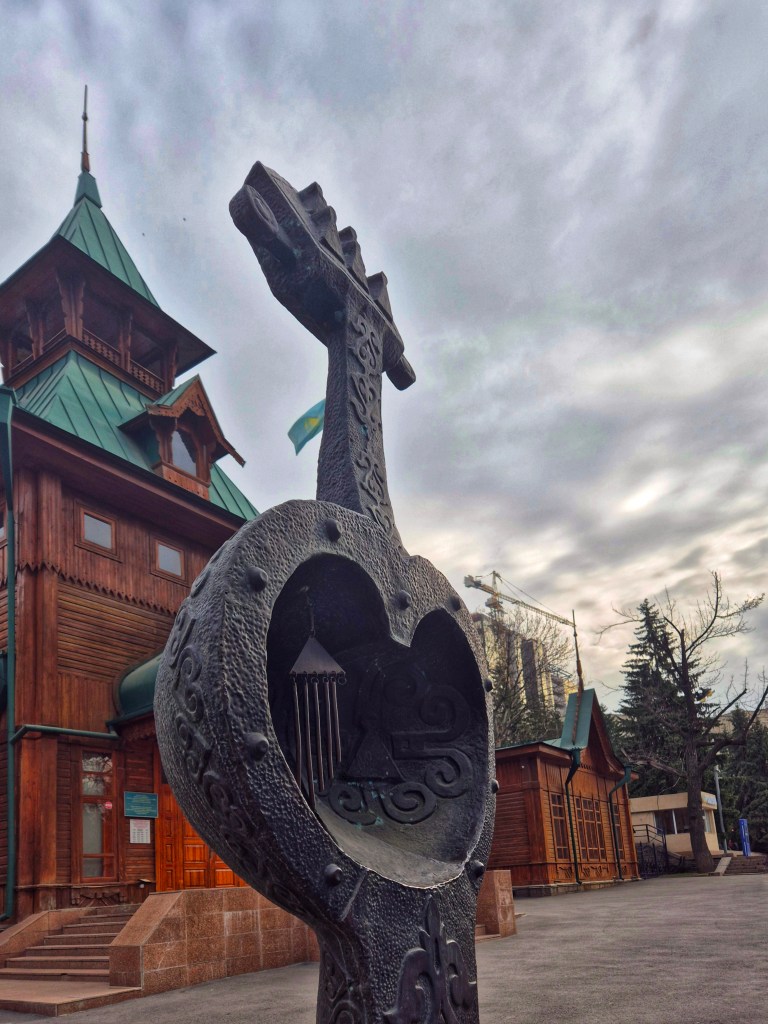
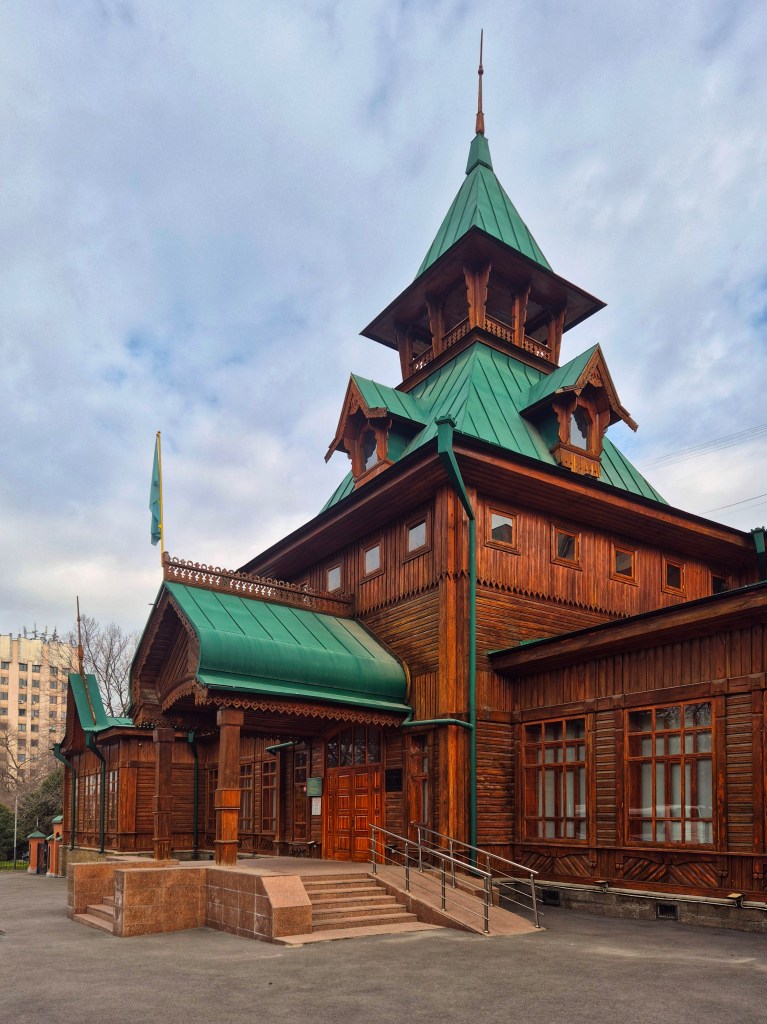
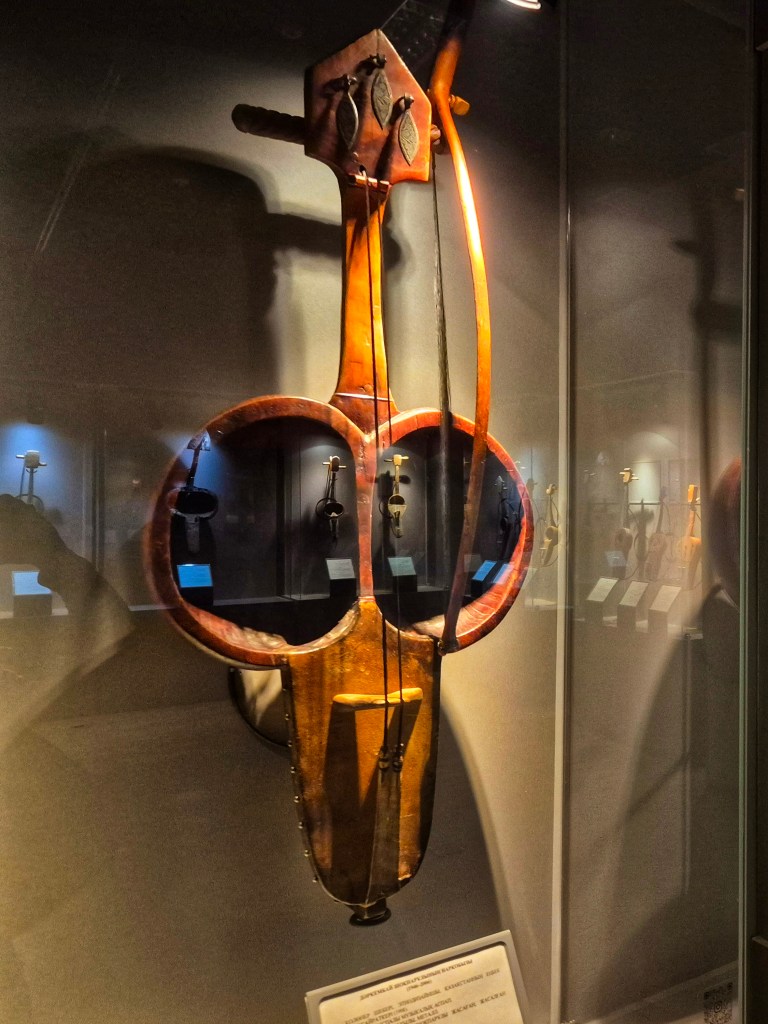
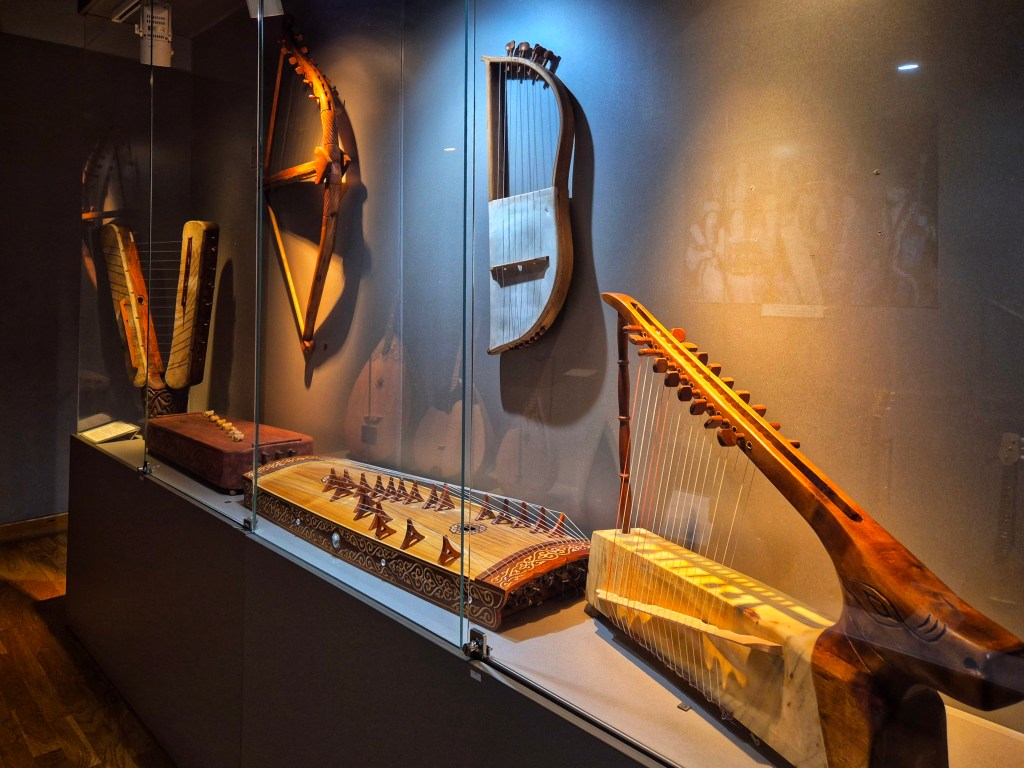
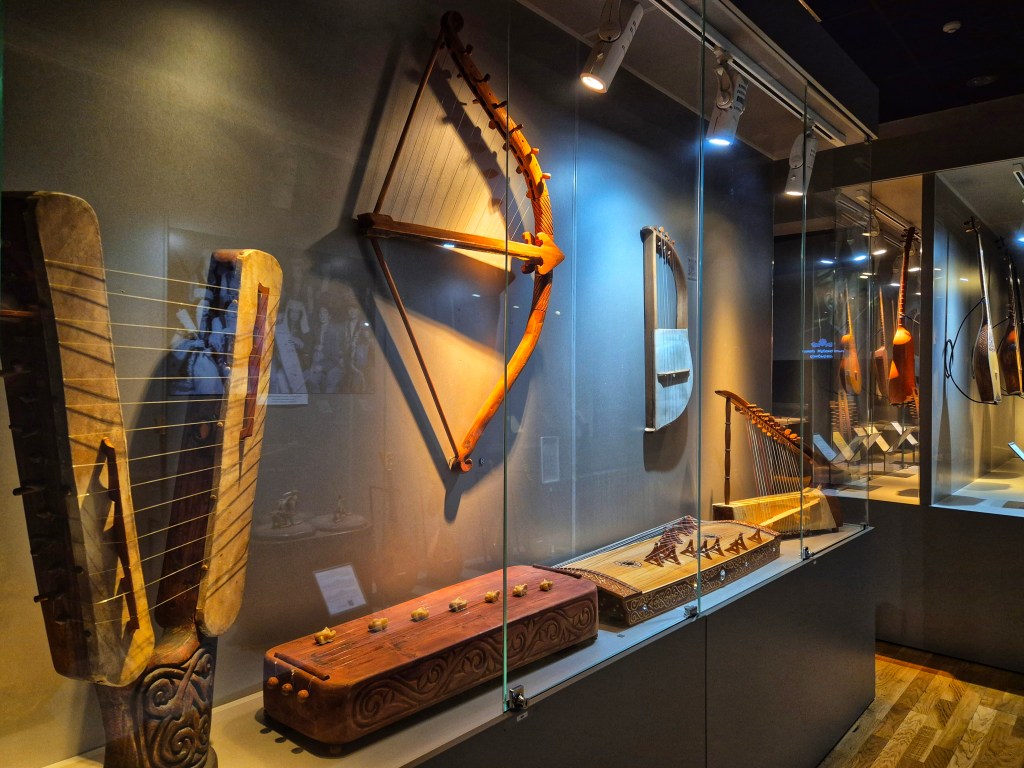
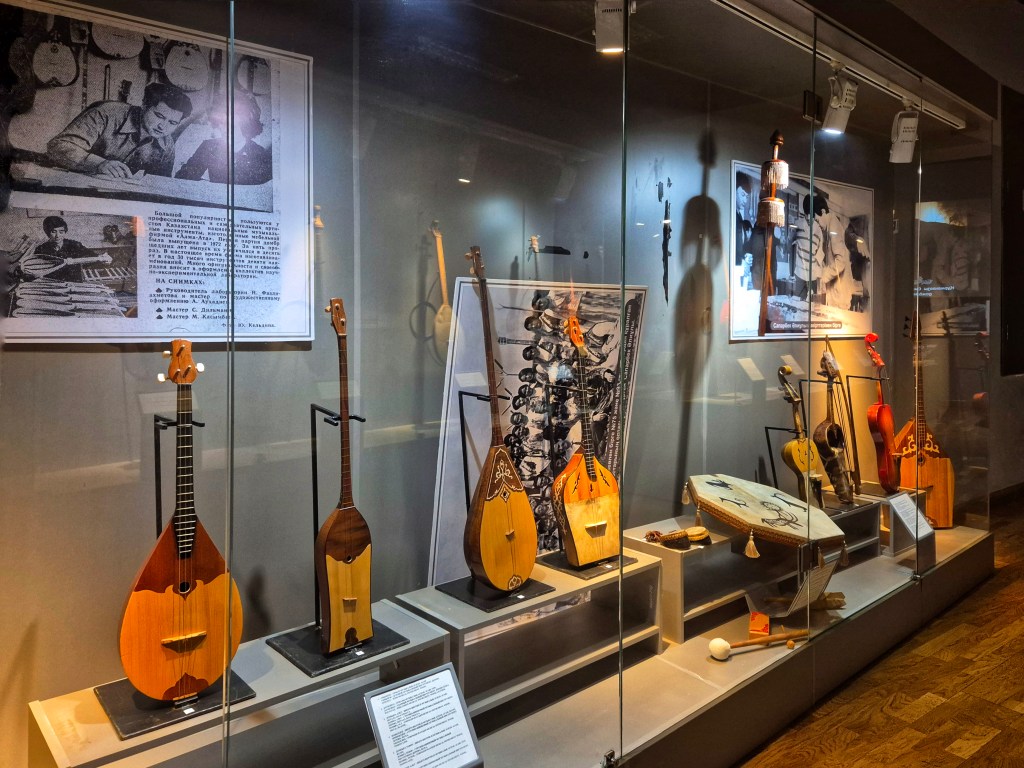
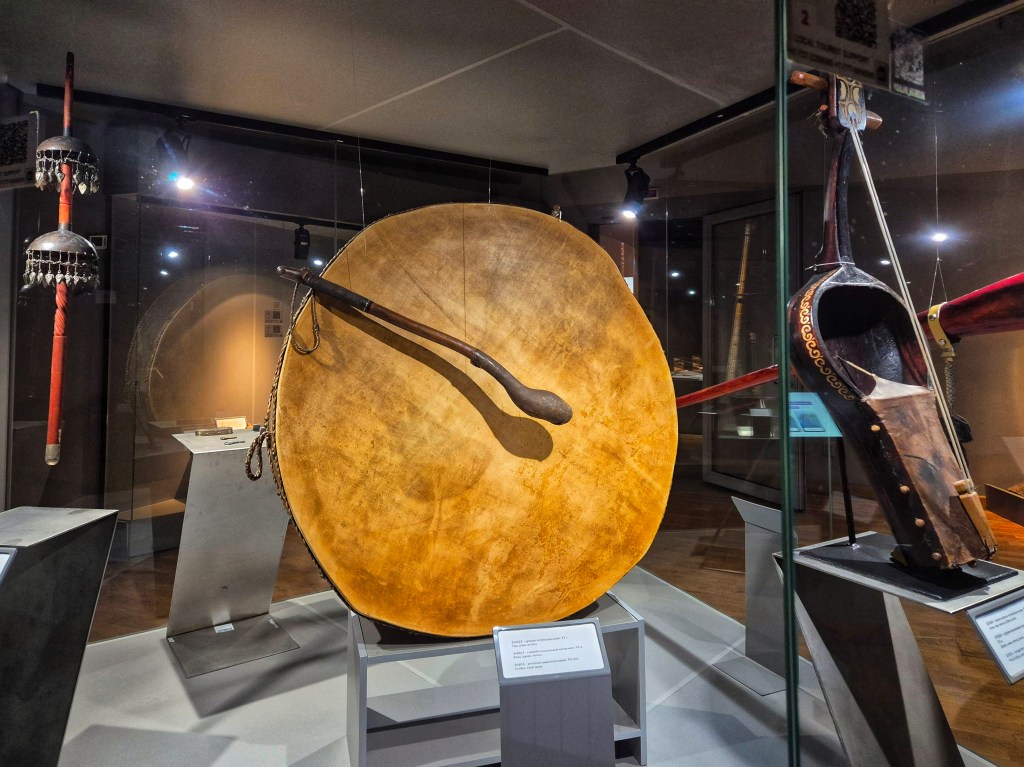
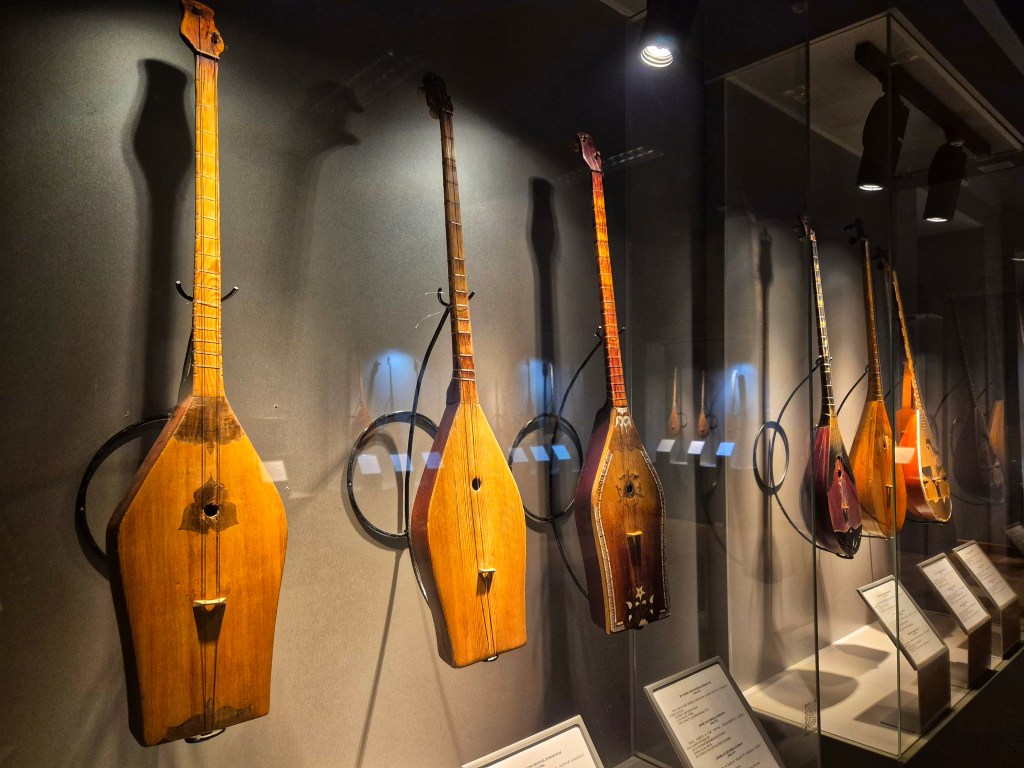
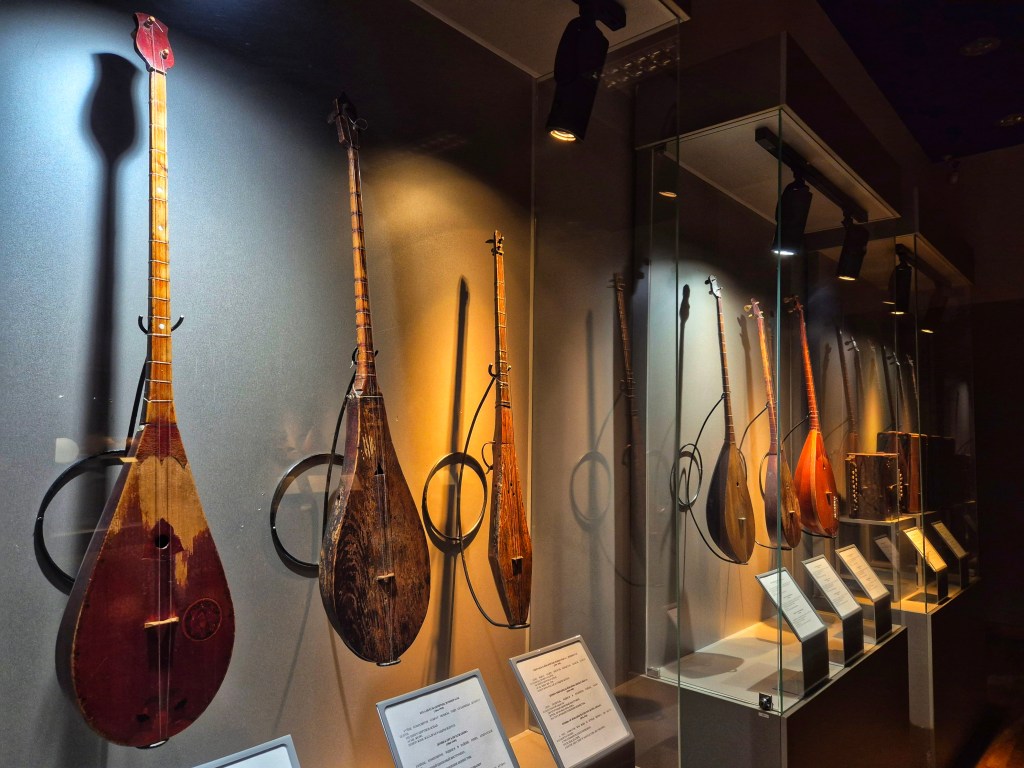
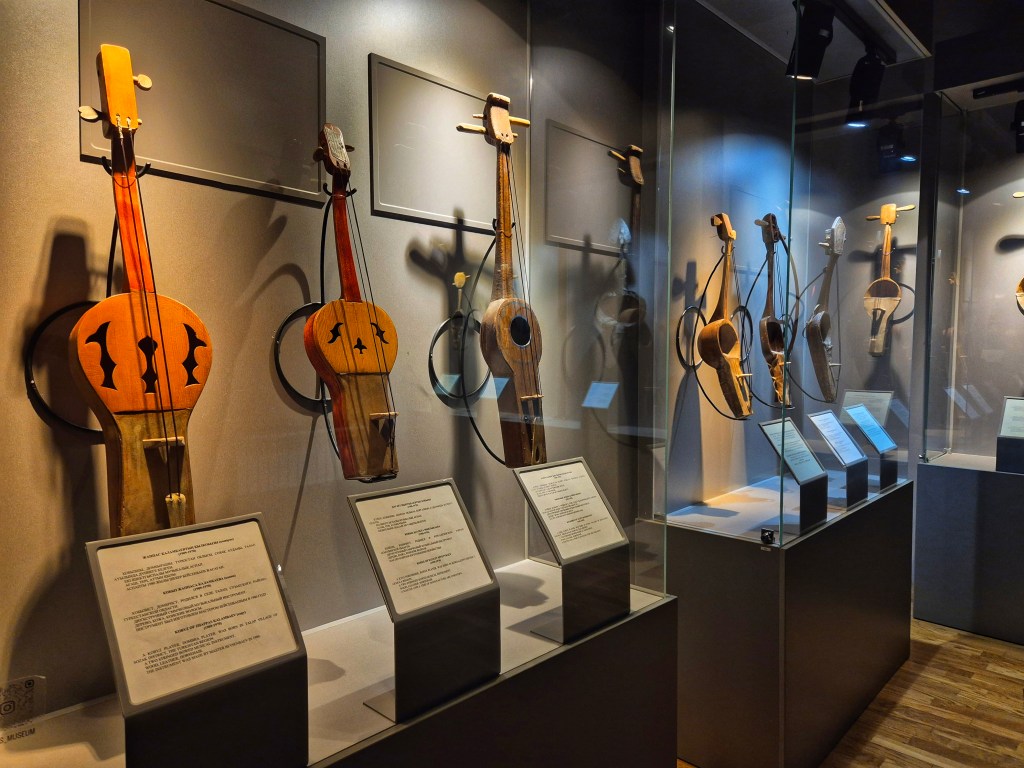
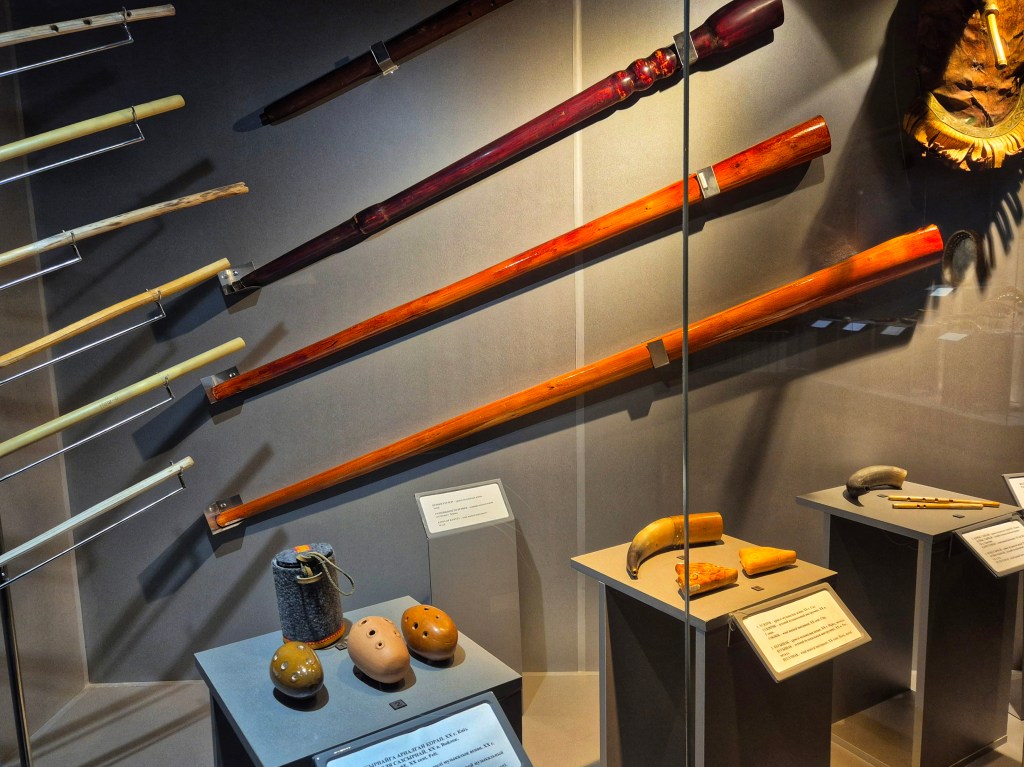
ZENKOV CATHEDRAL / MUSEUM OF FOLK MUSICAL INSTRUMENTS

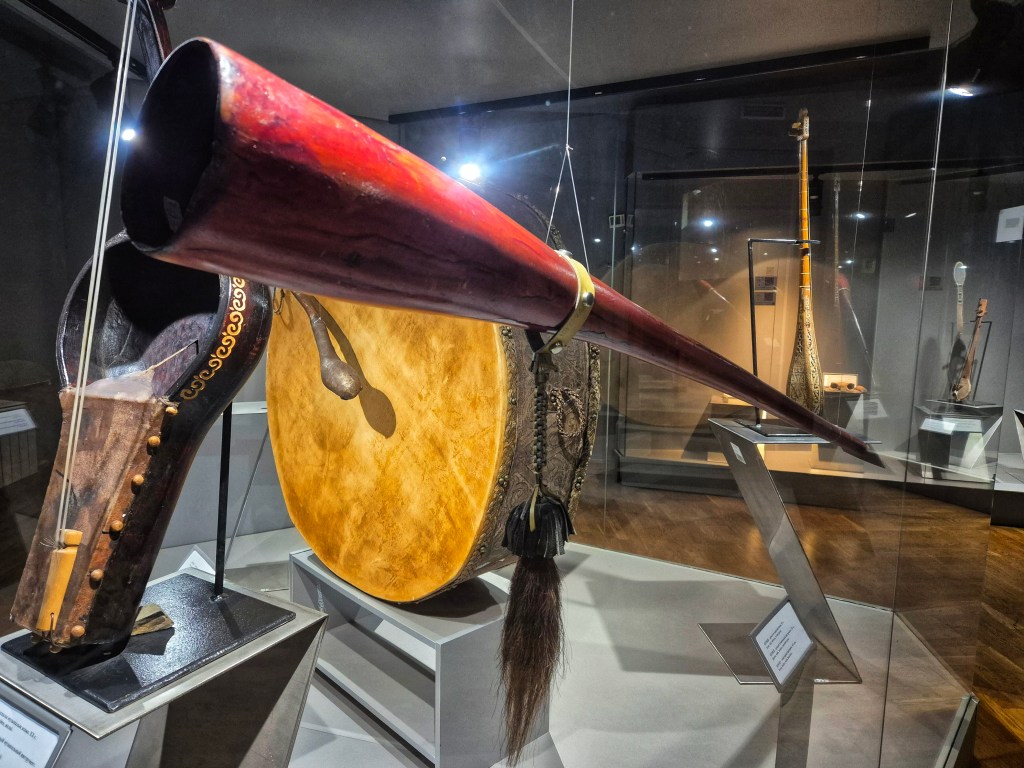
Through my acquaintance with Kazakh literature, I learned of a detail in Turkic mythology of how a musical instrument was believed to be a branch of the Tree of Life, and how this branch was to be bestowed upon a chosen one, shaman or musician. It’s beautiful how this story articulates how much their culture values music, to the point of associating music and musicians with what is most sacred to them.

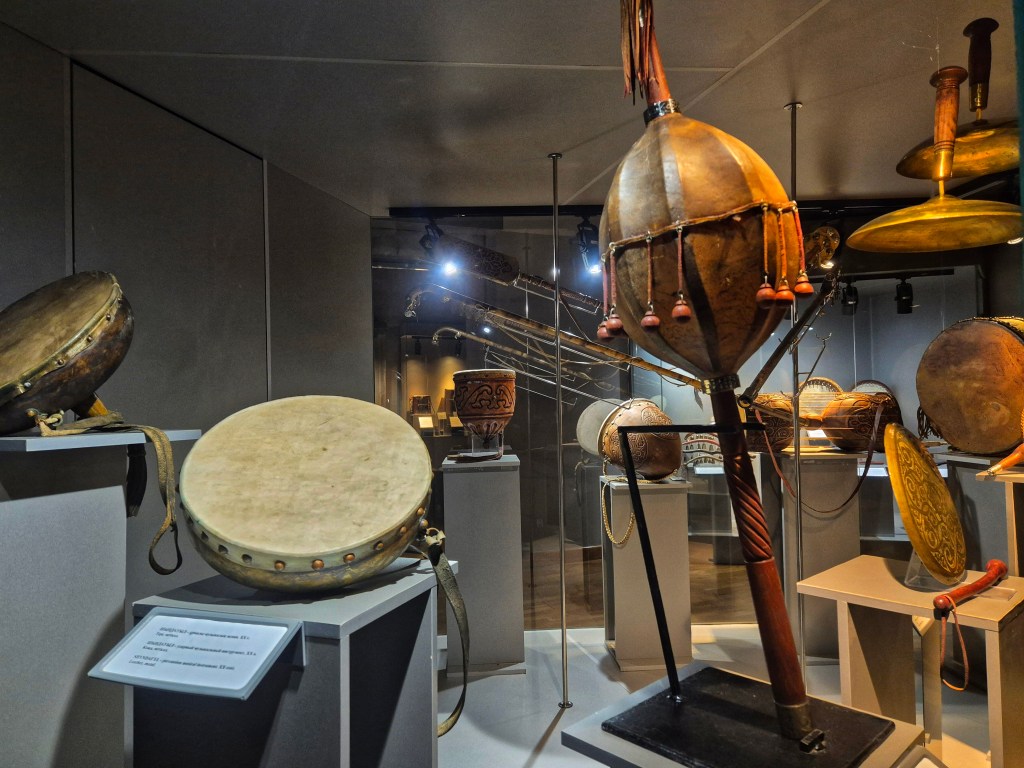
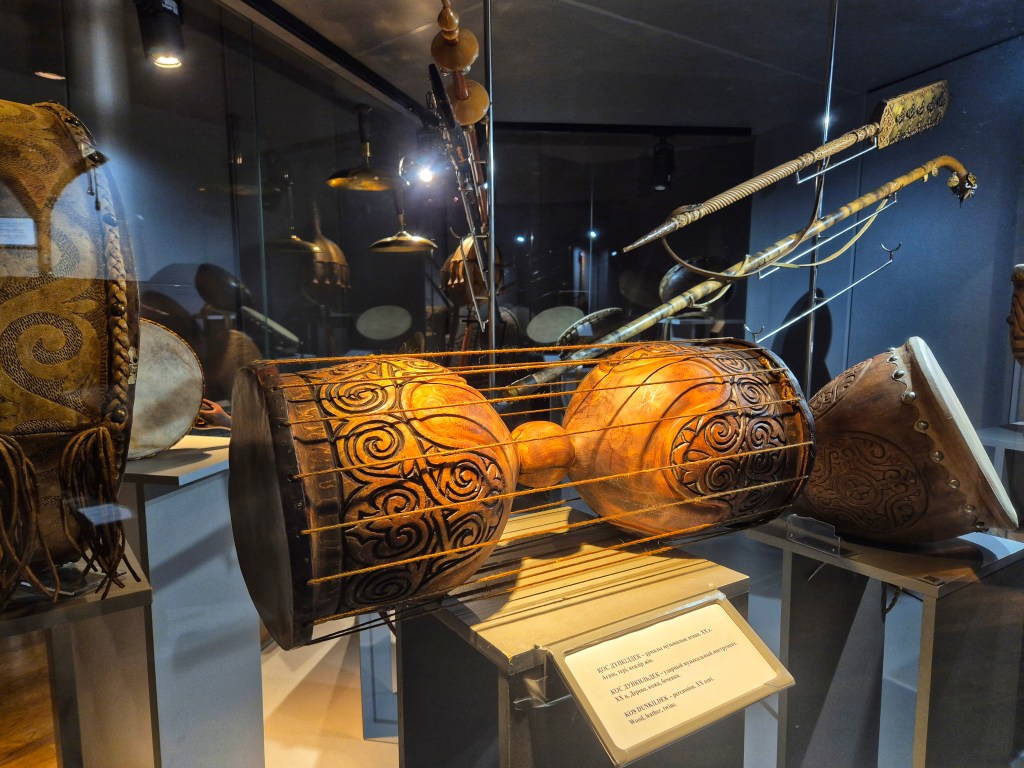
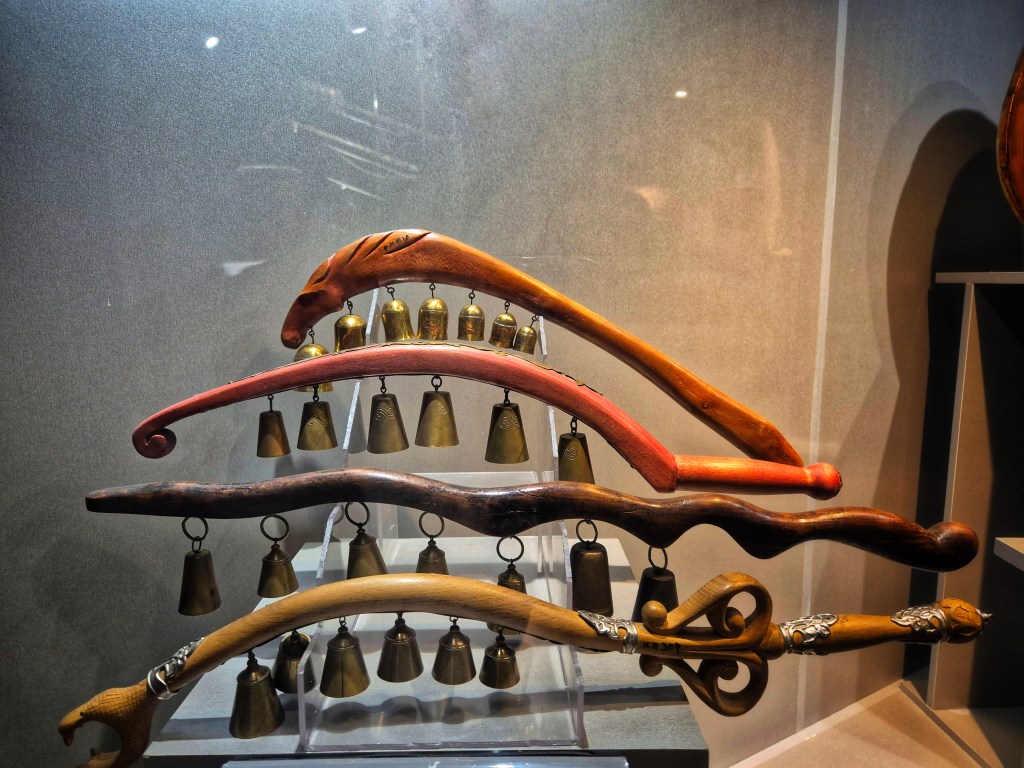
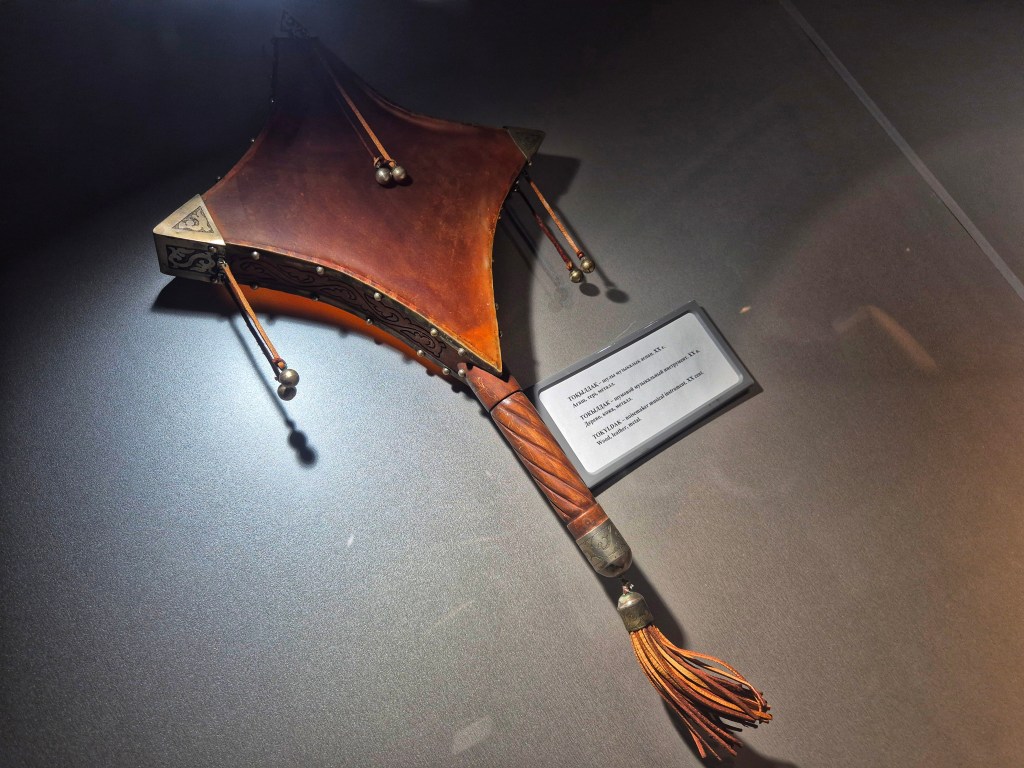
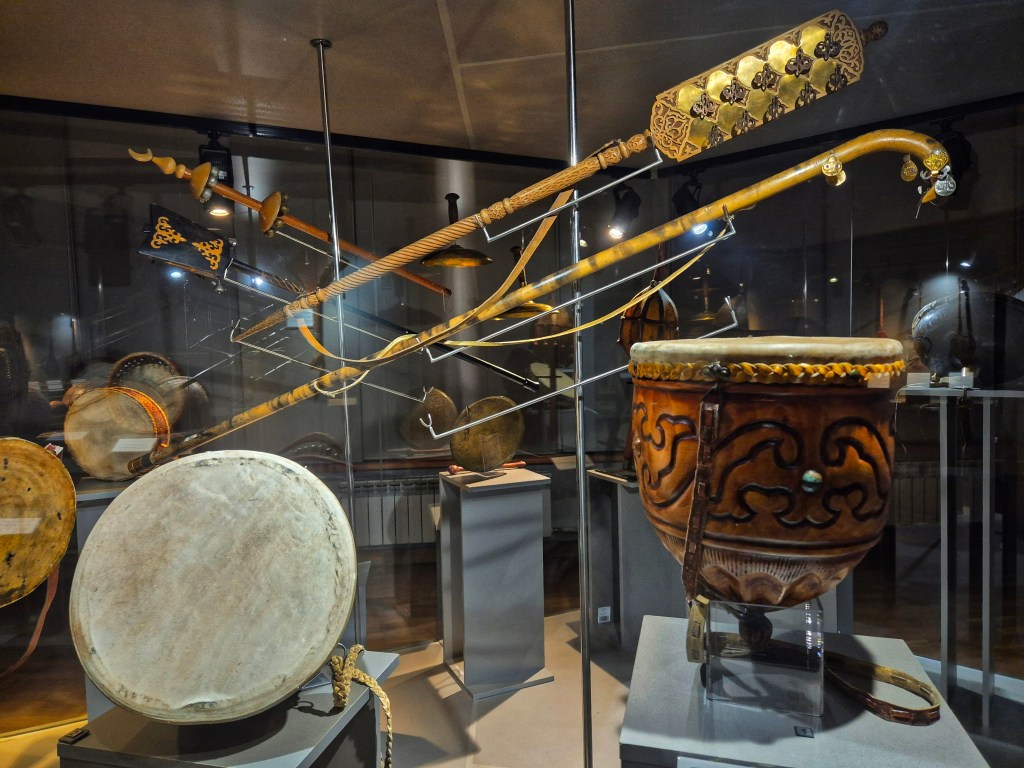
Because of this, it did not come as a surprise when I heard about the Kazakh Museum of Folk Musical Instruments in Almaty. There were stringed, wind, and percussion instruments that had been owned by their most famous musicians throughout history, some looked like they could double as weapons. There were new ones, but there were also instruments that bore battle scars, which I considered to be the most beautiful in the collection. I found myself alone with this wonderful curation of musical instruments that I had never seen before, and as their music played through the museum’s sound system, filling the eight different rooms with emotion and spirit, I felt transported.

But this museum is little-known, and usually bypassed by many who go straight to Almaty’s most famous landmark — the Zenkov Cathedral (that ornate Orthodox Church built entirely of wood that miraculously withstood the great 1911 earthquake that devastated most of Almaty). What most people don’t know is that Andrei Zenkov, the architect of the iconic cathedral, also designed the museum building in 1908.

After immersing myself in the museum, I walked to Zenkov Cathedral and honestly did not know what to make of such a colorful edifice. But looking back at the history of this place around the time these two buildings were constructed, I realize that it must have taken a certain amount of courage to create something with such vibrant colors and a hint of whimsy. Now I look at both buildings as works of defiance and resolute joy.

October’s Horrors

The Ex Libris October horror theme and Krasznahorkai being awarded the Nobel Prize in Literature seemed to point to one title on my shelf for my book of choice, the author’s debut novel, Satantago. Although set in post-communist Hungary, it reminds me of another Nobel laureate’s masterpiece, Olga Tokarczuk’s Books of Jakob, in the way the direst of circumstances require a savior and people recklessly fall for a con man that they believe could fill the longing for a messianic figure, inevitably leading to grim consequences. Its chapter numbers reveal a curious anomaly: Upon reaching VI, it counts down to I, apparently resembling the tango steps that go six steps forward and then six steps backward. If I’m right in thinking that this devilish dance, this Satantango, is a depiction of the cycles of history and society, then it is a rather bleak portrayal of humankind, but it is not far from the truth.

Thankfully, Krasznahorkai’s eerie shadows and unrelenting rain were tempered by Lasco’s ever hopeful outlook, despite raising questions about uncomfortable truths, demanding accountability and transparency from our leaders, making us understand that a crime against the environment is violence, while simultaneously encouraging moral response rather than moral panic. This reader prescribes Lasco’s Second Opinion for a healthy and much-needed dose of social medicine.

Aboard the Voyager I is a “golden record,” compiled by a NASA committee chaired by Carl Sagan, that includes Gould’s recording of Bach’s Prelude and Fugue in C. Gould’s piano tuner is quoted to have said, “…it was like a dream. There’s Bach writing the music, Glenn is playing the music, and it’s my tuning that’s giving it voice. And it’s going somewhere in outer space.” A Romance on Three Legs is an essential and enriching read for pianists that, as promised, chronicles Gould’s “obsessive quest for the perfect piano” but goes beyond his brilliance and his eccentricities and ventures deep into the world of pianos and uncommonly highlights the often undervalued contribution of piano technicians. For this reading pianist, this book was read in the key of fascination.

But it was Arturo’s Island that exceeded my expectations. It has the allure, the perturbing quality, and the devastating effect of a Greek tragedy — where the tragedy, if one reads deeper into it, is to live without love, especially a mother’s love. (Now that 800-page NYRB doesn’t seem so daunting anymore. Now I understand why every significant Italian author reveres Morante.) This book has prose so lush that I want to steep in it all day!

We did not have to seek after books that portrayed the supernatural; we only had to look into literature depicting history, current events, corrupt politicians, and human nature to be reminded that there is horror enough in the real world. But it is through reading that we can try to make sense of it all.

Rainbow Mountains, drunk monks, Russian authors, and Beethoven, near the Azerbaijani border

A day trip close to the Azerbaijani border had the Rainbow Mountains (preferably, bacon mountains haha) and the 6th century David Gareji Cave Monastery on the itinerary.

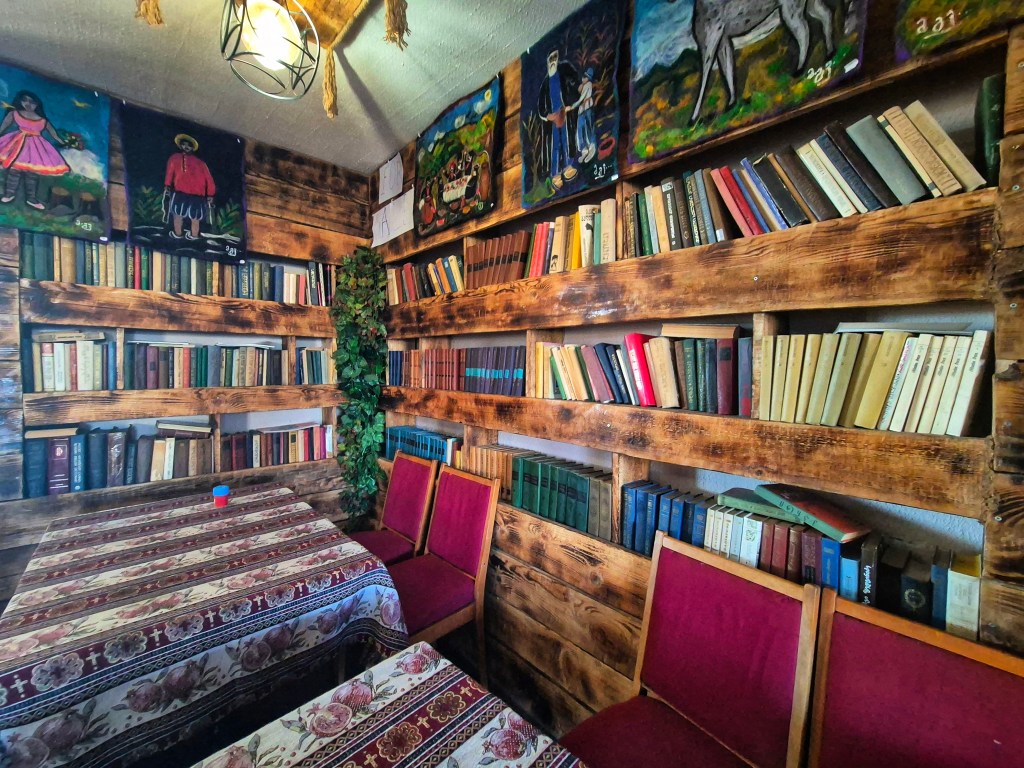
What I did not expect was the off-road adventure getting there, trekking some tricky paths, the otherworldliness of the landscape, and stopping at a far-flung, family-run restaurant in the mountains. This small restaurant had a cozy room full of books; an unplayed and untuned Russian piano; and two drunk, flirtatious, bearded Orthodox priests as old as the piano, who blurted out the names of Tolstoy, Dostoevsky, and Bulgakov in their drunken stupor. I was so amused by them, so when one saw my eyes light up in recognition, he asked, “You understand? You understand?” The names were all I understood, but it became a game. He would say, “Bulgakov,” and I would answer, “Master and Margarita,” and he would smile broadly and say a string of wine-soaked words. When he said, “Dostoevsky,” I said, “The Idiot,” and he laughed so heartily.

My frozen fingers which hadn’t caressed a piano in a week felt grateful for the contact with the piano keys despite the avant-garde sound that they produced. I felt the warmth generated by my fingers begin to spread to my heart and into the room. And even though it would have been more logical to play a Rachmaninoff, the Adagio of Beethoven’s Pathetique just flowed naturally out of me; and I relished in how it hushed the room, hushed the drunk priests, and somehow it hushed my soul. I did not wish for a better piano. I did not wish for anything else at that moment. Up near the Azerbaijani border, music still found me, and it felt like home.

Jon Fosse: Trilogy

The fate of the fiddler is fatal… always giving yourself to others… always trying to make others whole

…and if he was asked where it (music) came from, he answered that it probably came from grief, grieving over something, or just grief, and in the music grief could lighten and become soaring and the soaring could become happiness and joy, so therefore music was needed, therefore he had to play… 


It was the violin on the cover that decided my first Jon Fosse. I wouldn’t have known where to start, and I have been eager to start ever since he received the Nobel for prose which “gives voice to the unsayable”.

And so it was the violin, or rather the fiddle. And because of the fiddle, I sit here a day after reading the last line. A day, because for an entire day I could not write anything about it. I could only feel and think of it and nurse this prolonged pinch in my heart. And maybe that’s how it’s supposed to be, and I should drop my attempt to say something clever about it. 

Because I sit here and feel drenched by the weight of simplicity. Because in his words there is a childlike simplicity that humbles what we think we know about expressing life and about storytelling. Because Jon Fosse is a poet, and his poetry and prose bleed into each other, leaving no borders between them.

September 26, 2023 – The Music of Giza

The music of Giza is a counterpoint between the honking of impatient drivers and the voice of the muezzin. As the call to prayer washed across the Giza Plateau, my ride to the airport came and it was my call to head back home. After all, home is a prayer.

But how can one leave a place when it says goodbye looking like this? Your heart would break a little, too. But then again, what’s a little heartbreak if your heart has not been too well for a while?

The ancient Egyptians believed that when a person died, their heart would be weighed against a feather. It was always a question of whether the heart was heavy or light. As I leave, may the scales find my heart lighter than when I arrived.

Mavis Gallant: Paris Stories

“Leaving was the other half of arriving…”

Underneath the rumblings of revolution and the sparkling notes spilling over like champagne, Chopin’s music reaches for something far away… far away in distance, or in memory. The bulk of the work written in Paris, and yet they speak of other landscapes, of nostalgia for an irretrievable time and place, of exile, of home or the lack of it.

So were and so do Mavis Gallant’s Paris Stories. Had Gallant’s heart been brought home in a jar of cognac whilst the body remained in Paris, perhaps it would also have been found to be larger than the average human heart.

But how those hearts, Chopin’s and hers, continue to beat through the music, through the stories! 


“Like every other form of art, literature is no more and nothing less than a matter of life and death.” — Mavis Gallant

Haruki Murakami: Absolutely on Music

“Have you converted?” asked my best friend when he learned that I was reading this book. In other words, “Have you become a Harukist?”

Murakami became extremely popular in our circle during our teens and every reader we knew waved the Haruki banner high. But both of us shared a terrible secret: We were not into Murakami. We tried. We just somehow couldn’t.

Being both musicians, it was the biggest irony, because we love classical music, grew up with music by the Beatles, and listened to jazz — excellent and key ingredients in any Murakami work. (That After Dark opening? That is sheer music! I intentionally re-read it on a trip to Tokyo as the plane landed. Is there a better prelude to that megalopolis?)

But when we were younger, at what seemed to be the height of Murakami’s popularity, we instead entered a beautiful literary space occupied by the diaries of Anaïs Nin, the gushing streams of Clarice Lispector’s consciousness, and Colette. Perhaps we cannot be blamed if we felt like we weren’t missing anything by not being into Murakami.

Twenty-ish years later, I’m tiptoeing back into Murakami’s music room to eavesdrop on his conversations with Seiji Ozawa. (Recognizable to the younger generation and the world outside of classical music as the elderly conductor who, in a wheelchair and in tears, performed Beethoven’s “Egmont” Overture with the Saito Kinen Orchestra — a performance broadcasted live to outer space on the International Space Station in 2022.)

Glenn Gould breathing through the piano in the background as Leonard Bernstein conducts reassures me that, at least for now, I do not have to think about Murakami’s treatment of women in his novels.

The conversations between the two are like musical counterpoints played in tempo giusto. Writing and music as two melodic lines that diverge but remain in harmony, which oftentimes meet in unison when what the two have in common, hungry hearts and a penetrating ear for sound, “dig deeper and forge farther ahead”. 

From the contrasting conducting styles of Bernstein and Karajan, to the presence of “ma” (a Japanese word for the musical quality of pauses and empty spaces charged with meaning in Asian music) in Gould’s interpretations, to the dissection of Brahms’ orchestration, to the difference of sound between the world’s best orchestras, to John Coltrane’s free jazz, to Mahler’s music and the art of his time… I came out from my eavesdropping feeling more enlightened as a musician and as a person.

What a dream to listen to these conversations all day whilst partaking of Yoko Murakami’s rice cakes…


“…you can’t write well if you don’t have an ear for music. The two sides complement each other: listening to music improves your style; by improving your style, you improve your ability to listen to music… So how did I learn how to write? From listening to music. And what’s the most important thing in writing? It’s rhythm. No one’s going to read what you write unless it’s got rhythm. It has to have an inner rhythmic feel that propels the reader forward.” — Haruki Murakami, Absolutely on Music

César Aira: The Musical Brain and Artforum

Life is like a book of short works by César Aira; you never know what you’re gonna get. But do try one and surprise yourself. Besides, who can resist book covers such as these? And how cool is that lenticular?

I have now accepted that a César Aira title is a blind date with a story or an essay. There might be some straightforward titles, but they are still no indication as to where his imagination will take you. How could I have known that A Brick Wall would be musings about cinema and childhood memories, or that the most musical one would not be the title story, or that Artforum isn’t exactly about art, or that my favorite line would come from one of the stories that didn’t appeal to me so much?

But then again, he writes in Athena Magazine, “Wasn’t that the definition of literature: the world turned upside down?”

The favorite line: “Elegance is a form of energy.”

The titles I recommend from The Musical Brain, and in this particular order: Picasso, In the Cafe, Poverty, and Acts of Charity.

As for Artforum, I don’t think any other author could be more eloquent about the maniacal acquisition of the printed word, a.k.a book-hoarding:

“One can say that they are only material objects, that other things bring true happiness. But would that be true? There always has to be something material, even love needs something to touch. And in my proceeds of that joyful day, the material was so entwined with the spiritual that it transcended itself, without ceasing to be material…they were paper and ink, and they were also ideas and reveries. They reproduced the dialectic of art itself… material made spirit is the luxurious border where reality communicates with utopia.”

You’re welcome!

Lev Ozerov: Portraits Without Frames

“Fifty shrewd and moving glimpses into the lives of Soviet writers, composers, and artists caught between the demands of art and politics.”

Fifty portraits in words by this man born in Ukraine when it was part of the Russian Empire, this man with Jewish origins who extraordinarily survived the Shoah, and who walked among Akhmatova, Pasternak, Prokofiev, and Shostakovich and many others “who lived / in times that were hard to bear.”

Fifty poignant poems, written “so that those who did not know will know” and read by this reader as “what happened long ago / becomes current again.”

Fifty intimate portraits that initially seem to be of individual people but soon become apparent as an exceptional, panoramic depiction of an era of art choked by tyranny.

Little did I know that it would become one of my most treasured volumes of Russian literature. I love how clueless we sometimes are of a book’s value until we read it and become acquainted with its soul.