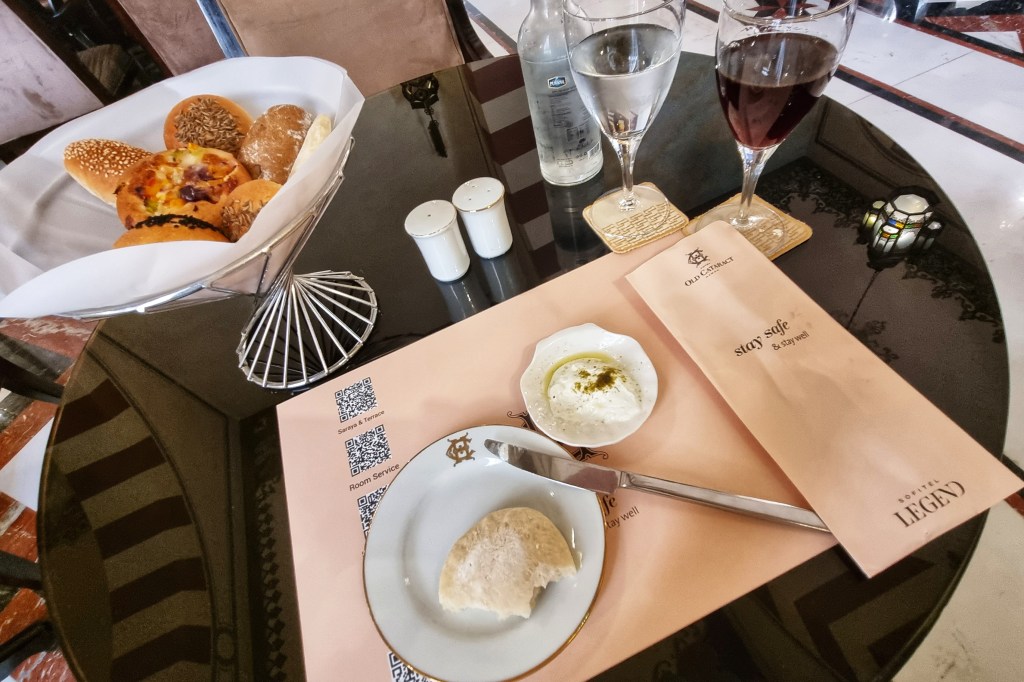
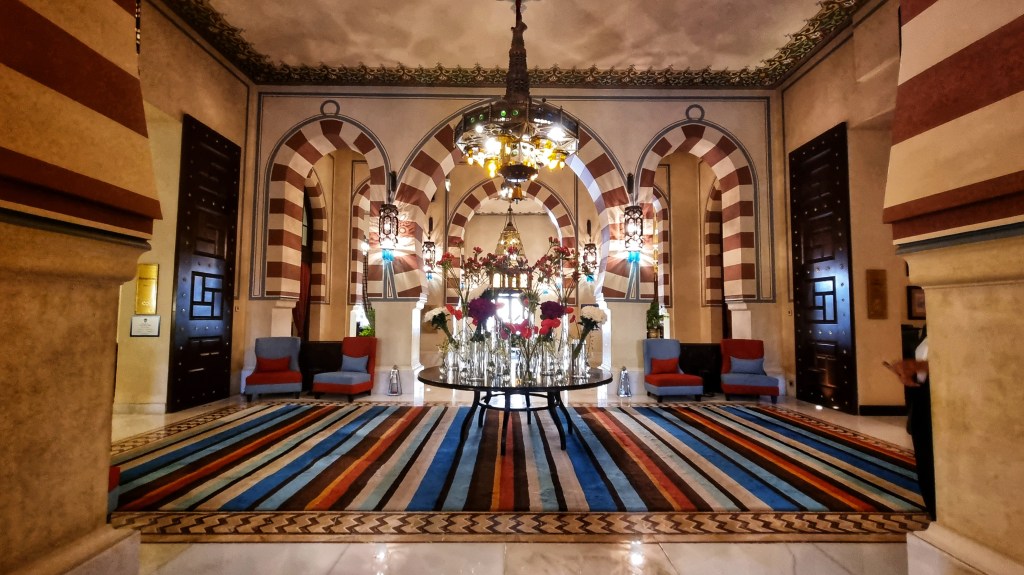
On the way to the market, there was this sudden impulse to stop by and dine at the hotel where Agatha Christie set and wrote parts of Death on the Nile. Dine five-star and proceed to the open market — what a rather silly and Mira thing to do. But hey, best of both worlds!
I sent the photos to our family group chat but hadn’t intended to post them… until someone excitedly announced in the Ex Libris group chat that today is Agatha Christie’s birthday! What are the odds that I would be in Aswan on her birthday! This same someone also happened to gift me with a copy of Death on the Nile before I left for this trip!
The stars have aNiled. This is definitely one for the (Face)books.
Aswan. This is where Egypt begins. It only seemed logical to begin my excursions to the ancient Egyptian archaeological sites here.
If you’re wondering what that drill is doing there… well, I wanted to finish the obelisk! Who wants unfinished business anyway?! Haha… kidding. They were constructing a ramp for tourists and the carpenter kindly offered to take my picture.
In one of Aswan’s stone quarries, one site has intrigued me almost as much as the pyramids. Had it been completed, it would have been the largest obelisk ever built by the ancient Egyptians. The speculation that it had been commissioned by Queen Hapshetsut added to my wonder. Needless to say, within an hour after landing in Aswan, I was already at the site of the Unfinished Obelisk, fascinated by the existing evidence of the ancients’ construction process.
The following day, I set out early and hired a private car to take me to Abu Simbel. The ride itself was exciting as I witnessed a most enigmatic sunrise, passed checkpoints due to the proximity to the Sudanese border, saw more Nubian villages and the place where they quarantine camels from Sudan, drove through an otherworldly terrain, and finally beheld the twin temples originally carved out of the mountainside in the 13th century BCE, during the reign of Ramesses II.
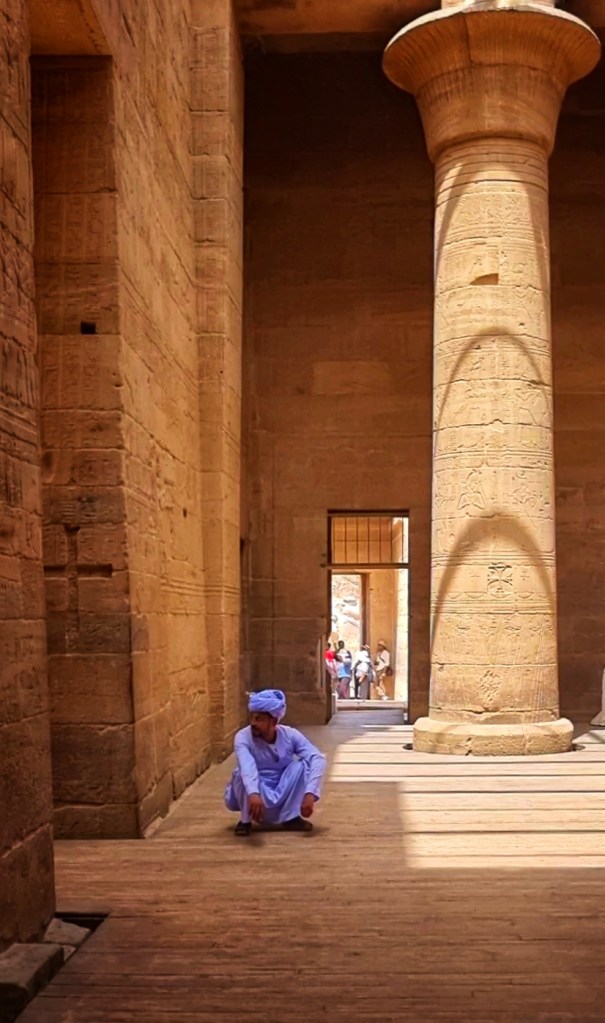
But when it comes to idyll, Philae Temple Complex takes the throne. A small ferry took me to an island on the Nile and I was immediately transported to the pages of Mahfouz’s Rhadopis of Nubia. The Temple of Isis built in the reign of Nectanebo I in 380-362 BCE is the island’s most striking feature, and yet through the different architectural structures, one could see the Pharaonic, the Ptolemaic, the Romans, and the Christians, stamping their identities on the landscape. It has never been this clear to me; how architecture IS identity.
Looking at a map, one might wonder why Lower Egypt is up north and Upper Egypt is down south. The terms are derived from the flow of the Nile from the highlands of South East Africa down to the Mediterranean Sea.
Aswan is a city on the banks of the Nile, known even in ancient times as the place where Egypt begins.
From the subdued and earth tones of Alexandria in Lower Egypt to the bold and bright colors of Aswan in Upper Egypt! What an abrupt change of culture and climate for a flight so brief! Traffic involves camels and donkeys, and even the coffee is thicker and darker!
My Aswan itinerary included a trip to the Nubian Village. Little did I know that the guest house I booked was right smack in the middle of the Nubian Village — a far cry from the Aswan depicted in Agatha Christie’s Death on the Nile and the Aswan in which she wrote parts of the novel. Although I also intend to explore that tamer Aswan (sans death haha) in the coming days, I’m more than grateful to experience this Aswan that’s just as much a mystery and a most wonderful shock to the senses!
“Then, as always at a certain moment, just before the sunlight began to pound the flagstones, things quieted down for a while, a cool breeze swept through the streets, something like a distilled, airy light spread over the city, bright without glare, light you could stare into…”
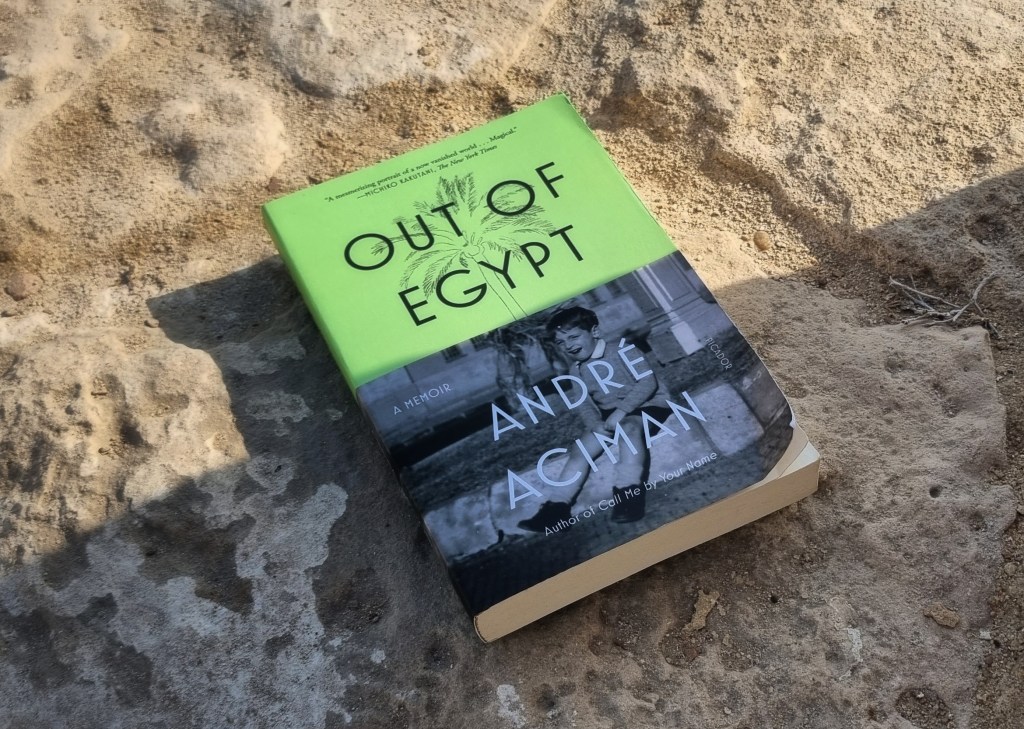
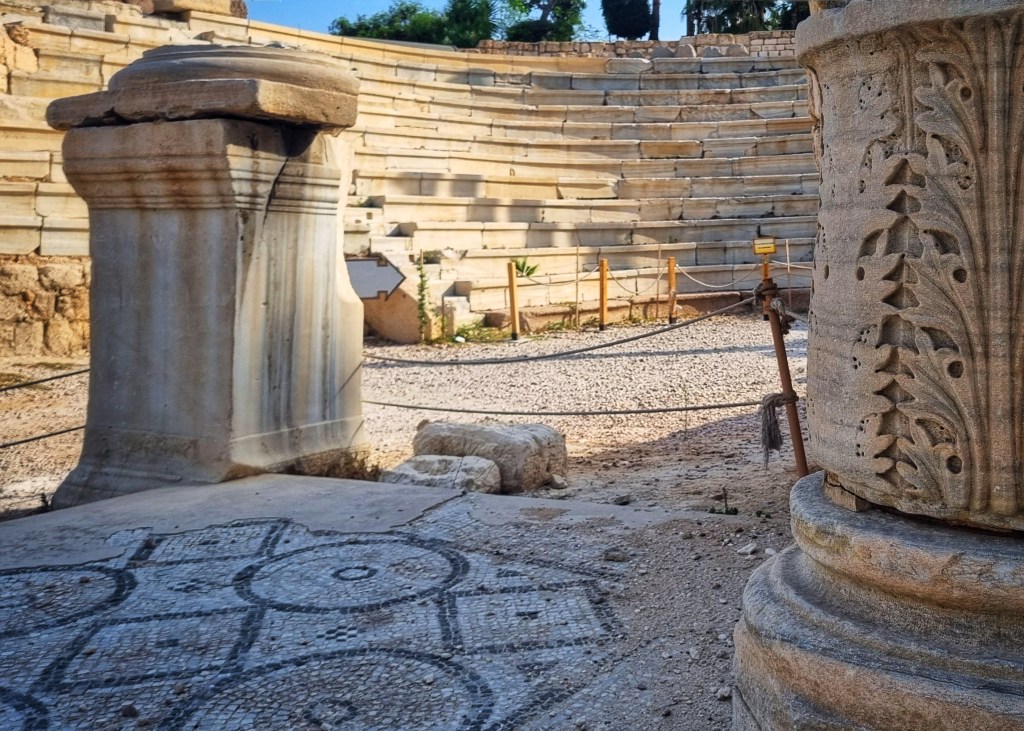
Now I know what André Aciman meant. On my second day in Alexandria, I went around the city of his childhood while its eyes were but half open, and I walked into that light of which he spoke. And I think he would be happy to know that I met several adorable stray cats and a bookseller whose name is Meghid along the way; and that I put his book down on the Roman flagstones just as light was gently spilling into the ancient amphitheater, as if it were liquid filling a cup.
.
In this memoir, the young André tends to read too much — as most people who become writers do. A grown-up chides him to live some more instead. Because isn’t there always this misconception that when one reads so much, they don’t live enough? Oh, André. I know what you know… people who tend to read too much, tend to live too much, too.
I could have trespassed. Cavafy’s house was temporarily closed for refurbishment, but the workers were away for their noontime break, and someone left the front door ajar. Too bad I wasn’t well-versed in Egypt’s laws on property transgression and had to decide against the risk of spending time inside an Egyptian jail.
I do, however, admit to these things: Sticking my head in and taking a peek through the marble staircase, and summoning Sean Connery’s reading of Cavafy’s Ithaka in my head as I walked down the street where the poet lived…
“As you set out for Ithaka / hope your road is a long one / full of adventure, full of discovery. / Laistrygonians, Cyclops, / angry Poseidon—don’t be afraid of them / you’ll never find things like that on your way / as long as you keep your thoughts raised high, / as long as a rare excitement / stirs your spirit and your body. / Laistrygonians, Cyclops, / wild Poseidon—you won’t encounter them / unless you bring them along inside your soul, / unless your soul sets them up in front of you…”
Unless you bring them along inside your soul. One of my favorite lines from this favorite poem. Almost everyone who learned of my upcoming trip immediately expressed concern about the dangers of a woman traveling solo to Egypt. What I carried in my soul was my mom’s prayers, and I left no room for angry Poseidon, Cyclops, Laistrygonians, and Fear. And true enough, I encountered none of them.
And I hoped for my road to be a long one, with many summer mornings when, with what pleasure, what joy, I entered harbors I was seeing for the first time! And I visited many Egyptian cities to learn, and to go on learning…
I keep Ithaka always in my mind. Arriving there is what I’m destined for. I do not hurry the journey at all. Better if it lasts for years, so I’m old by the time I reach the island, wealthy with all I’ve gained on the way, not expecting Ithaka to make me rich… And if I find her poor, Ithaka won’t have fooled me. Wise as I will have become, so full of experience, I’ll have understood by then what these Ithakas mean.
This is what sunsets look like in the city that Alexander built, and which Cleopatra lost.
Isn’t it crazy how I hopped on an early bus from Cairo this morning, paid the fare equivalent to two hundred Philippine pesos, and three hours later I’m here? Here! Alexandria! How magical that I can write those two words together — here, Alexandria.
But I won’t lie. When I got off the bus, the sun was already high and wielding its full power. It exposed everything unsightly about what has become of the city. With an aching heart I walked to C.P. Cavafy’s house while waiting for the opening hours of the Bibliotheca Alexandrina; mainly for comfort, and maybe for shade. It was closed for renovation. The ache slightly intensified.
I took a cab and decided to wait at the library’s entrance along with droves of tourists. The driver cruised through the Corniche on the way there and I saw the Citadel of Qaitbay looming in the distance. That 15th century fortress built where once stood one of the Seven Wonders of the Ancient World, the Lighthouse of Alexandria. After a few minutes, we arrived at the impressive new library where once stood the Library of Alexandria. Everything was something where something great once stood.
When the sun finally relented I walked the entire stretch of the Corniche up to the Citadel of Qaitbay and back. With the Mediterranean breeze blowing on my face and the sun casting a golden glow on everything, Alexandria’s beauty started to reveal itself to me.
Lawrence Durrell was right. This city is “the capital of Memory”. And perhaps it really is about creating one’s own personal Alexandria.
I will spend the night, and maybe in the morning, Alexandria will have more lessons for me.
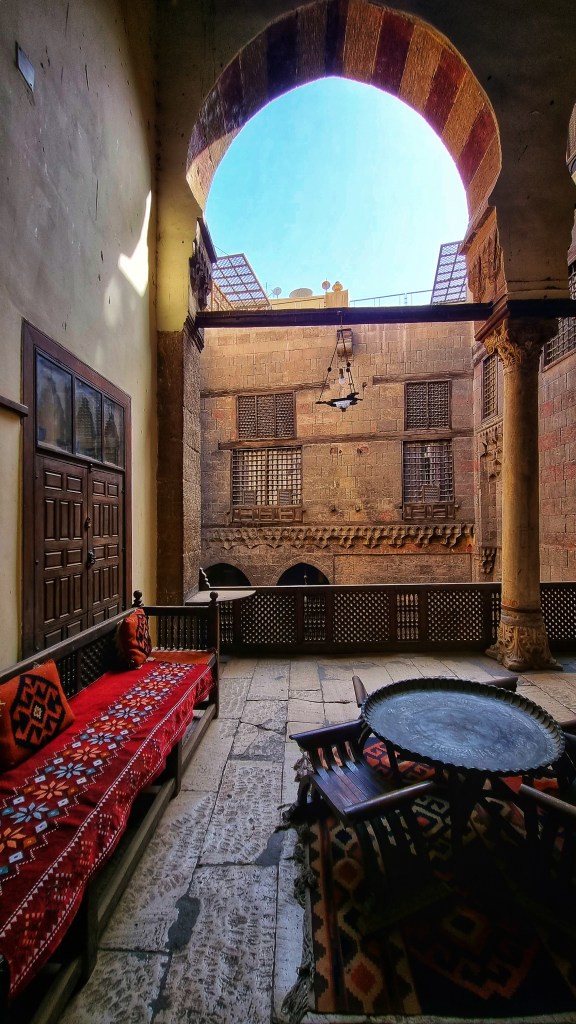
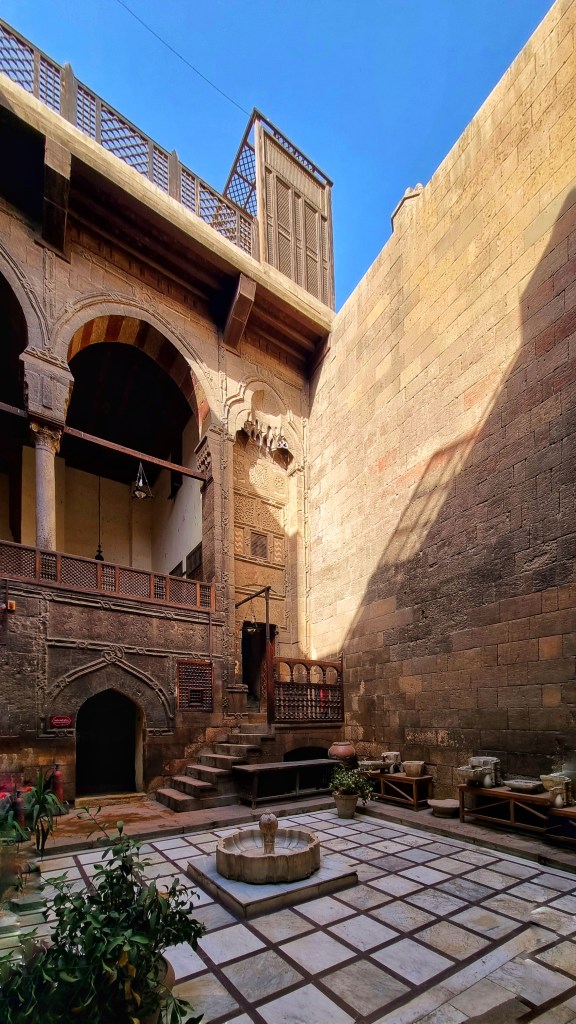
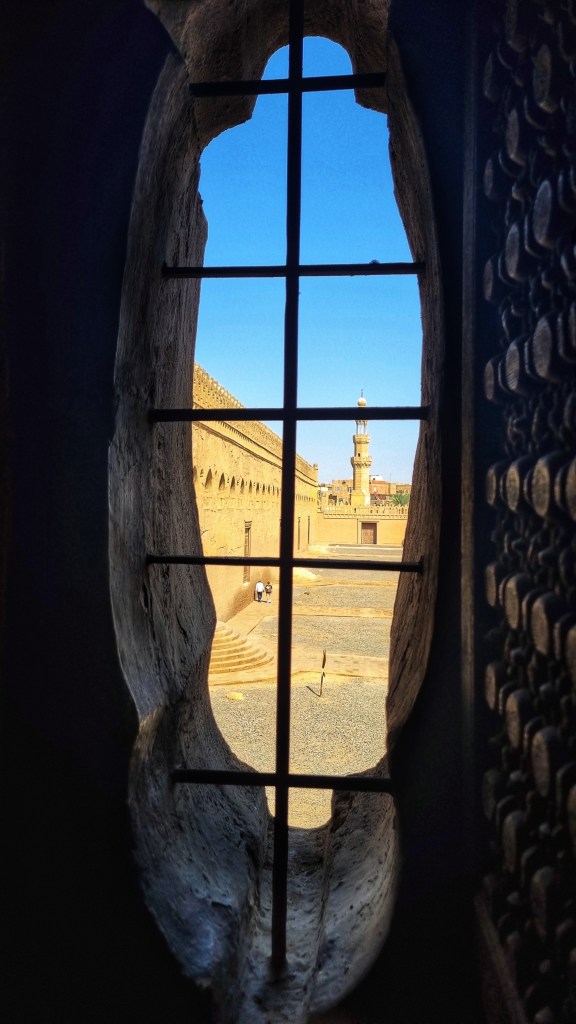
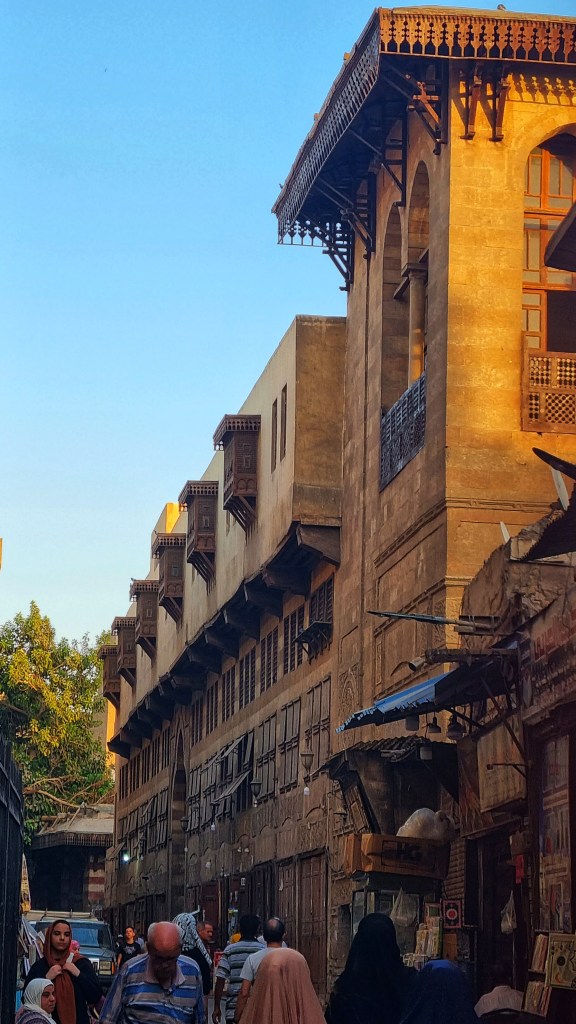
Old Cairo’s dust and cacophony remind me of Kathmandu. But instead of Hindu temples or Buddhist stupas, mosques and minarets. Instead of Newari tiki jhyas, Arabic mashrabiyas.
These windows with intricate latticework are some of my favorite features of traditional Islamic and Newari architecture. They seem to me embodiments of how a thing of beauty and tradition can become a refuge or a prison, and it is for you to decide. Moreover, these similarities in architectural identities make me wonder at the extent and influence of the Silk Route.
But what’s beautiful about these places of endless excitement is when you explore beyond the chaos and pass through their exterior, and find pockets of poetry and enchanting silence. I usually find what I’m looking for behind these latticed windows.
Khan al-Khalili at Khan al-Khalili.A Mahfouz mural framed by chicken cages.
The Cairo that was introduced to me as a reader was not the Cairo of travel posters. The same way that the Istanbul I know is the Istanbul seen through the soul of Orhan Pamuk, the Cairo I know is the Old Cairo of Naguib Mahfouz.
If you’ve read works of both Nobel laureates, you can attest that the constant main characters of their novels are the cities of their birth.
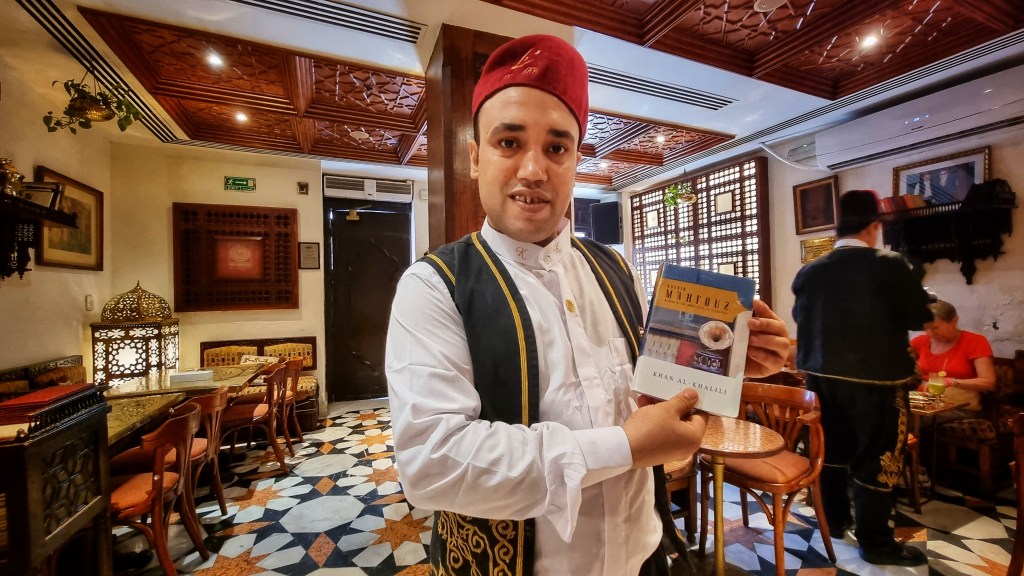
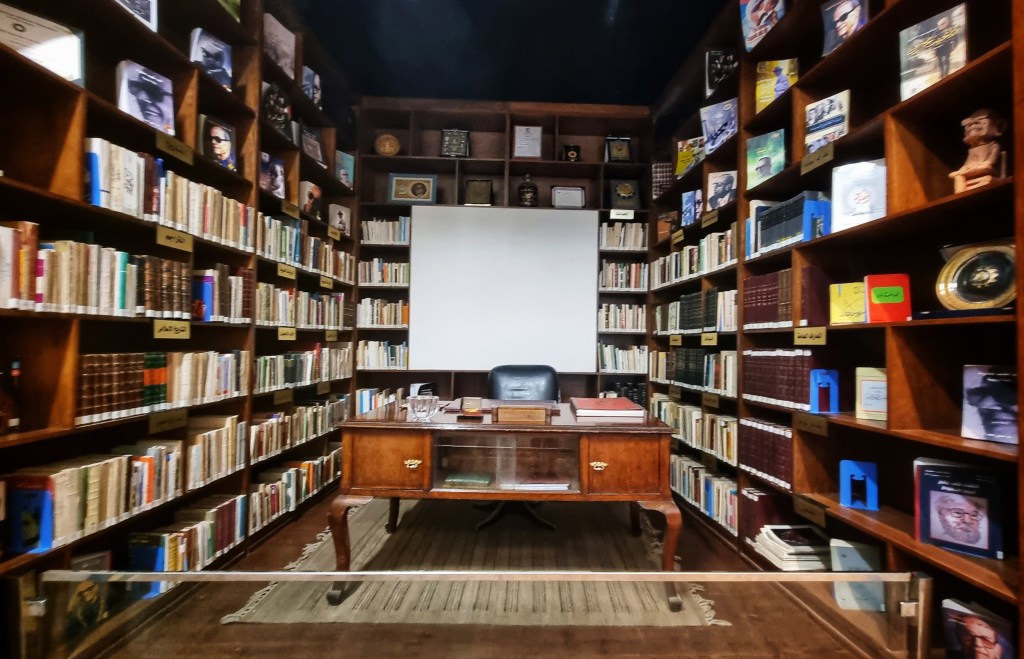
And just as I crossed to the European side of Istanbul to visit Pamuk’s museum, the first thing I did after only a few hours of sleep post-MNL-DIA-CAI flights was to visit the Naguib Mahfouz House Museum and the Naguib Mahfouz Coffee Shop (a coffee house Mahfouz used to frequent so that when he was awarded the Nobel, the owner renamed it in his honor).
A special display of the author’s books.
On Google Maps, the distance between the two establishments is near. But I turned out to be like an Israelite who fled Egypt and wandered for 40 years traversing a distance that can be done in 9 hours and 5 minutes by car, if you consult Google Maps.
The confused directions came from locals who mistook the coffee shop for the museum and vice versa, and this had me going in circles. It took me a while to finally realize what was going on. But it was as if Mahfouz planned the excursion himself. He did not want me to have it easy. I had to experience his Cairo before arriving there — the Cairo of chaos, of spices, of squawking chickens, of tantalizing fragrances and unpleasant smells, of shouting vendors, dirt, heat, of wonderfully claustrophobic alleys, of uncomfortable stares but also friendly and curious smiles. What I saw today was not the sugarcoated Cairo, and definitely not the whitewashed Cairo. It was the Cairo I came a long way to experience.
The best of Nawal El Saadawi’s books are nonfiction: They reveal the devastating truth that her works of fiction are, in fact, nonfiction.
A vital textbook for the study of women in the Arab world, The Hidden Face of Eve has a more academic structure compared to A Daughter of Isis, Walking through Fire, and her numerous memoirs that are deeply personal. But all her writings perfectly demonstrate how the personal is political, and there is not a hint of the tedium that we might encounter in textbooks.
The delicate preface alone is worth mulling over and digesting; and the book, thorough in the history and status of women in Arab society from pre-Islam days until the present, often enlightening or enraging, should be read in its entirety. Whether one agrees or disagrees with any of her views, no one will close this book without having learned anything substantial. Reading this showed me what a shallow understanding I have of the matter despite years of delving in books from Islamic nations.
Nawal does not launch into an angry tirade against religion, however, but against those who use religion “as an instrument in the hands of economic and political forces,” those who use religion to deprive women of knowledge and suppress the search for truth by intimidation and obscurantism, and those who misinterpret religion and utilize it as an instrument of oppression and exploitation. She challenges that religion, if authentic in the principles it stands for, “aims at truth, equality, justice, love, and a healthy wholesome life for all people, whether men or women.”
She criticizes feminism that is merely an instrument of a specific class, or a feminism that is fanatical and superficial, stressing that fanaticism of any form should be opposed, whether it be religion, political, or social. Interestingly, she even remarks on the “modern” woman, “who thinks that progress is manifested by a tendency to show more and more of her thighs,” but remains mentally and emotionally suppressed under the surface.
She therefore makes a stand for the education of the female child, the strengthening of the mind, a free mind, and a heightened level of consciousness, pointing out that a girl who has lost her personality through the throttling of her mind will lose the capacity “to think independently and to use her own mind,” and “will do what others have told her and will become a toy in their hands and a victim of their decisions.” Thus, “the emancipation of Arab women can only result from the struggle of the Arab women themselves, once they become an effective political force.” As we all know, this does not merely apply to Arab women. There is also the acknowledgement that “progress for women, and an improvement of their status, can never be attained unless the whole of society moves forward.”
Can you see why I wished to greet Women’s History Month by reading someone like Nawal El Saadawi? But because there is no one like Nawal El Saadawi, I read her.
“…with liberation they stand to lose nothing else but their chains…”
“No one of you has ever possessed my mind. No one. And no matter how often you took my body my mind was always far away out of your reach, like the eye of the sun during the day, like the eye of the sky at night.”
In a culture where a buffalo has more worth than a woman, where love and marriage are usually two different things, where there is a disconnect between religious devotion and actions, where a man has the freedom to sin but where a woman can get stoned for being a victim, Nawal treads dangerously with her words.
She throws difficult questions at religion and those who are in power, beats us out of complacency and privilege, and prods us to be angry at injustice and inequality.
This is not the book I would recommend to someone who is new to her writings, but a seasoned Nawal reader would probably consider this an epitome of her literary prowess.
Prose-wise, it is the most ornate. Content-wise, it is the most potent. Form-wise, it is her most sophisticated. And wading through all of that is not so easy.
Different narrators for each chapter can get disorienting; the victims narrate, the criminals narrate, so do the dead, and oftentimes about the same incident. When it comes to the women, one can get confused trying to identify whether it is the mother speaking, or the daughter, or the new wife, or the first wife, or the mistress, or the sister. But I realize the intention: It is to emphasize the fact that they are women, and because they are women they suffer all the same.
“Like in The Thousand and One Nights, the beginning of each tale merged with the end of the one which had preceded it, like the night merges with the day…” And then she draws us away from Scheherazade to a lesser-viewed aspect of this literary heritage and culture, and points the spotlight at the hypocrisy of King Shahryar.
Through it all, the question that seems to reverberate loudest in my mind is this: What can we do if the leaders, those who are in power, the ones assigned to mete out judgment, are the perpetrators of the crime?
Because at times, they are. Not only in some culture foreign to us. But in ours, too.



















 The Book-Butterfly