Reading in August


Our ecological crisis is also a ‘crisis of forgetfulness’… we have forgotten how sacred the nature of creation is,” Iraqi-British writer, Dalia Al-Dujaili, reminds us in Babylon, Albion

Although I read this in a perfect setting on a weekend getaway — amidst soothing sounds of nature, enveloped by clean air, and surrounded by mountains blanketed by mist — this ‘crisis of forgetfulness’ where the greed of many has replaced the sanctity of nature manifests in international and national news, and in the floodwaters that lap on my own doorstep back home. 

Readers who find the lyrical wisdom of Aimee Nezhukumatathil refreshing will surely love this wholesome rumination into identity, migration, land, rivers, borders, national and personal myths, familial and arboreal roots, and humanity’s natural heritage. While these somber topics usually weigh down on the reader, Al-Dujaili imparts a hopeful outlook while encouraging us to make our very own existence into a form of praise, and challenging us to scrutinize how we carry identity. Needless to say, Babylon, Albion was a profoundly beautiful way to end August.


August is Women in Translation Month and Buwan ng Wika (National Language Month). To celebrate the latter: Munting Aklat ng Baybayin by Ian Alfonso. No better way than through learning more about our pre-colonial script! To celebrate the former: Iman Mersal’s Traces of Enayat and Lydia Sandgren’s Collected Works.
“The best investigative reporting is storytelling,” says journalist Jane Mayer. Traces of Enayat is proof of this as Iman Mersal takes the reader on a quest to find traces of Enayat, an Egyptian writer who took her own life in 1963. Mersal affectingly expresses the attachment and resonance we find in the authors we encounter and whose works derail us from an otherwise uneventful trajectory. It also begs the question: How many Enayats has the world lost into oblivion?
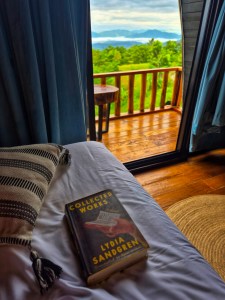
As for Collected Works, seven pages shy of six hundred, this novel quietly draws you into its world. It acquaints you with its setting and its characters without haste. It knows how to linger. It lingers on one’s thoughts on literature and art, on a character’s indecision to call someone or not, whether to read a book or not. It often lingers on everyday scenes where words turn into still life paintings and everyday portraits. But these scenes and characters exist in the shadow of Cecilia’s disappearance. Almost fifteen years after she vanished without a trace, her daughter, Rakel, believes it is her missing mother she is reading about in a novel, and measured suspense and mystery begin to replace the monotony of their lives. I would recommend this to the unhurried reader. Ultimately, Collected Works is a meditation on what one’s life amounts to. 

As for reading life in August? This is what it amounted to. It felt very much like a defiance of my country’s frustrating political climate.

September 26, 2023 – The Music of Giza

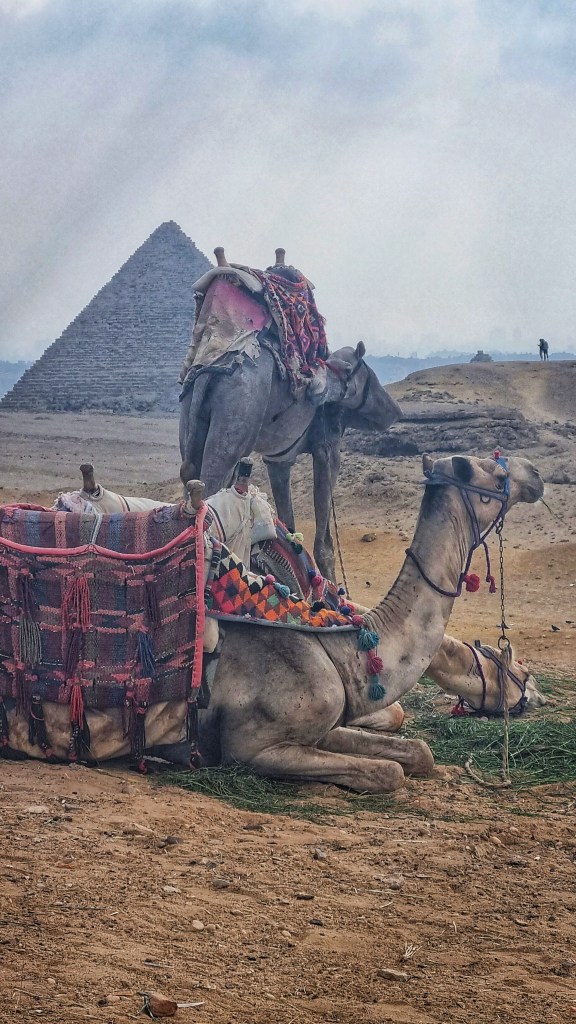
The music of Giza is a counterpoint between the honking of impatient drivers and the voice of the muezzin. As the call to prayer washed across the Giza Plateau, my ride to the airport came and it was my call to head back home. After all, home is a prayer.

But how can one leave a place when it says goodbye looking like this? Your heart would break a little, too. But then again, what’s a little heartbreak if your heart has not been too well for a while?

The ancient Egyptians believed that when a person died, their heart would be weighed against a feather. It was always a question of whether the heart was heavy or light. As I leave, may the scales find my heart lighter than when I arrived.

September 25, 2023 – The Grand Egyptian Museum

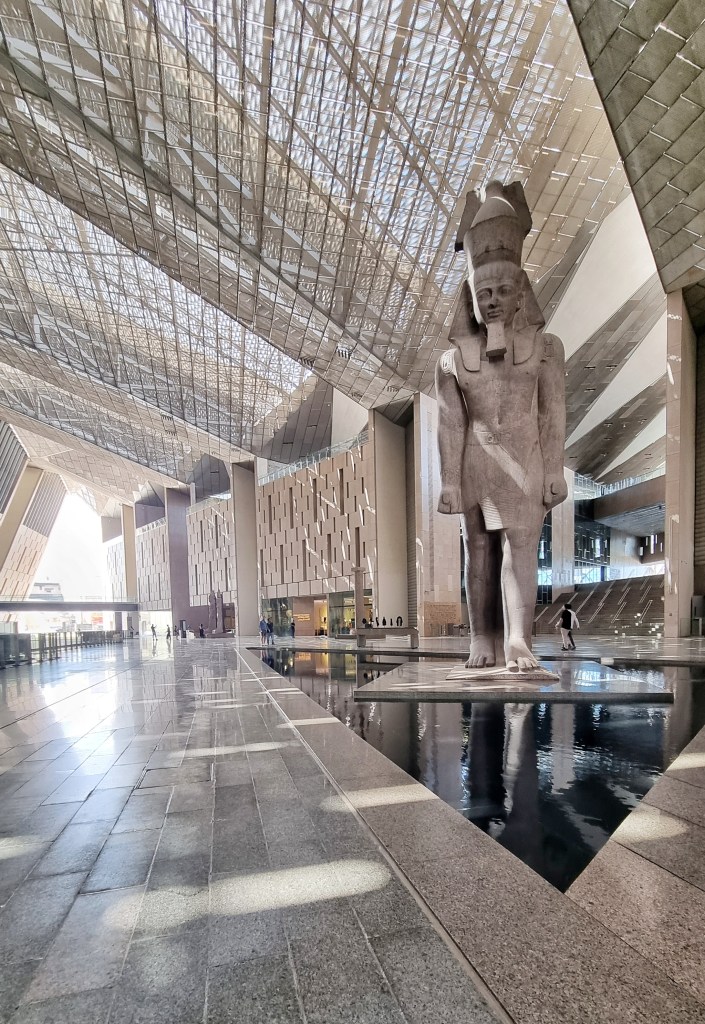
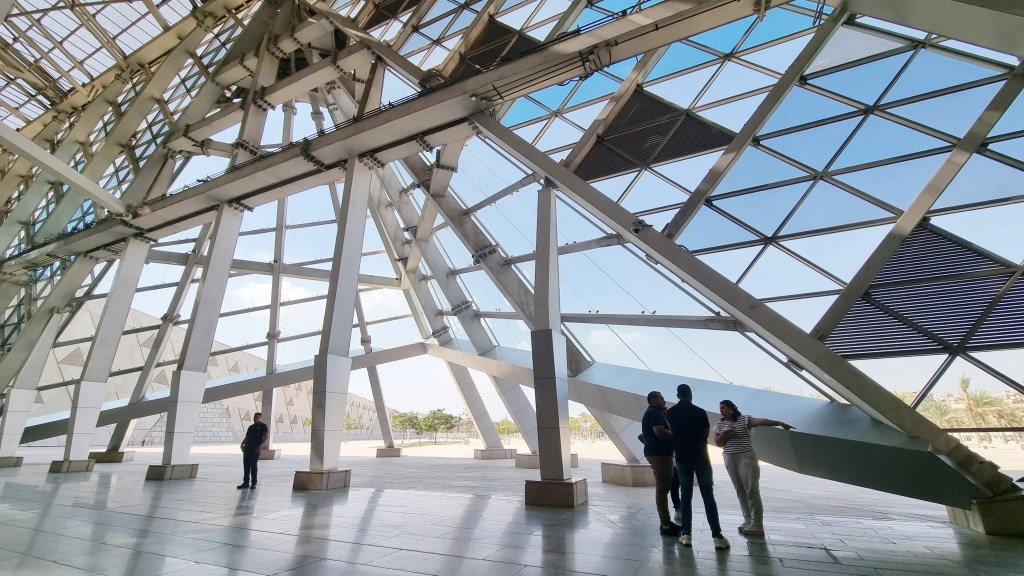
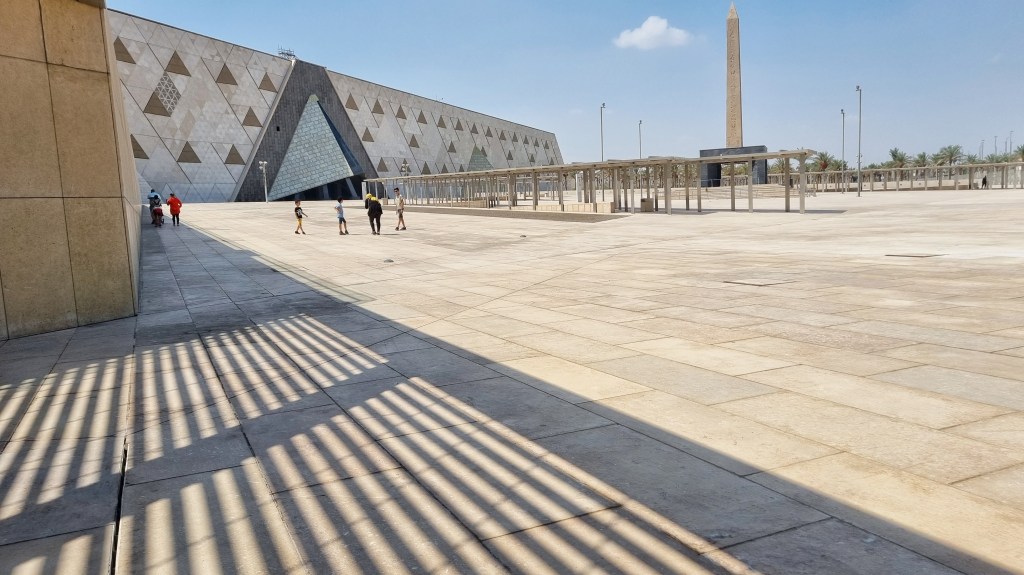
The Louvre, with its iconic glass pyramid, used to be the largest museum in the world at 60,600 square meters. Now it has been surpassed by the Grand Egyptian Museum at 81,000 square meters. It is the largest museum dedicated to a single civilization (the ancient Egyptian civilization), and it boasts of a special panoramic window that opens to… *drumroll* THE Pyramids of Giza!
 
Not a very subtle way of saying, “Take that, Europe!”
 
I was told that the story began in the early 2000s when a representative from Egypt attempted to retrieve some of their most valued artifacts from Italy and they were met with a strong refusal. (Figures differ by a number or two, but no more than 30 obelisks have ever been found in Egypt and only 6 remain. The majority of these are in Rome and other capital cities around the world.) The reason for the refusal was that Egypt lacked a proper place to store these treasures. Egypt had to admit that there was truth to this, and the idea of the GEM was born.
 
While researching for this trip, I wondered why there was never a clear opening date. My curiosity heightened when I arrived in Giza and I could see the GEM through my hotel window looking quite complete and ready! When I asked the guides, they told me it was still closed. My intuition said otherwise, and I went there anyway saying to myself that if it turned out to be closed, at least I could still admire the exterior of the building. When I arrived there, I was greeted by highly trained and professional staff explaining that they were holding a “trial opening” and even though the exhibit halls were still off limits, I was welcome to have a guided tour of the building! The cherry on the top of this whole trip!
 
My personal take, based on passing insider comments, is that they are hoping for the Rosetta Stone and the Bust of Nefertiti to come home before the grand opening, hence the unclear dates. The odds are low, but I sincerely hope it happens. Egypt lacking a proper place to store these treasures has now become an invalid excuse.
 

September 24, 2023 – The Pyramids of Giza

It was comical at first. The sight of the crowd by the entrance told me that I would not be having epiphanies or spiritual experiences.

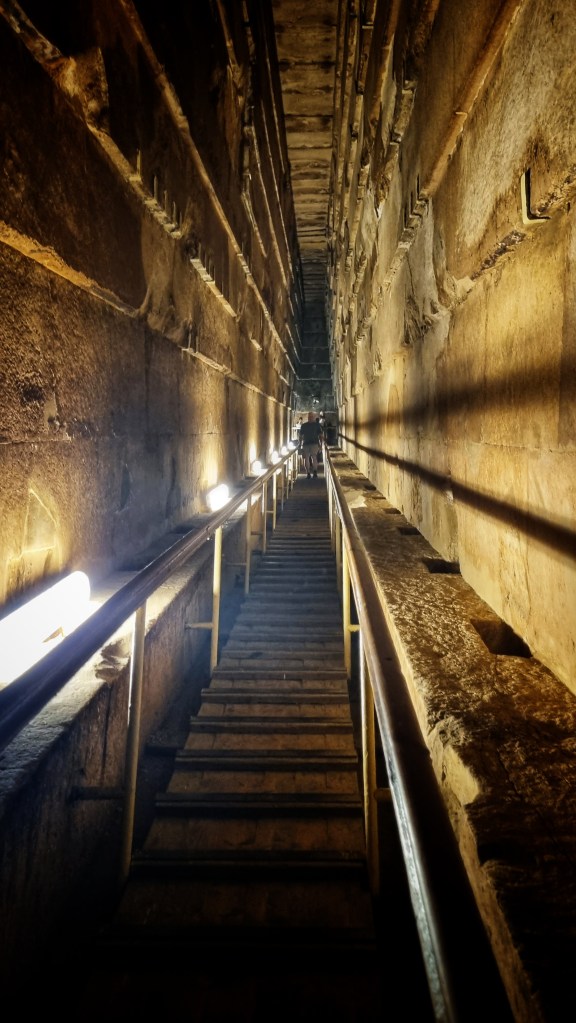
And the guide said that if I wanted to go inside the Great Pyramid, I would have to pay an extra fee, climb a narrow and steep incline that could cause claustrophobia, and see nothing inside.

I paid the fee. Being inside the Great Pyramid is not nothing!

So there I was climbing the steep incline when I noticed figures of a family of three ahead of me. The father muttered, “Kapoya man diay ani! Ta-as pa ni? Mao ra ni makita?”

Bisaya! Inside the Great Pyramid!

Amused and extremely happy to be hearing Binisaya for the first time in over two weeks, I laughed out loud and, even without seeing their faces in the dark, called out to the mom a few feet away from me, “Bisaya diay mo Ma’am? Ako pud! Grabe jud ang Bisaya kay mag-abot bisa’g sulod sa pyramid!” And we laughed our heads off while sweating profusely.

When we finally arrived at the King’s Chamber, instead of having a life-changing experience amidst the rose granite especially chosen for the chamber — the heaviest stones used in the entire pyramid, I acted as photographer for my new friends.

The way out took longer because more people were entering by the time. As I exited back into the glaring sun, the guide was waiting for me. He asked me how it went and I told him I did not regret going in.

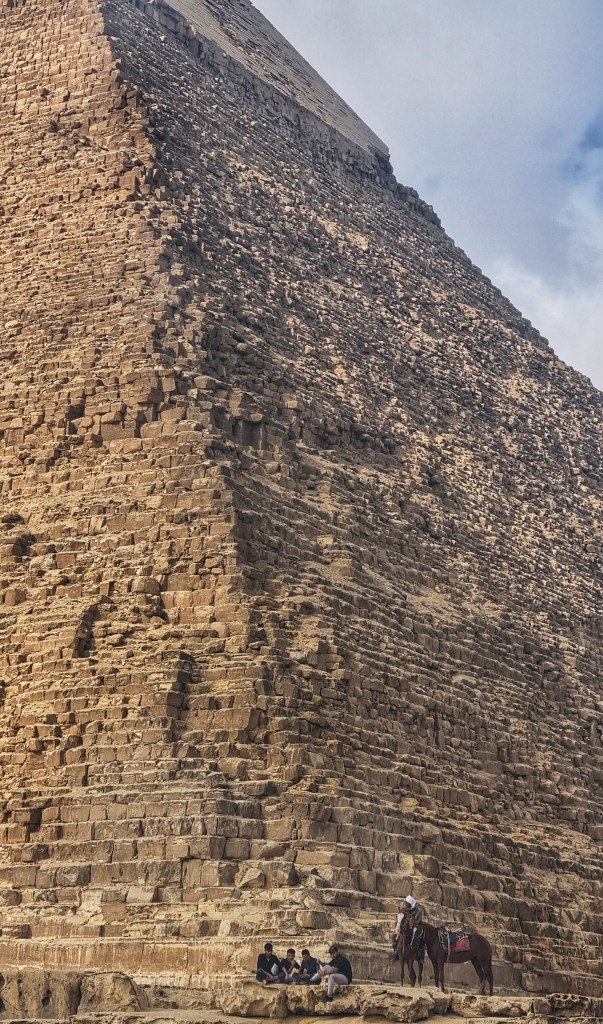
He drew my attention to the limestones of the pyramid. (The smooth outer layer, which was granite from Aswan did not erode through time. They were removed, stolen, and used for other structures by succeeding generations.) He then pointed at several fossils in the limestone. “What does that tell you?” He whispered.

All at once a strong emotion took hold of me and I burst into tears. I tried to control myself but I couldn’t. The tears kept flowing. The truth that we don’t really know anything and all we can do is speculate, and the enormity of history was just so overwhelming to me at that moment.

These stones, stacked perfectly on top of each other by who knows who, who knows how, and who knows why… these stones speak to you in a different language. These stones do something to you.

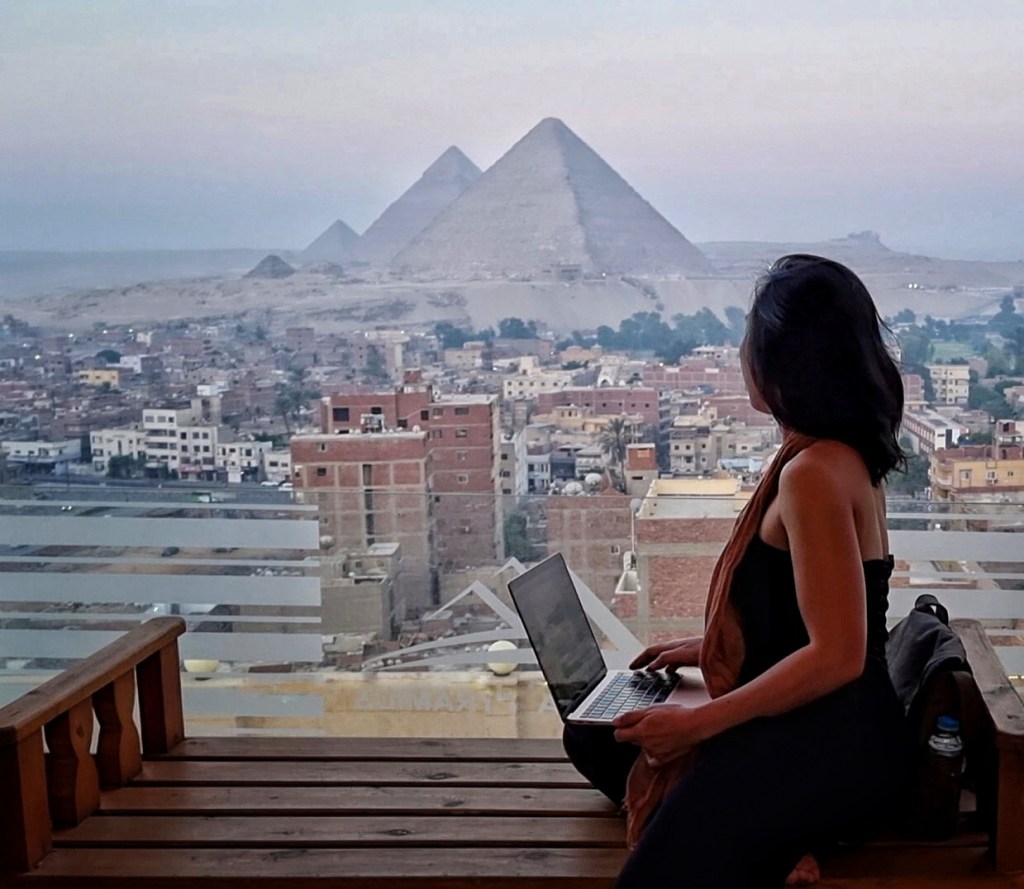
It was surreal to have this view from my hotel bedroom and its roof deck.

September 23, 2023 – Memphis

Reviewing the photos that the guide took of me during the Saqqara-Memphis-Giza Plateau Tour, I find that at the Great Sphinx of Giza, there is a photo of me grimacing, another one of me rolling my eyes, and another one of me doing a hair flip. Apparently, he kept clicking while I was lightly arguing with him. He was insisting that I do the touristy pose of kissing the Sphinx. I did not, and this set of hilarious photos that will not do justice to the grandeur of the Sphinx is my punishment for not cooperating.

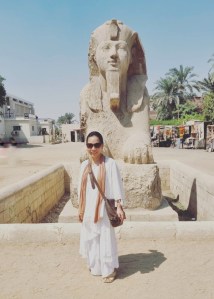
Instead, here is a decent photo of me with the alabaster Sphinx of Memphis. It is so much smaller than the Great Sphinx but it is an elegant and well-preserved remnant of what was once one of the greatest cities of the ancient world. This strategic city at the mouth of the Nile Delta marked the boundary between Upper and Lower Egypt.

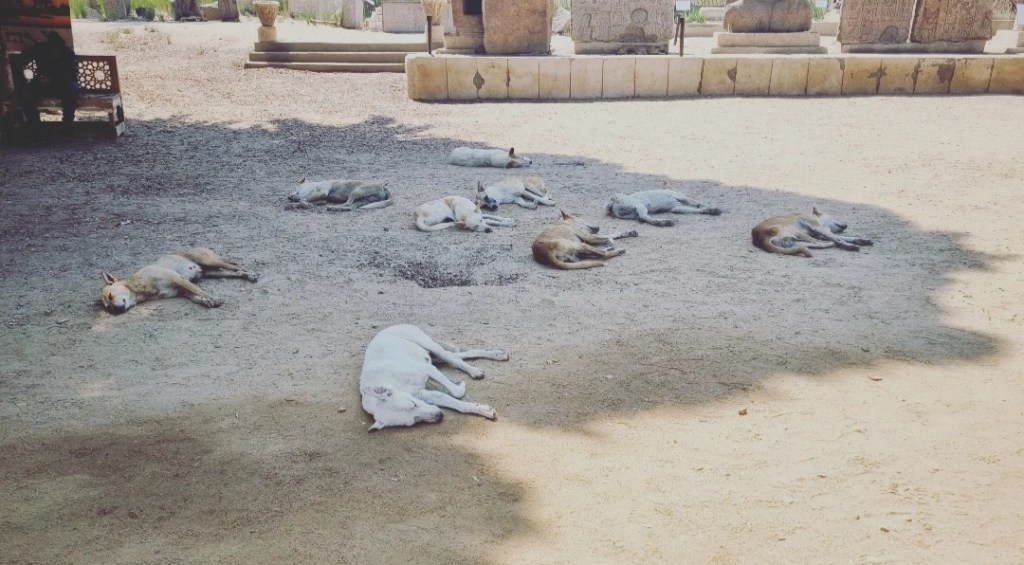
Today, dogs nap lazily under the shade of trees and ruins, seeking shelter from the fierce noonday sun, and very much oblivious to the historical richness of the soil on which they lay.

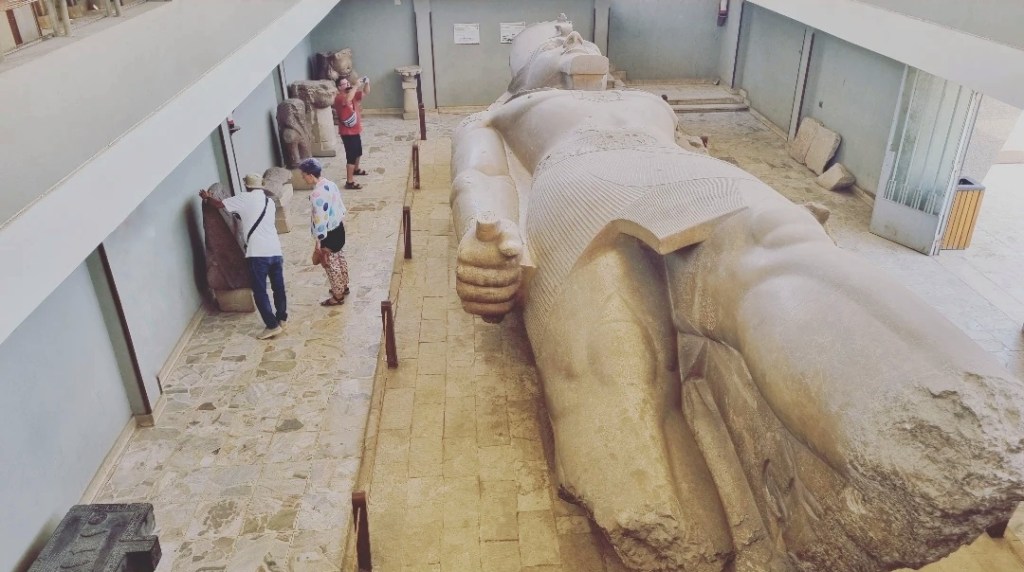
Memphis was believed to be under the protection of the Egyptian god Ptah, the patron of craftsmen. Nothing much is left of the city save some of its artists’ best crafts.

In many places where nothing of political power and might is left, traces of art remain.

The greatest pharaohs knew that they would not live for hundreds or thousands of years in this world; and therefore needed art and architecture… knowing they wouldn’t… and so that they could.

September 22, 2023 – Saqqara

For now, let’s set aside the magical fact that the crescent moon was directly above the pyramids on my first night in Giza; that the place I booked has a roof deck with a view of the pyramids; and the surreality of the pyramids being right there before my eyes the whole time…

Set that aside and raise your hands if, like me, one of the things you looked forward to at the height of the pandemic was the premiere of Secrets of the Saqqara Tomb on Netflix!

Lugging overweight eyebags with me from a restless night on a bus from Luxor to Giza, I booked a day tour to Saqqara, Memphis, and the Pyramids of Giza.

Saqqara is a treasure trove! Until now they continue to unearth new findings from the site. If not for limited time, I would prefer to spend at least three days exploring Saqqara alone!
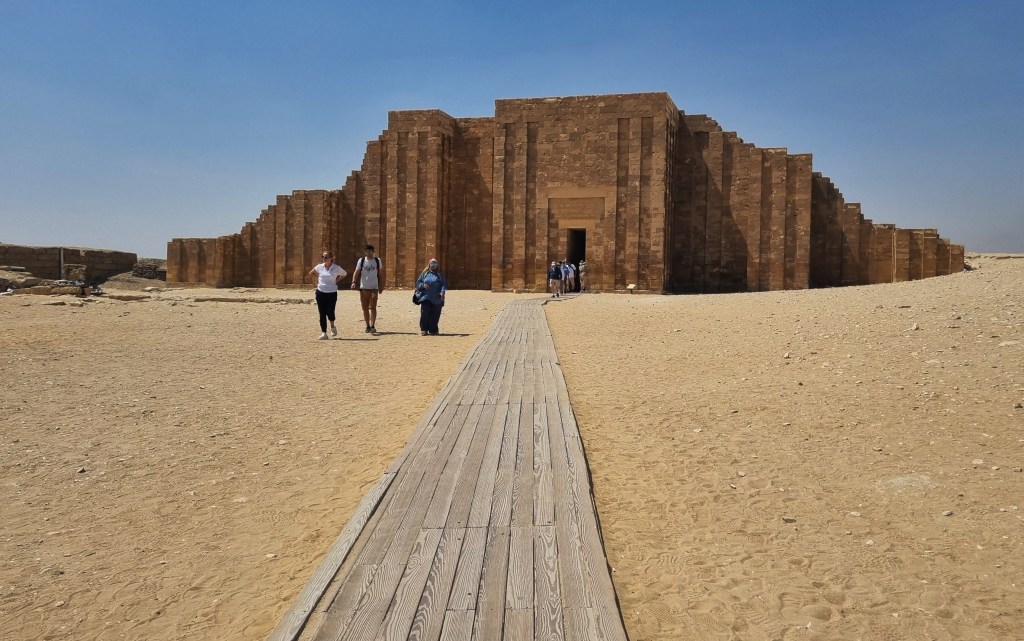
What seems to be a pixelated image of a building is the entrance to the complex, followed by a colonnade made of limestone that pre-dates Doric columns by thousands of years and believed to be its predecessor. The end of the colonnade opens to the Pyramid of Djoser, the oldest pyramid in the world, designed by Djoser’s architect, Imhotep, circa 2630 BCE. By stacking six “mastabas” of diminishing size on top of each other, he created the first step pyramid.

Entombed in Saqqara are kings and noblemen from the first dynasty up to the Ptolemaic period. What differentiates the bas reliefs here from those in the previous tombs I’ve seen are the daily life depictions: There is one of a butcher, a birthing scene, and even a circumcision scene! Details abound! I could hardly believe that I was walking into the documentary that had provided me with so much wonder during the darkest times of the lockdown.

A podcast episode that I listened to around the same time I watched the documentary pointed out that Cleopatra’s era is closer to the invention of the iPhone than it is to the construction of the pyramids of Giza. It still blows my mind. When dates are mere numbers written on a page, the breadth of history’s timeline cannot be fully grasped until such a comparison is made. The novelists made those epochs come alive for me, but to be here… to be here is entirely something else.

September 21, 2023 – Ancient Thebes

Based on the rising and the setting of the sun, the pharaohs built their homes and places of worship on the east bank and their tombs and mortuary temples on the west bank of the Nile. From the Old Kingdom pharaohs who had pyramids constructed without inscriptions inside their tombs, to the New Kingdom pharaohs who preferred elaborately decorated rock-cut tombs in the Valley of the Kings, the same pattern is followed.

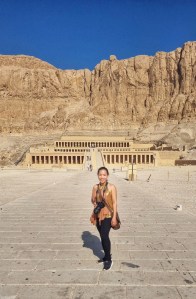
My excursion to the west bank of what once was ancient Thebes began with the grand Mortuary Temple of Hatshepsut that was exploding with sunlight by the time I arrived. At the time it was built, Egyptian architects and artists were believed to be in a phase of reinterpreting the traditional forms of architecture. The temple is said to be an exemplification of this particular period of artistic revolution, and is considered to be one of the architectural wonders of the ancient world.

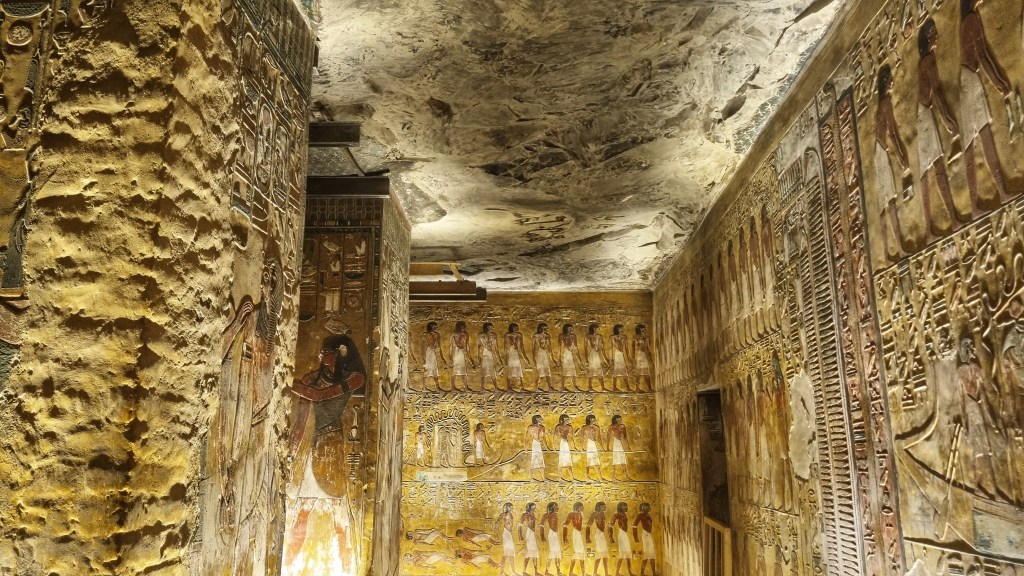
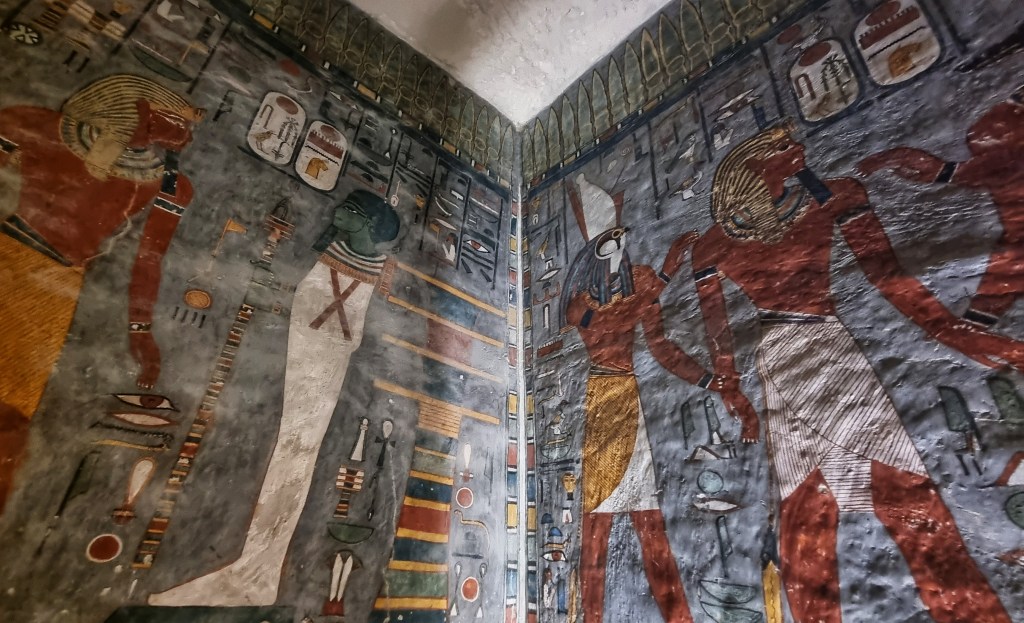
I was already overflowing with thoughts and impressions by the time I proceeded to the shadowy depths of the Valley of the Kings. By the time I finished visiting the tomb of Seti I, one of the most beautiful tombs in the valley; Tutankhamun’s, whose tomb still contains and displays his mummy; and the tombs of the Ramesseses, I was already feeling a sensory overload. But at the same time, hushed. Thoughts of life and death, light and dark. Egypt does this to you so beautifully.

September 20, 2023 – Of Ego and Sound at the Karnak and Luxor Temples

“Why do you know so much about our history?” asked my elderly guide for the Karnak and Luxor Temples.

“I don’t! There’s so much I don’t know yet that’s why you have to tell me more.”

“Well, you know more than anyone I’ve ever guided. When I ask you something you are able to answer.”

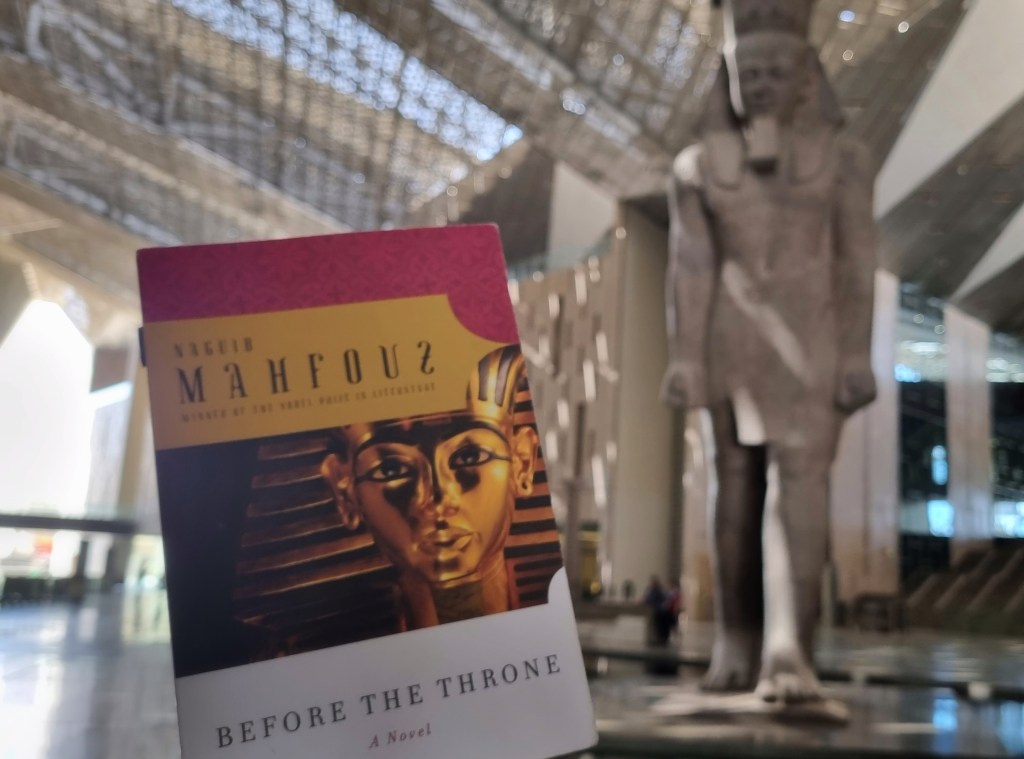
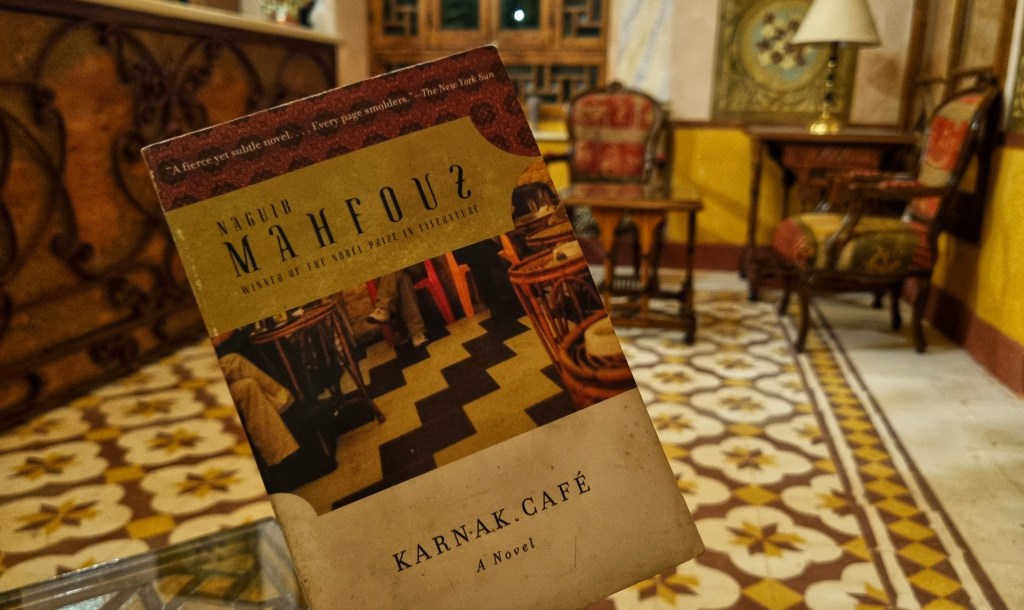
“Maybe it’s Naguib Mahfouz. He made different layers of Egypt’s history come alive for me — from the Pharaonic times up to the revolution.”

“Mahfouz?! You read Naguib Mahfouz?! This is my first time as a guide that I have met someone who reads Naguib Mahfouz! You know there’s a museum and a coffee shop in Cairo…” He trailed off when he saw me nodding, shook his head, and smiled in disbelief.

And there I was thinking how he’d be in for a pleasant surprise if he meets my friends and my book club!

After a brief silence, “Are you sure history is not part of your work?”

“It should be part of everyone’s work.”

“I think you are a genius.”

And just like that, friends. I have been promoted to genius status. I love Egypt. 😂

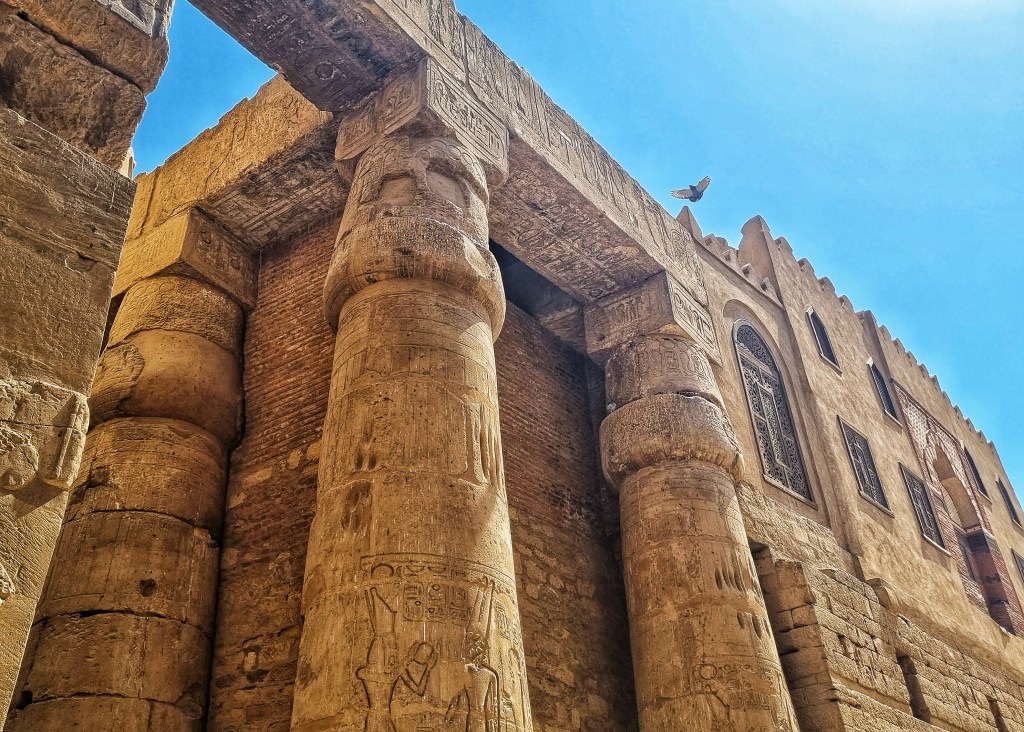
I did get one answer wrong, and the correct answer fascinates me as a musician. When he asked what the gigantic columns in the Hypostle Halls of the Karnak and Luxor Temples were for, I answered, “Ego.” Haha!

Apparently it’s for sound! The priests used it as amplifiers for their chants so that their voices would resonate far and beyond the temples!

I stand corrected. Now I know that the columns are for sound… and ego. Haha! But shhh… don’t tell him.

September 19, 2023 – Days and Nights in Luxor

When asked for my name here, I say the version easier for the Arabic tongue to pronounce: Mira. Eyes light up as much as when I say my full name to English speakers. It was only today when I had my name written as hieroglyphs on authentic papyrus that it was explained to me that it was the “Ra” that made it glow.

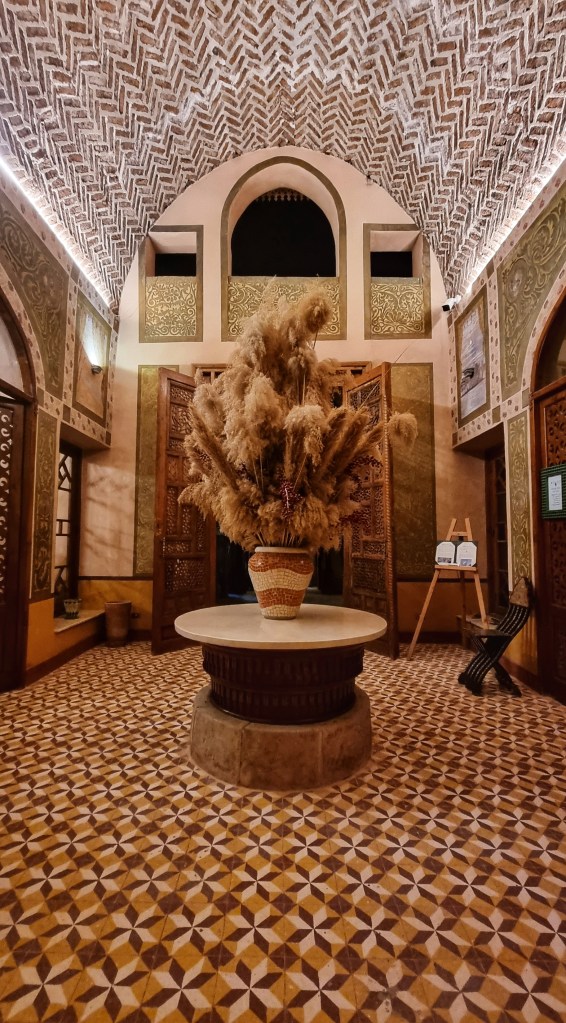
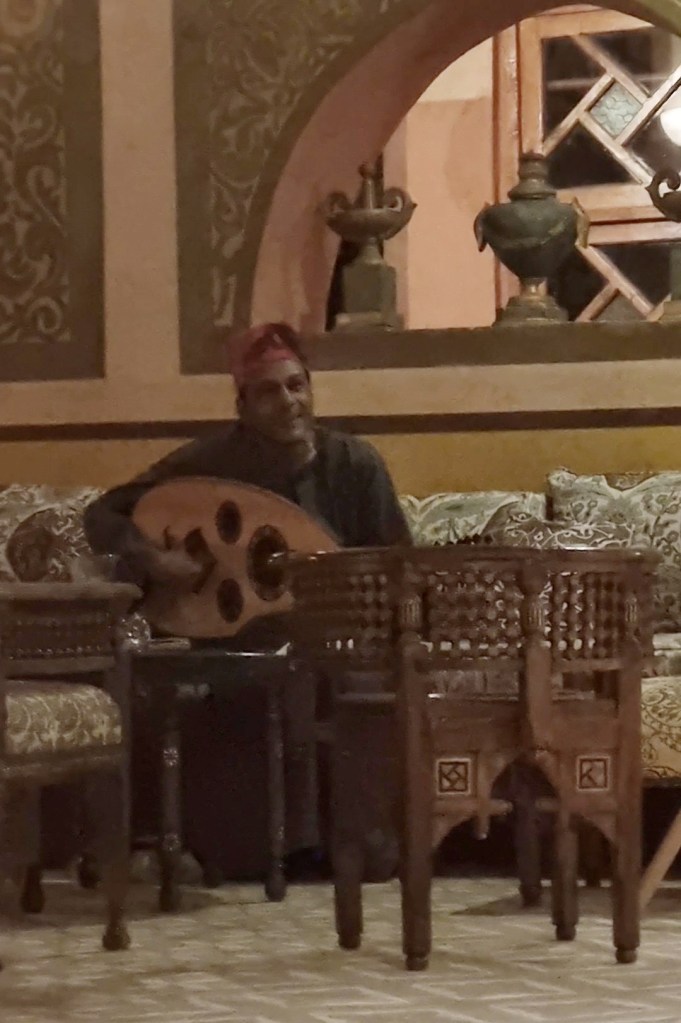
So this is Luxor. While daytime is mostly spent exploring what once was ancient Thebes, nights are such a dream made of halva ice cream, pensive moods, reading more Mahfouz, and a lone oud player tugging on strings of nostalgia and silences. Evenings in Luxor make me feel that I have really rested for the first time in months. I think my soul has been given back its glow, too… and that’s when one feels that one truly got what they came here for.

September 16, 2023 – Kom Ombo and Edfu

I left Aswan at five in the morning and headed for Luxor. In between these two dominant cities are the two lesser-known cities of Kom Ombo and Edfu. Normally, tourists who want to visit Kom Ombo and Edfu have to book a special tour from either Aswan or Luxor. But here’s a travel cheat: Arrange a private car through your hotel and specify that you wish to stop by the two cities on your way to Luxor. Aside from saving time and getting to explore these sites in your own time without a tour group rushing you, you will pay the same rate as a regular transfer to Luxor and save approximately 100USD for another trip to these cities.

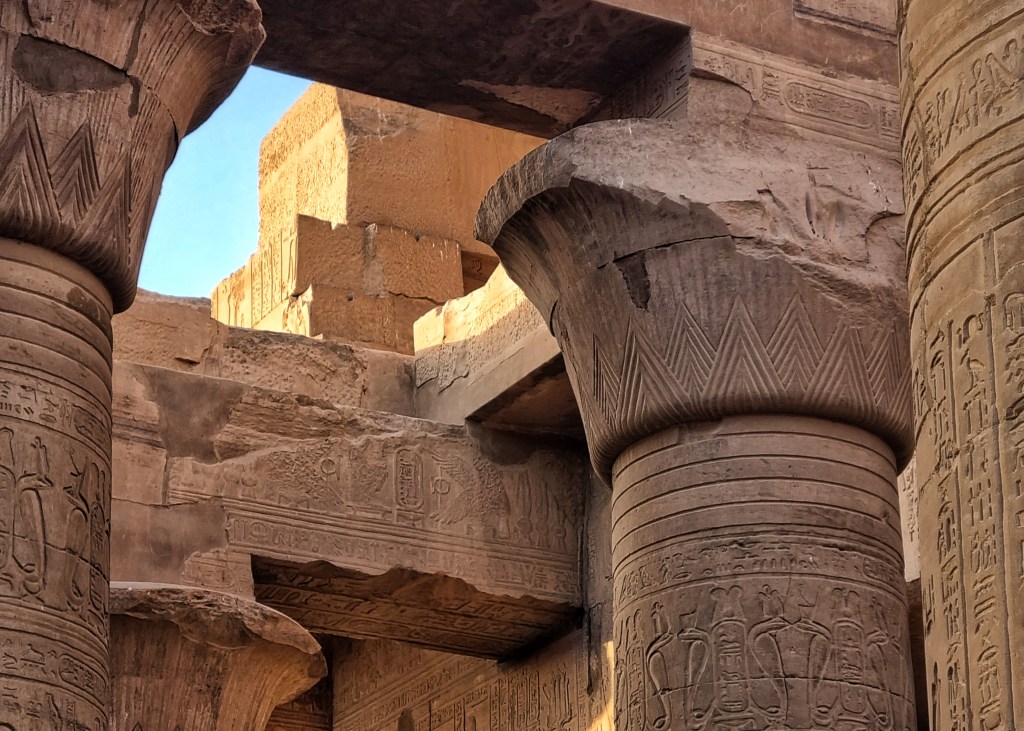
Kom Ombo is unique for many reasons. While it was constructed during the Ptolemaic period, additions were made during the Roman period, making it a double temple with two sets of gods. It does not have a pylon (a monumental gate common to most Egyptian temples), but it features a nilometer (a structure for measuring the Nile’s clarity and water level), and most curious of all, the only set of surgical instruments found in the bas reliefs of ancient Egypt — evidence set in stone of how priests practiced medicine and magic and functioned as doctors.

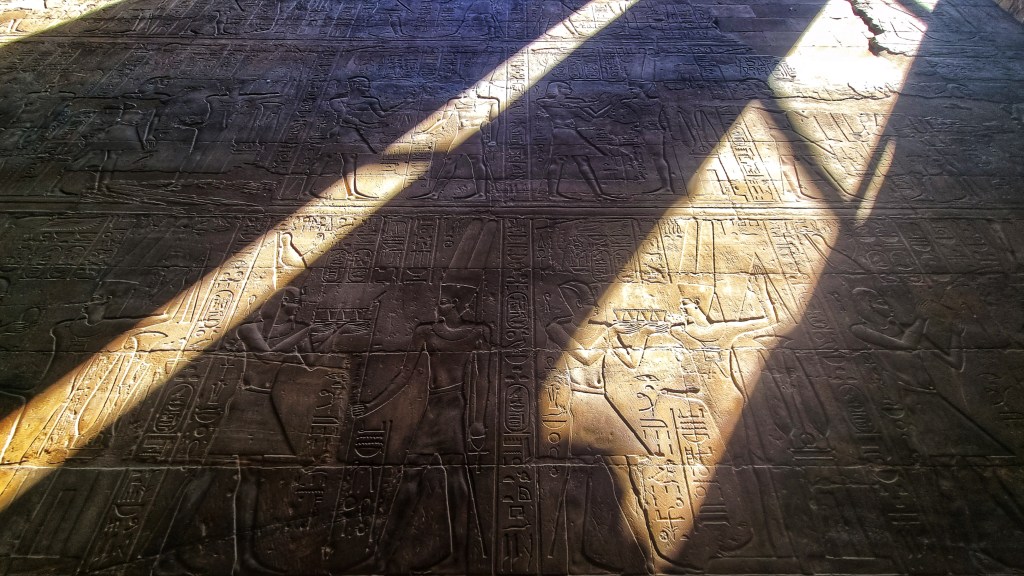
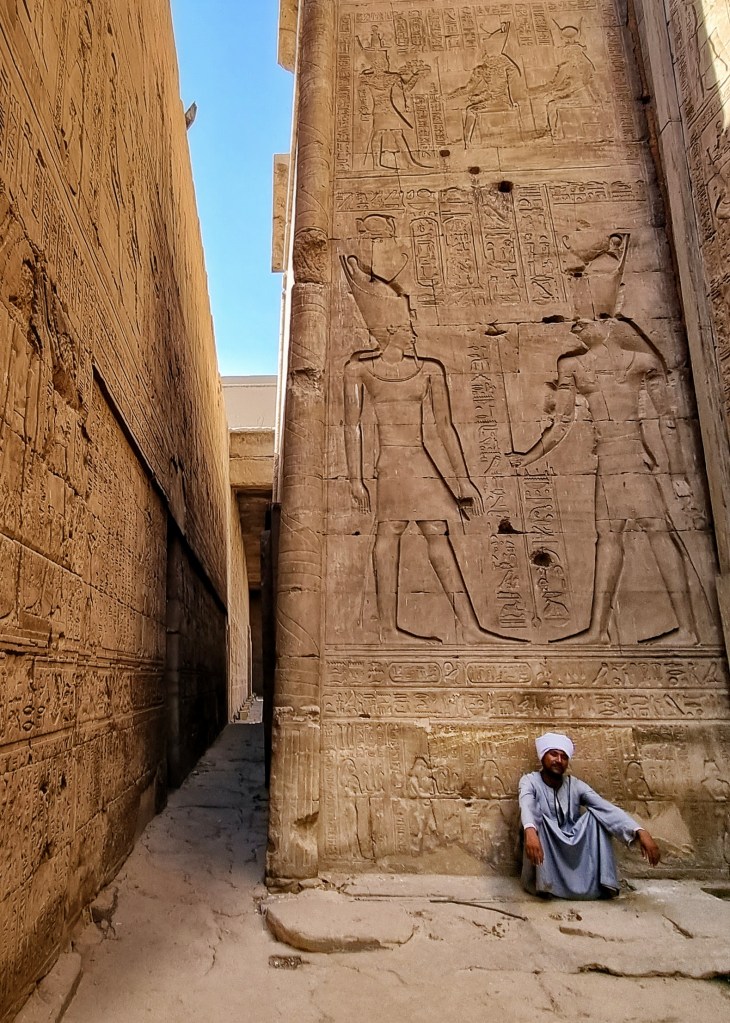
As for Edfu, it is one of the most well-preserved temples in Egypt and its high state of preservation is lure enough. Interestingly, its inscriptions feature the ancient Egyptian creation myth and details of the temple’s construction.

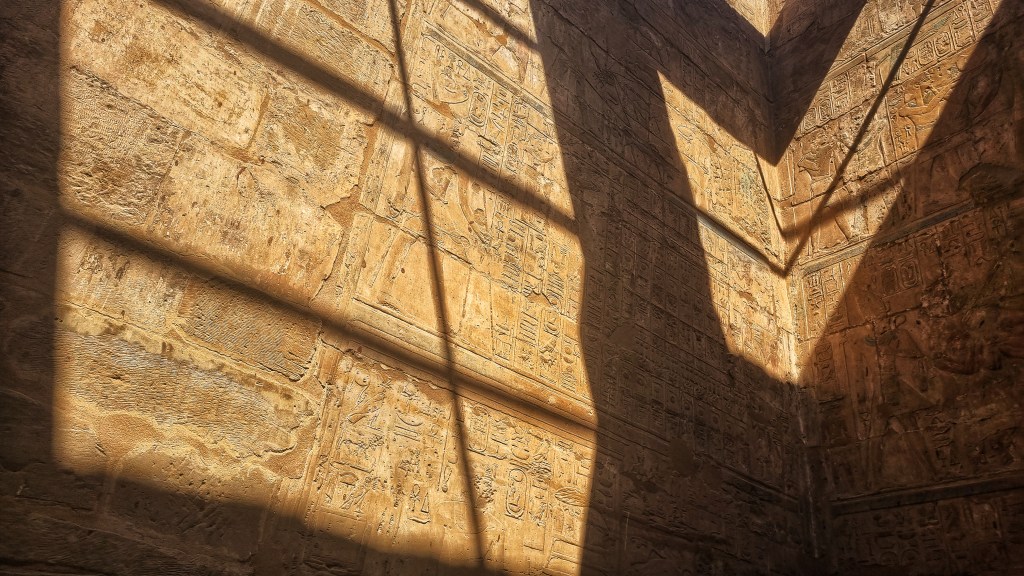
If only I could, I would go to all these ancient sites on sunrise and again on sundown. There is nothing like morning light seeking entry through passageways that only it can beautify. Imagine having a gentle light furnishing columns with a variegated tenderness, and acting as your guide as it paints sections of beams and hieroglyphs golden to call your attention.