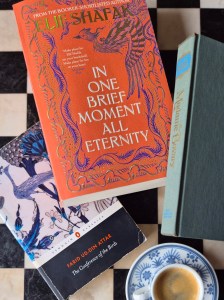
On a trip to Egypt in 2023, I stumbled upon Flaubert in Egypt at a bookstore and thought of getting a copy, but eventually decided against it. Why would I let someone like him color my perceptions of the country?
I’ve harbored qualms about Flaubert since, as a very young girl, I somehow got hold of Madame Bovary. The gold-gilded title against teal cloth made the volume look like any other benign Jane Austen volume. Dear Reader, this scandalized girl soon found out that it was not.
That I still read Madame Bovary until the tragic end should have taught me something about his prose, the pain that dwelt in the spaces between words, and the underlying intentions. But when you are too young, you don’t think about style and subtleties. You are merely left dismayed by the explicit.
Shafak is more sympathetic toward Flaubert. Because of this novel, I’ve realized that perhaps I should be, too. And while I have my little Shafak-ian peeves, literature has triumphed by making me reconsider the French author.
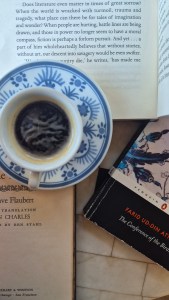
Shafak’s compassion for social pariahs and bringing to light unsung histories and details about the culture and traditions of a particular region in the world is well known. So when a book about Flaubert was announced, I immediately knew it had something to do with his extensive travels to the East. My hunch was confirmed. Upon seeing the cover, I recognized the bird as the Simurgh and guessed that Attar’s Conference of the Birds would play a role. Unfortunately, I also predicted how it would contribute to the story. What failed to register, however, was that the title itself is a line from the same epic poem: “Give up the intellect for love and see | In one brief moment all eternity.”
Despite the spoilers that I brought upon myself, Shafak still manages to turn me into a wide-eyed young girl, enthusiastically feeding on each morsel of this novel that attempts to link the literary traditions of East and West, and which reminds us about what each of us has that is universal… a story.

