My Initiation to László Krasznahorkai

As if in sync with my protracted pace in gathering enough courage to take on a Krasznahorkai, it also took a while for my order to arrive. 

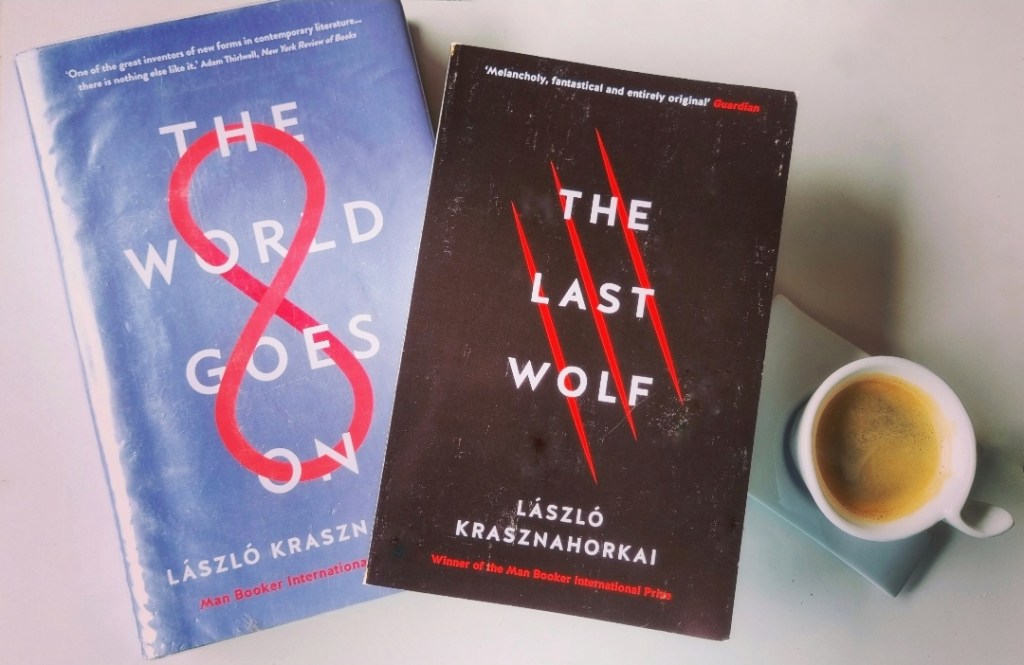
When at last his books occupied the Hungarian section of my shelf, I timidly went for The World Goes On to sample one of the short stories. Catching the name of my favorite city in the table of contents, I immediately turned the pages to The Swan of Istanbul.

The Swan of Istanbul (seventy-nine paragraphs on blank pages)

In memoriam Konstantinos Kavafis

My excitement was fueled upon seeing it dedicated to the writer of my favorite poem! (Too excited, in fact, that my eyes skipped the words in parentheses.)

What greeted me was the literary counterpart of John Cage’s 4′33″. Blank pages, ladies and gentlemen.

These thoughts assailed me as I flipped through the emptiness of each page: Doesn’t Krasznahorkai have a reputation for composing entire books with a single sentence? Where was the intimidating muchness of which they spoke? Should I lazily call this pretentious without giving it much thought and expose my limited knowledge of post-modernism and deconstructivism? But also; László, I like you already.

And yet, after “reading” the blank pages, I closed The World Goes On and tried my hand at The Last Wolf. There I found the labyrinthine thoughts and lines for which he is known, a philosophy professor who thinks he is mistakenly hired to write about the last wolf of Extremadura, a wasteland in Spain that was once part of what the Romans called Lusitania, and yes, the solitary period at the very end.

As the story spirals out, the reader is made to ponder on the hunter and the hunted, how the two are very much alike and are part of the same thing; gentrification, not just among humans but among animals; bestiality and humanity intermingling; the incomprehensibility of existence, and how man is a prisoner of thought.

If John Cage’s 4’33″ was meant to be the embodiment of the composer’s idea that any auditory experience may constitute music, what if reading Krasznahorkai is to explore, to be surprised, to question what constitutes a reading experience, and to challenge what else literature can be?

Thad Carhart: The Piano Shop on the Left Bank

Not the West Bank this time, just the Left Bank. The thing about my Silk Route | Fertile Crescent reading project is that — despite being a source of enlightenment through discovering underrated but astounding literature — novels from this route in question are usually emotionally taxing.

Although I have sensed that I am drawn to writings from places of conflict for the reason that they have a sensitivity to beauty commensurate with their heightened awareness of the fragility of life; once in a while, I need a breather, and that’s when I turn to books related to other interests. In this case, not merely an interest, but a love.

But as love would have it, we oftentimes become accustomed to a beloved’s presence and we slowly take its magic for granted. 

The Piano Shop on the Left Bank: Discovering a Forgotten Passion in a Paris Atelier refreshed me about the intricate workings of a piano; of how extraordinary this instrument is; of the alchemy and difficulty involved in piano-making and music-making; and how beautiful tone production relies so much on the precision of piano makers, the skill of piano technicians, and the heart and hands of a pianist. This rekindled a fire that led me straight to the piano after turning the last page.

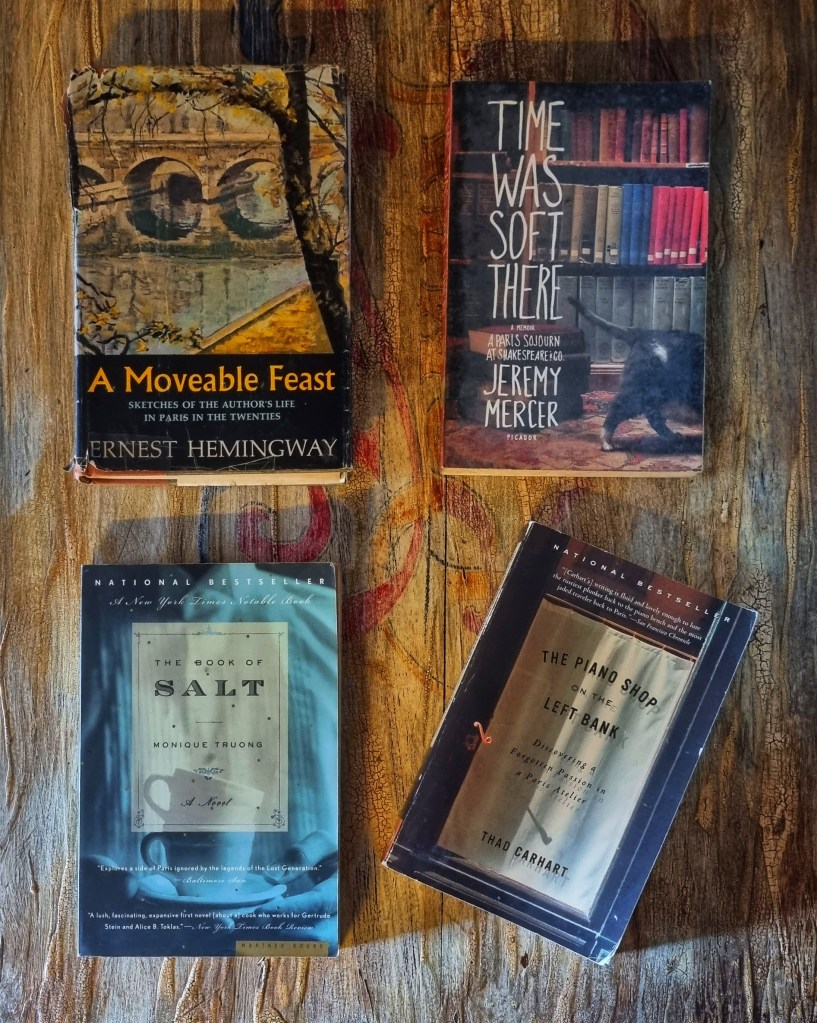
But this book is not just about pianos and trivia from the music world. (Although, while we’re at it: Did you know that when the Eiffel Tower was built in 1889, the first thing to be hauled to the rooms at the top was a piano?) It is also about the Paris that is inaccessible to the tourist. In fact, this would make a lovely pair to Mercer’s Time Was Soft There: A Paris Sojourn at Shakespeare & Co.

Surely, these books did not intend to rival Hemingway’s A Moveable Feast or the aching poignancy of Truong’s Book of Salt, but at times, lesser-known books are beautiful for the simplicity that they lead us to find something that draws out music from within.

Sevgi Soysal: Dawn & Yashar Kemal: Memed, My Hawk

When Archipelago Books released their edition of Dawn, I immediately placed an order and entertained myself with Memed, My Hawk and a few other books while waiting for its arrival. This is my second NYRB/Archipelago book-pairing and I’m finding these serendipitous duos to be highly rewarding.

Maureen Freely, whose translations of works by Sabahattin Ali and Orhan Pamuk I have enjoyed, pens an insightful preface to Dawn that enlightens readers about Sevgi Soysal’s life and the paradox in Turkish women’s rights that she was born into; and for the 2005 NYRB edition of Memed, My Hawk, launched on the fiftieth anniversary of its publication, Yashar Kemal himself wrote the introduction wherein he reflects on people whose destiny it is to revolt.

Little did I know that the two Turkish works would complement each other and provide a rare glimpse of the Çukurova plain when it was still a setting for poor villagers, cruel landlords, bandits, orchards, and fields of thistles in Memed, My Hawk, and the same district on the cusp of urbanization in Dawn — far removed from the glorious domes and minarets of Istanbul that are more familiar to the international reader but closer to the woes of the working class.

Kemal (1923-2015) and Soysal (1936-1976) were no strangers to arrests and serving prison time for political activism. Memed, My Hawk is Kemal’s first novel, and Dawn Soysal’s last. But the symmetries are endless. The lives that both authors lived as leftist intellectuals and the fights they fought against authoritarianism and injustice are fervently manifested in these works.

The word “leftist” might cause some to flinch as it comes with a lot of baggage and it is deplorable how the mere association to the word can lead to “red-tagging” in my country; but the flawed and deeply human characters in both works reveal various shades of this problematic term that, stripped to its purest state, is simply the pursuit of equality, equity, basic human rights, liberty, and justice.

“Since when did we start thinking that struggling is a crime, and doing nothing was innocence and brilliance?” — Sevgi Soysal, Dawn

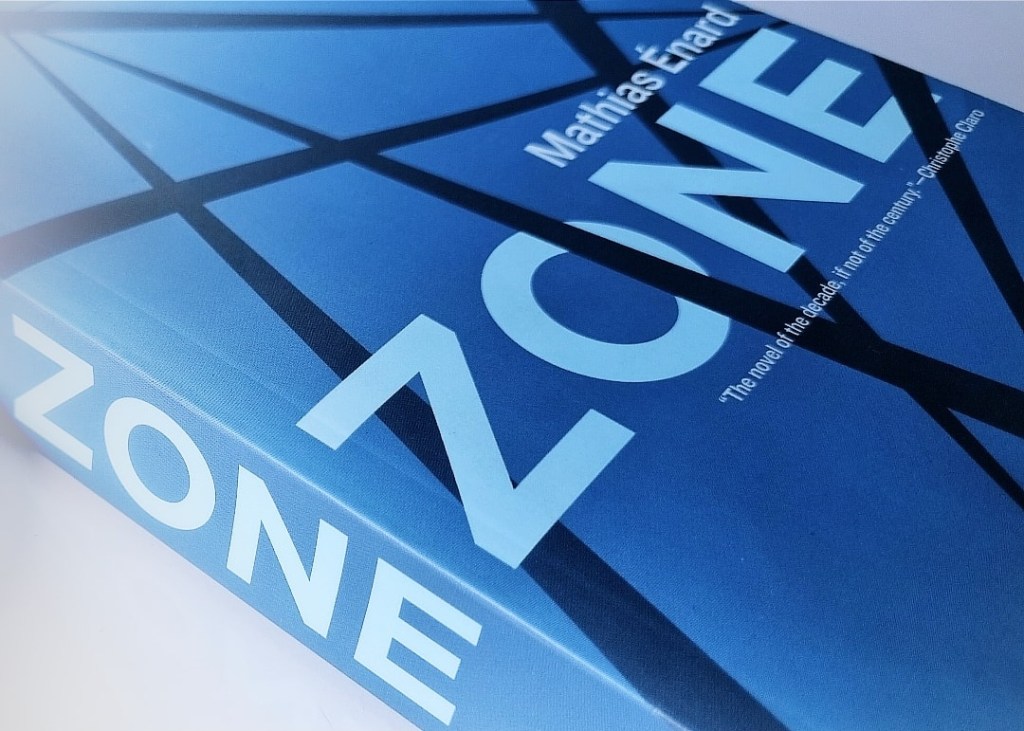
Mathias Énard: Zone

Tell them of battles, kings, and elephants,

without the elegance, without the elephants,

only battles, cruel kings, and pawns,

“Comrade, one last handshake before the end

of the world,” says a madman

at the station in Milan,

Francis Servain Mirković is burdened

by the remark, burdened

by the contents

of his suitcase, by the contents

of his mind,

as the train steers to Rome,

it is not scenery that flash by,

it is his life; no home,

Balkan conscript, a spy,

dysfunctional lover, son,

former informer

in the Zone, epicenter

of my literary quakes,

“the Zone, land of the wrathful savage

gods who have been clashing

endlessly

since the Bronze Age,” but he is

convinced that tomorrow he will

be a new man, as the train moves

memory

is a threnody

of the guilt of nations,

of the sins of the world,

of over a century’s worth

of savagery,

a brutal montage

of conflict, training our eyes to truths 

that we prefer to turn away from, a book

to make our consciences flinch, no one

is ever prepared

for official truth

says our antihero, this man,

a product of a history

of violence,

a tragic aspect

of a portrait

of a man

of our time.

Hamid Ismailov

“We are a nomadic people. Today we pitch our yurts on one mountain pasture, tomorrow on another. Some people see their sense, their history, their fellow men as urban, and preserve all this in schools and madrasas, books and manuals. But we get on our horses and carry everything on our persons, and we have to keep it like this, on the move, in our minds and hearts.” — Hamid Ismailov, Manaschi

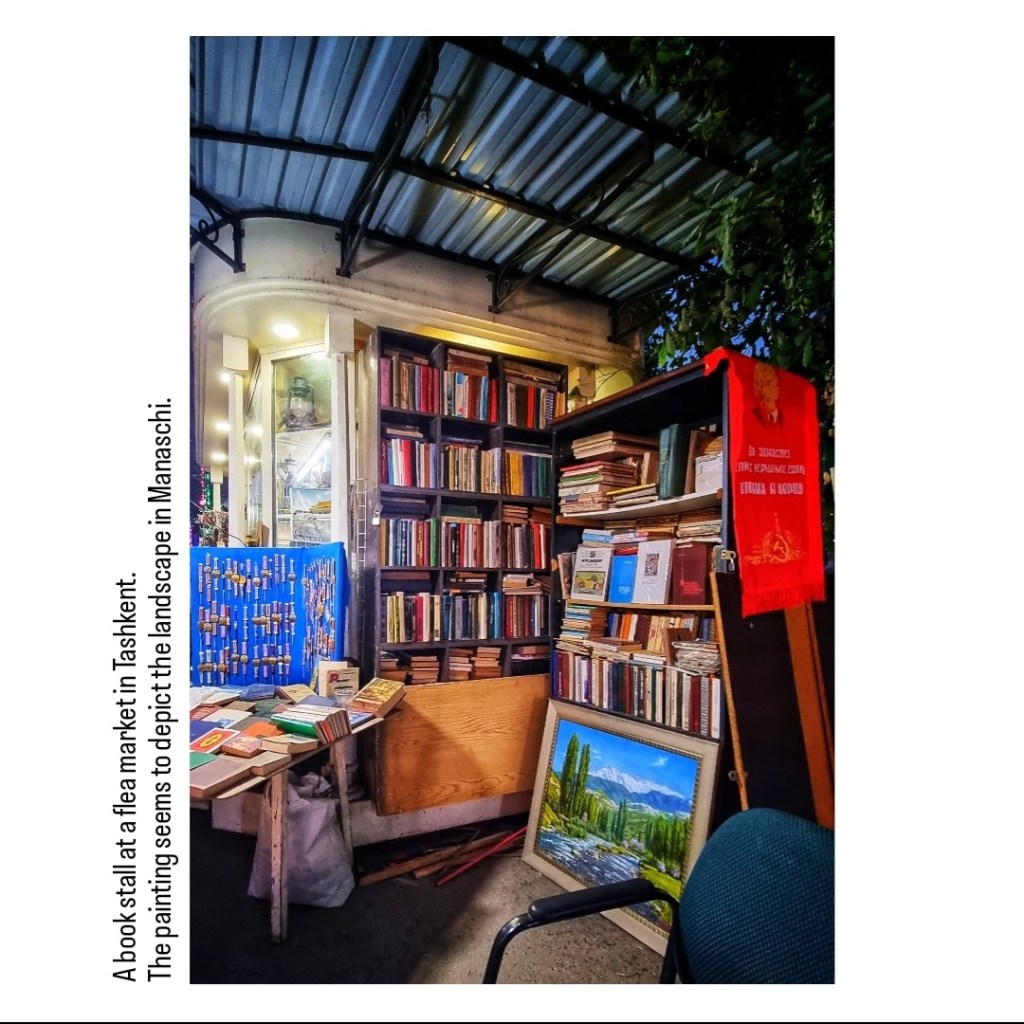
Sometime in between the first and the second volume of this Central Asian triptych, I travelled to Uzbekistan where Ismailov’s books cannot set foot because they are banned, and had a glimpse of the place that wrote the author.

Devil’s Dance is an intense initiation to Uzbek Literature. Of Strangers and Bees playfully meanders across the boundaries of time, literature, and geography. Manaschi is a geopolitically relevant finale that equals the force of Devil’s Dance.

But whether one speaks of the persecution of Uzbek writers throughout different regimes and implies that the writing process is akin to a dance with jinns;

the other of exile, elusive homelands, the value of community, man’s capacity for good and evil, or the search for truth and self through wanderers and bees;

and another of the trouble with imposed artificial borders, ethnic conflicts, the complexity of identity, or mystical bardic traditions;

all three uniquely celebrate the rich storytelling heritage of Central Asia — a heritage so crucial that a protagonist from the second volume boldly claims it to have shaped the shorelines of the great ocean that is Russian literature.

I love how this trilogy is a confluence of literary traditions rather than a defiance of the Western form. It manifests the power of stories, written, uttered, or observed; the power of stories when lived, as we become our stories and our stories become us; and the power of stories to take us beyond pathways of silk, even to places where only the rustle of words can go.

“It was a good thing the world had Uzbek literature.” — Hamid Ismailov, Of Strangers and Bees


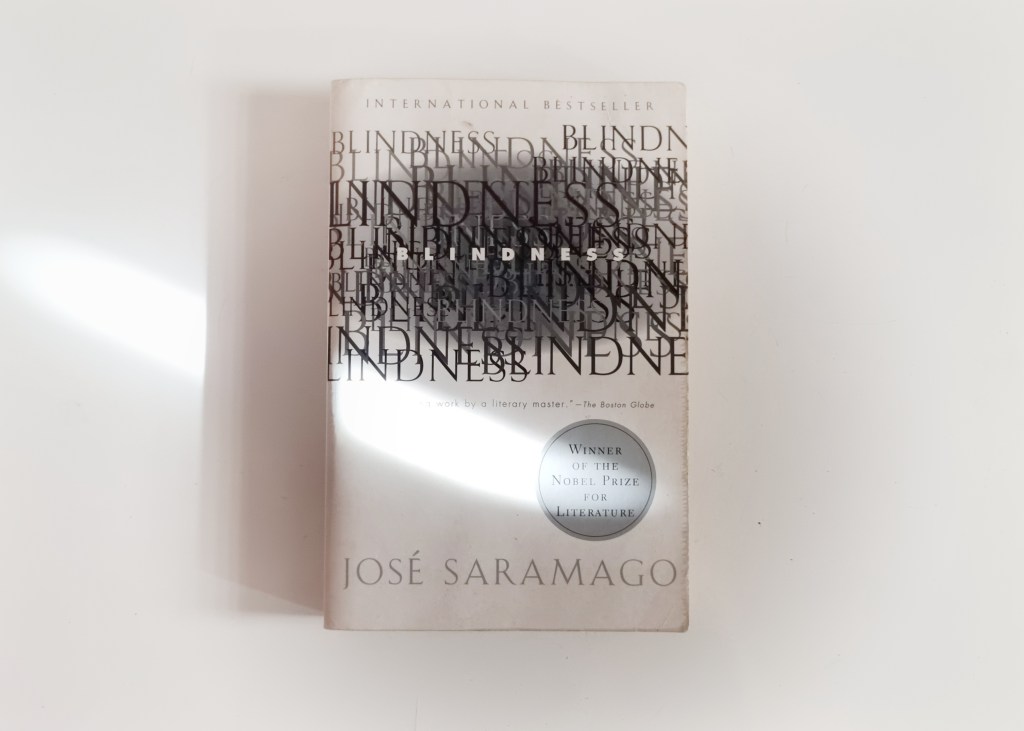
José Saramago: Blindness

On re-reading and “reviewing” — ergo, to see, again.

The plan was to read a Saramago by the 16th of November. It could have been another Saramago. Besides, I still remembered the anguish in this one. But was that all? Could an honest reader claim to have read this if that’s all they gathered?

The questions prompted a re-reading. After all, this reader of thirty-eight Novembers makes an effort to re-read at least one book a year from callow years. Blindness beckoned.

Oh, to realize that the first victim of the epidemic of blindness in the story, who used to seem so much older, is exactly as old as I am now!

It took several pages to re-acclimatize to the disorienting treatment of dialogue: But I now grasp how this effectively amplifies an incessant tension, immensely effective that the suspense still made my palms sweat. 

Soon enough, neglected passages from the first reading began to hit differently: “Government of the blind trying to lead the blind” leapt off the pages from fiction to palpable reality. And I ask, is the book still considered dystopian when we already experienced similar things at the onset of the pandemic — the messy government response, the fear of the unknown, the unforeseen future, deaths, confusion, chaos, the stumbling in the dark, the uncovering of the best and the worst of humanity?

It is also only now that I understand why the characters were not given names: “Inside us there is something that has no name, that something is what we are.” I had failed to notice that this novel is essentially a look at human behavior when left to fend for itself in the dark, beheld under Saramago’s powerful, magnifying lens.

Yes, there is anguish and barbarity; it’s every man for himself. But as an older reader who has seen more darkness in the world than when I first read this, the opposite is highlighted this time, and it is compassion and kindness that shines through.

There is anguish, but I can also emphasize how a book about blindness can open our eyes; and I will, instead, point to the selfless acts, that glorious moment when the three women bathe naked in the rain, and those moments when the only person who retains her eyesight reads a book to those who have gone blind.

“The only miracle we can perform is to go on living, said the woman, to preserve the fragility of life from day to day, as if it were blind and did not know where to go, and perhaps it is like that, perhaps it really does not know, it placed itself in our hands, after giving us intelligence, and this is what we have made of it…”

To go on living. José Saramago couldn’t have given me a better message on the 16th of November, the birthdate he and I share.

Ben Hopkins: Cathedral

Through previous readings, this reader has encountered provocative theories that suggest that it was religious reformation that freed human thought from church dogma thus giving rise to individualism, which subsequently paved the way for the Renaissance; and also theories of the aftermath of the Black Death setting the scene for capitalism by overthrowing social systems including feudalism.

The Protestant Reformation erupted in the 1500s, the Black Death in the 1300s. Ben Hopkins’ novel of six hundred and twenty four pages begins in the 1200s, but through its characters, we already witness the gradual ascent of mercantile capitalism and individualism challenging the hegemony of the Catholic Church.

But thankfully, these big words and the sophisticated ideas that are attached to them are not heaped too heavily on the reader’s shoulders. The author seems to have employed his filmmaking expertise by creating a well-paced and entertaining book with a handful of dramatic imagery and contrasting characters across the broad spectrum of society, but which also carries so much understanding of the religious and socioeconomic landscape of a particular European period.

In the midst of it all, the Cathedral — or more accurately, the construction of the Cathedral — that remains unfinished and continues to be built even by the end of this novel. This novel that begins in 1229 and ends in 1351. This Cathedral that symbolizes a number of things. 

In this story there is clearly the aspect of the historical, or the architectural, but which should always lead one to contemplate on the personal — the edifices that we build for ourselves. And because we already know how certain it is that we can carry nothing out, what do we leave behind?

To quote a cherished character who passed away by the the shores of Constantinople, “A man can die anywhere. It’s all the same. The only important thing is how he lives.”

Sabahattin Ali: Madonna in a Fur Coat

“And what a pity that is: a dash of curiosity is all it takes to stumble upon treasures we never expected.”

This is true for people, and it is true for books including this one.

“For wasn’t there sufficient pleasure to be had in silent patience… When we walked side by side, did I not feel his humanity most profoundly? Only now did I begin to understand why it was not always through words that people sought each other out and came to understand each other, and why some poets went to such lengths to seek out companions who could, like them, contemplate the beauties of nature in silence. Though I did not know what I was learning from this silent man walking alongside me, I was certain that I was learning far more than I would have done from a teacher in years.”

In this little treasure of a book, there are traces of Before Sunrise in the manner of dialogue and hints of Stoner in the life of the main character that, had it not been written decades prior, I would have believed it to be inspired by both. And yet, it could very well be the other way around. That reading Madonna in a Fur Coat brought these special titles to mind should already say enough of its merits.

But we write about what we have read to simmer in the experience. To cling to the characters a little bit more as if to comfort them even though, in truth, it is us who seek comfort. To investigate their strengths and their flaws and hold them up against our own and consider if we would be as strong or as weak, whether we could love as much, love enough, or truly love at all. To write about how this particular book gently chides us for our superficial encounters and interactions, and how it nudges us to search into the loneliness of other people as much as our own. To untangle our thoughts and give them enough time to be rewired with whatever wisdom we just gleaned, because we know it is not exactly in the writing but in the thinking, and then in the living.

César Aira: The Famous Magician

A writer is confronted with a magician who makes an offer of magical powers in exchange for something horrendous — to abandon Literature forever. But having already accomplished much as a writer and a reader, he finds a certain appeal to exploring a new life.

“Perhaps something new was beginning for me, after a lifetime spent among books: a superior kind of reading, the reading of the real world.”

“Still, giving up writing and reading… would leave me without any consolation. It would be like giving up on life itself. On the other hand, I couldn’t help imagining all I could do with the powers he was offering me. Giving up Literature was a terrible wrench; moments before it had seemed unthinkable, and I still couldn’t envisage it. And yet, what was Literature, what had it been for me if not the protean power of transformation…”

He is caught in a quandary that is not too different from the balancing act we readers perform on a daily basis. And isn’t Literature in itself a magical power?

But I’ll stop before I reveal too much of this delightfully quirky little book. Here is a bite-sized literary confection with a hint of caprice, sprinkled with a dash of art, and best relished within the span of a cup of coffee. Expect a philosophical aftertaste!


“Readers seek out fellow readers as much as they seek out books, though fellow readers are, alas, more difficult to find. So we hold onto them for life.”

Isn’t this lovely passage from the book the very reason why I am here writing this and why you are here reading this?

Containers for the Human Music

It is little known outside Ex Libris Philippines that this book club was founded by music and architecture majors during their university years at UP Diliman. 

On a trip to the capital last month, the music section of Ex Libris was able to convene whilst the architecture section was excellently acknowledged through the venue — The Library Cafe at the Ramon Magsaysay Center, an architectural icon in the Philippines named after our seventh president. 

I took this photo on our way in and it made me reflect on how architecture, literature, and music are the same spirit taking distinct forms and harnessing different planes of space in our lives. 

Although, through the years, I have come across books in which literature and architecture occupy the same space, and it is nothing short of fascinating when they do: Victor Hugo’s Hunchback of Notre Dame, Italo Calvino’s Invisible Cities, Marguerite Yourcenar’s Memoirs of Hadrian, Boris Pekić’s Houses, Ivo Andrić’s Bridge on the Drina, Alain de Botton’s Architecture of Happiness, Gaston Bachelard’s Poetics of Space, Mathias Énard’s Tell Them of Battles, Kings & Elephants, Elif Shafak’s Architect’s Apprentice, and my current read, Ben Hopkins’ Cathedral. And as we can see, when these two meet, sumptuous covers are a given.

In an interview on his book, Apeirogon, Colum McCann likened novelists to architects who create a structure aspiring that it will house the best of human endeavor and hope for it to endure, and for people to enter and be changed by it… so that it becomes “a container for the human music”. 

The idea and the verity of books as containers for the human music… Isn’t that beautiful?