Almaty Museum of Modern Arts

Aside from the usual arrogance of the Western eye, there is a movie to blame for painting Kazakhstan as a poor and backward country. I agree with author Christopher Robbins when he wrote that the joke of this particular movie, “Depends on an audience’s absolute ignorance of Kazakhstan and its culture.” While poverty is, indeed, present here, it is also important to remember that this nation ranks 12th in the world in terms of oil reserves, and on top of that, coal, copper, uranium, platinum, and gold.

Because two weeks is not enough to see this vast country, I have even decided to skip Astana, the capital, because it looks too modern and filthy rich. Haha!
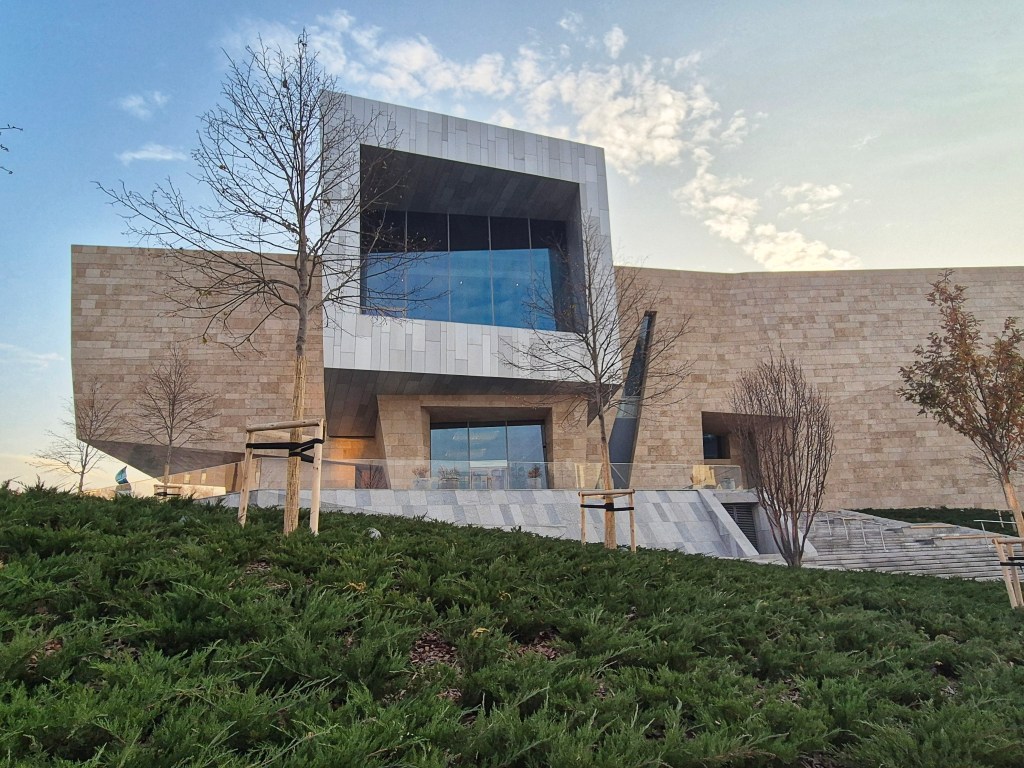
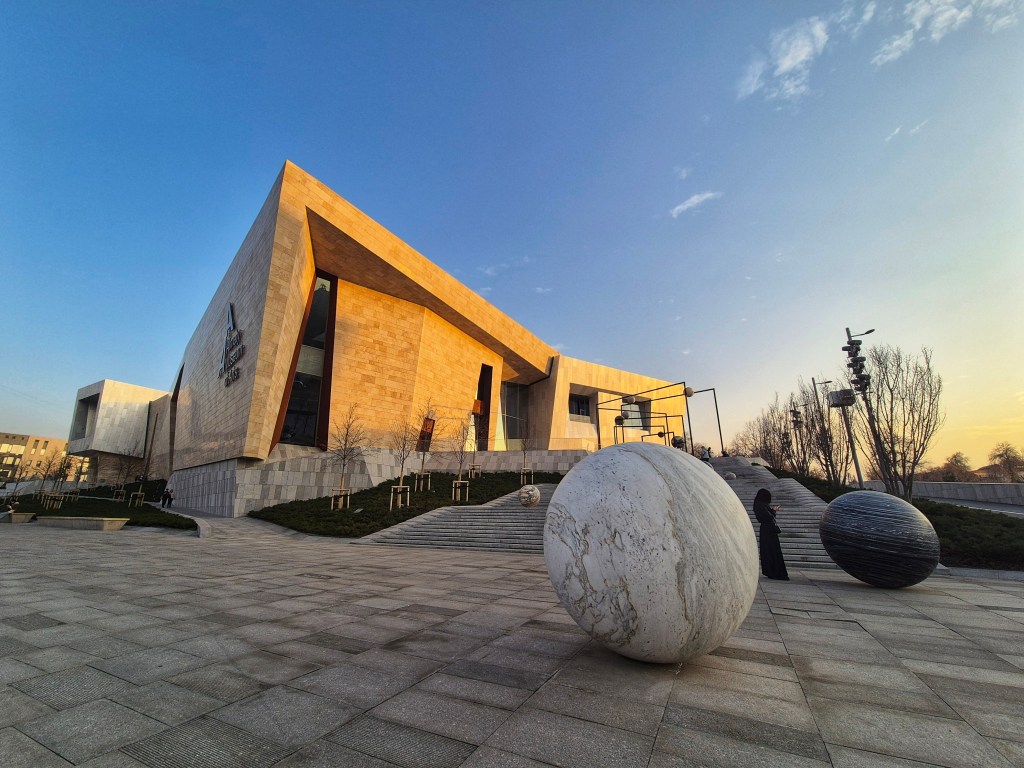
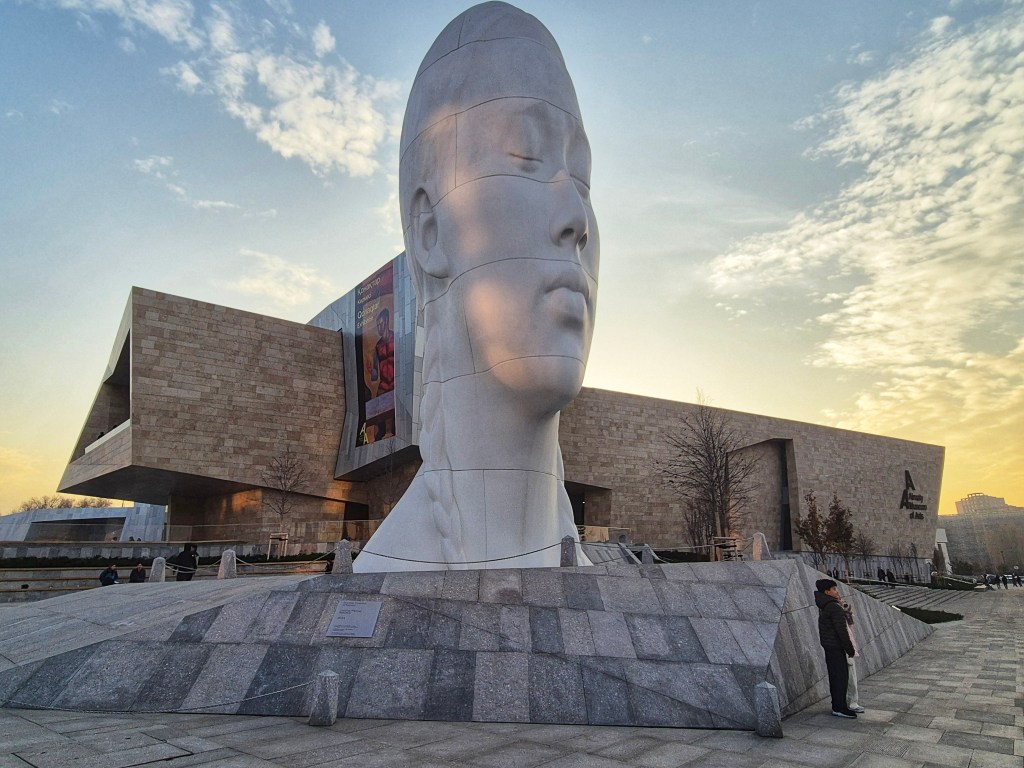
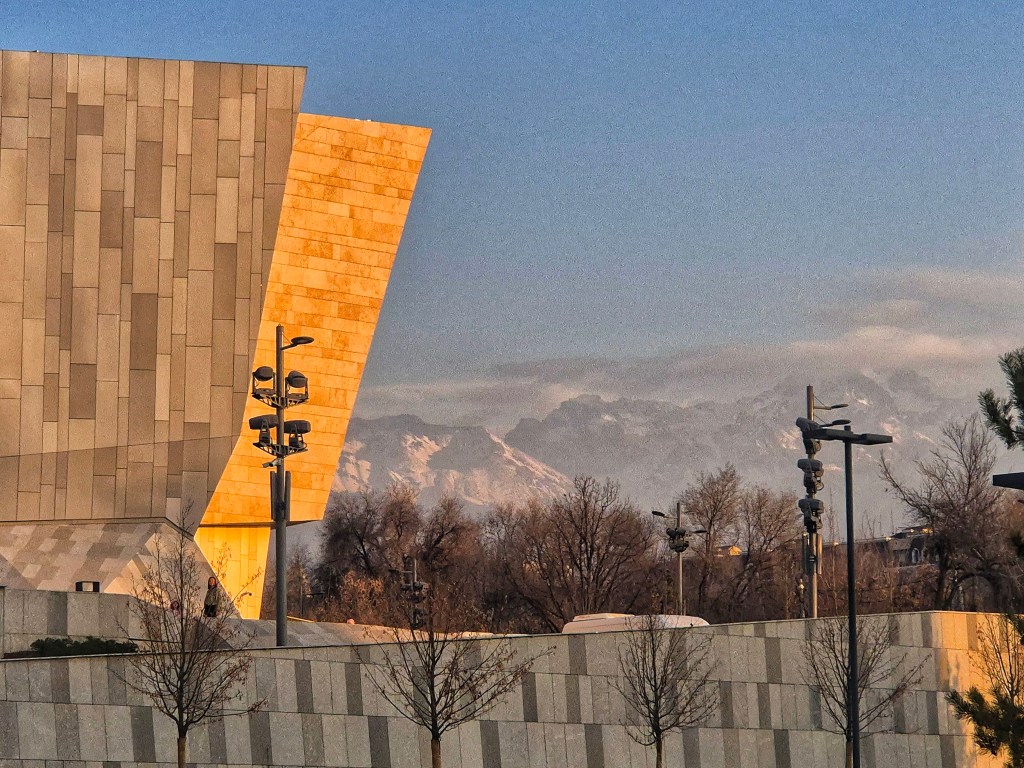
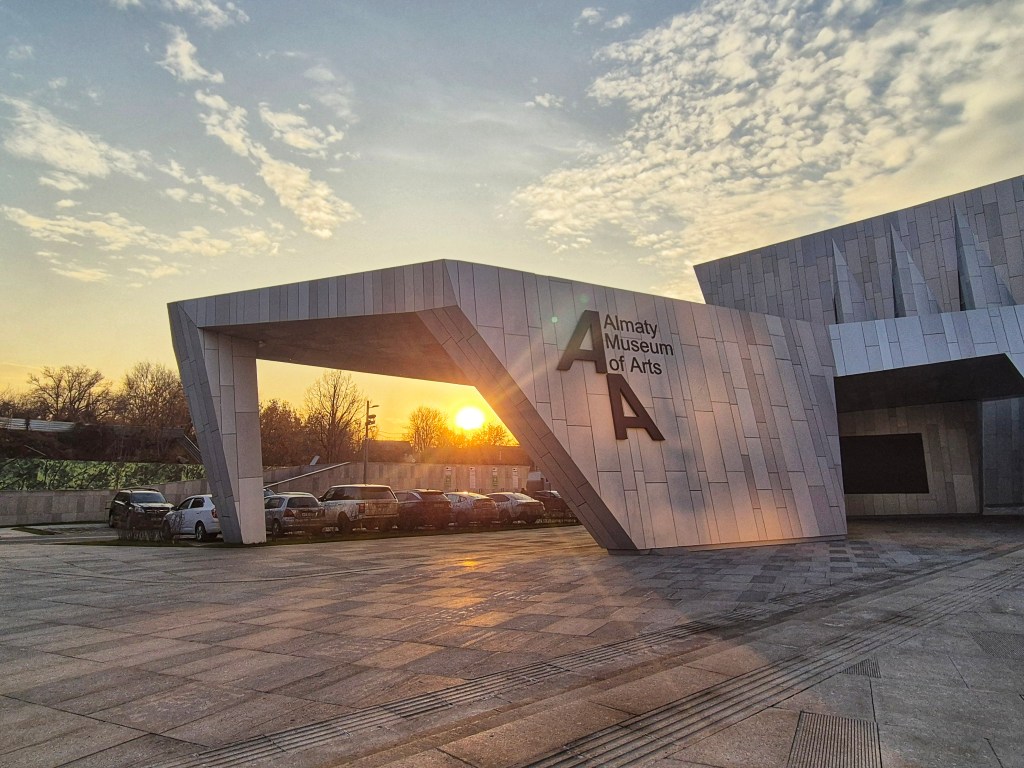
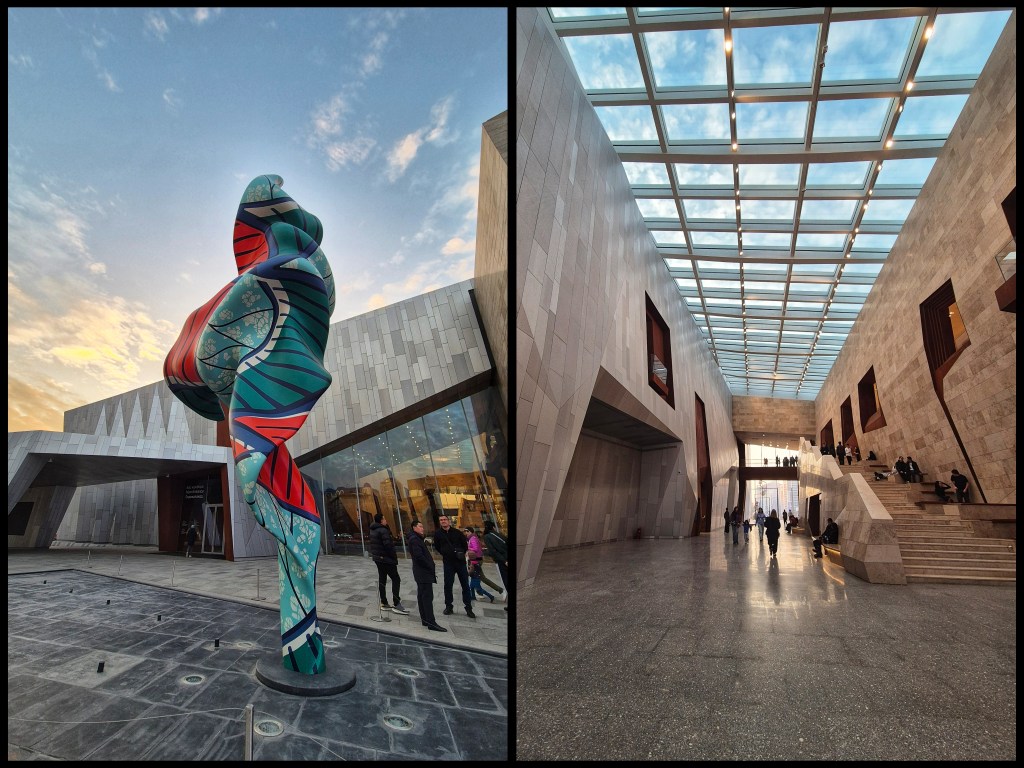
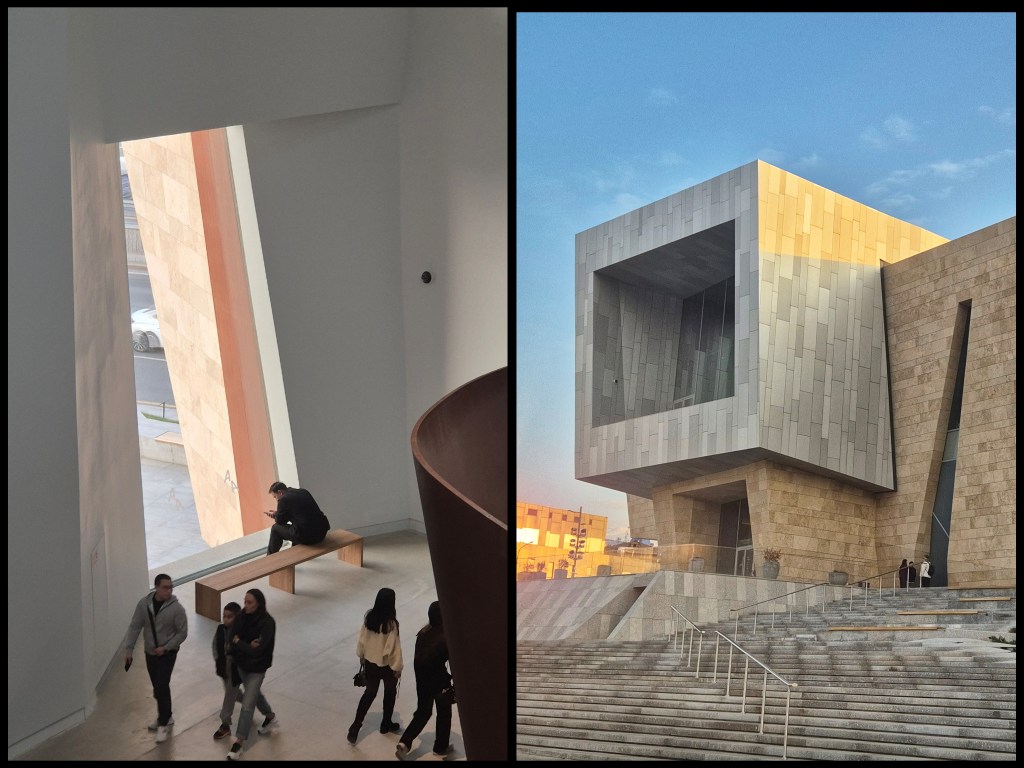
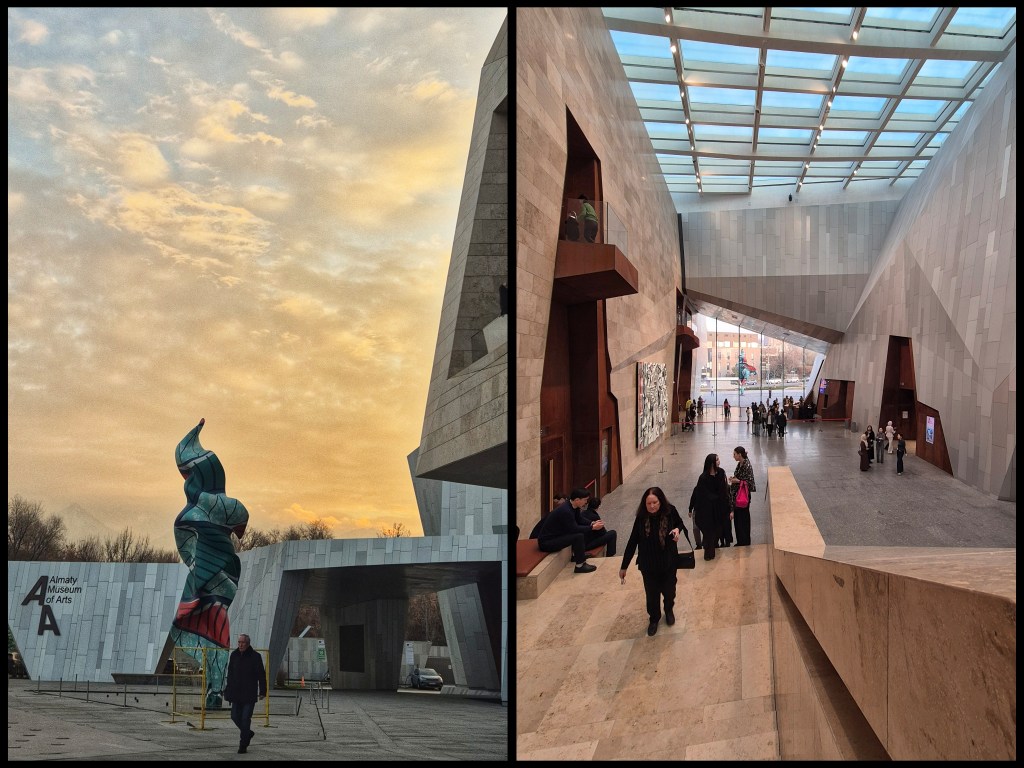
I don’t know much about how economies really work, and I only usually see things through the artistic lens, but I’ve somehow always thought that a country’s prosperity can be reflected in the state of its museums. Seeing the Almaty Museum of Arts, with the Tien Shan mountains as its backdrop reinforced this idea.

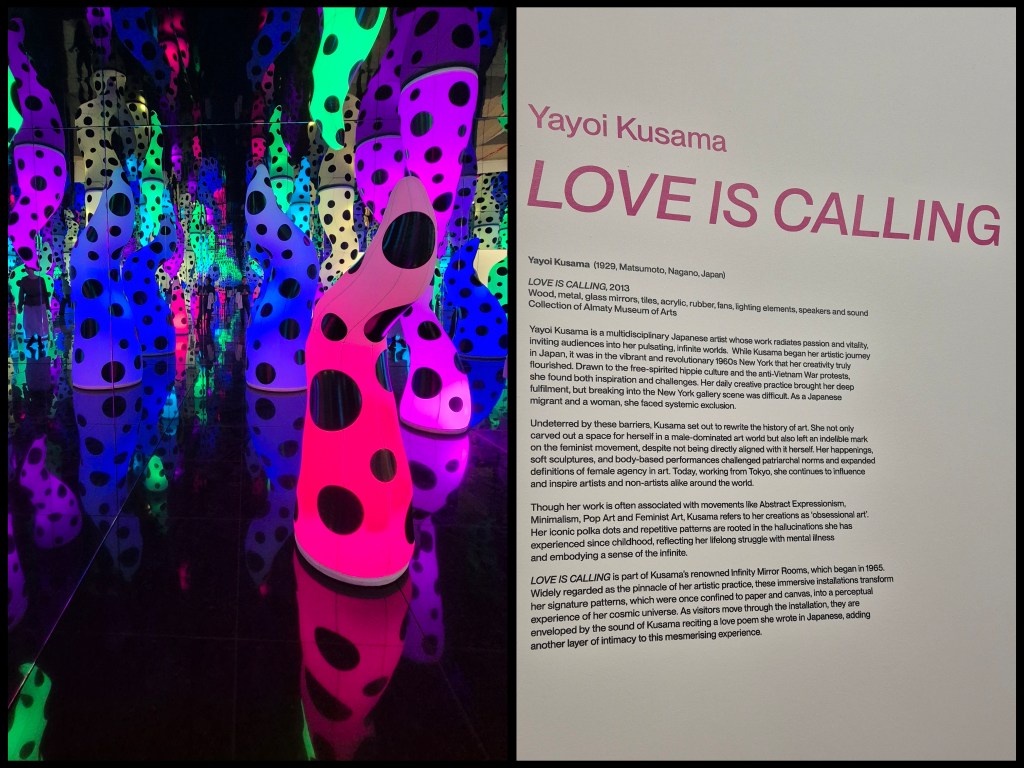
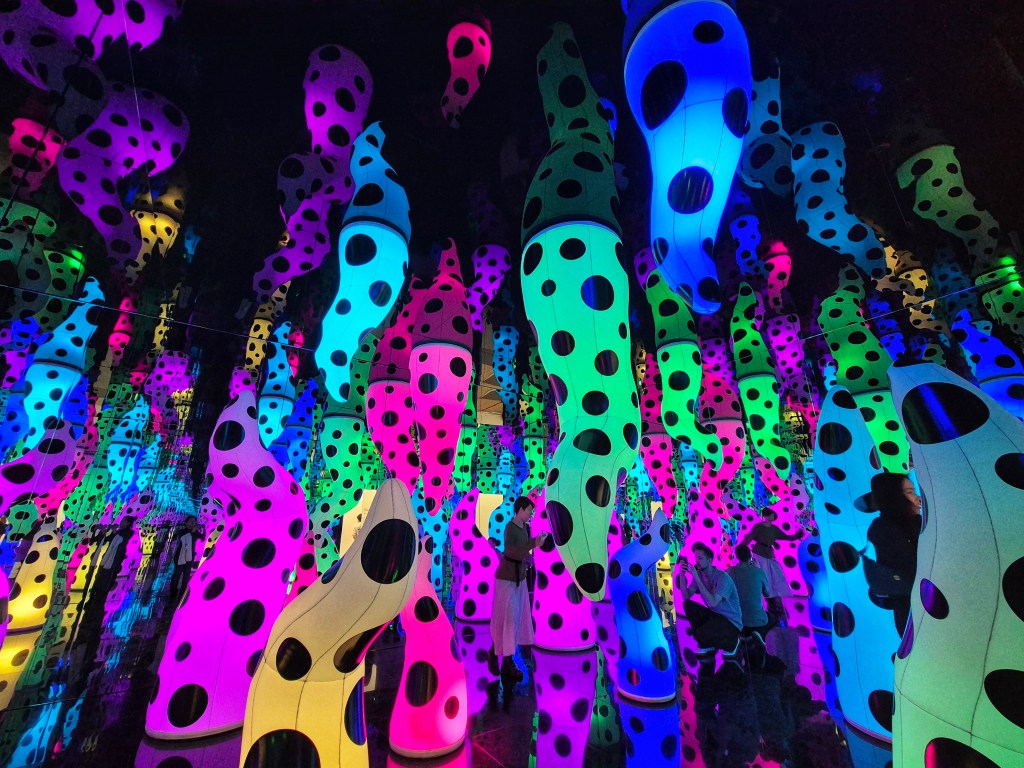
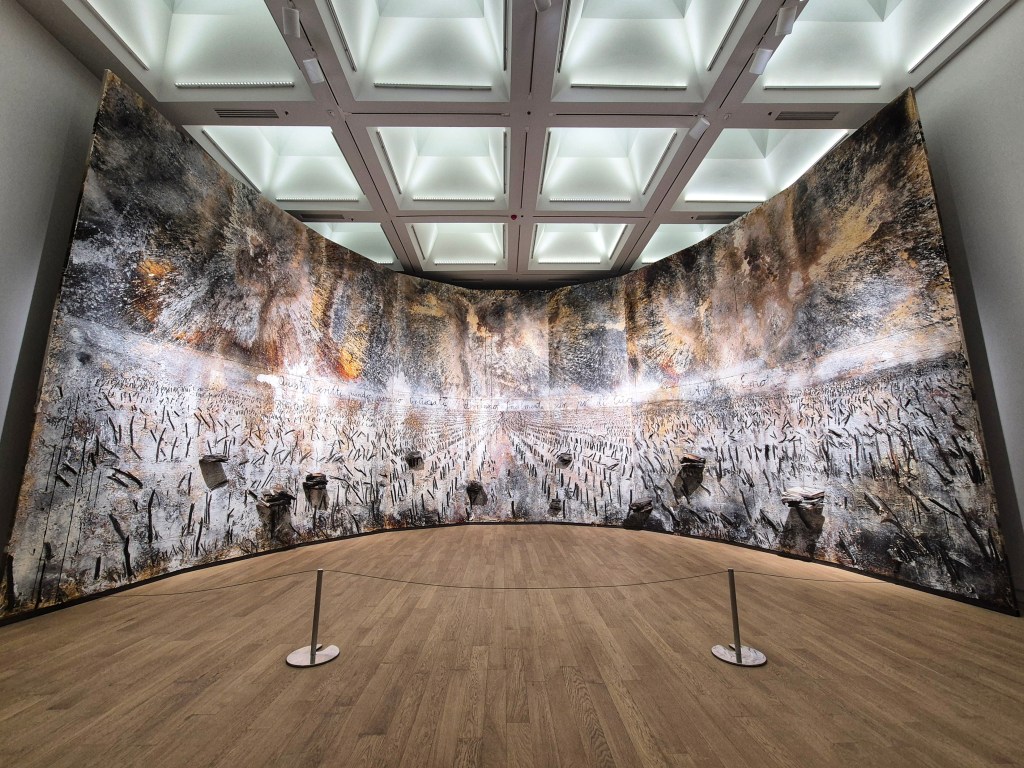
The building is impressive in itself, designed as two interlocking structures, one made of limestone (to represent the mountains) and the other of aluminum (to represent the city). To my surprise, there was an ongoing Yayoi Kusama installation; a photo exhibit by Almagul Menlibayeva whose works remind me so much of my best friend Franz’s creativity; and a huge piece by Anselm Kiefer — “Questi scritti, quando verranno bruciati, daranno finalmente un po’ di luce” (These writings, when burned, will finally cast a little light) — that affected me most of all.
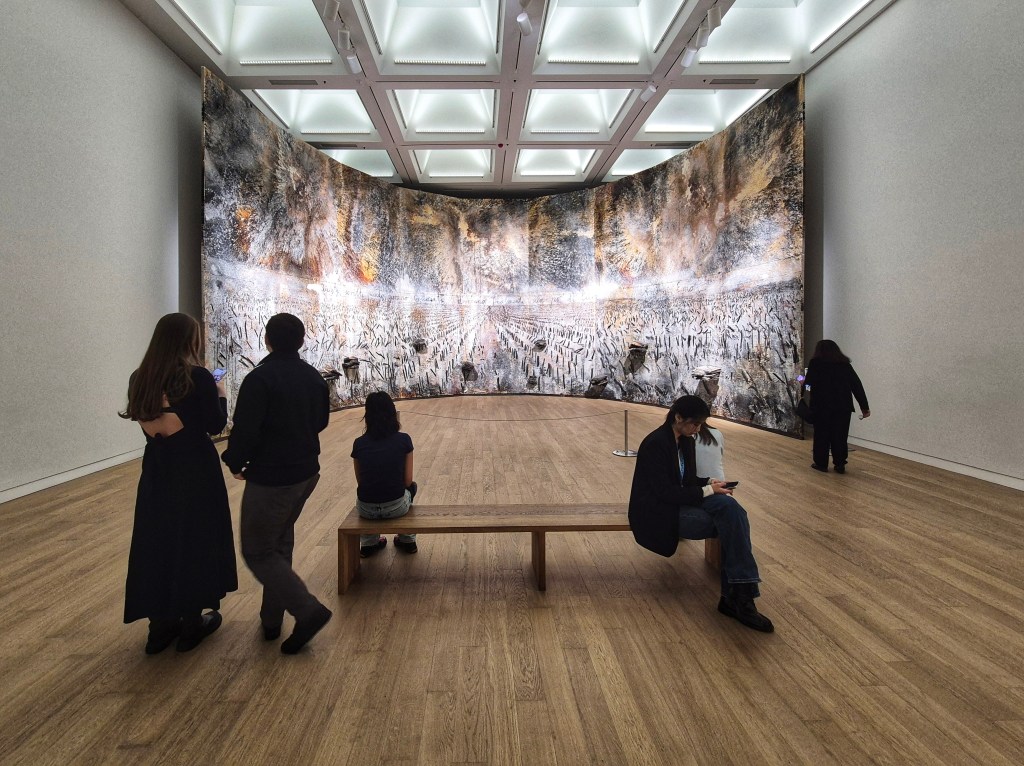
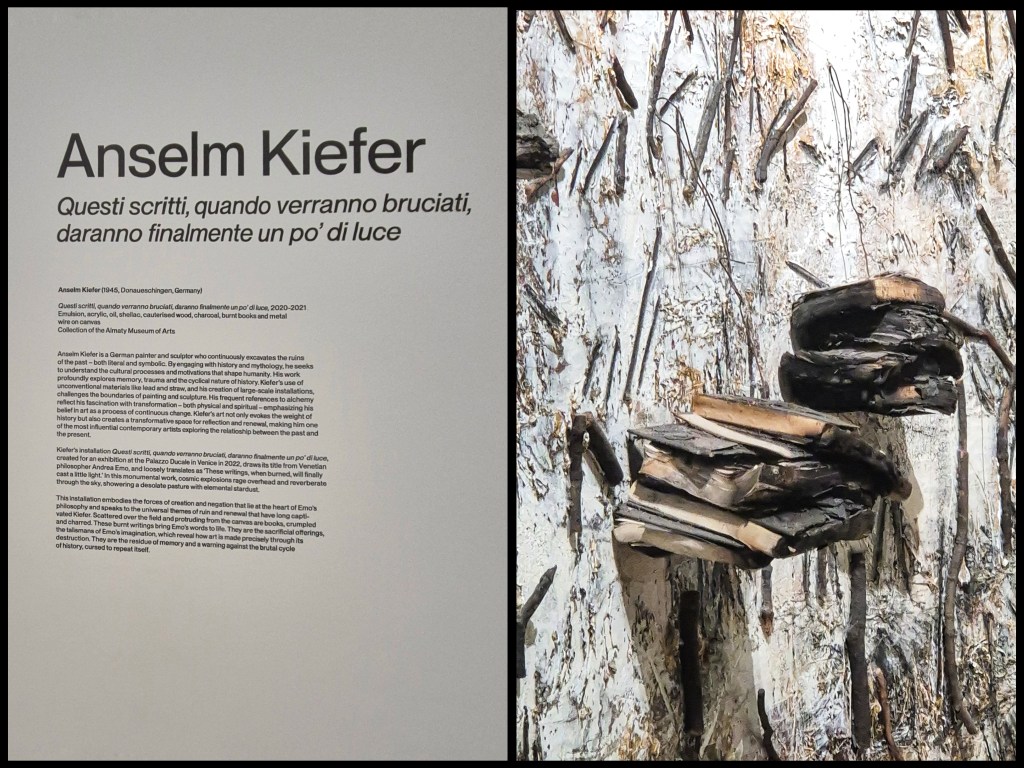
If the Almaty Museum of Arts cannot change the image of Kazakhstan that Borat impressed on anyone’s mind, I don’t know what will. But it should, shouldn’t it?
November 26, 2025 – Zenkov’s Almaty

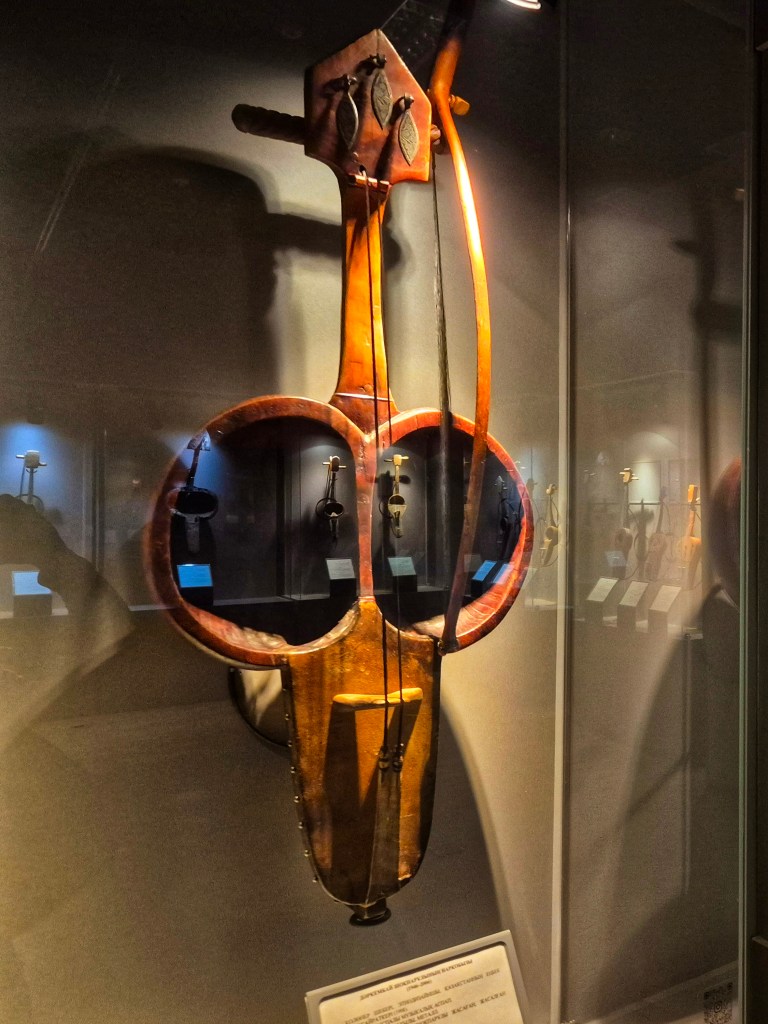
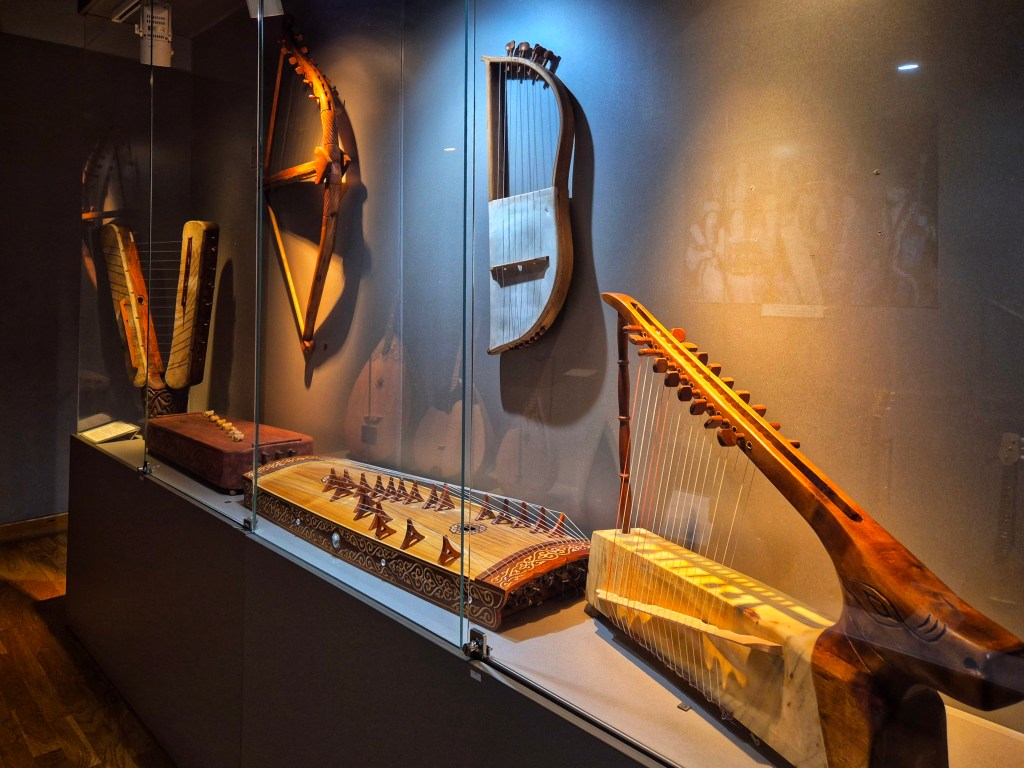
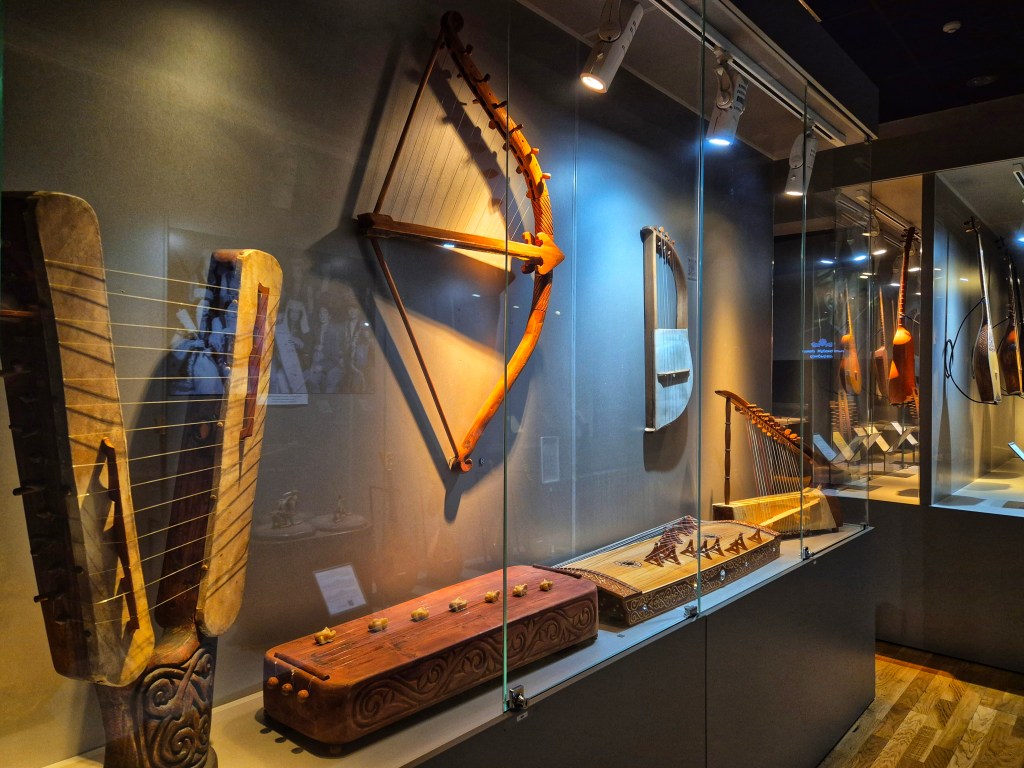
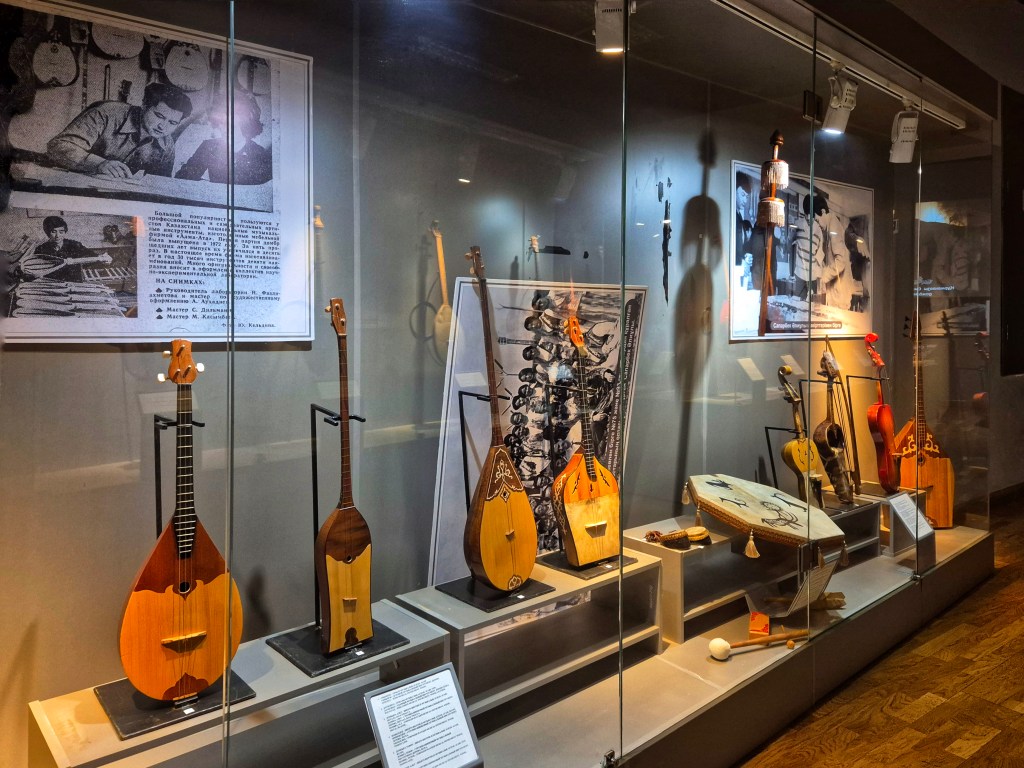
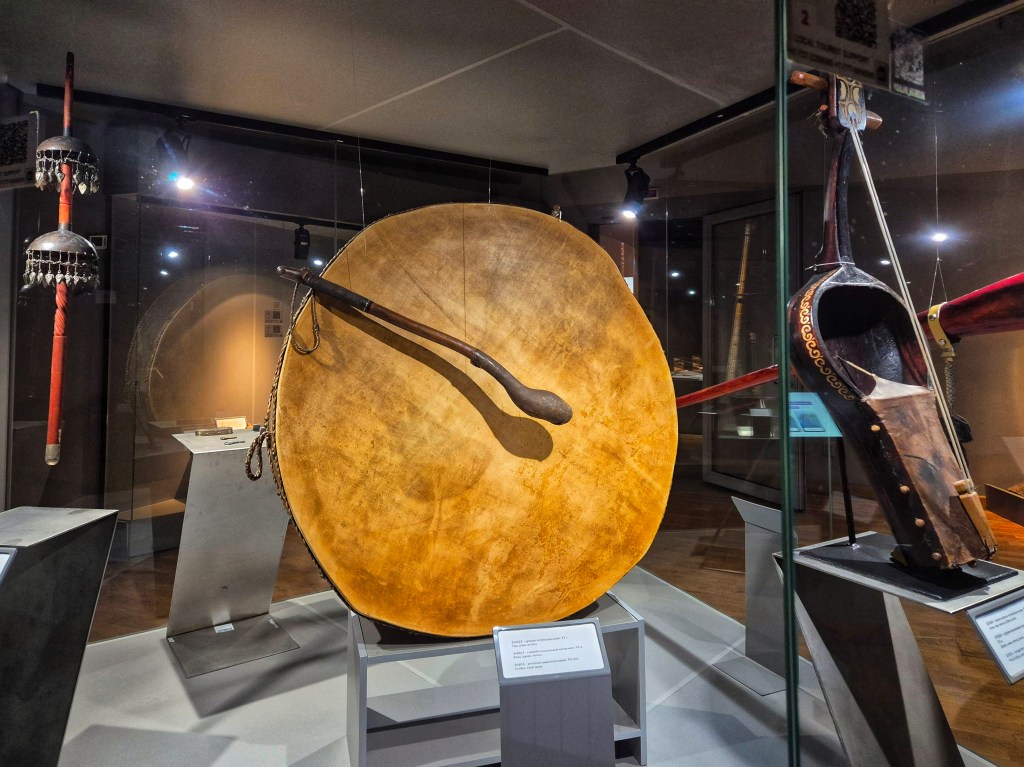
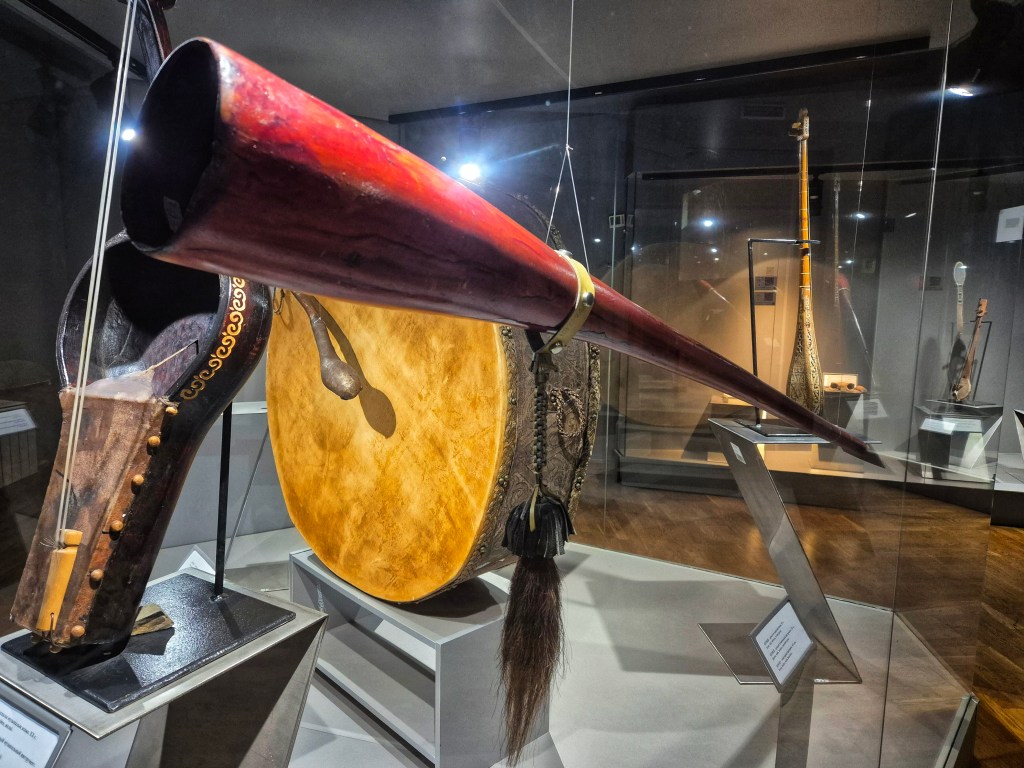
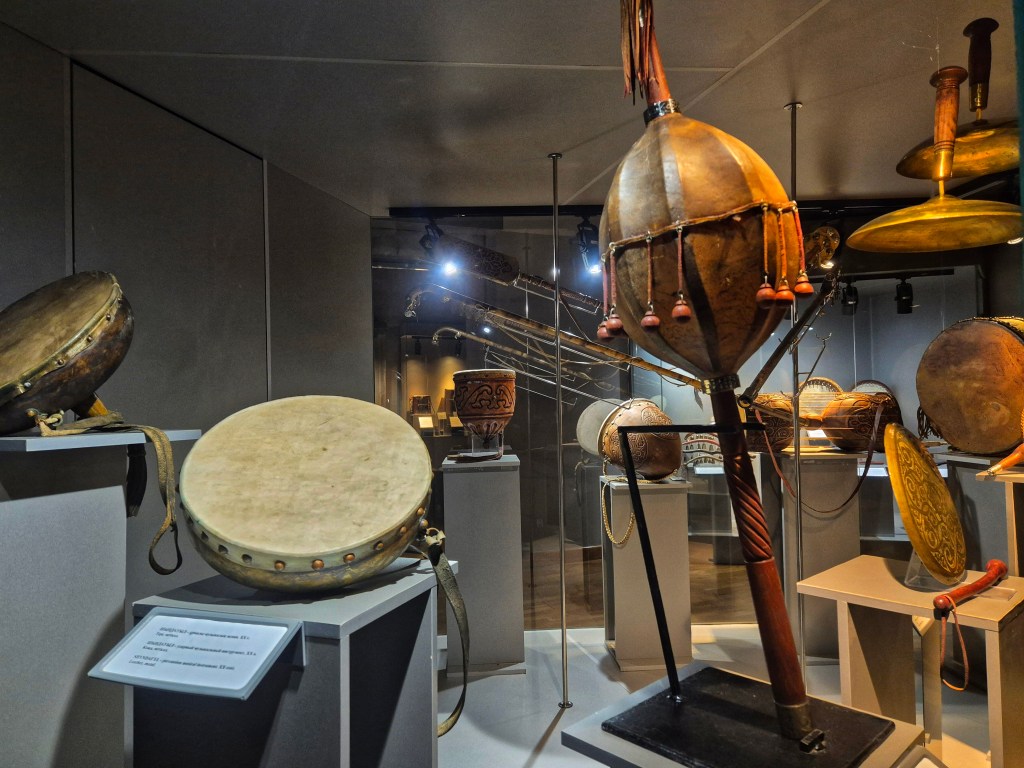
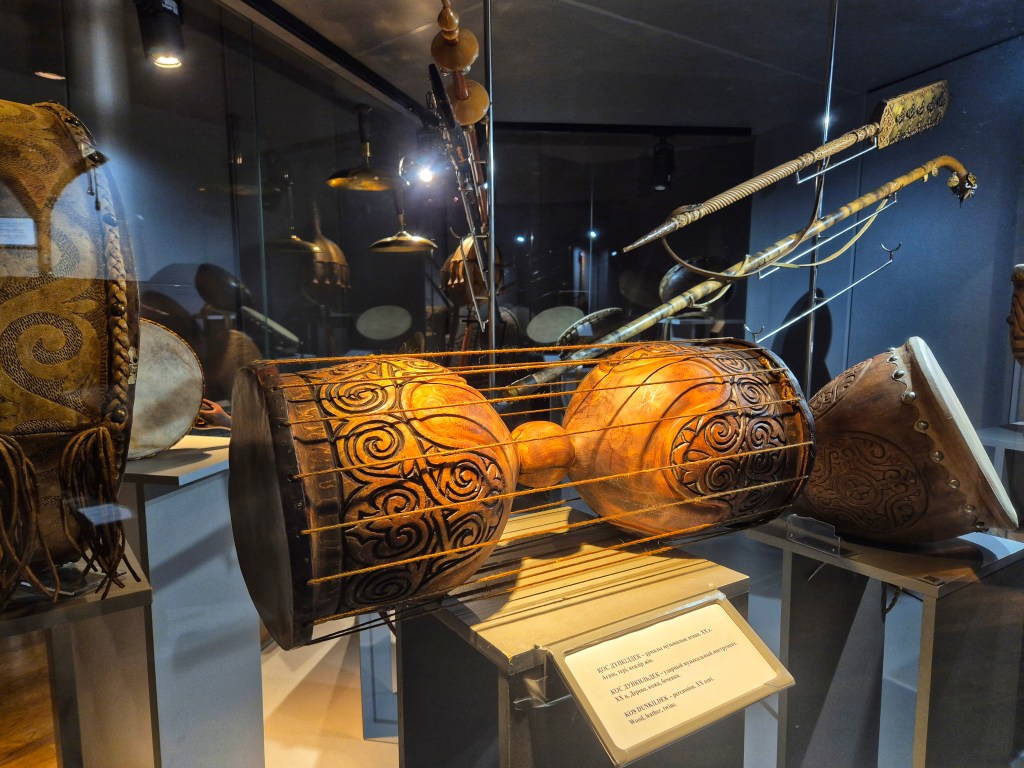
ZENKOV CATHEDRAL / MUSEUM OF FOLK MUSICAL INSTRUMENTS

Through my acquaintance with Kazakh literature, I learned of a detail in Turkic mythology of how a musical instrument was believed to be a branch of the Tree of Life, and how this branch was to be bestowed upon a chosen one, shaman or musician. It’s beautiful how this story articulates how much their culture values music, to the point of associating music and musicians with what is most sacred to them.

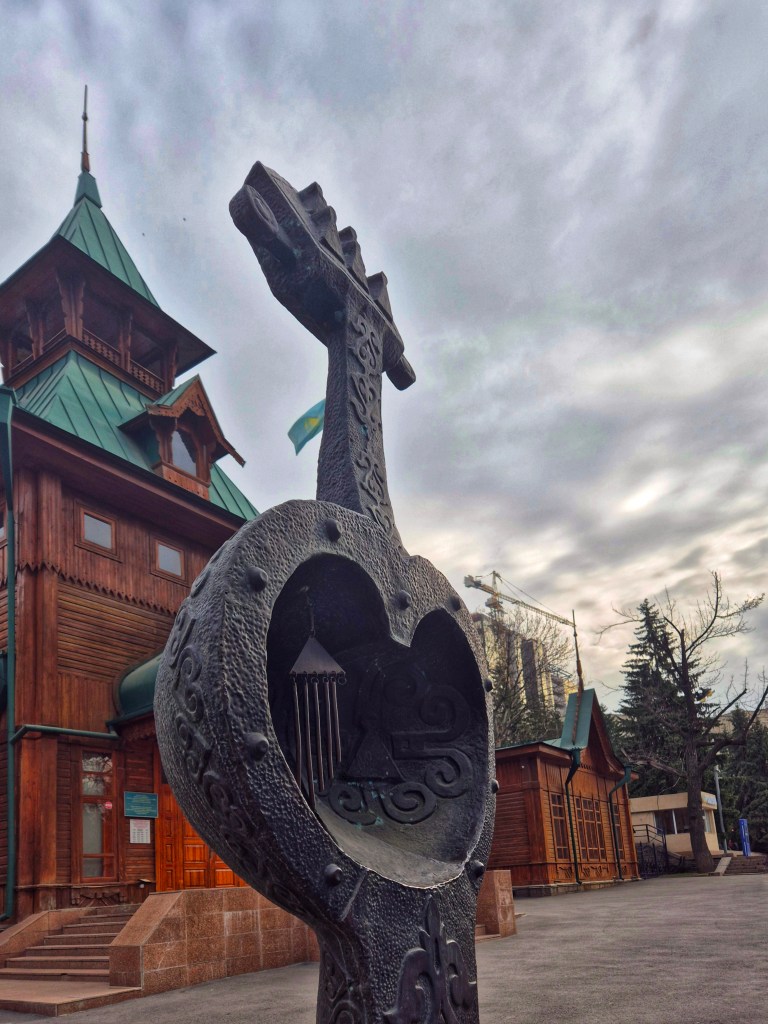
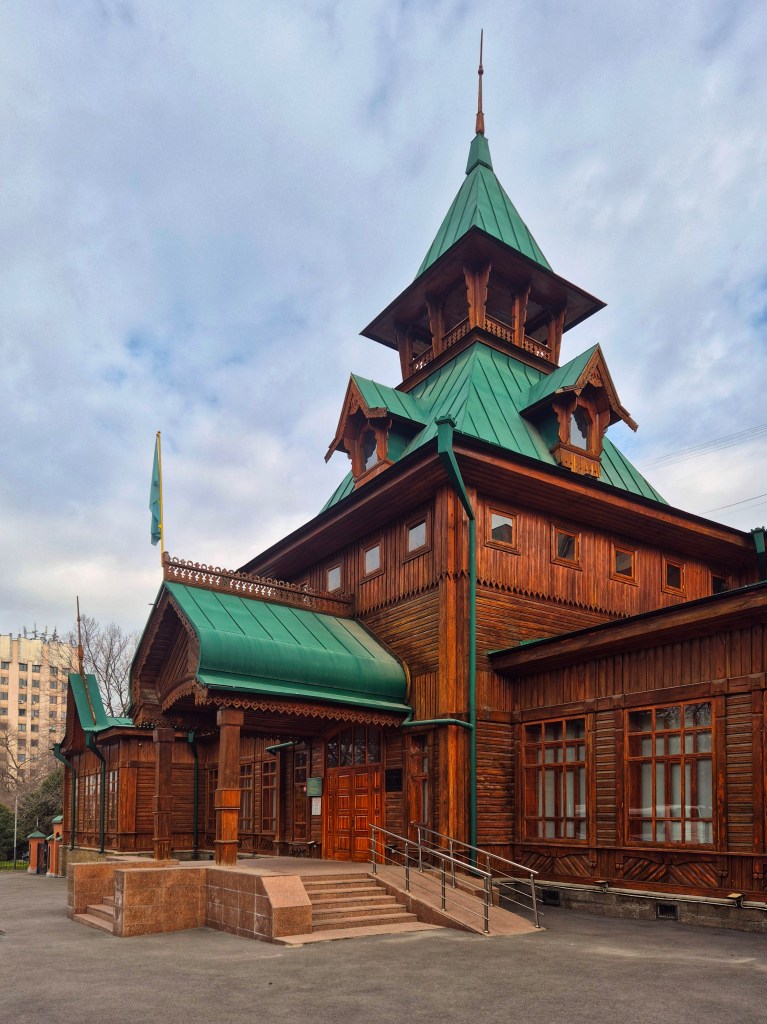
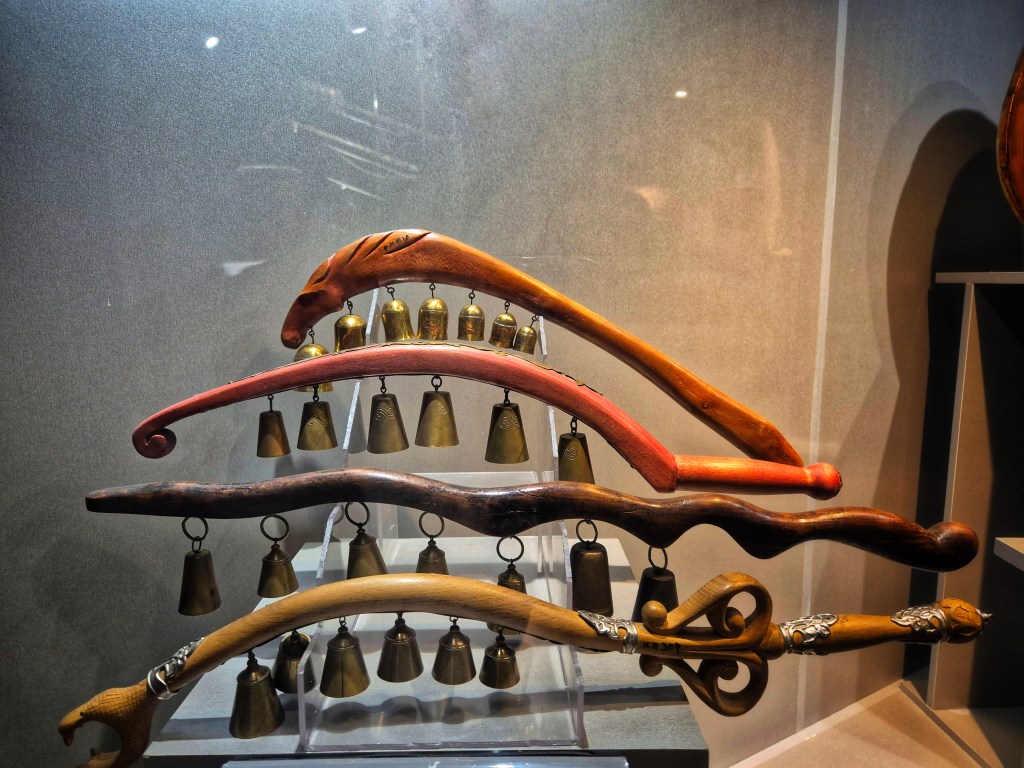
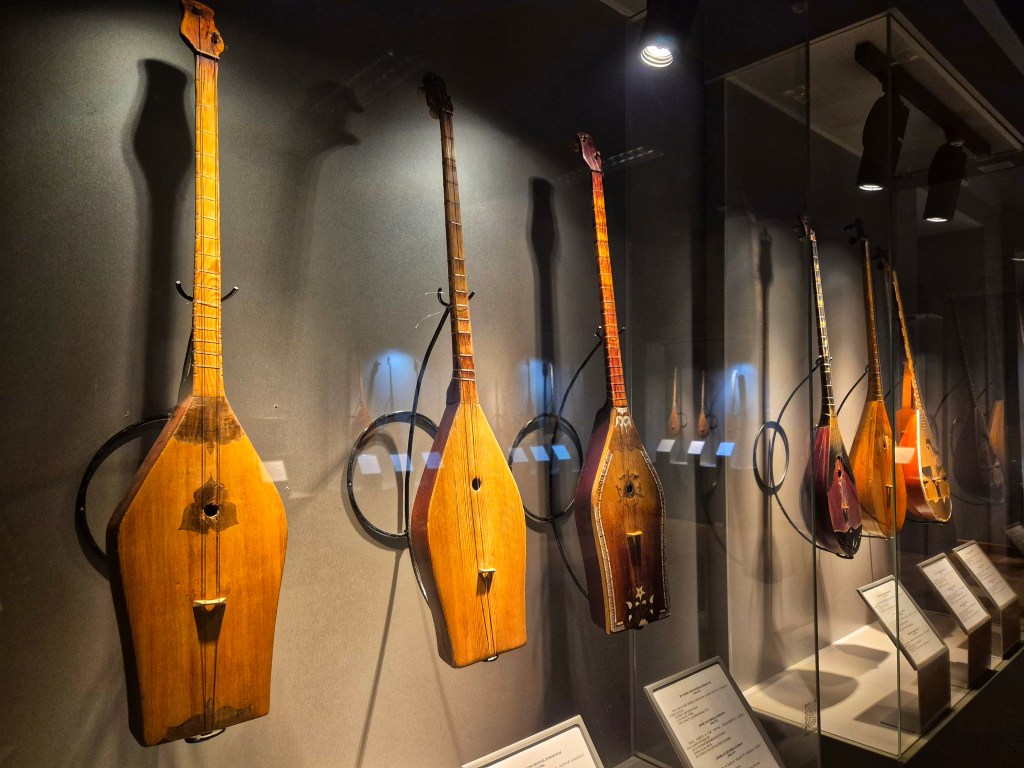
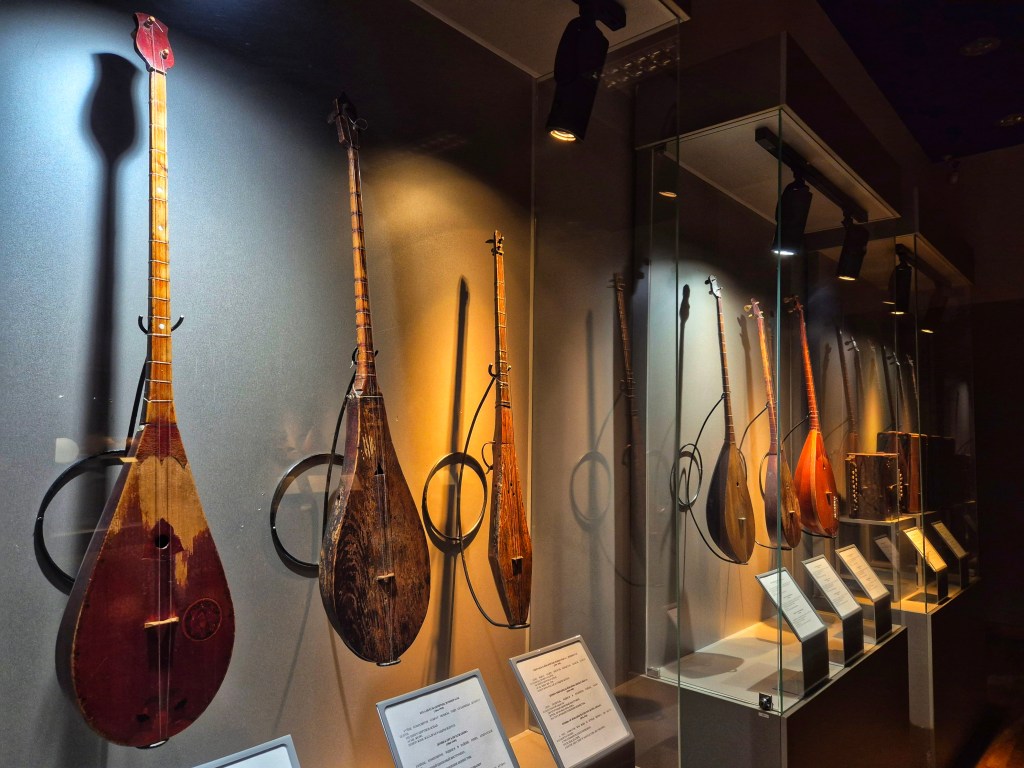
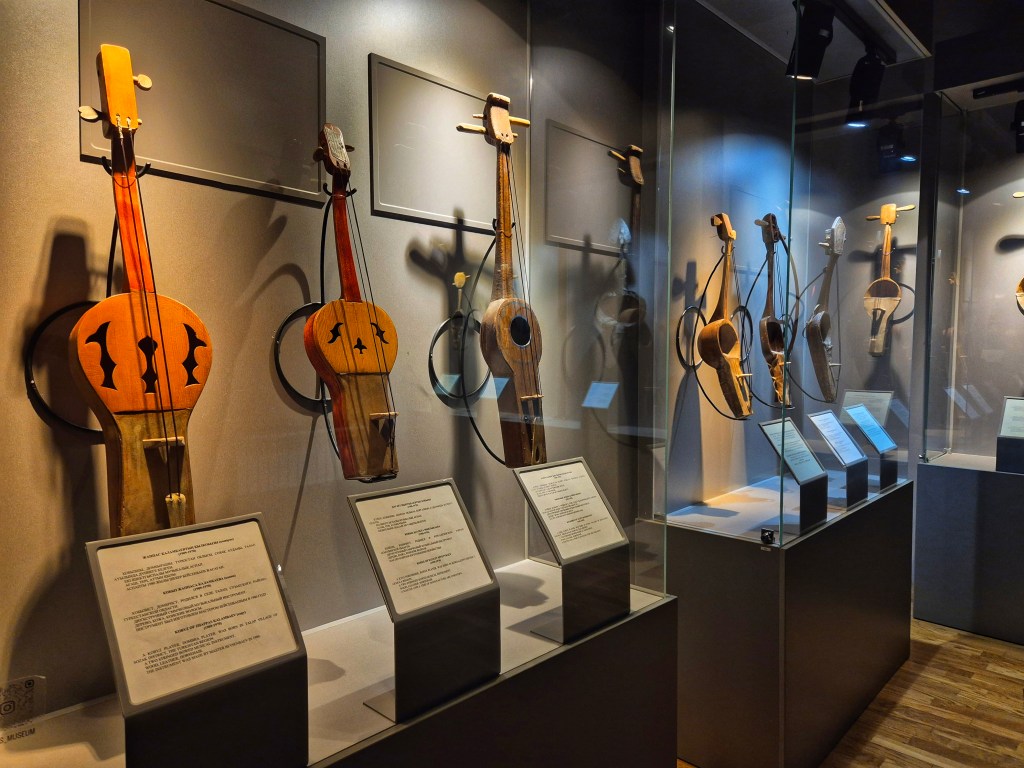
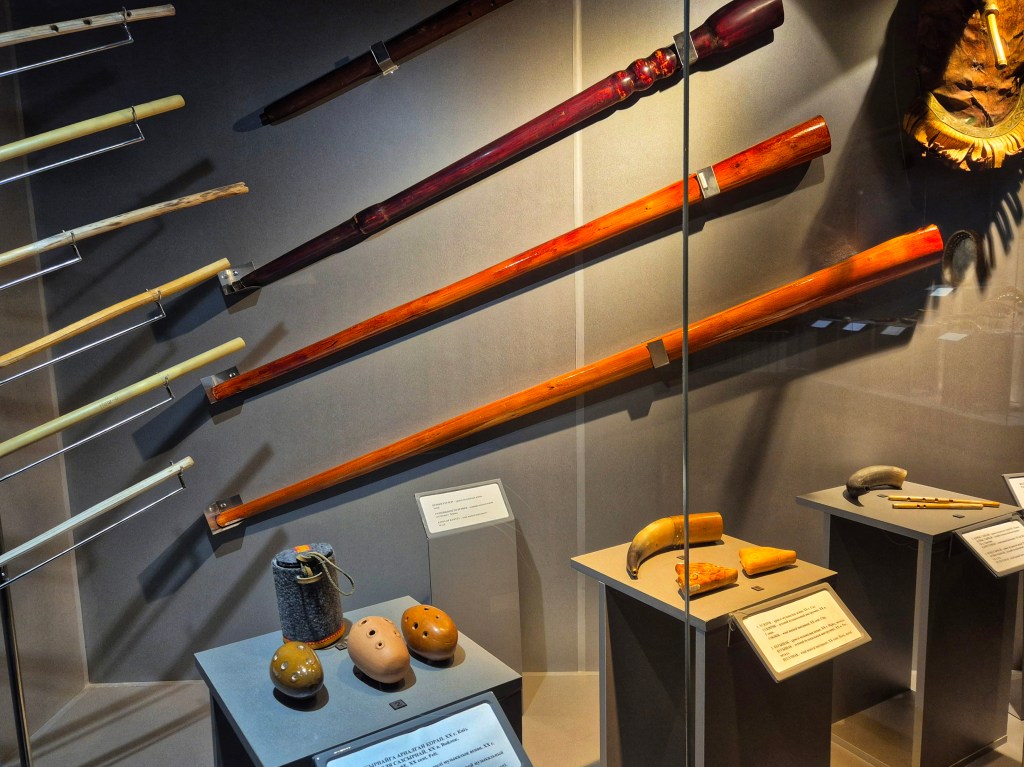
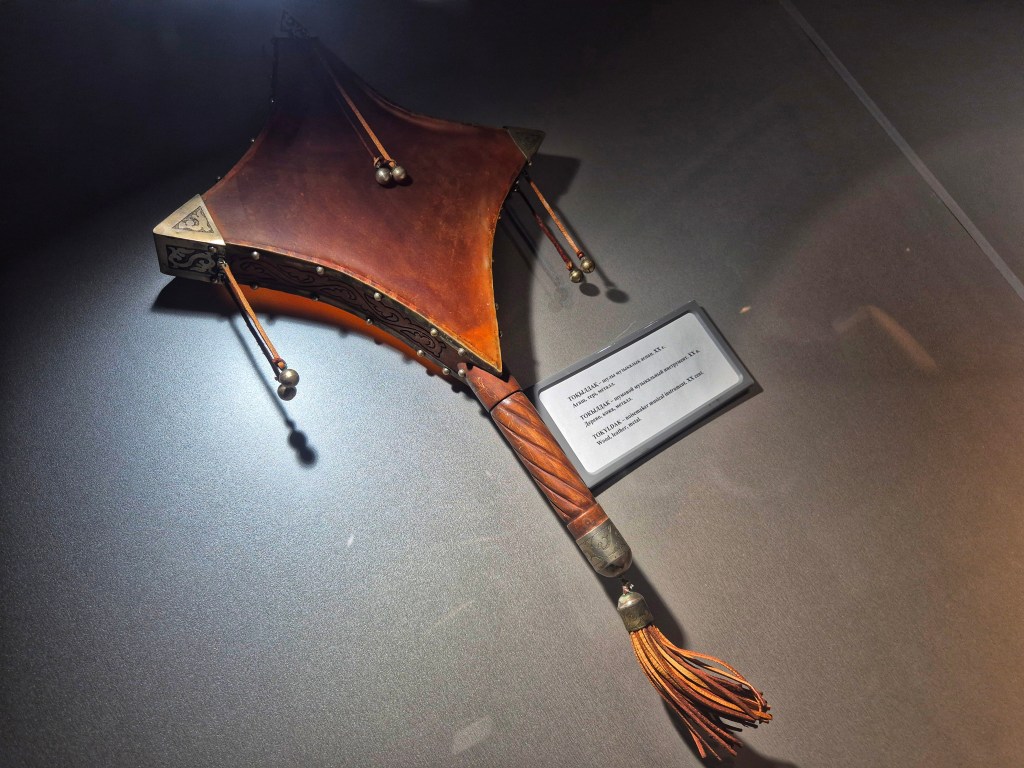
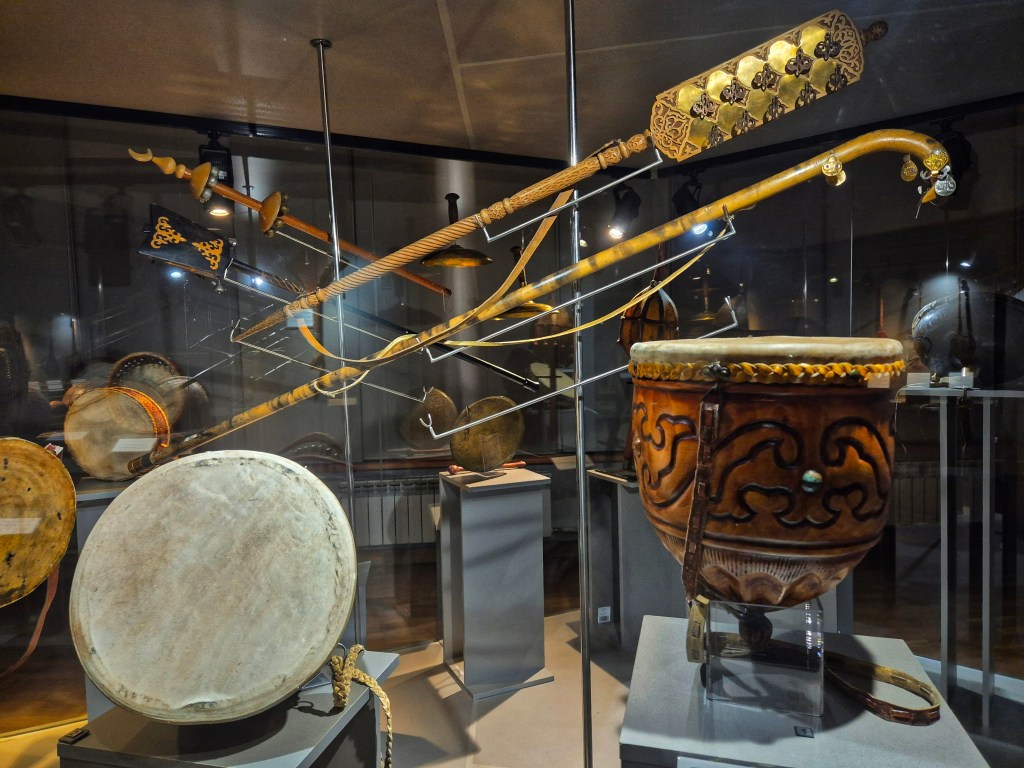
Because of this, it did not come as a surprise when I heard about the Kazakh Museum of Folk Musical Instruments in Almaty. There were stringed, wind, and percussion instruments that had been owned by their most famous musicians throughout history, some looked like they could double as weapons. There were new ones, but there were also instruments that bore battle scars, which I considered to be the most beautiful in the collection. I found myself alone with this wonderful curation of musical instruments that I had never seen before, and as their music played through the museum’s sound system, filling the eight different rooms with emotion and spirit, I felt transported.

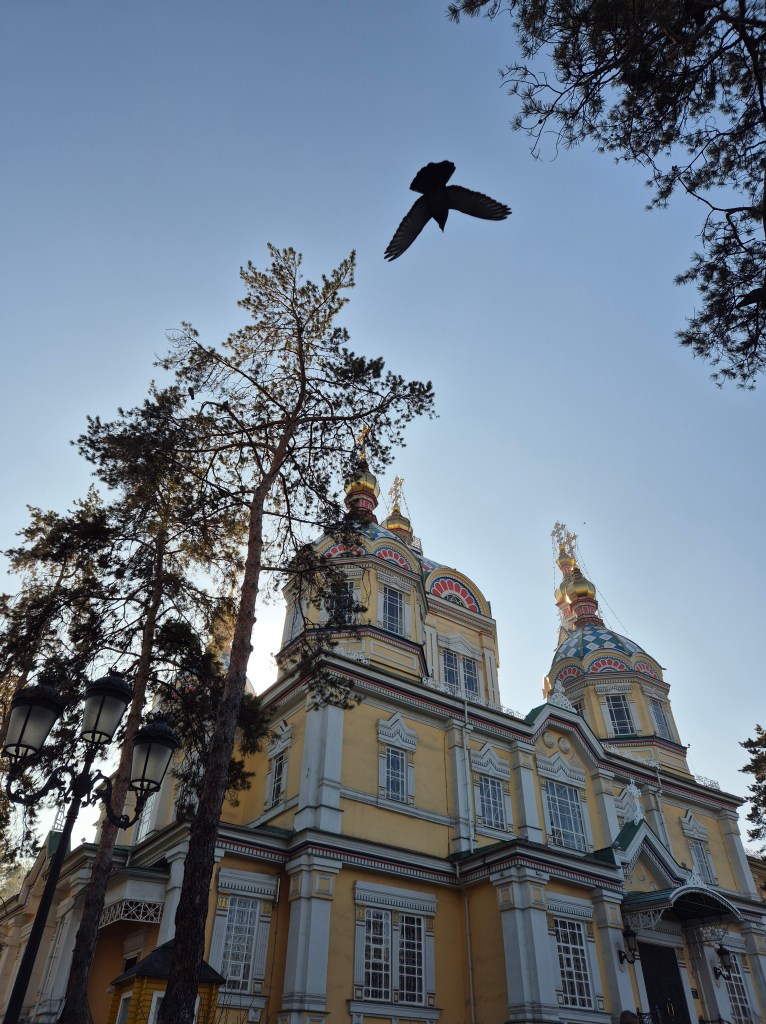
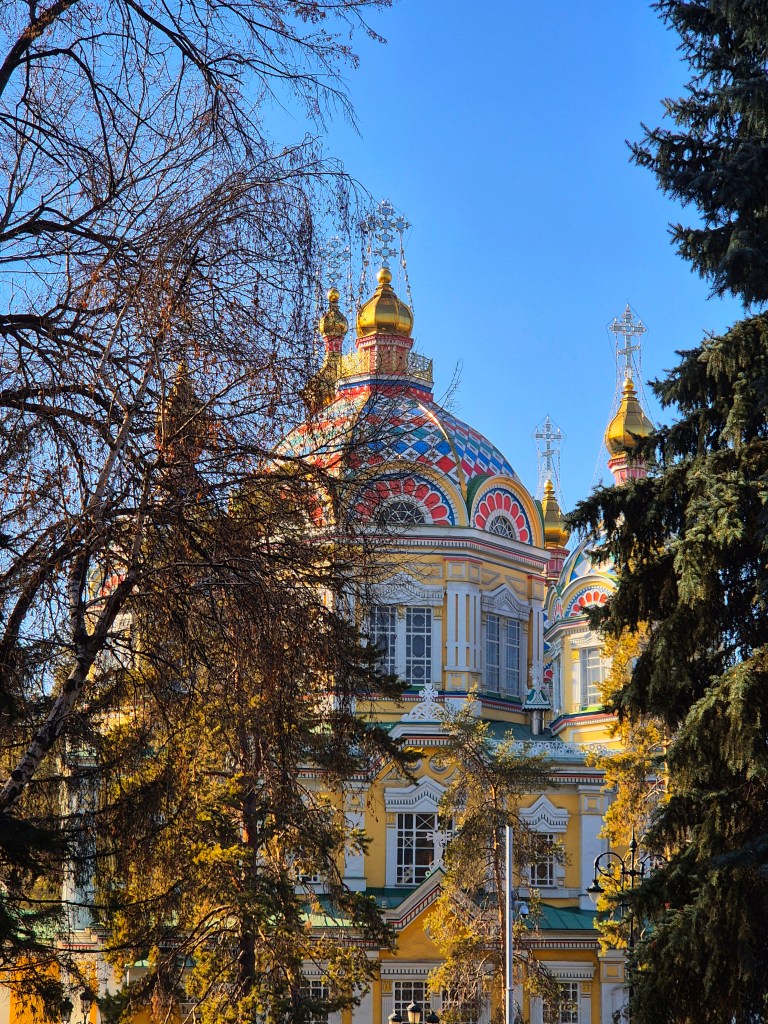
But this museum is little-known, and usually bypassed by many who go straight to Almaty’s most famous landmark — the Zenkov Cathedral (that ornate Orthodox Church built entirely of wood that miraculously withstood the great 1911 earthquake that devastated most of Almaty). What most people don’t know is that Andrei Zenkov, the architect of the iconic cathedral, also designed the museum building in 1908.

After immersing myself in the museum, I walked to Zenkov Cathedral and honestly did not know what to make of such a colorful edifice. But looking back at the history of this place around the time these two buildings were constructed, I realize that it must have taken a certain amount of courage to create something with such vibrant colors and a hint of whimsy. Now I look at both buildings as works of defiance and resolute joy.

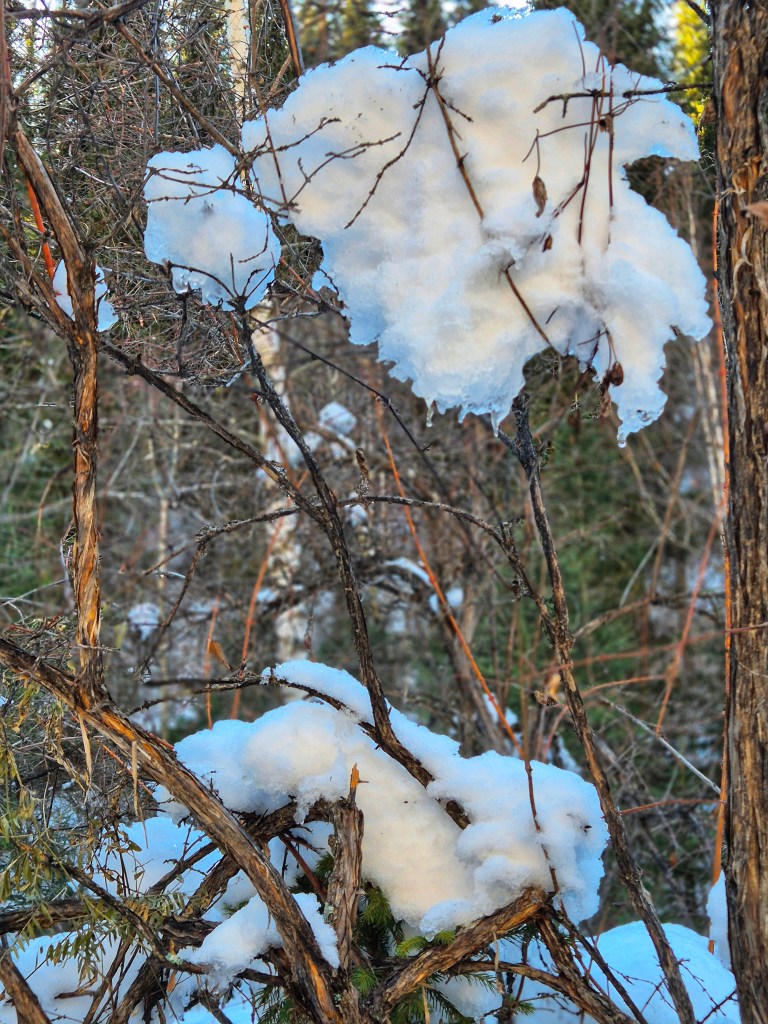
November 17, 2025 – The Snow in Almaty

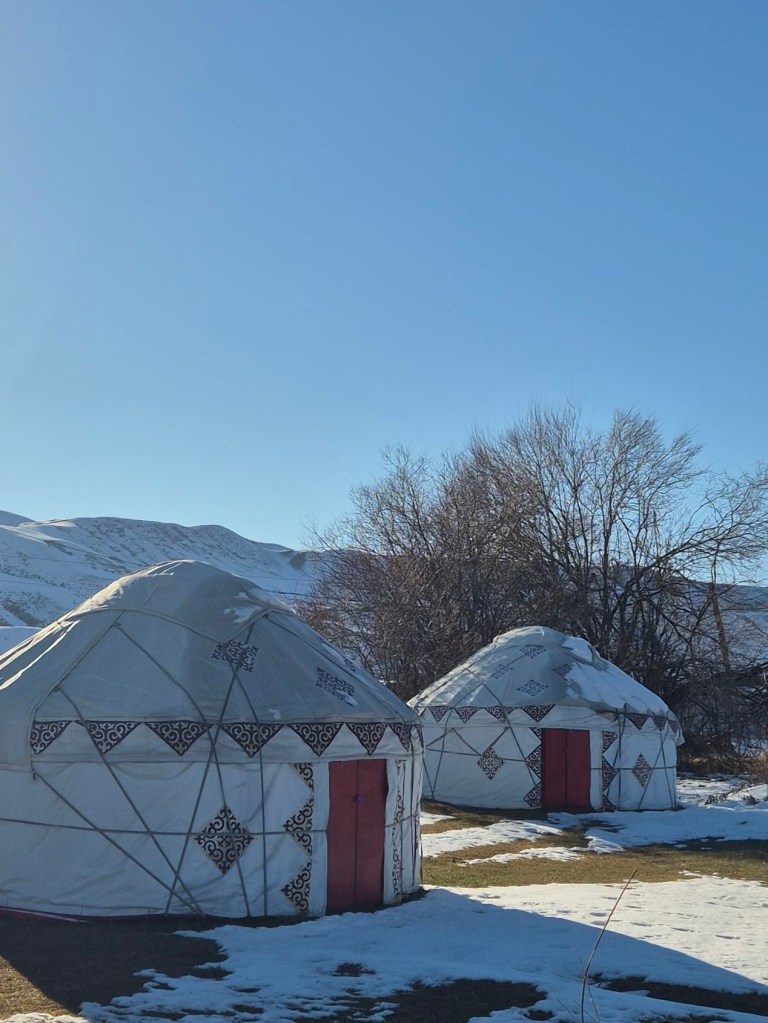
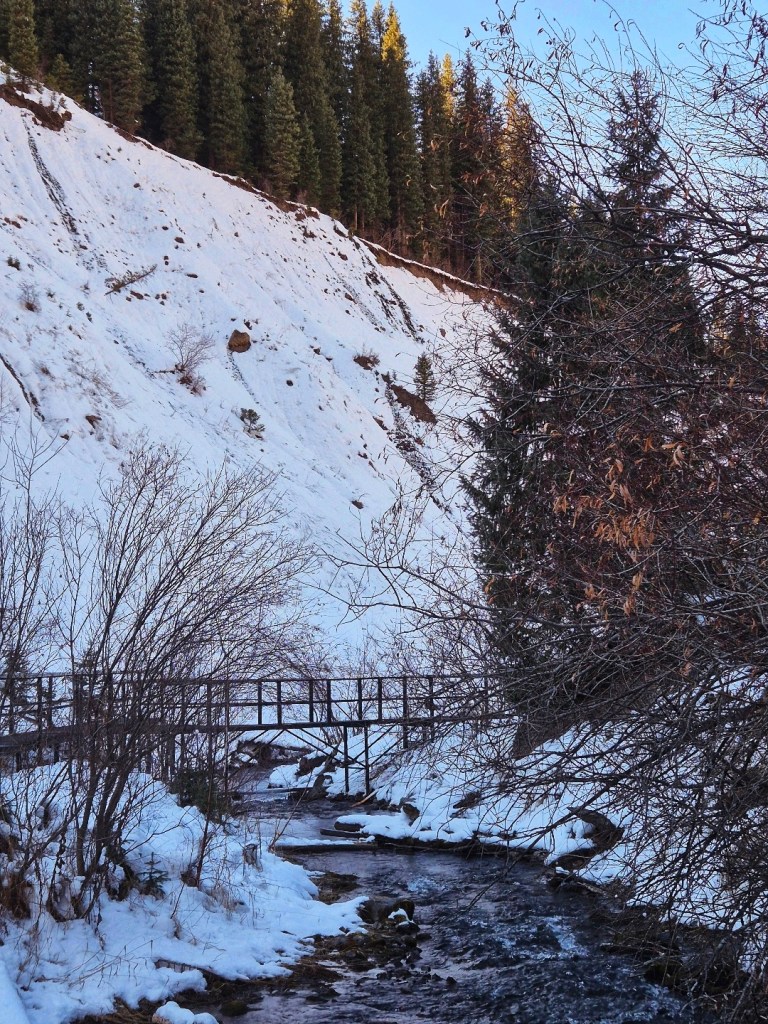
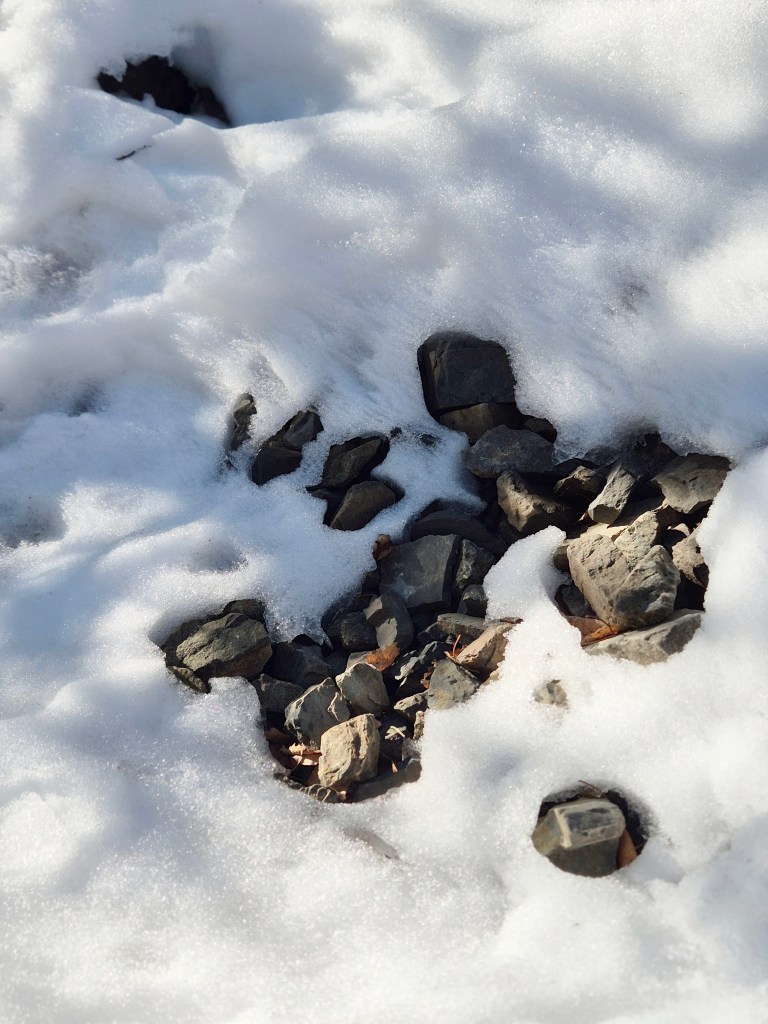
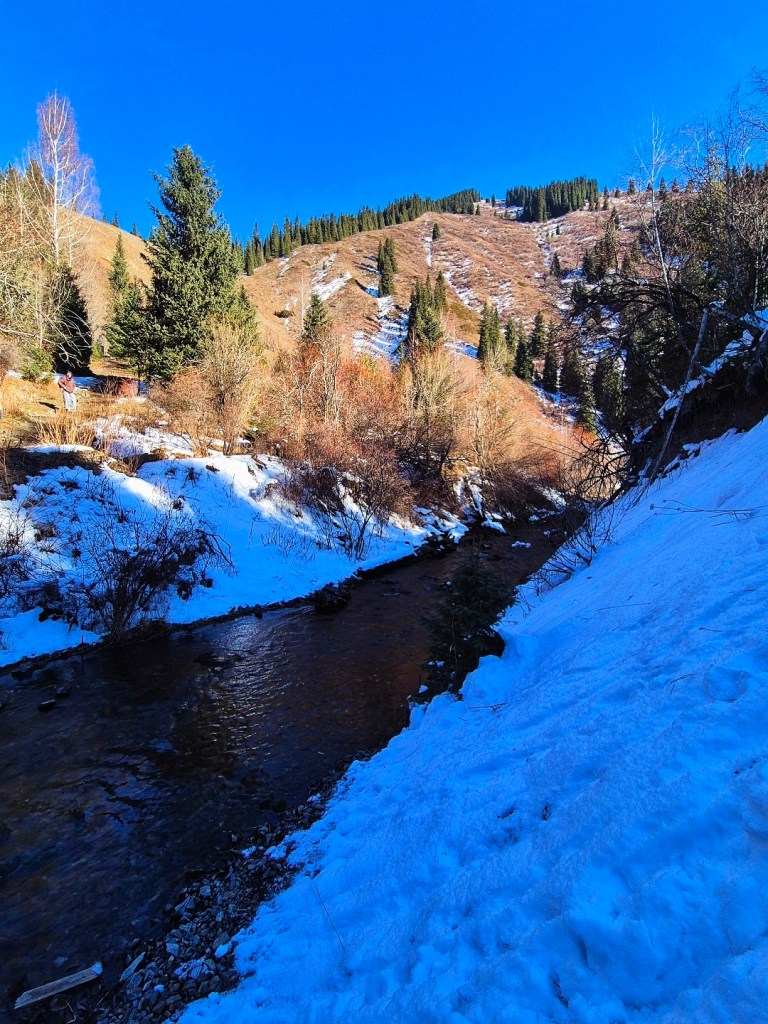
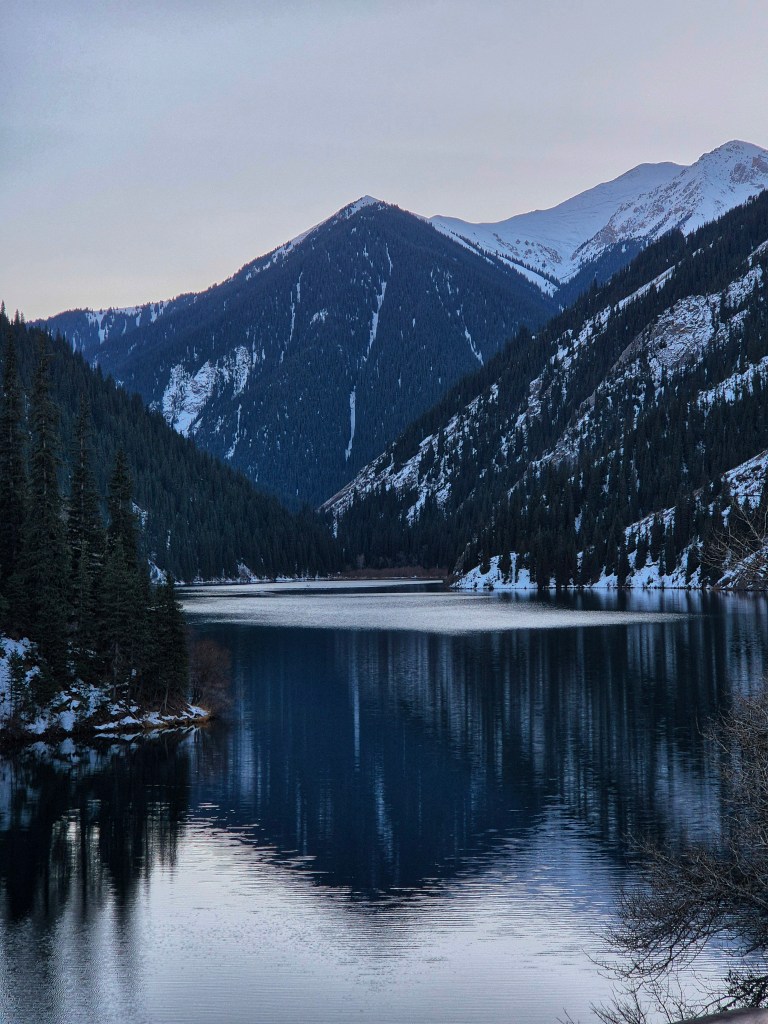
A fine thing in Almaty, Trotsky’s wife Natalya wrote, was “the snow — white, clean, and dry.” After his exile in Kazakhstan, he would only move farther and farther away from the motherland and never return. And yet, the couple would recall their sojourn here fondly.

Underneath this landscape hushed by snow are dark, startling, and forgotten histories. May the traveller always seek to know what gives its beauty depth.