Jodhpur is closer to Jaipur, so is Bikaner, and then Jaisalmer would have been accessible from there. These names are not words in my head, but meters of music, rhythm, and mystery that lure me from far away. These are some of the cities in the state of Rajasthan that have been playing in my mind ever since the idea of an India itinerary was formed.
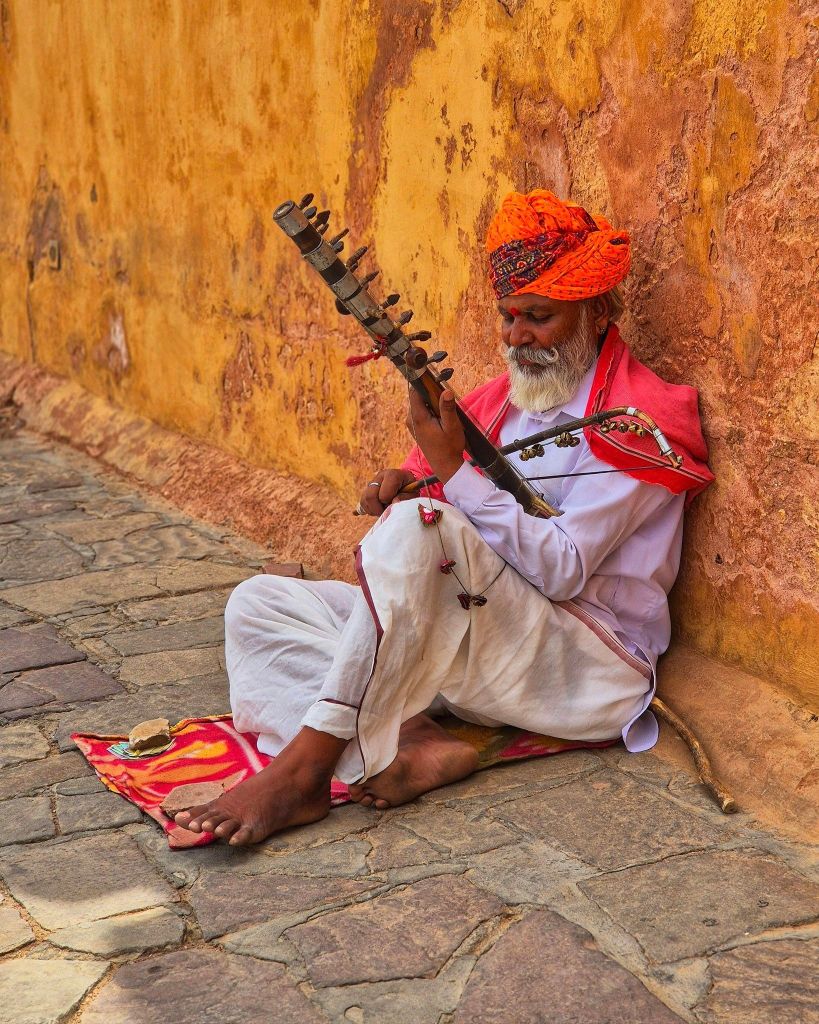
I knew I wouldn’t be able to cover all these cities in one trip with the kind of traveling that I do — the kind that asks me to avoid breezing through them, the kind that urges me to sit still and experience a few sunrises and sunsets in them, the kind that begs me to listen to them. After all, each city has its own music. Each city sounds different. And it is waking up to this kind of music that exhilarates me in my travels.
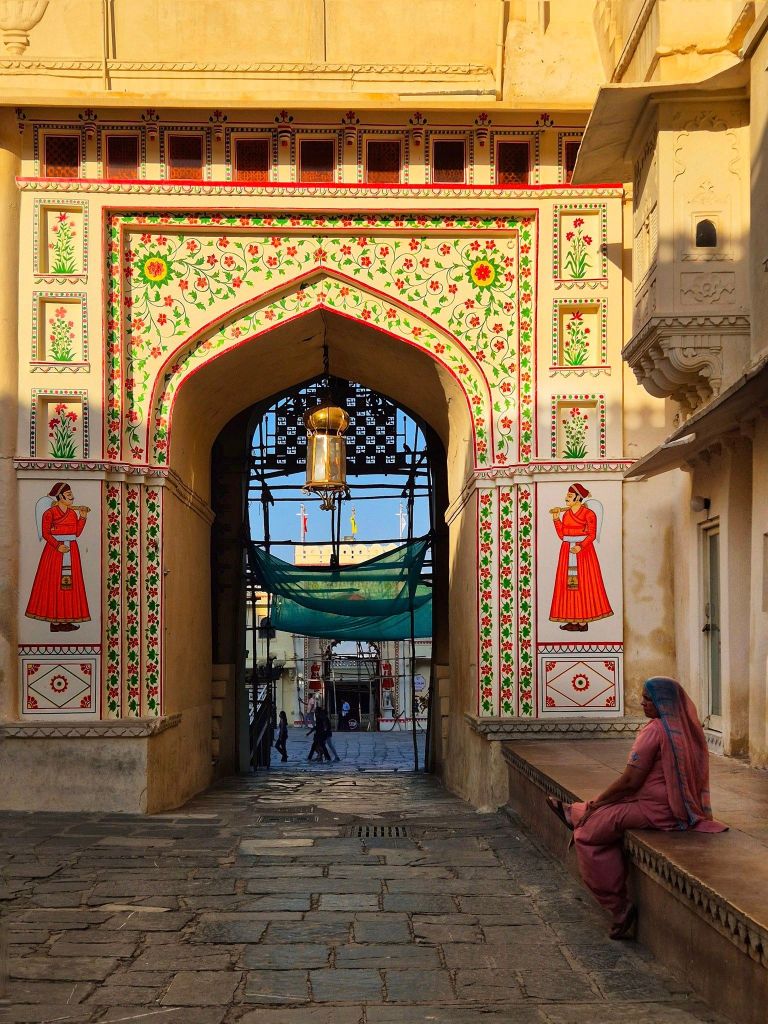
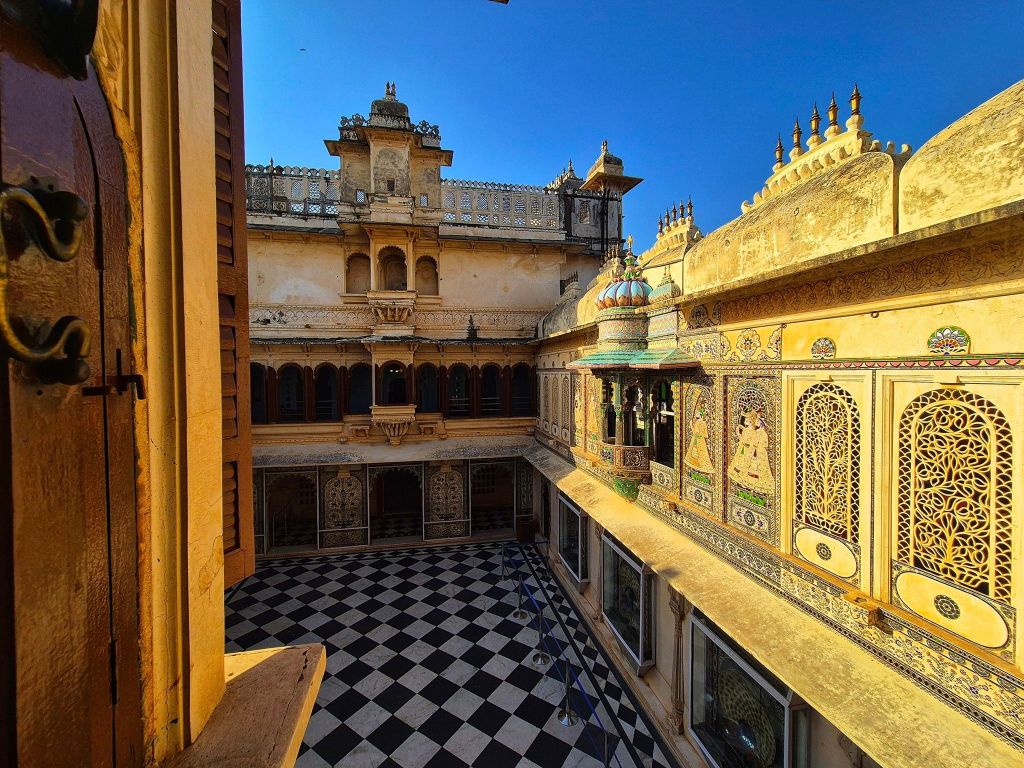
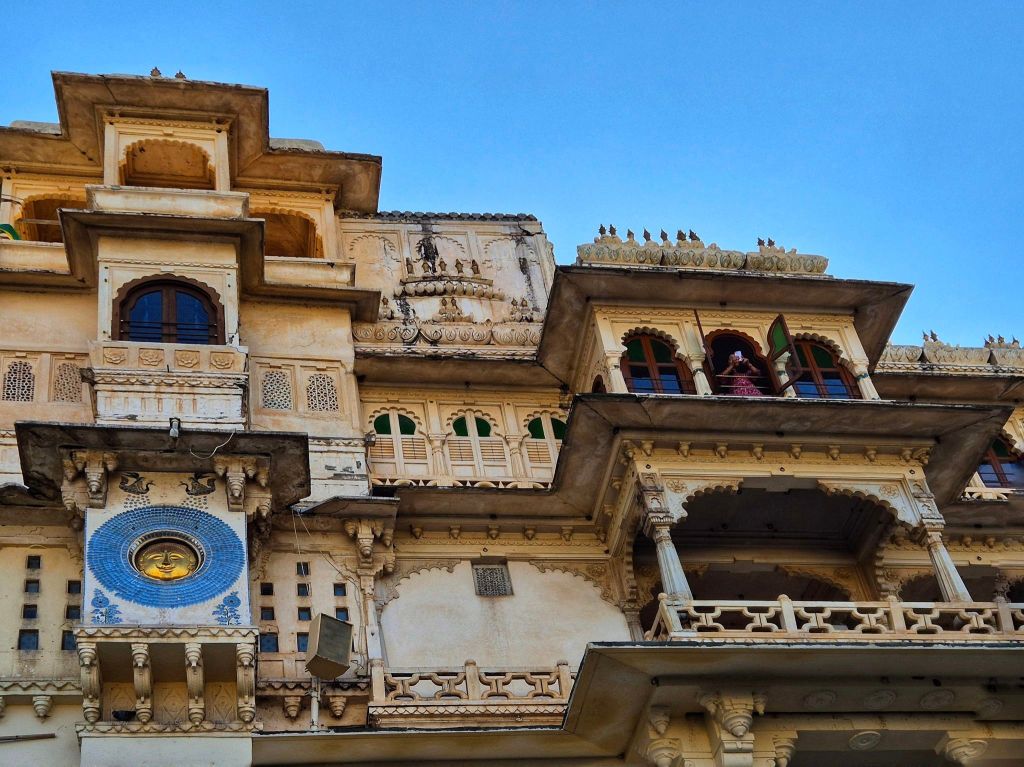
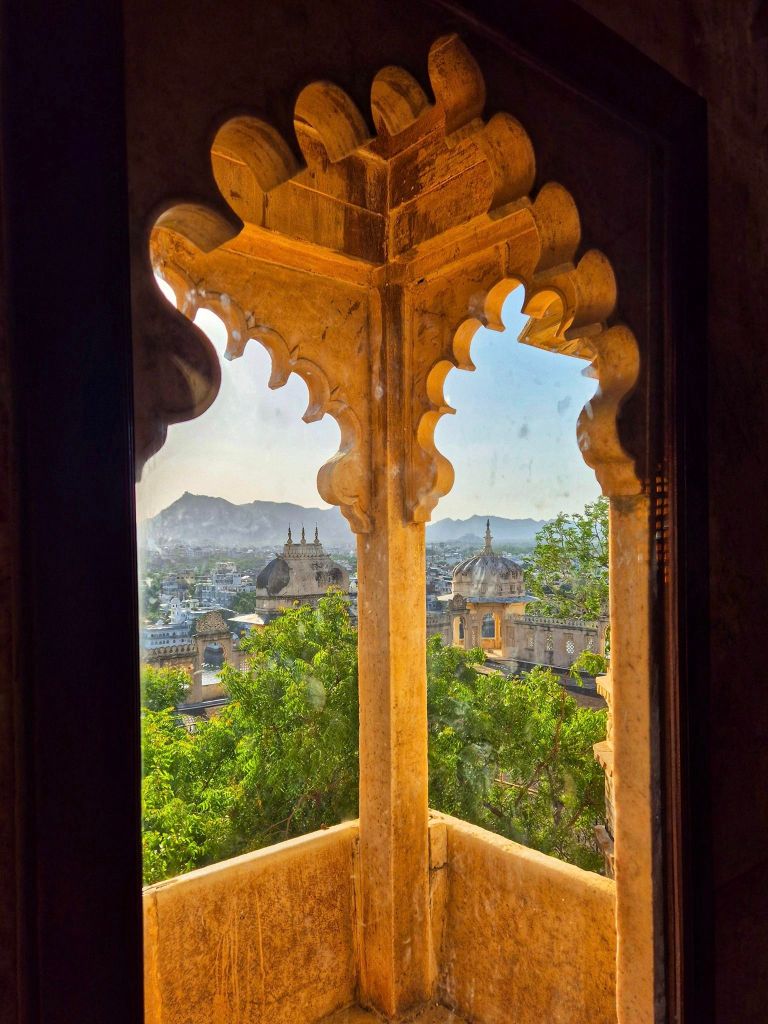
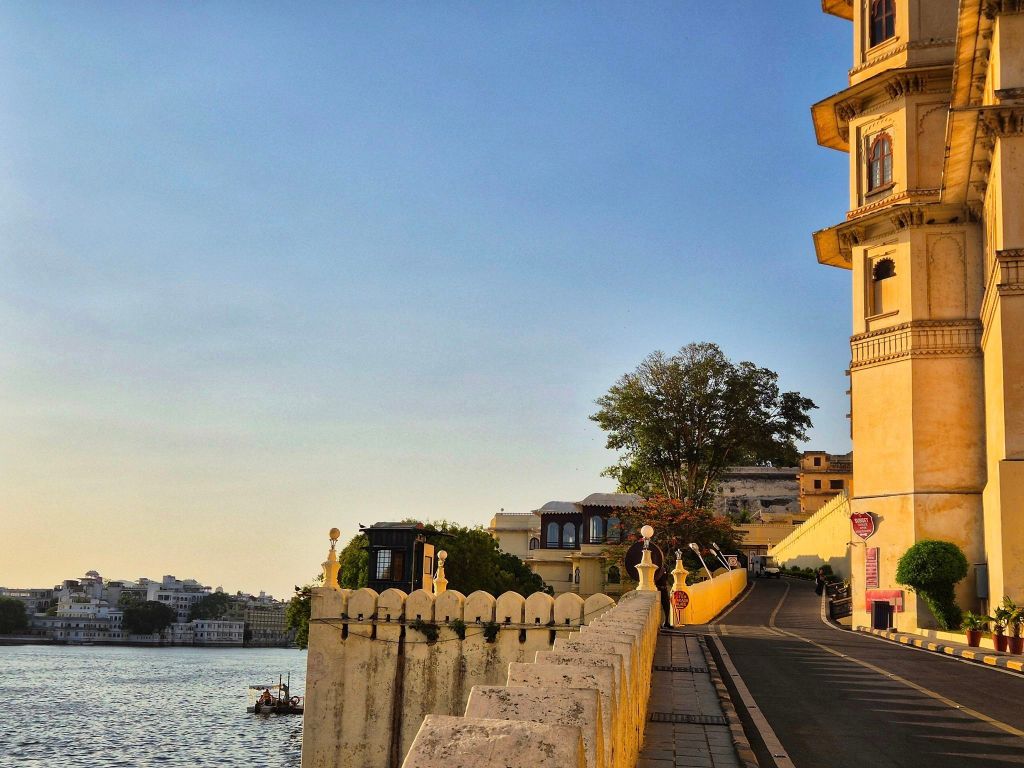
Udaipur was not in the plan. But when the distance between two places are no longer measured in miles but by a melodic strain one can’t help but follow, you follow.
And now I know how this Mewar kingdom founded in 1559 sounds. It sounds resplendent.
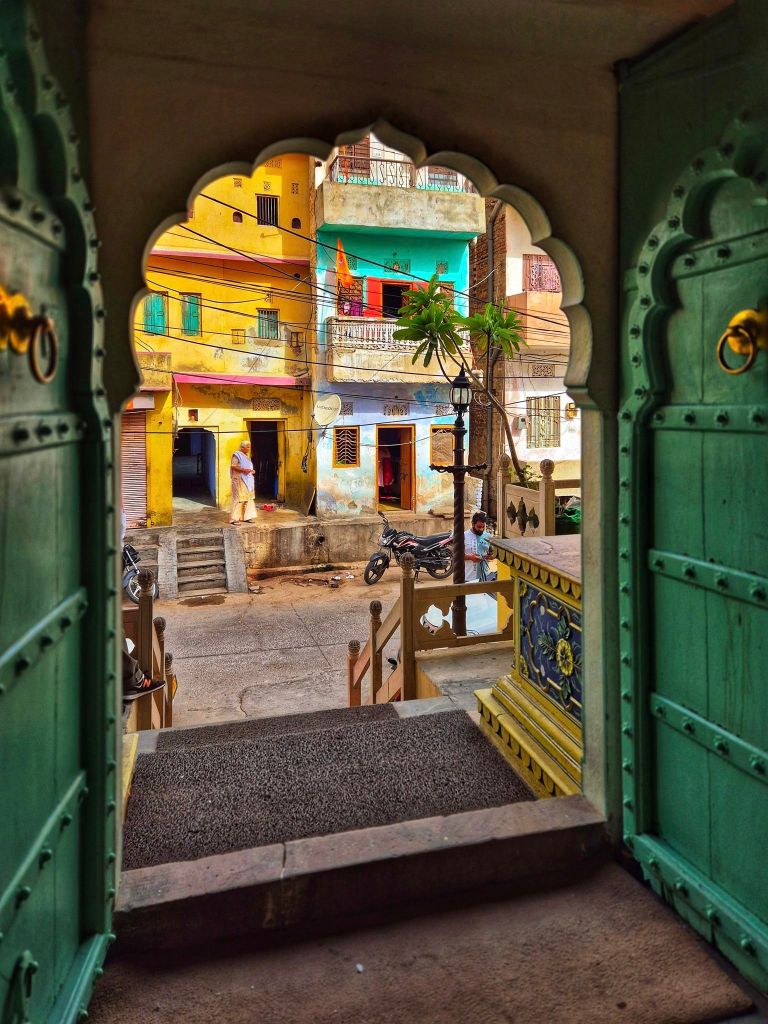
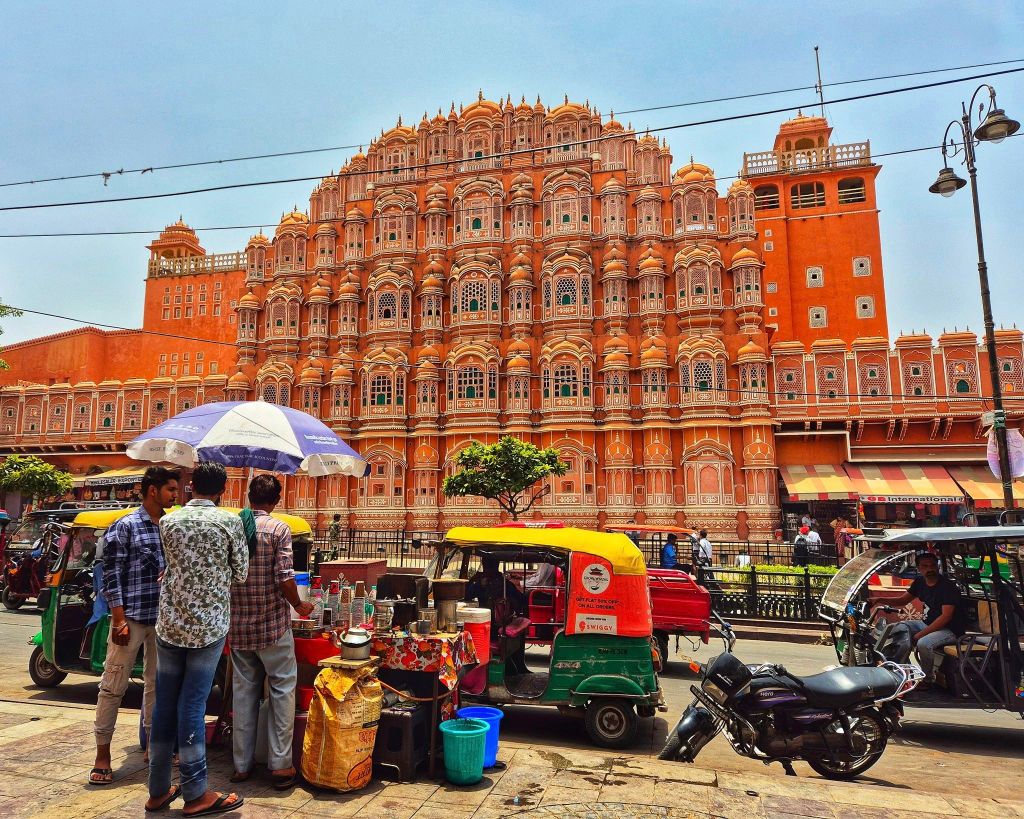
The longer you stay in Jaipur, the deeper you plunge into color.
The white marble and the red sandstone for the greatest edifices of Uttar Pradesh — the Taj Mahal and the Agra Fort — were transported by elephants from Rajasthan.
And traveling in Rajasthan is a journey through ancient feats of architecture, engineering, craftsmanship, space and time.
If you do not go through Rajasthan in haste, I promise you, you will be colored by it.
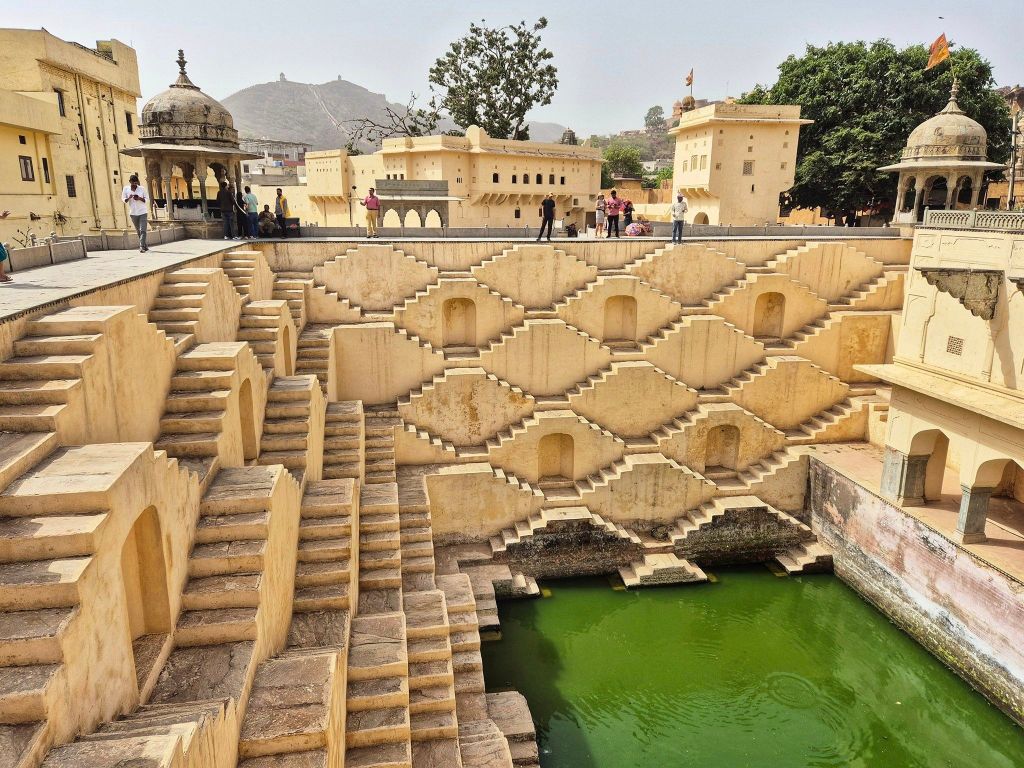
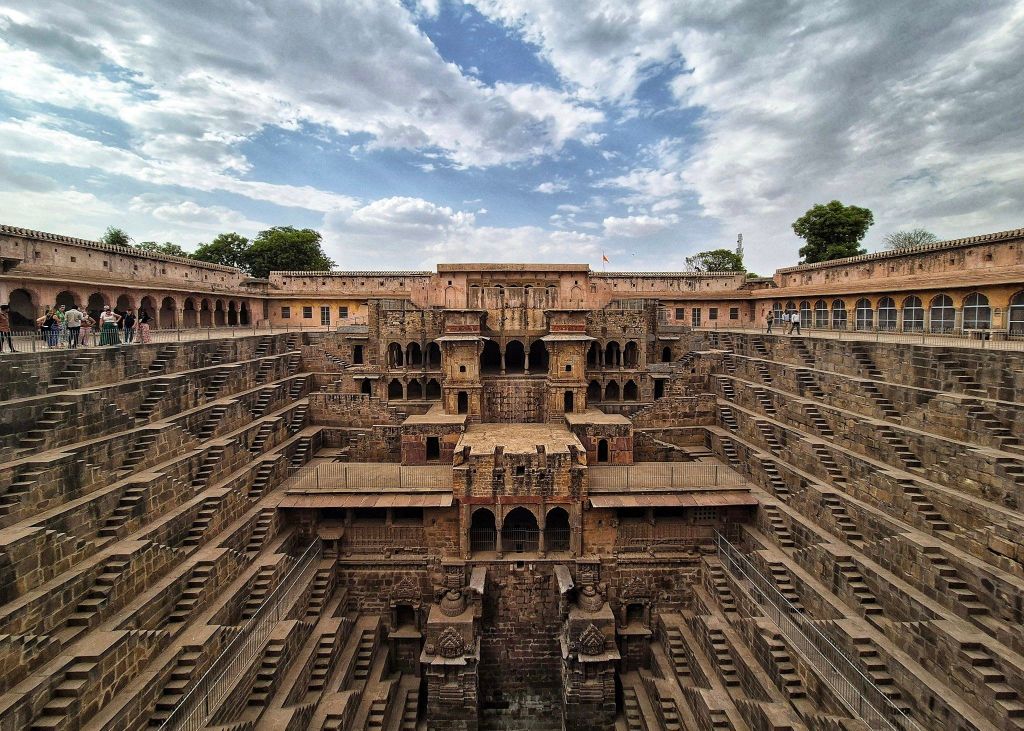
India’s arid regions gave birth to stunning baoris, or stepwells, that were mainly built as cisterns, but also functioned as sites for religious ceremonies, rituals, and cool resting places.
There are approximately two to three thousand ancient stepwells in India, and I’m fortunate enough to have visited two here in the state of Rajasthan: Panna Meena ka Kund, a 16th century picturesque stepwell in Jaipur, beautifully contrasting the more massive Chand Baori in Abhaneri that was built between the 8th and 9th century.
Can there be a better lesson in strength, function, and beauty, than a baori?
Oh to be in the locale of the Jaipur Literature Festival — the festival that has brought illustrious figures such as Salman Rushdie, Michael Ondaatje, Ian McEwan, and other stars to its marvelous gates! (What can one expect from a literary feast directed by none other than William Dalrymple?)
Unfortunately, I missed this year’s festival by several months. But are the Sunday Book Markets and their bookstores evidence enough that the love of books is alive and well in Jaipur?
Rajat Book Corner
Rajat Book Corner’s shelves were cascading with the best selections. They had Pamuk, Mahfouz, Proust, recent literary prize winners, the Indian greats, among many others. So you can imagine the argument between my other selves against the practical one who kept whispering firmly, “Just one book, just one book.”
After a while of intense internal struggle, I finally went with something I hadn’t seen in Philippine bookstores: Pyre, a 2023 longlister of the International Booker Prize written by Perumal Murugan.
“Good choice,” said the man at the counter.
“Thank you,” I answered, thinking it was something he always said to bookstore clientele.
“It’s a great book! We discussed this in our bookclub.” That’s when I realized he meant it. He had read Pyre. To my surprise, he added, “Wait. I think this is a signed copy. The author signed it when he came here.” And indeed, it was!, “Wait. I think this is a signed copy. The author signed it when he came here.” And indeed, it was signed!
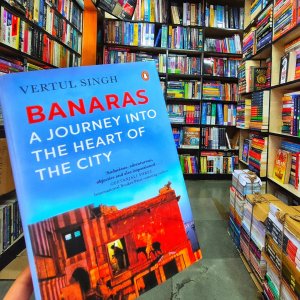
For yet another surprise, he recommended a book based on my choice: “Banaras” by Vertul Singh. And because readers have a sixth sense that can detect another reader’s literary preference, it certainly looked like a book I would love to read. Practical self was defeated. I bought it. But I think the bookseller just pointed me to my next destination in India if I get the chance to return.
Amidst the scent of spices and sandalwood, there is a whiff of book pages in Jaipur that a reader’s nose cannot help but follow. These are my souvenirs from following that trail.
Isn’t it a wonderful thing when you allow books to lead you to places, and when you let places lead you to books?
These mangoes were purchased from a side street in Jaipur to refute Aimee Nezhukumatathil’s claim that — *gasp* — India’s Alphonso mangoes are sweeter than Philippine Carabao mangoes!
Don’t get me wrong. I love A.N. She is the most wholesome and heartwarming author one can find on bookstore shelves these days. Her World of Wonders still keeps my heart soft. Before leaving for this trip, I suggested her latest book, Bite by Bite: Nourishments and Jamborees, to two friends who are also traveling, and then hinted that we discuss it over wine when we’re all back in Dipolog. But after scanning the first few pages, I ended up reading the whole thing even before I left! It was the last book I read in May.
I just had one problem with it: The mango verdict.
“I am the daughter of a man from India and a woman from the Philippines,” She writes. “They have argued all my life about whose mangoes are the sweetest, the best. Both have asked me to take sides, and for years I’ve refused until now. Alphonso mangoes, hands down. From India.”
And these were the lines that led me to a dark side street in India. I began to worry on my way back to the haveli. Not for my safety, but for the reason that, from within the bag hanging from my hand, the unbelievable fragrance of the mangoes were already invading my nostrils! I think my heart raced when I sliced one open with my Swiss knife.
My verdict? Maybe THAT will endanger my safety! Haha!
What I realized, however, as the two juicy mangoes were immediately reduced to seed and skin, was that THIS is nourishment — tasting, exploring, discovering, learning, reading, traveling, and eating the mangoes of another country. Once in a while, our hearts need this.
In Jaipur, this is how each day arrives. There are birds as timekeepers to wake me through the low windows of the 250-year-old haveli where I’m staying.
I’ve only been here for three days but it looks like I have already established the beginnings of a library on a small marble table.
Outside, the city is stirring. And I know that once I walk through one of Jaipur’s magnificent city gates and into its chaotic main streets, there will be an assault on the senses. But for a few silent hours, there will only be the duet of the chirping birds and the rustling of pages, and a reading traveler Mahmoud Darwish would describe as, “a woman sunbathing within herself.”
A knowledgeable guide taught me how to distinguish between Rajput and Mughal architecture as we walked through the profusion of terra cotta pink which is Jaipur.
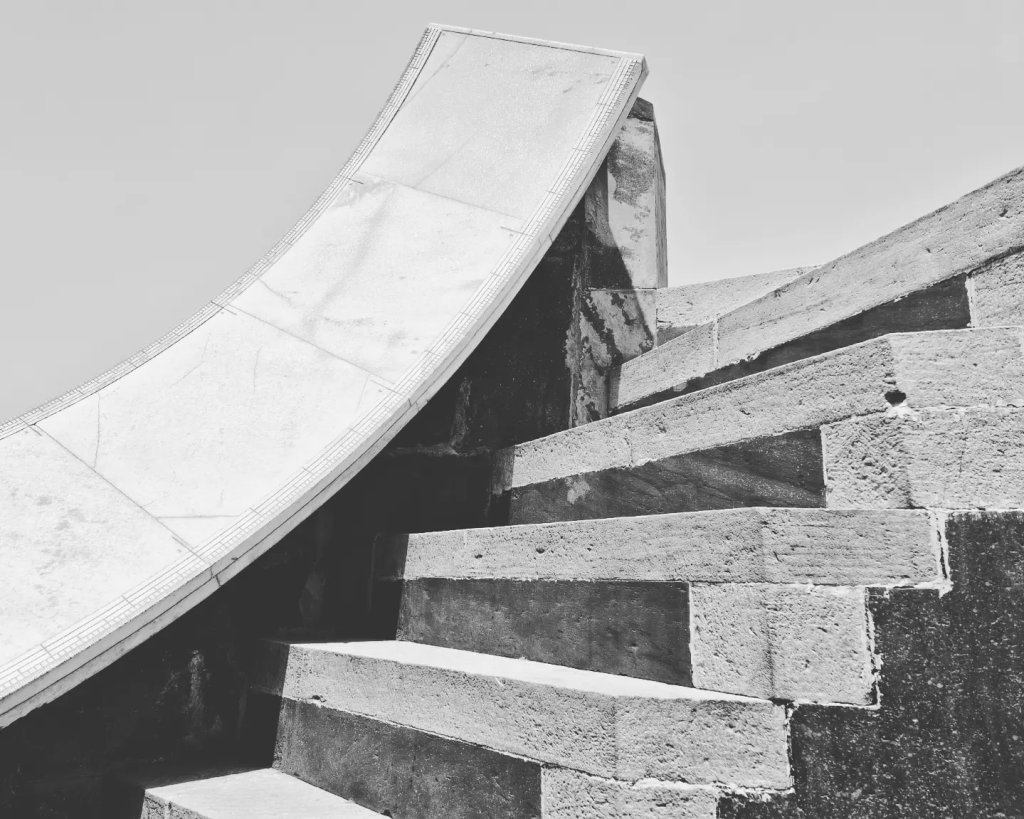
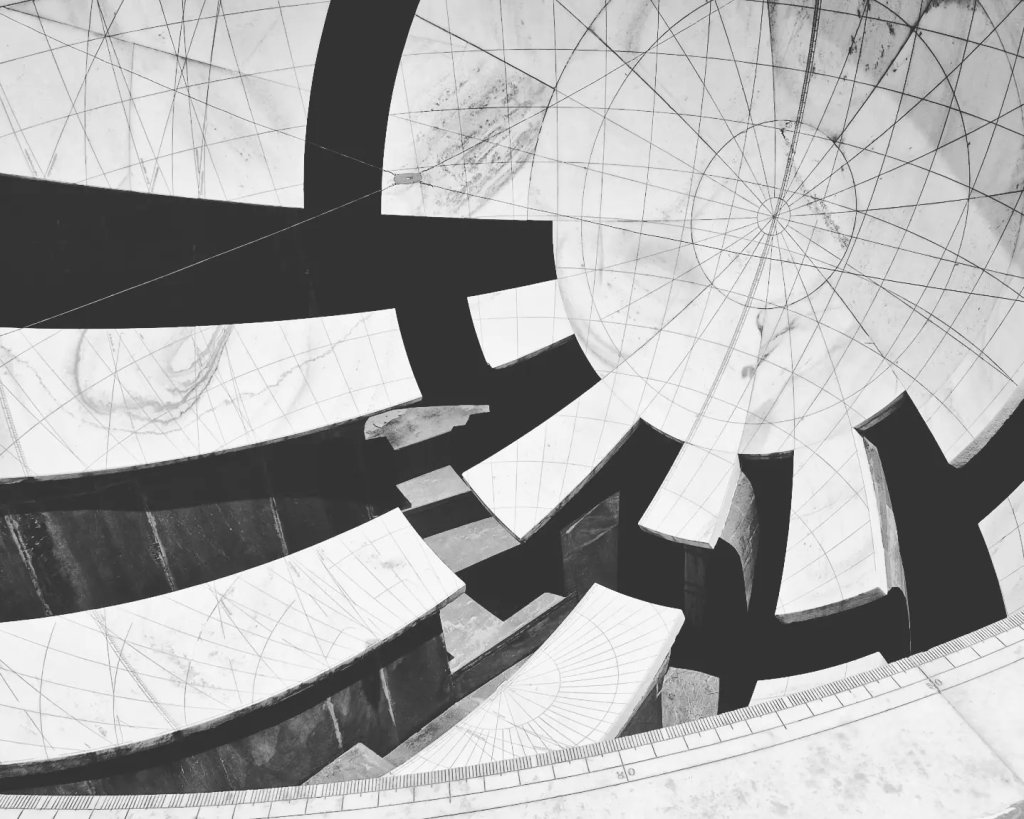
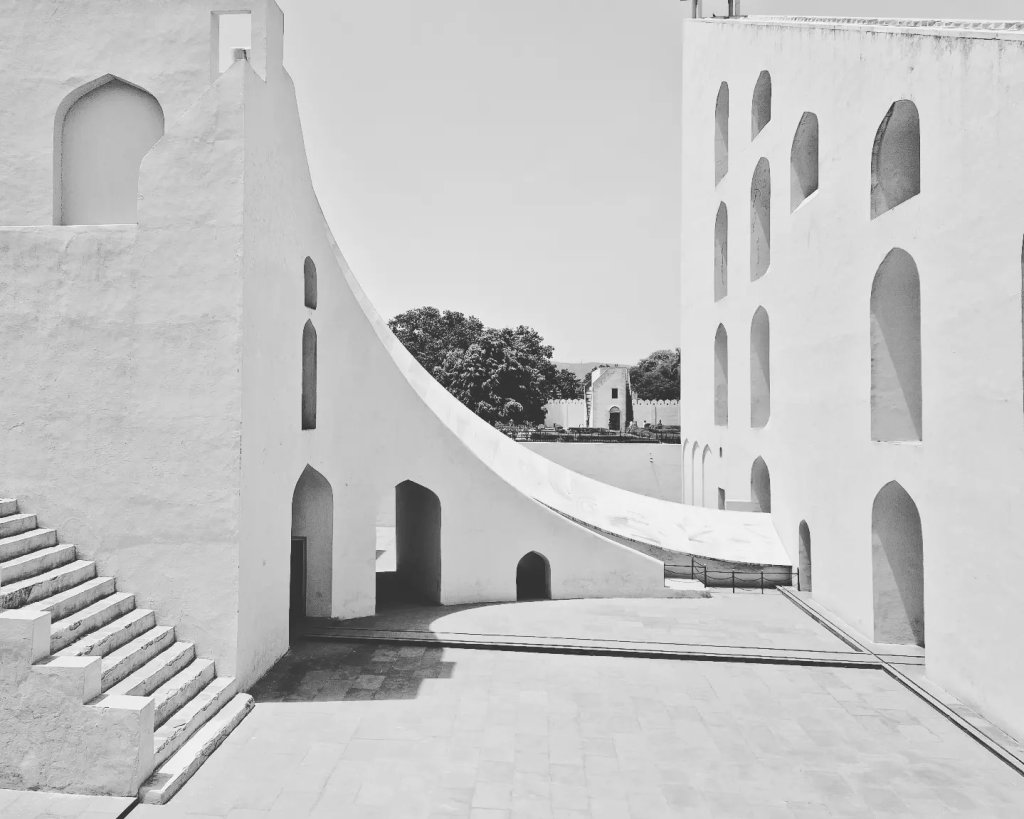
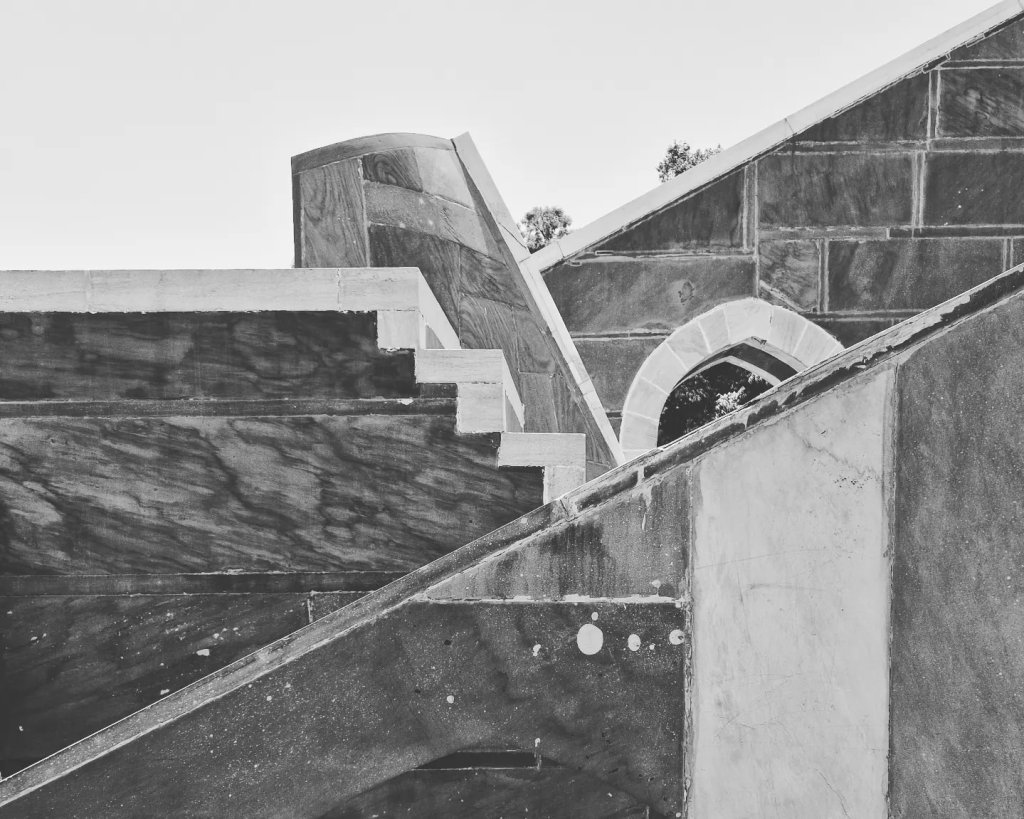
But to his surprise, it was here that I inspected the structures more carefully despite the onslaught of the solar noon. What looks like modern art installations amidst the flowery and intricate designs for which Jaipur is known, is Jantar Mantar. And it is not modern.
It is an astronomical observatory built in 1716CE by Jai Singh, the Maharajah of Jaipur. Jai Singh was born in 1688, and though he was crowned as monarch when he was but eleven years old, he continued his studies in philosophy, art, architecture, city planning, and astronomy. His passion for the latter manifested in the way he planned his city according to mathematical and astronomical patterns; especially in Jantar Mantar, which is the largest, most accurate, and most well-preserved observatory out of the five that he erected throughout India.
“Science,” an Italian poet once wrote, “was moved by beauty, and by the desire to understand it.” Jantar Mantar exhibits this.
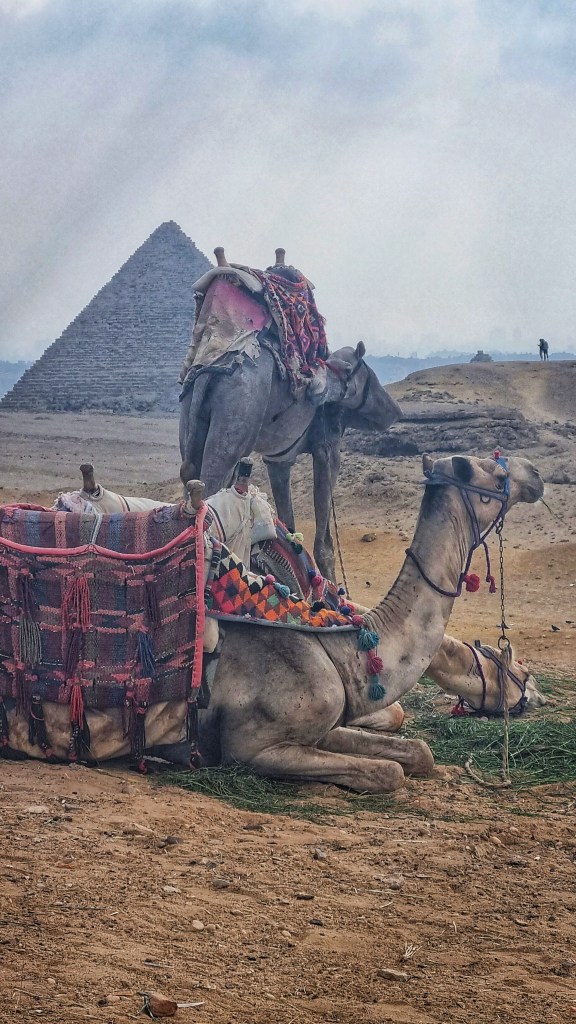
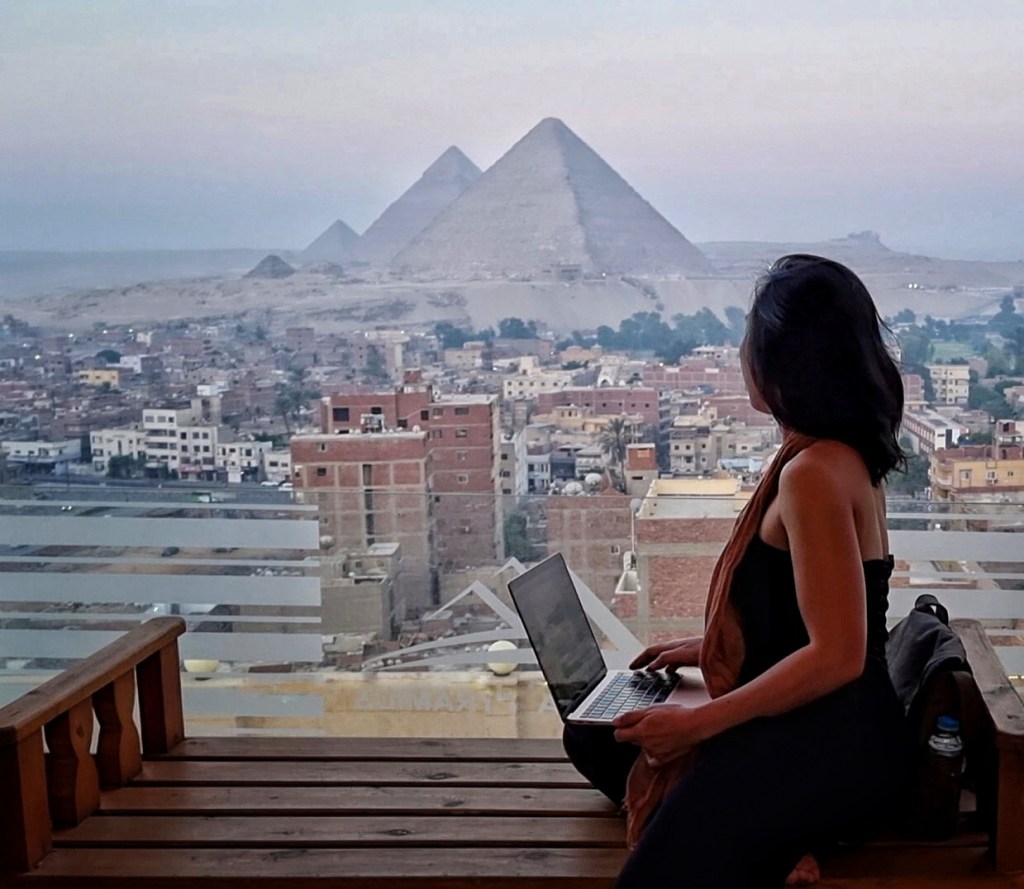
The music of Giza is a counterpoint between the honking of impatient drivers and the voice of the muezzin. As the call to prayer washed across the Giza Plateau, my ride to the airport came and it was my call to head back home. After all, home is a prayer.
But how can one leave a place when it says goodbye looking like this? Your heart would break a little, too. But then again, what’s a little heartbreak if your heart has not been too well for a while?
The ancient Egyptians believed that when a person died, their heart would be weighed against a feather. It was always a question of whether the heart was heavy or light. As I leave, may the scales find my heart lighter than when I arrived.
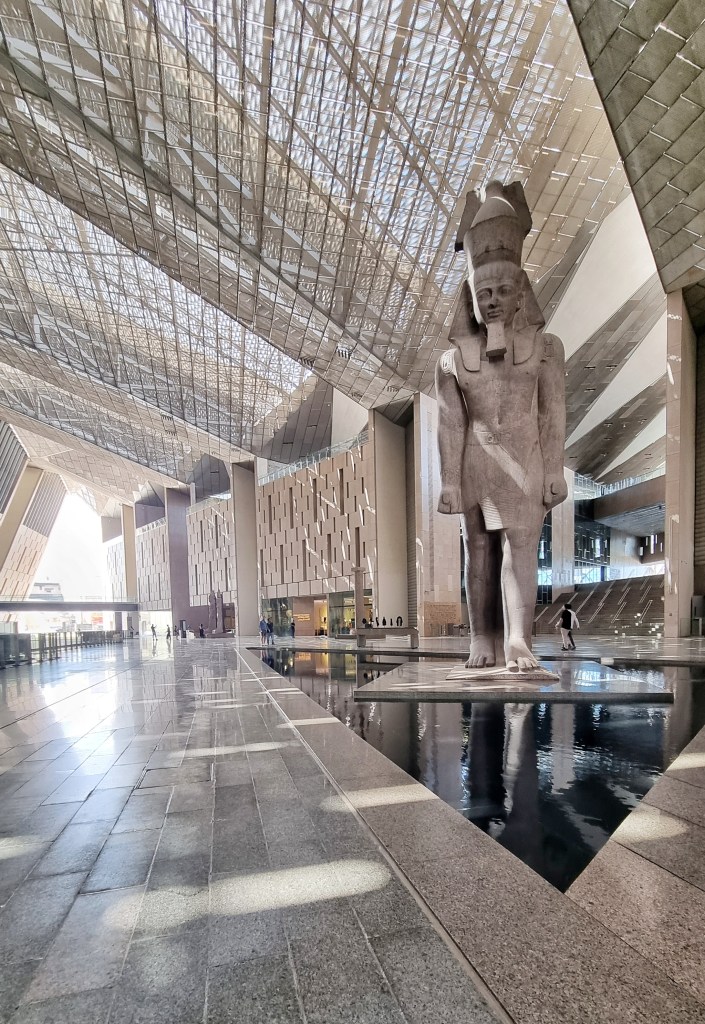
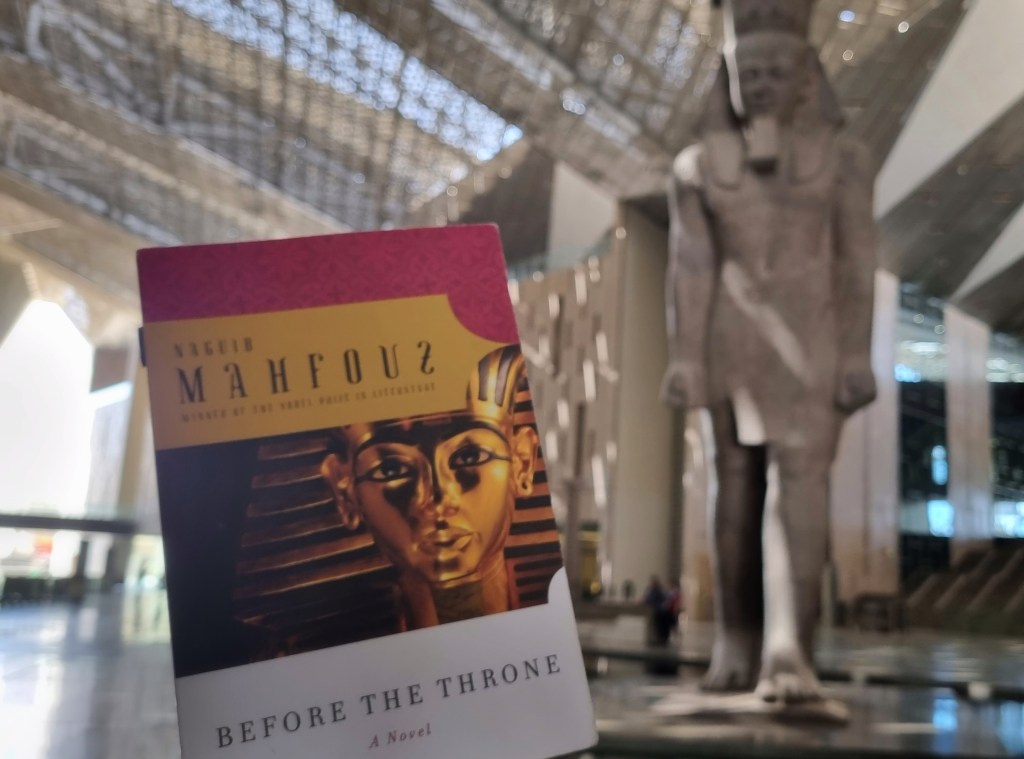
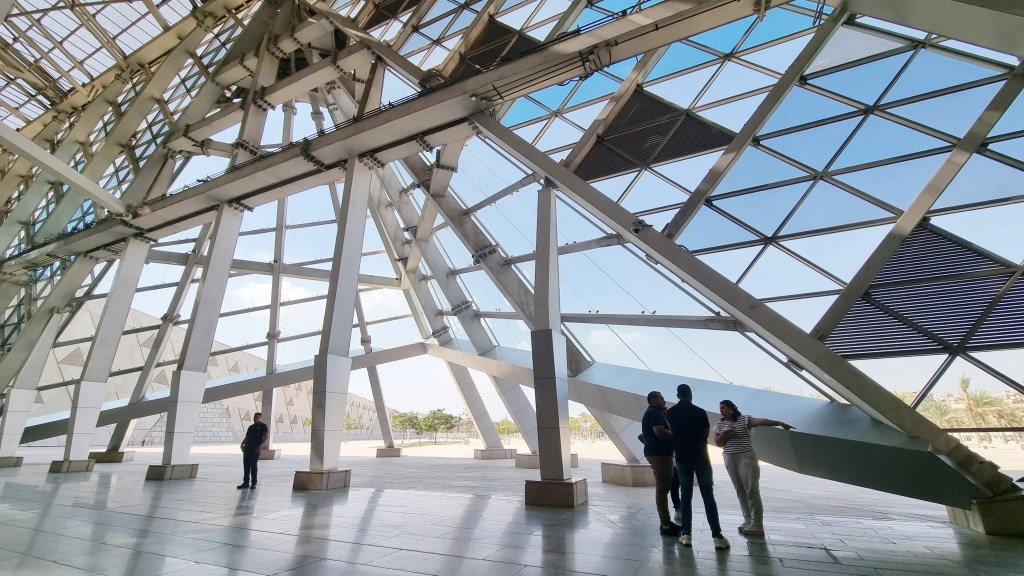
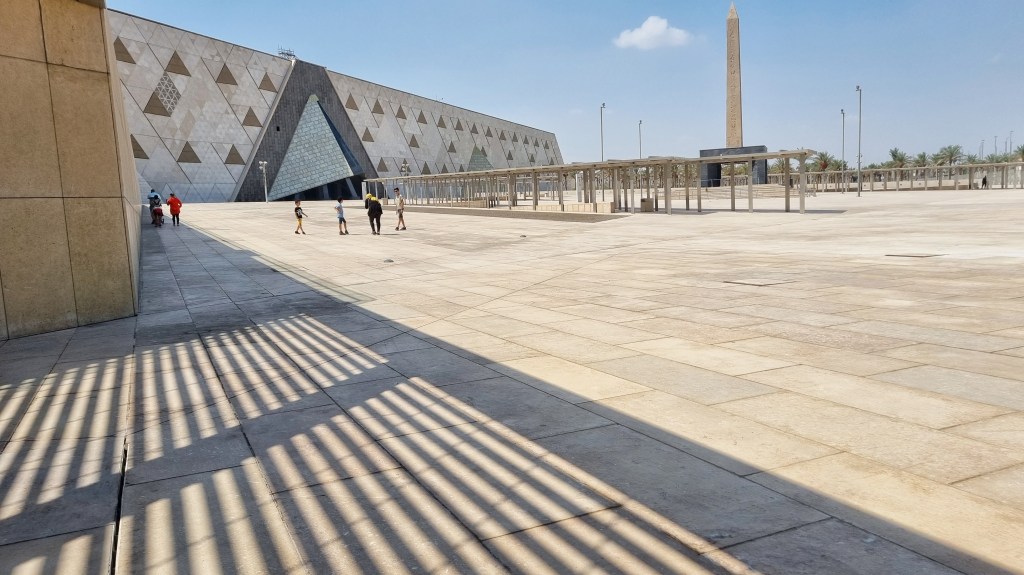
The Louvre, with its iconic glass pyramid, used to be the largest museum in the world at 60,600 square meters. Now it has been surpassed by the Grand Egyptian Museum at 81,000 square meters. It is the largest museum dedicated to a single civilization (the ancient Egyptian civilization), and it boasts of a special panoramic window that opens to… *drumroll* THE Pyramids of Giza!
Not a very subtle way of saying, “Take that, Europe!”
I was told that the story began in the early 2000s when a representative from Egypt attempted to retrieve some of their most valued artifacts from Italy and they were met with a strong refusal. (Figures differ by a number or two, but no more than 30 obelisks have ever been found in Egypt and only 6 remain. The majority of these are in Rome and other capital cities around the world.) The reason for the refusal was that Egypt lacked a proper place to store these treasures. Egypt had to admit that there was truth to this, and the idea of the GEM was born.
While researching for this trip, I wondered why there was never a clear opening date. My curiosity heightened when I arrived in Giza and I could see the GEM through my hotel window looking quite complete and ready! When I asked the guides, they told me it was still closed. My intuition said otherwise, and I went there anyway saying to myself that if it turned out to be closed, at least I could still admire the exterior of the building. When I arrived there, I was greeted by highly trained and professional staff explaining that they were holding a “trial opening” and even though the exhibit halls were still off limits, I was welcome to have a guided tour of the building! The cherry on the top of this whole trip!
My personal take, based on passing insider comments, is that they are hoping for the Rosetta Stone and the Bust of Nefertiti to come home before the grand opening, hence the unclear dates. The odds are low, but I sincerely hope it happens. Egypt lacking a proper place to store these treasures has now become an invalid excuse.
It was comical at first. The sight of the crowd by the entrance told me that I would not be having epiphanies or spiritual experiences.
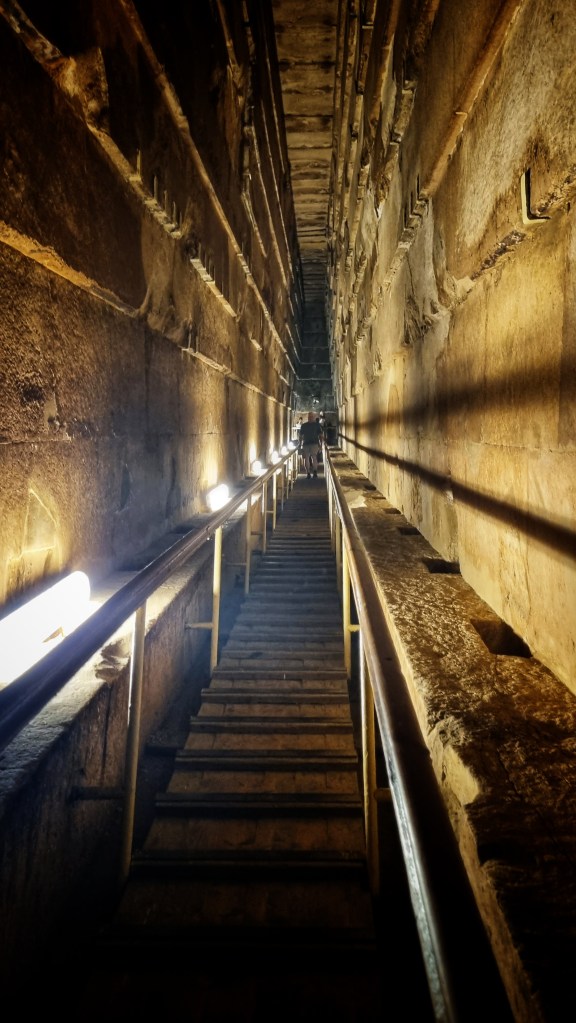
And the guide said that if I wanted to go inside the Great Pyramid, I would have to pay an extra fee, climb a narrow and steep incline that could cause claustrophobia, and see nothing inside.
I paid the fee. Being inside the Great Pyramid is not nothing!
So there I was climbing the steep incline when I noticed figures of a family of three ahead of me. The father muttered, “Kapoya man diay ani! Ta-as pa ni? Mao ra ni makita?”
Bisaya! Inside the Great Pyramid!
Amused and extremely happy to be hearing Binisaya for the first time in over two weeks, I laughed out loud and, even without seeing their faces in the dark, called out to the mom a few feet away from me, “Bisaya diay mo Ma’am? Ako pud! Grabe jud ang Bisaya kay mag-abot bisa’g sulod sa pyramid!” And we laughed our heads off while sweating profusely.
When we finally arrived at the King’s Chamber, instead of having a life-changing experience amidst the rose granite especially chosen for the chamber — the heaviest stones used in the entire pyramid, I acted as photographer for my new friends.
The way out took longer because more people were entering by the time. As I exited back into the glaring sun, the guide was waiting for me. He asked me how it went and I told him I did not regret going in.
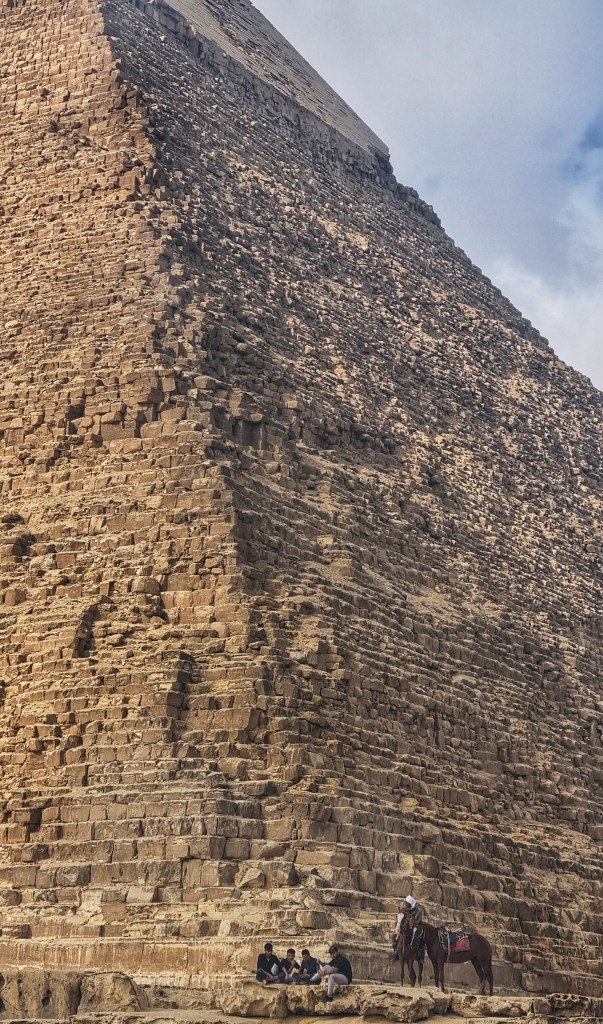
He drew my attention to the limestones of the pyramid. (The smooth outer layer, which was granite from Aswan did not erode through time. They were removed, stolen, and used for other structures by succeeding generations.) He then pointed at several fossils in the limestone. “What does that tell you?” He whispered.
The Pyramid of Khafre. The second largest pyramid in Giza next to the Great Pyramid of Khufu.
All at once a strong emotion took hold of me and I burst into tears. I tried to control myself but I couldn’t. The tears kept flowing. The truth that we don’t really know anything and all we can do is speculate, and the enormity of history was just so overwhelming to me at that moment.
These stones, stacked perfectly on top of each other by who knows who, who knows how, and who knows why… these stones speak to you in a different language. These stones do something to you.
It was surreal to have this view from my hotel bedroom and its roof deck.




































 The Book-Butterfly