Our ecological crisis is also a ‘crisis of forgetfulness’… we have forgotten how sacred the nature of creation is,” Iraqi-British writer, Dalia Al-Dujaili, reminds us in Babylon, Albion.

Although I read this in a perfect setting on a weekend getaway — amidst soothing sounds of nature, enveloped by clean air, and surrounded by mountains blanketed by mist — this ‘crisis of forgetfulness’ where the greed of many has replaced the sanctity of nature manifests in international and national news, and in the floodwaters that lap on my own doorstep back home.
Readers who find the lyrical wisdom of Aimee Nezhukumatathil refreshing will surely love this wholesome rumination into identity, migration, land, rivers, borders, national and personal myths, familial and arboreal roots, and humanity’s natural heritage. While these somber topics usually weigh down on the reader, Al-Dujaili imparts a hopeful outlook while encouraging us to make our very own existence into a form of praise, and challenging us to scrutinize how we carry identity. Needless to say, Babylon, Albion was a profoundly beautiful way to end August.

August is Women in Translation Month and Buwan ng Wika (National Language Month). To celebrate the latter: Munting Aklat ng Baybayin by Ian Alfonso. No better way than through learning more about our pre-colonial script! To celebrate the former: Iman Mersal’s Traces of Enayat and Lydia Sandgren’s Collected Works.
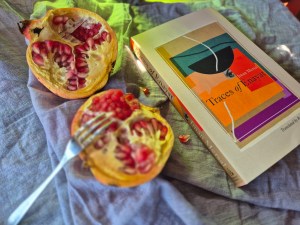
“The best investigative reporting is storytelling,” says journalist Jane Mayer. Traces of Enayat is proof of this as Iman Mersal takes the reader on a quest to find traces of Enayat, an Egyptian writer who took her own life in 1963. Mersal affectingly expresses the attachment and resonance we find in the authors we encounter and whose works derail us from an otherwise uneventful trajectory. It also begs the question: How many Enayats has the world lost into oblivion?
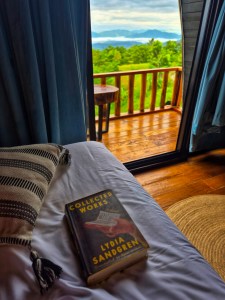
As for Collected Works, seven pages shy of six hundred, this novel quietly draws you into its world. It acquaints you with its setting and its characters without haste. It knows how to linger. It lingers on one’s thoughts on literature and art, on a character’s indecision to call someone or not, whether to read a book or not. It often lingers on everyday scenes where words turn into still life paintings and everyday portraits. But these scenes and characters exist in the shadow of Cecilia’s disappearance. Almost fifteen years after she vanished without a trace, her daughter, Rakel, believes it is her missing mother she is reading about in a novel, and measured suspense and mystery begin to replace the monotony of their lives. I would recommend this to the unhurried reader. Ultimately, Collected Works is a meditation on what one’s life amounts to.
As for reading life in August? This is what it amounted to. It felt very much like a defiance of my country’s frustrating political climate.

 The Book-Butterfly