Circumnavigating July

From Stefan Zweig’s Magellan, to Robert Graves’s Homer’s Daughter, to Aatish Taseer’s A Return to Self, to Kahlil Corazo’s Rajah Versus Conquistador, July seemed to have a fortuitous recurring theme in the books I read and in my encounters with storytelling: New ways of seeing and new ways of reframing self and history. 
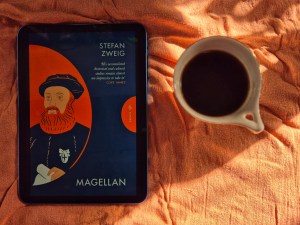
For someone whose nation regards as a hero the man responsible for Magellan’s death, I have to admit that this book was approached in Lapu-Lapu mode, en garde, expecting a Eurocentric view of history. But Zweig had me at page 11 upon acknowledging that the primary objective of the Crusades was to wrest the trade route barriers from Islamic rule. You don’t often get that admission from a Western book written in the 1930s.

In Philippine history, Magellan’s death eclipses the fleet’s first circumnavigation of the world. This book emphasizes the feat of an adventurer who had, at the time, “far outstripped all others in the exploration of our planet,” and proved beyond theory that the Earth was round. He was bad news for flat-earthers. Zweig humanizes the man whose death we celebrate, and this is a great read for those who would like to peer through another vantage point of the expedition. But dear Stefan, as much as I am a fan of your writing, Magellan did not “discover” the Philippines; he merely set foot on it and placed it on a Western map. 

“What we term history does not represent the sum total of all conceivable things that have been done in space and time; history comprises those small illuminated sections of world happenings which have had thrown upon them the light of poetical or scientific description. Achilles would be nothing save for Homer.”

Speaking of Homer… how did I not know that the author of the more famous I, Claudius has penned a delightful book called Homer’s Daughter, claiming he could not rest until this novel was written after finding arguments on a female authorship of The Odyssey undeniable? It is based on the premise that The Odyssey — authored over a hundred and fifty years post-Iliad, more honeyed, civilized, and sympathetic especially toward Penelope — was written by a woman.

It makes for an enjoyable read as Graves imagines the life of Nausicaa, a Sicilian princess who rewrites Homer’s epic with elements from her life. “The Iliad, which I admire, is devised by a man for men; this epic, The Odyssey, will be devised by a woman for women. Understand that I am Homer’s latest-born child, a daughter.”

We have understood through the likes of Virginia Woolf that “for most of history, Anonymous was a woman,” but how the poet of The Odyssey could be a woman is a concept new and fascinating to me. 

What if The Odyssey’s notion of Ithaca holds sway because it was not written by one who wandered off, but by one who stayed?

And yet, Aatish Taseer’s Ithaca remains my kind of Ithaca: “The pilgrim spirit is one that wanders away from the comfort and safety of our home secure in the knowledge that the transformation the pilgrim will undergo over the course of his journey is the destination.” The author has a life story incredible enough, but more importantly, here’s a writer and traveler who shows us how profound traveling can be when we are mindful of the inner journey. A Return to Self is a book I will be returning to.
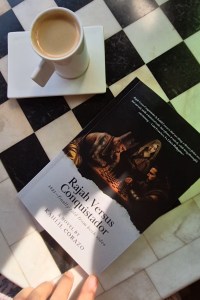
Speaking of Home… I have never read a novel that came this close to home! As a descendant of a binukot, this book felt so personal and empowering to me. The soul of the binukot does not play second fiddle to anything in this novel.

By reading Rajah Versus Conquistador, I seem to have circumnavigated July and circled back to Cebu. The title refers to Magellan as the Conquistador, and Humabon as the Rajah.

Humabon, in Zweig’s words, “was no such unsophisticated child of nature… He had already eaten of the tree of knowledge, knew about money and money’s worth… a political economist who practiced the highly civilized art of exacting transit dues from every ship that cast anchor in his port. A keen man of business, he was not impressed by the thunder of the artillery or flattered by the honeyed words of the interpreter… he had no wish to forbid an entrance to his harbor. The white strangers were welcome, and he would be glad to trade with them. But every ship must pay harbor dues.”

Often cast as a traitor or as someone who’ll always be lesser than Lapu-Lapu in Filipino eyes, Corazo’s Humabon agrees with Zweig’s Humabon: a cosmopolitan ruler who defies simplification. There is much to be said about this work; from the witty language where Bisaya humor often raises its head, to rethinking our past and the deeper meaning to our myths, to the skillful crafting of the key players. Corazo does not merely reconstruct complex characters from the past, he gives readers a perspective of history “viewed not from the deck of a Spanish galleon but from behind the woven walls of a payag…”

And who lives behind these amakan walls? The women. This is what makes Corazo’s work especially meaningful to me. He brings the hidden women to light and by doing so, honors those who never made it to official records but who nonetheless steered the course of history through their quiet power, and who continue to do so.

“Each generation of binukot learns to reshape herself.”

To which Ruby Ibarra gives a brilliant answer: “Ako ang bakunawa.” 

These were last month’s books and soundtrack.
June in Books

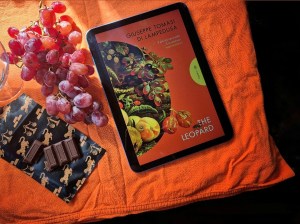
Reading The Leopard is like viewing a portrait of a bygone monarch in a gallery. They mean nothing to you but notice how the brush strokes are skillfully done as it immortalizes a world that no longer exists; you acknowledge that it is important as a record… and then walk away and move on to the next portrait. But you retrace your steps, give it a tender, wistful gaze, and your eyes rest on Bendico, the Prince’s faithful Great Dane; the one detail that truly manages to tug at your emotions and whose fate emphasizes the vicissitudes of life and history.

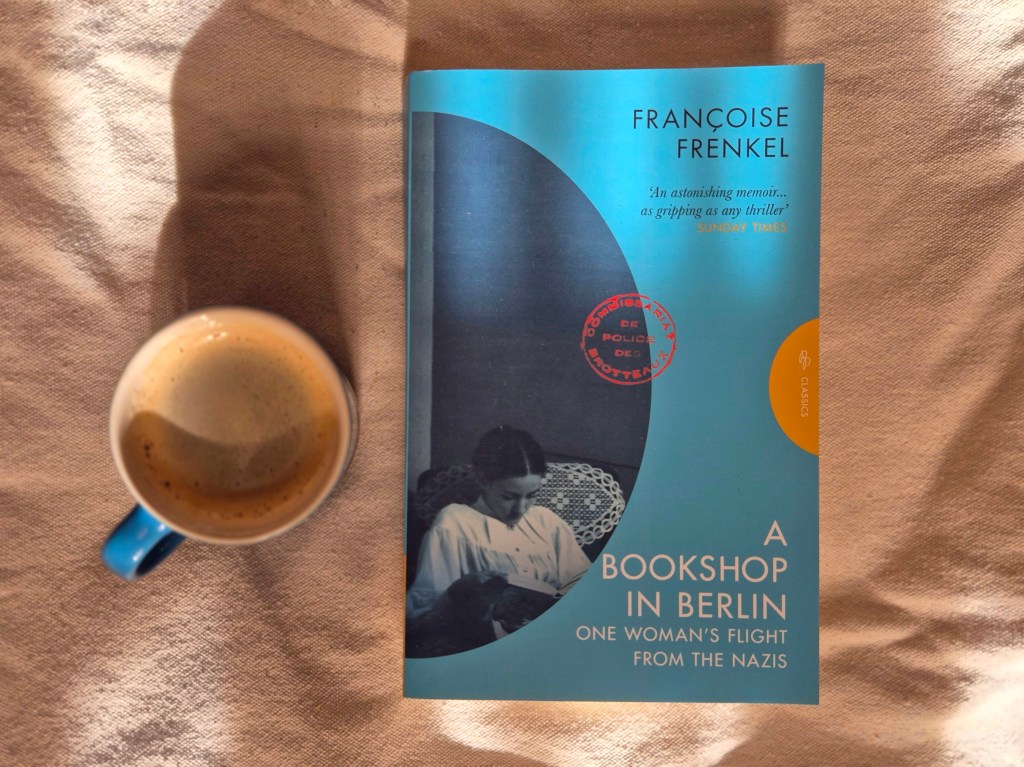
Background for Love allowed me to lean back momentarily, put my feet up, and whisked me toward the sunlight despite the bittersweet awareness that darkness would soon descend on the sunlit Europe of this story. That darkness came for A Bookshop in Berlin, a true account of a bookseller’s incredible escape from Nazi-occupied Europe that eerily mirrors the current state of the world where prejudice and ignorance defy truth and multitudes are easily swayed by propaganda, but where hope also shines through in heroic acts of kindness.

Lawrence Ypil’s poetry served as punctuation marks between these novels. And Alba de Céspedes? The powerhouse that is Alba de Céspedes? She demands a separate post.

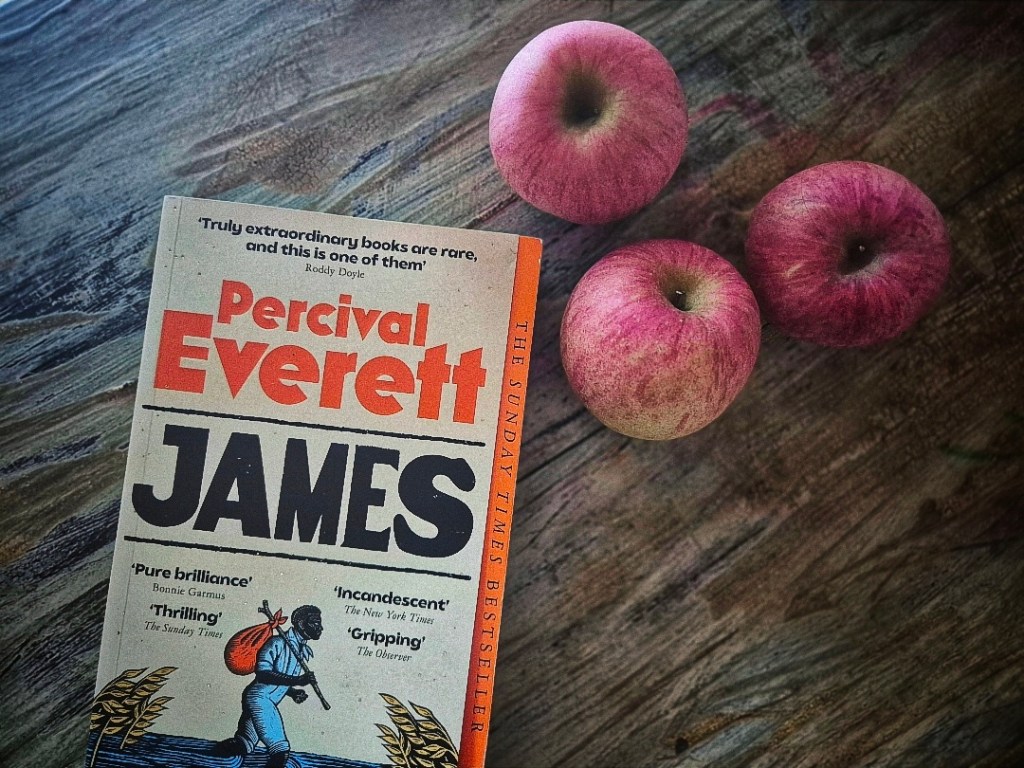
So that was June. It did not leave time or headspace for making concrete reading plans. While it started with that epitome of a retelling which is James, whenever there was a need to retreat in the solace of books, I’d instinctively pick up a volume from a stack of Pushkin Press Classics that hadn’t been assigned places on the shelf yet.

In the month wherein my heaviest schedule clamored to be felt and the risk of a WWIII threatened to make everything inconsequential, it somehow made sense to work harder, to live more, and to continue reading. Wait, is it really July already?

Helen Wolff: Background for Love

“What do you think I should do now?”
“You should read a good book for a change.”

“At my death, burn or throw away unread,” wrote Helen Wolff on the envelope in which the manuscript was found in 2007. Being a revered editor and publisher of literary giants such as Italo Calvino, Umberto Eco, and Gunter Grass, among many others, she probably judged her own writings with more exacting standards and deemed Background for Love unfit for publication.

After all, it is a perfectly imperfect novella. We can find fault with the characters and their decisions if we want to. Nothing grand or earth-shattering happens here. It is a story of a young girl wrestling between the desire for independence and the man she loves. And most of us have been there, and may or may not have ended up acting wisely. But you see, some of the most authentic writings are those unfit for publication, simply because life is flawed and will not live up to a lot of ideals.

What made me relish the pages so easily — aside from the cat she named Colette after the writer, aside from the picturesque beauty of Saint-Tropez as a backdrop, and the bittersweet awareness that darkness would soon descend on the sunlit Europe of this story — was the authenticity and intimacy of Wolff’s writing. It makes me wish she had written more, and one can only wistfully imagine the triumph of what she would have considered fit for publication!

But we can only be grateful for how this little gem did not perish into oblivion. As rain begins to steal into the sunny days in my part of the world, this book made me lean back, put my feet up… and whisked me toward the sunlight. 

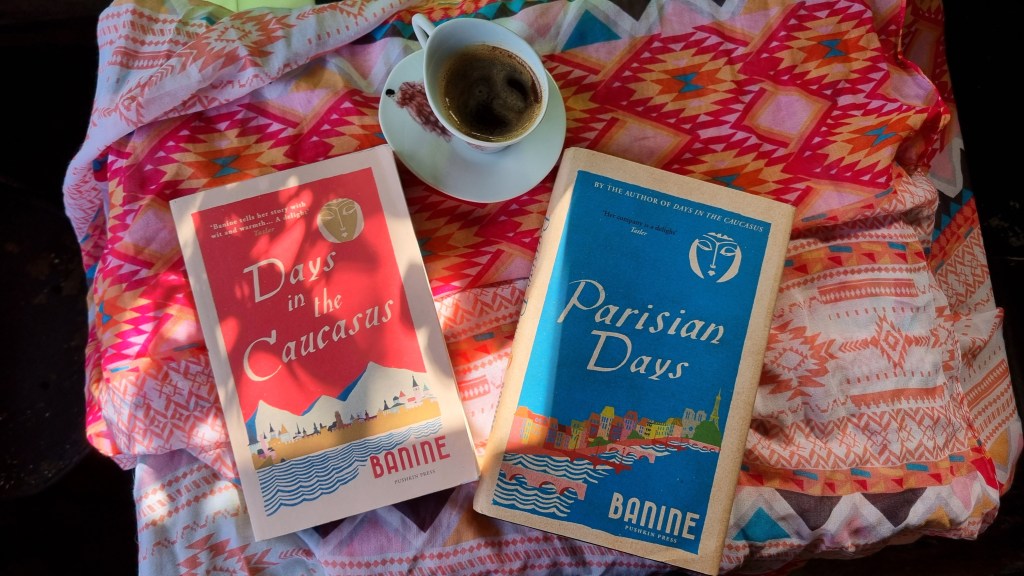
Banine: Days in the Caucasus & Parisian Days

“I saw with my own eyes the end of a world… opened my eyes to the cruelty of the world. Isn’t that the point from which to date my break with childhood?”

It was not a reading slump. My readings simply could not veer away from articles on the Israel-Hamas war. Since October 7, reading for leisure felt so much like what Gideon Lasco would call “an embarrassment of privilege”.

But upon arriving from another short trip to the capital, a two-month late parcel containing Pushkin Press books that I ordered for Women in Translation Month greeted me. And because I am a strong believer in the seemingly late but apt arrival of books in our lives, I couldn’t resist picking up Banine.

Although set over a century ago and published in 1946, Days in the Caucasus is not far removed from current events; freedom for women meant gaining precedence over the veil, climate change was already felt by our perceptive narrator, and it even offers a glimpse of the long-standing conflict between Azerbaijan and Armenia that made headlines again last month. As readers, we have also learned by now that a coming-of-age story is an unceasing current event.

But oh, to have Banine as a narrator is such a whiff of fresh air! There is already a Tolstoyan flavor in the first line of Days in the Caucasus when she opens with, “We all know families that are poor but ‘respectable’. Mine, in contrast, was extremely rich but not ‘respectable’ at all.” And thus begins a witty narration of an extraordinary place, an extraordinary time, and an extraordinary life. 

Banine, born at the turn of the 20th century into a family of oil magnates in Baku when Azerbaijan was still part of the Russian Empire. That information alone heralds upheavals of every kind, yet she colors this turbulent part of life and history with an irresistible charm.

This heiress who lost her home, her freedom, and fortune when the Bolsheviks came into power had a special relationship with nature (“…they did not play dead with me; they replied in a simple language, sufficient for those who knew how to hear…”), loved playing the piano (“I was fortunate to have a consolation that I turned to with greater frequency — my piano …only the piano found favor with me…”), loved to read but also acknowledged its limits (“…those who claim that reading is a consolation for everything cannot feel very deeply — a powerful emotion leaves no spare mental capacity; it takes over, hypnotizes you, stops you thinking of anything else…”).

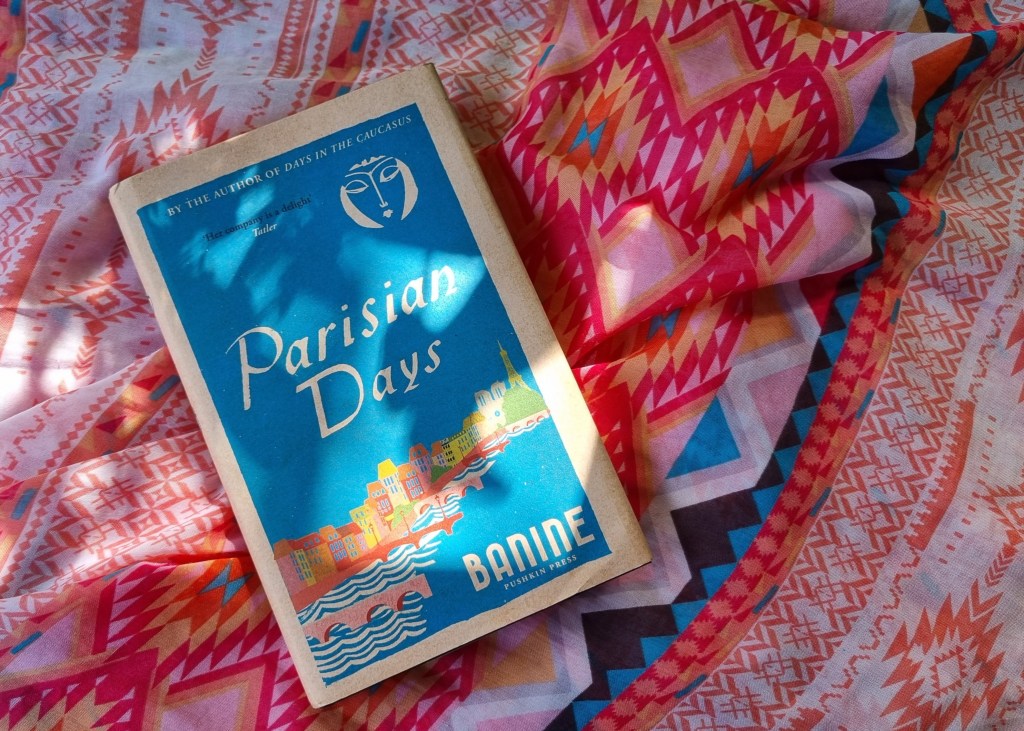
Parisian Days chronicles her subsequent life in Paris as an adult and an émigré. In it we see her humor and astute observations aging like fine wine. It makes one realize that these are some of the shoulders on which the Annie Ernaux-es of today have stood in order to write fearlessly about society and a woman’s intimate thoughts.

Banine is a lovely companion of a narrator who, whilst making light of her tragedies, makes us recognize our privilege of experiencing the loss of home and freedom only through the books and stories of others.


“In this atmosphere, everyone enjoyed every freedom as long as it didn’t impinge on the freedom of others. And isn’t that the definition of freedom?”

“It revealed to me an eternal truth: as long as the flight of a bird, the soughing of leaves, the wash of the sea bring joy to your senses and mind, life remains a precious gift.”

“Life was waiting for me. I had to go and meet it despite the burden of my reluctant heart.”


Many thanks to Anna for recommending this significant addition to my Silk Route & Fertile Crescent Reading Project! 🤍