Take care, dear Bella. Happiness is a very fragile thing…
Barbara Comyns is such a skillful writer who can string you along with hope despite a sense of foreboding right from the beginning. It is the same thing that oddly lures you deeper into the story until the previously unknown but anticipated event suddenly confronts and startles you.
It is a book too dark for a Sunday read, but perhaps it was written to reveal the madness that could ensue when women go against their intuition and trade their freedom for something else.
The only thing I knew about Frederick the Great was that he once met Bach, and the Prussian king gave the composer a musical theme on which the sixteen pieces of Bach’s The Musical Offering are based.
Thanks to the author’s gossipy nature, I think I’m knowing more than I want to. Haha! Kidding aside, reading Nancy Mitford’s historical biographies is an attempt to brush up on European history and not neglect it completely while I am on this predominantly eastbound literary journey.
Mitford seems to be more reflective here and I’ve found it to have more depth than The Sun King, but as a musician I am slightly disappointed that little is said about the momentous encounter with Bach. This book, however, covers a great deal about Frederick’s fraught friendship with his most famous contemporary, Voltaire.
Being controversial herself, Mitford turns the spotlight on Europe’s controversial figures. But without being too academic, she seems to provide the right dose that I’m currently looking for. I like the fact that I don’t end up liking her subjects any better or liking them any less; I just end up learning a little bit more and having a less fuzzy idea of the Europe just before the French Revolution.
Someone recently asked me to recommend a book on world history. That’s the thing: There’s not just one book. One just has to read as much as they can. And that is what we shall do.
In some editions, the full title is The Sun King: Louis XIV at Versailles. This is more apt because the book is not an exhaustive portrait of Louis XIV but a well-researched record of the workings of the French Court in Versailles, its intrigues and its scandals, and the intimate lives of its prominent figures.
It is rather detailed in a sense, and to a fault, that if not for Nancy Mitford’s entertaining wit, it would have bored me to read about the rivalries of the mistresses and the parts that read like royal gossip.
But I would still recommend reading this book on a weekend when one would prefer something that does not weigh on the emotions. Of course, a better recommendation would be to bring this book on a trip to Versailles. At a hundred and sixty nine pages, it is a none too heavy starting point for one interested in reading about the birth of the ostentation that led to the Revolution two kings and less than a century later; and yet another reminder of how quickly and drastically the tides of history turn.
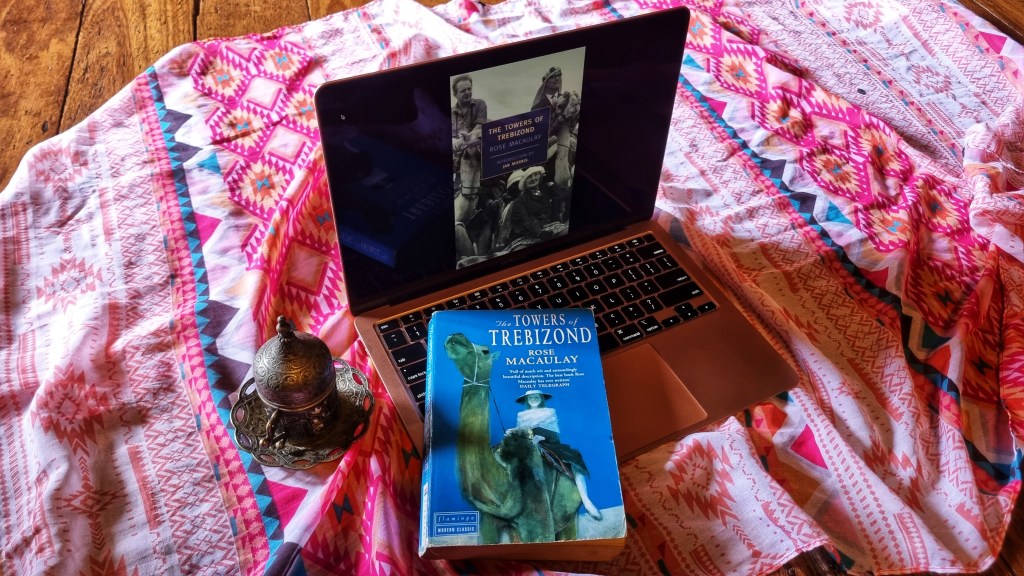
“I felt as if I had come not home, not at all home, but to a place which had some strange meaning, which I must try to dig up. I felt this about the whole Black Sea, but most at Trebizond.“
Feeling like I was not ready to tackle heavier themes than those in real life, I took this “adventure” novel out for a spin. It took me a while to warm up to it because it also took me a while to realize that this is not exactly a regular travelogue.
I see it as something else disguising as an adventure book. For beyond the mirage of exciting escapades in Turkey and the Middle East, it is a humorous critique on religion — different kinds. That being said, it is not a travelogue for the easily-offended. After all, Laurie is an agnostic narrator who admits to having a difficult relationship with religion, but sometimes has an outsider’s advantage of seeing through the hypocrisies and bigotries of the seemingly religious.
As our adventuress and her unlikely companions go deeper into the direction of historic Trebizond (Trabzon in modern Turkey) on camel-back, the ruminations on morality also deepen.
“I do not remember when I was in Cambridge we talked about such things… though we talked about everything else, such as religion, love, people, psycho-analysis, books, art, places, cooking, cars, food, sex, and all that. And still we talk about all these other things, but not about being good or bad.”
The ending confirms my hunch that while there is a literal Trebizond of which she writes, there is also another figurative Trebizond to which she refers. In a way, I am glad that this book did not turn out as I expected, and that it turned out to be so much more.
While I debate whether to order the NYRB edition solely for the Jan Morris introduction, I leave you with this poignant and relevant passage about Jerusalem:
“But what one feels in Jerusalem, where it all began, is the awful sadness and frustration and tragedy, and the great hope and triumph that sprang from it and still spring, in spite of everything we can do to spoil them with our cruelty and mean stupidity, and all the dark unchristened deeds of christened men. Jerusalem is a cruel, haunted city, like all ancient cities; it stands out because it crucified Christ; and because it was Christ we remember it with horror, but it also crucified thousands of other people, and wherever Rome (or indeed anyone else) ruled, these ghastly deaths and torturings were enjoyed by all, that is, by all except the victims and those who loved them, and it is these, the crucifixions and the flayings and the burnings and the tearing to pieces and the floggings and the blindings and the throwing to the wild beasts, all the horrors of great pain that people thought out and enjoyed, which make history a dark pit full of serpents and terror, and out of this pit we were all dug, our roots are deep in it, and still it goes on… And out of this ghastliness of cruelty and pain in Jerusalem that we call Good Friday there sprang this Church that we have, and it inherited all that cruelty, which went on fighting against the love and goodness which it had inherited too, and they are still fighting, but sometimes it is a losing battle for love and goodness…”
Underneath the rumblings of revolution and the sparkling notes spilling over like champagne, Chopin’s music reaches for something far away… far away in distance, or in memory. The bulk of the work written in Paris, and yet they speak of other landscapes, of nostalgia for an irretrievable time and place, of exile, of home or the lack of it.
So were and so do Mavis Gallant’s Paris Stories. Had Gallant’s heart been brought home in a jar of cognac whilst the body remained in Paris, perhaps it would also have been found to be larger than the average human heart.
But how those hearts, Chopin’s and hers, continue to beat through the music, through the stories!
“Like every other form of art, literature is no more and nothing less than a matter of life and death.” — Mavis Gallant
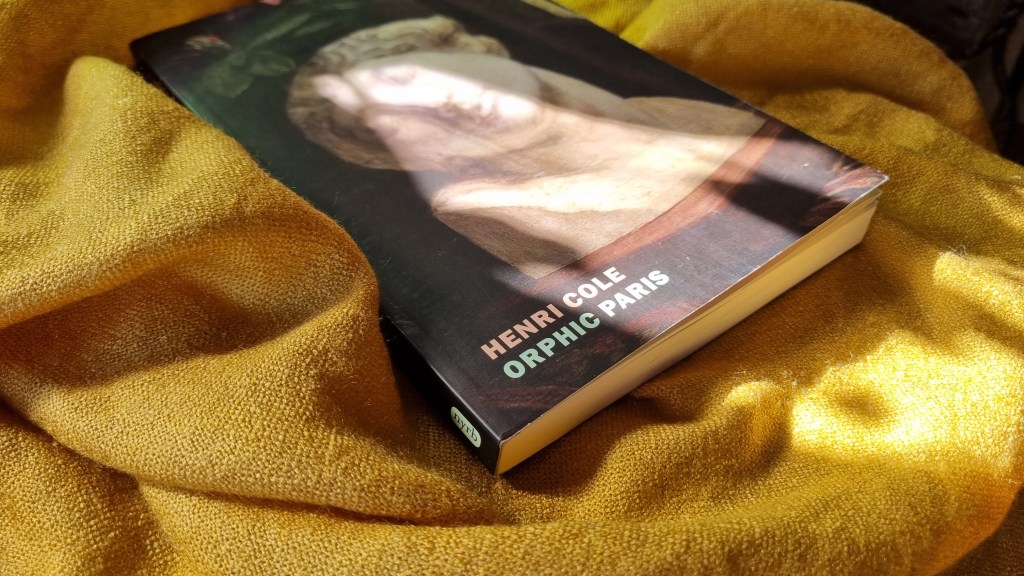
Portraits: Of a young Rebecca Solnit finding, and fending for, herself; of the nature of dictatorships and revolutions by Ryszard Kapuściński; of Eastern Turkey under the veil of its dramatic landscapes by Zülfü Livaneli; of Paris and the poet through the vantage point of Henri Cole; of the unfortunate visage of Skylark by Dezső Kosztoláni. These are some of the extraordinary faces I met on this month of May.
It is not nearly celebrated enough, says Solnit: “The sheer pleasure of meeting new voices and ideas and possibilities, having the world become more coherent in some subtle or enormous way, extending or filling in your map of the universe…this beauty in finding pattern and meaning,” this thing called Reading.
Even so, here we are. The readers (ironically, the ones least concerned about faces), the ones who, by turning each page, celebrate best these encounters, these awakenings, these flights.
“At least I had books. Closed, a book is a rectangle, thin as a letter or thick and solid like a box or a brick. Open, it is two arcs of paper that, seen from the top or bottom when the book is wide open, look like the wide V of birds in flight.” — Rebecca Solnit, Recollections of My Nonexistence“I’ve always believed that poetry exists in part to reveal the soul’s capacity for compassion, sacrifice, and endurance. For some of us, this satisfies a basic human need, like air or water, but a poem must also have music, imagery, and form. Because there is a kind of nakedness or authenticity in poetry that is associated with truth, on many days I haven’t got the guts for it, and I fail. But when I succeed, there is nothing in life — except love — that equally verifies my existence.” — Henri Cole, Orphic Paris
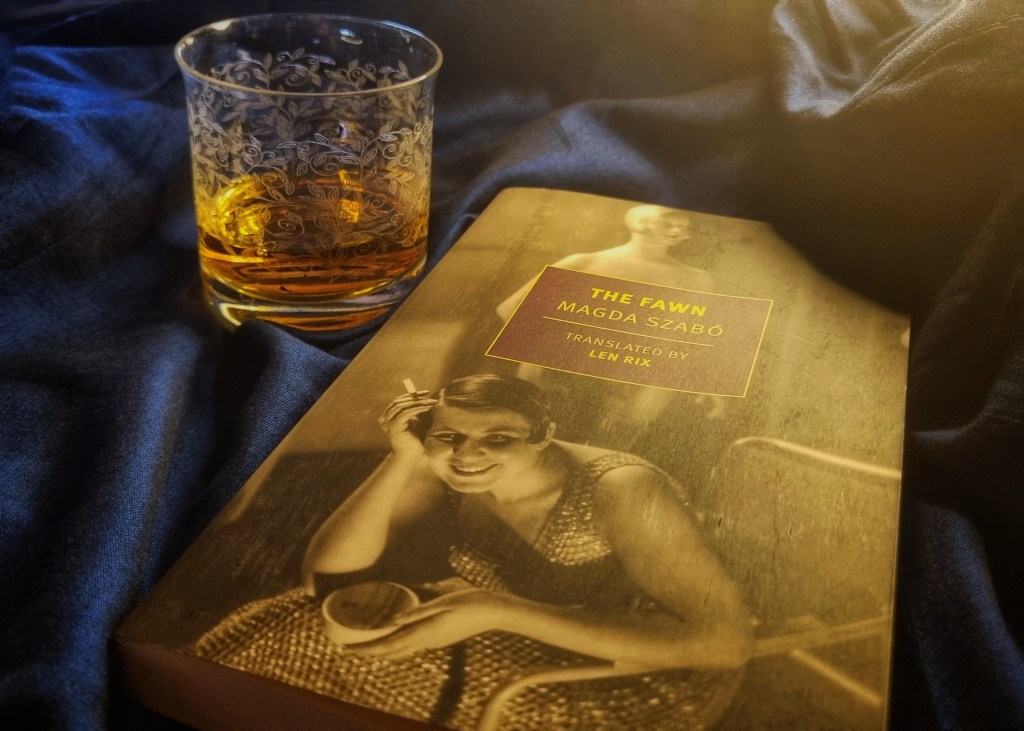
“I wanted to be with you sooner…” This first line, a faint melody, I imagine played by a solitary piano. This unwavering, melancholic undertone, suggesting that Eszter Encsy is addressing someone who is no longer in her life.
There is a calm, almost cold, but delicate aching to be accepted and understood. Recollections of childhood come across as confessions and explanations… including that time she did not mean to kill the fawn.
But how did that seemingly dispensable incident earn the title of the book? Perhaps the fawn is meant to symbolize the fragility of youth, and how easily it can be broken.
Magda Szabó, who died with a book in her hand, has bequeathed to the world novels that aim straight for the soul. She wrote of women; women who do not have to be faultless. She did not demand heroics from them or for them to be worthy of admiration or to be idealized. She only asked that they live — live intensely, and learn.
And yet, I did not expect her to go to the extent of Eszter. The moral puzzles are not vague here, it is made quite clear what kind of person we have as a central figure right from the beginning: “I could never have undertaken to be a good girl and never to tell lies…” “I lie so easily I could have made a career out of it…” “I was also laughing at the monster I really am…” “I wasn’t a very nice person and I wasn’t very friendly…”
We immediately get the picture. Appalled, we double-check the synopsis, even though Szabó readers know that her synopses hardly describe what one encounters between the pages. But we read on. Because Szabó is brilliant. Because we suspect that a gut punch or two awaits round the bend. Because oftentimes, nothing is what it initially seems. Because she writes of those difficult spaces between people that most of us are too inattentive, too timid, or too unimaginative to explore. Because we know that behind all her stories is a carefully woven leitmotif of a history she mourns. Because Szabó is always subtly reminding us of consequences, of how we cannot extricate our personal histories from that of our nation. Because she is eternally thought-provoking, and therefore, rewarding.
…and because those elegiac strains from that lonesome piano will linger long after you’ve turned the last page.
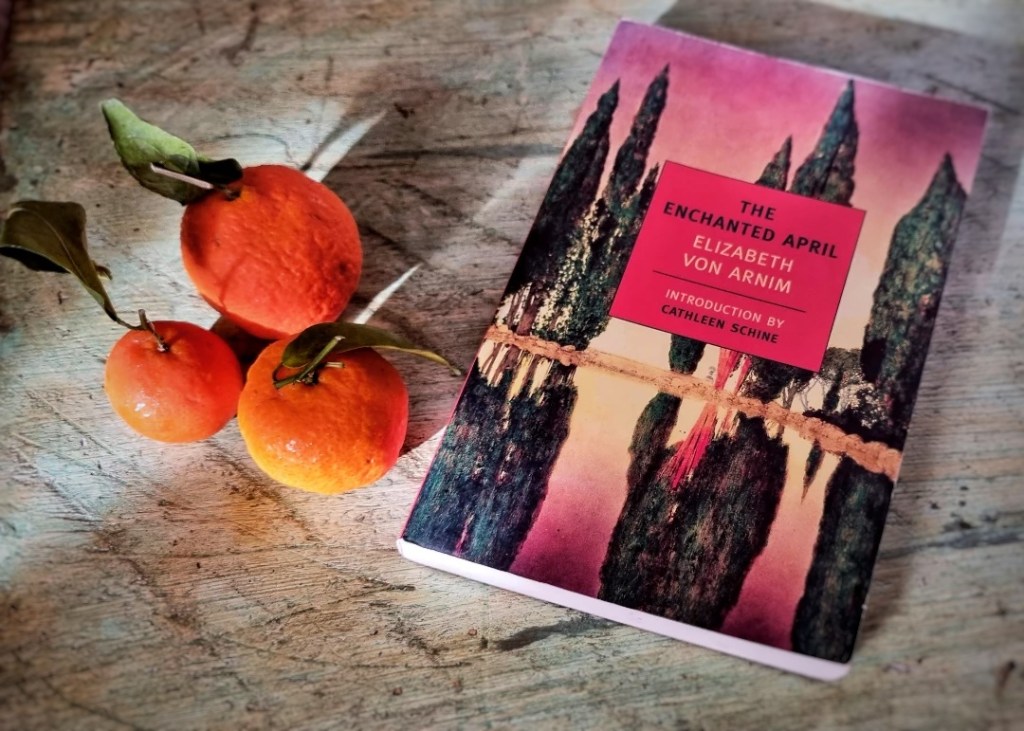
Reading this at a time when happiness eludes me and only a Turkish word can describe the sadness I feel, a time when the world is in disarray and the cynic in me is more pronounced than I want it to be, it is easier to argue that true beauty, real freedom from the male world’s sway, and lasting transformation surely take more than suggested by this book — but I am also a believer in the wisdom of surrendering to the restorative power of spending a month in a villa in Italy, flowers, rest, and the sea. Oh, I’d take these any day!
It is a truth universally acknowledged that one should not carp about novels like this. You simply open your heart to it, cease overthinking, and allow it to happen — the way you’re supposed to with sunshine, a little frivolity once in a while, and happiness.
So if this book were set to poetry, it would be this poem by Lydia McGrew:
When joy alights like a bird on a fence post arrested in fragile flight, do not frighten her away.
When she comes in the clutch of the heart at the scent of the evening air instinct with life and memory, in the grey-blue of the sky at twilight, in the sweep of the pine tree to the sky,
Do not say, There are depths to be plumbed, There are knots to be worried at. I have no time for this.
Nor listen to the more insidious voice that lectures, Death and disease roam the streets. Pitiless murder with bloody sword unsheathed stalks all the ways of the world, and beauty and innocence fall before him. What right have I to be happy?
Rather stand still, And say,
It is a gift.
And with that, I wish us all an enchanted April, and the wisdom and grace to submit to happiness when it beckons. 🤍
“To me, it has always seemed that each individual has such a moment. It is a fixed point in eternity, varying with each person, which they reach, sooner or later, in their trajectory through time. It is this moment which most perfectly expresses them, and to which essentially they belong, in which they live most fully. Both before and after, some awareness of this lies within them, so that in varying degrees of consciousness, they are seeking that moment in order to be fulfilled, or to find again in that fulfillment and setting, the persons who shared it with them.”
“A lifetime or a moment is all the same; a whole cycle lived richly, or thinly, one day. Each can prove to have been the meaning of a life. We cannot know, from where we stand. But if we seek, and are aware we have missed the moment we seek, our own absolute moment in time, then we live out our lives unfulfilled. In the words of an eastern proverb: we die with our eyes open — we cannot rest; even in death we are still looking for it.”
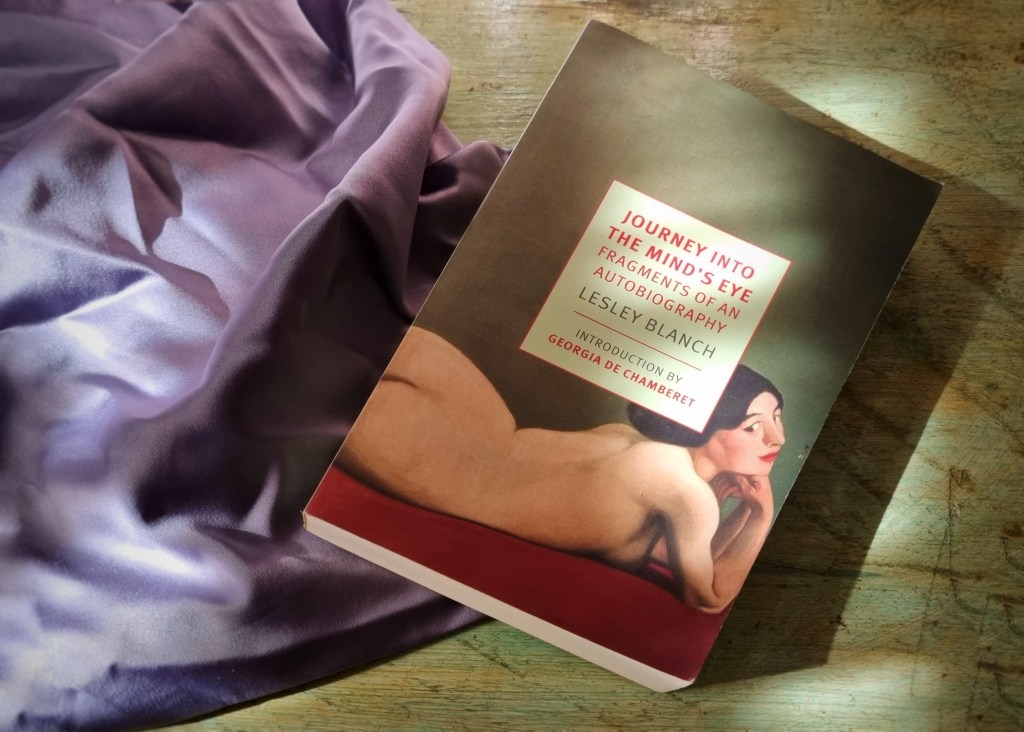
Never mind that her longings for a lost love and mine mingled as I luxuriated in the pages of this book. Never mind that some details will raise the eyebrows of conventional social constructs. (“Overweening conventions! They have us in a stranglehold from the cradle to the coffin,” writes Lesley Blanch.) Never mind the question of whether the Traveler corrupted her life or enhanced it; I have two opinions as contrasting as East and West. What is certain is that this woman ended up living by her own rules and did not lead a lackluster life.
But to have bookshelves spilling over because of a geographic fascination and to have the books arranged by region; to have literary tastes swayed topographically; to explore entire worlds by turning pages; to spend hours on long bus rides poring over books; to have “everything I saw, or read, ate, or thought tinctured by my infatuation”; to travel and be particular about the precise lighting in which to see certain places because they look more beautiful in morning, noon, or afternoon light; to find areas of conflict irresistible and be chided for having “such violent desires”; to journey into the mind’s eye or into the heart of another; to see traveling as an act of “following a strain of fugitive music” — I’ve never felt this aspect of myself more probed and understood, that I wish I came across this book much sooner.
There are allusions to be unveiled in the captivating writing, and there are lessons to be gleaned from the interaction between cultures, but the line I’ll take to heart is, “Don’t be so finite,” said the Traveler.
Lesley Blanch lived to be a hundred and three, unapologetically, and infinitely.
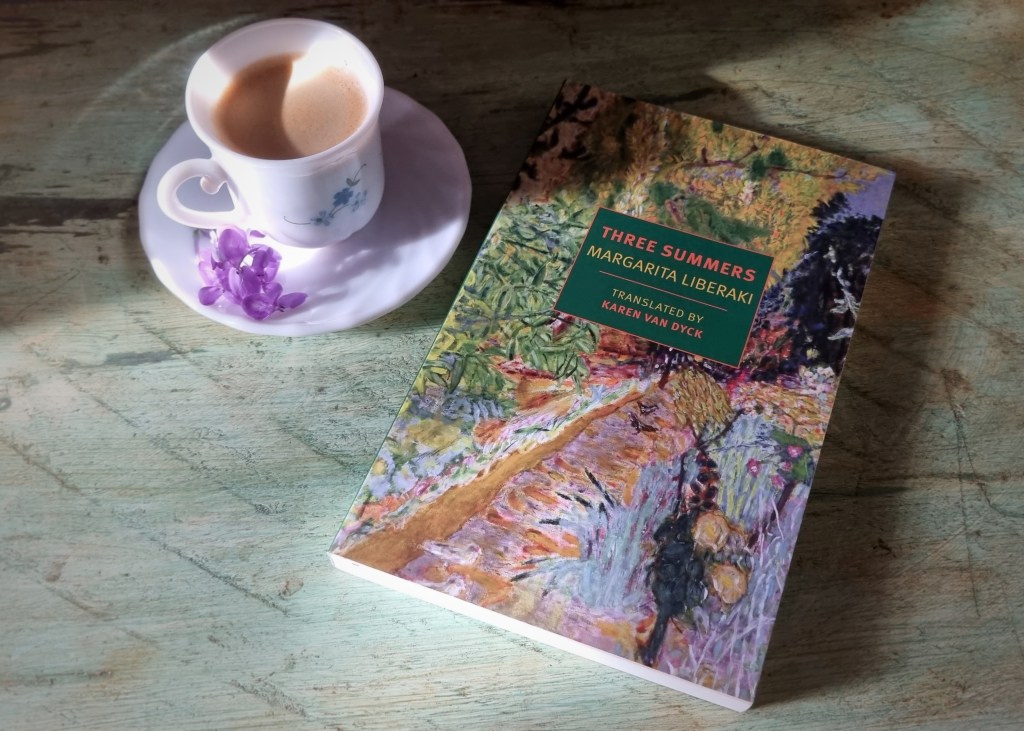
Fleeting patches of sunlight that decorate pieces of furniture linger on book pages furtively as I read, or momentarily set the crema of my espresso aglow, are lovely indications that summer is gently slipping into the Philippine islands after a sunless wet season.
But why do I even dare write this in the face of a Liberaki who is an authority on sunshine? This Liberaki who does not merely write about it but makes it so tangible that one’s heart becomes dappled with sunlight, too?
There is a little bit of the Little Women in Liberaki’s three sisters in that it portrays in each sister how Woman can make different choices, pursue different interests, hold different priorities, think differently and still remain Woman; portrays how Woman can mean, or can be, “A great many things,” in the words of Alcott’s Jo March. Or as Liberaki’s Katerina replies, “Not just two, but thousands, Maria, or one which could be a thousand,” when Maria remarks on how Katerina seems to want to live two lives.
But Liberaki, daughter of Dionysus that she is, has a certain sensuality that Alcott did not make space for in her conservative depiction, although we love her just the same. This Liberaki sensuality is an elegant one, however, and treats female sexuality as part of life.
What made me pick this up for Women’s History Month was the curious case of an author who insisted on transliterating her name as Liberaki, rather than the more accurate Lymberaki, so that it would correspond to liberation. It is rare to come across an author’s name that already alludes to an untethered mind and sets the tone for a book. But how wonderful to discover that the same author has a command of artistic laws and lavishes attention to detail while creating an exquisite balance of light and shadow!
This sensitivity to art was what enthralled me! For what is sensitivity to art but a reinforced sensitivity to life?
“The sun has disappeared from books these days. That’s why they hinder our attempts to live, instead of helping us. But the secret is still kept in your country, passed on from one initiate to another. You are one of those who pass it on.” — Albert Camus to Margarita Liberaki
Three Summers was originally published in France through his recommendation.




 The Book-Butterfly