Hanne Orstavik: Ti Amo

And I’ve written fourteen novels, and if there’s one thing my writing has to be, for me, it has to be truthful. What I write has to be truthful. I’ve wanted that to apply to my whole life too, in my relationships with other people, my relationship with myself.

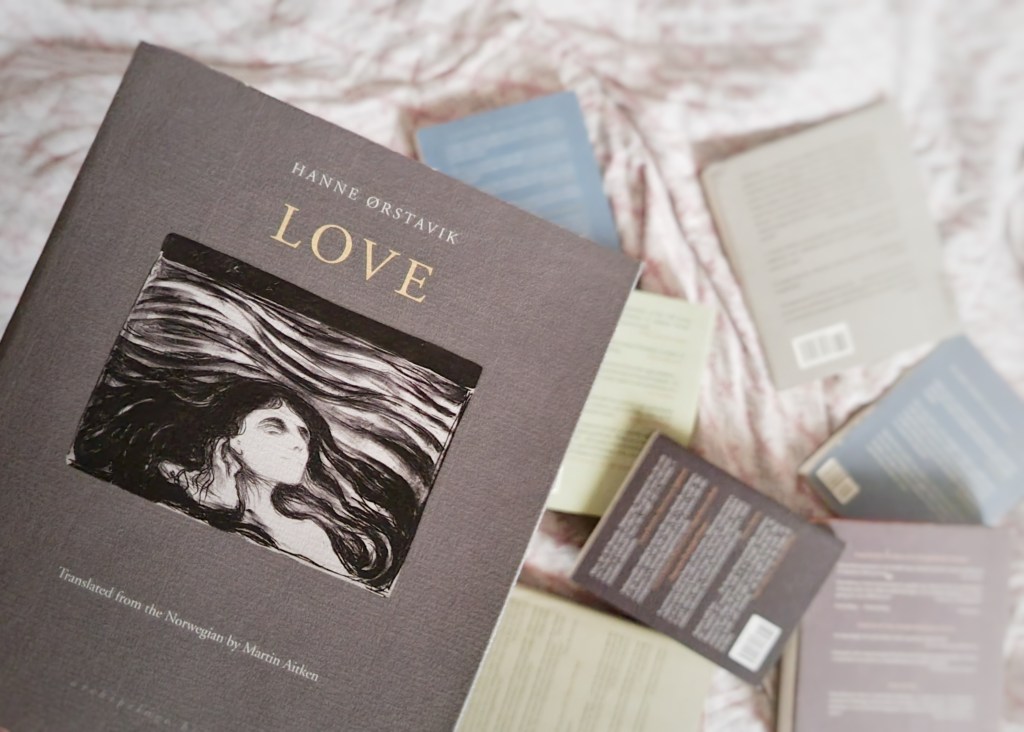
My first experience with Hanne Ørstavik’s writing was in 2022 with her novel, Love, wherein she seemed to have invented a literary equivalent of the Shepard tone — that auditory illusion used in film soundtracks to create a palpable suspense and disquiet. With a narrative that demanded complete attention, it revealed a writer in full command of form and style.

Expecting another work of sparse and exacting Nordic prose, I was surprised to be met with vulnerability and painful honesty in Ti Amo. It cannot be more different than Love. Expertly calculated tension dominated Love, Ti Amo announces death candidly right from the beginning and nothing is veiled. 

Love was fiction, Ti Amo is not, and I cannot somehow bring myself to judge a work by someone writing through her husband’s terminal illness. It is a book about life, death, and writing, and nothing describes this book better than the author’s own description of the marble pillars in Ravenna’s Basilica di San Vitale.

“In the San Vitale — the way the great marble blocks of the pillars possess a quieter beauty than the glittering mosaics. The mottled markings in the marble are just there, silent and displayed, defenseless, and what was hidden within the stone, the veins, the figures they trace, is exposed now for all time, laid bare, halted in once so sweeping, now dissected movements through the stone. And what we see is the cross section, the wound, and the beauty of what simply exists, neither devised nor constructed, merely disclosed.”

I thought wrong when I surmised it was written as closure. (As if grief had closure!) Of the wound and the beauty of what exists, it is simply, and not too simply, a disclosure.

Jon Fosse: Trilogy

The fate of the fiddler is fatal… always giving yourself to others… always trying to make others whole

…and if he was asked where it (music) came from, he answered that it probably came from grief, grieving over something, or just grief, and in the music grief could lighten and become soaring and the soaring could become happiness and joy, so therefore music was needed, therefore he had to play… 


It was the violin on the cover that decided my first Jon Fosse. I wouldn’t have known where to start, and I have been eager to start ever since he received the Nobel for prose which “gives voice to the unsayable”.

And so it was the violin, or rather the fiddle. And because of the fiddle, I sit here a day after reading the last line. A day, because for an entire day I could not write anything about it. I could only feel and think of it and nurse this prolonged pinch in my heart. And maybe that’s how it’s supposed to be, and I should drop my attempt to say something clever about it. 

Because I sit here and feel drenched by the weight of simplicity. Because in his words there is a childlike simplicity that humbles what we think we know about expressing life and about storytelling. Because Jon Fosse is a poet, and his poetry and prose bleed into each other, leaving no borders between them.

Tarjei Vesaas: The Hills Reply

“Because when I read, I don’t really read; I pop a beautiful sentence into my mouth and suck it like a fruit drop, or sip it like a liquer until the thought dissolves in me like alcohol, infusing brain and heart and coursing on through the veins to the root of each blood vessel.” This is how Bohumil Hrabal’s Haňta reads — or how he doesn’t really read.

This is how I read, or how I did not really read, The Hills Reply by Tarjei Vesaas. I do not think there is any other way to read, or to not really read, this book.

What is this book? I can say, “A collection of sixteen short pieces of literature.” Or I can also say, “A lyrical poem, two hundred and seventy five pages long.”

But I’d rather say: A Lispector attuned to nature. An impressionistic artwork so keenly aware of the elements, of the light in different times of the day, and of its sounds and its silences. A swan song of sheer beauty that leaves you quiet and asks your heart, for the time being, to dwell inside its pages… a heart so full, so open, it breaks.

Hanne Ørstavik: Love

This. Is. Art.

This is art that will haunt you for a while.

It brings to mind the Shepard Tone, an auditory illusion used in film soundtracks to create a palpable disquiet. It occurs when layers of the same scale sequence are played at the same time; the highest layer decrescendos, the middle pitch maintains a consistent volume, and the bottom frequency increases in loudness. Played simultaneously, it manipulates the brain into believing that it is hearing an infinitely ascending tension.

In what appears to be the most original writing style I have encountered in a while, Hanne Ørstavik seems to have invented a literary equivalent of the Shepard Tone, camouflaged in a narrative that demands complete attention.

A village in northern Norway. A mother and son. The frost and the night are tangible.

And love?

Love is left out in the cold.

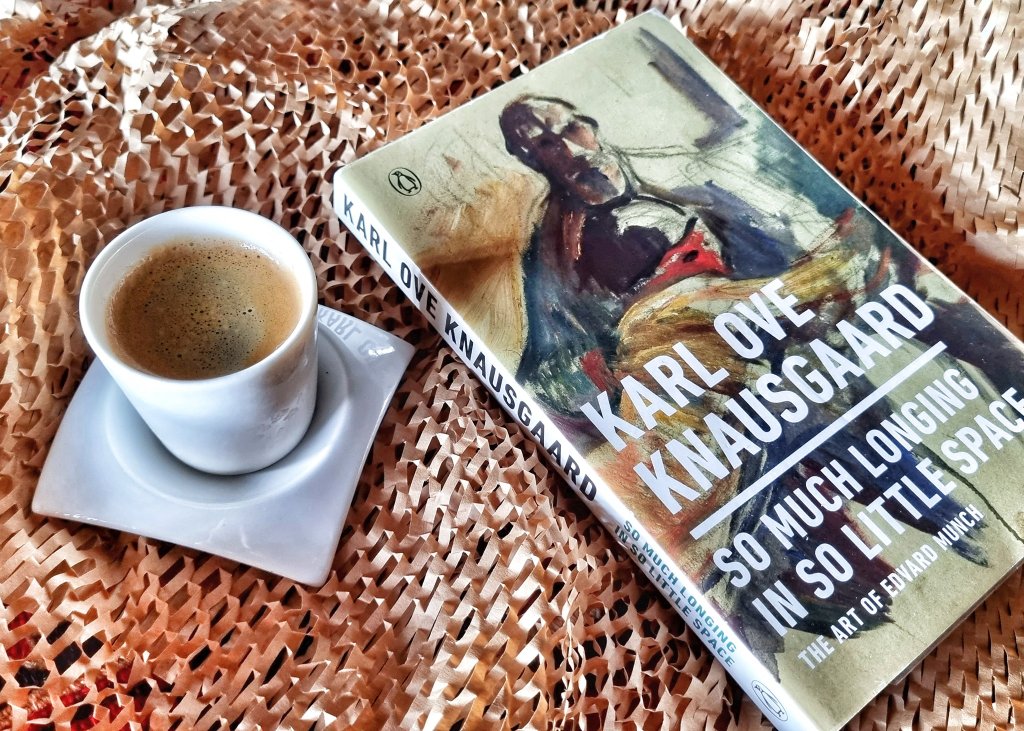
Karl Ove Knausgaard: So Much Longing in So Little Space

November 26, 2021

Edvard Munch beyond and behind 𝘛𝘩𝘦 𝘚𝘤𝘳𝘦𝘢𝘮, written by Karl Ove Knausgaard beyond and behind the bestselling memoirs.

It reads like a personal meditation on the driving force for art, literature, music, the impact of emotional and psychological experiences on the artistic process. In essence, it is enlightening art investigation, history, and criticism… but after all of these, splendidly rendered inconsequential by Knausgaard who ultimately acknowledges that real art transcends words.

“𝘈𝘯 𝘢𝘤𝘵 𝘰𝘧 𝘢𝘳𝘵 𝘪𝘴 𝘱𝘳𝘦𝘤𝘪𝘴𝘦𝘭𝘺 𝘴𝘦𝘦𝘬𝘪𝘯𝘨 𝘴𝘰𝘮𝘦𝘵𝘩𝘪𝘯𝘨 𝘵𝘩𝘢𝘵 𝘤𝘢𝘯’𝘵 𝘣𝘦 𝘴𝘢𝘪𝘥 𝘰𝘳 𝘥𝘰𝘯𝘦 𝘪𝘯 𝘢𝘯𝘺 𝘰𝘵𝘩𝘦𝘳 𝘸𝘢𝘺… 𝘐𝘵’𝘴 𝘢 𝘸𝘢𝘺 𝘰𝘧 𝘴𝘦𝘦𝘪𝘯𝘨 𝘵𝘩𝘪𝘯𝘨𝘴, 𝘢 𝘸𝘢𝘺 𝘰𝘧 𝘣𝘦𝘪𝘯𝘨…”