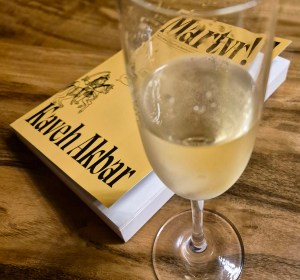
First of all, how could I resist a novel whose author’s first name means “regal” in Iran and “coffee” in Turkey?
At least that’s the reason why I was sure I would get this book sooner or later. I think the author would be pleased. He probably would prefer that, than if I said I grabbed a copy because I wanted to read about death, life, and art.
That’s what the exclamation point in the title is for, he said. Humor. Silliness.
Sure enough, the feisty language that greeted me felt like I was reading a youthful Rushdie. Serendipitous, because I’m simultaneously reading a book of essays by Rushdie. Ironic, as Kaveh was born in the country whose ayatollah issued a fatwa calling for Salman’s assassination. I’d like to think that both would be entertained by the coincidence.
The parallels are there. The prose, self-evident of the delight they’ve had in writing it. The reimagining of old stories and reinventing of storytelling itself. The inevitable polyphony of language and overtones about identity that come with being migrant writers. The flawed central characters and mischievous profanities that make their novels not everyone’s cup of chai, or kaveh. (Conservative readers would not find this amusing.)
But the twist gutted me. Perhaps I was wrapped up in the silliness too much and enjoying the passages about art that I didn’t see it coming. Surprisingly, it is also heartwarming. Maybe that’s the real twist.
“And yet when you begin to delve into the story it seems almost inexhaustibly rich, for at its heart is a great triangular tension between the grandest matters of life: love, art, and death. You can turn and turn the story and the triangle tells you different things. It tells you that art, inspired by love, can have a greater power than death. It tells you, contrariwise, that death, in spite of art, can defeat the power of love. And it tells you that art alone can make possible the transaction between love and death that is at the center of all human life.” That’s a passage by Rushdie, from the essay “Wonder Tale,” and that is my review of Martyr! That’s what great writers do. They write things for you.
“…Your project reminds me of all the great Persian mirror art… Some centuries ago all these Safavid explorers from Isfahan go to Europe—France, Italy, Belgium—and they see all these gargantuan mirrors all over. Ornate, massive mirrors everywhere in palaces, in the great halls. Building-sized mirrors. They come back and they tell the Shah about them and of course he wants a bunch for himself. So he tells his explorers, his diplomats, to go back to Europe and bring him mirrors, giant mirrors, buy them for any price. And so they do, but of course as they bring these massive mirrors back across the world, they shatter, they fracture into a billion little mirror pieces. Instead of great panes of mirrors, the shah’s architects in Isfahan had all this massively expensive broken mirror glass to work with. And so they begin making these incredible mosaics, shrines, prayer niches… I think about this a lot, Cyrus. These centuries of Persians trying to copy the European vanity, really their self-reflection. How it arrived to us in shards. How we had to look at ourselves in these broken fragments, and how these mirror tiles found themselves in all these mosques, the tilework, these ornate mosaics. How those spaces made the fractured glimpses of ourselves near sacred… it means, in my humble opinion, we got to cubism hundreds of years before Braque or Picasso or any European. That maybe we’ve been training for a long time in sitting in the complicated multiplicities of ourselves, of our natures.” — Kaveh Akbar, Martyr!
Currently reading Kaveh Akbar’s Martyr! and this passage reminded me of the 16th century Sheesh Mahal (“Mirror Palace”) in Rajasthan, and the photos I still have not uploaded from the India trip.
I have not read historical evidence, but I was told Sheesh Mahal’s mirrors were transported from Belgium by Elephants.
…because I would immediately pick up a novel of/from Iran without any prodding.
It took me almost halfway through to get into the book’s rhythm, however: Apart from being surprised that it is not set in contemporary Iran but pre-revolutionary Iran (and horrified to think that things have only gotten worse for women in post-revolution Iran), one main character irked me, and I kept weighing it up against another Iranian work of magic realism that remains unsurpassed in my books. But as I read on and the threads of the story came together, I came to appreciate Women Without Men for its own merits. It is, after all, about women overcoming hardships and breaking free from the conventions that Iranian society imposes on them. It is therefore no surprise that it was banned shortly after its publication.
The lives of Iranian women and the experiences depicted here are not isolated cases, and they bring to mind a line from Universal Compassion, an essay by Natalia Ginzburg: “We have come to recognize that no event, public or private, can be considered or judged in isolation, for the more deeply we probe the more we find infinitely ramifying events that preceded it…” Thence the problems that the characters face are not merely personal. In an ideal world, these are issues that an entire civilization must address.
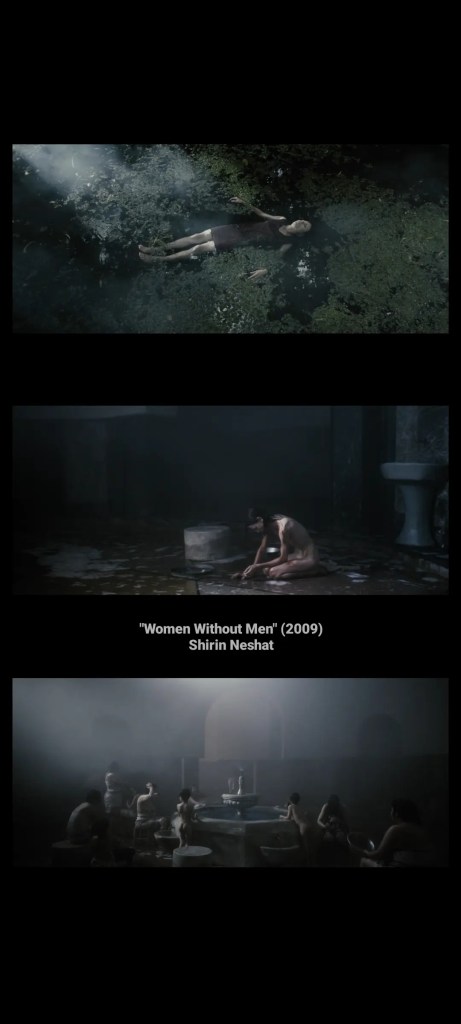
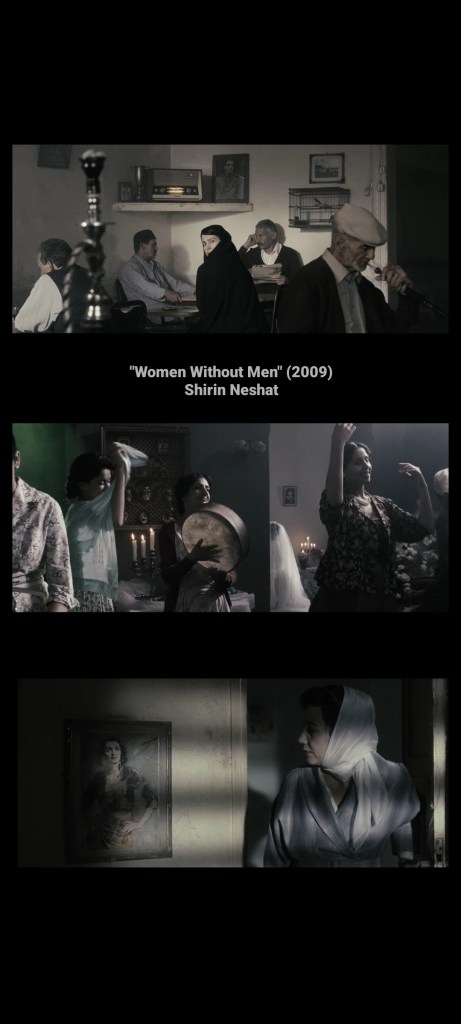
The book naturally ushered me to the screen adaptation. The director, who wrote the preface for this edition, worked closely with the author and the collaboration seems to have led to a beautiful fleshing out of ideas. Being a fan of Iranian cinema — because no one does cinema like the Iranians! — I am tempted to say that I like the film more than the book. But for an exceptional experience, allow me to suggest a book-movie-pairing instead; because what was ambiguous and abstract in the novel became poetry in the film; and if not for the book, there would be no film.
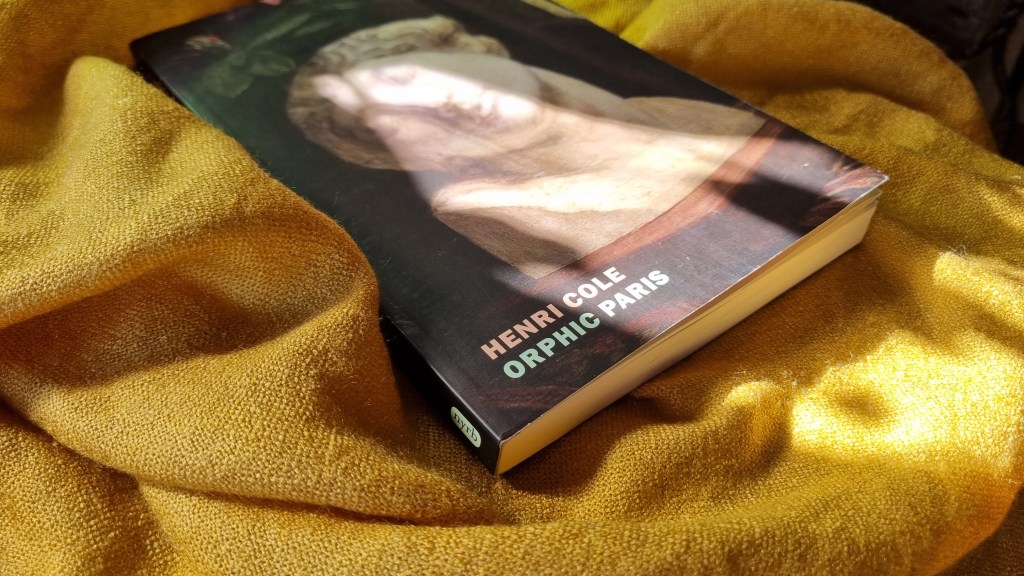
Portraits: Of a young Rebecca Solnit finding, and fending for, herself; of the nature of dictatorships and revolutions by Ryszard Kapuściński; of Eastern Turkey under the veil of its dramatic landscapes by Zülfü Livaneli; of Paris and the poet through the vantage point of Henri Cole; of the unfortunate visage of Skylark by Dezső Kosztoláni. These are some of the extraordinary faces I met on this month of May.
It is not nearly celebrated enough, says Solnit: “The sheer pleasure of meeting new voices and ideas and possibilities, having the world become more coherent in some subtle or enormous way, extending or filling in your map of the universe…this beauty in finding pattern and meaning,” this thing called Reading.
Even so, here we are. The readers (ironically, the ones least concerned about faces), the ones who, by turning each page, celebrate best these encounters, these awakenings, these flights.
“At least I had books. Closed, a book is a rectangle, thin as a letter or thick and solid like a box or a brick. Open, it is two arcs of paper that, seen from the top or bottom when the book is wide open, look like the wide V of birds in flight.” — Rebecca Solnit, Recollections of My Nonexistence“I’ve always believed that poetry exists in part to reveal the soul’s capacity for compassion, sacrifice, and endurance. For some of us, this satisfies a basic human need, like air or water, but a poem must also have music, imagery, and form. Because there is a kind of nakedness or authenticity in poetry that is associated with truth, on many days I haven’t got the guts for it, and I fail. But when I succeed, there is nothing in life — except love — that equally verifies my existence.” — Henri Cole, Orphic Paris
“As a journalist, I say: Long live the magic. Kapuściński is an advocate for all who have chafed in a straitjacket called the house style, seen their lyrical phrases slashed for space, cursed the whole pedantic army of editors and fact checkers… he is a journalist’s writer, an example of what so many of us would love to be — if only we had the nerve.” — Christopher de Bellaigue
When one has had their fill of different accounts of the 1979 Islamic Revolution, fiction and nonfiction, Iranian and foreign; when an ample idea of its unfolding and its chronology has finally taken root; when details and events have been repeated enough and begin to sound redundant unless they are written with an exceptional voice and perspective; it is time to read Shah of Shahs by Ryszard Kapuściński — my personal cherry on the top of an Iranian Revolution literary stack.
It is not the book to read if one prefers a sequential list of events, a full cast of characters, an emotionally-charged dramatization, or a detailed portrayal of the Shah. This is not a portrait of the last Shah of Iran, neither is it a consummate portrait of a nation. From the collected clutter on Kapuściński’s hotel room desk in Tehran emerges a portrait of the nature of dictatorships and revolutions.
I can only wish he elaborated on that extravagant celebration that the Iranian despot held in Persepolis in 1971, which contributed to the flames of revolution, and in which the first guest to arrive at the event was Imelda Marcos. I would have loved for Kapuściński to have written a book about the Marcos family and our own EDSA Revolution!
For a Filipina reader and albeit dormant journalist, the writing method is illuminating and the subject hits close to home. There are too many passages that feel as if he were describing my own nation’s recent history. But then again, “The rather small arsenal of political tricks has not changed in millennia,” observed Kapuściński, who reported on twenty-seven revolutions during his illustrious career as a journalist.
Within a corrupt government, “Whoever tried to be honest looked like a paid stoolie.” “The higher up, the fuller the pockets,” and in that world, “development” has an entirely different meaning. “Any dictatorship appeals to the lowest instincts of the governed,” “A despot believes that man is an abject creature. Abject people fill his court and populate his environment.”
That a fed and entertained populace does not always signify a free society is a truth that burns: “A terrorized society will behave like an unthinking, submissive mob for a long time. Feeding it is enough to make it obey. Provided with amusements, it’s happy.”
And this is what he says about truth: “It takes a long time for a truth to mature, and in the meantime people suffer or blunder around in ignorance.” I’d like to believe, however, that reading the writings of Kapuściński speeds the process.
At the back of my mind, this question: Is Iran in the cusp of another revolution?
“What did I do with my hands as a free man?” he asks himself.
A bearded guard leads him from his solitary confinement to another cell. He is on a leash, and he knows that he is in the central prison of the Holy Republic. This is all he knows. Severe torture has made him forget everything else, including his name.
With such a dismal opening, one can excuse why I shelved this, the heaviest volume on my Iran book stack, for over a year despite my deep fascination for the region and its extremely underrated writers.
My personal reading prompt for September was to go through an NYRB editions reading spree. But is there a more pressing reading prompt than the ongoing protests in Iran? I realize that we — as readers, and through our reading choices — have the power to call attention to things happening across the world and to rally with those who need a voice.
I instantly felt it was time to meet this unnamed character who is forced to admit guilt to an unknown sin that, along with his name, he cannot recall. Through daily episodes of psychological and physical torture, he slips in and out of consciousness, reality and dreams. Fragments of his childhood and of his life tease his sanity, the key players of society whose ideologies and actions lead to the revolution take shape in his mind, and the story unfolds. He begins to remember Sahar, a twin sister whom he loved deeply; and by and by his desire to die begins to be replaced by the desire to know what happened to her.
‘Sahar is dawn,’ I say, ‘the end of darkness, when the sun comes out. Daylight trapped in night.’
Categorized as a work of magic realism, I find that the magic realism is, at first, subdued, but one which crescendoes into an anarchy. Readers who are not enthusiasts of the genre should not be dissuaded, however, because we eventually recognize that it is merely our tortured character’s memories and hallucinations merging with reality, metaphors, and childhood fantasies.
This is Farnoosh Moshiri’s first novel, but its depth and calibre surpass many works by more established writers. I have not read a more harrowing ending, but I also have not read a more excellent Iranian novel.
Here is an apt literary device condemning oppressive governments that incapacitate people to distinguish nightmare from reality, and condemning regimes that engender systemic mind-conditioning that edge a nation into losing its identity — those tyrannies that ultimately coerce you into forgetting who you are.
What are we doing with our hands as free men and women; what are we doing with freedom? I ask myself.
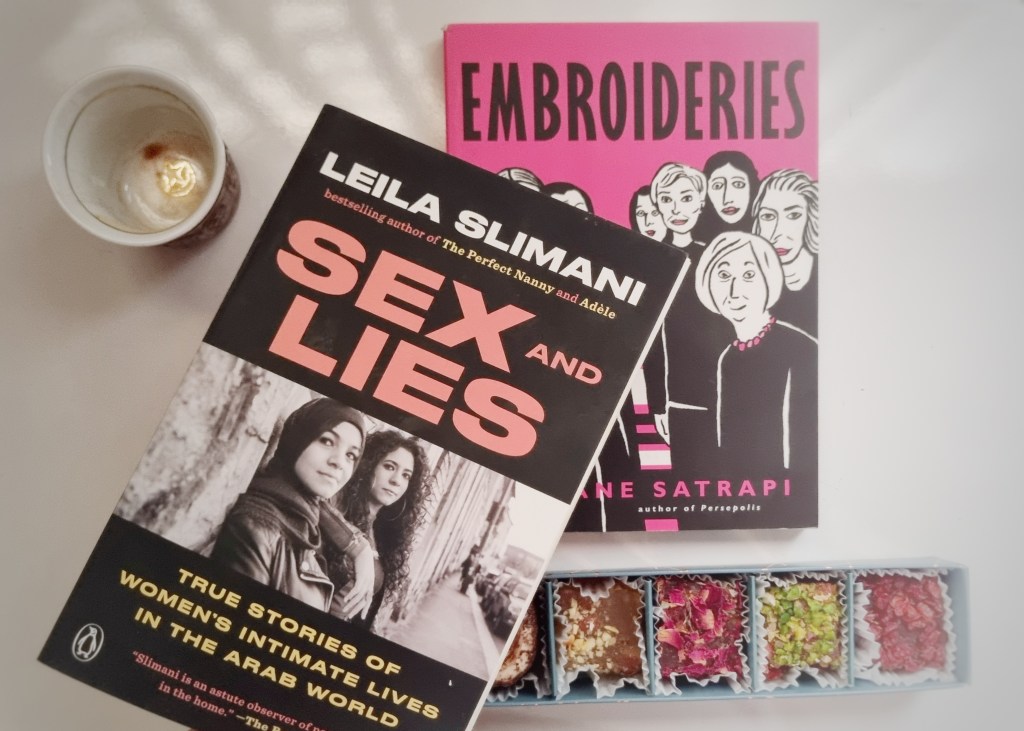
“If women haven’t fully understood the state of inferiority in which they are kept, they will do nothing but perpetuate it.” — Leïla Slimani, Sex and Lies
“I freed a thousand slaves. I could have freed a thousand more if only they knew they were slaves.” — Harriet Tubman
It was the hottest month of 2019 in Morocco, and I was at a station in Chefchaouen waiting for my bus to Fez. Even with my nose buried in a book, I had an odd feeling that someone was watching me.
Sure enough, when I looked up, two large eyes framed by a hijab glinted and stabbed me like the blades of a koummya. I could see she was seething. I had to glance around and check if the anger was meant for someone else, but her sustained glare guaranteed that they were directed at me.
She said something to the man beside her who turned his back towards me while she continued to glower. Admittedly, my first instinct was to glower in return.
Then I remembered where I was; a foreign country whose laws are not known to be very kind to women. Confused, I immediately lowered my head to avoid trouble.
And there it was. The offending sight. The bag’s leather strap strung across my body had unbuttoned my dress shirt and revealed an undershirt and a little bit of chest!
I who had been so careful about dress codes in my travels, I who wore a buttoned-up long-sleeved shirt over an undershirt over a bra despite the temperatures rising up to 46°C during the day, accidentally exposed a little bit too much of my body in one of the worst places to have a wardrobe malfunction.
I felt so embarrassed, horrified, and even guilty.
As soon as the bus arrived, I hurriedly boarded to avoid bumping into the couple. I saw them saying goodbye to each other. A worried look now replaced the anger on her face as her expressive eyes followed the man inside the bus.
Imagine the horror on her face when she saw through the window that the man’s seat number was the empty one right beside mine — her man would be sitting beside this immoral woman for 4 to 5 hours!
I hid behind my scarf for the rest of the trip while next to me, he showered himself with crumbs from the pastries that he ate.
– – –
I had an incredible trip to Morocco, but despite being amply covered, I have never been catcalled more in any of my travels; I was followed by a stranger through the alleys of Fez; and two random acquaintances in Marrakech said they wanted to marry me. But somehow it was that incident with the woman that made me shudder. It accented how difficult it must be to be a woman in such a place.
This memory came back to me while reading Leïla Slimani’s book. Coincidentally, it was exactly on this day when I left for my Moroccan adventure three years ago.
– – –
Feminist voices from Islamic nations have been part of my reading life for quite some time already, and I don’t wish to write another cliché by saying that reading this made me grateful for the liberties I take for granted — even though it still rings true.
Sex and Lies is a broader and more serious version of Marjane Satrapi’s hilarious graphic novel, Embroideries. They both bring to light the double standards of men and their laws, and the many predicaments of what it means to be a woman in such a setting.
Let us take note that this setting is such where love and affection are as taboo as sex; where women are not allowed to feel desire; where religious pressure and social humiliation lead to nearly six hundred abortions carried out in secret every day and hundreds of women die as a result of the appalling medical conditions in Morocco; and while men can sleep around all they want, they require “virginity certificates” from their brides; hymen restoration clinics exist (which is not far from the kind of “embroideries” Satrapi hints at); and it was only in 2014 that article 475 of their penal code was amended, two years after a sixteen-year-old took her life after being forced to marry her rapist. The rapist who married his victim could avoid punishment under article 475.
Each important female writer has their own approach to broaching the subject of women in repressive cultures. Iranian Marjane Satrapi does it with humor while Moroccan Leïla Slimani curiously makes a case for a healthy relationship with traditional, religious, and cultural backgrounds. I am not Muslim but I think it is significant how she did not make this into an assault on Islam. (Although she does mention the soullessness of certain sects.)
“I try to explain that a society in which women had more freedom would not necessarily be contrary to the faith but rather could allow us to protect women better.”
“For the Muslim religion can be understood as primarily an ethics of liberation, of openness to the other, as a personal ethics and not only a Manichaean moral code.”
“Muslims can turn to a long written tradition, led by scholars, that saw no incompatibility between the needs of the body and the demands of the faith.”
While Sex and Lies unveils real and enraging accounts of the unnatural demands their society imposes on their women, it remains hopeful for a Morocco in transition. Another thing that stood out for me was how many of the women who shared their stories recounted that it was reading books that opened their eyes. Leading by example, Slimani highlights the necessity for women to use their most powerful weapons at hand:
“If… Scheherazade appears a magnificent character, this isn’t because she embodies the sensual and seductive oriental woman. On the contrary: it is because she reclaims her right to tell her own tale that she becomes not merely the object but the subject of the story. Women must rediscover ways of imposing their presence in a culture that remains hostage to religious and patriarchal authority. By speaking up, by telling their stories, women employ one of their most potent weapons against widespread hate and hypocrisy: words.”
“The woman is you,” remarked those who saw me with this book.
I can only hope to be half as courageous.
But who is she? “To read is to pray,” she taught. “To write is to trust.” Her words had claws, they said, but at the same time they recognized that her silence were double the weight of her words.
She believed in these: That sometimes, illiteracy was fear; that truth conquered fear; that denial was difficult in the face of truth; that the best told lies can prove short-sighted before the long truths of eternity; and that there was no escape for those who took refuge in their ignorance. And of pride? “Love had nothing to do with it.”
Who was she again? Throughout the story we only know her as the woman who read too much. All the women in the book were not given names. Set during the Qajar Dynasty in the 1800s when literacy among women in Persia was not encouraged, and the details of their lives were largely invisible and unrecorded — as it had been for centuries, and as it had been for most parts of the world; this clever literary trick by Bahiyyih Nakhjavani is most likely a curtsy to Virginia Woolf who wrote, “For most of history, anonymous was a woman.”
“No marker on her grave then? None.” Her death is something readers will know right from the beginning. Her story is written in such a peculiar way that it moves forward while moving backwards simultaneously, proving that the best of these Iranian women writers are masters not only in subtlety but also in form, and one can only try not to blink and miss allusions or be helplessly lost.
“History is filled with screams that are ignored.” The reading woman is executed for what she stands, for opposing unreasonable orthodoxy, “for stating the obvious rather than for deviating from the truth,” condemned for showing other women “how to inscribe their lives on the pages of history… giving them the tools by which to be autonomous.” Her death only fanned the flames of the emancipation of women, especially the emancipation of the mind.
Nakhjavani surprises us in the afterword by revealing that the woman who read too much; who, after all, had a name, was a real woman. Tahirih Qurratu’l-Ayn, the symbolic mother of literacy in Iran.
I glance around my library as I write and wonder at the sudden awareness that, on my shelves organized by geography, the Iran section is the only one where women authors outnumber the men. What better way to honor her!
Here in the midst of “look how far we’ve come” and “miles to go before we sleep,” reading this makes me ponder on the women who came before us; back to Enheduanna (2286-2251 BCE), a woman, the first known author, and to the endless library of history we long to fill… and read.
We’ve always had the rights of the mind at our disposal. We need only take up courage to use them.
“The world changed when definitions of womankind were altered.”
“Freedom is an illusion. The only thing that changes is the size of your prison.”
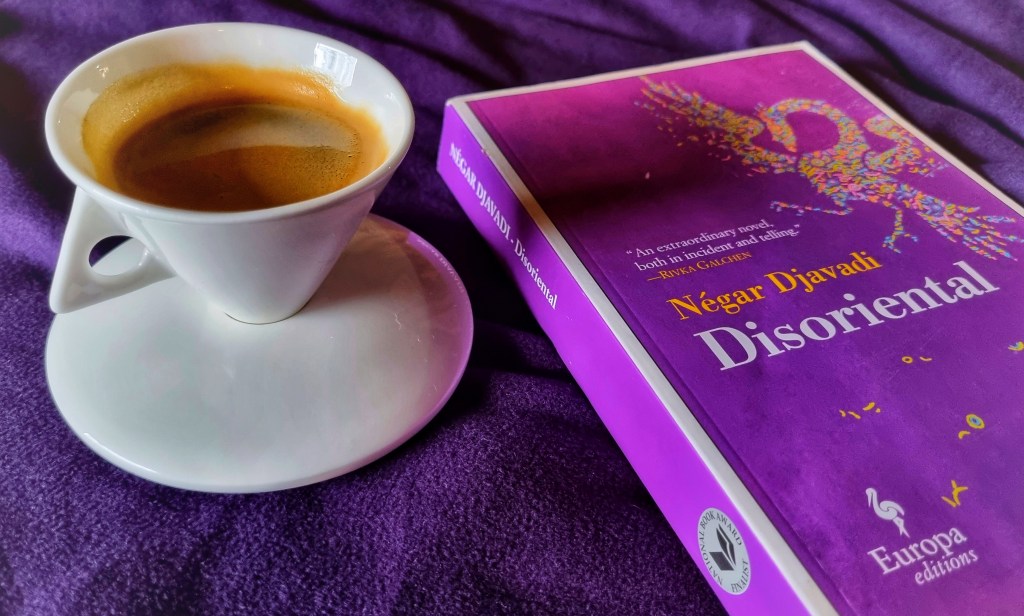
Disoriental. We know what the prefix implies. But the clever wordplay refers to more than something that is non-oriental. It alludes to the disorienting, the experience of being uprooted abruptly from an oriental into an entirely contrasting and unfamiliar culture — the tragedy of exile.
“I can tell you that you have to disintegrate first, at least partially, from your own. You have to separate, detach, disassociate. No one who demands that immigrants make ‘an effort at integration’ would dare look them in the face and ask them to start making the necessary ‘effort at disintegration.’ They’re asking people to stand atop the mountain without climbing it up first.”
Although this novel has the familiar background of a young person having to flee Iran during the Islamic Revolution, this takes a step further. The main character dispenses her own unique commentary on Iran’s political events in fragments, but this delves more into its aftereffects on the internal climate of an exile.
“To be honest, nothing is more like exile than birth. Being torn, out of survival instinct or necessity, with violence and hope, from your first home, your protective cocoon, only to be propelled into an unknown world where you constantly have to deal with curious stares. Every exile knows that path, like the one from the uterine canal, that dark hyphen between the past and future which, once crossed, closes again and condemns you to wander.”
Hers was a personality I could not initially relate to, and so I shelved this a while ago. Returning to it weeks later and reading a little bit more, the dissonant feeling turned to empathy, and by the time I got to the last page, I was crying for this character who had nothing in common with me.
“After so much time and distance, it’s not their world that flows in my veins anymore, or their languages or traditions or beliefs, or even their fears, but their stories.”
And so I’ve learned that stories are written for the sake of the writer and stories are read for the sake of the reader; so the first may pursue connection and the latter empathy.
“The regime had understood that one person leaving her house asking herself: Are my trousers long enough? Is my veil in place? Can my make-up be seen? Are they going to whip me?
No longer asks herself: Where is my freedom of thought? Where is my freedom of speech? My life, is it livable? What’s going on in the political prisons?”
“In every religion, you find the same extremists.”
The title takes after the capital of the Persian Achaemenid Empire, but it is an autobiography presented as a graphic novel written and drawn by the author! The two volumes of Persepolis chronicles the life of Marjane Satrapi growing up in Tehran witnessing the downfall of the Shah and the Islamic Revolution, living through the Iran-Iraq War, her high school years in Vienna, and her university life back in Tehran under the Islamic regime.
Persepolis is a memoir, a historical record, a political statement, but also an extraordinarily creative reading experience. Being a newbie to the genre, I had not realized that graphic novels could be this powerful! It is an honest account of a life and a nation, and I admire how it sends out a strong message of how crucial it is to educate oneself to attain freedom, especially the freedom of the mind.
She expounds these thoughts in a later interview with Emma Watson, “I have lived in a dictatorship. There was a ban on everything! Was I less free in my mind? No, I wasn’t. Did I become a stupid person? No, I didn’t. Because no matter how much they looked at me, they could not get into my mind. That belongs to me. And that is under my control if I decide it is. And I can only decide that if I train it. If you don’t use it, it shrinks, and if you use it, it grows. So it is up to us.”
In Volume I, published in 2000, we see a very young Satrapi wishing to be an educated and liberated woman like Marie Curie; and in Volume II, she promises to make her ancestors proud. Remarkably enough, her 2007 animated movie adaptation of Persepolis premiered at the Cannes Film Festival and won the Jury Award. In 2019 she directed the biopic Radioactive starring Rosamund Pike as Marie Curie. Full circle. Watching both films over the weekend turned out to be yet another excellent toast to Women’s Month!











 The Book-Butterfly