Hisham Matar: A Month in Siena

A Month in Siena, Hisham Matar

“Only love and art can do this: only inside a book or in front of a painting can one truly be let into another’s perspective. It has always struck me as a paradox how in the solitary arts there is something intimately communal.”


Yesterday was heavy. Not only for me but for a lot of people I care for, and for different reasons. It somehow made me yearn for Hisham Matar’s prose, because I don’t think I have read any other writer who speaks straight to my heart about life with such authenticity and accuracy and with such emotional and artistic intelligence. (I read three of his books in 2024, and one of them, My Friends, was the best book I read last year. Until now I cannot find the words to do it justice.)

So, I tried to see if there was an older book of his that escaped my attention. A Month in Siena was the answer. I finished reading it last night and had taken five pages worth of notes by midnight. I’m glad today is a Sunday so that I can reread my notes and fully process the beauty of this understated book that is a meditation and an education in art and life.

“I hope that when there is laughter, it’s laughter made wise by having known real grief — and when there is grief, it is made wise by having known real joy,” Kaveh Akbar writes in Martyr! Whether he is writing about art, architecture, his homeland, or politics, Hisham Matar’s books are often so heartfelt — wholly made wise by having known such things.

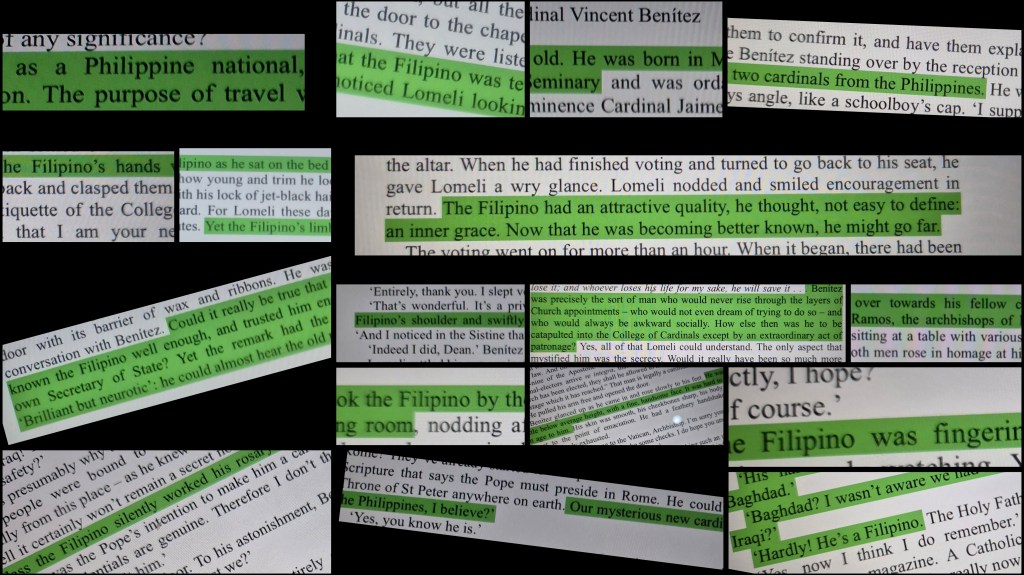
Book and Film Pairing: Conclave

Yes, I am still reeling from that ending that I never saw coming!

…and yes, Cardinal Benitez is undoubtedly Filipino in the novel; and predominantly Roman Catholic Philippines is at a loss as to whether they are relieved or not that the filmmakers made him Mexican. I, for one, would have preferred the Benitez in the film to be Filipino.

But both book and film are powerful and bound to ruffle feathers. I like how the book brings one into the mind of Cardinal Lomeli/Lawrence, and how it is attuned to the art of its setting; but I’m also impressed by how the film treated the pertinent material.


Striking passages from the book:

“It is not you who has sinned, my child, it is the Church.”


Lomeli/Lawrence: That is an extraordinary allegation. The Church is not merely an institution, as you call it, but the living embodiment of the Holy Spirit.

Benitez: Ah, well here we differ. I feel I am more likely to encounter the embodiment of the Holy Spirit elsewhere – for example in those two million women who have been raped as an act of military policy in the civil wars of central Africa.


Lomeli/Lawrence: This ghastly business of shutting our eyes to sexual abuse, for example… How many of our colleagues failed to take the complaints of the victims seriously, but simply moved the priests responsible to a different parish?


His dialogue with Benítez had disturbed him profoundly. He was unable to get it out of his mind. Was it really possible that he had spent the past thirty years worshipping the Church rather than God?


‘I want a Church that is poor,’ the Pope had complained more than once in Lomeli’s hearing. ‘I want a Church that is closer to the people…’


…and it struck him what an imperfect, arbitrary, man-made instrument the Conclave was. It had no basis in Holy Scripture whatsoever. There was nothing in the reading to say that God had created cardinals. Where did they fit into St. Paul’s picture of His Church as a living body?


Striking passages that appear both in the book and the film:

My brothers and sisters, in the course of a long life in the service of our Mother the Church, let me tell you that the one sin I have come to fear more than any other is certainty. Certainty is the great enemy of unity. Certainty is the deadly enemy of tolerance. Even Christ was not certain at the end. “Dio mio, Dio mio, perché mi hai abbandonato,” He cried out in His agony at the ninth hour on the cross. “My God, my God, why have you forsaken me?” Our faith is a living thing precisely because it walks hand in hand with doubt. If there was only certainty, and if there was no doubt, there would be no mystery, and therefore no need for faith.


‘You know that he had doubts himself, by the end?’

‘The Pope had doubts about God?’

‘Not about God! Never about God!’

‘What he had lost faith in was the Church.’ 


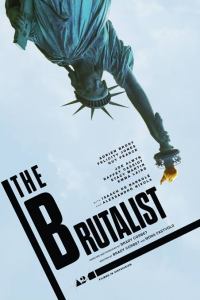
Book and Film Pairing: Spadework for a Palace | The Brutalist

an author named Laszlo and an architect named Laszlo

a character who is a librarian and a character who builds a library

postmodern literature, modern architecture

asymmetry in form, symmetry in symbolism

stunning imagery and visuals; flashes of genius; wanting, plot-wise


striking passages from the book:

“…art is a cloud that provides shade from the sweltering heat, or a flash of lightning that splits the sky, where, in that shade’s shelter, or that lightning’s flash, the world simply becomes not the same as before.”

“…libraries (as I wrote near the end of my first notebook) are the most exceptional and exalted works of art…”

“Resist the idea that architecture is a building.”


striking passages from the film:

Van Buren: So, answer me one question; why architecture?

Laszlo: Is it a test?

Van Buren: Not at all.

Laszlo: Nothing can be of its own explanation – is there a better description of a cube than that of its construction? You know, some years ago, in March, a stranger knocked at the classroom door of the university where I frequently lectured. At once, all that was familiar and important to us was gone. We were too well-known at home. I thought my reputation might help to protect us but- it was the opposite. There was no way to remain anonymous; nowhere for my family to go. There was a war on, and yet it is my understanding that many of the sites of my projects have survived and are still there in the city. When the terrible recollections of what happened in Europe have ceased to humiliate us, I expect them to serve instead as a political stimulus, sparking the upheavals that so frequently occur in the cycles of peoplehood. I already anticipate a communal rhetoric of anger and fear; a whole river of such frivolities may flow un-dammed, but my buildings were devised to endure such erosion of the Danube’s shoreline.


Erzsebet: Losing a mother – it’s an unfathomable loss, you see. To lose one’s birth mother is to lose the very foundation on which we stand. The mind may not know its loss but the heart does.


Erzsebet: I suppose that deep inside, he worships at the altar of only himself…


Zsofia: We are going to Jerusalem… Binyamin has family there.

Binyamin: My older brothers relocated with their families in 1950. They became citizens.

Erzsebet: Life is difficult there. Have you thought this through?

Zsofia: It is our obligation.

Laszlo: To whom?


William Dalrymple: City of Djinns

A friend sent me a signed copy of Dalrymple’s The Golden Road from overseas a few months ago, and it still hasn’t arrived thanks to our lousy postal system. But as I wait, another friend lends me her copy of City of Djinns. It’s comforting to know that I won’t run out of Dalrymples (and kind, reading friends).

City of Djinns is Dalrymple’s second book after his debut, In Xanadu. Published only four years apart and yet the Dalrymple of Djinns is already so much wiser and more thoughtful than the one in Xanadu. It is one of his best books. City of Djinns is a precious gem in a brilliant bibliography that is a testament to how a series of meaningful travels can profoundly ripen a person and a writer.

And Delhi, this book’s chosen city, is one such city that seems like a heaving anarchy on the surface; but as this book’s adept writer shows us, if one dares to steep oneself in its murky river of humanity, one comes out of it acquiring a thousand and one lessons about the layers of its incredible history, about different faiths and cultures, and about the rise and fall of empires.

“The civilization I belong to — the civilization of Delhi — came into being through the mingling of two different cultures, Hindu and Muslim. That civilization flourished for one thousand years undisturbed until certain people came along and denied that that great mingling had taken place,” laments Twilight in Delhi author, Ahmed Ali.

India was where the sun finally set on the British Empire, and this book is another witness to how much the Partition — the British Empire’s parting gift to the Indian sub-continent — wreaked havoc on this particular city, whose towers, ironically, used to be, “The resting place of the sun”.

Delhi is not a destination and subject for the faint-hearted. It takes a Dalrymple to deftly paint the interplay of light and dark, of myth and truth, of what was and what is.

Zulfu Livaneli: Serenade For Nadia

“Only those whose stories are told can exist.”

Serenade for Nadia brings to light seldom-discussed tragedies of Turkish history: The 1942 Struma disaster, wherein hundreds of Jews fleeing the Axis nations in Europe perished when their refugee ship was torpedoed in the Black Sea; the Armenian Genocide; and the plight of the Crimean Turks who were oppressed and slaughtered by the Soviet government for being seen as Nazi collaborators.

This novel, however, is set in modern-day Istanbul where Maya Duran works at Istanbul University while single-handedly raising a teenage son. Her life is turned upside down when she is assigned to assist a visiting octogenarian, Maximillian Wagner, a German-born professor from Harvard. Little by little, the untold stories of her family and her nation come back to haunt her and beg to be uncovered and told. If a reader pays close attention, it will not be difficult to see that Maya’s character is also an accusing finger pointed at prevailing misogynistic attitudes in Turkey.

Aside from music playing a big role, this reader is extremely impressed by the number of intricate social issues that appear organically in this novel. Because Turkish history and culture are so rich, and its government and society are often paradoxical, it takes a good writer to pack all of this in a novel without making it feel contrived. Zulfu Livaneli succeeds in this, and one can understand why Orhan Pamuk himself hailed him as, “An essential force in Turkey’s musical, cultural, and political scene.”

Having read Disquiet in 2023, this is my second Livaneli. Although I admired Disquiet for its eye-opening qualities, I had qualms with the translation. If I have any qualms with Serenade For Nadia, it is only that this book should come with tissues. Tears are guaranteed.

Philippe Delerm: Second Star

“The afternoon advances, you feel proud of all the time you’ve passed.
Passed but not lost, no, won, and won again.”

This is how I feel about all the time I spend reading. It’s time won, and won again.
And here’s where Delerm has, perhaps, slightly gained an upper hand over Proust. Haha

This is a book that one can read fast, but which one should not read fast or else miss the whole point. It’s a most delightful exercise in paying attention to life’s ordinary little details. (It’s always the French! They seem to have all the time in the world for such things! Haha) But I won’t write too much about it. Once in a while, a book comes along and compels one to write about life, rather than about the book itself. This book is such a book.

Radwa Ashour: Granada – The Complete Trilogy

“Does one truly forget with time, as they say? It’s not true. Time polishes memory…”


For an era and a place teeming with history, there isn’t enough literary fiction set in Al-Andalus.

Prior to Hoopoe Fiction’s republication of Radwa Ashour’s Granada: The Complete Trilogy, I had only read Tariq Ali’s Shadows of the Pomegranate Tree, and I remember being immensely affected by it but finding it too short.

Ashour’s trilogy, now available in a single volume, answers that yearning and enables readers to linger a little bit longer, with its 465 pages, in the tragic century following the defeat of the last Muslim state in Iberia; the fall of Granada that extinguished seven hundred years of Muslim rule in Spain.

The story traces five generations of one family and those they loved while giving the reader a glimpse of how an entire people navigated betrayal, subjugation, persecution, and the undoing of their culture and traditions. Abu Jaafar, the patriarch, a learned man in the bookbinding trade who dies of sorrow after witnessing the burnings of Arabic books and texts at the behest of the Spanish Inquisition, and Salima, the granddaughter who reminds me of Hypatia, are some of this novel’s most enduring characters. 

Some plot lines are slightly itinerant, and this reader wonders whether what seems like inadequacies are merely little black holes of translation. Reading this is rewarding, nonetheless, and it is a step closer to that ultimate novel set in Al-Andalus that I hope to read in this lifetime. Although heartbreaking, this book contains lovely imagery and questions that cling and will not easily let go — just like the question of why these historical episodes from the 1500s feel awfully recent and familiar.

But we need books like this to polish our memory of history and to make our worldview flourish. As Marina Warner points out in the foreword, “In Arabic, the root of the verb for watering, rawa, happens to be the same for storytelling: a storyteller is a rawi. As the comparative literature scholar and Arabist Philip Kennedy comments, ‘Rawwii is well-watered; there are lots of versions of the root, including riwaaya which now means a story (or novel).’ Narration is irrigation, irrigation is narration.”

What a lovely thought, that to be well-watered and nourished is to be well-read, or well-storied.

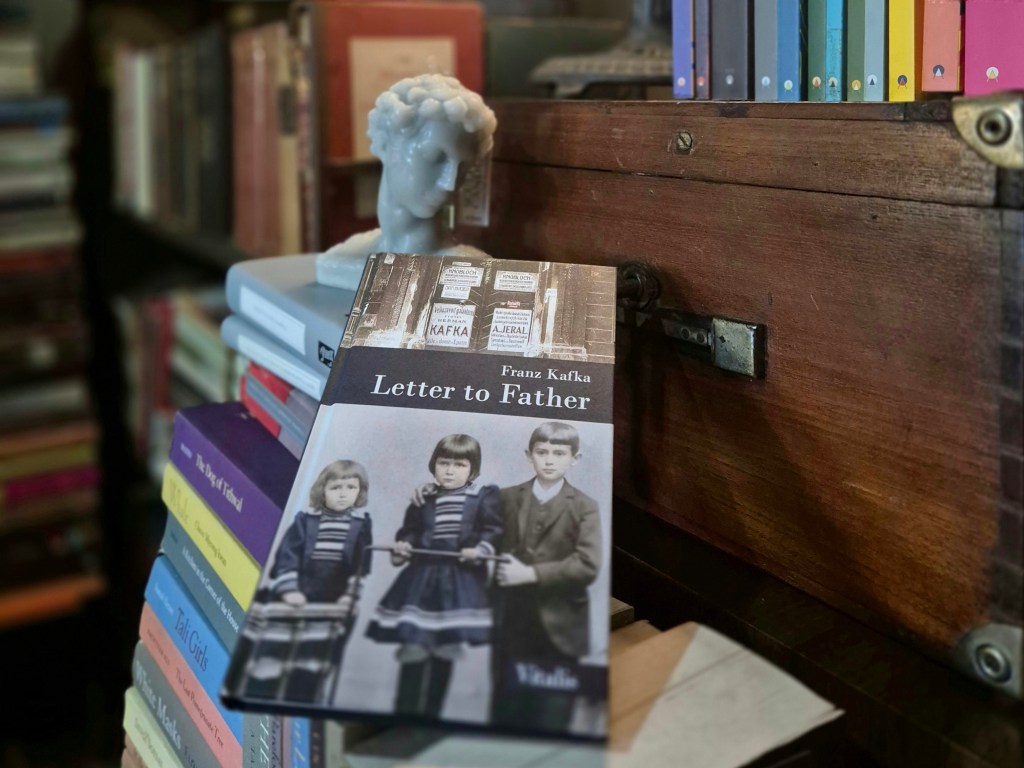
Franz Kafka: Letter to Father

“Franz Kafka was Prague and Prague was Franz Kafka,” wrote Johannes Urzidil. 

But by the time I was able to travel to Prague in 2018, the Kafka House where the author was born, which is a few meters away from the Old Town Square, had already closed for reconstruction, and my own Kafkaesque experiences of the city kept me from buying a Kafka book as a preferred souvenir. 

What a delightful surprise to receive “Letter to Father” as pasalubong from family friends who just got back from a trip to Europe a few weeks ago!

This publication by Vitalis is exquisite as it reveals Kafka’s lesser-known side as a graphic artist by featuring Kafka’s drawings in this famous indictment of his father. 

Although it is a painful book to read, and it took me longer to finish it than I would normally a text of this length, it is nonetheless a revealing and important part of the author’s body of work. It is probably the Kafka work that has affected me the most. One line especially stood out: “My writing was all about you, all I did there was lament what I couldn’t lament at your breast.”

Intercepted by his mother for obvious reasons, the letter sadly never reached the father. And here I am, heartbroken over the fact that these words have struck the hearts of millions who have read it over a hundred years after its writing, but forever lost to the eyes that were meant to read them. 

The Museum of Books

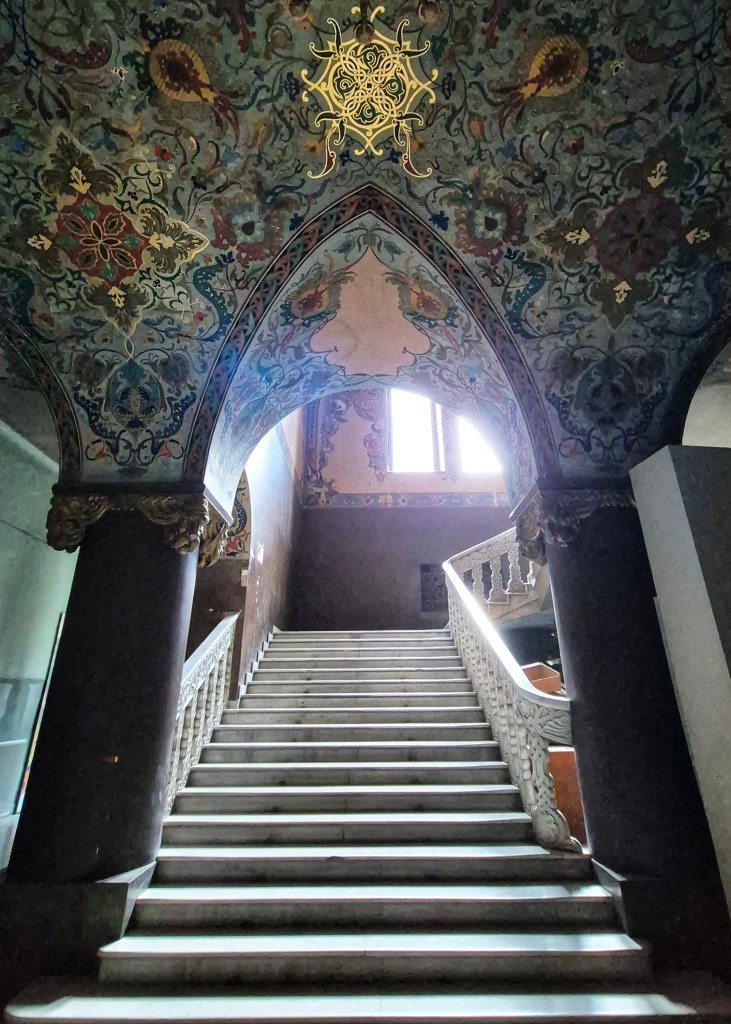
“Is this the way to the Museum of Books?” The main entrance where a statue of Shota Rustaveli stood guard seemed to have been closed for an indefinitely long time, so I had to walk around the loggia and look for another door.

“Follow me,” the guard said without hesitation and led me through office backdoors and hallways lined with filing cabinets and some curious eyes peering through them when the rhythmic footfalls of my boots echoed through the corridors.

Just as I was feeling a little lost and self-conscious for being the only non-employee around, he turned around and said, “When you’re done, just exit the way you came in.” He left me, alone, staring open-mouthed at what was the entrance hall of Tbilisi’s Museum of Books.

Amber sunshine streamed through the windows, casting light on intricate adornments that I had never seen applied to buildings before. It was as if I was drawn inside a page of a medieval illuminated manuscript.

I soon learned that the building is a collaboration between the architect Anatoli Kargin and well-known painter Henry Hrinevski, who was also a book illustrator and manuscript illuminator as well as a scholar on traditional Georgian architecture, but who was sadly arrested and killed during Stalin’s Great Purge.

The building was completed in 1916 and erected as a bank, but became part of Georgia’s series of libraries, fittingly so, in 1931. It is Building I out of V monumental buildings housing the National Parliamentary Library of Georgia.

Recognized as one of the finest museums dedicated to the written word, it boasts of personal libraries of Georgia’s eminent authors, the first book printed in the Georgian language, and autographed works by famous writers including Victor Hugo.

I went there for the books but came out deeply impressed knowing that the building that holds such treasures is, itself, one for the books.

Edward W. Said: The Question of Palestine

Significant Palestinian literature, to this reader, seems to indirectly and collectively ask the Other this particular question: We acknowledge your pain, do you acknowledge ours?

The frustration and the trouble stem from the fact that the answer has often been “no”.

Although worded differently and more succinctly, this book asks the same question, alongside all the other important questions concerning Palestine and Israel. It is Israeli-Palestinian Conflict 101 for those who cannot decide on what to think or say about the whole thing.

Without the dramatic and emotional pronouncements of novels, Edward Said organizes rational thinking, facts, and hopeful solutions with the most concise, coherent, and decisive voice I have ever heard on the Palestinian predicament. All that, while being understanding and un-dismissive of Jewish history and concerns.

This book is evidence that it is not so hard to understand the question of Palestine — but only if one is willing to understand and undo years of hearing only one side. It is also the perfect antidote to well-intentioned and shallow sloganeering. Never have I been so impelled to give a book a standing ovation.

But this book does not need my commentary. It only needs to be read.