What a ride! How Kerangal builds suspense that makes the entire book feel like one long, deep, drawn breath that you would not want to interrupt!
The majesty of Russia’s landscape appears through the window of the trans-Siberian train, but it is surprisingly subtle in portraying a vulnerable Russia.
Yes, it is a serendipitous train ride shared by a man and a woman, but don’t expect the deep conversations of Celine and Jesse from Before Sunrise. Aliocha and Hélène practically pantomime their way throughout the journey; he being Russian and she being French.
Yes, it concerns an army conscript who wants out, but don’t expect Francis Mirković of Mathias Enard’s Zone. Aliocha won’t sing to you a threnody of the crimes of nations. He is only concerned about his escape.
I love the aforementioned titles and I feel relieved that Eastbound did not turn out like any of those. They are only alike for the reason that they are each in a league of their own.
On the surface, it stays true to its promise of being an adventure story, but I see it as an intelligent political novel. Not because the characters discuss politics, they don’t. But can there be a more political story than two people pursuing their individual freedoms?
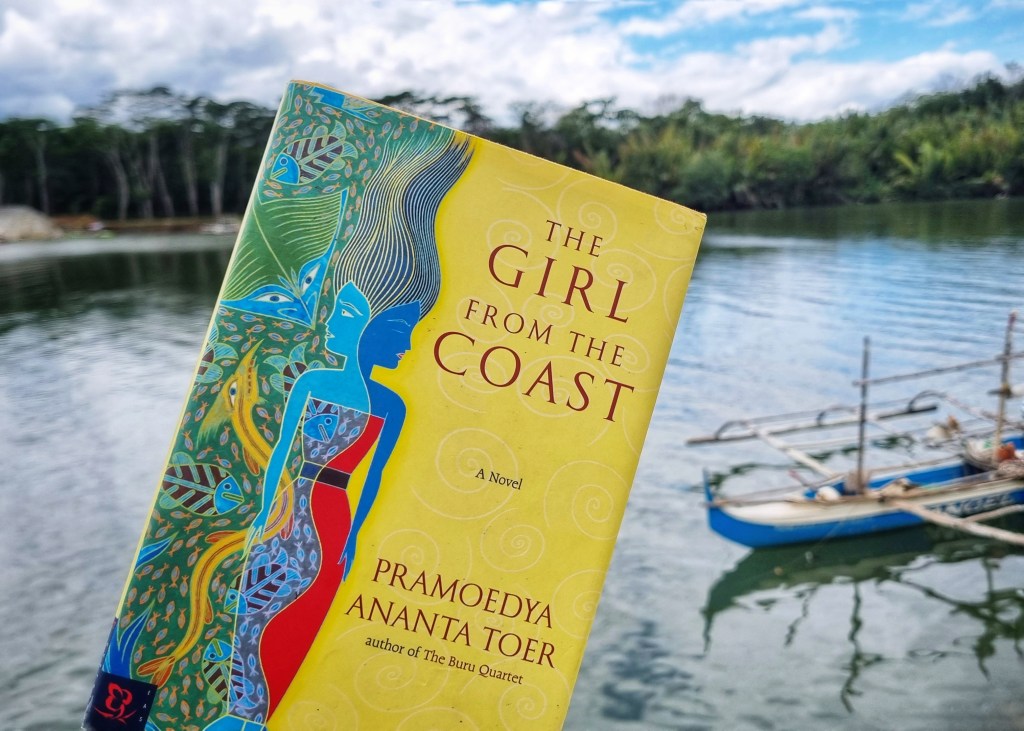
On one of my trips to Indonesia, I dressed up as a bride in traditional wedding clothes for fun. Had I known about colonial Indonesia’s custom of “practice wives”, it probably would have cast a cloud on my idea of fun a decade ago.
A “practice wife” is a village girl who is married to a ceremonial kris (not a proper noun but the noun) proxying for a nobleman she has yet to meet. She will bear him a child she won’t be allowed to keep, she is to be divorced when he finds another practice wife, or when the nobleman officially marries a woman of his own social status. She is kept in the dark of what will befall her, and she will only understand her role as a practice wife as her life in the domain of the nobility unfolds.
For the entirety of the novel, Toer’s eponymous character is curiously referred to as “the girl”. It was only after I read the epilogue when I learned that the story is based on Toer’s grandmother, a practice wife whose name he never knew.
This novel is a profound peek into the complex Javanese caste system made more complicated by the presence of the Dutch colonial government at the turn of the 20th century.
I observed how the same people of the girl’s social station were complicit in perpetuating their own subjugation by accepting the status quo despite the girl’s mounting questions about inequality; how the nobleman provided the girl with everything she needed; and how he did not treat her cruelly, that is until he divorced her and she insisted on her rights as a mother.
As Toer is renowned for his strong views against colonial abuse and dictatorships, I could not help but see the nobleman, known as the “Bendoro”, and the villagers as allegories for dictatorships we tolerate and are complicit in — just because we think we benefit from them, or just because we are not the ones who are directly sacrificed at its altar.
In some editions, the full title is The Sun King: Louis XIV at Versailles. This is more apt because the book is not an exhaustive portrait of Louis XIV but a well-researched record of the workings of the French Court in Versailles, its intrigues and its scandals, and the intimate lives of its prominent figures.
It is rather detailed in a sense, and to a fault, that if not for Nancy Mitford’s entertaining wit, it would have bored me to read about the rivalries of the mistresses and the parts that read like royal gossip.
But I would still recommend reading this book on a weekend when one would prefer something that does not weigh on the emotions. Of course, a better recommendation would be to bring this book on a trip to Versailles. At a hundred and sixty nine pages, it is a none too heavy starting point for one interested in reading about the birth of the ostentation that led to the Revolution two kings and less than a century later; and yet another reminder of how quickly and drastically the tides of history turn.
…because I would immediately pick up a novel of/from Iran without any prodding.
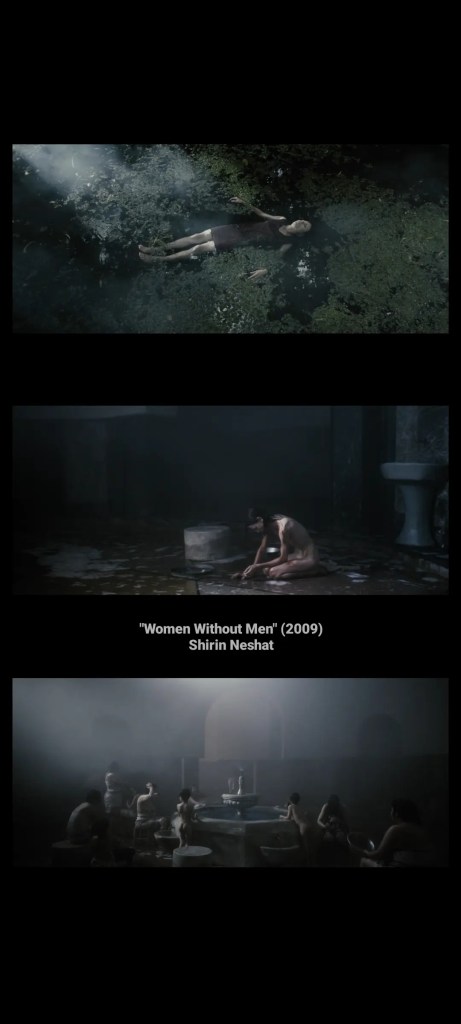
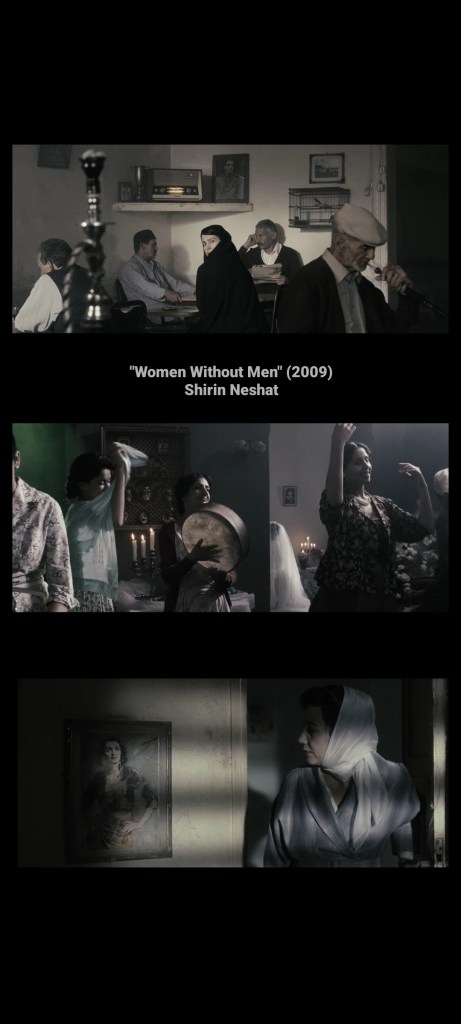
It took me almost halfway through to get into the book’s rhythm, however: Apart from being surprised that it is not set in contemporary Iran but pre-revolutionary Iran (and horrified to think that things have only gotten worse for women in post-revolution Iran), one main character irked me, and I kept weighing it up against another Iranian work of magic realism that remains unsurpassed in my books. But as I read on and the threads of the story came together, I came to appreciate Women Without Men for its own merits. It is, after all, about women overcoming hardships and breaking free from the conventions that Iranian society imposes on them. It is therefore no surprise that it was banned shortly after its publication.
The lives of Iranian women and the experiences depicted here are not isolated cases, and they bring to mind a line from Universal Compassion, an essay by Natalia Ginzburg: “We have come to recognize that no event, public or private, can be considered or judged in isolation, for the more deeply we probe the more we find infinitely ramifying events that preceded it…” Thence the problems that the characters face are not merely personal. In an ideal world, these are issues that an entire civilization must address.
The book naturally ushered me to the screen adaptation. The director, who wrote the preface for this edition, worked closely with the author and the collaboration seems to have led to a beautiful fleshing out of ideas. Being a fan of Iranian cinema — because no one does cinema like the Iranians! — I am tempted to say that I like the film more than the book. But for an exceptional experience, allow me to suggest a book-movie-pairing instead; because what was ambiguous and abstract in the novel became poetry in the film; and if not for the book, there would be no film.
“The telephone isn’t made for saying important things that need time and space.”
Happiness, as Such (August 2024)
The merit of Natalia Ginzburg’s epistolary novels — whether they are wholly or partially comprised of an exchange of letters between characters — is their being time capsules of an age when corresponding through letters was the principal means of remote communication. It was in letters that banalities could be reported as much as consequential information, and people were allowed space to be frank. Letters tracked the growth, or stagnation, of their writers. Self-expression flowed freely where individual and shared stories unfolded. Ginzburg seems to have maximized on the medium and preserved it, foreknowing a time, our time, when letter writing would be at the point of near extinction.
“Happiness… It is like water; one only realizes it when it has run away.”
Voices in the Evening (January 2024)
Of sad loves and sad lives. For me to truly appreciate Ginzburg’s work and write something of worth about it is, perhaps, to regard it as a whole after I’ve read everything she’s ever written.
For now, this book only evokes a specific memory:
He and I had just listened to the whiskey-soaked voice of Tom Waits. We said we did not want to end up like the people sung by the raspy voice.
The fate of the fiddler is fatal… always giving yourself to others… always trying to make others whole…
…and if he was asked where it (music) came from, he answered that it probably came from grief, grieving over something, or just grief, and in the music grief could lighten and become soaring and the soaring could become happiness and joy, so therefore music was needed, therefore he had to play…
It was the violin on the cover that decided my first Jon Fosse. I wouldn’t have known where to start, and I have been eager to start ever since he received the Nobel for prose which “gives voice to the unsayable”.
And so it was the violin, or rather the fiddle. And because of the fiddle, I sit here a day after reading the last line. A day, because for an entire day I could not write anything about it. I could only feel and think of it and nurse this prolonged pinch in my heart. And maybe that’s how it’s supposed to be, and I should drop my attempt to say something clever about it.
Because I sit here and feel drenched by the weight of simplicity. Because in his words there is a childlike simplicity that humbles what we think we know about expressing life and about storytelling. Because Jon Fosse is a poet, and his poetry and prose bleed into each other, leaving no borders between them.
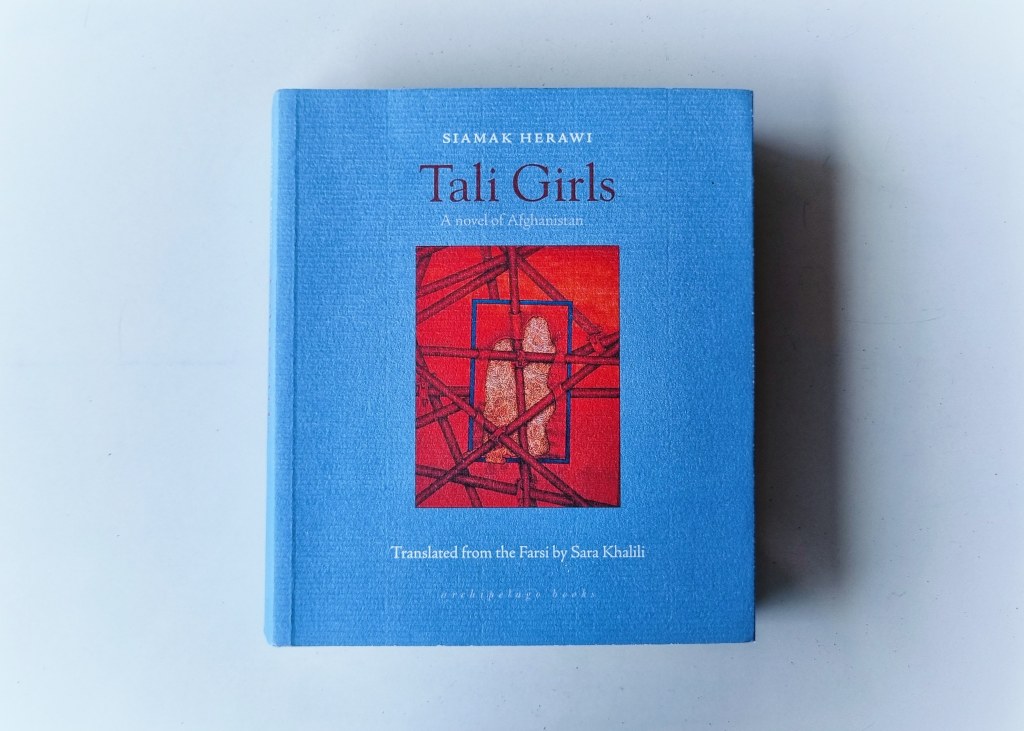
It’s almost absurd to expect happy novels from Afghanistan. I knew I had sorrow coming when I selected this as my third book of 2024. I could have shelved it for later, but how could I resist this blue from Archipelago Books, translated from the Farsi to boot? How often can one find literature translated from the Farsi?
So it was on me when it started to break my heart and made me recoil from the brutality.
Unlike most books about Afghanistan, the characters are not caught in the crossfire of any of the wars that have ravaged Afghanistan for decades.It is set in a picturesque mountain village in the early 2000s when life was simple and young girls were allowed to dream about education and love, and villagers were content with raising livestock and planting their own wheat, beans, and melons. That is until the Talibs discovered the beauty of their nine-year-olds and found their land ideal for the cultivation of poppy to be sold to the “infidels”. Tali Girls is based on true events.
The first person narration shifts from one character to another, effectively and intimately thrusting the reader into a world plucked from its innocence.
I would be reluctant to recommend this for the anguish that it contains, but I am more inclined to listen to one of this novel’s wisest characters:
“‘Remember,’ he says, sitting in his library, ‘the more your eyes open to the world, the more you are likely to suffer. But better that you learn and understand… Read, Kowsar, read to understand the world around you.”
New year, new eyes: This has become an annual theme for my first book of the year, and it has usually involved non-fiction that prod me to look at history, music, literature, life, or the world with a set of new eyes.
This year, I was not able to plan my first book. My younger brother was home for the holidays and reading was not part of the itinerary. We spent most of our time adventuring in the kitchen and binge watching shows that I would normally forgo for reading if left to my own devices.
And it was on a brief solitude after lunchtime when I realized that it was already 2024 and I was without a reading plan.
Then these two books that haven’t yet made their way into my shelf caught my eye, presents from a dear friend who recently traveled to Japan. They came with a note that said, “Our hotel in Kyoto had a bookstore right across it…”
I flipped through There Was a Knock by Shinichi Hoshi because the author is not as widely known here in the Philippines as Natsume Sōseki. The next thing I knew, I was at the last page wanting more!
The few times I felt this entertained by a writer’s cleverness it was with the likes of Queaneau’s Exercises in Style and Calvino’s If on a winter’s night a traveler! But rather than being variations on a theme, each of Hoshi’s fifteen stories are unpredictable and different, and they only have one thing in common — the first line: There was a knock. Needless to say it’s a literary gem!
Botchan by Natsume Sōseki, on the other hand, took me more than halfway to warm up to the main character whom I found rather judgmental and cynical. It was Sōseki’s humorous and engaging writing that kept me going, but only to make me understand in the end that this is ultimately a book about human nature.
At first glance, I wouldn’t have considered any of these two as candidates for my annual first book of the year theme, but here we are and I do not regret it!
Perhaps that’s what having new eyes is all about, too!
Happy New Year and Happy New Eyes, dear fellow readers!
No, that’s not Aciman on the photo. Haha That’s the BFF having a reading session with me at midnight in Cebu.
It’s only now that I’ve noticed how often I’ve opted to travel with André Aciman. On a brief trip to Cebu last week, I took this anthology with me, mainly for the Edward W. Said essay. (Is there a more relevant writer to read these days?)
But as soon as I opened this slim volume at the airport’s pre-departure area, I found myself falling in love with Andre Aciman’s lines once again.
“Does a place become one’s home because this is where one read the greatest number of books about other places?” He ponders.
Cebu sports a different look and feel each time I visit. My trips to this city have dwindled down to once-a-year. To think I used to spend months there for work and music-related projects.
But to paraphrase Aciman who wrote, “…even if I don’t disappear from a place, a place disappears from me,” I would write this of Cebu: “Even if I disappear from a place, a place never disappears from me.”
It is, of course, because of the people that I still consider it one of the capital cities of my life. Second to Dipolog, Cebu is where I read the greatest number of books about other places; and though it often seems unrecognizable these days, it is home for the aforementioned reasons of books and people.
“Ikaw si Peter?!” It was more verdict than question.
They insisted he was Peter over and over again as they beat him up mercilessly.
How did his late evening drive to 7-Eleven turn into a nightmare? It all happened so fast.
The last thing he remembered was stopping at a corner to respond to a message when several men grabbed him, one on each arm and one on each leg. They thrust him into a van and assaulted him.
He was only certain of one thing: He was not, never was, never will be, Peter.
He was not Peter, but the men turned out to be cops on a buy-bust operation. And they forced him to admit, forced him to be Peter.
He who was not Peter was locked up for two days in one of those horrible Philippine detention cells until he was able to contact a good lawyer and apply for bail. The cops raised a case against him. They claim he was caught buying drugs from another man. They accused him of resisting arrest. They put him on the watch list.
He is not Peter. I would know. I’ve known him since forever, and he’s been one of my dearest friends almost right from the moment we met as kids. Alongside his best qualities, I know his sins and his faults. The use of illegal drugs is not one of them. But don’t take my word for it. Trust the two drug test results, urine and hair follicle. Both turned out negative.
Despite that, the case continues. It has been going on for over a year. He has had to go through every single hearing, tremble in his seat each time and listen to the cops pile lies upon lies, even on his birthday. There are times when he would be at court by 8:00 a.m. and the hearing would start at 11:30 a.m. Sometimes he would wait half a day, only for it to be cancelled. He who is not Peter has had to put so much of life on hold because he was mistaken for Peter.
It’s unfair. The trauma is taking a toll on him. I laugh with him to get his mind elsewhere, but I cry for him in private. But for some twisted reason, I am grateful.
I am grateful that he was mistaken for Peter on October 2022. The other Peters between 2016 to mid-2022, the real ones and the ones mistaken for them, could not even put life on hold. There was no life to put on hold. Life was not an option.
“Forget that their name is Marcos. Forget that their name is Duterte. Forget that their name is Aquino. Duterte the First begat Duterte the Second. Aquino the Second begat Aquino the Third. Marcos the First begat Marcos the Second begat Marcos the Third, presidents begetting presidents, begetting vice presidents, rotating and revolving and rotating again. Their names live in airports and amphitheaters, on paper bills and street signs, along the highways where the corpses are still being found. Forget the names of their sons and daughters and remember their dead instead.”








 The Book-Butterfly