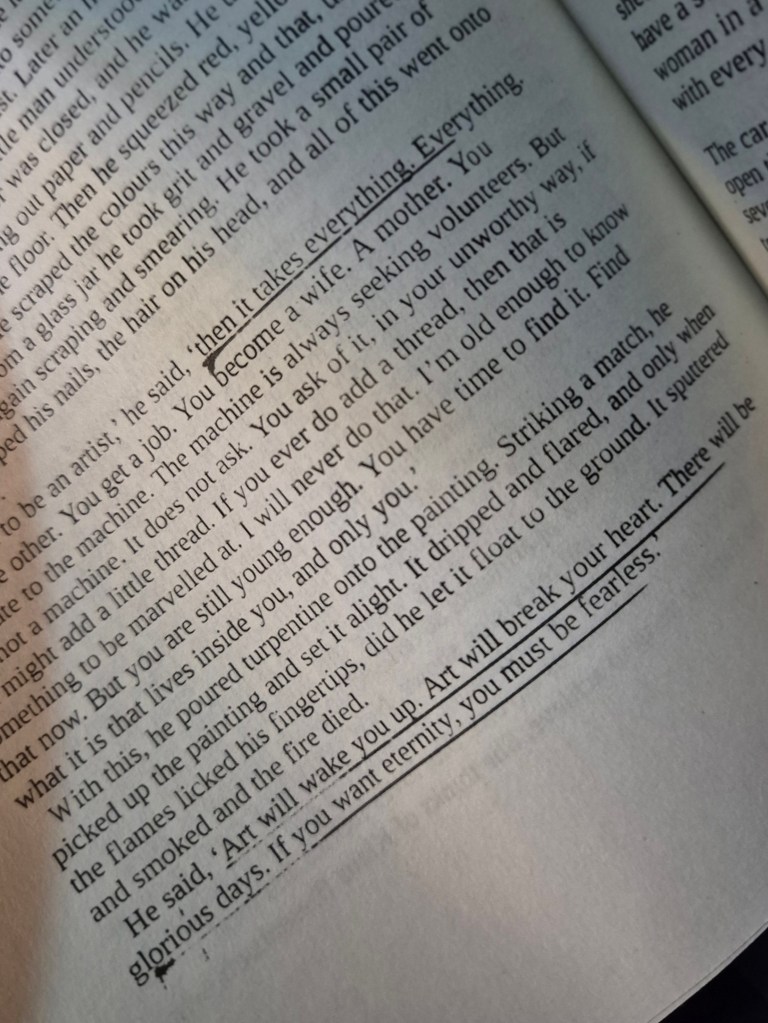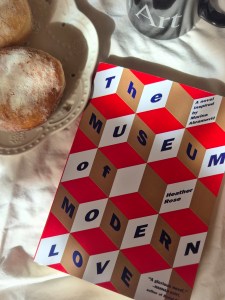
“Art did not stop, that’s what Marina had said. Art did not get to five o’clock and say, ‘That’s it, the day is done, go think about TV or making dinner.’ It wasn’t like that. It was there all the time: when you were chopping vegetables, talking with a friend, reading a newspaper, listening to music, having a party. It was always there offering suggestions, wanting you to go write or draw, sing or play. Wanting you to imagine big things, to connect with an audience, to use energy, to find energy. It wasn’t ready when you were, it didn’t come when you wanted it or leave when you were done. It took its time.” — Heather Rose, The Museum of Modern Love
For most of us who are not au courant with the Modern Art scene, Marina Abramović probably entered our consciousness with the same video clip.
That video in which we were given a background of her twelve-year relationship with fellow artist, Ulay, and how they exhibited the most dramatic break-up in 1988 by standing 5,955 kilometers apart, each from one end of the Great Wall of China, and walking to each other — for ninety days, exposed to wind, rain, and sun, even through disintegrating parts of the Wall in Mongolia’s Gobi desert — for one last embrace…
…Only for Ulay to show up unannounced at her 2010 MoMA retrospective where The Artist is Present entailed Abramović gazing into the eyes of each stranger who sat in front of her while sharing a moment of silent connection. We held our collective breath when she opened her eyes and found herself face to face with the former lover she had not seen for twenty-two years, we wept quietly as she did, and all we could do was collect ourselves when Ulay stood and walked away when his turn was over, replaced by the next stranger, leaving us with a host of questions whilst being deeply affected by the emotionally-charged encounter.
Given the title, I expected this book to focus on that renowned relationship. Heather Rose is original and evades predictability, however. It is, instead, a uniquely structured novel built around imagined characters who attend as audience or participate and sit still with Abramović throughout the 75-day run of The Artist is Present in New York.
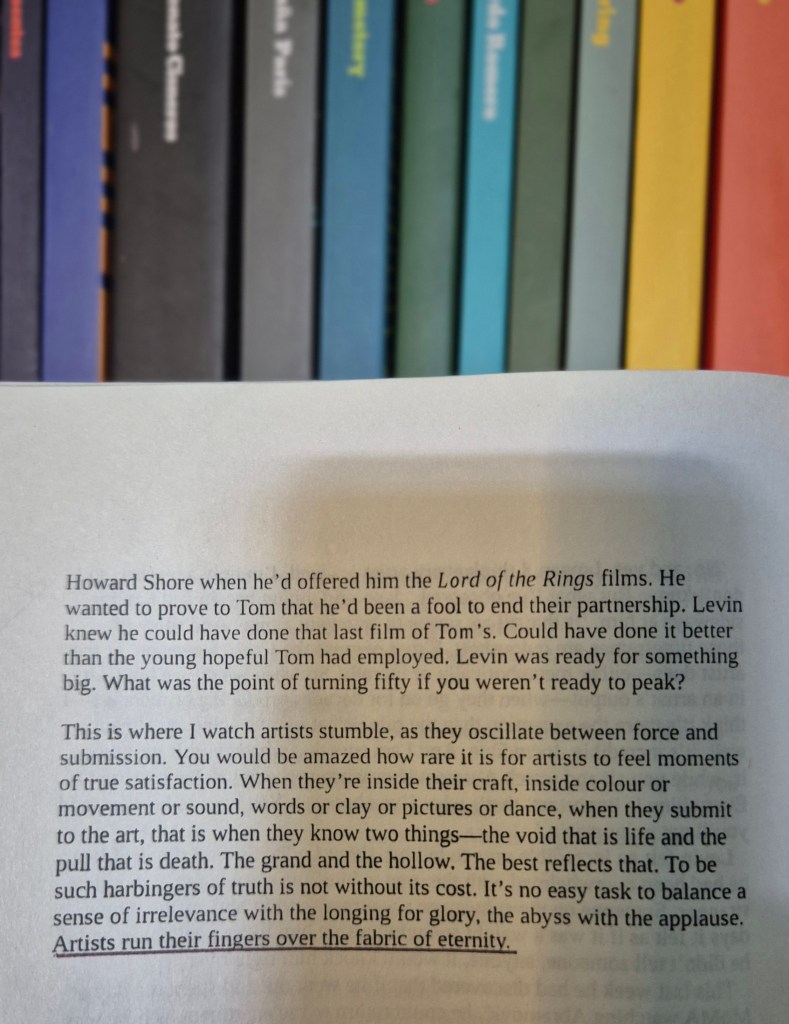
The book begins with a wise and omniscient narrator who retreats when bringing the characters to the forefront, but immediately becomes captivating whenever it speaks beautifully about art. With another clever creative decision, Heather Rose leaves us guessing about the enigmatic narrator’s identity until the end.
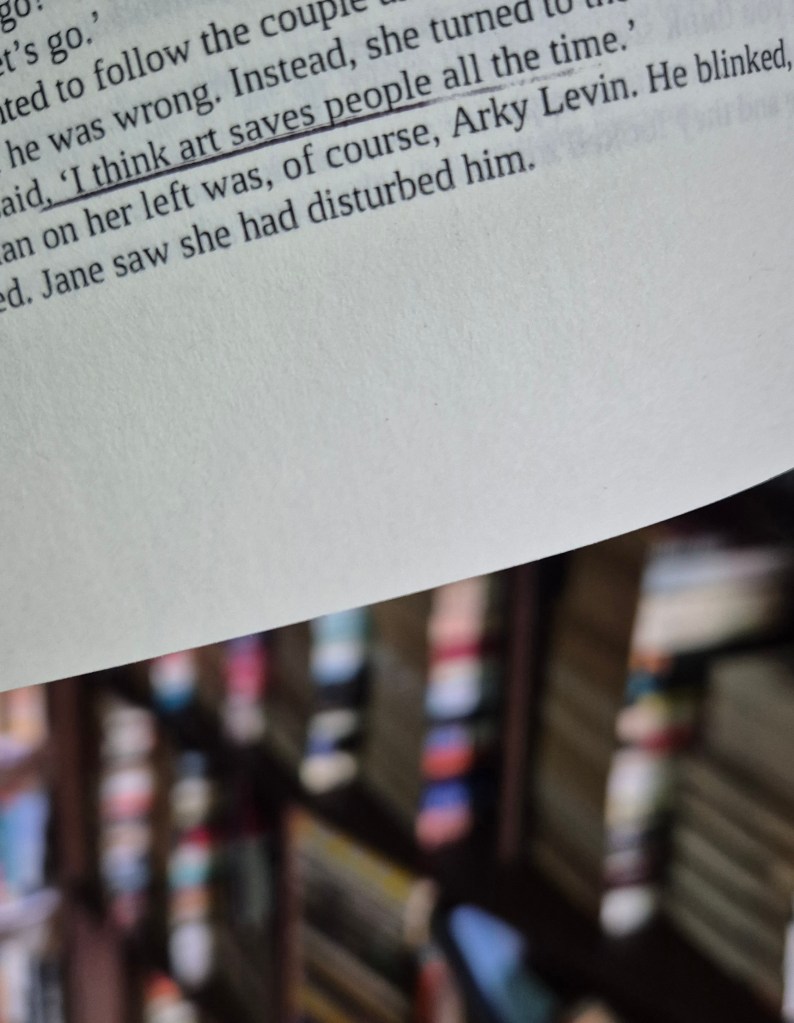
One of the main characters, Arky Levin, is a pianist and film composer, married to Lydia Fiorentino, an architect. (Ironically, this reading pianist found herself identifying with the self-sufficient woman in the architect while having little sympathy for the indecisive pianist who seems to be more committed to his work than their relationship.) We are also introduced to recently widowed Jane, an art teacher; Healayas Breen, art critic and journalist; and Brittika, a graduate student writing a thesis on Abramović — all realistic and flawed people who, while struggling with individual grief or internal conflict, find themselves drawn to Abramović’s art and roused by the deep introspection induced by the artistic experience.
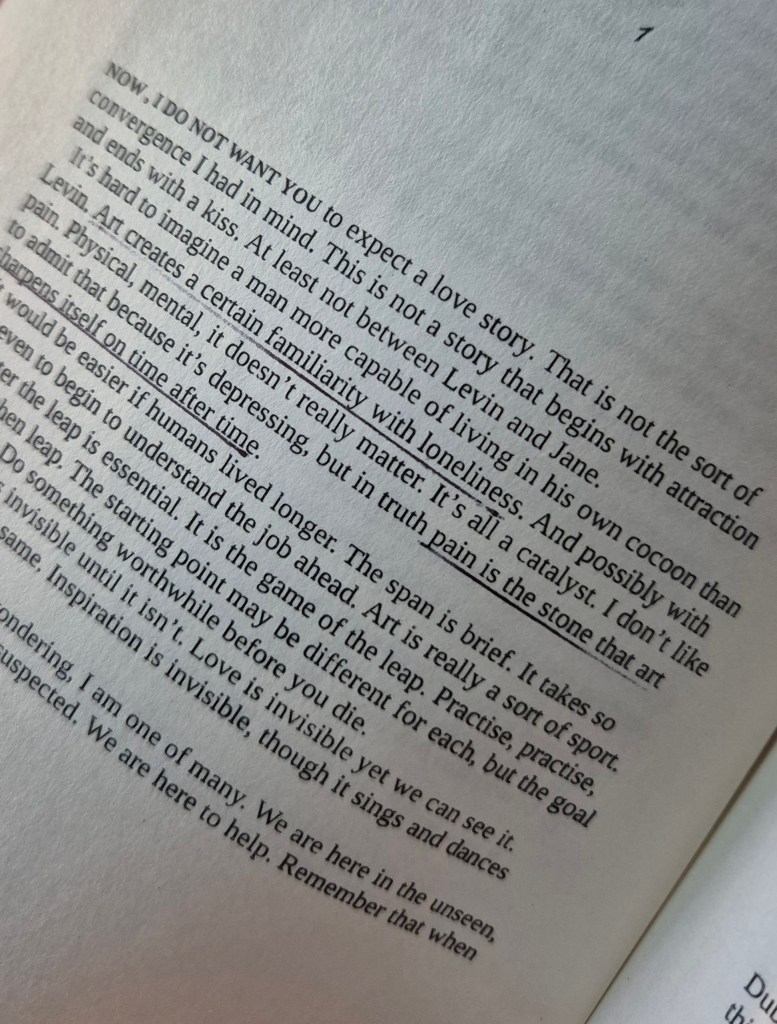
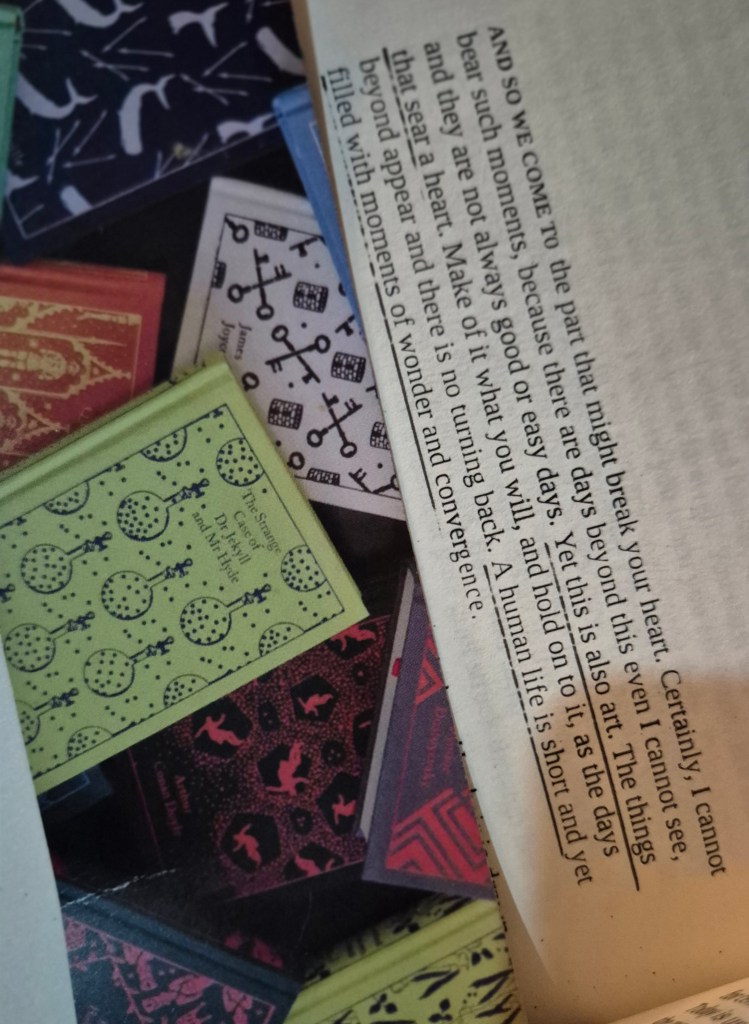
It is ultimately a novel about art and connection for which the author found a fresh and imaginative way of expressing. The title is clearly a play on Love and Art, cunningly asking, what’s the point of art if we don’t realize their interchangeability?