To celebrate my 40th in Iran, that was the dream. It was supposed to be Iran.
But life often has a knack of improvising on my dreams. Flights to Iran were suspended as I was about to book tickets; and it wouldn’t have been good for my parents’ hearts had I forced it at this volatile time in history.
Iran chose to remain elusive. Then I was reminded of a line from Ali & Nino: “Surely love is the same in Georgia as in Iran.” Georgia, or Gurjistan, was one of the Persian “stans,” after all, and was under Persian suzerainty for centuries. And surely, if love is, as they say, the same in Georgia as in Iran, then perhaps celebrating 40 in Georgia wouldn’t be too different either? (“But there are protests,” they said. “At least there are no missiles,” I answered.)
The time had come for Georgia to be lived, aside from being read — for the literature of the Caucasus to be finally given the chance to lend depth and texture to my travels, and to the narrative of my experience.
Doha – Tbilisi Flight RouteFlying over ShirazEven Iran’s skies are incomparableThe Zagros Mountains peeking through the clouds!!!Flying over IsfahanTwinkling lights of Armenia
Little did I know that the flight route from Doha to Tbilisi would fly over Shiraz and Isfahan. As if on cue, there was a sudden otherworldly sunset display through the airplane window just as we flew over Isfahan. Instead of Isfahan’s Eternal Flames, I was given the sun. And through the clouds, I saw traces of Isfahan down below; appearing to reassure me that it would be there waiting until the right time came along.
Then a full moon ushered me to Georgia. And I soon learned that Georgia, for a nation so tiny, is a generous country — not just in their wine servings, but in beauty and unforgettable experiences. (Maybe therein lies the advantage of smaller countries: beauty is concentrated, undiluted, and undiffused.) All at once, Georgia felt right.
Hopefully, someday, Iran will feel right, too. But at this particular point in life, Georgia is exactly what I needed. The trip was a gift that I’ll always be grateful for — a melding of deeply beautiful things and non-things, as if traveling knew no other way to be.
I’ve been asked what being forty feels like. With books (and maybe an occasional glass of wine haha) by my side, forty feels right. 🤍
“As a journalist, I say: Long live the magic. Kapuściński is an advocate for all who have chafed in a straitjacket called the house style, seen their lyrical phrases slashed for space, cursed the whole pedantic army of editors and fact checkers… he is a journalist’s writer, an example of what so many of us would love to be — if only we had the nerve.” — Christopher de Bellaigue
When one has had their fill of different accounts of the 1979 Islamic Revolution, fiction and nonfiction, Iranian and foreign; when an ample idea of its unfolding and its chronology has finally taken root; when details and events have been repeated enough and begin to sound redundant unless they are written with an exceptional voice and perspective; it is time to read Shah of Shahs by Ryszard Kapuściński — my personal cherry on the top of an Iranian Revolution literary stack.
It is not the book to read if one prefers a sequential list of events, a full cast of characters, an emotionally-charged dramatization, or a detailed portrayal of the Shah. This is not a portrait of the last Shah of Iran, neither is it a consummate portrait of a nation. From the collected clutter on Kapuściński’s hotel room desk in Tehran emerges a portrait of the nature of dictatorships and revolutions.
I can only wish he elaborated on that extravagant celebration that the Iranian despot held in Persepolis in 1971, which contributed to the flames of revolution, and in which the first guest to arrive at the event was Imelda Marcos. I would have loved for Kapuściński to have written a book about the Marcos family and our own EDSA Revolution!
For a Filipina reader and albeit dormant journalist, the writing method is illuminating and the subject hits close to home. There are too many passages that feel as if he were describing my own nation’s recent history. But then again, “The rather small arsenal of political tricks has not changed in millennia,” observed Kapuściński, who reported on twenty-seven revolutions during his illustrious career as a journalist.
Within a corrupt government, “Whoever tried to be honest looked like a paid stoolie.” “The higher up, the fuller the pockets,” and in that world, “development” has an entirely different meaning. “Any dictatorship appeals to the lowest instincts of the governed,” “A despot believes that man is an abject creature. Abject people fill his court and populate his environment.”
That a fed and entertained populace does not always signify a free society is a truth that burns: “A terrorized society will behave like an unthinking, submissive mob for a long time. Feeding it is enough to make it obey. Provided with amusements, it’s happy.”
And this is what he says about truth: “It takes a long time for a truth to mature, and in the meantime people suffer or blunder around in ignorance.” I’d like to believe, however, that reading the writings of Kapuściński speeds the process.
At the back of my mind, this question: Is Iran in the cusp of another revolution?
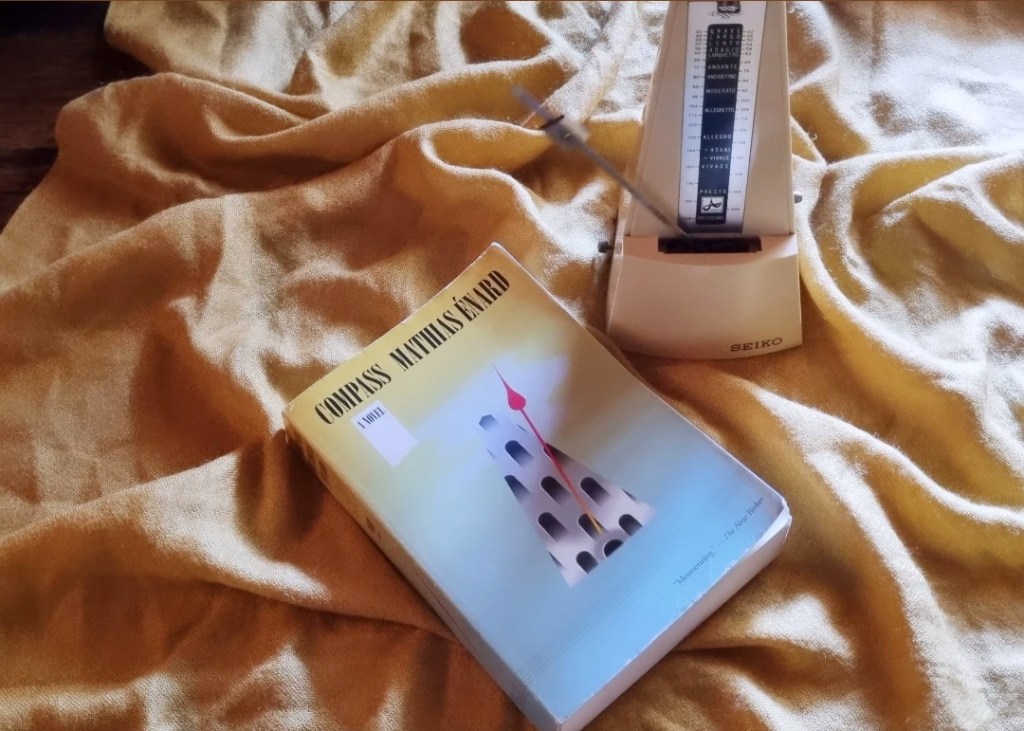
Mira, keep this close to Luis Sagasti’s A Musical Offering, close to Olga Tokarczuk’s Flights.
It is, after all, a musical offering — golden threads of western music’s entwining with the orient, of Liszt’s recitals in Constantinople, of how Nietzsche wanted to Mediterraneanize music, of the narrator’s replica of Beethoven’s compass that insisted on pointing east, but most of all because it reminds you beautifully that “music is a fine refuge against the imperfection of the world,” one that describes music as “time thought out, time circumscribed and transformed into sound… time domesticated, reproducible time, time shaped,” and cautions that “life is like a Mahler symphony, it never goes back, never retraces its steps…” but also that “this feeling of the passing of time is the definition of melancholy, an awareness of finitude from which there is no refuge.” Take note of how there is a metronome on the cover instead of a compass. Perhaps because a metronome goes back and forth between directions whilst keeping the music in time.
It is about flights. A hypnotic trip across east and west, tick tock, east, west, art, love, time, self, other, literature, until they have intermingled and are present in each other, an adventure with Being — of traveling to the lands of your dreams and to your favorite cities, about crossing the borders of genres, art forms, literary forms, and geographical borders, but also flights from sanity, and traversing through memory, history, and dreams, suggesting that “our dreams might be more knowledgable than we.” Flights of flavors, an exotic dish not everyone will love; disturbing at times, an acquired taste with a scent of opium.
But keep this book close to Luis Sagasti’s A Musical Offering, close to Olga Tokarczuk’s Flights, close to your heart. Only you know how much this book means to you. Don’t forget you were constantly wide-eyed with wonder when you read it and you agreed with the following lines. How much you were in need of reading that last sentence!
“Sometimes I feel as if night has fallen, that western darkness has invaded the Orient of enlightenment. The spirit and learning, the pleasures of the spirit and learning, of Khayyam’s and Pessoa’s wine, have not been able to stand up to the twentieth century; I feel that the global construction of the world is no longer carried out by the interchange of love and ideas, but by violence and manufactured objects… You have to have… energy to constantly reconstruct yourself, always look mourning and illness in the face, have the perseverance to continue searching through the sadness of the world to draw beauty or knowledge from it.”
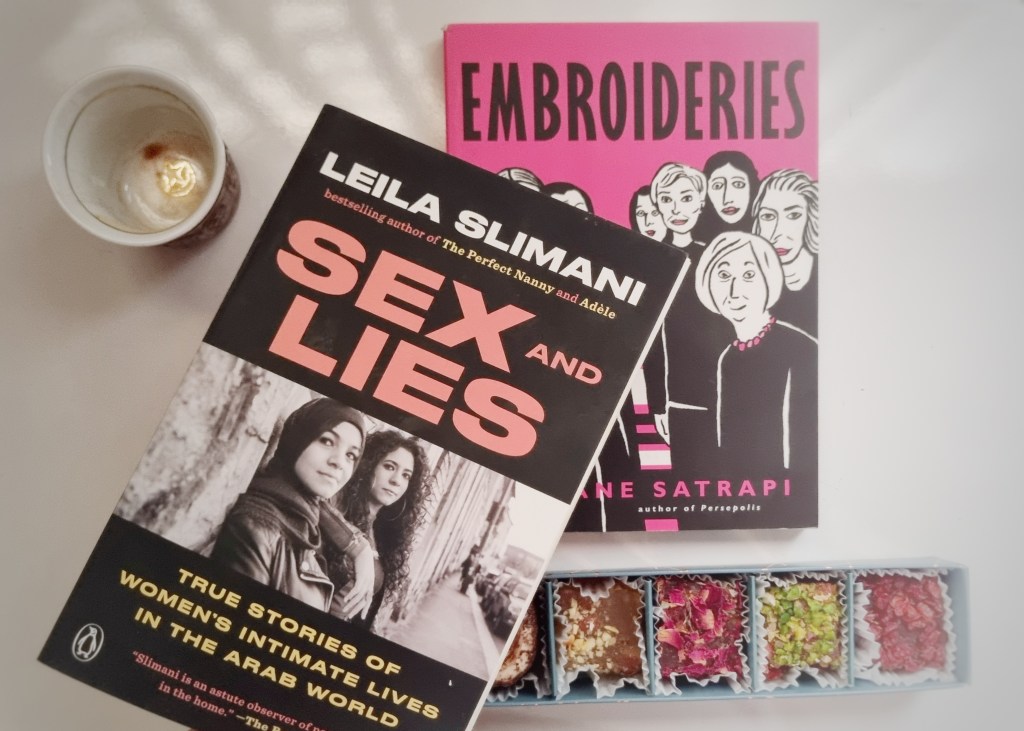
“If women haven’t fully understood the state of inferiority in which they are kept, they will do nothing but perpetuate it.” — Leïla Slimani, Sex and Lies
“I freed a thousand slaves. I could have freed a thousand more if only they knew they were slaves.” — Harriet Tubman
It was the hottest month of 2019 in Morocco, and I was at a station in Chefchaouen waiting for my bus to Fez. Even with my nose buried in a book, I had an odd feeling that someone was watching me.
Sure enough, when I looked up, two large eyes framed by a hijab glinted and stabbed me like the blades of a koummya. I could see she was seething. I had to glance around and check if the anger was meant for someone else, but her sustained glare guaranteed that they were directed at me.
She said something to the man beside her who turned his back towards me while she continued to glower. Admittedly, my first instinct was to glower in return.
Then I remembered where I was; a foreign country whose laws are not known to be very kind to women. Confused, I immediately lowered my head to avoid trouble.
And there it was. The offending sight. The bag’s leather strap strung across my body had unbuttoned my dress shirt and revealed an undershirt and a little bit of chest!
I who had been so careful about dress codes in my travels, I who wore a buttoned-up long-sleeved shirt over an undershirt over a bra despite the temperatures rising up to 46°C during the day, accidentally exposed a little bit too much of my body in one of the worst places to have a wardrobe malfunction.
I felt so embarrassed, horrified, and even guilty.
As soon as the bus arrived, I hurriedly boarded to avoid bumping into the couple. I saw them saying goodbye to each other. A worried look now replaced the anger on her face as her expressive eyes followed the man inside the bus.
Imagine the horror on her face when she saw through the window that the man’s seat number was the empty one right beside mine — her man would be sitting beside this immoral woman for 4 to 5 hours!
I hid behind my scarf for the rest of the trip while next to me, he showered himself with crumbs from the pastries that he ate.
– – –
I had an incredible trip to Morocco, but despite being amply covered, I have never been catcalled more in any of my travels; I was followed by a stranger through the alleys of Fez; and two random acquaintances in Marrakech said they wanted to marry me. But somehow it was that incident with the woman that made me shudder. It accented how difficult it must be to be a woman in such a place.
This memory came back to me while reading Leïla Slimani’s book. Coincidentally, it was exactly on this day when I left for my Moroccan adventure three years ago.
– – –
Feminist voices from Islamic nations have been part of my reading life for quite some time already, and I don’t wish to write another cliché by saying that reading this made me grateful for the liberties I take for granted — even though it still rings true.
Sex and Lies is a broader and more serious version of Marjane Satrapi’s hilarious graphic novel, Embroideries. They both bring to light the double standards of men and their laws, and the many predicaments of what it means to be a woman in such a setting.
Let us take note that this setting is such where love and affection are as taboo as sex; where women are not allowed to feel desire; where religious pressure and social humiliation lead to nearly six hundred abortions carried out in secret every day and hundreds of women die as a result of the appalling medical conditions in Morocco; and while men can sleep around all they want, they require “virginity certificates” from their brides; hymen restoration clinics exist (which is not far from the kind of “embroideries” Satrapi hints at); and it was only in 2014 that article 475 of their penal code was amended, two years after a sixteen-year-old took her life after being forced to marry her rapist. The rapist who married his victim could avoid punishment under article 475.
Each important female writer has their own approach to broaching the subject of women in repressive cultures. Iranian Marjane Satrapi does it with humor while Moroccan Leïla Slimani curiously makes a case for a healthy relationship with traditional, religious, and cultural backgrounds. I am not Muslim but I think it is significant how she did not make this into an assault on Islam. (Although she does mention the soullessness of certain sects.)
“I try to explain that a society in which women had more freedom would not necessarily be contrary to the faith but rather could allow us to protect women better.”
“For the Muslim religion can be understood as primarily an ethics of liberation, of openness to the other, as a personal ethics and not only a Manichaean moral code.”
“Muslims can turn to a long written tradition, led by scholars, that saw no incompatibility between the needs of the body and the demands of the faith.”
While Sex and Lies unveils real and enraging accounts of the unnatural demands their society imposes on their women, it remains hopeful for a Morocco in transition. Another thing that stood out for me was how many of the women who shared their stories recounted that it was reading books that opened their eyes. Leading by example, Slimani highlights the necessity for women to use their most powerful weapons at hand:
“If… Scheherazade appears a magnificent character, this isn’t because she embodies the sensual and seductive oriental woman. On the contrary: it is because she reclaims her right to tell her own tale that she becomes not merely the object but the subject of the story. Women must rediscover ways of imposing their presence in a culture that remains hostage to religious and patriarchal authority. By speaking up, by telling their stories, women employ one of their most potent weapons against widespread hate and hypocrisy: words.”
“Freedom is an illusion. The only thing that changes is the size of your prison.”
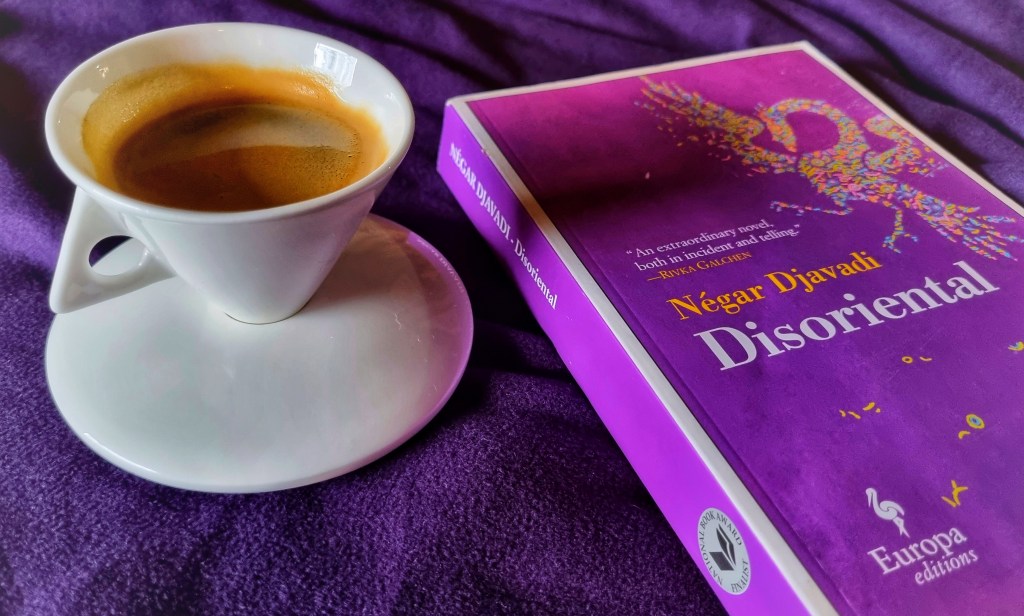
Disoriental. We know what the prefix implies. But the clever wordplay refers to more than something that is non-oriental. It alludes to the disorienting, the experience of being uprooted abruptly from an oriental into an entirely contrasting and unfamiliar culture — the tragedy of exile.
“I can tell you that you have to disintegrate first, at least partially, from your own. You have to separate, detach, disassociate. No one who demands that immigrants make ‘an effort at integration’ would dare look them in the face and ask them to start making the necessary ‘effort at disintegration.’ They’re asking people to stand atop the mountain without climbing it up first.”
Although this novel has the familiar background of a young person having to flee Iran during the Islamic Revolution, this takes a step further. The main character dispenses her own unique commentary on Iran’s political events in fragments, but this delves more into its aftereffects on the internal climate of an exile.
“To be honest, nothing is more like exile than birth. Being torn, out of survival instinct or necessity, with violence and hope, from your first home, your protective cocoon, only to be propelled into an unknown world where you constantly have to deal with curious stares. Every exile knows that path, like the one from the uterine canal, that dark hyphen between the past and future which, once crossed, closes again and condemns you to wander.”
Hers was a personality I could not initially relate to, and so I shelved this a while ago. Returning to it weeks later and reading a little bit more, the dissonant feeling turned to empathy, and by the time I got to the last page, I was crying for this character who had nothing in common with me.
“After so much time and distance, it’s not their world that flows in my veins anymore, or their languages or traditions or beliefs, or even their fears, but their stories.”
And so I’ve learned that stories are written for the sake of the writer and stories are read for the sake of the reader; so the first may pursue connection and the latter empathy.
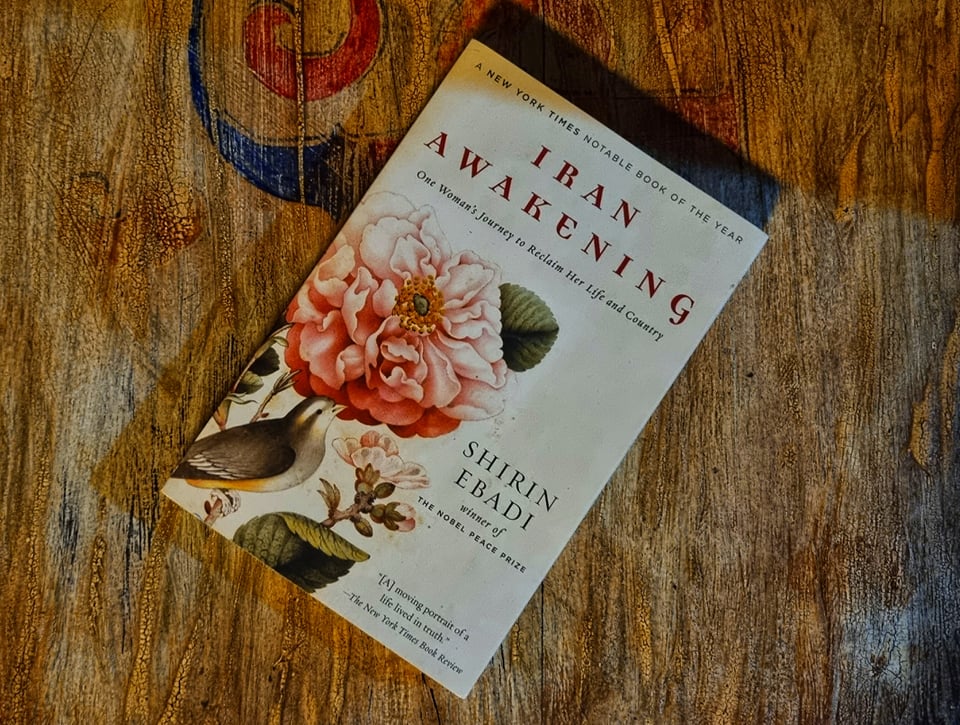
Iran’s first female judge, and winner of the Nobel Peace Prize in 2003, has penned this affecting book with such free-flowing sincerity that I could not help but cry in a number of passages.
Just as in 2011 when I read Azar Nafisi’s Reading Lolita in Tehran and it made me celebrate my freedom as a reader, Shirin Ebadi’s Iran Awakening is making me celebrate my freedom as a woman as it raises awareness of the many liberties that we often take for granted.
“The world was awake — it wakes early in the East.”
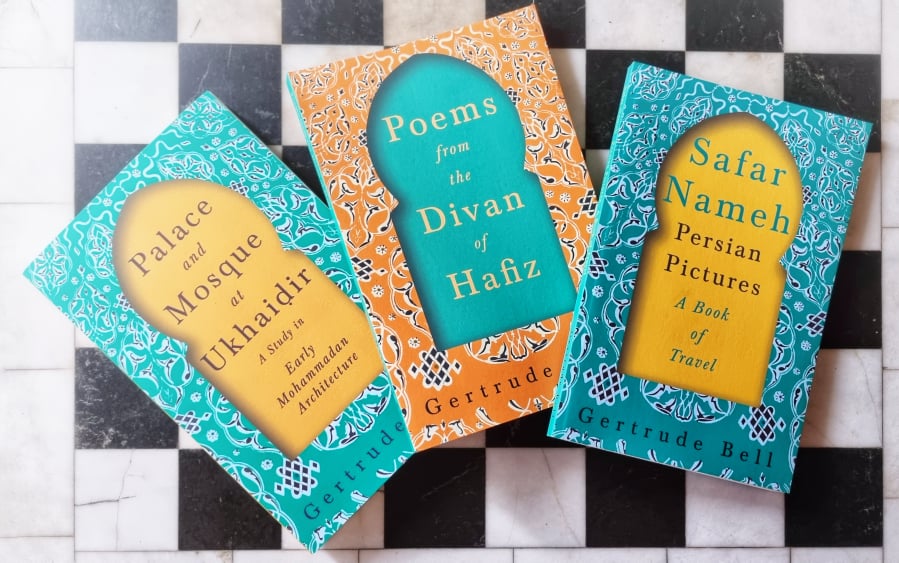
Gertrude Bell’s simple description of a Persian sunrise encapsulates, with figurative overtones, the theme of the books I have been reading lately. In The Silk Roads, she is described as dynamic and fiercely intelligent, brilliant, a mercurial scholar and traveler who knew the region and its people as well as anyone. Portrayed by Nicole Kidman in Queen of the Desert, she is called a Kingmaker for being influential in drawing up the borders of the new nation of Iraq and in bringing King Faisal to power as its first ruler in 1921. But it was only through Safar Nameh that I was introduced to her writing.
She writes so elegantly with a deep perception of places, people, and the relationship between East and West. She speaks of “the careless optimism of those who seek to pile one edifice upon another, a Western upon an Eastern world, and never pause to consider whether, if it stands at all, the newer will only stand by crushing the older out of all existence.”
This is a tiny book of a hundred pages that I thought I would be able to finish in one coffee break, but the writing is too beautiful that I had to savor the lines over and over again.
And for those times when my mind and soul are exceedingly wide awake in wonder, she has the right words… “The world was too lovely for sleep.”
“The regime had understood that one person leaving her house asking herself: Are my trousers long enough? Is my veil in place? Can my make-up be seen? Are they going to whip me?
No longer asks herself: Where is my freedom of thought? Where is my freedom of speech? My life, is it livable? What’s going on in the political prisons?”
“In every religion, you find the same extremists.”
The title takes after the capital of the Persian Achaemenid Empire, but it is an autobiography presented as a graphic novel written and drawn by the author! The two volumes of Persepolis chronicles the life of Marjane Satrapi growing up in Tehran witnessing the downfall of the Shah and the Islamic Revolution, living through the Iran-Iraq War, her high school years in Vienna, and her university life back in Tehran under the Islamic regime.
Persepolis is a memoir, a historical record, a political statement, but also an extraordinarily creative reading experience. Being a newbie to the genre, I had not realized that graphic novels could be this powerful! It is an honest account of a life and a nation, and I admire how it sends out a strong message of how crucial it is to educate oneself to attain freedom, especially the freedom of the mind.
She expounds these thoughts in a later interview with Emma Watson, “I have lived in a dictatorship. There was a ban on everything! Was I less free in my mind? No, I wasn’t. Did I become a stupid person? No, I didn’t. Because no matter how much they looked at me, they could not get into my mind. That belongs to me. And that is under my control if I decide it is. And I can only decide that if I train it. If you don’t use it, it shrinks, and if you use it, it grows. So it is up to us.”
In Volume I, published in 2000, we see a very young Satrapi wishing to be an educated and liberated woman like Marie Curie; and in Volume II, she promises to make her ancestors proud. Remarkably enough, her 2007 animated movie adaptation of Persepolis premiered at the Cannes Film Festival and won the Jury Award. In 2019 she directed the biopic Radioactive starring Rosamund Pike as Marie Curie. Full circle. Watching both films over the weekend turned out to be yet another excellent toast to Women’s Month!
“There is nothing new in the world except the history you do not know.”
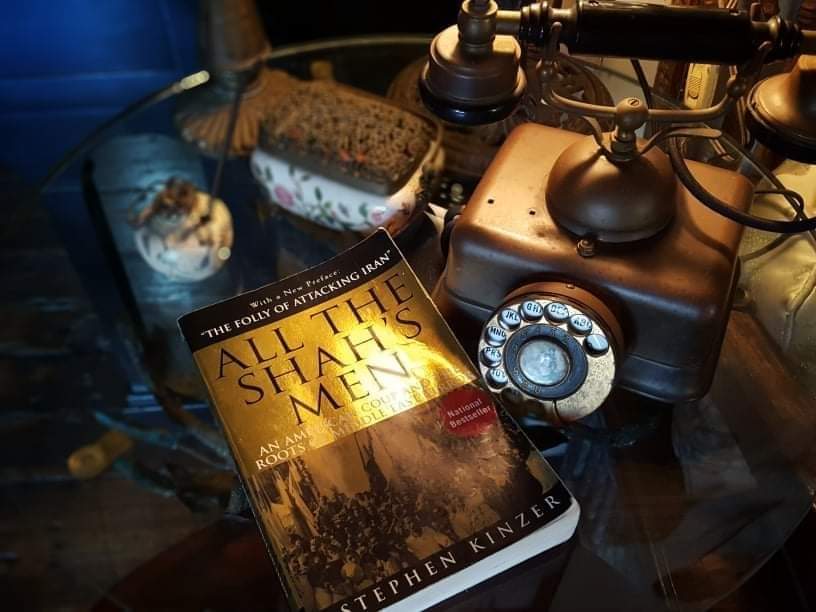
This quote by Harry Truman launches the book into previously confidential details about the 1953 Iranian coup d’état that had me gasping in shock from beginning to end!
It reads like espionage fiction but it is disquieting for the fact that it is nonfiction. It is by far the most comprehensive book I have read on Iran’s modern history. My notes and thoughts will remain private because I wish for my social media accounts to remain zones of peace haha, but I have to say that reading this reinforced my thoughts on Iran’s significance. It made me realize that many major circumstances around the world are ripples of a pivotal event that occurred in Iran more than half a century ago and that this nation continues to be a crucial piece on the chessboard of world history.
The Iranian Jewish main character adds a layer of complexity to an already convoluted political terrain, and that is what sets it apart from the few books I have read about the Iranian Revolution.
Isaac Amin, a poet turned wealthy gemologist, is arrested and accused of being an Israeli spy. His ethnicity and his status incriminates him. He is guilty of the blatant sin of being a wealthy Jew.
But who can hope for a fair trial? “If you think there is going to be a trial you’re going to be very disappointed.” There is only interrogation and torture.
Dalia Sofer writes with a slow burning suspense and unravels difficult matters with a remarkable ease. From affecting scenes of prisoners reciting poetry to each other, to dialogues that confront social issues, to thoughts about religion and family, she breathes into them beautiful subtleties and realities that are literary pearls.
I judged this book by its cover. There seemed something saccharine about it that it took me a while to pick it up. But because of a long-standing personal intention to piece together a literary tapestry of the Fertile Crescent, I finally read it.
How wrong I was! There is absolutely nothing saccharine about post-Revolution Iran or in the physical and psychological tortures of their prisons.
The novel moves back and forth between Isaac in prison, his wife and daughter who take control of their situation in individual ways in Tehran, and a son studying architecture in New York. We see almost nothing of Shiraz, and it takes a while to understand that Septembers of Shiraz is a wistful metaphor and allusion to brighter days that have become irredeemable.




 The Book-Butterfly