Jodhpur is closer to Jaipur, so is Bikaner, and then Jaisalmer would have been accessible from there. These names are not words in my head, but meters of music, rhythm, and mystery that lure me from far away. These are some of the cities in the state of Rajasthan that have been playing in my mind ever since the idea of an India itinerary was formed.
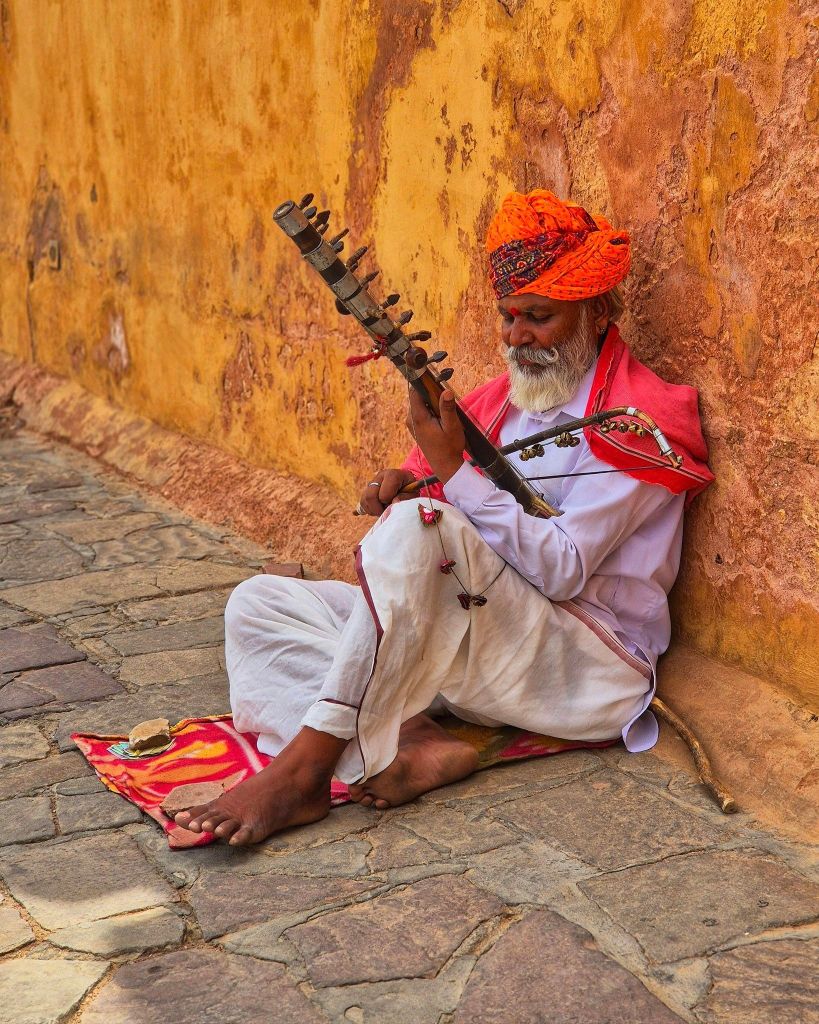
I knew I wouldn’t be able to cover all these cities in one trip with the kind of traveling that I do — the kind that asks me to avoid breezing through them, the kind that urges me to sit still and experience a few sunrises and sunsets in them, the kind that begs me to listen to them. After all, each city has its own music. Each city sounds different. And it is waking up to this kind of music that exhilarates me in my travels.
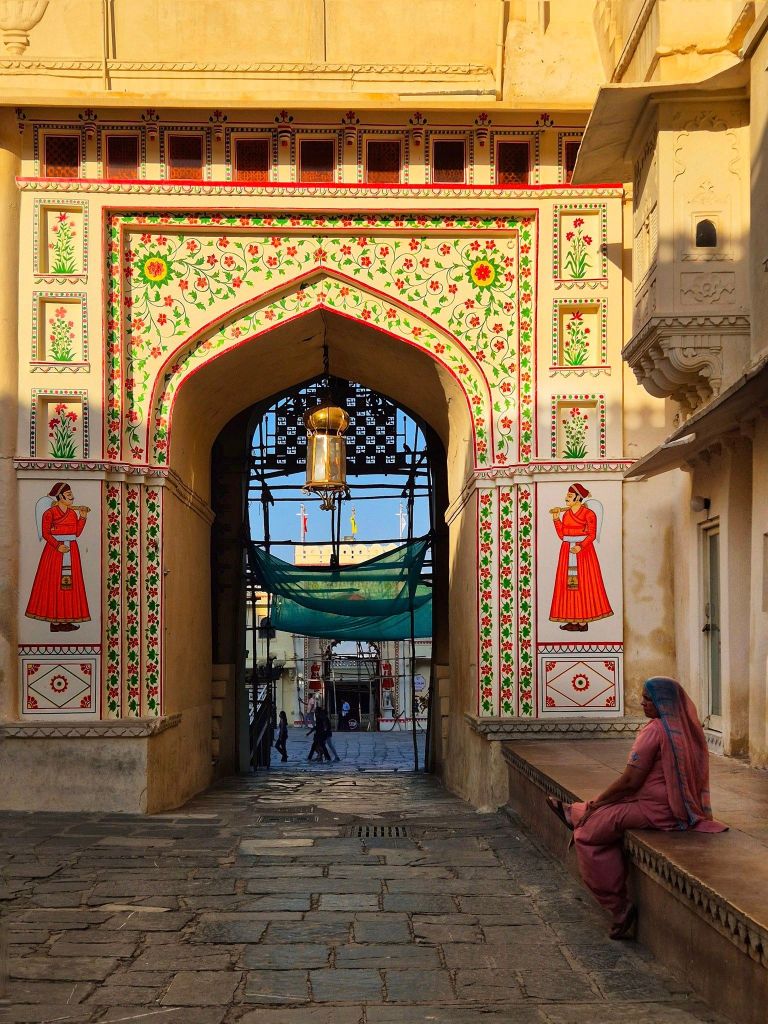
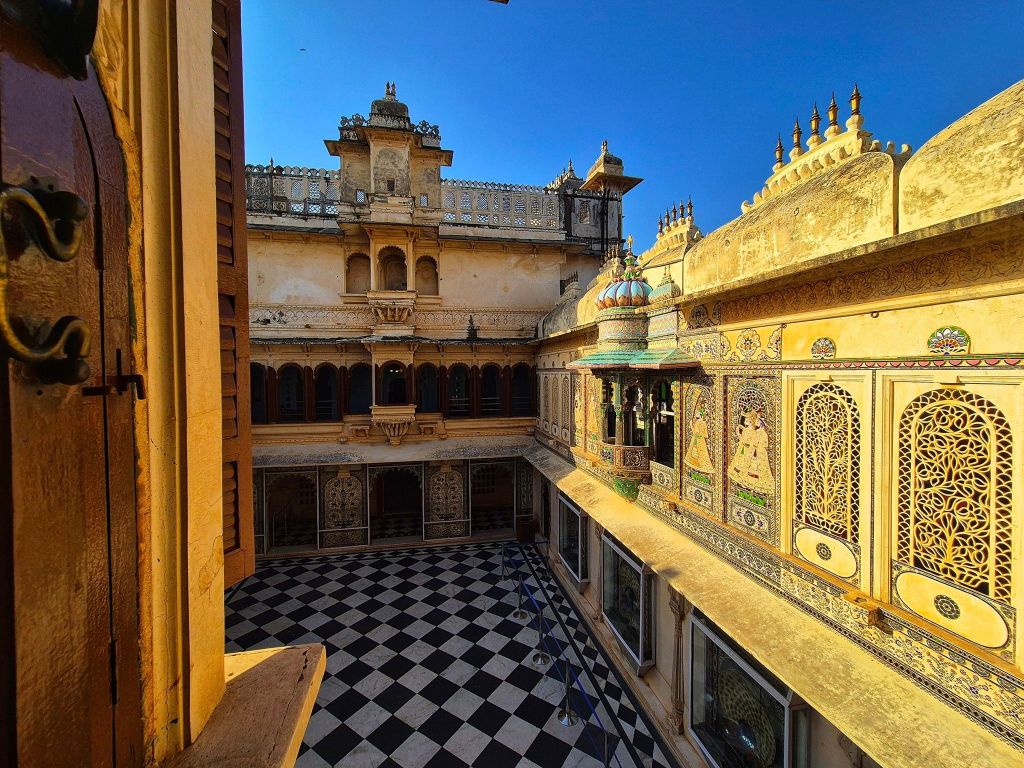
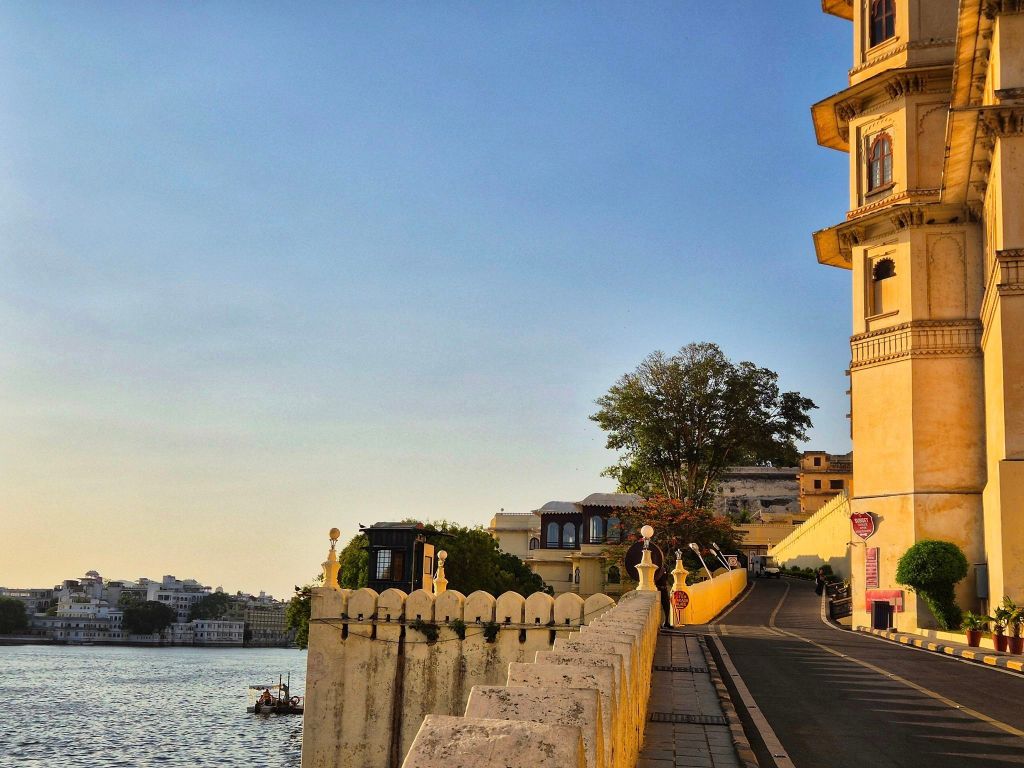
Udaipur was not in the plan. But when the distance between two places are no longer measured in miles but by a melodic strain one can’t help but follow, you follow.
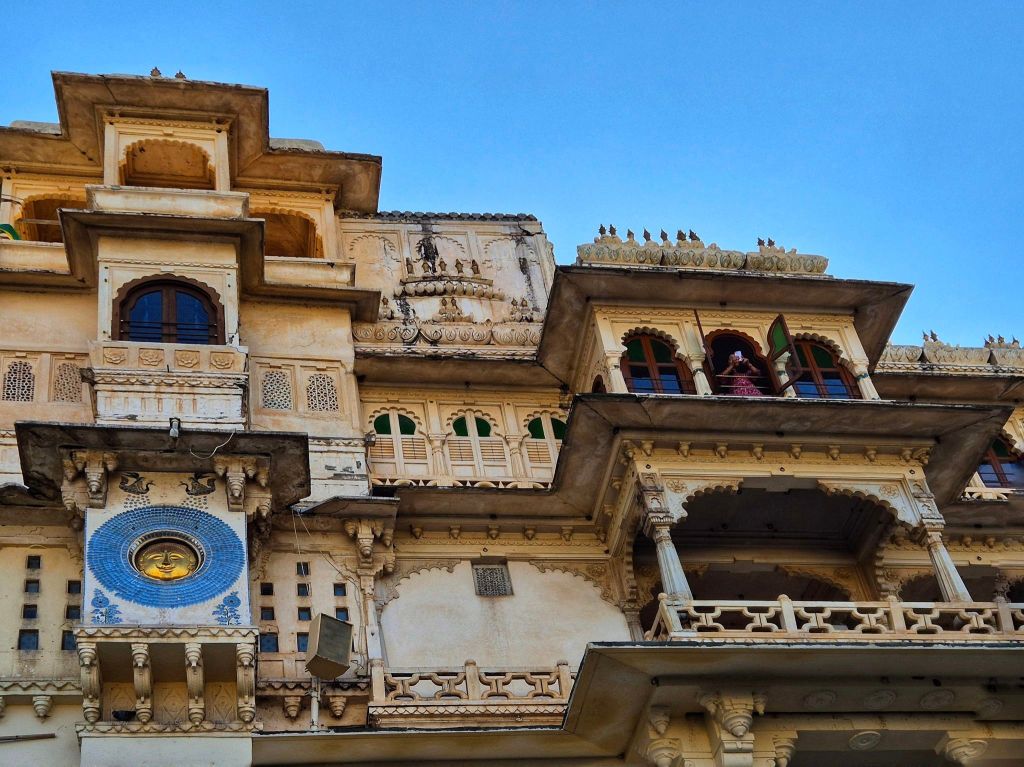
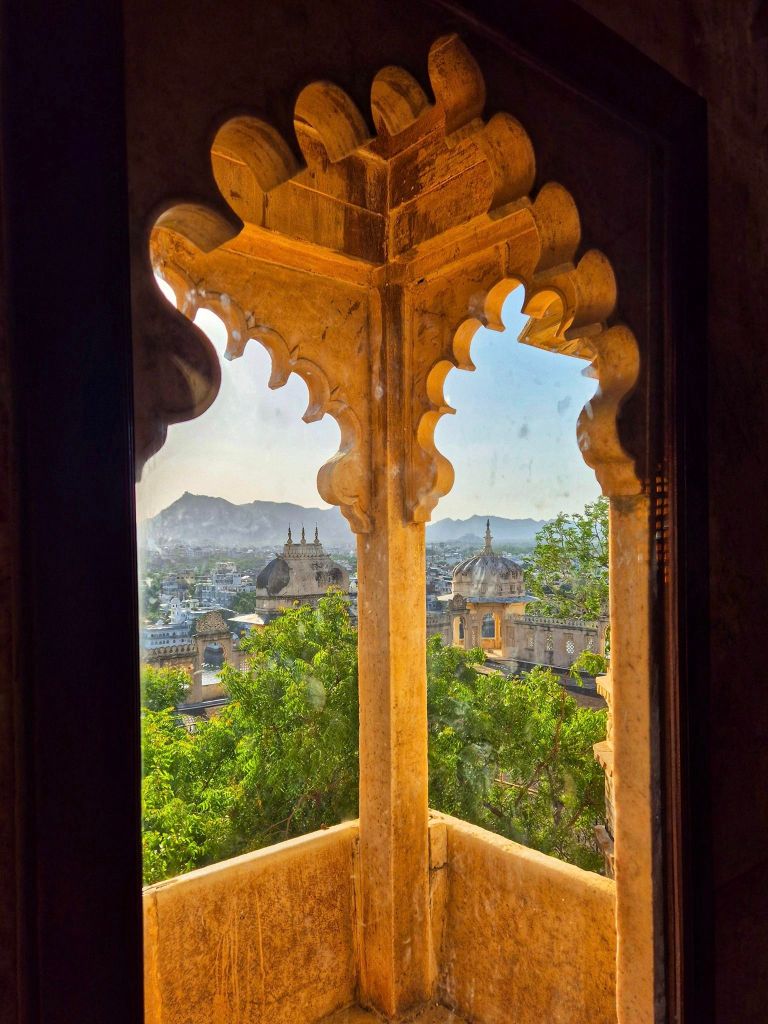
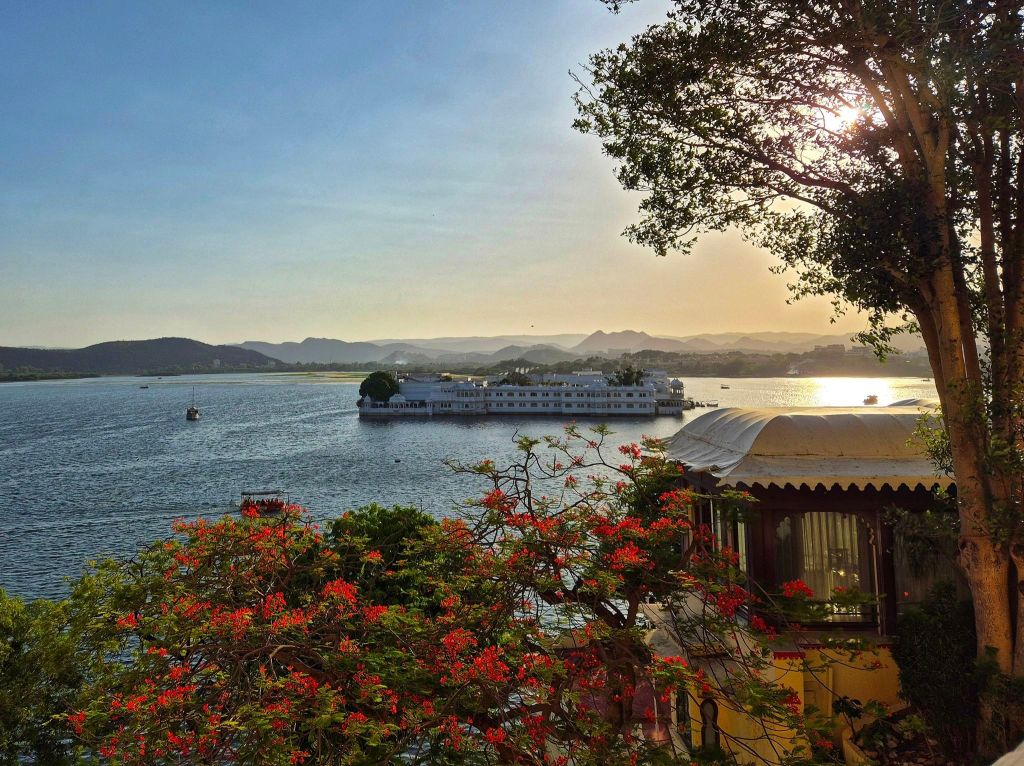
And now I know how this Mewar kingdom founded in 1559 sounds. It sounds resplendent.
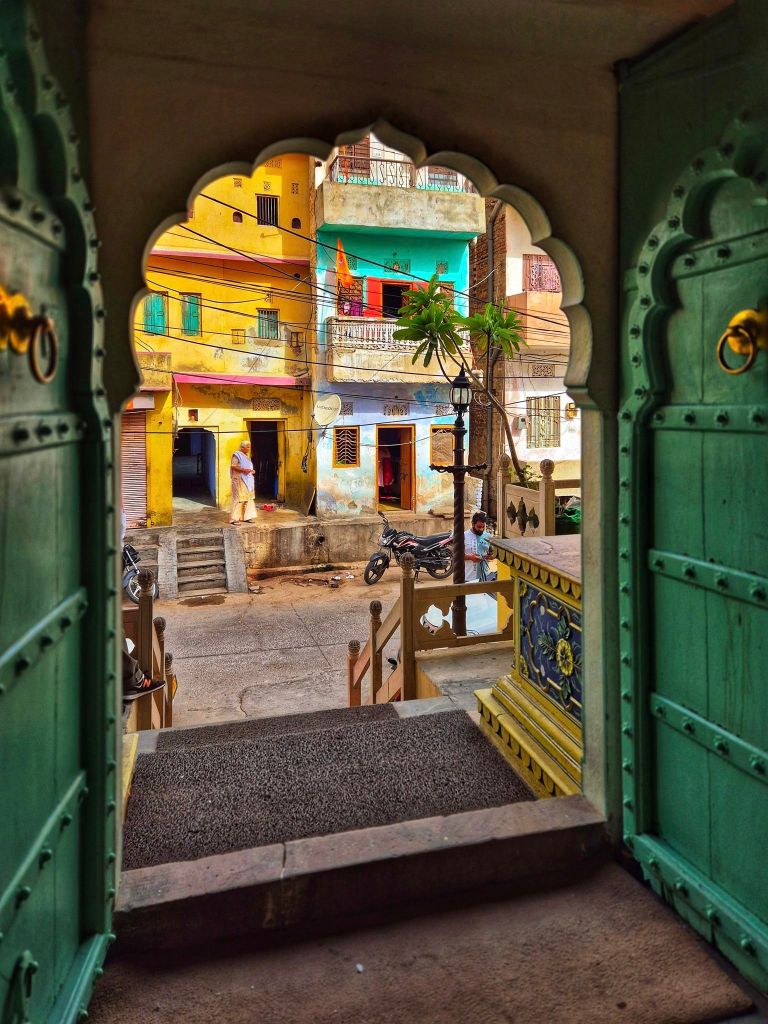
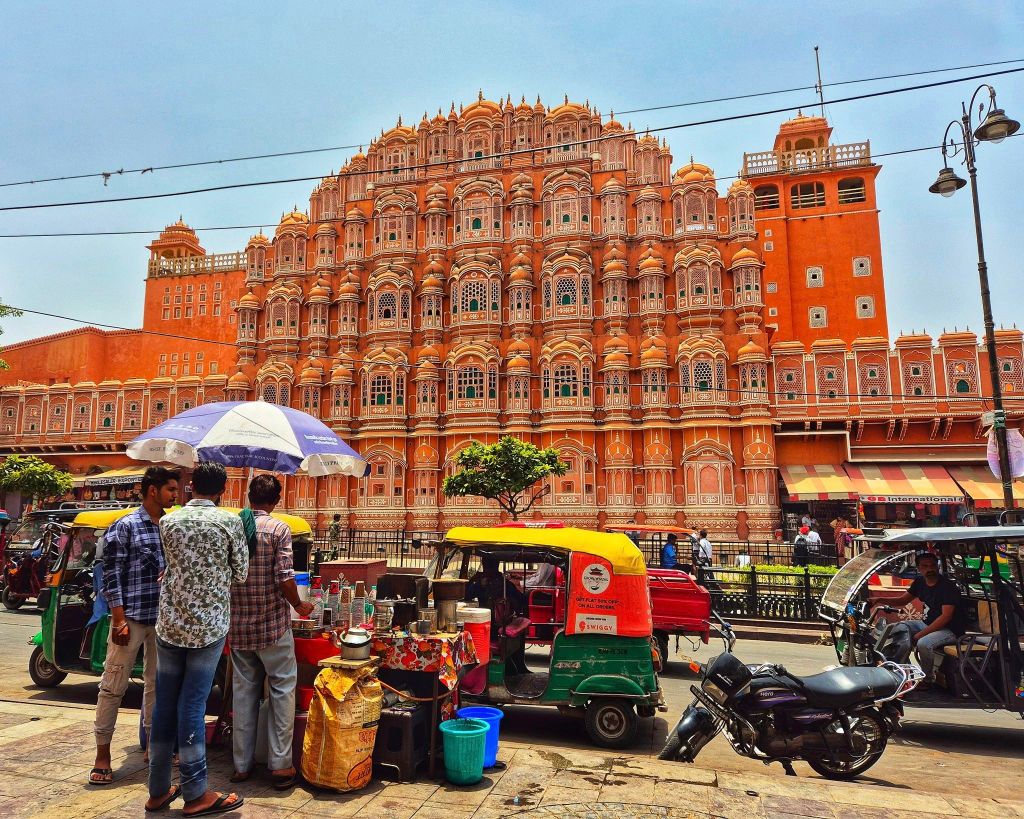
The longer you stay in Jaipur, the deeper you plunge into color.
The white marble and the red sandstone for the greatest edifices of Uttar Pradesh — the Taj Mahal and the Agra Fort — were transported by elephants from Rajasthan.
And traveling in Rajasthan is a journey through ancient feats of architecture, engineering, craftsmanship, space and time.
If you do not go through Rajasthan in haste, I promise you, you will be colored by it.
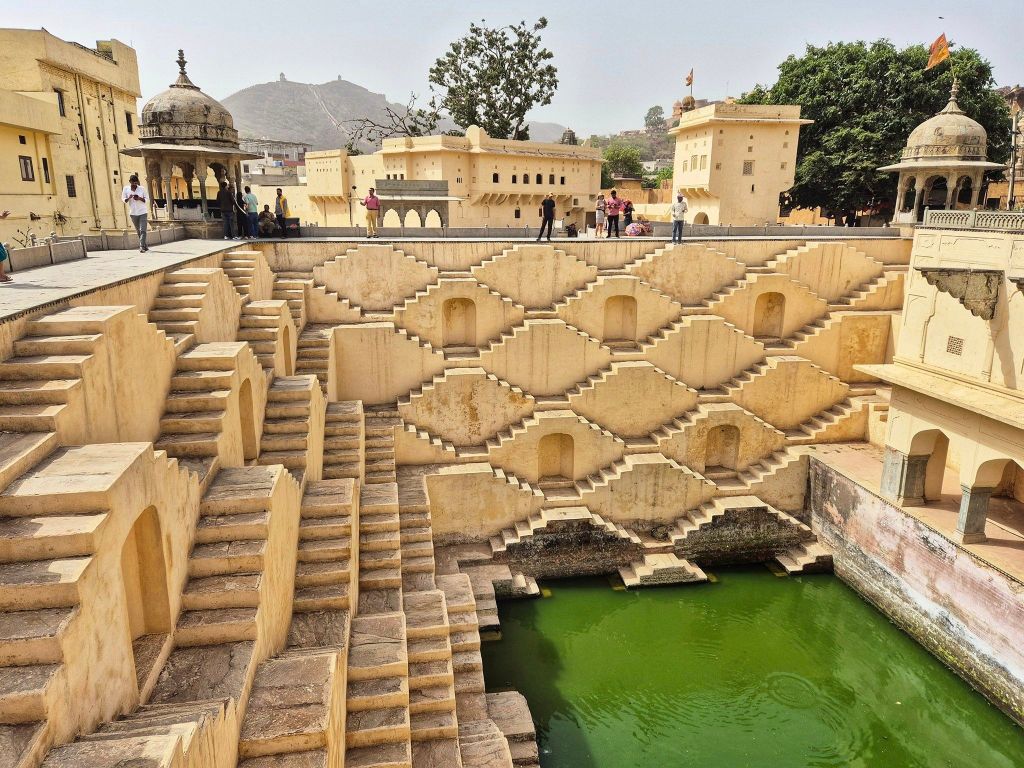
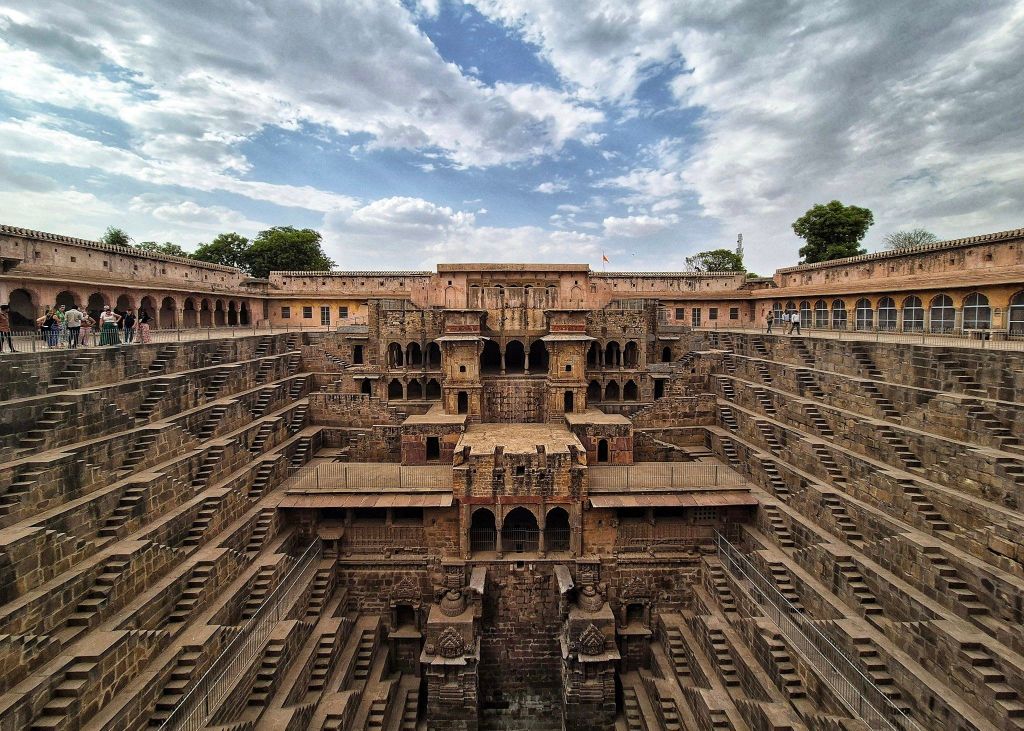
India’s arid regions gave birth to stunning baoris, or stepwells, that were mainly built as cisterns, but also functioned as sites for religious ceremonies, rituals, and cool resting places.
There are approximately two to three thousand ancient stepwells in India, and I’m fortunate enough to have visited two here in the state of Rajasthan: Panna Meena ka Kund, a 16th century picturesque stepwell in Jaipur, beautifully contrasting the more massive Chand Baori in Abhaneri that was built between the 8th and 9th century.
Can there be a better lesson in strength, function, and beauty, than a baori?
Oh to be in the locale of the Jaipur Literature Festival — the festival that has brought illustrious figures such as Salman Rushdie, Michael Ondaatje, Ian McEwan, and other stars to its marvelous gates! (What can one expect from a literary feast directed by none other than William Dalrymple?)
Unfortunately, I missed this year’s festival by several months. But are the Sunday Book Markets and their bookstores evidence enough that the love of books is alive and well in Jaipur?
Rajat Book Corner
Rajat Book Corner’s shelves were cascading with the best selections. They had Pamuk, Mahfouz, Proust, recent literary prize winners, the Indian greats, among many others. So you can imagine the argument between my other selves against the practical one who kept whispering firmly, “Just one book, just one book.”
After a while of intense internal struggle, I finally went with something I hadn’t seen in Philippine bookstores: Pyre, a 2023 longlister of the International Booker Prize written by Perumal Murugan.
“Good choice,” said the man at the counter.
“Thank you,” I answered, thinking it was something he always said to bookstore clientele.
“It’s a great book! We discussed this in our bookclub.” That’s when I realized he meant it. He had read Pyre. To my surprise, he added, “Wait. I think this is a signed copy. The author signed it when he came here.” And indeed, it was!, “Wait. I think this is a signed copy. The author signed it when he came here.” And indeed, it was signed!
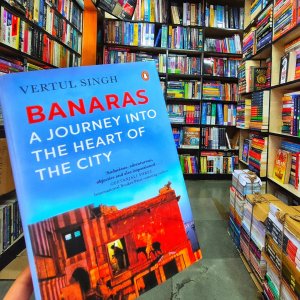
For yet another surprise, he recommended a book based on my choice: “Banaras” by Vertul Singh. And because readers have a sixth sense that can detect another reader’s literary preference, it certainly looked like a book I would love to read. Practical self was defeated. I bought it. But I think the bookseller just pointed me to my next destination in India if I get the chance to return.
Amidst the scent of spices and sandalwood, there is a whiff of book pages in Jaipur that a reader’s nose cannot help but follow. These are my souvenirs from following that trail.
Isn’t it a wonderful thing when you allow books to lead you to places, and when you let places lead you to books?
These mangoes were purchased from a side street in Jaipur to refute Aimee Nezhukumatathil’s claim that — *gasp* — India’s Alphonso mangoes are sweeter than Philippine Carabao mangoes!
Don’t get me wrong. I love A.N. She is the most wholesome and heartwarming author one can find on bookstore shelves these days. Her World of Wonders still keeps my heart soft. Before leaving for this trip, I suggested her latest book, Bite by Bite: Nourishments and Jamborees, to two friends who are also traveling, and then hinted that we discuss it over wine when we’re all back in Dipolog. But after scanning the first few pages, I ended up reading the whole thing even before I left! It was the last book I read in May.
I just had one problem with it: The mango verdict.
“I am the daughter of a man from India and a woman from the Philippines,” She writes. “They have argued all my life about whose mangoes are the sweetest, the best. Both have asked me to take sides, and for years I’ve refused until now. Alphonso mangoes, hands down. From India.”
And these were the lines that led me to a dark side street in India. I began to worry on my way back to the haveli. Not for my safety, but for the reason that, from within the bag hanging from my hand, the unbelievable fragrance of the mangoes were already invading my nostrils! I think my heart raced when I sliced one open with my Swiss knife.
My verdict? Maybe THAT will endanger my safety! Haha!
What I realized, however, as the two juicy mangoes were immediately reduced to seed and skin, was that THIS is nourishment — tasting, exploring, discovering, learning, reading, traveling, and eating the mangoes of another country. Once in a while, our hearts need this.
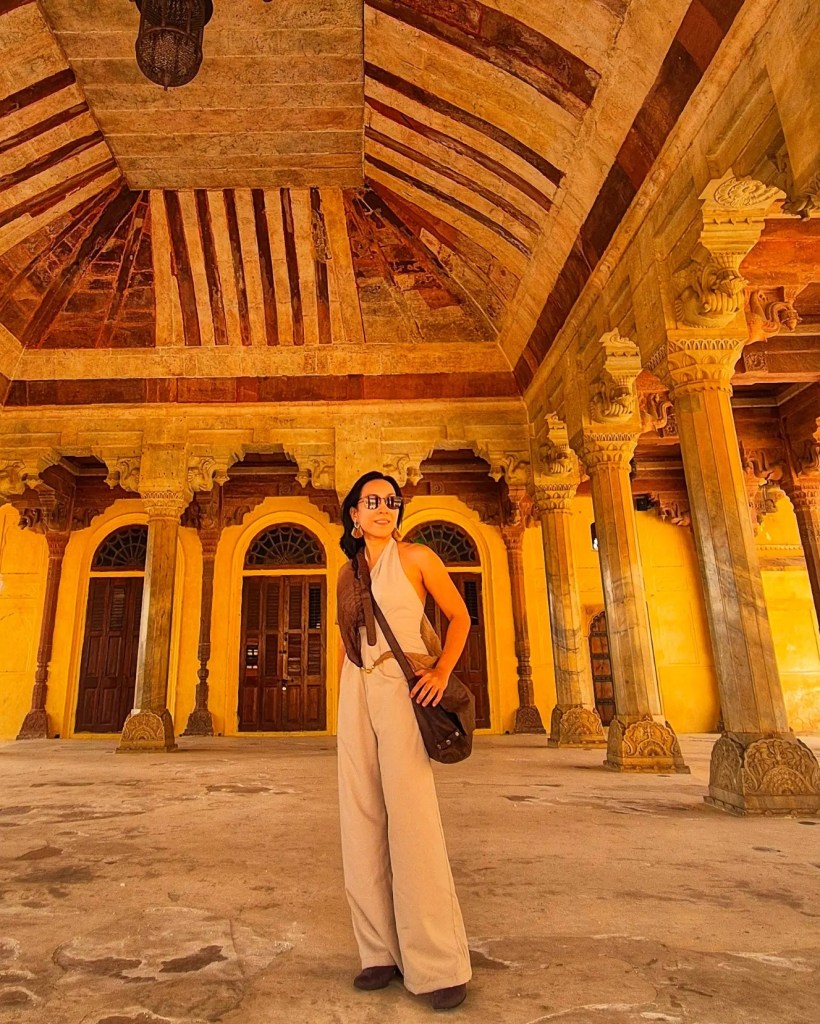
In Jaipur, this is how each day arrives. There are birds as timekeepers to wake me through the low windows of the 250-year-old haveli where I’m staying.
I’ve only been here for three days but it looks like I have already established the beginnings of a library on a small marble table.
Outside, the city is stirring. And I know that once I walk through one of Jaipur’s magnificent city gates and into its chaotic main streets, there will be an assault on the senses. But for a few silent hours, there will only be the duet of the chirping birds and the rustling of pages, and a reading traveler Mahmoud Darwish would describe as, “a woman sunbathing within herself.”
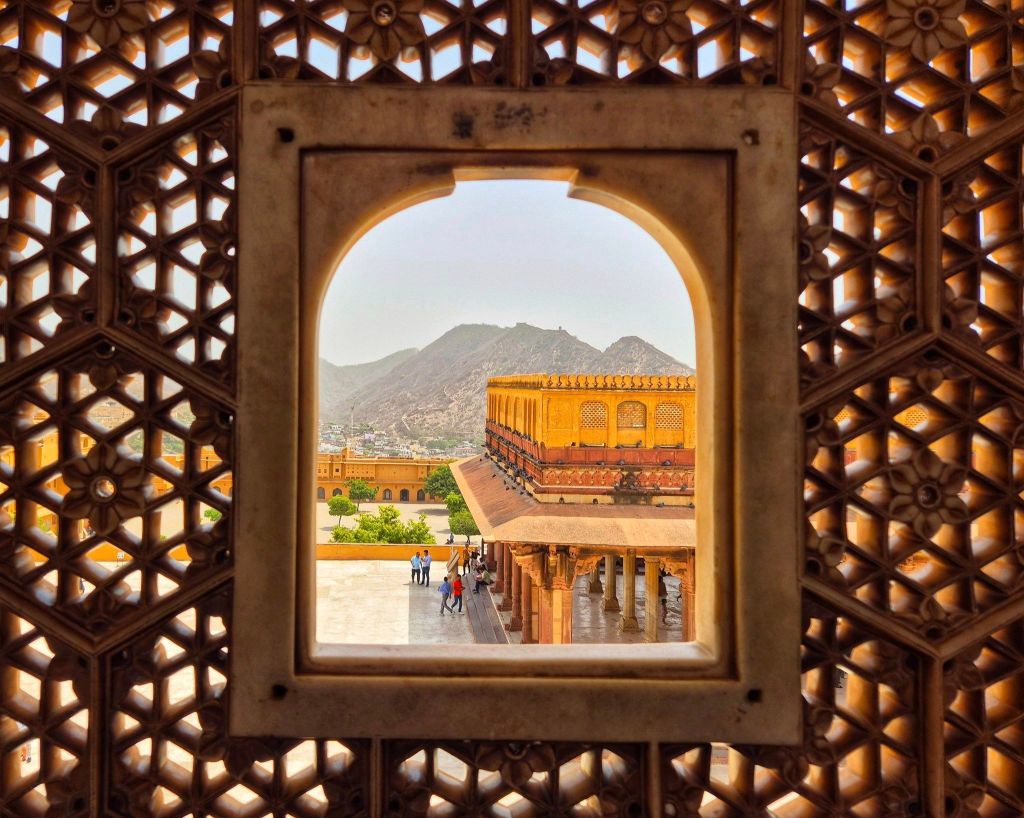
A knowledgeable guide taught me how to distinguish between Rajput and Mughal architecture as we walked through the profusion of terra cotta pink which is Jaipur.
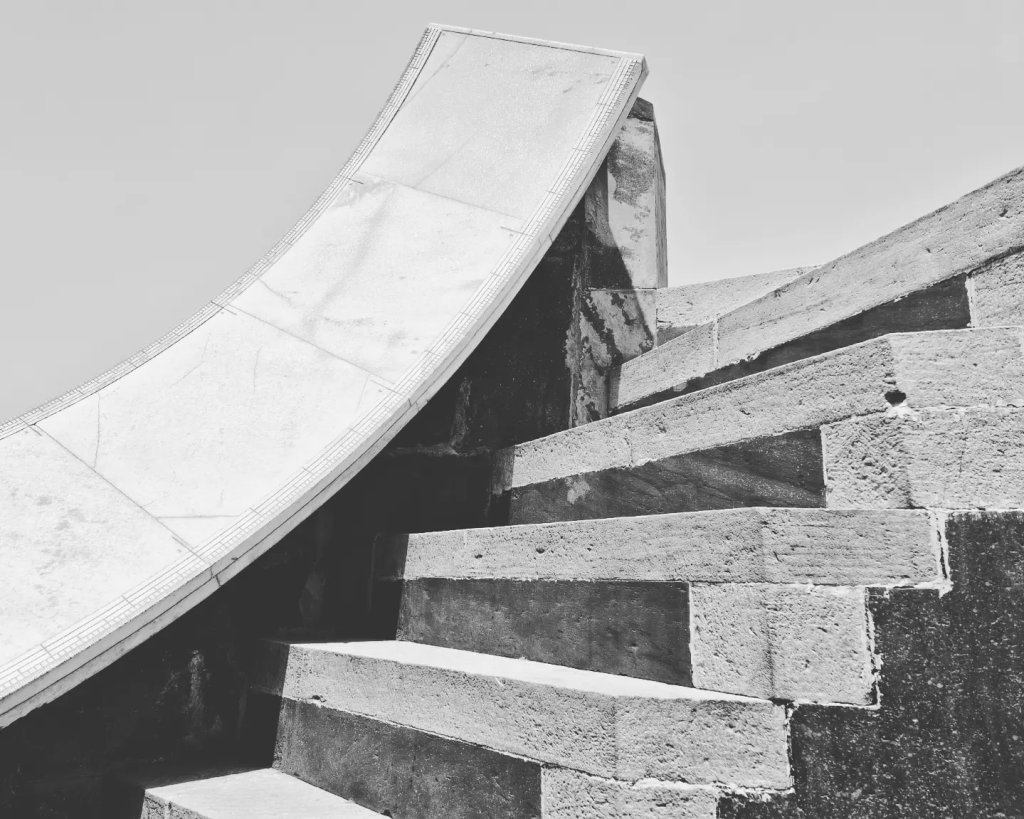
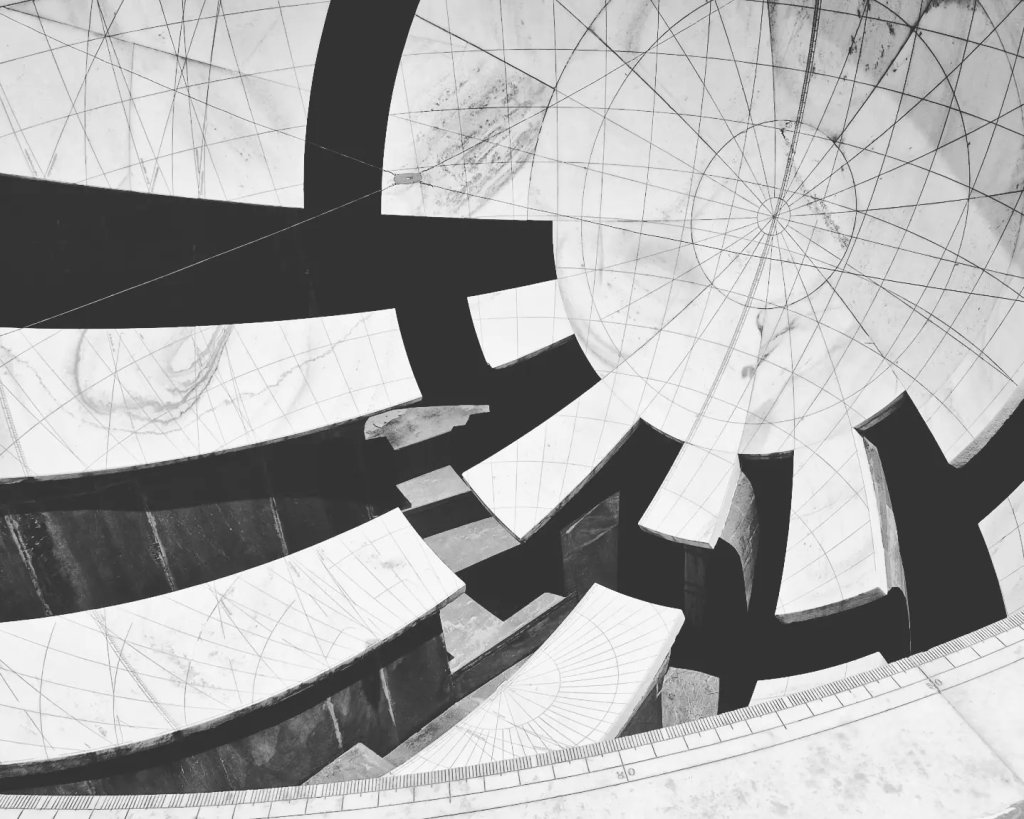
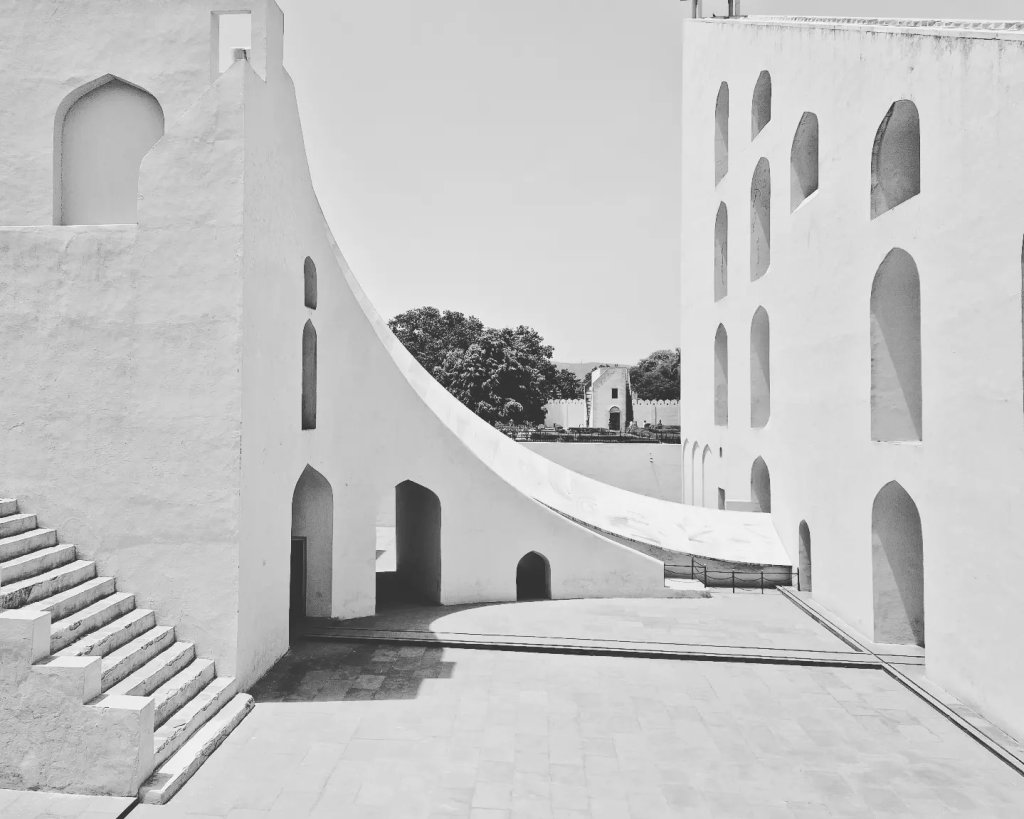
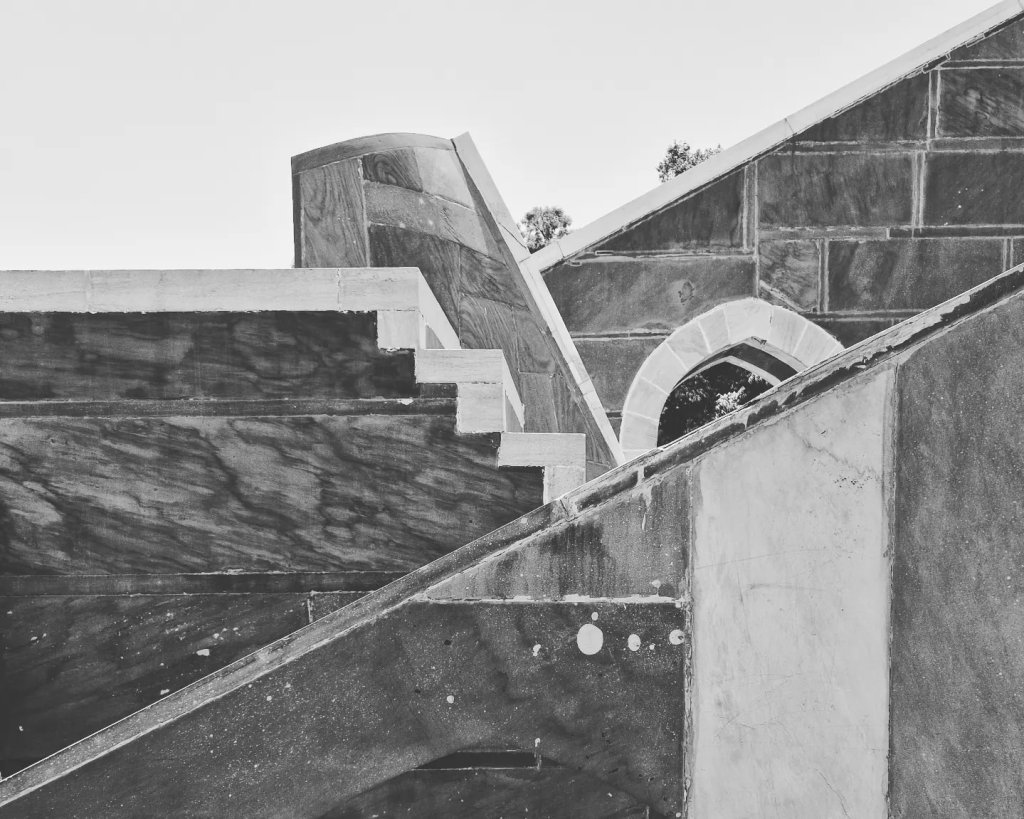
But to his surprise, it was here that I inspected the structures more carefully despite the onslaught of the solar noon. What looks like modern art installations amidst the flowery and intricate designs for which Jaipur is known, is Jantar Mantar. And it is not modern.
It is an astronomical observatory built in 1716CE by Jai Singh, the Maharajah of Jaipur. Jai Singh was born in 1688, and though he was crowned as monarch when he was but eleven years old, he continued his studies in philosophy, art, architecture, city planning, and astronomy. His passion for the latter manifested in the way he planned his city according to mathematical and astronomical patterns; especially in Jantar Mantar, which is the largest, most accurate, and most well-preserved observatory out of the five that he erected throughout India.
“Science,” an Italian poet once wrote, “was moved by beauty, and by the desire to understand it.” Jantar Mantar exhibits this.
Without meaning to, I read Paolo Maurensig’s three chess novels in chronological order of publishing dates. The Lüneburg Variation, Theory of Shadows, and Game of the Gods. The sequence in which I read these books were, admittedly, influenced by Goodreads ratings. Maurensig is quite obscure in my part of the world, so I had to consult Goodreads despite my distrust of its stars. Game of the Gods has the lowest rating among the three.
But I enjoyed it! It’s not exactly a literary masterpiece, but I found it to be an easy and entertaining read that has its gems. I think the low ratings come from readers who have particular expectations. Those who read this for chess will soon realize that it’s not wholly about chess. Those who read this for its biographical aspect might be disappointed because the story is mostly imagined from the little that the media knows about Indian chess grandmaster, Malik Mir Sultan Khan, who enthralled the chess world in the 1930s by defeating world champions but soon faded into the night sky like a shooting star.
The passages that describe the incorporation of Indian philosophy and thought in Sultan Khan’s games was what I appreciated the most. The book also introduces the reader to chaturanga, the precursor of chess, that had a more sacred aspect to the game, and wherein its player had to transform himself in order to succeed.
And from what this reader can conclude from the third of Paolo Maurensig’s chess novels, the “game of the gods” is not chess. It is fate.
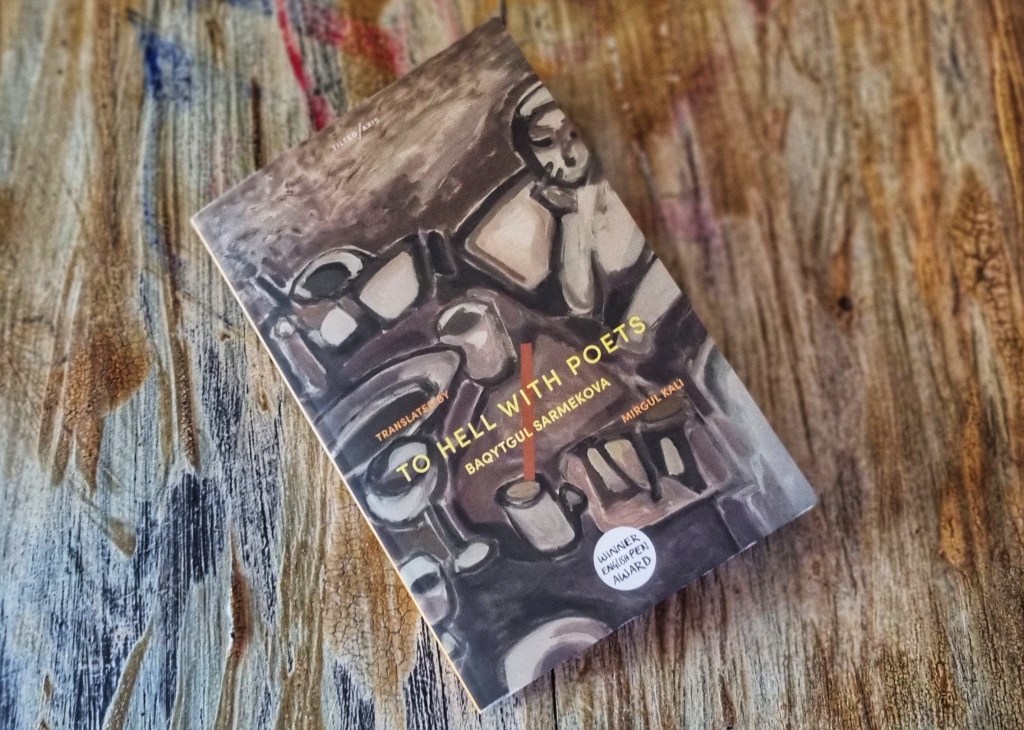
Having loved the Hamid Ismailov Uzbek trio published by Tilted Axis Press, it was exciting news to me when they announced the release of a Kazakh work earlier this year.
When there’s a dearth of Central Asian literature in circulation, what’s a girl (who arranges her books by political geography and who loves to broaden the scope of her literary horizons) to do? She rushes to get her hands on it.
Any reader could have finished this in one sitting, but I read the stories bit by bit and in random order — as one should read anthologies, I’ve been told. Although the reason I took it in small doses was because of its bleakness.
I’m grateful to have read my first Kazakh work, but sad that it turned out to be an intimate peek into a joyless and disquieting world. Even its sunshine felt gray.
Tilted Axis Press describes this as “a sharp and honest rendering of daily life in Kazakhstan.” If it is, it makes you wonder if there is ever room for wonder or an enthusiasm for living in such a place, because one cannot find any of that in this volume.
Nevertheless, this book succeeds in wakening a slumbering part of one’s consciousness. And so I look forward to a Tajik and Kyrgyz release, Tilted Axis Press!
Literature continues to witness the exciting rise of old stories and histories told in new perspectives. We now have Greek mythology narrated through the vantage point of the misunderstood or footnoted women, we have world history that challenges purely Eurocentric lenses, the Crusades recounted through the Arab viewpoint, and various retellings of otherwise prevailing narratives that have been unquestioned for years.
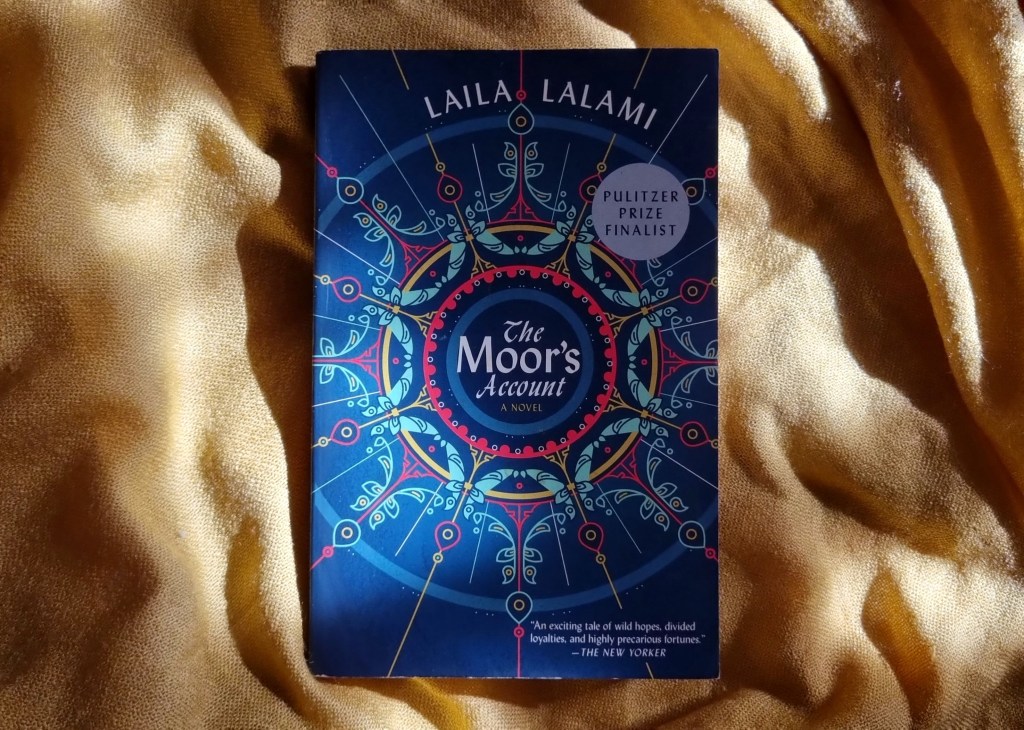
The Moor’s Account falls in the category of books that offer readers a new point of view. It is an imagined memoir of the first black explorer to the Americas. Although history will not remember him as such, as he was the Moroccan slave of Andrés Dorantes de Carranza. Together they would be half of only four survivors of the unfortunate Narváez Expedition, a Spanish expedition that set sail in 1527 with the aim of establishing settlements in La Florida.
The Moor in question is Mustafa al-Zamori, baptized Estebanico when he became a slave. This event at the beginning already hints at how, through an imposed name change, an entire history is erased: “A name is precious; it carries inside it a language, a history, a set of traditions, a particular way of looking at the world.” It was the first of many erasures, Estebanico would later learn.
My first attempt at reading this book was unsuccessful, but the recent announcement of Pulitzer nominees reminded me of this 2015 finalist that has remained sitting on my shelf for a while. Now that I have finally reached its last page, I have realized that the value of this novel lies in its reflections on identity, in its acknowledgment of the precarious power of stories, and in its critique on how history is written — how “unfounded gossip can turn into sanctioned history if it falls in the hands of the right storyteller.”
“How strange, I remember thinking, how utterly strange were the ways of the Castilians — just by saying that something was so, they believed that it was. I know now that these conquerors, like many others before them, and no doubt like others after, gave speeches not to voice the truth, but to create it.”
After dodging an ambush led by Indians, I found in Ruiz, a member of the expedition, an arrogant colonizer who felt victimized when natives tried to protect what was theirs — an embodiment of entitled powers that still plague the present: “‘Do you think we did something to them?’ Ruiz said. ‘No one did anything. That is just how the heathens are. Look what they did to me. He pointed to the dark socket where his left eye had been, oblivious to the role he had played in his own predicament.’”
This book does not contain literary acrobatics. The style is quite simple. But it lends the reader old truths and a new set of eyes.






























 The Book-Butterfly