Wilfrido D. Nolledo: But for the Lovers

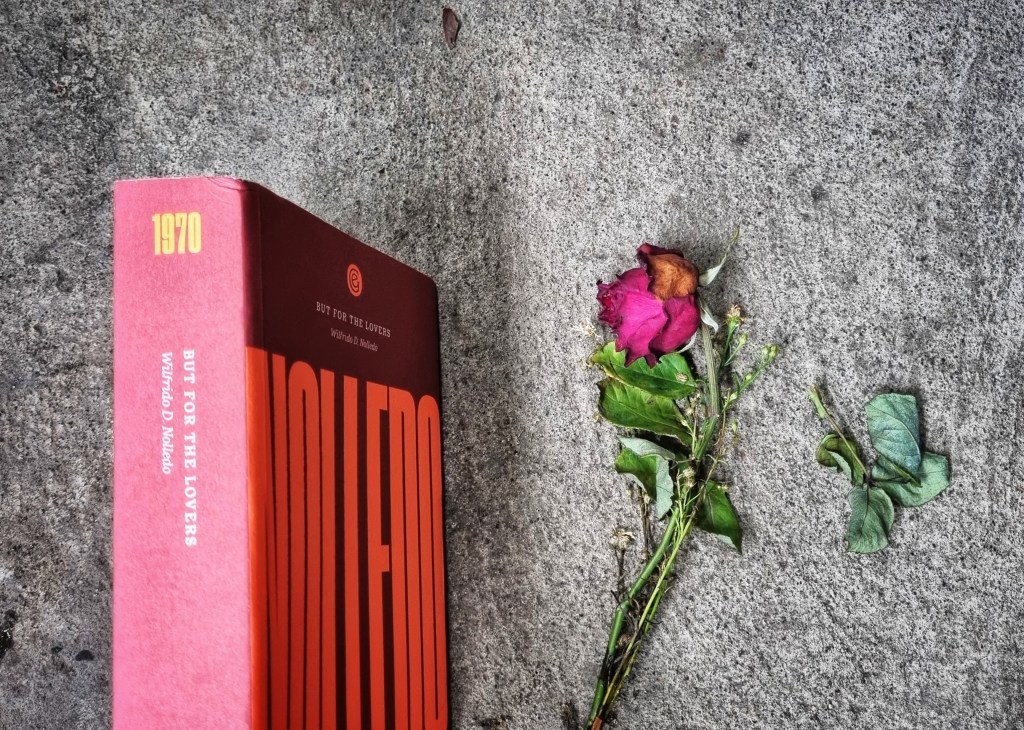
Before Salman Rushdie there was Wilfrido Nolledo. We find the same clever wordplay, but Nolledo reigns supreme in five languages and a couple of Filipino dialects or more, inclusive of Italian musical terms and Tagalog (they did not call this a feat of language for nothing); there’s that humor that catches by surprise when misery is expected; political caricatures and blaspheming characters that provoke fatwas from the high priests of governments; and those vulgarities that examine moral codes as though asking whether we’d also find war and injustice obscene.

Thanks to countless movies, documentaries, and novels, my generation can conjure mental images of what Paris and other European cities looked like in the final days of WWII, but only few can picture the desolation and the confusion of Manila when it was the bomb-ridden chessboard of the imperial powers. Nolledo encapsulates it for us. But one must not expect a literary Amorsolo, because here is a postmodern Hieronymus Bosch.

“And won’t we be doing the reader an injustice by presuming he can’t digest such stuff?” Nolledo asks in response to a suggestion to cut the manuscript to keep readers interested. And so, signifying that it was written not to sell but for art, he gives it to us, gives it to us hard.

It is not going to be everyone’s cup of barako. It is an explosive halo-halo that is difficult to swallow at times. A revolution on one’s literary tastebuds. Before Rushdie there was Nolledo, but I am only discovering this now. It’s time we did.

And yes, I read this for Valentine’s. Haha!

Jose Rizal’s Binondo

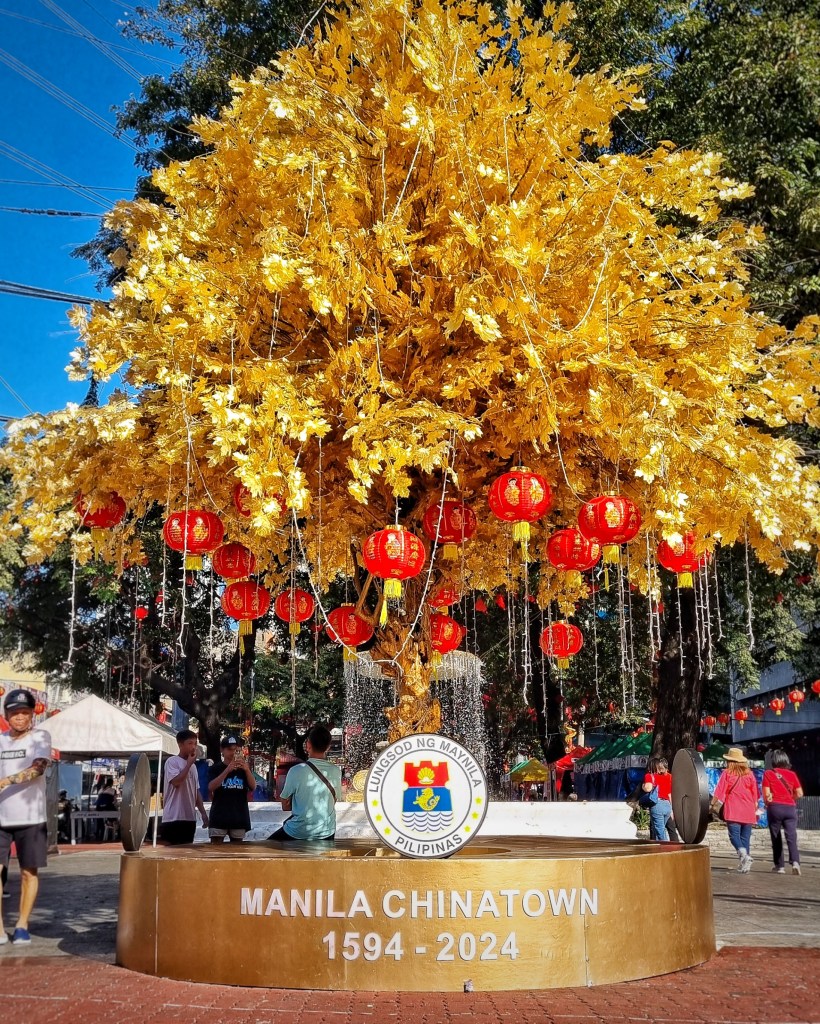
Binondo prides itself on being the oldest Chinatown in the world. Established in 1594, it is, as one would expect, steeped in history and stories. 

Today’s walking tour (Jose Rizal’s Binondo) with THE Ambeth R. Ocampo and Ivan Man Dy, explores what is not commonly known to Filipinos: The Manila in Jose Rizal’s novels takes place outside of Intramuros and is instead set in Binondo and neighboring San Nicolas, Santa Cruz, and Quiapo.

From following Ibarra’s footsteps in the opening of Noli Me Tángere to the the site of the opium den where Kapitan Tiago ended up, we walked through Binondo’s tiny alleys (one aptly named Hormiga after the Spanish word for ant), past Antonio Luna’s birth house and the many storied nooks of Binondo. 

For the book signing scheduled at the end of the tour, after a filling lunch at Ilang-Ilang Restaurant, I brought my copy of Cabinet of Curiosities — Mr. Ocampo’s latest book, which I read last month and which he signed today after confirming if my first name is really Miracle. It was an apt choice because this tour seemed to be a continuation of the book as we witnessed nonverbal proofs of Philippine culture and heritage. History, in the strictest sense, relies on written sources, but Mr. Ocampo highlights this need to trace the past in other ways when the document trail encounters a dead end. “History not only comes from archives and libraries; sometimes it comes from paintings, music and other forms of art,” and oftentimes, cabinets of curiosities. Binondo is a giant cabinet of manifold curiosities.

“History is not always what we want or how we imagine it,” is another line from Cabinet of Curiosities that rings true. Not only did I discover lesser-known aspects of Philippine history today, but I also learned about our National Hero’s more human side. What continues to leave a pinch in my heart, however, was Mr. Ocampo’s remark on what would happen if Rizal were alive today. Believing that he would continue to voice out what most of us would not like to hear, “He is someone that we would shoot all over again.”

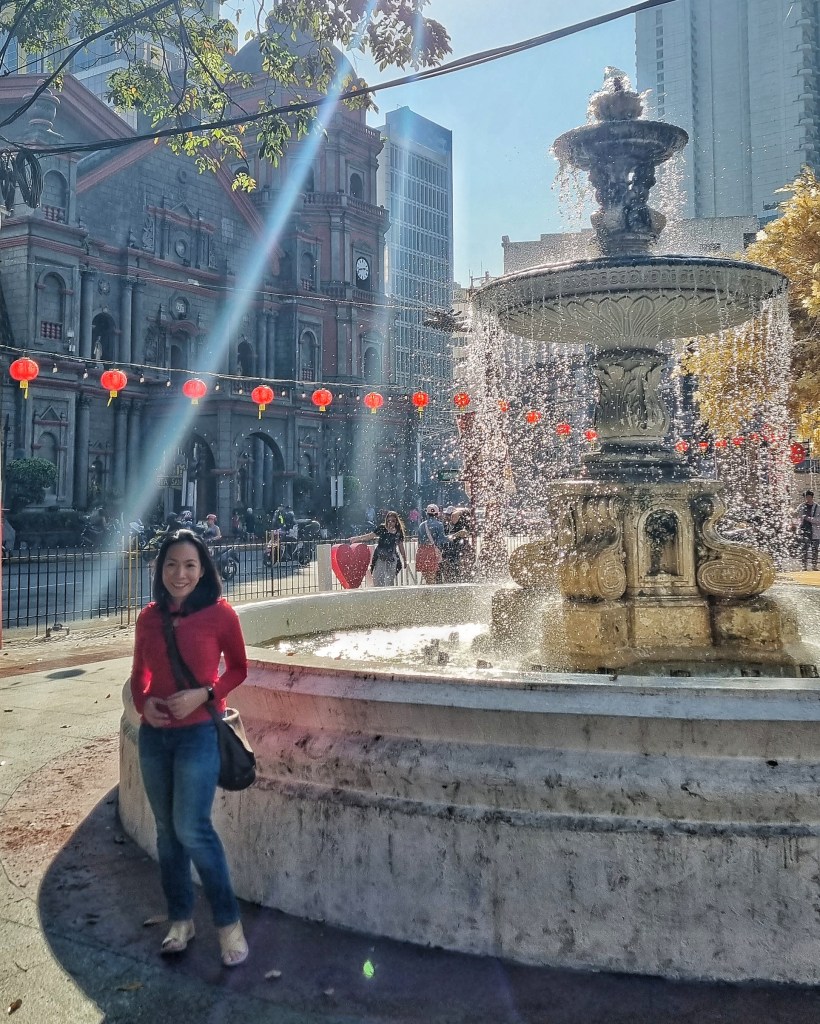
I’m extremely grateful to Gabi for thinking of me when a slot for the tour became available. Being both early birds, we arrived at the Binondo Church an hour before everyone else and we  took shade under four hundred years of history. Built in 1596, the original structure has gone through typhoons, the great earthquake of 1863, and the destruction of the Second World War. Its three-phase reconstruction was completed in 1984 and it remains the centerpiece of Binondo. And there we were, two history fangirls, whispering about politics, religion, and life, hushed by the weight of our national history and our personal histories, learning that these difficult topics should not necessarily be avoided, but be discussed with utmost respect and humility. Moreover, it was meaningful to share this experience with someone who understands that one of the best things about learning our history is that you meet pieces of your heritage, you meet pieces of yourself.