In Jaipur, this is how each day arrives. There are birds as timekeepers to wake me through the low windows of the 250-year-old haveli where I’m staying.
I’ve only been here for three days but it looks like I have already established the beginnings of a library on a small marble table.
Outside, the city is stirring. And I know that once I walk through one of Jaipur’s magnificent city gates and into its chaotic main streets, there will be an assault on the senses. But for a few silent hours, there will only be the duet of the chirping birds and the rustling of pages, and a reading traveler Mahmoud Darwish would describe as, “a woman sunbathing within herself.”
A knowledgeable guide taught me how to distinguish between Rajput and Mughal architecture as we walked through the profusion of terra cotta pink which is Jaipur.
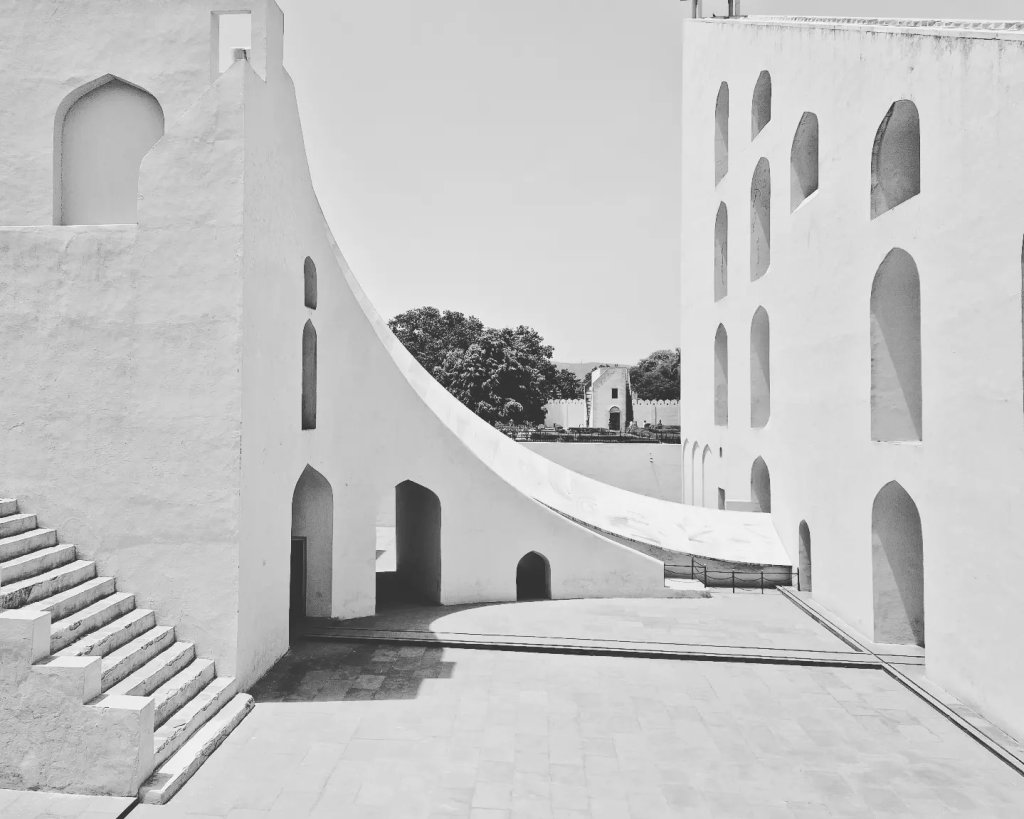
But to his surprise, it was here that I inspected the structures more carefully despite the onslaught of the solar noon. What looks like modern art installations amidst the flowery and intricate designs for which Jaipur is known, is Jantar Mantar. And it is not modern.
It is an astronomical observatory built in 1716CE by Jai Singh, the Maharajah of Jaipur. Jai Singh was born in 1688, and though he was crowned as monarch when he was but eleven years old, he continued his studies in philosophy, art, architecture, city planning, and astronomy. His passion for the latter manifested in the way he planned his city according to mathematical and astronomical patterns; especially in Jantar Mantar, which is the largest, most accurate, and most well-preserved observatory out of the five that he erected throughout India.
“Science,” an Italian poet once wrote, “was moved by beauty, and by the desire to understand it.” Jantar Mantar exhibits this.
On one of my trips to Indonesia, I dressed up as a bride in traditional wedding clothes for fun. Had I known about colonial Indonesia’s custom of “practice wives”, it probably would have cast a cloud on my idea of fun a decade ago.
A “practice wife” is a village girl who is married to a ceremonial kris (not a proper noun but the noun) proxying for a nobleman she has yet to meet. She will bear him a child she won’t be allowed to keep, she is to be divorced when he finds another practice wife, or when the nobleman officially marries a woman of his own social status. She is kept in the dark of what will befall her, and she will only understand her role as a practice wife as her life in the domain of the nobility unfolds.
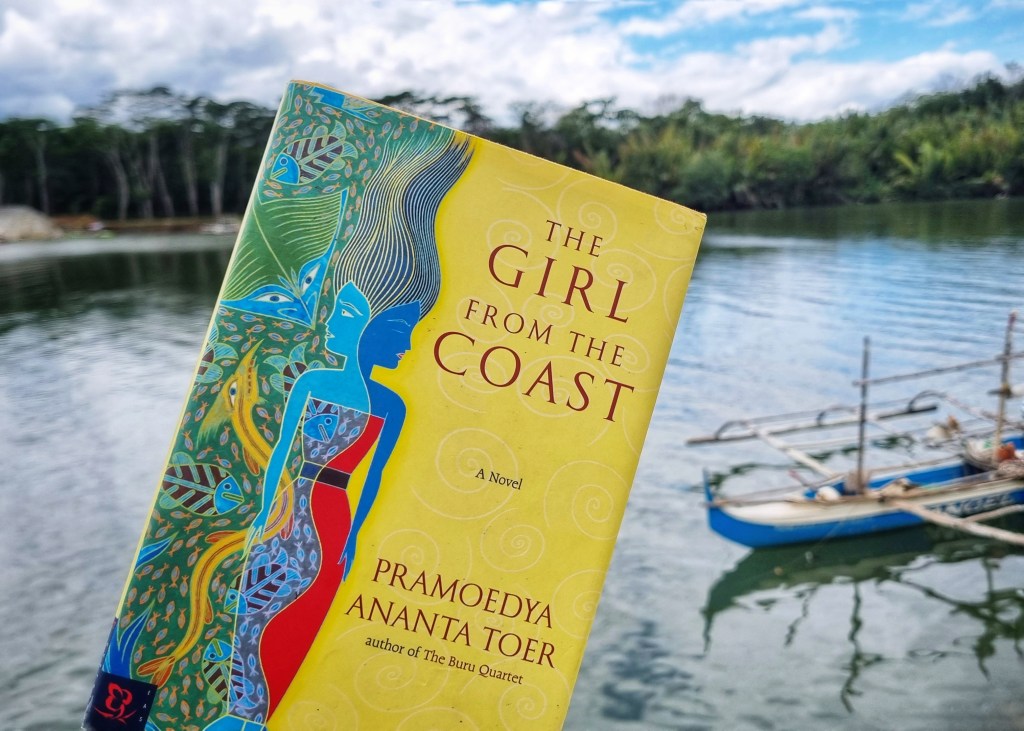
For the entirety of the novel, Toer’s eponymous character is curiously referred to as “the girl”. It was only after I read the epilogue when I learned that the story is based on Toer’s grandmother, a practice wife whose name he never knew.
This novel is a profound peek into the complex Javanese caste system made more complicated by the presence of the Dutch colonial government at the turn of the 20th century.
I observed how the same people of the girl’s social station were complicit in perpetuating their own subjugation by accepting the status quo despite the girl’s mounting questions about inequality; how the nobleman provided the girl with everything she needed; and how he did not treat her cruelly, that is until he divorced her and she insisted on her rights as a mother.
As Toer is renowned for his strong views against colonial abuse and dictatorships, I could not help but see the nobleman, known as the “Bendoro”, and the villagers as allegories for dictatorships we tolerate and are complicit in — just because we think we benefit from them, or just because we are not the ones who are directly sacrificed at its altar.