September 14, 2023 – Aswan: The Unfinished Obelisk, Philae Temple, and Abu Simbel

Aswan. This is where Egypt begins. It only seemed logical to begin my excursions to the ancient Egyptian archaeological sites here.

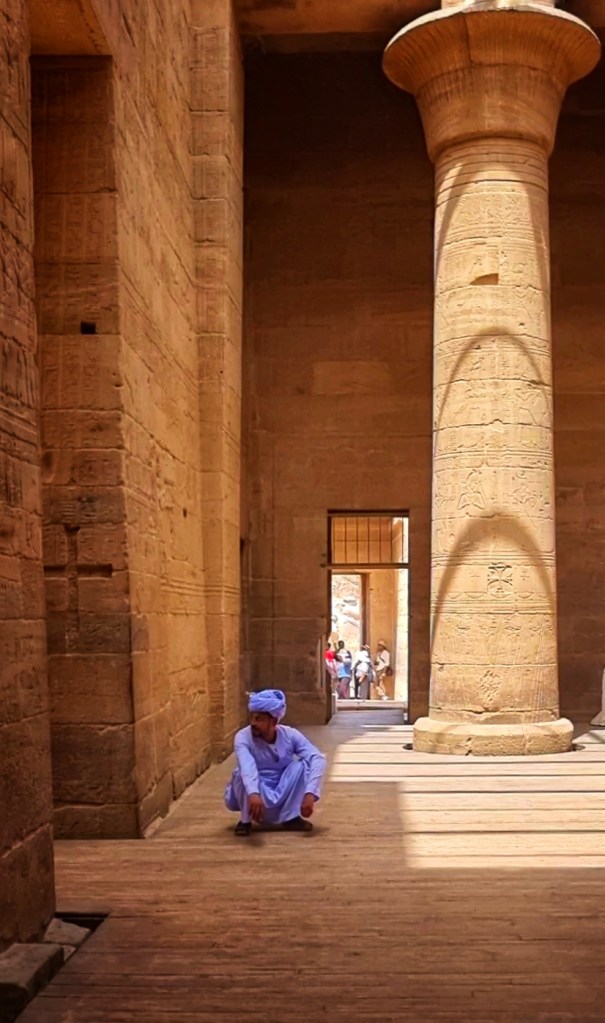
If you’re wondering what that drill is doing there… well, I wanted to finish the obelisk! Who wants unfinished business anyway?! Haha… kidding. They were constructing a ramp for tourists and the carpenter kindly offered to take my picture.

In one of Aswan’s stone quarries, one site has intrigued me almost as much as the pyramids. Had it been completed, it would have been the largest obelisk ever built by the ancient Egyptians. The speculation that it had been commissioned by Queen Hapshetsut added to my wonder. Needless to say, within an hour after landing in Aswan, I was already at the site of the Unfinished Obelisk, fascinated by the existing evidence of the ancients’ construction process.

The following day, I set out early and hired a private car to take me to Abu Simbel. The ride itself was exciting as I witnessed a most enigmatic sunrise, passed checkpoints due to the proximity to the Sudanese border, saw more Nubian villages and the place where they quarantine camels from Sudan, drove through an otherworldly terrain, and finally beheld the twin temples originally carved out of the mountainside in the 13th century BCE, during the reign of Ramesses II.

But when it comes to idyll, Philae Temple Complex takes the throne. A small ferry took me to an island on the Nile and I was immediately transported to the pages of Mahfouz’s Rhadopis of Nubia. The Temple of Isis built in the reign of Nectanebo I in 380-362 BCE is the island’s most striking feature, and yet through the different architectural structures, one could see the Pharaonic, the Ptolemaic, the Romans, and the Christians, stamping their identities on the landscape. It has never been this clear to me; how architecture IS identity.
September 13, 2023 – Aswan: Nubian Village

Looking at a map, one might wonder why Lower Egypt is up north and Upper Egypt is down south. The terms are derived from the flow of the Nile from the highlands of South East Africa down to the Mediterranean Sea.

Aswan is a city on the banks of the Nile, known even in ancient times as the place where Egypt begins.

From the subdued and earth tones of Alexandria in Lower Egypt to the bold and bright colors of Aswan in Upper Egypt! What an abrupt change of culture and climate for a flight so brief! Traffic involves camels and donkeys, and even the coffee is thicker and darker!

My Aswan itinerary included a trip to the Nubian Village. Little did I know that the guest house I booked was right smack in the middle of the Nubian Village — a far cry from the Aswan depicted in Agatha Christie’s Death on the Nile and the Aswan in which she wrote parts of the novel. Although I also intend to explore that tamer Aswan (sans death haha) in the coming days, I’m more than grateful to experience this Aswan that’s just as much a mystery and a most wonderful shock to the senses!

September 12, 2023 – Aciman’s Alexandria

“Then, as always at a certain moment, just before the sunlight began to pound the flagstones, things quieted down for a while, a cool breeze swept through the streets, something like a distilled, airy light spread over the city, bright without glare, light you could stare into…”

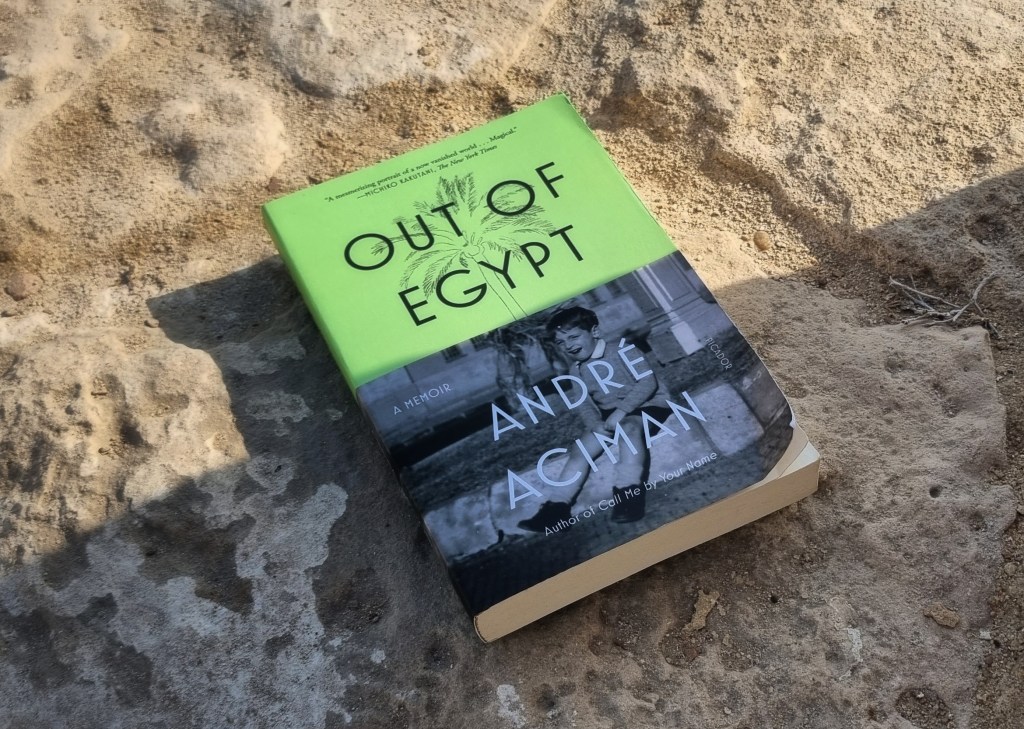
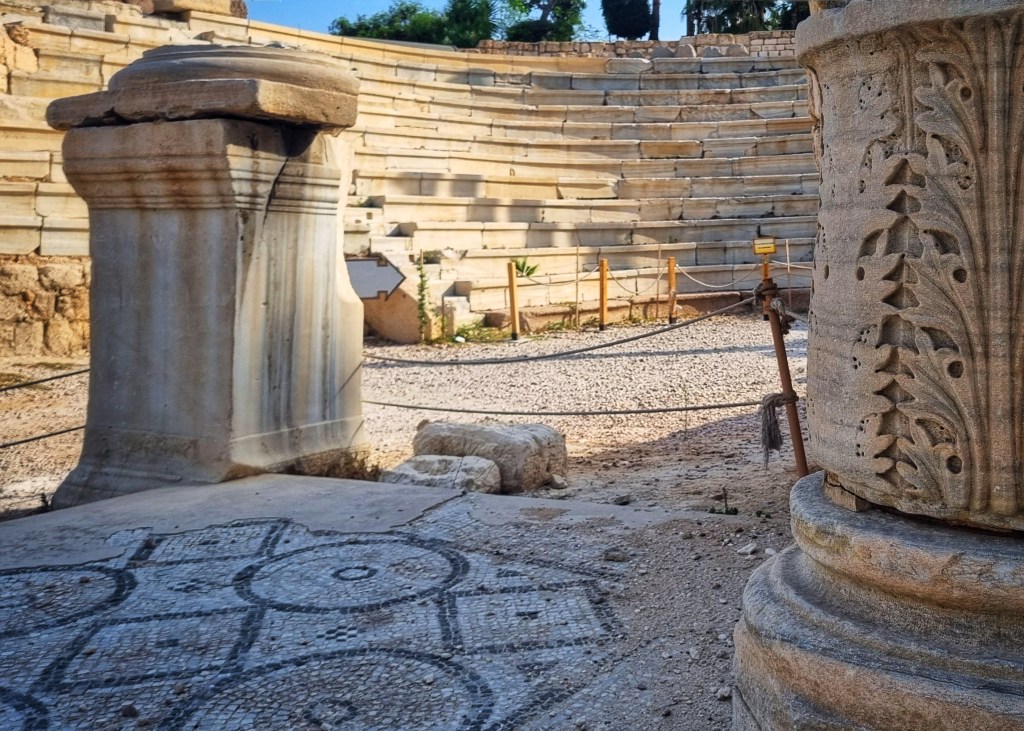
Now I know what André Aciman meant. On my second day in Alexandria, I went around the city of his childhood while its eyes were but half open, and I walked into that light of which he spoke. And I think he would be happy to know that I met several adorable stray cats and a bookseller whose name is Meghid along the way; and that I put his book down on the Roman flagstones just as light was gently spilling into the ancient amphitheater, as if it were liquid filling a cup.

In this memoir, the young André tends to read too much — as most people who become writers do. A grown-up chides him to live some more instead. Because isn’t there always this misconception that when one reads so much, they don’t live enough? Oh, André. I know what you know… people who tend to read too much, tend to live too much, too.

September 11, 2023 – To Ithaka

I could have trespassed. Cavafy’s house was temporarily closed for refurbishment, but the workers were away for their noontime break, and someone left the front door ajar. Too bad I wasn’t well-versed in Egypt’s laws on property transgression and had to decide against the risk of spending time inside an Egyptian jail.

I do, however, admit to these things: Sticking my head in and taking a peek through the marble staircase, and summoning Sean Connery’s reading of Cavafy’s Ithaka in my head as I walked down the street where the poet lived…

“As you set out for Ithaka / hope your road is a long one / full of adventure, full of discovery. / Laistrygonians, Cyclops, / angry Poseidon—don’t be afraid of them / you’ll never find things like that on your way / as long as you keep your thoughts raised high, / as long as a rare excitement / stirs your spirit and your body. / Laistrygonians, Cyclops, / wild Poseidon—you won’t encounter them / unless you bring them along inside your soul, / unless your soul sets them up in front of you…”

Unless you bring them along inside your soul. One of my favorite lines from this favorite poem. Almost everyone who learned of my upcoming trip immediately expressed concern about the dangers of a woman traveling solo to Egypt. What I carried in my soul was my mom’s prayers, and I left no room for angry Poseidon, Cyclops, Laistrygonians, and Fear. And true enough, I encountered none of them.

And I hoped for my road to be a long one, with many summer mornings when, with what pleasure, what joy, I entered harbors I was seeing for the first time! And I visited many Egyptian cities to learn, and to go on learning…

I keep Ithaka always in my mind. Arriving there is what I’m destined for. I do not hurry the journey at all. Better if it lasts for years, so I’m old by the time I reach the island, wealthy with all I’ve gained on the way, not expecting Ithaka to make me rich… And if I find her poor, Ithaka won’t have fooled me. Wise as I will have become, so full of experience, I’ll have understood by then what these Ithakas mean.

September 11, 2023 – Sunsets in Alexandria

This is what sunsets look like in the city that Alexander built, and which Cleopatra lost.

Isn’t it crazy how I hopped on an early bus from Cairo this morning, paid the fare equivalent to two hundred Philippine pesos, and three hours later I’m here? Here! Alexandria! How magical that I can write those two words together — here, Alexandria.

But I won’t lie. When I got off the bus, the sun was already high and wielding its full power. It exposed everything unsightly about what has become of the city. With an aching heart I walked to C.P. Cavafy’s house while waiting for the opening hours of the Bibliotheca Alexandrina; mainly for comfort, and maybe for shade. It was closed for renovation. The ache slightly intensified.
I took a cab and decided to wait at the library’s entrance along with droves of tourists. The driver cruised through the Corniche on the way there and I saw the Citadel of Qaitbay looming in the distance. That 15th century fortress built where once stood one of the Seven Wonders of the Ancient World, the Lighthouse of Alexandria. After a few minutes, we arrived at the impressive new library where once stood the Library of Alexandria. Everything was something where something great once stood.

When the sun finally relented I walked the entire stretch of the Corniche up to the Citadel of Qaitbay and back. With the Mediterranean breeze blowing on my face and the sun casting a golden glow on everything, Alexandria’s beauty started to reveal itself to me.

Lawrence Durrell was right. This city is “the capital of Memory”. And perhaps it really is about creating one’s own personal Alexandria.

I will spend the night, and maybe in the morning, Alexandria will have more lessons for me.

September 10, 2023 – Old Cairo

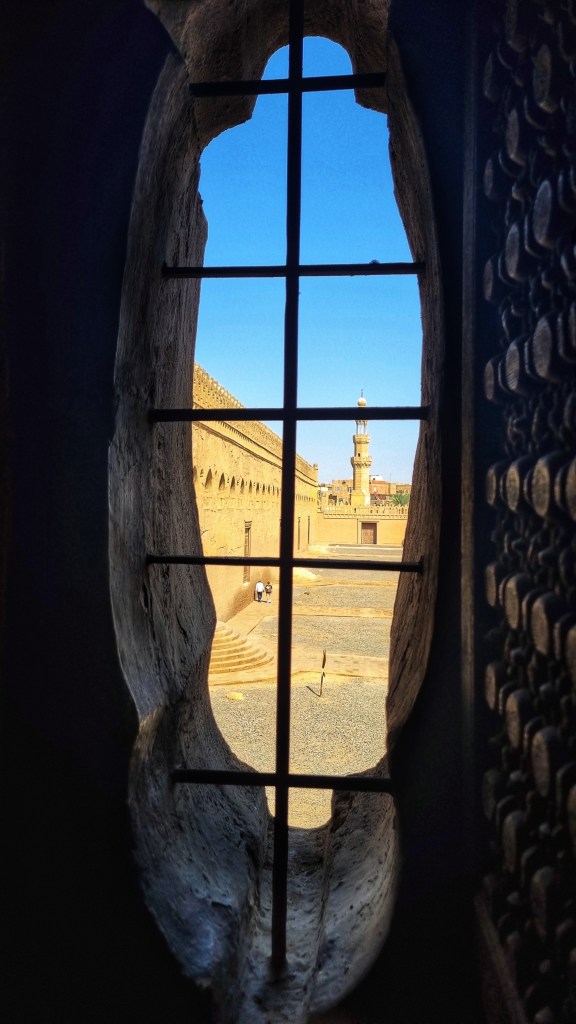
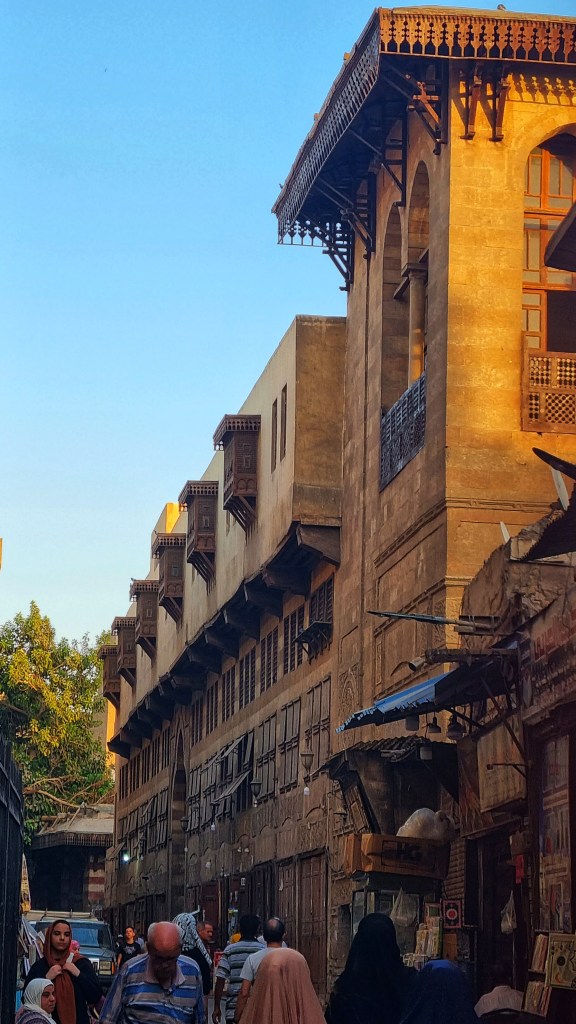
Old Cairo’s dust and cacophony remind me of Kathmandu. But instead of Hindu temples or Buddhist stupas, mosques and minarets. Instead of Newari tiki jhyas, Arabic mashrabiyas.

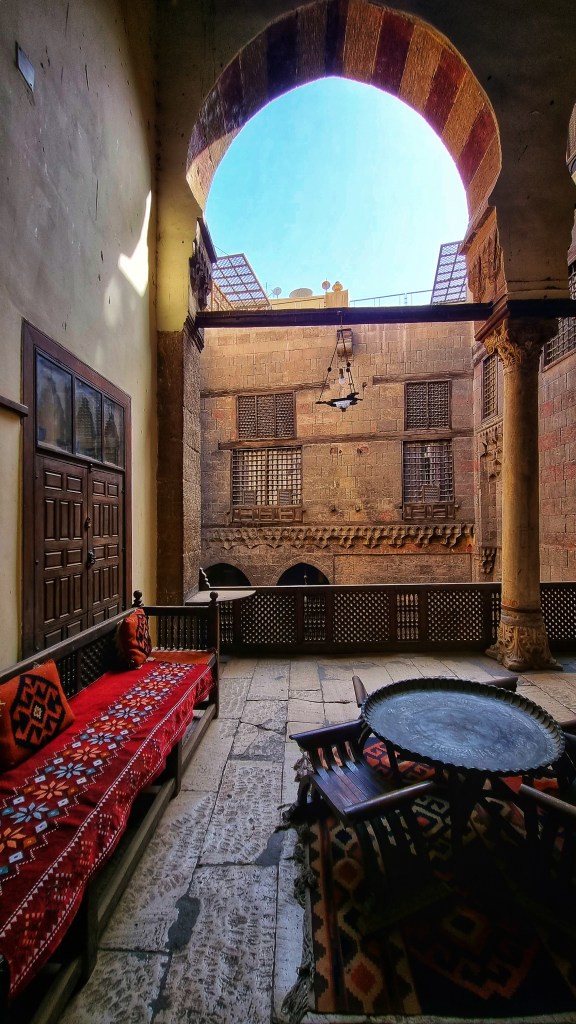
These windows with intricate latticework are some of my favorite features of traditional Islamic and Newari architecture. They seem to me embodiments of how a thing of beauty and tradition can become a refuge or a prison, and it is for you to decide. Moreover, these similarities in architectural identities make me wonder at the extent and influence of the Silk Route.

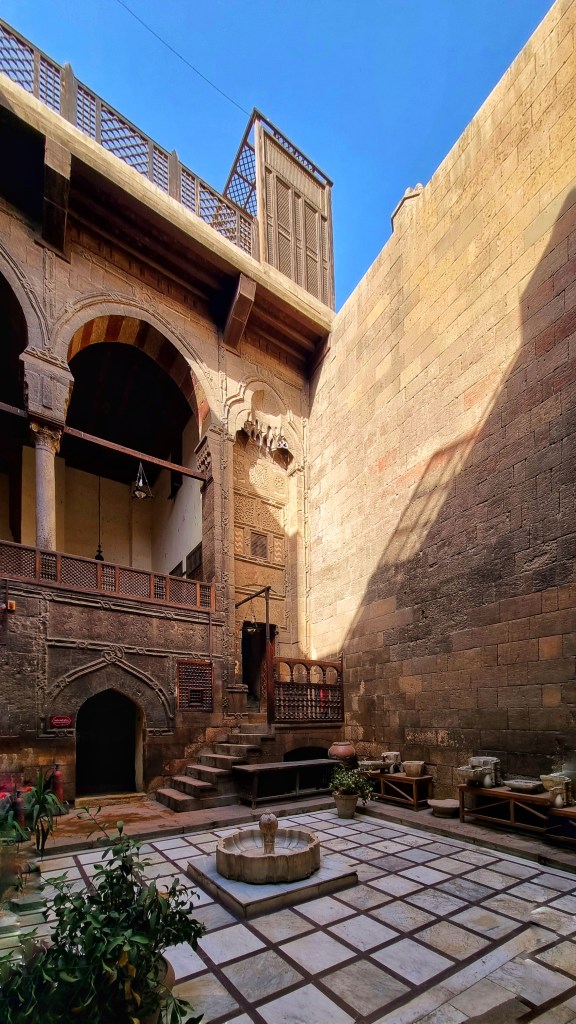
But what’s beautiful about these places of endless excitement is when you explore beyond the chaos and pass through their exterior, and find pockets of poetry and enchanting silence. I usually find what I’m looking for behind these latticed windows.

September 9, 2023 – The Citadel of Saladin

The Pyramids of Giza seen from the Citadel of Saladin.

Several friends wondered why I hadn’t gone crawling straight to the pyramids as soon as I arrived.

That’s because the Cairo presented to me by beloved authors goes beyond travel packages, tour groups, and cookie-cutter experiences; and so I was aware that there was another Cairo I wanted to savor apart from the pyramids and pharaonic Egypt.

But even though it would take me over two incredible weeks after landing in Egypt to get close to the Pyramids of Giza, my first glimpse of the pyramids took place on my second day as I was exploring the Citadel of Saladin. Saladin, or Salah ad-Din Yusuf ibn Ayyub (1137 – 1193), founder of the Ayyubid dynasty — one of my favorite historical characters.

This strategic fortress with a commanding view of Cairo that he built on the Mokattam Hills was the seat of government in Egypt from the time of his rule up until the 19th century.
Within the fortress walls are magnificent architectural exemplars of Ayubbid, Mamluk, and Ottoman architecture that bear proof of the major Islamic eras that Egypt underwent.

To the untrained eye, Old Cairo’s mosques and minarets look similar, but I have learned that there are differences between Umayyad, Abbasid, Fatimid, Ayyubid, Mamluk, and Ottoman architecture that manifest the vastness of the umbrella term that is Islamic Architecture.

September 8, 2023 – The Cairo of Naguib Mahfouz

The Cairo that was introduced to me as a reader was not the Cairo of travel posters. The same way that the Istanbul I know is the Istanbul seen through the soul of Orhan Pamuk, the Cairo I know is the Old Cairo of Naguib Mahfouz.

If you’ve read works of both Nobel laureates, you can attest that the constant main characters of their novels are the cities of their birth.

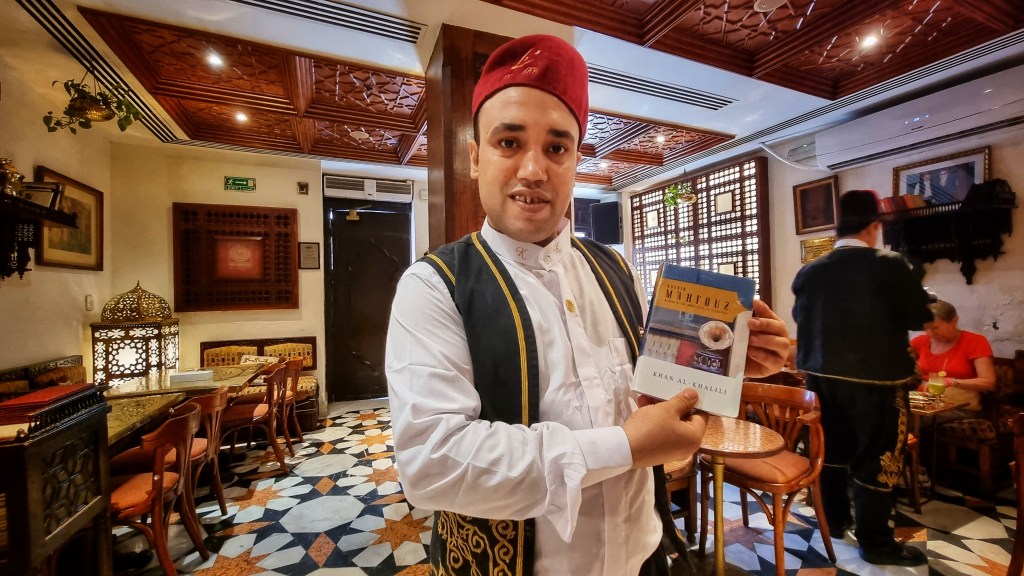
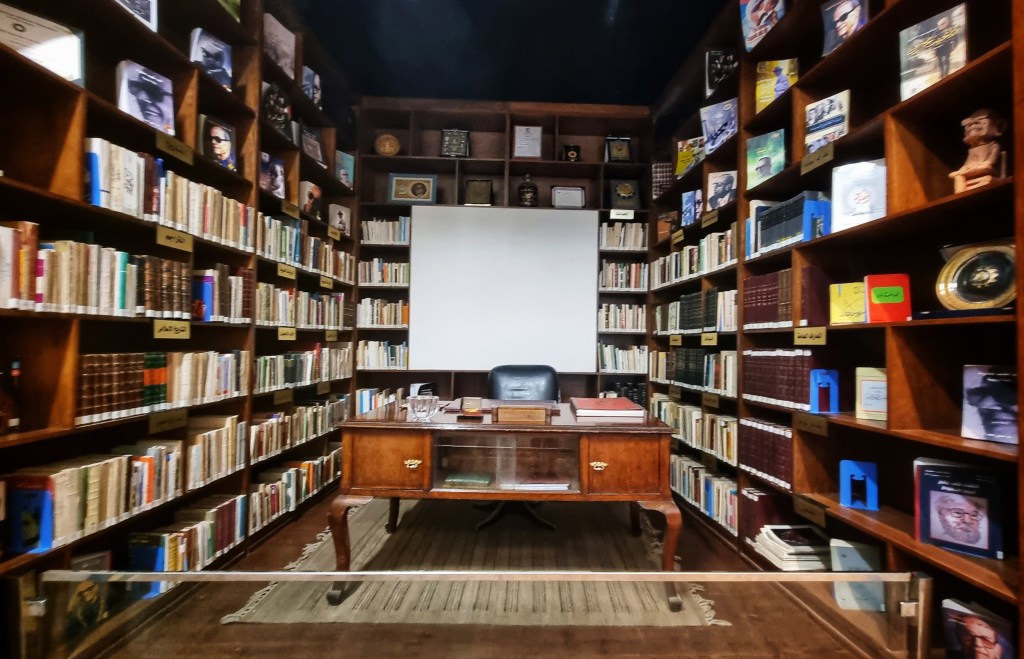
And just as I crossed to the European side of Istanbul to visit Pamuk’s museum, the first thing I did after only a few hours of sleep post-MNL-DIA-CAI flights was to visit the Naguib Mahfouz House Museum and the Naguib Mahfouz Coffee Shop (a coffee house Mahfouz used to frequent so that when he was awarded the Nobel, the owner renamed it in his honor).

On Google Maps, the distance between the two establishments is near. But I turned out to be like an Israelite who fled Egypt and wandered for 40 years traversing a distance that can be done in 9 hours and 5 minutes by car, if you consult Google Maps.

The confused directions came from locals who mistook the coffee shop for the museum and vice versa, and this had me going in circles. It took me a while to finally realize what was going on. But it was as if Mahfouz planned the excursion himself. He did not want me to have it easy. I had to experience his Cairo before arriving there — the Cairo of chaos, of spices, of squawking chickens, of tantalizing fragrances and unpleasant smells, of shouting vendors, dirt, heat, of wonderfully claustrophobic alleys, of uncomfortable stares but also friendly and curious smiles. What I saw today was not the sugarcoated Cairo, and definitely not the whitewashed Cairo. It was the Cairo I came a long way to experience.

Out El Kouloub: Zanouba

The soundtrack: Wails from professional mourners and murmurs among the attendees. The novel opens with a funerary scene in Cairo at the turn of the twentieth century.

“God refuses to grace his home,” they whisper of an honored guest in the crowd. “Sad is a house deprived of a son,” they lament. “Not one son!” they say of this man who has four wives but “only” daughters. We enter yet another world where men are favored over women — even by the women. 

The titular character who becomes this man’s fifth wife is uneducated and easily swayed by superstition. Although the author treats her with compassion, Zanouba’s unhappy fate seems to me a gentle critique on the tolerance and perpetuation of this mindset among women.


It is unimaginable for me to dethrone Naguib Mahfouz as the king and Nawal el Saadawi as the queen of Egyptian literature, but Out El Kouloub deserves a significant spot in the tapestry of Egyptian literature. I’m delighted with the discovery of this relatively obscure author who sheds light on Cairene women as Nawal el Saadawi does but without the rage, and paints early 20th century Cairo as perceptively as Naguib Mahfouz but through a more feminine frame of reference. 

Although Out El Kouloub grew up in Cairo, she fled to France during the Nasser regime. Once dubbed “the richest woman in Egypt” by many, Out El Kouloub’s life is as intriguing as her stories. The work is translated from the French by Nayra Atiya, as all of Out El Kouloub’s books were written in French.

On Women in Translation Month 2023, I write this for the rare reader who tries to look for traces of Out El Kouloub (1899–1968) in #bookstagram and finds only six frames bearing her hashtagged name. This will be the seventh. There should be more.

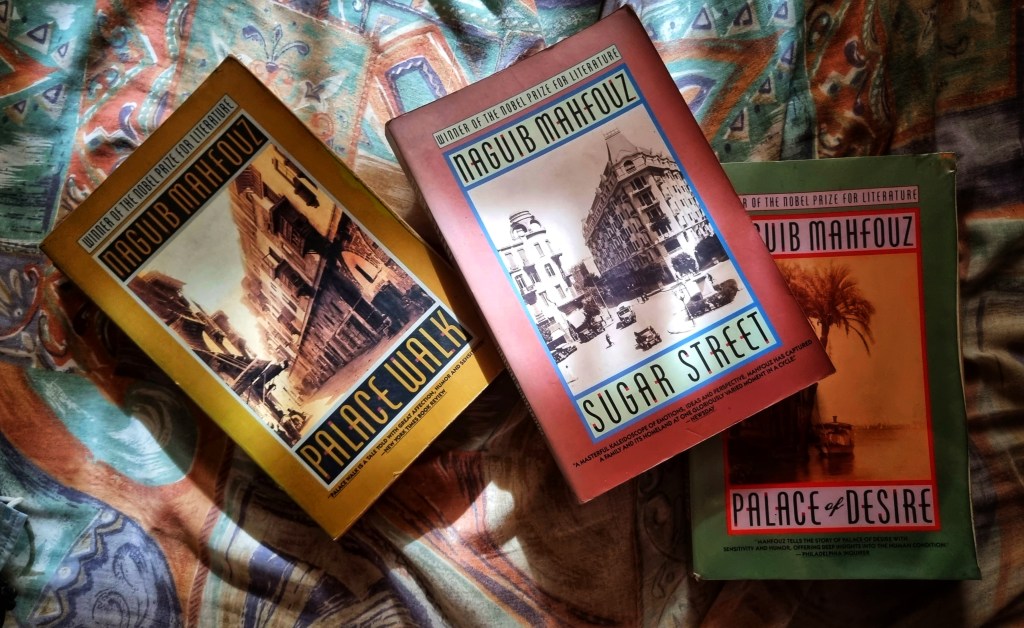
Naguib Mahfouz: The Cairo Trilogy

There are better editions with attractive new covers now. Mine still carry the designs of the first American edition of the English translation, but I love how the first volume depicts the antique mashrabiyas of Old Cairo. These projecting windows with intricate latticework are some of my favorite features of traditional Islamic architecture. They seem to me exemplars of how a thing of beauty and tradition can become a refuge or a prison.

And yet, not even these mashrabiyas could shield Ahmad Abd al-Jawad and his family from life, love, death, and a changing world.

It is often said that the Cairo Trilogy is a family saga spanning three generations, from the period of the Egyptian revolt against British colonizers in 1919 to the final days of the Second World War. But it is more than a family saga: It is an astute record of a society, a city, a nation, and a world in transition. 

I admit that I found good reason to put the first volume down. I was constantly infuriated by how women were perceived and treated by the male characters, by how men justified their immorality and hypocrisy and got off scot-free while women were punished severely for the most innocent blunders, and by how women themselves accepted this as the natural order of things. Those passages were deeply frustrating.

But Mahfouz’s exquisite storytelling carried me through. He does not so much describe Cairo as transport me there — into the volatile political scene of an Egypt yearning for independence, through its wondrous or disreputable backstreets and alleys, and especially into the women’s cloistered lives so I could hear the questions brewing in their hearts, and eventually to the reflection of society’s gradual development through the change in attitude toward women and their education.

In this trilogy, imperial tyranny juxtaposes with tyranny in the family, but through it all, an incredible compassion and empathy emanates from Mahfouz who humanizes everyone, even the tyrants.

Before I knew it I was at the final page of the last volume, not quite ready to let go, and contemplating on the fact that I had just read one of the finest works of literature ever written.